Have you ever stepped onto a running track early in the morning, felt the cool surface under your shoes, and sensed that electric possibility in the air? There’s something special about a running track. It’s not just a loop of rubber or asphalt—it’s a stage where personal records are broken, dreams are chased, and discipline is tested one lap at a time.
A running track is a specially designed oval-shaped course built for competitive racing, training, and fitness activities. Whether it’s in a massive Olympic stadium or behind your local high school, the purpose remains the same: to provide a standardized, safe, and performance-optimized surface for runners. Unlike running on roads or trails, a track offers consistency. Every lap is measured. Every curve is engineered. Every lane tells a story of speed, stamina, and sweat.
Running tracks have evolved significantly over time. What began as simple dirt or cinder paths has transformed into highly engineered synthetic surfaces designed for optimal grip and shock absorption. Today’s tracks are built using advanced materials that reduce injury risks while enhancing performance.
But here’s the real question—why does it matter? Because the surface you run on shapes your performance. Think of a running track as the canvas and the athlete as the artist. The better the canvas, the more precise and powerful the masterpiece.
In this guide, we’ll explore everything about running tracks—from their design and materials to their benefits and future innovations. Whether you’re an athlete, coach, school administrator, or fitness enthusiast, you’re about to discover why the running track remains one of the most important inventions in modern sports.
The Evolution of Running Tracks
Running tracks haven’t always been the smooth, springy surfaces we know today. In fact, their history is a fascinating journey of innovation, science, and athletic ambition.
In ancient Greece, athletes competed on straight dirt tracks during the original Olympic Games. There were no synthetic materials, no precision measurements—just raw earth beneath their feet. Fast forward to the 19th and early 20th centuries, and cinder tracks became the standard. These were made from crushed brick, coal cinders, or clay. While they offered better traction than plain dirt, they were far from perfect. Rain could turn them into muddy messes, and dry conditions often made them dusty and uneven.
Then came the revolution of synthetic tracks in the 1960s. The 1968 Mexico City Olympics introduced the world to a polyurethane track surface, forever changing the sport. Suddenly, athletes were running faster times. Records began falling. Why? Because the surface returned more energy to the runner, acting almost like a subtle springboard.
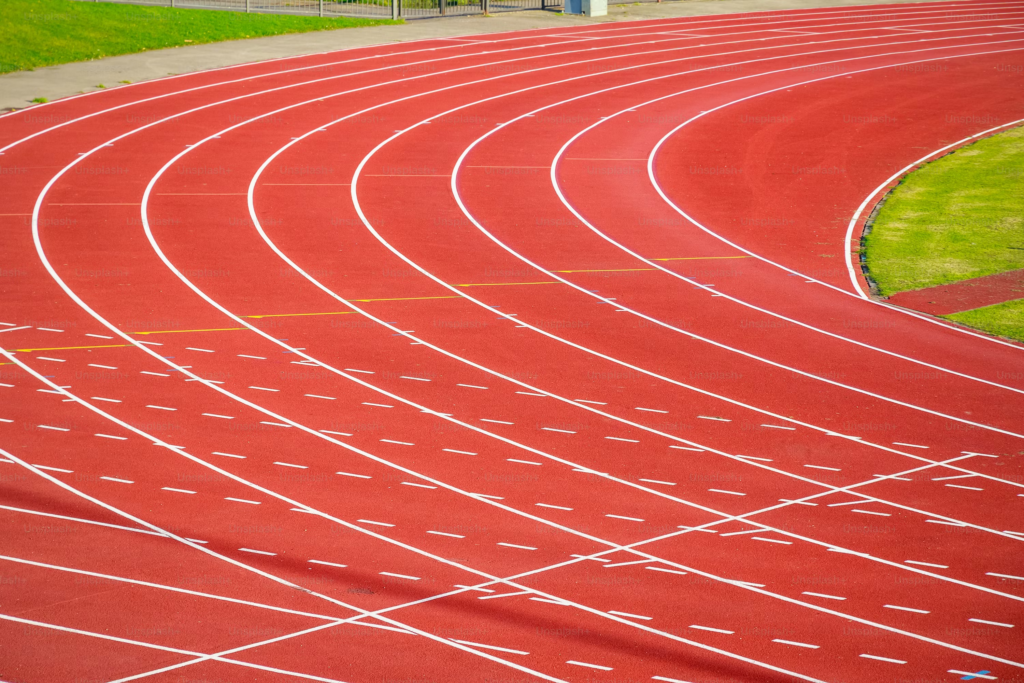
Modern running tracks are now built with multiple layers—an asphalt or concrete base, followed by rubber granules and polyurethane coatings. These surfaces are designed to balance cushioning and responsiveness. Too soft, and you lose energy. Too hard, and you risk injury. The perfect track sits somewhere in between.
The evolution didn’t stop there. Today, technology allows for custom surface tuning, improved drainage systems, and environmentally friendly materials. Tracks are no longer just functional—they are engineered for peak performance.
When you run on a modern track, you’re benefiting from centuries of trial, error, and innovation. It’s amazing to think that every stride you take connects you to a long history of athletic progress.
Why Running Tracks Matter in Modern Sports
Let’s be honest—couldn’t athletes just run anywhere? Roads, parks, beaches? Technically, yes. But would they achieve the same consistency, safety, and measurable improvement? Probably not.
Running tracks matter because they provide standardization. In competitive sports, fairness is everything. A 400-meter lap on one track must equal a 400-meter lap on another. This uniformity ensures that race times are accurate and comparable worldwide. Without standardized tracks, world records would mean very little.
Beyond competition, tracks are essential for training precision. Coaches rely on exact distances to design workouts. Need to run 8 x 400 meters at race pace? On a track, that’s simple. No GPS guessing. No uneven terrain. Just pure, measurable effort.
Safety is another major factor. Road running exposes athletes to traffic, potholes, and unpredictable surfaces. Trails introduce rocks and uneven ground. A running track, by contrast, is designed specifically for forward motion at high speeds. The surface reduces impact stress on joints while providing optimal grip.
Running tracks also serve as community hubs. High school tracks host local meets. College stadiums bring crowds together. Public tracks offer a free fitness space for residents. They become gathering points where ambition meets opportunity.
In modern sports science, marginal gains matter. A fraction of a second can separate gold from silver. Running tracks provide the controlled environment necessary to chase those tiny improvements. Think of them as laboratories for speed.
Without running tracks, athletics wouldn’t look the same. Records would fluctuate wildly. Training would be less precise. Injuries might be more common. In many ways, the running track is the silent partner in every great race.
Types of Running Tracks

Not all running tracks are created equal. While they may look similar from a distance—an oval with lanes—their surfaces, structure, and purpose can vary significantly. Choosing the right type depends on usage, climate, budget, and level of competition.
Broadly speaking, running tracks fall into two main categories: outdoor and indoor. Each has unique characteristics tailored to specific needs.
Outdoor tracks are the most common. You’ll find them in schools, universities, and stadiums worldwide. They’re built to withstand weather conditions—rain, heat, wind, and even snow in some regions. Their materials are chosen for durability and drainage efficiency.
Indoor tracks, on the other hand, are designed for climate-controlled environments. These are typically shorter—often 200 meters per lap—and may include banked curves to compensate for tighter turns.
Surface materials also differentiate track types. Some are synthetic and high-performance. Others, especially in smaller communities, may still use older materials like cinder or even grass.
Each type serves a purpose. A professional athlete training for international competition will likely prefer a high-quality synthetic track. A recreational runner may simply appreciate a well-maintained school track.
Understanding the different types of running tracks helps you appreciate how much thought goes into their design. They aren’t just loops—they’re precision-built athletic tools.
Outdoor Running Tracks
Outdoor running tracks are the backbone of global athletics. From local school competitions to the Olympic Games, these tracks host the majority of track and field events worldwide. Their design prioritizes durability, performance, and weather resistance.
Most outdoor tracks are 400 meters in length, measured in the innermost lane. This standardization ensures uniform competition across countries and continents. The oval shape consists of two straightaways and two semicircular curves, carefully engineered to balance speed and safety.
Synthetic surfaces dominate modern outdoor tracks. These are typically made of polyurethane mixed with rubber granules. Why this combination? Because it offers the perfect blend of cushioning and energy return. When a runner’s foot strikes the surface, it compresses slightly and then rebounds, helping propel the athlete forward.
Upgrade Your Sports Court Today
Get premium synthetic acrylic flooring designed for durability, grip, and performance.
Get Free ConsultationDrainage is a critical component. Outdoor tracks must handle heavy rain without becoming slippery or waterlogged. Advanced sub-base systems allow water to flow through or away from the surface efficiently.
Climate also influences design. Tracks in hotter regions use UV-resistant coatings to prevent surface degradation. In colder climates, materials are chosen to withstand freezing and thawing cycles.
Outdoor tracks aren’t just for elite competition. They serve communities, schools, and recreational runners. Early mornings often see individuals walking laps, while afternoons bring athletes pushing through interval sessions.
In many ways, the outdoor running track is a democratic space—open to anyone willing to lace up their shoes and put in the work.
Synthetic Tracks
Synthetic running tracks have become the gold standard in modern athletics, and for good reason. If you’ve ever run on one, you probably noticed the subtle bounce beneath your feet. It’s not just your imagination. That surface is engineered to work with you, not against you.
Most synthetic tracks are made from polyurethane combined with rubber granules. These materials are layered over an asphalt or concrete base to create a system that balances firmness and flexibility. Think of it like a high-performance mattress—not too soft, not too hard, but just right to support explosive movement. When your foot strikes the surface, the material absorbs some of the shock, reducing stress on your ankles, knees, and hips. Then it returns a portion of that energy, helping you push off more efficiently.
There are two primary types of synthetic systems:
- Full polyurethane (solid pour) systems
- Sandwich systems (rubber base with polyurethane top layer)
Each has its own performance characteristics, but both are designed to enhance speed while minimizing injury risk.
Another major advantage? Consistency. Unlike dirt or grass, synthetic tracks don’t develop uneven patches easily. They resist weather damage, maintain grip during light rain, and provide predictable traction. For competitive athletes, that consistency is everything. Imagine training for months only to compete on a surface that feels completely different. Synthetic tracks eliminate that uncertainty.
Maintenance is also simpler compared to older track types. Regular cleaning, minor repairs, and periodic resurfacing keep them in peak condition for years.
It’s no coincidence that world records are almost always set on synthetic tracks. They represent the intersection of sports science and engineering—quietly supporting every stride, every sprint, and every finish-line dive.
Cinder Tracks
Before synthetic surfaces revolutionized athletics, cinder tracks ruled the world. If you look at photos from early 20th-century competitions, you’ll see athletes sprinting over dark, grainy surfaces. That was cinder—a mixture of crushed brick, coal cinders, clay, and ash.
Cinder tracks were a huge improvement over plain dirt. They offered better drainage and improved traction, especially in dry conditions. For decades, they were considered the standard for competitive racing. Many legendary performances happened on these surfaces.
But let’s be honest—they weren’t perfect.
In wet weather, cinder tracks could become muddy and heavy. In dry conditions, they turned dusty, sometimes blowing into athletes’ eyes during races. The surface also required constant maintenance. Groundskeepers had to rake and level the material regularly to keep it even. Without proper care, it could develop ruts and soft spots.
From a performance standpoint, cinder tracks absorbed more energy than modern synthetic surfaces. That means runners had to work harder to maintain speed. Some athletes even argue that times from the cinder era deserve extra respect because the surfaces were slower.
Injury risk was another factor. While softer than asphalt, cinder tracks could still be inconsistent underfoot. Uneven patches increased the chance of ankle rolls or muscle strain.
Today, cinder tracks are rare in professional competition. However, some smaller schools and community facilities still use them due to lower installation costs. They also hold nostalgic value—reminders of a time when athletics relied more on grit than technology.
Running on a cinder track feels different. It’s raw. It’s demanding. It connects you to history. And sometimes, that alone makes it worth experiencing.
Grass Tracks
Grass running tracks may sound unusual today, but they were once common, especially in rural areas and smaller communities. Even now, some schools and local clubs maintain grass ovals for training and informal competitions.
At first glance, grass seems ideal. It’s natural, soft, and widely available. Running on grass reduces impact stress compared to concrete or asphalt. Many athletes use grass fields for recovery runs because the softer surface is gentler on the joints.
But grass tracks come with challenges.
Weather plays a huge role. After heavy rain, the surface can become slippery and uneven. Dry conditions may harden the ground, making it less forgiving. Maintaining a perfectly level grass oval requires constant mowing, watering, and care.
From a performance perspective, grass is slower than synthetic surfaces. The ground absorbs more energy, meaning runners must exert extra effort to maintain pace. That’s why elite competitions rarely use grass tracks today.
However, grass tracks offer unique training benefits:
- Improved ankle stability due to slight surface variations
- Reduced repetitive stress compared to rigid surfaces
- A more natural running experience
For cross-country athletes, grass training is particularly valuable. It mimics race conditions and strengthens stabilizing muscles.
There’s also something refreshing about running on grass. It feels less industrial, more connected to nature. Instead of the rhythmic thud of spikes on rubber, you hear the soft rustle of blades underfoot.
While grass tracks may not dominate modern athletics, they still have a place—especially for training, community events, and athletes who value variety in their workouts.
Indoor Running Tracks
Indoor running tracks are a different world altogether. Step inside an indoor arena, and you immediately notice the tighter curves, controlled temperature, and echo of footsteps bouncing off the walls.
Unlike standard outdoor tracks, indoor tracks are typically 200 meters per lap. Because of the smaller size, the curves are sharper. To compensate, many indoor tracks are banked—meaning the turns are slightly angled. This design helps runners maintain speed without feeling like they’re being pulled outward by centrifugal force.
The surface materials are usually synthetic, similar to outdoor tracks but optimized for indoor conditions. Since there’s no exposure to rain or extreme weather, indoor surfaces can prioritize performance without worrying as much about drainage.
Indoor tracks are crucial for winter training in colder climates. Instead of battling snow and icy roads, athletes can maintain consistent workouts year-round. Competitive indoor seasons also give runners additional opportunities to race.
However, indoor racing presents unique challenges:
- Tighter turns require strong balance and technique
- Shorter straights limit top-speed maintenance
- Air circulation may affect breathing in crowded arenas
Despite these factors, indoor tracks create an intense, electric atmosphere. Spectators sit closer to the action, and the confined space amplifies crowd noise. Every stride feels magnified.
For many athletes, indoor competition sharpens tactical skills. You learn to navigate tight spaces, manage positioning, and accelerate strategically.
In essence, indoor running tracks are compact laboratories of speed—where precision, agility, and mental toughness are tested under a roof.
Standard Dimensions and Layout
If you’ve ever looked at a running track from above, you might think, “It’s just an oval.” But in reality, every curve, line, and marking follows strict international standards.
A standard outdoor running track measures 400 meters in lane one. This measurement is taken 30 centimeters from the inner edge of the track. Each additional lane adds a specific width—typically 1.22 meters.
Here’s a simple breakdown:
| Component | Standard Measurement |
|---|---|
| Total Lap Distance (Lane 1) | 400 meters |
| Lane Width | 1.22 meters |
| Number of Lanes | 6–9 lanes |
| Straightaway Length | ~84.39 meters |
| Curve Radius | ~36.5 meters |
The track consists of two straight sections and two semicircular curves. This design balances sustained speed on straights with controlled turning on curves.
Lane markings are carefully calculated so that athletes running in outer lanes cover the same total distance. That’s why staggered starts are used in races like the 200m and 400m.
Precision matters here. Even a few centimeters off could affect race outcomes at elite levels. International governing bodies strictly regulate track dimensions to ensure fairness.
Beyond measurements, layout also includes areas for field events—long jump pits, high jump mats, pole vault areas, and throwing circles.
When you run on a standard track, you’re participating in a globally synchronized system. A lap in Tokyo equals a lap in London. That consistency is the backbone of competitive athletics.
The Science Behind Track Surfaces

Have you ever wondered why you feel faster on a track than on a sidewalk? It’s not just psychology—it’s physics.
Running track surfaces are engineered to manage two critical forces:
- Impact force when your foot hits the ground
- Energy return when you push off
When your foot strikes the track, the surface compresses slightly. This compression absorbs part of the shock that would otherwise travel up your leg. Less shock means lower injury risk.
But here’s the clever part—the surface doesn’t just absorb energy; it returns some of it. That rebound effect helps propel you forward. It’s subtle, but over hundreds of strides, it makes a difference.
Too much cushioning, however, can slow you down. If the surface is too soft, it absorbs too much energy and feels “spongy.” Too hard, and it increases injury risk. Engineers aim for the sweet spot.
Traction is another key factor. The surface must provide enough grip for explosive sprints without being overly abrasive. That’s why spikes work so effectively on synthetic tracks—they bite into the surface just enough for maximum acceleration.
Temperature also influences performance. Some materials expand or contract slightly depending on heat levels, which can affect firmness.
In short, modern running tracks are carefully calibrated systems. They aren’t random slabs of rubber—they’re precision-built performance platforms designed to support human biomechanics.
Benefits of Training on a Running Track
Training on a running track offers advantages you simply can’t replicate elsewhere. Whether you’re a beginner jogging your first laps or a competitive athlete chasing personal records, the track provides unmatched structure.
First, there’s accuracy. Every lap equals 400 meters. No guessing. No GPS drift. If your coach says run 6 x 800 meters, you know exactly what that means—two laps each.
Second, the surface reduces injury risk compared to concrete roads. The shock-absorbing material protects your joints during repetitive workouts.
Third, tracks create a focused environment. There are no traffic lights, no intersections, no unpredictable terrain. It’s just you, your pace, and the curve ahead.
Here are some key benefits:
- Measurable progress
- Safer high-speed training
- Ideal for interval workouts
- Consistent footing
- Community atmosphere
There’s also a psychological edge. Running in circles might sound boring, but it builds mental toughness. You confront the same straightaway again and again. Each lap becomes a small battle—and a small victory.
Think of the running track as a gym for runners. It’s controlled. It’s purposeful. It’s designed for improvement.
And sometimes, improvement is all about showing up, stepping into your lane, and taking that first stride.
Conclusion
The running track is far more than an oval painted with white lines. It’s a masterpiece of design, science, and athletic ambition. From ancient dirt paths to modern synthetic marvels, tracks have evolved to support faster times, safer training, and fairer competition.
They provide precision in a world where milliseconds matter. They offer community spaces where beginners and elite athletes share the same lanes. They reduce injury risk while enhancing performance. And perhaps most importantly, they create a consistent platform where human potential can unfold.
Every lap tells a story. Every finish line marks growth. Whether you’re sprinting, jogging, or walking, the running track welcomes you with open curves.
So the next time you step onto one, remember—you’re not just running in circles. You’re running within a carefully engineered arena built to help you become stronger, faster, and more resilient.
Stay Updated with Pacecourt
Discover expert insights, practical tips, and the latest industry updates from Pacecourt, covering sports flooring, tennis and multi-sport court construction, resurfacing, maintenance, court performance, and innovative sports infrastructure solutions.
Powered by Google's Preferred Sources feature