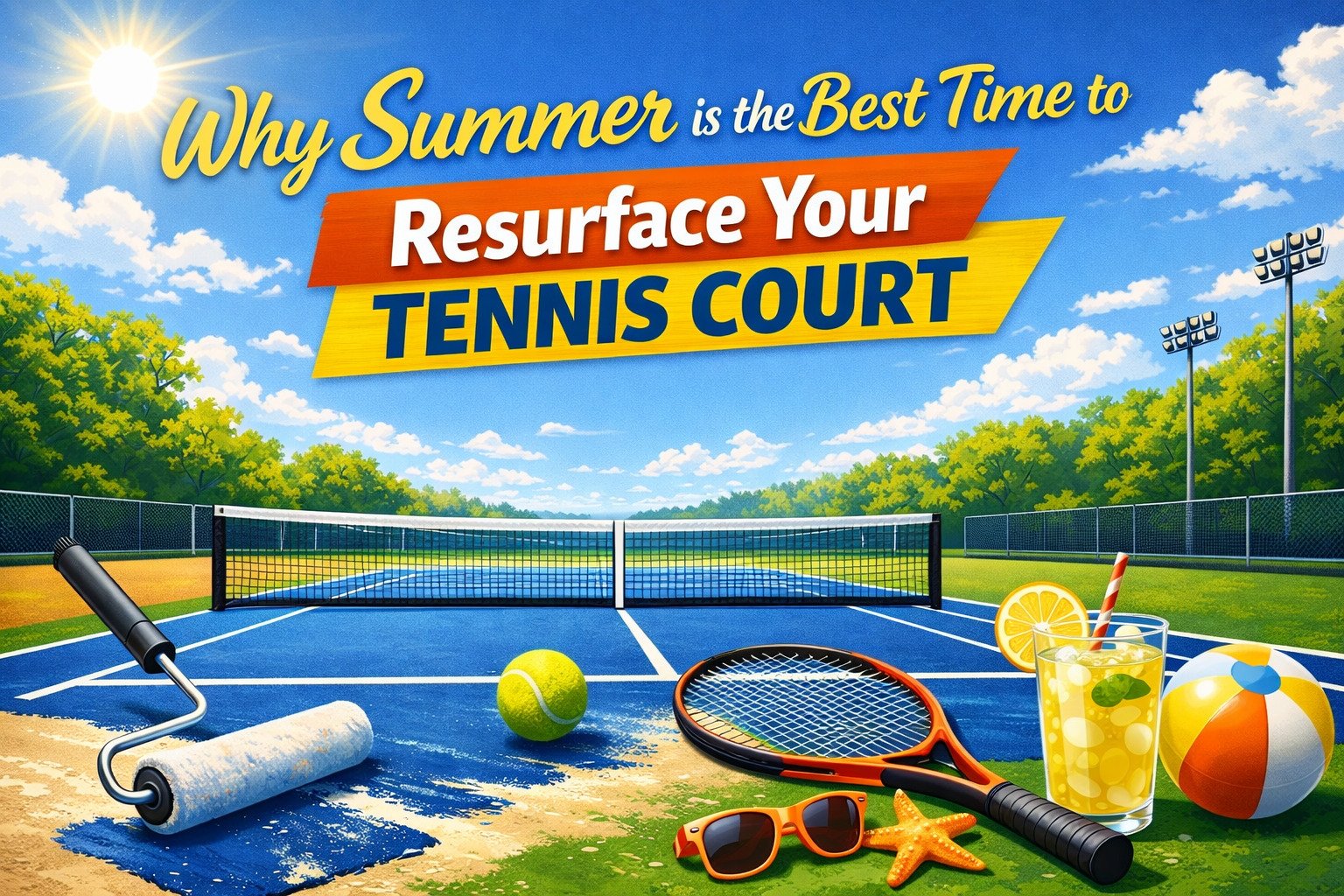
If you’ve been staring at cracks on your tennis court or noticing that the bounce just doesn’t feel right anymore, you’re not alone. Every tennis court—whether it’s at a private residence, a school, or a country club—eventually reaches a point where resurfacing becomes necessary. And here’s the thing: timing matters more than most people realize. While resurfacing can technically be done in several seasons, summer stands out as the clear winner.
Think of your tennis court like a car. You wouldn’t paint it during a rainstorm, right? The same logic applies here. The materials used in tennis court resurfacing—especially acrylic coatings—respond directly to environmental conditions. Heat, sunlight, and dry air play a huge role in how well those materials bond and cure.
Summer offers the perfect blend of warmth and stability. There’s less moisture in the air, longer daylight hours, and more predictable weather patterns. All of that adds up to smoother application, faster drying times, and stronger, longer-lasting results.
But that’s just scratching the surface. There are financial advantages, performance benefits, and safety improvements that make summer resurfacing a smart move. Whether you’re a homeowner looking to upgrade your backyard court or a facility manager planning ahead for tournaments, understanding why summer is ideal can save you time, money, and headaches.
Let’s break it down step by step.
Table of contents
- Understanding Tennis Court Resurfacing
- What Is Tennis Court Resurfacing?
- Signs Your Court Needs Resurfacing
- How Weather Impacts Tennis Court Surfaces
- The Role of Temperature in Surface Performance
- Moisture and Its Effect on Coatings
- Summer Provides Ideal Curing Conditions
- Faster Drying Times
- Stronger Bonding and Adhesion
- Longer Daylight Hours Mean Faster Project Completion
- Reduced Risk of Rain Delays
- Better Scheduling Availability with Contractors
- Improved Surface Performance Before Peak Playing Season
- Preventing Further Damage from Cracks and Wear
- How Small Cracks Become Big Problems
- Enhancing Player Safety and Comfort
- Boosting Aesthetic Appeal for Clubs and Homes
- Cost-Effectiveness of Summer Resurfacing
- Preparing Your Court for Fall Tournaments and Events
- Step-by-Step Overview of the Summer Resurfacing Process
- Common Myths About Resurfacing in Hot Weather
- Maintenance Tips After Summer Resurfacing
- Conclusion
Understanding Tennis Court Resurfacing
Tennis court resurfacing isn’t just about making a court look pretty again. It’s about restoring playability, safety, and structural integrity. Over time, every court surface—especially hard courts like asphalt or concrete—begins to deteriorate. Exposure to UV rays, temperature fluctuations, foot traffic, and water penetration all take their toll.
Resurfacing involves applying new layers of specialized coatings to repair damage and renew the playing surface. But it’s more than just rolling out paint. The process typically includes cleaning, crack repair, leveling low spots, and applying multiple layers of acrylic resurfacer and color coatings.
Why does this matter? Because if these steps aren’t done under the right environmental conditions, the results won’t last. Improper curing can lead to peeling, bubbling, or premature cracking. That’s why choosing the right season is critical.
When resurfacing is done in optimal weather—like in summer—the materials cure properly. They adhere better. They form a durable, even surface that enhances ball bounce and player movement.
In short, resurfacing is an investment. And like any investment, you want the best possible return. Summer gives you that advantage.
What Is Tennis Court Resurfacing?
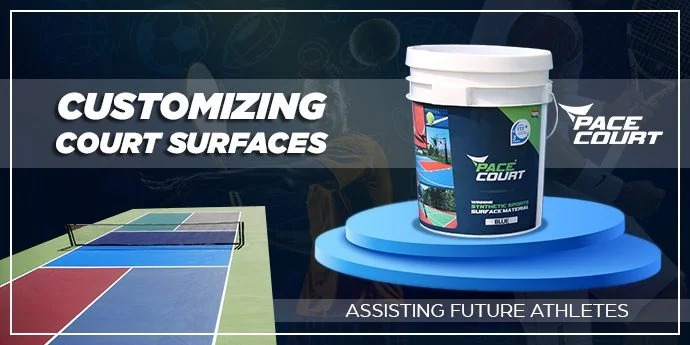
At its core, tennis court resurfacing is the process of restoring the top layer of a tennis court to improve its performance and extend its lifespan. Most hard courts are made of asphalt or concrete and finished with acrylic coating systems. Over time, these coatings wear down, fade, and crack.
Resurfacing typically involves:
- Pressure washing the surface
- Repairing structural cracks
- Filling low spots (also called birdbaths)
- Applying acrylic resurfacer
- Adding color coatings
- Re-striping court lines
It sounds straightforward, but each step requires precision. The coatings must be applied at the correct thickness. They must dry evenly. And they must bond tightly to the existing surface.
Temperature plays a massive role here. Acrylic materials need warmth to cure correctly. If it’s too cold, they don’t set properly. If it’s too humid, moisture can interfere with adhesion. Summer conditions create the sweet spot—warm surfaces, consistent temperatures, and dry air.
Resurfacing in summer isn’t just convenient; it’s scientifically advantageous. The chemistry behind the coatings works best when the environment cooperates.
And when the chemistry works, your court performs better. The ball bounce becomes consistent. Players move confidently. The surface feels fresh and responsive.
That’s what resurfacing is really about—bringing the court back to life.
Signs Your Court Needs Resurfacing
How do you know it’s time? Some signs are obvious. Others creep in slowly until one day you realize something feels “off.”
Here are the most common indicators:
- Visible cracks spreading across the surface
- Faded color and dull appearance
- Uneven ball bounce
- Water pooling after rain
- Peeling or flaking coating
- Slippery areas or worn texture
Cracks are usually the first red flag. Small hairline fractures might not seem urgent, but they allow water to seep into the base. Once water penetrates, especially in colder months, freeze-thaw cycles can widen those cracks dramatically.
Faded color isn’t just cosmetic either. UV damage weakens the surface over time. When coatings thin out, they lose their protective qualities.
Water pooling is another serious issue. If puddles linger in certain areas, it means the surface has developed low spots. Those spots can worsen and create structural stress.
If you’re noticing one or more of these problems, summer is your window of opportunity. Addressing them during warm, dry months prevents the damage from escalating during fall and winter.
Resurfacing at the right time can mean the difference between a simple maintenance project and a costly reconstruction down the road.
How Weather Impacts Tennis Court Surfaces
Weather isn’t just a background factor—it’s one of the biggest influences on both the deterioration and restoration of a tennis court. Temperature swings, rainfall, humidity, and sunlight all interact with court materials in different ways.
Asphalt expands in heat and contracts in cold. Concrete behaves similarly. Over months and years, these expansions and contractions create stress fractures. Add moisture into the equation, and the damage accelerates.
When it comes to resurfacing, weather determines how well materials perform during application. Acrylic coatings require specific temperature ranges—typically above 50°F (10°C)—to cure properly. But optimal curing happens in warmer conditions.
Humidity also plays a role. High moisture levels slow down drying times and can cause uneven finishes. That’s why spring and fall can be unpredictable. One unexpected rain shower can delay a project for days.
Summer, however, offers consistency. Stable temperatures. Lower chances of prolonged rain. Faster evaporation. All of these factors contribute to a smoother resurfacing process.
In simple terms, weather can either fight against your resurfacing project—or work with it. Summer ensures it’s working in your favor.
The Role of Temperature in Surface Performance
Temperature is more than just a comfort factor for players—it directly affects how resurfacing materials behave. Acrylic coatings are water-based systems. When applied, the water needs to evaporate evenly for the coating to cure and harden properly.
In cooler weather, evaporation slows dramatically. The coating may remain soft longer than intended, increasing the risk of scuffing or marking. Inconsistent curing can also reduce long-term durability.
Summer warmth accelerates the curing process in a controlled way. The surface temperature of the court rises naturally under the sun, helping coatings bond tightly to the substrate.
Think of it like baking bread. If the oven isn’t hot enough, the dough doesn’t rise properly. But when the temperature is just right, you get a perfect loaf. The same principle applies here.
Warm conditions allow resurfacing crews to apply multiple layers in a shorter timeframe. That efficiency reduces labor costs and project timelines.
More importantly, it creates a strong, uniform finish that can withstand heavy play. And isn’t that the goal? A court that looks great, plays consistently, and lasts for years.
Moisture and Its Effect on Coatings
If temperature is the star of summer resurfacing, moisture is the villain. Water and acrylic coatings don’t mix well once application begins. Excess humidity or unexpected rain can disrupt the curing process, weaken adhesion, and create surface defects.
Acrylic coatings require a dry environment to perform at their best. When humidity levels are high, evaporation slows down. The coating may look dry on the surface but remain soft underneath. This trapped moisture can lead to bubbling, blistering, or peeling weeks later.
Spring and fall often bring fluctuating humidity and unpredictable rain showers. One storm can delay an entire project. Even morning dew can cause setbacks if the court doesn’t fully dry before application.
Summer, however, typically offers lower relative humidity and longer dry spells. The air is warmer, which helps moisture evaporate more quickly from both the court surface and the coating itself. That means fewer interruptions and more reliable curing conditions.
Let’s break it down clearly:
| Condition | Impact on Resurfacing |
|---|---|
| High Humidity | Slower drying, weak adhesion |
| Unexpected Rain | Surface wash-off, rework required |
| Morning Dew | Delays start time |
| Dry Summer Air | Faster curing, stronger bond |
Water intrusion before coatings fully cure can be especially damaging. If rain hits too soon, it can dilute the surface, cause streaking, or wash away material entirely. That’s costly and frustrating.
Summer minimizes that risk. Clear skies and predictable weather patterns give contractors confidence to complete projects without interruption. And when resurfacing proceeds smoothly, the finished court looks cleaner, performs better, and lasts longer.
Simply put, moisture is resurfacing’s biggest enemy—and summer keeps that enemy at bay.
Summer Provides Ideal Curing Conditions
When professionals talk about “curing conditions,” they’re referring to the environment that allows coatings to harden properly and develop maximum strength. Summer creates the ideal recipe: warmth, dryness, and stability.
Curing isn’t just about drying. Drying is the evaporation of water. Curing is the chemical process where acrylic particles fuse together, forming a continuous, resilient film. That fusion determines how durable and flexible the surface becomes.
In summer:
- Surface temperatures are consistently warm
- Airflow promotes steady evaporation
- Rain interruptions are less frequent
- Overnight conditions remain mild
All of these elements combine to create optimal curing performance.
Why does this matter so much? Because properly cured coatings resist:
- Cracking
- Peeling
- Fading
- Surface wear
They also maintain their texture better, which affects player traction and ball spin. An improperly cured surface may look fine at first glance, but over time it will show signs of weakness.
Think of it like concrete setting. If the curing process is rushed or disrupted, the final strength suffers. But when the environment supports proper curing, the material reaches its full potential.
Summer doesn’t just make resurfacing easier—it maximizes the lifespan of the materials. That translates into fewer repairs, lower long-term maintenance costs, and better overall performance.
And honestly, who wouldn’t want that?
Faster Drying Times
One of the most immediate advantages of summer resurfacing is speed. Warm temperatures dramatically reduce drying times between coats. This efficiency allows contractors to apply multiple layers within the same day.
In cooler seasons, crews might need to wait extended periods between applications. That stretches the project timeline and increases labor costs. Longer timelines also mean a higher risk of weather interruptions.
Summer heat accelerates evaporation, allowing:
- Crack fillers to set faster
- Resurfacer layers to dry quickly
- Color coatings to bond efficiently
- Line paint to cure cleanly
This doesn’t mean the process is rushed. It means the environment supports productivity.
Faster drying also reduces the window where debris, insects, or dust can settle into wet coatings. The result? A smoother, cleaner finish.
For facilities like schools or clubs, shorter downtime is a huge benefit. The court can return to play sooner, minimizing disruption to programs or members.
Time is money. Summer saves both.
Stronger Bonding and Adhesion
At the end of the day, resurfacing success comes down to adhesion. If the new coatings don’t bond tightly to the existing surface, problems will appear sooner rather than later.
Summer heat enhances molecular bonding within acrylic systems. As water evaporates steadily, the acrylic particles coalesce into a unified layer that grips the substrate firmly.
This strong adhesion means:
- Reduced peeling
- Better resistance to heavy foot traffic
- Improved flexibility during temperature shifts
- Longer-lasting color vibrancy
When bonding is weak, even minor stress can cause separation. But when bonding is strong, the surface behaves like a single, integrated layer.
Imagine laying tiles without proper adhesive. They might look fine initially, but eventually they lift. The same concept applies here.
Summer creates the conditions that allow adhesion to reach its full potential. That’s why courts resurfaced during warm months often outperform those done in marginal conditions.
It’s not just about convenience—it’s about chemistry working in your favor.
Longer Daylight Hours Mean Faster Project Completion
Summer isn’t just warmer—it’s brighter. And those extra daylight hours? They’re a game-changer for tennis court resurfacing projects. More sunlight means crews can start earlier and work later without relying heavily on artificial lighting. That extended working window speeds up the entire process without cutting corners.
Resurfacing isn’t a single-step job. It involves cleaning, repairing cracks, leveling low spots, applying resurfacer, laying down multiple color coats, and finally striping the lines. Each layer needs time to dry before the next begins. When daylight is limited, work often stops earlier—even if conditions are otherwise ideal.
In summer, contractors can take full advantage of natural light and warmth throughout the day. This allows them to:
- Complete multiple coating applications in a single day
- Monitor surface consistency more accurately
- Reduce downtime between stages
- Finish projects days earlier than in cooler seasons
Natural light also helps crews spot imperfections. Small inconsistencies, air bubbles, or uneven textures are easier to detect under bright sunlight than under cloudy skies. That attention to detail improves the final finish.
For clubs, schools, and homeowners, faster completion means less disruption. Imagine planning resurfacing during a short break period. Summer ensures the job gets done quickly and correctly, minimizing the time the court is out of service.
Time matters—especially when players are eager to get back on the court. Longer daylight hours give resurfacing teams the flexibility and efficiency they need to deliver high-quality results in a shorter timeframe.
Reduced Risk of Rain Delays
Rain is one of the biggest obstacles in any outdoor construction or maintenance project. When it comes to tennis court resurfacing, even a light shower can halt progress instantly. Acrylic coatings must remain dry during application and curing. If rain hits too soon, it can damage the surface and require rework.
Spring often brings unpredictable storms. Fall can introduce early cold fronts and damp conditions. Winter? It’s simply unsuitable in most regions. Summer, however, typically provides longer stretches of dry weather and more predictable forecasts.
Why does this matter so much?
Because resurfacing requires coordination. Once crack repair begins or coatings are mixed, timing becomes critical. A sudden rainstorm can:
- Wash away uncured coatings
- Cause streaking or discoloration
- Delay curing by days
- Increase labor costs
Every delay adds to the overall project expense and inconvenience.
Summer minimizes those interruptions. Contractors can confidently plan multi-day resurfacing schedules without constantly checking radar apps or pausing mid-project.
Of course, summer storms can still happen—but they’re often brief and easier to plan around compared to extended rainy periods in other seasons.
Think of it like planning a picnic. You’d choose the season with the least chance of rain, right? The same principle applies here. When you resurface in summer, you reduce weather-related risks and protect your investment from unnecessary setbacks.
Better Scheduling Availability with Contractors
You might assume summer is the busiest season for resurfacing—and in many cases, it is. But here’s the interesting part: professional contractors plan their calendars months in advance. When you schedule early, summer offers structured availability and predictable timelines.
In contrast, emergency repairs often pop up in fall or spring when damage worsens. That’s when contractors are flooded with urgent calls. Waiting until visible cracks turn into major issues can limit your scheduling options.
Summer allows for proactive planning. Instead of rushing to fix problems after heavy rain or freeze-thaw cycles, you can book resurfacing during ideal conditions.
Here’s how summer scheduling works in your favor:
- Contractors can dedicate full crews to projects due to consistent weather.
- Fewer weather delays mean fewer rescheduling headaches.
- Projects stay on track with minimal interruptions.
- You avoid peak emergency repair seasons.
Planning resurfacing in summer also gives facility managers flexibility. Schools often use summer breaks for maintenance. Clubs may rotate court availability while resurfacing occurs.
By acting early, you secure a prime spot during the best environmental conditions. And when contractors can work efficiently without delays, quality remains high.
In short, summer isn’t just convenient—it’s strategic.
Improved Surface Performance Before Peak Playing Season
Summer is prime tennis season in many regions. Players are more active, tournaments increase, and recreational use spikes. Resurfacing just before or during early summer ensures your court performs at its absolute best when it’s needed most.
A freshly resurfaced court delivers:
- Consistent ball bounce
- Enhanced traction
- Improved shock absorption
- Vibrant color visibility
These aren’t just cosmetic improvements. They directly affect gameplay. Uneven bounce can frustrate players and disrupt competitive matches. Slippery areas increase injury risk. Faded lines reduce visual clarity during fast rallies.
Resurfacing in summer prepares the court for high traffic. Instead of patching problems mid-season, you start strong.
Think about it from a player’s perspective. Walking onto a smooth, freshly coated surface feels different. There’s confidence in each step. The ball responds predictably. The entire experience improves.
For clubs hosting tournaments, appearance matters too. A bright, well-maintained court sends a message of professionalism and care.
Resurfacing during summer ensures your facility shines during its busiest months. It’s like tuning a piano before a concert—you want everything in perfect harmony before the performance begins.
Preventing Further Damage from Cracks and Wear
Small cracks rarely stay small. They expand over time due to moisture penetration and temperature fluctuations. Summer resurfacing addresses these issues before they escalate into structural failures.
Cracks form for several reasons:
- Natural aging of asphalt or concrete
- Ground movement
- Water infiltration
- Freeze-thaw cycles
When water seeps into cracks and temperatures drop, expansion occurs. Even in warmer climates, trapped moisture weakens the base layers.
Resurfacing in summer stops this cycle. Contractors clean and fill cracks with specialized materials that remain flexible. Once sealed and coated, the surface regains its protective barrier.
Ignoring cracks can lead to:
- Deep structural fractures
- Uneven playing areas
- Costly full-court reconstruction
Addressing them early is always more affordable than major repairs later.
Summer conditions allow crack fillers to set properly and bond effectively. The warmth enhances flexibility and durability.
Think of cracks like tiny leaks in a roof. Left untreated, they grow. But repair them early, and you prevent widespread damage.
Resurfacing isn’t just cosmetic—it’s preventative maintenance. And summer is the best time to act before minor wear turns into major expense.
How Small Cracks Become Big Problems
It often starts with a thin hairline fracture—barely noticeable unless you’re looking closely. But beneath the surface, that crack is an entry point for water and debris.
Here’s how the process unfolds:
- Moisture enters the crack.
- The base material softens or shifts.
- Temperature changes cause expansion and contraction.
- The crack widens and deepens.
- Adjacent areas weaken and form additional cracks.
Over time, what began as a minor cosmetic flaw becomes a structural issue.
Summer resurfacing interrupts this progression. Dry conditions prevent further moisture intrusion during repairs. Flexible crack fillers expand and contract with temperature changes, reducing stress.
By sealing cracks during warm months, you prevent the chain reaction that leads to costly rehabilitation.
It’s a simple principle: small problems are easier to fix than large ones. Summer gives you the perfect window to handle them efficiently.
Enhancing Player Safety and Comfort
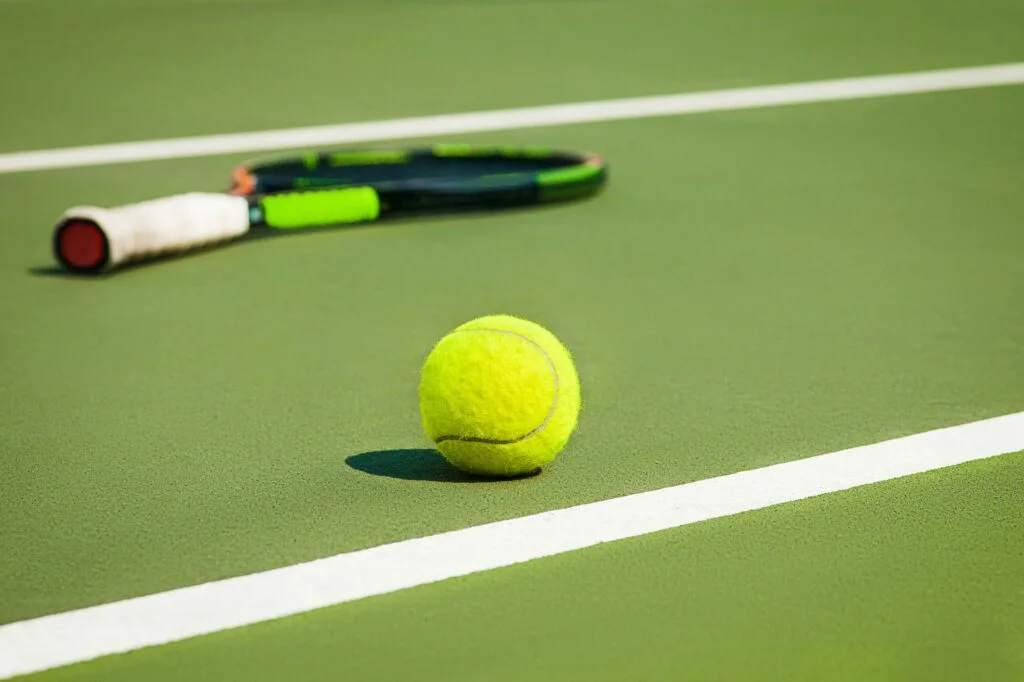
Let’s be honest—no one enjoys playing on a rough, cracked, or slippery tennis court. It’s not just frustrating; it can be dangerous. Player safety should always be a top priority, whether the court is in a private backyard or a professional club facility. Summer resurfacing plays a major role in improving both safety and overall comfort.
Over time, worn-out coatings lose their texture. That texture is what provides grip under athletic shoes. When it fades, the surface can become slick—especially in high-traffic areas like baselines. Add small cracks or uneven patches into the mix, and you’ve got a recipe for twisted ankles or unexpected slips.
Resurfacing restores that critical surface texture. Acrylic coatings can be adjusted with sand additives to create the right balance of grip and smoothness. During summer, these coatings cure properly, ensuring the texture remains consistent and durable.
Safety improvements from resurfacing include:
- Even ball bounce, reducing unpredictable play
- Elimination of tripping hazards from cracks
- Improved traction during quick lateral movements
- Better shock absorption for joints
Comfort matters too. A freshly resurfaced court feels more responsive underfoot. Players experience less fatigue because the surface provides consistent energy return. It’s like running on a well-maintained track versus cracked pavement—the difference is immediate.
Summer conditions allow coatings to settle evenly, creating a smooth yet grippy finish. There’s no uneven curing, no soft patches, no hidden weak spots.
When players feel confident in their footing, their performance improves. They move faster. They react quicker. They play harder without worrying about slipping.
Resurfacing in summer isn’t just about maintenance—it’s about creating a safe, enjoyable playing environment that encourages people to stay active and competitive.
Boosting Aesthetic Appeal for Clubs and Homes
First impressions matter. Whether it’s guests visiting your home or members stepping onto a club facility, the appearance of your tennis court sends a message. A faded, cracked surface looks neglected. A freshly resurfaced court? It looks professional, inviting, and well cared for.
Summer is the perfect season to enhance your court’s visual appeal. Bright sunlight highlights color vibrancy, and properly cured acrylic coatings maintain rich, bold tones. Popular color combinations—like classic green and red or modern blue and gray—stand out beautifully when applied under optimal summer conditions.
Why does aesthetics matter so much?
Because presentation affects perception. A clean, vibrant court communicates:
- Professionalism
- Attention to detail
- Commitment to quality
- Pride in property maintenance
For homeowners, a resurfaced court boosts curb appeal and property value. It transforms the backyard into a polished recreational space.
For clubs and schools, appearance can influence membership satisfaction and enrollment decisions. Imagine hosting a tournament on a dull, cracked surface versus a sleek, freshly coated one. The difference is striking.
Summer sunlight also helps ensure color coatings dry evenly, reducing streaks or discoloration. The result is a uniform finish that looks crisp and clean.
Think of resurfacing like repainting a house. It refreshes the entire space. It breathes new life into something that may have looked tired or worn.
When your court looks great, it feels great to play on. And in summer, when activity is at its peak, that visual upgrade makes an even bigger impact.
Cost-Effectiveness of Summer Resurfacing
Let’s talk numbers. Resurfacing isn’t just an expense—it’s an investment. And like any smart investment, timing affects returns. Summer resurfacing often proves to be the most cost-effective option in the long run.
Why? Because optimal conditions reduce complications.
When resurfacing occurs in warm, dry weather:
- Projects finish faster
- Labor hours decrease
- Material waste is minimized
- Rework due to weather damage is unlikely
In contrast, resurfacing during unpredictable seasons may lead to delays. Delays increase labor costs. Rain damage may require reapplication of coatings. Extended curing times stretch project timelines.
Summer’s efficiency keeps budgets under control.
Here’s a simplified comparison:
| Factor | Summer Resurfacing | Off-Season Resurfacing |
|---|---|---|
| Drying Time | Fast | Slow |
| Weather Delays | Minimal | Frequent |
| Labor Costs | Controlled | Higher due to delays |
| Surface Longevity | Maximum | Potentially reduced |
Beyond immediate savings, summer resurfacing protects against larger repair costs later. Addressing cracks and wear early prevents structural damage that would require expensive reconstruction.
It’s similar to regular car maintenance. Changing oil on schedule is cheaper than replacing an engine. Resurfacing at the right time keeps the entire court system functioning properly.
By choosing summer, you’re maximizing value while minimizing risk. That’s a financial win.
Avoiding Emergency Repairs
Emergency repairs are rarely cheap—and never convenient. When cracks expand or coatings peel unexpectedly, quick fixes become necessary. These rushed repairs often cost more and may not last as long as planned resurfacing.
Summer resurfacing is proactive. It allows you to address small issues before they turn into emergencies. Preventative maintenance is always more affordable than crisis management.
Common emergency scenarios include:
- Deep structural cracks forming after heavy rain
- Large sections of peeling coating
- Dangerous surface separation
- Severe low spots collecting water
These problems disrupt play and may even require temporary court closures.
Resurfacing in summer prevents these urgent situations. Contractors can carefully assess and repair damage under stable conditions. There’s no pressure to rush due to worsening weather.
Proactive resurfacing also allows for proper budgeting. Instead of scrambling to cover unexpected repair costs, you can plan ahead and allocate funds responsibly.
In the long run, avoiding emergencies saves money, reduces stress, and protects your facility’s reputation.
Maximizing Surface Lifespan
A tennis court isn’t resurfaced every year. Typically, hard courts require resurfacing every 4 to 8 years, depending on usage and climate. When done correctly—especially in summer—that lifespan can stretch even further.
Proper curing during summer strengthens the coating system. Strong adhesion and uniform drying reduce early wear and tear. The surface remains flexible enough to handle temperature shifts while staying durable under heavy play.
Maximizing lifespan means:
- Fewer resurfacing cycles over decades
- Lower cumulative maintenance costs
- Consistent playing conditions year after year
If resurfacing occurs in less-than-ideal conditions, minor imperfections may develop. Over time, those imperfections accelerate deterioration.
Summer provides the strongest foundation for longevity. It ensures each layer performs exactly as intended.
Think of it like planting a tree. If you plant it in fertile soil during the right season, it thrives. Plant it during harsh conditions, and it struggles.
Resurfacing during summer gives your court the best possible start for the next phase of its life cycle.
Preparing Your Court for Fall Tournaments and Events
Many schools, clubs, and communities host tournaments in late summer and fall. Resurfacing during early or mid-summer ensures your court is fully cured and ready for competitive play.
Freshly resurfaced courts need time to settle and harden completely. By completing the project in summer, you allow sufficient curing time before high-profile events.
This preparation offers several benefits:
- Professional appearance for guests
- Consistent ball bounce during competition
- Reduced risk of last-minute repairs
- Enhanced reputation for hosting quality events
Imagine scheduling resurfacing too late and worrying whether the surface will be ready in time. Summer eliminates that uncertainty.
Planning ahead shows foresight and professionalism. It ensures players experience optimal conditions during important matches.
When tournaments arrive, your court won’t just be functional—it will be showcase-ready.
Step-by-Step Overview of the Summer Resurfacing Process
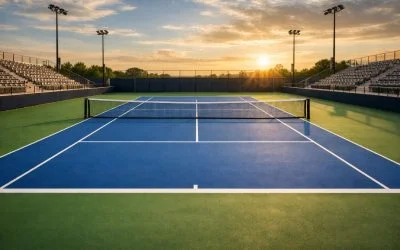
Understanding the resurfacing process helps you appreciate why summer conditions matter so much. Each step relies on proper drying and bonding.
Cleaning and Repairs
The process begins with thorough cleaning. Contractors pressure wash the surface to remove dirt, debris, mold, and loose material. Clean surfaces ensure proper adhesion.
Next comes crack repair. Flexible fillers are applied to seal fractures and prevent water penetration. Low spots are leveled using patching compounds.
Summer heat helps these materials set efficiently, creating a stable base for coatings.
Crack Filling and Leveling
Crack repair is detailed work. Each crack must be cleaned, routed if necessary, and filled with specialized compounds. Low areas—often called birdbaths—are leveled to prevent water pooling.
Warm temperatures allow these patch materials to cure evenly and maintain flexibility.
Application of Acrylic Coatings
After repairs, acrylic resurfacer is applied, followed by color coatings. Each layer must dry before the next begins.
Summer warmth accelerates this process while ensuring strong adhesion. Finally, crisp white lines are painted, completing the transformation.
The result? A smooth, vibrant, durable playing surface ready for action.
Common Myths About Resurfacing in Hot Weather
Whenever summer resurfacing comes up, a few myths tend to circulate. Some people worry it’s “too hot,” others assume coatings will dry too quickly and crack. Let’s clear the air.
Myth #1: It’s too hot in summer for resurfacing.
Extreme heat can pose challenges, yes—but professional contractors adjust for that. They monitor surface temperatures, work during optimal hours (often mornings), and use materials formulated for warm conditions. The key isn’t avoiding heat altogether—it’s managing it. In most regions, summer temperatures fall well within the recommended range for acrylic application.
Myth #2: Coatings dry too fast and become brittle.
Drying fast isn’t the same as curing improperly. Acrylic systems are engineered for summer conditions. When applied correctly, they maintain flexibility even after curing. In fact, proper summer curing enhances elasticity, helping the surface handle expansion and contraction later.
Myth #3: Any season works the same.
Not quite. Cooler months bring moisture, unpredictable rain, and longer curing times. These factors can compromise durability. Summer offers stability, and stability equals consistency.
Myth #4: Resurfacing can wait another year.
Delaying resurfacing often leads to deeper structural damage. What looks minor today can become costly tomorrow.
The bottom line? Summer resurfacing isn’t risky when handled by experienced professionals. It’s strategic. It’s calculated. And when done right, it produces outstanding long-term results.
Maintenance Tips After Summer Resurfacing
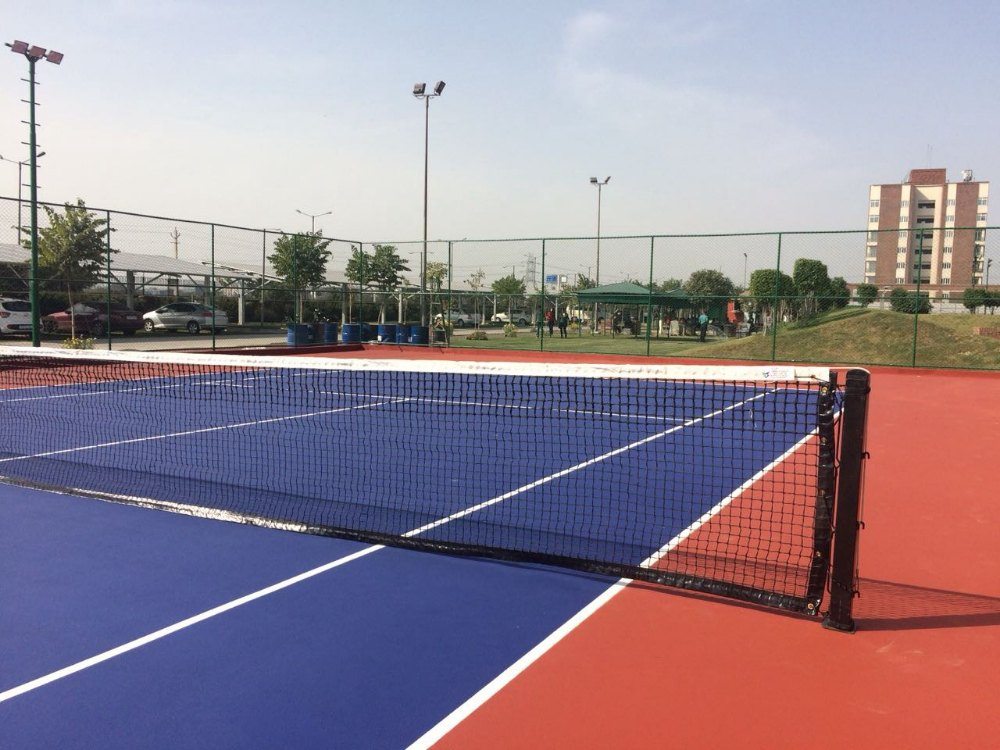
Once your court has been beautifully resurfaced, the next step is simple: protect the investment. A well-maintained court can look and perform like new for years.
First, give the surface adequate curing time before heavy play. Even though summer speeds up drying, allowing a short rest period ensures maximum durability.
Then focus on routine care:
- Weekly cleaning: Use a blower or soft broom to remove debris.
- Monthly washing: Light pressure washing prevents dirt buildup.
- Prompt stain removal: Clean spills quickly to avoid discoloration.
- Inspect cracks annually: Catch small issues before they expand.
- Ensure proper drainage: Keep surrounding areas clear to prevent water pooling.
Avoid dragging heavy equipment across the surface. Encourage players to wear non-marking tennis shoes. Small habits make a big difference.
Think of maintenance like brushing your teeth. It doesn’t take much time, but skipping it leads to bigger problems down the road.
Summer resurfacing gives you a fresh start. Proper care ensures that fresh start lasts as long as possible.
Conclusion
Summer isn’t just another season—it’s the ideal window for tennis court resurfacing. Warm temperatures, low moisture levels, longer daylight hours, and predictable weather create the perfect environment for acrylic coatings to cure properly and bond securely.
From faster project completion and reduced rain delays to enhanced player safety and improved aesthetics, the advantages stack up quickly. Summer resurfacing isn’t about convenience alone—it’s about maximizing durability, performance, and cost-efficiency.
By addressing cracks early, restoring texture, and applying coatings under optimal conditions, you extend your court’s lifespan and elevate the playing experience. You avoid emergency repairs. You prepare for peak season. You protect your investment.
In many ways, resurfacing in summer is like planting seeds in fertile soil. Everything simply works better. The chemistry cooperates. The process flows smoothly. The results last longer.
If your court is showing signs of wear, don’t wait for damage to worsen. Take advantage of summer’s natural advantages and give your tennis court the refresh it deserves.