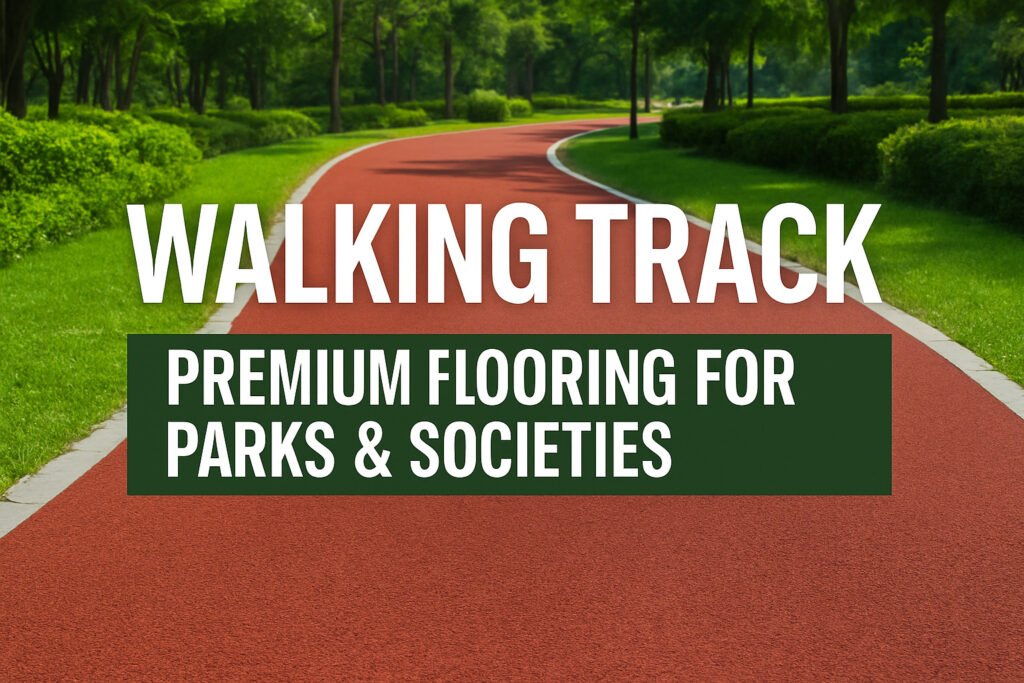
Walking Track – Complete Guide to Types, Benefits, Materials, Construction & Pricing
Walking is one of the world’s most recommended physical activities for fitness, rehabilitation, weight loss, and overall well-being. To support the growing trend of fitness lifestyles, educational institutions, residential societies, corporate campuses, parks, gyms, and sports complexes are increasingly investing in professionally designed walking tracks. These scientifically engineered surfaces enhance comfort, reduce injury risk, and offer long-term durability for daily users. Whether you are planning to build a new walking track or upgrade an existing one, understanding the flooring materials, design standards, installation process, and cost considerations is essential. This guide covers everything you need to know before making an investment. What is a Walking Track? A walking track is a cushioned, non-slip, weather-resistant pathway designed to support regular walking and jogging while minimizing impact on joints and muscles. Unlike regular concrete or stone pathways, walking track surfaces are scientifically developed to be: Benefits of a Professional Walking Track ✔ Reduces impact on knees, ankles & lower back✔ Improves safety with slip-resistant texture✔ Enhances comfort for seniors, children & fitness enthusiasts✔ Suitable for daily high-traffic use✔ Weather-resistant & UV-stable✔ Can be installed indoors or outdoors✔ Long-term investment with minimal upkeep These qualities make walking tracks ideal for parks, schools, colleges, corporate parks, fitness clubs, hospitals, residential gated communities, and stadiums. Most Popular Types of Walking Track Flooring Different flooring materials are available depending on budget, usage intensity, and location. 1. EPDM Rubber Walking Track 2. Synthetic Acrylic Walking Track 3. Interlocking Rubber Tiles 4. PU / Polyurethane Track 5. Artificial Turf Walking Track Ideal Dimensions of a Walking Track Standard recommended size: Accessibility features such as rest zones, benches, and lighting improve user experience. Walking Track Construction Process A professional walking track installation typically involves: Average installation time: 10–30 days depending on size and flooring material. Cost & Pricing Factors The cost of constructing a walking track depends on: Factor Impact Flooring material EPDM/PU > Acrylic in cost Total track area More area = higher price Indoor / outdoor location Outdoor requires more UV/weather coating Base preparation Soil → Asphalt → Concrete (ascending cost) Branding/color customization Additional cost 💰 Acrylic walking tracks are the most economical, whereas EPDM and PU tracks fall in the premium segment due to advanced cushioning properties. Maintenance & Life Expectancy Proper maintenance ensures long-term performance: Expected lifespan: 8–12+ years depending on usage and climate. Where Walking Tracks are Commonly Installed Conclusion Building a professional walking track is a long-term investment in health and community wellness. Whether the aim is fitness, recreation, athletics, or rehabilitation, a well-engineered walking track: With the right selection of materials and expert installation, walking tracks deliver unmatched performance and long-lasting durability.