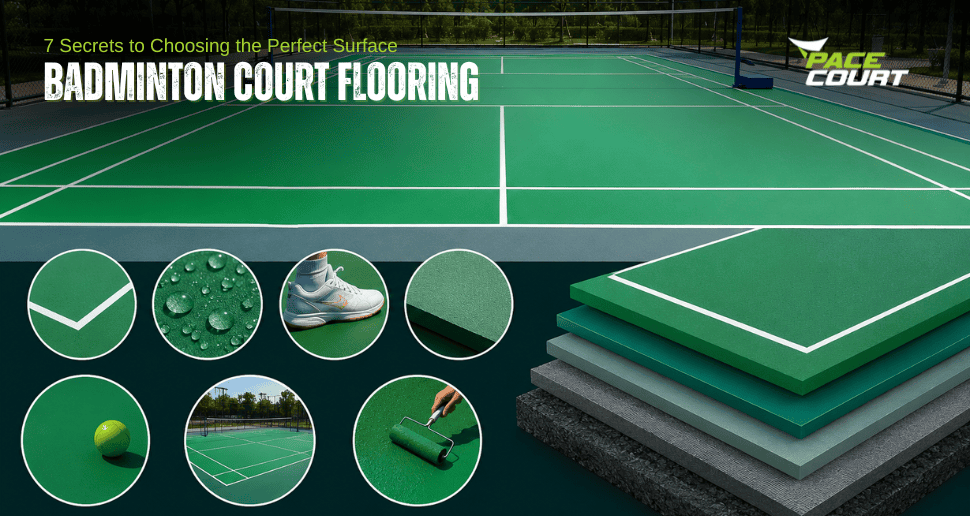
Badminton Court Flooring: 7 Secrets to Choosing the Perfect Surface
Badminton court flooring plays a critical role in the performance, safety, and overall playing experience of athletes. A professionally constructed badminton court requires more than accurate dimensions and proper markings. The flooring must provide the right combination of shock absorption, grip, durability, stability, and comfort to support fast movements and repeated impacts. Whether you are developing an indoor badminton academy, sports club, school facility, commercial training center, or professional competition venue, selecting the right flooring system can significantly improve player performance while reducing the risk of injuries. In this guide, we explore the most important aspects of badminton court flooring, including popular flooring types, their benefits, installation considerations, maintenance requirements, and how to choose the right surface for your facility. What Is Badminton Court Flooring? Badminton court flooring is a specially designed sports surface installed to provide athletes with a safe and consistent playing environment. Unlike ordinary tiles, concrete, or basic wooden floors, professional sports flooring is engineered to manage impact, movement, friction, and repetitive stress. Players constantly jump, lunge, accelerate, stop, and change direction during badminton matches. Because of this, the floor must provide sufficient traction without becoming excessively hard or slippery. A quality badminton flooring system generally consists of multiple layers. Depending on the flooring type, these may include a prepared subfloor, cushioning or shock-absorbing layers, sports surface material, and specialized court markings. Why Choosing the Right Badminton Flooring Matters The quality of the playing surface directly affects how players move and respond during a game. Poor flooring can become slippery, excessively hard, uneven, or uncomfortable. These conditions can negatively affect footwork and increase stress on the ankles, knees, and other joints. Professional badminton court flooring offers several important advantages: For facilities that experience heavy daily usage, choosing a durable sports flooring system can also reduce long-term maintenance and replacement costs. Types of Badminton Court Flooring Different facilities require different flooring solutions. The best option depends on factors such as budget, playing level, installation environment, expected usage, and maintenance requirements. 1. PVC Badminton Court Flooring PVC sports flooring is one of the most widely used solutions for indoor badminton courts. It is available in specialized sports-grade designs that provide cushioning, traction, and durability. PVC flooring can be installed over a properly prepared subfloor and is generally available in different thicknesses and surface constructions. Key benefits include: PVC flooring is particularly useful for facilities looking for a balance between performance, durability, and cost-effectiveness. 2. Wooden Badminton Court Flooring Wooden sports flooring has traditionally been associated with premium indoor sports facilities. Properly engineered wooden systems can provide excellent resilience and playing comfort. A professional wooden court normally uses specialized sports flooring construction rather than ordinary residential wood flooring. Its major advantages include: However, wooden flooring requires proper installation, environmental control, and regular maintenance to preserve its performance. 3. Synthetic Badminton Flooring Synthetic sports surfaces are another popular choice for badminton facilities. These systems can be engineered to provide specific levels of cushioning, traction, and durability. Synthetic flooring is particularly suitable for sports academies, schools, clubs, and multipurpose indoor facilities where the floor may experience frequent use. 4. Rubber Sports Flooring Rubber flooring is valued for its durability and impact-absorbing properties. It can be useful in sports environments where protection against impact is important. However, the surface characteristics should be carefully evaluated before selecting rubber for badminton because excessive softness or unsuitable friction can affect movement and gameplay. Badminton Court Flooring Comparison Flooring Type Shock Absorption Durability Maintenance Ideal Use PVC Sports Flooring High High Low Clubs & Academies Wooden Sports Flooring Excellent High Medium Premium Facilities Synthetic Flooring High High Low Schools & Sports Centers Rubber Flooring High Excellent Low Multi-purpose Facilities The final choice should be based on the complete flooring system rather than material name alone. Subfloor preparation, cushioning, surface texture, installation quality, and maintenance all influence the final performance. Important Features of Quality Badminton Court Flooring When evaluating flooring options, several technical characteristics should receive particular attention. Shock Absorption Badminton involves frequent jumps, lunges, and sudden landings. A suitable sports floor should help absorb impact and provide a comfortable surface for repetitive movement. Good shock absorption can improve comfort during extended training sessions and help reduce excessive stress caused by repeated impacts. Traction and Grip Players need reliable traction when accelerating and changing direction. A floor that is too slippery can compromise stability, while excessive grip can interfere with natural movement. The ideal surface provides controlled traction that allows players to move confidently without restricting footwork. Surface Uniformity An indoor badminton court should have a smooth and consistent surface without unexpected bumps, gaps, or irregularities. Uneven flooring can affect movement and create unnecessary safety concerns. Durability Sports facilities can experience thousands of hours of foot traffic and gameplay. Flooring should therefore withstand repeated movement, equipment use, cleaning, and general wear. For commercial badminton academies, durability becomes especially important because the court may be used throughout the day. Comfort A quality surface should provide an appropriate balance between stability and cushioning. Players should feel comfortable moving across the court during both casual games and intensive training. Sports Court Design & Planning: Key Factors, Standards & Best Practices Badminton Court Flooring Installation Professional installation is just as important as selecting a high-quality flooring material. The installation process generally begins with subfloor inspection and preparation. The base must be sufficiently level, clean, dry, and structurally suitable for the selected flooring system. Typical installation stages include: The exact process varies according to the flooring manufacturer and system specification. Poor installation can reduce the benefits of even high-quality flooring. For this reason, experienced sports flooring professionals should handle the installation. Badminton Court Dimensions and Flooring Layout The playing surface must accommodate the official court dimensions and surrounding safety area. Court markings should be accurate, clearly visible, and applied using suitable materials compatible with the flooring. For facilities hosting competitive badminton, the complete court layout should be planned before flooring installation begins. The flooring design should also consider: A well-planned sports facility