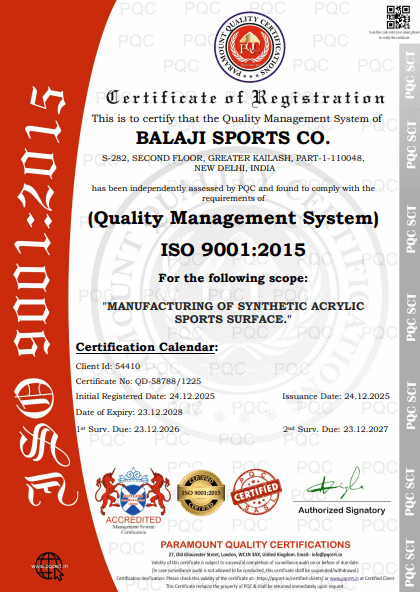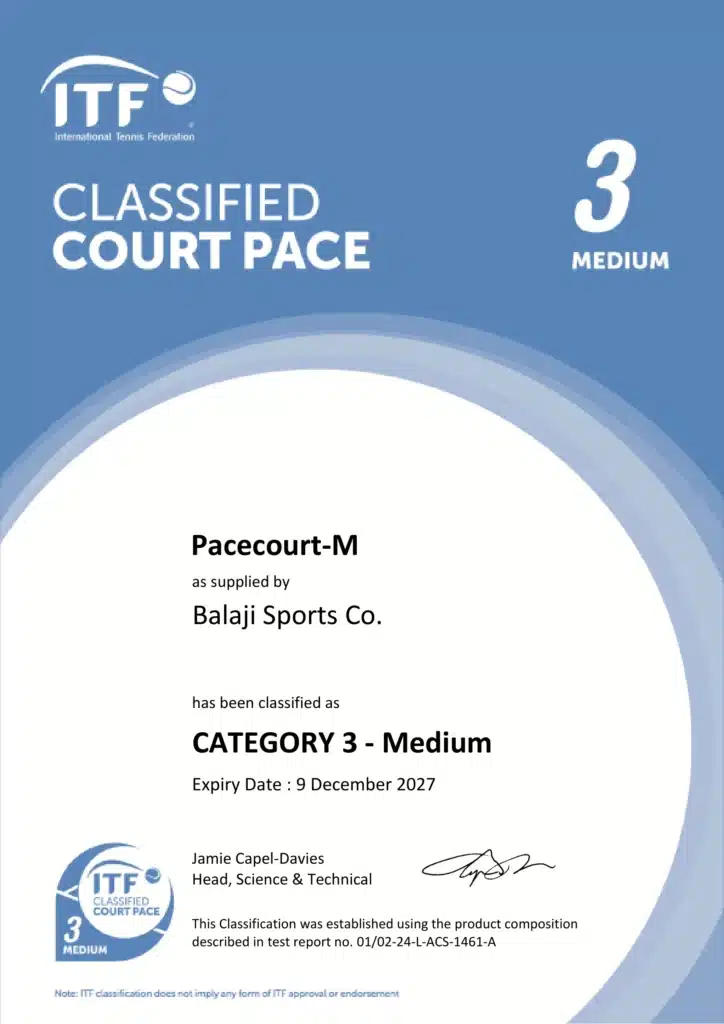
The demand for modern tennis courts has surged in recent years as schools, academies, sports clubs, residential societies, and commercial sports complexes seek durable and high-performance sports infrastructure. At the heart of every high-quality court stands a reliable tennis court flooring manufacturer capable of delivering engineered surfaces that enhance gameplay, reduce injuries, and withstand harsh weather conditions.
If you’re planning to build or renovate a tennis court, choosing the right flooring manufacturer plays a crucial role in the longevity, safety, and performance of the facility. This guide explains everything you need to know — flooring types, specifications, pricing factors, installation processes, and what to look for in a trusted manufacturer.
Why Tennis Court Flooring Quality Matters
Tennis is a high-speed sport that demands agility, grip, shock absorption, and consistent ball bounce. Substandard flooring can lead to:
- Joint and ligament injuries
- Cracks due to climate and load
- Inconsistent ball bounce
- Costly maintenance and frequent resurfacing
A reliable manufacturer ensures:
- International sports standards compliance (ITF classified range)
- Premium-grade raw materials
- Weather-resistant and UV-stabilized flooring
- Long service life with minimum maintenance
Types of Tennis Court Flooring Offered by Leading Manufacturers
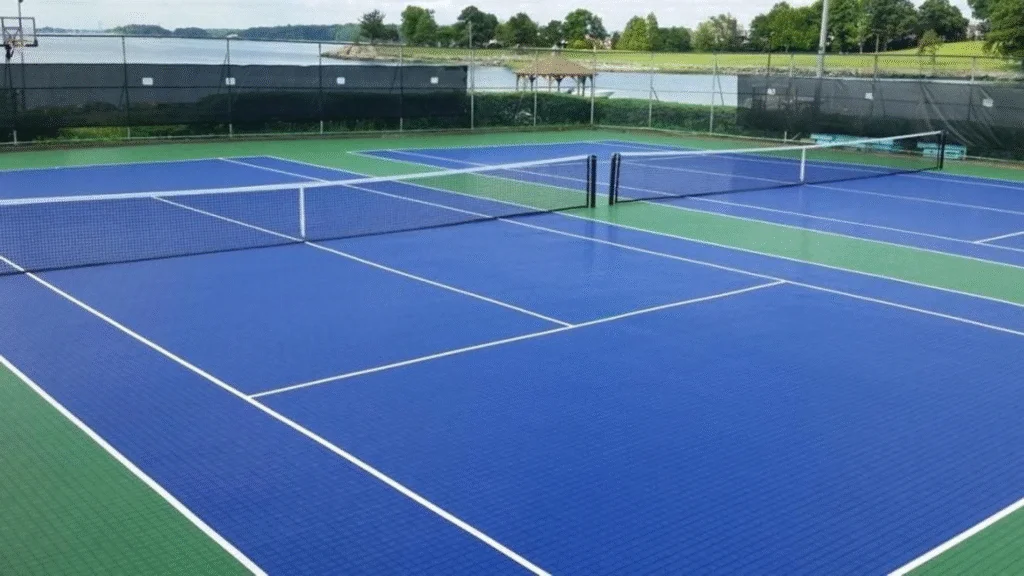
1. Acrylic Hard Court Flooring
Most commonly used around the world due to:
- Fast to medium ball pace
- Multiple cushion layer options for shock absorption
- Slip-resistant texture and UV stability
- Suitable for both indoor and outdoor use
2. Synthetic Grass / Artificial Turf
Ideal for training and recreational academies.
- Soft surface, reduces fatigue
- Consistent bounce with controlled speed
- Adds aesthetic appeal
- Sand-filled or non-filled options available
3. Clay Court Surfaces
Preferred for professional-level training.
- Slower speed, promotes endurance and footwork
- Reduces impact and strain on the body
- Natural or synthetic clay variants
4. Polyurethane (PU) and EPDM Rubber Systems
Best for multi-sport venues and indoor arenas.
- Excellent shock absorption
- High durability and player comfort
- Noise-free and low-maintenance surface
Key Features to Expect from a Trusted Tennis Court Flooring Manufacturer
When selecting a partner, look for:
| Feature | Why It Matters |
|---|---|
| ITF certified products | Ensures court speed category compliance |
| UV-stable and crack-resistant | Ideal for outdoor climate performance |
| Anti-slip texture | Player safety and traction |
| Cushioning layers | Shock absorption and injury prevention |
| Custom colors and court markings | Personalized tennis arena |
| End-to-end installation support | Saves cost and ensures durability |
Tennis Court Construction Process Followed by Manufacturers
- Inspection & land survey
- Base preparation (asphalt or concrete)
- Application of cushion layers
- Topcoat & acrylic / synthetic / PU system installation
- Line marking as per ITF standards
- Final quality checks & handover
Time required: 15–40 days based on area and flooring type.
Cost & Pricing Factors
The price of tennis court flooring varies depending on:
- Type of flooring (acrylic, turf, clay, PU, etc.)
- Court dimensions (standard singles/doubles or custom)
- Base condition and site preparation
- Cushion layer thickness
- Indoor vs outdoor installation
- Accessories (nets, poles, fencing, lighting, drainage system)
On average, a standard full-size outdoor tennis court costs more with turf and PU flooring than acrylic, due to raw material and skill intensity.
Maintenance Requirements
A premium flooring manufacturer ensures low maintenance needs. Still, basic care improves life and playability:
- Regular dust & debris cleaning
- Line marking retouch if faded
- Water drainage management
- Resurfacing every 5–7 years (depending on usage)
Expected lifespan: 8–12+ years with proper care.
How to Choose the Best Tennis Court Flooring Manufacturer
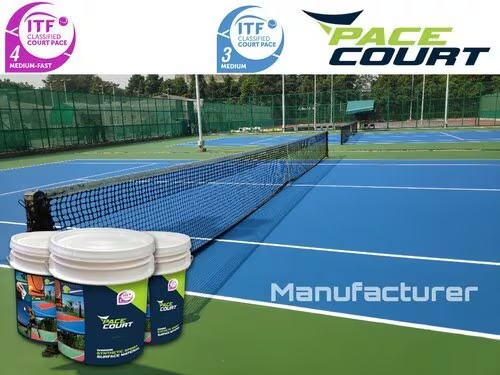
Before finalizing, evaluate the manufacturer on:
✔ Years of industry experience
✔ Portfolio of completed tennis courts
✔ ITF-certified flooring systems
✔ Customizable cushion layers & court speed options
✔ Transparent pricing and specs
✔ Warranty and after-sales service
✔ Installation trained workforce
A manufacturer offering consultation + on-site installation + maintenance guidance is always more reliable.
Conclusion
A high-quality tennis court is not just an infrastructure investment — it’s a long-term asset that shapes an athlete’s performance and a sports academy’s reputation. Partnering with a reputable tennis court flooring manufacturer ensures durability, scientific engineering, and a world-class playing experience.
Whether you are developing a commercial sports complex, academy, school sports ground, or private residential court, selecting the right manufacturer will determine:
- Court performance
- Athlete safety
- Maintenance cost
- Surface life
Choose wisely, compare technical specifications, and invest in flooring that meets global sports standards.