If you’ve ever dreamed of stepping outside your home and walking straight onto your own tennis court, you’re not alone. Over the past decade, private homeowners, schools, clubs, and real estate developers have increasingly invested in building custom tennis courts. But here’s the thing—constructing a tennis court isn’t just about pouring concrete and drawing white lines. It’s a specialized process that demands expertise, precision, and long-term planning. That’s where a professional tennis court builder comes in.
A tennis court builder doesn’t simply “build.” They evaluate soil conditions, analyze drainage, consider climate, and select materials that match both performance goals and budget. Think of it like building a house—you wouldn’t skip the foundation, right? The same logic applies here. The strength of your base determines how your court performs for years to come.
Whether you’re planning a backyard court for family fun or a professional-grade facility for tournaments, understanding the construction process is essential. From choosing the right surface to installing lighting and fencing, every step influences durability, playability, and maintenance costs.
And let’s be honest—tennis courts aren’t cheap. So if you’re going to invest, you want to get it right the first time. In this guide, we’ll break down everything you need to know about hiring a tennis court builder, understanding construction costs, choosing surfaces, and ensuring your court stands the test of time.
By the end, you’ll have a clear roadmap—no guesswork, no surprises—just solid information to help you make confident decisions.
Table of contents
- What Does a Tennis Court Builder Do?
- Types of Tennis Courts You Can Build
- Choosing the Right Surface for Your Tennis Court
- Step-by-Step Tennis Court Construction Process
- Tennis Court Dimensions and Layout Standards
- Importance of Proper Drainage in Tennis Court Building
- Tennis Court Lighting and Fencing Options
- Maintenance Tips for Long-Lasting Tennis Courts
- Common Mistakes to Avoid When Hiring a Tennis Court Builder
- How to Choose the Best Tennis Court Builder
- Eco-Friendly and Sustainable Tennis Court Construction
- Is Building a Tennis Court a Good Investment?
- Conclusion
What Does a Tennis Court Builder Do?
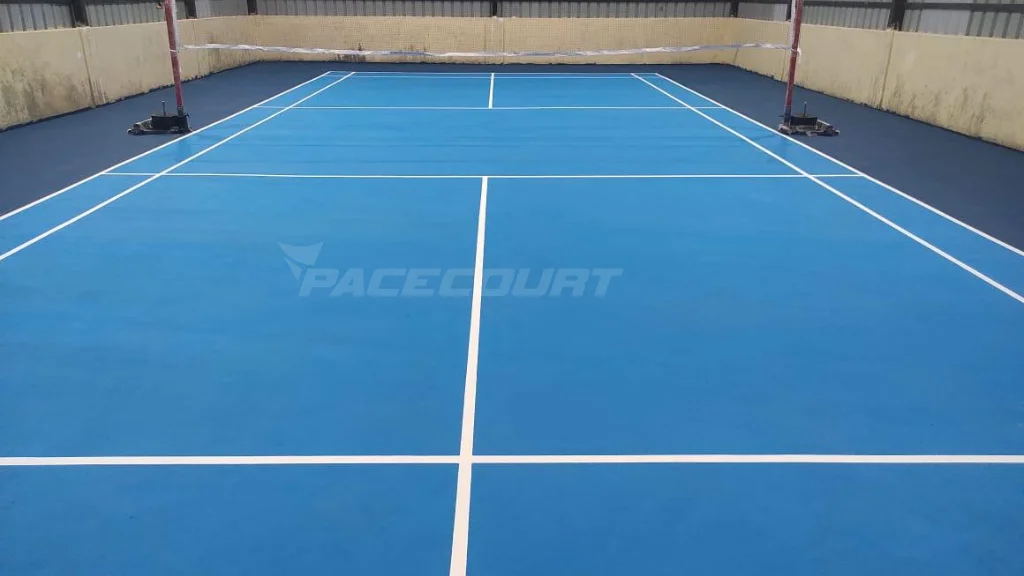
You might be wondering, “Can’t a general contractor handle this?” Technically, maybe. But realistically? Not if you want professional results. A tennis court builder specializes in the technical details that most contractors overlook.
First comes the site evaluation. This step is crucial. The builder assesses soil stability, slope, drainage patterns, and space availability. A poorly evaluated site can lead to cracks, water pooling, and uneven surfaces. And trust me—nothing ruins a match faster than a bad bounce caused by structural flaws.
Next comes design planning. This isn’t just about dimensions. A tennis court builder considers:
- Orientation to minimize sun glare
- Wind exposure
- Drainage systems
- Surface materials
- Lighting placement
- Fencing height
Each decision affects both gameplay and longevity. For example, improper court orientation can make evening matches nearly impossible due to sun interference.
Then comes construction. This involves excavation, grading, laying the foundation base, installing the surface system, and applying acrylic coatings or clay layers. Precision matters down to the millimeter. Even slight elevation errors can lead to drainage issues or surface cracks.
Finally, finishing touches include line striping, net installation, fencing, and optional features like windscreens or LED lighting.
In short, a tennis court builder acts as engineer, designer, and project manager all rolled into one. Their expertise ensures that your investment performs beautifully for 20–30 years instead of deteriorating in five.
Hiring a specialist isn’t an expense—it’s insurance against costly mistakes.
Types of Tennis Courts You Can Build
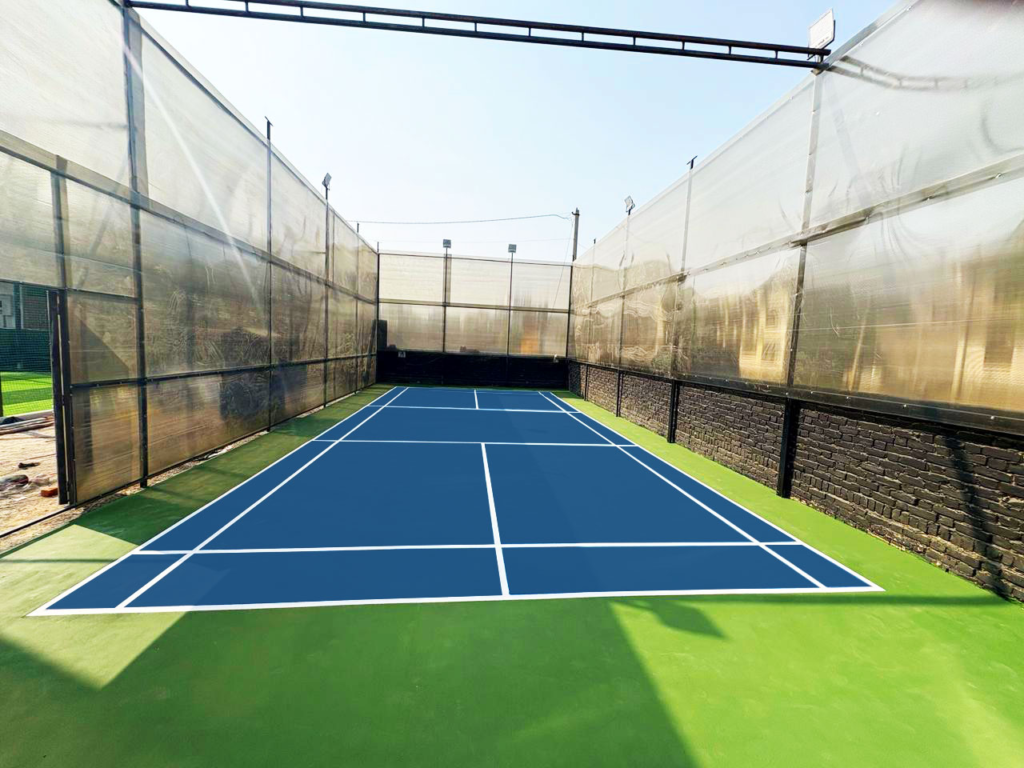
Not all tennis courts are created equal. In fact, the type of surface you choose dramatically changes how the game feels, how much maintenance you’ll handle, and how much money you’ll spend over time. Let’s break down the main options.
Hard Courts
Hard courts are the most common type worldwide—and for good reason. They’re durable, relatively low maintenance, and suitable for all skill levels. Typically constructed with asphalt or concrete bases and coated with acrylic layers, hard courts offer consistent ball bounce and moderate speed.
Upgrade Your Sports Court Today
Get premium synthetic acrylic flooring designed for durability, grip, and performance.
Get Free ConsultationThey’re ideal for residential properties and commercial facilities because they hold up well under heavy use. Maintenance mainly involves cleaning, crack repairs, and resurfacing every 4–8 years.
Clay Courts
Clay courts, often associated with European tournaments like the French Open, offer a slower playing surface. The ball bounces higher, and rallies last longer. Many players find clay easier on the joints due to its softer surface.
However, clay courts demand regular maintenance—watering, rolling, and resurfacing are routine tasks. They’re best suited for clubs or serious tennis enthusiasts willing to invest time and care.
Grass Courts
Grass courts are elegant and traditional but extremely high maintenance. They require constant mowing, irrigation, and leveling. Because of this, they’re rare outside professional tournaments.
Synthetic and Hybrid Courts
These modern surfaces mimic clay or grass but require far less maintenance. They’re gaining popularity in residential installations due to durability and performance balance.
Choosing the right court type isn’t just about aesthetics—it’s about climate, usage frequency, and long-term maintenance commitment.
Choosing the Right Surface for Your Tennis Court
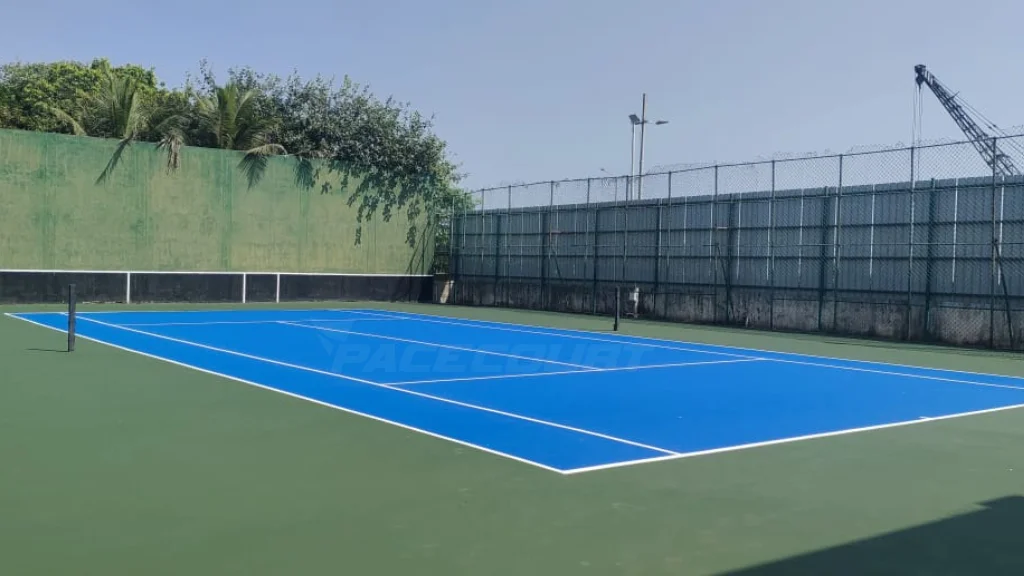
Let’s be honest—this is where most people get stuck. You’ve decided to build a court, you’ve found a tennis court builder, and now comes the big question: Which surface should I choose? It’s not just about looks. The surface you pick will shape the way the game feels, how much maintenance you’ll deal with, and how long your investment lasts.
First, think about climate. If you live in an area with heavy rainfall, clay might become a constant maintenance headache. Hard courts with proper drainage systems tend to perform better in wet climates. On the other hand, extremely hot regions may cause certain acrylic coatings to expand and crack if not properly installed. A skilled tennis court builder will recommend materials designed specifically for your local weather conditions.
Next, consider maintenance. Are you someone who enjoys hands-on upkeep? Or do you prefer something that requires minimal attention? Hard courts typically need occasional pressure washing and resurfacing every few years. Clay courts, however, demand daily care—watering, rolling, brushing. It’s almost like owning a garden; beautiful but demanding.
Then there’s player experience. Fast-paced players often love hard courts because the ball moves quickly and rallies are aggressive. Clay slows the game down, allowing longer rallies and strategic play. Synthetic turf offers a softer feel, reducing joint strain.
Step-by-Step Tennis Court Construction Process
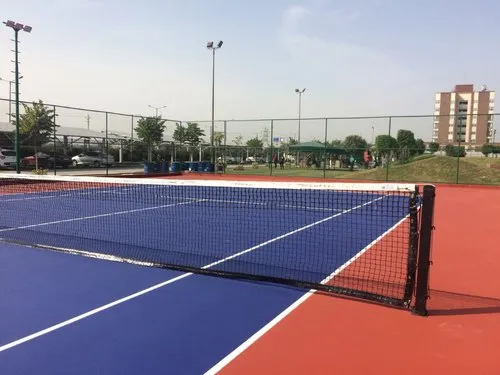
Building a tennis court isn’t a weekend DIY project. It’s a structured, multi-phase process that requires engineering precision. Let’s walk through what actually happens behind the scenes when a professional tennis court builder gets to work.
Site Preparation and Excavation
Everything begins with the land. Even if the area looks flat to the naked eye, precise grading is essential. Builders remove vegetation, debris, and unstable soil layers. Excavation ensures a stable subgrade foundation. Think of this as the roots of a tree—if they’re weak, the entire structure suffers.
Upgrade Your Sports Court Today
Get premium synthetic acrylic flooring designed for durability, grip, and performance.
Get Free ConsultationThe ground is then compacted using heavy machinery. Proper compaction prevents future sinking or shifting, which could cause cracks. Laser-guided equipment is often used to achieve exact grading slopes, typically around 1% to allow water runoff.
Base Construction and Drainage System
This step is arguably the most critical. The base usually consists of crushed stone layers compacted in stages. Each layer must meet specific density standards. Poor base construction is the number one reason courts fail prematurely.
Drainage systems are installed during this phase. Depending on soil conditions, builders may include:
- French drains
- Perimeter drainage pipes
- Sloped grading systems
- Permeable base layers
Water is the enemy of any court. Without proper drainage, moisture seeps into the base, causing cracks and surface bubbles over time.
Surface Installation
Once the base cures and stabilizes, the surface material is applied. For hard courts, asphalt or concrete is poured and allowed to cure. After curing, multiple acrylic coating layers are applied to create texture, color, and slip resistance.
Clay courts involve spreading crushed brick or shale layers, followed by leveling and rolling. Synthetic courts involve rolling out turf systems and infill materials.
Precision matters here. Even a small elevation inconsistency can affect ball bounce.
Line Marking and Finishing Touches
Finally, crisp white lines are painted according to official dimensions. Nets, posts, fencing, and lighting are installed. Windscreens and seating areas may also be added.
From start to finish, the process can take 4 to 12 weeks, depending on weather and complexity.
Tennis Court Dimensions and Layout Standards
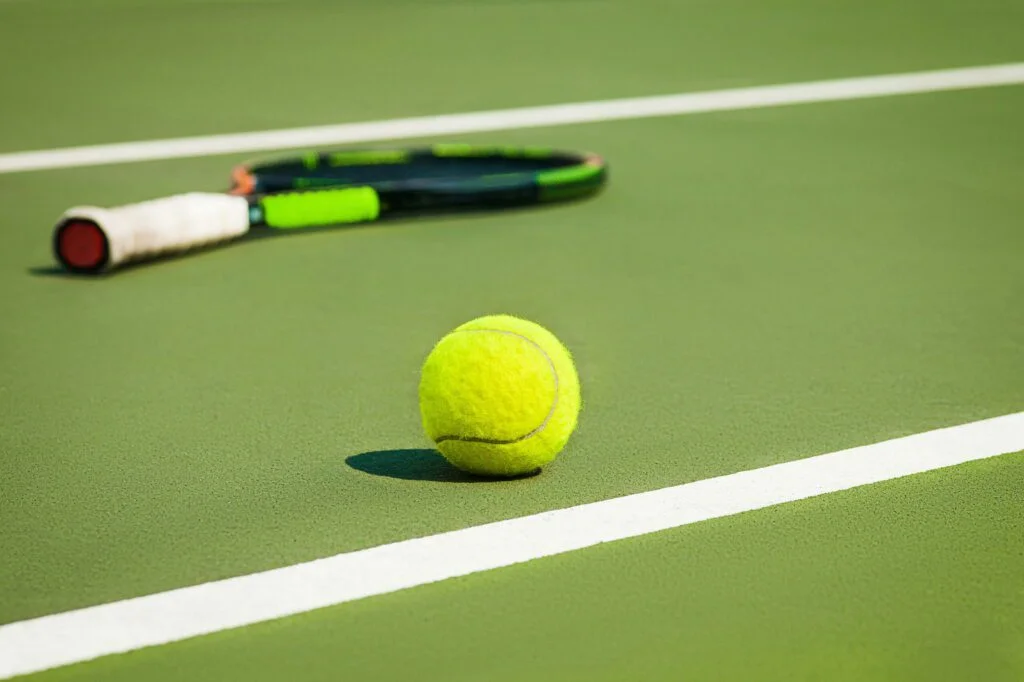
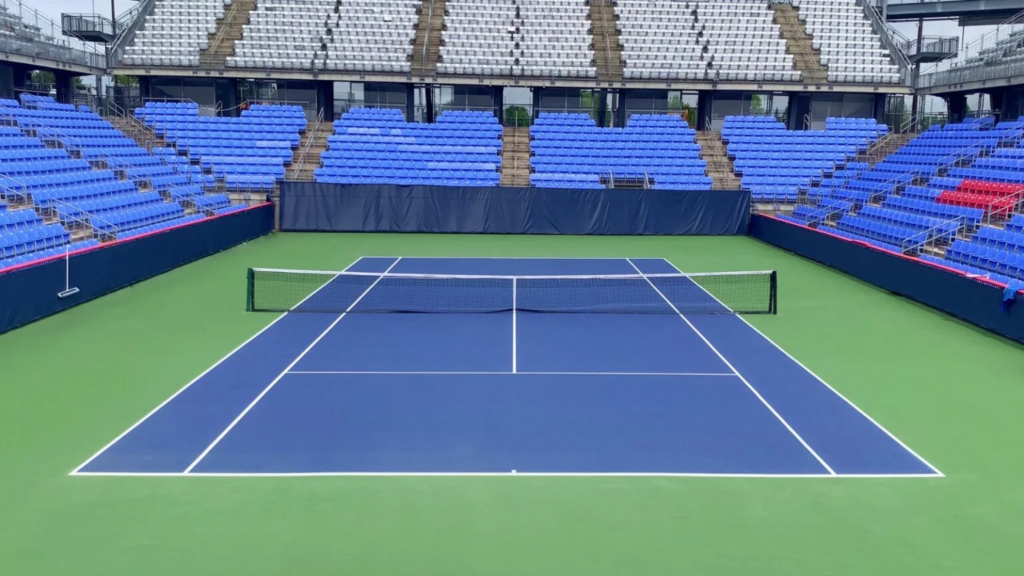
Precision defines a professional tennis court. Official dimensions are standardized by the International Tennis Federation (ITF).
Here are the basics:
- Total court length: 78 feet
- Singles width: 27 feet
- Doubles width: 36 feet
- Recommended total playing area: 120 feet x 60 feet
That extra surrounding space is critical. Without adequate runoff area, players risk injury when chasing wide shots.
Net height is 3 feet at the center and 3.5 feet at the posts. Line thickness must measure exactly 2 inches (except baselines, which can be up to 4 inches).
Orientation also matters. Courts are ideally aligned north-south to minimize sun glare during play.
Precision in measurements isn’t optional—it directly affects playability and compliance.
Importance of Proper Drainage in Tennis Court Building
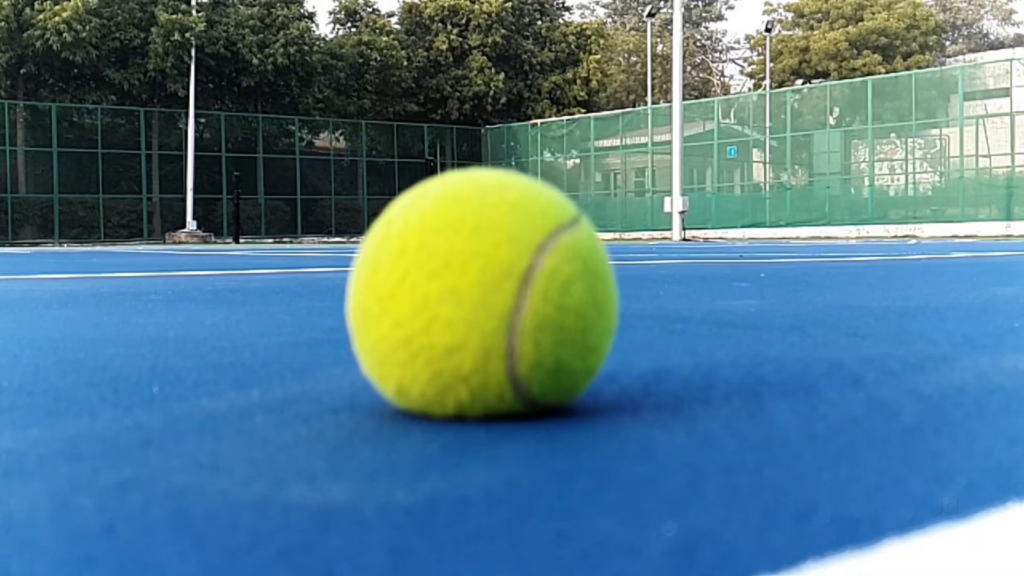
Water damage is silent but destructive. It creeps in slowly and causes long-term structural failure. That’s why drainage is one of the most important elements in tennis court construction.
Even hard courts, which appear solid and impermeable, rely heavily on subsurface drainage. Without it, water accumulates beneath the surface, leading to cracks, bubbling, and uneven areas.
Effective drainage systems include:
- Sloped surfaces (1% gradient)
- Perimeter trench drains
- Underground perforated pipes
- Porous base layers
Clay courts, in particular, depend on efficient drainage to prevent muddy conditions.
Think of drainage like the immune system of your court—it keeps everything healthy behind the scenes.
Skipping proper drainage to save money almost always leads to expensive repairs later.
Tennis Court Lighting and Fencing Options
Imagine this: it’s a warm summer evening, the sun is setting, and you’re in the middle of an intense rally. Without proper lighting, that match ends early. That’s why lighting isn’t just an add-on—it’s a game extender. A professional tennis court builder understands that the right lighting system can completely transform how and when your court is used.
Modern tennis court lighting typically relies on LED systems. Why LED? Because they’re energy-efficient, long-lasting, and provide consistent brightness without harsh glare. Compared to older metal halide systems, LEDs consume less electricity and require less maintenance. Over time, that means lower operating costs.
Lighting placement is equally important. Most courts use four to eight poles positioned strategically to eliminate shadows and ensure even light distribution. Poor placement can create dark spots or blinding glare, both of which negatively affect gameplay. A skilled builder calculates beam angles carefully so players can track the ball clearly.
Now, let’s talk fencing. Fencing isn’t just about keeping the ball in play—it’s about safety, privacy, and durability. Standard tennis court fencing ranges from 10 to 12 feet high. Chain-link fencing is the most common choice due to affordability and strength, but vinyl-coated options offer better aesthetics and corrosion resistance.
You can also add:
- Windscreens to reduce wind interference
- Privacy screens for residential areas
- Custom-colored fencing to match landscaping
- Lockable gates for security
When lighting and fencing are done right, your court feels complete—secure, professional, and ready for play at any hour.
Maintenance Tips for Long-Lasting Tennis Courts
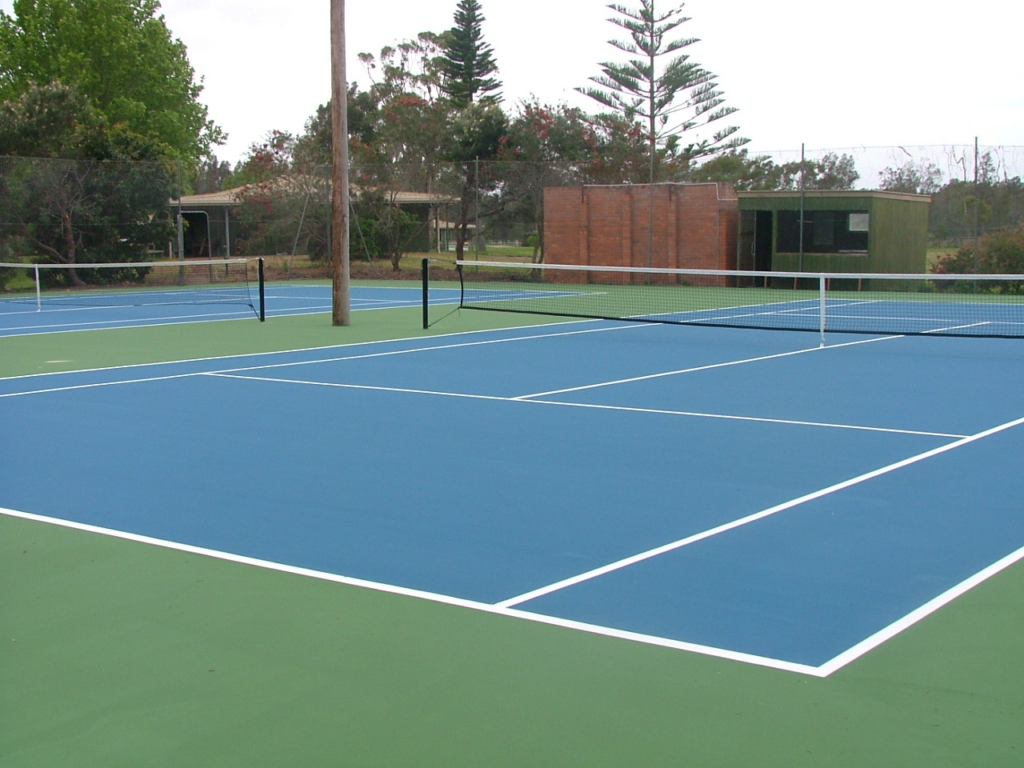
Here’s the truth: building a tennis court is only half the journey. Maintenance determines how long it truly lasts. Even the highest-quality construction can deteriorate quickly if neglected. Think of your court like a car—regular care keeps it running smoothly for years.
For hard courts, routine cleaning is essential. Leaves, dirt, and debris trap moisture, which can stain or weaken the surface. A simple weekly sweep or blower session goes a long way. Pressure washing a few times a year helps maintain texture and color vibrancy.
Crack repair is another critical task. Small cracks may seem harmless, but water can seep in and expand them over time. Addressing minor damage early prevents expensive resurfacing later. Speaking of resurfacing, most hard courts need it every 4–8 years, depending on usage and climate.
Clay courts require more hands-on care:
- Daily brushing to redistribute material
- Regular watering to maintain consistency
- Rolling to keep the surface compact
- Seasonal top-dressing
Synthetic surfaces fall somewhere in between. They require occasional cleaning and infill leveling.
Seasonal inspections are smart for any surface. Look for drainage issues, uneven areas, or worn lines. A proactive maintenance schedule protects your investment and keeps gameplay consistent.
The bottom line? A well-maintained court can last 20–30 years. A neglected one might struggle to reach 10.
Common Mistakes to Avoid When Hiring a Tennis Court Builder
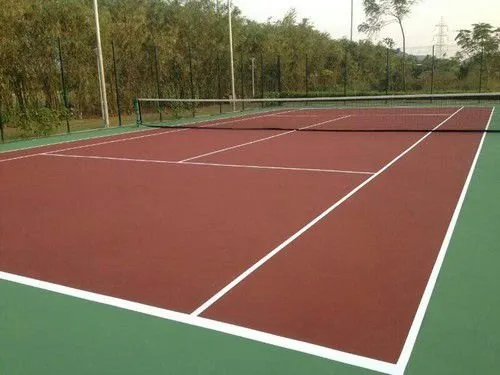
Choosing the wrong tennis court builder can turn an exciting project into a costly nightmare. And unfortunately, many mistakes happen before construction even begins.
The most common error? Choosing based on price alone. A low bid might seem attractive, but it often hides shortcuts in materials or base preparation. Remember, the foundation is everything. Skimping here leads to cracks, drainage issues, and uneven surfaces within a few years.
Another mistake is ignoring experience. Tennis court construction is specialized. Ask for a portfolio. Look at past projects. Talk to previous clients. A builder with proven experience will confidently explain their process and materials.
Warranties also matter. Does the contractor offer a workmanship guarantee? What about surface material warranties? Without clear documentation, you could be stuck paying for repairs out of pocket.
Here are additional red flags:
- Vague contracts without detailed scope
- No soil testing or site evaluation
- Lack of proper licensing or insurance
- Unrealistically short construction timelines
Lastly, don’t overlook communication. If a builder avoids questions or rushes decisions, that’s a warning sign. A reliable professional takes time to explain every stage.
Building a tennis court is a significant investment. Protect it by choosing wisely.
How to Choose the Best Tennis Court Builder
Finding the right tennis court builder is like assembling a winning doubles partner—you want skill, reliability, and clear communication.
Start with research. Look for companies that specialize specifically in sports court construction. General contractors may not understand the precision required for proper slope, drainage, and surfacing.
Experience matters. Ask how many courts they’ve built. Have they worked with residential clients, schools, or professional facilities? Variety demonstrates adaptability.
Certifications are another indicator of professionalism. Builders affiliated with recognized sports construction associations often follow strict industry standards. Compliance with local building codes and ITF guidelines is non-negotiable.
Don’t forget to request references. Speaking with previous clients gives insight into:
- Timeliness
- Budget accuracy
- Post-construction support
- Overall satisfaction
Transparency during the bidding process is crucial. A trustworthy builder provides a detailed breakdown of costs, timelines, and materials. No hidden surprises.
Finally, trust your instincts. Communication should feel open and straightforward. If a builder listens carefully to your goals and provides tailored recommendations, that’s a strong sign you’re in good hands.
Choosing the right professional ensures your court performs beautifully for decades.
Eco-Friendly and Sustainable Tennis Court Construction
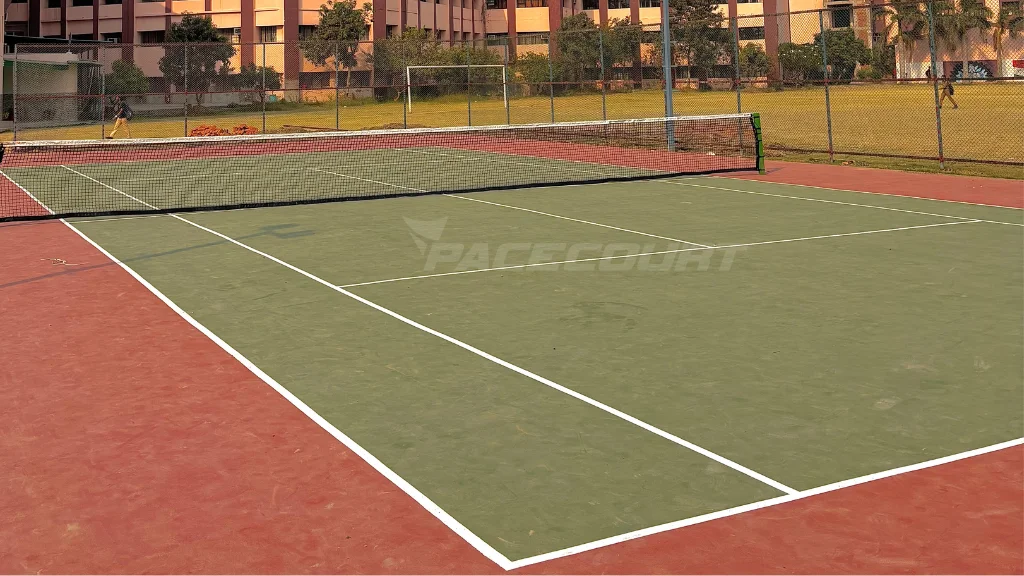
Sustainability is no longer optional—it’s a priority. Many modern tennis court builders now incorporate eco-friendly practices that reduce environmental impact without sacrificing performance.
One major advancement is permeable court systems. These allow water to pass through the surface into the ground below, reducing runoff and improving natural drainage. They’re especially useful in areas prone to heavy rainfall.
Recycled materials are also gaining popularity. Some hard court systems use recycled rubber or reclaimed asphalt in their base layers. Not only does this reduce waste, but it can also improve shock absorption.
Energy-efficient LED lighting dramatically reduces electricity consumption. Solar-powered lighting options are even available for environmentally conscious homeowners.
Water conservation matters too, especially for clay courts. Automated irrigation systems minimize water waste by delivering precise amounts only when needed.
Landscaping around the court can also contribute to sustainability:
- Native plants reduce irrigation needs
- Natural windbreaks minimize wind disruption
- Permeable walkways reduce runoff
Choosing sustainable options may slightly increase upfront costs, but long-term savings and environmental benefits often outweigh the difference.
A tennis court can be both high-performance and environmentally responsible.
Is Building a Tennis Court a Good Investment?
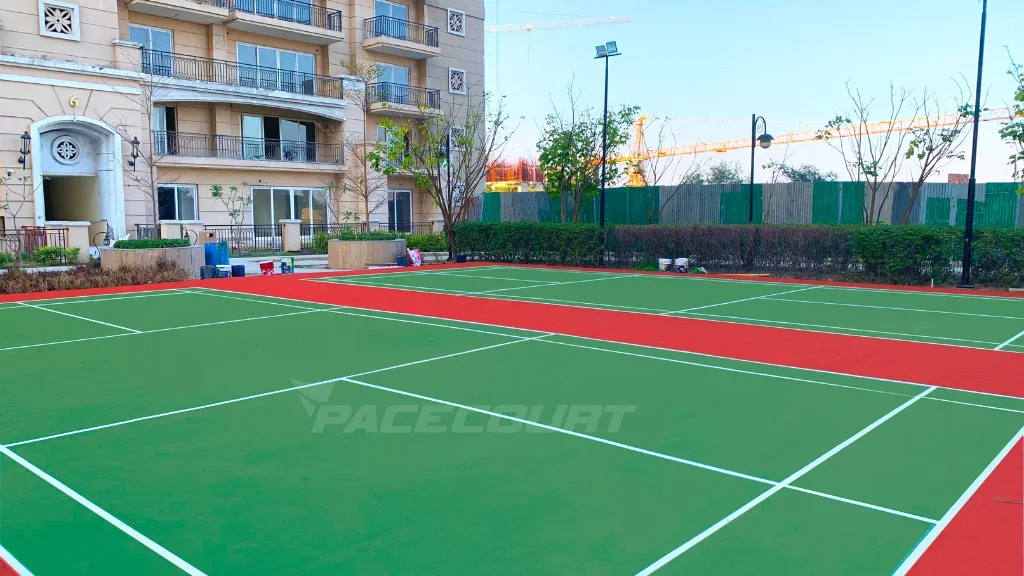
So here’s the big question: Is building a tennis court worth it?
Financially speaking, a well-designed court can increase property value—especially in luxury real estate markets. For private homeowners, it adds exclusivity and lifestyle appeal. For schools or clubs, it creates revenue opportunities through memberships, lessons, and tournaments.
But the return isn’t only financial. There’s a lifestyle ROI that’s harder to measure. Imagine stepping outside for a quick match instead of driving across town. Imagine family tournaments, weekend rallies, or evening practice sessions under the lights.
For commercial facilities, courts generate income through:
- Hourly rentals
- Coaching programs
- League events
- Hosting tournaments
The key is quality construction. A poorly built court drains money through repairs. A professionally built one delivers long-term value.
When viewed as a 20–30-year asset, the cost per year becomes surprisingly reasonable. It’s not just concrete and paint—it’s an experience, a gathering space, and a long-term investment in health and enjoyment.
Conclusion
Building a tennis court isn’t just a construction project—it’s a commitment to quality, performance, and long-term enjoyment. From selecting the right surface to ensuring proper drainage, lighting, and maintenance, every detail plays a crucial role in how your court performs over time.
A professional tennis court builder brings technical expertise, precision, and experience that protect your investment. While costs vary depending on location, materials, and customization, the value of a well-built court extends far beyond dollars. It enhances property appeal, promotes an active lifestyle, and creates opportunities for recreation and competition.
If you’re considering building a tennis court, focus on quality over shortcuts. Plan carefully, choose experienced professionals, and prioritize proper construction techniques. Done right, your court can provide decades of reliable performance and enjoyment.
Stay Updated with Pacecourt
Discover expert insights, practical tips, and the latest industry updates from Pacecourt, covering sports flooring, tennis and multi-sport court construction, resurfacing, maintenance, court performance, and innovative sports infrastructure solutions.
Powered by Google's Preferred Sources feature