Tennis Court Materials: Types, Comparison & the Best Choice for India
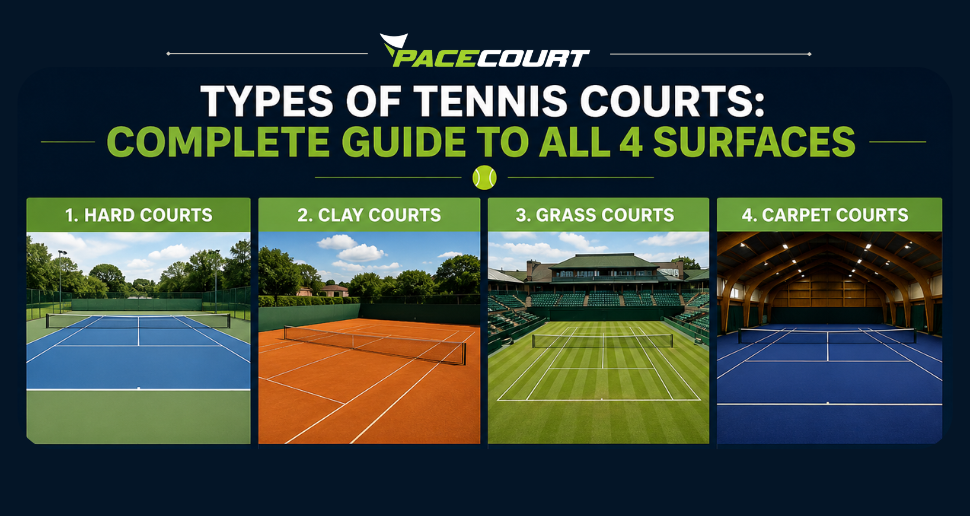
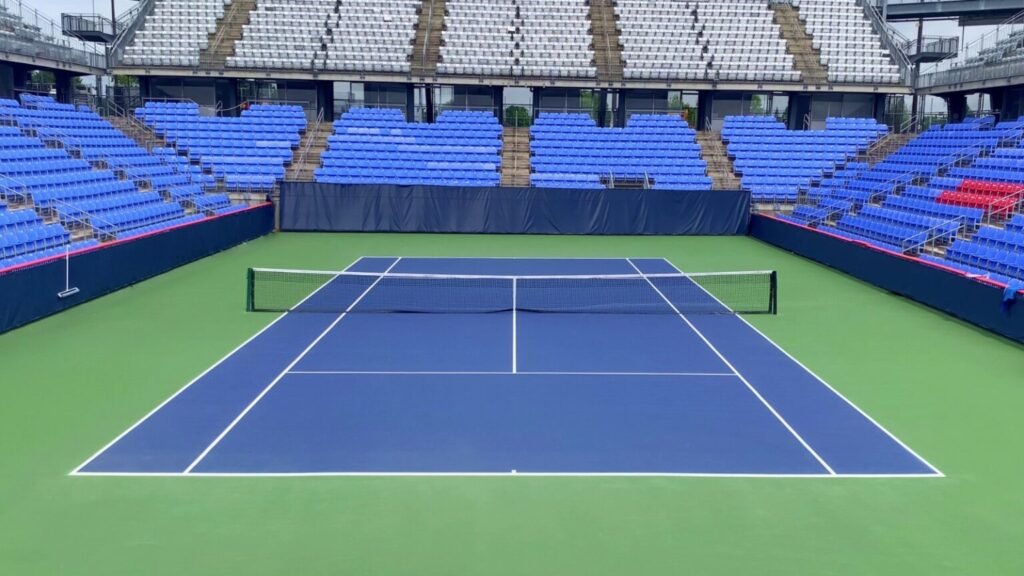
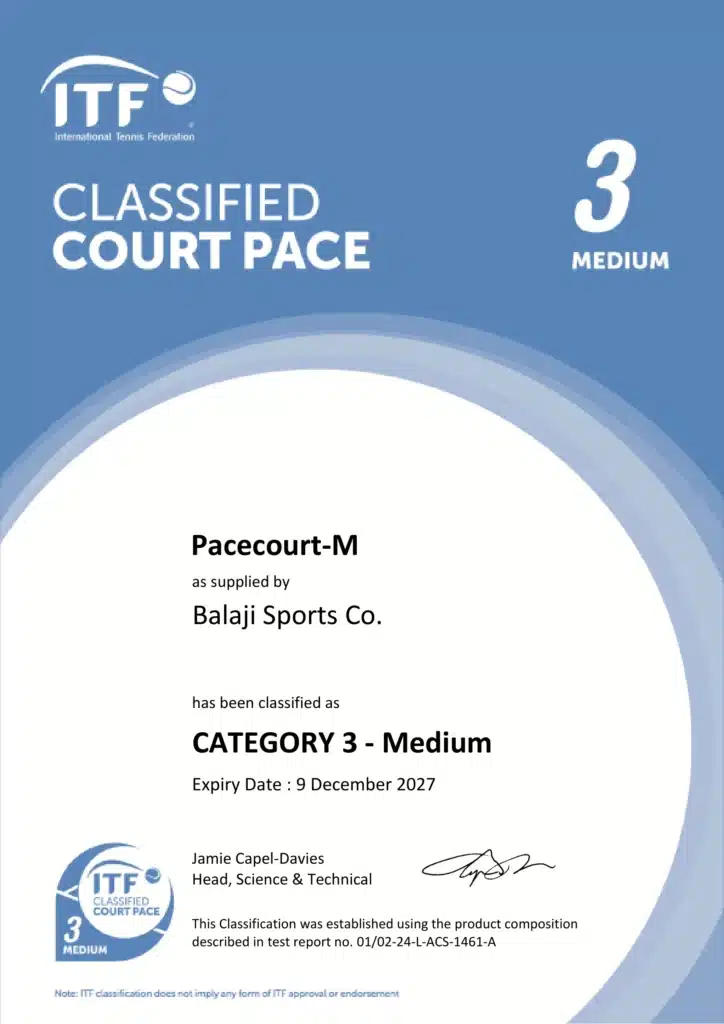
The material you choose for a tennis court determines everything: how the ball bounces, how safe the surface is to play on, how much maintenance it needs, and how long it lasts. So, don’t compromise by trusting just any court material. Choose quality-tested solutions from Pacecourt, India’s leading sports flooring companies, providing ITF-certified tennis court materials for reliable performance and long-lasting play. Whether you’re building a new court or resurfacing an existing one, this guide offers an honest comparison of the major tennis court materials, explains how each surface is built in layers, and helps you choose the right option for your needs. What Goes Into Building a High-Performance Tennis Court? Most people think of tennis court material as the coloured coating on top. In reality, a tennis court is built in layers. A full tennis court system typically consists of: 4 Types of Tennis Court Surfaces: Which Material Is Right for You? Comparison Factor Pacecourt Acrylic Hard Court Clay Court Grass Court Synthetic Grass Outdoor suitability ✅ Excellent ⚠️ Limited in monsoon ❌ Difficult ✅ Good for recreation Ball bounce consistency ✅ Consistent By ITF Certified ⚠️ Depends on maintenance ⚠️ Variable ⚠️ Changes with wear Playing speed ✅ Customizable with texture Slow Fast and low bounce Medium, varies by infill Weather resistance ✅ Good with proper installation ❌ Rain-sensitive ❌ Weather-sensitive ⚠️ Depends on product Day-to-day maintenance ✅ Low ❌ High ❌ Very high ⚠️ Moderate Long-term surface upkeep ✅ Periodic resurfacing ❌ Frequent levelling and rolling ❌ Intensive turf care ⚠️ Brushing and infill care Multi-sport use ✅ Yes, with suitable line markings ⚠️ Limited ⚠️ Limited ⚠️ Depends on system Colour options ✅ Wide range ⚠️ Limited ❌ Natural green ⚠️ Product-dependent Best suited for Suitable for All Locations Dedicated tennis facilities Specialist tennis venues Recreational facilities Ready to build your tennis court? Contact me to discuss your project and find the right acrylic flooring solution for your needs. Contact Pacecourt today! Pacecourt’s Tennis Acrylic Court Materials – Engineered for Superior Play Why Pacecourt Acrylic Flooring Is the Smart Choice for Tennis Courts in India India’s climate puts tennis courts through a hard test. Summer temperatures cross 40°C in many regions, monsoon rains arrive for months each year, and courts in schools and clubs face heavy daily usage across most of the year. Choose Pacecourt’s Acrylic hard court surfaces hold up better than any other material under these conditions. Here is why: Tennis Court Maintenance Guide: Care Requirements by Surface Type Maintenance Requirements Pacecourt Acrylic Hard Court Clay Court Synthetic Grass Modular PP Tiles Daily Maintenance Sweep debris Water and roll Remove debris Clear dust and debris Weekly Maintenance Wash with water as needed Sweep lines and level surface Brush fibres Check tile joints Annual Inspection Check cracks and coating Repair worn areas Check infill and drainage Inspect loose or damaged tiles Resurfacing / Replacement Every 5–8 years Seasonal repairs Around 8–10 years Replace damaged tiles as needed Tennis Court Construction Cost in India Construction component Estimated cost in India Site preparation and levelling ₹80,000–₹1 lakh Sub-base and drainage ₹1–2.5 lakh Concrete or asphalt base ₹2–6 lakh Acrylic court surfacing ₹1.5–4 lakh Net, posts and line marking ₹45,000–₹1 lakh Fencing ₹1.5–4 lakh LED floodlighting (optional) ₹2–5 lakh Estimated total ₹8–24 lakh These are indicative planning estimates, not a fixed quotation. Actual costs vary by location, court dimensions, site conditions and specifications. Some components may be bundled into contractor packages. Get the Pacecourt Acrylic Tennis Court Material Pacecourt manufactures acrylic synthetic sports surface materials for tennis courts across India. Our materials carry ITF Certified, offer up to 30% more coverage than standard products, and are available with fast delivery and no minimum order value, whether you are building one court or ten. Get a Tennis Court Enquiry Now !! Frequently Asked Question (FAQs) What is the most durable tennis court material? Pacecourt Acrylic hard courts on a concrete base can last 10 years or more with proper installation and periodic resurfacing. Can an old concrete or asphalt court be resurfaced with acrylic? Yes, existing concrete or asphalt courts can be resurfaced with pacecourt acrylic if the base is structurally sound and properly repaired. What is the difference between a Pacecourt cushion coat and a Pacecourt standard acrylic surface? Pacecourt’s Standard acrylic provides a firm playing surface, while pacecourt cushion coat systems add rubber-based layers to reduce impact on players’ joints. How many layers does a good acrylic tennis court have? A quality acrylic tennis court typically features at least 5 layers, while Pacecourt also offers premium 7–8 layer systems designed with ITF Certified to deliver enhanced comfort, durability, and a better playing experience. What tennis court material is best for a school in India? Pacecourt Acrylic flooring on a concrete base is ideal for schools because it is durable, low-maintenance, and suitable for regular use. Is synthetic acrylic the same as a normal painted concrete surface? No, Pacecourt synthetic acrylic sports flooring uses multiple sports-grade coating layers for consistent ball bounce, grip, and UV resistance, unlike ordinary concrete paint.