Why Acrylic Outperforms PP Tiles and Clay for Sports Surfaces in India
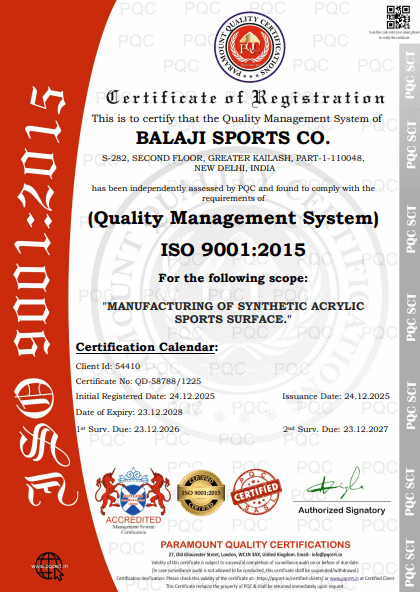
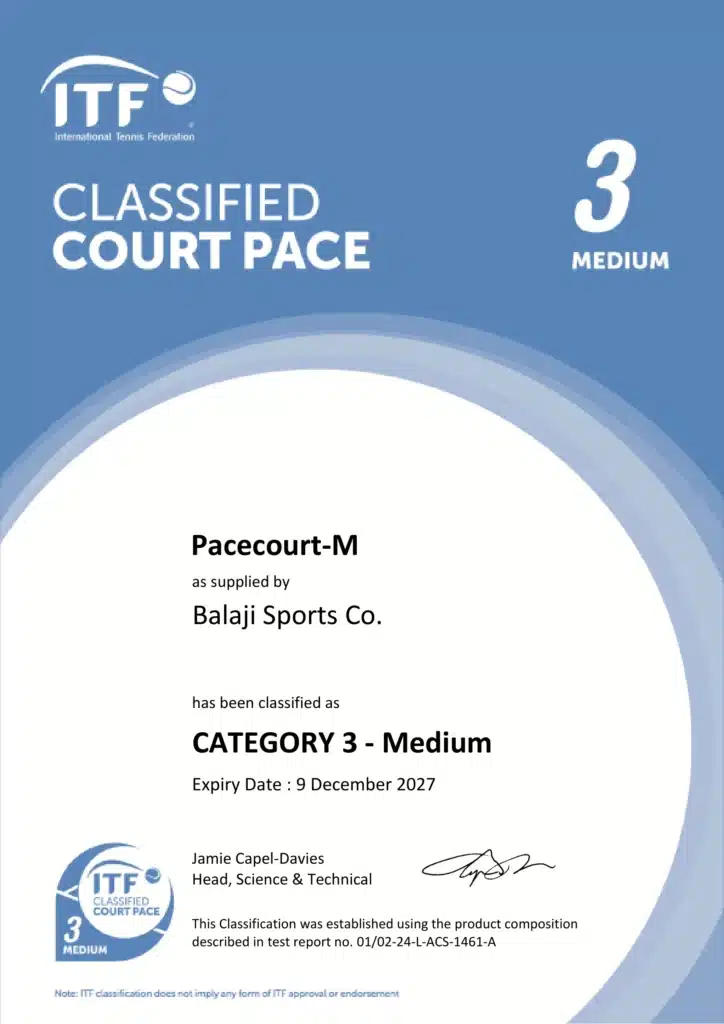
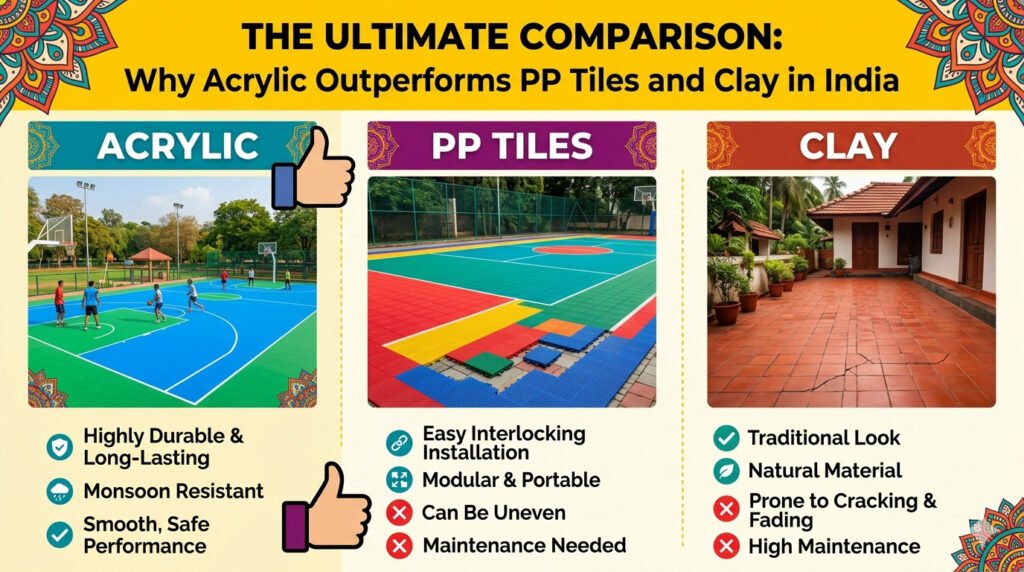
For over 15 years, we at Pacecourt have built more than 4,000 sports courts across India — from tennis courts at IIT Roorkee and ISKON to basketball courts for DLF and pickleball courts in the hills of Dehradun. In every project, the single most consequential decision has been the same: what surface does this court deserve? We have watched courts paved with PP tiles buckle under a Rajasthan summer. We have seen clay-surface courts in Kerala absorb monsoon water and never quite recover. And we have watched our own synthetic acrylic flooring — engineered specifically for India’s climate extremes — perform season after season, decade after decade, at institutions trusted by champions. This guide is our honest, data-backed answer to the question we are asked most often: ‘Why acrylic? Why not just use PP tiles or clay — they’re cheaper?’ Read on. The numbers speak for themselves. Why Sports Flooring Needs a Different Standard Sports Surfaces Are Not Just Floors There is a fundamental distinction that too many facility owners miss: a sports surface is not a floor. A residential floor needs to be attractive, easy to clean, and durable enough to handle furniture and foot traffic. A sports surface must do all of that — and then perform under conditions no residential floor ever faces. Consider what a tennis court flooring endures on a single afternoon of play: thousands of ball impacts at velocities exceeding 100 km/h, lateral shoe drag generating friction forces of 30–50 kg per player per match, UV exposure in outdoor courts reaching UV index 11+ in summer, surface temperatures on a clear Delhi afternoon exceeding 65°C, and after all of this — it must still maintain consistent ball bounce, predictable traction, and be safe for players to fall on. PP tiles and clay were never engineered for these simultaneous, compounded demands. Pacecourt’s synthetic acrylic system was. The Indian Sports Infrastructure Boom India’s sports infrastructure is undergoing its most significant expansion in history. The success of Indian athletes at the Paris 2024 Olympics, the explosion of pickleball and padel, and the central government’s Khelo India programme have together created unprecedented demand for quality courts. The Sports Authority of India (SAI) alone is commissioning hundreds of new courts annually — and they are specifying synthetic acrylic. The question is not whether India will build more courts. It will. The question is whether those courts will last 5 years or 25. Whether they will be safe for students, athletes, and community users — or whether they will become a liability through premature failure, waterlogging, or dangerous slip conditions. Pacecourt has built courts trusted by SAI, CPWD, NDMC, IIT Roorkee, IISc, Tech Mahindra, Infosys, Indian Air Force, Indian Army, and hundreds of residential communities. This guide explains precisely why every one of those clients made the right call. Pacecourt’s Proven Track Record at a Glance ✓ 4,000+ courts installed across all 28 states and 8 UTs of India ✓ ITF-3 Certified — the international standard for professional tennis court surfaces ✓ ISO Certified manufacturing facility in Delhi ✓ 250+ trained dealer network ensuring quality installation nationwide ✓ Trusted by SAI, CPWD, NDMC, IIT, IISc, IIM, DLF, Godrej, Indian Air Force & Army ✓ Sports served: Tennis, Basketball, Badminton, Pickleball, Volleyball, Skating, Multi-sport, Walking & Cycle Tracks Understanding the Three Contenders Pacecourt Synthetic Acrylic Flooring: Engineered for Indian Conditions Pacecourt’s synthetic acrylic flooring system is an 8-layer engineered surface system — not a single-layer tile. Each layer serves a precise function, collectively delivering performance that no tile format can replicate. The system is applied over concrete or asphalt base and creates a seamless, professional sports surface. The Pacecourt 8-Layer System Layer Pacecourt Product Function Layer 1 Deep Patch Crack repair & base levelling — eliminates subsurface voids Layer 2 Concrete Primer Bonds acrylic layers to concrete/asphalt — prevents delamination Layer 3–4 Acrylic Resurfacer (×2) Creates smooth, uniform base surface — critical for ball bounce consistency Layer 5–6 Cushion Coat (×2) Shock absorption — reduces player fatigue and joint stress by up to 40% Layer 7–8 Color Coat (×2) UV-stable pigmented acrylic — delivers color, texture, and slip resistance Final Line Marking + Silica Sand Court lines + anti-slip granules for sport-specific traction control This is the architecture that separates Pacecourt from any tile product. Each Pacecourt layer is formulated to bond chemically with the layer above and below it — creating a monolithic surface rather than a collection of individual tiles. The result: no joints, no edges to curl, no gaps to trap water, and no tile displacement under lateral player movement. Pacecourt Acrylic: Key Technical Performance Data Surface Type: Seamless synthetic acrylic coating system (not tiles or pavers) Shock Absorption: 40–55% reduction in peak force vs bare concrete (ITF Test Method) Ball Rebound Consistency: 85–90% vertical rebound uniformity across surface (ITF-3) Water Permeability: Zero — surface sheds water completely; zero absorption UV Resistance: UV-stabilized Color Coat retains 95%+ color intensity after 10 years outdoor Surface Temperature Tolerance: Rated -20°C to +80°C — covers every Indian climate zone Slip Resistance: R10–R12 (adjustable via Silica Sand loading) — meets IS & international standards Expected Lifespan (Outdoor India): 20–30 years with basic maintenance Certifications: ITF-3 (Tennis), ISO Certified Manufacturing Polypropylene (PP) Tiles: The Budget Trap Polypropylene (PP) interlocking tiles are thermoplastic pavers made from a semi-crystalline polymer. Their appeal is straightforward: they are cheap, lightweight, and can be installed by unskilled labour in a single day. For temporary event flooring or light-use indoor play areas, they may be adequate. For serious sports surfaces in India’s climate — they are a well-documented failure. At Pacecourt, we regularly receive enquiries from facility owners looking to resurface courts that were originally built with PP tiles. The pattern is consistent: the tiles look acceptable for the first 12–18 months, then UV yellowing begins, interlocking joints loosen, and by year 4–5, tiles have cracked, warped, and created dangerous playing conditions. The ‘savings’ of choosing PP become a replacement cost that exceeds what a proper acrylic installation