Volleyball Court Measurement: Size, Flooring & Construction Guide
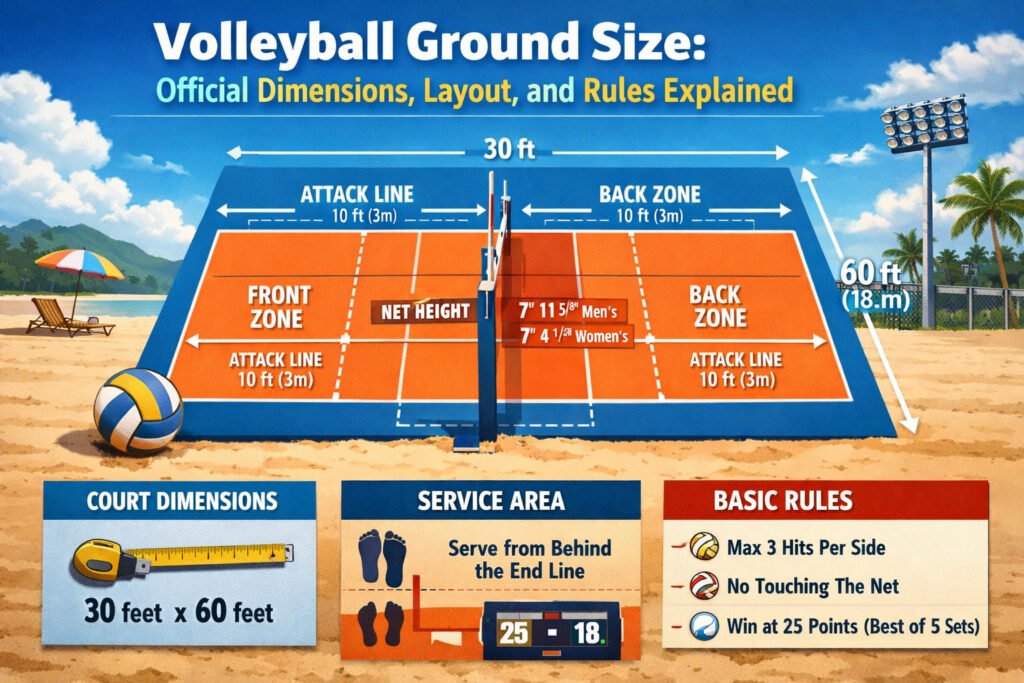
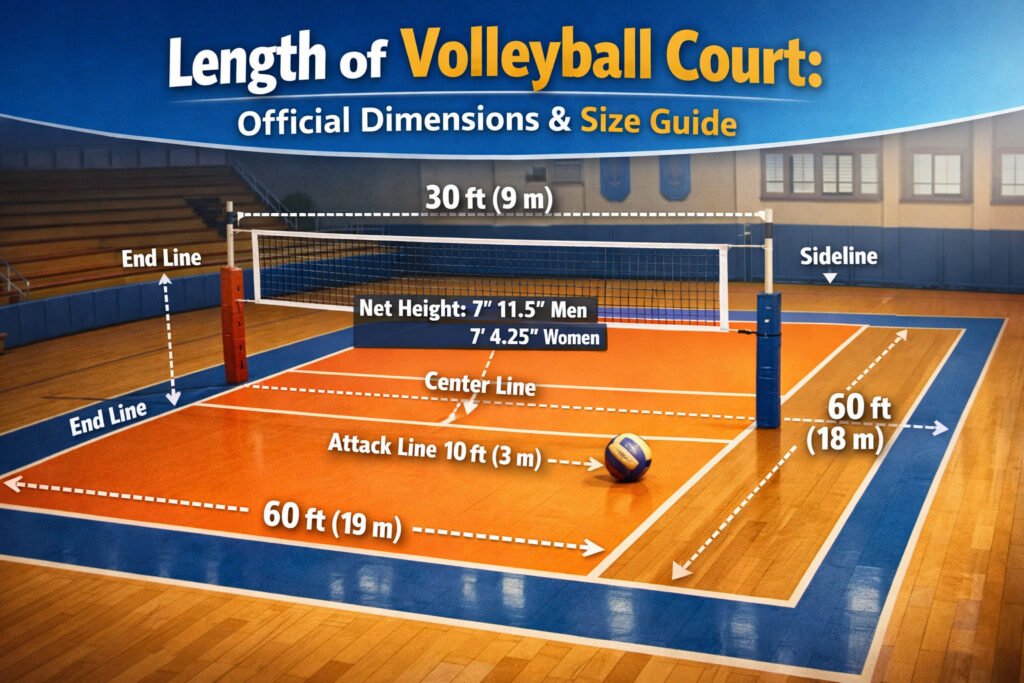
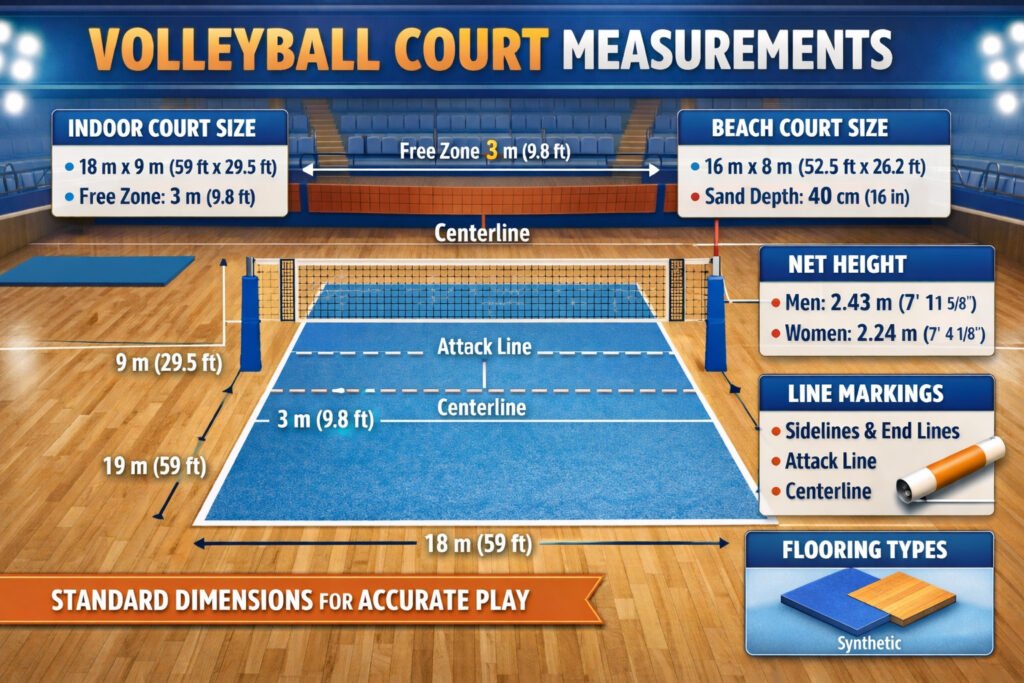
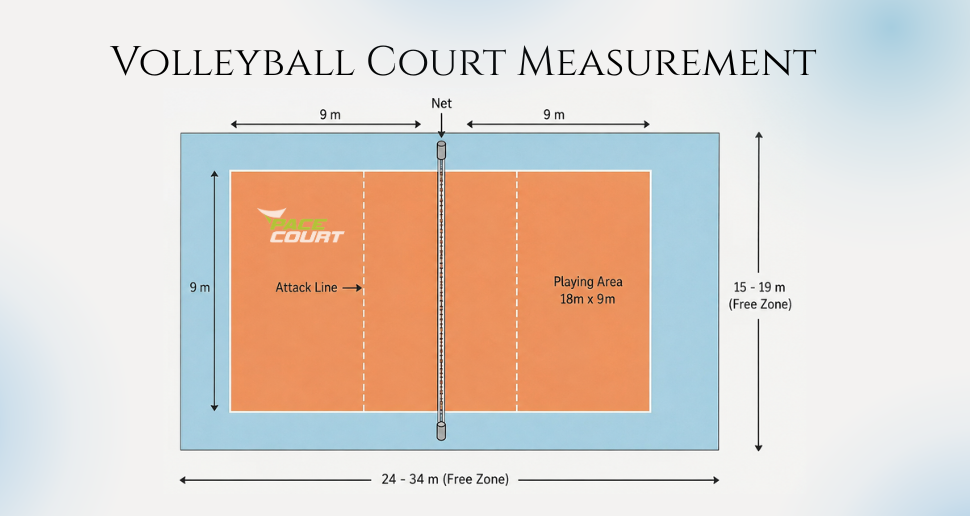
Getting your volleyball court measurement right is the first step to building a court people actually enjoy playing on. Whether you’re a school setting up a new sports facility, a startup building a sports academy, or a homeowner adding a court in your backyard, the exact dimensions matter more than most people think. A court that’s even slightly off in size, net height, or free space can change how the game plays out and whether it’s safe for the players on it. This guide covers the official volleyball court measurement standards, along with practical advice on flooring, material choices, and construction. You’ll also find separate numbers for indoor and beach volleyball, so you know exactly what to work with no matter which format you’re building for. Standard Volleyball Court Measurement for Indoor Play An indoor volleyball court is a rectangle measuring 18 metres long and 9 metres wide. A centre line runs directly under the net and splits the court into two equal halves, each measuring 9 x 9 metres. Court Dimensions and Boundary Lines All boundary lines are 5 cm wide and must be a light colour that stands out from the floor. Both side lines and end lines sit inside the total court dimensions, not outside them. This small detail trips up a lot of first-time builders, so it’s worth marking carefully. Net Height and Net Specifications The net sits at the centre line and its top edge is set at: Net height is measured from the centre of the court. It can’t vary by more than 2 cm across the width of the net. The net itself is roughly 1 metre wide and runs between 9.5 and 10 metres long. Antennae rods, 1.8 metres long, sit at each end of the net directly above the side lines to mark the legal crossing space for the ball. Attack Line, Service Zone and Front Zone The attack line sits 3 metres back from the centre line on each side and marks the front zone, where back-row players face restrictions on attacking the ball. Behind each end line sits the service zone, a 9-metre-wide strip where players serve from. This zone extends all the way to the edge of the free zone. Free Zone and Ceiling Clearance The free zone is the open space surrounding the court where players can chase down balls and dive for digs. At a minimum, it must be 3 metres wide on all sides. Above the court, the free playing space (ceiling clearance) needs to be at least 7 metres high with no obstructions like beams, lights, or banners hanging into that space. Volleyball Court Measurement by Level of Play The core court size stays the same everywhere, but the free zone and ceiling height requirements grow as the competition level gets more serious. Here’s how the numbers stack up: Feature Recreational / School National / Club Level FIVB World & Official Events Court size 18m x 9m 18m x 9m 18m x 9m Free zone (side lines) Min 3m Min 3m Min 5m Free zone (end lines) Min 3m Min 3m Min 6.5m Ceiling clearance Min 7m Min 7m Min 12.5m Net height (men) 2.43m 2.43m 2.43m Net height (women) 2.24m 2.24m 2.24m If you’re building a facility that might host tournaments down the line, plan for the larger free zone and ceiling clearance from day one. Retrofitting a hall to add more free space later is far more expensive than building it right the first time. Beach Volleyball Court Measurement Beach volleyball uses a smaller footprint since teams usually play with two players a side instead of six. The sand court measures 16 metres by 8 metres, split into two 8 x 8 metre halves by the centre line. There’s no attack line marked in the sand, since players can attack the ball from anywhere on their side. The free zone should be at least 3 metres wide for recreational play, growing to 5-6 metres for official competitions, with a minimum ceiling clearance of 12.5 metres at top-level events. The sand itself should sit at a consistent, even depth and stay free of stones, shells, or anything else that could injure a diving player. Volleyball Court Flooring: Choosing the Right Material Once your volleyball court measurement is locked in. Flooring is the next big decision. The right volleyball court material affects ball bounce, player grip, joint impact, and how long the surface lasts. Wooden Flooring Solid hardwood, usually maple, beech, or ash, is the traditional choice for competitive indoor courts. It offers consistent ball bounce and good shock absorption. It can be sanded and refinished over the years. It’s also the most expensive option and needs regular upkeep. Synthetic and PU Flooring Polyurethane and PVC/vinyl sports flooring have become popular alternatives to wood. They’re easier to install, need less maintenance, and still offer solid grip and bounce. Many multi-purpose sports halls choose synthetic flooring because it holds up well across different sports, not just volleyball. Modular Tile Flooring Interlocking sports tiles are a budget-friendly option, especially for backyard courts or facilities that need to install a court quickly. They’re easy to replace section by section if damaged, though they generally don’t match the performance feel of wood or poured synthetic surfaces. Acrylic Flooring Options For acrylic flooring that aren’t played on sand, acrylic-coated concrete are the common choices. These surfaces need a slight slope, usually a few millimetres per metre, so rainwater drains off instead of pooling. Volleyball Court Construction: Step by Step Volleyball court construction isn’t just about pouring a slab and painting lines. Here’s a practical order of operations: Common Mistakes to Avoid Actionable Tips for Getting Your Measurements Right Final Thoughts Getting your volleyball court measurement right is less about guesswork and more about following a clear set of standards, then adapting them sensibly to your space and budget. Start with the core 18 x 9 metre court, add the right free zone and ceiling clearance for your level