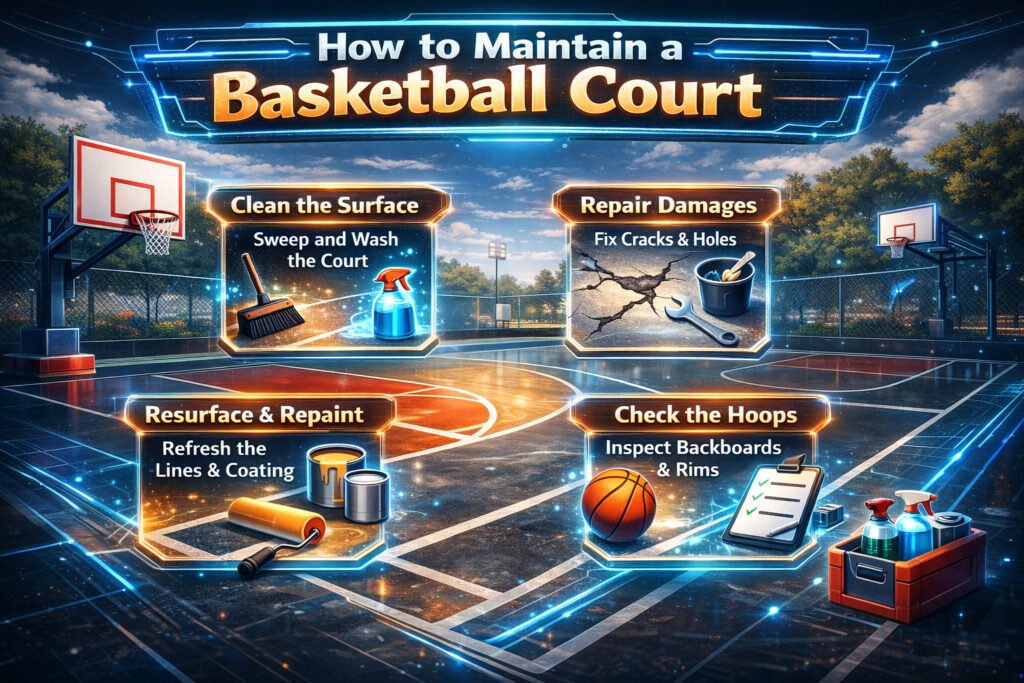
How to Maintain a Basketball Court: The Complete Practical Guide
A basketball court isn’t just a slab of concrete or a shiny wooden floor with painted lines—it’s the heart of competition, community, and countless memories. Understanding How to Maintain a Basketball Court is essential if you want to preserve that heart for years to come. Whether it’s a school gym packed with cheering fans or a neighborhood outdoor court where pickup games never seem to end, the condition of the court directly affects how the game feels. Have you ever tried playing on a dusty floor where your sneakers slide like you’re on ice? Or on a cracked outdoor court where the ball bounces unpredictably? It’s frustrating—and more importantly, it’s dangerous. Maintaining a basketball court isn’t just about keeping it looking good. It’s about safety, performance, durability, and saving money in the long run. A well-maintained court provides consistent ball bounce, proper grip, and reduces injury risks. On the other hand, neglect leads to warped wood, widening cracks, faded lines, rusted rims, and eventually, expensive renovations. Think of your basketball court like a car. If you change the oil regularly and fix small issues early, it runs smoothly for years. Ignore it, and one day you’re stuck with a major repair bill. The same logic applies here. In this complete guide, we’ll walk step-by-step through everything you need to know about maintaining a basketball court—indoor or outdoor. From daily cleaning routines to resurfacing strategies, from crack repair to budgeting, this guide covers it all in practical, real-world terms you can actually use. Let’s start with understanding what type of court you’re dealing with—because maintenance always begins with knowing your surface. Understanding Different Types of Basketball Courts Before grabbing a broom or pressure washer, you need to know what kind of court you’re working with. Not all basketball courts are created equal, and maintaining a hardwood indoor floor is vastly different from caring for an outdoor asphalt surface. Treating them the same way can cause serious damage. Indoor Hardwood Courts Indoor courts are typically made of maple hardwood, prized for its durability and consistent bounce. These courts have a protective polyurethane finish that provides shine and grip. However, they are extremely sensitive to moisture. Even small amounts of water can seep into the wood, causing warping, cupping, or swelling. Humidity levels also play a major role. Too much moisture in the air? The wood expands. Too little? It contracts and cracks. That’s why climate control is critical in gyms. Outdoor Concrete Courts Concrete courts are tough and long-lasting, but they’re not indestructible. Weather is their biggest enemy. Rainwater can seep into small pores and freeze during winter, causing expansion and cracking. UV rays can fade paint and weaken surface coatings. Asphalt Courts Asphalt provides a slightly softer surface than concrete, but it requires more frequent maintenance. It’s more susceptible to cracking, potholes, and surface breakdown over time, especially in hot climates. Synthetic and Modular Tile Courts These are becoming increasingly popular. Made of interlocking plastic tiles or rubberized surfaces, they offer better shock absorption. Maintenance is easier, but tiles can loosen or shift if not regularly inspected. Understanding your court type is step one. Maintenance strategies depend entirely on what lies beneath your feet. Why Regular Maintenance Is Non-Negotiable You might think, “It’s just a court. How bad can it get?” The answer: very bad, very fast. Skipping routine maintenance is like ignoring a leaky roof—it might seem minor at first, but it compounds quickly. Player Safety Concerns Safety should always come first. Dusty indoor floors reduce traction, increasing the risk of slips and ankle injuries. Outdoor cracks can trip players mid-sprint. Loose rims or unstable backboards can cause catastrophic accidents. Small issues become hazards. A minor crack today can become a twisted ankle tomorrow. Regular maintenance minimizes these risks dramatically. Performance and Game Quality Basketball is a precision sport. Dribbling, passing, cutting—everything depends on reliable surface response. If the ball doesn’t bounce consistently because of surface damage, the entire game changes. It’s like trying to play soccer on a field full of potholes. Clean courts also improve grip. Players can pivot, stop, and explode with confidence. That consistency matters whether you’re hosting a competitive tournament or just enjoying weekend games. Long-Term Cost Savings Here’s the financial truth: preventive maintenance costs far less than full resurfacing or reconstruction. Filling small cracks costs a fraction of replacing an entire court. Regular cleaning protects protective coatings, extending the life of your investment. Think of maintenance as insurance. You’re protecting thousands—sometimes hundreds of thousands—of dollars in infrastructure. Skipping routine care almost always leads to larger expenses down the line. In short, regular maintenance isn’t optional. It’s the foundation of safety, performance, and smart budgeting. Daily Basketball Court Maintenance Routine Daily maintenance might sound excessive, but it’s actually simple—and incredibly effective. Just a small amount of attention each day can prevent long-term damage. Sweeping and Dust Removal Dust is the silent enemy of basketball courts, especially indoor hardwood. Every shoe that steps onto the floor brings dirt particles. Over time, those particles act like sandpaper, wearing down the protective finish. Use a microfiber dust mop daily. Avoid traditional brooms that simply push dust into the air. Microfiber traps particles effectively without scratching the surface. Outdoor courts should also be cleared of debris—leaves, small rocks, and trash. These not only affect ball bounce but can also stain surfaces if left too long. Spot Cleaning Spills Immediately Spilled water bottles, sports drinks, or rainwater tracked indoors must be cleaned immediately. Liquids left sitting on hardwood can seep into seams and cause swelling. Use a slightly damp mop with a manufacturer-approved cleaner. Never soak the floor. When it comes to hardwood, less water is always better. Inspecting for Damage Take five minutes daily to visually inspect the surface. Look for: Catching issues early prevents them from growing into expensive problems. Daily maintenance isn’t complicated—it’s about consistency. Like brushing your teeth, it’s a small daily habit that prevents major future headaches. Weekly Maintenance Checklist Daily care keeps the