Tennis Court Flooring

Tennis Court Flooring
Tennis court flooring

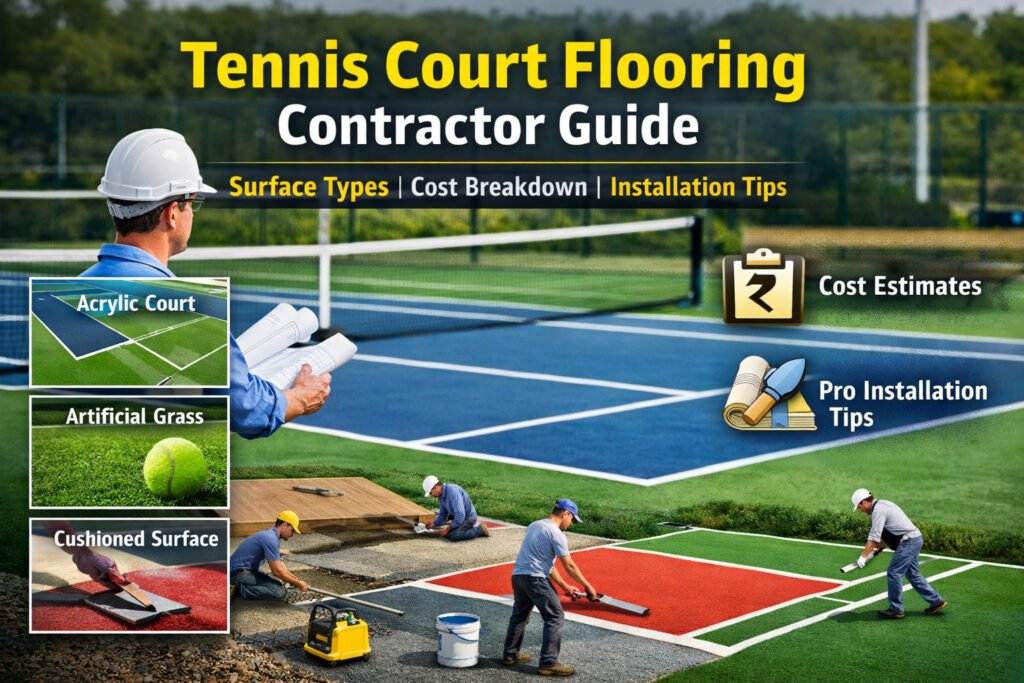
Tennis Court Flooring Contractor Guide – Surface Types, Cost & Installation Tips

Tennis court flooring isn’t just about looks—it’s the backbone of the entire playing experience. Think of it like the foundation of a house. You can have the most expensive rackets, professional-grade nets, and bright stadium lights, but if the surface beneath your feet isn’t right, everything else falls apart. Whether you’re building a private backyard court, a school facility, or a professional sports complex, choosing the right tennis court flooring can shape how the game is played, how safe players feel, and how long the court will actually last. The surface determines ball speed, bounce consistency, player movement, and even injury risk. A fast hard court encourages aggressive play, while a softer clay court slows the game and reduces stress on joints. On top of that, tennis court flooring directly impacts maintenance costs and long-term budgets. Some surfaces demand constant care, watering, and resurfacing, while others are almost “set it and forget it.” This is where a professional tennis court flooring contractors becomes essential. Flooring isn’t a DIY weekend project. It requires precise grading, drainage planning, material selection, and expert installation techniques. One small mistake during installation—like improper slope or poor base preparation—can lead to cracks, puddles, uneven bounce, and expensive repairs down the road. In this guide, we’ll walk through everything you need to know: different tennis court surface types, realistic cost expectations, and practical installation tips straight from the contractor’s playbook. Whether you’re a facility manager, property owner, or just exploring your options, this guide will help you make informed, confident decisions. Understanding the Role of a Tennis Court Flooring Contractor A tennis court flooring contractor does far more than just lay down a surface and walk away. They’re part engineer, part sports consultant, and part problem solver. Their role begins long before the first layer of material is installed and continues well after the court is finished. First, a contractor evaluates the site. This includes soil conditions, drainage patterns, slope, and available space. For outdoor courts especially, understanding how water moves across the land is critical. Poor drainage is one of the fastest ways to destroy a tennis court. A qualified contractor knows how to design a base that channels water away efficiently without affecting playability. Next comes material selection. Not all surfaces are suitable for every climate or usage pattern. A contractor helps match the right flooring system to your needs—whether that’s a low-maintenance acrylic hard court, a cushioned synthetic surface for player comfort, or a clay system for traditional play. They’ll also factor in budget constraints and long-term maintenance costs. During installation, precision is everything. Contractors manage base construction, leveling, surface application, line marking, and curing times. They use specialized equipment and follow strict tolerances to ensure consistent ball bounce and proper traction. After installation, many contractors offer maintenance plans, resurfacing services, and inspections to extend the court’s lifespan. In short, hiring an experienced tennis court flooring contractor isn’t an expense—it’s an investment in performance, safety, and durability. Key Factors to Consider Before Choosing Tennis Court Flooring Before selecting a tennis court surface, it’s important to step back and look at the bigger picture. The “best” surface doesn’t exist in isolation—it depends on how, where, and by whom the court will be used. Climate and Weather Conditions Weather plays a massive role in surface performance and longevity. In hot climates, surfaces must withstand UV exposure and extreme temperatures without cracking or fading. In rainy regions, drainage becomes a top priority. Freeze-thaw cycles in colder climates can wreak havoc on poorly designed bases, leading to cracks and uneven areas. Player Skill Level and Usage Frequency Is the court for casual recreational play, training beginners, or hosting competitive matches? Beginner-friendly courts often prioritize comfort and slower ball speeds, while advanced players may prefer faster, more responsive surfaces. High-traffic courts need durable materials that can handle constant play without excessive wear. Indoor vs Outdoor Courts Indoor courts have more flexibility in surface choice since they’re protected from weather. Outdoor courts, on the other hand, must be designed to handle environmental stressors. A contractor helps balance these factors to ensure optimal performance year-round. Taking time to assess these considerations upfront can save thousands of dollars in future repairs and resurfacing costs. Types of Tennis Court Surfaces Explained Tennis court surfaces generally fall into five main categories: hard courts, clay courts, grass courts, synthetic surfaces, and modular tile systems. Each surface has unique characteristics that influence gameplay, maintenance, and cost. Understanding these differences is crucial when working with a tennis court flooring contractor. The surface you choose will shape how the game feels, how much upkeep is required, and how long the court remains playable without major renovations. Below, we’ll break down each surface type in detail, highlighting what makes them unique and where they perform best. Hard Court Tennis Flooring Hard courts are the most common tennis surfaces worldwide, especially in public parks, schools, and professional tournaments. Typically constructed using asphalt or concrete bases with acrylic surface coatings, hard courts strike a balance between speed and control. One of the biggest advantages of hard court flooring is consistency. The ball bounce is predictable, which makes it ideal for training and competitive play. Players can rely on uniform response across the court, allowing skill—not surface quirks—to determine outcomes. From a contractor’s perspective, hard courts are durable and cost-effective. Once properly installed, they require relatively low maintenance compared to clay or grass. Occasional cleaning, crack repair, and resurfacing every 5–8 years can keep a hard court in excellent condition. However, hard courts are less forgiving on the body. The rigid surface can increase impact stress on knees, ankles, and hips. To address this, many modern installations include cushioned acrylic systems that add shock absorption without sacrificing performance. Hard courts work well in a wide range of climates, making them a versatile choice for both indoor and outdoor facilities. Clay Court Tennis Flooring Clay courts are known for their slower pace, higher bounce, and player-friendly characteristics. Traditionally made from crushed brick
Tennis Court Flooring
Tennis court flooring

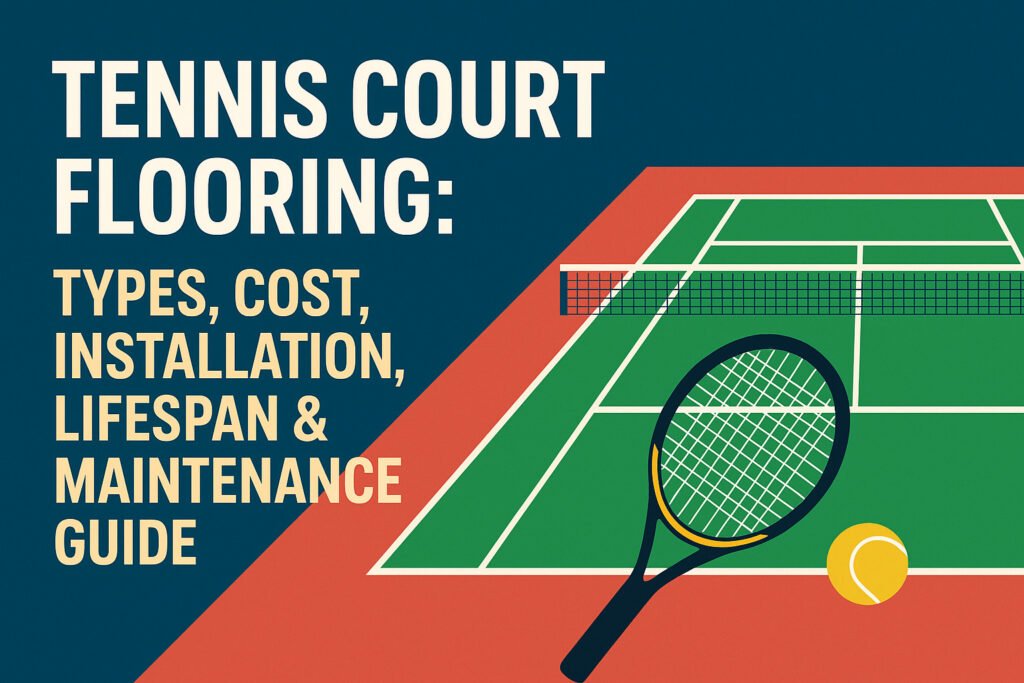
Tennis Court Flooring: Types, Cost, Installation, Lifespan & Maintenance Guide

Tennis is one of the world’s most popular sports, played by professionals, academies, schools, and recreational players. While training and skill matter, the quality of the tennis court flooring determines performance, player safety, game speed, and comfort. Choosing the right flooring material is not just a construction decision — it is an investment in durability, safety, and playability. Whether you are planning a tennis court for a school, sports club, residential community, stadium, academy, or private property, this detailed guide explains everything you need to know — from types and cost to installation, maintenance, and lifetime value. Why Tennis Court Flooring Matters A tennis court surface plays a crucial role in: A well-constructed tennis court not only enhances player experience but also reduces maintenance and increases lifespan — delivering greater value over time. Types of Tennis Court Flooring (With Pros & Cons) There are several types of tennis court surfaces used globally. Each has unique gameplay characteristics, costs, and maintenance needs. Below is an in-depth comparison: 1️⃣ Acrylic / Synthetic Tennis Court Flooring (Most Popular in India) Acrylic flooring is becoming the standard for modern tennis courts due to its durability, comfort, and affordability. Features Pros✔ Superior player comfort✔ Good shock absorption✔ Weather-resistant✔ Consistent bounce and speed✔ Low maintenance Cons✘ Requires skilled installation Best ForAcademies, schools, clubs, residential societies, and professional courts. 2️⃣ Hard Court (Concrete + Coating) Hard courts are widely used in tournaments like the US Open. Pros✔ Fast gameplay✔ Durable Cons✘ High impact on knees✘ Not suitable for kids or beginners Best ForAdvanced players and professional stadiums. 3️⃣ Clay Court Clay causes a slower playing experience and longer rallies. Pros✔ Ideal for stamina & technique development Cons✘ High maintenance✘ Not suitable for outdoor commercial spaces in humid/rainy areas Best ForEuropean-style academies and training programs. 4️⃣ Grass Court Historically used in Wimbledon. Pros✔ Very fast surface Cons✘ Very high maintenance✘ Expensive✘ Requires frequent trimming, watering, and rolling Best ForPremium private courts — not a practical choice in India. 5️⃣ Turf / Artificial Grass Court Sometimes used for multi-sport spaces. Pros✔ Soft & injury-free✔ Suitable for multi-purpose play Cons✘ Ball bounce is less predictable✘ Not approved for professional tennis performance Best ForRecreational spaces and schools on budget. Best Choice for India (Recommendation) ➡ Acrylic / Synthetic Tennis Court FlooringIt offers the best balance of cost, durability, player comfort, and weather resistance. Tennis Court Flooring Cost in India The cost of building a tennis court depends on material, base preparation, and labour. Item Approx. Cost Synthetic/Acrylic flooring ₹120 – ₹200 per sq. ft. Concrete base preparation ₹230 – ₹350 per sq. ft. Accessories (net posts, lights etc.) Optional & varies Total project estimate ₹9.5 – ₹18 lakhs per court (Depending on selection) What changes the final price If the base ground already exists, the cost reduces significantly. ennis Court Installation Process (Step-by-Step) A professional flooring installation ensures long-lasting performance. Below is the standard sequence: 🔹 1. Ground Assessment Soil testing and slope evaluation to avoid water stagnation. 🔹 2. Base Construction (Concrete/Asphalt) A proper base with: 🔹 3. Surface Grinding & Cleaning Ensures uniformity and prevents cracks. 🔹 4. Cushion Coating Multiple layers for shock absorption and player comfort. 🔹 5. Topcoat Acrylic Surface Coloured layers that define speed and bounce. 🔹 6. Line Marking Standard ITF-approved court lines. 🔹 7. Final Inspection & Handover Bounce test, slip resistance check, and surface uniformity. Tennis Court Flooring Lifespan Flooring Type Lifespan Acrylic / Synthetic 5–10 years Hard court 7–12 years Clay court 3–6 years Grass court 1–3 years Turf court 4–6 years Maintenance Guide for Long-Lasting Tennis Courts To extend lifespan and performance, follow simple maintenance: Daily Monthly Yearly Every 5–6 Years 🚫 Avoid ❌ Using hard-bristle brushes❌ Water stagnation near court❌ Using harsh detergent chemicals With proper care, an acrylic tennis court stays fresh for years with minimal expenses. Tennis Court Colour Options Most popular combinations: Custom branding can also be added for resorts, academies, and schools. Indoor vs Outdoor Tennis Court Flooring Category Indoor Outdoor Flooring Type Acrylic/Turf/Wood Acrylic/Clay/Concrete Weather Influence No High Maintenance Moderate Low–High depending on flooring Cost Higher Lower Most buyers in India prefer outdoor acrylic courts due to durability and low maintenance. Tennis Court Flooring Trends in 2025 These trends are increasing the demand for modern sports infrastructure across India. Why Choose a Professional Tennis Court Flooring Manufacturer? DIY or local contractor flooring often results in: A professional installer ensures:✔ Correct slope✔ ITF-approved materials✔ Long-lasting surface✔ Perfect bounce and gameplay Choosing Pacecourt for Tennis Court Flooring If you want a tennis court that is durable, safe, visually stunning, and built to international standards, Pacecourt is a trusted choice. 🔥 Pacecourt Advantages 🚀 Best suited for Get a free site inspection + free 3D tennis court design before starting your project. Final Thoughts Selecting the right tennis court flooring is a critical decision that determines performance, lifespan, safety, and investment value. Among all materials available in India, acrylic synthetic flooring remains the most reliable, budget-friendly, and long-lasting solution for both beginners and professionals. Whether you’re building a new tennis court or upgrading an old one, choosing a certified flooring manufacturer and trained installer guarantees superior results and long-term satisfaction.

Tennis Court Flooring
Tennis court flooring

Tennis Court Flooring: Types, Cost, Installation & Maintenance Guide

The surface beneath a player’s feet is just as crucial as the racquet in their hand. Tennis court flooring dictates the speed of the game, the bounce of the ball, and even the physical toll on a player’s body. Understanding the different types of courts is the first step toward building a new facility, upgrading an existing one, or simply appreciating the nuances of the sport. This guide will walk you through everything you need to know about tennis court flooring. We will explore the primary types of surfaces, weigh their pros and cons, and discuss the key factors to consider before making a choice. You will also find practical maintenance tips to ensure the longevity and performance of your court. Understanding Tennis Court Flooring Tennis court flooring is the specialized surface on which the game is played. It’s not just a layer of paint over concrete; it is an engineered system designed to provide specific play characteristics. The right surface influences ball speed, bounce height, and spin response. It also affects player movement, safety, and comfort, making its selection a critical decision for clubs, schools, and private owners alike. The surface directly impacts player performance and can favor different playing styles. A fast court might benefit a player with a powerful serve, while a slower court gives a baseline player more time to react. The choice of flooring is a significant investment that affects gameplay, maintenance costs, and the court’s overall lifespan. Types of Tennis Court Flooring The International Tennis Federation (ITF) classifies court surfaces based on their speed, from slow to fast. The most common types of tennis courts are hard courts, clay courts, and grass courts, each hosting major professional tournaments. Synthetic surfaces also offer versatile alternatives. Hard Courts Hard courts are the most common type of tennis court flooring worldwide. They are typically constructed from a rigid base of concrete or asphalt, topped with layers of acrylic cushioning and paint to provide a consistent playing surface. The Grand Slams played on hard courts are the US Open and the Australian Open. Pros: Cons: Clay Courts Famous for the French Open, clay courts are made from crushed brick, shale, or stone. This surface slows the game down and produces a higher ball bounce, leading to longer, more strategic rallies. There are two main types: the red clay (Roland-Garros) and the less common green clay (Har-Tru) found in the United States. Pros: Cons: Grass Courts The traditional surface of Wimbledon, grass courts are the fastest of all tennis court types. They are made from natural grass grown on tightly compacted soil. The slick, low-bouncing surface favors players with strong serves and a net-focused game (serve-and-volley). Pros: Cons: Synthetic and Artificial Surfaces Modern technology has introduced a variety of synthetic tennis court surfaces, such as artificial clay, artificial grass, and modular tiles. These are designed to mimic the characteristics of traditional courts while offering improved durability and lower maintenance. Pros: Cons: Flooring Type Bounce Speed Comfort Level Maintenance Lifespan Acrylic Hard Court Medium–Fast High Low 8–12+ years Synthetic Turf Medium High Low 6–10 years Clay Court Slow Medium Medium–High 5–8 years Cushioned Court (Acrylic with Cushion Layers) Medium Very High Low 10–15 years Asphalt / Concrete Medium–Fast Low Medium–High 8–10 years Factors to Consider When Choosing Flooring Selecting the right tennis court flooring involves balancing several important factors to meet your specific needs. Tennis Court Maintenance Tips Proper maintenance is vital for ensuring the safety, playability, and longevity of your tennis court flooring. Hard Court Maintenance Clay Court Maintenance Grass Court Maintenance Tennis Court Flooring Cost in India Flooring Type Approx Cost / Sq.ft Approx Cost per Full Court Acrylic Hard Court ₹90 – ₹130 ₹4,50,000 – ₹6,50,000 Cushioned Acrylic ₹160 – ₹240 ₹8,00,000 – ₹12,50,000 Synthetic Turf ₹140 – ₹220 ₹6,50,000 – ₹11,00,000 Clay Court ₹100 – ₹160 ₹5,00,000 – ₹8,00,000 📌 Note: Pricing varies based on brand, rubber content, raw material quality, installation location and court size. 🔍 Acrylic vs Cushion Court – Which to Choose? Suitable For Recommended Flooring Professional Play Acrylic Training Academies Cushioned Acrylic Children & Elderly Cushioned Acrylic Multipurpose Ground Synthetic Turf Budget-Friendly Court Acrylic Available Color Combinations Conclusion: The Right Surface for Peak Performance Choosing the right tennis court flooring is a foundational decision that shapes the entire playing experience. From the fast-paced action on a hard court to the strategic battles on clay, each surface offers a unique set of characteristics. By carefully considering factors like climate, budget, maintenance, and player needs, you can select a surface that provides years of enjoyment and high-quality play. Ultimately, investing in the right type of tennis court and committing to its proper maintenance will protect its longevity and ensure it remains a safe, consistent, and high-performing asset for years to come.

Scroll to Top
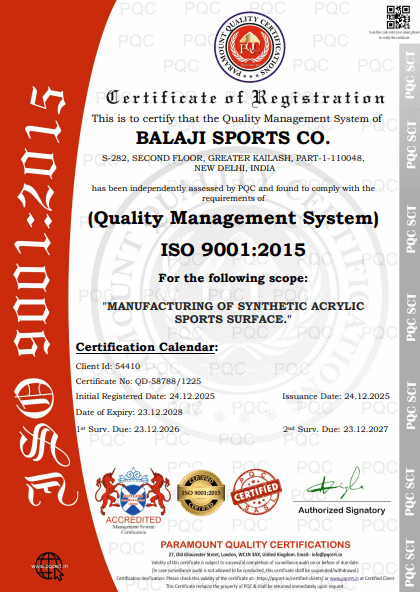
ISO-Certificate

Get 10% Off – Fill the Form Now

Hours
Minutes
Seconds