Tennis is one of the world’s most popular sports, played by professionals, academies, schools, and recreational players. While training and skill matter, the quality of the tennis court flooring determines performance, player safety, game speed, and comfort. Choosing the right flooring material is not just a construction decision — it is an investment in durability, safety, and playability.
Whether you are planning a tennis court for a school, sports club, residential community, stadium, academy, or private property, this detailed guide explains everything you need to know — from types and cost to installation, maintenance, and lifetime value.
Why Tennis Court Flooring Matters
A tennis court surface plays a crucial role in:
- Ball bounce consistency
- Speed of the game
- Shock absorption and comfort for players
- Protection against injuries
- Long-term durability under weather conditions
A well-constructed tennis court not only enhances player experience but also reduces maintenance and increases lifespan — delivering greater value over time.
Types of Tennis Court Flooring (With Pros & Cons)
There are several types of tennis court surfaces used globally. Each has unique gameplay characteristics, costs, and maintenance needs. Below is an in-depth comparison:
1️⃣ Acrylic / Synthetic Tennis Court Flooring (Most Popular in India)
Acrylic flooring is becoming the standard for modern tennis courts due to its durability, comfort, and affordability.
Features
- Multi-layer synthetic coating over asphalt or concrete base
- Cushioned & non-slippery surface
- Custom colour options (usually green/blue combination)
Pros
✔ Superior player comfort
✔ Good shock absorption
✔ Weather-resistant
✔ Consistent bounce and speed
✔ Low maintenance
Cons
✘ Requires skilled installation
Best For
Academies, schools, clubs, residential societies, and professional courts.
2️⃣ Hard Court (Concrete + Coating)
Hard courts are widely used in tournaments like the US Open.
Pros
✔ Fast gameplay
✔ Durable
Cons
✘ High impact on knees
✘ Not suitable for kids or beginners
Best For
Advanced players and professional stadiums.
3️⃣ Clay Court
Clay causes a slower playing experience and longer rallies.
Pros
✔ Ideal for stamina & technique development
Cons
✘ High maintenance
✘ Not suitable for outdoor commercial spaces in humid/rainy areas
Best For
European-style academies and training programs.
4️⃣ Grass Court
Historically used in Wimbledon.
Pros
✔ Very fast surface
Cons
✘ Very high maintenance
✘ Expensive
✘ Requires frequent trimming, watering, and rolling
Best For
Premium private courts — not a practical choice in India.
5️⃣ Turf / Artificial Grass Court
Sometimes used for multi-sport spaces.
Pros
✔ Soft & injury-free
✔ Suitable for multi-purpose play
Cons
✘ Ball bounce is less predictable
✘ Not approved for professional tennis performance
Best For
Recreational spaces and schools on budget.
Best Choice for India (Recommendation)
➡ Acrylic / Synthetic Tennis Court Flooring
It offers the best balance of cost, durability, player comfort, and weather resistance.
Tennis Court Flooring Cost in India
The cost of building a tennis court depends on material, base preparation, and labour.
| Item | Approx. Cost |
|---|---|
| Synthetic/Acrylic flooring | ₹120 – ₹200 per sq. ft. |
| Concrete base preparation | ₹230 – ₹350 per sq. ft. |
| Accessories (net posts, lights etc.) | Optional & varies |
| Total project estimate | ₹9.5 – ₹18 lakhs per court (Depending on selection) |
What changes the final price
- Type of flooring
- Land preparation required
- Location & logistics
- Indoor vs outdoor court
- Cushion thickness & layers
If the base ground already exists, the cost reduces significantly.
ennis Court Installation Process (Step-by-Step)
A professional flooring installation ensures long-lasting performance. Below is the standard sequence:
🔹 1. Ground Assessment
Soil testing and slope evaluation to avoid water stagnation.
🔹 2. Base Construction (Concrete/Asphalt)
A proper base with:
- 1–2% slope for water drainage
- Thickness: typically 100–150 mm
- M-20 grade concrete durability
🔹 3. Surface Grinding & Cleaning
Ensures uniformity and prevents cracks.
🔹 4. Cushion Coating
Multiple layers for shock absorption and player comfort.
🔹 5. Topcoat Acrylic Surface
Coloured layers that define speed and bounce.
🔹 6. Line Marking
Standard ITF-approved court lines.
🔹 7. Final Inspection & Handover
Bounce test, slip resistance check, and surface uniformity.
Tennis Court Flooring Lifespan
| Flooring Type | Lifespan |
|---|---|
| Acrylic / Synthetic | 5–10 years |
| Hard court | 7–12 years |
| Clay court | 3–6 years |
| Grass court | 1–3 years |
| Turf court | 4–6 years |
Maintenance Guide for Long-Lasting Tennis Courts
To extend lifespan and performance, follow simple maintenance:
Daily
- Remove leaves, sand, and debris
Monthly
- Wash surface with water to remove dirt build-up
Yearly
- Inspect cracks or wear
- Recoat if required
Every 5–6 Years
- Surface repainting improves life & bounce quality
🚫 Avoid
❌ Using hard-bristle brushes
❌ Water stagnation near court
❌ Using harsh detergent chemicals
With proper care, an acrylic tennis court stays fresh for years with minimal expenses.
Tennis Court Colour Options
Most popular combinations:
- Blue + Green (international standard)
- Red + Green
- Terracotta + Green
Custom branding can also be added for resorts, academies, and schools.
Indoor vs Outdoor Tennis Court Flooring
| Category | Indoor | Outdoor |
|---|---|---|
| Flooring Type | Acrylic/Turf/Wood | Acrylic/Clay/Concrete |
| Weather Influence | No | High |
| Maintenance | Moderate | Low–High depending on flooring |
| Cost | Higher | Lower |
Most buyers in India prefer outdoor acrylic courts due to durability and low maintenance.
Tennis Court Flooring Trends in 2025
- Shift from concrete to synthetic cushioned flooring
- Multi-sport convertible tennis courts
- Eco-friendly, non-toxic acrylic materials
- LED floodlight systems for evening coaching
These trends are increasing the demand for modern sports infrastructure across India.
Why Choose a Professional Tennis Court Flooring Manufacturer?
DIY or local contractor flooring often results in:
- Cracks within 1–2 years
- Uneven bounce
- Poor draining leading to algae & slipperiness
- Frequent repairs & repainting
A professional installer ensures:
✔ Correct slope
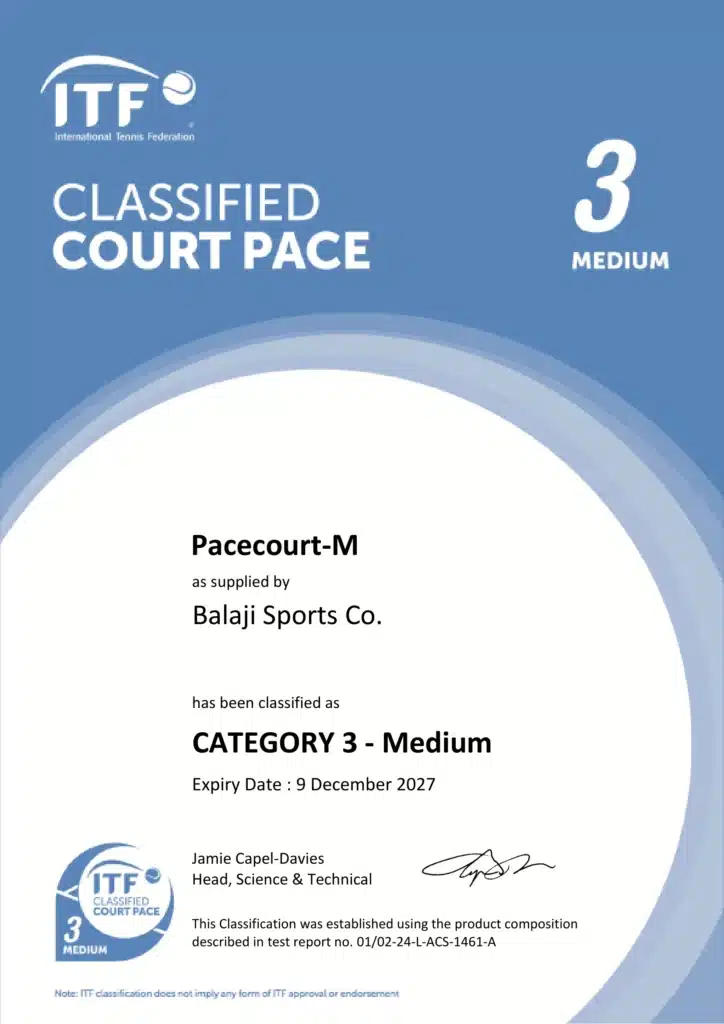
✔ ITF-approved materials
✔ Long-lasting surface
✔ Perfect bounce and gameplay
Choosing Pacecourt for Tennis Court Flooring
If you want a tennis court that is durable, safe, visually stunning, and built to international standards, Pacecourt is a trusted choice.
🔥 Pacecourt Advantages
- 500+ courts installed across India
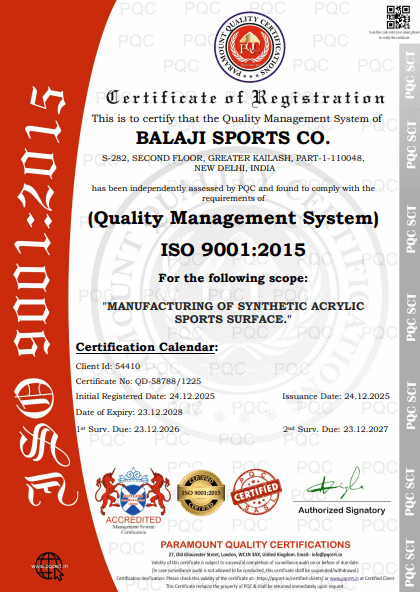
- Certified synthetic cushioning system
- Weather & UV-resistant products
- Anti-slip & shock-absorbing flooring
- 8+ colour options
- Fast project completion
- 5+ year warranty
🚀 Best suited for
- Schools
- Sports academies
- Clubs & stadiums
- Residential communities
- Resorts and real estate projects
Get a free site inspection + free 3D tennis court design before starting your project.
Final Thoughts
Selecting the right tennis court flooring is a critical decision that determines performance, lifespan, safety, and investment value. Among all materials available in India, acrylic synthetic flooring remains the most reliable, budget-friendly, and long-lasting solution for both beginners and professionals.
Whether you’re building a new tennis court or upgrading an old one, choosing a certified flooring manufacturer and trained installer guarantees superior results and long-term satisfaction.