Pickleball looks simple at first glance. A paddle, a plastic ball, a net stretched across a painted pickleball court—what could be complicated about that? But here’s the truth most people only realize after playing on a few different pickleball courts: the surface beneath your feet changes everything.
The type of pickleball court flooring directly affects how the ball bounces, how quickly players can pivot, and how much strain your knees absorb during a long rally. Think about it like driving different cars. They all get you from point A to B, but the ride? Completely different. The same goes for pickleball surfaces.
A hard, uncoated concrete slab might feel fast and unforgiving. A cushioned acrylic court, on the other hand, offers a controlled bounce and softer impact. The difference isn’t subtle—it’s noticeable within minutes of play.
Performance is only one piece of the puzzle. Safety matters just as much. Poor traction increases slip risks. Surfaces without shock absorption can aggravate joint pain. Uneven floors create unpredictable ball movement. When you combine all of these factors, flooring becomes the foundation of the entire playing experience.
As pickleball continues to grow worldwide, demand for better courts is skyrocketing. Municipalities are upgrading parks. Schools are converting gym spaces. Homeowners are investing in backyard courts. And with that growth comes an important question: which flooring solution actually makes sense?
The answer depends on environment, budget, usage frequency, and long-term goals. There’s no universal “best” surface—only the best fit for your specific situation.
Before diving into materials like concrete, modular tiles, or cushioned systems, we need to understand what makes a proper pickleball court in the first place.
Table of contents
- Standard Pickleball Court Requirements
- Outdoor Pickleball Court Flooring Options
- Indoor Pickleball Court Flooring Systems
- Acrylic Sports Coatings for High-Performance Pickleball Courts
- Modular Pickleball Court Tiles
- Cushioned Pickleball Court Systems
- Comparing Popular Pickleball Court Flooring Materials
- Cost Breakdown of Pickleball Court Flooring
- Conclusion
Standard Pickleball Court Requirements
If you’re serious about building or upgrading a pickleball court, you can’t just pour a slab and paint some lines. Official standards exist for a reason. They ensure consistent play, safety, and fairness.
A regulation pickleball court measures 20 feet wide by 44 feet long. That’s the same for both singles and doubles matches. However, the recommended total playing area is much larger—typically 30 by 60 feet—to allow room for player movement and safe boundary space.
But size is only part of the story. The surface itself must meet certain performance expectations.
Here’s what a proper pickleball court surface needs:
- Consistent and predictable ball bounce
- Adequate traction without being sticky
- Smooth yet slightly textured finish
- Proper drainage for outdoor courts
- Durable resistance to wear and weather
Unlike tennis balls, pickleballs are lightweight and perforated. That means they react differently to surface textures. Too rough? The ball slows down and behaves unpredictably. Too smooth? It may skid excessively.
Surface slope also matters—especially outdoors. Courts typically include a subtle slope (around 1%) to allow water runoff. Without it, puddles form, and moisture weakens the base material over time.
Indoor courts focus more on traction and shock absorption. Since weather isn’t a concern, emphasis shifts toward joint protection and multi-sport compatibility.
Lighting, fencing, and net systems often get attention during planning—but flooring should be the top priority. Why? Because everything else depends on it.
A well-built pickleball court starts from the ground up. Next, let’s explore the most common outdoor flooring solutions and what makes them reliable.
Outdoor Pickleball Court Flooring Options
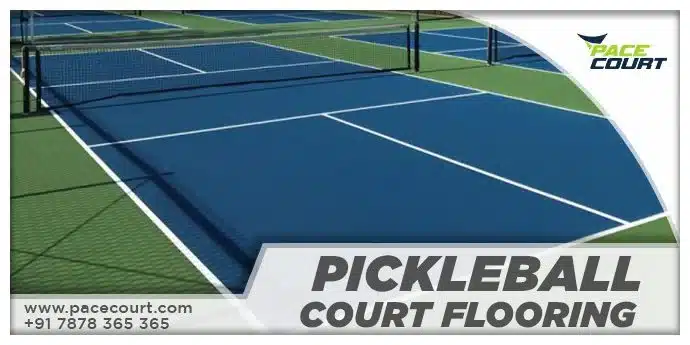
When it comes to outdoor pickleball courts, durability is king. Sun, rain, temperature changes, and heavy foot traffic all test the strength of your surface. Choosing the right material means balancing longevity, performance, and budget.
Concrete Foundations for Outdoor Courts
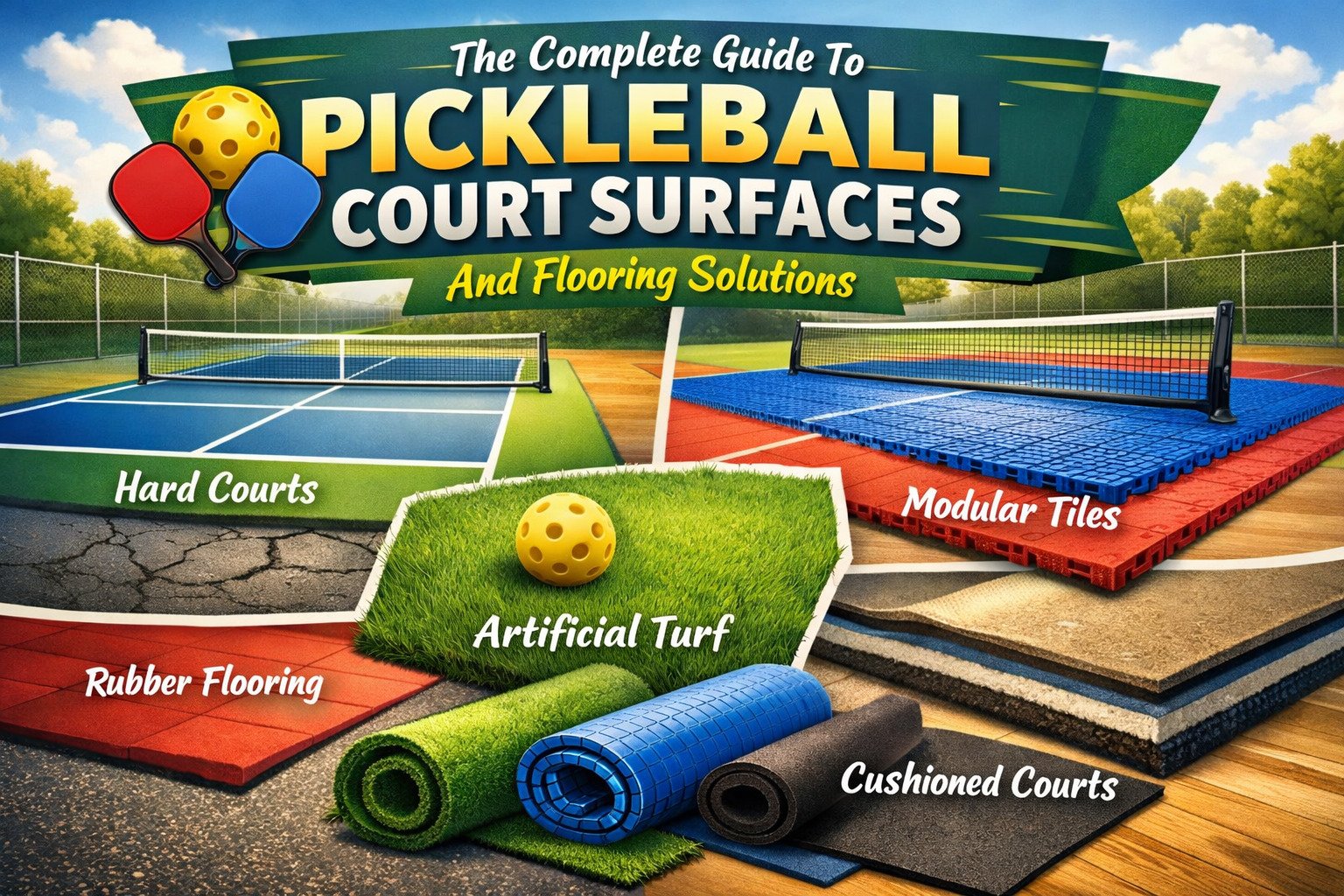
Concrete is widely considered the premium base for outdoor pickleball courts. It offers exceptional structural stability and can last decades when installed properly. Once poured and cured, concrete forms a firm, level foundation that supports consistent ball bounce.
One of concrete’s biggest advantages is its resistance to deformation. It doesn’t shift easily under pressure, which means the playing surface remains stable over time. That stability translates into reliable performance.
However, plain concrete alone isn’t ideal for play. It’s too hard and can be abrasive. That’s why it’s typically coated with acrylic sports surfacing systems. These coatings add color, texture, traction, and protection.
Pros of concrete courts:
- Long lifespan (20–30+ years)
- Excellent structural integrity
- Low long-term maintenance
- Ideal for competitive play
Cons:
- Higher initial cost
- Potential cracking in extreme climates
- Requires professional installation
Asphalt Surfaces for Community Spaces
Asphalt is another popular outdoor option, especially for parks and recreational facilities. It’s generally less expensive than concrete and quicker to install.
Asphalt has slightly more flexibility than concrete, which can help in areas with minor ground movement. However, it tends to oxidize and deteriorate faster if not properly maintained.
Just like concrete, asphalt requires an acrylic coating system for proper pickleball play. Without protective layers, the surface can fade, crack, and become brittle.
Asphalt works well for:
- Budget-conscious installations
- Multi-court public facilities
- Moderate-use environments
Choosing between concrete and asphalt often comes down to long-term goals. If you’re building for decades, concrete may be worth the investment. If budget constraints are tighter, asphalt provides a practical solution.
But what about indoor courts? That’s a completely different conversation.
Indoor Pickleball Court Flooring Systems
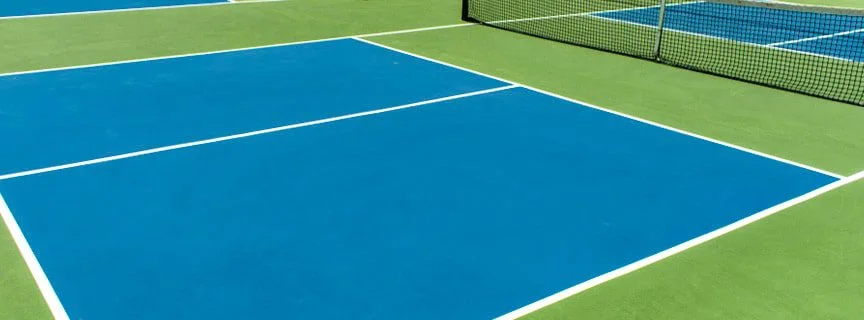
Indoor pickleball brings a new set of considerations. Weather is no longer the enemy—but traction, acoustics, and multi-use flexibility become major factors.
Hardwood Gym Floors
Many indoor pickleball courts are set up on traditional hardwood gym floors. Schools and recreation centers frequently convert basketball courts into pickleball spaces using temporary nets and painted lines.
Hardwood offers:
- Smooth and controlled ball bounce
- Excellent traction
- Familiar athletic surface
However, hardwood lacks cushioning unless paired with subfloor systems. Extended play on hard wood surfaces can strain joints, especially for older players.
Maintenance is another factor. Wood requires refinishing and protection from moisture. Heavy equipment or improper footwear can damage the finish.
Synthetic and Polyurethane Flooring
Synthetic sports flooring systems are becoming increasingly popular for dedicated indoor pickleball courts. These surfaces are typically layered over concrete and provide enhanced shock absorption.
Benefits include:
- Improved joint protection
- Slip-resistant textures
- Lower maintenance needs
- Customizable performance levels
Polyurethane systems, in particular, offer seamless finishes that reduce tripping hazards. They’re also more forgiving on knees and ankles compared to hardwood.
Indoor facilities that host leagues or tournaments often prefer synthetic systems for their balance of comfort and durability.
Choosing indoor flooring depends on whether the court is multi-purpose or dedicated exclusively to pickleball. Next, we’ll explore acrylic sports coatings—the finishing layer that defines performance.
Acrylic Sports Coatings for High-Performance Pickleball Courts
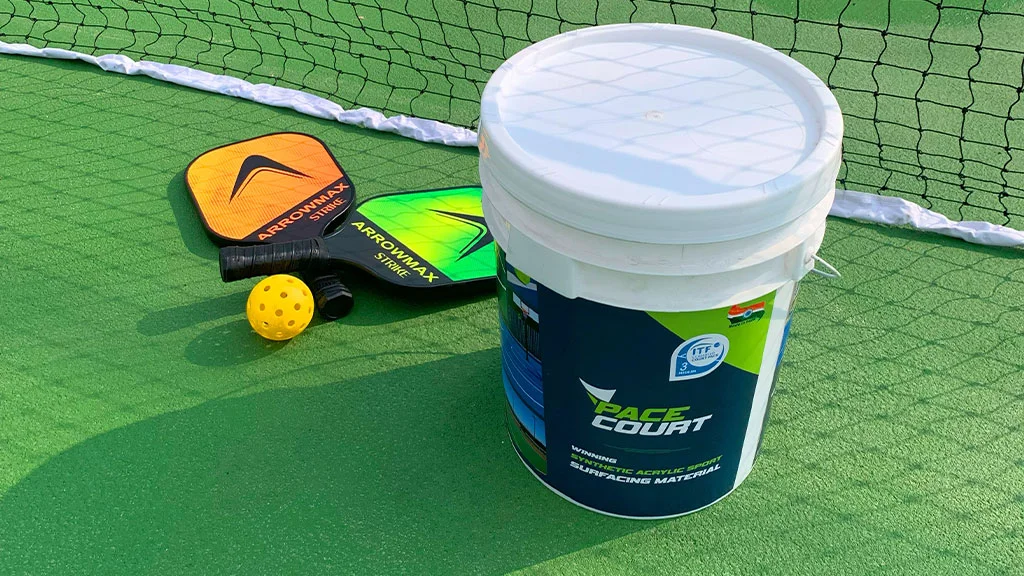
If the base of your pickleball court is the skeleton, then acrylic sports coatings are the skin. They’re the layer players actually interact with—the surface that determines speed, grip, bounce, and overall feel. Without a proper coating system, even the best concrete or asphalt base won’t deliver a professional playing experience.
Acrylic coatings are made from a mixture of acrylic resins, silica sand, pigments, and water-based binders. They’re applied in multiple layers, each serving a specific purpose. First comes a resurfacer layer to smooth minor imperfections. Then color coats are added, mixed with sand to create the right level of texture. Finally, line striping completes the court.
What makes acrylic coatings so valuable?
- Consistent ball response
- Slip-resistant traction
- UV resistance to prevent fading
- Weather protection against rain and moisture
- Custom color options for enhanced visibility
The texture level can be adjusted depending on desired speed. Want a faster court? Use less sand. Prefer a slower, more controlled game? Add slightly more texture. It’s a subtle science, but it makes a noticeable difference.
Another advantage is maintenance simplicity. Acrylic surfaces are easy to clean and relatively affordable to resurface every 4–8 years, depending on usage. Compared to rebuilding a court from scratch, resurfacing is a minor investment.
Acrylic systems also allow for cushioned underlayers. These layers introduce flexible rubber components that absorb shock, making long matches easier on knees and hips. For communities with older players, this feature is a game-changer.
In short, acrylic coatings transform a basic slab into a true pickleball court. But what if you want something more flexible, portable, or quicker to install? That’s where modular tile systems come into play.
Modular Pickleball Court Tiles
Imagine snapping together a court like puzzle pieces. That’s essentially how modular pickleball court tiles work. These interlocking systems sit over a concrete or asphalt base and create an elevated playing surface without permanent coatings.
Modular tiles are typically made from high-impact polypropylene. Each tile locks into the next, forming a uniform surface that allows for slight movement and built-in drainage. Because of this design, they’re especially popular for residential courts and temporary installations.
Why are modular systems gaining attention?
- Quick installation
- Minimal surface preparation
- Excellent drainage for outdoor courts
- Comfortable, slightly flexible feel
- Easy replacement of damaged sections
One standout advantage is repair convenience. If a tile becomes damaged, you simply remove and replace that section—no need to resurface the entire court. That’s a huge benefit for homeowners who want manageable long-term maintenance.
The surface texture is built into the tile pattern itself. This provides natural traction while allowing water to drain through gaps, preventing puddles after rain.
However, modular tiles may feel different from traditional acrylic courts. Ball bounce can vary slightly depending on tile thickness and sub-base quality. For high-level tournament play, some athletes still prefer acrylic-over-concrete systems for maximum consistency.
Cost-wise, modular tiles often fall in the mid-range. They’re generally more expensive than basic asphalt coatings but less invasive than full custom cushioned systems.
If flexibility and convenience are top priorities, modular pickleball flooring offers a practical solution. But if player comfort is your main concern, cushioned court systems deserve a closer look.
Cushioned Pickleball Court Systems
Pickleball attracts players of all ages, but a significant portion of the community includes adults over 40. With that demographic comes an important factor: joint health. Hard surfaces can be tough on knees, hips, and ankles. That’s where cushioned pickleball court systems truly shine.
Cushioned systems are typically installed over concrete or asphalt bases. They involve multiple layers of rubberized or elastic materials placed beneath the acrylic color coats. These layers compress slightly under impact, absorbing energy and reducing stress on the body.
The benefits go beyond comfort:
- Reduced joint fatigue
- Lower risk of overuse injuries
- Improved player endurance
- Enhanced shock absorption during quick pivots
Think of it like the difference between running on pavement versus a rubber track. Both are solid, but one clearly feels better after an hour.
Cushioned courts are especially beneficial for:
- Senior communities
- Private clubs
- Training facilities
- High-use recreation centers
While they offer increased comfort, they do come at a higher initial cost. Installation requires precise layering, and materials are more specialized. However, many facility owners see it as a long-term investment in player well-being and retention.
Another hidden benefit? Sound reduction. Cushioned systems can slightly dampen the sharp “pop” of pickleball impact, which helps in residential areas where noise complaints are common.
For facilities aiming to provide a premium playing experience, cushioned systems are often the top-tier choice.
Comparing Popular Pickleball Court Flooring Materials
With so many options available, comparing materials side-by-side helps clarify the decision-making process. Each flooring type offers a unique blend of durability, comfort, cost, and maintenance requirements.
Here’s a simplified comparison:
| Flooring Type | Durability | Comfort Level | Maintenance | Cost Range | Best For |
|---|---|---|---|---|---|
| Concrete + Acrylic | Very High | Moderate | Low | High Initial | Permanent outdoor courts |
| Asphalt + Acrylic | High | Moderate | Moderate | Medium | Community parks |
| Modular Tiles | High | Moderate-High | Low | Medium-High | Residential courts |
| Cushioned Systems | High | Very High | Low-Moderate | High | Clubs & senior communities |
| Hardwood Indoor | Moderate | Moderate | High | Medium | Multi-use gyms |
| Synthetic Indoor | High | High | Low | Medium-High | Dedicated indoor courts |
This table simplifies the decision, but real-world selection depends on specific circumstances like climate, usage frequency, and available budget.
For example:
- Hot climates may require UV-resistant coatings.
- Cold climates demand crack-resistant bases.
- High-traffic courts need reinforced foundations.
- Backyard courts may prioritize easy maintenance.
There’s no universal “best” choice. It’s about alignment—matching surface characteristics with player expectations and environmental demands.
Next, let’s talk money—because budget often drives the final decision.
Cost Breakdown of Pickleball Court Flooring
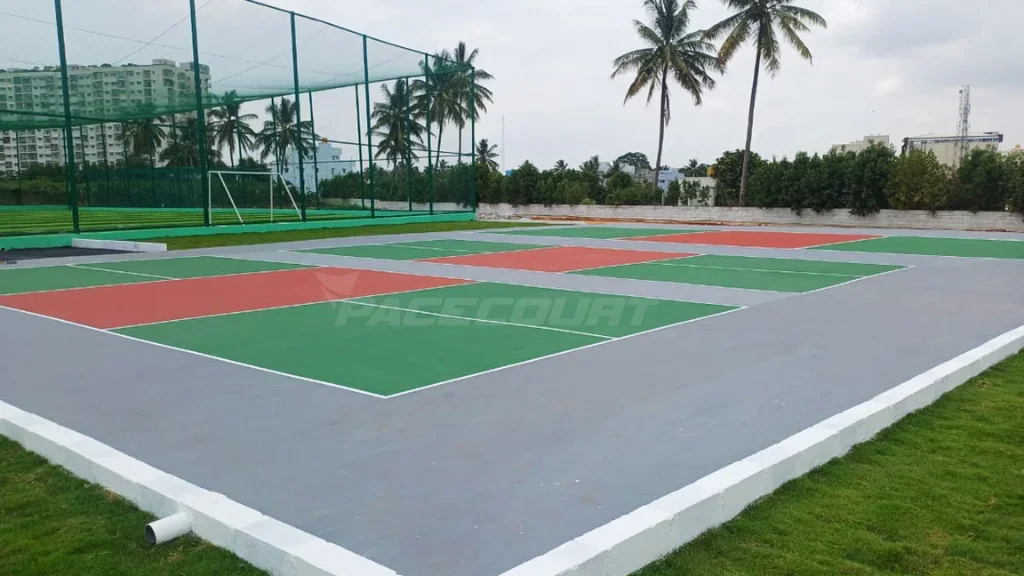
Building a pickleball court isn’t just about the surface—it’s about understanding total investment. Costs vary widely depending on materials, location, labor, and site preparation.
Installation Expenses
Here’s a rough breakdown of common installation costs:
- Concrete base: Higher upfront cost due to labor and materials
- Asphalt base: Lower initial cost but shorter lifespan
- Acrylic coating system: Moderate cost layered over base
- Modular tiles: Mid-range pricing depending on brand and thickness
- Cushioned systems: Premium pricing due to multiple layers
Site preparation can significantly impact expenses. If the land requires grading, drainage solutions, or removal of existing surfaces, costs increase.
Long-Term Ownership Costs
The real financial picture includes maintenance:
- Acrylic resurfacing every 4–8 years
- Crack repairs for concrete or asphalt
- Occasional tile replacement for modular systems
- Cleaning and line repainting
While concrete may cost more upfront, it often pays off in longevity. Asphalt may require resurfacing sooner. Modular tiles can save on repair labor but may have higher initial material costs.
When budgeting, think long-term. A slightly higher investment today can reduce repair headaches tomorrow.
Conclusion
Pickleball court flooring isn’t just about what looks good—it’s about how the game feels under your feet. The right surface influences performance, safety, durability, and even player enjoyment.
Concrete offers unmatched longevity. Asphalt balances cost and practicality. Acrylic coatings refine performance. Modular tiles bring flexibility. Cushioned systems prioritize comfort. Indoor and outdoor environments each demand different solutions.
There’s no single “perfect” choice. The best pickleball court flooring aligns with your budget, climate, usage level, and long-term goals. When you choose wisely, you’re not just building a court—you’re creating a space where competition thrives, communities gather, and players keep coming back.