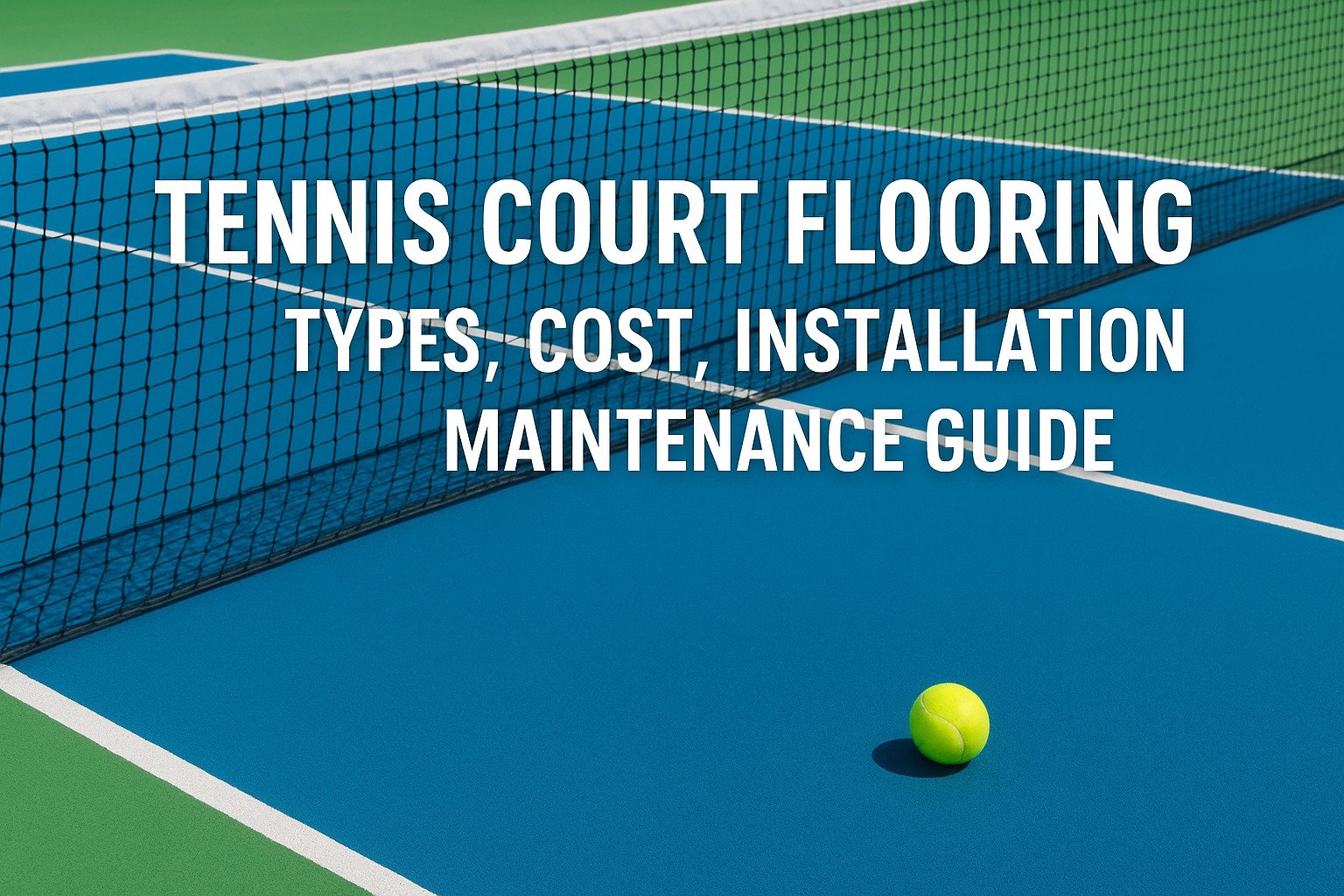
The surface beneath a player’s feet is just as crucial as the racquet in their hand. Tennis court flooring dictates the speed of the game, the bounce of the ball, and even the physical toll on a player’s body. Understanding the different types of courts is the first step toward building a new facility, upgrading an existing one, or simply appreciating the nuances of the sport.
This guide will walk you through everything you need to know about tennis court flooring. We will explore the primary types of surfaces, weigh their pros and cons, and discuss the key factors to consider before making a choice. You will also find practical maintenance tips to ensure the longevity and performance of your court.
Understanding Tennis Court Flooring
Tennis court flooring is the specialized surface on which the game is played. It’s not just a layer of paint over concrete; it is an engineered system designed to provide specific play characteristics. The right surface influences ball speed, bounce height, and spin response. It also affects player movement, safety, and comfort, making its selection a critical decision for clubs, schools, and private owners alike.
The surface directly impacts player performance and can favor different playing styles. A fast court might benefit a player with a powerful serve, while a slower court gives a baseline player more time to react. The choice of flooring is a significant investment that affects gameplay, maintenance costs, and the court’s overall lifespan.
Types of Tennis Court Flooring
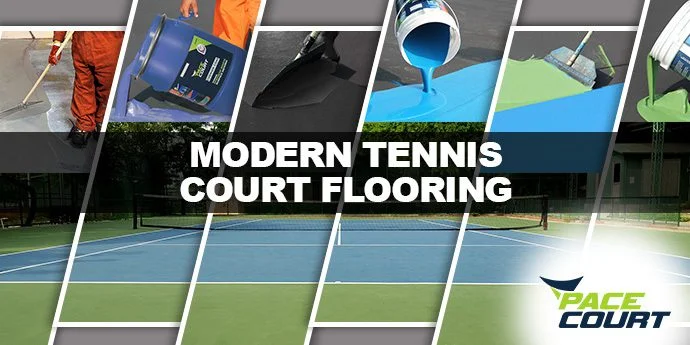
The International Tennis Federation (ITF) classifies court surfaces based on their speed, from slow to fast. The most common types of tennis courts are hard courts, clay courts, and grass courts, each hosting major professional tournaments. Synthetic surfaces also offer versatile alternatives.
Hard Courts
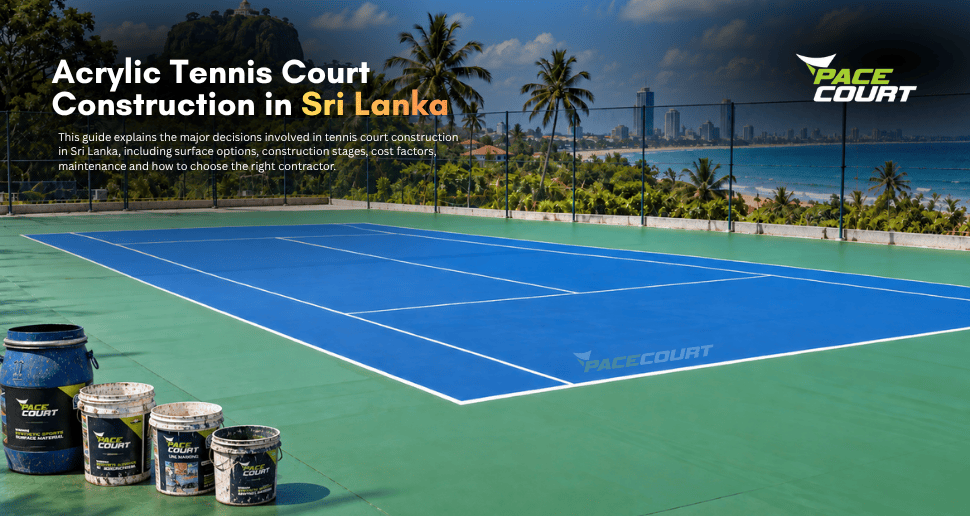
Hard courts are the most common type of tennis court flooring worldwide. They are typically constructed from a rigid base of concrete or asphalt, topped with layers of acrylic cushioning and paint to provide a consistent playing surface. The Grand Slams played on hard courts are the US Open and the Australian Open.
Pros:
- Consistency: Hard courts offer a true and predictable ball bounce.
- Pace: They provide a medium-to-fast game pace, accommodating a wide variety of playing styles.
- Durability: These surfaces are resilient and can withstand heavy use and diverse weather conditions.
- Low Maintenance: Compared to clay or grass, hard courts require minimal daily upkeep.
Cons:
- Player Impact: The unforgiving surface can be tough on players’ joints, particularly knees and ankles.
- Temperature: Hard courts can absorb and radiate significant heat, making them very hot to play on in sunny climates.
- Repair Costs: While durable, repairing cracks or resurfacing can be expensive.
Clay Courts
Famous for the French Open, clay courts are made from crushed brick, shale, or stone. This surface slows the game down and produces a higher ball bounce, leading to longer, more strategic rallies. There are two main types: the red clay (Roland-Garros) and the less common green clay (Har-Tru) found in the United States.
Pros:
- Slower Pace: The slow speed is ideal for beginners and favors players who rely on strategy and endurance.
- Player Comfort: The soft surface is easier on the body, allowing players to slide into shots, which reduces stress on joints.
- Cooler Surface: Clay retains moisture and stays cooler than hard courts in hot weather.
Cons:
- High Maintenance: Clay courts require daily watering, sweeping, and rolling to maintain their condition.
- Water-Dependent: They can become unplayable when too wet or too dry. Proper irrigation is essential.
- Costly Upkeep: The ongoing labor and material costs (like adding more clay) can be substantial.
Grass Courts
The traditional surface of Wimbledon, grass courts are the fastest of all tennis court types. They are made from natural grass grown on tightly compacted soil. The slick, low-bouncing surface favors players with strong serves and a net-focused game (serve-and-volley).
Pros:
- Fast-Paced Game: Grass courts create an exciting, fast-paced style of play.
- Aesthetic Appeal: The classic look of a perfectly manicured grass court is unmatched.
- Soft Surface: Like clay, grass is forgiving on the body.
Cons:
- Highest Maintenance: Grass courts demand intensive care, including precise mowing, watering, and soil management. They are easily damaged.
- Limited Playability: They are very susceptible to weather and can become slippery when damp. Play must often be suspended after rain.
- Inconsistent Bounce: As the grass wears down, the ball bounce can become unpredictable.
Synthetic and Artificial Surfaces
Modern technology has introduced a variety of synthetic tennis court surfaces, such as artificial clay, artificial grass, and modular tiles. These are designed to mimic the characteristics of traditional courts while offering improved durability and lower maintenance.
Upgrade Your Sports Court Today
Get premium synthetic acrylic flooring designed for durability, grip, and performance.
Get Free ConsultationPros:
- Versatility: Synthetic surfaces can be designed to replicate the speed and bounce of clay, grass, or hard courts.
- Low Maintenance: They generally require much less upkeep than their natural counterparts.
- All-Weather Play: Many synthetic options drain quickly, allowing for play to resume shortly after rain.
Cons:
- Initial Cost: The upfront installation cost can be higher than for a basic hard court.
- Authenticity: Some players feel that synthetic surfaces do not offer the same authentic feel as traditional courts.
- Repair Complexity: Damaged sections of turf or tiles may require specialized repair.
| Flooring Type | Bounce Speed | Comfort Level | Maintenance | Lifespan |
|---|---|---|---|---|
| Acrylic Hard Court | Medium–Fast | High | Low | 8–12+ years |
| Synthetic Turf | Medium | High | Low | 6–10 years |
| Clay Court | Slow | Medium | Medium–High | 5–8 years |
| Cushioned Court (Acrylic with Cushion Layers) | Medium | Very High | Low | 10–15 years |
| Asphalt / Concrete | Medium–Fast | Low | Medium–High | 8–10 years |
Factors to Consider When Choosing Flooring
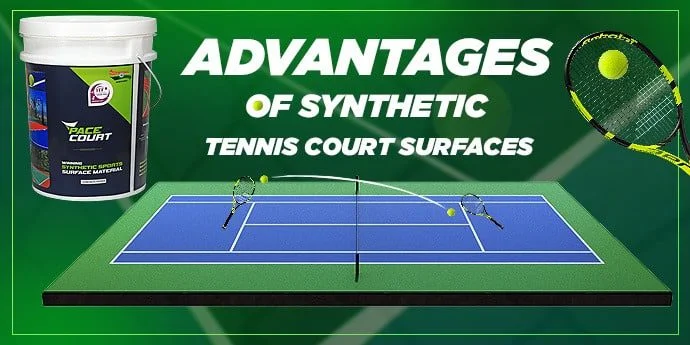
Selecting the right tennis court flooring involves balancing several important factors to meet your specific needs.
- Climate: Your local weather is a major consideration. Hard courts perform well in most climates but can get very hot. Clay courts require careful water management in dry areas and may be unusable for long periods in rainy regions. Grass courts thrive only in temperate climates with sufficient rainfall.
- Maintenance Commitment: Be realistic about the time and resources you can dedicate to upkeep. If low maintenance is a priority, a hard court or synthetic surface is your best bet. Clay and grass courts demand significant, regular attention.
- Budget: Your budget includes both the initial installation cost and long-term maintenance expenses. Hard courts have a moderate to high installation cost but lower upkeep costs. Clay courts are cheaper to install but have high ongoing maintenance costs. Grass is the most expensive to install and maintain.
- Player Level and Style: Consider who will be using the court. A slow clay court is excellent for teaching beginners, while a fast hard court may be preferred for competitive training. Player comfort is also key, especially for older players who might benefit from a softer surface like clay or a cushioned hard court.
Tennis Court Maintenance Tips
Proper maintenance is vital for ensuring the safety, playability, and longevity of your tennis court flooring.
Hard Court Maintenance
- Regular Cleaning: Keep the surface free of leaves, dirt, and debris by using a blower or soft broom.
- Washing: Periodically wash the court with a mild detergent and water to remove stains and mildew. A pressure washer on a low setting can be effective.
- Crack Repair: Inspect for cracks regularly. Fill small cracks promptly to prevent water from seeping underneath and causing more significant damage.
- Resurfacing: Hard courts should be professionally resurfaced every 4-8 years to restore their color, texture, and cushioning.
Clay Court Maintenance
- Daily Brushing: Brush the court after play to redistribute the top layer of clay evenly.
- Watering: Water the court as needed to maintain optimal moisture levels. This prevents it from becoming too dusty and hard.
- Rolling: Roll the court periodically to keep it firm and compact.
- Top-Dressing: Add new clay annually to replace what has been lost to wind and play.
Grass Court Maintenance
- Mowing: Mow the grass to a precise playing height (around 8mm) several times a week during the growing season.
- Watering: Ensure the court receives adequate water, but avoid overwatering, which can soften the soil.
- Line Marking: Lines must be re-marked frequently.
- Weed and Pest Control: A consistent program is needed to keep the turf healthy and uniform.
Tennis Court Flooring Cost in India
| Flooring Type | Approx Cost / Sq.ft | Approx Cost per Full Court |
|---|---|---|
| Acrylic Hard Court | ₹90 – ₹130 | ₹4,50,000 – ₹6,50,000 |
| Cushioned Acrylic | ₹160 – ₹240 | ₹8,00,000 – ₹12,50,000 |
| Synthetic Turf | ₹140 – ₹220 | ₹6,50,000 – ₹11,00,000 |
| Clay Court | ₹100 – ₹160 | ₹5,00,000 – ₹8,00,000 |
📌 Note: Pricing varies based on brand, rubber content, raw material quality, installation location and court size.
🔍 Acrylic vs Cushion Court – Which to Choose?
| Suitable For | Recommended Flooring |
|---|---|
| Professional Play | Acrylic |
| Training Academies | Cushioned Acrylic |
| Children & Elderly | Cushioned Acrylic |
| Multipurpose Ground | Synthetic Turf |
| Budget-Friendly Court | Acrylic |
Available Color Combinations
- Blue + Green (international standard)
- Red + Green
- Two-Tone Blue
- Green + Terracotta
- Custom corporate branding colors (optional)
Conclusion: The Right Surface for Peak Performance
Choosing the right tennis court flooring is a foundational decision that shapes the entire playing experience. From the fast-paced action on a hard court to the strategic battles on clay, each surface offers a unique set of characteristics. By carefully considering factors like climate, budget, maintenance, and player needs, you can select a surface that provides years of enjoyment and high-quality play.
Ultimately, investing in the right type of tennis court and committing to its proper maintenance will protect its longevity and ensure it remains a safe, consistent, and high-performing asset for years to come.
Stay Updated with Pacecourt
Discover expert insights, practical tips, and the latest industry updates from Pacecourt, covering sports flooring, tennis and multi-sport court construction, resurfacing, maintenance, court performance, and innovative sports infrastructure solutions.
Powered by Google's Preferred Sources feature