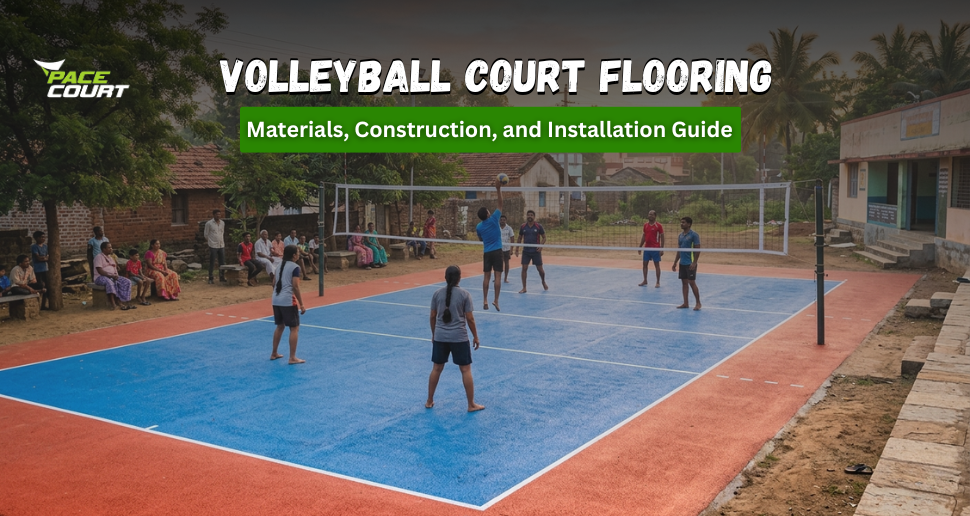
Volleyball Court Flooring

Volleyball Court Flooring

Volleyball Court Flooring: Materials, Construction, and Installation Guide

Volleyball is one of the world’s most popular sports, played across schools, colleges, sports clubs, recreational facilities, and professional arenas. While players often focus on skills, strategy, and training, the foundation of every great volleyball game is the court itself. High-quality volleyball court flooring directly impacts player safety, performance, comfort, and long-term facility maintenance. Whether you’re planning to build an indoor volleyball arena, upgrade a school gymnasium, or construct an outdoor volleyball facility, choosing the right flooring material and installation process is critical. Why Volleyball Court Flooring Matters The quality of a volleyball court floor affects: Factor Impact Player Safety Reduces injuries and falls Shock Absorption Minimizes stress on joints Ball Response Ensures consistent bounce Performance Improves movement and agility Durability Extends court lifespan Maintenance Reduces long-term costs A poorly constructed court can lead to: Therefore, investing in the right flooring system is essential for both athletes and facility owners. Official Volleyball Court Dimensions According to international volleyball standards: Specification Measurement Court Length 18 meters Court Width 9 meters Attack Line Distance 3 meters Free Zone Minimum 3 meters Net Height (Men) 2.43 meters Net Height (Women) 2.24 meters For professional facilities, larger safety zones around the court are recommended. Types of Volleyball Court Flooring Materials 1. Hardwood Volleyball Flooring Overview Hardwood flooring is considered the gold standard for professional indoor volleyball courts. Common Wood Species Advantages Disadvantages Best For 2. PVC Sports Flooring PVC sports flooring has become one of the most popular volleyball flooring solutions worldwide. Features Advantages Disadvantages Best For 3. Polyurethane (PU) Sports Flooring PU flooring is a seamless flooring system widely used in modern sports facilities. Advantages Disadvantages Best For 4. Acrylic Sports Flooring Acrylic flooring is commonly used for outdoor volleyball courts. Advantages Disadvantages Best For 5. Synthetic Sports Flooring Synthetic flooring combines durability, flexibility, and performance. Advantages Best For Comparison of Volleyball Court Flooring Materials Flooring Type Durability Comfort Cost Maintenance Indoor/Outdoor Hardwood Excellent Excellent High High Indoor PVC Very Good Very Good Medium Low Indoor PU Flooring Excellent Excellent Medium-High Low Indoor Acrylic Good Moderate Low Low Outdoor Synthetic Excellent Excellent Medium-High Low Both Volleyball Court Construction Process Building a volleyball court involves much more than laying a surface. Step 1: Site Assessment Professionals evaluate: Expert Tip A poor foundation is responsible for over 60% of sports flooring failures. Step 2: Base Preparation The sub-base provides structural support. Typical Layers: Recommended Concrete Thickness Facility Type Thickness School Court 100 mm Sports Complex 125-150 mm Professional Arena 150 mm+ Step 3: Moisture Protection Moisture is one of the biggest threats to sports flooring. Protection includes: Step 4: Surface Installation Installation varies depending on flooring type. Hardwood Installation PVC Installation PU Installation Step 5: Court Marking Professional court markings ensure compliance with standards. Common colors: Line width generally ranges between 5 cm and 8 cm. Volleyball Court Flooring Installation Guide Indoor Court Installation Timeline Activity Duration Site Preparation 2-5 Days Base Construction 5-10 Days Flooring Installation 3-7 Days Court Marking 1 Day Inspection 1 Day Total project duration typically ranges from 2 to 4 weeks. Shock Absorption Requirements Shock absorption is critical for volleyball players due to frequent jumping and landing. Recommended Performance Standards Property Recommended Value Shock Absorption 25-50% Vertical Deformation 2-5 mm Ball Rebound ≥90% Higher shock absorption reduces player fatigue and injury risk. Common Construction Mistakes to Avoid 1. Poor Drainage Design Can cause: 2. Low-Quality Materials Leads to: 3. Improper Installation Results in: 4. Ignoring Expansion Gaps Especially problematic for hardwood flooring. Real Case Study : University Indoor Volleyball Arena Project Overview A university planned to renovate its aging gymnasium. Challenges Solution Installed: Results Key Takeaway Investing in subfloor preparation significantly improves flooring performance. Real Case Study : School Multipurpose Sports Hall Project Overview A school required a budget-friendly volleyball court. Challenges Solution Installed PVC sports flooring. Results Key Takeaway PVC flooring offers an excellent balance between performance and affordability. Volleyball Court Flooring Maintenance Guide Daily Maintenance Weekly Maintenance Monthly Maintenance Annual Maintenance Estimated Volleyball Court Flooring Costs Flooring Type Approximate Cost Range Acrylic Low PVC Medium PU Flooring Medium-High Hardwood High Synthetic Sports Flooring Medium-High Actual costs vary based on: Expert Recommendations Choose Hardwood If: Choose PVC If: The choose PU Flooring If: Choose Acrylic If: Choose Synthetic Flooring If: Conclusion Volleyball court flooring is a long-term investment that directly impacts athlete safety, performance, and facility value. Whether you’re building a professional indoor arena, a school gymnasium, or an outdoor recreational court, selecting the right flooring material and following proper construction and installation practices are essential. For most professional indoor facilities, hardwood remains the benchmark. For schools and multi-purpose sports halls, PVC and polyurethane flooring provide excellent performance at a lower cost. Outdoor courts benefit greatly from durable acrylic systems. By combining quality materials, proper construction techniques, and professional installation, facility owners can create volleyball courts that deliver outstanding performance for decades. Frequently Asked Questions (FAQs)
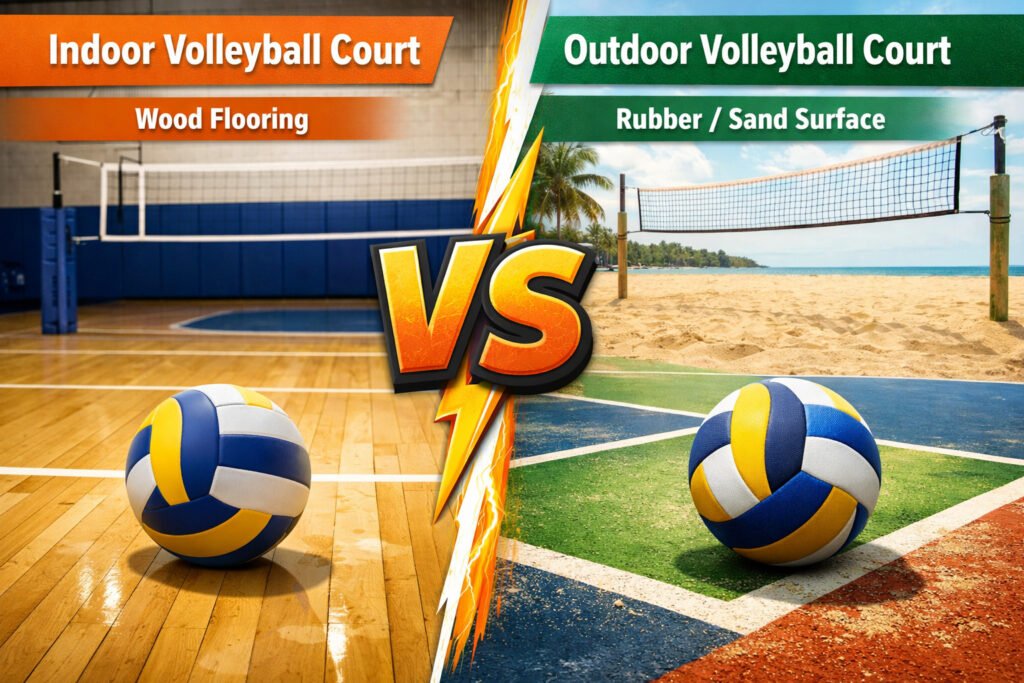

indoor vs outdoor volleyball court flooring
Volleyball Court Flooring

Indoor vs Outdoor Volleyball Court Flooring: Which Is Right for You?

Volleyball may look simple—just a net, a ball, and players ready to spike—but the surface beneath your feet plays a massive role in how the game feels, performs, and even how safe it is. Choosing between indoor vs outdoor volleyball court flooring isn’t just about location; it affects athlete performance, maintenance costs, durability, and long-term usability. Whether you’re building a court for a school, sports facility, backyard, or professional club, the flooring decision will shape the entire playing experience. Think about it for a moment. The way players jump, land, dive, and sprint all depends heavily on the surface they play on. A hardwood indoor floor offers shock absorption and smooth movement, while sand courts reduce impact and allow dramatic dives. Meanwhile, outdoor modular tiles or concrete courts can provide durability in all weather conditions. Each flooring type comes with its own strengths and limitations, and the right choice depends on how and where the court will be used. Another factor that often surprises people is maintenance and longevity. Indoor courts may look pristine and professional, but they require climate control, cleaning routines, and refinishing over time. Outdoor courts, on the other hand, must handle rain, sunlight, and temperature changes. Some surfaces thrive in those conditions, while others degrade quickly if not designed for outdoor exposure. Cost also enters the conversation quickly. A professional indoor hardwood volleyball court can cost significantly more than a sand court or modular outdoor tiles. But price alone doesn’t tell the whole story. Installation complexity, long-term repairs, and player safety should all influence your decision. This guide breaks down everything you need to know about indoor vs outdoor volleyball court flooring. From surface types and performance characteristics to cost comparisons and real-world applications, you’ll learn exactly how to decide which option fits your needs. By the end, you’ll have a clear picture of which flooring system will give players the best experience—whether they’re competing in a gymnasium or under the open sky. 🏐 Understanding Volleyball Court Flooring Basics Before comparing indoor and outdoor volleyball courts directly, it helps to understand what sports flooring is actually designed to do. Volleyball flooring isn’t just about aesthetics or durability. It’s engineered to support movement mechanics, athlete safety, and consistent ball behavior. Without the right surface, even the best volleyball facility can feel uncomfortable or unsafe to play on. At its core, a volleyball floor must balance three essential qualities: traction, shock absorption, and durability. Traction ensures players can change direction quickly without slipping. Shock absorption reduces the stress placed on joints during jumps and landings. Durability ensures the surface can withstand repeated impacts from players and equipment over many years of use. Indoor and outdoor courts approach these requirements differently. Indoor flooring systems are engineered for controlled environments, meaning they don’t need to handle rain, extreme temperatures, or UV exposure. Because of this, manufacturers can focus heavily on performance features like bounce consistency and shock absorption. That’s why indoor volleyball courts often feel smoother and more responsive. Outdoor courts face a completely different set of challenges. Surfaces must withstand sunlight, moisture, and seasonal weather changes. Materials used outdoors must resist cracking, fading, or warping. This is why outdoor volleyball surfaces often include sand, concrete, asphalt, or modular polypropylene tiles rather than traditional hardwood flooring. Another important aspect of volleyball flooring is player interaction with the surface. Volleyball involves explosive movements—jumping for blocks, diving for saves, and quick lateral movements. If a surface is too hard, injuries become more likely. If it’s too soft, players may lose speed and stability. Finding the right balance is the entire goal of sports flooring engineering. Modern volleyball courts also incorporate layered construction systems. Indoor courts often include subfloor cushioning layers beneath the hardwood, while outdoor modular courts may use interlocking panels that allow drainage and airflow. These hidden structural elements dramatically influence how the surface performs during gameplay. Understanding these fundamentals makes it much easier to evaluate indoor and outdoor options. Once you recognize how flooring affects performance, comfort, and maintenance, the decision becomes less about preference and more about choosing the right surface for your specific environment and players. Why Flooring Matters in Volleyball Performance and Safety If you watch professional volleyball matches, one thing becomes clear almost immediately: the game is incredibly dynamic. Players constantly jump, land, sprint, slide, and dive. Every one of those movements transfers force directly through the flooring surface. That’s why volleyball flooring isn’t just a structural element—it’s an integral part of the sport itself. One of the biggest performance factors influenced by flooring is energy return. High-quality indoor sports floors are designed to absorb impact and then return energy back to the athlete. This subtle rebound effect helps players jump higher and move faster without putting excessive strain on their knees and ankles. Without proper energy return, players may feel fatigue much more quickly during long matches. Safety is another critical consideration. Studies in sports medicine have shown that poor flooring surfaces significantly increase injury risk, particularly for knee ligaments and ankle joints. A surface that’s too hard may cause stress fractures or joint pain over time. On the other hand, a surface with inconsistent traction can cause slips that lead to sprains or falls. Indoor volleyball courts, especially maple hardwood sports floors, are widely considered the gold standard for competitive play. These floors offer excellent traction and controlled friction, allowing athletes to stop quickly without sticking to the surface. This controlled sliding effect is important because it reduces the sudden force placed on joints. Outdoor courts prioritize safety differently depending on the surface type. Sand volleyball courts, for example, reduce injury risk by providing a soft landing area for dives and jumps. Sand naturally disperses impact forces, which is why beach volleyball players can perform dramatic defensive plays without the same injury concerns seen on hard surfaces. Weather resistance also affects safety. Outdoor surfaces must maintain traction even after rain or under intense sunlight. Slippery or overheated surfaces can quickly become dangerous for

Scroll to Top
HOMEOWNERS
BUSINESS OWNERS
ARCHITECTS
MUNICIPALITIES

Let's Build
Great Courts

ITF-certified acrylic flooring for Tennis, Basketball, Badminton, Pickleball & more shipped worldwide.

Premium Quality

World-class material & Construction

Expert Team

Experienced Professional at your Service

End-to-End Support

From concept to completions

Want Quick Call ?

We will respond as soon as possible 

    Your information is secure and will never be shared

    ISO-Certificate