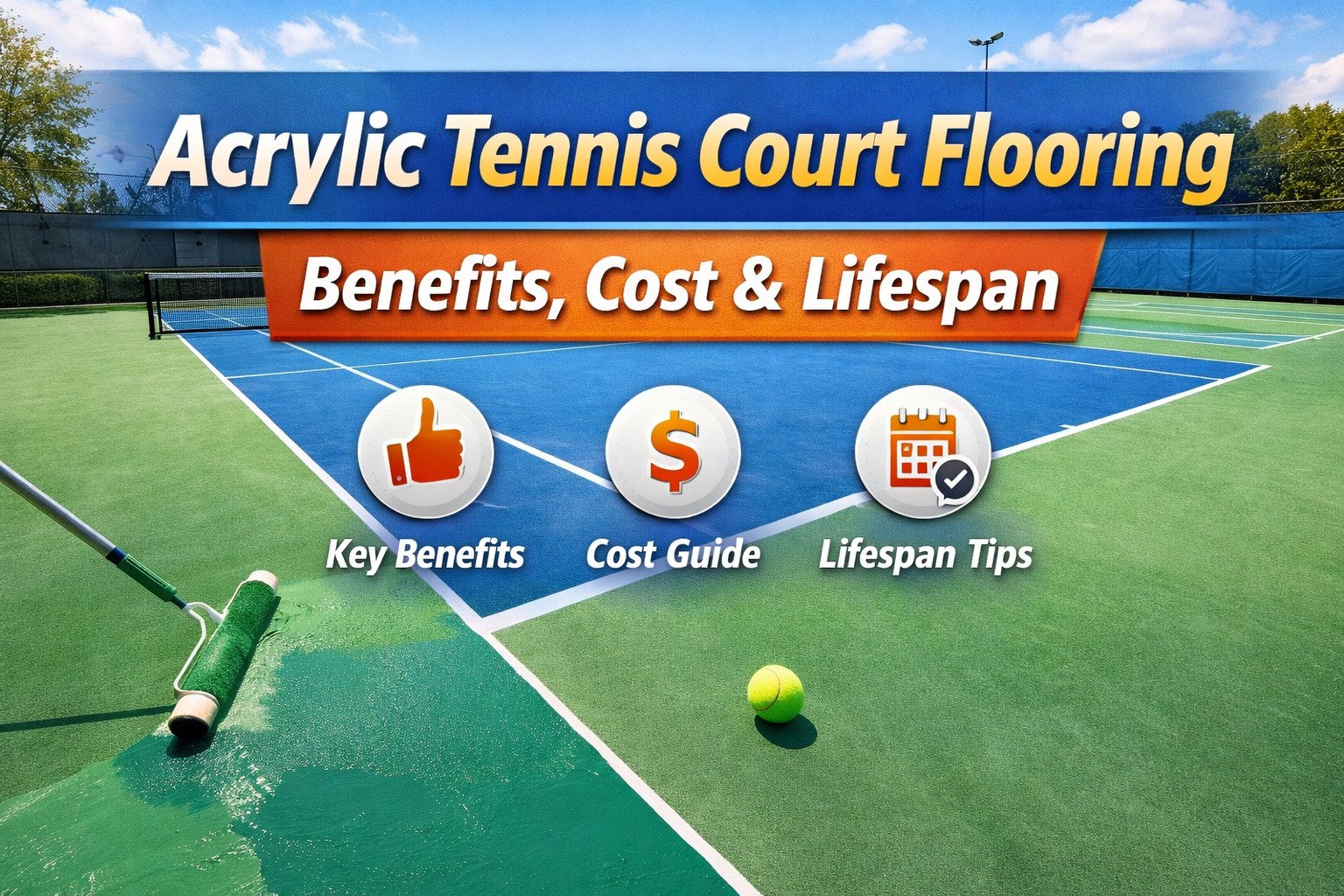
Choosing the right surface for a tennis court isn’t just about aesthetics—it’s about performance, durability, cost-efficiency, and long-term playability. Acrylic tennis court flooring has become one of the most popular choices worldwide due to its balance of value, performance, and weather resistance.
Table of contents
- What Is Acrylic Tennis Court Flooring?
- How Acrylic Tennis Court Flooring Is Constructed
- Benefits of Acrylic Tennis Court Flooring
- Performance Attributes
- Acrylic Tennis Court Flooring Cost Guide
- Typical Cost Range (2026 Estimates)
- Lifespan: How Long Does Acrylic Flooring Last?
- Acrylic Tennis Court Maintenance Tips
- Pros and Cons Summary
- Acrylic vs Other Tennis Court Surfaces
- Acrylic Tennis Court Flooring as per ITF Standards
- Indoor vs Outdoor Acrylic Tennis Courts
- Climate Impact on Acrylic Tennis Court Flooring
- Importance of Base Preparation for Acrylic Courts
- Acrylic Tennis Court Flooring Thickness Guide
- Player Comfort & Injury Prevention
- Acrylic Tennis Court Flooring for Different User Segments
- Common Problems & Solutions in Acrylic Tennis Courts
- Resurfacing vs New Acrylic Tennis Court Construction
- Expert Tips to Maximize Acrylic Court Lifespan
- Conclusion: Why Acrylic Tennis Court Flooring Remains a Top Choice
What Is Acrylic Tennis Court Flooring?
Acrylic tennis court flooring is a surface system made from multiple coats of acrylic resin coatings applied over a suitable base (usually asphalt or concrete). These layers create a flat, cushioned, UV-resistant playing surface with controlled ball bounce and traction characteristics tailored for tennis.
It’s commonly used for:
✔ Outdoor tennis courts
✔ Club and community courts
✔ School and university facilities
✔ Recreational and professional play
How Acrylic Tennis Court Flooring Is Constructed
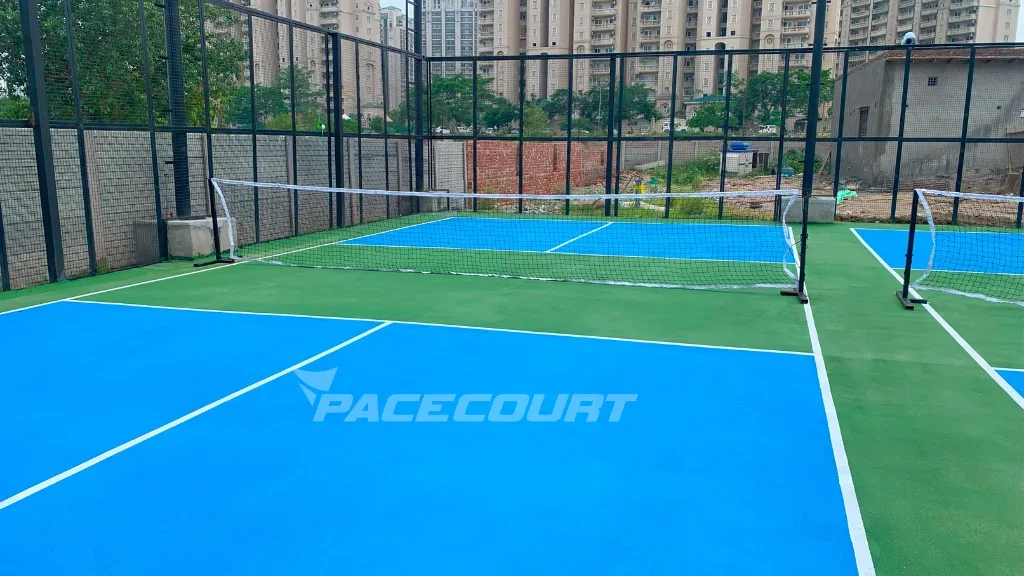
Before the top acrylic surface is applied, the base must be properly prepared:
- Base Installation or Inspection (concrete or asphalt)
- Crack Repair & Leveling
- Primer Coat Application
- Multiple Acrylic Coats
- Color Coats & Line Marking
- Surface Texture for Grip & Traction
This multilayer system provides a consistent playing surface and ensures longevity when installed correctly.
Benefits of Acrylic Tennis Court Flooring
1. Superior UV & Weather Resistance
Acrylic tennis court surfaces are inherently resistant to UV degradation, which prevents yellowing, fading, and brittleness due to sun exposure. This makes them ideal for outdoor installation in sunny climates.
2. Excellent Playability
Acrylic surfaces provide predictable ball bounce, consistent speed, and good traction—attributes endorsed by tennis governing bodies such as the ITF (International Tennis Federation). These features make it suitable for both recreational and competitive play.
3. Customizable Color Options
Manufacturers offer a wide range of colors—not just classic green and blue. This helps courts blend with surroundings or match club branding.
4. Cost-Effective for Mid-Tier Use
Compared to other surfaces like synthetic or cushioned systems, acrylic tennis court flooring is generally more affordable while delivering solid performance.
5. Quick Installation & Fast Curing
Acrylic coatings dry faster than many alternatives, which reduces downtime for courts needing rapid turnaround.
6. Moderate Cushioning for Player Comfort
While not as cushioned as specialized shock-absorbing systems, acrylic surfaces offer a comfortable amount of give that reduces player fatigue and lowers the risk of ankle strain.
7. Easy Maintenance
Keeping an acrylic surface in good shape requires regular cleaning and periodic resurfacing—simple tasks for facility owners.
Performance Attributes
| Attribute | Acrylic Surface |
|---|
| Ball Bounce Consistency | ⭐⭐⭐⭐ |
| Traction & Grip | ⭐⭐⭐⭐ |
| Weather Resistance | ⭐⭐⭐⭐ |
| Chemical Resistance | ⭐⭐⭐ |
| Impact Absorption | ⭐⭐⭐ |
| Installation Time | ⭐⭐⭐⭐ |
Acrylic Tennis Court Flooring Cost Guide
The cost of acrylic tennis court flooring depends on several factors:
1. Court Size
A standard tennis court usually measures 78 ft x 36 ft (singles/doubles). Larger courts for tournaments or multiple courts will increase material and labor costs.
2. Base Condition
If the concrete or asphalt base already exists and is in good condition, costs decrease. If extensive leveling or repair is required, costs go up.
3. Materials & Coats
Higher quality acrylic coatings and multiple protective layers increase longevity but also raise upfront costs.
Typical Cost Range (2026 Estimates)
| Item | Estimated Cost (USD) |
|---|---|
| Basic Acrylic Coating | $6 – $10 per sq. ft. |
| Mid-Tier System (with Primer + Multiple Coats) | $10 – $12 per sq. ft. |
| Premium System (with cushioning + advanced finish) | $12 – $16+ per sq. ft. |
Note: Prices vary by region, base condition, and contractor. Always request a detailed quote.
Lifespan: How Long Does Acrylic Flooring Last?
Acrylic tennis court floors are known for their long service life when properly maintained.
✔ Expected Lifespan: 6–10 years
✔ Resurfacing Interval: Every 4–6 years on average
Factors that affect lifespan include:
- Climate and sun exposure
- Usage frequency
- Maintenance quality
- Initial installation quality
Acrylic Tennis Court Maintenance Tips
Proper maintenance ensures maximum performance and longevity:
Daily/Weekly
- Sweep off dirt and debris
- Remove organic matter (leaves, moss)
Monthly
- Light pressure washing
- Check lines and surface wear
Annually
- Inspect for cracks, fading, or peeling
- Touch up or recoat worn spots
Resurfacing
Every 4–6 years, a fresh acrylic topcoat may be needed to renew appearance and performance.
Pros and Cons Summary
Pros
✔ Affordable compared to other court surfaces
✔ UV resistant and suitable for outdoor use
✔ Quick installation and return to play
✔ Consistent ball response
✔ Wide color choice
Cons
⚠ Less shock absorption than cushioned systems
⚠ Not ideal for indoor professional tennis
⚠ Must be resurfaced periodically
Acrylic vs Other Tennis Court Surfaces
Acrylic vs Hard Court (Concrete/Asphalt Alone)
Acrylic has better traction, consistent bounce, and is less dusty.
Acrylic vs Synthetic Cushioned Surfaces
Cushioned systems are easier on knees but cost more and may have higher maintenance.
Acrylic vs Clay Courts
Clay offers slower ball speeds and higher maintenance. Acrylic is faster and easier to manage.
Acrylic Tennis Court Flooring as per ITF Standards
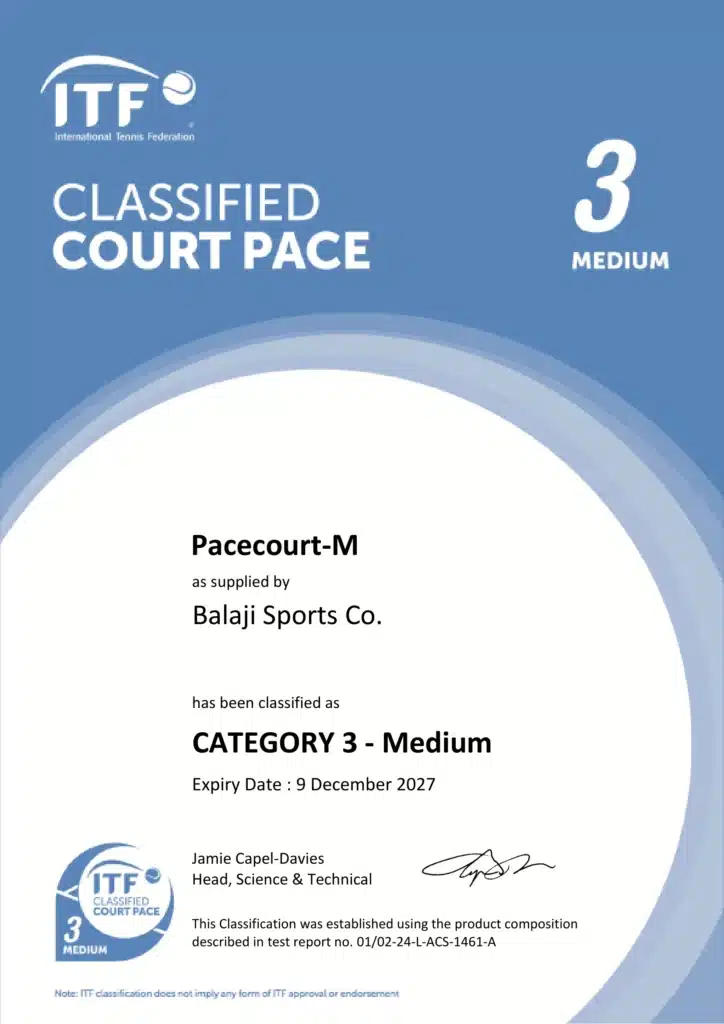
Acrylic tennis court flooring systems are widely accepted and used for ITF-recognized courts when installed according to proper technical specifications.
Key ITF Considerations
- Surface Pace Rating: Acrylic courts can be designed for slow, medium, or medium-fast play.
- Ball Bounce Uniformity: Multiple acrylic coats ensure consistent bounce across the court.
- Slip Resistance: Textured acrylic layers improve player safety.
- Color Contrast: Standard ITF color combinations enhance ball visibility.
When installed by experienced manufacturers, acrylic flooring systems meet both professional and recreational tennis standards.
Indoor vs Outdoor Acrylic Tennis Courts
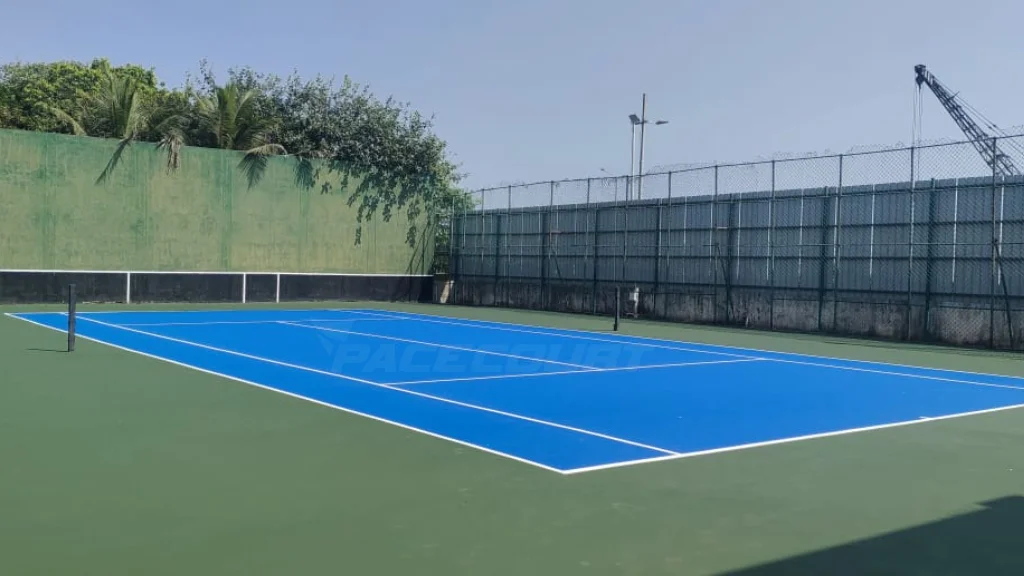
Outdoor Acrylic Tennis Courts
- Excellent UV resistance
- Weatherproof performance
- Ideal for schools, clubs, and public facilities
- Requires proper drainage design
Indoor Acrylic Tennis Courts
- Faster surface performance
- Lower wear due to weather protection
- Less frequent resurfacing
- Suitable for training academies
Verdict: Acrylic flooring performs best outdoors but can also be adapted for indoor environments.
Climate Impact on Acrylic Tennis Court Flooring
Climate plays a critical role in surface performance and lifespan.
Hot & Sunny Regions
- Acrylic performs exceptionally well
- Minimal fading with quality UV-stable coatings
Rainy & Humid Areas
- Requires slope and drainage planning
- Anti-fungal coatings recommended
Cold Regions
- Expansion joints and crack fillers must be used to handle temperature variation
Proper installation tailored to local climate ensures long-term durability.
Importance of Base Preparation for Acrylic Courts
The performance of acrylic flooring depends heavily on the quality of the base.
Preferred Base Types
- Asphalt Base: Flexible, cost-effective, ideal for outdoor courts
- Concrete Base: Strong, long-lasting, slightly higher cost
Key Base Preparation Steps
- Laser leveling for flatness
- Crack isolation membranes
- Moisture barrier application
- Proper slope for water drainage
Skipping base preparation is the most common cause of surface failure.
Acrylic Tennis Court Flooring Thickness Guide
| Layer | Typical Thickness |
|---|---|
| Primer Coat | 0.5–1 mm |
| Cushion Layer (Optional) | 2–4 mm |
| Acrylic Color Coats | 1–2 mm |
| Total System Thickness | 3–6 mm |
Thicker systems improve comfort and durability but increase project cost.
Player Comfort & Injury Prevention
Acrylic tennis court flooring offers:
- Reduced joint stress compared to plain concrete
- Improved grip during lateral movement
- Lower risk of slips and ankle injuries
For academies and training centers, cushioned acrylic systems are strongly recommended.
Acrylic Tennis Court Flooring for Different User Segments
Schools & Colleges
- Budget-friendly
- Low maintenance
- Safe for beginners
Clubs & Academies
- Professional playability
- Custom speed and cushioning
- Long-term value
Government & Public Courts
Easy to refurbish
Durable
Weather-resistant
Common Problems & Solutions in Acrylic Tennis Courts
| Issue | Cause | Solution |
|---|---|---|
| Cracks | Poor base | Crack repair & membrane |
| Fading | Low-quality material | UV-stable coatings |
| Slippery surface | Dust buildup | Regular cleaning |
| Water pooling | Poor slope | Drainage correction |
Resurfacing vs New Acrylic Tennis Court Construction
Choose Resurfacing If:
- Base is structurally sound
- Surface is faded or worn
- Budget is limited
Choose New Construction If:
- Base has structural cracks
- Drainage is faulty
- Court is over 12–15 years old
Resurfacing can restore performance at 40–60% of new construction cost.
Expert Tips to Maximize Acrylic Court Lifespan
✔ Use premium-grade acrylic coatings
✔ Follow proper curing times
✔ Avoid heavy equipment on court
✔ Schedule annual inspections
✔ Recoat before surface failure occurs
Conclusion: Why Acrylic Tennis Court Flooring Remains a Top Choice
Acrylic tennis court flooring continues to dominate the global market due to its reliable performance, affordability, and adaptability. When designed with the right base, thickness, and surface texture, it delivers a professional playing experience while maintaining long-term value.