Advantages of Acrylic Sports Flooring

Sports Flooring for Monsoon Season
Advantages of Acrylic Sports Flooring

Best Sports Flooring for Monsoon Season in India: Complete Buying Guide

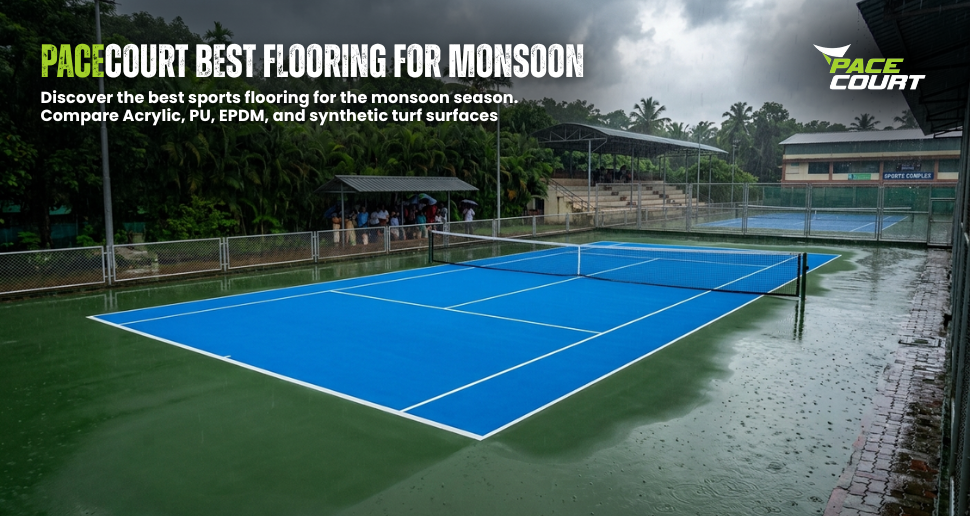
Acrylic sports flooring (outdoor) and PU/PVC flooring (indoor) are the best choices for monsoon season in India because they resist moisture, provide anti-slip grip, and withstand high humidity without warping or cracking. India’s monsoon season runs from June to September and brings intense rainfall, humidity levels above 80%, and waterlogging risks. Standard concrete or wooden floors fail fast under these conditions. Sports facilities across India – schools, academies, gyms, and clubs – need flooring that handles moisture, retains grip, and keeps athletes safe even in wet conditions. This 2026 buying guide covers every flooring type, compares their monsoon performance, and helps you choose the right surface for your sport, budget, and location. Why Monsoon Season Damages Most Sports Floors India’s climate is one of the most demanding in the world for sports infrastructure. Outdoor courts face direct rainfall, standing water, and UV exposure. Indoor facilities deal with high ambient humidity and moisture seeping through subfloors. Common monsoon-related flooring failures include: Choosing sports flooring for monsoon season means selecting materials engineered specifically for moisture resistance, anti-slip performance, and long-term structural stability in India’s humidity conditions. Top 6 Sports Flooring Types for Monsoon Season in India (2026) 1. Acrylic Sports Flooring – Best for Outdoor Courts Acrylic sports flooring dominates India’s outdoor courts in 2026 for very good reasons. It bonds directly to a concrete or asphalt base and forms a seamless, waterproof surface layer. UV-resistant pigments prevent colour fading even under direct monsoon sun. The textured acrylic finish creates natural anti-slip grip that remains effective when wet. Facilities use acrylic for basketball, tennis, volleyball, badminton (outdoor), and multi-purpose courts. The surface requires minimal maintenance during monsoon season – just brush away standing water and it performs reliably. 2. PU (Polyurethane) Sports Flooring – Best for Indoor Facilities PU flooring is a poured or spray-applied surface system that creates a seamless, cushioned playing area indoors. It offers superior shock absorption, excellent traction, and zero water absorption when properly installed with a moisture barrier. Professional sports academies and competitive indoor venues across India prefer PU flooring because it meets international standards and performs consistently through monsoon humidity. The seamless nature of PU flooring is its biggest monsoon advantage – there are no joints or seams for moisture to penetrate. Combined with a PE moisture barrier layer beneath, PU flooring completely isolates the playing surface from subfloor dampness. 3. PVC/Vinyl Sports Flooring – Best Budget-Friendly Option PVC (vinyl) sports flooring is the most widely used indoor flooring for schools and community sports halls across India. It comes as rolls or tiles in 4.5mm–8mm thickness and installs directly over a levelled concrete subfloor. PVC is inherently waterproof, non-absorbent, and easy to clean with a damp mop during humid months. During monsoon season, PVC’s biggest advantage is its closed-cell structure – it does not absorb moisture, does not harbour mold, and dries within minutes after surface water contact. However, quality matters significantly. Low-grade PVC tiles can lift at the edges if cheaper adhesives fail due to subfloor moisture. 4. Rubber Sports Flooring – Best for Gyms and Weight Training Areas Rubber flooring handles monsoon conditions reliably in gym and fitness settings. Vulcanized rubber tiles are dense, waterproof, and slip-resistant even when moisture is present. They absorb heavy impact from dropped weights and reduce noise effectively. Rubber flooring performs well in covered semi-outdoor facilities – areas with partial exposure to humidity and splash water. Its textured surface maintains grip, and the interlocking tile format means damaged sections can be replaced individually without full-floor replacement. 5. Engineered Wood Sports Flooring – Best for Premium Indoor Courts Solid wood fails badly during monsoon in India. Engineered wood, however, uses multi-layer cross-grain construction that resists the expansion and contraction caused by humidity swings. For premium badminton academies and professional indoor courts, engineered maple wood with a polyurethane top coat remains the standard choice. Engineered wood requires proper humidity management – indoor relative humidity should stay between 40%–60% during monsoon months. Facilities must install dehumidifiers and ensure adequate ventilation. When properly managed, engineered wood delivers unmatched playing comfort and aesthetics. 6. Interlocking PP (Polypropylene) Tiles – Best for Portable or Multi-Use Courts Interlocking polypropylene tiles have gained popularity in India in 2026 for their ease of installation and excellent drainage properties. The open-grid tile design allows water to pass through the surface and drain away naturally – making them one of the few outdoor flooring options that actually function well during active rainfall. Schools, housing societies, and club facilities use PP tiles for multi-sport courts that experience direct monsoon exposure. They require no adhesive, no special subfloor prep beyond levelling, and individual tiles replace in minutes. Flooring Type Comparison Table – Monsoon Season Performance Flooring Type Moisture Resistance Anti-Slip (Wet) Suitable Location Durability 2026 Cost (₹/sq. ft.) Maintenance Acrylic Sports ★★★★★ ★★★★☆ Outdoor 8–12 years ₹45–₹90 Low PU Flooring ★★★★★ ★★★★★ Indoor 10–15 years ₹80–₹180 Very Low PVC/Vinyl ★★★★☆ ★★★★☆ Indoor 7–10 years ₹35–₹75 Low Rubber Tiles ★★★★☆ ★★★★☆ Indoor/Semi-Outdoor 8–12 years ₹40–₹90 Low Engineered Wood ★★★☆☆ ★★★☆☆ Indoor (Climate Controlled) 12–20 years ₹150–₹350 High PP Interlocking ★★★★★ ★★★☆☆ Outdoor/Portable 5–8 years ₹55–₹110 Very Low Sport-Wise Flooring Recommendation Table Sport Indoor Recommendation Outdoor Recommendation Monsoon Priority Badminton PVC Mat / Engineered Wood Not Recommended Outdoors Anti-slip + shock absorption Basketball PU Flooring Acrylic Water drainage + grip Tennis PU / Carpet Acrylic Hard Court UV + slip resistance Volleyball PU / PVC Acrylic Cushioning + drainage Football/Cricket PU / Artificial Turf Artificial Turf Drainage + durability Gym / Fitness Rubber Tiles Rubber Tiles Moisture seal + impact Multi-Sport PVC / PU Acrylic / PP Tiles Versatility + low maintenance Key Features to Look for in Sports Flooring for Monsoon Season Moisture Barrier Layer Every quality sports flooring installation for monsoon season must include a PE (polyethylene) moisture barrier between the subfloor and the playing surface. This layer prevents moisture from migrating upward from the concrete base – a common cause of flooring failure in India’s rainy season. Without a moisture
Synthetic Acrylic Sports Flooring
Advantages of Acrylic Sports Flooring

Synthetic Acrylic Sports Flooring: Benefits, Types & Applications

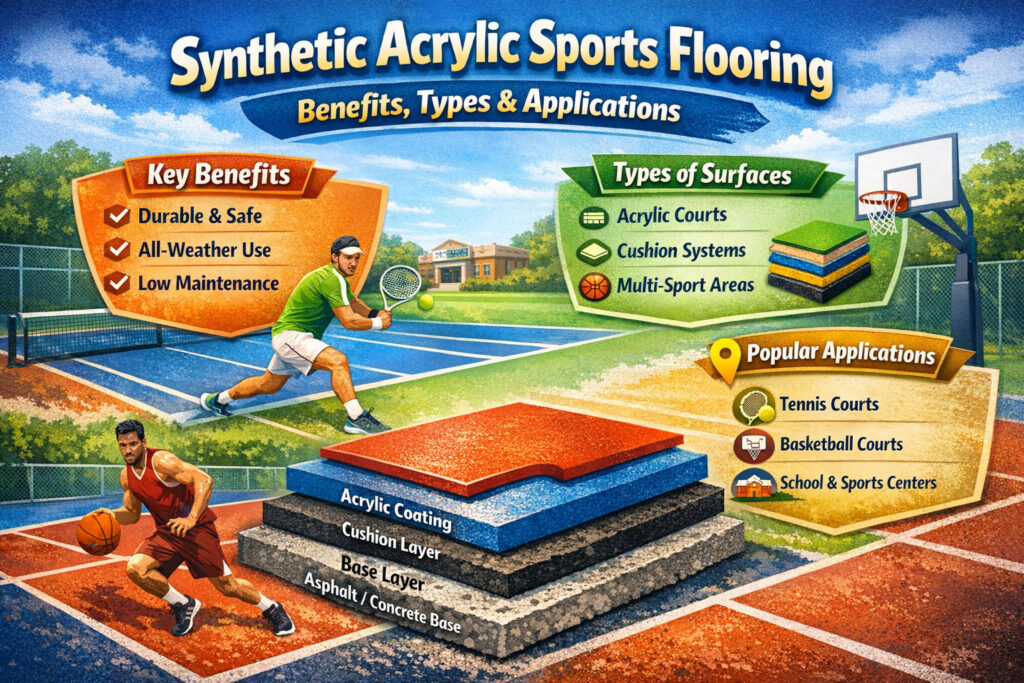
Synthetic acrylic sports flooring is one of those innovations that quietly transformed the way modern sports surfaces are built, yet many people don’t fully realize its impact until they step onto a court that feels “just right.” At its core, this type of flooring is a multi-layered surface system made from acrylic resins, silica sand, and specialized coatings applied over a stable base like asphalt or concrete. The result? A seamless, durable, and performance-driven surface designed to meet the demands of athletes across various sports. What makes synthetic acrylic flooring stand out is its adaptability. Whether it’s a high-intensity tennis match or a casual basketball game in a community park, this surface delivers consistent bounce, grip, and comfort. Unlike traditional surfaces that may crack, warp, or degrade over time, acrylic systems are engineered to maintain their integrity even under heavy use. Think of it like a well-built running shoe—it absorbs impact, provides traction, and supports movement without slowing you down. Another important aspect is customization. Synthetic acrylic flooring can be tailored in terms of color, texture, and cushioning level. This flexibility allows facility owners to design courts that not only meet international standards but also reflect branding or aesthetic preferences. From professional stadiums to school playgrounds, acrylic surfaces are everywhere—and for good reason. In today’s sports infrastructure landscape, where performance and safety go hand in hand, synthetic acrylic flooring has become a go-to solution. It’s not just about creating a playing surface; it’s about enhancing the entire athletic experience, from the first step to the final whistle. Evolution of Sports Flooring Materials If you rewind a few decades, sports flooring looked very different from what we see today. Early courts were often made from natural materials like clay, grass, or untreated wood. While these surfaces had their charm, they came with significant limitations—uneven play, high maintenance, and vulnerability to weather conditions. As sports grew more competitive and global, the demand for reliable, high-performance surfaces became impossible to ignore. This is where synthetic materials began to enter the scene. The introduction of asphalt and concrete courts marked a turning point, offering greater durability and consistency. However, these hard surfaces lacked the flexibility and shock absorption needed to protect athletes from injuries. That gap led to the development of advanced coatings, eventually giving rise to synthetic acrylic systems. By the late 20th century, acrylic sports flooring had started gaining traction, especially in tennis. Major tournaments began adopting acrylic surfaces because they provided predictable ball bounce and could be customized for speed. Over time, technological advancements improved the formulation of acrylic resins, making them more resistant to UV rays, temperature fluctuations, and wear. Today, synthetic acrylic flooring represents the perfect blend of science and sport. It incorporates decades of research, athlete feedback, and material innovation. Modern systems are not only more durable but also environmentally conscious, with many manufacturers focusing on low-VOC formulations and sustainable practices. The journey from grass courts to high-tech acrylic surfaces is a testament to how far sports infrastructure has come. And as technology continues to evolve, one thing is clear—synthetic acrylic flooring is here to stay, constantly adapting to meet the ever-changing demands of athletes and facility owners alike. Key Features of Synthetic Acrylic Sports Flooring Durability and Longevity Durability isn’t just a nice-to-have feature in sports flooring—it’s a necessity. Synthetic acrylic sports flooring excels in this area, making it one of the most reliable choices for both indoor and outdoor applications. Imagine a surface that can withstand thousands of footfalls, intense gameplay, and varying weather conditions without losing its structural integrity. That’s exactly what acrylic flooring offers. The secret lies in its layered construction. Each layer, from the base coat to the top finish, is designed to handle specific stresses. The inclusion of silica sand enhances abrasion resistance, while the acrylic binders ensure flexibility and adhesion. This combination creates a surface that resists cracking, peeling, and fading over time. From a financial perspective, this longevity translates into significant savings. While the initial installation cost might seem higher compared to basic concrete or asphalt surfaces, the reduced need for repairs and replacements makes acrylic flooring a cost-effective solution in the long run. According to industry estimates, well-maintained acrylic courts can last anywhere from 8 to 15 years before requiring major resurfacing. Another factor contributing to durability is resistance to environmental factors. Whether it’s scorching heat, heavy rainfall, or freezing temperatures, synthetic acrylic surfaces maintain their performance characteristics. This resilience makes them ideal for regions with unpredictable climates. Facility managers often describe acrylic flooring as a “set it and forget it” solution—not because it requires no maintenance, but because it doesn’t demand constant attention. With periodic cleaning and minor touch-ups, these surfaces can retain their quality for years. In a world where downtime equals lost revenue and dissatisfied users, durability becomes a competitive advantage. Synthetic acrylic sports flooring delivers that advantage consistently, making it a trusted choice across schools, clubs, and professional arenas. Weather Resistance and UV Stability Outdoor sports surfaces face a relentless enemy: the elements. Sunlight, rain, wind, and temperature fluctuations can wreak havoc on poorly constructed courts. This is where synthetic acrylic sports flooring truly shines, offering exceptional weather resistance and UV stability that keep surfaces looking and performing like new. One of the standout features of acrylic flooring is its ability to resist UV degradation. Prolonged exposure to sunlight can cause many materials to fade, crack, or become brittle. Acrylic coatings, however, are formulated with UV-resistant pigments and stabilizers that protect the surface from these effects. This means vibrant court colors remain intact for years, enhancing both aesthetics and visibility during gameplay. Water resistance is another critical advantage. Acrylic surfaces are non-porous, preventing water from seeping into the underlying layers. This reduces the risk of mold growth, structural damage, and surface warping. After rainfall, these courts dry relatively quickly, minimizing downtime and allowing players to get back into action sooner. Temperature fluctuations can also be a challenge, especially in regions with extreme climates. Synthetic

Advantages of Acrylic Sports Flooring

The Advantages of Acrylic Sports Flooring for Tennis Courts

When considering the renovation or construction of a tennis court, choosing the right surface material is essential. A prominent and preferred choice among sports facilities worldwide is Pacecourt Acrylic Sports Flooring. This modern, innovative flooring option comes packed with numerous advantages that cater to both the functional needs and aesthetic desires of players, coaches, and facility managers alike. Here, we will delve into the benefits and features that have made Pacecourt Acrylic Sports Flooring a top-notch solution for tennis courts. Let us now discuss the Advantages of Acrylic Sports Flooring in this article. Durability Pacecourt Acrylic Sports Flooring offers remarkable durability. Engineered to withstand intensive use, it doesn’t succumb to the constant pounding of tennis balls or wear from foot traffic. The resistance to wear ensures longevity, making it a wise investment for facilities that demand long-term performance. Weather Resistance Unlike traditional court surfaces that may deteriorate under severe weather conditions, Pacecourt’s acrylic flooring is weather resistant. It can endure extreme temperatures, heavy rainfall, and even harsh sunlight without losing its functional integrity. Low Maintenance Low maintenance is a key advantage of Pacecourt Acrylic Flooring. Simple, regular cleaning is sufficient to keep the surface in optimal condition. This feature saves both time and resources in upkeep, making it an attractive option for many facilities. UV Protection The UV protection embedded in Pacecourt flooring prevents colour fading and material degradation under continuous sun exposure. This ensures that the court maintains its visual appeal and performance features year-round. Customizable Colors Beyond performance, aesthetics play a role in the appeal of a sports facility. Pacecourt allows customizable colours, allowing clients to match their brand or personal preferences. This adds a unique touch to every court. Improved Traction Traction is essential for player performance and safety. Pacecourt’s acrylic surface offers improved traction, enabling players to pivot quickly and sprint without slipping. This feature contributes to both competitive play and player satisfaction. Player Safety Player safety is at the forefront of Pacecourt’s design. With its shock absorption properties, it minimizes the risk of injuries, reducing the strain on joints and muscles. This makes it a preferred choice among professional athletes and recreational players alike. Cost-Effective Despite its myriad advantages, Pacecourt Acrylic Flooring is cost-effective. Its long lifespan and low maintenance reduce overall expenses, offering excellent value for money. Shock Absorption The shock absorption quality of Pacecourt helps in dampening the impact, providing comfort during play. This not only enhances performance but also contributes to injury prevention. Aesthetic Appeal The sleek, modern appearance of Pacecourt Acrylic Flooring enhances the overall aesthetic appeal of the tennis court. Its vibrant customizable colors and smooth finish add a touch of sophistication to any sports facility. Surface Consistency Pacecourt offers remarkable surface consistency, providing uniform bounce and playability across the court. This predictability allows players to focus on their game, knowing that the surface will respond consistently. Multi-Purpose Use The multi-purpose use of Pacecourt Flooring extends its application beyond tennis. It can be utilized for other sports like basketball and volleyball, maximizing the utility of the space. Environmentally Friendly With a growing emphasis on sustainability, Pacecourt’s environmentally friendly manufacturing process and recyclable materials resonate with eco-conscious clients. Quick Installation The quick installation process of Pacecourt flooring minimizes downtime, allowing facilities to be operational in a short period. This is essential for commercial sports complexes looking to maximize utilization. Anti-Slip Properties The anti-slip properties of Pacecourt enhance safety, especially in wet conditions. This ensures that play can continue even in less-than-ideal weather, providing an uninterrupted experience. Optimal Bounce Pacecourt provides the optimal bounce, closely mimicking natural grass courts. This enhances the playing experience, making it suitable for both professional competitions and casual play. Temperature Adaptability Temperature adaptability ensures that the court performs consistently across different weather conditions. Whether in the scorching heat or chilly winters, Pacecourt retains its playing characteristics. Water Drainage The water drainage system integrated into Pacecourt’s design prevents pooling during rainfall. This feature enables quick drying and resumption of play following a downpour. Flexible Design Options Pacecourt Acrylic Sports Flooring offers flexible design options, accommodating various court sizes and layouts. This flexibility enables customization to suit individual needs and preferences. Conclusion Pacecourt Acrylic Sports Flooring brings together a blend of performance, aesthetics, and practicality. Its comprehensive set of features, including durability, UV protection, player safety, cost-effectiveness, aesthetic appeal, and more, makes it a preferred choice for tennis courts. Whether for professional tournaments or community centres, Pacecourt offers a solution that meets the Advantages of Acrylic Sports Flooring diverse needs and sets a new benchmark in sports flooring.

Scroll to Top
HOMEOWNERS
BUSINESS OWNERS
ARCHITECTS
MUNICIPALITIES

Let's Build
Great Courts

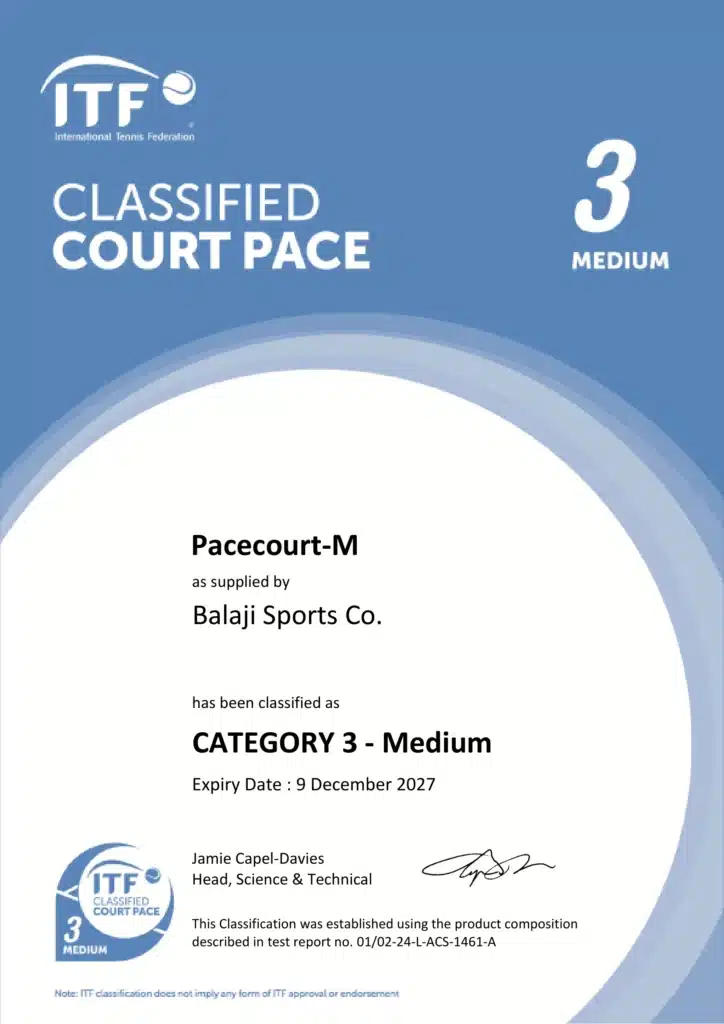
ITF-certified acrylic flooring for Tennis, Basketball, Badminton, Pickleball & more shipped worldwide.

Premium Quality

World-class material & Construction

Expert Team

Experinced Proffectionals at your Service

End-to-End Support

From concept to completions

Get In Touch

We will respond as soon as possible 

[pw_popup_form]

    Your information is secure and will never be shared

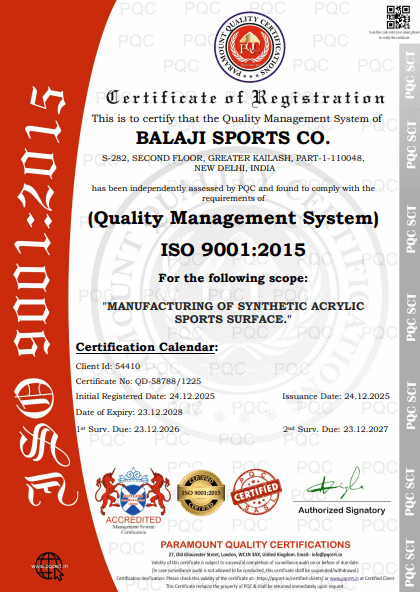
    ISO-Certificate