What Is a Basketball Ground?
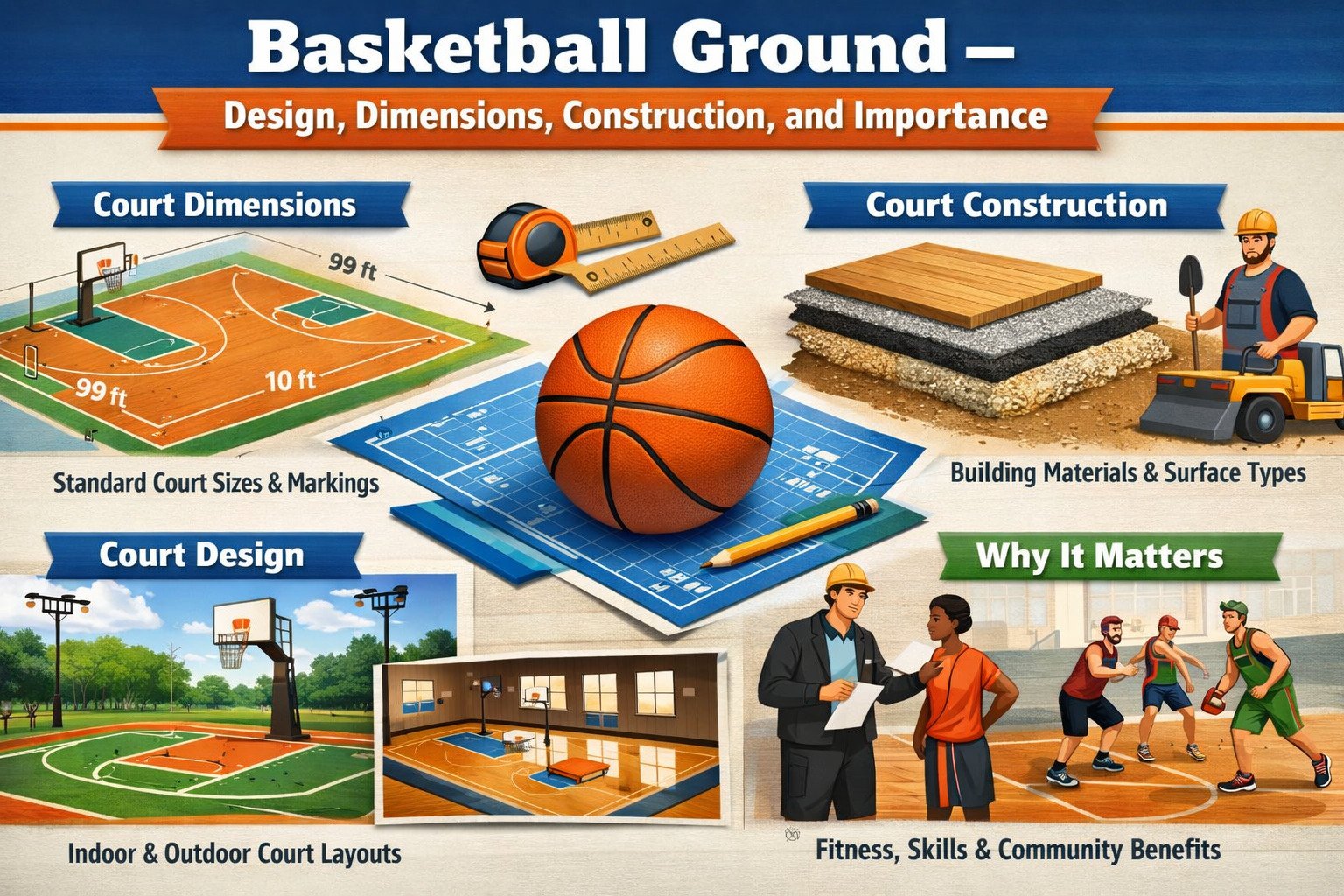
A basketball ground, often called a basketball court, is the dedicated playing area where the sport of basketball takes place. At first glance, it might seem like just a flat surface with two hoops at opposite ends. In reality, a properly designed basketball ground is a carefully planned sports facility with specific dimensions, markings, equipment, and safety features. Every line painted on the court has a purpose, every measurement influences gameplay, and every surface material affects performance.
Think of a basketball ground as the stage for one of the fastest and most exciting sports in the world. Whether it’s a neighborhood pickup game, a school tournament, or an NBA playoff match, the court is where strategy, skill, and athleticism collide. The design of the ground ensures fair play, smooth movement, and consistent gameplay for everyone involved.
Basketball grounds can exist in many environments. Some are indoor courts, usually located in gyms, arenas, or sports complexes. These courts often feature polished wooden floors that provide excellent grip and ball bounce. Others are outdoor courts, commonly found in parks, schools, and residential communities. Outdoor courts typically use materials like asphalt or concrete to withstand weather conditions.
Beyond simply hosting games, basketball grounds serve an important role in community engagement and youth development. Many young athletes take their first shots on a local outdoor court, dreaming of becoming professional players one day. Public basketball courts often become social hubs where friendships form and communities connect through sport.
Another interesting aspect of a basketball ground is how it balances precision and simplicity. The game itself is easy to understand—put the ball through the hoop—but the court’s layout ensures fairness and structure. Specific zones like the free-throw lane, three-point arc, and key area guide the flow of the game.
In short, a basketball ground is far more than a playing surface. It is a carefully structured environment that supports athletic performance, competitive fairness, and community interaction. Without the proper design and layout of a basketball court, the sport simply wouldn’t function the way fans and players expect.
Basic Concept of a Basketball Playing Area
At its core, the basketball playing area is a rectangular court with a hoop at each end, designed to allow two teams to compete by scoring points through baskets. While that sounds simple, the concept of a basketball ground actually revolves around creating a balanced space where offense and defense can interact smoothly.
Imagine the court as a strategic battlefield where every inch of space matters. Players sprint across the floor, pivot, pass, and shoot within clearly defined zones. The boundaries ensure the ball remains in play, while the various lines help referees enforce rules and guide player positioning.
A standard basketball ground is divided into two equal halves by a center line, with a center circle marking the starting point of the game. Each team defends one basket while attempting to score on the opposite one. This symmetrical design ensures fairness because both teams have equal opportunities on the same playing surface.
One of the most distinctive areas on a basketball ground is the key, also known as the paint. This rectangular or trapezoidal area near the basket is where many crucial plays occur. Players often drive into this zone to attempt close-range shots or draw fouls. Because it’s such a high-traffic area, strict rules govern how long offensive players can remain there.
Another defining feature is the three-point arc. This curved line creates an exciting dynamic in modern basketball. Shots made from beyond this line are worth three points instead of two, encouraging players to develop long-range shooting skills. Over the past decade, this area has become increasingly important as teams emphasize perimeter shooting.
The concept of a basketball playing area also involves player safety and performance. Courts must provide proper traction to prevent slipping, and the bounce of the basketball must remain consistent across the entire surface. Even small variations in flooring can affect how the ball moves or how athletes land after jumping.
From professional arenas to simple neighborhood courts, the basic concept remains the same: a structured space that enables fast-paced competition while maintaining fairness and safety. The beauty of basketball lies in how this relatively simple court design supports an incredibly complex and thrilling game.
Why a Proper Basketball Ground Matters
A properly designed basketball ground is essential for both performance and safety. While casual players might enjoy shooting hoops on almost any flat surface, the difference between an improvised playing area and a well-constructed basketball court is enormous. The quality of the ground can directly influence how the game is played and how athletes perform.
First and foremost, a professional basketball ground ensures consistent ball bounce. Basketball relies heavily on dribbling, and if the surface is uneven or poorly constructed, the ball may bounce unpredictably. This not only disrupts gameplay but can also make it difficult for players to develop proper ball-handling skills.
Safety is another critical factor. A good basketball ground is built with shock-absorbing materials that reduce the impact on players’ joints when they run, jump, and land. According to sports medicine research, athletes in high-impact sports like basketball experience significant stress on their knees and ankles. Quality court surfaces help minimize injuries by providing the right combination of grip and cushioning.
A well-maintained basketball ground also ensures clear visibility of court markings. Lines such as the three-point arc, free-throw line, and boundary lines guide both players and referees during the game. Without accurate markings, enforcing rules becomes difficult and gameplay loses its structure.
There is also a psychological element. Playing on a proper court often boosts motivation and confidence. When athletes step onto a clean, professionally marked basketball ground, it signals that the game is serious and competitive. This environment encourages players to perform at their best.
For schools, universities, and community centers, basketball grounds offer additional benefits. They become multi-purpose sports facilities that host tournaments, training sessions, and recreational games. These courts often serve hundreds of players each week, making them valuable assets for physical fitness and community engagement.
Professional leagues take court quality even further. The NBA and FIBA have strict standards regarding court dimensions, materials, lighting, and equipment. These standards ensure fairness and maintain the integrity of the game across different venues.
In many ways, the basketball ground acts as the foundation of the sport itself. Without a properly designed and maintained court, the fast pace, precision plays, and spectacular moments that fans love would be much harder to achieve.
Standard Dimensions of a Basketball Ground
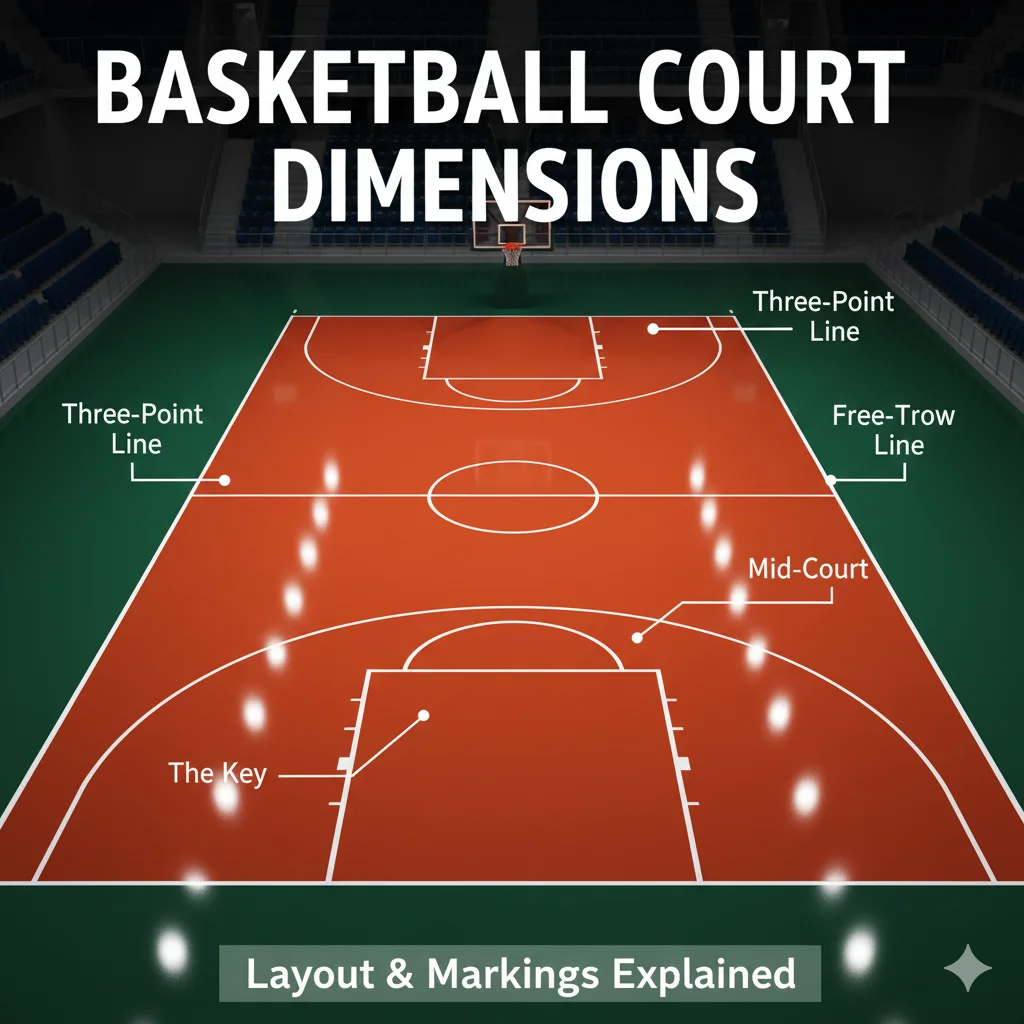
The dimensions of a basketball ground play a crucial role in maintaining fairness, consistency, and competitive balance in the sport. Basketball is played all over the world—from neighborhood parks to massive professional arenas—and standardized court measurements ensure that players experience the same style of gameplay regardless of location. When courts follow official dimensions, athletes can train and compete without constantly adjusting to different spaces.
A basketball court is essentially a large rectangle divided into two symmetrical halves, with each team defending one side and attacking the other. While the general layout remains consistent, different governing organizations such as FIBA (International Basketball Federation) and the NBA (National Basketball Association) have slightly different measurements. Despite these variations, the core design elements remain nearly identical.
The most common international basketball ground size used in schools and professional competitions is 28 meters long and 15 meters wide. These dimensions create enough space for the high-speed movement that defines basketball. Players frequently sprint from one end of the court to the other in a matter of seconds, so the length of the court must allow for both offensive fast breaks and defensive transitions.
Court size also influences strategy. A larger court spreads players out, creating opportunities for passing lanes and perimeter shooting. Meanwhile, smaller courts can make games feel more crowded, forcing teams to rely on quick decisions and tight ball control. That’s why official leagues maintain precise measurements—to preserve the strategic balance of the sport.
Beyond the main dimensions, the basketball ground also includes specific areas with precise measurements, such as the center circle, free-throw lane, and three-point arc. Each of these sections shapes how the game unfolds. The three-point line, for example, determines the distance players must shoot from to earn extra points.
The space surrounding the court is also important. Professional courts usually include safety zones outside the boundary lines so players can dive for loose balls without colliding with walls or spectators. According to FIBA recommendations, at least 2 meters of free space should surround the playing area.
When you look at a basketball ground from above, it almost resembles a carefully drawn blueprint. Every line and measurement serves a purpose, ensuring that the sport remains fast, fair, and exciting no matter where it is played.
Official Court Size According to FIBA
The FIBA basketball court is widely considered the global standard for international competitions. FIBA governs most professional leagues outside the United States and organizes major tournaments such as the FIBA Basketball World Cup and the Olympic basketball events. Because of this, many countries design their basketball grounds based on FIBA specifications.
According to FIBA regulations, the official basketball ground measures 28 meters (91.9 feet) in length and 15 meters (49.2 feet) in width. These dimensions create a balanced playing field that allows teams to execute both fast breaks and structured offensive plays. The court is divided into two equal halves by the center line, which passes through the center circle where the game begins with a jump ball.
One of the most noticeable features on a FIBA basketball ground is the three-point line, which is positioned 6.75 meters (22.15 feet) from the basket. Shots made from beyond this arc count as three points, encouraging players to develop long-range shooting abilities. The introduction and gradual extension of the three-point line over the years has significantly changed modern basketball strategies.
The free-throw line is located 4.6 meters (15 feet) from the backboard, and the rectangular area around it—commonly called the key or the paint—is 4.9 meters wide. This zone plays a crucial role in both offensive drives and defensive positioning. Players often battle for rebounds here, making it one of the most intense areas on the court.
Another important component is the center circle, which has a radius of 1.8 meters. This circle is used during the opening jump ball and sometimes during held-ball situations. Although it occupies only a small part of the court, it symbolizes the official start of the game.
FIBA also mandates strict standards for equipment. The basketball rim must be exactly 3.05 meters (10 feet) above the playing surface, a height that has remained unchanged since the sport was invented in 1891. This consistency ensures that players worldwide compete under the same conditions.
By maintaining these standardized measurements, FIBA ensures that basketball remains universally recognizable and competitively fair, whether it’s played in Europe, Asia, Africa, or South America.
NBA Basketball Court Measurements
The NBA basketball ground follows slightly different measurements compared to the FIBA court. The National Basketball Association is the premier professional basketball league in the United States and is widely regarded as the highest level of competition in the sport. Because of its global influence, many fans and players are familiar with NBA court dimensions.
An official NBA basketball court measures 94 feet (28.65 meters) long and 50 feet (15.24 meters) wide. This makes it slightly larger than the FIBA court, especially in length. The additional space allows for the incredibly fast-paced style of play that the NBA is known for, where athletes sprint, cut, and transition rapidly between offense and defense.
One of the most significant differences between NBA and FIBA courts is the three-point line distance. In the NBA, the three-point arc is 23 feet 9 inches (7.24 meters) from the basket at the top of the key, although it becomes slightly shorter near the corners. This greater distance makes three-point shooting more challenging and requires exceptional accuracy and strength.
The free-throw line distance remains the same as in FIBA courts—15 feet from the backboard. This consistency helps players adapt between international and NBA competitions. However, the paint area in the NBA is wider, measuring 16 feet across, which influences defensive strategies and spacing near the basket.
NBA courts also feature extended sideline and baseline safety zones to accommodate camera crews, media, and courtside seating. These areas are carefully designed to keep players safe while still allowing fans to sit close to the action.
Lighting, flooring, and court design in NBA arenas are also highly specialized. Most NBA courts use high-quality hardwood flooring, usually made from maple wood. This material provides a perfect balance between durability, traction, and ball bounce, which is essential for professional play.
Although the differences between NBA and FIBA courts might seem minor, they can have a noticeable impact on gameplay. Players who transition between leagues often need time to adjust to shooting distances, spacing, and defensive positioning.
The NBA court represents the gold standard of basketball infrastructure, combining precise measurements, premium materials, and cutting-edge arena design to create an environment where the world’s best players can perform at their peak.
Differences Between Indoor and Outdoor Courts
Basketball can be played both indoors and outdoors, but the experience on each type of court can feel dramatically different. While the dimensions and markings often remain similar, the materials, environment, and overall playing conditions can significantly influence gameplay.
Indoor basketball grounds are typically found in sports arenas, gymnasiums, and training facilities. These courts usually feature hardwood flooring, most commonly maple wood. Hardwood provides excellent traction, consistent ball bounce, and a slight level of shock absorption, which helps protect players’ joints during intense movement. Professional leagues such as the NBA exclusively use indoor hardwood courts because they offer the most reliable playing surface.
Outdoor basketball grounds, on the other hand, are built to withstand weather conditions such as rain, sunlight, and temperature changes. Because of this, they are usually constructed from concrete or asphalt. While these materials are durable and cost-effective, they are harder than hardwood and provide less cushioning. This means players may experience more strain on their knees and ankles during extended play.
Another difference is environmental factors. Indoor courts are climate-controlled, meaning wind, rain, and extreme temperatures do not affect the game. Outdoor courts, however, introduce natural variables. Wind can alter the trajectory of shots, sunlight can affect visibility, and rain can make surfaces slippery.
Despite these differences, outdoor basketball grounds hold a special place in the culture of the sport. Many legendary players—including Michael Jordan, Kobe Bryant, and LeBron James—spent their early years practicing on outdoor courts. These environments often encourage creativity, resilience, and improvisation.
Community outdoor courts also serve as social gathering places, bringing together players of all ages and skill levels. Pickup games at public courts often have an electric atmosphere where competition and camaraderie blend together.
Both indoor and outdoor basketball grounds contribute to the growth of the sport. Indoor courts provide professional-level conditions, while outdoor courts keep basketball accessible and deeply rooted in communities around the world.
Key Components of a Basketball Ground
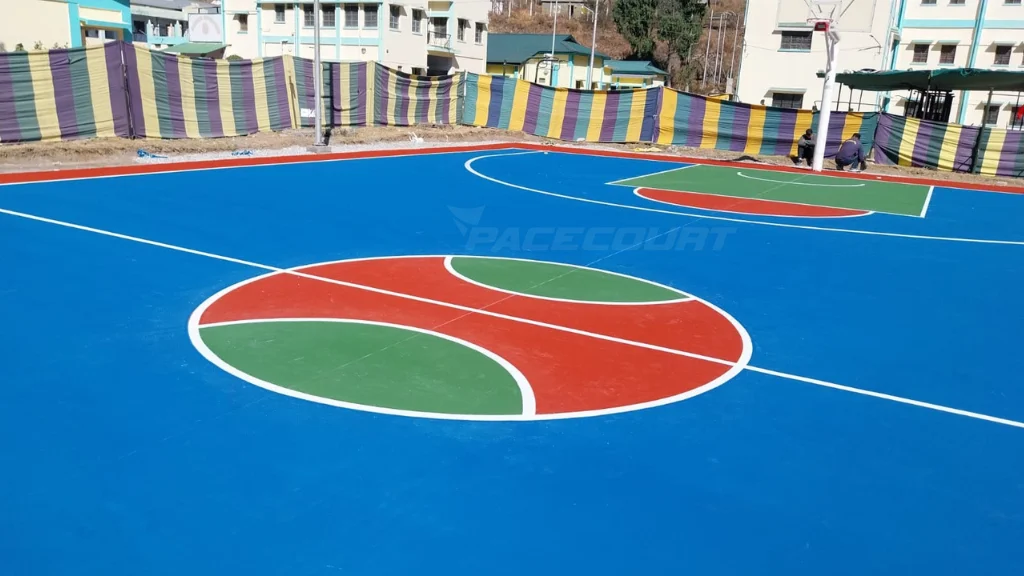
A basketball ground may appear simple at first glance, but it is actually made up of several carefully designed components that work together to create the perfect environment for the sport. Every element—from the flooring to the hoop placement—plays a critical role in ensuring that the game flows smoothly, remains fair, and protects the safety of players. Without these essential parts working in harmony, the fast-paced excitement of basketball would quickly turn into chaos.
Think of a basketball ground as a well-orchestrated system, where each feature has a clear purpose. The court surface allows players to run, pivot, and jump with confidence. The hoops and backboards provide the scoring targets that define the sport. Boundary lines establish the limits of play, while markings like the three-point arc and free-throw lane guide strategy and rule enforcement.
Professional basketball organizations like FIBA and the NBA enforce strict regulations about these components. Even the smallest details—such as the exact height of the rim or the thickness of court lines—are standardized. This level of precision ensures that players around the world compete under consistent conditions.
Another important factor is visual clarity. Court markings must be easy to see so players, referees, and spectators can follow the action effortlessly. Brightly colored lines, contrasting surfaces, and well-positioned lighting all contribute to this clarity. When a court is designed properly, the structure becomes almost invisible to the viewer, allowing the focus to remain on the game itself.
These components also influence game strategy and player movement. For example, the three-point line encourages long-distance shooting, while the paint area near the basket becomes the battleground for rebounds and close-range shots. The layout of these areas shapes how teams design their offensive and defensive tactics.
In addition to functionality, modern basketball grounds often incorporate aesthetic and technological features. Professional arenas include digital scoreboards, LED court lighting, and advanced flooring systems that absorb shock and improve performance. These innovations enhance both player safety and the spectator experience.
Understanding the key components of a basketball ground provides insight into why the sport operates the way it does. Each part contributes to the rhythm, fairness, and intensity that make basketball one of the most popular sports on the planet.
The Court Surface
The court surface is arguably the most important component of any basketball ground. It forms the foundation of the entire playing area and directly influences how players move, jump, and control the ball. A well-designed surface ensures consistent performance, reduces injury risk, and enhances the overall quality of the game.
Professional indoor basketball courts typically use hardwood flooring, especially maple wood. Maple is preferred because of its tight grain pattern, which provides durability and a smooth finish. This material creates a perfect balance between grip and slide, allowing players to make quick cuts, sudden stops, and explosive jumps without losing stability.
Another major advantage of hardwood is its consistent ball bounce. Basketball relies heavily on dribbling, and a surface that produces unpredictable bounces would make the game nearly impossible to play effectively. Hardwood courts provide uniform bounce across the entire surface, ensuring fairness for both teams.
Outdoor basketball grounds often use concrete or asphalt surfaces instead of wood. These materials are extremely durable and can withstand exposure to rain, heat, and heavy use. However, they are much harder than indoor surfaces, which means they provide less cushioning for players’ joints.
To improve outdoor playing conditions, many modern courts use acrylic coatings or modular sports tiles placed over concrete. These coatings add traction, reduce glare from sunlight, and slightly soften the playing surface. Some advanced systems even include drainage features to prevent water from pooling on the court.
Maintenance is another important aspect of court surfaces. Indoor hardwood courts require regular cleaning, polishing, and refinishing to maintain their quality. Outdoor courts must be inspected for cracks, debris, and faded markings that could affect gameplay.
The court surface also contributes to the visual identity of the basketball ground. Professional teams often customize their floors with logos, colors, and branding elements. For example, NBA arenas frequently display large team logos at center court, creating a unique atmosphere for fans.
Ultimately, the quality of the court surface determines how comfortable and confident players feel during a game. A well-maintained surface supports speed, agility, and precision, allowing athletes to perform at their highest level.
Basketball Hoops and Backboards
No basketball ground would be complete without the hoop and backboard, the iconic symbols of the sport. These components define the objective of the game: scoring by shooting the ball through the basket. Although they may seem straightforward, hoops and backboards are designed with precise measurements and materials to ensure fairness and durability.
The basketball hoop, also known as the rim, is positioned 10 feet (3.05 meters) above the court surface. This height has remained unchanged since the game was invented by Dr. James Naismith in 1891. Maintaining this standard height ensures consistency across all levels of basketball, from youth leagues to professional competitions.
The rim itself is typically made from high-strength steel and measures 18 inches (45 centimeters) in diameter. It is attached to the backboard using a mounting system that allows it to withstand the impact of dunks and rebounds. Modern hoops often include breakaway rims, which bend slightly under pressure and then snap back into place. This design helps prevent injuries and reduces the risk of equipment damage.
Behind the rim sits the backboard, a rectangular surface that helps guide shots into the basket. Professional backboards are usually made from tempered glass, which provides both durability and transparency. This transparency allows spectators sitting behind the basket to see the action clearly.
The standard backboard measures 6 feet wide and 3.5 feet tall. A small white square, known as the target box, is painted above the rim. This box helps players aim bank shots by providing a visual reference point.
Backboards are mounted on strong support structures that extend beyond the baseline. In professional arenas, these supports often include padding to protect players who might collide with them during intense plays.
Together, the hoop and backboard form the focal point of every basketball game. Players spend countless hours practicing shots, layups, and dunks aimed at this target. Every buzzer-beater, slam dunk, and game-winning shot happens at the rim, making it the emotional center of the sport.
Boundary Lines and Markings
The lines and markings on a basketball ground may look like simple paint on the floor, but they are actually essential tools for organizing the game. These lines define the limits of play, guide player positioning, and help referees enforce rules accurately.
The outermost lines of the court are known as the sidelines and baselines, which form the rectangular boundary of the playing area. If the ball or a player holding the ball crosses these lines, the ball is considered out of bounds, and possession changes to the opposing team.
At the center of the court lies the center circle, which marks the starting point of the game. During the opening tip-off, two players jump in this circle while the referee tosses the ball into the air. The circle ensures both players have equal space to compete for possession.
Another important marking is the half-court line, which divides the court into two equal sections. Teams must move the ball across this line within a specific time limit—known as the backcourt violation rule—to maintain the fast pace of the game.
The free-throw lane, also called the key or paint, is a rectangular area near the basket. This zone is crucial for both offense and defense. Offensive players cannot remain inside the paint for more than three seconds without attempting to score, a rule designed to prevent unfair advantages near the basket.
These markings create a structured environment where players know exactly where they can move and what actions are allowed. Without clear court lines, referees would struggle to make accurate calls, and the game would lose its sense of order.
In essence, boundary lines and markings act like the road map of basketball, guiding players through the complex flow of the game while maintaining fairness and organization.
The Three-Point Line and Free-Throw Area
Two of the most strategically important areas on a basketball ground are the three-point line and the free-throw area. These zones not only affect scoring but also shape the tactical decisions teams make during a game.
The three-point line is a curved arc surrounding the basket. Any successful shot made from beyond this line is worth three points instead of two, making it one of the most exciting aspects of modern basketball. Over the past decade, the three-point shot has transformed the sport, with many teams focusing heavily on long-range shooting.
Players who specialize in these shots are often called “sharpshooters” or “three-point specialists.” According to NBA statistics, teams now attempt significantly more three-point shots than they did twenty years ago, highlighting the growing importance of this area on the court.
Inside the three-point arc lies the free-throw area, centered around the free-throw line. When a player is fouled during certain situations, they are awarded free throws, which are uncontested shots taken from this line. Each successful free throw is worth one point.
The free-throw line sits 15 feet from the backboard, and players must stand behind this line while taking their shot. Teammates and opponents line up along the sides of the paint, ready to compete for rebounds if the shot is missed.
This area often becomes a high-pressure stage during close games. When the score is tight, a single free throw can determine the outcome of the match. Legendary players like Michael Jordan, Kobe Bryant, and Stephen Curry built reputations for remaining calm and accurate in these tense moments.
Together, the three-point line and free-throw area add layers of strategy, skill, and drama to basketball. They encourage players to develop diverse scoring abilities, making the game both unpredictable and thrilling for fans.
Materials Used to Build a Basketball Ground
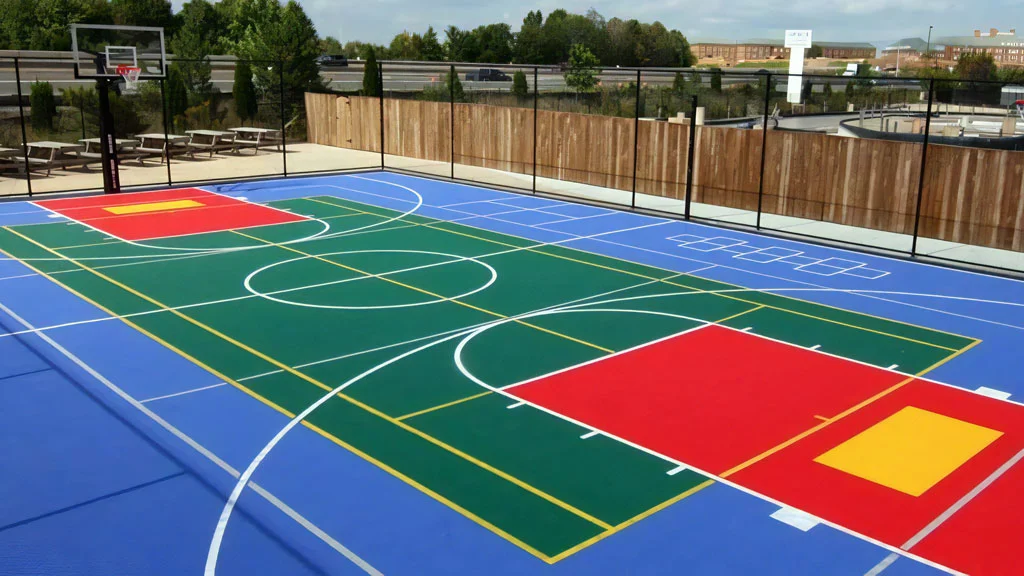
Building a basketball ground requires careful planning, particularly when choosing the right construction materials. The materials used for the playing surface and surrounding structure determine how durable the court will be, how safe it is for players, and how well it performs during games. A basketball court must handle intense physical activity, constant foot traffic, and in many cases harsh weather conditions. Because of this, selecting appropriate materials is one of the most important steps in court construction.
Different types of basketball courts require different materials. Professional indoor arenas often use premium hardwood flooring systems designed to maximize performance and comfort. On the other hand, outdoor community courts usually rely on durable surfaces like concrete or asphalt that can withstand environmental exposure. Each material offers unique advantages and limitations, making it suitable for particular situations.
One of the key factors when choosing materials is surface performance. The court must provide reliable traction so players can sprint, stop, and pivot safely. At the same time, the material should allow the basketball to bounce consistently. If the surface absorbs too much impact, the ball will not rebound properly. If it is too hard or uneven, players may experience discomfort or increased injury risk.
Another important consideration is maintenance and longevity. Some surfaces require frequent care, such as sanding or refinishing, while others are relatively low-maintenance. Schools, sports complexes, and community parks often choose materials that balance performance with long-term durability and cost-effectiveness.
Modern basketball courts also integrate advanced coatings and modular systems. These technologies enhance traction, reduce surface temperature, improve shock absorption, and extend the lifespan of the court. For outdoor facilities especially, weather-resistant coatings are essential to prevent cracks and fading caused by sunlight and moisture.
In addition to the playing surface, materials are also used for hoop structures, fencing, lighting systems, and spectator areas. High-quality steel frames, tempered glass backboards, and protective padding ensure that equipment remains safe and functional for many years.
The choice of materials ultimately determines how enjoyable and safe the basketball ground will be. A well-built court allows players to focus on their skills and strategy rather than worrying about unstable footing or inconsistent ball movement. Whether it is a neighborhood court or a professional arena, the right materials help create a reliable and long-lasting basketball facility.
Concrete Basketball Courts
Concrete basketball courts are among the most common outdoor courts found in parks, schools, and residential areas. Concrete is widely used because it is extremely strong, durable, and relatively affordable, making it an ideal choice for facilities that expect heavy usage over many years.
One of the biggest advantages of concrete is its structural stability. Once poured and properly cured, concrete forms a solid foundation that can handle constant running, jumping, and dribbling without significant wear. Unlike softer surfaces, concrete rarely develops deep grooves or dents caused by repeated activity.
Concrete courts also provide a consistent ball bounce, which is essential for basketball. Because the surface is hard and stable, the ball rebounds predictably when players dribble or pass. This reliability makes concrete courts suitable for both recreational and competitive play.
However, concrete surfaces do have some disadvantages. The material is very hard, which means it offers little shock absorption. Players who spend long hours on concrete courts may experience increased stress on their knees, ankles, and lower back. This is why many modern concrete courts are coated with acrylic sports surfacing systems that add a thin cushioning layer.
Another factor to consider is surface temperature. In hot climates, concrete can absorb and retain heat from sunlight, making the court uncomfortable during midday hours. Colored acrylic coatings can help reduce this issue by reflecting some of the sunlight.
Maintenance for concrete basketball courts is generally straightforward. Facility managers need to monitor for cracks, surface erosion, and faded markings. Over time, repainting the court lines and applying new coatings can restore the court’s appearance and performance.
Despite its limitations, concrete remains a popular choice because it combines affordability, durability, and reliability. Many public basketball courts around the world use this material, allowing communities to enjoy the sport without the high construction costs associated with indoor facilities.
Asphalt Basketball Courts
Asphalt basketball courts are another popular option for outdoor playing surfaces. Asphalt is commonly used in driveways, roads, and parking lots, and it works well for basketball courts due to its flexibility and cost efficiency. Many schools and community recreation centers prefer asphalt courts because they are slightly softer than concrete and can be installed relatively quickly.
One of the primary benefits of asphalt is its natural flexibility. Unlike rigid concrete, asphalt can expand and contract with temperature changes without cracking as easily. This flexibility helps the surface maintain its structure even in areas with seasonal weather variations.
Asphalt also provides a good level of traction, which helps players maintain balance while running and making quick directional changes. Proper traction is essential in basketball, where athletes frequently pivot and stop abruptly to avoid defenders or prepare for shots.
To improve durability and playability, asphalt basketball courts are typically finished with acrylic sports coatings. These coatings create a smoother surface, enhance ball bounce, and add vibrant colors that make court markings easy to see. The coatings also protect the asphalt from UV rays, moisture, and gradual wear.
However, asphalt courts require regular maintenance to remain in good condition. Over time, exposure to sunlight and rain can cause the surface to fade or develop small cracks. Periodic resurfacing and repainting help maintain both the appearance and functionality of the court.
Another consideration is that asphalt can become rougher with age, which may increase the risk of scrapes or abrasions when players fall. Adding protective coatings or resurfacing layers can help maintain a smooth playing area.
Despite these challenges, asphalt courts remain widely used due to their affordability, moderate comfort, and relatively easy installation. For many communities, they represent a practical solution that balances performance with budget limitations.
Synthetic and Modular Sports Flooring
In recent years, synthetic and modular sports flooring has become increasingly popular for basketball grounds. These modern systems are designed to combine durability, comfort, and performance, making them suitable for both indoor and outdoor courts.
Synthetic flooring systems are often made from polyurethane, rubber, or specialized plastic materials. These materials provide better shock absorption than concrete or asphalt, helping to reduce stress on players’ joints. This cushioning effect can be especially beneficial for young athletes or individuals who play frequently.
One of the most innovative solutions is modular sports tiles. These tiles are interlocking plastic panels that can be installed directly over a flat base surface such as concrete. The tiles snap together like puzzle pieces, creating a stable and uniform playing surface.
Modular courts offer several advantages:
- Quick installation
- Easy replacement of damaged tiles
- Improved drainage for outdoor courts
- Enhanced shock absorption
Because the tiles allow water to pass through small gaps, they are particularly useful for outdoor environments where rain is common. The drainage system prevents water from pooling on the court, allowing games to resume shortly after rainfall.
Synthetic flooring also allows for customized designs and vibrant colors, which can make courts visually appealing. Schools, sports complexes, and community centers often use these systems to create professional-looking facilities with logos and creative patterns.
While synthetic courts may have higher initial costs than concrete or asphalt, they often provide long-term value due to reduced maintenance and improved player safety. As technology continues to advance, these modern surfaces are becoming a preferred choice for many new basketball court projects.
How to Build a Basketball Ground
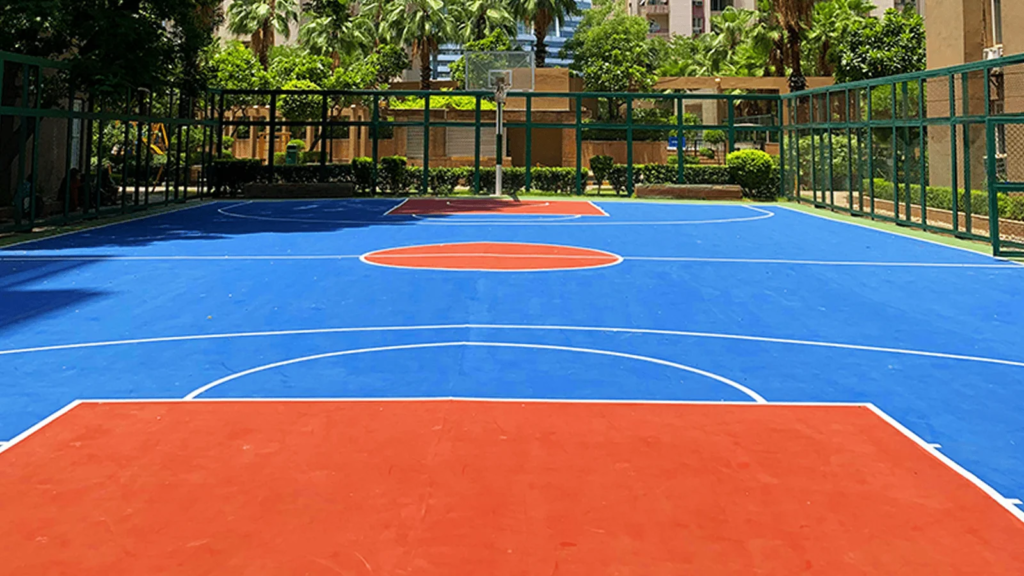
Constructing a basketball ground involves much more than simply placing a hoop on a flat surface. Building a proper court requires careful planning, precise measurements, and attention to safety standards. Whether the goal is to create a professional sports facility, a school court, or a community recreation area, the construction process must ensure durability, functionality, and an enjoyable playing experience.
The first step in building a basketball ground is design planning. Architects and engineers determine the court size, orientation, drainage systems, and surface materials. They also consider factors such as surrounding space, lighting, and spectator areas. A well-planned design ensures that the court meets official regulations and can accommodate players safely.
Another important factor is ground preparation. The land must be leveled and compacted to create a stable base. If the foundation is uneven, the court surface may develop cracks or irregular ball bounce. Proper drainage systems are also installed to prevent water accumulation, especially for outdoor courts.
Once the base is ready, contractors install the primary playing surface, which may be concrete, asphalt, or a synthetic flooring system. After the surface cures or is assembled, specialized coatings are applied to improve traction and protect the material from wear.
The next step is marking the court lines according to official measurements. These markings include the center circle, free-throw line, three-point arc, sidelines, and baselines. Precision is crucial because incorrect markings can disrupt gameplay and violate sports regulations.
Finally, equipment such as basketball hoops, backboards, lighting systems, and protective padding is installed. Proper alignment ensures that the rims are exactly 10 feet above the playing surface and positioned correctly relative to the court boundaries.
When all these elements come together, the result is a functional and visually appealing basketball ground where athletes can train, compete, and enjoy the sport.
Choosing the Right Location
Selecting the right location is one of the most critical decisions when building a basketball ground. The location determines accessibility, safety, and long-term usability of the court. A poorly chosen site can lead to drainage problems, limited space, or safety risks for players and spectators.
One key consideration is available space. A standard basketball court requires significant room not only for the playing area but also for safety zones around the edges. Experts recommend leaving at least 2 to 3 meters of clearance around the court to allow players to move safely beyond the boundary lines.
Another factor is ground stability. The chosen location should have firm soil capable of supporting the court’s foundation. Soft or uneven ground may require additional excavation and reinforcement before construction begins.
For outdoor courts, sun orientation is also important. Ideally, the court should be positioned so that players are not forced to face direct sunlight while shooting. Many designers align courts north–south to reduce glare during daytime games.
Accessibility is equally important, particularly for public courts. The basketball ground should be located near schools, parks, or community centers, where people can easily reach it. Adequate parking, pathways, and seating areas can enhance the facility’s usability.
Safety considerations include distance from busy roads, proper fencing, and good lighting. These features help protect players and ensure the court remains safe during evening games.
Choosing the right location ensures that the basketball ground becomes a welcoming and functional sports environment for players of all ages.
Construction Process Step by Step
The construction process of a basketball ground typically follows several well-defined stages. Each step ensures the court is structurally sound, visually clear, and suitable for high-intensity gameplay.
The process usually includes:
- Site preparation – Clearing vegetation, leveling the ground, and compacting soil to create a stable base.
- Foundation installation – Pouring concrete or laying asphalt to form the primary court surface.
- Drainage system setup – Installing channels or slopes to prevent water accumulation.
- Surface finishing – Applying coatings, textures, or modular flooring systems.
- Court marking – Painting official lines and zones with durable sports paint.
- Equipment installation – Setting up hoops, backboards, poles, and padding.
Each stage requires precise measurements and professional expertise. For example, when installing the hoop structures, engineers must ensure the poles are anchored securely and positioned exactly according to official standards.
Lighting systems are also often installed during the final stages, especially for courts intended for night games. Modern LED lighting provides bright illumination while consuming less energy than traditional floodlights.
The entire construction process can take anywhere from a few weeks to several months, depending on the complexity of the project and the materials used.
Maintenance and Safety Tips
Once a basketball ground is built, regular maintenance becomes essential to keep it safe and functional. Without proper care, even the best courts can deteriorate over time, leading to cracks, faded lines, or damaged equipment.
Routine maintenance includes cleaning the court surface, removing debris, and inspecting for structural issues. Leaves, dust, and small stones can reduce traction and create slipping hazards if not removed regularly.
Court owners should also check for surface cracks or uneven areas. Small cracks can expand over time, especially in outdoor courts exposed to weather. Repairing these issues early helps prevent costly resurfacing later.
Equipment safety is equally important. Hoops, backboards, and support structures should be inspected to ensure they remain stable and secure. Protective padding around poles and base structures reduces the risk of injury during collisions.
Repainting the court lines every few years helps maintain clear visibility of markings, which is essential for organized games and tournaments.
Proper maintenance ensures that the basketball ground remains a safe, enjoyable, and long-lasting facility for players and the community.
Conclusion
A basketball ground is far more than just a flat space with two hoops. It is a carefully designed sports environment where precise measurements, specialized materials, and thoughtful construction come together to support one of the world’s most exciting games. From the layout of the court to the quality of the surface, every element plays a role in shaping the basketball experience.
Standardized dimensions ensure fairness across competitions, while components like the three-point line, free-throw area, and court markings guide the flow of gameplay. Materials such as hardwood, concrete, asphalt, and synthetic flooring provide different advantages depending on whether the court is indoor or outdoor.
Building a basketball ground requires proper planning, including selecting the right location, preparing a stable foundation, and installing equipment according to official standards. Once constructed, regular maintenance ensures the court remains safe, functional, and visually appealing for years to come.
Basketball courts also hold cultural significance. They serve as community gathering places, training grounds for future athletes, and stages for unforgettable moments in sports history. Whether in a professional arena or a neighborhood park, the basketball ground continues to inspire players to improve their skills, compete with passion, and enjoy the spirit of the game.