5 Signs Your Sports Court Needs Resurfacing
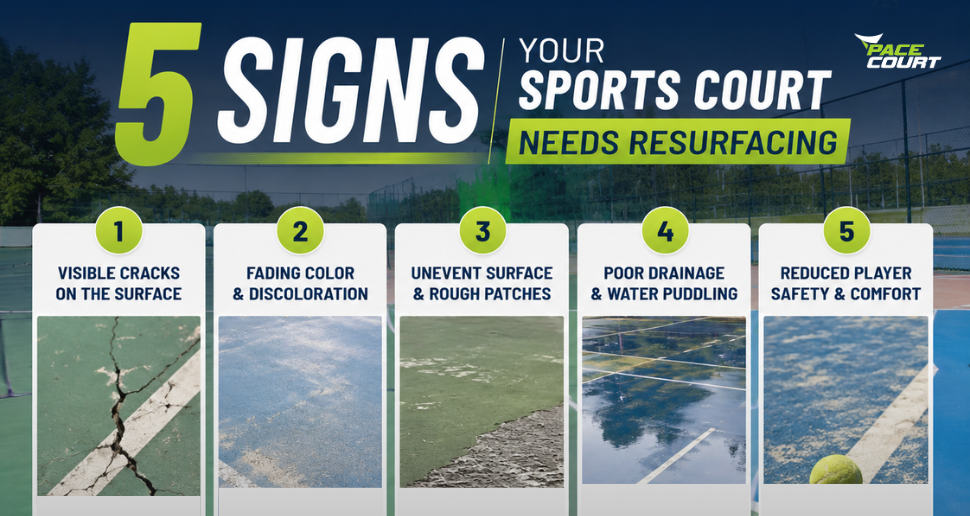
Every sports court faces daily wear from footwork, weather, and heavy use. Recognising when your sports court needs resurfacing early saves money, prevents injuries, and keeps players safe on every match day. This guide explains the five clearest signs your sports court needs resurfacing, along with costs, materials, and expert-backed answers for Indian sports facilities in 2026. Whether you manage a school, a private academy, or a housing society court, this article helps you decide exactly when professional resurfacing becomes necessary. What Is Sports Court Resurfacing? Sports court resurfacing means removing damaged top layers and applying fresh acrylic, synthetic, or PU coating to restore safety, grip, and appearance. It differs from full reconstruction. Resurfacing repairs the existing base, refreshes the playing surface, and extends court life without rebuilding the entire structure from scratch. Why Indian Sports Courts Need Frequent Resurfacing India’s climate, humidity, and intense summer heat accelerate court degradation faster than cooler regions. Monsoon moisture seeps into cracks, weakening the base layer year after year. Schools, academies, and housing societies also see heavier daily footfall. This constant pressure wears down acrylic coatings, exposing courts to faster breakdown and safety risks. Coastal cities face added humidity and salt-air exposure, which corrodes coating faster than inland regions. Facility owners near the coast should schedule inspections more frequently each year. 5 Signs Your Sports Court Needs Resurfacing Spotting damage early prevents costly repairs later. Below are the five most reliable warning signs every facility manager, coach, or club owner should monitor closely. 1. Visible Cracks and Surface Damage Cracks form when the base layer shifts due to moisture, temperature changes, or poor drainage planning. Small cracks widen quickly under regular footwork and ball impact. Ignoring cracks allows water to seep underneath, weakening the foundation further. This damage spreads fast, turning a minor repair into a complete resurfacing requirement within months. 2. Faded Colour and Worn-Out Coating Sunlight and UV exposure fade acrylic coatings steadily over time. Faded courts lose bright colour markings, making line visibility poor for players, coaches, and match officials. Worn coating also reduces surface grip significantly. Players notice increased slipping during fast movements, which signals the coating no longer protects the underlying base layer. 3. Poor Ball Bounce and Traction A quality sports court needs consistent ball bounce for fair play across every match. Uneven or inconsistent bounce indicates surface degradation beneath the visible coating layer. Reduced traction also affects player footing badly. Athletes feel less grip during quick direction changes, increasing fall risk and lowering overall game performance quality. 4. Water Pooling and Drainage Issues Standing water after rainfall shows poor surface slope or clogged drainage channels. Pooled water damages coating and creates slippery, hazardous conditions for every player. Persistent puddles also breed algae and moss growth over time. This buildup makes the surface unsafe and accelerates material breakdown underneath the top coating layer. 5. Increased Player Injuries and Discomfort Rising injury reports often link directly to surface problems. Hard, uneven, or slippery patches increase strain on joints, ankles, and knees during regular play. If players frequently complain about discomfort or unstable footing, the court surface has degraded enough to require professional resurfacing attention immediately, before injuries increase further. Signs and Recommended Action Sign Observed Likely Cause Recommended Action Visible cracks Base shifting, moisture damage Crack filling and full resurfacing Faded colour UV exposure, ageing coating Fresh acrylic coat application Poor ball bounce Surface degradation, uneven base Full resurfacing with texture coat Water pooling Poor slope, clogged drainage Drainage correction plus resurfacing Rising injuries Uneven or slippery surface Immediate professional inspection How Often Should You Resurface a Sports Court? Most Indian sports courts need resurfacing every three to five years, depending on usage, climate exposure, and coating quality. High-traffic academies and schools may need resurfacing sooner, often every two to three years. Low-use residential courts typically last longer between professional maintenance cycles. Sports Court Resurfacing vs New Court Construction Factor Resurfacing New Construction Cost Lower, moderate investment Significantly higher total cost Time required Three to seven days Several weeks to complete Base structure Reused if stable Fully rebuilt from the ground Best suited for Minor to moderate damage Severe structural failure Environmental impact Lower material waste Higher waste generation Resurfacing works best when the base structure remains sound. New construction becomes necessary only when the foundation itself has failed beyond repair. Materials Used for Sports Court Resurfacing Contractors choose materials based on sport type, budget, and expected usage levels. Each material offers different durability, grip, and maintenance requirements for Indian conditions. Material Common Use Durability Acrylic coating Tennis, basketball courts 4 to 6 years Polyurethane (PU) Badminton, multi-sport halls 5 to 8 years Synthetic grass Football, hockey turfs 6 to 10 years Rubberised flooring Indoor multi-purpose courts 5 to 7 years Acrylic remains the most popular choice for outdoor courts across India due to its affordability, colour options, and proven weather resistance during monsoon seasons. Polyurethane suits indoor multi-sport halls better, since it offers superior shock absorption and joint protection. Facilities with year-round indoor play often prefer PU over acrylic. Best Time of Year to Resurface a Sports Court in India Contractors recommend resurfacing during dry months, typically between October and March. Humidity and rainfall during monsoon prevent proper coating adhesion and curing. Scheduling resurfacing before summer tournaments also ensures the court cures fully. This timing avoids interruptions to school, academy, or club playing schedules later. How to Extend Your Sports Court’s Lifespan Between Resurfacing Regular cleaning prevents dirt and debris from scratching the coating surface. Sweep courts daily and wash them weekly using mild, non-abrasive cleaning solutions only. Cover courts during heavy rainfall whenever possible. Portable court covers prevent water damage and reduce algae growth between scheduled resurfacing cycles significantly over time. Restrict non-sporting footwear like heels or spiked shoes on the court. These items cause deep scratches that shorten coating life considerably faster than normal play. Schedule annual professional inspections even without visible damage. Early detection of minor issues prevents expensive emergency repairs and extends