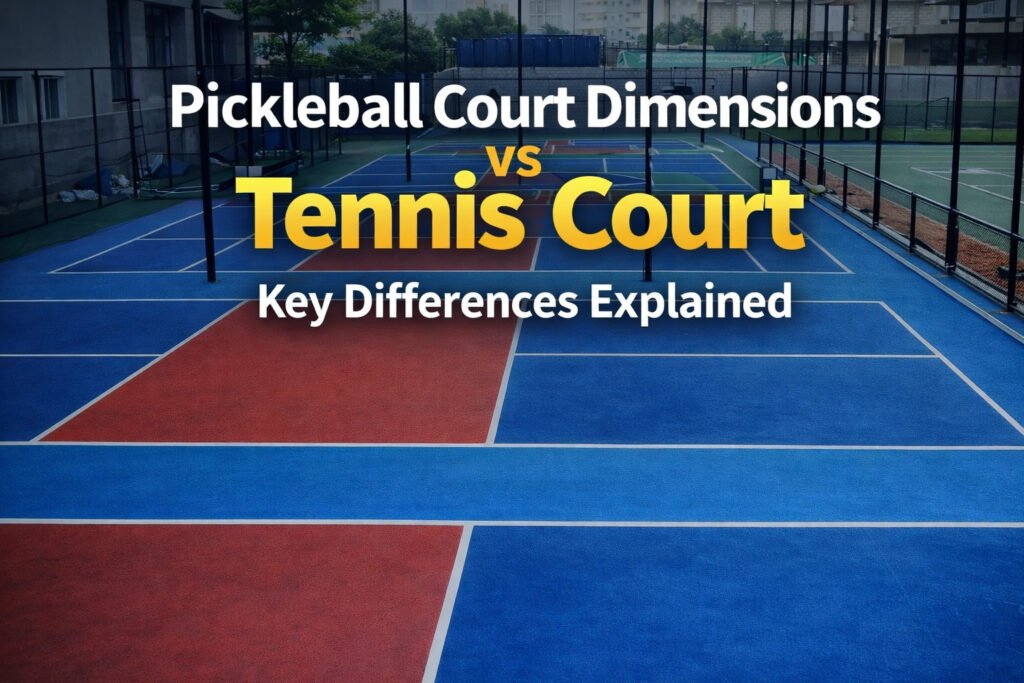
Pickleball Court Dimensions vs Tennis Court: Key Differences Explained
Introduction to Pickleball and Tennis Courts The Rising Popularity of Pickleball If you’ve stepped anywhere near a community park, gym, or even a converted driveway lately, chances are you’ve heard the unmistakable pop of a pickleball paddle. This fast-growing sport has exploded in popularity across the United States and beyond, attracting players of all ages. What makes pickleball so appealing? It’s simple to learn, easy on the joints, and incredibly social. But one of the most interesting aspects—especially for beginners—is how its court compares to the much larger tennis court. Pickleball courts are often described as “mini tennis courts,” but that comparison only scratches the surface. The dimensions, layout, and even the way space is used differ in ways that significantly impact gameplay. You might assume a smaller court just means less running, but it actually creates a faster-paced, more strategic game where reflexes matter just as much as endurance. That’s why understanding court dimensions isn’t just a technical detail—it shapes how the game feels. Across recreational centers, many facilities are converting unused tennis courts into multiple pickleball courts. This trend highlights not just pickleball’s growth but also how adaptable its court design is. Unlike tennis, which requires a large dedicated space, pickleball can fit into tighter areas, making it more accessible in urban environments. This flexibility has fueled its rapid rise and made it a favorite among beginners and seasoned athletes alike. So before you grab a paddle or racket, it’s worth digging into what really sets these courts apart. The differences go beyond size—they redefine how each sport is played. Tennis: A Timeless Classic While pickleball might be the new kid on the block, tennis remains one of the most respected and globally recognized sports. With a history stretching back centuries, tennis courts have been standardized to support high-level competition, from local clubs to Grand Slam tournaments. When you step onto a tennis court, you’re entering a space designed for power, precision, and endurance. Tennis courts are significantly larger than pickleball courts, which immediately changes the physical demands of the game. Players cover more ground, hit with greater force, and rely heavily on stamina and footwork. The larger dimensions allow for a wider variety of shots—deep baseline rallies, angled cross-court hits, and powerful serves that can reach impressive speeds. In contrast to pickleball’s tight, reactive gameplay, tennis feels expansive and physically demanding. Another defining feature of tennis courts is their versatility in surface types. From clay to grass to hard courts, each surface introduces unique playing conditions. A clay court slows the ball down and emphasizes long rallies, while grass courts speed things up and favor aggressive play. This diversity adds another layer of complexity that pickleball courts, which are typically uniform, don’t emphasize as much. Despite the rise of pickleball, tennis courts remain a staple in sports complexes worldwide. However, their large footprint has also made them prime candidates for conversion. It’s not uncommon to see a single tennis court repurposed into multiple pickleball courts, which speaks volumes about how space efficiency plays into modern sports trends. Understanding tennis court dimensions isn’t just about numbers—it’s about appreciating how the design supports a completely different style of play. And when you compare it to pickleball, the contrast becomes even more fascinating. Standard Pickleball Court Dimensions Court Size and Layout A standard pickleball court measures 20 feet wide by 44 feet long, and here’s the surprising part—it’s the same size whether you’re playing singles or doubles. That alone sets it apart from tennis, where court dimensions change depending on the format. This uniformity simplifies the game and makes it more accessible, especially for beginners who don’t want to memorize multiple layouts. To put things into perspective, a pickleball court is roughly one-quarter the size of a tennis court. That smaller footprint dramatically changes how the game is played. Instead of relying on long sprints and powerful serves, players focus more on control, placement, and quick reactions. It’s a bit like playing chess on a smaller board—every move counts, and there’s less room for error. The court is divided into two equal halves by a net, with clearly marked service areas on each side. Each half contains a right and left service box, similar to tennis, but smaller and more compact. These service boxes dictate where serves must land, adding a layer of strategy even before a rally begins. Because the court is smaller, players often find themselves engaged in rapid-fire exchanges at the net, which can be both thrilling and challenging. Another important aspect is the baseline and sideline boundaries, which define the playable area. The compact dimensions mean that balls go out of bounds more quickly, so precision becomes crucial. A slight miscalculation can end a rally instantly, which keeps players on their toes. This smaller, more contained environment is one of the reasons pickleball has gained such widespread appeal. It lowers the barrier to entry while still offering a competitive and engaging experience. Whether you’re playing casually or in a tournament, the court’s dimensions ensure a fast-paced, exciting game every time. Non-Volley Zone (Kitchen) Explained One of the most unique features of a pickleball court—and something you won’t find in tennis—is the non-volley zone, commonly known as the “kitchen.” This area extends 7 feet from the net on both sides and plays a crucial role in shaping the game’s strategy. At first glance, it might seem like just another marked section of the court, but it fundamentally changes how players approach rallies. The kitchen exists to prevent players from dominating the net with aggressive volleys. In tennis, players often rush the net to finish points with powerful smashes. If that were allowed in pickleball without restriction, the smaller court would make rallies extremely short and less strategic. By prohibiting volleys within this zone, the game encourages more thoughtful play and longer exchanges. Players can enter the kitchen, but they must let the ball bounce before hitting it. This rule creates a delicate balance between offense and