Badminton isn’t just a casual backyard sport in India anymore—it’s a full-blown movement. From Olympic medals to packed local academies, the demand for quality badminton courts is growing faster than ever. If you’ve ever considered building one—whether for personal use, a school, a sports academy, or a commercial rental space—you’re probably asking the most important question first: what is the Cost of Badminton Court, and how much does it actually cost to build one?
Well, the answer isn’t as simple as throwing out a single number. The cost of building a badminton court in India depends on multiple moving parts—land, flooring type, lighting, structure, equipment, and even the city you’re building in. Think of it like building a house. You can build a basic one or a luxury villa. Both are “houses,” but the cost difference can be massive.
In India today, the total cost of constructing a badminton court can range anywhere between ₹5 lakh for a basic outdoor setup to ₹1.5 crore or more for a professional indoor multi-court facility. That’s a wide range, right? But don’t worry. In this detailed guide, we’ll break everything down step by step so you can estimate your exact investment.
Whether you’re an entrepreneur looking to start a sports business, a school planning a facility upgrade, or a passionate player dreaming of your own court—this guide will help you understand every rupee involved.
Table of contents
Overview of Costs and Key Factors
Before diving into exact numbers, let’s quickly look at what influences the overall cost. Because here’s the thing—two badminton courts in the same city can have drastically different budgets. Why? The details matter.
Some of the major cost-driving factors include:
- Type of court (Indoor or Outdoor)
- Flooring material (Synthetic, wooden, acrylic, etc.)
- Location and land price
- Roofing and structural framework
- Lighting system
- Amenities like washrooms, seating, and reception
- Equipment quality (training vs tournament-grade)
For example, an indoor wooden court in Mumbai will cost significantly more than an outdoor acrylic court in a Tier-3 city. Labor charges, material transport, and local approvals also impact your budget.
Here’s a rough starting estimate for 2026:
| Type of Court | Estimated Cost (Single Court) |
|---|---|
| Outdoor Acrylic Court | ₹5 – ₹12 lakh |
| Indoor Synthetic Court | ₹25 – ₹60 lakh |
| Indoor Wooden Court | ₹35 lakh – ₹1.2 crore |
| Multi-Court Commercial Setup | ₹80 lakh – ₹1.5+ crore |
But these are just top-level numbers. In the next sections, we’ll dissect each component so you know exactly where your money goes—and where you can potentially save.
Let’s move forward and understand the types of badminton courts available in India.
Types of Badminton Courts in India
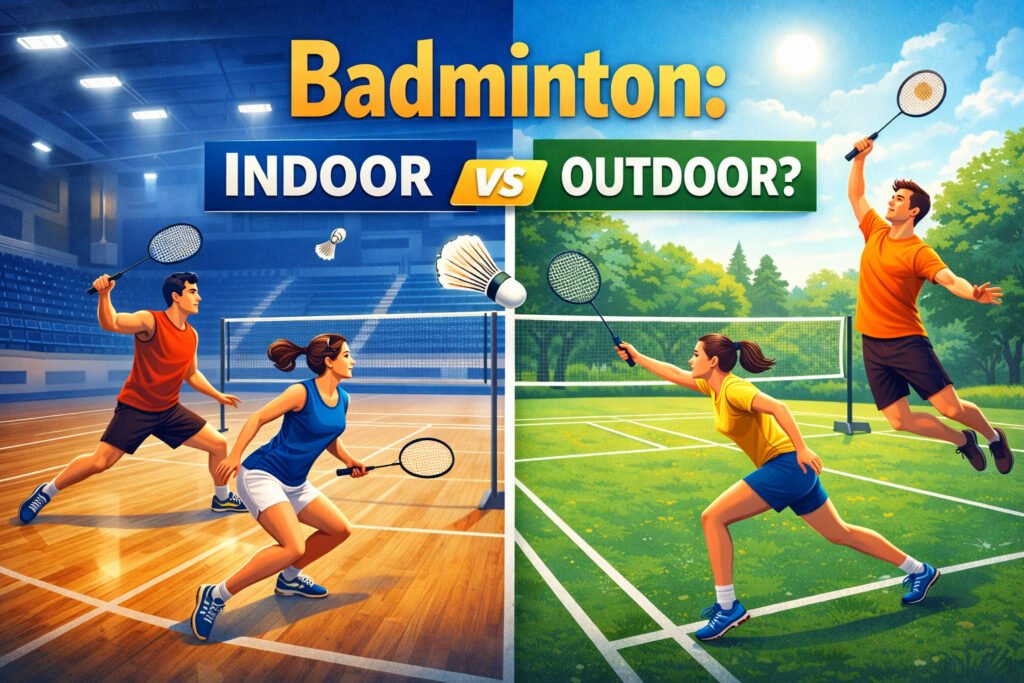
Indoor Badminton Courts
If you’re serious about badminton—whether as a business or a professional setup—indoor courts are the gold standard. Why? Because badminton is highly sensitive to wind, lighting, and weather conditions. Even a slight breeze can change the direction of a shuttlecock. That’s why almost all competitive and academy-level games happen indoors.
An indoor badminton court typically includes:
- A covered structure (PEB or steel building)
- Professional flooring (synthetic PVC or wooden)
- LED sports lighting
- Proper ceiling height (minimum 30 feet recommended)
- Ventilation or air-conditioning system
Now let’s talk numbers. The cost of constructing a single indoor badminton court in India generally starts at ₹25 lakh and can go up to ₹60 lakh for a mid-range setup. If you go premium—with wooden flooring, air conditioning, spectator seating, and changing rooms—the cost can easily cross ₹80 lakh to ₹1 crore.
Here’s a rough cost breakdown for one indoor court:
| Component | Estimated Cost |
|---|---|
| Civil Work & Base | ₹5 – ₹10 lakh |
| Steel Structure/PEB | ₹8 – ₹20 lakh |
| Flooring (Synthetic/Wooden) | ₹6 – ₹25 lakh |
| Lighting | ₹2 – ₹5 lakh |
| Equipment | ₹50,000 – ₹2 lakh |
Indoor courts are expensive upfront, no doubt. But here’s the catch—they generate better long-term revenue. Players prefer indoor facilities, tournaments require them, and memberships are easier to sell.
If you’re planning a commercial badminton academy, going indoor isn’t a luxury—it’s practically a necessity.
Outdoor Badminton Courts
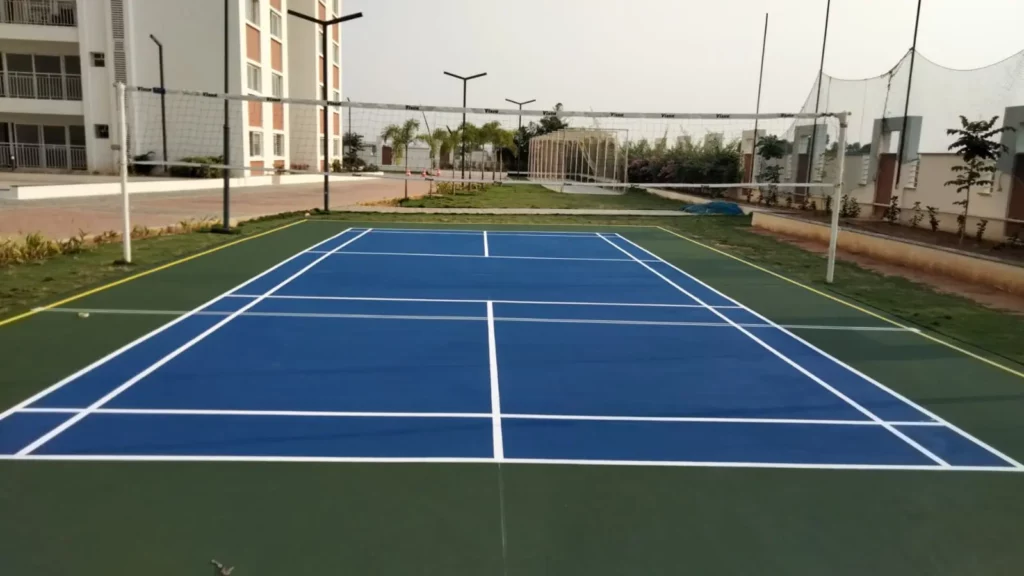
Outdoor courts are the budget-friendly option. They are simple, cost-effective, and quick to build. But they come with limitations.
Most outdoor courts in India use:
- Cement concrete base
- Acrylic sports coating
- Basic net and pole setup
- Minimal lighting (if any)
The cost? A single outdoor badminton court typically costs between ₹5 lakh and ₹12 lakh depending on the quality of materials and location.
Here’s a simple breakdown:
| Component | Estimated Cost |
|---|---|
| Civil Construction | ₹3 – ₹6 lakh |
| Acrylic Surface | ₹1.5 – ₹3 lakh |
| Net & Poles | ₹25,000 – ₹75,000 |
| Lighting (Optional) | ₹1 – ₹2 lakh |
Sounds affordable, right? But here’s the reality check. Outdoor courts are heavily dependent on weather. Rain, extreme heat, and wind can affect playability and maintenance. Over time, acrylic surfaces may crack or fade, especially in harsh climates.
Outdoor courts work best for:
- Schools
- Residential societies
- Parks
- Low-budget community centers
If your goal is casual play or limited usage, outdoor is fine. But if you’re planning to build a revenue-generating sports facility, indoor still wins.
Residential vs Commercial Courts
Now this is where most people get confused. Are you building a personal dream court or a business asset? The answer changes everything.
A residential badminton court is usually built in a farmhouse, bungalow, or private property. It may not need:
- Spectator seating
- Commercial-grade lighting
- Reception areas
- Changing rooms
Because of this, residential indoor courts can cost 20–30% less than commercial ones. A basic indoor residential court may cost around ₹20–40 lakh depending on flooring choice.
On the other hand, commercial courts are a different ball game. You need:
- Fire safety approvals
- Parking space
- Washrooms
- Seating
- Office/reception
- Professional lighting
- Power backup
These additional requirements significantly increase the budget.
Here’s a simple comparison:
| Type | Average Cost (Single Court) |
|---|---|
| Residential Indoor | ₹20 – ₹40 lakh |
| Commercial Indoor | ₹40 – ₹1 crore |
| Residential Outdoor | ₹4 – ₹8 lakh |
| Commercial Outdoor | ₹8 – ₹15 lakh |
Commercial setups also need branding, marketing, and maintenance staff. But they bring recurring income.
So ask yourself—are you building for passion or profit?
Standard Badminton Court Dimensions and Space Requirements
BWF Standard Measurements
Before you calculate cost, you need to know the exact size. Because construction isn’t guesswork—it’s mathematics.
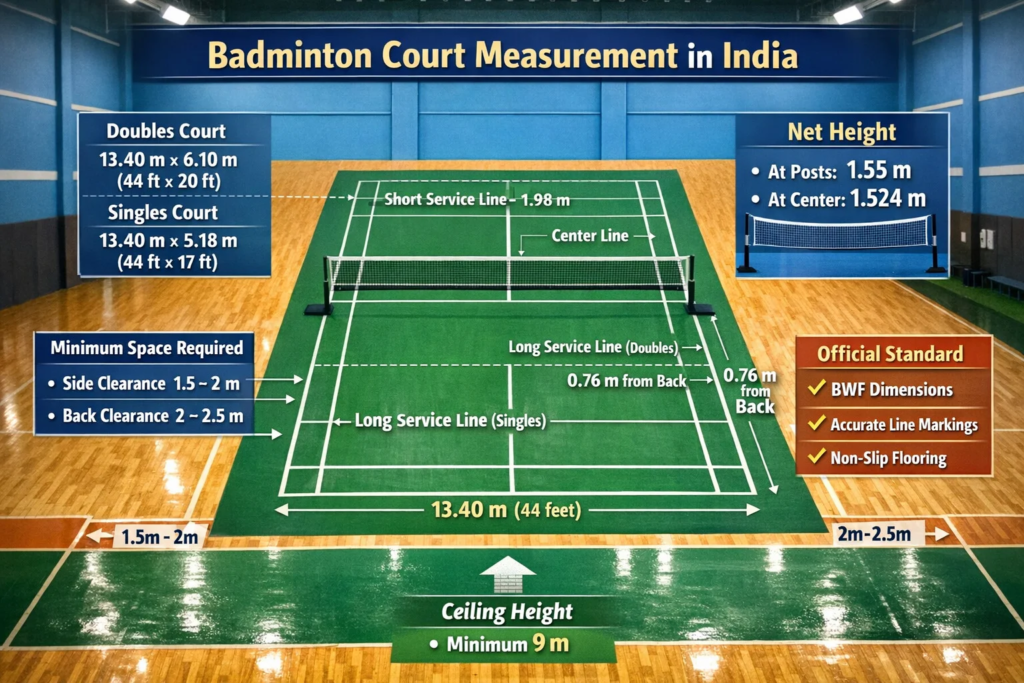
According to the Badminton World Federation (BWF):
- Length: 13.4 meters (44 feet)
- Width (Doubles): 6.1 meters (20 feet)
- Width (Singles): 5.18 meters (17 feet)
But that’s just the playing area. You also need buffer space around the court for player movement.
Recommended total space including run-off area:
- 17m x 7m (approximately 1,280 sq. ft.)
Why does this matter? Because flooring, roofing, lighting—all are calculated per square foot.
If you’re building multiple courts, proper spacing between them is essential. Crowded layouts reduce playing comfort and professionalism.
Ceiling Height and Clearance Guidelines
This is one area people underestimate—and regret later.
Minimum ceiling height recommended: 30 feet
Ideal ceiling height for tournaments: 35–40 feet
If the ceiling is too low, high shots (lobs and clears) will hit the roof. That ruins gameplay and reputation.
Higher ceilings increase structural cost. Steel and roofing material requirements increase. But cutting corners here is a big mistake.
Space Planning for Multiple Courts
Planning 2, 3, or 4 courts? Space planning becomes crucial.
Here’s approximate area requirement:
| Number of Courts | Approx. Area Required |
|---|---|
| 1 Court | 1,200 – 1,500 sq. ft. |
| 2 Courts | 3,000 – 4,000 sq. ft. |
| 3 Courts | 5,000 – 6,000 sq. ft. |
| 4 Courts | 7,000 – 8,000 sq. ft. |
Larger setups reduce per-court cost slightly because structure and lighting can be shared.
If you’re aiming for a sports academy model, 3–4 courts make better financial sense than just one.
We’ve covered types, size, and basic understanding. Now comes the big money question—land cost and civil construction expenses, which often take the biggest chunk of your budget.
Land Cost for Badminton Court in India
Urban vs Rural Land Pricing
Let’s be honest—land is often the most expensive part of the entire project. You can reduce flooring costs, choose affordable lighting, or skip luxury interiors. But land? That depends almost entirely on location.
In metropolitan cities like Mumbai, Delhi, Bengaluru, or Hyderabad, land prices are sky-high. Even leasing commercial land can feel like signing away your future earnings. In Tier-1 cities, commercial land can cost anywhere between ₹5,000 to ₹25,000 per square foot depending on the locality. That means a 5,000 sq. ft. facility could cost crores if you plan to buy the land.
Compare that to Tier-2 or Tier-3 cities where land might cost ₹800 to ₹4,000 per sq. ft. Suddenly, the numbers look much more manageable.
Here’s a rough comparison:
| Location Type | Average Land Cost (Per Sq. Ft.) |
|---|---|
| Metro Cities | ₹5,000 – ₹25,000 |
| Tier-1 Cities | ₹3,000 – ₹10,000 |
| Tier-2 Cities | ₹1,000 – ₹5,000 |
| Rural Areas | ₹200 – ₹1,500 |
Now think about this—if you build a commercial badminton academy in a metro city, your rental pricing must be premium to recover land investment. But in smaller cities, lower land cost means faster ROI.
This is why many successful badminton academies in India are located slightly outside city centers. They reduce land investment and offer affordable playing fees.
If you already own land, congratulations—you’ve just cut your project cost by 30–50%.
Leasing vs Buying Land
Should you buy land or lease it? That’s a big decision.
Buying land means:
- High upfront investment
- Long-term asset ownership
- Higher security
- Better valuation over time
Leasing land means:
- Lower initial investment
- Monthly or yearly rent commitment
- Possible renewal uncertainty
- Easier business entry
For example, leasing 5,000 sq. ft. in a Tier-2 city may cost ₹50,000 to ₹1.5 lakh per month. That’s manageable compared to buying land worth ₹2–3 crore.
Many first-time sports entrepreneurs prefer leasing because it reduces risk. If the business works, great. If not, you’re not stuck with a massive loan.
But here’s the catch—banks prefer funding construction on owned land rather than leased land. So financing options may vary.
In simple terms:
- Low budget? Lease.
- Long-term vision and capital? Buy.
Civil Construction Cost Breakdown
Foundation and Base Construction
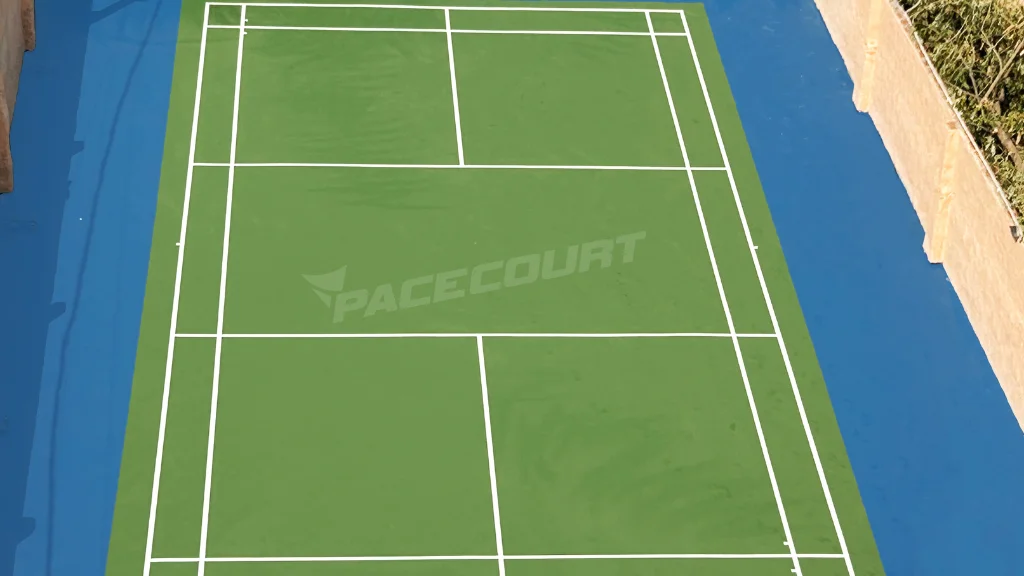
The foundation is like the spine of your badminton court. If it’s weak, everything above it suffers.
For both indoor and outdoor courts, you need:
- Soil testing
- Excavation
- Leveling
- PCC (Plain Cement Concrete)
- RCC slab (if required)
The cost of foundation and base construction usually ranges between ₹250 to ₹450 per square foot.
For a single indoor court area (approx. 1,500 sq. ft.), civil base work may cost ₹4 lakh to ₹7 lakh.
Factors affecting foundation cost:
- Soil quality
- Groundwater level
- Seismic zone
- Load-bearing requirements
Skipping proper soil testing might save ₹20,000 today—but could cost lakhs later in cracks and repairs.
Flooring Base Preparation
Before installing synthetic or wooden flooring, the base must be perfectly level. Even a minor uneven surface can cause:
- Player injuries
- Uneven shuttle bounce
- Flooring damage
Floor base preparation includes:
- Self-leveling compound
- Surface smoothing
- Moisture barrier installation
Cost for base preparation ranges between ₹80 to ₹150 per sq. ft.
It may sound small, but remember—quality flooring sits on this layer. Think of it like painting a wall. If the wall isn’t smooth, no expensive paint can fix it.
Drainage and Waterproofing
Especially for outdoor courts—or even indoor courts in high rainfall areas—drainage is crucial.
Poor drainage leads to:
- Water stagnation
- Surface cracks
- Mold growth
- Structural damage
Waterproofing and drainage system installation may cost ₹1 lakh to ₹3 lakh depending on size.
If you’re building in cities like Mumbai, Chennai, or Kerala regions, don’t compromise here.
Badminton Court Flooring Options and Costs
Now we’re entering one of the most critical cost components—flooring. This is where players actually move, jump, dive, and compete.
Synthetic (PVC/Vinyl) Flooring
Synthetic PVC flooring is the most popular option in India today. Why? Because it balances performance and cost.
It offers:
- Shock absorption
- Anti-slip surface
- Professional look
- Easy maintenance
Cost of synthetic badminton flooring ranges between ₹180 to ₹350 per sq. ft.
For a single court, flooring cost may range between ₹5 lakh to ₹8 lakh.
Professional BWF-approved mats cost even higher, especially imported ones.
This is the go-to choice for academies and commercial indoor courts.
Wooden Flooring
Wooden courts are premium. They feel amazing underfoot and offer top-tier playing experience.
There are two types:
- Solid hardwood flooring
- Engineered wooden flooring
Cost ranges between ₹350 to ₹800 per sq. ft.
That means a single court wooden flooring installation can cost ₹8 lakh to ₹20 lakh or more.
Wood requires:
- Regular polishing
- Moisture control
- Air conditioning
It’s beautiful—but high maintenance.
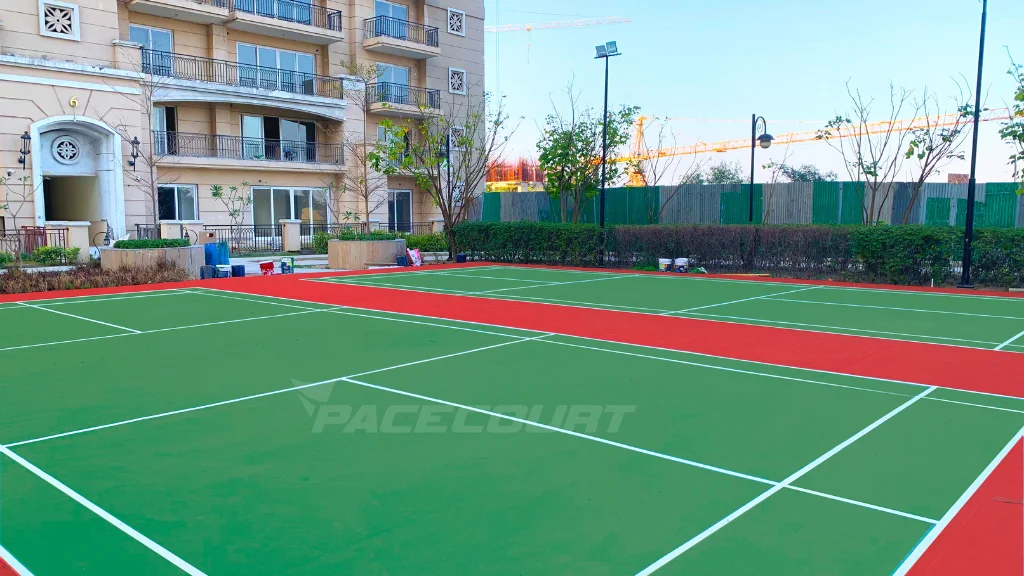
Acrylic Flooring
Mostly used for outdoor courts.
It’s applied over concrete base and provides:
- Decent grip
- Weather resistance
- Budget-friendly option
Cost ranges between ₹120 to ₹250 per sq. ft.
Good for schools and residential setups.
Interlocking Tiles
A newer, modular option. Easy to install and replace.
Cost: ₹150 to ₹300 per sq. ft.
Suitable for semi-professional and temporary setups.
At this point, you can see how each decision changes the budget dramatically. Flooring alone can shift your total cost by ₹10–15 lakh.
Next, we’ll cover lighting, roofing, structural costs, and equipment—because a court without proper lights is like a stage without a spotlight.
Lighting Cost for Indoor and Outdoor Courts
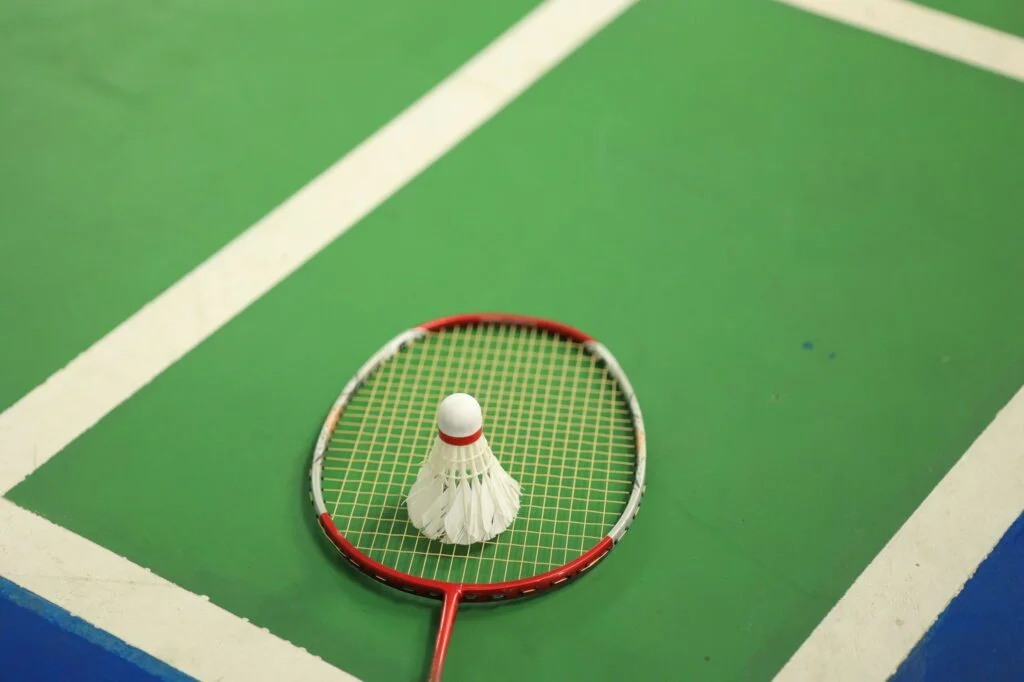
Lighting is one of those things people don’t think about much—until they step onto a poorly lit court. Ever tried smashing a shuttle under harsh glare or dim yellow lights? It’s frustrating. Badminton is a fast-paced sport. The shuttle moves at incredible speeds, and even a fraction of a second of poor visibility can ruin the experience.
LED Sports Lighting
Modern badminton courts in India primarily use LED sports lights. They are energy-efficient, long-lasting, and provide uniform brightness without flickering. For professional-level play, illumination levels should be around 300–500 lux for training and 750–1000 lux for tournaments.
A standard indoor badminton court usually requires:
- 6 to 10 high-quality LED floodlights
- Proper mounting height (at least 25–30 feet)
- Anti-glare positioning
The cost of LED lighting setup per court typically ranges between ₹2 lakh to ₹5 lakh depending on:
- Brand and wattage
- Number of fixtures
- Installation complexity
- Smart control systems (dimmers, automation)
Cheaper lights might save money initially, but they increase electricity consumption and may cause uneven lighting. That affects gameplay and player satisfaction—especially if you’re running a commercial academy.
For outdoor courts, lighting costs are slightly lower, ranging between ₹1 lakh to ₹3 lakh, as the structure is simpler. However, outdoor lights must be weatherproof (IP65 or higher rating).
Power Backup and Electrical Setup
Electricity in India isn’t always predictable. A sudden power cut during peak evening hours? That’s lost revenue and unhappy players.
That’s why many commercial badminton courts invest in:
- Generators
- Inverter systems
- UPS backup for essential lighting
A basic generator setup can cost ₹2 lakh to ₹6 lakh depending on capacity. Electrical wiring, panels, switchboards, and safety installations may add another ₹1 lakh to ₹3 lakh.
Electricity bills also become a recurring expense. An indoor facility with 3–4 courts may consume ₹30,000 to ₹1 lakh per month in electricity, depending on usage and air-conditioning.
Lighting isn’t just an expense—it’s part of the playing experience. Get it right, and players will keep coming back.
Roofing and Structural Cost
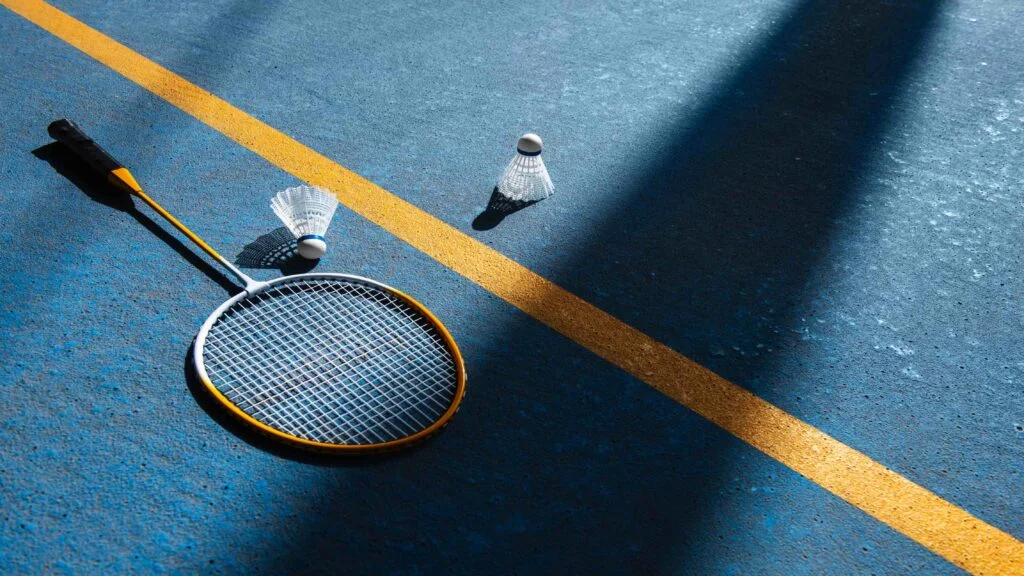
If you’re building an indoor badminton court, this is where a big chunk of your budget goes. The structure determines durability, ventilation, and long-term maintenance costs.
Pre-Engineered Buildings (PEB)
Pre-Engineered Buildings are the most popular choice for indoor sports facilities in India. They are factory-made steel structures that are assembled on-site.
Why are they popular?
- Faster construction time
- Cost-effective compared to traditional RCC
- Flexible design
- Easy expansion in the future
The cost of a PEB structure ranges between ₹1,200 to ₹2,000 per sq. ft. depending on height and design complexity.
For a 5,000 sq. ft. 3-court facility, the structure alone could cost ₹60 lakh to ₹1 crore.
Higher ceiling height (30–40 feet) increases steel requirements and overall cost. But remember—ceiling height is critical for professional play.
Steel Structure Roofing
Some builders opt for conventional steel truss structures with metal sheets. These are slightly cheaper but may compromise insulation and long-term durability.
Cost: ₹900 to ₹1,500 per sq. ft.
However, you may need additional insulation to control heat, especially in hot Indian climates. Without insulation, indoor courts can feel like ovens during summer afternoons.
Fabric Tensile Structures
Tensile fabric structures are a modern, aesthetic option. They look attractive and are quicker to install.
Cost ranges between ₹1,000 to ₹1,800 per sq. ft.
They work well for semi-permanent or mid-budget facilities but may not be ideal for extreme weather zones.
In simple terms, roofing and structure often account for 40–50% of your indoor project cost. It’s the skeleton of your facility—strong and expensive, but necessary.
Net, Poles, and Equipment Costs
Now let’s talk about the finishing touches. A court isn’t complete without proper equipment.
Professional Grade Equipment
For tournament or academy-level play, you’ll need:
- BWF-approved net
- Professional net poles
- Court marking tapes (if not pre-marked)
- Umpire chair
- Scoreboard
Cost for professional-grade setup: ₹50,000 to ₹2 lakh per court.
Imported equipment costs more but offers better durability.
Training-Level Equipment
If your court is for casual play or beginner coaching, you can opt for mid-range equipment.
Cost: ₹25,000 to ₹75,000.
It may seem like a small percentage of the total investment, but quality nets and poles enhance the professional look of your facility.
Additional Amenities and Infrastructure Costs
If you’re building a commercial badminton court, amenities are not optional—they’re expected.
Seating and Spectator Area
Even a small seating arrangement improves the atmosphere. Parents watching their kids, friends cheering during matches—it adds life.
Basic seating setup may cost ₹1 lakh to ₹5 lakh depending on capacity.
Changing Rooms and Washrooms
Clean washrooms are non-negotiable. Poor hygiene can damage your reputation instantly.
Cost for basic washroom construction: ₹3 lakh to ₹8 lakh.
Luxury facilities with lockers and showers can cost ₹10 lakh or more.
Reception and Office Area
A professional reception area helps with bookings, memberships, and payments.
Budget: ₹2 lakh to ₹6 lakh depending on interior quality.
When you add all amenities together, they can increase your project cost by ₹10 lakh to ₹30 lakh.
Maintenance Cost of a Badminton Court
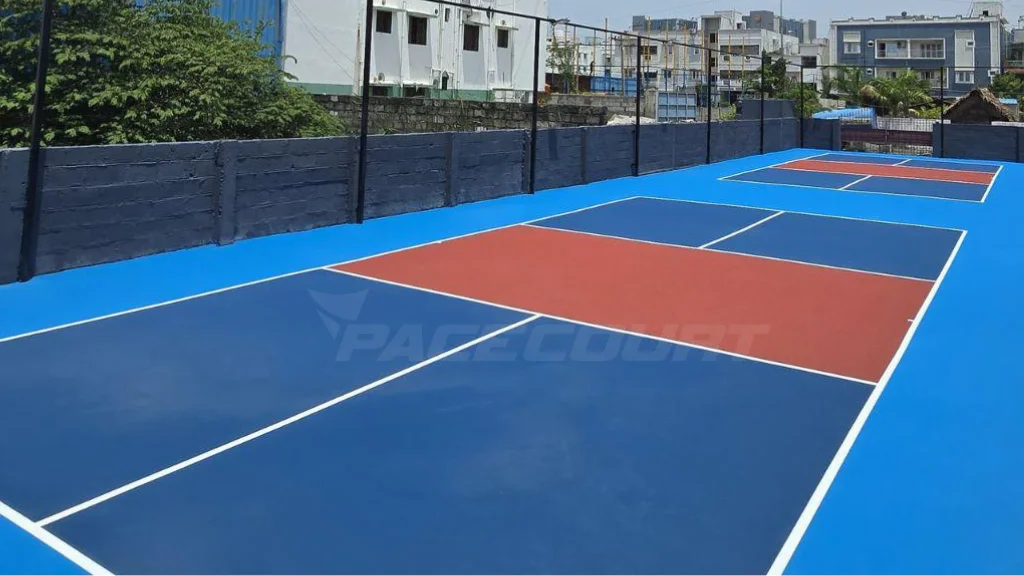
Building the court is just step one. Maintaining it is an ongoing commitment.
Monthly Maintenance Expenses
Common recurring costs include:
- Electricity bills
- Staff salaries
- Cleaning supplies
- Shuttlecock inventory
- Minor repairs
Monthly operating expenses for a single indoor court may range between ₹40,000 to ₹1.5 lakh depending on scale.
For multi-court facilities, this number increases proportionally.
Annual Repair and Resurfacing Costs
Synthetic flooring may need resurfacing every 5–7 years. Wooden floors may require polishing every 1–2 years.
Annual maintenance budget: ₹1 lakh to ₹5 lakh depending on facility size.
Ignoring maintenance reduces court lifespan and player satisfaction.
At this stage, you now understand structural, lighting, equipment, and maintenance costs. Next, we’ll compare indoor vs outdoor costs clearly, explore ROI potential, government approvals, and provide a complete 2026 cost summary table.
Cost Comparison: Indoor vs Outdoor Badminton Court
When planning your badminton court project, one of the biggest decisions you’ll face is simple yet powerful: indoor or outdoor? It sounds straightforward, but this choice can change your investment amount, operational expenses, revenue potential, and long-term returns dramatically.
Let’s break it down clearly.
Initial Investment Comparison
An outdoor badminton court is significantly cheaper to build. With a concrete base and acrylic surface, you can complete a single court within ₹5 lakh to ₹12 lakh. Even if you add basic lighting, the cost rarely crosses ₹15 lakh.
On the other hand, an indoor badminton court starts around ₹25 lakh and can easily exceed ₹1 crore depending on:
- Structure type (PEB or steel)
- Flooring choice (synthetic vs wooden)
- Ceiling height
- Amenities and interiors
Here’s a simplified comparison:
| Feature | Outdoor Court | Indoor Court |
|---|---|---|
| Construction Cost | ₹5–15 lakh | ₹25 lakh–₹1+ crore |
| Weather Dependency | High | None |
| Professional Tournaments | Not suitable | Suitable |
| Revenue Potential | Moderate | High |
| Maintenance | Medium | Structured but predictable |
Outdoor courts are perfect for limited budgets and casual use. Indoor courts are built for serious business or professional training.
Long-Term Maintenance Differences
Outdoor courts face constant exposure to:
- Rain
- UV rays
- Dust and pollution
- Temperature fluctuations
This leads to cracks, surface fading, and frequent repairs. Maintenance costs may seem lower initially but can accumulate unpredictably.
Indoor courts, although expensive upfront, offer controlled environments. Synthetic flooring lasts longer. Wooden flooring requires periodic polishing but remains consistent.
Think of it like this—outdoor is like parking your car outside daily. Indoor is like having a garage. Which one protects your investment better?
If your goal is long-term commercial success, indoor courts provide stability and higher booking rates throughout the year.
Government Approvals and Legal Costs
Many first-time investors overlook this part. But paperwork is just as important as concrete and steel.
Municipal Permissions
Depending on your city, you may require:
- Building plan approval
- Commercial usage permission
- Fire safety clearance
- Environmental clearance (in some cases)
Approval costs vary widely across states but can range between ₹50,000 to ₹5 lakh depending on project size.
Delays in approval can increase holding costs. It’s wise to consult a local architect or civil consultant familiar with sports infrastructure regulations.
Sports Authority Certifications
If you plan to host district, state, or national tournaments, certification from relevant sports bodies may be required.
This may include:
- Compliance with BWF court dimensions
- Lighting standards
- Flooring specifications
Certification costs are not huge, but meeting the compliance standards may increase your construction budget.
Skipping approvals can result in penalties or operational shutdowns. It’s not worth the risk.
How to Reduce Badminton Court Construction Cost
Building a badminton court doesn’t mean overspending blindly. Smart planning can save you lakhs without compromising quality.
Smart Material Choices
Instead of premium imported flooring, consider:
- Indian-manufactured synthetic mats
- Engineered wood instead of solid hardwood
- Standard LED sports lights instead of high-end smart systems
Also:
- Compare multiple contractors
- Buy materials in bulk for multi-court setups
- Negotiate steel and cement prices
Even saving ₹100 per sq. ft. across 5,000 sq. ft. means ₹5 lakh saved.
Strategic Location Planning
Choosing land slightly outside city limits reduces cost dramatically. Players are willing to travel 10–15 minutes extra if:
- Parking is available
- Pricing is reasonable
- Facility quality is high
Lower land cost directly improves ROI.
Another cost-saving strategy? Start with 2 courts instead of 4. Expand later when demand grows.
Building smart is more important than building big.
Return on Investment (ROI) and Profit Potential
Now comes the exciting part—how do you earn from your badminton court?
Hourly Rental Model
Most badminton courts in India charge hourly rates.
Average hourly rental (2026 estimate):
- Tier-1 cities: ₹500 – ₹1,200 per hour
- Tier-2 cities: ₹300 – ₹800 per hour
- Tier-3 cities: ₹200 – ₹500 per hour
If a single indoor court operates 6 hours daily at ₹600/hour:
₹600 × 6 hours × 30 days = ₹1,08,000 per month
Even after deducting expenses, this can be profitable within 2–4 years depending on initial investment.
Academy Membership Model
Monthly coaching programs are even more profitable.
Average monthly fee per student:
- ₹2,000 – ₹5,000
If you enroll 80 students at ₹3,000 per month:
₹2,40,000 monthly revenue
Combine rentals + coaching + tournaments = strong cash flow.
Tournament Hosting Revenue
Hosting local tournaments generates:
- Entry fees
- Sponsorship revenue
- Food stall income
- Branding opportunities
It also increases your facility’s reputation.
A well-managed 3–4 court indoor academy in a Tier-2 city can recover investment within 3–5 years.
Estimated Total Cost Summary (2026 Updated Table)
Here’s a simplified cost overview for clarity:
| Setup Type | Estimated Total Cost |
|---|---|
| Basic Outdoor Court | ₹5 – ₹12 lakh |
| Premium Outdoor Court | ₹12 – ₹20 lakh |
| Basic Indoor Synthetic Court | ₹25 – ₹45 lakh |
| Indoor Wooden Court | ₹40 lakh – ₹1 crore |
| 3-Court Commercial Facility | ₹80 lakh – ₹1.5 crore |
| 4+ Court Premium Academy | ₹1.2 – ₹2.5 crore |
These figures vary based on city, land cost, material choice, and amenities.
Conclusion
Building a badminton court in India is more than just a construction project—it’s an opportunity. Whether you’re building for passion, community service, or business growth, the investment can be rewarding when planned correctly.
Outdoor courts are affordable and quick to set up. Indoor courts demand higher capital but offer better revenue and professional value. Land cost, flooring choice, structure type, and amenities all influence your final budget.
If you already own land, your costs drop significantly. If you choose the right location and pricing strategy, ROI becomes achievable within a few years.
The key is clarity. Know your purpose. Define your budget. Plan strategically. And most importantly—don’t cut corners on quality where it truly matters.
A well-built badminton court doesn’t just host games. It builds careers, communities, and opportunities.