Outdoor badminton courts are becoming increasingly popular in schools, residential societies, parks, and sports academies. However, outdoor badminton court size and layout differ slightly from indoor courts due to wind conditions, safety zones, and badminton court flooring requirements designed for outdoor durability.
This in-depth guide explains everything you need to know about Outdoor Badminton Court Size, including official dimensions, court markings, run-off space, net height, badminton court flooring options, and construction best practices—all aligned with BWF standards and real-world outdoor playing conditions.
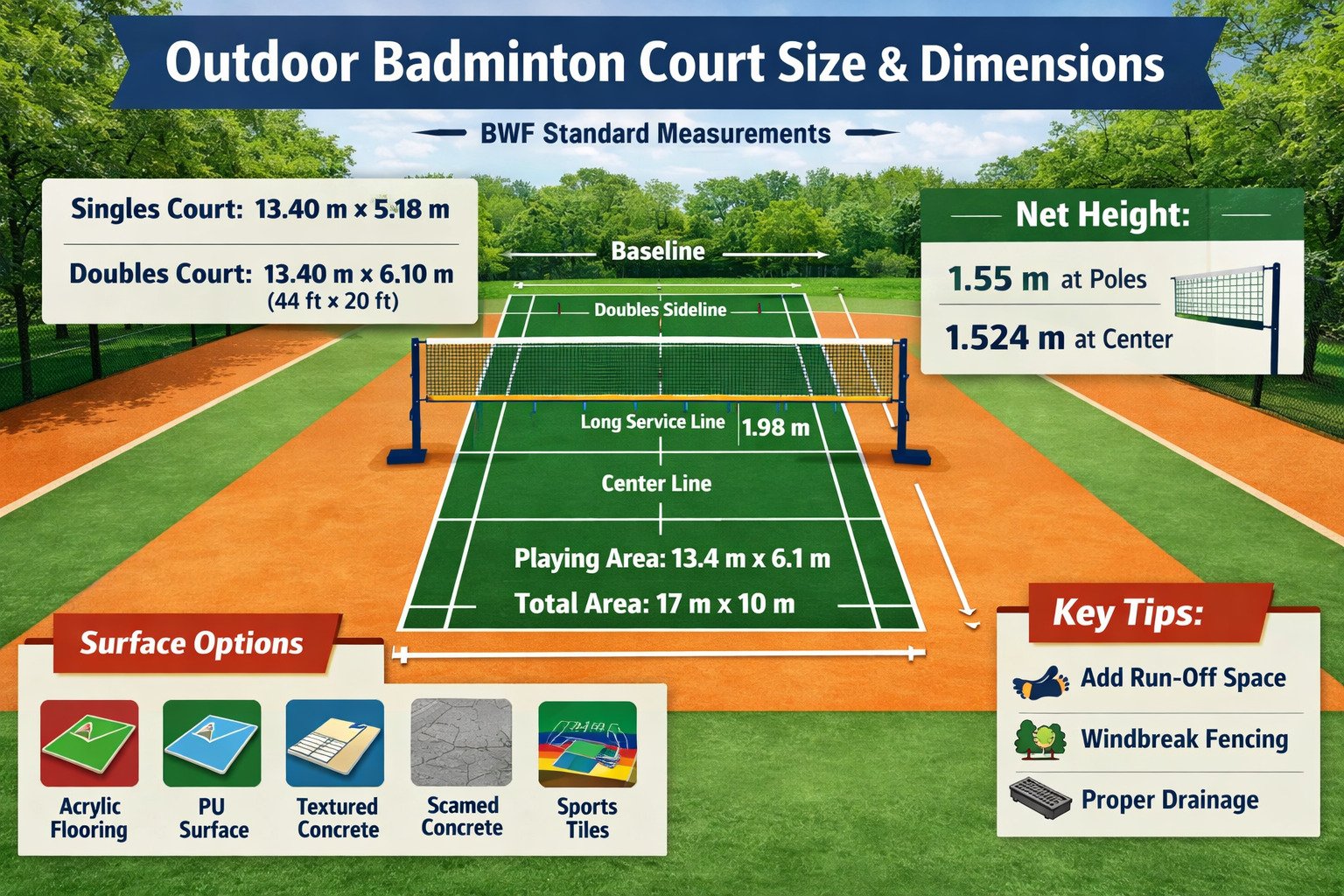
Standard Outdoor Badminton Court Size (BWF Approved)
Badminton court dimensions remain the same for indoor and outdoor play. However, extra clearance is strongly recommended outdoors for safety and environmental factors.
Court Dimensions (In Meters & Feet)
| Category | Length | Width |
|---|---|---|
| Singles Court | 13.40 m (44 ft) | 5.18 m (17 ft) |
| Doubles Court | 13.40 m (44 ft) | 6.10 m (20 ft) |
✅ These measurements are measured to the outer edge of boundary lines
Outdoor Badminton Court Layout & Markings
Key Court Lines Explained
- Baseline – Back boundary line
- Singles Sideline – Inner side boundary
- Doubles Sideline – Outer side boundary
- Short Service Line – 1.98 m from the net
- Long Service Line (Doubles) – 0.76 m inside baseline
- Center Line – Divides service courts
Line Marking Specifications
| Feature | Standard |
|---|---|
| Line Width | 40 mm (4 cm) |
| Line Color | White or Yellow |
| Surface Contrast | High visibility required |
Recommended Total Area for an Outdoor Badminton Court
While the playing area is fixed, outdoor courts require additional run-off space for safety and comfort.
Ideal Outdoor Court Area
| Area Type | Size |
|---|---|
| Playing Court | 13.40 m × 6.10 m |
| Minimum Run-Off (All Sides) | 1.5 – 2.0 m |
| Total Recommended Area | 17 m × 10 m |
🟢 This extra space helps prevent injuries and allows free movement in windy conditions.
Outdoor Badminton Net Height & Specifications
| Location | Height |
|---|---|
| Net at Poles | 1.55 m |
| Net at Center | 1.524 m |
Net Details
- Net width: 6.10 m
- Net depth: 760 mm
- Mesh color: Dark (black or dark green)
Orientation & Wind Considerations (Outdoor-Specific)
Outdoor badminton is affected by wind and sunlight, so orientation matters.
Best Court Orientation
- North–South alignment (minimizes sun glare)
- Avoid open East–West exposure
- Install windbreak fencing or greenery if possible
Best Surface Options for Outdoor Badminton Courts
Choosing the right surface is crucial for durability and player safety.
Recommended Outdoor Surfaces
| Surface Type | Suitability | Lifespan |
|---|---|---|
| Acrylic Sports Flooring | ⭐⭐⭐⭐⭐ | 6–8 years |
| Synthetic PU Flooring | ⭐⭐⭐⭐ | 5–7 years |
| Concrete (Textured) | ⭐⭐⭐ | 8–10 years |
| Interlocking Sports Tiles | ⭐⭐⭐ | 5–6 years |
Drainage & Base Construction (Critical for Outdoor Courts)
Base Layers (Ideal Construction)
- Compacted soil sub-base
- WMM or stone base layer
- PCC or asphalt base
- Acrylic sports coating
Drainage Guidelines
Prevent water stagnation to avoid surface damage
Slope: 1:100 (1 cm per meter)
Side drains or trench drains recommended
Lighting Requirements for Outdoor Badminton Courts
For evening play, proper lighting is essential.
| Parameter | Recommendation |
|---|---|
| Lux Level | 200–300 lux |
| Pole Height | 6–8 meters |
| Light Position | Outside court boundary |
| Light Type | LED sports lights |
Outdoor vs Indoor Badminton Court Size Comparison
| Feature | Indoor | Outdoor |
|---|---|---|
| Playing Area | Same | Same |
| Run-Off Space | 1–1.5 m | 1.5–2 m |
| Surface | Wooden / PVC | Acrylic / Concrete |
| Wind Impact | None | High |
| Roof Clearance | Required | Not required |
Common Mistakes to Avoid in Outdoor Badminton Court Construction
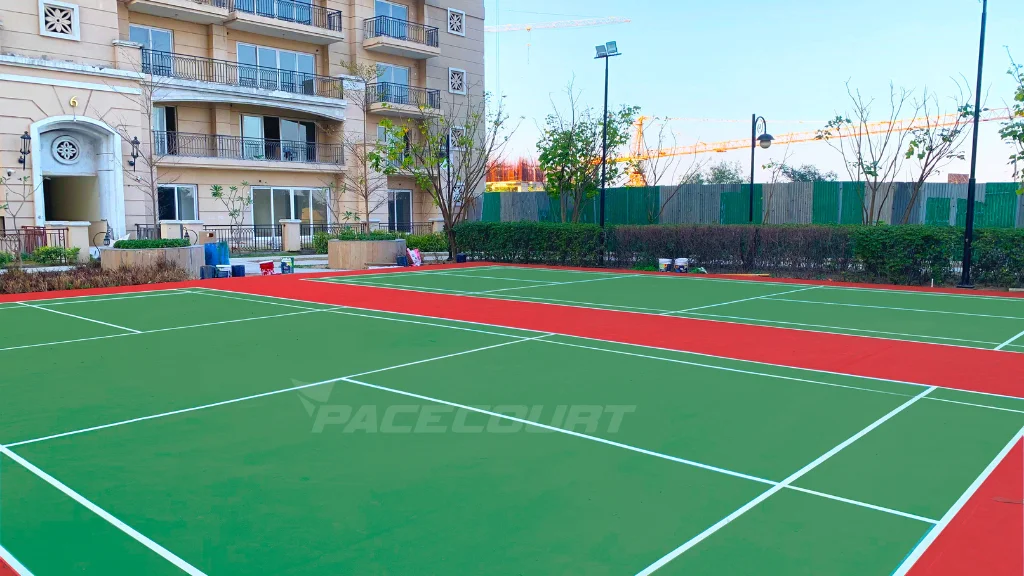
❌ Ignoring wind direction
❌ No drainage slope
❌ Using glossy or slippery surfaces
❌ Insufficient run-off space
❌ Poor line contrast
Badminton Court Flooring for Outdoor Courts
Choosing the right badminton court flooring is one of the most important decisions when building an outdoor court. Unlike indoor courts, outdoor surfaces must withstand UV rays, rain, temperature changes, and heavy foot traffic while still providing proper grip and shock absorption.
Key Requirements for Outdoor Badminton Court Flooring
An ideal outdoor badminton court flooring system should offer:
- High anti-skid properties
- Weather and UV resistance
- Consistent ball bounce
- Shock absorption to reduce joint stress
- Low maintenance and long lifespan
Best Badminton Court Flooring Options for Outdoor Use
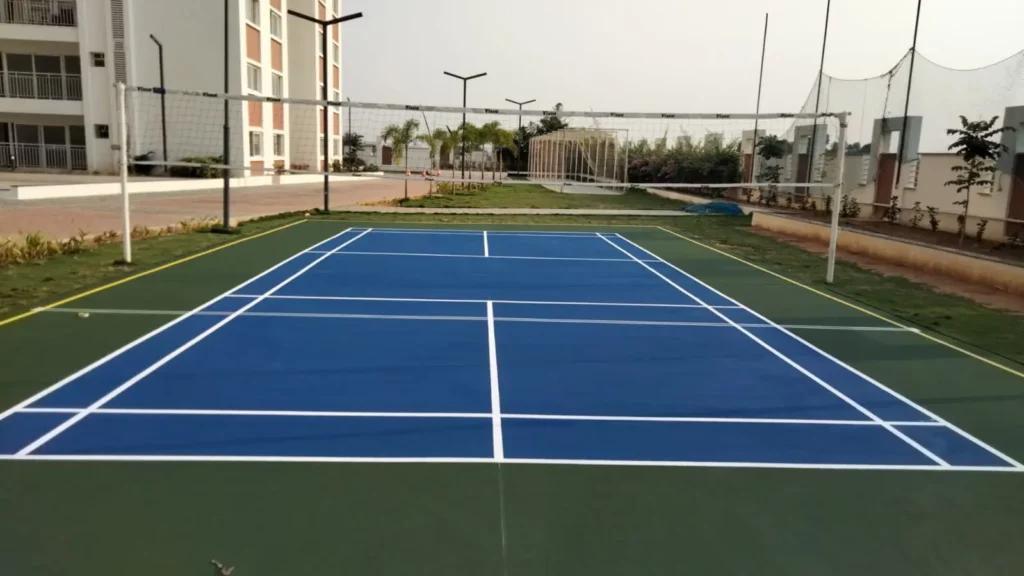
1. Acrylic Badminton Court Flooring (Most Recommended)
Acrylic flooring is the most widely used badminton court flooring for outdoor courts worldwide.
Advantages:
- Excellent slip resistance
- Seamless and professional finish
- UV and weather resistant
- Custom color options
- Suitable for schools, academies, and societies
Average Lifespan: 6–8 years
Maintenance: Low
2. Synthetic PU Flooring (Semi-Outdoor Areas)
PU flooring is suitable for covered outdoor courts or areas with partial roofing.
Pros:
- High comfort and cushioning
- Professional playing feel
Cons:
- Not ideal for open outdoor exposure
- Higher cost compared to acrylic
3. Concrete Base with Anti-Skid Coating
This is a budget-friendly badminton court flooring solution for parks and community areas.
Pros:
- Strong and durable base
- Long structural life
Cons:
- Hard on joints
- Requires proper texturing and coating
4. Interlocking Sports Tiles
Modular tiles are often used in temporary or multipurpose courts.
Best For:
- Residential societies
- Recreational play
Limitations:
Ball bounce consistency may vary
Not ideal for professional badminton
Ideal Thickness for Outdoor Badminton Court Flooring
| Flooring Type | Recommended Thickness |
|---|---|
| Acrylic System | 3–5 mm |
| PU Flooring | 5–8 mm |
| Concrete + Coating | Surface textured |
| Sports Tiles | As per manufacturer |
⚠️ Thicker flooring does not always mean better performance. Grip and surface consistency matter more.
Color Guidelines for Outdoor Badminton Courts
Proper color selection improves visibility and player focus.
Recommended Color Combinations
- Court area: Green, Blue, or Red
- Line markings: White or Yellow
- Surroundings: Neutral or darker shade
Avoid glossy finishes as they cause glare under sunlight.
Maintenance Tips for Outdoor Badminton Court Flooring
To increase the lifespan of your badminton court flooring:
- Clean surface weekly using soft brushes
- Avoid standing water after rainfall
- Repair cracks immediately
- Recoat acrylic surface every 3–4 years
- Avoid dragging heavy equipment
Cost Factors for Outdoor Badminton Court Construction
Several factors affect the final cost:
- Court size and number of courts
- Type of badminton court flooring
- Base preparation and drainage system
- Lighting and fencing
- Location and labor costs
A professionally built outdoor badminton court offers better safety, lower maintenance, and longer durability.
Safety Standards for Outdoor Badminton Courts
Anti-skid surface with proper friction value
Rounded edges around court area
Adequate run-off space (minimum 1.5 m)
Proper lighting without glare
Shock-absorbing layers where possible
Who Should Build an Outdoor Badminton Court?
Outdoor badminton courts are ideal for:
- Schools and colleges
- Sports academies
- Residential societies
- Public parks
- Corporate campuses
Conclusion: Outdoor Badminton Court Size & Flooring Go Hand in Hand
While following the correct outdoor badminton court size is essential, selecting the right badminton court flooring ensures safety, performance, and durability. A well-designed court with proper drainage, surface quality, and layout provides a professional playing experience even in outdoor conditions.
For long-term value, acrylic badminton court flooring remains the most trusted choice for outdoor installations.