Pickleball is no longer just a backyard game played in retirement communities abroad. In India, it has quietly grown into one of the fastest-emerging sports, attracting everyone from school kids to corporate professionals and even former tennis players looking for something less taxing but equally competitive. If you’ve recently heard about pickleball and wondered, “How big is a pickleball court in India?” — you’re not alone.
Here’s the interesting part: pickleball court dimensions in India are not different from international standards. The sport follows global guidelines, primarily governed by the International Federation of Pickleball (IFP) and USA Pickleball standards. So whether you’re building a court in Mumbai, Delhi, Bengaluru, or a small town club, the measurements remain consistent worldwide.
Why does this matter? Because accurate dimensions ensure fair play, proper bounce, correct serving angles, and overall safety. Even a slight variation in measurements can affect the speed of rallies and player positioning. Imagine playing cricket on a pitch that’s two feet shorter—it changes everything, right? The same logic applies here.
In India, the rise of residential societies converting badminton courts and sports clubs adding pickleball courts has increased demand for precise layout knowledge. Many builders still confuse it with mini-tennis, which leads to incorrect markings. That’s why understanding exact court dimensions is critical—not just for professional tournaments but even for recreational games.
Let’s break it down step by step and understand every measurement, marking, and structural requirement you need to know about pickleball courts in India.
Table of contents
Official Pickleball Court Dimensions
Standard Court Size
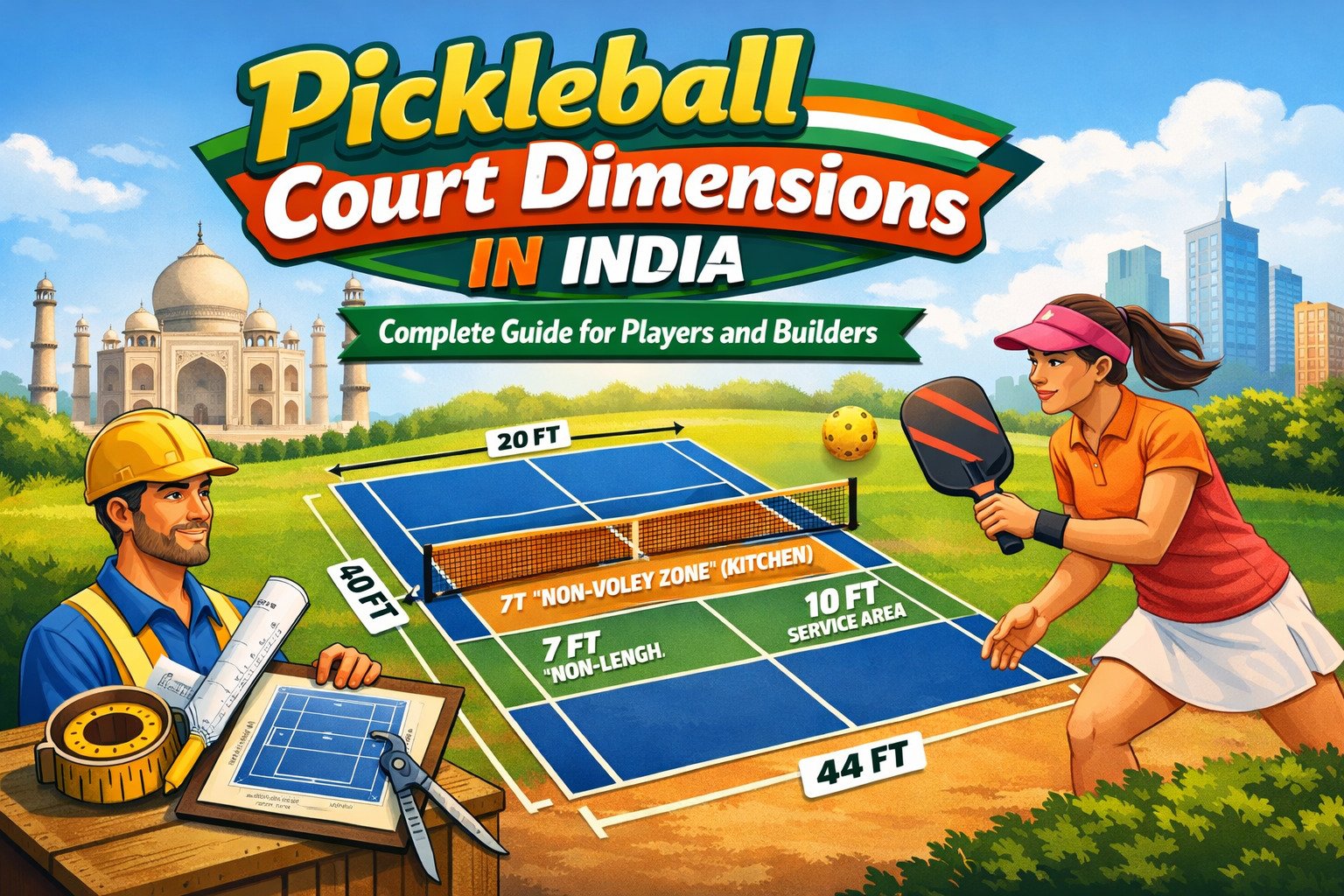
The official pickleball court dimensions in India are exactly the same as international standards:
- Total Court Length: 44 feet (13.41 meters)
- Total Court Width: 20 feet (6.10 meters)
That’s it. Simple, precise, and universal.
Now you might think, “That seems small.” And you’re right. A pickleball court is significantly smaller than a tennis court. But don’t mistake size for simplicity. The compact dimensions actually make the game faster, more strategic, and incredibly engaging.
The 44-foot length includes both sides of the playing area from baseline to baseline. The 20-foot width spans from sideline to sideline. These measurements apply to both singles and doubles matches. Unlike badminton, where singles and doubles courts differ in width, pickleball keeps it consistent. One size fits all.
Why is the size fixed this way? The answer lies in paddle-based gameplay. Since pickleball uses a paddle and a plastic ball with holes (similar to a wiffle ball), the smaller court balances the slower ball speed. It creates longer rallies without requiring the stamina of full-court tennis.
In India, most new courts follow these dimensions strictly, especially in metro cities where tournaments are being organized regularly. However, recreational courts sometimes compromise due to space limitations. While that’s understandable, official dimensions should always be followed for competitive play.
Let’s compare it quickly for perspective:
| Sport | Length | Width |
|---|---|---|
| Pickleball | 44 ft | 20 ft |
| Badminton | 44 ft | 20 ft (doubles) |
| Tennis | 78 ft | 36 ft |
Notice something interesting? A badminton doubles court has the same length and width as a pickleball court. That’s why many Indian clubs convert badminton courts into pickleball courts—it’s practically a perfect fit.
Understanding the Layout of a Pickleball Court
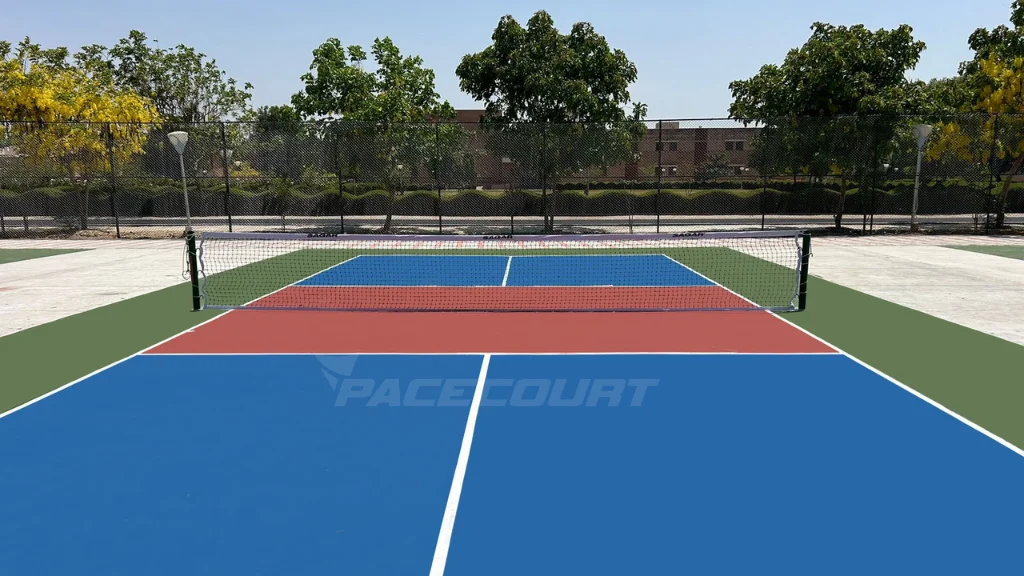
Knowing the total dimensions is just the beginning. The internal layout is where things get interesting.
A pickleball court is divided into several specific sections:
- Baselines
- Sidelines
- Service Courts
- Centerline
- Non-Volley Zone (Kitchen)
Let’s visualize this. Imagine the 44×20 feet rectangle. A net runs across the width at the center, dividing the court into two equal halves (22 feet each). Each half is further divided into zones that determine how serves and volleys are played.
Baselines and Sidelines
The baselines run parallel to the net at the far ends of the court. They mark the boundary for serving and returning deep shots. If the ball lands beyond the baseline, it’s out.
The sidelines run perpendicular to the net and define the width of the court. Shots landing outside these lines are also out of bounds.
All boundary lines are typically 2 inches wide and are considered part of the court. That means if the ball touches the line—even slightly—it’s in. This rule often creates intense close-call moments during matches.
Service Areas
Each half of the court is split into two service courts by a centerline. These are:
- Right Service Court (Even Court)
- Left Service Court (Odd Court)
Serves must be delivered diagonally into the opponent’s service court. The serve has to clear the non-volley zone and land inside the correct service area.
This diagonal serving adds a layer of strategy. Positioning becomes key, especially in doubles play where coordination matters.
Understanding the layout isn’t just for builders—it’s crucial for players. Once you mentally map the zones, your gameplay automatically improves.
The Non-Volley Zone (Kitchen) Explained
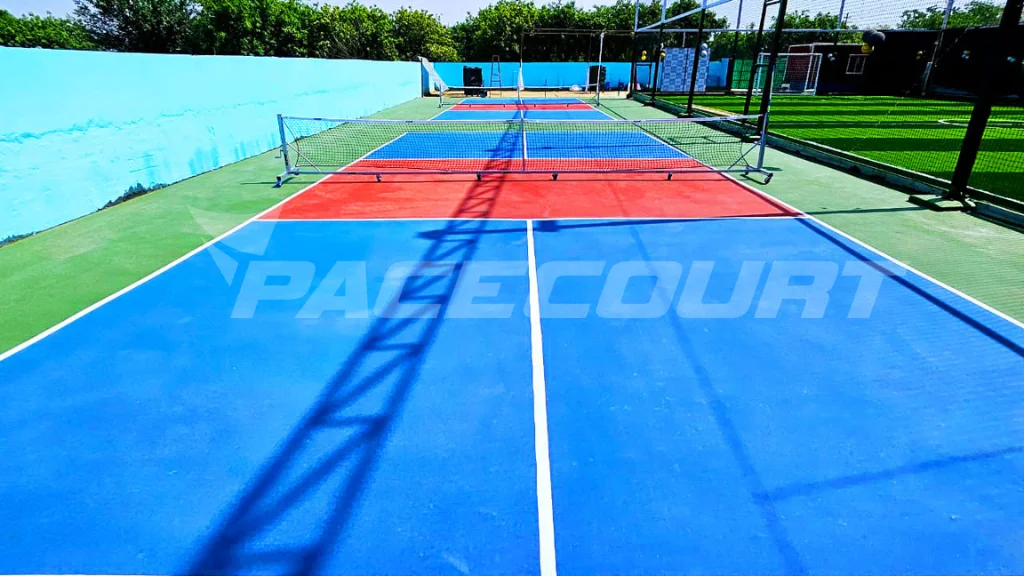
If there’s one feature that makes pickleball unique, it’s the Non-Volley Zone, famously called the “Kitchen.”
This area extends:
- 7 feet from the net on both sides
- Across the full width (20 feet)
So essentially, you have a 7×20 feet rectangle on each side of the net.
Why does this zone exist?
Simple—it prevents players from smashing the ball aggressively right at the net. Without the kitchen rule, taller players could dominate the game unfairly by volleying everything at close range. The non-volley zone adds finesse to the sport. It forces players to think, place soft shots (called dinks), and build rallies strategically.
Here’s the key rule:
You cannot volley (hit the ball in the air) while standing inside the kitchen. Not even if your toe touches the line. Remember, the kitchen line counts as part of the non-volley zone.
However, you can enter the kitchen:
- To hit a ball that has bounced.
- After the ball bounces inside the zone.
This subtle rule changes everything. Many beginners in India struggle with kitchen faults because they instinctively step forward during volleys. But once mastered, kitchen play becomes the most exciting part of pickleball.
From a construction standpoint, marking the kitchen line accurately at exactly 7 feet from the net is critical. Even a few inches off can disrupt tournament standards.
The kitchen isn’t just a marked rectangle—it’s the heart of strategy in pickleball.
Net Specifications for Pickleball Courts in India
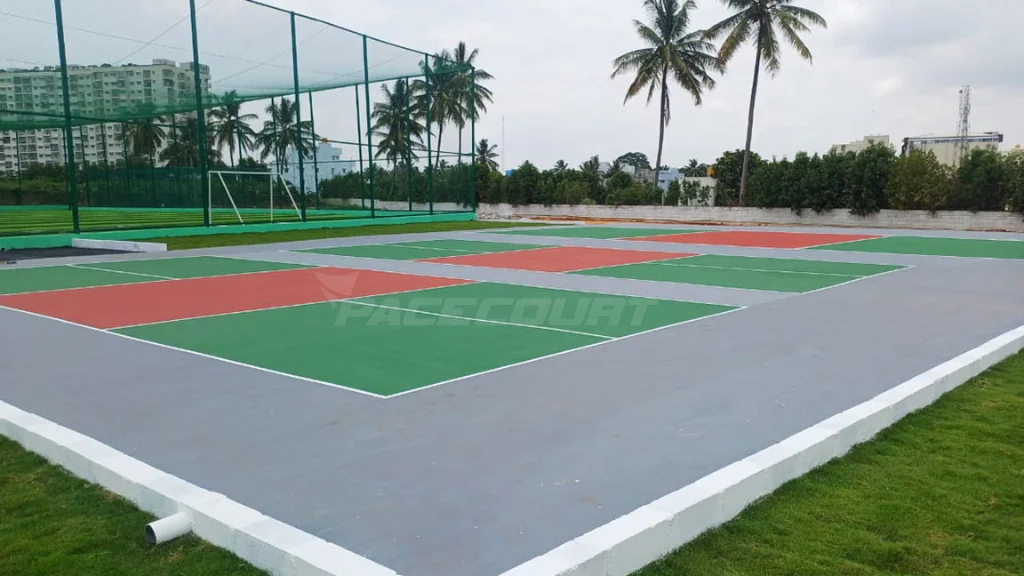
Let’s talk about the unsung hero of the pickleball court — the net. You can have perfect court markings, premium surface coating, and flawless lighting, but if the net height is wrong, the entire game feels “off.” Shots that should skim over the tape suddenly clip it. Dinks lose their rhythm. Smashes don’t behave the way they should.
The official pickleball net specifications used in India follow international standards:
- Net Height at the Sidelines: 36 inches (91.44 cm)
- Net Height at the Center: 34 inches (86.36 cm)
Yes, the net is slightly lower at the center. That 2-inch dip might sound minor, but in gameplay, it makes a noticeable difference. It allows for longer rallies and strategic cross-court shots.
The net should stretch fully across the 20-foot width of the court. The total net length is typically around 22 feet to allow for proper side attachment and tensioning.
Net Material and Setup Tips
In India, most permanent courts use:
- Braided polyethylene or nylon nets
- Steel cable tension systems
- Powder-coated metal posts
Portable nets are also common in residential societies and temporary setups. These are lightweight, easy to assemble, and perfect for multipurpose courts.
When setting up a net, tension matters. Too tight, and the center won’t dip properly. Too loose, and it will sag excessively, affecting play. A center strap is essential to maintain the 34-inch height.
Think of the net as the referee — it silently ensures fairness. And like any good referee, it must be precise.
Minimum Space Requirements Around the Court
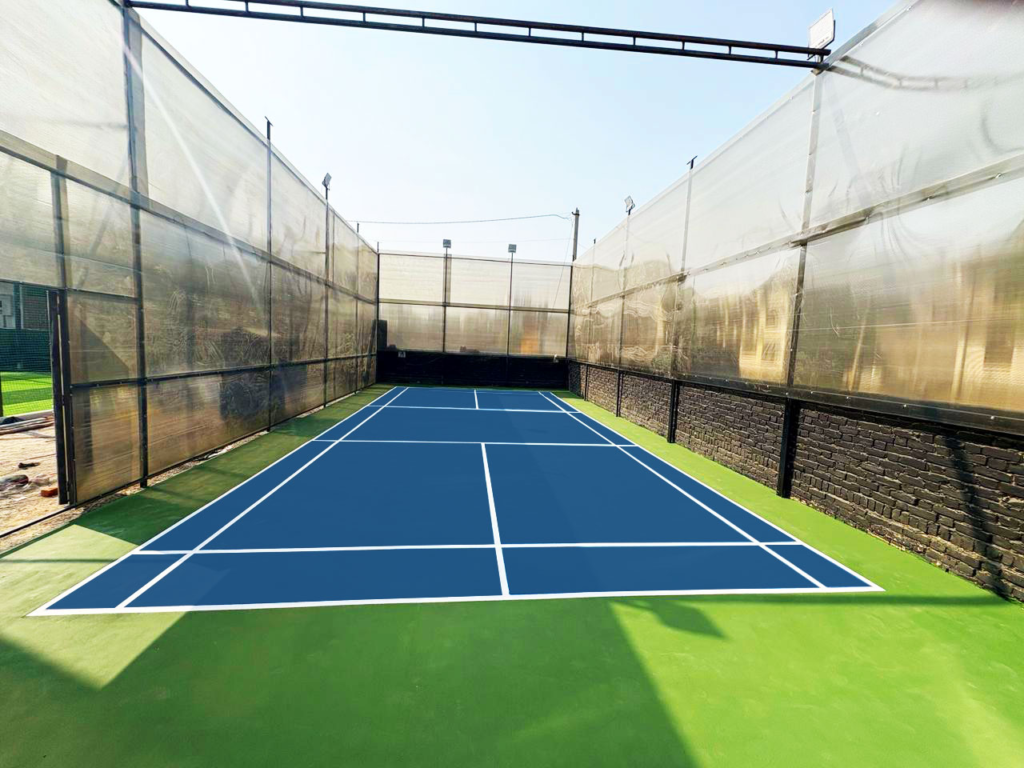
Here’s something many new builders in India overlook: the court size isn’t the only space requirement. You need buffer space around it.
While the playing area is 44×20 feet, the recommended total space requirement is:
- Minimum: 30×60 feet
- Preferred (Tournament Standard): 34×64 feet
Why so much extra space?
Because players move. Fast. They chase lobs, return deep shots, and sometimes sprint beyond the baseline. Without adequate run-off space, injuries become a real risk.
Recommended Clearances
- Behind Baselines: Minimum 8–10 feet
- Along Sidelines: Minimum 5–7 feet
In competitive settings, even more space is ideal.
Indoor vs Outdoor Considerations
For indoor courts in India:
- Minimum ceiling height should be 18–20 feet.
- Lighting should avoid shadows directly above the kitchen area.
For outdoor courts:
- Wind direction matters.
- North-south orientation is recommended to avoid sun glare during morning and evening games.
Skipping buffer space is like building a highway with no shoulders — technically functional, but risky. If you’re planning a court in a housing society or club, always factor in these margins.
Court Surface Options in India
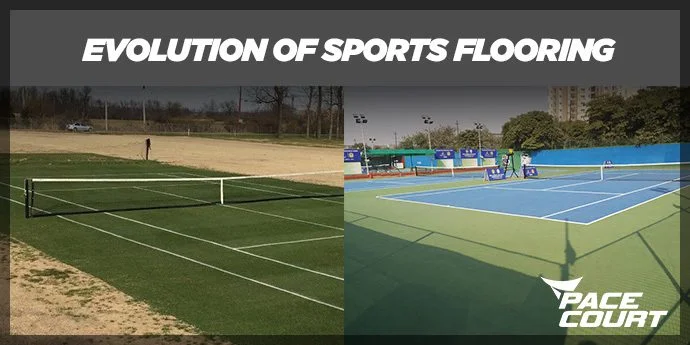
Surface choice can make or break the playing experience. In India, climate plays a huge role in deciding the right material.
Concrete Courts
Concrete is the most common base. It’s durable, long-lasting, and relatively affordable. However, raw concrete isn’t ideal for play — it needs coating.
Synthetic Acrylic Surfaces
This is the gold standard for professional courts. Acrylic coatings provide:
- Better grip
- Consistent ball bounce
- Weather resistance
- Reduced joint impact
Cities like Mumbai, Hyderabad, and Bengaluru increasingly use synthetic layers for tournament courts.
Temporary and Portable Courts
In schools and community halls, temporary pickleball setups are popular. These use:
- Vinyl court mats
- Tape markings on badminton courts
- Portable nets
While not ideal for professional play, they’re perfect for beginners.
India’s heat and monsoon seasons demand weather-resistant coatings. UV-resistant acrylic layers prevent fading and surface cracks.
Choosing the right surface is like choosing running shoes — the wrong one will hurt you eventually.
Marking a Pickleball Court in India
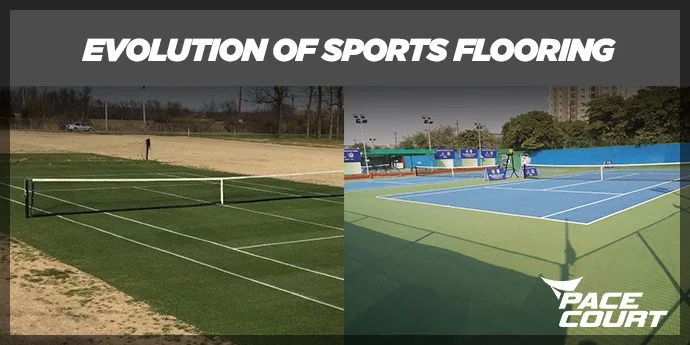
Accurate markings are crucial. A few inches off, and your serves might land “out” when they should be “in.”
Line Dimensions
- Line Width: 2 inches
- All lines are included in the playing area
- Kitchen line: Exactly 7 feet from the net
Common Line Colors
- White (most common)
- Yellow (for multi-sport courts)
- Blue/Green contrast combinations for tournaments
DIY Marking Guide
If you’re converting a badminton court in India:
- Measure full 44×20 feet area.
- Mark baselines and sidelines.
- Measure 22 feet from each baseline for net placement.
- Mark kitchen line at 7 feet from net.
- Divide service courts using a centerline.
Precision tools like laser markers are recommended for permanent courts.
Take your time during marking. Paint dries fast — mistakes don’t disappear as easily.
Indoor vs Outdoor Pickleball Court Dimensions in India
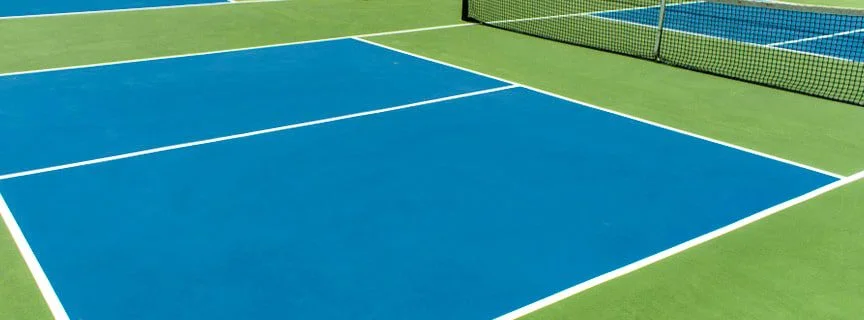
Dimensions remain the same indoors and outdoors. What changes is the playing environment.
Indoor Courts
Pros:
- No wind interference
- Controlled lighting
- Year-round usability
Requirements:
- Minimum 18-foot ceiling height
- Non-slip flooring
- Proper ventilation
Outdoor Courts
Pros:
- Lower construction cost
- Natural light
- Larger available spaces
Challenges:
- Wind affects ball movement
- Sun glare
- Surface wear due to rain
In India’s tropical climate, many clubs prefer hybrid models — covered outdoor courts with open ventilation.
Regardless of setting, 44×20 feet remains constant. The court doesn’t change — only the environment does.
Converting Existing Courts into Pickleball Courts
India’s sports infrastructure often repurposes existing courts.
Converting Badminton Courts
Here’s the good news: a badminton doubles court is already 44×20 feet. That means:
- No resizing needed
- Just adjust net height
- Add kitchen lines
This makes badminton courts ideal for pickleball conversion.
Converting Tennis Courts
One standard tennis court can fit up to four pickleball courts.
Adjustments needed:
- Lower net height
- Add proper markings
- Possibly resurface for better bounce
This conversion trend is booming in Indian tennis clubs.
It’s like fitting studio apartments inside a bungalow — smart use of space.
Cost of Building a Pickleball Court in India
Costs vary by city and surface quality.
Estimated Cost Breakdown
| Component | Approximate Cost (INR) |
|---|---|
| Concrete Base | ₹3–5 lakh |
| Acrylic Surface | ₹2–4 lakh |
| Net System | ₹25,000–₹60,000 |
| Lighting | ₹1–3 lakh |
| Fencing | ₹2–5 lakh |
Total cost can range between ₹8 lakh to ₹20 lakh, depending on quality.
Maintenance includes repainting lines and resurfacing every few years.
It’s an investment — but with pickleball’s rapid growth, returns in memberships and usage are promising.
Pickleball Court Dimensions for Tournaments in India
Tournament courts strictly follow international standards:
- 44×20 feet playing area
- 34-inch center net height
- Minimum 30×60 feet total space
The All India Pickleball Association aligns with global regulations.
Precision is non-negotiable in tournaments. Even line thickness must comply.
Common Mistakes While Building a Pickleball Court
- Incorrect kitchen measurement
- Ignoring buffer space
- Using tennis net height
- Poor drainage planning
- Low ceiling in indoor courts
Avoid shortcuts. They cost more in the long run.
Why Correct Dimensions Matter for Performance and Safety
Dimensions influence:
- Ball trajectory
- Reaction time
- Player movement
- Injury prevention
Too cramped? Players collide. Too wide? Game loses balance.
Precision ensures fairness and safety.
Future of Pickleball Infrastructure in India
Pickleball is exploding in popularity. Residential complexes, schools, and corporate campuses are adding courts rapidly.
With urban space constraints, pickleball’s compact 44×20 feet dimension makes it ideal for Indian cities.
Expect:
- More multi-court facilities
- Indoor academies
- Professional tournaments
The infrastructure wave has just begun.
Conclusion
Pickleball court dimensions in India follow international standards — 44 feet long and 20 feet wide, with a 7-foot non-volley zone and precise net height requirements. While the court may look simple, every inch plays a role in strategy, fairness, and safety.
Whether you’re building a court, converting an existing one, or simply curious about the sport’s layout, understanding these measurements ensures you get it right from the start.
Pickleball may be small in size compared to tennis, but its growth in India is massive — and perfectly measured.