Pickleball is one of the fastest-growing sports worldwide, and with its rising popularity, the demand for safe, durable, and high-performance pickleball court flooring is at an all-time high. Whether you’re building a residential court, a sports complex, or upgrading an existing facility, choosing the right flooring material is crucial. The surface directly impacts ball bounce, player comfort, traction, and long-term maintenance costs.
This comprehensive guide covers everything you need to know about pickleball court flooring, including the best materials, key selection factors, installation considerations, and expert tips to ensure a safe and high-performance playing experience.
Table of contents
- What is Pickleball
- Why Your Pickleball Court Flooring Matters
- What Makes Pickleball Court Flooring Unique?
- Best Flooring Materials for Pickleball Courts
- 2. Polypropylene (PP) Interlocking Tiles
- 3. Rubber Sports Flooring (Indoor Courts)
- 4. Concrete Base with Textured Coating
- 5. Asphalt Base with Sports Coating
- Side-by-Side Comparison Chart
- How to Choose the Best Material for You
- How to Maintain Pickleball Court Flooring
- Cost of Pickleball Court Flooring
- Installation Tips for Pickleball Court Flooring
- Conclusion
What is Pickleball
Pickleball is a fast-growing paddle sport that combines elements of tennis, badminton, and table tennis. It is played on a smaller court with a perforated plastic ball (similar to a wiffle ball) and lightweight paddles. The game can be played in singles or doubles, making it fun and accessible for players of all ages and skill levels.
One of the main reasons for its popularity is its simple rules and low physical strain, which make it easier to learn compared to many other racket sports. Yet, the game can still be very competitive and strategic, offering great exercise and entertainment.
Pickleball is widely played in communities, schools, sports clubs, and recreation centers across the world. From beginners to professional athletes, everyone enjoys the blend of speed, skill, and social interaction that pickleball provides.
Why Your Pickleball Court Flooring Matters
The court surface is the foundation of every game. A poor surface can lead to unpredictable ball behavior, increased risk of injury, and frequent, costly repairs. A quality court, on the other hand, provides a consistent and enjoyable experience for years.
Here’s why flooring selection is so important:
- Performance: The material affects ball speed and bounce height. A surface with the right texture and firmness ensures a predictable and fair game.
- Safety: The right flooring offers adequate traction to prevent slips and falls. Cushioned surfaces can also reduce stress on players’ joints, minimizing the risk of injuries to ankles, knees, and hips.
- Durability: A pickleball court is an investment. Choosing a durable material that can withstand heavy play, weather changes, and general wear and tear will save you money and headaches in the long run.
- Maintenance: Some surfaces require more upkeep than others. Factoring in the time and cost of maintenance is crucial for long-term satisfaction.
What Makes Pickleball Court Flooring Unique?
Pickleball courts may resemble tennis or badminton courts, but the flooring requirements differ due to:
- Fast-paced lateral movements
- Frequent quick stops and pivots
- Smaller court dimensions
- Consistent, predictable ball bounce
- Outdoor vs. indoor play variations
Hence, the flooring must provide the perfect balance of shock absorption, traction, durability, and weather resistance.
Best Flooring Materials for Pickleball Courts
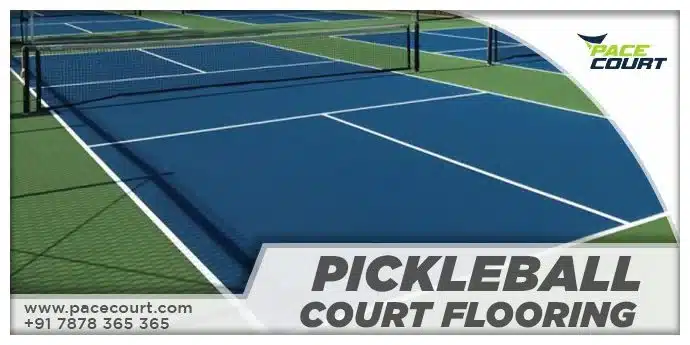
Below are the top-performing and most widely recommended materials for building modern pickleball courts.
1. Acrylic Sports Flooring (Most Popular Choice)
Acrylic flooring is the gold standard for outdoor pickleball courts.
Why It’s Ideal
- Provides consistent ball bounce
- UV- & weather-resistant
- Non-slip texture for improved safety
- Available in multiple color options
- Long-lasting and low-maintenance
Best For
- Outdoor courts
- Public parks, schools, sports clubs
- Professional-level play
2. Polypropylene (PP) Interlocking Tiles
These modular tiles are becoming increasingly popular due to their versatility and ease of installation.
Benefits
- Quick DIY installation
- Excellent drainage for outdoor courts
- Shock-absorbing and comfortable on joints
- Ideal for converting multi-sport areas
Best For
Commercial sports facilities
Temporary or portable courts
Multi-purpose indoor/outdoor sports spaces
3. Rubber Sports Flooring (Indoor Courts)
Rubber flooring is preferred for indoor pickleball courts that require optimal comfort and shock absorption.
Advantages
- Superior cushioning
- Reduced injury risk
- Good grip and traction
- Ideal for wooden base structures
Best For
Senior community centers
Indoor sports halls
Gyms & recreation centers
4. Concrete Base with Textured Coating
This remains one of the most durable options if constructed correctly.
Pros
- Long life span
- Stable, firm surface
- Low maintenance
Cons
- Needs a professional textured coating
- Hard on joints if not cushioned with acrylic layers
Best For
Budget-friendly court construction
Outdoor dedicated pickleball facilities
5. Asphalt Base with Sports Coating
Similar to concrete but softer and more forgiving.
Benefits
- Good shock absorption
- Cost-effective
- Ideal for clubs and academies
Drawback
Can crack over time due to temperature changes
Side-by-Side Comparison Chart
| Feature / Material | Acrylic Flooring | PP Tiles | Rubber Flooring | Concrete + Coating | Asphalt + Coating |
|---|---|---|---|---|---|
| Ball Bounce Consistency | ⭐⭐⭐⭐ | ⭐⭐⭐ | ⭐⭐ | ⭐⭐ | ⭐⭐⭐ |
| Traction | ⭐⭐⭐⭐ | ⭐⭐⭐⭐ | ⭐⭐⭐⭐ | ⭐⭐⭐ | ⭐⭐⭐ |
| Shock Absorption | ⭐⭐⭐ | ⭐⭐⭐⭐ | ⭐⭐⭐⭐ | ⭐⭐ | ⭐⭐⭐ |
| Weather Resistance (Outdoor) | ⭐⭐⭐⭐ | ⭐⭐⭐⭐ | ⭐ | ⭐⭐⭐ | ⭐⭐ |
| Maintenance Level | ⭐⭐⭐⭐ | ⭐⭐⭐ | ⭐⭐⭐ | ⭐⭐⭐⭐ | ⭐⭐ |
| Installation Ease | ⭐⭐ | ⭐⭐⭐⭐ | ⭐⭐ | ⭐⭐ | ⭐⭐ |
| Durability | ⭐⭐⭐⭐ | ⭐⭐⭐ | ⭐⭐⭐ | ⭐⭐⭐⭐ | ⭐⭐⭐ |
How to Choose the Best Material for You
With these options in mind, how do you decide? Consider these three key factors.
1. Climate
Your local weather plays a huge role in a court’s lifespan.
- Hot Climates: Asphalt can soften in extreme heat. Concrete or modular tiles are often better choices. Tiles, with their airflow, can help keep the surface cooler.
- Cold/Freeze-Thaw Climates: Concrete is highly susceptible to cracking as the ground freezes and thaws. Modular tiles handle temperature changes well, and their flexibility prevents cracking.
- Rainy Areas: Modular tiles are the clear winner here, as their drainage capabilities allow for play to resume quickly after a storm. Cushioned and hard courts need to be sloped correctly and require time to dry.
2. Usage and Player Profile
Think about who will be using the court and how often.
- High-Traffic Public Courts: Durability is key. Concrete with a high-quality acrylic finish is a proven, long-lasting option.
- Private or Residential Courts: Player comfort becomes a higher priority. A cushioned surface or modular tile system can reduce the wear and tear on your body, allowing you to play more often and for more years.
- Multi-Purpose Courts: If the area will also be used for other sports like basketball, modular tiles with painted lines for multiple games are an excellent, versatile choice.
3. Budget
Your budget will ultimately guide your decision.
- Lowest Initial Cost: Asphalt followed by concrete are the most affordable upfront options, but remember to factor in the cost of acrylic surfacing.
- Mid-Range: High-quality modular tile systems fall into this category. While the initial cost is higher than a basic hard court, you save on long-term maintenance and repair costs.
- Premium Investment: Cushioned surfaces represent the top tier in both price and performance. They are an investment in the ultimate playing experience and player health.
How to Maintain Pickleball Court Flooring
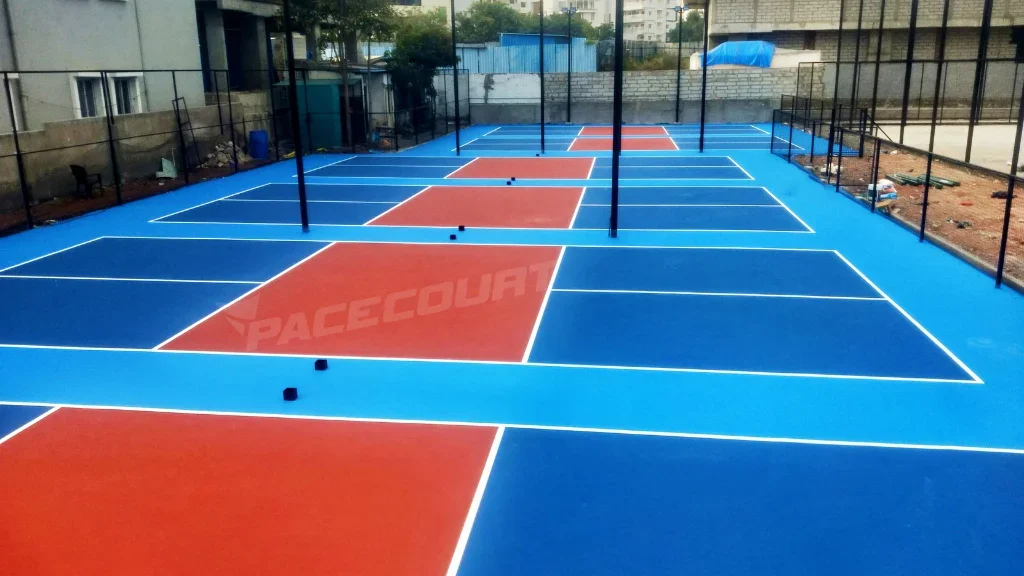
Maintaining pickleball court flooring is essential to ensure safety, longevity, and optimal playing conditions. Here are some tips to help you keep your pickleball court in great shape:
1. Regular Cleaning
- Sweep the Surface: Use a soft-bristle broom or a leaf blower to remove dirt, leaves, and debris regularly.
- Wash the Court: Periodically clean the surface with water and a mild detergent. Use a pressure washer on a low setting to avoid damaging the surface.
- Remove Stains: Address stains (like oil or bird droppings) promptly with a gentle cleaning solution and a soft brush.
2. Inspect for Damage
- Check for Cracks: Regularly inspect the court for cracks, chips, or uneven surfaces. Small cracks can expand over time if not repaired.
- Look for Fading: UV exposure can cause the court’s surface to fade. Repainting or resurfacing may be necessary to maintain visibility and aesthetics.
3. Resurface When Needed
- Resurfacing Frequency: Depending on usage, pickleball courts typically need resurfacing every 3-5 years.
- Professional Help: Hire professionals to apply a new layer of acrylic coating and ensure proper court markings.
4. Prevent Water Damage
- Ensure Proper Drainage: Make sure the court has adequate drainage to prevent water pooling.
- Clean Drains: Regularly clear drains and surrounding areas to avoid blockages.
5. Protect the Surface
- Use Proper Shoes: Encourage players to wear non-marking court shoes to prevent scuff marks and damage.
- Avoid Heavy Equipment: Do not allow heavy machinery or vehicles on the court, as they can cause cracks or dents.
6. Seasonal Maintenance
- Winter Care: If the court is outdoors, avoid using salt or harsh chemicals to melt ice. Use a plastic shovel to remove snow gently.
- Summer Care: Protect the court from excessive heat by ensuring proper shading or cooling measures if possible.
7. Regular Repainting
- Court Lines: Repaint court lines as needed to maintain visibility and ensure accurate gameplay.
- Color Coating: Refresh the court’s color coating to keep it vibrant and protect the surface.
8. Prevent Mold and Mildew
- Keep It Dry: Ensure the court is dry after rain or cleaning to prevent mold and mildew growth.
- Use Mold Cleaners: If mold appears, use a specialized cleaner to remove it safely.
9. Educate Users
- Post guidelines for players to follow, such as proper footwear, no dragging equipment, and keeping the court clean.
10. Professional Inspections
- Schedule annual inspections by professionals to assess the court’s condition and recommend necessary repairs or maintenance.
By following these steps, you can ensure your pickleball court flooring remains in excellent condition, providing a safe and enjoyable playing experience for years to come.
Cost of Pickleball Court Flooring
| Flooring Material / System | Approx. Cost Range (Per Court) | Notes |
|---|---|---|
| Acrylic Coating over Existing Base | ₹3,30,000 – ₹6,60,000 | Affordable, low-maintenance outdoor option. |
| Concrete Base + Acrylic Surface | ₹8,25,000 – ₹12,40,000 | Professional, durable outdoor court system. |
| Modular / Interlocking PP Tiles | ₹8,00,000 – ₹12,00,000 | Fast installation, multi-sport friendly. |
| Premium Indoor Cushioned Flooring | ₹10,00,000 – ₹25,00,000+ | Best shock absorption and comfort for indoor courts. |
| Court Resurfacing / Re-coating | ₹1,50,000 – ₹4,00,000 | Regular resurfacing to maintain traction and color quality. |
| DIY Basic Surface Prep | Varies (lowest cost option) | Painting or minor leveling over an existing slab. |
Installation Tips for Pickleball Court Flooring

Installing pickleball court flooring requires careful planning and execution to ensure a durable, safe, and high-quality playing surface. Here are some essential tips for a successful installation:
1. Choose the Right Location
- Flat Surface: Select a level area to minimize grading and preparation work.
- Drainage: Ensure the site has proper drainage to prevent water pooling.
- Sunlight and Wind: Position the court to minimize glare and wind interference. Ideally, align the court north-south to reduce sun exposure during play.
2. Prepare the Base
- Concrete or Asphalt Base: Use a solid, smooth, and crack-free base. Concrete is preferred for its durability.
- Thickness: Ensure the base is at least 4 inches thick for stability.
- Slope: Maintain a slight slope (1%) for water runoff.
3. Select the Right Flooring Material
- Acrylic Coating: Popular for outdoor courts, providing a smooth, non-slip surface.
- Modular Tiles: Ideal for quick installation and easy maintenance, especially for indoor or temporary courts.
- Cushioned Surfaces: Consider cushioned flooring for added comfort and reduced joint impact.
4. Ensure Proper Installation
- Clean the Base: Remove debris, dirt, and grease from the base before applying the surface material.
- Apply Primer: Use a primer to ensure proper adhesion of the surface material to the base.
- Layering: Apply multiple layers of acrylic coating or install modular tiles according to the manufacturer’s instructions.
- Court Lines: Use high-quality, UV-resistant paint for clear and durable court markings.
5. Allow for Curing Time
- Concrete Base: Let the concrete cure for at least 28 days before applying the surface material.
- Acrylic Coating: Allow each layer to dry completely before applying the next.
6. Add Accessories
- Net System: Install a regulation pickleball net with sturdy posts.
- Fencing: Add fencing around the court to keep the ball contained and enhance safety.
- Lighting: For evening play, install LED lighting that provides even illumination without glare.
7. Test the Surface
- Bounce Test: Check the ball bounce to ensure the surface is even and consistent.
- Slip Resistance: Ensure the surface provides adequate grip for player safety.
8. Maintain the Court
- Regularly clean the surface and inspect for damage to prolong the court’s lifespan.
By following these tips, you can ensure a professional-quality pickleball court that provides a safe and enjoyable playing experience for years to come.
Conclusion
Choosing the right pickleball court flooring is essential for creating a safe, durable, and high-performance playing environment. Whether you’re building a residential court, a club facility, or a professional tournament surface, picking the right material ensures excellent gameplay, long-term savings, and enhanced player experience.
Acrylic, PP tiles, rubber, and concrete systems each offer unique benefits — so select the one that best matches your budget, location, and performance needs.