
Tennis is often described as a sport of precision, endurance, and elegance. Yet behind every legendary rally or championship point stands a silent hero: the tennis court itself. Over the past century, certain venues have become far more than simple playing surfaces. They’ve evolved into historic stages where athletes carve their names into sporting history. When exploring the Top Most Famous Tennis Courts in History, it becomes clear that these iconic venues represent much more than locations—they embody the traditions, rivalries, and unforgettable moments that shaped the sport. From the lush grass of Wimbledon to the red clay of Roland Garros, each court tells a story about tradition, innovation, and the unique influence of tennis court flooring and tennis court dimensions.
Table of contents
When fans remember epic matches—Roger Federer’s graceful dominance at Wimbledon, Rafael Nadal’s clay-court mastery in Paris, or Serena Williams electrifying crowds in New York—they’re not just remembering players. They’re remembering places. The architecture, the roar of the crowd, the surface beneath the athletes’ feet, and the precise measurements of the court all shape how the game unfolds. Even subtle variations in tennis court flooring can dramatically affect ball speed, bounce, and player strategy.
Professional courts around the world follow standardized tennis court dimensions, typically measuring 78 feet in length and 27 feet in width for singles play. Yet the environment surrounding those measurements—surface material, altitude, humidity, and stadium design—creates dramatically different playing experiences. A clay court encourages long, strategic rallies, while a grass court rewards quick reflexes and aggressive serving. Hard courts sit somewhere in the middle, offering a balanced style of play.
What makes certain courts famous isn’t only their design or surface. It’s the unforgettable moments that happened on them. These courts have witnessed championship points, historic rivalries, dramatic comebacks, and the rise of tennis legends. They’ve also shaped the evolution of the sport itself, influencing how players train, compete, and adapt their strategies.
In this article, we’ll explore the top most famous tennis courts in history, examining what makes each venue legendary. Along the way, we’ll also uncover how tennis court flooring and standardized tennis court dimensions play a critical role in shaping the modern game. Some courts are iconic because of tradition, others because of innovation, and a few because of the breathtaking locations that make them unforgettable.
Whether you’re a passionate tennis fan, a player considering building a court, or simply someone fascinated by the world’s most iconic sports venues, these courts represent the very heart of tennis history.
Why Iconic Tennis Courts Matter in the Sport’s Legacy
Tennis is one of the few sports where the venue itself becomes almost as famous as the athletes competing on it. Think about the way fans talk about Wimbledon’s Centre Court or Roland Garros’ Philippe-Chatrier. These names instantly evoke images of roaring crowds, championship points, and unforgettable rivalries. Iconic tennis courts matter because they act as living museums of the sport, preserving decades—sometimes more than a century—of tennis history. Every line painted on the surface, every seat in the stadium, and every inch of carefully designed tennis court flooring contributes to the story.
One reason these courts carry such weight in the sport’s legacy is consistency. Professional tennis follows standardized tennis court dimensions, which measure 78 feet long and 27 feet wide for singles play, expanding to 36 feet wide for doubles. These measurements ensure fairness across tournaments worldwide. However, while the dimensions remain consistent, the playing experience varies dramatically depending on the surface. Grass, clay, and hard courts each influence how the ball moves and how players strategize their game. That subtle difference can transform an ordinary match into a tactical masterpiece.
Historic courts also shape the personalities of tournaments. Wimbledon, with its pristine grass courts, encourages lightning-fast serves and quick volleys. Roland Garros’ clay courts slow the game down, forcing players into long endurance battles. Meanwhile, the hard courts of the US Open and Australian Open strike a balance between speed and bounce. This variety keeps the sport dynamic and ensures that different styles of players have opportunities to shine throughout the season.
Atmosphere also plays a massive role. When 20,000 spectators erupt in cheers during a match point, the energy can change the outcome of the game. Some stadiums are famous specifically because of their electric crowd environment. Arthur Ashe Stadium in New York, for example, is known for its loud and passionate fans, creating an almost theatrical atmosphere during night matches.
Historic courts also drive innovation in stadium design and tennis court flooring technology. Over the years, surfaces have evolved to improve player safety, durability, and performance. Early grass courts required intense maintenance, while modern hard courts incorporate layered materials designed to reduce joint impact. These improvements show how tennis venues continue to evolve while still respecting the sport’s traditions.
Ultimately, famous tennis courts are more than sporting venues—they’re cultural landmarks. They host the moments that define careers and inspire generations of players. When a young athlete dreams of winning Wimbledon or lifting the French Open trophy, they’re dreaming not only about the title but also about standing on one of the world’s most iconic courts.
The Role of Surface, Tennis Court Flooring, and Atmosphere
If tennis were played on identical surfaces everywhere, the sport would look very different today. The diversity of tennis court flooring is one of the main factors that keeps professional tennis exciting and unpredictable. Different surfaces create different styles of play, forcing athletes to adapt their strategies depending on where they compete. That’s why winning Grand Slam titles on multiple surfaces is considered one of the greatest achievements in tennis.
There are three primary types of tennis court flooring used in professional tournaments: grass, clay, and hard courts. Each surface dramatically changes how the ball behaves after it hits the ground. Grass courts, such as those at Wimbledon, produce a fast, low bounce. This encourages aggressive play, quick serves, and rapid net approaches. Clay courts, on the other hand, slow the ball down significantly. The high bounce forces players to rely on stamina, spin-heavy shots, and strategic rallies.
Hard courts, commonly seen at the US Open and Australian Open, provide a balanced playing field. These surfaces are usually constructed using layers of asphalt or concrete covered with acrylic coatings. This design allows for consistent bounce and moderate speed, making them suitable for a wide variety of playing styles. Many modern tennis facilities favor hard courts because they require less maintenance compared to grass or clay surfaces.
Beyond the surface itself, the atmosphere surrounding a tennis court can have a profound effect on players. Stadium design, seating capacity, and even architectural acoustics influence how the crowd interacts with the match. Courts like Arthur Ashe Stadium or Rod Laver Arena amplify the energy of thousands of fans, creating an environment where every point feels monumental.
Location also adds personality to a tennis venue. Some courts sit near oceans, mountains, or historic landmarks, giving them an aesthetic appeal that enhances the spectator experience. The Monte Carlo Country Club court, for instance, overlooks the Mediterranean Sea, making it one of the most visually stunning tennis venues in the world.
Weather conditions further complicate the relationship between surface and atmosphere. Temperature, humidity, and altitude can all affect ball speed and player endurance. That’s why tournaments in different parts of the world often produce very different playing conditions even when the tennis court dimensions remain identical.
Ultimately, the combination of surface material, stadium design, and environmental conditions transforms each tennis court into a unique battlefield. Players must constantly adapt to these factors, which is one of the reasons tennis remains such a compelling global sport.
How Tennis Court Dimensions Influence Historic Matches
At first glance, a tennis court might seem deceptively simple: a rectangular playing area divided by a net. Yet the exact measurements of that rectangle play a critical role in shaping how the sport is played. The standardized tennis court dimensions established by the International Tennis Federation ensure that matches remain fair and consistent regardless of location. Still, these precise measurements influence everything from serving angles to defensive positioning.
A regulation tennis court measures 78 feet in length from baseline to baseline. The width varies depending on the format of play: 27 feet for singles matches and 36 feet for doubles matches. The net stands 3 feet high at the center and slightly higher—3 feet 6 inches—at the posts. While these numbers might appear straightforward, they form the foundation for every shot, rally, and tactical decision in tennis.
For example, the relatively narrow singles court forces players to focus on precision. A powerful shot that lands just a few inches outside the sideline counts as out, which means players must carefully balance power and accuracy. Doubles matches expand the playing area, creating additional angles and opportunities for teamwork strategies.
Service boxes within the court also influence gameplay. Each service box measures 21 feet long and 13.5 feet wide, providing a specific target area that servers must hit. The challenge of consistently landing serves within this limited space is one reason powerful and accurate serving is such a valuable skill in professional tennis.
While the tennis court dimensions remain identical worldwide, the perception of space can vary depending on stadium design. Some courts feel intimate, with spectators seated close to the action, while others create a grand, open atmosphere. Players often talk about how certain courts “feel bigger” or “feel faster,” even though the official measurements remain unchanged.
Surface type interacts with these dimensions in fascinating ways. On fast surfaces like grass, players have less time to react, making the court effectively feel smaller. On slower clay courts, the extended rallies can make the court feel much larger as players chase balls from corner to corner.
These subtle dynamics help explain why certain matches become legendary. When elite athletes push the limits of speed, endurance, and precision within the strict boundaries of the court, the result can be unforgettable moments that define tennis history.
Centre Court, Wimbledon – The Cathedral of Tennis
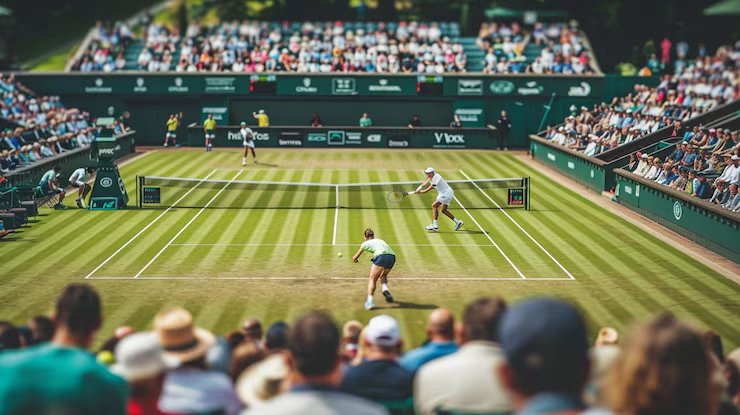
Among all tennis venues in the world, Centre Court at Wimbledon holds a nearly mythical status. Often referred to as the “Cathedral of Tennis,” this historic court has been the centerpiece of the Wimbledon Championships since 1922. Located at the All England Lawn Tennis and Croquet Club in London, Centre Court represents the oldest traditions of the sport while also embracing modern innovations that keep it relevant in the 21st century.
The most defining feature of this iconic venue is its grass tennis court flooring. Grass was the original surface for tennis when the sport emerged in England during the late 19th century, and Wimbledon remains the only Grand Slam tournament that still uses it. Grass courts create a fast-paced style of play where the ball skids low and players must react quickly. This surface rewards aggressive serving, sharp volleys, and lightning-fast reflexes at the net.
Maintaining grass courts, however, is incredibly demanding. Groundskeepers at Wimbledon spend months carefully preparing the surface, ensuring the grass is cut to a precise height—typically around 8 millimeters during the tournament. Even with meticulous care, the court gradually wears down during the two-week event, creating visible patches near the baseline where players move most frequently.
Centre Court also follows the standard tennis court dimensions used across professional tournaments. Yet what truly sets it apart is the surrounding atmosphere. With a seating capacity of around 15,000 spectators, the stadium blends historic charm with modern comfort. In 2009, a retractable roof was added, allowing matches to continue even during London’s unpredictable rain.
Legendary moments have unfolded on this very court. Roger Federer and Rafael Nadal’s epic 2008 Wimbledon final, often called the greatest tennis match ever played, took place here. Serena Williams has lifted multiple Wimbledon trophies on this grass stage, further cementing Centre Court’s reputation as the pinnacle of tennis achievement.
Standing on Centre Court represents the ultimate dream for many tennis players. It’s not just about competing—it’s about becoming part of a tradition that stretches back more than a century. Every serve, rally, and championship point played on this court adds another chapter to one of the richest stories in sports.
History and Legendary Moments at Wimbledon’s Centre Court
Few sporting venues in the world carry the historical weight and emotional resonance of Wimbledon’s Centre Court. Since its inauguration in 1922, the court has hosted some of the most iconic matches in tennis history. For players, stepping onto Centre Court is like walking into a hall of legends. The quiet anticipation of the crowd, the pristine grass beneath their shoes, and the knowledge that countless champions once stood in the same spot create an atmosphere unlike anywhere else in sports.
One of the reasons Centre Court is so revered is its role in shaping the global identity of tennis. Wimbledon itself is the oldest tennis tournament in the world, dating back to 1877. Over time, Centre Court became the focal point of the tournament, where finals and the most anticipated matches are played. The court’s classic design, complete with deep green surroundings and ivy-covered walls, reflects tennis tradition in its purest form.
Many legendary rivalries have reached their peak on this historic stage. The 2008 Wimbledon final between Roger Federer and Rafael Nadal remains one of the most celebrated matches in sports history. Played over nearly five hours and interrupted by rain delays, the match pushed both players to the absolute limits of endurance and skill. Nadal eventually claimed victory in fading daylight, creating a moment that fans still talk about nearly two decades later.
Centre Court has also been the stage where several athletes cemented their legacies. Martina Navratilova, for instance, won nine Wimbledon singles titles, dominating the grass courts throughout the 1980s. Pete Sampras ruled the venue in the 1990s with seven titles, while Serena Williams brought modern power tennis to the grass surface, capturing multiple championships that inspired a new generation of players.
Although the tennis court dimensions remain identical to courts around the world, the unique grass tennis court flooring at Wimbledon dramatically influences how matches unfold. The ball moves quickly across the surface, often producing shorter rallies and rewarding players who can serve powerfully and approach the net with confidence. This dynamic has historically favored aggressive players, adding a distinctive tactical element to matches played on Centre Court.
In 2009, the addition of a retractable roof ensured that matches would no longer be halted by England’s unpredictable weather. This innovation preserved tradition while adapting the venue to modern broadcast schedules and global audiences. Even with these upgrades, Centre Court retains the elegance and quiet respect that define Wimbledon.
For fans and players alike, Centre Court is far more than a sports arena. It is a sacred stage where history unfolds, champions rise, and the spirit of tennis lives on.
Grass Tennis Court Flooring and Traditional Tennis Court Dimensions
Grass courts are the original surface of tennis, and nowhere are they more celebrated than at Wimbledon. The tennis court flooring made of natural grass offers a completely different playing experience compared to clay or hard courts. Its slick, low-bouncing characteristics create one of the fastest environments in professional tennis, demanding quick reactions and precise shot placement from players.
Maintaining a grass court at the professional level is a meticulous process that requires constant attention. Unlike hard courts that remain relatively stable throughout the season, grass surfaces evolve over the course of a tournament. As matches are played, players’ movements wear down the grass, especially near the baseline and service areas. This gradual transformation subtly changes the bounce and speed of the ball, adding another layer of complexity to the competition.
Despite these surface changes, the tennis court dimensions remain strictly regulated according to international standards. A professional tennis court measures 78 feet long from baseline to baseline. For singles matches, the width is 27 feet, while doubles matches expand the playable area to 36 feet using the outer sidelines. The net divides the court evenly and stands 3 feet high at the center, ensuring consistent gameplay across tournaments worldwide.
Grass surfaces interact with these dimensions in unique ways. Because the ball travels faster and stays lower after bouncing, players often shorten rallies by approaching the net quickly. Historically, this encouraged the famous serve-and-volley style of play, where athletes would serve aggressively and move forward to finish points with volleys. Legends like John McEnroe and Pete Sampras mastered this technique on grass courts.
Another interesting aspect of grass tennis court flooring is its influence on spin. Topspin shots—commonly used on clay courts—lose some effectiveness on grass because the ball doesn’t bounce as high. Instead, players rely more on slice shots, which stay low and skid across the surface, making them difficult for opponents to return.
Even though modern tennis has shifted toward baseline rallies, Wimbledon’s grass courts continue to reward players who adapt their strategies. This blend of tradition, technique, and standardized tennis court dimensions ensures that grass court tennis remains a unique and cherished part of the sport.
Grass courts also symbolize the heritage of tennis. Walking onto a perfectly maintained grass court feels almost ceremonial, connecting today’s players with the earliest days of the game. The surface may require significant effort to maintain, but its historical significance makes it irreplaceable in the world of tennis.
Court Philippe-Chatrier – The Heart of Roland Garros
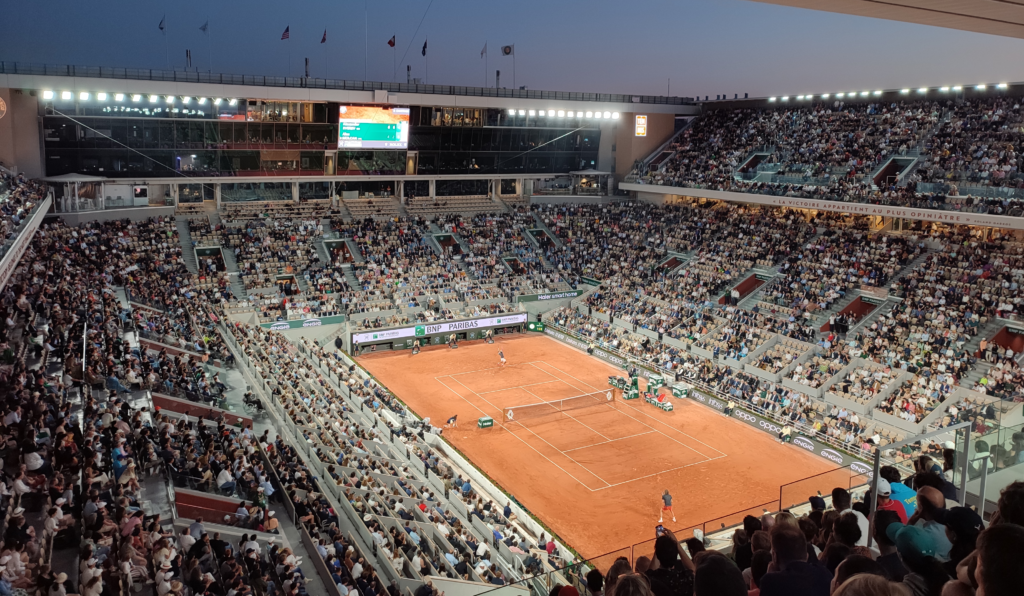
While Wimbledon represents the elegance of grass tennis, Court Philippe-Chatrier stands as the ultimate symbol of clay-court mastery. Located at Roland Garros in Paris, this stadium is the centerpiece of the French Open, one of the four Grand Slam tournaments. Named after former French Tennis Federation president Philippe Chatrier, the court has become synonymous with endurance, strategy, and some of the longest rallies in professional tennis.
The defining feature of this legendary venue is its clay tennis court flooring. Clay courts are constructed using layers of crushed stone, limestone, and brick dust that create the distinctive red surface seen at Roland Garros. This surface slows the ball significantly compared to grass or hard courts, allowing players more time to react. As a result, matches on clay often feature extended rallies that test both physical stamina and mental resilience.
Because the ball grips the clay surface before bouncing, players can generate heavy topspin that sends the ball high into the air. This characteristic has helped certain players dominate the French Open over the years. Rafael Nadal, often called the “King of Clay,” has won the tournament an astonishing 14 times, most of those victories taking place on Court Philippe-Chatrier.
The stadium itself has undergone major renovations in recent years. Today it seats around 15,000 spectators and features a retractable roof, ensuring matches can continue regardless of weather conditions. These upgrades modernized the venue while preserving the traditional charm that fans associate with the French Open.
Despite the unique playing conditions created by clay tennis court flooring, the tennis court dimensions remain consistent with international standards. The court still measures 78 feet in length, with the same singles and doubles widths used in tournaments worldwide. This standardization allows players to transition between surfaces while maintaining a familiar court structure.
One distinctive aspect of clay courts is the ability for players to slide across the surface when reaching for shots. This movement technique has become an essential skill for success at Roland Garros. Sliding allows players to maintain balance and recover quickly after hitting the ball, which is crucial during the long rallies typical of clay-court tennis.
Court Philippe-Chatrier has hosted countless memorable moments, from dramatic five-set battles to emotional championship celebrations. The slow, demanding nature of clay tennis often produces matches that feel like physical and psychological marathons. Each point becomes a test of patience, endurance, and tactical intelligence.
For many tennis fans, Roland Garros represents the ultimate challenge in the sport. Winning on clay requires a unique combination of skill and determination. And at the center of that challenge stands Court Philippe-Chatrier, a venue where legends are forged and tennis history is written in red clay.
Clay Court Tennis Flooring and Its Strategic Impact
Clay courts represent one of the most distinctive environments in professional tennis, and their influence on strategy is profound. Unlike grass or hard surfaces, clay tennis court flooring significantly slows the speed of the ball while producing a higher bounce. This combination transforms the rhythm of matches, often turning quick exchanges into extended rallies that test a player’s endurance, patience, and tactical intelligence. For fans, clay-court tennis feels almost like a chess match played at high speed—every shot must be carefully calculated, and rushing points rarely leads to success.
The composition of clay courts plays a major role in this dynamic. Typically built using layers of crushed stone, brick dust, and limestone, the surface creates friction that grips the ball as it lands. Because of this grip, players can generate extreme topspin, causing the ball to jump high off the court. This effect makes aggressive baseline play highly effective, which is why many clay specialists rely on heavy topspin forehands to push opponents far behind the baseline.
Although the tennis court dimensions remain standardized at 78 feet long and 27 feet wide for singles, the slower surface effectively makes the court feel larger. Players have more time to chase down shots and return balls that might otherwise be unreachable on faster surfaces. This leads to longer rallies, sometimes exceeding 20 or 30 shots in professional matches. It’s not uncommon for points on clay courts to last several minutes, especially during high-stakes tournaments like the French Open.
One of the most fascinating aspects of clay tennis court flooring is the way it allows players to slide into shots. Sliding helps athletes maintain balance and conserve energy during intense rallies. Mastering this movement technique is essential for success on clay, as it enables players to transition smoothly between offense and defense. Spectators often notice how clay specialists glide across the surface with remarkable control, almost like ice skaters adjusting their position with every stroke.
Strategically, clay courts reward patience and consistency. Players who rely solely on power often struggle because the surface neutralizes fast shots. Instead, successful clay-court competitors focus on constructing points methodically. They use angles, spin, and depth to gradually wear down their opponents. This tactical style has produced some of the sport’s most memorable rivalries and dramatic matches.
Another interesting feature of clay surfaces is that ball marks remain visible on the court. This makes it easier for officials to confirm whether a shot landed inside or outside the lines. In some cases, umpires even step down from their chairs to inspect the mark directly. This old-school approach to officiating adds a unique element of authenticity to clay-court tennis.
Ultimately, clay courts highlight the intellectual side of the sport. Success requires not only physical endurance but also the ability to adapt strategy over the course of long matches. This is why tournaments played on clay, particularly at venues like Roland Garros, often produce some of the most compelling contests in tennis history.
Arthur Ashe Stadium – The Largest Tennis Stadium in the World
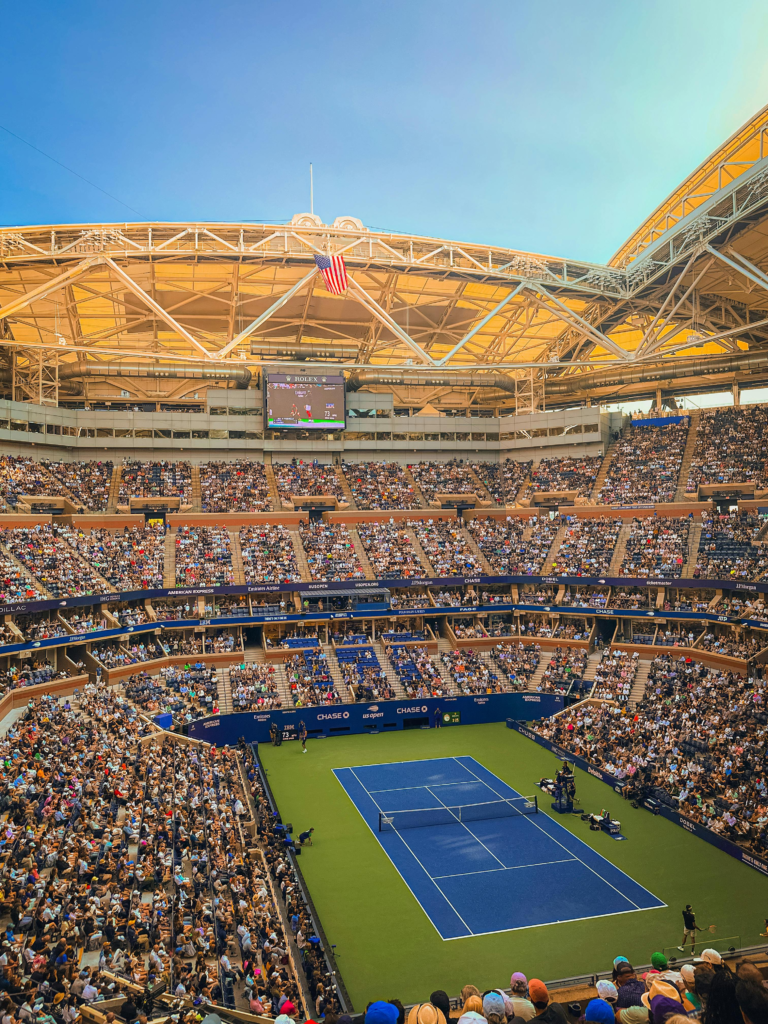
When discussing famous tennis venues, it’s impossible to overlook Arthur Ashe Stadium, the centerpiece of the US Open in New York. Opened in 1997, this stadium is the largest tennis arena on the planet, capable of seating nearly 24,000 spectators. Named after American tennis legend Arthur Ashe—the first Black man to win the US Open—the stadium symbolizes both the growth of tennis and the cultural impact the sport has had worldwide.
Arthur Ashe Stadium represents a modern era of tennis infrastructure. Unlike older venues that emphasize tradition, this stadium was designed to accommodate massive crowds, high-definition broadcasting, and the energetic atmosphere of night matches that have become a hallmark of the US Open. The sheer scale of the venue creates an electrifying environment where the crowd’s reactions echo throughout the stadium, turning each point into a dramatic spectacle.
The court itself uses hard tennis court flooring, which is common in many professional tournaments. Hard courts are typically built from layers of asphalt or concrete covered with acrylic coatings that control speed and bounce. This type of tennis court flooring offers a balanced playing experience—faster than clay but slower than grass—making it suitable for a wide range of playing styles.
In terms of structure, the stadium follows the internationally regulated tennis court dimensions used across professional events. The playing area measures 78 feet in length, with a 27-foot width for singles matches and 36 feet for doubles. Even though the measurements remain consistent, the surrounding stadium design dramatically influences how matches feel for both players and spectators.
One of the defining features of Arthur Ashe Stadium is its retractable roof, added in 2016. Before the roof was installed, rain delays frequently disrupted matches, sometimes pushing important games late into the night. The new structure allows tournaments to continue regardless of weather conditions, ensuring that fans in the stadium and watching globally never miss crucial moments.
The stadium has been the stage for countless historic matches. Serena Williams, Novak Djokovic, Roger Federer, and Rafael Nadal have all produced unforgettable performances here. Night sessions at the US Open are particularly famous because the crowd’s energy becomes almost theatrical, with fans cheering loudly and reacting passionately to every point.
Arthur Ashe Stadium also reflects tennis’s transformation into a global entertainment event. Giant video screens, advanced lighting systems, and world-class broadcasting facilities make it one of the most technologically advanced venues in the sport. At the same time, it honors its namesake by representing diversity, perseverance, and excellence in tennis.
In many ways, Arthur Ashe Stadium demonstrates how the sport has evolved. While the tennis court dimensions and fundamental rules remain unchanged, the scale, technology, and spectacle surrounding the game continue to grow. This stadium stands as proof that tennis can preserve its traditions while embracing modern innovation.
Hard Tennis Court Flooring and Modern Stadium Design
Hard courts have become the most widely used surface in tennis, particularly in professional tournaments and public facilities. Their popularity stems from a combination of durability, consistency, and versatility. Unlike grass or clay surfaces, hard tennis court flooring requires relatively little maintenance while providing predictable ball behavior. This reliability has made hard courts the standard for many major events, including the US Open and the Australian Open.
Hard courts are typically constructed using a layered system. The base consists of asphalt or reinforced concrete, which provides structural stability. On top of this base, several layers of acrylic material are applied to control the speed, bounce, and texture of the surface. These coatings can be adjusted to create slightly faster or slower playing conditions depending on the tournament’s preferences.
Even with these variations, the tennis court dimensions remain identical to those used on grass and clay courts. The court measures 78 feet long, with the familiar singles and doubles widths that ensure consistency across all competitions. Because the dimensions are standardized, players can transition between surfaces without needing to adjust their spatial awareness or positioning.
One advantage of hard tennis court flooring is the balanced style of play it encourages. The surface provides a medium-paced bounce that supports both aggressive and defensive strategies. Powerful servers can still dominate points, but baseline rallies remain an important part of the game. This balance has contributed to some of the most exciting and unpredictable matches in tennis history.
Modern stadium design has also evolved alongside hard-court technology. Today’s arenas are built with advanced engineering that enhances the viewing experience for spectators. Features such as retractable roofs, LED lighting systems, and high-definition scoreboards transform tennis matches into large-scale sporting events. Stadiums like Arthur Ashe Stadium and Rod Laver Arena showcase how architecture and technology can elevate the sport.
Player safety has also become a key consideration in court design. New cushioning systems are sometimes added beneath the acrylic layers to reduce the impact on athletes’ joints. This innovation is particularly important during long tournaments where players compete in multiple matches over several days.
Another reason hard courts are widely adopted is their durability in different climates. Grass courts require specific weather conditions and constant maintenance, while clay courts can be affected by heavy rain. Hard courts, however, can withstand frequent use and varying environmental conditions, making them ideal for both professional tournaments and recreational play.
The rise of hard-court venues reflects tennis’s modernization. While traditional surfaces like grass and clay continue to hold special significance, hard courts represent the practical future of the sport. They combine consistency, resilience, and adaptability, ensuring that tennis remains accessible to players and fans around the world.
Rod Laver Arena – Australia’s Grand Slam Stage
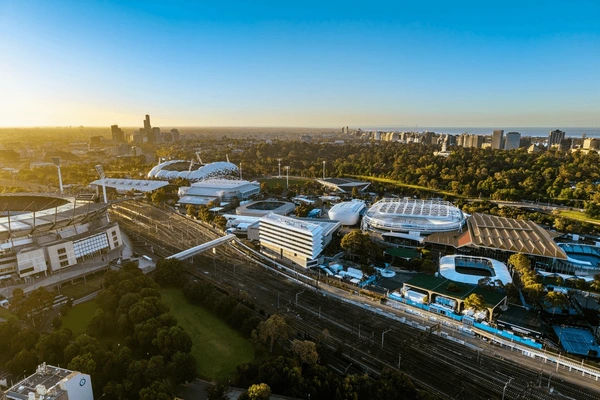
When tennis fans think about the Australian Open, one venue immediately comes to mind: Rod Laver Arena. Located in Melbourne Park, this iconic stadium is the centerpiece of the season’s first Grand Slam tournament. Named after the legendary Australian tennis player Rod Laver—one of the few athletes to achieve a calendar-year Grand Slam—the arena represents excellence, innovation, and the global growth of the sport.
Rod Laver Arena opened in 1988, initially called the National Tennis Centre before being renamed in honor of Rod Laver in 2000. The stadium quickly became one of the most technologically advanced tennis venues in the world. With a seating capacity of approximately 15,000 spectators, it offers an intimate yet energetic atmosphere that allows fans to feel close to the action. Major finals at the Australian Open often take place here, turning the arena into the focal point of the tennis world every January.
The playing surface inside Rod Laver Arena uses modern hard tennis court flooring, designed to provide a balanced playing environment. Over the years, the Australian Open has experimented with different hard-court surfaces, including Rebound Ace and Plexicushion, before switching to the GreenSet surface currently used today. These surfaces are engineered to control bounce and speed, ensuring fair conditions for players with different styles.
Even though surface technology has evolved, the tennis court dimensions remain consistent with international standards. The court measures 78 feet long and 27 feet wide for singles, expanding to 36 feet for doubles. These precise measurements ensure that players competing in Melbourne experience the same court structure as they would in London, Paris, or New York.
One of the arena’s most important features is its retractable roof, installed in the late 1980s and upgraded over time. Melbourne’s summer weather can be extremely hot, sometimes exceeding 40°C (104°F). The roof allows tournament organizers to continue matches safely while protecting both players and spectators from extreme heat or sudden rain.
Rod Laver Arena has hosted countless historic moments in tennis. Novak Djokovic has dominated the Australian Open here, winning numerous titles and cementing his reputation as one of the greatest hard-court players of all time. Serena Williams and Roger Federer have also delivered unforgettable performances within these walls, thrilling audiences with championship victories.
Another factor that makes Rod Laver Arena unique is its position within Melbourne Park, which houses multiple courts and entertainment spaces. The area transforms into a massive tennis festival during the Australian Open, attracting hundreds of thousands of visitors each year.
Rod Laver Arena perfectly represents the modern era of tennis. It blends cutting-edge technology, carefully engineered tennis court flooring, and standardized tennis court dimensions to create an environment where athletes can perform at their highest level. For players chasing their first Grand Slam of the season, this arena is both a challenge and a dream stage.
Innovation in Tennis Court Dimensions and Retractable Roofs
While the official tennis court dimensions have remained largely unchanged for more than a century, modern stadiums have introduced innovations that dramatically improve the playing and viewing experience. Among these advancements, retractable roofs and advanced stadium engineering stand out as two of the most transformative developments in professional tennis.
Retractable roofs first appeared in tennis primarily as a solution to weather disruptions. Rain delays once caused major scheduling issues at tournaments, sometimes forcing players to compete multiple matches in a single day. Today, stadiums like Rod Laver Arena, Centre Court at Wimbledon, and Arthur Ashe Stadium feature roofs that can close within minutes, allowing matches to continue regardless of weather conditions.
These structures are engineering marvels. They are designed to cover massive stadiums while maintaining proper lighting, ventilation, and acoustic balance. When closed, the roof transforms an outdoor venue into an indoor arena without altering the official tennis court dimensions or the essential characteristics of the playing surface.
Another important aspect of innovation lies in the development of advanced tennis court flooring systems. Modern hard courts often include multi-layered surfaces that improve shock absorption. These cushioning systems reduce stress on players’ knees and ankles, which is crucial during long tournaments where athletes compete at high intensity for several hours at a time.
Lighting technology has also evolved significantly. LED lighting systems now illuminate courts with remarkable clarity, ensuring that players can track the ball accurately even during late-night matches. This advancement is particularly important for tournaments like the US Open and Australian Open, where night sessions are a major attraction.
Even though the core tennis court dimensions remain fixed, stadium architects carefully design the surrounding space to enhance gameplay and audience engagement. Seating angles, sound dynamics, and proximity to the court all influence the overall atmosphere. Some venues intentionally position fans closer to the court to create an intimidating environment for visiting players.
Technology has also improved officiating. Systems like Hawk-Eye electronic line calling use high-speed cameras to determine whether a ball landed inside or outside the lines. This technology relies heavily on precise measurements of the court’s dimensions to deliver accurate decisions.
These innovations show how tennis continues to evolve while preserving its traditional framework. The court itself still follows the same measurements established decades ago, but the environment surrounding it has become more sophisticated. Modern stadiums combine engineering, technology, and design to create venues that are both functional and spectacular.
By embracing these advancements, tennis ensures that its most iconic courts remain relevant for future generations of players and fans.
Conclusion: The Courts That Defined Tennis History
Throughout the history of tennis, certain venues have transcended their role as simple playing surfaces to become legendary landmarks of the sport. From the timeless elegance of Wimbledon’s Centre Court to the massive scale of Arthur Ashe Stadium and the clay battleground of Court Philippe-Chatrier, these courts have witnessed moments that shaped tennis history.
What makes these courts so iconic is not only the matches played on them but also the unique combination of tennis court flooring, atmosphere, and architecture. Grass courts reward speed and finesse, clay courts demand endurance and strategy, and hard courts provide a balanced stage where multiple playing styles can thrive. Each surface creates a different rhythm of play, influencing how players approach every rally.
Despite these differences, one constant unites all professional courts: standardized tennis court dimensions. The 78-foot length and carefully measured service boxes ensure that the sport remains fair and consistent across every tournament. Whether a match takes place in London, Paris, Melbourne, or New York, the structure of the game remains the same.
These famous courts have hosted some of the greatest athletes in tennis history. Players like Roger Federer, Serena Williams, Rafael Nadal, Novak Djokovic, and Martina Navratilova built their legacies on these surfaces. Their triumphs and rivalries turned stadiums into symbols of sporting excellence.
Another reason these venues remain important is their ability to evolve. Modern stadium upgrades, retractable roofs, improved tennis court flooring, and advanced technology ensure that these courts continue to meet the demands of today’s game. While the traditions of tennis remain intact, innovation keeps the sport fresh and exciting.
For fans, these courts represent more than competition—they represent memories. Every championship point, dramatic comeback, or emotional celebration adds another layer to the legacy of these venues. When spectators watch matches on these iconic courts, they are witnessing the continuation of a story that began generations ago.
In the end, tennis courts are where dreams are realized and history is written. The world’s most famous courts stand as monuments to the athletes who competed on them and the unforgettable moments that defined the sport.