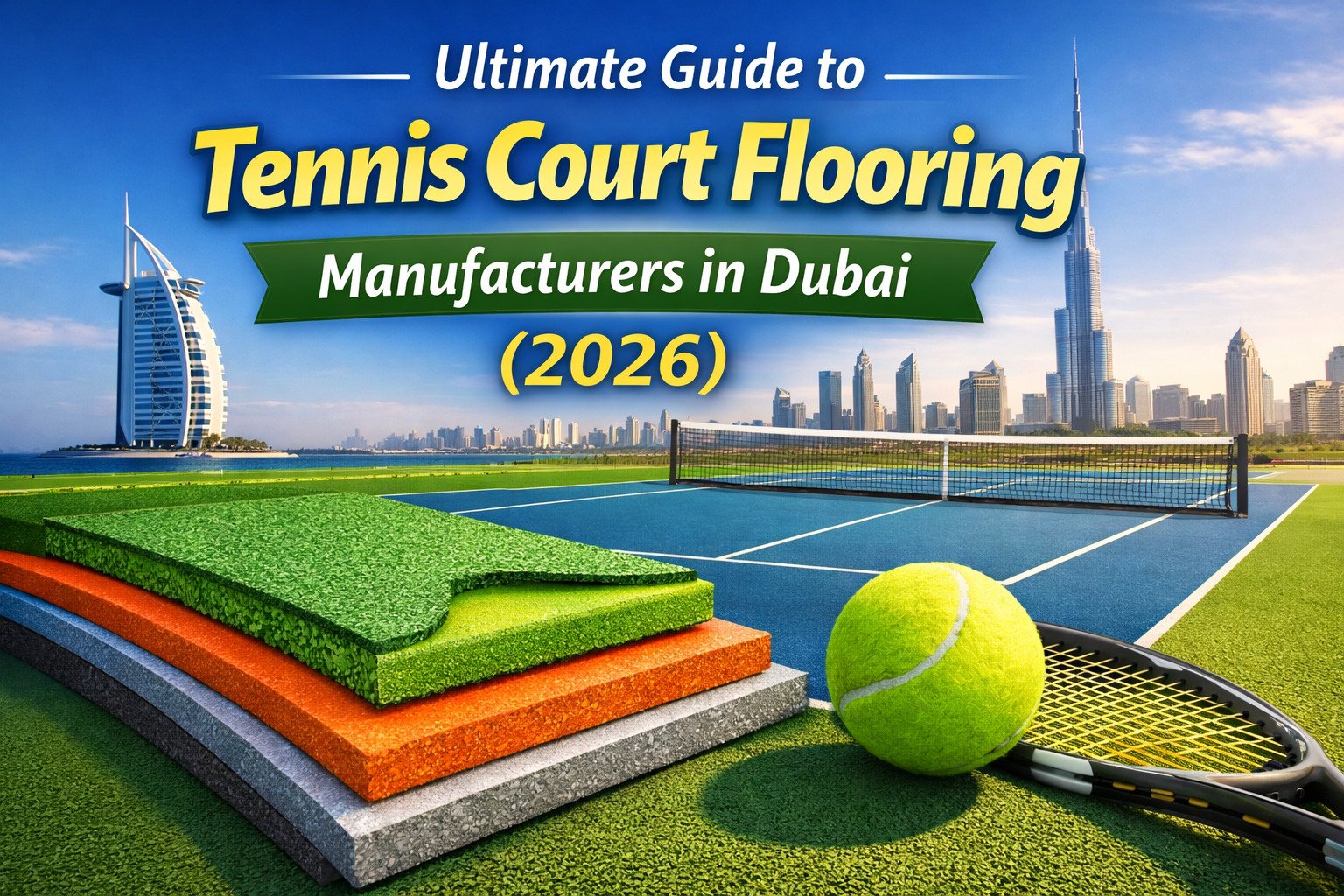
Dubai has rapidly emerged as a global hub for professional sports infrastructure, luxury residential developments, and premium recreational facilities. As a result, the demand for high-quality tennis court flooring has grown significantly across academies, clubs, schools, hotels, and private villas.
Choosing the right tennis court flooring manufacturer in Dubai is critical, as the surface must withstand extreme heat, intense UV exposure, and year-round usage while delivering consistent performance and player safety.
This comprehensive guide covers surface types, manufacturing standards, climate considerations, costs, and how to choose the right tennis court flooring supplier in Dubai.
Table of contents
- Why Flooring Matters for Tennis Courts in Dubai
- Most Common Court Surface Types
- Manufacturing Standards for Tennis Court Flooring in Dubai
- Tennis Court Construction Process
- Tennis Court Flooring Cost in Dubai
- How to Choose the Right Tennis Court Flooring Manufacturer in Dubai
- Best Tennis Court Flooring Applications
- Maintenance & Lifespan
- Advanced Surface Performance Factors for Tennis Courts in Dubai
- Heat & UV Resistance Technology in Tennis Court Flooring
- Drainage & Water Management Systems
- Sustainability & Eco-Friendly Tennis Court Flooring
- Tennis Court Flooring for High-Traffic Facilities
- Indoor vs Outdoor Tennis Court Flooring in Dubai
- Common Mistakes to Avoid When Choosing Tennis Court Flooring
- Tennis Court Flooring Trends in Dubai (2026 & Beyond)
- Final Expansion Summary
Why Flooring Matters for Tennis Courts in Dubai
A quality tennis court surface is not just an aesthetic choice — it directly impacts:
✅ Player comfort & safety (shock absorption, slip resistance)
✅ Consistent ball bounce & speed
✅ Weather resilience (UV resistance for Dubai’s climate)
✅ Maintenance & lifespan performance
Dubai’s extreme heat and occasional humidity make it essential to choose materials and install systems that resist cracking, fading, and accelerated wear.
Most Common Court Surface Types
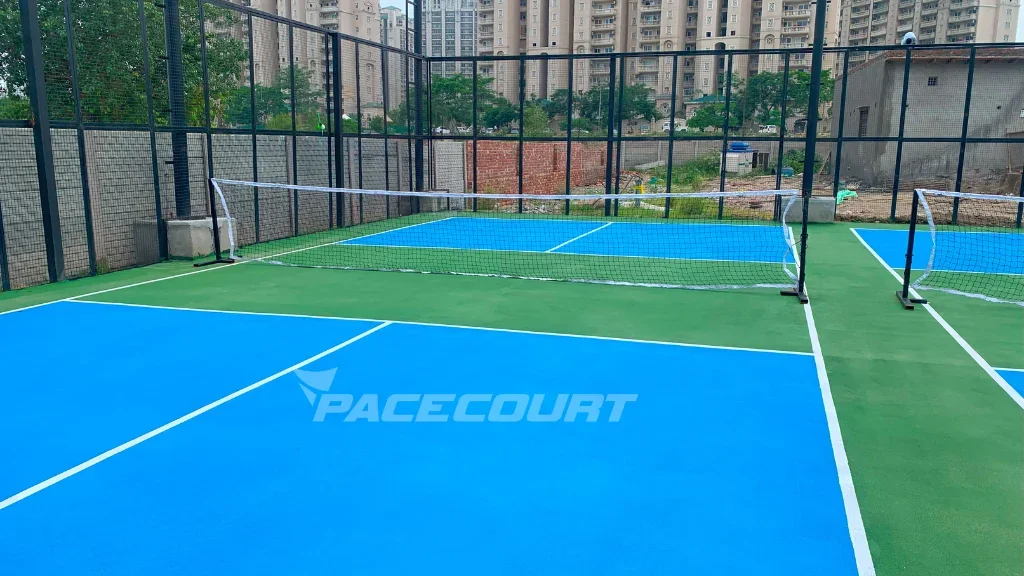
✔ Acrylic Hard Courts – Durable, provides consistent bounce, and suitable for all player levels.
✔ Cushioned Acrylic Systems – Enhanced shock absorption to reduce joint strain.
✔ PU (Polyurethane) Flooring – Great for indoor show courts or multi-purpose venues.
✔ Synthetic Turf – Ideal for lower-maintenance community or recreational courts.
Each surface type comes with benefits and trade-offs. For instance, acrylic systems provide high-performance ball response, while PU coatings excel in indoor cushioning and comfort.
Manufacturing Standards for Tennis Court Flooring in Dubai
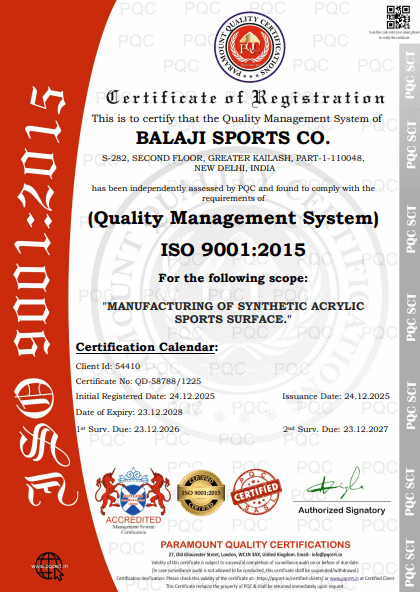
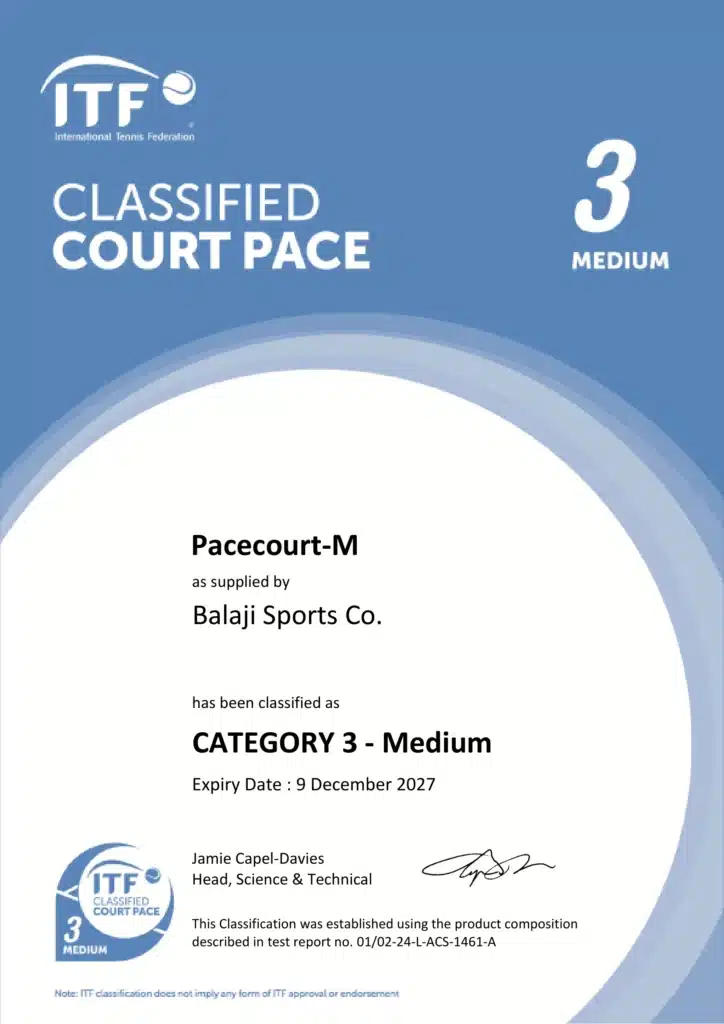
Reputable tennis court flooring manufacturers in Dubai follow international performance benchmarks, including:
- Surface friction and slip resistance standards
- Ball rebound consistency testing
- UV stability and heat resistance
- Drainage efficiency for outdoor courts
- Layer thickness and shock absorption compliance
High-quality manufacturers also provide custom surface speeds, allowing courts to be classified as slow, medium, or fast.
Tennis Court Construction Process
Professional tennis court flooring systems typically follow these stages:
- Base Preparation – Asphalt or concrete foundation with correct slope
- Leveling & Crack Isolation – Prevents surface deformation
- Elastic Cushion Layers (optional) – Improves comfort
- Acrylic or PU Coating Application
- Line Marking & Color Finishing
- Final Curing & Quality Inspection
Correct installation is as important as the flooring material itself.
Tennis Court Flooring Cost in Dubai
While costs vary depending on surface type and project size, typical pricing factors include:
- Type of flooring system (standard or cushioned)
- Number of elastic layers
- Indoor vs outdoor installation
- Site preparation requirements
- Maintenance warranty and lifespan
Approximate Cost Factors:
- Acrylic courts: Mid-range pricing
- Cushioned acrylic courts: Higher initial cost, lower injury risk
- PU courts: Premium indoor solution
- Synthetic turf: Budget-friendly option
Long-term durability should always take priority over the lowest initial cost.
How to Choose the Right Tennis Court Flooring Manufacturer in Dubai
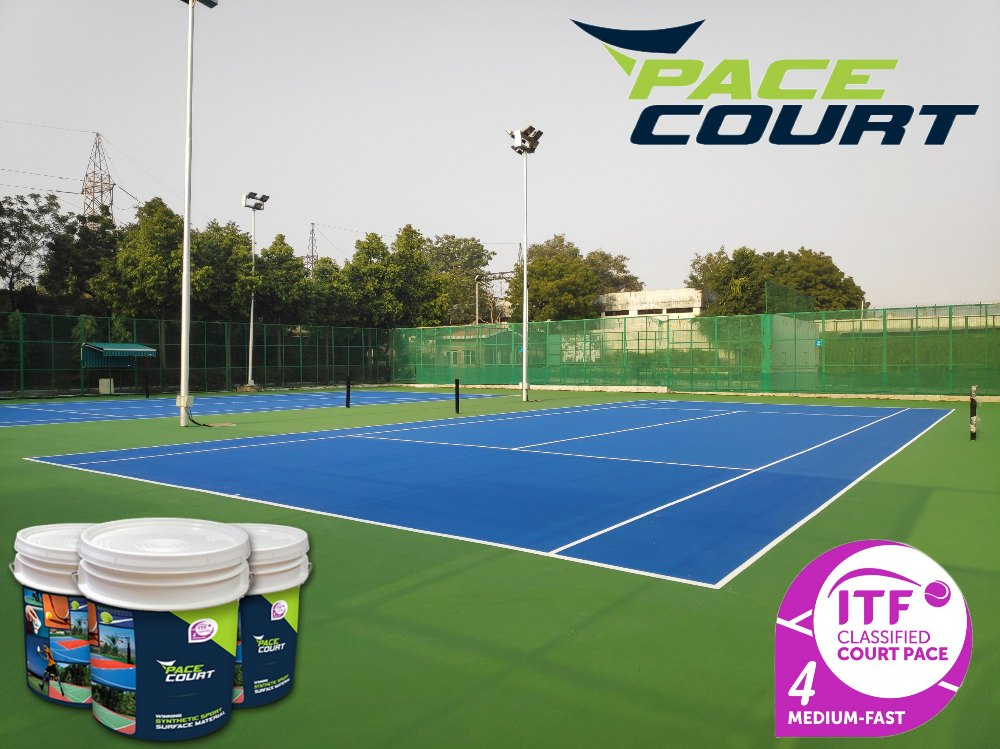
Before finalizing a supplier or manufacturer, evaluate the following:
✔ Climate Compatibility
Ensure materials are designed specifically for hot and UV-intensive regions.
✔ Installation Experience
Experienced manufacturers provide correct base preparation and surface layering.
✔ Customization Options
Court color, cushioning levels, surface speed, and line markings should be adjustable.
✔ Maintenance Support
Periodic resurfacing, recoating, and repair services extend court lifespan.
✔ Compliance & Warranty
Look for material warranties and performance guarantees.
Best Tennis Court Flooring Applications
| Facility Type | Recommended Surface |
|---|---|
| Professional Academies | Cushioned Acrylic |
| Sports Clubs | Acrylic or PU |
| Hotels & Resorts | Acrylic or Synthetic Turf |
| Schools & Colleges | Multi-purpose Acrylic |
| Residential Villas | Acrylic or Turf |
Maintenance & Lifespan
A professionally installed tennis court flooring system in Dubai can last 8–12 years with proper care.
Basic Maintenance Includes:
- Regular surface cleaning
- Crack inspection
- Recoating every 4–6 years
- Line repainting as needed
Preventive maintenance significantly reduces long-term costs.
Advanced Surface Performance Factors for Tennis Courts in Dubai
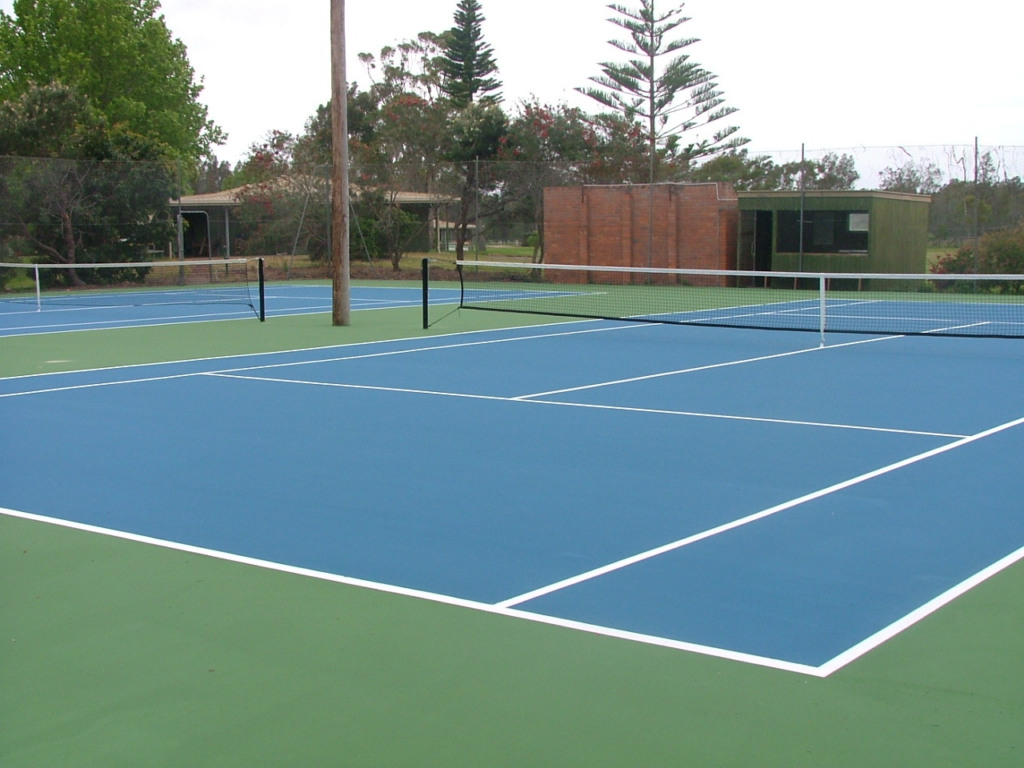
When selecting tennis court flooring in Dubai, surface performance goes beyond basic durability. Professional-grade courts are designed to balance speed, comfort, and safety, especially under extreme heat conditions.
Surface Speed Classification
Tennis court flooring systems are typically classified into three speed categories:
- Slow Courts – Higher friction, longer rallies, ideal for training and junior players
- Medium-Speed Courts – Balanced gameplay, most common choice in academies
- Fast Courts – Lower friction, quicker ball bounce, suited for competitive play
Manufacturers adjust surface speed through acrylic layer thickness, texture, and cushioning density, allowing customization based on the intended level of play.
Heat & UV Resistance Technology in Tennis Court Flooring
Dubai’s climate requires specialized engineering to prevent surface failure.
Key Heat-Resistant Features:
- UV-stable pigments to prevent fading
- Elastic binders that expand and contract with temperature changes
- Crack-isolation layers to protect the base
- Anti-glare coatings for daytime play
These technologies ensure the surface remains playable even during peak summer months.
Drainage & Water Management Systems
Although Dubai experiences low rainfall, sudden showers can impact outdoor courts.
Modern tennis court flooring systems include:
- Perimeter drainage slopes
- Porous base layers for water dispersal
- Non-slip textured topcoats
Proper drainage prevents water accumulation and reduces downtime after rain.
Sustainability & Eco-Friendly Tennis Court Flooring
Sustainability is becoming increasingly important in sports infrastructure projects across the UAE.
Environmentally Responsible Features:
- Low-VOC coatings
- Water-based acrylic systems
- Long-lasting materials that reduce resurfacing frequency
- Recyclable cushioning layers
Eco-conscious tennis court flooring contributes to green building certifications and reduces long-term environmental impact.
Tennis Court Flooring for High-Traffic Facilities
Sports academies, schools, and clubs require flooring systems that can handle continuous daily use.
Recommended Features for High Usage:
- Multi-layer cushioned systems
- Reinforced topcoats
- Abrasion-resistant textures
- Easy spot-repair capability
High-traffic courts benefit from slightly higher upfront investment but offer significantly lower maintenance costs.
Indoor vs Outdoor Tennis Court Flooring in Dubai
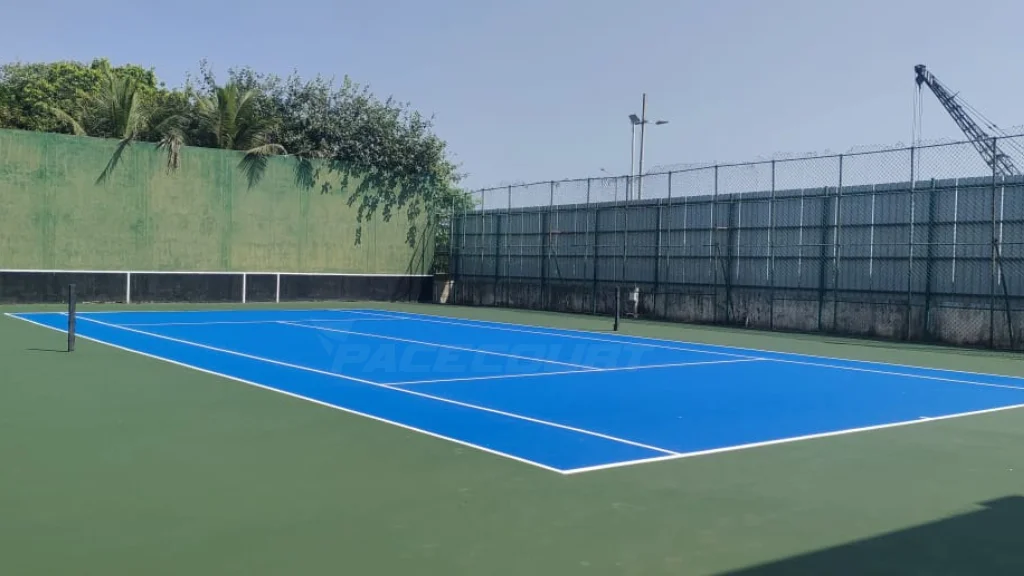
Outdoor Tennis Courts
- Require UV resistance and weather protection
- Typically use acrylic systems
- Must withstand temperature fluctuations
Indoor Tennis Courts
- Focus on comfort and shock absorption
- Often use PU or cushioned acrylic systems
- Benefit from controlled lighting and climate
Choosing the correct flooring system depends on facility type, usage frequency, and budget.
Common Mistakes to Avoid When Choosing Tennis Court Flooring
Avoiding these mistakes can save time and money:
❌ Choosing flooring based on price alone
❌ Ignoring base construction quality
❌ Skipping cushioning layers for high-use courts
❌ Using indoor materials for outdoor courts
❌ Not planning for long-term maintenance
Expert consultation during the planning stage prevents these costly errors.
Tennis Court Flooring Trends in Dubai (2026 & Beyond)
The tennis court flooring industry in Dubai continues to evolve with innovation and demand.
Emerging Trends:
- Increased demand for cushioned courts
- Color customization for branding and aesthetics
- Faster installation techniques
- Multi-sport compatible surfaces
- Smart maintenance planning with resurfacing cycles
These trends reflect the region’s focus on premium sports infrastructure.
Final Expansion Summary
Adding advanced features such as heat resistance, cushioning, sustainability, and drainage systems significantly improves tennis court performance in Dubai’s climate. By selecting the right flooring technology and planning for long-term maintenance, facilities can ensure safe, high-quality play for years.