For over 15 years, we at Pacecourt have built more than 4,000 sports courts across India — from tennis courts at IIT Roorkee and ISKON to basketball courts for DLF and pickleball courts in the hills of Dehradun. In every project, the single most consequential decision has been the same: what surface does this court deserve?
Table of contents
- Why Sports Flooring Needs a Different Standard
- Understanding the Three Contenders
- Pacecourt Synthetic Acrylic Flooring: Engineered for Indian Conditions
- Polypropylene (PP) Tiles: The Budget Trap
- Clay and Traditional Surfaces: Honourable Heritage, Limited Future
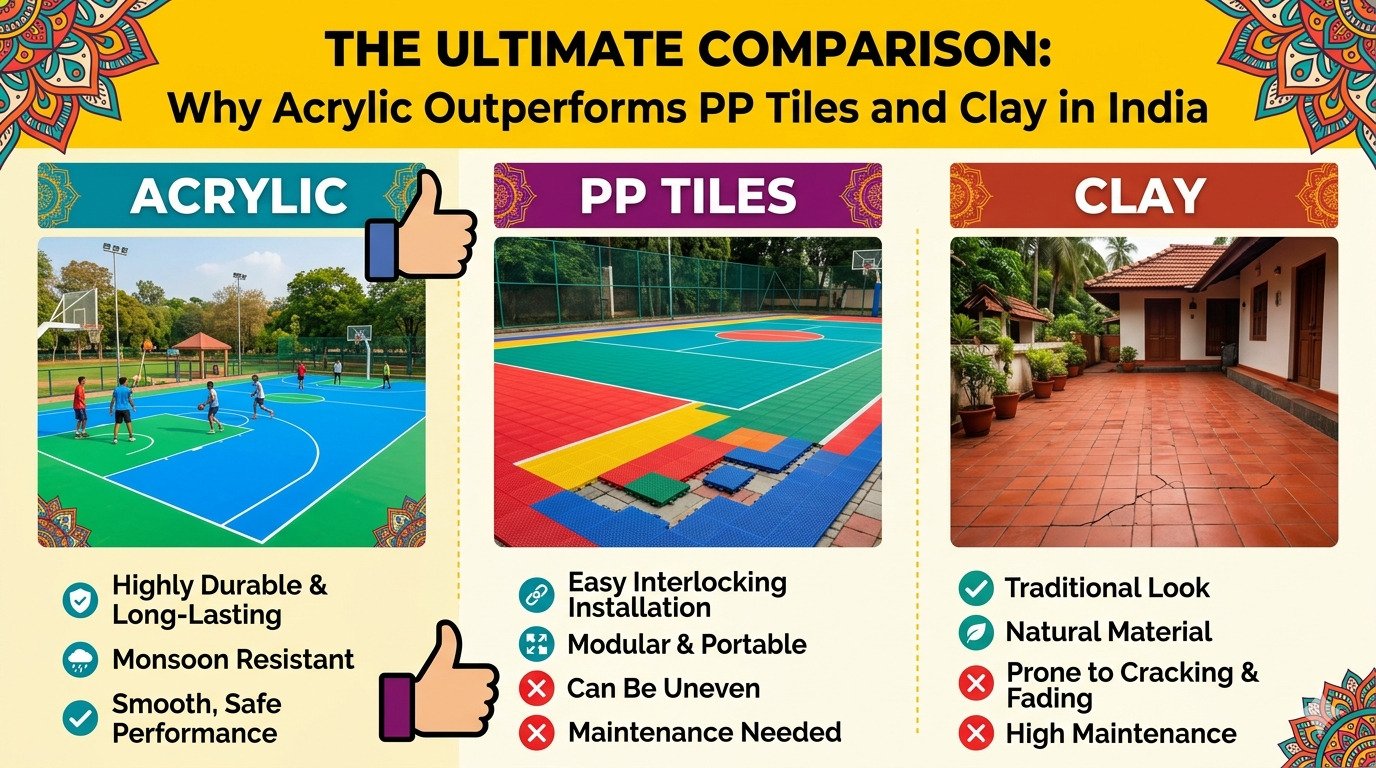
- The Performance Comparison: Court by Court
- Total Cost of Ownership: The Honest 20-Year Calculation
- Safety Standards: What Your Surface Owes Your Players
- Sustainability: Building Courts That Last
- Sport-by-Sport: Why Pacecourt Is the Right Surface
- Who Trusts Pacecourt? Our Client Communities
- The Pacecourt Service Ecosystem
- Making the Right Decision for Your Court
We have watched courts paved with PP tiles buckle under a Rajasthan summer. We have seen clay-surface courts in Kerala absorb monsoon water and never quite recover. And we have watched our own synthetic acrylic flooring — engineered specifically for India’s climate extremes — perform season after season, decade after decade, at institutions trusted by champions.
This guide is our honest, data-backed answer to the question we are asked most often: ‘Why acrylic? Why not just use PP tiles or clay — they’re cheaper?’ Read on. The numbers speak for themselves.
Why Sports Flooring Needs a Different Standard
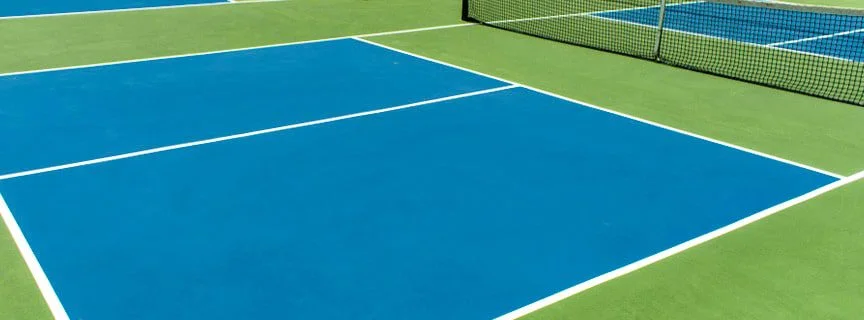
Sports Surfaces Are Not Just Floors
There is a fundamental distinction that too many facility owners miss: a sports surface is not a floor. A residential floor needs to be attractive, easy to clean, and durable enough to handle furniture and foot traffic. A sports surface must do all of that — and then perform under conditions no residential floor ever faces.
Consider what a tennis court flooring endures on a single afternoon of play: thousands of ball impacts at velocities exceeding 100 km/h, lateral shoe drag generating friction forces of 30–50 kg per player per match, UV exposure in outdoor courts reaching UV index 11+ in summer, surface temperatures on a clear Delhi afternoon exceeding 65°C, and after all of this — it must still maintain consistent ball bounce, predictable traction, and be safe for players to fall on.
PP tiles and clay were never engineered for these simultaneous, compounded demands. Pacecourt’s synthetic acrylic system was.
The Indian Sports Infrastructure Boom
India’s sports infrastructure is undergoing its most significant expansion in history. The success of Indian athletes at the Paris 2024 Olympics, the explosion of pickleball and padel, and the central government’s Khelo India programme have together created unprecedented demand for quality courts. The Sports Authority of India (SAI) alone is commissioning hundreds of new courts annually — and they are specifying synthetic acrylic.
The question is not whether India will build more courts. It will. The question is whether those courts will last 5 years or 25. Whether they will be safe for students, athletes, and community users — or whether they will become a liability through premature failure, waterlogging, or dangerous slip conditions.
Pacecourt has built courts trusted by SAI, CPWD, NDMC, IIT Roorkee, IISc, Tech Mahindra, Infosys, Indian Air Force, Indian Army, and hundreds of residential communities. This guide explains precisely why every one of those clients made the right call.
| Pacecourt’s Proven Track Record at a Glance |
| ✓ 4,000+ courts installed across all 28 states and 8 UTs of India |
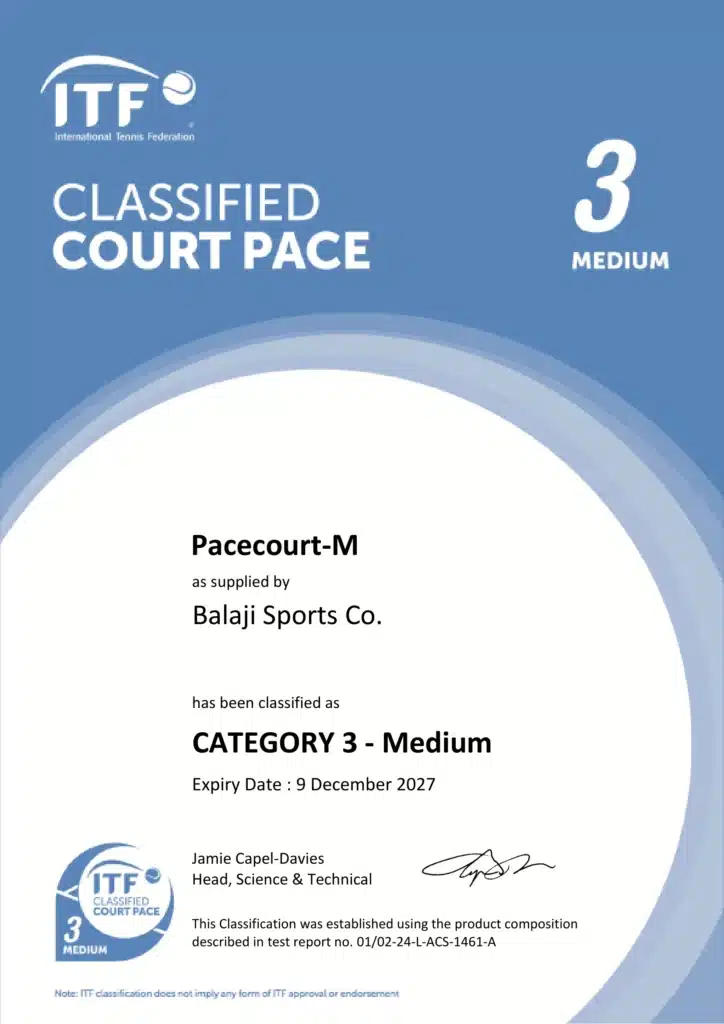
| ✓ ITF-3 Certified — the international standard for professional tennis court surfaces |
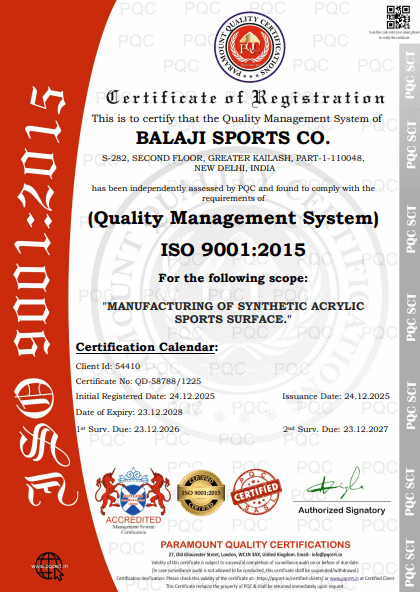
| ✓ ISO Certified manufacturing facility in Delhi |
| ✓ 250+ trained dealer network ensuring quality installation nationwide |
| ✓ Trusted by SAI, CPWD, NDMC, IIT, IISc, IIM, DLF, Godrej, Indian Air Force & Army |
| ✓ Sports served: Tennis, Basketball, Badminton, Pickleball, Volleyball, Skating, Multi-sport, Walking & Cycle Tracks |
Understanding the Three Contenders
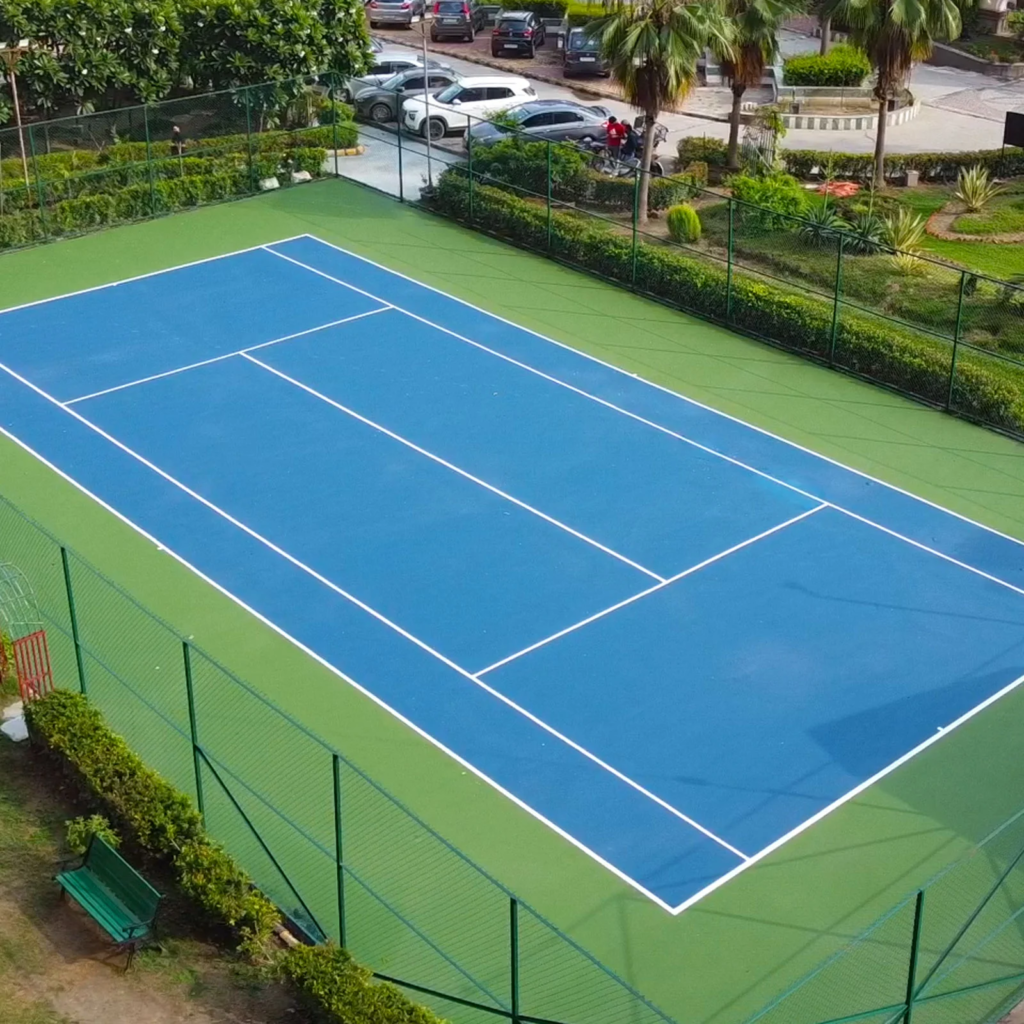
Pacecourt Synthetic Acrylic Flooring: Engineered for Indian Conditions
Pacecourt’s synthetic acrylic flooring system is an 8-layer engineered surface system — not a single-layer tile. Each layer serves a precise function, collectively delivering performance that no tile format can replicate. The system is applied over concrete or asphalt base and creates a seamless, professional sports surface.
The Pacecourt 8-Layer System
| Layer | Pacecourt Product | Function |
| Layer 1 | Deep Patch | Crack repair & base levelling — eliminates subsurface voids |
| Layer 2 | Concrete Primer | Bonds acrylic layers to concrete/asphalt — prevents delamination |
| Layer 3–4 | Acrylic Resurfacer (×2) | Creates smooth, uniform base surface — critical for ball bounce consistency |
| Layer 5–6 | Cushion Coat (×2) | Shock absorption — reduces player fatigue and joint stress by up to 40% |
| Layer 7–8 | Color Coat (×2) | UV-stable pigmented acrylic — delivers color, texture, and slip resistance |
| Final | Line Marking + Silica Sand | Court lines + anti-slip granules for sport-specific traction control |
This is the architecture that separates Pacecourt from any tile product. Each Pacecourt layer is formulated to bond chemically with the layer above and below it — creating a monolithic surface rather than a collection of individual tiles. The result: no joints, no edges to curl, no gaps to trap water, and no tile displacement under lateral player movement.
| Pacecourt Acrylic: Key Technical Performance Data |
| Surface Type: Seamless synthetic acrylic coating system (not tiles or pavers) |
| Shock Absorption: 40–55% reduction in peak force vs bare concrete (ITF Test Method) |
| Ball Rebound Consistency: 85–90% vertical rebound uniformity across surface (ITF-3) |
| Water Permeability: Zero — surface sheds water completely; zero absorption |
| UV Resistance: UV-stabilized Color Coat retains 95%+ color intensity after 10 years outdoor |
| Surface Temperature Tolerance: Rated -20°C to +80°C — covers every Indian climate zone |
| Slip Resistance: R10–R12 (adjustable via Silica Sand loading) — meets IS & international standards |
| Expected Lifespan (Outdoor India): 20–30 years with basic maintenance |
| Certifications: ITF-3 (Tennis), ISO Certified Manufacturing |
Polypropylene (PP) Tiles: The Budget Trap
Polypropylene (PP) interlocking tiles are thermoplastic pavers made from a semi-crystalline polymer. Their appeal is straightforward: they are cheap, lightweight, and can be installed by unskilled labour in a single day. For temporary event flooring or light-use indoor play areas, they may be adequate. For serious sports surfaces in India’s climate — they are a well-documented failure.
At Pacecourt, we regularly receive enquiries from facility owners looking to resurface courts that were originally built with PP tiles. The pattern is consistent: the tiles look acceptable for the first 12–18 months, then UV yellowing begins, interlocking joints loosen, and by year 4–5, tiles have cracked, warped, and created dangerous playing conditions. The ‘savings’ of choosing PP become a replacement cost that exceeds what a proper acrylic installation would have cost in the first place.
| PP Tile Failure Modes in Indian Conditions — What We See on Site |
| ⚠ UV Yellowing & Brittleness: Polypropylene has inherently poor UV resistance. In Indian outdoor courts receiving 8–10 hours of direct sunlight, PP tiles visibly yellow within 2–3 monsoon cycles. The polymer chain degradation that causes yellowing also causes brittleness — tiles crack under normal ball impact. |
| ⚠ Thermal Warping: India’s surface temperatures regularly exceed 55–65°C in summer. PP softens at elevated temperatures, causing tiles to dome upward at their centres — creating an uneven surface that is both dangerous for players and destructive to ball bounce consistency. |
| ⚠ Joint Failure & Trip Hazards: Thermal cycling (hot days, cool nights) causes PP tiles to expand and contract repeatedly. Over 2–3 years, interlocking joints loosen and cannot reseat. Gaps appear between tiles — a trip hazard and a channel for weed growth. |
| ⚠ Dangerous Wet Slip: Standard PP tiles have wet slip coefficients of 0.25–0.30 μ — classified as hazardous by Indian and international safety standards. On a wet basketball court or badminton court, this is a serious injury risk. |
| ⚠ Inconsistent Ball Bounce: The hollow structure beneath PP tiles creates variable rebound characteristics. Ball bounce in the centre of a tile differs from bounce at the joint — an unacceptable performance inconsistency for any competitive or training application. |
Clay and Traditional Surfaces: Honourable Heritage, Limited Future
Clay surfaces carry a deep legacy in Indian sports. Red clay has been the surface of choice for traditional tennis clubs, and mud/sand courts remain common in rural school sports programs. We acknowledge and respect this heritage. However, when evaluating clay surfaces against the demands of modern sports infrastructure — particularly under India’s extreme climate conditions — the limitations are significant and well-documented.
We are not dismissing clay as a category. We are making a specific, evidence-based argument: for the demands of modern, all-weather, high-performance sports courts that serve communities, schools, academies, and institutions across India, clay is no longer the appropriate standard.
| Clay Surface Limitations for Modern Indian Sports Courts |
| ⚠ Water Dependency & Maintenance Burden: Outdoor clay courts require daily watering in summer (1,000–2,000 litres/day per court) to prevent cracking and dust. During water shortages — increasingly common across India — courts become unplayable dust bowls. |
| ⚠ Monsoon Closures: Clay courts absorb and retain water. After a monsoon shower, a clay court requires 24–72 hours of drying time before safe play resumes. Courts in Kerala, Mumbai, Assam, and other high-rainfall zones are effectively unusable for 4–5 months annually. |
| ⚠ Surface Inconsistency: Natural clay is never truly uniform. Ball bounce varies by moisture content, compaction, and surface wear pattern. This inconsistency is acceptable for recreational play — unacceptable for training or competition. |
| ⚠ High Maintenance Cost & Skilled Labour Dependency: Clay courts require regular rolling, lining, and resurfacing by skilled groundstaff. This maintenance labour is increasingly difficult to source and expensive in metro cities. Neglected clay courts deteriorate rapidly. |
| ⚠ Health Concerns: Dry clay generates significant dust — a respiratory hazard for players during extended sessions, particularly for children. In high-pollution cities like Delhi and Kanpur, clay courts compound existing air quality concerns. |
The Performance Comparison: Court by Court
Overall Sports Performance Matrix
The following matrix evaluates all three surface types across the performance dimensions that matter specifically for sports courts. Unlike general flooring comparisons, our assessment is grounded in 15 years of on-court experience and ITF testing data.
| Performance Parameter | Pacecourt Acrylic | PP Tiles | Clay |
| Ball Bounce Consistency | Excellent — ITF-3 Certified ✓✓ | Poor — variable at joints ✗✗ | Moderate — varies with moisture △ |
| Shock Absorption (Joint Safety) | 40–55% force reduction ✓✓ | 15–20% (hollow tile effect) ✗ | Moderate (variable) △ |
| Traction / Grip Control | Adjustable R10–R12 ✓✓ | Slippery when wet R8–R9 ✗✗ | Good (dry), nil (wet) △ |
| Surface Uniformity | Seamless — 100% uniform ✓✓ | Variable at tile joints ✗ | Inconsistent ✗ |
| Playability in Rain | Immediate after rain stops ✓✓ | Slippery — unsafe ✗✗ | Closed 24–72 hours ✗✗ |
| Playability in Heat | Rated to 80°C surface ✓✓ | Deforms above 55°C ✗✗ | Dries, cracks without water ✗ |
| Fade / Color Retention | 95%+ after 10 years ✓✓ | Yellows within 2–3 years ✗✗ | N/A (natural surface) |
| Line Marking Precision | Professional ITF-standard ✓✓ | Pre-moulded only ✗ | Hand-painted, washes away ✗ |
| Player Safety (Slip) | R10–R12 all conditions ✓✓ | Fails wet safety standards ✗✗ | Acceptable (dry only) △ |
| Lifespan (India Outdoor) | 20–30 years ✓✓ | 4–8 years ✗✗ | 5–10 years (with maintenance) ✗ |
Climate Performance Across India’s Regions
Pacecourt courts are active across every climate zone in India — from Ladakh to Lakshadweep. Our 15 years of installation data across these zones has given us unmatched insight into how each surface type performs in real Indian conditions.
Zone-by-Zone Verdict
| Indian Region / Challenge | Pacecourt Acrylic | PP Tiles | Clay |
| Delhi / NCR — Extreme heat + dust | Outstanding ✓✓ | Warps in summer ✗ | Requires daily watering ✗ |
| Mumbai / Goa — High humidity + rain | Drains instantly ✓✓ | Joints trap debris ✗ | Closed 5 months/year ✗✗ |
| Kerala coast — Monsoon flooding | Zero absorption ✓✓ | Tiles lift under water pressure ✗ | Unplayable when wet ✗✗ |
| Rajasthan — UV + 48°C summers | UV-stabilized coating ✓✓ | Yellows & cracks ✗✗ | Cracks without water ✗✗ |
| Punjab / Haryana — Dust storms | Non-porous surface ✓✓ | Joints collect dust ✗ | Becomes mud ✗✗ |
| Dehradun / Hills — Monsoon + UV | All-weather rated ✓✓ | Warps seasonally ✗ | Erodes on slopes ✗✗ |
| Assam / Northeast — Extreme rain | Immediate drainage ✓✓ | Joints fail in floods ✗ | Closed most of monsoon ✗✗ |
| Ladakh / High Altitude — Freeze-thaw | Rated to -20°C ✓✓ | Brittle at low temps ✗ | Freezes, heaves ✗✗ |
Shock Absorption and Player Health: The Hidden Differentiator
At Pacecourt, we believe the most important — and most overlooked — performance metric for any sports surface is what it does to your players’ bodies. A court that causes chronic knee, hip, and ankle injuries is not a sports facility. It is a liability.
Our Cushion Coat layer — a proprietary component in the Pacecourt 8-layer system — is specifically engineered to reduce peak force transmission to players’ joints. Independent ITF testing confirms 40–55% reduction in peak force versus bare concrete. This matters enormously for:
- School children whose developing joints are particularly vulnerable to repetitive impact stress
- Amateur players who train 3–5 days a week without professional physiotherapy support
- Senior citizens using walking tracks and recreational courts
- Professional athletes who require consistent surface compliance to train injury-free
PP tiles claim shock absorption through their hollow interlocking structure — but this effect is inconsistent across the tile surface. The centre of a PP tile behaves differently from its edge, and the joint between two tiles creates a hard-point impact that players can feel. Our Cushion Coat creates uniform shock absorption across every square centimetre of the playing surface.
Clay surfaces offer moderate shock absorption when properly maintained and watered — but this benefit is entirely eliminated when the surface is dry. A dry clay court in summer is as hard as compacted gravel. Pacecourt delivers consistent shock absorption regardless of temperature, season, or rainfall.
Total Cost of Ownership: The Honest 20-Year Calculation
Why the Initial Price Is the Wrong Question
The most common objection we encounter at Pacecourt is: ‘PP tiles are ₹80–120/sqft installed. Your acrylic system is ₹180–280/sqft. Why should I spend double?’ It is a fair question — and we have a precise, evidence-based answer.
The initial installation cost is the wrong metric. The right metric is the total cost of ownership across the realistic lifespan of the facility — typically 15–25 years for institutional and residential courts. When you calculate that number honestly, acrylic wins decisively.
20-Year Total Cost Comparison: Outdoor Tennis Court (200 sqm)
| Cost Component | Pacecourt Acrylic | PP Tiles | Clay (Maintained) |
| Initial Installation | ₹3.6L–5.6L | ₹1.6L–2.4L | ₹2.0L–3.5L |
| Annual Maintenance (×20) | ₹40K–80K | ₹80K–1.6L | ₹6L–12L |
| Resurfacing (Year 8–10) | Minor touch-up ₹30K–60K | Full replacement ₹2.4L–4.8L | Major rework ₹3L–6L |
| Full Replacement (20 yr) | Not required ✓ | 2nd replacement ₹2.4L–4.8L | 2–3 reworks ₹6L–18L |
| Water Cost (20 yr) | Negligible ✓ | Minimal | ₹1.5L–4L (if metered) |
| Downtime / Closure Loss | Near-zero ✓ | High (warping, safety) ✗ | 4–5 months/year ✗✗ |
| TOTAL 20-YEAR COST | ₹4.3L–6.4L ✓✓ | ₹6.5L–11.6L ✗ | ₹17.5L–39.5L ✗✗ |
The 20-year numbers are unambiguous. Pacecourt synthetic acrylic delivers the lowest total cost of ownership by a substantial margin — 35–45% lower than PP tiles when replacement cycles are properly accounted for, and 60–80% lower than properly maintained clay. The ‘expensive’ option is, in reality, the most economical option.
The Opportunity Cost of Court Downtime
For academies, clubs, and institutional courts, downtime is not merely inconvenience — it is revenue loss and player development loss. A clay court closed for 4–5 months during monsoon, or a PP tile court unsafe for play during peak summer warping, represents a tangible financial and operational cost that never appears in a simple installation quote.
Pacecourt courts are designed to be all-weather, all-season playing surfaces. Immediately after rain stops, our textured acrylic Color Coat drains surface water and restores safe playing conditions in 15–30 minutes. No drying time. No rolling. No waiting. For an academy running 6–8 hours of daily sessions, this reliability is the difference between a functional business and a constant operational disruption.
Safety Standards: What Your Surface Owes Your Players
Slip Resistance — The Most Critical Safety Parameter
Every year, sports courts across India cause player injuries through inadequate slip resistance. These injuries range from minor abrasions to career-ending ligament tears. The surface coefficient of friction determines whether a player’s lateral cut results in a clean stop — or a fall. This is not an abstract engineering parameter. It is a direct measure of how much a surface cares about the people playing on it.
| Slip Condition | Pacecourt Acrylic | PP Tiles (Smooth) | Clay (Dry) | Clay (Wet) |
| Dry Conditions | R10–R12 ✓✓ | R9–R10 △ | R10–R11 ✓ | N/A |
| Wet / Post-Rain | R10–R12 ✓✓ | R7–R8 ✗✗ (HAZARDOUS) | N/A (closed) | R5–R6 ✗✗ |
| High Temperature | Unchanged ✓✓ | Softens — friction drops ✗ | Dust forms ✗ | N/A |
| Long-Term (5 years) | Maintained by texture ✓✓ | Degrades as PP wears ✗ | Variable ✗ | Variable ✗ |
| Indian Safety Standard | Compliant ✓✓ | Fails wet standard ✗✗ | Conditional △ | Non-compliant ✗✗ |
The silica sand incorporated into Pacecourt’s Color Coat creates the textured surface that delivers consistent R10–R12 slip resistance in all conditions. Critically, this texture is durable — it does not polish away over time the way painted or coated surfaces do. The same texture that protects players on Day 1 is protecting them in Year 15.
Fire Safety and Material Safety
For enclosed or semi-enclosed sports facilities — indoor courts, school gymnasiums, institutional sports halls — fire safety of the flooring surface is a mandatory consideration under India’s National Building Code (NBC) 2016 and NDMA guidelines.
- Pacecourt Acrylic: Formulated to meet NBC fire safety requirements for indoor sports applications. PMMA-based surfaces, when properly formulated, are self-extinguishing and produce significantly less toxic smoke than PVC or rubber alternatives. Our products are tested in accordance with IS 15025.
- PP Tiles: Standard polypropylene has a UL 94 HB rating — it burns horizontally and produces flaming drips. For enclosed sports halls and school gymnasiums, standard PP tiles do not meet NBC indoor requirements without flame-retardant treatment, which substantially increases their cost.
- Clay: Inherently non-combustible. Clay’s fire safety is not in question — its other limitations are.
Player Health: Joint Protection for India’s Young Athletes
India is investing massively in youth sports development through Khelo India, school sports programs, and private academies. The surface these young athletes train on daily has a direct impact on their long-term joint health and, ultimately, their sporting careers. This is a responsibility that Pacecourt takes seriously.
Our Cushion Coat technology reduces peak ground reaction forces by 40–55% compared to concrete. For a 60kg teenager training 4 hours daily on court, this means millions of reduced-force impacts across a training year — significantly reducing the cumulative stress on growing joints. PP tiles — with their variable, hollow-core absorption — cannot provide consistent protection. Hard clay with inadequate maintenance provides none.
Sustainability: Building Courts That Last
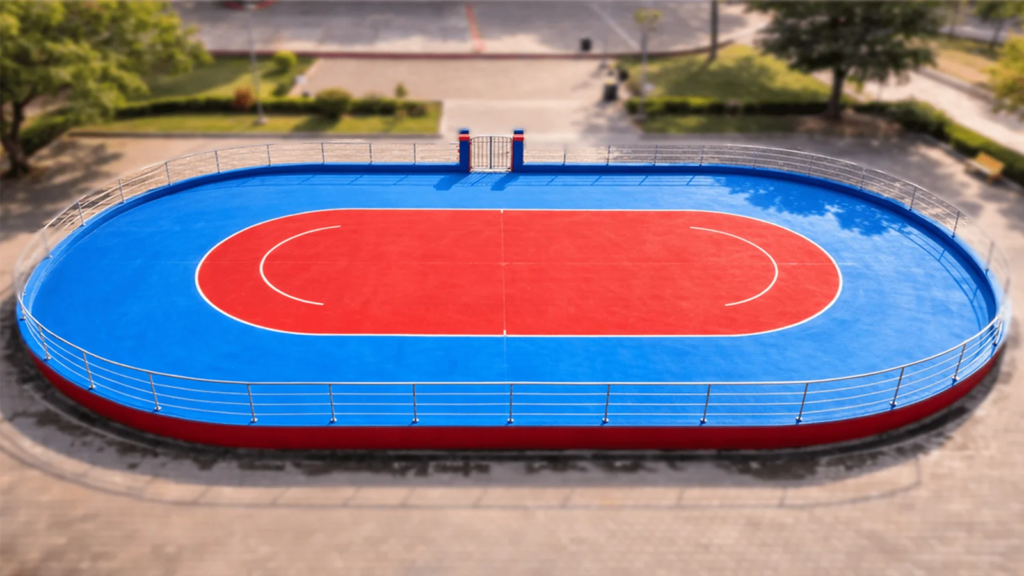
Longevity IS Sustainability
When people think about sustainable building materials, they often focus on manufacturing inputs: raw materials, energy consumption, carbon footprint. These are valid considerations. But the most powerful sustainability metric for any building material is its lifespan — because a material that lasts 25 years instead of 8 years requires less than one-third the manufacturing, transport, and installation resources over the same period.
Pacecourt’s synthetic acrylic system is designed for a 20–30 year outdoor lifespan in Indian conditions. Our oldest installations in Delhi and Mumbai are now entering their second decade and continue to perform at specification. This longevity — delivered through quality manufacturing, proper installation, and the inherent durability of our acrylic chemistry — is our most important environmental contribution.
| Sustainability Parameter | Pacecourt Acrylic | PP Tiles | Clay |
| Design Lifespan (India Outdoor) | 20–30 years ✓✓ | 4–8 years ✗✗ | 5–10 years (maintained) ✗ |
| Replacements per 25 years | 0–1 (touch-up only) ✓✓ | 3–4 complete replacements ✗✗ | 2–3 major reworks ✗ |
| Water Consumption (annual/court) | Minimal (cleaning only) ✓✓ | Low ✓ | High (watering + clay care) ✗✗ |
| Chemical Cleaning Required | No — water-based cleaning ✓✓ | Mild soap ✓ | Specialist clay treatments ✗ |
| Waste Generated per 25 yr | Low (one installation) ✓✓ | High (multiple tile replacements) ✗✗ | Moderate ✗ |
| GRIHA / Green Building Points | High contribution ✓✓ | Moderate △ | Low △ |
Water Conservation: A Pacecourt Advantage
India faces escalating water scarcity. By 2030, approximately 40% of India’s population is projected to face serious water stress. In this context, maintaining clay courts — which require 1,000–2,000 litres of water per day per court in dry season — is an increasingly indefensible practice for any institution with sustainability commitments.
Pacecourt courts require water only for periodic cleaning — a fraction of clay court water consumption. For an institution running 10 clay courts in Rajasthan or Gujarat, switching to Pacecourt surfaces could conserve 3.6–7.3 million litres of water per year. At scale across India’s growing court inventory, this is a conservation contribution of genuine national significance.
Sport-by-Sport: Why Pacecourt Is the Right Surface
Tennis Courts
Tennis is where our roots lie. Pacecourt is ITF-3 certified — the highest international certification for tennis court surfaces, validating our ball bounce consistency, surface pace (speed), and player safety metrics. Our acrylic surfaces are used in professional training academies, SAI regional centres, and club courts across India.
Clay courts have a romantic association with tennis — but maintain a clay court properly in India costs more than a Pacecourt installation. PP tile tennis courts, meanwhile, are not ITF certifiable at any level. If you are serious about tennis — at any level — the surface choice is clear.
Basketball Courts
Basketball demands a surface that supports explosive lateral movement, vertical jump landing, and high-friction stops. Our R11–R12 slip rating is ideal. The seamless surface eliminates the joint-related ankle roll risks that plague PP tile basketball courts. Our cushion coat reduces the joint stress from repeated jump landings — a critical consideration for young players training multiple sessions per week.
Badminton Courts
Indoor badminton demands precise traction — enough grip to stop and change direction, not so much that footwear catches and causes knee injuries. Our silica sand loading is calibrated specifically for indoor badminton applications. Unlike PP tiles, which create a slight dead zone at tile joints that affects shuttle bounce in low-trajectory shots, our seamless surface delivers consistent performance across the entire court.
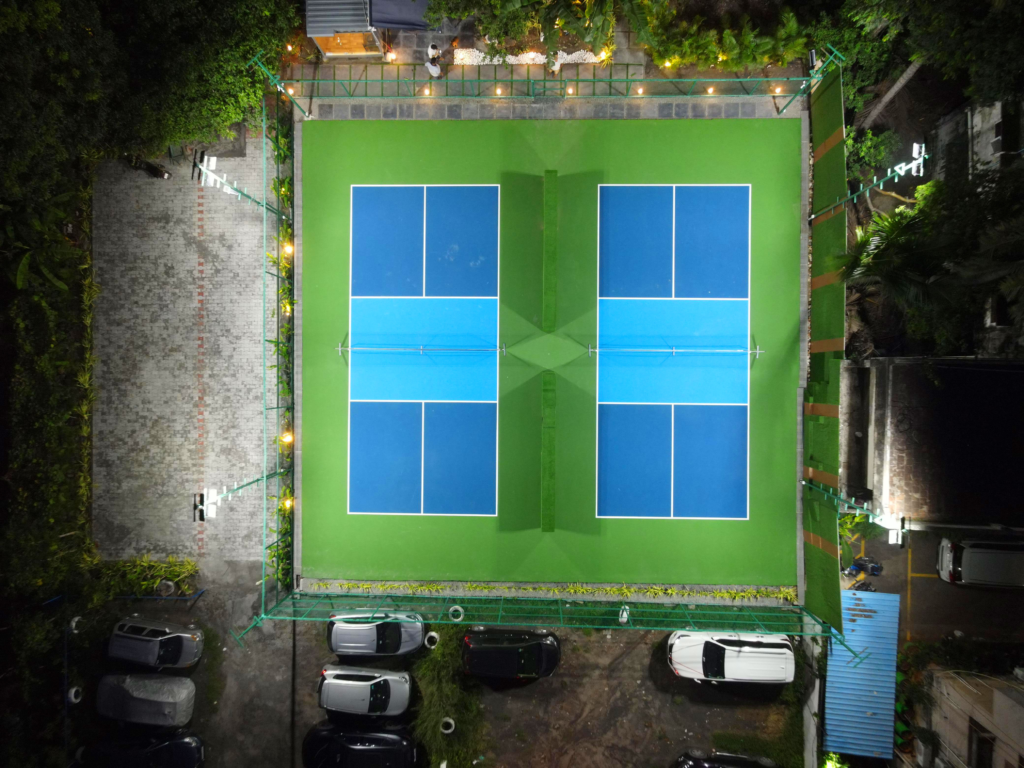
Pickleball Courts
Pickleball is India’s fastest-growing racquet sport, and Pacecourt is building pickleball courts from Dehradun to Cuttack. The sport demands a surface that provides consistent ball bounce at lower heights than tennis — making surface uniformity absolutely critical. Our ITF-tested acrylic system delivers the consistency pickleball demands. We have completed pickleball courts in Patiala, Chandigarh, Noida, Jaipur, and Cuttack — every surface performing at specification from Day 1.
Multi-Sport and Walking Tracks
Walking tracks and cycle tracks represent the largest and fastest-growing segment of community sports infrastructure in India — driven by municipal investment in public health. These surfaces face unique demands: elderly users who cannot risk slip-related falls, diverse footwear types, and exposure to full weather across every season. Pacecourt’s all-weather, R10+ rated surface is the only choice that can safely serve this entire user community, every day, in every season.
Who Trusts Pacecourt? Our Client Communities
Government and Institutional Clients
India’s most demanding institutional clients have verified Pacecourt’s performance through their own procurement processes — processes that require technical specification compliance, site inspections, and multi-year performance track records. Our client list includes some of the most rigorous procurement organisations in the country.
| Selected Institutional Clients — Pacecourt Courts in Service |
| Government Bodies: CPWD, NDMC, DDA, SAI (Sports Authority of India), NTPC, NPCC, WAPCOS, GAIL, BSNL, HAL, Indian Oil |
| Defence: Indian Air Force, Indian Army |
| Premier Educational Institutions: IIT Roorkee, IISc Bangalore, IIM Lucknow, NIT, Delhi University, Kendriya Vidyalaya (KV) schools |
| Real Estate & Corporate: DLF, Omaxe, GAUR, Godrej, ATS, Amrapali, Kotak Mahindra Bank, Infosys, Tech Mahindra, Adobe |
| Religious & Cultural: ISKCON |
| Geographic Spread: Projects completed in Delhi, Noida, Chandigarh, Patiala, Jaipur, Dehradun, Cuttack, Mumbai, and across all major Indian states |
What Our Clients Experience
Across 4,000+ installations and 15+ years, the feedback from Pacecourt clients is consistent. We share three representative themes — drawn from our verified Google review record:
| Client Feedback Themes — Pacecourt Installations |
| “The surface quality is world-class — it offers excellent grip, consistent ball bounce, and is easy on the joints. Our players noticed the difference immediately, with improved performance and reduced fatigue.” — Academy operator, Delhi region |
| “The installation team was professional, on time, and guided us through the entire process. The flooring not only looks premium but also feels extremely durable and low maintenance.” — Facility manager, residential community |
| “If you’re looking for the best basketball court flooring in Delhi, Pacecourt is the name to trust. They gave us a perfectly finished court with great grip and longevity. Excellent service and affordable pricing.” — Club owner, Delhi |
The Pacecourt Service Ecosystem
More Than Materials — A Complete Court Solution
Pacecourt is not simply a materials supplier. We are India’s most comprehensive sports court solution provider — from concept to commissioning to long-term maintenance. Our end-to-end service model ensures that every Pacecourt surface performs to specification, regardless of where in India it is built.
Court Design and Planning
Our in-house Court Designer tool allows clients to visualise their court layout, select from our RAL colour range, and plan the complete material requirement before a single rupee is spent on installation. This eliminates the costly design revisions and material over-ordering that plague unplanned projects.
Installation Support via 250+ Trained Dealers
Pacecourt materials are distributed through a network of 250+ trained dealers across India — ensuring that quality-controlled installation is available in every major city and most tier-2 cities. Our dealers are trained in our 8-layer system installation protocols, ensuring the same quality standard whether the court is in South Delhi or South Odisha.
Repair and Resurfacing Services
Even the best surfaces benefit from periodic professional maintenance. Pacecourt offers court resurfacing services that restore aging acrylic surfaces to near-new performance — typically required every 8–12 years depending on traffic and climate exposure. This resurfacing is far less expensive than replacement and dramatically extends court life.
Long-Term Maintenance Programs
For institutional and commercial clients, Pacecourt offers structured maintenance programs that include annual surface inspection, cleaning, minor crack repair, and performance assessment. These programs are the reason our courts routinely outlive their warranted lifespan.
Warranty Assurance
Pacecourt provides documented warranty coverage on our surface systems — details available at pacecourt.com/warrenty. Our warranty is backed by our manufacturing quality control and ISO certification, not merely a printed guarantee.
The Colour of the Year — Performance with Personality
Pacecourt’s annual Colour of the Year programme reflects our belief that a sports court should not merely function — it should inspire. Each year, our design team selects a curated RAL colour palette balancing performance requirements (UV stability, contrast for line visibility, heat reflection) with contemporary sports design aesthetics.
Our standard range includes 8 signature colours, with custom colours available on request for institutional and commercial projects that wish to incorporate brand colours or regional design identity. PP tiles offer 20–50 basic colour options with poor UV stability. Clay offers no colour options beyond terracotta and sand. Pacecourt offers the full spectrum, delivered without compromise on performance.
Making the Right Decision for Your Court
Checklist: Is Pacecourt Synthetic Acrylic Right for You?
Pacecourt is the right choice if any of the following apply to your project:
- You want a court that performs reliably for 20+ years without major replacement
- Your court will be used outdoors and must perform in all Indian weather conditions
- Player safety — specifically slip resistance and joint protection — is a priority
- You need ITF-certified ball bounce consistency (tennis) or sport-specific performance standards
- Your facility cannot afford extended downtime for maintenance or surface drying
- You are building for a school, academy, institution, or community that serves multiple user types
- You want professional line marking that remains visible and precise for years
- You have a green building target or GRIHA/LEED certification requirement
- You want a surface trusted by SAI, CPWD, IIT, IISc, Indian Air Force, DLF, and 4,000+ other courts
How to Start Your Pacecourt Project
Starting a Pacecourt project is simple, and our team is available to guide you through every step — from initial consultation to material supply to installation support.
| Step | Action | How |
| 1 | Initial Consultation | Call +91 7878 365 365 or email info@pacecourt.com — our team responds same day |
| 2 | Site Assessment | Share site dimensions and photos — we provide material specifications and quantity estimates |
| 3 | Court Design | Use our Court Designer tool at pacecourt.com to visualise layout and colour choices |
| 4 | Material Order | Order through our dealer network or directly — delivery across all Indian states |
| 5 | Installation | Our 250+ trained dealers provide quality-controlled installation in your city |
| 6 | Commissioning | Final surface inspection ensures the court meets Pacecourt performance standards |
| 7 | Warranty & Support | Documented warranty + ongoing maintenance support from Pacecourt team |
Conclusion: Build Courts That Last. Build with Pacecourt.
The comparison between synthetic acrylic, PP tiles, and clay is not simply a technical debate between three flooring materials. It is a decision about what you believe a sports court owes the people who play on it.
PP tiles offer a low entry price — but deliver a surface that yellows under Indian UV, warps in Indian heat, slips dangerously in Indian rain, and fails long before the facility it serves. The savings evaporate within a decade.
Clay surfaces carry cultural heritage and authentic playing characteristics — but in the context of modern India, where courts must serve communities 12 months a year, require minimal groundskeeping staff, and meet health and safety standards, clay’s limitations have become liabilities.
Pacecourt synthetic acrylic was purpose-built for exactly this challenge: India’s climate extremes, India’s sports diversity, India’s institutional demands, and India’s growing community of athletes at every level. Our 4,000+ courts across the country are not a marketing claim. They are a demonstrated track record.
| The Pacecourt Promise — Backed by 15 Years and 4,000+ Courts |
| ✓ PERFORMANCE: ITF-3 Certified acrylic surfaces delivering consistent ball bounce, controlled traction, and professional play quality |
| ✓ DURABILITY: 20–30 year outdoor lifespan — the most cost-effective investment over any comparable surface |
| ✓ SAFETY: R10–R12 all-weather slip resistance, 40–55% joint-protective cushioning, player-first engineering |
| ✓ ALL-WEATHER: Playable immediately after rain, rated from -20°C to +80°C, zero closure days for weather |
| ✓ SUPPORT: 250+ trained dealers nationwide, end-to-end project support from design to maintenance |
| ✓ TRUST: SAI, CPWD, IIT, IISc, Indian Air Force, DLF, Godrej, and 4,000+ other facilities can’t all be wrong |
| Your court deserves the best. Your players deserve the best. Contact Pacecourt today. |
| pacecourt.com | info@pacecourt.com | +91 7878 365 365 | Greater Kailash, Delhi |
Appendix: Standards, Products & Resources
Pacecourt Product Reference
| Product | Layer Position | Function |
| Deep Patch | Base preparation | Crack filling and surface levelling prior to acrylic system application |
| Concrete Primer | Layer 1 on base | Chemical bonding agent ensuring adhesion to concrete or asphalt substrates |
| Acrylic Resurfacer | Layers 2–3 (×2 coats) | Builds smooth, level surface; seals concrete pores; provides acrylic base |
| Cushion Coat | Layers 4–5 (×2 coats) | Proprietary shock-absorbing layer; reduces peak force by 40–55% |
| Color Coat | Layers 6–7 (×2 coats) | UV-stable pigmented acrylic with silica sand for color and traction |
| Line Marking | Final application | Sport-specific court lines in contrasting acrylic — ITF/FIBA/BWF standard |
| Silica Sand | Mixed with Color Coat | Anti-slip granules providing R10–R12 texture and traction control |
| PU Binder | Specialty application | Polyurethane bonding for specific subsurface or repair applications |
Key Certifications and Standards
- ITF-3 Certification — International Tennis Federation court surface certification (ball bounce, pace, player safety)
- ISO Certification — Pacecourt manufacturing facility quality management certification
- IS 15025:2002 — Indian Standard for fire performance assessment of surface materials
- NBC 2016 — National Building Code of India — fire and safety standards for sports facilities
- DIN 51130 — Slip resistance testing standard (R-classification system for sports surfaces)
- GRIHA — Green Rating for Integrated Habitat Assessment — relevant for institutional green building projects
Pacecourt Resources
- Website: pacecourt.com — product data sheets, case studies, court designer tool, dealer locator
- Certifications: pacecourt.com/certificates-2
- Warranty Information: pacecourt.com/warrenty
- Project Portfolio: pacecourt.com/project-compilance
- Court Designer Tool: material-calculator-seven.vercel.app
- Dealer Network: 250+ trained dealers across India — find nearest via pacecourt.com