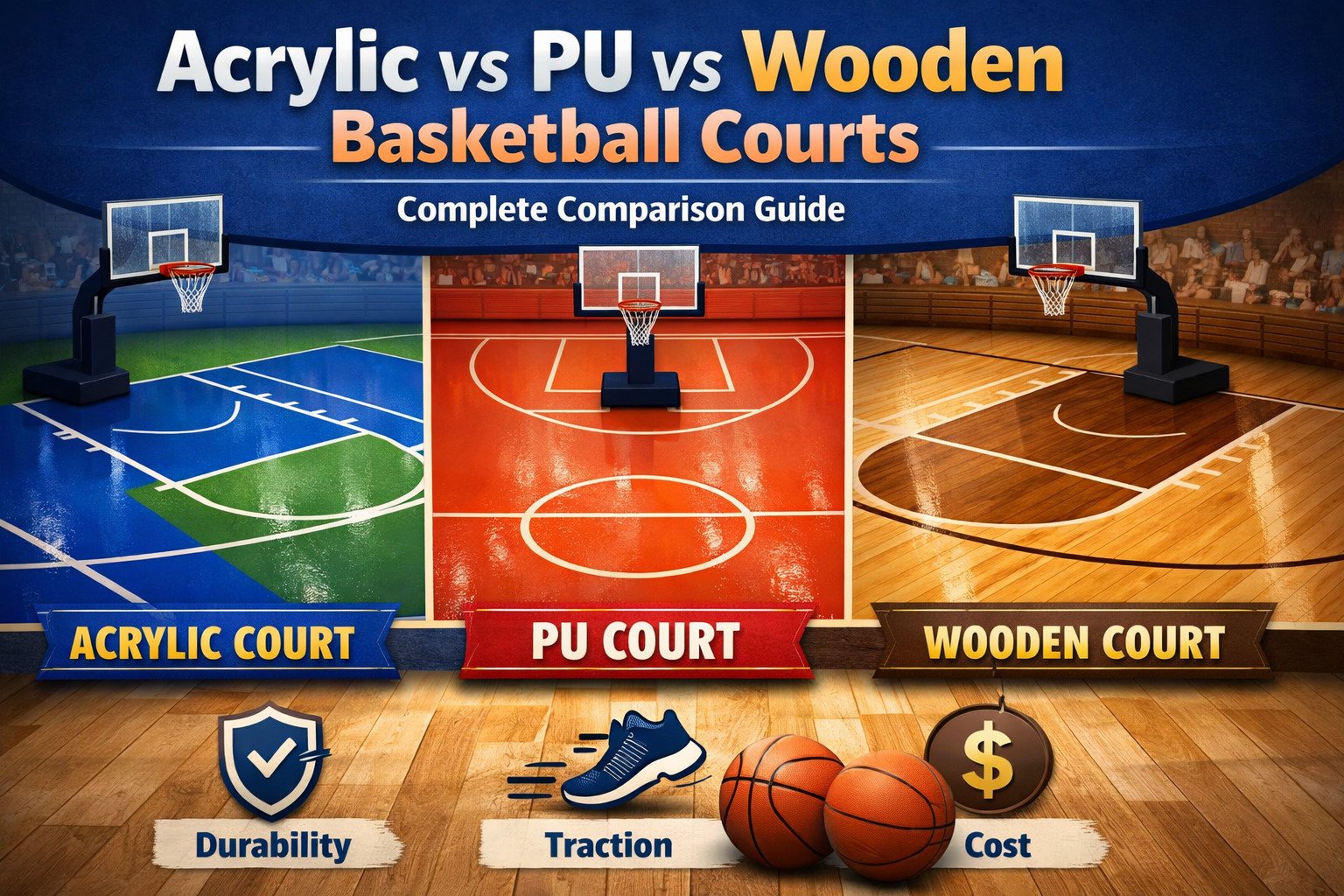
When it comes to basketball, most people obsess over shoes, balls, or player performance—but the court beneath your feet? That’s the silent game-changer. When comparing Acrylic vs PU vs Wooden Basketball Courts, the type of basketball court surface you choose directly affects how the game feels, how players perform, and even how often injuries occur. It’s not just a construction decision—it’s a performance investment.
Table of contents
Think about it this way: playing on a poor surface is like driving a sports car on a gravel road. No matter how skilled the player is, the surface limits their potential. A well-designed basketball court enhances ball bounce consistency, improves grip, and reduces fatigue during extended play sessions. Whether you’re building a professional arena, a school court, or a backyard setup, the flooring material becomes the foundation of the entire experience.
Different materials—acrylic, polyurethane (PU), and wood—each bring their own personality to the court. Acrylic surfaces are commonly seen outdoors, offering durability and weather resistance. PU courts lean toward versatility and shock absorption, making them a hybrid favorite. Wooden courts, on the other hand, are the gold standard for indoor professional basketball, delivering unmatched aesthetics and performance.
But here’s the catch: choosing the wrong surface can lead to higher maintenance costs, quicker wear and tear, and even safety risks. For example, a slippery surface might increase fall injuries, while a too-hard surface can strain joints over time. This is why understanding each option deeply isn’t just helpful—it’s essential.
So before jumping into construction or renovation, it’s worth asking yourself: Who will use the court? Indoors or outdoors? High-performance or recreational? Your answers will guide you toward the right surface—and save you from costly mistakes later.
Key Factors That Influence Court Performance
Now that the importance of choosing the right court surface is clear, let’s break down what actually defines a “good” basketball court. It’s not just about looks—several critical factors come into play, and each material performs differently across them.
First up is shock absorption, which determines how much impact your joints feel when running or jumping. Wooden courts excel here, offering natural cushioning that reduces stress on knees and ankles. PU surfaces also provide strong shock absorption due to their elastic nature. Acrylic courts, however, are harder, which can lead to more fatigue during long games.
Next is ball bounce consistency. Basketball demands precision, and inconsistent bounce can ruin gameplay. Wooden courts again lead the pack, delivering uniform bounce across the surface. PU courts come close, while acrylic courts may vary slightly depending on installation quality and weather conditions.
Then there’s traction and grip. Players need reliable footing for quick cuts and direction changes. PU and wooden courts offer excellent grip, especially indoors. Acrylic courts provide decent traction but can become slippery when wet—something to consider for outdoor setups.
Durability is another major factor, especially for outdoor courts exposed to sun, rain, and temperature changes. Acrylic surfaces are highly resistant to weather, making them ideal outdoors. PU surfaces are durable but may degrade under harsh UV exposure if not properly coated. Wooden courts, while durable indoors, are vulnerable to moisture and require controlled environments.
Finally, maintenance and cost play a big role. Wooden courts require regular polishing and climate control, making them expensive to maintain. PU courts fall somewhere in the middle. Acrylic courts are the most budget-friendly and easiest to maintain over time.
Each of these factors creates a unique performance profile for acrylic, PU, and wooden courts. Understanding them helps you match the surface to your specific needs—whether it’s competitive play, casual recreation, or long-term durability.
What Is an Acrylic Basketball Court?
Composition and Structure of Acrylic Courts
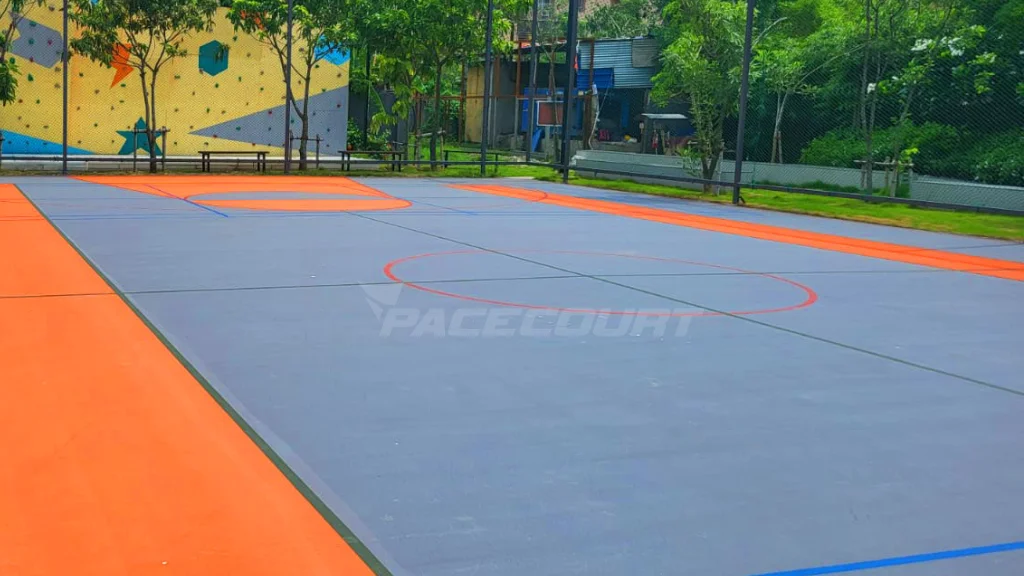
An acrylic basketball court is one of the most commonly used surfaces worldwide, especially for outdoor play. If you’ve ever played basketball at a public park or schoolyard, chances are you’ve already experienced this type of flooring. But what exactly goes into an acrylic court? It’s not just paint on concrete—it’s a carefully layered system designed for durability, performance, and weather resistance.
At its core, an acrylic court is built on a concrete or asphalt base, which provides structural stability. On top of this base, multiple layers of acrylic coating are applied. These layers typically include a primer, resurfacer, cushion layers (optional), and a topcoat. The topmost layer is often textured with silica sand, which enhances grip and prevents slipping during gameplay. This layered construction ensures the surface can withstand heavy foot traffic and varying environmental conditions.
One of the defining features of acrylic courts is their customizability. The surface can be designed in a wide range of colors, patterns, and line markings, making it visually appealing for schools, sports complexes, and residential installations. You’ve probably seen those vibrant blue, green, or red courts—they’re all made possible through acrylic coatings.
Another important aspect is the non-porous nature of acrylic material. This means it doesn’t absorb water, making it highly resistant to rain and humidity. As a result, these courts dry relatively quickly after rainfall, which is a huge advantage in regions with unpredictable weather.
However, it’s worth noting that the performance of an acrylic court heavily depends on the quality of installation. Poor base preparation or uneven coating can lead to cracks, inconsistent bounce, or surface peeling over time. That’s why professional installation is crucial if you want long-term performance.
In essence, acrylic courts are like the reliable workhorses of the basketball world—simple, tough, and built to last. They may not offer the luxury feel of wooden courts, but when it comes to practicality and outdoor use, they’re hard to beat.
Advantages and Limitations of Acrylic Surfaces
Acrylic basketball courts come with a compelling mix of strengths and trade-offs. Understanding both sides is key before deciding if this surface fits your needs.
Let’s start with the advantages. One of the biggest benefits is weather resistance. Acrylic surfaces are designed to handle sun exposure, rain, and temperature fluctuations without significant damage. This makes them the go-to choice for outdoor courts. Unlike wood or PU, acrylic doesn’t warp or degrade easily under environmental stress.
Another major plus is low maintenance. Once installed, acrylic courts require minimal upkeep. Occasional cleaning and minor resurfacing every few years are usually enough to keep the court in good condition. This makes them ideal for schools, public parks, and community spaces with limited maintenance budgets.
Cost is another area where acrylic shines. Compared to PU and wooden courts, acrylic is significantly more affordable both in terms of installation and long-term maintenance. If you’re working with a tight budget, this surface offers excellent value for money.
However, acrylic courts aren’t perfect. One of the biggest drawbacks is their hardness. Because they’re installed over concrete or asphalt, they provide very little shock absorption. This can lead to increased strain on joints, especially during long playing sessions. Players might feel more fatigue compared to playing on PU or wooden surfaces.
Another limitation is performance variability. While the ball bounce is generally consistent, it can be affected by surface wear or temperature changes. Additionally, acrylic courts can become slippery when wet, posing a safety risk if used immediately after rain.
Lastly, while durable, acrylic surfaces can develop cracks over time, especially if the underlying base shifts or expands due to weather conditions. Repairs are possible, but they require proper handling to avoid recurring issues.
So, is acrylic the right choice? If you’re prioritizing durability, affordability, and outdoor usability, it’s an excellent option. But if comfort and high-performance play are your main concerns, you might want to explore PU or wooden alternatives.
What Is a PU (Polyurethane) Basketball Court?
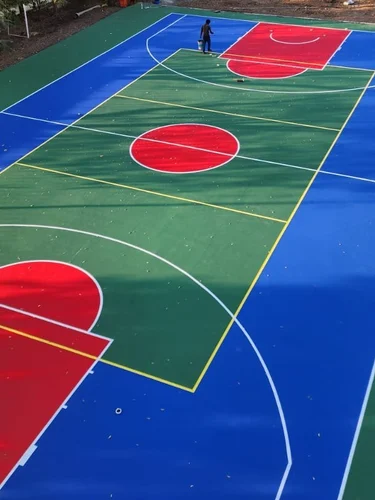
How PU Flooring Is Made and Installed
A PU (polyurethane) basketball court sits somewhere between acrylic and wooden courts in terms of performance, comfort, and cost. It’s often considered a premium synthetic option, especially for indoor facilities and semi-professional environments. But what makes PU flooring unique?
Unlike acrylic courts that rely heavily on a rigid base, PU courts are built with elasticity in mind. The installation process begins with a concrete or asphalt base, similar to acrylic. However, instead of just applying hard coatings, multiple layers of polyurethane material are added to create a cushioned surface. These layers include a primer, elastic base layers, wear-resistant topcoats, and sometimes additional cushioning systems.
What sets PU apart is its seamless and flexible structure. The material is poured and spread across the surface, creating a smooth, joint-free finish. This not only enhances aesthetics but also improves performance by eliminating uneven patches or gaps.
Another key feature is the shock-absorbing capability. PU surfaces are designed to absorb impact energy, reducing stress on players’ joints. This makes them particularly popular in training facilities and schools where player safety is a top priority.
Installation of PU courts requires precision and expertise. Factors like temperature, humidity, and curing time play a critical role in achieving the desired finish. A poorly installed PU floor can lead to bubbling, uneven texture, or reduced durability.
Additionally, PU courts can be customized with different thickness levels, depending on the level of cushioning required. Thicker layers provide better shock absorption but also increase costs. This flexibility allows facility owners to tailor the court to specific needs—whether it’s casual play or competitive training.
In many ways, PU flooring represents a modern evolution of sports surfaces—combining durability with comfort. It’s like upgrading from a basic mattress to a memory foam one; the difference becomes obvious the moment you step on it.
Pros and Cons of PU Basketball Courts
PU basketball courts offer a balanced mix of performance and comfort, but they also come with certain limitations. Let’s break it down so you can see the full picture.
One of the standout advantages is excellent shock absorption. This significantly reduces the risk of injuries, especially in high-impact movements like jumping and sprinting. Players often report less fatigue when playing on PU surfaces compared to acrylic ones.
Another benefit is consistent playing performance. PU courts provide reliable ball bounce and superior grip, making them suitable for competitive environments. The seamless surface ensures there are no irregularities that could disrupt gameplay.
PU surfaces also offer aesthetic appeal. Their smooth finish and customizable colors create a professional look that’s often preferred in indoor sports complexes.
However, these advantages come at a cost—literally. PU courts are more expensive than acrylic surfaces, both in installation and maintenance. The materials themselves are costlier, and the installation process requires skilled professionals.
Another limitation is sensitivity to environmental conditions. While PU can be used outdoors, it’s not as weather-resistant as acrylic. Prolonged exposure to UV rays and moisture can degrade the material over time unless protective coatings are applied.
Maintenance is also more involved compared to acrylic. While not as demanding as wooden courts, PU surfaces still require regular cleaning and occasional recoating to maintain performance and appearance.
Lastly, repairs can be tricky. Unlike acrylic, where you can patch specific areas, PU surfaces often require larger sections to be redone to maintain uniformity.
In short, PU courts are ideal if you want a balance between comfort and performance and are willing to invest a bit more. They’re not the cheapest option, but for many players, the improved playing experience makes it worth every penny.
What Is a Wooden Basketball Court?
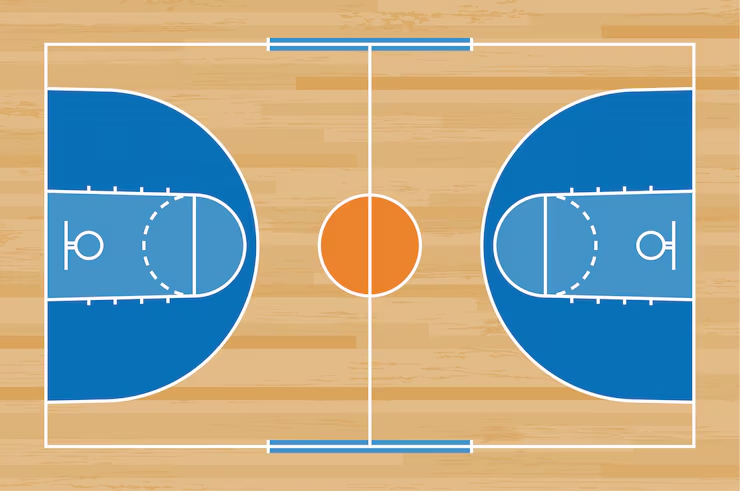
Types of Wood Used in Basketball Courts
When people picture professional basketball—NBA arenas, college championships, high-stakes indoor games—they almost always imagine a glossy wooden basketball court. That’s because wood has long been considered the gold standard for indoor basketball surfaces. But not all wooden courts are created equal, and the type of wood used plays a huge role in performance, durability, and even aesthetics.
The most commonly used material is hard maple wood, particularly in North America. Maple is favored because of its dense grain structure, which provides a smooth and uniform surface. This consistency is critical for predictable ball bounce and player movement. In fact, according to sports flooring standards, maple offers one of the best ball rebound rates, making it ideal for competitive play.
Other types of wood, such as beech and oak, are also used in some regions, especially in Europe. These alternatives can perform well, but they don’t quite match the balance of hardness and flexibility that maple provides. The choice often comes down to availability and budget.
Wooden courts are typically installed as part of a suspended flooring system. This means the wooden planks are mounted over a subfloor with cushioning layers underneath. These layers may include rubber pads or foam systems designed to enhance shock absorption. This setup is what gives wooden courts their signature “springy” feel—something players immediately notice.
Another interesting aspect is the finish and coating applied to the wood. Multiple layers of sealant and polyurethane finish are added to protect the surface from wear and tear. These coatings also influence traction, ensuring players get the right amount of grip without sticking to the floor.
However, wood is a natural material, which means it’s sensitive to environmental factors. Changes in humidity and temperature can cause expansion or contraction, which is why wooden courts are almost exclusively used indoors with climate control systems.
In essence, a wooden basketball court isn’t just a surface—it’s a carefully engineered system designed to deliver elite-level performance. It’s the difference between playing casually and stepping onto a professional stage.
Benefits and Drawbacks of Wooden Courts
Wooden basketball courts offer an unmatched playing experience, but they also come with significant responsibilities. Let’s unpack both sides so you can decide whether they’re worth the investment.
The biggest advantage is superior performance. Wooden courts provide exceptional ball bounce, consistent traction, and excellent responsiveness. Players often describe the experience as “alive” under their feet, thanks to the subtle flex of the surface. This responsiveness allows for quicker movements, sharper cuts, and overall better gameplay.
Another major benefit is shock absorption. The suspended flooring system helps reduce the impact on joints, making it one of the safest surfaces for long-term play. This is why professional leagues prioritize wood—it not only enhances performance but also helps protect athletes from injuries.
Let’s not forget the aesthetic appeal. There’s something iconic about the polished look of a wooden court. It instantly elevates the perception of a facility, making it feel premium and professional.
However, these advantages come at a steep price. Wooden courts are expensive to install, often costing significantly more than acrylic or PU surfaces. And that’s just the beginning—maintenance is where costs really add up.
Wood requires regular sanding, refinishing, and polishing to maintain its performance and appearance. It’s also highly sensitive to moisture, meaning you need proper climate control systems to prevent warping or damage. Without these measures, the court can deteriorate quickly.
Durability is another concern. While wood can last for decades with proper care, it’s not as resistant to heavy abuse or environmental exposure as synthetic surfaces. Scratches, dents, and wear marks are common, especially in multi-purpose facilities.
Lastly, wooden courts are strictly indoor-only. Exposure to rain or extreme humidity can ruin the surface, making them unsuitable for outdoor use.
So, are wooden courts worth it? If you’re aiming for professional-level performance and have the budget for installation and maintenance, absolutely. But for casual or outdoor use, they may not be the most practical choice.
Acrylic vs PU vs Wooden Courts: Key Differences
Performance and Player Comfort Comparison
When comparing acrylic, PU, and wooden basketball courts, performance and player comfort are often the deciding factors. Each surface offers a distinct feel, and the difference becomes obvious the moment you start playing.
Wooden courts sit at the top when it comes to overall performance. They provide the most consistent ball bounce, excellent grip, and natural shock absorption. Players can move fluidly, make quick cuts, and land comfortably after jumps. This is why professional leagues and high-level competitions rely heavily on wood.
PU courts come in as a strong second. They offer excellent shock absorption, sometimes even better than wood depending on the system used. The surface is slightly softer, which reduces strain on joints. However, some players feel that PU lacks the “natural feedback” of wood, making it feel a bit synthetic.
Acrylic courts, while durable, fall behind in terms of comfort. Their hard surface can lead to increased fatigue, especially during long games. However, they still provide decent traction and acceptable ball bounce for recreational and semi-competitive play.
Ultimately, the choice depends on your priorities. If comfort and performance are non-negotiable, wood or PU is the way to go. But if you’re okay with a slightly tougher playing experience in exchange for durability and cost savings, acrylic still holds its ground.
Durability and Maintenance Requirements
Durability and maintenance often determine the long-term cost of a basketball court, and this is where the differences between acrylic, PU, and wooden surfaces become even more pronounced.
Acrylic courts are the clear winners in terms of low maintenance. They’re built to withstand harsh weather conditions, including UV exposure and rain. Cleaning usually involves simple washing, and resurfacing is only needed every few years. This makes acrylic ideal for outdoor courts and high-traffic public areas.
PU courts require moderate maintenance. While they’re durable, they’re not as resistant to environmental stress as acrylic. Indoor PU courts can last many years with proper care, but outdoor installations may need additional protective coatings. Regular cleaning and occasional recoating are necessary to maintain performance.
Wooden courts demand the highest level of maintenance. They need routine polishing, refinishing, and strict climate control to prevent damage. Even small issues like moisture can cause significant problems if not addressed quickly.
In terms of durability, acrylic leads for outdoor use, while wood dominates in controlled indoor environments. PU sits comfortably in the middle, offering a balance of durability and performance.
Cost Comparison Table
Cost is often the deciding factor, especially for schools, community centers, and private installations. Let’s break it down in a simple table:
| Surface Type | Installation Cost | Maintenance Cost | Lifespan |
|---|---|---|---|
| Acrylic | Low | Low | 5–10 years |
| PU | Medium | Medium | 8–15 years |
| Wooden | High | High | 20+ years (with care) |
While wooden courts have the longest lifespan, their high upfront and maintenance costs make them a premium option. Acrylic is the most budget-friendly, while PU offers a middle-ground solution.
Indoor vs Outdoor Suitability
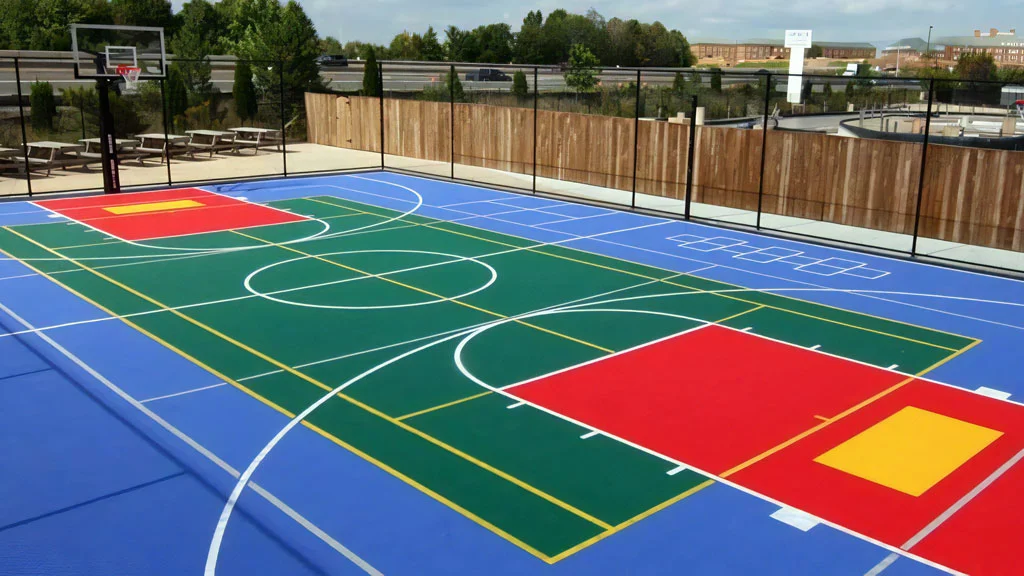
Best Surface for Outdoor Courts
If you’re planning an outdoor basketball court, the choice becomes much simpler. Acrylic surfaces dominate this category for a reason—they’re built to handle the elements.
Rain, sunlight, temperature changes—acrylic courts can take it all without significant damage. Their non-porous nature ensures quick drying, while their UV-resistant coatings prevent fading and deterioration. This makes them ideal for public parks, schools, and residential outdoor setups.
PU can be used outdoors, but it requires additional protection and maintenance. Over time, exposure to harsh weather can degrade the material, making it less reliable than acrylic.
Wood, on the other hand, is completely unsuitable for outdoor use. Even minimal exposure to moisture can cause irreversible damage.
Best Surface for Indoor Arenas
Indoor environments open up more possibilities, and this is where wooden and PU courts shine.
Wooden courts are the top choice for professional and high-performance settings. They offer unmatched gameplay quality and aesthetic appeal, making them ideal for arenas and competitive facilities.
PU courts are a great alternative for schools, training centers, and multi-purpose halls. They provide excellent comfort and performance at a lower cost than wood, making them a practical choice for many indoor applications.
Acrylic can still be used indoors, but it’s generally reserved for budget-conscious projects where performance is not the primary concern.
Safety Considerations and Injury Risks
Safety is one of the most overlooked aspects when choosing a basketball court surface, yet it has a direct impact on player health and long-term well-being. Each surface type—acrylic, PU, and wood—carries its own level of risk depending on how it interacts with the human body during play.
Acrylic courts, being the hardest, pose the highest risk of joint strain. Repeated jumping and running on a rigid surface can lead to knee and ankle issues over time. Additionally, the risk of slipping increases if the surface becomes wet or worn out.
PU courts offer a much safer alternative. Their shock-absorbing properties reduce impact forces, making them ideal for players of all ages. This is especially important in schools and training facilities where injury prevention is a priority.
Wooden courts strike a balance between performance and safety. Their natural cushioning and traction make them one of the safest options for competitive play.
Choosing the right surface isn’t just about performance—it’s about protecting the players who use it.
Which Basketball Court Surface Should You Choose?
Deciding between acrylic, PU, and wooden basketball courts ultimately comes down to your specific needs, budget, and intended use. There’s no one-size-fits-all answer—but there is a right choice for your situation.
If you’re building an outdoor court or working with a limited budget, acrylic is the most practical option. It’s durable, affordable, and easy to maintain.
If you want a balance between comfort and cost, especially for indoor use, PU is a smart investment. It offers excellent performance without the high maintenance demands of wood.
If your goal is to create a professional-level playing experience and budget isn’t a concern, wooden courts are unmatched.
Conclusion
Choosing between acrylic, PU, and wooden basketball courts isn’t just about materials—it’s about the experience you want to create. Each surface brings its own strengths and compromises, shaping how the game is played and enjoyed.
Acrylic stands out for durability and affordability, PU for comfort and versatility, and wood for premium performance. The right choice depends on your priorities, whether that’s cost, safety, or professional-level gameplay.