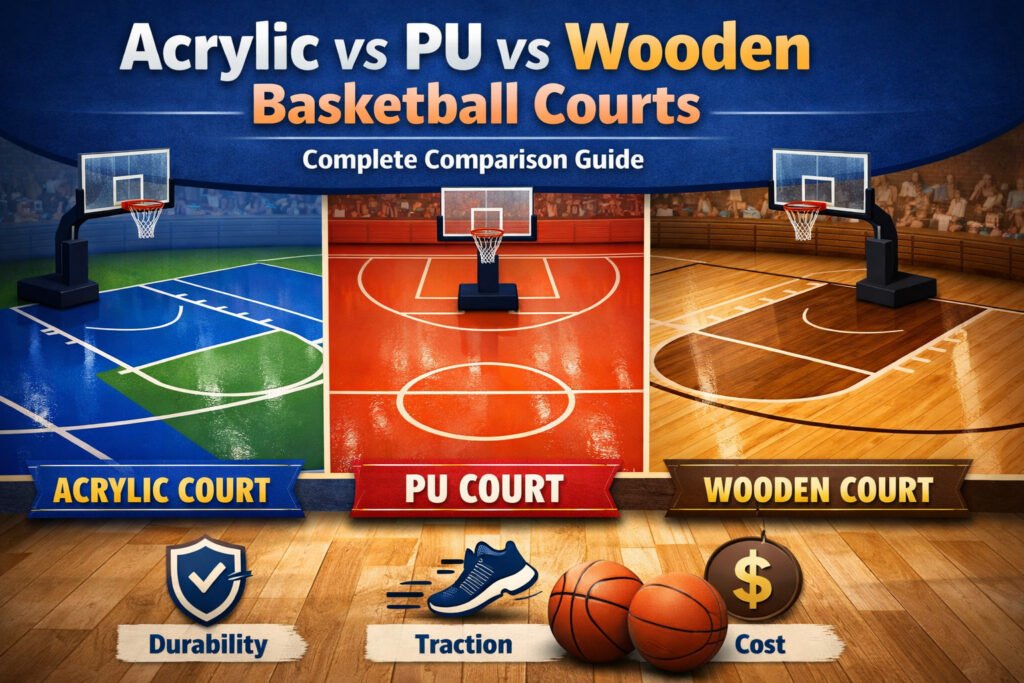
Acrylic vs PU vs Wooden Basketball Courts: Complete Comparison Guide
When it comes to basketball, most people obsess over shoes, balls, or player performance—but the court beneath your feet? That’s the silent game-changer. When comparing Acrylic vs PU vs Wooden Basketball Courts, the type of basketball court surface you choose directly affects how the game feels, how players perform, and even how often injuries occur. It’s not just a construction decision—it’s a performance investment. Think about it this way: playing on a poor surface is like driving a sports car on a gravel road. No matter how skilled the player is, the surface limits their potential. A well-designed basketball court enhances ball bounce consistency, improves grip, and reduces fatigue during extended play sessions. Whether you’re building a professional arena, a school court, or a backyard setup, the flooring material becomes the foundation of the entire experience. Different materials—acrylic, polyurethane (PU), and wood—each bring their own personality to the court. Acrylic surfaces are commonly seen outdoors, offering durability and weather resistance. PU courts lean toward versatility and shock absorption, making them a hybrid favorite. Wooden courts, on the other hand, are the gold standard for indoor professional basketball, delivering unmatched aesthetics and performance. But here’s the catch: choosing the wrong surface can lead to higher maintenance costs, quicker wear and tear, and even safety risks. For example, a slippery surface might increase fall injuries, while a too-hard surface can strain joints over time. This is why understanding each option deeply isn’t just helpful—it’s essential. So before jumping into construction or renovation, it’s worth asking yourself: Who will use the court? Indoors or outdoors? High-performance or recreational? Your answers will guide you toward the right surface—and save you from costly mistakes later. Key Factors That Influence Court Performance Now that the importance of choosing the right court surface is clear, let’s break down what actually defines a “good” basketball court. It’s not just about looks—several critical factors come into play, and each material performs differently across them. First up is shock absorption, which determines how much impact your joints feel when running or jumping. Wooden courts excel here, offering natural cushioning that reduces stress on knees and ankles. PU surfaces also provide strong shock absorption due to their elastic nature. Acrylic courts, however, are harder, which can lead to more fatigue during long games. Next is ball bounce consistency. Basketball demands precision, and inconsistent bounce can ruin gameplay. Wooden courts again lead the pack, delivering uniform bounce across the surface. PU courts come close, while acrylic courts may vary slightly depending on installation quality and weather conditions. Then there’s traction and grip. Players need reliable footing for quick cuts and direction changes. PU and wooden courts offer excellent grip, especially indoors. Acrylic courts provide decent traction but can become slippery when wet—something to consider for outdoor setups. Durability is another major factor, especially for outdoor courts exposed to sun, rain, and temperature changes. Acrylic surfaces are highly resistant to weather, making them ideal outdoors. PU surfaces are durable but may degrade under harsh UV exposure if not properly coated. Wooden courts, while durable indoors, are vulnerable to moisture and require controlled environments. Finally, maintenance and cost play a big role. Wooden courts require regular polishing and climate control, making them expensive to maintain. PU courts fall somewhere in the middle. Acrylic courts are the most budget-friendly and easiest to maintain over time. Each of these factors creates a unique performance profile for acrylic, PU, and wooden courts. Understanding them helps you match the surface to your specific needs—whether it’s competitive play, casual recreation, or long-term durability. What Is an Acrylic Basketball Court? Composition and Structure of Acrylic Courts An acrylic basketball court is one of the most commonly used surfaces worldwide, especially for outdoor play. If you’ve ever played basketball at a public park or schoolyard, chances are you’ve already experienced this type of flooring. But what exactly goes into an acrylic court? It’s not just paint on concrete—it’s a carefully layered system designed for durability, performance, and weather resistance. At its core, an acrylic court is built on a concrete or asphalt base, which provides structural stability. On top of this base, multiple layers of acrylic coating are applied. These layers typically include a primer, resurfacer, cushion layers (optional), and a topcoat. The topmost layer is often textured with silica sand, which enhances grip and prevents slipping during gameplay. This layered construction ensures the surface can withstand heavy foot traffic and varying environmental conditions. One of the defining features of acrylic courts is their customizability. The surface can be designed in a wide range of colors, patterns, and line markings, making it visually appealing for schools, sports complexes, and residential installations. You’ve probably seen those vibrant blue, green, or red courts—they’re all made possible through acrylic coatings. Another important aspect is the non-porous nature of acrylic material. This means it doesn’t absorb water, making it highly resistant to rain and humidity. As a result, these courts dry relatively quickly after rainfall, which is a huge advantage in regions with unpredictable weather. However, it’s worth noting that the performance of an acrylic court heavily depends on the quality of installation. Poor base preparation or uneven coating can lead to cracks, inconsistent bounce, or surface peeling over time. That’s why professional installation is crucial if you want long-term performance. In essence, acrylic courts are like the reliable workhorses of the basketball world—simple, tough, and built to last. They may not offer the luxury feel of wooden courts, but when it comes to practicality and outdoor use, they’re hard to beat. Advantages and Limitations of Acrylic Surfaces Acrylic basketball courts come with a compelling mix of strengths and trade-offs. Understanding both sides is key before deciding if this surface fits your needs. Let’s start with the advantages. One of the biggest benefits is weather resistance. Acrylic surfaces are designed to handle sun exposure, rain, and temperature fluctuations without significant damage. This makes them the go-to choice for outdoor courts. Unlike wood or PU,