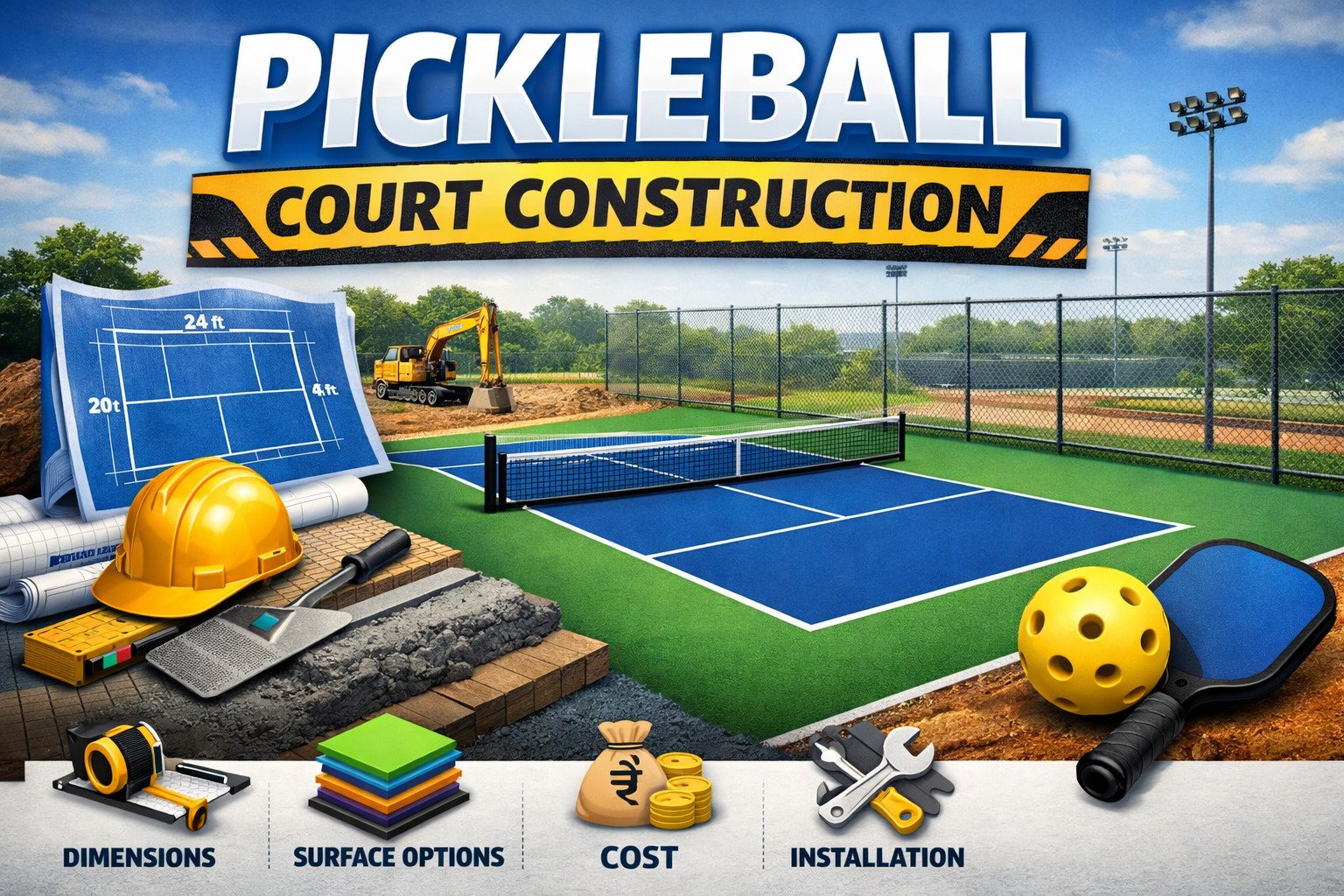
Pickleball is one of the fastest-growing sports worldwide, and its popularity in India is rising rapidly across schools, residential societies, clubs, and sports academies. With this growth, pickleball court construction has become a high-demand service for sports infrastructure developers and flooring contractors.
This complete guide covers everything you need to know about pickleball court construction — from court dimensions, surface types, base preparation, fencing, lighting, cost, and maintenance — to help you build a professional, durable, and tournament-ready court.
What Is Pickleball?
Pickleball is a paddle sport that combines elements of tennis, badminton, and table tennis. It is played on a smaller court, making it ideal for urban spaces, schools, and residential projects. The sport is suitable for all age groups, which makes pickleball courts a long-term investment.
Why Everyone Wants a Court in Their Backyard
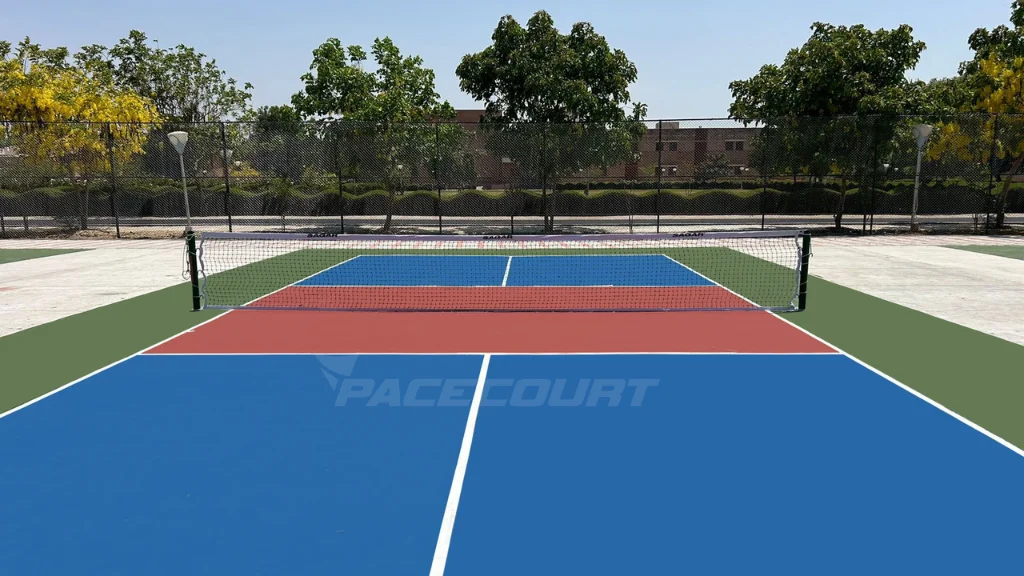
You see them popping up everywhere—in public parks, converted tennis courts, and increasingly, in private backyards. Pickleball isn’t just a fleeting trend; it’s the fastest-growing sport in America for a reason. It combines the strategy of tennis, the speed of ping pong, and the court size of badminton into a game that is accessible to all ages.
But as the sport matures, so do the expectations of the players. A chalk line on a driveway doesn’t cut it anymore. Enthusiasts want the real deal. They want the consistent bounce, the traction, and the aesthetic appeal of a professional-grade surface.
This guide explores the essentials of pickleball court construction. We will walk you through the critical steps of building a court that not only looks great but also ensures safe, high-level gameplay for years to come.
The Foundation of Great Gameplay
Why does professional construction matter? You might be tempted to just paint some lines on existing concrete and call it a day. While that works for a casual afternoon, dedicated players notice the difference immediately.
Proper pickleball court construction is about safety as much as it is about performance. A professionally built court manages water drainage effectively, preventing dangerous puddles and slippery spots. It provides the right amount of “cushion” to protect players’ joints during long matches. Most importantly, it ensures a true ball bounce, which is critical for a sport that relies heavily on precision and spin.
When you invest in quality construction, you aren’t just building a court; you are building an asset that adds value to your property and enhances the playing experience.
Step-by-Step: Building Your Pickleball Court
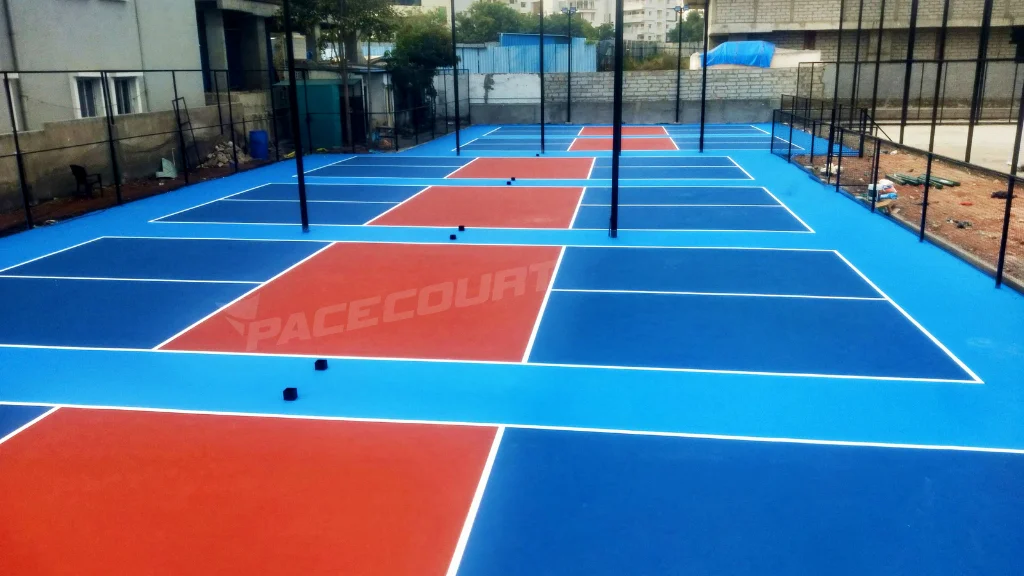
Correct dimensions are crucial for professional pickleball court construction.
Official Pickleball Court Size
- Court Length: 44 feet
- Court Width: 20 feet
- Total Playing Area: 880 sq. ft.
Recommended Total Area
- Minimum Playing Area: 30 ft × 60 ft
- Ideal Area (with run-off): 34 ft × 64 ft
Net Height
- Sidelines: 36 inches
- Center: 34 inches
Non-Volley Zone (Kitchen)
- 7 feet from the net on both sides
Pickleball Court Surface Options
Choosing the right surface is essential for player safety, ball bounce, and court longevity.
1. Acrylic Pickleball Court (Most Popular)
- Best for outdoor courts
- UV resistant and weatherproof
- Consistent ball bounce
- Low maintenance
- Ideal for India’s climate
Recommended for: Residential societies, clubs, schools, academies
2. Synthetic Modular Tiles
- Fast installation
- Shock absorption
- Portable and removable
- Suitable for multi-purpose spaces
Recommended for: Temporary courts, rooftops, indoor spaces
3. Concrete Base with Acrylic Coating
- Strong and long-lasting foundation
- Excellent performance when coated properly
- Used for permanent outdoor courts
Pickleball Court Construction Process (Step-by-Step)
Step 1: Site Inspection & Planning
- Soil testing
- Drainage evaluation
- Sun direction and wind flow analysis
- Space optimization
Step 2: Ground Preparation
- Excavation and leveling
- Compaction using rollers
- Proper slope for water drainage (1%)
Step 3: Base Construction
- WMM (Wet Mix Macadam) or RCC Base
- Thickness: 100–150 mm
- Ensures durability and crack resistance
Step 4: Acrylic Surface Installation
- Crack filling and surface smoothening
- Acrylic resurfacer application
- Cushion layers (optional)
- Color coating (ITF/USAPA approved colors)
- Line marking with textured paint
Step 5: Accessories Installation
- Pickleball net system
- Court fencing (10–12 feet height)
- LED sports lighting
- Seating and shade structures
Pickleball Court Color Combinations
Popular color schemes include:
- Blue court with green outer area
- Green court with red borders
- Grey and blue professional finish
Contrasting colors improve visibility and broadcast quality.
Pickleball Court Construction Cost in India
Approximate Cost Breakdown
| Component | Cost Range (₹/sq. ft.) |
|---|---|
| Base Construction | ₹120 – ₹180 |
| Acrylic Surface | ₹80 – ₹150 |
| Fencing & Net | ₹1.5 – ₹3 lakh |
| Lighting (Optional) | ₹2 – ₹5 lakh |
Total Estimated Cost
- ₹6 lakh to ₹12 lakh per court, depending on surface type, location, and specifications.
Indoor vs Outdoor Pickleball Court Construction

Outdoor Courts
- Acrylic surface preferred
- UV and weather-resistant materials required
- Proper drainage is essential
Indoor Courts
Lower maintenance
Synthetic or wooden flooring
Controlled environment
Maintenance Tips for Pickleball Courts
Regular surface cleaning
Avoid water stagnation
Inspect cracks annually
Recoating every 4–6 years
Net and line checks before tournaments
Proper maintenance significantly extends court lifespan.
Benefits of Professional Pickleball Court Construction
International standard compliance
Long-term durability
Player safety and comfort
Higher property value
Low maintenance cost
Why Pickleball Courts Are a Smart Investment
Growing demand in India
Requires less space than tennis
Multi-age participation
Ideal for schools, societies, resorts, and clubs
High ROI with low operational cost
Choosing the Right Pickleball Court Contractor
Before finalizing a contractor, ensure:
- Experience in sports flooring
- Use of certified materials
- Turnkey construction capability
- After-sales maintenance support
- Transparent pricing
Conclusion
Pickleball court construction is a future-ready investment for modern sports infrastructure. Whether you’re building a court for a school, residential society, club, or academy, following international standards, choosing the right surface, and working with experienced professionals ensures long-lasting performance and player satisfaction.
With proper planning, quality materials, and expert execution, a professionally constructed pickleball court can deliver exceptional value for years to come.