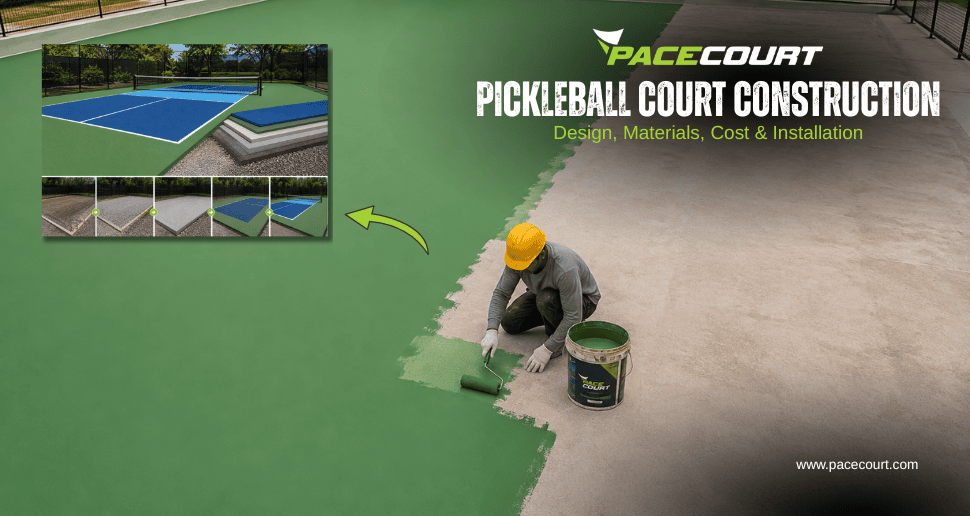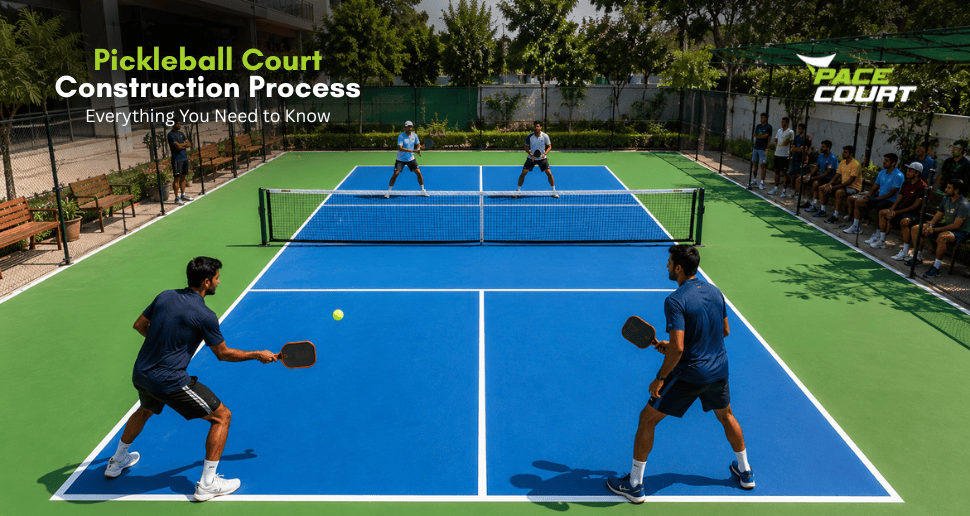
Pickleball Court Construction Process: Everything You Need to Know
Pacecourt is one of India’s leading sports flooring manufacturers, delivering high-quality flooring solutions for professional and recreational courts. As an Official Partner of the All India Pickleball Association (AIPA), Pacecourt is proud to support India’s growing pickleball community. Pacecourt delivers pickleball court construction solutions focused on durability, smooth play, safety, and long-lasting performance. From strong base preparation to premium acrylic sports flooring and precise finishing, we plan every stage to create a reliable playing surface. Whether you are developing a court for a school, club, residential space, hotel, or commercial facility, Pacecourt helps you build a court that looks professional, performs consistently, and is made for regular use. What is the process for building a pickleball court? Step Construction Process What It Involves 1 Site Preparation Clear, level, and prepare the selected area. 2 Base Preparation Create a strong concrete or asphalt base with proper slope and drainage. 3 Surface Preparation Repair cracks and ensure the base is smooth and ready for coating. 4 Acrylic Flooring Apply the required acrylic sports flooring layers for durability and consistent play. 5 Line Marking Mark accurate pickleball court lines according to standard dimensions. 6 Net Installation Install the net posts and net at the correct height and position. 7 Final Inspection Check the surface, dimensions, drainage, markings, and overall finish before play. What Is the Cost to Build a Pickleball Court in India? The cost to build a pickleball court in India depends on the site condition, base preparation, acrylic flooring, fencing, lighting, and other facilities. A basic outdoor court can cost less, while a fully equipped professional court will require a higher investment. Construction Component Approx. Cost Range Site preparation & base work ₹1.5 – 2 lakh Acrylic sports flooring ₹1 – 1.5 lakh Court fencing ₹1 – 2 lakh Net & posts ₹20,000 – ₹30,000 Court lighting ₹75,000 – ₹1 lakh Estimated Total ₹4.5 – 6 lakh+ Note: These are indicative ranges. The actual pickleball court construction cost can vary depending on court location, existing surface, materials, dimensions, drainage, fencing height, lighting requirements, and project specifications. Build a professional pickleball court with Pacecourt. Enquire Now What are the dimensions of a pickleball court? A standard pickleball court follows official dimensions to ensure comfortable and consistent gameplay. Which Is the Best Flooring for Pickleball Courts And Why Does It Matter? Pacecourt is a trusted choice for acrylic sports flooring, offering durable and professionally finished surfaces for pickleball courts. Pacecourt is also an Official Partner of the All India Pickleball Association (AIPA), reflecting its support for pickleball’s growth and development in India. Through this partnership, Pacecourt supports the development of quality pickleball infrastructure with professionally constructed courts and reliable acrylic flooring solutions. Because the right flooring plays an important role in safety, performance, and long-term court durability: The right flooring affects safety, ball response, traction, durability, and overall playing experience, making it an important part of professional pickleball court construction. Why Invest in Pickleball Court Construction in India? Pickleball court construction can be a valuable opportunity for sports facilities, clubs, schools, hotels, and businesses looking to add a popular recreational activity and attract more players. As pickleball is gaining attention, attracting new players. Build Your Pickleball Court with Pacecourt Build your pickleball court with Pacecourt and get a complete solution designed for quality, durability, and professional play. Getting Your Pickleball Court Quotation Now: Contact Our Experts Conclusion Building a pickleball court requires proper planning, a strong base, quality acrylic flooring, accurate markings, and professional finishing. With Pacecourt’s complete court construction and sports flooring solutions, you can create a durable, safe, and professional playing surface designed for regular use. Frequently Asked Question 1. How much does it cost to build a pickleball court in India? A pickleball court can cost around ₹4.5 – 6 lakh+, depending on construction and facility requirements. 2. Who should invest in Pickleball courts? Pickleball courts can be a good option for sports clubs, schools, hotels, gyms, real estate developers, and entrepreneurs looking to add a growing recreational sports facility. 3. What are the standard pickleball court dimensions? A standard pickleball court is 44 feet long and 20 feet wide. 4. Which flooring is best for a pickleball court? Acrylic sports flooring is a durable and reliable choice for pickleball courts. 5. How long does it take to build a pickleball court? The construction timeline depends on site preparation, base work, flooring, and finishing requirements. 6. Can pickleball courts be built outdoors? Yes, pickleball courts can be built outdoors with weather-resistant acrylic sports flooring and proper drainage. 7. Does Pacecourt provide pickleball court construction? Yes, Pacecourt provides complete pickleball court construction and acrylic flooring solutions.