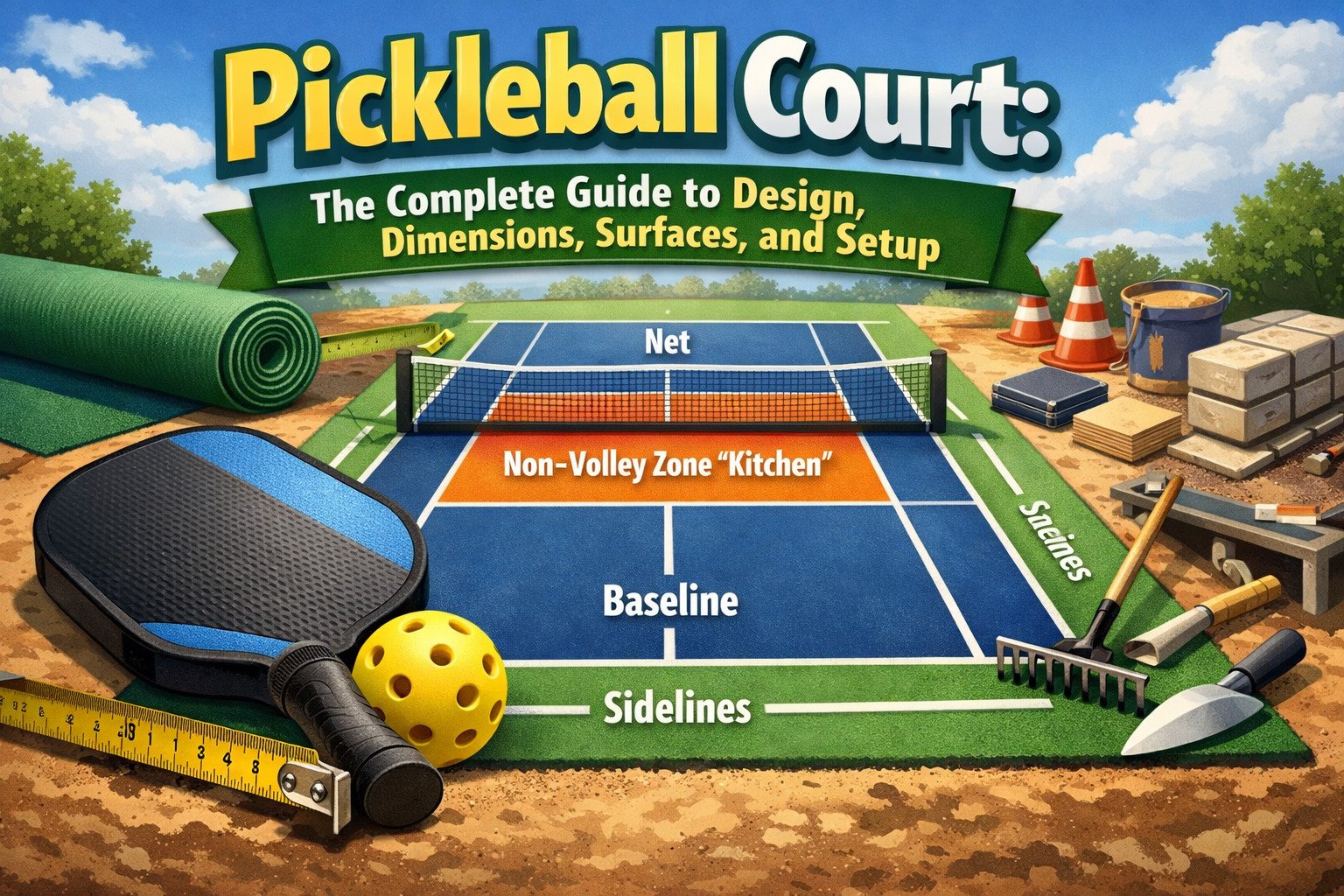
Pickleball courts are popping up everywhere — from neighborhood parks and school gyms to luxury resorts and backyard driveways. If you’ve noticed more people holding paddles and rallying over a smaller net, you’re not imagining things. Pickleball has exploded in popularity, becoming one of the fastest-growing sports in the world. And at the center of it all? The pickleball court.
But what exactly makes a pickleball court different from a tennis or badminton court? Why are cities converting tennis courts into pickleball spaces? And what should you know if you’re thinking about building one yourself?
A pickleball court may look simple at first glance, but every line, measurement, and surface detail serves a purpose. The court is carefully designed to encourage fast-paced rallies, strategic placement, and accessibility for players of all ages. Unlike tennis, the smaller size reduces excessive running, making it easier on the joints while still delivering intense competition.
Whether you’re a beginner just learning the game, a homeowner considering a backyard setup, or a facility manager planning new installations, understanding pickleball court fundamentals is essential. Think of the court as the foundation of the game — like a stage for a performance. When it’s designed correctly, everything flows smoothly. When it’s not, frustration quickly sets in.
In this guide, we’ll break down everything you need to know about pickleball courts — dimensions, surfaces, indoor vs outdoor differences, construction costs, and even common design mistakes. By the end, you’ll have a crystal-clear understanding of how a proper pickleball court should look, feel, and function.
Let’s start with the most important piece of the puzzle: the official dimensions.
Official Pickleball Court Dimensions
When it comes to building or marking a pickleball court, precision matters. A few inches off might not seem like a big deal, but in competitive play, it can completely change the dynamics of the game. The good news? The official pickleball court dimensions are straightforward and standardized.
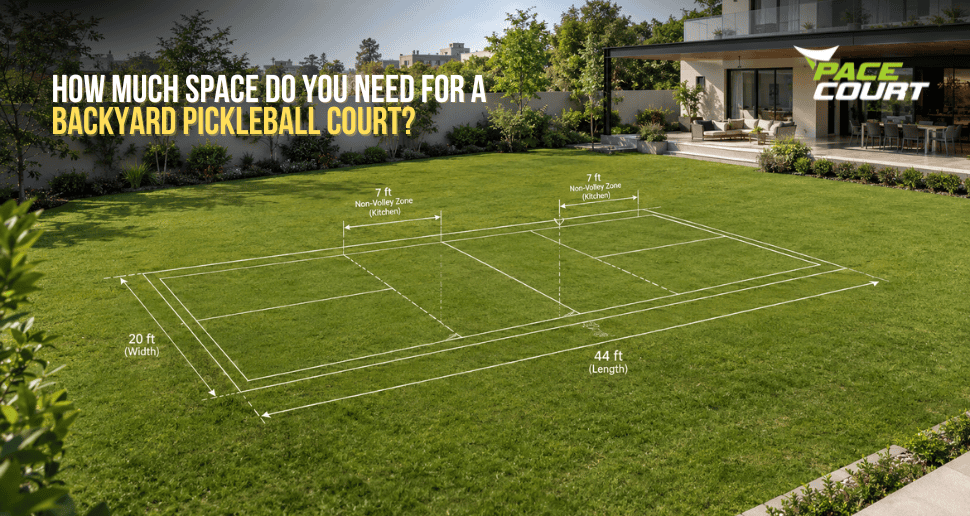
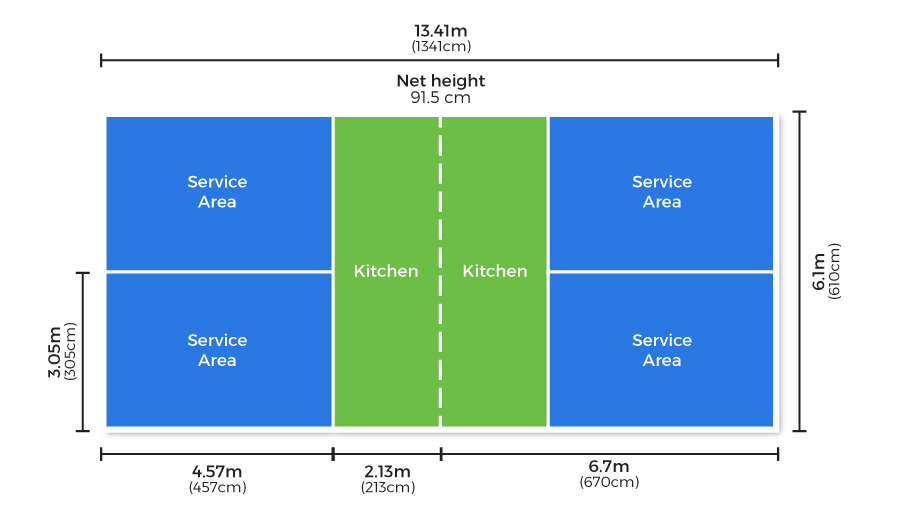
A regulation pickleball court measures 20 feet wide by 44 feet long. That’s the same size whether you’re playing singles or doubles. Unlike tennis, where singles and doubles courts differ, pickleball keeps it simple. The compact size is one of the reasons the sport is so accessible — you don’t need massive space to play.
However, the total recommended play area is larger than just the court lines. Ideally, you should allow at least 30 feet by 60 feet of space to provide safe movement around the court. For tournament settings, even more clearance is recommended. Why? Because players need room to chase lobs, reset points, and avoid collisions with fences or walls.
The court is divided into distinct sections:
- Two service areas on each side
- A centerline dividing the service boxes
- Baselines at the back
- Sidelines along the width
- The non-volley zone (also known as “the kitchen”) near the net
The net stretches across the center, standing 36 inches high at the sidelines and 34 inches high in the middle. That slight dip in the center is intentional and plays a strategic role during rallies.
Compared to a tennis court, a pickleball court is significantly smaller — roughly one-third the size. That smaller footprint allows multiple pickleball courts to fit inside a single tennis court area. It’s like turning a large open field into several smaller soccer pitches — maximizing space and increasing participation.
If you’re planning to build a court, accuracy is non-negotiable. Even minor measurement errors can disrupt serving angles, kitchen play, and competitive balance.
Next, let’s zoom in on the most talked-about section of the court — the non-volley zone.
Non-Volley Zone (The Kitchen) Explained
If there’s one area of the pickleball court that sparks debate, strategy, and sometimes frustration, it’s the non-volley zone — affectionately known as “the kitchen.” This seven-foot-deep area on both sides of the net changes everything about how pickleball is played.
So, what exactly is the kitchen?
The non-volley zone extends 7 feet from the net on both sides, spanning the entire 20-foot width of the court. Players are not allowed to volley the ball (hit it out of the air) while standing inside this zone. In fact, you can’t even step on the kitchen line during a volley. If your momentum carries you into the kitchen after hitting a volley, it’s a fault.
Why does this rule exist?
Simple. It prevents players from camping at the net and smashing every shot downward. Without the kitchen rule, pickleball would turn into a power-dominant game. Instead, it encourages finesse, control, and strategic placement. Players must rely on soft shots — known as “dinks” — to outmaneuver opponents.
Think of the kitchen as a chessboard within the court. It forces patience. It rewards touch over brute force. It levels the playing field between younger, powerful players and older, more strategic ones.
Interestingly, you can enter the kitchen anytime — just not to volley. If the ball bounces first, you’re free to step in and return it. This creates fast-paced exchanges where players hover near the line, ready to react.
The kitchen line itself is part of the non-volley zone. That detail trips up many beginners. Step on the line during a volley? That’s a fault.
Understanding the kitchen is crucial because most advanced pickleball rallies are won or lost in this seven-foot strip. Master it, and your entire game transforms.
Up next, we’ll break down the net requirements and why its height plays a subtle but important role in strategy.
Net Height and Placement Requirements
The pickleball net might look simple, but don’t let that fool you. Its height, tension, and placement quietly shape every rally, every dink exchange, and every dramatic point-winning shot. If the court is the stage, the net is the main character dividing the action.
Officially, a pickleball net stands 36 inches high at the sidelines and 34 inches high at the center. That two-inch dip in the middle isn’t random — it’s intentional. The lower center subtly encourages cross-court dinks and strategic placement shots. If the net were flat all the way across, the game would feel very different.
The net should stretch fully across the 20-foot width of the court and extend at least 12 inches beyond each sideline. It must be tightly secured to prevent sagging. A loose net can dramatically affect gameplay, causing unpredictable bounces or unfair advantages.
The posts holding the net are typically positioned 22 feet apart, slightly outside the sidelines. This ensures the net remains stable without interfering with play. The top of the net should have a white tape binding that measures about 2 inches wide. Why white? Because it improves visibility during fast rallies.
Upgrade Your Sports Court Today
Get premium synthetic acrylic flooring designed for durability, grip, and performance.
Get Free ConsultationPortable nets are common for recreational and driveway setups. These are lightweight, easy to assemble, and often come with adjustable tension straps. However, for permanent or tournament-level courts, in-ground net systems provide better stability and consistency.
Net tension matters more than most beginners realize. Too tight, and the ball rebounds unnaturally. Too loose, and shots may dribble over unfairly. Think of it like tuning a guitar — the right tension produces harmony; the wrong tension creates chaos.
If you’re setting up your own court, always measure the center height after installation. Even a half-inch deviation can impact competitive play.
Now that we’ve covered dimensions and net standards, let’s look at how all the lines and markings come together in a proper pickleball court layout.
Understanding Pickleball Court Layout
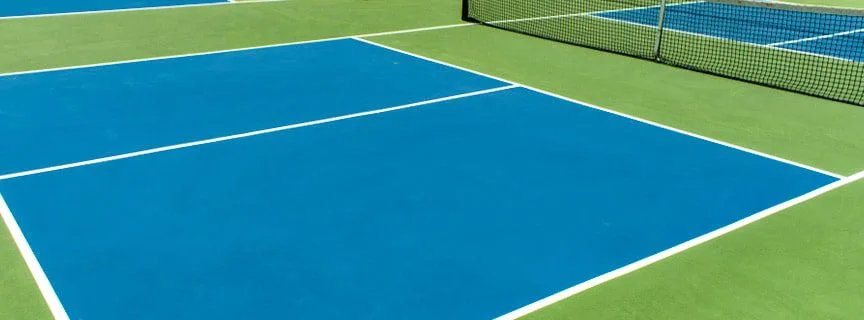
At first glance, a pickleball court might seem like a simple rectangle with a few lines. But every marking has a purpose. Together, they create structure, define strategy, and guide gameplay.
A regulation pickleball court layout includes:
- Two baselines (back boundaries)
- Two sidelines (side boundaries)
- A centerline dividing service courts
- Two non-volley zone lines (kitchen lines)
- The net dividing the court in half
The court is split evenly into two identical halves by the net. Each half contains a 7-foot non-volley zone near the net and two 10-foot service areas behind it. These service areas are divided by the centerline.
The baselines mark the back edge of the court. When serving, players must stand behind this line. The sidelines define the width. Any ball landing outside these boundaries is considered out.
The centerline is critical during serves. It divides the service area into left and right sections. When serving, the ball must land diagonally in the opponent’s corresponding service box.
Proper court orientation is another often-overlooked detail. Outdoor courts should ideally be aligned north-south. Why? Because it minimizes sun glare during morning and evening play. No one wants to lose a point because the sun was in their eyes.
Spacing around the court is equally important. Players need room beyond the baselines and sidelines for safety and mobility. Tournament guidelines often recommend at least 10 feet behind baselines and 5 feet on each side.
Think of the layout like a blueprint. Every line tells players where they can move, stand, and score. Remove or misplace one line, and the game starts to unravel.
Let’s dive deeper into one of the most crucial functional areas: the service zones and serving structure.
Service Areas and Serving Rules
Serving in pickleball isn’t just about getting the ball in play — it’s a tactical opportunity. And the court’s service areas are designed specifically to shape that strategy.
Each side of the court contains two service boxes, divided by the centerline. Each service box measures 10 feet wide by 15 feet long, extending from the non-volley zone line to the baseline.
When serving, players must:
- Stand behind the baseline.
- Keep at least one foot behind the line.
- Serve diagonally across the net.
- Land the serve beyond the opponent’s kitchen line.
- Avoid stepping on or over the baseline during contact.
The serve must clear the non-volley zone entirely. If it lands in the kitchen — even touching the line — it’s a fault.
There are two main types of serves:
- Traditional underhand serve (paddle below waist)
- Drop serve (ball dropped and hit after bounce)
The diagonal serving requirement forces players to think strategically. Serving wide can pull opponents off the court. A deep serve can push them toward the baseline. A softer serve might set up a third-shot drop.
The double-bounce rule adds another layer of strategy. After the serve, the receiving team must let the ball bounce once before returning it. Then the serving team must also let it bounce once before volleying. This rule prevents immediate net rushing and encourages longer rallies.
The service rotation system in doubles ensures fairness and equal opportunity. Players switch sides after scoring, adding movement and variation to gameplay.
The service areas may look simple, but they are the engine that keeps every match running smoothly.
Now let’s explore something that dramatically affects gameplay feel — the type of surface beneath your feet.
Types of Pickleball Court Surfaces
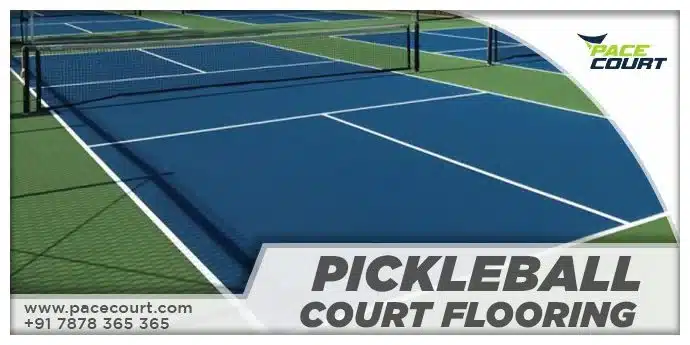
The surface of a pickleball court can completely change the experience of the game. It affects ball bounce, speed, joint impact, and even noise levels. Choosing the right surface is like choosing the right tires for your car — it determines how the game performs.
There are four main surface types:
Concrete Courts
Concrete is the gold standard for permanent outdoor pickleball courts. It’s durable, long-lasting, and provides a consistent bounce. When coated with acrylic surfacing, it delivers excellent traction and weather resistance. However, concrete can be hard on the knees and ankles over time.
Asphalt Courts
Asphalt is slightly more flexible than concrete and often less expensive to install. It provides a reliable playing surface but may require more frequent maintenance, especially in areas with extreme temperature changes.
Modular Tile Surfaces
These are interlocking plastic tiles installed over a flat base. They’re popular for backyard courts because they’re easier to install and replace. They also offer better shock absorption, making them more joint-friendly.
Indoor Wooden Courts
Many indoor pickleball courts are set up on gymnasium floors made of hardwood. These surfaces provide a slightly different ball bounce and typically require specialized indoor pickleballs.
Each surface type offers unique benefits. Concrete and asphalt are ideal for competitive outdoor play. Modular tiles offer comfort and flexibility. Wood works well for multi-use indoor facilities.
When selecting a surface, consider climate, budget, usage frequency, and player comfort.
Next, we’ll compare indoor and outdoor pickleball courts and how each presents its own challenges and advantages.
Indoor vs Outdoor Pickleball Courts
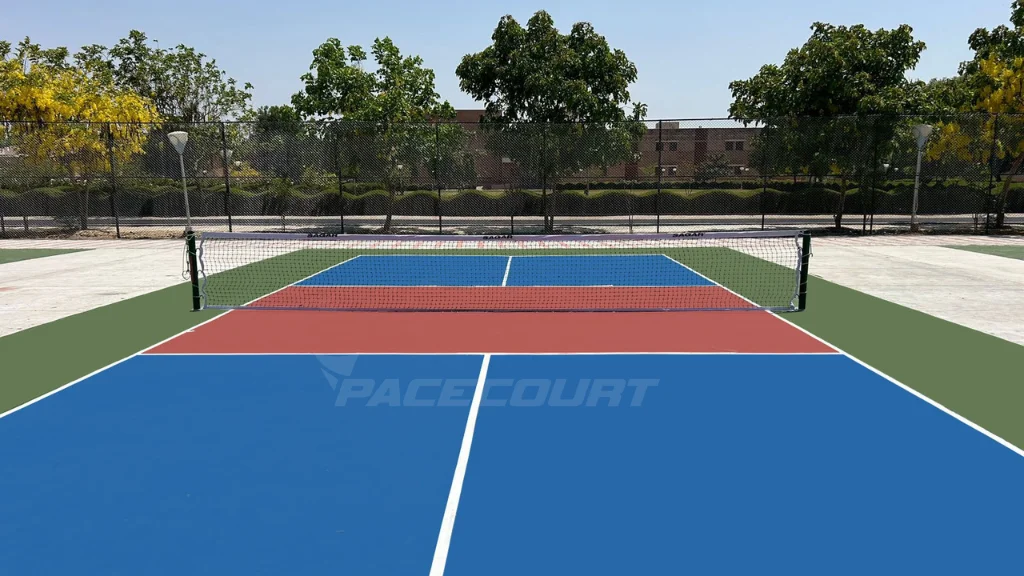
Choosing between an indoor and outdoor pickleball court isn’t just about location—it’s about experience. Each environment shapes how the game feels, sounds, and unfolds. Think of it like playing guitar in a studio versus at an open-air concert. Same instrument, different vibe.
Construction and Environmental Differences
Outdoor courts are typically built using concrete or asphalt, coated with acrylic surfacing for traction and weather resistance. They must account for drainage, UV exposure, temperature fluctuations, and wind. Proper slope—usually about 1%—is essential to prevent water pooling.
Indoor courts, on the other hand, are often constructed with hardwood flooring, synthetic sports flooring, or multi-purpose gym surfaces. These courts don’t face weather challenges, but they must address lighting glare, ceiling height (ideally 18–20 feet minimum), and ventilation.
Wind is a major factor outdoors. Even a light breeze can shift ball trajectory. Sun glare can impact visibility, especially during early morning or late afternoon matches. Indoor courts eliminate those variables, offering a more controlled environment.
Advantages of Outdoor Courts
- Fresh air and open space
- Lower construction cost compared to full indoor facilities
- Community park accessibility
- Natural lighting during daytime
However, outdoor courts require ongoing maintenance due to weather exposure. Cracks, fading lines, and surface wear are common over time.
Advantages of Indoor Courts
- Year-round play regardless of weather
- Controlled lighting conditions
- No wind interference
- Consistent surface conditions
The downside? Higher construction and operational costs, especially for climate control.
If you’re building at home, outdoor is often more practical. If you’re managing a sports facility, indoor courts maximize consistent play schedules and league hosting.
Ultimately, the “better” option depends on your goals. Recreational family games? Outdoor works beautifully. Competitive league play year-round? Indoor might be your best bet.
Now, let’s break down what it actually takes to build a pickleball court from scratch.
How to Build a Pickleball Court
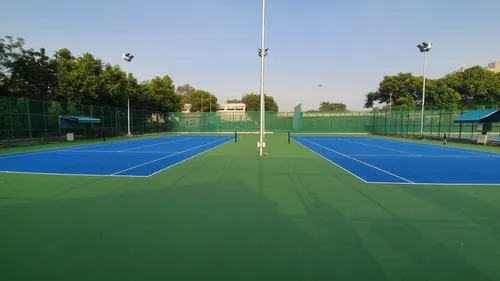
Building a pickleball court may sound overwhelming, but when you break it down step by step, it becomes manageable. Like constructing a house, the foundation determines everything that follows.
Step 1: Planning and Site Selection
Start by evaluating space. A regulation court measures 20 x 44 feet, but you’ll need at least 30 x 60 feet for safe play. Choose a flat area with good drainage. Avoid low spots where water collects.
Outdoor courts should ideally face north-south to reduce sun glare.
Step 2: Ground Preparation
This is where precision matters most. The ground must be excavated and leveled. A gravel base layer is installed and compacted to create stability. Without a solid base, cracks will appear over time.
For concrete courts:
- Install forms
- Pour concrete slab (typically 4 inches thick)
- Allow proper curing time (about 28 days for full strength)
For asphalt courts:
- Lay and compact asphalt
- Allow curing before applying coatings
Step 3: Surface Coating and Line Marking
Once the base is cured, apply acrylic resurfacing layers. These coatings provide:
- UV protection
- Slip resistance
- Improved ball bounce
Court lines are carefully measured and painted using specialized tape and paint. Accuracy is critical.
Step 4: Net and Accessories Installation
Install permanent net posts or set up a portable system. Add fencing (10 feet high is common) and lighting if needed.
Cost Breakdown
Here’s a rough estimate for a single outdoor court:
| Item | Estimated Cost |
|---|---|
| Site prep & base | $5,000–$10,000 |
| Concrete slab | $8,000–$15,000 |
| Acrylic coating | $4,000–$7,000 |
| Net system | $500–$1,500 |
| Fencing | $8,000–$15,000 |
Total range: $25,000–$50,000+
Backyard DIY courts may cost less depending on materials used.
Building a pickleball court is an investment—but for many players, it’s worth every penny.
Let’s explore a cost-effective alternative: converting an existing tennis court.
Converting a Tennis Court into a Pickleball Court
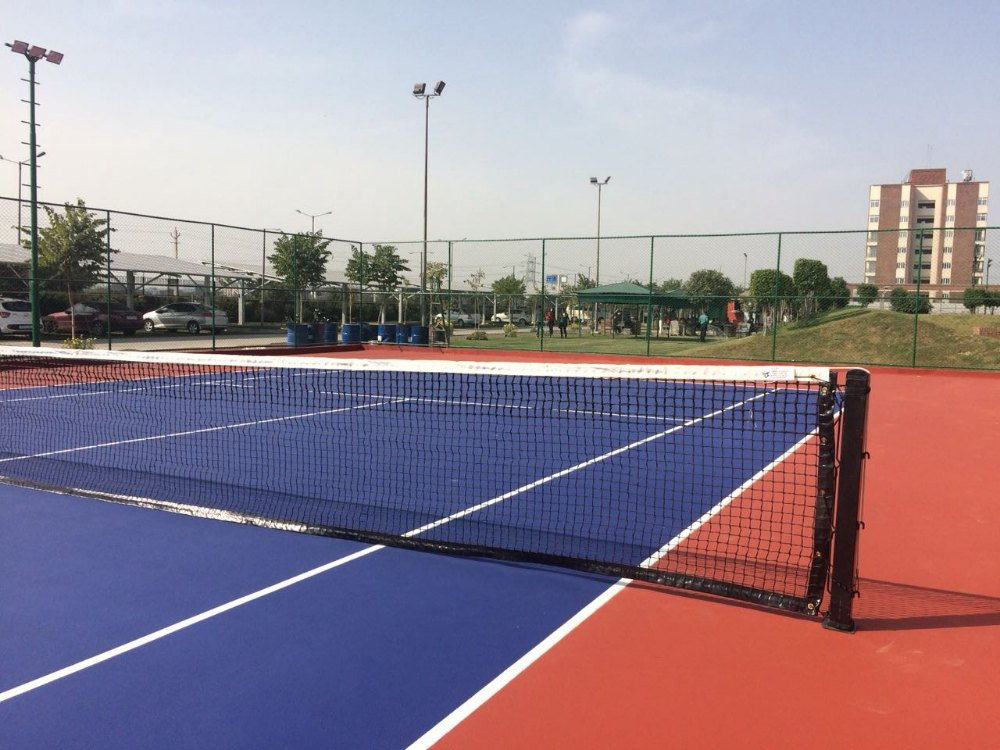
If you already have access to a tennis court, you’re halfway there. One tennis court can fit up to four pickleball courts, making conversion a smart way to maximize space.
Why Conversion Is Popular
Tennis participation has declined in some areas, while pickleball participation continues to surge. Communities are repurposing underused tennis courts to meet demand.
A tennis court measures 60 x 120 feet. Since a pickleball court is much smaller (20 x 44 feet), multiple layouts are possible.
Conversion Options
- Temporary Setup
- Use portable nets
- Apply removable tape lines
- Minimal cost
- Great for shared-use facilities
- Permanent Conversion
- Paint permanent pickleball lines
- Install dedicated net posts
- May remove or blend tennis lines
Line Confusion Issue
One challenge with shared courts is visual clutter. Too many lines can confuse players. To avoid this:
- Use contrasting colors for pickleball lines
- Clearly label courts
- Consider signage for beginners
Cost of Conversion
Temporary conversion: $500–$2,000
Permanent painted conversion: $3,000–$10,000
Converting a tennis court is like remodeling a large room into smaller, functional spaces. It’s efficient, cost-effective, and practical.
Next, let’s talk about something players often overlook—but definitely feel—floor coatings and safety features.
Pickleball Court Flooring and Coatings
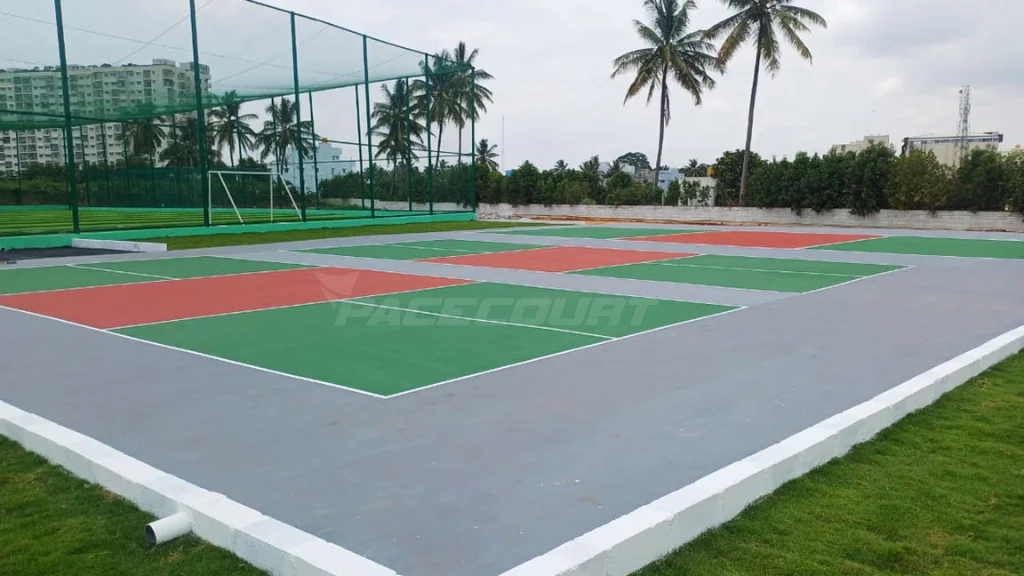
A court’s surface coating is more than just color—it’s performance chemistry. The right coating enhances traction, protects the base, and improves playability.
Acrylic Coatings
These are the most common for outdoor courts. Acrylic layers:
- Protect against UV damage
- Improve traction
- Enhance ball visibility
They’re applied in multiple layers, including resurfacer, color coats, and line paint.
Cushioned Surfaces
Some facilities opt for cushioned acrylic systems. These include rubberized layers beneath the topcoat. Benefits include:
- Reduced joint strain
- Better shock absorption
- Enhanced player comfort
This is especially beneficial for older players—a significant demographic in pickleball.
Slip Resistance and Safety
Texture additives are mixed into coatings to prevent slipping. A surface that’s too smooth becomes dangerous when wet.
Color also matters. Common combinations include:
- Blue playing area with green outer zones
- Green court with red boundaries
High contrast improves visibility.
Surface coatings must be reapplied every 4–8 years depending on usage and climate.
Now let’s move beyond the surface and look at fencing and lighting—two elements that elevate a court from basic to professional.
Fencing and Lighting for Pickleball Courts
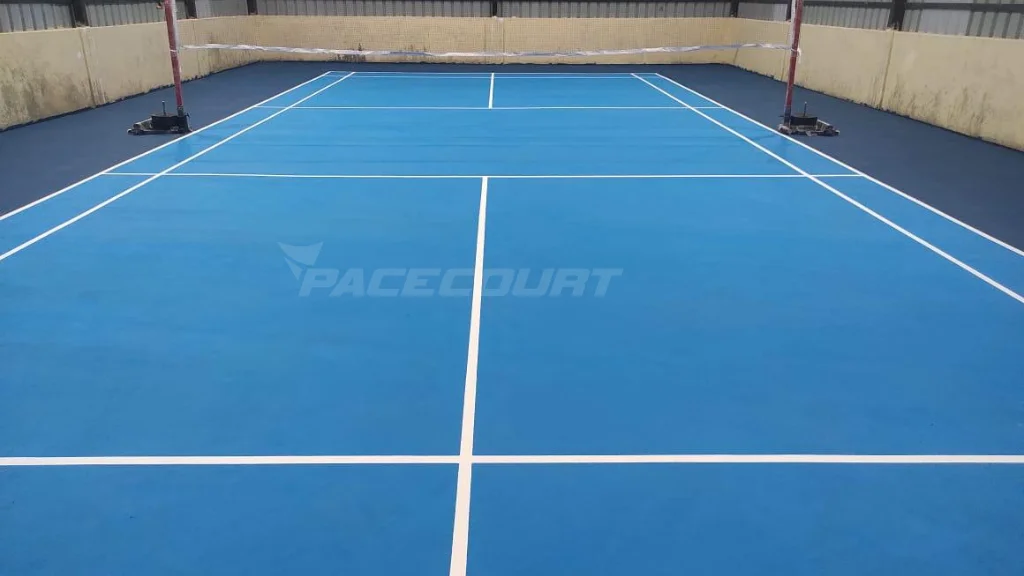
A quality pickleball court doesn’t stop at painted lines. Fencing and lighting transform it into a complete playing environment.
Fencing Requirements
Standard fencing height is 10 feet around the perimeter. This prevents balls from rolling far and keeps play contained.
Chain-link fencing is most common due to durability and cost-effectiveness. Wind screens can be added to reduce wind interference and improve aesthetics.
For backyard courts, fencing may be optional depending on space.
Lighting for Night Play
LED lighting is the modern standard. It provides:
- Energy efficiency
- Bright, even illumination
- Lower maintenance costs
Lights should be mounted at least 20 feet high to minimize glare. Proper placement avoids shadows across the net.
Recommended lighting level for recreational play: 30 foot-candles
For tournament play: 50+ foot-candles
Lighting placement is strategic—like stage lighting in a theater. It should illuminate the action without blinding the players.
A well-lit court extends playing hours and increases facility revenue potential.
Pickleball Court Maintenance Tips
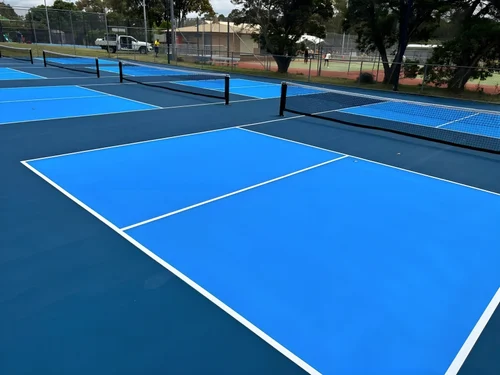
Building a pickleball court is only half the battle. Keeping it in top shape? That’s where the long-term commitment kicks in. Think of your court like a car. You wouldn’t buy one and never change the oil, right? The same logic applies here. Regular maintenance keeps the surface safe, extends its lifespan, and ensures consistent ball bounce.
Routine Cleaning and Surface Care
Outdoor courts collect dust, leaves, pollen, and debris. Over time, this buildup can make the surface slippery and affect traction. A simple maintenance routine includes:
- Sweeping or blowing debris weekly
- Washing the surface monthly with mild detergent and water
- Removing mold or mildew using approved cleaners
- Clearing drainage areas to prevent water pooling
Standing water is a silent enemy. It weakens coatings and seeps into small cracks, especially in freeze-thaw climates.
Indoor courts need less structural maintenance but still require regular cleaning. Dust accumulation can reduce traction, especially on hardwood or synthetic gym floors.
Crack Repair and Surface Resurfacing
Small cracks in concrete or asphalt should be repaired quickly. If ignored, they expand and worsen. Acrylic crack fillers and patch compounds are commonly used before recoating.
Most acrylic-coated courts require resurfacing every 4 to 8 years, depending on usage and climate. Heavy public use accelerates wear.
Faded lines should be repainted as needed to maintain visibility and compliance with official standards.
Net and Equipment Checks
Don’t forget the net system. Check for:
- Proper tension
- Rusted hardware
- Frayed net cords
- Stable posts
A sagging net can subtly impact gameplay and frustrate players.
Consistent maintenance saves money long term. Preventative care is always cheaper than major repairs. A well-maintained pickleball court not only plays better—it looks professional and inviting.
Now, let’s bring things closer to home. What if you want your very own backyard pickleball court?
Backyard Pickleball Court Setup
Imagine walking outside with your paddle, calling a few friends over, and starting a match within minutes. That’s the appeal of a backyard pickleball court. It’s convenient, social, and adds serious value to your home.
Space Requirements at Home
At minimum, you’ll need a flat area measuring 30 x 60 feet. Tighter spaces can work, but reduced runoff space limits competitive play.
If your yard is smaller, creative adjustments—like reduced fencing or portable setups—can still make it playable.
DIY vs Professional Installation
There are two main approaches:
DIY Installation
- Lower cost
- Requires careful measurement
- May use modular tiles or painted concrete
- Portable net systems
Professional Installation
- Higher upfront investment
- Expert grading and drainage
- Long-term durability
- Custom fencing and lighting options
Backyard courts often use modular tile systems because they’re easier to install over existing concrete slabs. These tiles provide shock absorption and can be replaced individually if damaged.
Cost Estimate for Backyard Courts
Here’s a general range:
| Type | Estimated Cost |
|---|---|
| Painted concrete slab | $10,000–$25,000 |
| Modular tile over slab | $15,000–$30,000 |
| Full premium installation with fencing & lighting | $35,000–$60,000 |
While it’s an investment, many homeowners see it as both a lifestyle upgrade and property value booster.
A backyard pickleball court isn’t just about sport—it’s about community, family bonding, and convenience.
But what if you don’t want permanent construction? That’s where portable courts shine.
Portable and Temporary Pickleball Courts
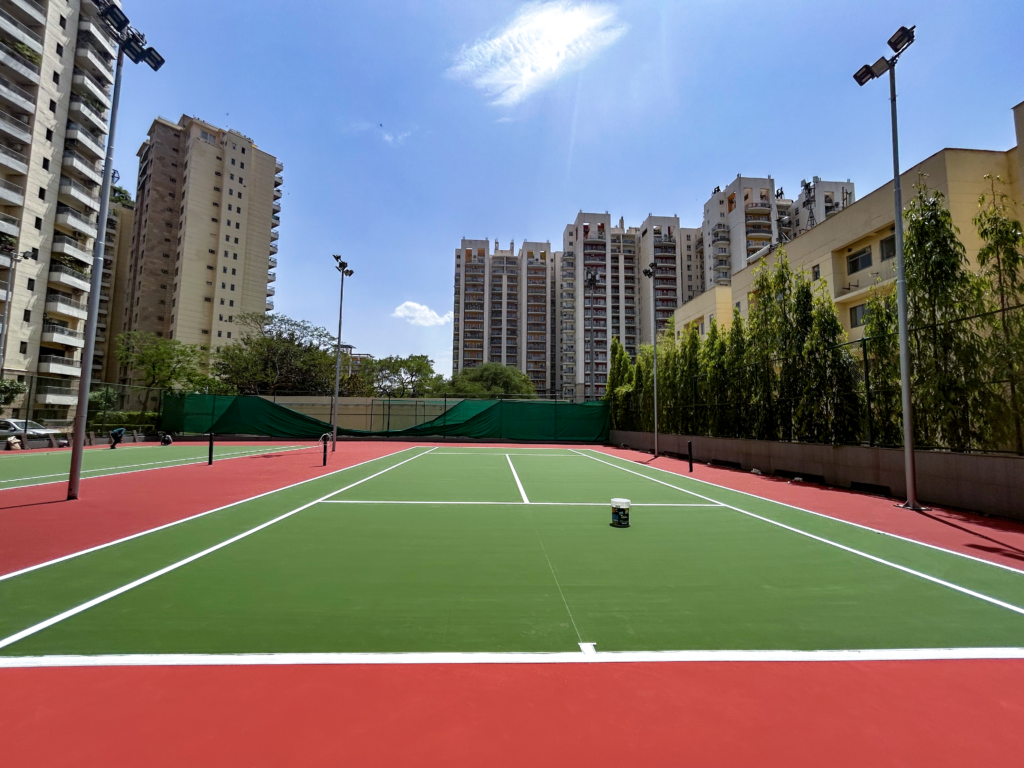
Not everyone has the space—or budget—for a permanent installation. The good news? Pickleball is one of the easiest sports to set up temporarily.
Driveway Setup Guide
If you have a reasonably flat driveway or paved area, you’re halfway there.
Here’s what you need:
- Portable pickleball net
- Measuring tape
- Court tape or chalk
- Pickleballs and paddles
Mark a 20 x 44-foot rectangle using tape. Ensure the non-volley zone lines are placed exactly 7 feet from the net on both sides.
Portable nets typically assemble in under 10 minutes. Many include a center strap to maintain proper height.
Advantages of Temporary Courts
- Affordable (often under $500 total setup)
- Easy storage
- No permanent markings
- Ideal for schools and shared facilities
Limitations
- Surface may not provide ideal traction
- No fencing means chasing balls
- Not tournament standard
Temporary courts are like pop-up events—quick, flexible, and fun. They’re perfect for beginners or casual play.
Now, let’s talk about official standards and regulations for competitive play.
Pickleball Court Regulations and Guidelines
For recreational play, minor imperfections may go unnoticed. But in sanctioned tournaments, regulations are strict.
USA Pickleball Standards
Official guidelines require:
- Court size: 20 x 44 feet
- Non-volley zone: 7 feet
- Net height: 36 inches at sidelines, 34 inches at center
- Proper line width (2 inches standard)
- Adequate surrounding space
Tournament courts also require specific lighting standards, surface uniformity, and safe fencing.
Tournament-Level Requirements
Competitive venues must ensure:
- Minimum overhead clearance (18–20 feet)
- Uniform ball bounce across the surface
- Consistent court coloring
- No obstructions within play area
Color contrast between playing area and out-of-bounds space improves visibility for players and referees.
Regulations exist to maintain fairness. When every court meets the same specifications, skill—not environment—determines the winner.
Let’s now examine common design mistakes that can undermine a court’s quality.
Common Mistakes When Designing a Pickleball Court
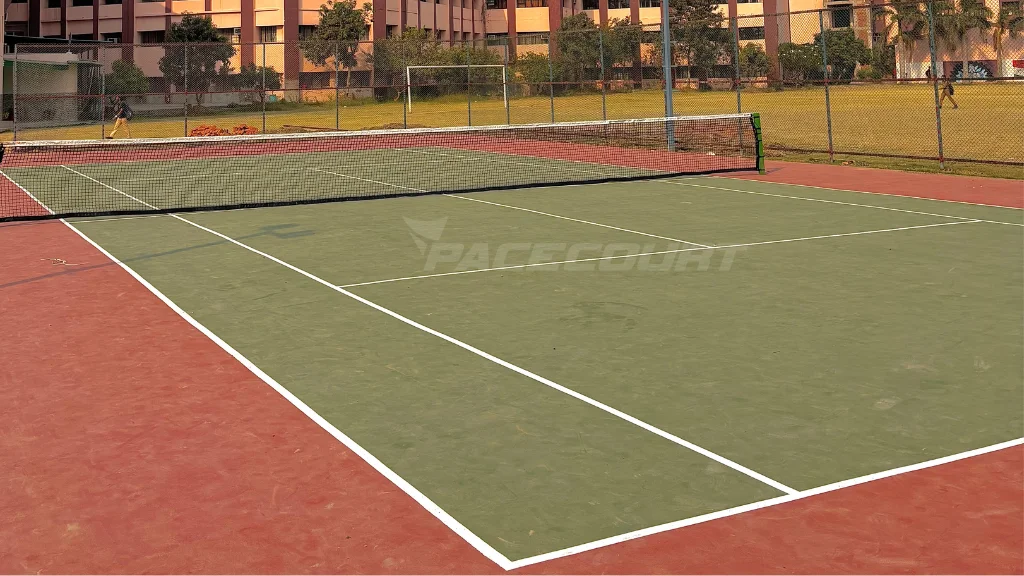
Even small oversights can lead to major frustration. Avoid these common pitfalls:
Improper Measurements
Guessing instead of measuring precisely can lead to:
- Incorrect kitchen depth
- Misaligned service boxes
- Improper net height
Always double-check measurements before painting lines.
Poor Drainage Planning
Water pooling damages surfaces and creates slipping hazards. Proper grading is essential.
Ignoring Orientation
An east-west court orientation often results in sun glare issues during peak hours.
Low-Quality Materials
Cutting corners on base materials or coatings may save money initially—but leads to expensive repairs later.
Think of court design like baking. If you skip precise measurements, the final product won’t rise properly.
Now, let’s look ahead at where pickleball court design is heading.
Future Trends in Pickleball Court Design
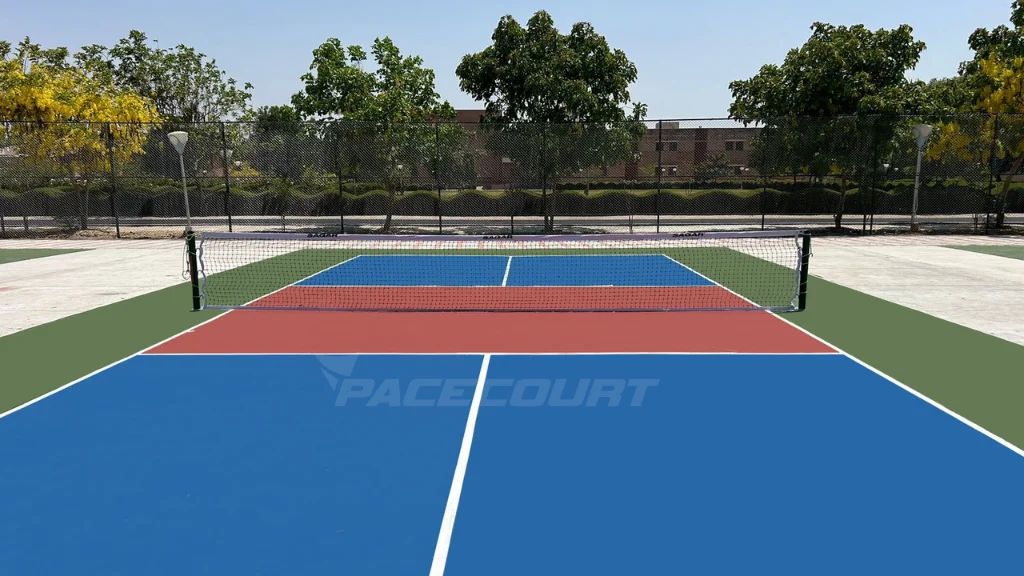
Pickleball isn’t slowing down. And as it evolves, so does court innovation.
Smart Courts and Technology Integration
Some facilities now incorporate:
- AI-powered line calling
- Digital scoreboards
- Performance tracking systems
- Live-streaming capabilities
Technology enhances training and tournament experiences.
Eco-Friendly Construction
Sustainability is becoming a priority. Innovations include:
- Recycled surface materials
- Permeable court bases for better drainage
- Solar-powered lighting systems
Green construction reduces environmental impact while maintaining performance.
As demand grows, expect more multi-court complexes, rooftop courts, and hybrid recreational spaces.
The pickleball court of the future isn’t just functional—it’s interactive, sustainable, and community-driven.
Conclusion
A pickleball court may look simple, but every measurement, surface choice, and design detail plays a role in shaping the game. From the precise 20 x 44-foot dimensions to the strategic non-volley zone, the court creates a balanced blend of power, finesse, and accessibility.
Whether you’re building a professional-grade facility, converting a tennis court, setting up in your backyard, or simply marking lines on your driveway, understanding court fundamentals ensures better play and longer-lasting results.
Pickleball’s growth shows no signs of slowing. And as more players discover the joy of the game, well-designed courts will remain at the heart of the action.
Stay Updated with Pacecourt
Discover expert insights, practical tips, and the latest industry updates from Pacecourt, covering sports flooring, tennis and multi-sport court construction, resurfacing, maintenance, court performance, and innovative sports infrastructure solutions.
Powered by Google's Preferred Sources feature