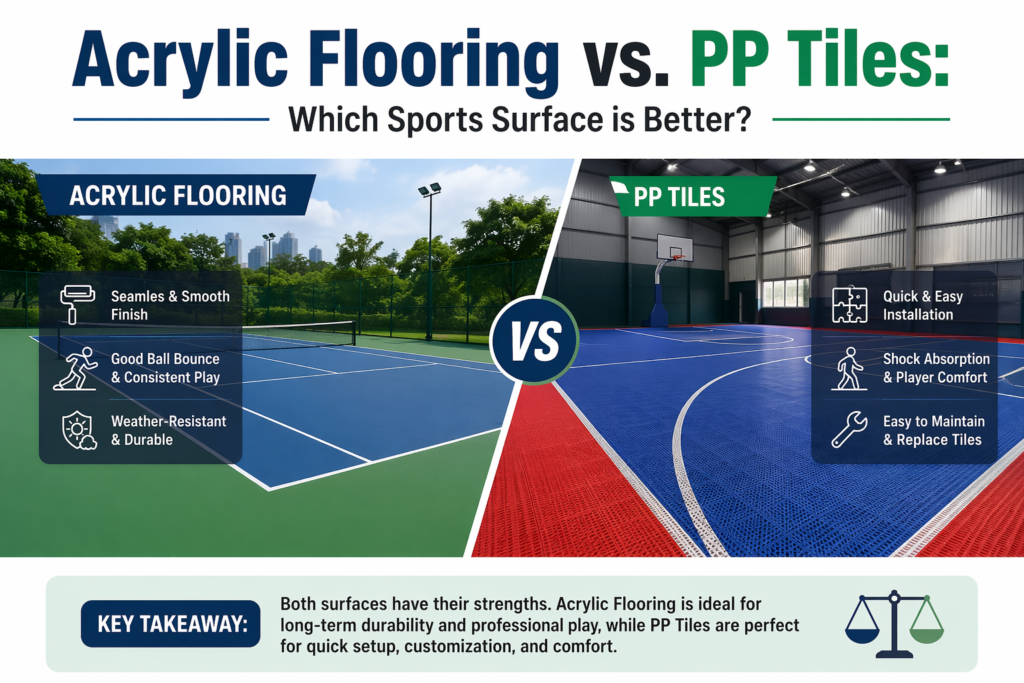
Acrylic Flooring vs PP Tiles: Which Sports Surface is Better?
When people think about sports performance, they often focus on athletes, equipment, or training routines. But the surface beneath their feet? That’s just as critical. When comparing Acrylic Flooring vs PP Tiles, it becomes clear that a sports surface isn’t just a passive element—it actively shapes how a game is played, how athletes move, and even how injuries occur. Whether you’re setting up a basketball court, tennis arena, or multi-purpose sports facility, the flooring decision carries long-term consequences. A good sports surface absorbs impact, reduces fatigue, and allows athletes to perform at their peak. Imagine running on concrete versus a cushioned track—your joints feel the difference immediately. The same principle applies to acrylic flooring and PP interlocking tiles. Both are engineered to enhance performance, but they achieve it in very different ways. Safety is another huge factor. According to sports facility studies, nearly 30% of sports injuries are related to poor surface conditions. Slippery floors, uneven textures, or inadequate shock absorption can lead to sprains, fractures, and long-term joint issues. That’s why modern sports flooring systems are designed with biomechanics in mind, helping distribute force and reduce strain. There’s also the psychological aspect. Athletes feel more confident on a reliable surface. Consistent bounce, predictable traction, and stable footing allow players to focus on the game instead of worrying about slipping or missteps. This confidence often translates into better performance. In short, choosing between acrylic flooring and PP interlocking tiles isn’t just about aesthetics or cost. It’s about creating an environment where athletes can perform safely, consistently, and comfortably. And that’s why this comparison matters more than most people initially realize. Key Factors That Define a Good Sports Surface So what exactly makes a sports surface “good”? It’s not just one feature—it’s a combination of several critical elements working together seamlessly. Understanding these factors helps you make a smarter decision when comparing acrylic flooring and PP interlocking tiles. First up is shock absorption. This determines how well the surface reduces impact on joints. Surfaces with poor shock absorption can lead to fatigue and long-term injuries, especially in high-impact sports like basketball or volleyball. Acrylic flooring typically offers moderate cushioning, while PP tiles often incorporate built-in suspension systems for enhanced comfort. Next is traction and grip. Too much grip can restrict movement, while too little can cause slips. The ideal balance allows for quick direction changes without compromising stability. Acrylic surfaces usually provide a consistent grip, whereas PP tiles can vary depending on design and texture. Another important factor is ball response. In sports like tennis or basketball, consistent bounce is non-negotiable. Acrylic flooring is known for its uniform bounce, making it a favorite for professional courts. PP tiles, on the other hand, may produce slightly varied bounce depending on installation and subfloor conditions. Durability also plays a major role. A sports surface should withstand heavy usage, weather exposure, and wear over time. Acrylic coatings can last years with proper maintenance, while PP tiles are known for their resilience and easy replacement. Finally, consider installation and maintenance. Some surfaces require professional installation and regular upkeep, while others are more DIY-friendly. This can significantly impact long-term costs and convenience. All these factors combine to determine whether a sports surface meets your needs. And as you’ll see in the sections ahead, acrylic flooring and PP interlocking tiles each bring their own strengths—and trade-offs—to the table. What is Acrylic Sports Flooring? Composition and Structure of Acrylic Flooring Acrylic sports flooring might look simple on the surface, but underneath that clean, vibrant finish lies a carefully engineered system designed for performance and durability. At its core, acrylic flooring is a multi-layered coating system applied over a solid base—usually concrete or asphalt. Each layer plays a specific role, working together to create a consistent, high-performance playing surface. The process typically begins with a primer layer, which ensures proper adhesion to the base. This is followed by one or more cushion layers, depending on the desired level of shock absorption. These layers often include rubber granules or flexible resins that help reduce impact stress on athletes’ joints. On top of that comes the acrylic color coating, which not only provides the court’s appearance but also contributes to traction and weather resistance. Finally, a line-marking layer is added to define the playing area. What makes acrylic flooring particularly appealing is its seamless finish. Unlike modular systems, there are no joints or gaps, which means a uniform playing experience across the entire court. This consistency is one of the reasons why acrylic surfaces are widely used in professional settings, including international tennis tournaments. Another advantage lies in its customizability. You can adjust the texture, color, and cushioning level to suit different sports. Want a faster tennis court? Reduce the cushioning. Need more comfort for basketball? Add extra layers. This flexibility allows facility owners to tailor the surface to specific needs. However, this sophisticated structure comes with a trade-off. Acrylic flooring relies heavily on the quality of the base underneath. Any cracks or imperfections in the concrete can eventually reflect through the surface, affecting performance and aesthetics. That’s why proper groundwork and professional installation are crucial. In essence, acrylic sports flooring is like a finely tuned instrument—when installed correctly, it delivers precision, consistency, and reliability. But it demands a solid foundation and careful maintenance to truly shine. Common Applications of Acrylic Sports Surfaces Acrylic sports flooring has become almost synonymous with professional and semi-professional sports environments. If you’ve ever watched a major tennis tournament, chances are you’ve seen acrylic courts in action. Events like the US Open and Australian Open use acrylic surfaces because of their predictable ball behavior and player-friendly characteristics. One of the most common applications is tennis courts. Acrylic surfaces provide a consistent bounce and allow players to develop a rhythm, which is essential for competitive play. The ability to fine-tune surface speed—by adjusting texture and coating thickness—makes it suitable for both fast-paced and slower gameplay styles. Basketball courts also frequently use acrylic flooring, especially in outdoor