Author name: Rahul

Rahul is a sports flooring expert and a key contributor at Pacecourt, a leading brand in acrylic and synthetic sports court solutions. Passionate about creating world-class playing surfaces, Rahul shares insights on tennis courts, basketball courts, and multi-purpose sports flooring. His goal is to help facility owners and sports enthusiasts choose durable, high-performance solutions that enhance the game experience.

how long is a basketball court​

How Long Is a Basketball Court? Full Dimensions, Measurements & Layout Guide

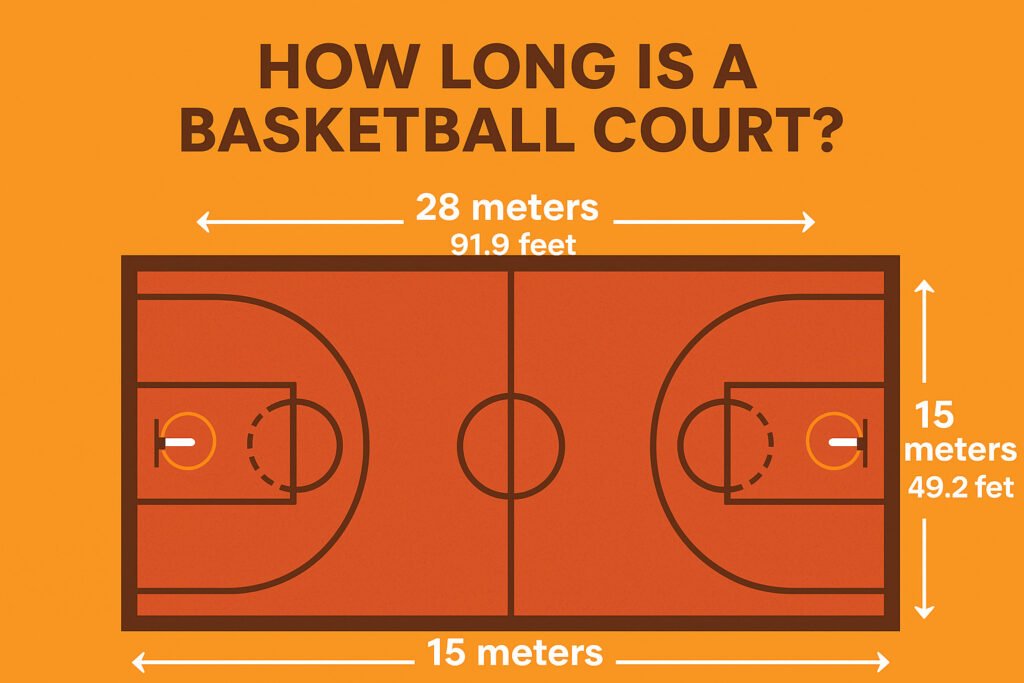
How long is a basketball court? Basketball is one of the most popular sports in the world, and the size of the court plays a major role in fair play, performance, and player safety. Whether you’re planning to build a new court for a school, society, academy, club, or sports complex, understanding the exact measurements is essential. In this guide, we answer the question “How long is a basketball court?” and explain all official dimensions according to FIBA (International), NBA, and NCAA standards. Professional Basketball: NBA and FIBA Standards At the highest level of professional basketball, two main governing bodies set the standards: the National Basketball Association (NBA) and the International Basketball Federation (FIBA). NBA Court Dimensions: FIBA Court Dimensions:Used for international competitions like the Olympics and the FIBA Basketball World Cup, these courts have slight but important differences. The NBA’s larger court and longer three-point line reflect a style of play that emphasizes space, speed, and long-range shooting. The FIBA court, being slightly smaller, can lead to more physical and congested games. College and High School Court Dimensions As you move from the professional ranks to amateur levels, the courts generally become smaller. This adjustment accommodates the varying physical development and skill levels of the players. NCAA (College) Court Dimensions:College basketball in the United States, governed by the NCAA, uses the same overall court dimensions as the NBA: 94 feet long by 50 feet wide. However, the markings within the court differ. High School (NFHS) Court Dimensions:Courts at the high school level, regulated by the National Federation of State High School Associations (NFHS), are noticeably smaller. The Evolution and Purpose of Court Dimensions These dimensions were not decided overnight. They evolved over decades to balance the game. When basketball was invented in 1891, there were no standard court sizes. The game was often played in whatever gym or hall was available. As the sport became more organized, the need for standardization grew. The lane, or paint, was widened over time (from 6 feet to 12 feet in the 1950s and then to 16 feet in the NBA) to prevent dominant big men like George Mikan from permanently camping under the basket. This led to the creation of the three-second violation. The three-point line was a later addition, popularized by the American Basketball Association (ABA) in the 1960s and adopted by the NBA in 1979. Its purpose was to add another layer of strategy, reward long-range shooting, and create space on the floor. The distance has been adjusted over the years to find the right balance between a makeable shot and a challenging one. How Dimensions Impact Gameplay Court dimensions directly influence strategy and player roles. From the local gym to the NBA finals, the lines on a basketball court are a fundamental part of the game. They shape the action, define the challenge, and provide the framework for the incredible athletic displays we love to watch. Basketball Court Layout & Markings (Complete Breakdown) Understanding the measurements beyond court length is equally important when building a court. 🔸 Key Layout Dimensions Court Component FIBA Measurement NBA Measurement Free-throw line distance from backboard 4.6 m (15 ft) 15 ft (4.57 m) 3-point line (from basket) 6.75 m 23.75 ft (7.24 m) Rim height 3.05 m (10 ft) 3.05 m (10 ft) Backboard size 1.8 × 1.05 m 6 ft × 3.5 ft Restricted zone radius 1.25 m 4 ft Minimum Playing Area Required When constructing a basketball court, space for runoff and player safety must be added beyond the playing boundary. Type Total Area Required Standard FIBA Court 32 m × 19 m Standard NBA Court 35.66 m × 20.12 m Half Court (Practice / Residential) 15 m × 14 m minimum Full Court vs Half Court — Which Should You Choose? Type Best For Advantages Full Court Schools, academies, clubs, sports complexes, societies Professional training, tournaments, team play Half Court Bungalows, private homes, small societies, rooftop areas Less space required, lower cost, quick installation If space or budget is limited, a half-court basketball court is an excellent choice for practice and recreation. Ideal Flooring for Basketball Court Construction Choosing the right flooring affects performance, safety, and durability. Flooring Type Indoor Outdoor Pros Acrylic Synthetic ❌ ✔ Weatherproof, economical PU Flooring ✔ ❌ High cushioning, premium finish PP Interlocking Tiles ✔ ✔ Fast installation, portable Wooden Flooring ✔ ❌ Professional indoor arenas Cost to Construct a Basketball Court (Indicative) Type Approx. Cost in India Outdoor Synthetic Court ₹6 – ₹12 lakh Indoor Wooden Court ₹20 – ₹45 lakh PP Interlocking Tiles ₹8 – ₹15 lakh Half Court Practice Setup ₹3 – ₹7 lakh Conclusion Understanding how long a basketball court is is essential for anyone planning to build, renovate, or compare different court layouts. While dimensions vary slightly based on the governing body, the standard full-size court is approximately 28–28.65 meters (92–94 feet) long and 15 meters (49–50 feet) wide. Whether it’s a school, sports academy, society, club, or professional arena, using the correct measurements ensures fair gameplay, player safety, and a true basketball experience. From layout planning to flooring selection, pole installation, markings, and accessories — every detail contributes to a durable and high-performance court. With the right guidance and materials, you can build a basketball court that supports both professional play and long-term enjoyment. If you’re looking to construct a basketball court and need expert assistance, flooring recommendations, or cost estimation, feel free to reach out — the right basketball court begins with accurate dimensions and smart planning.
Outdoor Basketball Courts Near Me

Outdoor Basketball Courts Near Me – A Complete Guide (Best Locations, Flooring, Costs & Tips)

Finding the right outdoor basketball court near you can completely upgrade your game experience. Whether you’re a beginner, a regular player, or planning to build a new basketball court in your community, this guide covers everything you need — from the best flooring types to court dimensions, must-have amenities, and how to choose the safest, long-lasting court. What Makes a Good Outdoor Basketball Court? (Quick Answer) A good outdoor basketball court should have: If a court meets these criteria, it is ideal for casual play, training, and tournaments. Why Outdoor Basketball Courts Are Becoming More Popular in India Outdoor courts are becoming a trend across cities like Mumbai, Pune, Bangalore, Delhi, Hyderabad, and Chennai due to: Players prefer outdoor courts for their open-air environment, more availability, and community-friendly setup. Types of Outdoor Basketball Courts Near You Understanding court types helps you pick the right one: A. Public Basketball Courts Found in: Pros: Free access, community-friendlyCons: May lack maintenance B. Private / Housing Society Courts Located inside: Pros: Safe, clean, controlled accessCons: Restricted entry C. Sports Academies & Training Centers Best choice for: Often equipped with: Best Flooring Types for Outdoor Basketball Courts Choosing the right flooring is the MOST important part of any basketball court. 1. Synthetic Acrylic Flooring (Best for Weather Durability) Perfect for: schools, societies, academies. 2. PP Interlocking Tiles (Fast Installation + Long Life) Ideal for: rooftops, portable courts, or locations with uneven ground. 3. Concrete Court (Budget-Friendly) Not recommended for intense training due to low shock absorption. How to Find the Best Outdoor Basketball Courts Near You Use this checklist before selecting one: ✔ Flooring Quality Avoid cracked or slippery courts.Prefer acrylic or PP flooring — best for grip & bounce. ✔ Court Dimensions Look for proper markings: ✔ Safety Features ✔ Lights & Amenities Essential for evening players: ✔ Location Accessibility Choose courts: Estimated Cost of Building an Outdoor Basketball Court in India Court Type Estimated Cost Acrylic Court ₹3.2L – ₹6.5L PP Tiles Court ₹5L – ₹9L Concrete Court ₹1.5L – ₹3L Complete Court with Fencing + Lights ₹8L – ₹18L Costs vary based on size, flooring brand, accessories & location. Should You Build Your Own Outdoor Basketball Court? Many:✓ Schools✓ Colleges✓ Housing societies✓ Private academies✓ Resorts✓ Government parks …are building new courts because: If you want, I can create a complete court construction plan for you. Maintenance Tips for Long-Lasting Courts A well-maintained court lasts 8–12 years easily. Conclusion Finding the best outdoor basketball court near you depends on the court’s flooring, safety, lighting, and overall quality. If you’re planning to build a court, choosing the right flooring system can significantly improve performance, safety, and durability. Whether you are a player or a community builder, use this guide to make sure you choose a court that offers the best playing experience.

Sports Flooring Manufacturers in Mumbai

Sports Flooring Manufacturers in Mumbai — Types, Pricing, Top Brands & Complete Buying Guide

Mumbai is home to India’s fastest-growing sports and fitness infrastructure — from school sports complexes and college stadiums to premium gyms, recreational clubs and housing societies. With this growth, the demand for durable, safe and high-performance sports flooring has increased dramatically across the city. Sports flooring is not just a surface — it directly affects athlete performance, joint safety, match accuracy and long-term maintenance costs. Whether you’re building a badminton court, basketball court, tennis court, gym floor, futsal turf or multi-purpose indoor arena, choosing the right manufacturer and flooring system makes all the difference. This in-depth guide will help you understand all flooring options, real installation costs, comparison of top manufacturers in Mumbai, and how to select the right one for your project. Why Choosing the Right Sports Flooring Matters A well-engineered sports floor should: Low-quality flooring might look cheaper initially, but often leads to: Types of Sports Flooring Available in Mumbai 1. Acrylic Synthetic Sports Flooring (Indoor & Outdoor) Most popular for: Benefits 2. Wooden Sprung Sports Flooring Preferred for: Benefits 3. PU / PVC / EPDM Flooring Used in: Benefits 4. Rubber / Vinyl Flooring Best for: Benefits Slip-resistant and shock absorbent Noise reduction Highly durable Sports Flooring Installation Cost in Mumbai (2025 Estimates) Flooring System Approx Installed Cost (per sq.ft) Suitable For Acrylic Synthetic (8-layer) ₹55 – ₹80 / sq.ft Outdoor multi-sport courts PU / PVC Cushioned Flooring ₹90 – ₹250 / sq.ft Indoor courts & gymnasiums Wooden Sprung Maple Flooring ₹280 – ₹550 / sq.ft Professional indoor sports Rubber Gym Tiles ₹95 – ₹250 / sq.ft Gyms & weight zones EPDM Playground Flooring ₹160 – ₹330 / sq.ft Kids’ play areas & track Top Sports Flooring Manufacturers & Suppliers in Mumbai Below are trusted brands and suppliers based in Mumbai or actively serving the Mumbai market: Manufacturer / Supplier Specialization Ideal Projects Asian Flooring Wooden indoor courts, synthetic sports flooring Basketball, badminton, squash Apex Sport Surfaces Premium wooden flooring systems Stadiums & indoor sports arenas Sunflex / Sunflex India EPDM, PU, acrylic & wooden systems Swimming pool decks, tracks, tennis & gym floors Maestro Infratech Acrylic courts, cushioned flooring School & club badminton/tennis courts Multi-brand Local Installers Affordable synthetic courts & gyms Housing societies, colleges & budget projects Tip: Always ask for recent project photos, local references, warranty documents and surface test reports before finalizing a vendor. How to Choose the Right Sports Flooring Manufacturer in Mumbai Before signing a deal, evaluate on these parameters: ✔ Technical Knowledge A reliable manufacturer must provide: ✔ Site Survey & Sub-base Assessment The contractor must inspect: ✔ Customization Possibilities Check whether they provide: ✔ Warranty & After-Sales Service Prefer vendors offering: Installation Timeline (Typical) Flooring System Avg. Timeline Acrylic 8-Layer Court 4–10 days PU / PVC Indoor Flooring 3–7 days Wooden Sprung Flooring 2–4 weeks Rubber / EPDM Flooring 3–7 days Delays may occur during monsoon due to curing challenges on outdoor installations. Maintenance Guide for Long Life To extend lifespan and performance:

Tennis Court Flooring
Tennis court flooring

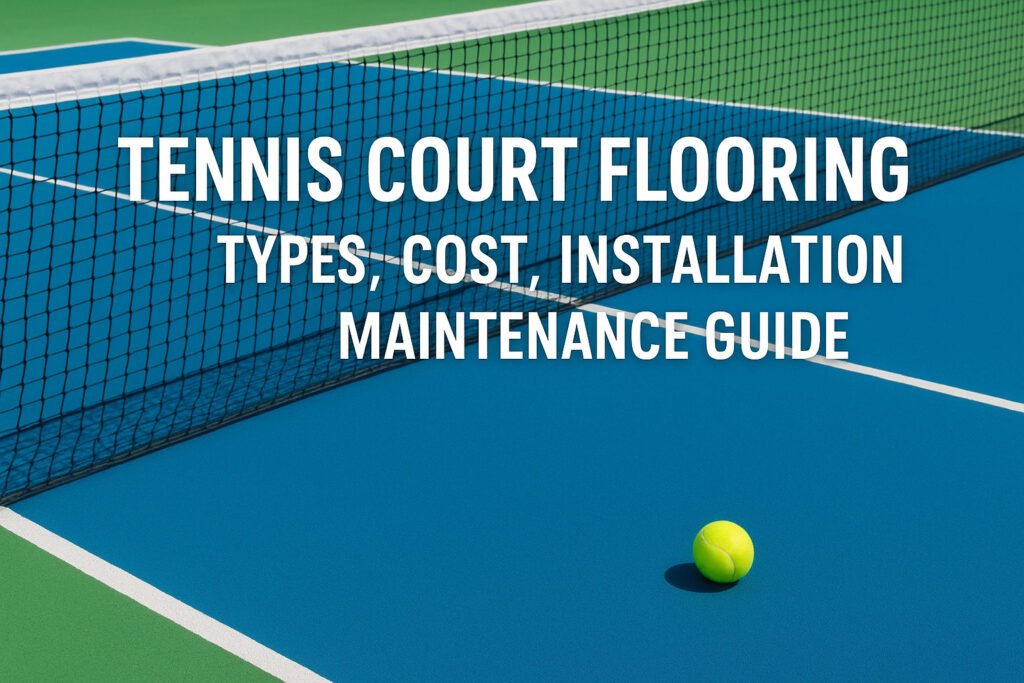
Tennis Court Flooring: Types, Cost, Installation & Maintenance Guide

The surface beneath a player’s feet is just as crucial as the racquet in their hand. Tennis court flooring dictates the speed of the game, the bounce of the ball, and even the physical toll on a player’s body. Understanding the different types of courts is the first step toward building a new facility, upgrading an existing one, or simply appreciating the nuances of the sport. This guide will walk you through everything you need to know about tennis court flooring. We will explore the primary types of surfaces, weigh their pros and cons, and discuss the key factors to consider before making a choice. You will also find practical maintenance tips to ensure the longevity and performance of your court. Understanding Tennis Court Flooring Tennis court flooring is the specialized surface on which the game is played. It’s not just a layer of paint over concrete; it is an engineered system designed to provide specific play characteristics. The right surface influences ball speed, bounce height, and spin response. It also affects player movement, safety, and comfort, making its selection a critical decision for clubs, schools, and private owners alike. The surface directly impacts player performance and can favor different playing styles. A fast court might benefit a player with a powerful serve, while a slower court gives a baseline player more time to react. The choice of flooring is a significant investment that affects gameplay, maintenance costs, and the court’s overall lifespan. Types of Tennis Court Flooring The International Tennis Federation (ITF) classifies court surfaces based on their speed, from slow to fast. The most common types of tennis courts are hard courts, clay courts, and grass courts, each hosting major professional tournaments. Synthetic surfaces also offer versatile alternatives. Hard Courts Hard courts are the most common type of tennis court flooring worldwide. They are typically constructed from a rigid base of concrete or asphalt, topped with layers of acrylic cushioning and paint to provide a consistent playing surface. The Grand Slams played on hard courts are the US Open and the Australian Open. Pros: Cons: Clay Courts Famous for the French Open, clay courts are made from crushed brick, shale, or stone. This surface slows the game down and produces a higher ball bounce, leading to longer, more strategic rallies. There are two main types: the red clay (Roland-Garros) and the less common green clay (Har-Tru) found in the United States. Pros: Cons: Grass Courts The traditional surface of Wimbledon, grass courts are the fastest of all tennis court types. They are made from natural grass grown on tightly compacted soil. The slick, low-bouncing surface favors players with strong serves and a net-focused game (serve-and-volley). Pros: Cons: Synthetic and Artificial Surfaces Modern technology has introduced a variety of synthetic tennis court surfaces, such as artificial clay, artificial grass, and modular tiles. These are designed to mimic the characteristics of traditional courts while offering improved durability and lower maintenance. Pros: Cons: Flooring Type Bounce Speed Comfort Level Maintenance Lifespan Acrylic Hard Court Medium–Fast High Low 8–12+ years Synthetic Turf Medium High Low 6–10 years Clay Court Slow Medium Medium–High 5–8 years Cushioned Court (Acrylic with Cushion Layers) Medium Very High Low 10–15 years Asphalt / Concrete Medium–Fast Low Medium–High 8–10 years Factors to Consider When Choosing Flooring Selecting the right tennis court flooring involves balancing several important factors to meet your specific needs. Tennis Court Maintenance Tips Proper maintenance is vital for ensuring the safety, playability, and longevity of your tennis court flooring. Hard Court Maintenance Clay Court Maintenance Grass Court Maintenance Tennis Court Flooring Cost in India Flooring Type Approx Cost / Sq.ft Approx Cost per Full Court Acrylic Hard Court ₹90 – ₹130 ₹4,50,000 – ₹6,50,000 Cushioned Acrylic ₹160 – ₹240 ₹8,00,000 – ₹12,50,000 Synthetic Turf ₹140 – ₹220 ₹6,50,000 – ₹11,00,000 Clay Court ₹100 – ₹160 ₹5,00,000 – ₹8,00,000 📌 Note: Pricing varies based on brand, rubber content, raw material quality, installation location and court size. 🔍 Acrylic vs Cushion Court – Which to Choose? Suitable For Recommended Flooring Professional Play Acrylic Training Academies Cushioned Acrylic Children & Elderly Cushioned Acrylic Multipurpose Ground Synthetic Turf Budget-Friendly Court Acrylic Available Color Combinations Conclusion: The Right Surface for Peak Performance Choosing the right tennis court flooring is a foundational decision that shapes the entire playing experience. From the fast-paced action on a hard court to the strategic battles on clay, each surface offers a unique set of characteristics. By carefully considering factors like climate, budget, maintenance, and player needs, you can select a surface that provides years of enjoyment and high-quality play. Ultimately, investing in the right type of tennis court and committing to its proper maintenance will protect its longevity and ensure it remains a safe, consistent, and high-performing asset for years to come.

Pickleball Court Cost in India

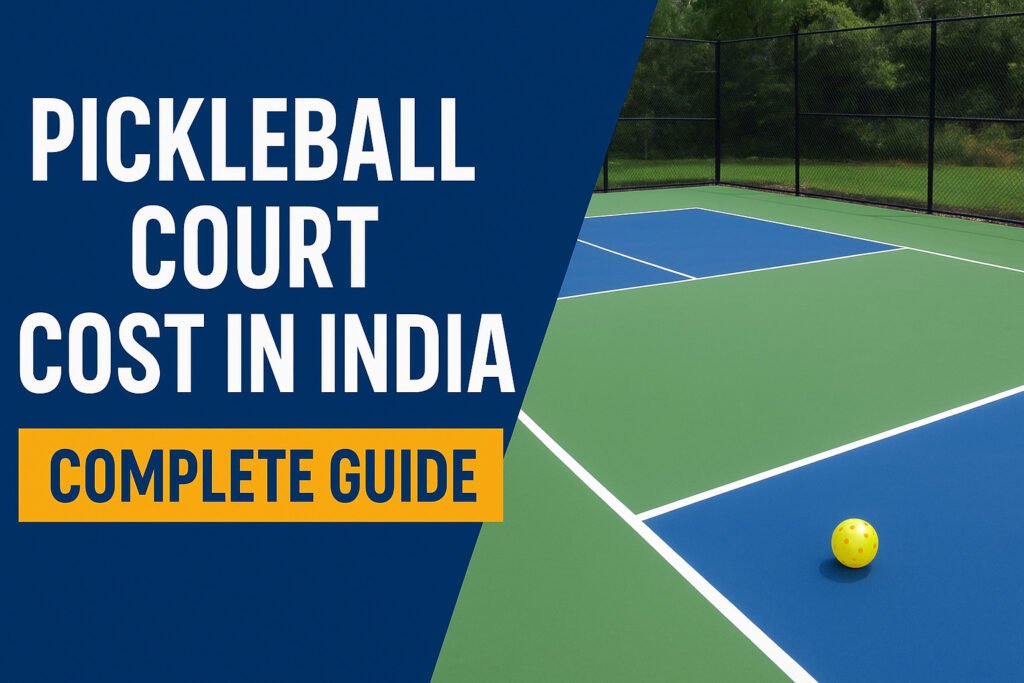
Pickleball Court Cost in India — Complete Guide

Pickleball Court Cost in India — Pickleball is one of the fastest-growing sports in India. Schools, clubs, academies, townships, and recreational centers are rapidly adding new courts to meet rising demand. If you’re planning to invest in a pickleball court, this detailed guide covers realistic cost ranges, surface options, Bill of Quantities (BOQ), timelines, maintenance, mistakes to avoid, and a contractor checklist to help you get accurate quotations from professional Pickleball Court Builders. Quick snapshot of pricing A turnkey outdoor pickleball court installation in India usually costs: ₹2,50,000 – ₹8,00,000 per court The exact amount depends on: Standard court size for costing This 1,800 sq ft total area is the benchmark used for surface and flooring estimates. Cost drivers — what influences the total Component Impact Base construction Major cost — determines longevity Playing surface system Performance + durability Fencing Optional but recommended for safety Lighting Adds major cost but increases booking hours Accessories Nets, posts, signage, benches Site conditions Slope, drainage, soil quality Labor & location City prices usually higher Popular surface & foundation combinations (with impact on pricing) Base & Surface Type Price Range Highlights Asphalt base + acrylic surface ₹2.5 – ₹4 lakh Economical and durable RCC concrete slab + acrylic ₹4 – ₹6.5 lakh Highly stable and long-lasting RCC + cushioned synthetic surface ₹5 – ₹8+ lakh Superior player comfort & bounce Modular interlocking tiles Variable Fast installation, indoor/outdoor usage Tip: If long-term stability and low maintenance matter, RCC + acrylic is the best value. Cost per square foot (based on 1,800 sq ft) Total Cost Approx. Cost per Sq. Ft ₹2,50,000 ₹138.89 per sqft ₹3,00,000 ₹166.67 per sqft ₹5,00,000 ₹277.78 per sqft ₹8,00,000 ₹444.44 per sqft This helps compare quotations from different suppliers easily. Sample BOQ (Bill of Quantities) — for one outdoor court Component Estimated Cost Site cleaning, leveling & compaction ₹40,000 – ₹80,000 Base: Asphalt ₹60,000 – ₹1,20,000 OR Base: RCC slab (100–150 mm) ₹1,60,000 – ₹2,20,000 Acrylic surfacing + line marking ₹80,000 – ₹1,20,000 Fencing (6–8 ft) ₹30,000 – ₹80,000 Net posts + nets ₹8,000 – ₹20,000 Floodlighting (optional) ₹1,20,000 – ₹3,50,000 Contingency (10–15%) Variable Project timeline Total duration: 4–8 weeks depending on weather and scope. Maintenance & resurfacing Activity Frequency Cost Basic cleaning Weekly Minimal Crack patching / repairs As needed ₹5,000 – ₹20,000 / yr Resurfacing Every 5–8 years ₹1 – ₹3 lakh Regular maintenance greatly extends lifespan. Mistakes to avoid ❌ Choosing the cheapest quote without checking base and material quality❌ Poor drainage → cracks and water pooling❌ Using tennis paints instead of pickleball-certified acrylic systems❌ Adding lighting later — it’s more expensive than planning from day one❌ No warranty or written BOQ Recommended minimum specifications Total area: 30 × 60 ft Base: Well-compacted asphalt or RCC slab Surface: Professional multi-layer acrylic or cushioned acrylic Fence height: 6–8 ft Warranty: At least 3–5 years on surface (if available) How to get accurate quotations from builders Share the following with Pickleball Court Builders to receive comparable BOQs: Also request:

Walking Track
walking track flooring

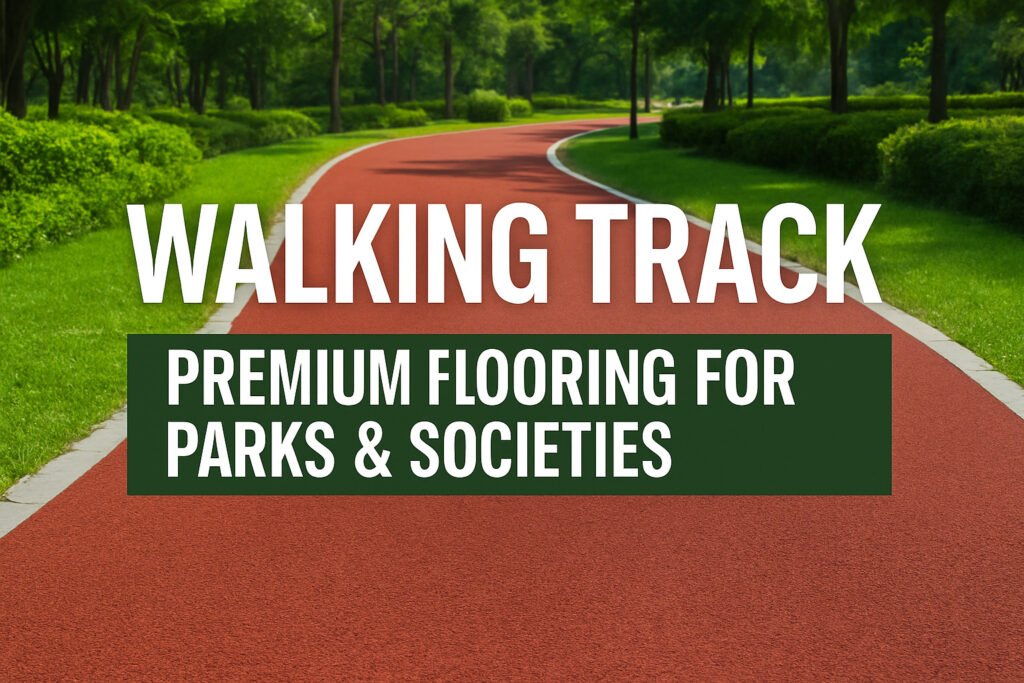
Walking Track – Complete Guide to Types, Benefits, Materials, Construction & Pricing

Walking is one of the world’s most recommended physical activities for fitness, rehabilitation, weight loss, and overall well-being. To support the growing trend of fitness lifestyles, educational institutions, residential societies, corporate campuses, parks, gyms, and sports complexes are increasingly investing in professionally designed walking tracks. These scientifically engineered surfaces enhance comfort, reduce injury risk, and offer long-term durability for daily users. Whether you are planning to build a new walking track or upgrade an existing one, understanding the flooring materials, design standards, installation process, and cost considerations is essential. This guide covers everything you need to know before making an investment. What is a Walking Track? A walking track is a cushioned, non-slip, weather-resistant pathway designed to support regular walking and jogging while minimizing impact on joints and muscles. Unlike regular concrete or stone pathways, walking track surfaces are scientifically developed to be: Benefits of a Professional Walking Track ✔ Reduces impact on knees, ankles & lower back✔ Improves safety with slip-resistant texture✔ Enhances comfort for seniors, children & fitness enthusiasts✔ Suitable for daily high-traffic use✔ Weather-resistant & UV-stable✔ Can be installed indoors or outdoors✔ Long-term investment with minimal upkeep These qualities make walking tracks ideal for parks, schools, colleges, corporate parks, fitness clubs, hospitals, residential gated communities, and stadiums. Most Popular Types of Walking Track Flooring Different flooring materials are available depending on budget, usage intensity, and location. 1. EPDM Rubber Walking Track 2. Synthetic Acrylic Walking Track 3. Interlocking Rubber Tiles 4. PU / Polyurethane Track 5. Artificial Turf Walking Track Ideal Dimensions of a Walking Track Standard recommended size: Accessibility features such as rest zones, benches, and lighting improve user experience. Walking Track Construction Process A professional walking track installation typically involves: Average installation time: 10–30 days depending on size and flooring material. Cost & Pricing Factors The cost of constructing a walking track depends on: Factor Impact Flooring material EPDM/PU > Acrylic in cost Total track area More area = higher price Indoor / outdoor location Outdoor requires more UV/weather coating Base preparation Soil → Asphalt → Concrete (ascending cost) Branding/color customization Additional cost 💰 Acrylic walking tracks are the most economical, whereas EPDM and PU tracks fall in the premium segment due to advanced cushioning properties. Maintenance & Life Expectancy Proper maintenance ensures long-term performance: Expected lifespan: 8–12+ years depending on usage and climate. Where Walking Tracks are Commonly Installed Conclusion Building a professional walking track is a long-term investment in health and community wellness. Whether the aim is fitness, recreation, athletics, or rehabilitation, a well-engineered walking track: With the right selection of materials and expert installation, walking tracks deliver unmatched performance and long-lasting durability.

Tennis Court Flooring Manufacturer

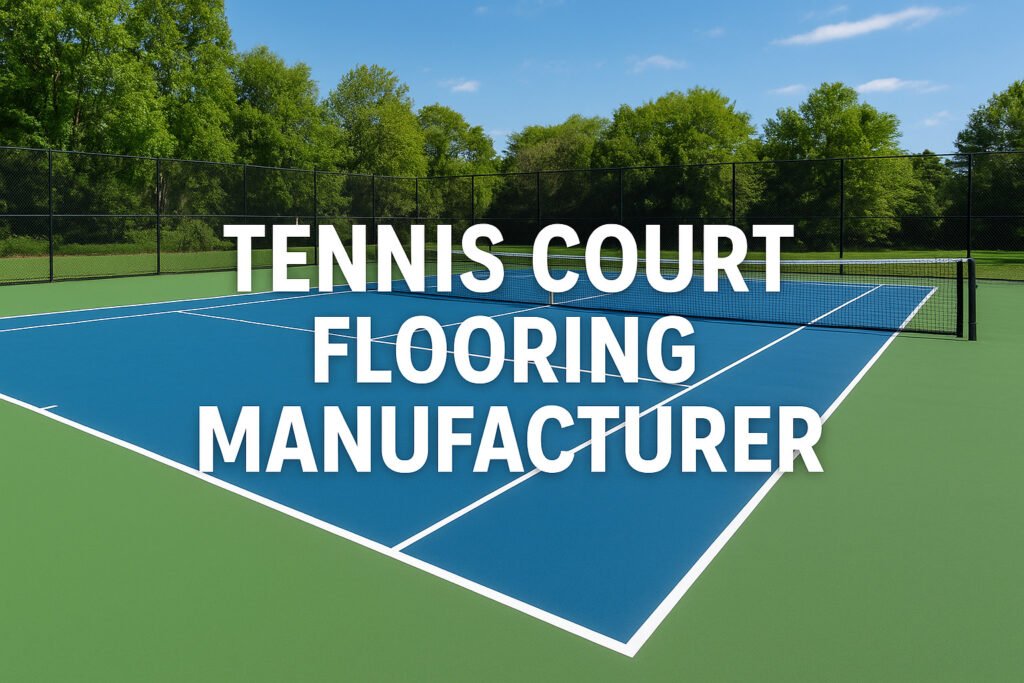
Tennis Court Flooring Manufacturer – Complete Guide to Choosing the Best Partner for Your Sports Project

The demand for modern tennis courts has surged in recent years as schools, academies, sports clubs, residential societies, and commercial sports complexes seek durable and high-performance sports infrastructure. At the heart of every high-quality court stands a reliable tennis court flooring manufacturer capable of delivering engineered surfaces that enhance gameplay, reduce injuries, and withstand harsh weather conditions. If you’re planning to build or renovate a tennis court, choosing the right flooring manufacturer plays a crucial role in the longevity, safety, and performance of the facility. This guide explains everything you need to know — flooring types, specifications, pricing factors, installation processes, and what to look for in a trusted manufacturer. Why Tennis Court Flooring Quality Matters Tennis is a high-speed sport that demands agility, grip, shock absorption, and consistent ball bounce. Substandard flooring can lead to: A reliable manufacturer ensures: Types of Tennis Court Flooring Offered by Leading Manufacturers 1. Acrylic Hard Court Flooring Most commonly used around the world due to: 2. Synthetic Grass / Artificial Turf Ideal for training and recreational academies. 3. Clay Court Surfaces Preferred for professional-level training. 4. Polyurethane (PU) and EPDM Rubber Systems Best for multi-sport venues and indoor arenas. Key Features to Expect from a Trusted Tennis Court Flooring Manufacturer When selecting a partner, look for: Feature Why It Matters ITF certified products Ensures court speed category compliance UV-stable and crack-resistant Ideal for outdoor climate performance Anti-slip texture Player safety and traction Cushioning layers Shock absorption and injury prevention Custom colors and court markings Personalized tennis arena End-to-end installation support Saves cost and ensures durability Tennis Court Construction Process Followed by Manufacturers Time required: 15–40 days based on area and flooring type. Cost & Pricing Factors The price of tennis court flooring varies depending on: On average, a standard full-size outdoor tennis court costs more with turf and PU flooring than acrylic, due to raw material and skill intensity. Maintenance Requirements A premium flooring manufacturer ensures low maintenance needs. Still, basic care improves life and playability: Expected lifespan: 8–12+ years with proper care. How to Choose the Best Tennis Court Flooring Manufacturer Before finalizing, evaluate the manufacturer on:✔ Years of industry experience✔ Portfolio of completed tennis courts✔ ITF-certified flooring systems✔ Customizable cushion layers & court speed options✔ Transparent pricing and specs✔ Warranty and after-sales service✔ Installation trained workforce A manufacturer offering consultation + on-site installation + maintenance guidance is always more reliable. Conclusion A high-quality tennis court is not just an infrastructure investment — it’s a long-term asset that shapes an athlete’s performance and a sports academy’s reputation. Partnering with a reputable tennis court flooring manufacturer ensures durability, scientific engineering, and a world-class playing experience. Whether you are developing a commercial sports complex, academy, school sports ground, or private residential court, selecting the right manufacturer will determine: Choose wisely, compare technical specifications, and invest in flooring that meets global sports standards.

Tennis Scoring Rules

Tennis Scoring Rules: The Complete Beginner-to-Pro Guide

Understanding tennis scoring rules can be confusing for new players — from terms like love and deuce, to tie-breaks and advantage sets. However, once you learn how points, games, sets, and matches work together, the scoring system becomes extremely intuitive and strategic. This comprehensive guide covers every tennis scoring rule, including singles and doubles scoring, tie-break formats, match formats, and tournament variations, making it ideal for players, coaches, and sports fans. Why Tennis Has a Unique Scoring System Unlike most sports that use linear scoring (1, 2, 3…), tennis follows a progressive point system. It was originally designed to make performance and stamina equally important — winning just a few rallies isn’t enough, consistency matters. 1. Basic Tennis Scoring – The Foundation A tennis match is structured into points → games → sets → match. Unit Needed to Win Key Condition Point 4 points (15, 30, 40, Game) Must win by 2 Game 4 points Must win by 2 points Set 6 games Must win by 2 games (tie-break if 6–6) Match 2 or 3 sets Depends on format 2. Point Scoring Explained (Love, 15, 30, 40, Game) Each rally won = 1 point, but the scoring terms are unique: Points Won Score Term 0 Love 1 15 2 30 3 40 4+ Game However, to win the game, a player must be ahead by 2 points. Deuce and Advantage When the score reaches 40–40, it’s called Deuce. From Deuce: This rule ensures games can be short or long depending on competition. 3. Game Scoring: First to Six Games with a Two-Game Lead A set is won when a player wins 6 games, with a 2-game margin: If the score becomes 6–6, a tie-break usually decides the set. 4. Tie-Break Scoring Rules Tie-breaks keep matches fair and time-efficient. Standard (7-Point) Tie-Break Examples: The set ends 7–6 in the winner’s favour. 5. Match Scoring Formats Different tournaments use different match formats. Best of 3 Sets (most common) Best of 5 Sets Deciding Set Rules (Varies by Tournament) Tournament Type Final Set Rule ATP / WTA Standard 7-point tie-break US Open 7-point tie-break Australian Open 10-point tie-break Roland Garros 10-point tie-break Wimbledon 10-point tie-break at 6–6 6. Scoring Rules for Doubles Doubles follows the same scoring system, but there are format variations: No-Ad Scoring Format (Common in Doubles) Match Tie-Break Instead of Third Set Example score: 6–3, 4–6, [10–8] 7. Common Terms in Tennis Scoring Term Meaning Break Winning a game on opponent’s serve Hold Winning a game on your serve Bagel Winning a set 6–0 Golden Set Winning a set without losing a point Walkover Opponent unable to start match Retired Opponent unable to continue match 8. Special Scoring Situations Situation Outcome Ball touches line IN Player touches net Point to opponent Ball hits player Point to opponent Hindrance Replay or loss of point based on situation 9. Strategy Impact of the Scoring System The scoring format influences gameplay strategy: Conclusion Tennis scoring may seem complicated at first, but once players understand points → games → sets → match, the game becomes far more enjoyable. The scoring system is designed to reward consistency, mental strength, and strategic play, making tennis one of the most competitive and exciting sports in the world. Whether you’re a player learning the rules, a coach educating students, or a fan wanting deeper insight, mastering tennis scoring helps you understand the sport at a whole new level.

Length of Volleyball Court
length of volleyball court​

Length of Volleyball Court – Complete Dimensions, Markings & Measurements (Updated Guide)

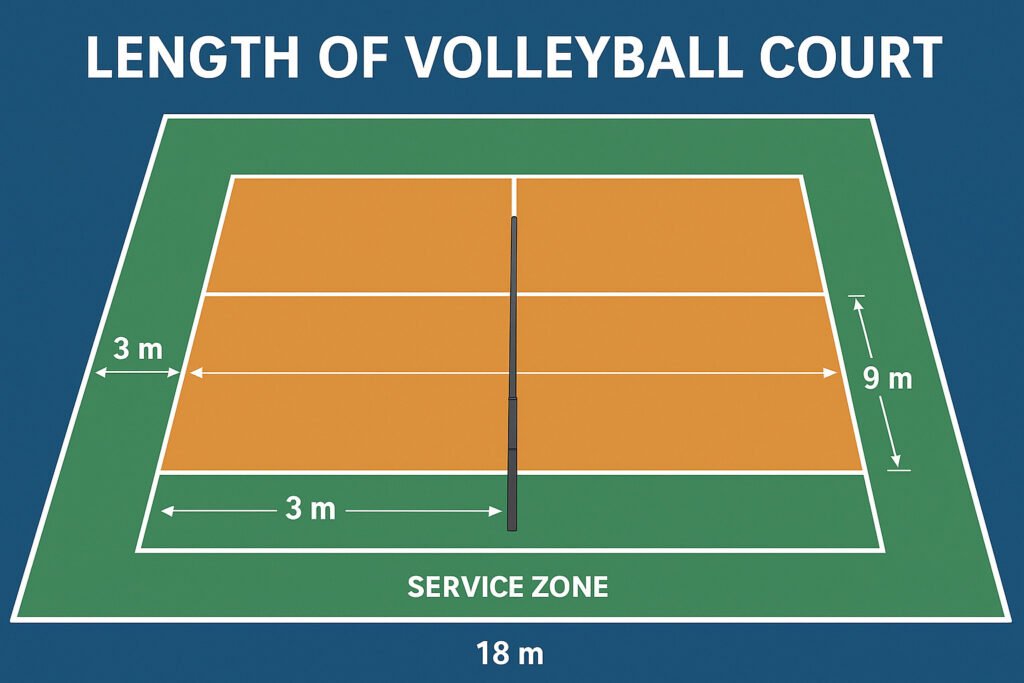
Volleyball is one of the most popular indoor and outdoor sports in the world, and its court dimensions play a crucial role in fair gameplay, training efficiency, and international competitions. Whether you are constructing a new court, renovating an existing facility, or simply learning the game, understanding the official length of volleyball court is essential. This detailed guide explains the volleyball court length, width, zoning, playing area, standards for indoor and beach volleyball, and court measurements for schools and recreational setups. What Is the Length of a Volleyball Court? According to international standards, the official length of a volleyball court is 18 meters (59 feet). Court Type Standard Length Standard Width Indoor Volleyball Court 18 meters (59 ft) 9 meters (29.5 ft) Beach Volleyball Court 16 meters (52.5 ft) 8 meters (26.2 ft) So, the indoor volleyball court is slightly larger than a beach volleyball court. Detailed Volleyball Court Measurement Breakdown ✔ Total Playing Area The official playing area of an indoor volleyball facility should measure: ✔ Free Zone Around the Court Beyond the playing area, a free zone provides space for player movement: Area Measurement Length 18 m Width 9 m Free Zone (sides) 3 m minimum Free Playing Space (height) 7 m minimum Volleyball Court Zones & Markings 🔹 Center Line 🔹 Attack Line (3-Meter Line) 🔹 Service Zone 🔹 Boundary Lines Net Height and Post Positioning Although net height is not part of court length, it’s important for full-court planning. Category Net Height Men 2.43 m (7 ft 11 ⅝ in) Women 2.24 m (7 ft 4 ⅛ in) Boys (U16) 2.24 m Girls (U16) 2.10 m Net support posts should be placed 0.5–1.0 meters outside each sideline. Indoor vs Beach Volleyball Court Dimensions Feature Indoor Volleyball Court Beach Volleyball Court Length 18 m 16 m Width 9 m 8 m Surface Wood/PU/Synthetic Sand Player Count 6 vs 6 2 vs 2 Attack Line Present (3 m line) Not marked Court Dimensions for Schools & Training Academies Many schools and academies use adapted volleyball court sizes based on available space and age group: Age Group Length Width Under-12 Training 12 m 6 m Under-16 Training 16 m 8 m Senior / Tournament 18 m 9 m Why Court Length Matters Understanding and maintaining proper volleyball court length ensures: ✔ Safe player movement✔ Proper training and skill development✔ Compatibility with tournament standards✔ Accurate gameplay and fair rules Incorrect court length can lead to:❌ Tactical disadvantages❌ Player crowding or injuries❌ Ineligibility for events and league matches Construction Tip – Leave Sufficient Run-Off Space If building a new volleyball court, plan the minimum space requirement: | Indoor Court + Free Area | 24 m × 15 m || Beach Court + Free Area | 20 m × 14 m | This ensures safe run-off for professional play.

Pickleball Brackets
Pickleball Brackets

Pickleball Brackets: Complete Guide (Types, Rules, Formats & How to Create a Winning Tournament Bracket)

Pickleball has quickly become one of the fastest-growing sports worldwide, and with its growth, pickleball tournaments are happening everywhere—from local clubs to national championships. At the heart of every tournament lies a crucial element: the pickleball bracket system. Whether you’re a player gearing up for competition or an organizer planning an event, understanding pickleball brackets is essential for fair play, smooth scheduling, and exciting matchups.In this complete guide, we explain what pickleball brackets are, types of brackets, how seeding works, point systems, and how to create pickleball tournament brackets like a pro. What Are Pickleball Brackets? A pickleball bracket is a structured tournament layout that determines who plays whom, how players advance, and how final rankings are decided. Brackets prevent bias and ensure an organized path from the first match to finals. Brackets are used for: Key Benefits of Using Pickleball Brackets Benefits Why It Matters Fair competition No favoritism—advancement depends purely on performance Smooth scheduling Easy to manage multiple matches and court time Competitive excitement Every stage builds toward semifinals and finals Player motivation Clear goals and ranking system keep players engaged Accurate ranking Determines exact standings for all players/teams Common Types of Pickleball Tournament Brackets Pickleball tournaments can feature various types of brackets, depending on the format, number of participants, and competitive level. Here are the most common types of pickleball tournament brackets: 1. Single Elimination 2. Double Elimination 3. Round Robin 4. Pool Play with Playoffs 5. Compass Draw 6. Ladder Bracket 7. Team-Based Brackets 8. King/Queen of the Court Each format has its own advantages and is suited to different types of tournaments, from casual local events to high-stakes championships. Organizers often choose based on the number of participants, time constraints, and the level of competition. How Pickleball Seeding Works Seeding in pickleball tournaments is the process of ranking players or teams before the tournament begins to ensure a fair and balanced competition. The goal is to prevent the strongest players or teams from facing each other in the early rounds, allowing for a more competitive and exciting progression through the tournament. Here’s how pickleball seeding typically works: 1. Determining Seeds Seeding is based on various factors, depending on the tournament’s level and the availability of player data. Common methods include: 2. Seeding Process Once the seeds are determined, they are used to structure the tournament bracket. Here’s how it works: 3. Adjustments for Double Elimination In double-elimination tournaments, seeding affects both the winner’s and loser’s brackets. The initial matchups are based on seeds, but as players move to the loser’s bracket, matchups are determined by performance rather than seeding. 4. Challenges in Seeding Seeding isn’t always perfect, and challenges can arise, such as: 5. Benefits of Seeding Pickleball Bracket Scoring & Match Formats Tournament directors may use different formats, such as: Format Description Best of 3 Games Most common; race to 11 or 15 points Single Game to 15 or 21 For shorter schedules Rally Scoring Every rally counts as a point (faster games) Traditional Scoring Only the serving team scores Scoring choice depends on time availability, number of players, and skill category. How to Create a Pickleball Tournament Bracket Creating a pickleball tournament bracket involves careful planning and organization to ensure a smooth and enjoyable event for all participants. Here’s a step-by-step guide to help you create a pickleball tournament bracket: 1. Determine the Tournament Format The first step is to decide on the type of bracket that best suits your tournament. Common formats include: Choose a format based on the number of participants, available time, and the level of competition. 2. Collect Player/Team Information Gather the following details from participants: If you’re organizing a doubles tournament, ensure you have the names of both players on each team. 3. Seed the Players/Teams Seeding helps ensure fair matchups and a balanced bracket. Use one or more of the following methods to rank players/teams: 4. Choose a Bracket Template You can create your bracket manually or use online tools. Here are some options: 5. Set Up the Bracket Follow these steps to structure the bracket: 6. Communicate the Bracket Share the bracket with participants before the tournament begins. If you’re using a digital tool, provide a link to the bracket. For manual brackets, display them prominently at the venue. 7. Track Results As matches are played, update the bracket with winners and scores. For double-elimination or compass draw formats, ensure players/teams are placed in the correct brackets after each round. 8. Determine the Winner The winner(s) will be the last player/team standing in single or double-elimination formats, or the one with the best record in round-robin play. For pool play with playoffs, the playoff bracket determines the champion. 9. Celebrate and Share Results Announce the winners, distribute prizes (if applicable), and share the results with participants. You can also post updates on social media or your tournament website. Tips for Success By following these steps, you can create a well-organized pickleball tournament bracket that ensures a fun and competitive experience for all participants! Tips to Run a Successful Pickleball Bracket Tournament Running a successful pickleball bracket tournament requires careful planning, organization, and attention to detail. Here are some practical tips to ensure your event runs smoothly and is enjoyable for all participants: 1. Plan Ahead 2. Promote the Tournament 3. Organize Player Information 4. Prepare the Venue 5. Communicate Clearly 6. Stay Organized During the Event 7. Ensure Fair Play 8. Create a Fun Atmosphere 9. Celebrate the Winners 10. Gather Feedback Bonus Tips Pickleball Brackets for Club & Event Growth Organized brackets help: A well-structured bracket transforms a casual event into a professional-level pickleball tournament experience. Conclusion Pickleball brackets are the backbone of competitive play — from small community tournaments to national events. Whether you’re a beginner, a club organizer, or a competitive athlete, mastering bracket formats ensures fair ranking, exciting gameplay, and smooth event management.


Scroll to Top
HOMEOWNERS
BUSINESS OWNERS
ARCHITECTS
MUNICIPALITIES

Acrylic Flooring

Get 10% off on sports flooring materials

ITF-certified acrylic flooring for Tennis, Basketball, Badminton, Pickleball & more shipped worldwide.

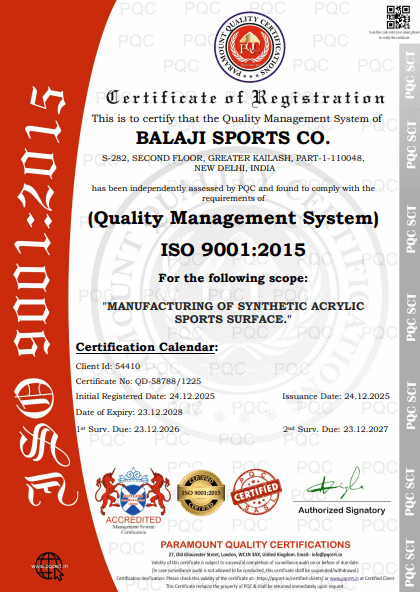
    ISO-Certificate