Author name: Rahul

Rahul is a sports flooring expert and a key contributor at Pacecourt, a leading brand in acrylic and synthetic sports court solutions. Passionate about creating world-class playing surfaces, Rahul shares insights on tennis courts, basketball courts, and multi-purpose sports flooring. His goal is to help facility owners and sports enthusiasts choose durable, high-performance solutions that enhance the game experience.

Pickleball Paddles
Pickleball Paddles

Pickleball Paddles: Complete Buying Guide, Types, Materials & Best Picks (2026)

Pickleball is one of the fastest-growing sports worldwide, and choosing the right pickleball paddle can significantly impact your performance, comfort, and control on the court. Whether you’re a beginner, intermediate player, or competitive athlete, understanding paddle materials, weight, grip size, and core technology is essential. This in-depth guide covers everything you need to know about pickleball paddles, including types, materials, how to choose the best one, and maintenance tips. What Is a Pickleball Paddle? A pickleball paddle is a solid hitting surface used to strike the pickleball. Unlike tennis racquets, pickleball paddles are string-free and made from composite or polymer materials. Modern paddles are engineered to balance power, control, spin, and durability. Standard Pickleball Paddle Dimensions According to USA Pickleball regulations: Using regulation-approved paddles is mandatory for tournament play. Types of Pickleball Paddles 1. Beginner Pickleball Paddles Best for: New players learning control and technique 2. Intermediate Pickleball Paddles Best for: Regular players improving shot placement 3. Professional / Advanced Pickleball Paddles Best for: Tournament and advanced players Pickleball Paddle Materials Explained Paddle Face Materials Graphite Pickleball Paddles Ideal for: Control-focused players Carbon Fiber Pickleball Paddles Ideal for: Competitive players Fiberglass (Composite) Pickleball Paddles Ideal for: Power hitters Paddle Core Materials Core Type Characteristics Polymer Core Quiet, soft feel, most common Nomex Core Loud, powerful, very durable Aluminum Core Lightweight, control-oriented Pickleball Paddle Weight Guide Weight Category Paddle Weight Lightweight 6.5 – 7.5 oz Midweight 7.6 – 8.4 oz Heavyweight 8.5+ oz Grip Size & Handle Length Grip Size Tip: Smaller grips allow more wrist action and spin. Handle Length Long handles: Two-handed backhands Short handles: Better control How to Choose the Best Pickleball Paddle Consider these factors before buying: Choosing the right paddle improves accuracy, reduces injury risk, and boosts confidence. Pickleball Paddle Shape Types Wide-Body Paddles: Larger sweet spot, more forgiveness Elongated Paddles: Extended reach, more power Standard Shape: Balanced performance Best Pickleball Paddles by Player Type For Beginners For Control Players For Power Players Pickleball Paddle Price Range Category Price Range Beginner $30 – $70 Intermediate $70 – $120 Professional $120 – $250+ Higher price often reflects better materials and performance consistency. Pickleball Paddle Maintenance Tips Clean surface regularly Avoid extreme heat Store in paddle cover Replace grip when worn Proper care extends paddle lifespan significantly. Common Mistakes to Avoid When Buying Pickleball Paddles ❌ Choosing wrong grip size❌ Buying too heavy paddle❌ Ignoring core material❌ Not checking tournament approval Pickleball Paddle vs Tennis Racquet Feature Pickleball Paddle Tennis Racquet Strings No Yes Size Smaller Larger Court Pickleball Tennis Weight Lighter Heavier Pickleball Paddle Technology Trends (2026) Raw carbon fiber surfaces Spin-enhancing textures Vibration-dampening cores Edge-less paddle designs These innovations are shaping modern gameplay. Pickleball Paddle Sweet Spot Explained The sweet spot is the area on the paddle face that delivers maximum power with minimal vibration. A larger sweet spot improves forgiveness and consistency, especially on off-center hits. How Sweet Spot Size Affects Performance Wide-body paddles typically offer a larger sweet spot, making them ideal for beginners and doubles players. Pickleball Paddle Edge Guard vs Edgeless Design Edge Guard Paddles Edgeless Paddles Choosing between the two depends on playing style and durability preference. Indoor vs Outdoor Pickleball Paddles While most paddles work for both environments, performance can vary. Indoor Play Outdoor Play For outdoor play, carbon fiber and fiberglass paddles offer better durability. Pickleball Paddle Noise Levels Noise can be an important factor, especially in residential areas and clubs. Quiet Paddles Loud Paddles Many facilities now prefer quiet-approved paddles. Paddle Thickness and Control Paddle thickness typically ranges from 13mm to 20mm. Control-focused players usually prefer thicker paddles. How Pickleball Paddle Texture Affects Spin Surface texture plays a major role in spin generation. Tournament-approved paddles have regulated surface roughness. Pickleball Paddle Certifications & Rules Always check certification before tournament play. Using uncertified paddles may result in disqualification. Pickleball Paddle Lifespan & Durability Average Paddle Lifespan Carbon fiber paddles tend to last longer with consistent performance. How to Test a Pickleball Paddle Before Buying If possible: A paddle that feels good in hand often performs better. Pickleball Paddle Accessories Worth Buying Overgrips for comfort Paddle covers for protection Edge guard tape Cleaning erasers Accessories help extend paddle life and maintain performance. Best Pickleball Paddle Setup for Doubles vs Singles Doubles Play Singles Play Choosing based on play format improves effectiveness. Environmental Factors Affecting Paddle Performance Heat: Can soften paddle materials Cold: Reduces responsiveness Humidity: Affects grip quality Storing paddles in temperature-controlled environments is recommended. Pickleball Paddle Buying Tips for 2026 Choose raw carbon fiber for spin Avoid overly heavy paddles Match grip size carefully Prioritize comfort and control Always check certification Conclusion: Is Upgrading Your Pickleball Paddle Worth It? As technology evolves, modern pickleball paddles offer better control, spin, and durability than older models. Upgrading your paddle can improve consistency, reduce fatigue, and enhance overall enjoyment of the game.

Bitumen vs Concrete
Bitumen vs Concrete Flooring

Bitumen vs Concrete: Which Is the Better Surface in 2026?

Choosing the right surface material is critical sports courts. Two of the most commonly used materials worldwide are bitumen (asphalt) and concrete. Each has its own strengths, limitations, cost implications, and performance characteristics. In this detailed guide, we compare bitumen vs concrete across durability, cost, maintenance, climate suitability, installation, and best-use scenarios—helping you make the right decision in 2026. What Is Bitumen? Bitumen is a black, sticky, petroleum-based material commonly mixed with aggregates to create asphalt. It is flexible, cost-effective, and widely used for roads, highways, and outdoor sports courts. Key Characteristics of Bitumen What Is Concrete? Concrete is a mixture of cement, sand, aggregates, and water that hardens into a rigid surface. It is known for its long lifespan, strength, and minimal deformation. Key Characteristics of Concrete Bitumen vs Concrete: Key Differences at a Glance Feature Bitumen Concrete Initial Cost Lower Higher Installation Time Fast Slow Durability Medium High Flexibility High Low Maintenance Frequent Minimal Heat Resistance Moderate Excellent Crack Resistance Better Can crack under stress Lifespan 10–20 years 30–40+ years Cost Comparison: Bitumen vs Concrete Bitumen Cost Approximate Cost (India):₹120 – ₹250 per sq. ft. (depending on thickness and location) Concrete Cost Approximate Cost (India):₹300 – ₹600 per sq. ft. 👉 Winner for affordability: Bitumen👉 Winner for long-term value: Concrete Durability & Lifespan Comparison Bitumen Durability Bitumen performs well under: However, it is prone to: Average lifespan: 10–20 years Concrete Durability Concrete offers: But it may: Average lifespan: 30–40 years or more Maintenance Requirements Bitumen Maintenance Concrete Maintenance 👉 Winner for low maintenance: Concrete Climate & Weather Performance Bitumen in Different Climates Concrete in Different Climates 👉 Hot climates: Concrete👉 Cold climates: Bitumen Installation Time & Process Bitumen Installation Concrete Installation 👉 Winner for quick installation: Bitumen Environmental Impact Bitumen Sustainability Concrete Sustainability Both materials have environmental trade-offs depending on usage. Bitumen vs Concrete for Sports Courts Bitumen for Sports Courts Concrete for Sports Courts 👉 Best base for acrylic courts: Bitumen👉 Best for indoor rigid flooring: Concrete Common Problems & Limitations Bitumen Limitations Concrete Limitations Longer downtime during curing Higher upfront cost Cracking risk if poorly installed When Should You Choose Bitumen? Choose bitumen if: When Should You Choose Concrete? Choose concrete if: Bitumen vs Concrete for Roads & Highways Bitumen Roads Bitumen is the most widely used material for roads and highways due to its flexibility and smooth driving experience. Advantages: Disadvantages: Concrete Roads Concrete roads are increasingly adopted for long-life highway projects. Advantages: Disadvantages: More complex repairs Higher construction cost Longer curing time Bitumen vs Concrete for Driveways & Parking Areas Bitumen Driveways Best suited for residential homes and commercial parking lots with moderate traffic. Concrete Driveways Ideal for high-end residential properties and commercial complexes. Performance Under Heavy Traffic Loads Bitumen Performance Bitumen adapts well to: However, prolonged heavy loads may cause surface deformation. Concrete Performance Concrete excels under: This makes concrete ideal for bus lanes, freight corridors, and industrial zones. Safety & Skid Resistance Comparison Bitumen Safety Concrete Safety Requires surface grooving for skid resistance High visibility due to light color Can become slippery if not textured properly Noise Reduction & Driving Comfort Bitumen Concrete 👉 Winner for noise reduction: Bitumen Construction Time & Traffic Disruption Bitumen Projects Concrete Projects Requires careful planning Longer construction periods Extended traffic diversions Repair & Rehabilitation Comparison Bitumen Repairs Concrete Repairs Often requires slab replacement More complex processes Higher repair costs Bitumen vs Concrete in Urban Infrastructure Urban planners must consider: Urban Preference: Government & Industry Trends (2026) Recent infrastructure trends show: This balanced approach optimizes cost, performance, and durability. Bitumen vs Concrete: Life-Cycle Cost Analysis Cost Factor Bitumen Concrete Initial Cost Low High Maintenance Cost High Low Repair Frequency High Low Life-Cycle Cost Medium Low 👉 Best short-term solution: Bitumen👉 Best long-term investment: Concrete Common Myths About Bitumen & Concrete Myth 1: Concrete roads never crack 👉 Reality: Concrete can crack due to thermal stress and poor joints. Myth 2: Bitumen roads are low quality 👉 Reality: High-grade bitumen performs exceptionally well when maintained properly. Myth 3: Concrete is always expensive 👉 Reality: While initial cost is high, lifetime cost is often lower. Final Verdict: Bitumen vs Concrete – Which Is Better? There is no one-size-fits-all answer. The best choice depends on your project goals, budget, climate, and usage. Both materials continue to dominate infrastructure and sports construction projects in 2026 due to their proven performance.

basketball court dimensions in meters
Basketball Court Dimensions in Meters

Basketball Court Dimensions in Meters (Complete Guide 2026)

Basketball is one of the most popular sports worldwide, and whether you’re building a professional arena, school playground, or indoor sports facility, understanding basketball court dimensions in meters is essential. Accurate court size ensures fair play, safety, and compliance with international standards. This detailed guide explains FIBA, NBA, and school-level basketball court dimensions, markings, and important construction considerations. Standard Basketball Court Dimensions in Meters FIBA Basketball Court Dimensions (International Standard) FIBA (International Basketball Federation) standards are followed in most countries, including India. Feature Dimension (Meters) Court Length 28 meters Court Width 15 meters Total Playing Area 420 sq. meters Centre Circle Radius 1.80 meters Free Throw Line Distance 5.80 meters Free Throw Circle Radius 1.80 meters Backboard Distance from Baseline 1.20 meters 📌 Best suited for: International tournaments, professional academies, and advanced training facilities. NBA Basketball Court Dimensions (USA Standard) Feature Dimension (Meters) Court Length 28.65 meters Court Width 15.24 meters Centre Circle Radius 1.83 meters Free Throw Line Distance 5.79 meters 📌 Slightly larger than FIBA courts and mainly used in the United States. School & Recreational Basketball Court Dimensions For schools and community courts, smaller dimensions are often used: Level Length (m) Width (m) School Level 24 – 26 13 – 14 Recreational Custom Custom These courts are easier to fit into limited spaces while maintaining gameplay quality. Key Basketball Court Markings (Meters) Three-Point Line (FIBA): 6.75 meters from the basket Restricted Area Radius: 1.25 meters No-Charge Semi-Circle Radius: 1.25 meters Sideline Width: 0.05 meters Proper markings are critical for official matches and training accuracy. Basketball Court Flooring Requirements Choosing the right basketball court flooring is just as important as correct dimensions. Flooring impacts player safety, ball bounce, and long-term durability. Best Flooring Options: 📌 Always ensure flooring provides anti-skid surface, shock absorption, and consistent bounce. Space Required Beyond the Court For safe movement and official play: This space accommodates referees, player benches, and audience movement. Indoor vs Outdoor Basketball Court Dimensions Type Dimension Standard Indoor Court FIBA / NBA exact size Outdoor Court Same size but flexible based on space Outdoor courts may allow minor size adjustments, but markings should remain accurate. Basketball Court Dimensions for India In India, FIBA dimensions (28 × 15 meters) are widely accepted for: These dimensions ensure compatibility with national and international tournaments. Basketball Court Construction Guidelines Building a basketball court requires more than just correct dimensions. Proper planning, material selection, and execution ensure long-term performance and safety. Step-by-Step Basketball Court Construction Process Basketball Court Flooring Thickness & Layers A professional basketball court usually consists of multiple layers: Layer Purpose Base Layer Structural strength Cushion Layer Shock absorption Surface Layer Grip & ball bounce Top Coat UV & wear resistance This layered system protects players from injuries and increases flooring life. Basketball Court Flooring Cost in India (Approximate) Flooring Type Price Range (₹/sq ft) Acrylic Flooring ₹150 – ₹250 Synthetic PU Flooring ₹300 – ₹600 Modular Tiles ₹350 – ₹700 Wooden Flooring ₹700 – ₹1,500 💡 Cost depends on location, surface preparation, and total court area. Drainage & Slope Requirements for Outdoor Courts Outdoor basketball courts must have proper water flow: Ignoring drainage can damage basketball court flooring within a few seasons. Lighting Requirements for Basketball Courts Proper lighting is essential for visibility and professional play. Recommended Lighting Levels: LED sports lights are preferred due to energy efficiency and uniform illumination. Basketball Court Maintenance Tips Regular maintenance keeps the court safe and visually appealing. Maintenance Best Practices: High-quality basketball court flooring requires minimal maintenance but delivers maximum durability. Common Mistakes to Avoid While Building a Basketball Court ❌ Incorrect court dimensions❌ Poor base leveling❌ Low-quality flooring materials❌ Improper line marking❌ No drainage planning Avoiding these mistakes saves repair costs and ensures better play experience. Indoor Basketball Court Ventilation Requirements Indoor courts need: Poor ventilation can damage wooden and synthetic basketball court flooring over time. Why Professional Installation Matters Hiring experienced sports flooring contractors ensures: Professional installation directly impacts performance and player safety. Conclusion A perfectly designed basketball court combines accurate dimensions, proper markings, high-quality basketball court flooring, and expert installation. Whether you are building a school court, academy, or professional sports arena, following international standards ensures durability, safety, and better gameplay. Investing in the right flooring and construction approach not only enhances performance but also reduces long-term maintenance costs.

Sports Court Flooring Materials
best sports court flooring manufacturer

Sports Court Flooring Materials: Types, Benefits & Applications

Choosing the right sports court flooring materials is one of the most critical decisions when building or renovating a sports facility. The flooring affects player safety, performance, durability, maintenance, and overall experience. This comprehensive guide explains the types of sports court flooring, their benefits, and how they are best applied across different sports. What Are Sports Court Flooring Materials? Sports court flooring materials are engineered surfaces designed to support athletic activity. They must provide: ✔ Shock absorption✔ Non-slip traction✔ Consistent ball behavior✔ Durability against wear and tear✔ Safety for athletes These materials are used in indoor and outdoor courts for sports such as tennis, basketball, volleyball, badminton, pickleball, and multipurpose activity areas. Types of Sports Court Flooring Materials 1. Synthetic Acrylic Sports Flooring Overview Sinthetic acrylic is one of the most widely used surfaces for outdoor and semi-covered sports courts.It consists of multiple layers of acrylic resin, silica sand, and stabilizers applied over a concrete or asphalt base. Benefits ✔ Weather-resistant and UV-stable✔ Excellent traction and grip✔ Low maintenance✔ Cost-effective solution✔ Durable with a long lifespan Best Applications 👉 Ideal for Indian weather conditions, where rain, heat, and UV exposure are common. 2. PU (Polyurethane) Sports Flooring Overview Polyurethane (PU) flooring is a premium performance surface commonly used for indoor courts. It offers superior shock absorption and comfort. Benefits ✔ Excellent shock absorption✔ Smooth ball bounce✔ Comfortable for athletes✔ Easy to clean Best Applications 👉 Best suited for professional indoor courts where performance and safety are top priorities. 3. PVC (Vinyl) Sports Flooring Overview PVC (polyvinyl chloride) is a versatile and durable synthetic surface used mostly for indoor multipurpose areas. Benefits ✔ Flexible and resilient✔ Non-slip surface✔ Easy to install✔ Lower cost compared to PU Best Applications 👉 A great economical option with good performance for multiple sports. 4. Hardwood (Timber) Flooring Overview Hardwood is a traditional and premium indoor surface, especially for professional basketball and indoor volleyball courts. Benefits ✔ Beautiful aesthetic appeal✔ Excellent ball bounce consistency✔ Good shock absorption Best Applications 👉 Requires controlled indoor environments and regular maintenance. 5. Rubber Sports Flooring Overview Rubber flooring is made from compressed rubber and offers high shock absorption. Benefits ✔ Superior impact protection✔ Slip-resistant✔ Easy to maintain✔ Comfortable underfoot Best Applications 👉 Best for areas where high impact practices like plyometrics and drills occur. 6. Interlocking Tile System Overview These are modular tiles that lock together to form a playing surface. They can be made from polypropylene, PVC, or other composites. Benefits ✔ Quick installation✔ Replaceable sections✔ Good shock absorption✔ Water drainage in outdoor versions Best Applications 👉 Great for quick setups and flexible court layouts. Benefits of Good Sports Court Flooring Choosing the right flooring provides these benefits: 🏆 1. Enhanced Player Safety Proper traction and shock absorption reduce the risk of injuries such as sprains, falls, and joint strain. 🏃 2. Better Athletic Performance Consistent ball bounce, stability, and grip improve play quality and athlete confidence. 🧼 3. Low Maintenance & Durability High-quality materials last longer and resist weathering, foot traffic, and impact. 💰 4. Cost Efficiency Longer-lasting surfaces deliver greater ROI compared to frequent repairs or replacements. 🌦 5. Weather Resistance Outdoor surfaces like synthetic acrylic handle sun, rain, and temperature changes without degrading quickly. How to Choose the Right Flooring Material Selecting the best material depends on several factors: 📌 1. Location 📌 2. Sport Type 📌 3. Budget 📌 4. Maintenance Capacity Applications of Sports Court Flooring 🏐 Indoor Sports Facilities 🏀 Outdoor Sports Areas 🏫 Schools & Colleges 🏘 Residential & Community Spaces Flexible design options Recreational courts for estate amenities Maintaining Your Sports Court Flooring Proper maintenance ensures longevity and performance: ✔ Regular cleaning with neutral detergent✔ Inspect for cracks or damage✔ Apply recoating as needed✔ Avoid sharp objects and heavy machinery on surface✔ Address drainage issues on outdoor courts Why Choose Pacecourt Sports Flooring When it comes to sports court flooring solutions in India, Pacecourt stands out for: 🌟 High-quality synthetic acrylic systems🌟 Customized flooring options for tennis, basketball, volleyball, and multipurpose courts🌟 Weather-resistant and durable installations🌟 Expert flooring design and technical support🌟 Competitive pricing and long-lasting performance Whether you’re building a school court, outdoor facility, or professional arena, Pacecourt delivers flooring that meets performance, safety, and longevity requirements. Conclusion Understanding sports court flooring materials helps you choose the right surface for your specific needs — whether it’s cost-effective outdoor play or high-performance indoor competition. Each material has unique properties, benefits, and ideal applications. By selecting the best flooring and maintaining it properly, you enhance safety, athletic performance, and the lifespan of your sports facility. For reliable installations and expert flooring solutions in India, Pacecourt provides a range of flooring systems crafted for durability, athlete comfort, and superior performance.

volleyball court size
Uncategorized

Volleyball Court Size: Official Dimensions, Measurements & Complete Guide

Understanding the volleyball court size is essential for players, coaches, schools, sports academies, and facility owners. Whether you are planning a professional indoor court, an outdoor recreational court, or a training facility, using the official volleyball court dimensions ensures fair play, safety, and compliance with international standards. This guide covers official volleyball court measurements, layouts, markings, and flooring requirements. Understanding Standard Volleyball Court Dimensions Standard volleyball court dimensions are defined by the FIVB (Fédération Internationale de Volleyball) to ensure fair and consistent gameplay worldwide. These measurements apply to both indoor and outdoor volleyball courts. The official volleyball court measures 18 meters in length and 9 meters in width, creating a total playing area of 162 square meters. The court is divided into two equal halves of 9 × 9 meters by a center line, with a net placed directly above it. A key feature of the court layout is the attack line, which is drawn 3 meters from the center line on each side. This line separates front-row and back-row players and plays an important role in game rules and player positioning. Around the playing area, a free zone is required to allow players to move safely while chasing the ball. The minimum recommended free zone is 3 meters on all sides, although professional matches often use larger safety areas. While the court size remains the same for indoor and outdoor volleyball, the flooring material differs. Indoor courts typically use wooden, PVC, or PU sports flooring, while outdoor courts often use synthetic acrylic flooring due to its durability and weather resistance. Overall, understanding standard volleyball court dimensions helps ensure proper court construction, safe play, and compliance with official volleyball regulations. Court Segments Explained Court Section Size Purpose Playing Surface 18 m × 9 m Active match area Half-Court 9 m × 9 m Each team’s side Attack Zone 3 m from center Determines front/back row play Free Zone ≥ 3 m all around Safety and movement Clearance Height ≥ 7 m No overhead obstructions Comparison: Indoor vs Outdoor Volleyball Court Feature Indoor Court Outdoor Court Court Dimensions 18 m × 9 m 18 m × 9 m Surface Wooden / PU / PVC Acrylic / Cement / Grass Free Zone Requirements Stricter Flexible (but recommended) Weather Impact Controlled Sun, wind, rain The playing dimensions are identical — but outdoor courts require more attention to surface choice, drainage, and weather resistance. Volleyball Court Surface & Material The surface affects traction, safety, and performance. Standard materials include: 🔹 Indoor Courts 🔹 Outdoor Courts Why proper flooring matters:Good surface reduces injuries, improves ball bounce consistency, and enhances player comfort. Common Measurement Mistakes to Avoid Mistake Why It’s a Problem Incorrect court length or width Invalid for competition Incomplete free zone Player injuries Faded lines Referee mistakes Wrong net height Unfair play Always use measuring tools, flat surfaces, and certified installers for accuracy. Beach Volleyball Court Dimensions Beach volleyball court dimensions are different from indoor or standard volleyball courts and are regulated by the FIVB (Fédération Internationale de Volleyball) to ensure uniform play worldwide. The official beach volleyball court size is 16 meters long and 8 meters wide, creating a total playing area of 128 square meters. This court is slightly smaller than an indoor volleyball court and is designed specifically for two-player teams. The court is divided into two equal halves of 8 × 8 meters by a center line, with the net placed at the center. Unlike indoor volleyball, there is no attack line in beach volleyball, as all players can attack from anywhere on their side of the court. A free zone surrounds the court to allow safe movement. The minimum free zone required is 3 meters on all sides, though professional tournaments often provide larger safety areas. The playing surface must be level sand, with a minimum depth of 40 cm, free from stones or hard objects to prevent injuries. Court boundary lines are usually 5–8 cm wide and made of flexible material, secured to the sand. Net Height for Beach Volleyball In summary, beach volleyball court dimensions are carefully designed to support fast, athletic play while ensuring player safety and fairness in both recreational and professional matches. Why Dimensions Differ Across Formats Volleyball court dimensions differ across formats such as indoor volleyball, beach volleyball, and recreational or school-level play to match the playing environment, number of players, surface type, and game dynamics. These variations are intentional and help maintain fairness, safety, and competitive balance. 1. Playing Surface and Environment Indoor volleyball is played on hard, smooth surfaces like wooden or synthetic flooring, allowing faster movement and controlled jumps. Beach volleyball is played on sand, which slows movement and increases physical effort. To balance this, beach volleyball courts are smaller in size, reducing the distance players must cover. 2. Number of Players Indoor volleyball is played with six players per team, requiring more space for rotations, positioning, and coordinated attacks. Beach volleyball is played with two players per team, so a smaller court suits the reduced number of players while keeping rallies competitive. 3. Style and Pace of the Game Indoor volleyball focuses on structured rotations, quick sets, and fast attacks, which benefit from a larger playing area. Beach volleyball emphasizes endurance, ball control, and adaptability, and a smaller court keeps the game intense despite slower movement on sand. 4. Safety Considerations Court size and free-zone requirements are designed to reduce injury risk. On sand, players dive and fall more frequently, so the court is compact and cushioned. Indoor courts require more space around the playing area to allow safe movement at higher speeds. 5. Skill and Accessibility Levels Recreational, school, or training courts may slightly adjust dimensions to fit available space and skill levels. This makes the sport more accessible without changing the core rules of play. 6. Standardization by Governing Bodies Organizations like the FIVB set different standards to preserve the unique identity of each volleyball format, ensuring consistency in competitions while adapting to environmental and gameplay

Tennis Court Flooring in Goa

Tennis Court Flooring in Goa

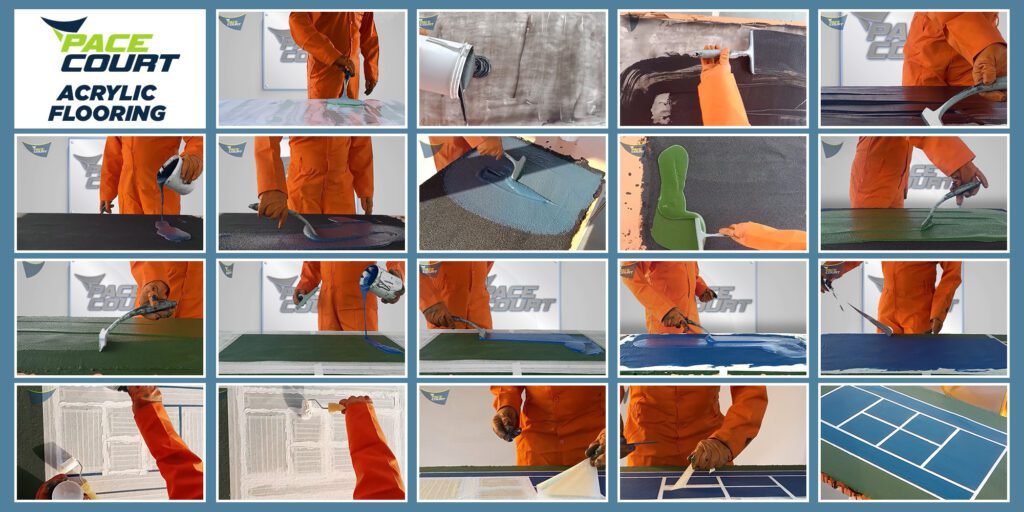
Goa is not just a tourist paradise—it’s also emerging as a growing hub for sports infrastructure. With rising demand from resorts, schools, sports clubs, villas, and government projects, the need for high-quality tennis court flooring in Goa has increased significantly. Whether you’re planning a new tennis court or upgrading an old surface, choosing the right flooring system and professional installer is critical for performance, safety, and long-term durability. This guide explains everything about tennis court flooring in Goa, including surface types, construction process, costs, and why professional installation matters Why Goa Needs Specialized Tennis Court Flooring Goa’s coastal climate brings high humidity, heavy rainfall, strong sunlight, and saline air. Because of this, tennis court surfaces in Goa must be: Professional tennis court flooring systems are specially designed to withstand these environmental conditions while delivering international-standard playability. Standard Tennis Court Dimensions A professional tennis court follows ITF guidelines: Accurate layout planning is a key part of expert tennis court flooring in Goa. Tennis Court Flooring & Construction Process 1️⃣ Site Inspection & Planning 2️⃣ Base Construction A strong base ensures crack-free, long-lasting tennis court flooring. 3️⃣ Tennis Court Surface Installation Depending on the project requirement, professional flooring systems are applied in multiple layers. 4️⃣ Line Marking & Accessories 5️⃣ Final Quality Testing Best Tennis Court Flooring Options in Goa ✔️ Acrylic Tennis Court Flooring (Most Preferred) ✔️ Cushioned Acrylic Systems ✔️ Synthetic / PU Flooring (Indoor) ✔️ Modular Sports Tiles Professional brands like Pacecourt Tennis Court Flooring Cost in Goa Approximate project cost depends on area, base condition, and flooring system. Typical price ranges: Cost factors include: Materials Used in Professional Tennis Court Flooring High-quality materials ensure a surface life of 8–10 years with periodic maintenance. Outdoor vs Indoor Tennis Court Flooring in Goa Feature Outdoor Courts Indoor Courts Climate handling Rain & UV resistant Climate controlled Surface type Acrylic systems PU / Vinyl Maintenance Periodic cleaning & recoating Low-dust upkeep Cost Medium Higher Application Resorts, schools, clubs Academies, stadiums Benefits of Professional Tennis Court Flooring Professionally installed tennis court flooring also ensures correct slope, uniform texture, and accurate ball response. Why Choose a Professional Tennis Court Flooring Company in Goa? A trusted tennis court flooring contractor provides: Pacecourt delivers customized tennis court flooring solutions across India, including resort projects, sports academies, educational institutions, and government developments. Conclusion With sports tourism, luxury real estate, and school infrastructure growing rapidly, investing in professional tennis court flooring in Goa ensures long-term durability, superior performance, and higher facility value. Choosing the right materials and an experienced sports flooring company makes all the difference.

Synthetic Badminton Court

Benefits of Installing a Synthetic Badminton Court (Complete Guide)

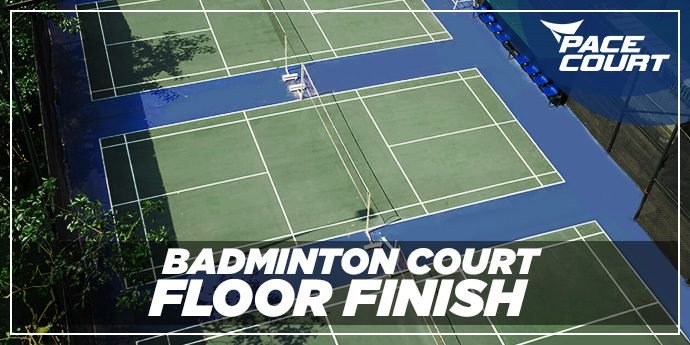
Synthetic badminton courts have become the top choice for schools, sports academies, gyms, stadiums, and private facilities. With excellent durability, superior grip, and low maintenance, synthetic flooring has transformed the badminton experience for both beginners and professional players. In this guide, we will explore the top benefits of installing a synthetic badminton court and why it is one of the smartest investments for any sports facility. Superior Shock Absorption for Player Safety One of the biggest advantages of synthetic badminton flooring is its ability to absorb shocks effectively.This cushioning feature helps in: This is why most modern sports academies prefer synthetic courts over concrete or vinyl options. Excellent Grip & Traction for Better Performance A synthetic court offers consistent grip and traction, which is essential for quick footwork, lunges, and directional changes.Better traction means: This leads to better overall performance, especially during competitive matches. Highly Durable & Long-Lasting Surface Synthetic flooring is built to withstand heavy usage without losing performance quality.Its durability ensures: This makes synthetic badminton courts a cost-effective, long-term solution. Low Maintenance & Easy Cleaning Maintaining a synthetic court is simple and budget-friendly. It does not require polishing, varnishing, or frequent repairs.Maintenance includes: This low-maintenance advantage makes it ideal for schools, commercial facilities, and multi-sport complexes. Weather-Resistant & Suitable for Indoor or Outdoor Courts Synthetic badminton courts perform well in all weather conditions.Key advantages include: Whether you plan to install the court indoors or outdoors, synthetic flooring ensures stable performance year-round. Customizable Color Options & Court Designs Synthetic flooring allows you to create visually appealing, professional-quality badminton courts.You can customize: This gives the court a premium, tournament-style appearance. Better Ball Bounce & Overall Gameplay Quality A synthetic badminton court ensures consistent ball bounce, which helps players adjust to high-level gameplay.Benefits include: This makes training more effective and match conditions more predictable. Cost-Effective Installation Compared to Wooden Courts Synthetic courts are more affordable than traditional wooden courts while offering equal—or even better—performance.Cost benefits include: This makes synthetic flooring an excellent investment for new sports facilities. Eco-Friendly Flooring Options Available Modern synthetic flooring is designed to be environment-friendly with recyclable materials.Eco benefits include: This aligns well with green building practices and sustainable sports infrastructure. Conclusion Installing a synthetic badminton court provides unmatched advantages in terms of safety, performance, durability, and cost-effectiveness. Whether you own a sports academy, gym, school, or private facility, synthetic flooring ensures excellent gameplay quality and long-lasting value.

Volleyball Court Measurements

Complete Guide to Volleyball Court Measurements: Dimensions, Markings & Standards

Volleyball Courts Near Me is one of the most searched phrases today as players, coaches, and sports enthusiasts look for standard-quality volleyball facilities. But before choosing any court, it’s important to understand how proper volleyball court measurements ensure fair play, safety, and the best performance. This in-depth guide explains everything you need to know about official court dimensions, markings, net height, flooring, and more. What Is a Volleyball Court? A volleyball court is a rectangular playing area divided by a net into two equal halves. Every dimension—from the sidelines to the net height—is set according to international rules. These measurements ensure consistency and fairness during matches. When checking Volleyball Courts Near Me, make sure the facility follows correct standards to guarantee a professional playing experience. Importance of accurate measurements for gameplay Accurate volleyball court measurements are essential for maintaining the fairness, safety, and overall quality of the game. Every line, net height, and boundary is designed to create equal opportunities for both teams and ensure consistent performance. Even small deviations can affect how players move, jump, and strategize during a match. Correct court dimensions ensure: ✔ Fair Play Standardized measurements guarantee that both teams compete under the same conditions. Proper line placement, net height, and court size prevent any player from gaining an unfair advantage. ✔ Consistent Ball Behavior A well-measured court with proper surface markings ensures predictable ball bounce and movement. This consistency is crucial for setting, spiking, serving, and defensive play. ✔ Enhanced Player Safety Accurate free zones, correct flooring, and properly marked boundaries reduce the risk of collisions, slips, and injuries. Safe spacing allows players to dive and move freely. ✔ Professional-Level Training Players practicing on correctly measured courts develop skills that translate accurately to competitive environments. Proper measurements help athletes train under real match conditions. ✔ Smooth Tournament Hosting Events require strict adherence to official dimensions. Correct measurements ensure matches are conducted smoothly, with fewer disputes and improved referee accuracy. In short, accurate measurements create the foundation for high-quality gameplay, consistent player performance, and safe, enjoyable volleyball experiences. How people search for Volleyball Courts Near Me to find standard courts When players, coaches, and sports enthusiasts want to practice or compete on a quality court, they often rely on location-based searches—especially the keyword “Volleyball Courts Near Me.” This search term is widely used because it helps people find nearby facilities that meet official volleyball standards. 1. Searching for Courts with Proper Measurements Users type “Volleyball Courts Near Me” specifically to find courts that follow correct dimensions, net height, and line markings. They want courts that offer a professional playing experience rather than makeshift or irregular setups. 2. Finding Indoor and Outdoor Options Searches often include: These variations help players locate facilities suitable for their preferred style of play. 3. Locating Well-Maintained Sports Complexes People use this keyword to identify sports centers, schools, academies, and gyms that maintain courts with: This ensures the court meets official standards. 4. Discovering Training-Friendly Locations Athletes and coaches often look for courts that support proper training. A standard-sized court allows players to practice realistic serves, spikes, and defensive movements. 5. Checking Court Reviews & Ratings After searching “Volleyball Courts Near Me,” users compare reviews to ensure the facility: 6. Comparing Costs, Availability, and Amenities People also search this keyword to quickly find: Official Volleyball Court Dimensions (Indoor & Outdoor) Understanding the official volleyball court dimensions is essential for maintaining fair play and ensuring a high-quality playing experience. Whether the game is played indoors or outdoors, specific measurements must be followed to meet international standards set by bodies like FIVB. 1. Indoor Volleyball Court Dimensions Indoor volleyball courts follow strict and uniform measurements worldwide. These standard dimensions ensure the game remains consistent at every level—from school competitions to international championships. ✔ Court Size ✔ Free Zone (Safety Area) To allow safe movement outside the boundary lines: Professional tournaments may require even larger free zones and higher ceilings. ✔ Centerline & Attack Line These lines help regulate spiking and player positioning during gameplay. ✔ Boundary Lines 2. Outdoor Volleyball Court Dimensions Outdoor play includes two main types—recreational outdoor courts and competitive beach volleyball courts. A. Standard Outdoor (Non-Sand) Volleyball Court Outdoor hard-surface courts often follow the same measurements as indoor volleyball: B. Beach Volleyball Court Dimensions Beach volleyball uses slightly different measurements to accommodate sand gameplay and two-player teams. ✔ Court Size Beach courts are smaller because sand movement is slower and the game typically features two players on each side. ✔ Free Zone ✔ Net Height ✔ Sand Requirements Why Standard Court Measurements Matter Standard court measurements are essential for maintaining fairness, consistency, and player safety in volleyball. Whether it’s a school court, a professional arena, or a facility discovered through a search like “Volleyball Courts Near Me,” accurate dimensions ensure the game is played the way it was intended. Here’s why these measurements matter: 1. Ensures Fair and Competitive Gameplay Standardized measurements create an equal playing field for all teams. 2. Predictable Ball Behavior Players rely on predictable ball bounce and movement.Accurate court dimensions and properly marked lines ensure the ball reacts consistently: Any deviation affects the entire rhythm of the game. 3. Enhances Player Safety Incorrect court size or poorly marked lines increase the risk of collisions, slips, and injuries.Standard measurements ensure: Safety is one of the most important reasons to follow official measurements. 4. Supports Skill Development Players improve faster when they practice on regulation-sized courts.Skills like serving, blocking, and spiking depend on accurate spatial awareness.A standard court helps players: This is why training academies and top-rated Volleyball Courts Near Me maintain official dimensions. 5. Required for Tournaments and Professional Matches Local, national, and international competitions require strict adherence to measurement standards.Correct court dimensions ensure: Without these standards, tournaments would be inconsistent and unfair. 6. Improves Overall Playing Experience Players enjoy the game more when the court feels natural and accurately built.Standard measurements provide: A well-designed court enhances both recreational and competitive play. Flooring Requirements for Volleyball Courts

Badminton Standard Court Size

Badminton Standard Court Size

Badminton is one of the fastest racket sports in the world, and to play it correctly, understanding the badminton standard court size is essential. Whether you are building a new badminton court, upgrading an existing one, or simply learning the game, knowing the official measurements helps ensure accuracy, performance, and compliance with BWF (Badminton World Federation) rules. In this guide, we break down the standard badminton court size, dimensions for singles and doubles, markings, and flooring considerations—everything you need to get started. What Is the Standard Badminton Court Size? According to BWF guidelines, the standard badminton court size is: These measurements include the full playing area, excluding run-off zones. A regulation court is rectangular and divided by a net placed at the center. Singles vs. Doubles Court Size Although the length remains the same for both formats, the width varies. 1. Singles Court Size 2. Doubles Court Size Badminton Net Height and Width A standard badminton net must follow BWF dimensions: The net divides the court equally into left and right service courts. Markings of a Standard Court A regulation court must include: All lines should be 40 mm wide and ideally white or yellow. Space Outside the Court (Run-off Area) To ensure safety and proper movement, additional clearance is recommended: This extra space prevents player collisions and supports high-level rallies. Ideal Badminton Court Flooring The court surface plays a major role in performance and injury prevention. The most recommended options include: 1. PVC Vinyl Sports Flooring 2. Wooden Flooring With Synthetic Mat 3. Synthetic Acrylic Flooring Why Standard Court Size Matters Maintaining proper court measurements ensures: A properly measured court enhances performance for beginners and professionals alike. Conclusion Understanding the standard badminton court size is crucial for building or playing on a regulation-friendly court. Whether it’s for sports academies, schools, residential projects, or tournament facilities, following BWF dimensions ensures consistent quality and professional-level gameplay. If you need help with badminton court construction, flooring materials, or turnkey installation, feel free to ask—I can create content, layouts, or images to support your project.

badminton court measurements in feet

Badminton Court Measurement in Feet: Complete Guide for Players & Court Builders

Badminton is one of the fastest and most widely played racket sports in the world. Whether you are a player, a coach, or planning to build a court, understanding the badminton court measurements in feet is essential. The correct dimensions ensure fair play, safety, and compliance with international standards set by the Badminton World Federation (BWF). In this guide, we break down every measurement of a badminton court in feet, along with diagrams, rules, and construction tips. What is Badminton Badminton is a fast-paced indoor sport played with a racket and a shuttlecock. It can be played between two players (singles) or four players (doubles). The goal of the game is to hit the shuttlecock over the net and land it inside the opponent’s court so they cannot return it. Key Features of Badminton Objective of the Game Each rally starts with a serve. Players score a point when the opponent: The first player (or team) to reach 21 points wins a game, and matches are usually best of 3 games. Why People Love Badminton Industry-Leading Synthetic Acrylic Flooring System Pacecourt specializes in premium multi-layer synthetic acrylic systems that offer: This makes Pacecourt courts suitable for professional training, tournaments, and recreational play. Built for Indian Weather Conditions Indian climates can be harsh — extreme heat, monsoons, dust, and UV exposure.Pacecourt’s surfaces are engineered to withstand: The result? A long-lasting, fade-resistant, and weather-proof tennis court floor. Long-Lasting Durability (8–10+ Years) Pacecourt surfaces use high-quality acrylic resins, rubberized cushioning, and UV-stable pigments.These materials help ensure: This durability makes Pacecourt a cost-efficient investment over time. Customisable Speed & Cushioning Every facility has different needs.Pacecourt offers customisation in: This ensures players enjoy an ideal blend of comfort, speed, and control. Professional Installation Team A tennis court is only as good as its installation.Pacecourt provides: You get a perfectly level, tournament-quality surface every time. Used by Leading Academies & Clubs Across India Pacecourt has earned trust nationwide with successful installations at: Their strong portfolio proves the performance and reliability of their flooring systems. Safe, Player-Friendly, and Non-Toxic Materials Pacecourt surfaces are made using eco-friendly, non-toxic, and low-VOC materials, ensuring: This makes Pacecourt a perfect choice for schools and residential communities. Excellent After-Sales Support Pacecourt provides comprehensive support, including: Their support ensures your tennis court stays in top condition for years. Better Value Than Generic Flooring Brands Many generic or low-cost tennis flooring products compromise on: Pacecourt delivers premium performance at affordable pricing, making it a superior long-term investment. Conclusion If you’re building or renovating a tennis court, Pacecourt is one of the best choices for flooring due to its: Whether it’s for competitive sports, coaching, or recreational play, Pacecourt ensures a safe, durable, and high-performance tennis court surface that delivers exceptional value for years.

floor of a tennis court
Tennis court flooring

What Is the Floor of a Tennis Court Called?

When people talk about the floor of a tennis court, they are usually referring to the playing surface or the court surface. This surface plays a major role in how the game feels, how fast the ball moves, and how safe the players are. Each surface type has unique characteristics, and knowing the correct terms helps players, coaches, and court builders understand the game better. Types of Tennis Court Flooring Materials Tennis court flooring materials come in various types, each offering unique characteristics that affect the speed of play, maintenance requirements, and player comfort. Here are the most common types of tennis court flooring materials: 1. Hard Courts 2. Clay Courts 3. Grass Courts 4. Carpet Courts 5. Acrylic or Synthetic Courts 6. Artificial Turf Courts 7. Rubberized Courts Each type of tennis court flooring has its pros and cons, and the choice often depends on factors like climate, budget, and the level of play (recreational or professional). Why Synthetic Acrylic Flooring Stands Out Synthetic acrylic flooring is a popular choice for tennis courts, and it stands out for several reasons. Here’s why it’s a preferred option for both recreational and professional use: 1. Versatility 2. Durability 3. Low Maintenance 4. Consistent Playability 5. Player Comfort 6. Aesthetic Appeal 7. Cost-Effectiveness 8. Eco-Friendly Options Where It’s Used In summary, synthetic acrylic flooring stands out because it combines performance, durability, and cost-effectiveness, making it a top choice for tennis courts worldwide. Whether for casual play or professional tournaments, it delivers a consistent and enjoyable playing experience. Tennis Court Floor Surface Matters The tennis court surface influences: ✔ Player performance Some players perform better on clay, others on grass or hard courts. ✔ Ball behaviour Speed, bounce height, and spin reaction vary by surface. ✔ Player safety High-quality flooring reduces injuries and improves support during quick movements. ✔ Maintenance needs Hard courts need less maintenance compared to clay or grass. How Synthetic Acrylic Courts Compare To Other Surfaces Tennis court surfaces significantly impact performance, safety, and maintenance. Among all modern flooring options, synthetic acrylic courts have become one of the most popular choices for clubs, academies, residential spaces, and professional players. But how do they actually compare to other surfaces like clay, grass, turf, and concrete? This guide breaks down the differences clearly so you can understand why synthetic acrylic courts stand out. 1. Synthetic Acrylic vs Clay Courts Acrylic Court Advantages Clay Court Advantages Which Is Better? Synthetic acrylic is better for training efficiency and match consistency, while clay is preferred for long rallies and technical players. 2. Synthetic Acrylic vs Grass Courts Acrylic Court Advantages Grass Court Advantages Which Is Better? Grass is enjoyable but impractical due to high maintenance. Acrylic courts are more economical, durable, and predictable. 3. Synthetic Acrylic vs Concrete Courts Acrylic Court Advantages Concrete Court Advantages Which Is Better? Concrete without acrylic coating is too hard, leading to injuries. Acrylic-coated concrete courts are the modern standard. 4. Synthetic Acrylic vs Artificial Grass/Turf Courts Acrylic Court Advantages Artificial Turf Advantages Which Is Better? Acrylic courts are better for serious tennis training & tournaments, while turf is ideal for recreational multi-sport use. 5. Synthetic Acrylic vs Carpet Courts (Indoor) Acrylic Court Advantages Carpet Court Advantages Which Is Better? Carpet courts are niche; acrylic is far more versatile and widely used. Summary Table: Acrylic vs Other Court Surfaces Surface Type Speed Bounce Maintenance Durability Best For Synthetic Acrylic Medium-Fast Consistent Low High Training, clubs, tournaments Clay Slow High High Medium Baseline play, technique training Grass Fast Low Very High Low-Medium Premium clubs, tournaments Concrete (Uncoated) Fast Hard Very Low Very High Budget courts Artificial Turf Medium Moderate Medium Medium Recreational play Carpet Very Fast Low Low Medium Indoor facilities Why Choose Pacecourt for the Floor of Your Tennis Court? Choosing the right flooring for a tennis court is one of the most important decisions for any academy, sports complex, school, club, or homeowner. The quality of the surface directly affects performance, safety, durability, and long-term maintenance costs. Among all tennis flooring brands in India, Pacecourt stands out as a trusted and highly preferred name. Here’s why Pacecourt is the ideal choice for the floor of your tennis court. Industry-Leading Synthetic Acrylic Flooring System Pacecourt specializes in premium multi-layer synthetic acrylic systems that offer: This makes Pacecourt courts suitable for professional training, tournaments, and recreational play. Built for Indian Weather Conditions Indian climates can be harsh — extreme heat, monsoons, dust, and UV exposure.Pacecourt’s surfaces are engineered to withstand: The result? A long-lasting, fade-resistant, and weather-proof tennis court floor. Long-Lasting Durability (8–10+ Years) Pacecourt surfaces use high-quality acrylic resins, rubberized cushioning, and UV-stable pigments.These materials help ensure: This durability makes Pacecourt a cost-efficient investment over time. Conclusion The “floor” of a tennis court is properly known as the tennis court surface. It can be made of hard acrylic, clay, grass, artificial turf, or carpet, and each type creates a different playing experience.Understanding the court surface helps players, builders, and clubs choose the best option for performance, durability, and safety.

Pickleball Court Flooring in Mumbai

Pickleball Court Flooring in Mumbai

Pickleball is rapidly becoming one of the fastest-growing sports in India, and Mumbai is witnessing a huge rise in community clubs, private courts, and sports complexes investing in professional pickleball courts. Whether you’re building a residential court, a commercial sports academy, or upgrading an existing court, choosing the right pickleball court flooring in Mumbai is crucial for performance, durability, and player safety. This comprehensive guide covers everything you need to know before installing a pickleball court in Mumbai. Why Is Pickleball Court Flooring Important? The flooring plays a key role in: With Mumbai’s climate—high humidity, heavy monsoons, and salt-laden air—flooring material selection becomes even more important. Types of Pickleball Court Flooring in Mumbai Below are the most reliable and commonly used flooring systems ideal for Mumbai’s weather and usage patterns. 1. Acrylic Hard Court Flooring Acrylic surfacing is one of the most popular choices for pickleball courts in Mumbai due to its durability and cost-efficiency. Benefits Best For Housing societies, academies, schools, and recreational clubs. 2. Synthetic Turf Flooring (Padded Turf) Although not used for professional tournaments, synthetic turf works well for multi-purpose recreational courts. Benefits Best For Indoor recreation centers, multipurpose play areas. 3. Interlocking Modular Tiles These tiles are made from high-impact polypropylene and designed for fast installation and strong durability. Benefits Best For Sports complexes, rented spaces, clubs needing quick court setup. 4. PU (Polyurethane) Flooring A seamless, cushioned indoor flooring option that is increasingly popular for premium pickleball courts. Benefits Best For Indoor arenas, sports academies, commercial spaces. Factors to Consider Before Installing Pickleball Court Flooring in Mumbai 1. Climate Durability Mumbai’s weather can be harsh. Choose materials that can handle: 2. Player Footfall High-traffic courts require heavy-duty materials like acrylic or modular tiles. 3. Budget Acrylic courts are budget-friendly, while PU and modular tile courts fall into a premium category. 4. Maintenance Needs If you want low-maintenance, modular tiles or acrylic flooring are the best choices. 5. Indoor vs Outdoor Usage Pickleball Court Dimensions (Standard Guide) You asked before to remove dimensions in some blogs—if you want to include or exclude them, let me know.I have not included them here. Cost of Pickleball Court Flooring in Mumbai (2026 Estimate) Flooring Type Approx. Cost per Sq. Ft. Best Use Acrylic Flooring ₹70 – ₹120 Outdoor standard courts Modular Tiles ₹140 – ₹250 Premium outdoor courts PU Flooring ₹250 – ₹350 Indoor high-level courts Synthetic Turf ₹80 – ₹150 Recreational spaces Costs vary based on brand, cushioning layers, base work, and site conditions. Why Choose Professional Pickleball Court Installers in Mumbai? Professional installation ensures: DIY courts often face issues like bubbles, cracks, uneven bounce, and water logging—especially during Mumbai monsoons. Benefits of Installing a Pickleball Court in Mumbai Perfect for residential societies Low-maintenance sport Suitable for mixed-age groups Fastest-growing sport globally Great for fitness & recreation High ROI for commercial spaces Maintenance Tips for Pickleball Court Flooring To extend the life of your court: Conclusion Installing the right pickleball court flooring in Mumbai ensures better gameplay, reduced injuries, and long-term value. Whether you prefer acrylic surfacing, modular tiles, PU flooring, or synthetic turf, choosing high-quality materials and trained professionals will give you the best results.

Pickleball Court Flooring in Bangalore
Pickleball Court Flooring In Bangalore

Pickleball Court Flooring in Bangalore

Pickleball is rapidly gaining popularity in India, and Bangalore has become one of the fastest-growing hubs for the sport. From residential communities and fitness clubs to professional academies, the demand for high-quality pickleball court flooring in Bangalore is rising. Choosing the right flooring is essential for performance, player safety, durability, and long-term maintenance. This comprehensive guide explains everything you need to know about building or upgrading a pickleball court in Bangalore — including flooring types, ideal specifications, cost, installation process, and top considerations for the city’s weather and usage patterns. What is Pickleball Court A pickleball court is a specially designed playing area used for the sport of pickleball, which combines elements of tennis, badminton, and table tennis. The court is structured to support fast rallies, controlled shots, and strategic gameplay. It provides a balanced space where both beginners and advanced players can enjoy the game comfortably. The court is divided into different sections for serving, returning, and volleying, ensuring fair play and smooth movement. A central net separates the two sides, encouraging competitive yet accessible gameplay. Compared to traditional sports courts, pickleball courts are smaller, which makes the game easier to learn and more engaging for people of all ages. A key feature of the court is the non-volley zone, often called the “kitchen,” which prevents players from standing too close to the net and creates a fun strategic element. The overall design of the court promotes safety, quick reflexes, and enjoyable rallies. Pickleball courts can be built both indoors and outdoors, using materials like acrylic, synthetic flooring, or concrete with proper coatings. These surfaces are engineered to offer the right amount of traction, ball bounce, and durability. Outdoor courts usually have UV-resistant coatings, while indoor courts focus on noise control and shock absorption. The court layout, clear markings, and high-visibility colors help players navigate the game easily. Whether used for recreational fun or competitive matches, a standard pickleball court provides a structured and enjoyable environment for this increasingly popular sport. Standard Pickleball Court Dimensions A standard pickleball court follows international norms: These dimensions remain the same for indoor and outdoor courts in Bangalore. Best Flooring Options for Pickleball Courts in Bangalore 1. Acrylic Hard Court Flooring (Most Popular) Acrylic coating over concrete is the top choice due to: Suitable for clubs, academies, and multi-sport facilities. 2. Synthetic Cushion Flooring Perfect for player-friendly surfaces: Ideal for training centres and senior players. 3. Polypropylene Modular Tiles Best for portable and quick-fix installations: Great for apartment complexes, rooftop courts, and indoor halls. 4. Artificial Turf Pickleball Courts Used in recreational areas: Best for informal play, resorts, and residential amenities. Factors to Consider for Pickleball Flooring in Bangalore ✔ Weather & Climate Bangalore’s moderate climate supports all flooring types, but outdoor courts should use: ✔ Type of Players ✔ Usage Pattern For heavy daily use (academies/clubs), choose: ✔ Budget Acrylic and synthetic systems offer the best balance between cost and longevity. Cost of Pickleball Court Flooring in Bangalore (2026) Flooring Type Approx. Cost (Per Court) Basic Acrylic Court ₹85,000 – ₹1,40,000 Cushioned Acrylic ₹1,40,000 – ₹2,50,000 Modular PP Tiles ₹1,00,000 – ₹1,80,000 Artificial Turf Court ₹1,20,000 – ₹2,00,000 Note: Costs vary based on sub-base condition, material thickness, brand, and customization. Installation Process for Pickleball Flooring 1. Sub-base Preparation 2. Application of Primer Layer 3. Cushion Layers (Optional) 4. Acrylic/Surface Top Coats 5. Court Accessories Includes: Ideal Locations for Pickleball Courts in Bangalore Bangalore’s active lifestyle culture makes pickleball an ideal sport for both youth and adults. Why Choosing the Right Flooring Matters High-quality flooring ensures: Conclusion Pickleball is booming in Bangalore, and installing the right flooring is the key to building a safe, durable, and high-performing court. Acrylic and cushioned synthetic flooring are the top choices for most facilities, offering the best balance between cost, comfort, and long-term value. Whether you are building a court for a residential community, sports academy, gym, or commercial venue, choosing the right pickleball court flooring in Bangalore ensures excellent playability and long-lasting performance.

tennis court size in feet

Tennis Court Size in Feet: Complete Dimensions, Markings & Layout Guide (2026)

Understanding the tennis court size in feet is essential whether you’re building a new court, upgrading an old one, or simply learning the game. The official tennis court dimensions are standardized worldwide by the ITF (International Tennis Federation), ensuring consistent play across all levels—from recreational games to professional tournaments. This guide covers tennis court size in feet, layout, marking dimensions, run-off areas, and construction considerations to help you plan with accuracy. Why Standard Dimensions Matter The specific dimensions of a tennis court are fundamental to the game’s strategy and flow. The size dictates the style of play, influencing everything from serve strategy to rally dynamics. A larger court would favour players with immense stamina, while a smaller one might benefit those with quick reflexes. The current dimensions create a perfect balance between power, finesse, and athleticism. They provide enough space for epic rallies and powerful groundstrokes while demanding the precision needed for drop shots and sharp angles. Every inch matters, and now that you know the numbers, you can watch the game with a new perspective on the incredible skill required to master the court. What is Tennis Court A tennis court is a standardized rectangular playing surface used for singles and doubles tennis matches. It is designed with precise dimensions, markings, and structural elements to ensure fair, balanced, and safe play for athletes across all levels—from recreational players to professional competitors. A standard tennis court measures 78 feet in length. For singles play, the width is 27 feet, while doubles matches use the full width of 36 feet, which includes additional side areas known as doubles alleys. The court is divided into two equal halves by a net that stretches across the center. The net stands 3 feet high at the center and 3.5 feet at the posts, with a slight downward dip that affects ball bounce and play strategy. The surface of a tennis court can vary, and each surface type affects speed, bounce, and playing style. Common options include acrylic hard courts, synthetic surfaces, clay courts, grass courts, and artificial turf. Hard courts are the most widely used because they offer consistent bounce and low maintenance, while clay and grass provide distinct gameplay characteristics. A tennis court features several essential markings. These include the baselines at the back of the court, sidelines that define width, service lines, and the center service line, which divides the service boxes. These lines outline the rules for serving, ball placement, and in-play areas. The surface lines are usually 2 to 4 inches thick and painted in white for visibility. Beyond the playing area, additional space is required to allow players to move safely. This is known as the run-off area. For comfortable and safe play, especially in tournaments, a total area of around 120 feet by 60 feet is recommended. This space enables players to chase wide shots, backpedal for deep balls, and avoid injury from obstacles. Most tennis courts are surrounded by fencing ranging from 10 to 12 feet in height to prevent balls from leaving the area. Many modern facilities also install LED lighting systems for nighttime play, ensuring good visibility without glare. Accessories such as benches, umpire chairs, scoreboards, and ball baskets support organized gameplay and training. Overall, a tennis court is a carefully designed structure that combines accurate dimensions, quality surface materials, proper safety zones, and essential equipment. Whether used for recreation, coaching, or professional matches, maintaining standard measurements and surface quality is key to ensuring an optimal tennis experience. Official Tennis Court Size in Feet A standard tennis court used for singles and doubles has the following official size: ✔ Total Playing Area (Singles & Doubles) ✔ Court + Run-off Area (Recommended Full Area) To ensure safe movement around the court: This is the area required for most residential, club, and competitive courts. Detailed Tennis Court Dimensions (in Feet) Below is a breakdown of each zone on a tennis court: ✔ Baseline to Baseline: ✔ Service Line to Net: ✔ Net to Opposite Service Line: ✔ Width of Service Boxes: ✔ Doubles Alleys: ✔ Distance from Baseline to Fence/Boundary: ✔ Distance from Sideline to Fence/Boundary: Tennis Net Dimensions in Feet Net Height at Centre: 3 feet Net Height at Posts: 3.5 feet Net Width: 42 feet (for doubles court) Surface Options for a Standard Tennis Court Size Tennis court size remains the same regardless of surface type. Common surfaces include: 1. Hard Court (Acrylic / Concrete + Cushioning) 2. Clay Court 3. Synthetic Turf 4. Acrylic Coated Concrete Space Needed Based on Application Application Recommended Area (Feet) Residential Court 110 ft × 55 ft Coaching Academy 120 ft × 60 ft Tournament Level 130 ft × 65 ft Why Exact Court Measurements Matter Accurate dimensions ensure: For construction companies, using precise measurements avoids errors during layout, drainage planning, and flooring installation. Space Needed for Multi-Court Tennis Facilities No. of Courts Minimum Space Required (Feet) 1 Court 120 ft × 60 ft 2 Courts (side-by-side) 120 ft × 120 ft 3 Courts 120 ft × 180 ft 4 Courts 120 ft × 240 ft 6 Courts 120 ft × 360 ft Clubs often leave 12–15 feet between courts. Cost Factors for Building a Tennis Court While court size remains constant, cost varies by: Final Thoughts The official tennis court size in feet is 78 ft × 36 ft, with the playing area for singles being 78 ft × 27 ft. When including run-offs, the recommended total space becomes 120 ft × 60 ft, ideal for safe and comfortable play. If you’re planning to build a tennis court, understanding these exact dimensions will help you ensure professional-level accuracy and long-term performance.

Tennis Court Flooring in Kolkata

Tennis Court Flooring in Kolkata

Tennis is growing rapidly in Kolkata, and with more academies, schools, clubs, and residential complexes investing in professional courts, choosing the right tennis court flooring in Kolkata has become more important than ever. The right flooring improves performance, ensures safety, and increases the long-term durability of the court—especially in Kolkata’s humid and monsoon-heavy climate. In this guide, we cover everything you need to know about tennis court flooring in Kolkata: types of flooring, installation process, cost breakdown, top features, and expert recommendations. What Is Tennis Court Flooring? Tennis flooring refers to the specialized surface used for building tennis courts to ensure proper ball bounce, player safety, and performance. It is designed with specific materials and construction techniques that meet international standards set by the ITF (International Tennis Federation). The right tennis flooring provides: Tennis flooring can be made from different materials such as synthetic acrylic, hard court, artificial turf, clay, or grass, each offering its own playing characteristics. Whether for professional tournaments, training academies, schools, or recreational play, quality tennis flooring ensures a smooth and safe playing experience for all skill levels. Why Quality Tennis Court Flooring Matters A professionally designed tennis court enhances: Kolkata’s weather—high humidity, frequent rains, and heat—makes flooring selection even more critical. Types of Tennis Court Flooring in Kolkata 1. Synthetic Acrylic Flooring (Most Popular in Kolkata) Synthetic acrylic is widely used across: Advantages Ideal For: Outdoor tennis courts in Kolkata. 2. Artificial Turf Tennis Flooring Artificial turf is known for: Pros Cons 3. Clay Tennis Court Flooring Clay courts are less common in Kolkata but preferred by: Pros Cons 4. Hard Court (Concrete + Acrylic Finish) A strong and durable option for long-term use. Benefits Cost of Tennis Court Flooring in Kolkata (2026 Update) Flooring Type Approx Cost (per sq. ft.) Court Size Cost (Avg.) Synthetic Acrylic ₹60 – ₹125 ₹2.5–₹4.5 lakh Artificial Turf ₹150 – ₹300 ₹6–₹12 lakh Clay Court ₹40 – ₹80 ₹2–₹3 lakh Hard Court ₹100 – ₹180 ₹4–₹7 lakh Costs vary depending on base preparation, materials, and location within Kolkata. Installation Process for Tennis Court Flooring in Kolkata Step 1: Ground Preparation Step 2: Base Construction Step 3: Flooring Installation Depending on the selected surface: Step 4: Court Marking & Finishing Net posts installation ITF-approved lines Anti-slip coating Factors to Consider Before Installing Tennis Court Flooring in Kolkata ✔ 1. Weather Compatibility Choose a surface that performs well during Kolkata’s humid monsoon. ✔ 2. Budget Synthetic acrylic is the most cost-effective. ✔ 3. Maintenance Hard courts require minimal upkeep compared to clay courts. ✔ 4. Usage Type ✔ 5. Space & Location Urban spaces (like Salt Lake, New Town, Behala, Tollygunge) benefit from durable options. Best Places to Install Tennis Court Flooring in Kolkata Flooring is in high demand across: Why Choose Pacecourt for Tennis Court Flooring in Kolkata? Pacecourt is one of India’s trusted sports flooring manufacturers, offering: Whether you need a single court or a full sports complex, Pacecourt provides end-to-end solutions. Conclusion Building a tennis court in Kolkata requires choosing a surface that can withstand humidity, rainfall, and frequent play. Synthetic acrylic and hard courts are the most reliable options, offering excellent durability and performance. With professional installation, high-quality materials, and proper base work, you can create a world-class tennis court that lasts for years.

High School Basketball Court Dimensions

High School Basketball Court Dimensions

High School Basketball Court Dimensions play a crucial role when building or understanding a high school basketball court, as knowing the exact measurements is essential for safety, gameplay consistency, and compliance with official rules. While professional courts follow NBA or FIBA standards, high school basketball courts have their own specific dimensions. This guide explains high school basketball court dimensions, including length, width, key areas, markings, and differences from college or NBA courts. What is Basketball Court A basketball court is a rectangular playing surface designed for the sport of basketball, featuring a defined layout, specific markings, and standardized dimensions. It is divided into two main halves where teams compete to score by shooting the ball into the opponent’s basket. A standard basketball court includes essential components such as hoops, backboards, free-throw lanes, three-point lines, and center-court markings. The court’s design and measurements ensure fair gameplay, player safety, and proper rule enforcement across all levels—school, college, and professional. What Are the Official High School Basketball Court Dimensions? According to the National Federation of State High School Associations (NFHS), the official high school basketball court dimension is: This makes the high school court 10 feet shorter than an NBA or NCAA court, which measures 94 feet long. Key Areas & Their Dimensions High school courts follow NFHS specifications for all key areas. Here is a complete breakdown: 1. Free-Throw Lane (The Paint) This area is used for free throws, rebounds, and offensive plays. 2. Three-Point Line Distance High school three-point arc distance: This is shorter than: 3. Basket & Backboard Dimensions These measurements ensure uniformity across all high school gyms. 4. Center Circle Used for tip-offs and ball possession regulation. 5. Restricted Area Arc Unlike NBA courts, high school courts generally do not have a restricted arc, unless schools follow NCAA-style markings. 6. Sidelines & Baselines Proper marking helps referees maintain accurate gameplay calls. Why Correct Dimensions Matter For school administrators and coaches, ensuring a court meets NFHS standards is essential. To ensure compliance, schools should regularly measure and maintain their court markings. Using durable, high-quality paint and consulting NFHS guidelines during any gym renovations or construction is a practical step toward providing the best environment for student-athletes. Ultimately, the lines on a basketball court do more than just define a playing area. They shape the game, challenge the players, and create the framework for every memorable moment on the hardwood. Comparison: High School vs College vs NBA Court Dimensions Level Length Width Three-Point Line High School 84 ft 50 ft 19 ft 9 in NCAA 94 ft 50 ft 22 ft 1¾ in NBA 94 ft 50 ft 23 ft 9 in High school courts are more compact, making them suitable for younger athletes. Why High School Court Dimensions Are Smaller High school athletes: The reduced court length improves player development and gameplay experience. High School Basketball Court Markings Explained Free-Throw Circle Key (Paint) Blocks Three-Point Arc Midcourt Line Flooring Options for High School Basketball Courts Schools may choose flooring based on budget and play frequency: Basketball Court Flooring Price Table (India) Flooring Type Price Range (₹/sq. ft) Best For Acrylic Synthetic Flooring ₹55 – ₹130 Outdoor courts, schools, budget courts Standard Outdoor Acrylic System ₹130 – ₹200 High-quality outdoor courts PP Interlocking Tiles ₹130 – ₹180 Outdoor courts, multi-purpose, quick installation Synthetic Tile Flooring ₹80 – ₹130 Basic outdoor basketball courts PU Sports Flooring ₹250 – ₹400 Indoor courts with heavy usage Vinyl Sports Flooring ₹200 – ₹350 Indoor multi-purpose halls Maple Hardwood Flooring ₹310 – ₹450+ Premium indoor professional courts Rubber Flooring ₹120 – ₹220 Training areas, indoor gyms Court Construction Cost Court Type Estimated Total Cost Outdoor Acrylic Basketball Court ₹3 – ₹8 lakh Outdoor PP Tile Court ₹4 – ₹12 lakh Indoor PU Court ₹8 – ₹18 lakh Indoor Maple Wood Court ₹15 – ₹35+ lakh Final Thoughts: Choosing the Right Court Dimensions High school basketball court dimensions are standardized to ensure fair play, safety, and training consistency. Whether you’re constructing a new court, resurfacing an old one, or simply learning the layout, these measurements help maintain proper gameplay standards.

Tennis Court Flooring in Bangalore

Tennis Court Flooring in Bangalore

If you are planning to build or renovate a tennis court flooring in Bangalore, choosing the right flooring is the most important step. The city’s tropical climate, heavy monsoons, and increasing demand for sports infrastructure have made quality tennis court flooring essential for durability, performance, and player safety. This comprehensive guide covers everything you need to know — flooring types, benefits, installation process, maintenance tips, and cost breakdown — to help you make an informed decision. Why Tennis Court Flooring Matters A well-designed tennis court surface provides: In Bangalore, where temperature and moisture levels fluctuate, selecting the right flooring is crucial for courts in schools, clubs, sports academies, residential communities, and private spaces. Best Types of Tennis Court Flooring in Bangalore Below are the most preferred and widely installed flooring types in Bengaluru: 1. Synthetic Acrylic Flooring (Most Popular) Synthetic acrylic is the top choice for professional tennis courts in Bangalore due to its durability and all-weather performance. Key Benefits Ideal For 2. Artificial Turf Tennis Flooring Artificial turf flooring offers a softer playing experience and is preferred for recreational or private courts. Key Benefits Ideal For 3. Clay Court Flooring Clay courts are preferred by advanced players for enhanced spin control and slower gameplay. Key Benefits Ideal For 4. PU (Polyurethane) Sports Flooring PU flooring is a seamless high-performance material suitable for indoor tennis courts or multi-sport facilities. Key Benefits Ideal For Cost of Tennis Court Flooring in Bangalore Below is the approximate cost of different tennis flooring materials: Tennis Flooring Type Approx. Cost per Sq. Ft. (INR) Lifespan Synthetic Acrylic ₹80 – ₹140 5–8 years Artificial Turf ₹150 – ₹300 6–10 years Clay Court ₹100 – ₹160 5–7 years PU Sports Flooring ₹250 – ₹450 8–12 years Note: Prices vary based on surface condition, brand, base preparation, and site location. Tennis Court Installation Process in Bangalore A standard installation involves the following steps: 1. Site Inspection & Base Preparation 2. Cushion Layer Application (For Acrylic & PU Courts) 3. Surface Coating 4. Line Marking 5. Final Finishing & Quality Check Why Bangalore is a Growing Hub for Tennis Court Construction Rising demand for sports academies Increasing adoption of fitness & sports culture Growth in residential gated communities Government initiatives promoting sports infrastructure Higher interest in tennis training among youth Maintenance Tips for Tennis Courts in Bangalore To increase the lifespan of your court: How to Choose the Right Tennis Court Flooring in Bangalore Consider the following: Conclusion Selecting the right tennis court flooring in Bangalore ensures long-lasting performance, safety, and an excellent playing experience. Whether you choose synthetic acrylic, turf, clay, or PU flooring, proper installation and maintenance are key to maximizing durability.

Pickleball Court Flooring
Pickleball court

Pickleball Court Flooring: Choosing the Right Material for Performance & Safety

Pickleball is one of the fastest-growing sports worldwide, and with its rising popularity, the demand for safe, durable, and high-performance pickleball court flooring is at an all-time high. Whether you’re building a residential court, a sports complex, or upgrading an existing facility, choosing the right flooring material is crucial. The surface directly impacts ball bounce, player comfort, traction, and long-term maintenance costs. This comprehensive guide covers everything you need to know about pickleball court flooring, including the best materials, key selection factors, installation considerations, and expert tips to ensure a safe and high-performance playing experience. What is Pickleball Pickleball is a fast-growing paddle sport that combines elements of tennis, badminton, and table tennis. It is played on a smaller court with a perforated plastic ball (similar to a wiffle ball) and lightweight paddles. The game can be played in singles or doubles, making it fun and accessible for players of all ages and skill levels. One of the main reasons for its popularity is its simple rules and low physical strain, which make it easier to learn compared to many other racket sports. Yet, the game can still be very competitive and strategic, offering great exercise and entertainment. Pickleball is widely played in communities, schools, sports clubs, and recreation centers across the world. From beginners to professional athletes, everyone enjoys the blend of speed, skill, and social interaction that pickleball provides. Why Your Pickleball Court Flooring Matters The court surface is the foundation of every game. A poor surface can lead to unpredictable ball behavior, increased risk of injury, and frequent, costly repairs. A quality court, on the other hand, provides a consistent and enjoyable experience for years. Here’s why flooring selection is so important: What Makes Pickleball Court Flooring Unique? Pickleball courts may resemble tennis or badminton courts, but the flooring requirements differ due to: Hence, the flooring must provide the perfect balance of shock absorption, traction, durability, and weather resistance. Best Flooring Materials for Pickleball Courts Below are the top-performing and most widely recommended materials for building modern pickleball courts. 1. Acrylic Sports Flooring (Most Popular Choice) Acrylic flooring is the gold standard for outdoor pickleball courts. Why It’s Ideal Best For 2. Polypropylene (PP) Interlocking Tiles These modular tiles are becoming increasingly popular due to their versatility and ease of installation. Benefits Best For Commercial sports facilities Temporary or portable courts Multi-purpose indoor/outdoor sports spaces 3. Rubber Sports Flooring (Indoor Courts) Rubber flooring is preferred for indoor pickleball courts that require optimal comfort and shock absorption. Advantages Best For Senior community centers Indoor sports halls Gyms & recreation centers 4. Concrete Base with Textured Coating This remains one of the most durable options if constructed correctly. Pros Cons Best For Budget-friendly court construction Outdoor dedicated pickleball facilities 5. Asphalt Base with Sports Coating Similar to concrete but softer and more forgiving. Benefits Drawback Can crack over time due to temperature changes Side-by-Side Comparison Chart Feature / Material Acrylic Flooring PP Tiles Rubber Flooring Concrete + Coating Asphalt + Coating Ball Bounce Consistency ⭐⭐⭐⭐ ⭐⭐⭐ ⭐⭐ ⭐⭐ ⭐⭐⭐ Traction ⭐⭐⭐⭐ ⭐⭐⭐⭐ ⭐⭐⭐⭐ ⭐⭐⭐ ⭐⭐⭐ Shock Absorption ⭐⭐⭐ ⭐⭐⭐⭐ ⭐⭐⭐⭐ ⭐⭐ ⭐⭐⭐ Weather Resistance (Outdoor) ⭐⭐⭐⭐ ⭐⭐⭐⭐ ⭐ ⭐⭐⭐ ⭐⭐ Maintenance Level ⭐⭐⭐⭐ ⭐⭐⭐ ⭐⭐⭐ ⭐⭐⭐⭐ ⭐⭐ Installation Ease ⭐⭐ ⭐⭐⭐⭐ ⭐⭐ ⭐⭐ ⭐⭐ Durability ⭐⭐⭐⭐ ⭐⭐⭐ ⭐⭐⭐ ⭐⭐⭐⭐ ⭐⭐⭐ How to Choose the Best Material for You With these options in mind, how do you decide? Consider these three key factors. 1. Climate Your local weather plays a huge role in a court’s lifespan. 2. Usage and Player Profile Think about who will be using the court and how often. 3. Budget Your budget will ultimately guide your decision. How to Maintain Pickleball Court Flooring Maintaining pickleball court flooring is essential to ensure safety, longevity, and optimal playing conditions. Here are some tips to help you keep your pickleball court in great shape: 1. Regular Cleaning 2. Inspect for Damage 3. Resurface When Needed 4. Prevent Water Damage 5. Protect the Surface 6. Seasonal Maintenance 7. Regular Repainting 8. Prevent Mold and Mildew 9. Educate Users 10. Professional Inspections By following these steps, you can ensure your pickleball court flooring remains in excellent condition, providing a safe and enjoyable playing experience for years to come. Cost of Pickleball Court Flooring Flooring Material / System Approx. Cost Range (Per Court) Notes Acrylic Coating over Existing Base ₹3,30,000 – ₹6,60,000 Affordable, low-maintenance outdoor option. Concrete Base + Acrylic Surface ₹8,25,000 – ₹12,40,000 Professional, durable outdoor court system. Modular / Interlocking PP Tiles ₹8,00,000 – ₹12,00,000 Fast installation, multi-sport friendly. Premium Indoor Cushioned Flooring ₹10,00,000 – ₹25,00,000+ Best shock absorption and comfort for indoor courts. Court Resurfacing / Re-coating ₹1,50,000 – ₹4,00,000 Regular resurfacing to maintain traction and color quality. DIY Basic Surface Prep Varies (lowest cost option) Painting or minor leveling over an existing slab. Installation Tips for Pickleball Court Flooring Installing pickleball court flooring requires careful planning and execution to ensure a durable, safe, and high-quality playing surface. Here are some essential tips for a successful installation: 1. Choose the Right Location 2. Prepare the Base 3. Select the Right Flooring Material 4. Ensure Proper Installation 5. Allow for Curing Time 6. Add Accessories 7. Test the Surface 8. Maintain the Court By following these tips, you can ensure a professional-quality pickleball court that provides a safe and enjoyable playing experience for years to come. Conclusion Choosing the right pickleball court flooring is essential for creating a safe, durable, and high-performance playing environment. Whether you’re building a residential court, a club facility, or a professional tournament surface, picking the right material ensures excellent gameplay, long-term savings, and enhanced player experience. Acrylic, PP tiles, rubber, and concrete systems each offer unique benefits — so select the one that best matches your budget, location, and performance needs.

Basketball Court Flooring in Hyderabad

Basketball Court Flooring in Hyderabad

If you are planning to build a basketball court in Hyderabad—whether for a school, sports academy, gated community, corporate facility, or a commercial sports complex—choosing the right flooring is the most important decision. The right basketball court flooring in Hyderabad ensures better performance, high durability, weather resistance, and long-term safety for players. This comprehensive guide covers everything you need to know—flooring types, benefits, pricing, installation process, maintenance, and how to choose the best basketball court flooring in Hyderabad. Why Quality Flooring is a Game-Changer A basketball court is more than just a flat surface. It’s a high-performance arena where players run, jump, pivot, and slide. The flooring must be able to withstand this intense activity while protecting the athletes. Enhancing Player Performance A high-quality court surface provides consistent ball bounce, which is essential for dribbling and gameplay. It also offers the right amount of grip, allowing players to make quick cuts and directional changes without slipping. This reliable traction gives athletes the confidence to play at their full potential. Prioritizing Player Safety Safety is the most important reason to invest in proper basketball court flooring. A good surface has shock-absorbing properties that reduce the impact on players’ joints, particularly their ankles, knees, and hips. This helps to minimize the risk of stress fractures and other long-term injuries. Furthermore, a well-maintained, even surface prevents trips and falls that can cause sprains or more severe harm. Ensuring Durability and Longevity Basketball courts see a lot of action. Quality flooring is engineered to resist wear and tear from constant foot traffic and ball-bouncing. Investing in a durable material from the start saves money on frequent repairs and replacements, ensuring the court remains playable for years to come. Why Hyderabad Needs Specialized Basketball Court Flooring Hyderabad experiences high temperatures, dust, and occasional heavy rains, making ordinary flooring unsuitable for outdoor and indoor courts. Professional basketball flooring in the city must offer: This is why choosing the right surface is crucial. Types of Basketball Court Flooring in Hyderabad 1. Synthetic Acrylic Flooring One of the most preferred options for outdoor basketball courts in Hyderabad. Features Benefits 2. PU (Polyurethane) Flooring A premium indoor sports flooring option. Features Best For 3. Vinyl Flooring Another common indoor basketball flooring option in Hyderabad. Features Applications 4. Modular PP Tiles Flooring A fast-growing choice for outdoor basketball courts. Features Best For Multi-sports courts Housing societies Rental sports turfs Cost of Basketball Court Flooring in Hyderabad (2026 Updated) Flooring Type Approx. Price (per sq. ft.) Best For Synthetic Acrylic ₹70 – ₹120 Outdoor courts PU Flooring ₹250 – ₹350 Indoor pro courts Vinyl Flooring ₹120 – ₹180 Indoor multipurpose Modular PP Tiles ₹180 – ₹250 Outdoor courts Note: Prices vary based on layers, site conditions, labor, and area size. Installation Process for Basketball Court Flooring Step 1: Base Preparation Step 2: Surface Cleaning Step 3: Flooring Application Depending on flooring type: Step 4: Line Marking Step 5: Final Inspection Quality and finish check Bounce test Grip test Benefits of Professional Basketball Court Flooring in Hyderabad ✔ High Performance Ensures better ball bounce, grip, and control. ✔ Injury Prevention Reduces fatigue and prevents knee & ankle injuries. ✔ Weather Resistant Handles Hyderabad’s sun, humidity, and rains with ease. ✔ Long Life Lasts 5–10 years depending on the surface type. ✔ Customizable Choose your preferred color combinations and branding. Finding Flooring Suppliers in Hyderabad Hyderabad has a growing market for sports infrastructure, with several reputable companies specializing in the installation and maintenance of basketball court flooring. When searching for a supplier, look for a team with proven experience, a strong portfolio of completed projects, and positive client testimonials. Reputable local suppliers offer end-to-end solutions, including: These experts can help you navigate the options and ensure your court is built to the highest standards. Many also provide ongoing maintenance services to keep your court in top condition How to Choose the Best Basketball Court Flooring in Hyderabad Consider the following before selecting: 1. Indoor or Outdoor Use? Outdoor = Acrylic / PP TilesIndoor = PU / Vinyl 2. Usage Level Professional → PURecreational → Acrylic / PP Tiles 3. Budget Acrylic and vinyl are economical; PU is premium. 4. Maintenance Requirements PP Tiles require the least maintenance. 5. Weather Conditions Sun-heavy areas prefer UV-resistant acrylic. Maintenance Tips for Long-Lasting Basketball Court Flooring For Outdoor Courts For Indoor Courts Proper maintenance ensures better performance and longer life. Conclusion Choosing the right basketball court flooring in Hyderabad ensures a perfect balance of durability, safety, and performance. Whether you’re building a residential court, sports academy, school ground, or a commercial facility, selecting a professional-grade surface is essential for long-term results. A well-installed basketball flooring not only enhances gameplay but also increases the value of your sports facility.

Basketball Court Flooring in Maharashtra

Basketball Court Flooring in Maharashtra

Basketball court flooring in Maharashtra is gaining massive demand across schools, colleges, sports academies, residential societies, and professional training centers. With varying climate conditions—from coastal humidity in Mumbai to dry regions in Vidarbha—choosing the right basketball court flooring is crucial for durability, player safety, and performance. This guide covers types of basketball court flooring, costs in Maharashtra, installation process, benefits, and maintenance tips to help you make an informed decision. Why Quality Flooring is Non-Negotiable The playing surface is the most critical piece of equipment in basketball. A high-quality court floor directly impacts player safety and game quality. Poor or worn-out surfaces can lead to slips, falls, and long-term joint stress. Conversely, a well-designed court provides the right balance of shock absorption, ball bounce, and grip. Here’s why investing in quality flooring is essential: Best Types of Basketball Court Flooring in Maharashtra 1. Synthetic Acrylic Basketball Court Flooring (Most Popular) Synthetic acrylic flooring is the most preferred choice in Maharashtra for outdoor basketball courts. Key Benefits: Ideal For: Outdoor basketball courts in Mumbai, Pune, Nagpur, Nashik, Thane, and Aurangabad 2. Modular Interlocking Basketball Court Tiles Modular sports tiles are widely used in residential societies and multipurpose sports areas. Key Benefits: Ideal For: Residential societies, clubs, and rooftop basketball courts 3. Wooden Basketball Court Flooring (Indoor Courts) Wooden flooring is used for professional indoor basketball courts and academies. Key Benefits: Ideal For: Indoor stadiums and professional training centers 4. PU (Polyurethane) Basketball Court Flooring PU flooring offers a seamless and cushioned surface suitable for indoor sports complexes. Key Benefits: Ideal For: Indoor multi-sports halls and academies Basketball Court Flooring Cost in Maharashtra Flooring Type Approx. Cost (₹/sq.ft) Synthetic Acrylic Flooring ₹90 – ₹160 Modular Interlocking Tiles ₹140 – ₹280 Wooden Flooring ₹350 – ₹700 PU Sports Flooring ₹250 – ₹450 Note: Prices may vary depending on location, base condition, court size, and material quality. Climate’s Influence on Flooring Choice in Maharashtra Maharashtra’s climate is a dominant factor in flooring selection. The state experiences a hot, humid summer followed by a heavy monsoon season and a milder winter. For indoor facilities, a synthetic polyurethane court offers the best balance of performance, durability, and resistance to the ambient humidity that is always present, even indoors. Basketball Court Flooring Installation Process Site Inspection & Base Preparation Concrete or Asphalt Base Leveling Application of Primer (if required) Layer-wise Flooring Installation Court Line Marking as per Standards Final Surface Testing & Handover Professional installation ensures optimal performance and long-term durability. Maintenance Tips for Basketball Courts in the Region Proper maintenance is key to maximizing the lifespan and performance of your basketball court flooring, regardless of the material. Daily/Weekly Cleaning: Long-Term Maintenance: Why Choose Professional Basketball Court Flooring Contractors in Maharashtra Hiring experienced contractors ensures: Professional execution leads to safer and more durable courts. Conclusion Basketball court flooring in Maharashtra requires a perfect balance of durability, performance, and weather resistance. Whether you need an outdoor basketball court for a school or an indoor professional court, choosing the right flooring system ensures long-term success and player safety. Investing in high-quality basketball court flooring not only enhances gameplay but also adds long-term value to your sports facility.

Tennis Court Dimensions in Feet

Tennis Court Dimensions in Feet: Official Size for Singles & Doubles

Understanding tennis court dimensions in feet is essential for players, coaches, architects, contractors, and sports facility owners. Whether you are planning to construct a new tennis court, marking an existing surface, or simply learning the official rules, accurate measurements ensure fair play and compliance with international standards. This complete guide covers official tennis court size in feet, including singles and doubles layouts, line markings, net height, and recommended total area. What Is a Tennis Court? A tennis court is a specially designed rectangular playing surface where the sport of tennis is played. It is marked with specific boundary lines and divided by a net in the center, allowing players to compete in singles (one player per side) or doubles (two players per side) matches under standardized rules. Basic Definition of a Tennis Court A tennis court is: Purpose of a Tennis Court The main purpose of a tennis court is to provide a fair and consistent playing surface so players can: Why Standardization Matters You might wonder why these specific numbers—78 feet, 27 feet, 21 feet—were chosen. Like many sports with British origins, the measurements evolved over time from older versions of court tennis. However, standardization is vital for the integrity of the sport. Official Tennis Court Dimensions in Feet According to the International Tennis Federation (ITF), tennis court dimensions remain the same worldwide, regardless of surface type (hard court, clay, or grass). Standard Tennis Court Size (Singles & Doubles) Feature Measurement (Feet) Court Length 78 feet Court Width (Doubles) 36 feet Court Width (Singles) 27 feet ✅ The length of a tennis court remains 78 feet for both singles and doubles matches. Singles Tennis Court Dimensions in Feet A singles tennis court is narrower than a doubles court but uses the same overall length. The singles sidelines are marked 4.5 feet inside the doubles sidelines on each side. Doubles Tennis Court Dimensions in Feet A doubles tennis court uses the full width of the court. Doubles alleys (tramlines) are 4.5 feet wide on each side of the singles court. Service Box Dimensions in Feet Each tennis court is divided into service boxes for serving. There are four service boxes on a tennis court—two on each side of the net. Tennis Net Height in Feet The tennis net height is carefully regulated for consistent gameplay. Location Net Height At the Center 3 feet (36 inches) At the Posts 3.5 feet (42 inches) The net posts are placed 3 feet outside the doubles sidelines on both sides. Tennis Court Line Measurements in Feet All court lines must be clearly visible and evenly marked. All measurements are taken from the outside edge of the lines. Total Tennis Court Area (Including Run-Off Space) For safe movement and professional play, additional space around the court is recommended. Minimum Recommended Area Area Type Dimensions (Feet) Recreational Play 60 × 120 feet Tournament / Professional 66 × 120 feet This extra clearance improves player safety and overall playing experience. Tennis Court Dimensions in Feet (Quick Summary) Court Length: 78 feet Singles Width: 27 feet Doubles Width: 36 feet Service Box: 21 × 13.5 feet Net Height (Center): 3 feet Total Area (With Clearance): Up to 7,920 sq. ft. Why Accurate Tennis Court Measurements Matter Correct tennis court dimensions in feet are crucial for: Incorrect measurements can lead to rule violations, uneven play, and costly corrections later. Final Thoughts Knowing the official tennis court dimensions in feet helps ensure accuracy, professionalism, and compliance with global standards. Whether you’re a player, coach, builder, or sports authority, following these measurements guarantees a regulation-ready tennis court that delivers the best playing experience.

Basketball Court Flooring in Rajasthan

Basketball Court Flooring in Rajasthan

Basketball continues to grow rapidly across Rajasthan, with schools, colleges, clubs, and sports facilities investing in quality courts. If you’re searching for basketball court flooring in Rajasthan, this ultimate guide will help you choose the best surface for performance, safety, and durability. Whether you’re planning a professional indoor court, school sports facility, or outdoor asphalt court, this article covers everything you need to know — from flooring types to installation cost, benefits, maintenance, and expert tips. Why Quality Flooring Matters in the Desert State Rajasthan isn’t just another location; it’s an environment that tests endurance. Your court needs to be as tough as the players. Installing generic flooring without considering local conditions often leads to warped surfaces, faded lines, and increased injury risks within a year or two. Performance and Ball ResponseHigh-quality flooring ensures consistent ball bounce. A dead spot on the floor can ruin a fast break or a critical dribble. Professional surfaces offer uniform shock absorption, which returns energy to the ball and the player. Player Safety and Injury PreventionBasketball is a high-impact sport. Jumping and landing on hard concrete puts immense stress on ankles and knees. Modern sports flooring provides essential cushioning. This shock absorption reduces fatigue and significantly lowers the risk of chronic joint injuries, keeping athletes in the game longer. Weather ResistanceIn Rajasthan, outdoor courts face surface temperatures that can exceed 50°C (122°F). Low-quality synthetic materials often melt, bubble, or crack under this intensity. You need UV-stable materials designed to resist fading and structural breakdown caused by the harsh sun. Why Choose Quality Basketball Court Flooring? The right basketball court flooring is essential because it: Rajasthan’s climate ranges from hot summers to cold winters, so floor materials must withstand temperature variations and heavy use. Top Types of Basketball Court Flooring Available When you look for basketball court flooring in Rajasthan, you will generally encounter three main categories. Each serves a specific purpose and budget. 1. Acrylic Synthetic Flooring (Hard Court) This is the most popular choice for outdoor courts in Rajasthan. It consists of multiple layers of high-quality acrylic resin applied over an asphalt or concrete base. 2. Polypropylene (PP) Interlocking Tiles These are modular tiles that snap together. They are often used for multi-sport areas or renovating old concrete courts without heavy construction work. 3. Wooden Flooring (Maple or Teak) This is the gold standard for indoor basketball. It offers the best shock absorption and ball bounce. Best Flooring for Outdoor Courts in Rajasthan Outdoor basketball courts in Rajasthan must withstand: Acrylic and modular interlocking tiles are proven winners here due to their UV resistance, durability, and low maintenance. Indoor Court Flooring Solutions Indoor courts require surfaces that support fast movement, safe landings, and elite gameplay. The top picks for indoor basketball flooring include: Hardwood flooring is preferred in high-level competitions and professional facilities, while polyurethane and vinyl are cost-effective and performance-driven for schools and colleges. Cost of Basketball Court Flooring in Rajasthan The cost varies based on: Approximate Price Range Flooring Type Estimated Cost (INR per sq. ft) Acrylic ₹120 – ₹180 Polyurethane ₹250 – ₹450 Vinyl ₹200 – ₹350 Modular Tiles ₹100 – ₹180 Note: Prices can vary by city (Jaipur, Udaipur, Jodhpur, Kota) and supplier. Always request multiple quotes and verify material quality. How to Choose the Right Flooring for Your Facility Selecting the right surface involves balancing your budget with your performance needs. Here is a checklist to help you decide. Assess Your Location Is the court indoors or outdoors? If it is outdoors in Rajasthan, wood is off the table. Stick to high-grade acrylics or UV-stabilized PP tiles. If you are building an indoor facility, consider your ability to maintain climate control before investing in wood. PU (Polyurethane) flooring is a great alternative for indoor courts that need durability without the high maintenance of wood. Define the Usage Level Who will play on this court? Maintenance Capabilities Be realistic about maintenance. Growing Trends in Rajasthan’s Sports Infrastructure The sports landscape in Rajasthan is shifting. We are seeing a move away from simple concrete patches toward professional-grade facilities. Vibrant AestheticsSchools in Jaipur are increasingly using flooring to brand their campuses. Custom color combinations (beyond the standard green and red) featuring school logos are becoming standard. Acrylic flooring allows for sharp, custom designs that boost school spirit. Multi-Purpose CourtsSpace is valuable. Many institutions are opting for surfaces that support basketball, tennis, and volleyball simultaneously. Acrylic cushioned systems are perfect for this, offering a medium speed that works for multiple sports. Cushioned Acrylic SystemsThere is a rising demand for “cushioned” acrylics. These systems add rubber layers between the concrete base and the top acrylic coat. They provide the durability of a hard court with the joint protection of a soft court. This is becoming a preferred choice for schools that prioritize student safety. Benefits of Professional Basketball Flooring 1. Enhanced Player SafetyGood court flooring absorbs shock and minimizes injuries. 2. Improved PerformanceCorrect traction and bounce improve game play quality. 3. Long-Term DurabilityQuality flooring lasts longer even under heavy use. 4. Low MaintenanceMany modern floors require only periodic cleaning and minor repairs. 5. Professional Look and FeelPremium flooring boosts court aesthetics and facility value. Actionable Tips for Installation If you are ready to install a court, follow these steps to ensure quality: Conclusion Choosing the right basketball court flooring in Rajasthan is essential for player safety, game performance, and long-term durability. Whether you’re building an outdoor court for your community or an indoor facility for professional play, understanding flooring types and local conditions makes all the difference. Invest wisely, work with experienced contractors, and enjoy a court that looks great and plays even better.

Pickleball Courts Near Me

Pickleball Courts Near Me: Find the Best Places to Play Pickleball Today

Pickleball is one of the fastest-growing sports worldwide, combining elements of tennis, badminton, and table tennis. If you’re searching for pickleball courts near me, you’re likely looking for well-maintained courts, nearby locations, and easy access for casual or competitive play. This guide will help you find nearby pickleball courts, understand court types, amenities to look for, and tips to choose the best pickleball facility in your area. Why Everyone Is Looking for Pickleball Courts Before we dive into the “where,” let’s quickly touch on the “why.” The demand for courts is skyrocketing because the community is incredibly welcoming. Unlike some sports that require years of training just to rally, you can often play a decent game of pickleball within an hour of stepping on the court. This low barrier to entry means parks and recreation departments are scrambling to keep up. Tennis courts are being converted, gymnasiums are being re-striped, and dedicated pickleball complexes are popping up in suburbs and cities alike. This is great news for you because it means there are likely more places to play near you than you realize. How to Find Pickleball Courts in Your Area Finding a court used to rely on word-of-mouth. Today, technology and community resources make it much easier. Here are the most effective ways to locate courts nearby. 1. Utilize Dedicated Apps and Websites The pickleball community is very active online. Several platforms are dedicated specifically to mapping courts across the country. 2. Check Your Local Parks and Recreation Department Your city’s Parks and Rec website is an often-overlooked resource. Many municipalities are actively converting underused tennis courts into pickleball courts. Visit their official website and look for the “Amenities” or “Facilities” section. Search for “pickleball” or “tennis courts with pickleball lines.” If the website isn’t clear, a quick phone call to the department can save you a lot of driving around. They can also tell you if the courts are lighted for evening play, which is crucial during the shorter days of winter. 3. Visit Community Centers and YMCAs If you prefer indoor play—especially during bad weather—community centers and YMCAs are your best bet. Many of these facilities tape temporary lines on their basketball or volleyball courts during specific hours. 4. Explore Private Clubs and Tennis Centers As the sport grows, private tennis and athletic clubs are adding pickleball to their roster. While this option usually costs money, the benefits often include better amenities. You might find pristine court surfaces, dedicated fencing (so you aren’t chasing balls into the next court), and on-site pro shops where you can demo paddles. Outdoor vs Indoor Pickleball Courts Feature Outdoor Courts Indoor Courts Surface Acrylic or concrete Wood or synthetic Weather Impact Yes No Lighting Natural / Floodlights Artificial Ideal For Casual play Competitive & training Choosing between indoor or outdoor pickleball courts near you depends on weather, availability, and skill level. What to Check Before You Go Once you’ve located a few potential spots, don’t rush out the door just yet. A little recon can ensure your first visit is a success. Verify Court Availability Public courts are often “first-come, first-served,” but they can get crowded. Peak times are usually weekday evenings and weekend mornings. If you are using a shared court (like a tennis court with pickleball lines), make sure you check the etiquette rules posted at the gate. Some courts use a paddle rotation system to ensure everyone gets a turn. Confirm the Setup Not all courts are created equal. You will encounter three main types: Understand the Fees While most public park courts are free, some high-demand locations have implemented reservation systems with a small hourly fee. Private clubs and indoor facilities almost always charge. Bring a credit card or cash just in case, or check their website to book a slot in advance. Making the Most of Your Local Courts Finding the court is step one. Step two is integrating into the local scene. When you arrive at a new court, don’t be shy. Introduce yourself. Pickleball culture is famous for its friendliness. If you see people playing doubles, wait for a break in the action and ask how their rotation system works. Most open play sessions are divided by skill level. Be honest about your experience level. If you are a beginner, look for the “recreational” or “novice” courts. This ensures the game is fun for everyone involved. Standard Pickleball Court Dimensions A regulation pickleball court follows official standards: Most nearby pickleball courts follow these official dimensions for fair and competitive play. What to Look for in Pickleball Courts Near Me Before choosing a court, consider these important factors: Pickleball Court Construction & Flooring Modern pickleball courts use synthetic acrylic flooring, which offers: High-quality flooring improves performance and reduces injury risk, making it a key feature in premium pickleball courts near you. Pickleball Coaching & Open Play Near Me Many pickleball facilities offer: If you’re new to the sport, choosing a court with coaching facilities can help you improve quickly. Best Time to Visit Pickleball Courts Near Me To avoid crowds: Peak hours are usually evenings and weekends. Conclusion Finding the best pickleball courts near me is easier than ever with growing facilities across cities and neighborhoods. Whether you prefer indoor or outdoor play, public parks or professional sports complexes, there’s a pickleball court nearby waiting for you. Choose a court with quality flooring, proper lighting, and convenient access to enjoy the game safely and comfortably.

Basketball Court Flooring in Delhi

Basketball Court Flooring in Delhi

Looking for the best basketball court flooring in Delhi? Whether you’re planning to build a new court for a school, sports academy, society, or professional arena, choosing the right flooring is crucial for player safety, performance, and long-term durability. Delhi’s climate, heavy usage, and dust levels make it important to select high-quality, weather-resistant basketball court surfaces. Why Quality Basketball Court Flooring Matters in Delhi The quality of basketball court flooring is crucial, especially in a bustling city like Delhi, where sports facilities are in high demand. Here’s why investing in high-quality basketball court flooring matters: 1. Player Safety 2. Performance Enhancement 3. Durability and Longevity 4. Aesthetic Appeal 5. Versatility 6. Compliance with Standards 7. Cost-Effectiveness 8. Encourages Participation Types of Basketball Court Flooring in Delhi When it comes to basketball court flooring in Delhi, the type of flooring you choose can significantly impact the playing experience, durability, and maintenance. Here are the most common types of basketball court flooring available in Delhi: 1. Hardwood Flooring 2. Synthetic Flooring 3. Acrylic Flooring 4. Rubber Flooring 5. Concrete Flooring 6. Asphalt Flooring 7. Modular Tiles Factors to Consider When Choosing Flooring in Delhi Maintenance: Consider the ease and cost of maintaining the flooring over time. Weather Conditions: Outdoor courts need weather-resistant materials like acrylic, asphalt, or synthetic surfaces to handle Delhi’s heat and monsoons. Usage: For professional games, hardwood or synthetic flooring is ideal, while concrete or acrylic works well for recreational use. Budget: Options like concrete and asphalt are more affordable, while hardwood and modular tiles are premium choices. Basketball Court Flooring Cost in Delhi The cost of basketball court flooring in Delhi depends on material, area, and installation quality. Flooring Type Approx Cost (₹/sq ft) Synthetic Acrylic ₹120 – ₹250 Modular Sports Tiles ₹250 – ₹450 Wooden Flooring ₹600 – ₹1,200 PU Sports Flooring ₹350 – ₹700 Prices may vary based on court size, base preparation, and customization. Standard Basketball Court Dimensions The standard dimensions of a basketball court vary slightly depending on the level of play (NBA, FIBA, or high school). Here’s a breakdown of the official dimensions for a basketball court: 1. NBA (National Basketball Association) Court Dimensions 2. FIBA (International Basketball Federation) Court Dimensions 3. High School Basketball Court Dimensions (USA) 4. Key Features of a Basketball Court Comparison of Court Sizes Level of Play Length Width Three-Point Line (Top of Arc) Key Width NBA 94 ft (28.65 m) 50 ft (15.24 m) 23.75 ft (7.24 m) 16 ft (4.88 m) FIBA 91.86 ft (28 m) 49.21 ft (15 m) 22.15 ft (6.75 m) 16.08 ft (4.9 m) High School (USA) 84 ft (25.6 m) 50 ft (15.24 m) 19.75 ft (6.02 m) 12 ft (3.66 m) Why These Dimensions Matter Whether you’re building a court or just curious, understanding these dimensions ensures you’re aligned with the standards of the game! Installation Process for Basketball Court Flooring Site Inspection & Base Preparation Surface Leveling & Crack Treatment Application of Cushion Layers (if required) Top Coat & Color Layers Court Marking as per Standards Final Quality Check A professional installer ensures durability and smooth gameplay. Benefits of Professional Basketball Court Flooring Enhanced player comfort & safety Better grip and ball bounce Long lifespan (5–10+ years) Low maintenance costs Suitable for Delhi’s extreme weather Choosing the Right Basketball Court Flooring Supplier in Delhi When selecting a supplier, look for: Reliable suppliers ensure proper installation and long-term performance. Basketball Court Flooring in Delhi – Final Thoughts Investing in high-quality basketball court flooring in Delhi ensures safety, performance, and durability. Whether you need an outdoor synthetic acrylic court or an indoor wooden basketball court, choosing the right flooring and professional installation will help you get the best results. If you’re planning to build or upgrade a basketball court in Delhi, select a flooring solution that suits your space, budget, and usage needs.

volleyball courts near me

Volleyball Courts Near Me: Find the Best Indoor & Outdoor Courts in Your Area

Looking for volleyball courts near me to play, practice, or train? Whether you’re a beginner, a recreational player, or a competitive athlete, finding the right volleyball court nearby can make all the difference. From indoor stadiums to outdoor beach-style courts, this guide will help you locate the best volleyball courts, understand court types, facilities, costs, and tips to choose the perfect place to play. Why Search for Volleyball Courts Near Me? Searching for volleyball courts near you can be a great idea for several reasons: Whether you’re looking to play competitively or just for fun, finding a volleyball court near you is a step toward a more active and enjoyable lifestyle! Types of Volleyball Courts Near You When searching for volleyball courts near you, you’ll likely come across a variety of options. Each type of court offers a unique experience depending on your preferences and playing style. Here are the main types of volleyball courts you might find: 1. Indoor Volleyball Courts 2. Outdoor Sand Courts (Beach Volleyball) 3. Grass Volleyball Courts 4. Multi-Purpose Courts 5. Professional/Competition Courts 6. Backyard or Private Courts Each type of court caters to different needs, so whether you’re looking for a competitive environment or a casual game with friends, there’s likely a volleyball court nearby that fits your style! Where to Find Volleyball Courts Near Me? Finding volleyball courts near you is easier than ever, thanks to a variety of resources and locations that cater to players of all levels. Here are some of the best places to look: 1. Local Parks and Recreation Centers 2. Gyms and Sports Complexes 3. Beaches 4. Schools and Universities 5. Volleyball Clubs 6. Community Centers 7. Online Resources and Apps 8. Sports Leagues and Organizations 9. Hotels and Resorts 10. Backyard or Private Rentals Volleyball Court Size & Standards The size and standards of a volleyball court vary depending on the type of volleyball being played (indoor or beach). Here’s a breakdown of the official dimensions and key standards for both: Indoor Volleyball Court Beach Volleyball Court Key Standards for Both Types Facilities to Look for in Nearby Volleyball Courts When searching for volleyball courts near you, the facilities available can make a big difference in your overall experience. Here are some key features and amenities to look for: 1. Court Quality 2. Lighting 3. Accessibility 4. Seating and Spectator Areas 5. Restrooms and Changing Rooms 6. Water and Refreshments 7. Equipment Rentals 8. Safety Features 9. Additional Amenities 10. Organized Activities 11. Kid-Friendly Features 12. Cost and Availability Cost of Playing at Volleyball Courts Near Me The cost varies based on location and facilities: Court Type Approximate Cost Public outdoor courts Free – ₹200/hour Indoor courts ₹500 – ₹2,000/hour Beach volleyball courts ₹500 – ₹1,500/hour Coaching academies ₹2,000 – ₹5,000/month Prices may vary depending on city and amenities. Tips to Choose the Best Volleyball Court Near You Prefer indoor courts for serious training Check flooring quality to avoid injuries Visit during peak hours to assess crowd & availability Ask about membership plans for long-term play Look for courts that host local tournaments or coaching Benefits of Playing Volleyball Locally Improves fitness, agility, and coordination Builds teamwork and social connections Reduces stress and boosts mental health Provides opportunities for competitive growth Having a good volleyball court near you encourages consistency and skill improvement. Volleyball Courts Near Me – Final Thoughts Finding the right volleyball courts near me is easier than ever with online search tools and local sports infrastructure. Whether you’re playing for fun or training professionally, nearby volleyball courts offer convenience, quality facilities, and a great sporting environment. Start exploring your local options today and enjoy the thrill of volleyball right near your home!

Badminton Singles Court Rules

Badminton Singles Court Rules: Complete Guide to Dimensions, Lines & Scoring

Badminton singles court rules define how the court is marked, how points are scored, and how players must play during a singles match. Understanding these rules is essential for beginners, club players, and tournament-level athletes who want to play correctly and competitively. This ready-to-rank guide explains official BWF rules in simple language. What is Badminton court A badminton court is a rectangular playing area specifically designed for the sport of badminton. It is marked with lines that define the boundaries for singles and doubles play, as well as service areas. The court is divided into two halves by a net, which is suspended at a height of 5 feet in the center. Here are some key features of a badminton court: The court is where all the action happens, whether you’re playing a casual game or a competitive match! Let me know if you’d like more details about its layout or rules. Badminton Singles Court Rules: Official Court Dimensions Badminton singles court rules specify a smaller playing area compared to doubles to ensure fair play and balanced rallies. The singles court uses the inner side lines and the back boundary line as the baseline. Badminton Singles Court Rules: Court Lines Explained Badminton singles court rules clearly define which lines are active during singles play. All lines are considered in if the shuttle touches them. Badminton Singles Court Rules: Serving Regulations Badminton singles court rules require accurate serving technique and correct positioning. Incorrect service results in a fault. Badminton Singles Court Rules: Service Court Positioning Badminton singles court rules change service position based on the server’s score. Winning a rally gives the serving player one point and the right to serve again. Badminton Singles Court Rules: Scoring System Badminton singles court rules follow the rally point scoring system. Every rally results in a point, regardless of who serves. Badminton Singles Court Rules: Faults and Violations Badminton singles court rules identify actions that lead to faults. A fault awards a point to the opponent. Badminton Singles Court Rules: Lets and Interruptions Badminton singles court rules allow a let when play is interrupted. In a let, the rally is replayed without awarding a point. Badminton Singles Court Rules: Player Conduct and Equipment Badminton singles court rules also cover sportsmanship and equipment standards. Badminton Singles Court Rules: Key Differences from Doubles Badminton singles court rules differ from doubles in several important ways. Quick Tips for Beginners Learning the rules is one thing; playing is another. Here are a few tips to help you navigate your first singles match: Badminton singles is a fantastic workout and a brilliant game of chess played at high speed. Once you stop worrying about which line is which, you can focus on the fun part: outsmarting your opponent. Grab your racket, find a court, and remember: long and narrow Badminton Singles Court Rules: Final Thoughts Badminton singles court rules ensure fair play, accurate scoring, and proper court usage. Whether you are learning the game or preparing for competitive matches, understanding these rules helps improve performance and avoid unnecessary faults. Mastering the basics of singles court rules is the first step toward becoming a confident badminton player.

Lawn Tennis Court
Lawn Tennis Court

Lawn Tennis Court: Complete Guide to Size, Surface, Construction & Maintenance

A lawn tennis court is the foundation of the game, designed to deliver speed, precision, and consistent bounce. Whether you are planning to build a tennis court for a school, sports academy, club, or residential property, understanding the court dimensions, surface types, construction process, and maintenance is essential. This complete guide explains everything you need to know about a lawn tennis court in a simple and professional way. What Is a Lawn Tennis Court? A lawn tennis court is a rectangular playing area divided by a net, used for playing tennis in singles or doubles formats. While the original game was played on natural grass, modern lawn tennis courts are now built using synthetic, acrylic, clay, or hard court surfaces for better durability and lower maintenance. From Monasteries to Manicured Lawns: A Brief History The roots of tennis stretch back to 12th-century France, where monks played a game called jeu de paume (game of the palm). They used their hands to strike a ball against monastery walls. As the game gained popularity among nobility, gloves and eventually rackets were introduced. However, “Lawn Tennis” as we know it emerged much later. In 1873, Major Walter Clopton Wingfield patented a game called Sphairistikè (Greek for “ball playing”) in Wales. He designed it to be played outdoors on hourglass-shaped grass courts. His boxed sets, which included nets, posts, rackets, and balls, helped spread the game rapidly across Britain. The All England Croquet Club in Wimbledon adopted the sport in 1877, holding the first Lawn Tennis Championship. They rectified the court shape to a rectangle and established many of the rules still in use today. While “lawn” tennis originally referred specifically to grass courts, the term stuck even as surfaces diversified into clay, hard, and carpet courts over the 20th century. Surface Science: How The Ground Changes the Game The surface underfoot dictates the speed of the ball, the height of the bounce, and the movement of the player. Here are the three primary surfaces found in professional and recreational tennis. 1. Grass Courts This is the traditional surface, most famously used at Wimbledon. 2. Clay Courts Synonymous with the French Open (Roland Garros), clay is dominant in Europe and South America. 3. Hard Courts The most common surface in the US and Australia, used for the US Open and Australian Open. Lawn Tennis Court Dimensions (Official Size) Standard Tennis Court Measurements Area Measurement Court Length 23.77 meters (78 feet) Singles Court Width 8.23 meters (27 feet) Doubles Court Width 10.97 meters (36 feet) Total Playing Area (Doubles) 260.87 sq. meters Recommended Run-off Area 6.4 m (back), 3.66 m (sides) Net Height These measurements follow ITF (International Tennis Federation) standards. Lawn Tennis Court Surface Types Choosing the right surface impacts gameplay, player safety, and maintenance cost. 1. Synthetic Acrylic Tennis Court 2. Natural Grass Tennis Court 3. Clay Tennis Court 4. Hard Court Tennis Surface Lawn Tennis Court Construction Process Step 1: Site Preparation Step 2: Base Construction Step 3: Surface Installation Step 4: Line Marking Step 5: Net & Accessories Net posts, umpire chair, fencing, lighting Tennis net with center strap Lawn Tennis Court Flooring Cost in India The cost depends on surface type, base work, and location. Surface Type Approx Cost (₹ / sq. ft.) Synthetic Acrylic ₹300 – ₹600 Natural Grass ₹800 – ₹1500 Clay Court ₹400 – ₹700 Hard Court ₹350 – ₹650 Prices may vary based on site condition and material quality. Lawn Tennis Court Maintenance Tips Clean surface regularly to avoid dust buildup Repair cracks immediately Repaint lines every 2–3 years Ensure proper drainage during monsoon Check net height and tension regularly Proper maintenance increases the court’s lifespan and player safety. Benefits of a Lawn Tennis Court Encourages fitness and professional training Increases property and facility value Suitable for schools, clubs, and residential societies Can be used for national and international tournaments Long-term investment with high durability Lawn Tennis Court for Schools & Academies Schools and sports academies prefer synthetic acrylic lawn tennis courts because they: The Role of Courts in the Tennis Ecosystem Tennis courts are more than just playing fields; they are community hubs and stages for drama. In the professional realm, surface homogenization has been a hot topic. In the 1990s, the speed difference between grass and clay was massive. Today, grass courts have been slowed down (via soil composition changes), and hard courts have varying speeds, bringing the surfaces closer together. This has allowed players like Novak Djokovic and Rafael Nadal to dominate across all surfaces, something that was much harder in previous eras. For recreational play, public hard courts remain the backbone of the sport. They are accessible, durable, and free or cheap to use. However, the rise of “soft” courts (synthetic clay or cushioned hard courts) in private clubs reflects an aging demographic of players who want to protect their knees and hips while enjoying the game for a lifetime. Conclusion A lawn tennis court is more than just a playing area—it’s an investment in sports, fitness, and professional performance. By choosing the right court size, surface, construction method, and maintenance plan, you can ensure long-lasting performance and international-level play. If you are planning to build a lawn tennis court, always follow ITF standards and work with experienced professionals for best results.

Measurements for a Tennis Court

Measurements for a Tennis Court: Official Dimensions, Lines & Layout Guide

Understanding the correct measurements for a tennis court is essential for building a professional, safe, and tournament-ready playing surface. Whether the court is for schools, sports academies, clubs, or residential use, following official dimensions ensures consistent play and player safety. This complete guide explains tennis court measurements for singles and doubles, line markings, net height, and total area requirements. Official Tennis Court Dimensions A regulation tennis court is a rectangle with specific, internationally recognized dimensions. These measurements are set by the International Tennis Federation (ITF) and apply to all levels of play. The total length of the court is 78 feet (23.77 meters). This measurement is taken from the outside edge of one baseline to the outside edge of the opposing baseline. The width of the court varies depending on whether a singles or doubles match is being played. The space between the singles sideline and the doubles sideline on each side is known as the doubles alley. Each alley is 4.5 feet (1.37 meters) wide. Tennis Court Measurements for Singles Play Component Measurement Court Length 78 feet (23.77 m) Court Width 27 feet (8.23 m) Service Box Length 21 feet Service Box Width 13.5 feet Net Height at Center 3 feet (0.914 m) Tennis Court Measurements for Doubles Play Component Measurement Court Length 78 feet (23.77 m) Court Width 36 feet (10.97 m) Doubles Alley Width 4.5 feet on each side Service Box Length 21 feet Net Height at Posts 3.5 feet (1.07 m) The Layout: Lines and Zones Explained Every line on a tennis court serves a specific purpose, creating distinct zones that dictate the rules of play, particularly during serves. All lines on the court should be the same color, creating a sharp contrast with the playing surface. The width of most lines is between 1 and 2 inches (2.5 to 5 cm), while the baseline can be up to 4 inches (10 cm) wide. Baseline and Center Mark The baseline is the rearmost line on each side of the court, running parallel to the net. It marks the boundary for the length of the court. When serving, a player must stand behind the baseline. The center mark is a small line, 4 inches (10 cm) long, that divides the baseline in half. It helps players position themselves correctly for serves. Service Lines and Service Boxes The service line runs parallel to the net, located 21 feet (6.4 meters) away from it. This line marks the back of the service boxes. The center service line runs perpendicular to the net, connecting the midpoints of the two service lines. This line divides the area between the net and the service lines into two equal service boxes on each side of the court: the deuce court (right side) and the ad court (left side). A legal serve must land within the diagonally opposite service box. Each service box measures 21 feet (6.4 meters) by 13.5 feet (4.1 meters). Sidelines There are two sets of sidelines that define the width of the playing area. Net Height and Placement The net divides the court into two equal halves. It is stretched across the full width of the court, parallel to the baselines. The net is held up by two net posts located 3 feet (0.914 meters) outside the doubles sidelines. This slight drop in height at the center creates a strategic element, as players often aim for the lowest part of the net to increase their margin for error. Total Area and Run-Off Space While the playing lines define the court, additional space around the perimeter is crucial for player safety and movement. This “run-off” area allows players to chase down wide shots without risking injury. Therefore, the total recommended space for a single tennis court, including run-off areas, is 120 feet (36.57 meters) long by 60 feet (18.29 meters) wide. For multi-court facilities, additional spacing is needed between courts. Court Surfaces and Their Impact on Gameplay The material used for a tennis court surface has a significant effect on the ball’s speed and bounce, which in turn influences playing styles. There are three primary types of court surfaces. Hard Courts Hard courts are made from rigid materials, often acrylic layers over a concrete or asphalt base. This is the most common type of surface. Clay Courts Clay courts are made from crushed brick, shale, or stone. The French Open is famously played on this surface. Grass Courts Grass courts are the traditional surface of tennis, with Wimbledon being the premier grass-court tournament. They are made from natural grass grown on tightly packed soil. Importance of Accurate Tennis Court Measurements Correct measurements ensure: Incorrect dimensions can affect performance and disqualify the court from official matches. Maintaining Your Tennis Court Proper maintenance is essential to ensure a tennis court remains safe, playable, and compliant with official standards. Regular care preserves the surface and protects the investment. By following these guidelines, you can ensure your tennis court provides a high-quality playing experience for years to come.

Badminton Court Near Me

Badminton Court Near Me: Find The Best Indoor & Outdoor Courts Near Me

Badminton Court Near Me is a popular search among sports enthusiasts looking to stay active and competitive. Badminton is one of the most popular sports worldwide, loved for its fast pace, fitness benefits, and accessibility. Whether you’re searching for a badminton court near me for casual play, professional training, or competitive matches, this guide will help you find the best options close to your location. Why Search for a Badminton Court Near Me? Searching for a badminton court near you can be a great idea for several reasons: So, whether you’re looking to stay fit, have fun, or improve your skills, finding a badminton court near you is a step in the right direction! Types of Badminton Courts Near You When searching for badminton courts near you, you’ll likely come across a variety of options. Here are the main types of badminton courts you might find: 1. Indoor Badminton Courts 2. Outdoor Badminton Courts 3. Multipurpose Courts 4. Professional Badminton Courts 5. Private Badminton Courts 6. Temporary or Pop-Up Courts Each type of court offers a unique experience, so the best choice depends on your preferences, skill level, and the purpose of your game—whether it’s casual fun, fitness, or competitive play! How to Find the Best Badminton Court Near Me Finding the best badminton court near you can make a big difference in your playing experience. Here’s a step-by-step guide to help you locate the perfect court: 1. Use Online Search Tools 2. Check Reviews and Ratings 3. Visit Local Sports Complexes 4. Ask for Recommendations 5. Consider Your Needs 6. Visit the Court in Person 7. Look for Additional Features 8. Book in Advance Key Factors to Consider Before Choosing a Badminton Court Choosing the right badminton court can significantly enhance your playing experience. Here are the key factors to consider before making your decision: 1. Type of Court Flooring Tip: Choose a court with flooring that matches your playing style and minimizes the risk of injury. 2. Indoor vs. Outdoor Tip: Indoor courts are better for serious players, while outdoor courts are great for casual fun. 3. Court Maintenance and Cleanliness 4. Lighting and Ventilation 5. Location and Accessibility 6. Cost and Booking Options 7. Crowd Levels and Availability 8. Amenities and Facilities 9. Coaching and Training Programs 10. Community and Atmosphere 11. Safety Measures Ensure the court follows safety protocols, such as proper flooring, first aid availability, and clear emergency exits. Cost of Booking a Badminton Court Near Me The cost of badminton courts can vary depending on location and facilities: Court Type Average Cost (Per Hour) Outdoor Court Free – Low Cost Indoor Basic Court ₹300 – ₹600 Premium Indoor Court ₹700 – ₹1500 Membership plans often reduce hourly costs for regular players. Benefits of Playing at a Nearby Badminton Court Improves mental focus and coordination Burns calories and boosts metabolism Reduces stress and increases energy Encourages discipline and teamwork Playing regularly at a nearby court makes it easier to stay consistent and motivated. Tips to Get the Most Out of Your Badminton Court Experience Maximizing your time on the badminton court can make your experience more enjoyable, productive, and rewarding. Here are some tips to help you get the most out of your badminton court experience: 1. Warm Up Before You Play 2. Wear the Right Gear 3. Bring the Essentials 4. Practice Regularly 5. Play with Different Partners 6. Focus on Footwork 7. Learn the Rules and Scoring 8. Stay Hydrated 9. Take Breaks When Needed 10. Set Goals for Each Session 11. Respect the Court and Others 12. Cool Down After Playing 13. Join Tournaments or Events 14. Have Fun! Celebrate small wins and enjoy the process of improving your skills. Remember, badminton is not just about competition—it’s also about enjoying the game, staying active, and connecting with others. Conclusion Searching for a badminton court near me is the first step toward an active and healthier lifestyle. Whether you prefer indoor courts with professional facilities or outdoor courts for casual play, choosing the right nearby badminton court ensures comfort, safety, and enjoyment. Use online tools, local resources, and facility checks to find the perfect court and start playing today.

Length of Tennis Court

Length of Tennis Court: Official Dimensions for Singles & Doubles (Complete Guide)

Understanding the length of tennis court is essential for players, coaches, architects, sports authorities, and anyone planning to construct a professional or recreational tennis court. Whether you are building a court, learning the rules, or upgrading sports infrastructure, knowing the exact measurements helps ensure compliance with international standards. This guide covers official tennis court length, differences between singles and doubles courts, total playing area, and layout standards approved by the International Tennis Federation (ITF). What Is the Official Length of a Tennis Court? The official length of a tennis court is 78 feet (23.77 meters).This measurement is fixed and universal for all formats of tennis, including: Unlike width, the length of a tennis court remains the same for both singles and doubles. Length of Tennis Court in Different Units Measurement Unit Tennis Court Length Feet 78 feet Meters 23.77 meters Yards 26 yards This length is measured from one baseline to the opposite baseline. Singles vs. Doubles: Key Differences While the court’s length is constant, the width is the primary difference between singles and doubles matches. This distinction has a significant impact on strategy and player positioning. Singles Court Boundaries In a singles match, one player competes against another. The play is contained within the singles sidelines. If a player hits the ball into one of the doubles alleys during a rally, the ball is considered “out,” and they lose the point. The only time the full width of the court is relevant is for the net posts’ placement. Doubles Court Boundaries In a doubles match, two players team up against another pair. The game utilizes the full 36-foot width of the court. The doubles alleys, which are out of bounds in singles, are now in play. This extra space opens up new angles for shots and requires different court coverage strategies. Teamwork and communication become essential to effectively defend the wider area. Interestingly, the service boxes remain the same for both singles and doubles. Serves must still land within the same 21-foot by 13.5-foot area, regardless of how many players are on the court. How Court Dimensions Impact Gameplay The layout of a tennis court isn’t arbitrary. The dimensions directly influence how the game is played, from serving strategy to rally dynamics. Serving Strategy The 21-foot distance from the net to the service line creates a challenging target. Players must hit the ball with enough power to clear the net but with enough topspin or slice to bring it down into the service box. The 3-foot height at the center of the net offers a small but valuable target for flat, powerful serves. Serving out wide in the deuce court (the right side) or down the “T” (the center line) in the ad court (the left side) are common strategies that exploit the box’s geometry. Baseline Rallies The 78-foot length of the court provides ample space for powerful baseline exchanges. Players often stand a few feet behind the baseline to give themselves more time to react to deep, fast shots from their opponent. Hitting deep shots that land near the opponent’s baseline is a key tactic, as it can push them back and force a weaker return. The Importance of Angles In doubles, the addition of the alleys dramatically changes the game. Players can hit sharp-angled cross-court shots that pull their opponents wide, opening up the rest of the court for their partner to attack. The ability to defend these wide shots and counter-attack down the line is a hallmark of strong doubles play. Even in singles, using angles to move an opponent from side to side is a fundamental strategy for creating openings. Net Play and Court Coverage The distance from the baseline to the net is 39 feet. When a player decides to approach the net, they must cover this distance quickly to get into a good volleying position. A slow approach gives the opponent too much time to hit a passing shot or a lob. Understanding these distances helps players make better decisions about when to stay back and when to move forward. Total Area and Run-Off Space While the playing lines define the court’s boundaries, additional space around the court is necessary for player safety and movement. This is often called the “run-off” area. The International Tennis Federation (ITF) recommends the following minimum clearances: This extra room allows players to safely chase down wide shots or deep lobs without risking injury. For professional tournaments, these spaces are often even larger. The total recommended area for a single tennis court, including run-off, is 120 feet (36.57 meters) by 60 feet (18.29 meters). Why Tennis Court Length Is Fixed The tennis court length has remained unchanged for decades to ensure: All international tennis matches follow ITF-approved dimensions, making the game globally uniform. Line Markings Related to Court Length Important markings along the length include: All markings must follow ITF thickness standards (usually 5 cm or 2 inches). Common Mistakes While Measuring Tennis Court Length Measuring beyond run-off area instead of baseline to baseline Confusing total area length with playing length Incorrect net positioning affecting half-court distance Professional court installation avoids these errors using laser or precision tools. Tennis Court Length for Different Surfaces The length remains 78 feet regardless of surface type: Only surface materials and cushioning layers change—not the dimensions. Final Thoughts The length of a tennis court is always 78 feet (23.77 meters), regardless of singles or doubles play. This fixed dimension is a core rule of tennis and is followed worldwide for professional, recreational, and training courts. If you’re planning to build or renovate a tennis court, ensuring accurate length measurement is critical for performance, safety, and official compliance.

Pickleball Court Construction
pickleball court construction

Pickleball Court Construction: Complete Guide to Design, Cost, Dimensions & Installation

Pickleball is one of the fastest-growing sports worldwide, and its popularity in India is rising rapidly across schools, residential societies, clubs, and sports academies. With this growth, pickleball court construction has become a high-demand service for sports infrastructure developers and flooring contractors. This complete guide covers everything you need to know about pickleball court construction — from court dimensions, surface types, base preparation, fencing, lighting, cost, and maintenance — to help you build a professional, durable, and tournament-ready court. What Is Pickleball? Pickleball is a paddle sport that combines elements of tennis, badminton, and table tennis. It is played on a smaller court, making it ideal for urban spaces, schools, and residential projects. The sport is suitable for all age groups, which makes pickleball courts a long-term investment. Why Everyone Wants a Court in Their Backyard You see them popping up everywhere—in public parks, converted tennis courts, and increasingly, in private backyards. Pickleball isn’t just a fleeting trend; it’s the fastest-growing sport in America for a reason. It combines the strategy of tennis, the speed of ping pong, and the court size of badminton into a game that is accessible to all ages. But as the sport matures, so do the expectations of the players. A chalk line on a driveway doesn’t cut it anymore. Enthusiasts want the real deal. They want the consistent bounce, the traction, and the aesthetic appeal of a professional-grade surface. This guide explores the essentials of pickleball court construction. We will walk you through the critical steps of building a court that not only looks great but also ensures safe, high-level gameplay for years to come. The Foundation of Great Gameplay Why does professional construction matter? You might be tempted to just paint some lines on existing concrete and call it a day. While that works for a casual afternoon, dedicated players notice the difference immediately. Proper pickleball court construction is about safety as much as it is about performance. A professionally built court manages water drainage effectively, preventing dangerous puddles and slippery spots. It provides the right amount of “cushion” to protect players’ joints during long matches. Most importantly, it ensures a true ball bounce, which is critical for a sport that relies heavily on precision and spin. When you invest in quality construction, you aren’t just building a court; you are building an asset that adds value to your property and enhances the playing experience. Step-by-Step: Building Your Pickleball Court Correct dimensions are crucial for professional pickleball court construction. Official Pickleball Court Size Recommended Total Area Net Height Non-Volley Zone (Kitchen) Pickleball Court Surface Options Choosing the right surface is essential for player safety, ball bounce, and court longevity. 1. Acrylic Pickleball Court (Most Popular) Recommended for: Residential societies, clubs, schools, academies 2. Synthetic Modular Tiles Recommended for: Temporary courts, rooftops, indoor spaces 3. Concrete Base with Acrylic Coating Pickleball Court Construction Process (Step-by-Step) Step 1: Site Inspection & Planning Step 2: Ground Preparation Step 3: Base Construction Step 4: Acrylic Surface Installation Step 5: Accessories Installation Pickleball Court Color Combinations Popular color schemes include: Contrasting colors improve visibility and broadcast quality. Pickleball Court Construction Cost in India Approximate Cost Breakdown Component Cost Range (₹/sq. ft.) Base Construction ₹120 – ₹180 Acrylic Surface ₹80 – ₹150 Fencing & Net ₹1.5 – ₹3 lakh Lighting (Optional) ₹2 – ₹5 lakh Total Estimated Cost Indoor vs Outdoor Pickleball Court Construction Outdoor Courts Indoor Courts Lower maintenance Synthetic or wooden flooring Controlled environment Maintenance Tips for Pickleball Courts Regular surface cleaning Avoid water stagnation Inspect cracks annually Recoating every 4–6 years Net and line checks before tournaments Proper maintenance significantly extends court lifespan. Benefits of Professional Pickleball Court Construction International standard compliance Long-term durability Player safety and comfort Higher property value Low maintenance cost Why Pickleball Courts Are a Smart Investment Growing demand in India Requires less space than tennis Multi-age participation Ideal for schools, societies, resorts, and clubs High ROI with low operational cost Choosing the Right Pickleball Court Contractor Before finalizing a contractor, ensure: Conclusion Pickleball court construction is a future-ready investment for modern sports infrastructure. Whether you’re building a court for a school, residential society, club, or academy, following international standards, choosing the right surface, and working with experienced professionals ensures long-lasting performance and player satisfaction. With proper planning, quality materials, and expert execution, a professionally constructed pickleball court can deliver exceptional value for years to come.

Tennis Court Flooring Suppliers in India

Tennis Court Flooring Suppliers in India: Complete Buyer’s Guide by Pacecourt

Choosing the right tennis court flooring supplier is critical for performance, safety, durability, and long-term maintenance. Whether you’re planning a professional tennis court, a school sports facility, a sports academy, or a private club, the quality of flooring directly impacts player experience and court lifespan. At Pacecourt, we specialize in premium tennis court flooring solutions designed for Indian climate conditions, international playing standards, and long-term value. This guide explains everything you need to know before selecting a tennis court flooring supplier. Why Choosing the Right Tennis Court Flooring Supplier Matters A reliable tennis court flooring supplier ensures: Poor-quality suppliers often lead to cracking, surface peeling, uneven play, and frequent repairs—costing more in the long run. Types of Tennis Court Flooring Offered by Pacecourt As one of the trusted tennis court flooring suppliers in India, Pacecourt offers multiple surface options to suit different playing styles and budgets. 1. Acrylic Tennis Court Flooring (Most Popular) Best for: Schools, academies, clubs & tournaments Key Benefits: Lifespan: 6–8 years with proper care Pacecourt’s acrylic tennis flooring is ideal for both outdoor and indoor courts. 2. Synthetic Tennis Court Flooring Best for: Multi-sport complexes & training facilities Advantages: 3. Cushioned Tennis Court Flooring Best for: Professional academies & high-usage courts Features: Tennis Court Flooring Specifications (Standard Dimensions) A professional tennis court requires precision installation: Pacecourt ensures accurate line marking, slope correction, and drainage planning for optimal court performance. Why Pacecourt is a Trusted Tennis Court Flooring Supplier Pacecourt stands out among tennis court flooring suppliers due to: ✔ High-Quality Materials We use international-grade acrylic resins, binders, and coatings tested for Indian weather conditions. ✔ End-to-End Project Execution From site inspection to base preparation, surface application, and final line marking—everything is handled by experts. ✔ Pan-India Service We supply and install tennis court flooring across Delhi, Bihar, UP, Rajasthan, Maharashtra, South India, and North East. ✔ Custom Court Speed Options Slow, medium, or fast courts based on your requirement. ✔ After-Sales Support Maintenance guidance and resurfacing solutions to extend court life. Tennis Court Flooring Installation Process by Pacecourt Our professional installation process ensures durability and performance: Each step follows strict quality control standards. Tennis Court Flooring Cost in India The cost depends on multiple factors: Flooring Type Approx Cost (₹/sq.ft) Acrylic Flooring ₹90 – ₹150 Synthetic Flooring ₹120 – ₹180 Cushioned Flooring ₹180 – ₹300 Note: Final pricing depends on base condition, location, court size, and customization. Pacecourt offers transparent pricing with no hidden costs. Ideal Clients for Tennis Court Flooring Suppliers Our tennis court flooring solutions are perfect for: Maintenance Tips for Long-Lasting Tennis Courts To extend the lifespan of your tennis court: Pacecourt also provides annual maintenance contracts (AMC). How to Choose the Best Tennis Court Flooring Supplier Before finalizing a supplier, check: Pacecourt meets all these criteria, making it a preferred choice across India. Why Tennis Academies Prefer Pacecourt Consistent playing quality Faster project turnaround Custom color & branding options Competitive pricing Long-term reliability Our courts are designed to train champions. Conclusion If you are searching for reliable tennis court flooring suppliers in India, Pacecourt offers the perfect balance of quality, performance, durability, and cost-efficiency. From grassroots courts to professional arenas, we deliver world-class tennis court flooring solutions tailored to your needs.

Pickleball Court Flooring Manufacturer in India

Pickleball Court Flooring Manufacturer in India – Complete Buyer’s Guide

Pickleball court flooring manufacturer in India is in high demand as pickleball rapidly gains popularity across schools, residential societies, clubs, resorts, and sports academies. With rising participation and competitive play, choosing the right flooring manufacturer is essential to ensure player safety, consistent ball bounce, durability, and long-term cost efficiency.Pickleball court flooring manufacturer in India is in high demand as pickleball rapidly gains popularity across schools, residential societies, clubs, resorts, and sports academies. With rising participation and competitive play, choosing the right flooring manufacturer is essential to ensure player safety, consistent ball bounce, durability, and long-term cost efficiency. Pickleball court flooring manufacturer in India focuses on performance and safety Pickleball court flooring manufacturer in India designs surfaces that balance traction, shock absorption, and weather resistance. Poor-quality flooring can lead to injuries, uneven bounce, and faster surface wear. High-quality pickleball flooring improves gameplay, reduces joint stress, and supports professional as well as recreational use. Pickleball court flooring manufacturer in India follows standard court dimensions Pickleball court flooring manufacturer in India builds courts according to official standards to ensure tournament-level play. Proper dimensions combined with certified flooring ensure compliance and optimal playing conditions. Pickleball court flooring manufacturer in India offers multiple flooring options Pickleball court flooring manufacturer in India provides acrylic synthetic flooring Pickleball court flooring manufacturer in India commonly recommends acrylic synthetic surfaces for permanent outdoor and indoor courts. These surfaces are applied in multiple layers over a concrete or asphalt base, offering smooth ball bounce, UV resistance, and long lifespan. Key benefits: Lifespan of 8–10 years with maintenance Consistent ball response Slip-resistant texture Suitable for high-traffic courts Pickleball court flooring manufacturer in India supplies modular interlocking tiles Pickleball court flooring manufacturer in India also manufactures modular interlocking tile systems that are fast to install and ideal for multipurpose spaces. These tiles are especially popular in parks, schools, and temporary event courts. Key benefits: Pickleball court flooring manufacturer in India delivers indoor cushioned flooring Pickleball court flooring manufacturer in India offers cushioned vinyl, rubber, or PU flooring systems for indoor pickleball courts. These systems prioritize shock absorption and player comfort. Key benefits: Pickleball court flooring manufacturer in India helps you choose the right surface Pickleball court flooring manufacturer in India evaluates several factors before recommending a flooring system: Choosing the right manufacturer ensures the surface matches performance expectations and local conditions. Pickleball court flooring manufacturer in India follows a structured installation process Pickleball court flooring manufacturer in India follows a systematic installation approach to ensure durability and playability. Pickleball court flooring manufacturer in India offers transparent cost estimates Pickleball court flooring manufacturer in India typically provides cost estimates based on surface type, site condition, and additional infrastructure. Approximate costs in India: Costs may vary depending on fencing, lighting, drainage, and location. Pickleball court flooring manufacturer in India ensures easy maintenance Pickleball court flooring manufacturer in India designs surfaces for low maintenance and long service life. Proper maintenance can extend court life by several years. Pickleball court flooring manufacturer in India serves multiple sectors Pickleball court flooring manufacturer in India caters to: Custom solutions are available based on space, usage, and budget. Pickleball court flooring manufacturer in India selection checklist Pickleball court flooring manufacturer in India should be selected based on: Conclusion Pickleball court flooring manufacturer in India plays a vital role in the success of any pickleball facility. From acrylic synthetic systems to modular tile solutions and indoor cushioned floors, choosing the right manufacturer ensures long-lasting performance, player safety, and excellent playing experience. Investing in quality pickleball court flooring today supports the fast-growing future of the sport in India.

Volleyball Court Dimensions

Volleyball Court Dimensions: Official Size, Measurements, Net Height & Layout Guide

Volleyball is one of the most widely played indoor and outdoor sports worldwide. Whether you’re building a new court for a school, academy, sports complex, or professional tournament, knowing the correct volleyball court dimensions is essential for fair play, safety, and compliance with official rules. This guide explains official volleyball court measurements, net height, free zone requirements, and court layout details as per FIVB (Fédération Internationale de Volleyball) standards. Official Volleyball Court Dimensions (FIVB Standard) The standard volleyball court size is the same worldwide for both men’s and women’s matches. Standard Volleyball Court Size 📌 Total Playing Area:18 m × 9 m = 162 sq. meters The court is divided into two equal halves by the center line and net. Indoor Volleyball Court Dimensions Indoor volleyball is played on a hard surface, usually wood or a synthetic material. The court is designed for six players per side, requiring enough space for complex rotations and high-speed attacks. The Playing Area The standard indoor volleyball court is a rectangle measuring 18 meters (59 feet) in length and 9 meters (29.5 feet) in width. The court is divided into two equal square team courts by a center line, with each side measuring 9 meters by 9 meters (29.5 feet by 29.5 feet). Key Lines and Zones Net Height The height of the net is measured from the center of the playing court. Beach Volleyball Court Dimensions Beach volleyball is typically played with two players per side on sand. Because moving on sand is significantly harder than on a hard court, and there are fewer players to cover the area, the court is slightly smaller. The Playing Area A beach volleyball court is a rectangle measuring 16 meters (52.5 feet) in length and 8 meters (26.2 feet) in width. Like the indoor version, it is divided into two equal squares, but in this case, each side measures 8 meters by 8 meters (26.2 feet by 26.2 feet). Key Lines and Zones Net Height The net heights for beach volleyball are identical to indoor volleyball: Significant Differences and Strategic Impact The seemingly small difference in size between indoor and beach courts has a massive impact on strategy. Common Volleyball Court Dimension Mistakes Avoid these frequent errors: Even small errors can affect match quality and player safety. Tips for Setting Up Your Court If you are setting up a court for a tournament or just for fun, accuracy matters for the integrity of the game. Conclusion Understanding the correct volleyball court dimensions is essential for creating a safe, professional, and competition-ready playing environment. By following official FIVB standards—including the 18 × 9 meter court size, accurate net height, proper attack line placement, and adequate free zone clearance—you ensure fair gameplay, player safety, and long-term usability of the court. Whether you are planning a volleyball court for a school, academy, sports complex, or professional tournament, accurate measurements help improve performance, reduce injuries, and meet international regulations. Investing time in proper planning and layout not only enhances the playing experience but also ensures your court is suitable for both training and competitive matches.

Badminton Court Measurement in India

Badminton Court Measurement in India: Official Dimensions, Lines, Net Height & Space Guide

Badminton is one of the most popular indoor sports in India, played at schools, academies, residential societies, and professional tournaments. Whether you are planning to build a new court or simply want to understand official standards, knowing the correct badminton court measurement in India is essential. This guide explains official badminton court dimensions, line markings, net height, ceiling clearance, and minimum space required, as per Badminton World Federation (BWF) guidelines followed across India. Official Badminton Court Measurement in India (As per BWF) Category Length Width Singles Court 13.40 m 5.18 m Doubles Court 13.40 m 6.10 m 🔹 Important Note:The length remains the same for singles and doubles; only the width and service lines differ. Badminton Court Line Markings & Measurements All lines are considered part of the playing area and must be clearly visible. Line Width Key Line Measurements Badminton Net Height & Post Measurement The net setup is equally important for correct gameplay. Net Height Net Width & Length Net Posts Minimum Space Required for a Badminton Court in India Apart from the playing area, additional space is required for safe movement and professional play. Recommended Clearance Ideal Total Area (Including Clearance) This layout is widely used in: Ceiling Height Requirement for Badminton Courts For uninterrupted shuttle movement, ceiling height is critical. Ceiling Height Standards 📌 Low ceilings can affect shuttle trajectory and are not approved for competitive play. Indoor vs Outdoor Badminton Court Measurement Feature Indoor Court Outdoor Court Dimensions Same (BWF) Same (BWF) Flooring Wooden / Synthetic Concrete / Synthetic Wind Impact None High Preferred in India ✅ Yes ❌ Limited 👉 Indoor courts are strongly recommended in India due to wind sensitivity. Badminton Court Measurement for Schools & Academies For schools and training centers in India: This improves: Common Badminton Court Measurement Mistakes Avoid these frequent errors: ⚠️ Even small measurement errors can impact gameplay and player performance. Why Accurate Badminton Court Measurement Matters Correct court measurement ensures: This is especially important for badminton academies and sports infrastructure projects in India. Conclusion Understanding the badminton court measurement in India is essential for players, coaches, architects, and sports facility developers. By following official BWF dimensions, maintaining proper clearance, and ensuring accurate markings, you can create a professional-quality badminton court suitable for training and tournaments.

Badminton Court Dimensions in India

Badminton Court Dimensions in India: Official Size, Lines & Net Height

Badminton is one of the most popular indoor sports in India, played at professional, school, and recreational levels. Whether you are planning to build a badminton court, write a sports guide, or simply want accurate measurements, understanding the official badminton court dimensions in India is essential. India follows BWF (Badminton World Federation) standards for all professional and competitive courts. These measurements ensure fair play, consistent performance, and international compatibility. Official Badminton Court Dimensions (BWF Standard) The dimensions of a badminton court are the same worldwide, including India. Standard Badminton Court Size Measurement Meters Feet Court Length 13.40 m 44 ft Court Width (Doubles) 6.10 m 20 ft Court Width (Singles) 5.18 m 17 ft Diagonal Length 14.72 m 48.3 ft Badminton Court Dimensions for Singles Length: 13.40 meters (44 feet) Width: 5.18 meters (17 feet) Side lines used: Inner side lines Back boundary: Outer back line Singles courts are narrower than doubles courts but use the same length. Badminton Court Dimensions for Doubles Length: 13.40 meters (44 feet) Width: 6.10 meters (20 feet) Side lines used: Outer side lines Back boundary: Long service line for doubles Doubles courts are wider but have a shorter service length. Badminton Court Line Markings Explained Badminton court lines are 40 mm wide and usually painted in white or yellow for clear visibility. Key Court Lines All lines are considered part of the playing area. Badminton Court Net Height in India Net height is the same for singles and doubles matches. Location Height At the posts 1.55 meters (5 ft 1 in) At the center 1.524 meters (5 ft) Net Specifications Badminton Court Service Court Dimensions Each side of the court is divided into two service courts. Service Court Measurements Service court dimensions differ between singles and doubles, especially at the back boundary. Minimum Space Required Around a Badminton Court For safe play and tournaments, additional clearance is required: Area Recommended Space Side clearance 1.25–2 meters Back clearance 2–2.5 meters Ceiling height (minimum) 9 meters Ceiling height (international) 12 meters Indoor vs Outdoor Badminton Court Dimensions Indoor courts: Always recommended for professional play Outdoor courts: Same dimensions, but affected by wind and lighting In India, most competitive badminton is played indoors due to weather conditions. Badminton Court Dimensions as per BWF in India India strictly follows BWF standards for: Using non-standard measurements may disqualify courts from hosting official events. Common Mistakes to Avoid While Marking Badminton Courts Confusing singles and doubles sidelines Incorrect service line placement Using faded or narrow lines Improper net height adjustment Insufficient playing clearance Conclusion Understanding the official badminton court dimensions in India is crucial for players, coaches, builders, and sports facility managers. By following BWF standards for court size, line markings, and net height, you ensure fair play, safety, and tournament eligibility. Whether you are constructing a new court or verifying an existing one, accurate measurements and proper layout form the foundation of a professional badminton playing experience.

Pickleball Court Flooring in Delhi
Pickleball Court Flooring

Pickleball Court Flooring in Delhi – Types, Cost, Installation & Maintenance

Pickleball is rapidly gaining popularity in Delhi among schools, residential societies, sports clubs, and recreational centers. As a fast-paced yet low-impact sport, pickleball appeals to players of all age groups. However, the performance, safety, and longevity of a pickleball court depend heavily on choosing the right pickleball court flooring, especially considering Delhi’s extreme summers, winter chill, dust, and pollution levels. Why Flooring Matters in Pickleball Courts Pickleball involves quick lateral movements, frequent direction changes, and repetitive footwork. Poor flooring can lead to injuries, uneven ball bounce, and high maintenance costs. A professionally installed pickleball court surface ensures: Climate Considerations for Pickleball Courts in Delhi Delhi’s climate plays a major role in surface selection: Because of these factors, outdoor pickleball courts in Delhi require high-quality materials and professional installation. Best Pickleball Court Flooring Types in Delhi 3. Acrylic Pickleball Court Flooring (Most Preferred) Overview:Acrylic flooring systems are the most popular choice for pickleball courts in Delhi. They are installed over a concrete or asphalt base and finished with cushioned, textured coatings. Advantages: Best For:Residential societies, schools, academies, public sports complexes. 2. Synthetic Modular Tile Flooring Overview:Interlocking synthetic tiles made from polypropylene or polyethylene, designed for multi-sport use. Advantages: Limitations: Best For:Temporary courts, rooftops, indoor facilities, multipurpose areas. 3. Cushioned Acrylic (Premium Option) Overview:Acrylic system combined with rubber shock pads beneath the surface. Advantages: Best For:High-end clubs, training academies, senior-friendly facilities. Pickleball Court Construction Process in Delhi Step 2: Base Construction Step 3: Surface Application Step 4: Line Marking & Accessories Fencing and lighting (optional) Pickleball-compliant line markings Net system installation Maintenance Tips for Pickleball Courts in Delhi Weekly cleaning: Remove dust using soft brooms or blowers Monthly inspection: Check for cracks, loose tiles, or surface wear Annual servicing: Re-coating or color refresh if needed Avoid harsh chemicals: Use manufacturer-recommended cleaners only With proper care, acrylic pickleball courts can last 8–12 years in Delhi conditions. Cost Factors for Pickleball Court Flooring in Delhi The cost of pickleball court flooring depends on: Tip: Always request a site inspection and detailed BOQ before finalizing a contractor. Choosing the Right Pickleball Court Contractor in Delhi When selecting a contractor, ensure they offer: Conclusion Pickleball court flooring in Delhi requires a balance of performance, durability, and climate suitability. Acrylic and synthetic flooring systems remain the top choices for both indoor and outdoor courts due to their resilience against heat, dust, and heavy usage. By investing in quality materials, professional installation, and regular maintenance, you can build a pickleball court that delivers excellent playability and long-term value. Whether for a school, society, or sports complex, choosing the right pickleball flooring solution ensures a safe, modern, and future-ready sports facility in Delhi.

Tennis Court Flooring in Bihar

Tennis Court Flooring in Bihar: Types, Cost, Construction, and Best Materials

Bihar is witnessing steady growth in sports infrastructure—schools, colleges, academies, real estate developers, and private clubs are increasingly investing in quality sports facilities. Among all sports, tennis has seen a remarkable rise, leading to a higher demand for durable and high-performance tennis court flooring. If you’re planning to build or renovate a tennis court in Bihar, this ultimate guide by Pacecourt will help you understand the best flooring materials, construction process, costs, maintenance, and expert recommendations. Why Tennis Court Flooring Quality Matters A tennis court is more than a playing surface—its quality directly impacts: Choosing the right flooring system ensures players experience comfort, safety, and consistent performance, especially in Bihar’s weather conditions (heat, humidity, and monsoon rains). Why Choose Pacecourt for Tennis Court Flooring in Bihar? Pacecourt is a leading tennis court flooring material manufacturer and installer in India with: Pacecourt flooring is engineered to withstand Bihar’s climatic conditions, ensuring zero slippage, perfect bounce, and long-term durability. Best Tennis Court Flooring Options in Bihar Below are the most recommended and widely used flooring systems for both professional and recreational tennis courts in Bihar. 1. Acrylic Hard Court Flooring (Most Popular in Bihar) Acrylic flooring is widely used due to its durability, affordability, and suitability for all levels of play. Benefits Ideal For Schools, colleges, sports academies, public parks, housing societies. 2. Synthetic Cushion Court Flooring (Premium Option by Pacecourt) This is a multi-layer cushioned system using Pacecourt’s high-quality synthetic materials. Benefits Ideal For Tennis academies, clubs, tournaments, luxury residential projects. 3. Artificial Grass (Turf) Tennis Court Artificial turf mimics the feel of natural grass but with lower maintenance. Benefits Ideal For Clubs, hotels, resorts, and recreational spaces. 4. Clay Tennis Courts Clay courts offer slower gameplay and are used by advanced learners. Benefits Ideal For Sports academies focusing on long rallies and performance training. Tennis Court Construction Process in Bihar (Step-by-Step) Pacecourt follows a certified construction method to ensure long-lasting performance: 1. Site Inspection & Planning 2. Base Preparation 3. Flooring Layers Installation Depending on your flooring type: 4. Accessories Installation 5. Final Quality Check Tennis Court Flooring Cost in Bihar The total cost depends on materials, layers, base preparation, and accessories. Estimated Price Range: Flooring Type Cost per Sq. Ft. Approx Court Cost Acrylic Hard Court ₹85–₹130 ₹3.5–₹5.5 lakh Synthetic Cushion Court ₹150–₹280 ₹6–₹12 lakh Artificial Grass Court ₹160–₹250 ₹7–₹10 lakh Clay Court ₹120–₹200 ₹4–₹9 lakh Factors That Affect Tennis Court Cost in Bihar Quality of flooring material Layer thickness Base construction requirement Court size Drainage design Lighting & fencing Brand (Pacecourt Premium Materials vs. local suppliers) Investing in high-quality material may cost slightly more but ensures a 10–15 year lifespan with minimal maintenance. Why Bihar Needs Weather-Resistant Tennis Court Flooring Bihar experiences diverse climatic conditions: Pacecourt materials are engineered for: ✔ UV resistance✔ Waterproofing✔ Anti-slip performance✔ Crack resistance✔ All-season durability This makes them ideal for long-term use in Bihar. Maintenance Guide for Tennis Courts in Bihar To maximize the lifespan of your court: Routine Maintenance Annual Maintenance Pacecourt offers AMC (Annual Maintenance Contracts) across Bihar for hassle-free upkeep. Top Locations in Bihar Where Tennis Courts Are in Demand Patna Gaya Muzaffarpur Bhagalpur Darbhanga Ara Nalanda Purnia Schools, colleges, academies, and real estate developers in these regions constantly choose Pacecourt due to its durability and service quality. Why Pacecourt Is the Best Choice for Tennis Court Flooring in Bihar Pacecourt provides: Whether it’s a new construction, renovation, or upgrade, Pacecourt ensures world-class tennis courts at the best price in Bihar. Conclusion Building a high-quality tennis court in Bihar requires the right flooring material, proper installation, and long-term durability. Pacecourt’s advanced synthetic and acrylic systems are engineered to withstand Bihar’s climate, offering superior bounce, grip, and longevity. If you’re planning a project for a school, academy, club, or residential township, Pacecourt is the trusted partner for designing and installing premium tennis courts.

Tennis Court Flooring
Tennis court flooring

Tennis Court Flooring: Types, Cost, Installation, Lifespan & Maintenance Guide

Tennis is one of the world’s most popular sports, played by professionals, academies, schools, and recreational players. While training and skill matter, the quality of the tennis court flooring determines performance, player safety, game speed, and comfort. Choosing the right flooring material is not just a construction decision — it is an investment in durability, safety, and playability. Whether you are planning a tennis court for a school, sports club, residential community, stadium, academy, or private property, this detailed guide explains everything you need to know — from types and cost to installation, maintenance, and lifetime value. Why Tennis Court Flooring Matters A tennis court surface plays a crucial role in: A well-constructed tennis court not only enhances player experience but also reduces maintenance and increases lifespan — delivering greater value over time. Types of Tennis Court Flooring (With Pros & Cons) There are several types of tennis court surfaces used globally. Each has unique gameplay characteristics, costs, and maintenance needs. Below is an in-depth comparison: 1️⃣ Acrylic / Synthetic Tennis Court Flooring (Most Popular in India) Acrylic flooring is becoming the standard for modern tennis courts due to its durability, comfort, and affordability. Features Pros✔ Superior player comfort✔ Good shock absorption✔ Weather-resistant✔ Consistent bounce and speed✔ Low maintenance Cons✘ Requires skilled installation Best ForAcademies, schools, clubs, residential societies, and professional courts. 2️⃣ Hard Court (Concrete + Coating) Hard courts are widely used in tournaments like the US Open. Pros✔ Fast gameplay✔ Durable Cons✘ High impact on knees✘ Not suitable for kids or beginners Best ForAdvanced players and professional stadiums. 3️⃣ Clay Court Clay causes a slower playing experience and longer rallies. Pros✔ Ideal for stamina & technique development Cons✘ High maintenance✘ Not suitable for outdoor commercial spaces in humid/rainy areas Best ForEuropean-style academies and training programs. 4️⃣ Grass Court Historically used in Wimbledon. Pros✔ Very fast surface Cons✘ Very high maintenance✘ Expensive✘ Requires frequent trimming, watering, and rolling Best ForPremium private courts — not a practical choice in India. 5️⃣ Turf / Artificial Grass Court Sometimes used for multi-sport spaces. Pros✔ Soft & injury-free✔ Suitable for multi-purpose play Cons✘ Ball bounce is less predictable✘ Not approved for professional tennis performance Best ForRecreational spaces and schools on budget. Best Choice for India (Recommendation) ➡ Acrylic / Synthetic Tennis Court FlooringIt offers the best balance of cost, durability, player comfort, and weather resistance. Tennis Court Flooring Cost in India The cost of building a tennis court depends on material, base preparation, and labour. Item Approx. Cost Synthetic/Acrylic flooring ₹120 – ₹200 per sq. ft. Concrete base preparation ₹230 – ₹350 per sq. ft. Accessories (net posts, lights etc.) Optional & varies Total project estimate ₹9.5 – ₹18 lakhs per court (Depending on selection) What changes the final price If the base ground already exists, the cost reduces significantly. ennis Court Installation Process (Step-by-Step) A professional flooring installation ensures long-lasting performance. Below is the standard sequence: 🔹 1. Ground Assessment Soil testing and slope evaluation to avoid water stagnation. 🔹 2. Base Construction (Concrete/Asphalt) A proper base with: 🔹 3. Surface Grinding & Cleaning Ensures uniformity and prevents cracks. 🔹 4. Cushion Coating Multiple layers for shock absorption and player comfort. 🔹 5. Topcoat Acrylic Surface Coloured layers that define speed and bounce. 🔹 6. Line Marking Standard ITF-approved court lines. 🔹 7. Final Inspection & Handover Bounce test, slip resistance check, and surface uniformity. Tennis Court Flooring Lifespan Flooring Type Lifespan Acrylic / Synthetic 5–10 years Hard court 7–12 years Clay court 3–6 years Grass court 1–3 years Turf court 4–6 years Maintenance Guide for Long-Lasting Tennis Courts To extend lifespan and performance, follow simple maintenance: Daily Monthly Yearly Every 5–6 Years 🚫 Avoid ❌ Using hard-bristle brushes❌ Water stagnation near court❌ Using harsh detergent chemicals With proper care, an acrylic tennis court stays fresh for years with minimal expenses. Tennis Court Colour Options Most popular combinations: Custom branding can also be added for resorts, academies, and schools. Indoor vs Outdoor Tennis Court Flooring Category Indoor Outdoor Flooring Type Acrylic/Turf/Wood Acrylic/Clay/Concrete Weather Influence No High Maintenance Moderate Low–High depending on flooring Cost Higher Lower Most buyers in India prefer outdoor acrylic courts due to durability and low maintenance. Tennis Court Flooring Trends in 2025 These trends are increasing the demand for modern sports infrastructure across India. Why Choose a Professional Tennis Court Flooring Manufacturer? DIY or local contractor flooring often results in: A professional installer ensures:✔ Correct slope✔ ITF-approved materials✔ Long-lasting surface✔ Perfect bounce and gameplay Choosing Pacecourt for Tennis Court Flooring If you want a tennis court that is durable, safe, visually stunning, and built to international standards, Pacecourt is a trusted choice. 🔥 Pacecourt Advantages 🚀 Best suited for Get a free site inspection + free 3D tennis court design before starting your project. Final Thoughts Selecting the right tennis court flooring is a critical decision that determines performance, lifespan, safety, and investment value. Among all materials available in India, acrylic synthetic flooring remains the most reliable, budget-friendly, and long-lasting solution for both beginners and professionals. Whether you’re building a new tennis court or upgrading an old one, choosing a certified flooring manufacturer and trained installer guarantees superior results and long-term satisfaction.

how long is a basketball court​

How Long Is a Basketball Court? Full Dimensions, Measurements & Layout Guide

How long is a basketball court? Basketball is one of the most popular sports in the world, and the size of the court plays a major role in fair play, performance, and player safety. Whether you’re planning to build a new court for a school, society, academy, club, or sports complex, understanding the exact measurements is essential. In this guide, we answer the question “How long is a basketball court?” and explain all official dimensions according to FIBA (International), NBA, and NCAA standards. Professional Basketball: NBA and FIBA Standards At the highest level of professional basketball, two main governing bodies set the standards: the National Basketball Association (NBA) and the International Basketball Federation (FIBA). NBA Court Dimensions: FIBA Court Dimensions:Used for international competitions like the Olympics and the FIBA Basketball World Cup, these courts have slight but important differences. The NBA’s larger court and longer three-point line reflect a style of play that emphasizes space, speed, and long-range shooting. The FIBA court, being slightly smaller, can lead to more physical and congested games. College and High School Court Dimensions As you move from the professional ranks to amateur levels, the courts generally become smaller. This adjustment accommodates the varying physical development and skill levels of the players. NCAA (College) Court Dimensions:College basketball in the United States, governed by the NCAA, uses the same overall court dimensions as the NBA: 94 feet long by 50 feet wide. However, the markings within the court differ. High School (NFHS) Court Dimensions:Courts at the high school level, regulated by the National Federation of State High School Associations (NFHS), are noticeably smaller. The Evolution and Purpose of Court Dimensions These dimensions were not decided overnight. They evolved over decades to balance the game. When basketball was invented in 1891, there were no standard court sizes. The game was often played in whatever gym or hall was available. As the sport became more organized, the need for standardization grew. The lane, or paint, was widened over time (from 6 feet to 12 feet in the 1950s and then to 16 feet in the NBA) to prevent dominant big men like George Mikan from permanently camping under the basket. This led to the creation of the three-second violation. The three-point line was a later addition, popularized by the American Basketball Association (ABA) in the 1960s and adopted by the NBA in 1979. Its purpose was to add another layer of strategy, reward long-range shooting, and create space on the floor. The distance has been adjusted over the years to find the right balance between a makeable shot and a challenging one. How Dimensions Impact Gameplay Court dimensions directly influence strategy and player roles. From the local gym to the NBA finals, the lines on a basketball court are a fundamental part of the game. They shape the action, define the challenge, and provide the framework for the incredible athletic displays we love to watch. Basketball Court Layout & Markings (Complete Breakdown) Understanding the measurements beyond court length is equally important when building a court. 🔸 Key Layout Dimensions Court Component FIBA Measurement NBA Measurement Free-throw line distance from backboard 4.6 m (15 ft) 15 ft (4.57 m) 3-point line (from basket) 6.75 m 23.75 ft (7.24 m) Rim height 3.05 m (10 ft) 3.05 m (10 ft) Backboard size 1.8 × 1.05 m 6 ft × 3.5 ft Restricted zone radius 1.25 m 4 ft Minimum Playing Area Required When constructing a basketball court, space for runoff and player safety must be added beyond the playing boundary. Type Total Area Required Standard FIBA Court 32 m × 19 m Standard NBA Court 35.66 m × 20.12 m Half Court (Practice / Residential) 15 m × 14 m minimum Full Court vs Half Court — Which Should You Choose? Type Best For Advantages Full Court Schools, academies, clubs, sports complexes, societies Professional training, tournaments, team play Half Court Bungalows, private homes, small societies, rooftop areas Less space required, lower cost, quick installation If space or budget is limited, a half-court basketball court is an excellent choice for practice and recreation. Ideal Flooring for Basketball Court Construction Choosing the right flooring affects performance, safety, and durability. Flooring Type Indoor Outdoor Pros Acrylic Synthetic ❌ ✔ Weatherproof, economical PU Flooring ✔ ❌ High cushioning, premium finish PP Interlocking Tiles ✔ ✔ Fast installation, portable Wooden Flooring ✔ ❌ Professional indoor arenas Cost to Construct a Basketball Court (Indicative) Type Approx. Cost in India Outdoor Synthetic Court ₹6 – ₹12 lakh Indoor Wooden Court ₹20 – ₹45 lakh PP Interlocking Tiles ₹8 – ₹15 lakh Half Court Practice Setup ₹3 – ₹7 lakh Conclusion Understanding how long a basketball court is is essential for anyone planning to build, renovate, or compare different court layouts. While dimensions vary slightly based on the governing body, the standard full-size court is approximately 28–28.65 meters (92–94 feet) long and 15 meters (49–50 feet) wide. Whether it’s a school, sports academy, society, club, or professional arena, using the correct measurements ensures fair gameplay, player safety, and a true basketball experience. From layout planning to flooring selection, pole installation, markings, and accessories — every detail contributes to a durable and high-performance court. With the right guidance and materials, you can build a basketball court that supports both professional play and long-term enjoyment. If you’re looking to construct a basketball court and need expert assistance, flooring recommendations, or cost estimation, feel free to reach out — the right basketball court begins with accurate dimensions and smart planning.

Outdoor Basketball Courts Near Me

Outdoor Basketball Courts Near Me – A Complete Guide (Best Locations, Flooring, Costs & Tips)

Finding the right outdoor basketball court near you can completely upgrade your game experience. Whether you’re a beginner, a regular player, or planning to build a new basketball court in your community, this guide covers everything you need — from the best flooring types to court dimensions, must-have amenities, and how to choose the safest, long-lasting court. What Makes a Good Outdoor Basketball Court? (Quick Answer) A good outdoor basketball court should have: If a court meets these criteria, it is ideal for casual play, training, and tournaments. Why Outdoor Basketball Courts Are Becoming More Popular in India Outdoor courts are becoming a trend across cities like Mumbai, Pune, Bangalore, Delhi, Hyderabad, and Chennai due to: Players prefer outdoor courts for their open-air environment, more availability, and community-friendly setup. Types of Outdoor Basketball Courts Near You Understanding court types helps you pick the right one: A. Public Basketball Courts Found in: Pros: Free access, community-friendlyCons: May lack maintenance B. Private / Housing Society Courts Located inside: Pros: Safe, clean, controlled accessCons: Restricted entry C. Sports Academies & Training Centers Best choice for: Often equipped with: Best Flooring Types for Outdoor Basketball Courts Choosing the right flooring is the MOST important part of any basketball court. 1. Synthetic Acrylic Flooring (Best for Weather Durability) Perfect for: schools, societies, academies. 2. PP Interlocking Tiles (Fast Installation + Long Life) Ideal for: rooftops, portable courts, or locations with uneven ground. 3. Concrete Court (Budget-Friendly) Not recommended for intense training due to low shock absorption. How to Find the Best Outdoor Basketball Courts Near You Use this checklist before selecting one: ✔ Flooring Quality Avoid cracked or slippery courts.Prefer acrylic or PP flooring — best for grip & bounce. ✔ Court Dimensions Look for proper markings: ✔ Safety Features ✔ Lights & Amenities Essential for evening players: ✔ Location Accessibility Choose courts: Estimated Cost of Building an Outdoor Basketball Court in India Court Type Estimated Cost Acrylic Court ₹3.2L – ₹6.5L PP Tiles Court ₹5L – ₹9L Concrete Court ₹1.5L – ₹3L Complete Court with Fencing + Lights ₹8L – ₹18L Costs vary based on size, flooring brand, accessories & location. Should You Build Your Own Outdoor Basketball Court? Many:✓ Schools✓ Colleges✓ Housing societies✓ Private academies✓ Resorts✓ Government parks …are building new courts because: If you want, I can create a complete court construction plan for you. Maintenance Tips for Long-Lasting Courts A well-maintained court lasts 8–12 years easily. Conclusion Finding the best outdoor basketball court near you depends on the court’s flooring, safety, lighting, and overall quality. If you’re planning to build a court, choosing the right flooring system can significantly improve performance, safety, and durability. Whether you are a player or a community builder, use this guide to make sure you choose a court that offers the best playing experience.

Sports Flooring Manufacturers in Mumbai

Sports Flooring Manufacturers in Mumbai — Types, Pricing, Top Brands & Complete Buying Guide

Mumbai is home to India’s fastest-growing sports and fitness infrastructure — from school sports complexes and college stadiums to premium gyms, recreational clubs and housing societies. With this growth, the demand for durable, safe and high-performance sports flooring has increased dramatically across the city. Sports flooring is not just a surface — it directly affects athlete performance, joint safety, match accuracy and long-term maintenance costs. Whether you’re building a badminton court, basketball court, tennis court, gym floor, futsal turf or multi-purpose indoor arena, choosing the right manufacturer and flooring system makes all the difference. This in-depth guide will help you understand all flooring options, real installation costs, comparison of top manufacturers in Mumbai, and how to select the right one for your project. Why Choosing the Right Sports Flooring Matters A well-engineered sports floor should: Low-quality flooring might look cheaper initially, but often leads to: Types of Sports Flooring Available in Mumbai 1. Acrylic Synthetic Sports Flooring (Indoor & Outdoor) Most popular for: Benefits 2. Wooden Sprung Sports Flooring Preferred for: Benefits 3. PU / PVC / EPDM Flooring Used in: Benefits 4. Rubber / Vinyl Flooring Best for: Benefits Slip-resistant and shock absorbent Noise reduction Highly durable Sports Flooring Installation Cost in Mumbai (2025 Estimates) Flooring System Approx Installed Cost (per sq.ft) Suitable For Acrylic Synthetic (8-layer) ₹55 – ₹80 / sq.ft Outdoor multi-sport courts PU / PVC Cushioned Flooring ₹90 – ₹250 / sq.ft Indoor courts & gymnasiums Wooden Sprung Maple Flooring ₹280 – ₹550 / sq.ft Professional indoor sports Rubber Gym Tiles ₹95 – ₹250 / sq.ft Gyms & weight zones EPDM Playground Flooring ₹160 – ₹330 / sq.ft Kids’ play areas & track Top Sports Flooring Manufacturers & Suppliers in Mumbai Below are trusted brands and suppliers based in Mumbai or actively serving the Mumbai market: Manufacturer / Supplier Specialization Ideal Projects Asian Flooring Wooden indoor courts, synthetic sports flooring Basketball, badminton, squash Apex Sport Surfaces Premium wooden flooring systems Stadiums & indoor sports arenas Sunflex / Sunflex India EPDM, PU, acrylic & wooden systems Swimming pool decks, tracks, tennis & gym floors Maestro Infratech Acrylic courts, cushioned flooring School & club badminton/tennis courts Multi-brand Local Installers Affordable synthetic courts & gyms Housing societies, colleges & budget projects Tip: Always ask for recent project photos, local references, warranty documents and surface test reports before finalizing a vendor. How to Choose the Right Sports Flooring Manufacturer in Mumbai Before signing a deal, evaluate on these parameters: ✔ Technical Knowledge A reliable manufacturer must provide: ✔ Site Survey & Sub-base Assessment The contractor must inspect: ✔ Customization Possibilities Check whether they provide: ✔ Warranty & After-Sales Service Prefer vendors offering: Installation Timeline (Typical) Flooring System Avg. Timeline Acrylic 8-Layer Court 4–10 days PU / PVC Indoor Flooring 3–7 days Wooden Sprung Flooring 2–4 weeks Rubber / EPDM Flooring 3–7 days Delays may occur during monsoon due to curing challenges on outdoor installations. Maintenance Guide for Long Life To extend lifespan and performance:

Tennis Court Flooring
Tennis court flooring

Tennis Court Flooring: Types, Cost, Installation & Maintenance Guide

The surface beneath a player’s feet is just as crucial as the racquet in their hand. Tennis court flooring dictates the speed of the game, the bounce of the ball, and even the physical toll on a player’s body. Understanding the different types of courts is the first step toward building a new facility, upgrading an existing one, or simply appreciating the nuances of the sport. This guide will walk you through everything you need to know about tennis court flooring. We will explore the primary types of surfaces, weigh their pros and cons, and discuss the key factors to consider before making a choice. You will also find practical maintenance tips to ensure the longevity and performance of your court. Understanding Tennis Court Flooring Tennis court flooring is the specialized surface on which the game is played. It’s not just a layer of paint over concrete; it is an engineered system designed to provide specific play characteristics. The right surface influences ball speed, bounce height, and spin response. It also affects player movement, safety, and comfort, making its selection a critical decision for clubs, schools, and private owners alike. The surface directly impacts player performance and can favor different playing styles. A fast court might benefit a player with a powerful serve, while a slower court gives a baseline player more time to react. The choice of flooring is a significant investment that affects gameplay, maintenance costs, and the court’s overall lifespan. Types of Tennis Court Flooring The International Tennis Federation (ITF) classifies court surfaces based on their speed, from slow to fast. The most common types of tennis courts are hard courts, clay courts, and grass courts, each hosting major professional tournaments. Synthetic surfaces also offer versatile alternatives. Hard Courts Hard courts are the most common type of tennis court flooring worldwide. They are typically constructed from a rigid base of concrete or asphalt, topped with layers of acrylic cushioning and paint to provide a consistent playing surface. The Grand Slams played on hard courts are the US Open and the Australian Open. Pros: Cons: Clay Courts Famous for the French Open, clay courts are made from crushed brick, shale, or stone. This surface slows the game down and produces a higher ball bounce, leading to longer, more strategic rallies. There are two main types: the red clay (Roland-Garros) and the less common green clay (Har-Tru) found in the United States. Pros: Cons: Grass Courts The traditional surface of Wimbledon, grass courts are the fastest of all tennis court types. They are made from natural grass grown on tightly compacted soil. The slick, low-bouncing surface favors players with strong serves and a net-focused game (serve-and-volley). Pros: Cons: Synthetic and Artificial Surfaces Modern technology has introduced a variety of synthetic tennis court surfaces, such as artificial clay, artificial grass, and modular tiles. These are designed to mimic the characteristics of traditional courts while offering improved durability and lower maintenance. Pros: Cons: Flooring Type Bounce Speed Comfort Level Maintenance Lifespan Acrylic Hard Court Medium–Fast High Low 8–12+ years Synthetic Turf Medium High Low 6–10 years Clay Court Slow Medium Medium–High 5–8 years Cushioned Court (Acrylic with Cushion Layers) Medium Very High Low 10–15 years Asphalt / Concrete Medium–Fast Low Medium–High 8–10 years Factors to Consider When Choosing Flooring Selecting the right tennis court flooring involves balancing several important factors to meet your specific needs. Tennis Court Maintenance Tips Proper maintenance is vital for ensuring the safety, playability, and longevity of your tennis court flooring. Hard Court Maintenance Clay Court Maintenance Grass Court Maintenance Tennis Court Flooring Cost in India Flooring Type Approx Cost / Sq.ft Approx Cost per Full Court Acrylic Hard Court ₹90 – ₹130 ₹4,50,000 – ₹6,50,000 Cushioned Acrylic ₹160 – ₹240 ₹8,00,000 – ₹12,50,000 Synthetic Turf ₹140 – ₹220 ₹6,50,000 – ₹11,00,000 Clay Court ₹100 – ₹160 ₹5,00,000 – ₹8,00,000 📌 Note: Pricing varies based on brand, rubber content, raw material quality, installation location and court size. 🔍 Acrylic vs Cushion Court – Which to Choose? Suitable For Recommended Flooring Professional Play Acrylic Training Academies Cushioned Acrylic Children & Elderly Cushioned Acrylic Multipurpose Ground Synthetic Turf Budget-Friendly Court Acrylic Available Color Combinations Conclusion: The Right Surface for Peak Performance Choosing the right tennis court flooring is a foundational decision that shapes the entire playing experience. From the fast-paced action on a hard court to the strategic battles on clay, each surface offers a unique set of characteristics. By carefully considering factors like climate, budget, maintenance, and player needs, you can select a surface that provides years of enjoyment and high-quality play. Ultimately, investing in the right type of tennis court and committing to its proper maintenance will protect its longevity and ensure it remains a safe, consistent, and high-performing asset for years to come.

Pickleball Court Cost in India

Pickleball Court Cost in India — Complete Guide

Pickleball Court Cost in India — Pickleball is one of the fastest-growing sports in India. Schools, clubs, academies, townships, and recreational centers are rapidly adding new courts to meet rising demand. If you’re planning to invest in a pickleball court, this detailed guide covers realistic cost ranges, surface options, Bill of Quantities (BOQ), timelines, maintenance, mistakes to avoid, and a contractor checklist to help you get accurate quotations from professional Pickleball Court Builders. Quick snapshot of pricing A turnkey outdoor pickleball court installation in India usually costs: ₹2,50,000 – ₹8,00,000 per court The exact amount depends on: Standard court size for costing This 1,800 sq ft total area is the benchmark used for surface and flooring estimates. Cost drivers — what influences the total Component Impact Base construction Major cost — determines longevity Playing surface system Performance + durability Fencing Optional but recommended for safety Lighting Adds major cost but increases booking hours Accessories Nets, posts, signage, benches Site conditions Slope, drainage, soil quality Labor & location City prices usually higher Popular surface & foundation combinations (with impact on pricing) Base & Surface Type Price Range Highlights Asphalt base + acrylic surface ₹2.5 – ₹4 lakh Economical and durable RCC concrete slab + acrylic ₹4 – ₹6.5 lakh Highly stable and long-lasting RCC + cushioned synthetic surface ₹5 – ₹8+ lakh Superior player comfort & bounce Modular interlocking tiles Variable Fast installation, indoor/outdoor usage Tip: If long-term stability and low maintenance matter, RCC + acrylic is the best value. Cost per square foot (based on 1,800 sq ft) Total Cost Approx. Cost per Sq. Ft ₹2,50,000 ₹138.89 per sqft ₹3,00,000 ₹166.67 per sqft ₹5,00,000 ₹277.78 per sqft ₹8,00,000 ₹444.44 per sqft This helps compare quotations from different suppliers easily. Sample BOQ (Bill of Quantities) — for one outdoor court Component Estimated Cost Site cleaning, leveling & compaction ₹40,000 – ₹80,000 Base: Asphalt ₹60,000 – ₹1,20,000 OR Base: RCC slab (100–150 mm) ₹1,60,000 – ₹2,20,000 Acrylic surfacing + line marking ₹80,000 – ₹1,20,000 Fencing (6–8 ft) ₹30,000 – ₹80,000 Net posts + nets ₹8,000 – ₹20,000 Floodlighting (optional) ₹1,20,000 – ₹3,50,000 Contingency (10–15%) Variable Project timeline Total duration: 4–8 weeks depending on weather and scope. Maintenance & resurfacing Activity Frequency Cost Basic cleaning Weekly Minimal Crack patching / repairs As needed ₹5,000 – ₹20,000 / yr Resurfacing Every 5–8 years ₹1 – ₹3 lakh Regular maintenance greatly extends lifespan. Mistakes to avoid ❌ Choosing the cheapest quote without checking base and material quality❌ Poor drainage → cracks and water pooling❌ Using tennis paints instead of pickleball-certified acrylic systems❌ Adding lighting later — it’s more expensive than planning from day one❌ No warranty or written BOQ Recommended minimum specifications Total area: 30 × 60 ft Base: Well-compacted asphalt or RCC slab Surface: Professional multi-layer acrylic or cushioned acrylic Fence height: 6–8 ft Warranty: At least 3–5 years on surface (if available) How to get accurate quotations from builders Share the following with Pickleball Court Builders to receive comparable BOQs: Also request:

Walking Track
walking track flooring

Walking Track – Complete Guide to Types, Benefits, Materials, Construction & Pricing

Walking is one of the world’s most recommended physical activities for fitness, rehabilitation, weight loss, and overall well-being. To support the growing trend of fitness lifestyles, educational institutions, residential societies, corporate campuses, parks, gyms, and sports complexes are increasingly investing in professionally designed walking tracks. These scientifically engineered surfaces enhance comfort, reduce injury risk, and offer long-term durability for daily users. Whether you are planning to build a new walking track or upgrade an existing one, understanding the flooring materials, design standards, installation process, and cost considerations is essential. This guide covers everything you need to know before making an investment. What is a Walking Track? A walking track is a cushioned, non-slip, weather-resistant pathway designed to support regular walking and jogging while minimizing impact on joints and muscles. Unlike regular concrete or stone pathways, walking track surfaces are scientifically developed to be: Benefits of a Professional Walking Track ✔ Reduces impact on knees, ankles & lower back✔ Improves safety with slip-resistant texture✔ Enhances comfort for seniors, children & fitness enthusiasts✔ Suitable for daily high-traffic use✔ Weather-resistant & UV-stable✔ Can be installed indoors or outdoors✔ Long-term investment with minimal upkeep These qualities make walking tracks ideal for parks, schools, colleges, corporate parks, fitness clubs, hospitals, residential gated communities, and stadiums. Most Popular Types of Walking Track Flooring Different flooring materials are available depending on budget, usage intensity, and location. 1. EPDM Rubber Walking Track 2. Synthetic Acrylic Walking Track 3. Interlocking Rubber Tiles 4. PU / Polyurethane Track 5. Artificial Turf Walking Track Ideal Dimensions of a Walking Track Standard recommended size: Accessibility features such as rest zones, benches, and lighting improve user experience. Walking Track Construction Process A professional walking track installation typically involves: Average installation time: 10–30 days depending on size and flooring material. Cost & Pricing Factors The cost of constructing a walking track depends on: Factor Impact Flooring material EPDM/PU > Acrylic in cost Total track area More area = higher price Indoor / outdoor location Outdoor requires more UV/weather coating Base preparation Soil → Asphalt → Concrete (ascending cost) Branding/color customization Additional cost 💰 Acrylic walking tracks are the most economical, whereas EPDM and PU tracks fall in the premium segment due to advanced cushioning properties. Maintenance & Life Expectancy Proper maintenance ensures long-term performance: Expected lifespan: 8–12+ years depending on usage and climate. Where Walking Tracks are Commonly Installed Conclusion Building a professional walking track is a long-term investment in health and community wellness. Whether the aim is fitness, recreation, athletics, or rehabilitation, a well-engineered walking track: With the right selection of materials and expert installation, walking tracks deliver unmatched performance and long-lasting durability.

Tennis Court Flooring Manufacturer

Tennis Court Flooring Manufacturer – Complete Guide to Choosing the Best Partner for Your Sports Project

The demand for modern tennis courts has surged in recent years as schools, academies, sports clubs, residential societies, and commercial sports complexes seek durable and high-performance sports infrastructure. At the heart of every high-quality court stands a reliable tennis court flooring manufacturer capable of delivering engineered surfaces that enhance gameplay, reduce injuries, and withstand harsh weather conditions. If you’re planning to build or renovate a tennis court, choosing the right flooring manufacturer plays a crucial role in the longevity, safety, and performance of the facility. This guide explains everything you need to know — flooring types, specifications, pricing factors, installation processes, and what to look for in a trusted manufacturer. Why Tennis Court Flooring Quality Matters Tennis is a high-speed sport that demands agility, grip, shock absorption, and consistent ball bounce. Substandard flooring can lead to: A reliable manufacturer ensures: Types of Tennis Court Flooring Offered by Leading Manufacturers 1. Acrylic Hard Court Flooring Most commonly used around the world due to: 2. Synthetic Grass / Artificial Turf Ideal for training and recreational academies. 3. Clay Court Surfaces Preferred for professional-level training. 4. Polyurethane (PU) and EPDM Rubber Systems Best for multi-sport venues and indoor arenas. Key Features to Expect from a Trusted Tennis Court Flooring Manufacturer When selecting a partner, look for: Feature Why It Matters ITF certified products Ensures court speed category compliance UV-stable and crack-resistant Ideal for outdoor climate performance Anti-slip texture Player safety and traction Cushioning layers Shock absorption and injury prevention Custom colors and court markings Personalized tennis arena End-to-end installation support Saves cost and ensures durability Tennis Court Construction Process Followed by Manufacturers Time required: 15–40 days based on area and flooring type. Cost & Pricing Factors The price of tennis court flooring varies depending on: On average, a standard full-size outdoor tennis court costs more with turf and PU flooring than acrylic, due to raw material and skill intensity. Maintenance Requirements A premium flooring manufacturer ensures low maintenance needs. Still, basic care improves life and playability: Expected lifespan: 8–12+ years with proper care. How to Choose the Best Tennis Court Flooring Manufacturer Before finalizing, evaluate the manufacturer on:✔ Years of industry experience✔ Portfolio of completed tennis courts✔ ITF-certified flooring systems✔ Customizable cushion layers & court speed options✔ Transparent pricing and specs✔ Warranty and after-sales service✔ Installation trained workforce A manufacturer offering consultation + on-site installation + maintenance guidance is always more reliable. Conclusion A high-quality tennis court is not just an infrastructure investment — it’s a long-term asset that shapes an athlete’s performance and a sports academy’s reputation. Partnering with a reputable tennis court flooring manufacturer ensures durability, scientific engineering, and a world-class playing experience. Whether you are developing a commercial sports complex, academy, school sports ground, or private residential court, selecting the right manufacturer will determine: Choose wisely, compare technical specifications, and invest in flooring that meets global sports standards.

Tennis Scoring Rules

Tennis Scoring Rules: The Complete Beginner-to-Pro Guide

Understanding tennis scoring rules can be confusing for new players — from terms like love and deuce, to tie-breaks and advantage sets. However, once you learn how points, games, sets, and matches work together, the scoring system becomes extremely intuitive and strategic. This comprehensive guide covers every tennis scoring rule, including singles and doubles scoring, tie-break formats, match formats, and tournament variations, making it ideal for players, coaches, and sports fans. Why Tennis Has a Unique Scoring System Unlike most sports that use linear scoring (1, 2, 3…), tennis follows a progressive point system. It was originally designed to make performance and stamina equally important — winning just a few rallies isn’t enough, consistency matters. 1. Basic Tennis Scoring – The Foundation A tennis match is structured into points → games → sets → match. Unit Needed to Win Key Condition Point 4 points (15, 30, 40, Game) Must win by 2 Game 4 points Must win by 2 points Set 6 games Must win by 2 games (tie-break if 6–6) Match 2 or 3 sets Depends on format 2. Point Scoring Explained (Love, 15, 30, 40, Game) Each rally won = 1 point, but the scoring terms are unique: Points Won Score Term 0 Love 1 15 2 30 3 40 4+ Game However, to win the game, a player must be ahead by 2 points. Deuce and Advantage When the score reaches 40–40, it’s called Deuce. From Deuce: This rule ensures games can be short or long depending on competition. 3. Game Scoring: First to Six Games with a Two-Game Lead A set is won when a player wins 6 games, with a 2-game margin: If the score becomes 6–6, a tie-break usually decides the set. 4. Tie-Break Scoring Rules Tie-breaks keep matches fair and time-efficient. Standard (7-Point) Tie-Break Examples: The set ends 7–6 in the winner’s favour. 5. Match Scoring Formats Different tournaments use different match formats. Best of 3 Sets (most common) Best of 5 Sets Deciding Set Rules (Varies by Tournament) Tournament Type Final Set Rule ATP / WTA Standard 7-point tie-break US Open 7-point tie-break Australian Open 10-point tie-break Roland Garros 10-point tie-break Wimbledon 10-point tie-break at 6–6 6. Scoring Rules for Doubles Doubles follows the same scoring system, but there are format variations: No-Ad Scoring Format (Common in Doubles) Match Tie-Break Instead of Third Set Example score: 6–3, 4–6, [10–8] 7. Common Terms in Tennis Scoring Term Meaning Break Winning a game on opponent’s serve Hold Winning a game on your serve Bagel Winning a set 6–0 Golden Set Winning a set without losing a point Walkover Opponent unable to start match Retired Opponent unable to continue match 8. Special Scoring Situations Situation Outcome Ball touches line IN Player touches net Point to opponent Ball hits player Point to opponent Hindrance Replay or loss of point based on situation 9. Strategy Impact of the Scoring System The scoring format influences gameplay strategy: Conclusion Tennis scoring may seem complicated at first, but once players understand points → games → sets → match, the game becomes far more enjoyable. The scoring system is designed to reward consistency, mental strength, and strategic play, making tennis one of the most competitive and exciting sports in the world. Whether you’re a player learning the rules, a coach educating students, or a fan wanting deeper insight, mastering tennis scoring helps you understand the sport at a whole new level.

Length of Volleyball Court
length of volleyball court​

Length of Volleyball Court – Complete Dimensions, Markings & Measurements (Updated Guide)

Volleyball is one of the most popular indoor and outdoor sports in the world, and its court dimensions play a crucial role in fair gameplay, training efficiency, and international competitions. Whether you are constructing a new court, renovating an existing facility, or simply learning the game, understanding the official length of volleyball court is essential. This detailed guide explains the volleyball court length, width, zoning, playing area, standards for indoor and beach volleyball, and court measurements for schools and recreational setups. What Is the Length of a Volleyball Court? According to international standards, the official length of a volleyball court is 18 meters (59 feet). Court Type Standard Length Standard Width Indoor Volleyball Court 18 meters (59 ft) 9 meters (29.5 ft) Beach Volleyball Court 16 meters (52.5 ft) 8 meters (26.2 ft) So, the indoor volleyball court is slightly larger than a beach volleyball court. Detailed Volleyball Court Measurement Breakdown ✔ Total Playing Area The official playing area of an indoor volleyball facility should measure: ✔ Free Zone Around the Court Beyond the playing area, a free zone provides space for player movement: Area Measurement Length 18 m Width 9 m Free Zone (sides) 3 m minimum Free Playing Space (height) 7 m minimum Volleyball Court Zones & Markings 🔹 Center Line 🔹 Attack Line (3-Meter Line) 🔹 Service Zone 🔹 Boundary Lines Net Height and Post Positioning Although net height is not part of court length, it’s important for full-court planning. Category Net Height Men 2.43 m (7 ft 11 ⅝ in) Women 2.24 m (7 ft 4 ⅛ in) Boys (U16) 2.24 m Girls (U16) 2.10 m Net support posts should be placed 0.5–1.0 meters outside each sideline. Indoor vs Beach Volleyball Court Dimensions Feature Indoor Volleyball Court Beach Volleyball Court Length 18 m 16 m Width 9 m 8 m Surface Wood/PU/Synthetic Sand Player Count 6 vs 6 2 vs 2 Attack Line Present (3 m line) Not marked Court Dimensions for Schools & Training Academies Many schools and academies use adapted volleyball court sizes based on available space and age group: Age Group Length Width Under-12 Training 12 m 6 m Under-16 Training 16 m 8 m Senior / Tournament 18 m 9 m Why Court Length Matters Understanding and maintaining proper volleyball court length ensures: ✔ Safe player movement✔ Proper training and skill development✔ Compatibility with tournament standards✔ Accurate gameplay and fair rules Incorrect court length can lead to:❌ Tactical disadvantages❌ Player crowding or injuries❌ Ineligibility for events and league matches Construction Tip – Leave Sufficient Run-Off Space If building a new volleyball court, plan the minimum space requirement: | Indoor Court + Free Area | 24 m × 15 m || Beach Court + Free Area | 20 m × 14 m | This ensures safe run-off for professional play.

Pickleball Brackets
Pickleball Brackets

Pickleball Brackets: Complete Guide (Types, Rules, Formats & How to Create a Winning Tournament Bracket)

Pickleball has quickly become one of the fastest-growing sports worldwide, and with its growth, pickleball tournaments are happening everywhere—from local clubs to national championships. At the heart of every tournament lies a crucial element: the pickleball bracket system. Whether you’re a player gearing up for competition or an organizer planning an event, understanding pickleball brackets is essential for fair play, smooth scheduling, and exciting matchups.In this complete guide, we explain what pickleball brackets are, types of brackets, how seeding works, point systems, and how to create pickleball tournament brackets like a pro. What Are Pickleball Brackets? A pickleball bracket is a structured tournament layout that determines who plays whom, how players advance, and how final rankings are decided. Brackets prevent bias and ensure an organized path from the first match to finals. Brackets are used for: Key Benefits of Using Pickleball Brackets Benefits Why It Matters Fair competition No favoritism—advancement depends purely on performance Smooth scheduling Easy to manage multiple matches and court time Competitive excitement Every stage builds toward semifinals and finals Player motivation Clear goals and ranking system keep players engaged Accurate ranking Determines exact standings for all players/teams Common Types of Pickleball Tournament Brackets Pickleball tournaments can feature various types of brackets, depending on the format, number of participants, and competitive level. Here are the most common types of pickleball tournament brackets: 1. Single Elimination 2. Double Elimination 3. Round Robin 4. Pool Play with Playoffs 5. Compass Draw 6. Ladder Bracket 7. Team-Based Brackets 8. King/Queen of the Court Each format has its own advantages and is suited to different types of tournaments, from casual local events to high-stakes championships. Organizers often choose based on the number of participants, time constraints, and the level of competition. How Pickleball Seeding Works Seeding in pickleball tournaments is the process of ranking players or teams before the tournament begins to ensure a fair and balanced competition. The goal is to prevent the strongest players or teams from facing each other in the early rounds, allowing for a more competitive and exciting progression through the tournament. Here’s how pickleball seeding typically works: 1. Determining Seeds Seeding is based on various factors, depending on the tournament’s level and the availability of player data. Common methods include: 2. Seeding Process Once the seeds are determined, they are used to structure the tournament bracket. Here’s how it works: 3. Adjustments for Double Elimination In double-elimination tournaments, seeding affects both the winner’s and loser’s brackets. The initial matchups are based on seeds, but as players move to the loser’s bracket, matchups are determined by performance rather than seeding. 4. Challenges in Seeding Seeding isn’t always perfect, and challenges can arise, such as: 5. Benefits of Seeding Pickleball Bracket Scoring & Match Formats Tournament directors may use different formats, such as: Format Description Best of 3 Games Most common; race to 11 or 15 points Single Game to 15 or 21 For shorter schedules Rally Scoring Every rally counts as a point (faster games) Traditional Scoring Only the serving team scores Scoring choice depends on time availability, number of players, and skill category. How to Create a Pickleball Tournament Bracket Creating a pickleball tournament bracket involves careful planning and organization to ensure a smooth and enjoyable event for all participants. Here’s a step-by-step guide to help you create a pickleball tournament bracket: 1. Determine the Tournament Format The first step is to decide on the type of bracket that best suits your tournament. Common formats include: Choose a format based on the number of participants, available time, and the level of competition. 2. Collect Player/Team Information Gather the following details from participants: If you’re organizing a doubles tournament, ensure you have the names of both players on each team. 3. Seed the Players/Teams Seeding helps ensure fair matchups and a balanced bracket. Use one or more of the following methods to rank players/teams: 4. Choose a Bracket Template You can create your bracket manually or use online tools. Here are some options: 5. Set Up the Bracket Follow these steps to structure the bracket: 6. Communicate the Bracket Share the bracket with participants before the tournament begins. If you’re using a digital tool, provide a link to the bracket. For manual brackets, display them prominently at the venue. 7. Track Results As matches are played, update the bracket with winners and scores. For double-elimination or compass draw formats, ensure players/teams are placed in the correct brackets after each round. 8. Determine the Winner The winner(s) will be the last player/team standing in single or double-elimination formats, or the one with the best record in round-robin play. For pool play with playoffs, the playoff bracket determines the champion. 9. Celebrate and Share Results Announce the winners, distribute prizes (if applicable), and share the results with participants. You can also post updates on social media or your tournament website. Tips for Success By following these steps, you can create a well-organized pickleball tournament bracket that ensures a fun and competitive experience for all participants! Tips to Run a Successful Pickleball Bracket Tournament Running a successful pickleball bracket tournament requires careful planning, organization, and attention to detail. Here are some practical tips to ensure your event runs smoothly and is enjoyable for all participants: 1. Plan Ahead 2. Promote the Tournament 3. Organize Player Information 4. Prepare the Venue 5. Communicate Clearly 6. Stay Organized During the Event 7. Ensure Fair Play 8. Create a Fun Atmosphere 9. Celebrate the Winners 10. Gather Feedback Bonus Tips Pickleball Brackets for Club & Event Growth Organized brackets help: A well-structured bracket transforms a casual event into a professional-level pickleball tournament experience. Conclusion Pickleball brackets are the backbone of competitive play — from small community tournaments to national events. Whether you’re a beginner, a club organizer, or a competitive athlete, mastering bracket formats ensures fair ranking, exciting gameplay, and smooth event management.

Sports Flooring Manufacturers in Kolkata
Sports Flooring Manufacturers in Kolkata, West Bengal

Sports Flooring Manufacturers in Kolkata, West Bengal: Complete Guide (Types, Cost, Features & Installation)

Sports infrastructure in India is expanding rapidly, and Kolkata, West Bengal, has emerged as one of the fastest-growing hubs for high-quality sports flooring solutions. Whether it’s a school, sports academy, residential complex, club, or commercial sports facility, choosing the right sports flooring manufacturer ensures safety, performance, durability, and long-term value. This in-depth guide covers everything you need to know about sports flooring manufacturers in Kolkata, including flooring types, cost breakdown, installation process, advantages, and how to choose the best manufacturer for your project. Why Sports Flooring Matters for Modern Sports Facilities Sports flooring is not just about aesthetics—it directly impacts: A reliable manufacturer ensures that every surface complies with international sports standards and supports long-term performance. Types of Sports Flooring Offered by Manufacturers in Kolkata, West Bengal 1. Acrylic Sports Flooring Acrylic flooring is widely used for: Features:✔ UV resistant✔ Weather-proof✔ Long-lasting colours✔ Suitable for outdoor courts Best For: Outdoor sports facilities & academies. 2. Synthetic PU (Polyurethane) Flooring PU sports flooring is preferred for indoor facilities due to its: Used In:Badminton courts, basketball courts, skating rinks, futsal courts, gym flooring. 3. EPDM Rubber Flooring A popular choice for: Benefits:✔ Non-toxic✔ Cushioned impact✔ Slip-resistant✔ Perfect for high footfall areas 4. Vinyl PVC Sports Flooring Vinyl sports flooring is commonly used in indoor multi-purpose halls. Ideal For:Badminton courts, yoga halls, table tennis rooms, dance studios, and auditoriums. Advantages:✔ Easy to maintain✔ High durability✔ Shock-absorbing✔ Anti-skid 5. Artificial Turf Popular for: Modern turf manufacturers in Kolkata offer turf that simulates natural grass without heavy maintenance. 6. Modular Interlocking Tiles An excellent choice for outdoor multi-sport courts. Benefits:✔ Weatherproof✔ Quick installation✔ Portable✔ Impact-resistant How to Choose the Best Sports Flooring Manufacturer in Kolkata Selecting the right manufacturer determines the quality and lifespan of your sports flooring. Here’s what to check: 1. Flooring Material Quality Ensure the material meets standards such as: 2. Experience & Technical Expertise Check whether the manufacturer has: 3. Customized Sport-Specific Solutions Each sport demands different: Choose manufacturers who offer custom solutions. 4. After-Sales Support Look for: 5. On-Site Inspection & Consultation Top manufacturers always provide: Sports Flooring Installation Process in Kolkata A standard flooring installation follows: 1. Site Assessment Engineers analyze: 2. Base Preparation A strong foundation is essential. This includes: 3. Material Application Depending on the flooring type: 4. Line Marking Professional markings for: 5. Final Testing Ensures: Sports Flooring Cost in Kolkata, West Bengal Flooring Type Approx. Price per sq ft Suitable For Acrylic Flooring ₹55 – ₹120 Outdoor courts PU Flooring ₹180 – ₹350 Indoor sports Vinyl PVC Flooring ₹60 – ₹140 Indoor halls EPDM Rubber Flooring ₹180 – ₹450 Gyms, kids’ areas Artificial Turf ₹80 – ₹250 Football & cricket Interlocking Tiles ₹90 – ₹160 Multi-sport courts Note: Prices vary depending on thickness, materials, and project size. Industries That Commonly Use Sports Flooring in Kolkata Sports flooring manufacturers cater to: Benefits of Choosing a Local Manufacturer in Kolkata ✔ Faster installation✔ Quick support & maintenance✔ Better understanding of local climate✔ Lower logistics cost✔ Easy quality verification Conclusion Kolkata is rapidly developing world-class sports infrastructure, and choosing the right sports flooring manufacturer ensures durability, safety, and international-level performance. Whether you need acrylic, PU, vinyl, turf, EPDM, or modular sports flooring, the key is to work with a manufacturer who offers quality materials, technical expertise, and reliable after-sales service.

Basketball Court Drawing

Basketball Court Drawing: Complete Guide to Dimensions, Layout & Markings

When designing or constructing a basketball court, the most important first step is creating an accurate basketball court drawing. Whether you’re planning a school court, community court, or professional-grade sports arena, a detailed court layout ensures correct dimensions, proper markings, and safe gameplay. This guide covers everything you need to know—court size, boundary lines, key measurements, markings, diagrams, and best practices. What Is a Basketball Court Drawing? A basketball court drawing is a scaled visual plan that shows the layout, markings, and dimensions of a basketball court. It includes: This drawing acts as the blueprint for accurate installation and sports flooring work. Standard Basketball Court Dimensions Basketball courts differ by level of play. Here are the official dimensions: 1. NBA Court Dimensions 2. FIBA Court Dimensions 3. High School Court Dimensions Key Elements in a Basketball Court Drawing 1. Sidelines & Baselines These are the outer boundaries of the court. 2. Center Circle Used for the opening jump ball. 3. Midcourt Line & Restraining Circle The half-court line divides the court into two equal halves. 4. Free-Throw Lane (The Key) Consists of: NBA key width: 16 ftFIBA key width: 4.9 m 5. Free-Throw Circle 6. Three-Point Line A crucial scoring zone. 7. Restricted Area A semi-circular arc located under the basket. 8. Backboard & Rim Location 9. Player Bench & Scorer’s Table Optional but recommended for high-level courts. Basketball Court Drawing: Step-by-Step Process Follow these steps to create an accurate and professional court layout: Step 1: Choose the Court Type Select whether your court follows NBA, FIBA, or High School standards. Step 2: Mark the Outer Boundary Draw the main rectangle based on the dimensions chosen. Step 3: Add the Midcourt Line & Center Circle Divide the court equally and draw the central circle. Step 4: Draw the Free-Throw Lane Include lane lines, the free-throw arc, and hash marks. Step 5: Draw the Three-Point Arc Use precise radius and distance measurements. Step 6: Add Backboards, Rims & Restricted Area Mark the space under the basket with correct positioning. Step 7: Add Optional Elements Step 8: Label All Measurements Every line, arc, and zone should show dimensions for clarity. Basketball Court Drawing Diagram (Text-Based) Why Accurate Basketball Court Drawings Matter? ✔ Ensures proper court measurements ✔ Helps avoid installation mistakes ✔ Supports professional and school-level gameplay ✔ Assists contractors & flooring companies ✔ Improves court safety and playability Accurate drawings help standardize gameplay and ensure athletes get a professional experience. Tips for Creating Professional Basketball Court Drawings Use AutoCAD, SketchUp, or CorelDRAW for precision. Follow FIBA/NBA measurement standards. Leave space for run-off areas (recommended 2–3 ft). Consider flooring material compatibility. Use contrasting colors for key zones. Common Mistakes to Avoid ❌ Incorrect three-point radius❌ Misaligned free-throw circles❌ Using non-standard measurements❌ Forgetting the restricted area arc❌ No buffer space outside boundaries Conclusion A well-designed basketball court drawing is essential for accuracy, performance, and safety. Whether you’re planning a small school court or a professional indoor stadium, having a detailed and properly measured layout is the foundation for a high-quality court. Use the guidelines, dimensions, and step-by-step instructions in this article to create a court layout that meets international standards and enhances the overall playing experience.

Sports Flooring Manufacturers in Karnataka

Sports Flooring Manufacturers in Karnataka

Sports flooring in Karnataka has grown rapidly due to rising interest in academies, fitness centres, schools, universities, corporate recreation zones, and public sports development projects. Whether you’re building a badminton court, basketball arena, gym, futsal turf, or a multipurpose indoor hall, choosing the right flooring system and manufacturer is crucial. This comprehensive guide explains flooring types, materials, performance standards, cost expectations, installation workflow, and how to choose the best sports flooring manufacturer in Karnataka. Overview of Sports Flooring Industry in Karnataka Karnataka—especially Bengaluru, Mysuru, Mangalore, Hubballi, Belagavi, and Davangere—is a growing hub for sports construction and infrastructure. The state’s climate, urban development, and increasing adoption of sports academies make it a strong market for: Manufacturers and contractors in the state typically provide design, supply, installation, and maintenance services. Types of Sports Flooring Available in Karnataka A. Indoor Sports Flooring 1. Wooden / Engineered Timber Ideal for badminton courts, basketball courts, squash rooms, and indoor multisport arenas. Features: 2. PU (Polyurethane) Sports Flooring Used for multipurpose indoor halls and training spaces. Advantages: 3. PVC / Vinyl Sports Flooring Popular for schools and commercial fitness zones. Benefits: 4. Rubber Flooring Used in gyms, CrossFit zones, and fitness studios. Benefits: B. Outdoor Sports Flooring 1. Acrylic Sports Flooring Used for tennis courts, basketball courts, volleyball courts, and multi-purpose play areas. Advantages: 2. Interlocking PP Tiles Suitable for outdoor multisport courts. Key features: 3. EPDM Rubber Flooring Mostly used for kids’ play areas, walking tracks, and jogging pathways. Benefits: 4. Artificial Turf (Futsal, Football) Suitable for turf arenas across Karnataka. Advantages: How to Choose the Right Sports Flooring Manufacturer in Karnataka Selecting the right manufacturer ensures performance, durability, and safety. Use this checklist: ✔ 1. Technical Expertise The supplier should understand sub-floor requirements, climatic conditions, thickness options, and sports standards. ✔ 2. Site Inspection A professional site inspection identifies: ✔ 3. Customised System Recommendation The flooring must match your needs: ✔ 4. Quality of Materials Ask for: ✔ 5. Installation Quality The installer’s skill matters more than the material quality. Key installation checks: ✔ 6. Warranty & After-Sales Support Request written warranties covering: ✔ 7. Past Work & Portfolio Choose a manufacturer with experience in: Sports Flooring Installation Process in Karnataka A standard installation workflow includes: Step 1: Site Visit & Measurement The team inspects the ground and takes accurate measurements. Step 2: Subfloor Preparation This may include leveling, crack filling, curing, and moisture control. Step 3: Shock Pad or Base Layer Installation Required for PU, wooden, and synthetic sports systems. Step 4: Main Flooring Application Timber, acrylic, rubber, PP tiles, PU coats, PVC sheets—depending on system. Step 5: Line Marking & Final Coating Professional line marking enhances gameplay accuracy. Step 6: Quality Check & Handover Manufacturers test bounce, grip, and surface uniformity before handover. Cost of Sports Flooring in Karnataka (Approximate Guide) Pricing varies based on material type, thickness, and subfloor work required. Below is a general range: Flooring Type Approx. Price per sq. ft. Application Acrylic Flooring Low to medium Outdoor courts PU Flooring Medium to high Indoor multisport halls Wooden Flooring Medium to high Badminton, basketball EPDM Rubber Medium Play areas, walkways PP Tiles Medium Outdoor multisport Vinyl Flooring Low to medium Indoor gyms/schools Artificial Turf Medium Football, futsal (These are indicative ranges; exact pricing depends on location, thickness, and preparation work.) Maintenance Requirements Every flooring system needs periodic maintenance for longevity. Indoor Flooring Maintenance Outdoor Flooring Maintenance Turf Maintenance Proper maintenance increases the flooring lifespan and keeps players safe. Common Mistakes to Avoid Avoiding these mistakes helps prevent cracking, peeling, uneven bounce, and reduced durability. Why Karnataka Is a Strong Market for Sports Flooring These factors make Karnataka one of India’s most active markets for sports flooring products and services. Conclusion Choosing the right sports flooring manufacturer in Karnataka requires understanding your sports facility’s needs, flooring materials, installation expectations, and long-term maintenance. The right flooring improves safety, performance, and overall playing experience

pickleball ball
Pickleball Ball

Pickleball Ball: Types, Materials, Durability & Complete Buying Guide

Pickleball has rapidly evolved into one of the fastest-growing racket sports worldwide, and with its popularity comes increased demand for quality equipment. Among all gear, the pickleball ball plays the most critical role in how the game feels—its bounce, speed, spin, and overall playability. Whether you’re a beginner learning the basics, a recreational player, or a tournament-level athlete, choosing the right pickleball ball can significantly improve your performance. This comprehensive guide explains everything you need to know about pickleball balls—types, construction, durability, approved standards, and how to choose the best one. What Is a Pickleball Ball? A pickleball ball is a lightweight, hollow plastic ball used specifically for playing pickleball. It is perforated with multiple holes to ensure aerodynamic movement and is designed to be durable, responsive, and consistent during gameplay. Different balls are made for indoor and outdoor conditions. Types of Pickleball Balls Pickleball balls are primarily categorized into two types: 1. Indoor Pickleball Balls Indoor balls are designed for wooden or synthetic indoor court surfaces. Key Features Ideal For 2. Outdoor Pickleball Balls Outdoor pickleball balls are built to withstand harder surfaces and windy conditions. Key Features Ideal For Pickleball Ball Material & Construction Pickleball balls are made using two main construction technologies: 1. Injection-Molded Balls 2. Two-Piece Molded Balls Common Materials These materials ensure: Performance Factors to Consider Before buying a pickleball ball, consider the following performance factors: 1. Weight Heavier balls provide more speed and stability outdoors. 2. Diameter 3. Bounce Height Standard bounce (from 78 inches drop): 4. Hardness Hardness affects spin, durability, and feel. 5. Hole Count & Pattern Hole placement improves: Durability: How Long Does a Pickleball Ball Last? Durability depends on: Indoor Balls Last Longer They face less friction and lower impact. Outdoor Balls Wear Faster Expect cracking or splitting due to: On average: How to Choose the Best Pickleball Ball Follow this simple checklist: ✔ Playing Environment ✔ Skill Level ✔ USAPA/USA Pickleball Approval If you plan to compete, ensure the ball is USA Pickleball Approved. ✔ Color Visibility Best colors: These provide high contrast on any court. ✔ Budget vs. Durability Outdoor balls tend to break faster, so buying in packs is more cost-effective. Maintenance Tips for Pickleball Balls To extend the life of your balls: 1. Avoid Extreme Temperatures Heat softens plastic, cold makes it brittle. 2. Store Properly Use a mesh bag or ball container. 3. Clean Regularly Wipe dust and debris to maintain smooth flight. 4. Rotate Balls Using multiple balls equally reduces cracking. Common Problems with Pickleball Balls 1. Cracks or Splits Due to hard hits or cold temperatures. 2. Warping Occurs if stored under heavy weight or heat. 3. Uneven Bounce Linked to material fatigue or damage. Replace balls when bounce consistency is lost. Best Pickleball Ball Colors for Visibility High-visibility colors improve gameplay: Avoid white or dull colors for outdoor games. Conclusion The pickleball ball may look simple, but its design significantly affects gameplay. Choosing the right ball—indoor vs. outdoor, soft vs. hard, seamless vs. two-piece—can upgrade your performance and enjoyment on the court. Whether you are a beginner or a competitive athlete, understanding materials, durability, and performance factors will help you pick the perfect ball for your playing style.

Tennis Court Floor Material
tennis court floor material​

Tennis Court Floor Material: Complete Guide to Types, Features & Best Options

Choosing the right tennis court floor material is one of the most important decisions when building or renovating a tennis court. The flooring type directly affects player performance, ball bounce, speed of the game, injury prevention, court durability, and maintenance cost. This in-depth guide covers everything you need to know about tennis court flooring materials, including types, construction details, pros & cons, cost comparison, and how to choose the best material based on your climate, budget, and usage. What Is Tennis Court Flooring? Tennis court flooring refers to the surface material used to build the playing area of a tennis court. It includes layers of base preparation, cushioning, acrylic coatings, turf systems, rubber layers, clay mixtures, or synthetic materials that determine: Types of Tennis Court Floor Materials Below are the 5 most widely used tennis court flooring materials worldwide, along with their properties and ideal use cases. 1. Acrylic Hard Court Flooring (Most Popular Worldwide) Overview Acrylic hard courts are the most commonly used surfaces in schools, academies, clubs, and tournaments. These courts have a concrete or asphalt base topped with multiple layers of acrylic coatings. Features Pros Cons Best For Schools, academies, tennis clubs, government sports facilities. 2. Synthetic Turf (Artificial Grass) Tennis Court Flooring Overview Synthetic turf consists of artificial grass filled with sand or rubber infill. It offers a softer playing experience similar to natural grass courts. Features Pros Cons Best For Recreational courts, residential villas, sports clubs, hotels & resorts. 3. Clay Court Flooring (Red or Green Clay) Overview Clay courts are made with crushed shale, brick, or stone. These are widely used in Europe & South America, famously used at the French Open. Features Pros Best For Professional training academies and clubs focusing on endurance training. 4. PU (Polyurethane) Tennis Court Flooring Overview PU flooring is a cushioned athletic surface installed over concrete. It provides a balance of comfort and performance, ideal for multi-sport areas. Features Pros Cons Best For Multipurpose courts, indoor stadiums, premium sports facilities. 5. EPDM Rubber Flooring Overview EPDM is a rubber-based surface available in tiles or poured-in-place systems. It provides high cushioning and slip-resistance. Features Pros Cons Cons Comparison Table: Best Tennis Court Flooring Materials Flooring Material Court Speed Durability Maintenance Cost Best For Acrylic Hard Court Medium–Fast High Low Medium Schools, Clubs Synthetic Turf Fast Medium Low Medium Resorts, Home Courts Clay Court Slow Medium High Medium Training Academies PU Flooring Medium High Low High Indoor Courts EPDM Rubber Slow High Low High Recreational & Safe Sports Areas Factors to Consider When Choosing Tennis Court Flooring 1. Climate & Weather Conditions 2. Usage Purpose 3. Budget 4. Maintenance Expectations Average Cost of Tennis Court Flooring (2025 Estimates) Flooring Type Cost Range (Per sq. ft.) Acrylic Hard Court ₹80 – ₹200 Synthetic Turf ₹150 – ₹350 Clay Court ₹120 – ₹250 PU Flooring ₹250 – ₹450 EPDM Flooring ₹300 – ₹500 Costs may vary depending on location, thickness, brand, base preparation, and labor. Which Tennis Court Floor Material Is Best? (Summary) If you want the best all-rounder surface, go for Acrylic Hard Court. If you want premium comfort, choose PU Flooring. If you want low maintenance & aesthetics, synthetic turf is ideal. For professional training, nothing beats clay for endurance and technique building. Conclusion Selecting the right tennis court floor material is essential for ensuring long-term durability, player performance, and overall value. Whether you are constructing a new court or renovating an old one, understanding the pros, cons, and features of each flooring type will help you make an informed decision.

Indoor Basketball Courts Near Me

Indoor Basketball Courts Near Me: Complete Guide to Finding the Best Indoor Courts in Your Area

Looking for indoor basketball courts near me? Whether you’re a casual player, a fitness lover, or a serious hooper preparing for competitive games, finding a reliable indoor court can make a huge difference in your gameplay, training, and comfort level. This complete comparison guide explains everything about choosing the best indoor basketball courts, what features to look for, cost expectations, booking tips, safety guidelines, and how to improve your basketball training indoors. Why Choose Indoor Basketball Courts? Indoor courts offer a controlled environment where players can enjoy the game without interruptions caused by weather, uneven surfaces, or outdoor distractions. Benefits of Indoor Basketball Courts Indoor courts are preferred for practice, coaching sessions, tournaments, and skill improvement. 2. Types of Indoor Basketball Courts Near You When searching for “indoor basketball courts near me,” you will typically find: 1. Wooden Indoor Courts 2. Synthetic Multi-Purpose Courts 3. PVC / Vinyl Indoor Courts 4. Rubber Sports Flooring Courts Difference Between Indoor & Outdoor Basketball Courts Feature Indoor Courts Outdoor Courts Weather impact None Affected by rain/heat Flooring Wooden / PVC / Synthetic Concrete / Asphalt Safety High Moderate Skill performance More accurate Less predictable Lighting Controlled Natural sunlight Bounce quality Perfect Hard / inconsistent Comfort High Heat & dust issues Why Choose an Indoor Basketball Court? Indoor courts offer a controlled environment designed specifically for performance and safety. Key advantages include: 1. All-Weather Play 2. Professional Flooring Most indoor courts use: These surfaces: 3. Consistent Lighting Indoor facilities use high-lux LED lighting for: 4. Temperature Control Air-conditioned or well-ventilated areas help players: 5. Better Maintenance Indoor courts remain clean and dry, protecting: Types of Indoor Basketball Courts Depending on your location, you may find different types of courts: 1. Professional Full-Size Courts Suitable for: 2. Half Courts Ideal for: 3. Multi-Purpose Indoor Arenas Courts that also support: These are popular for community sports centers. 4. Private Indoor Courts Often available in: Key Features to Look for in an Indoor Basketball Court Before choosing a facility, evaluate these important features: ✅ 1. Flooring Quality The best courts have: ✅ 2. Ceiling Height A good indoor court should have: ✅ 3. Safety Padding Wall padding should be placed behind: ✅ 4. Backboards & Hoops Look for: ✅ 5. Ventilation & Air Quality Proper air movement helps avoid: ✅ 6. Cleanliness & Maintenance Regular cleaning ensures: Indoor Basketball Court Charges: What to Expect Prices vary based on the type of court and location. Hourly Charges Membership Fees Monthly or yearly options often include: Coaching & Training School Fees Who Should Use Indoor Basketball Courts? Indoor courts are beneficial for: How to Choose the Best Indoor Basketball Court Near You Use these criteria to pick the best facility: 1. Location Convenience Choose a court that is: 2. Booking Flexibility Check if they offer: 3. Cleanliness & Hygiene Evaluate how well-maintained the court is. 4. Trained Staff Experienced coordinators help maintain: 5. Reviews & Ratings Look at: 6. Value for Money The goal is not the cheapest but the best quality at a fair price. Health Benefits of Playing Basketball Indoors Playing in a controlled environment leads to better: Physical Benefits Mental Benefits Safety Tips for Indoor Basketball Players To avoid injuries: Conclusion Searching for “indoor basketball courts near me” helps you find accessible, safe, and comfortable places to play basketball without worrying about weather or outdoor conditions. Indoor courts offer professional flooring, improved safety, good lighting, and better performance opportunities. Whether you’re a casual player or a serious athlete, choosing the right indoor facility can significantly improve your overall basketball experience.

tennis vs badminton​

Tennis vs Badminton: Key Differences, Similarities, Rules & Complete Comparison Guide

When it comes to racket sports, Tennis vs Badminton is one of the most searched and debated comparisons. Both sports are fast-paced, strategic, and physically demanding—but they differ significantly in rules, court size, equipment, scoring, pace, fitness requirements, and learning difficulty. If you’re confused about which sport is better for fitness, beginners, kids, or professional growth, this complete comparison guide will help you make the right choice. Overview: Tennis vs Badminton Tennis uses a larger court, a heavier racket, and a bouncy felt ball, while badminton uses a lightweight racket and a shuttlecock that travels significantly faster. Tennis rallies are powerful and endurance-based, whereas badminton rallies are quick, agile, and explosive. Factor Tennis Badminton Court Size 23.77m × 8.23m (Singles) 13.4m × 5.18m (Singles) Equipment Heavy racket & ball Light racket & shuttle Rally Speed Medium to fast Very fast (shuttle >400 km/h impact speed) Physical Demand Strength + endurance Agility + reflexes Game Duration Long (1–3 hours) Short (40–60 min) Best For Endurance athletes Speed & agility lovers Court Size & Playing Environment Tennis Court Badminton Court Winner (Space): Badminton (needs less space)Winner (Variety): Tennis (multiple surfaces) Equipment Differences Tennis Equipment Badminton Equipment Impact on gameplay:Tennis rackets generate more power; badminton rackets enable faster wrist-based shots. Scoring System: Tennis vs Badminton Tennis Scoring Badminton Scoring Winner (Simple System): Badminton Speed & Intensity Tennis Badminton Winner (Speed): BadmintonWinner (Power): Tennis Physical Fitness Requirements Tennis Fitness Needs Badminton Fitness Needs Which burns more calories? Conclusion: Tennis burns slightly more calories over long duration. Learning Difficulty Badminton Tennis Winner (Beginner-Friendly): Badminton Injury Risks & Safety Common Tennis Injuries Common Badminton Injuries Verdict: Badminton → fewer long-term injuriesTennis → more joint load due to heavy ball impact and court size Cost Comparison Tennis Cost Badminton Cost Winner (Budget-Friendly): Badminton Popularity & Global Recognition Tennis Badminton Winner (Worldwide Fame): Tennis Which Sport Should You Choose? Choose Tennis if you want: Choose Badminton if you want: Tennis vs Badminton: Summary Table Feature Tennis Badminton Better In Court Size Large Small Tennis Pace Power-based Fast & explosive Badminton Scoring Complex Simple Badminton Equipment Heavy Light Badminton Endurance High Moderate Tennis Learning Curve Hard Easy Badminton Popularity Very high High Tennis Injury Risk Moderate-high Low-moderate Badminton Singles vs Doubles: Tennis vs Badminton Both sports offer singles and doubles formats, but how they differ is interesting. Tennis Singles Tennis Doubles Badminton Singles Badminton Doubles Expert Verdict: Training & Skill Development Tennis Training Tennis training focuses on: Training is longer and demanding because strokes are heavier and more technical. Badminton Training Badminton training focuses on: Training is shorter but extremely intense due to rapid movements. Popularity Breakdown By Country Tennis Popularity Regions Badminton Popularity Regions This affects accessibility and coaching availability depending on your location. Final Summary Table: Complete Comparison Category Tennis Badminton Court Size Bigger Compact Pace Power-oriented Extremely fast Equipment Heavy Light Cost Higher Affordable Learning Curve Harder Easier Injuries Moderate Low Professional Career Highly paid Popular in Asia Beginner Suitability Medium High Fitness Type Strength + Endurance Agility + Reflex Conclusion: Tennis vs Badminton – Which One Wins? There’s no absolute winner.Tennis wins in power, endurance, popularity, and outdoor excitement.Badminton wins in speed, agility, technique simplicity, and affordability. Choose the sport that aligns with your personal fitness goals, space availability, and playing style.

EPDM vs PU Flooring
EPDM vs PU Flooring

EPDM vs PU Flooring: Which Sports Flooring Is Better? (Complete Comparison Guide)

When choosing the right sports flooring, EPDM flooring and PU (Polyurethane) flooring are the two most preferred options across India. Both offer durability, safety, and excellent performance—but each has its own advantages depending on the sport, budget, and usage environment. This complete guide compares EPDM vs PU flooring based on features, durability, cost, installation, maintenance, and best uses, helping you make the best decision for your sports facility. What Is EPDM Flooring? EPDM (Ethylene Propylene Diene Monomer) is a high-quality synthetic rubber flooring used in: It is known for its impact absorption, UV resistance, and anti-slip properties. What Is PU Flooring? PU (Polyurethane) sports flooring is a seamless, cushioned, multi-layer system commonly used for: PU floors provide excellent ball bounce, shock absorption, and professional-level performance. EPDM vs PU Flooring: Quick Comparison Table Feature EPDM Flooring PU Flooring Material Rubber granules + binder Polyurethane liquid system Best For Outdoors, playgrounds, gyms Indoor sports courts Shock Absorption Very high High to medium UV Resistance Excellent Moderate Durability 8–12 years 10–15 years Maintenance Low Moderate Ball Bounce Low High Custom Designs Easy (color mix, shapes) Limited Cost Medium Medium to High Installation Granule spreading + binder Multi-layer liquid coating EPDM Flooring: Advantages & Disadvantages Advantages ✔ High slip resistance✔ UV & weather resistant✔ Perfect for outdoor conditions✔ Soft & safe for kids✔ Long-lasting color✔ Customizable designs Disadvantages ✘ Not great for sports requiring ball bounce✘ Surface can heat up in harsh summers✘ Requires skilled installation for best results PU Flooring: Advantages & Disadvantages Advantages ✔ Seamless professional sports flooring✔ Excellent ball rebound✔ Strong shock absorption✔ Comfortable for athletes✔ Ideal for indoor sports facilities Disadvantages ✘ Not suitable for outdoor use✘ Slightly higher cost✘ Repairs can be expensive✘ Sensitive to moisture during installation EPDM vs PU Flooring: Cost in India Prices vary depending on thickness, brand, and project size. Flooring Type Approx Cost (per sq. ft.) EPDM Flooring ₹200 – ₹450 PU Flooring ₹250 – ₹600 PU is slightly higher due to multi-layer application. Which One Should You Choose? Choose EPDM if: Choose PU if: EPDM vs PU Flooring: Best Use Cases EPDM Flooring — Ideal For PU Flooring — Ideal For Final Verdict: EPDM or PU? Both EPDM and PU flooring are excellent choices—but for different purposes. Choose based on your project type, sport requirements, and budget.

Pickleball Accessories

Must-Have Pickleball Accessories: What to Buy & Why It Matters

Pickleball is one of the fastest-growing sports in the world, and having the right accessories can significantly improve your performance, comfort, and overall playing experience. Whether you’re a beginner, intermediate player, or seasoned pro, choosing the best pickleball accessories can make a noticeable difference on the court. This complete guide covers must-have pickleball accessories, court equipment, training tools, player gear, and more to help you stay prepared and game-ready. What Are Pickleball Accessories? Pickleball accessories include essential and optional gear used to enhance gameplay, improve performance, ensure safety, store equipment, and maintain the pickleball court. These items support both casual and competitive players by offering better comfort, organization, and efficiency during matches and practice sessions. Essential Pickleball Accessories (Must-Have Items) Pickleball Paddle Cover/Case Protects your paddle from scratches, sun damage, and moisture. A padded case is ideal for long-term use. ✔ Pickleball Balls (Indoor & Outdoor) ✔ Overgrips & Replacement Grips Improve paddle grip, reduce slippage, and enhance control—especially during long matches. ✔ Water Bottle or Hydration Pack Hydration is crucial, especially for outdoor play. Opt for insulated bottles to keep drinks cold. ✔ Pickleball Towel Useful for wiping sweat, cleaning paddles, or drying hands for a better grip. Pickleball Court Accessories Portable Pickleball Net System If you’re setting up your own court, a USAPA-regulation portable net is a must.Look for: ✔ Court Line Tape or Boundary Markers Ideal for creating a temporary pickleball court in driveways, gyms, or parking lots.Choose non-slip, weather-resistant marking tape. ✔ Scoreboard / Scorekeeper Helps players keep track of scores during friendly matches or tournaments. ✔ Ball Retriever or Hopper Collects multiple balls quickly—perfect for coaches and group training sessions. Player Gear & Wearable Pickleball Accessories Pickleball Shoes Pickleball-specific shoes offer: Court shoes designed for tennis or volleyball also work well. ✔ Apparel (T-Shirts, Tanks, Shorts, Skorts) Choose breathable, moisture-wicking, and lightweight materials to stay cool. ✔ Compression Sleeves Reduces fatigue and enhances muscle stability in forearms, elbows, and knees. ✔ Hats, Visors & Sunglasses Protects you from sun glare, improves visibility, and enhances comfort during outdoor games. ✔ Wristbands & Headbands Help manage sweat and maintain grip while playing. Pickleball Bags & Storage Essentials Pickleball Backpack Includes dedicated compartments for paddles, balls, shoes, and water bottles. ✔ Duffle Bag Great for players carrying multiple paddles and accessories. ✔ Rolling Gear Bag Used by competitive players with larger equipment loads. ✔ Paddle Holders / Wall Racks Organize your home training area while protecting your gear. Training & Performance Pickleball Accessories Ball Machine A portable pickleball ball machine helps improve: Ideal for solo practice. ✔ Resistance Bands Used for strength training, shoulder warm-ups, and building mobility. ✔ Agility Ladder & Cones Enhance footwork, balance, and on-court movement. ✔ Swing Trainer / Arm Guide Perfects paddle positioning and swing mechanics. Pickleball Safety Accessories Knee Braces Supports joints and reduces injury risks. ✔ Ankle Braces Prevent sprains, especially during fast lateral movements. ✔ Sun Protection Advanced Pickleball Accessories for Competitive Players Paddle Lead Tape Customizes paddle weight and balance to boost power or control. ✔ Vibration Dampeners Reduces shock and improves paddle feel—great for players with wrist or elbow issues. ✔ Smart Sensors Attach to the paddle to track swing speed, shot accuracy, and gameplay analytics. Tips for Choosing the Best Pickleball Accessories Conclusion Pickleball accessories can significantly enhance your overall playing experience—whether you’re optimizing performance, organizing your gear, or upgrading your court. Invest in high-quality, durable items that match your playing style and skill level. From essential gear like balls and paddle covers to advanced tools like ball machines and smart sensors, the right accessories will keep you comfortable, confident, and game-ready every time you step on the court.

sports infrastructure companies in india​
Top Sports Infrastructure Companies in India

Top Sports Infrastructure Companies in India

India’s sports ecosystem is growing rapidly, with government initiatives, private academies, and real estate developers investing heavily in world-class facilities. This boom has increased the demand for sports infrastructure companies in India that can design, build, and maintain modern sports venues, courin ts, and multi-sport complexes. Whether you’re a school, college, sports academy, government institution, real estate developer, or sports facility owner—choosing the right company is crucial for durability, safety, and long-term performance. This guide lists the best sports infrastructure companies in India, their services, strengths, and why they are trusted across the country. Sports Flooring & Court Construction Specialists These companies specialize in building outdoor and indoor sports courts for schools, clubs, academies, real estate developers, and government institutions. Key Services Who This Is Best For These companies focus on durability, grip, consistent bounce, and weather resistance. Artificial Turf & Outdoor Ground Specialists These companies offer high-quality artificial turf systems for football, cricket, hockey, and multipurpose fields. Key Services Who This Is Best For These providers deliver FIFA and FIH–compliant turf for professional performance and long-term usage. Institutional Sports Facility Developers These companies focus on building complete sports facilities for schools, colleges, universities, and government organizations. Key Services Who This Is Best For Their expertise lies in large-scale, multi-sport installations with continuity of maintenance. Indoor Sports Flooring & Hall Setup Providers These companies deliver specialized indoor sports flooring systems suitable for badminton halls, gyms, arenas, and recreation centers. Key Services Who This Is Best For They aim for shock absorption, long-term durability, and athlete safety. Turnkey Multi-Sport Facility Builders These providers offer fully integrated end-to-end solutions across various sports categories. Key Services Who This Is Best For They specialize in concept-to-completion execution with long-term facility management. How to Choose the Best Sports Infrastructure Partner Choosing the right company requires evaluating a few crucial factors: ✔ 1. Material Quality & Certifications Look for: ✔ 2. Experience & Portfolio Check if they have handled: ✔ 3. Installation Expertise A professional installation team ensures: ✔ 4. Warranty & After-Sales Support Good companies offer 3–5 year warranties plus resurfacing and maintenance options. ✔ 5. PAN-India Service Capability Nationwide coverage ensures quick delivery and uniform quality. ✔ 6. Custom Design Options Every facility is unique—your provider should offer layout planning and custom color options. Types of Sports Facilities Commonly Built in India Outdoor Sports Facilities Indoor Sports Facilities Recreational Facilities Pacecourt – India’s Leading Sports Flooring & Court Construction Company Website: pacecourt.com Pacecourt is one of the fastest-growing and most reliable sports infrastructure companies in India, known for manufacturing its own acrylic sports flooring and delivering turnkey court construction solutions. Why Pacecourt Leads the Industry Services Popular Court Types Why Choose Pacecourt Pacecourt is ideal for schools, academies, clubs, and private builders who want long-lasting, safe, and premium-quality sports courts with minimal maintenance.

Shuttle Badminton Court

Shuttle Badminton Court: Dimensions, Flooring, Markings, Net Height & Complete Guide

If you’re planning to build a shuttle badminton court—whether for a home, school, academy, club, or commercial sports complex—understanding the court dimensions, flooring options, net height, and marking guidelines is essential. This detailed guide covers everything you need to know about badminton courts based on BWF (Badminton World Federation) standards, along with costs, materials, layouts, and FAQs. What is a Shuttle Badminton Court? A shuttle badminton court is the designated playing area used for singles and doubles badminton matches. It includes: A well-built court improves game performance, reduces injuries, and meets national/international standards. Official Shuttle Badminton Court Dimensions 1. Court Size (BWF Standard) A standard shuttle badminton court measures: Overall Court Dimensions Singles Court Dimensions Doubles Court Dimensions 2. Service Court Dimensions Singles Service Court Doubles Service Court Short Service Line Long Service Line for Doubles 3. Line Marking Width Shuttle Badminton Net Height The official BWF net height is: Net width: 760 mmNet length: 6.1 meters Types of Shuttle Badminton Court Flooring Best for: Academies, professional courts, clubsFeatures: Recommended Wood: 2. Synthetic PVC Vinyl Flooring (Popular & Cost-effective) Best for: Schools, gyms, sports clubsBenefits: PVC mats come in 4.5 mm–8 mm thickness. 3. Acrylic Flooring (Outdoor Shuttle Courts) Best for: Open-area or rooftop courtsFeatures: Installed on concrete base using acrylic cushioning layers. 4. Cement/Concrete Court (Basic Option) Pros: Shuttle Badminton Court Construction Requirements 1. Space Requirement A standard indoor badminton court requires: Outdoor courts should have a minimum 2m clearance on all sides. 2. Flooring Base Construction 3. Lighting Requirements 4. Accessories Shuttle Badminton Court Construction Cost in India (2025) Court Type Cost Range per Court Wooden Flooring (Competition Grade) ₹4,50,000 – ₹7,00,000 Synthetic PVC Flooring ₹2,00,000 – ₹3,50,000 Acrylic Outdoor Court ₹1,50,000 – ₹2,50,000 Cement/Concrete ₹60,000 – ₹1,20,000 (Prices vary by brand, thickness & location) Shuttle Badminton Court Layout (Explained) A complete court layout includes: Correct layout ensures fair gameplay and follows international standards. Maintenance Tips for Shuttle Badminton Courts Clean flooring daily Avoid abrasive cleaning chemicals Keep humidity under control (for wooden courts) Repair damaged lines immediately Regular polishing (wooden) Use non-marking badminton shoes only FAQ’s

basketball courts near me
Basketball Courts

Basketball Courts Near Me: Find the Best Local Courts for Playing, Training & Tournaments

If you’re searching for “basketball courts near me”, you’re likely looking for a high-quality court where you can play casually, practice regularly, or host matches and tournaments. With the growing popularity of basketball across India and worldwide, the number of indoor and outdoor courts has increased—but choosing the right one can be confusing. This guide will help you find the best basketball courts near your location, compare indoor vs. outdoor courts, understand flooring options, and know exactly what to check before booking a court. Why Finding the Right Basketball Court Matters The quality of a basketball court directly impacts: That’s why it’s important to choose a court with the right flooring, proper markings, safe surroundings, and well-maintained facilities. Types of Basketball Courts Near You Different areas offer different types of courts. Here’s what you may find around your locality: 1. Outdoor Basketball Courts Common in parks, schools, and public grounds. Benefits: 2. Indoor Basketball Courts Found in sports complexes, gyms, academies, and premium clubs. Benefits: 3. Synthetic Basketball Courts Great for communities, housing societies, and academies. Features: How to Choose the Best Basketball Court Near You Before you choose a local court, evaluate these key factors: 1. Court Flooring Type Flooring affects grip, ball bounce, and player safety. Common materials include: 2. Court Dimensions & Markings A proper court should follow standard dimensions: 3. Maintenance & Cleanliness A well-maintained court: 4. Lighting & Safety Especially important for evening or indoor play. Check for: 5. Availability & Booking Many indoor courts offer: Choose based on your convenience. Benefits of Playing Basketball Near You Playing at a good local basketball court provides: Basketball Court Flooring Options (If You Plan to Build or Upgrade a Court) If you’re searching for a court because you’re planning to build, upgrade, or repair, here are the top flooring choices: 1. Acrylic Sports Flooring 2. PP Interlocking Tiles 3. Maple Hardwood Flooring 4. PU/EPDM Flooring How to Find the Best Basketball Courts Near You Use these tools and tips: 1. Google Search Use terms like: 2. Google Maps Check: 3. Local Sports Complexes Many cities have government or private complexes with affordable courts. 4. Housing Societies & Schools Often allow outsiders to book courts during specific hours. 5. Sports Academies Best for training, coaching, and premium courts. Tips for Getting the Best Experience on Local Courts Go early morning to avoid crowds Carry proper basketball shoes to prevent slipping Bring your own ball for consistent practice Stay hydrated Book in advance for weekends Best Time to Visit Basketball Courts Near You Early mornings: Best for practice Evenings: Cooler & more players Weekdays: Less crowded than weekends Conclusion Whether you want to play casually, train seriously, or host a tournament, choosing the right basketball court near you makes all the difference. With the right flooring, proper maintenance, and safe facilities, your playing experience becomes smoother, safer, and more enjoyable. If you ever plan to install, repair, or upgrade a basketball court, understanding flooring types and court standards will help you make the best decision.

Pickleball Court Size
pickleball court size

Pickleball Court Size: Official Dimensions, Layout & Complete Guide

Pickleball has become one of the fastest-growing sports in the world, loved for its simplicity, fast-paced action, and accessibility for all age groups. Whether you want to build a dedicated pickleball court, convert an existing space, or simply understand the official dimensions, knowing the pickleball court size is essential. This complete guide explains the official court dimensions, layout, zones, net measurements, markings, and space requirements for indoor and outdoor courts. You’ll also find diagrams (explained in words), court variations, and multi-court layouts. Official Pickleball Court Size (Singles & Doubles) The official pickleball court size is 20 feet wide and 44 feet long for both singles and doubles.Unlike tennis and badminton, where court sizes differ for singles and doubles, pickleball uses the same court size for all formats. Official Pickleball Court Dimensions Section Measurement Total Court Size 20 ft x 44 ft (6.10 m x 13.41 m) Non-Volley Zone (Kitchen) 7 ft from the net on both sides Service Areas 10 ft each Total Playing Area Minimum 30 ft x 60 ft (recommended 34 ft x 64 ft) The playing surface area (30 ft x 60 ft) ensures players have enough room beyond the boundary lines for safe movement. Court Zones Explained A pickleball court includes several important zones. Understanding them ensures proper layout and rule-friendly construction. a) Non-Volley Zone (The Kitchen) b) Service Areas Each side of the court has two service courts: Service Area Size Right Service Box 10 ft x 15 ft Left Service Box 10 ft x 15 ft These areas are defined by: c) Baselines & Sidelines d) Centerline Minimum Space Requirements The court itself is 20×44 ft, but the recommended playing area is larger to ensure safety and comfort. Minimum Required Space Recommended Tournament Space This additional space includes extra area behind baselines and sidelines. Indoor vs Outdoor Pickleball Court Size The court size remains the same indoors and outdoors.The differences lie in: Indoor Court Considerations Outdoor Court Considerations Pickleball Court Layout A pickleball court has a simple yet highly strategic layout. Although it appears similar to a smaller tennis court, its lines, zones, and measurements are unique. Understanding the layout is essential for proper construction, marking, and competitive gameplay. Below is a complete breakdown of the pickleball court layout, described clearly and visually in words. 1. Overall Court Shape A pickleball court is a rectangular playing surface measuring 20 feet wide and 44 feet long.This includes all play areas used for singles and doubles. 2. The Net Placement The court is divided in half by a net that stretches across the full 20 ft width. Net Height Requirements The slight dip in the center helps improve ball trajectory and gameplay balance. 3. The Non-Volley Zone (Kitchen) One of the most iconic parts of the pickleball layout is the Non-Volley Zone (NVZ), commonly called the kitchen. Kitchen Size Purpose Players cannot volley (hit the ball without it bouncing) inside this zone. 4. The Service Courts The area behind the kitchen is divided into two equal service areas: Left Service Court Right Service Court Service Court Size These two service courts are divided by a centerline, which runs straight from the kitchen line to the baseline. 5. Baselines and Sidelines These are the outer boundary lines of the court. Baselines Sidelines Players must serve from behind the baseline. 6. Line Width and Marking Rules All lines on a pickleball court must follow specific standards. Standard Line Width Line Color Marking Guidelines 7. Total Playing Area Beyond the Court Lines While the official court is 20 × 44 ft, players need additional space to move safely. Minimum Play Area Requirement Recommended Tournament Area This extra space prevents injuries and allows comfortable movement during rallies. 8. Ideal Orientation for Outdoor Layouts For outdoor pickleball courts: Best Sun Orientation Wind Consideration Net Dimensions The pickleball net is lower than a tennis net. Official Pickleball Net Size Specification Measurement Net Width 22 ft Net Height (at center) 34 inches Net Height (at posts) 36 inches Pickleball Court Surface Requirements The playing surface significantly affects performance. Recommended Surface Types Ideal Surface Properties Line Markings & Colors Official Line Width Marking Recommendations Multi-Court Layouts (2, 4, 6 Courts) If you’re creating multiple pickleball courts for clubs, schools, or tournaments, spacing is essential. 2-Court Layout 4-Court Layout 6-Court Layout Courts can be placed side-by-side or lengthwise depending on available space. Converting Existing Sports Courts into Pickleball Courts Many facility owners repurpose existing courts. Convert a Tennis Court Convert a Badminton Court Convert a Volleyball Court Cost of Building a Pickleball Court The cost varies depending on surface choice and location. Estimated Cost Breakdown Total Estimated Cost:₹3,00,000 – ₹8,00,000 per court Common Mistakes When Estimating Court Size Conclusion Understanding the pickleball court size and layout is the first step in building a high-quality, tournament-ready court. Whether you’re setting up an indoor or outdoor facility, the official dimensions ensure uniform gameplay and safety. If you are planning to build a pickleball court, consult professional court builders for accurate measurements, high-quality flooring, and long-lasting construction.

Volleyball Court Size in Feet

Volleyball Court Size in Feet: Dimensions, Layout & Marking Guide (Indoor & Outdoor)

Understanding the volleyball court size in feet and meters is essential whether you’re a player, coach, or facility owner. Correct measurements ensure fair play, safety, and professional-level performance.This complete guide explains standard court dimensions, layout details, marking steps, and different types of volleyball courts (indoor, beach, school, and sitting). You’ll also get marking tips, material recommendations, and a free printable layout guide at the end. Standard Volleyball Court Dimensions According to FIVB (Fédération Internationale de Volleyball) regulations: The court is divided equally by a center line into two halves, each measuring 29.5 × 29.5 ft (9 × 9 m). 🧾 Conversion Table Measurement In Feet In Meters Length 59 ft 18 m Width 29.5 ft 9 m Attack Line Distance 9.8 ft 3 m Service Area (minimum) 9.8 ft 3 m Net Height (Men) 7 ft 11 5/8 in 2.43 m Net Height (Women) 7 ft 4 1/8 in 2.24 m ✅ Tip: Always allow at least 3 feet of free space around all sides for safety. For professional matches, extend this to 10 feet or more. Volleyball Court Layout Overview A volleyball court has the following key areas: Court Line Width: Every boundary line is 2 inches (5 cm) wide and counted as part of the playing area. Beach Volleyball Court Dimensions Beach volleyball uses a smaller court to adjust for the slower movement on sand: The net height remains the same as indoor volleyball: 🏖️ Surface Tip: Use fine, clean sand about 40 cm deep, free from stones or shells. Mini, Youth & Sitting Volleyball Court Sizes School / Mini Volleyball For training or school-level games, smaller courts are often used: Sitting Volleyball This inclusive format is played by athletes with physical disabilities and uses a smaller court for faster gameplay. How to Mark a Volleyball Court (Step-by-Step) Creating an accurate layout ensures proper play and training. Here’s how you can do it: You’ll Need: Step 1: Mark the Outer Rectangle Use measuring tape to draw the full boundary — 59 ft × 29.5 ft (18 m × 9 m). Step 2: Mark the Center Line Divide the court into two halves (each 29.5 × 29.5 ft). Step 3: Draw the Attack Line Measure 9.8 ft (3 m) from the center line on both sides and draw parallel lines. Step 4: Add the Service Zone Extend 9.8 ft (3 m) behind each end line. Step 5: Mark Line Width Use 2-inch (5 cm) wide lines for all boundaries. Recommended Court Surface Types (for India) In India, volleyball courts are built both indoor and outdoor.Here are the common surfaces: Surface Type Ideal For Benefits Synthetic (Acrylic / PU) Indoor & Outdoor Shock absorption, durability Concrete Outdoor Low maintenance, budget-friendly Wooden Flooring Indoor Professional play, smooth surface Sand Beach Volleyball Soft impact, natural look Grass / Turf Recreational Low cost, multi-use area 🧱 Installation Tip: For outdoor courts, ensure proper drainage slope (1:100 ratio) to prevent water pooling. Free Zone, Overhead Clearance & Lighting 💡 Install LED floodlights at equal spacing to reduce glare and shadows. Downloadable Layout & Diagram For easy setup, download our Free Volleyball Court Layout PDF (feet & meters).It includes: 👉 Download Court Layout (PDF)

Basketball Court Size

Basketball Court Size: Dimensions, Layout, and Markings Explained

Whether you’re building a professional arena, a school playground, or a backyard court, understanding the basketball court size is essential. Court dimensions directly affect gameplay, movement, and even player safety. This guide explains the official basketball court dimensions, differences across levels (NBA, FIBA, high school), and key markings every builder or player should know. Official Basketball Court Dimensions 1. NBA (National Basketball Association) Court Size The NBA court size provides players with maximum space for fast movements, complex plays, and three-point shots. 2. FIBA (International Basketball Federation) Court Size Most international tournaments and Olympic games use FIBA standards. The slightly smaller size compared to the NBA makes the game more compact and strategic. 3. High School & College Basketball Court Size These courts are designed for training and educational levels, offering easier maneuverability and promoting teamwork over distance shooting. Key Court Markings and Layout A standard basketball court includes the following important markings: These markings maintain uniformity and fairness across all matches. Indoor vs Outdoor Basketball Court Size While the dimensions remain similar, indoor courts usually have hardwood or synthetic surfaces for better bounce and grip.Outdoor courts, however, use materials like acrylic, concrete, or modular tiles, depending on durability and weather resistance. For outdoor construction, ensure: Mini & Half Basketball Court Sizes If you’re building a personal or community court: These compact versions maintain proportions while saving space and cost. Tips for Building a Perfect Basketball Court Use acrylic or synthetic flooring for shock absorption. Maintain 10 feet clearance around the court for player safety. Install anti-glare lighting for night games. Regularly repaint lines for accuracy and appearance. Ensure drainage and slope (1%) to prevent water accumulation outdoors. Basketball Court Size Comparison Table Level Length Width Three-Point Line Free-Throw Line NBA 94 ft 50 ft 23.75 ft 15 ft FIBA 91.9 ft 49.2 ft 22.15 ft 15 ft High School 84 ft 50 ft 19.75 ft 15 ft Conclusion The basketball court size plays a crucial role in how the game unfolds — influencing speed, shot accuracy, and player dynamics. Whether you’re designing for professional athletes or recreational use, following standard measurements ensures a safe and enjoyable playing experience. If you’re planning to build a custom basketball court, consult sports flooring experts to ensure the correct layout, marking, and surface quality.

Acrylic Sports Court Layer Systems
Acrylic Coating

Complete Guide to Acrylic Sports Court Layer Systems (5–9 Layers)

Acrylic sports court surfaces are engineered for performance, safety, and durability. Whether you’re constructing a tennis, basketball, or multi-purpose court, the layer system you choose defines how your surface feels, performs, and lasts. This complete guide explores the 5-layer to 9-layer acrylic sports court systems, their structure, benefits, and how to select the right one for your project — helping you achieve professional-grade results that meet international standards. What Is an Acrylic Sports Court Layer System? An acrylic sports court layer system is a multi-coat application of specialized materials such as acrylic resins, cushion compounds, and surface coatings. Each layer serves a specific purpose — improving comfort, flexibility, traction, and longevity. The system typically includes: 5-Layer Acrylic System Best For: Schools, residential areas, and recreational courts. The 5-layer system offers a cost-effective yet durable surface. It provides adequate comfort, good traction, and low maintenance, making it ideal for light to moderate play. Layer Structure: Key Benefits: 6-Layer Acrylic System Best For: Clubs, academies, and training centers. The 6-layer system adds an extra cushion coat to improve comfort and shock absorption. It balances affordability with enhanced play experience. Layer Structure: Key Benefits: 7-Layer Acrylic System Best For: Competitive-level training and frequent use. The 7-layer acrylic sports flooring system introduces additional cushioning and coating layers for maximum flexibility and consistency. Layer Structure: Key Benefits: 8-Layer Acrylic System Best For: Professional and tournament-level courts. The 8-layer system is engineered for high-performance surfaces that meet ITF and ASTM standards. It offers excellent grip, elasticity, and weather resistance. Layer Structure: Key Benefits: 9-Layer Acrylic System Best For: Elite academies, government projects, and high-budget installations. The 9-layer system is the most advanced acrylic sports flooring, offering professional-grade playability, maximum comfort, and extended life span. Layer Structure: Key Benefits: Comparative Table: 5–9 Layer Systems System Ideal Use Comfort Durability Cost Maintenance 5-Layer School/Residential ⭐⭐ ⭐⭐⭐ 💰 Low 6-Layer Club/Training ⭐⭐⭐ ⭐⭐⭐⭐ 💰💰 Low 7-Layer Competitive Level ⭐⭐⭐⭐ ⭐⭐⭐⭐ 💰💰 Medium 8-Layer Professional ⭐⭐⭐⭐⭐ ⭐⭐⭐⭐⭐ 💰💰💰 Low 9-Layer International ⭐⭐⭐⭐⭐ ⭐⭐⭐⭐⭐ 💰💰💰💰 Low Why the Layer System Matters Each layer contributes to player performance, court life, and overall experience. The right system ensures: Choosing between 5–9 layers depends on your budget, frequency of use, and court purpose. Installation and Maintenance Tips Professional installation by certified flooring experts ensures the system performs as intended. Conclusion he Acrylic Sports Court Layer System (5–9 Layers) plays a critical role in determining surface quality, comfort, and lifespan. Whether you’re building for recreation or professional tournaments, understanding these systems helps you choose the best surface for your needs. For high-quality acrylic sports court materials and professional installation, Pacecourt offers complete turnkey solutions built to ITF and ASTM standards — delivering performance, durability, and aesthetics that last for years. 👉 Visit www.pacecourt.com to learn more or request a consultation.

Tennis Field Measurements

Tennis Court Dimensions: Complete Guide to Tennis Field Measurements

A perfectly measured tennis court is the foundation of every great match — from local tournaments to international championships. Understanding tennis field measurements is essential for players, coaches, and court builders who aim to maintain professional standards. According to the International Tennis Federation (ITF), tennis court dimensions must be precise to ensure fairness, safety, and consistent gameplay across all surfaces — whether acrylic, clay, or grass. In this guide, we’ll break down the standard tennis court dimensions in feet and meters, including court length, width, service boxes, net height, and surrounding space. Whether you’re building a new tennis court or just curious about the layout, this article will help you understand every measurement that defines a regulation tennis field. Standard Tennis Court Dimensions A standard tennis court is designed according to precise measurements defined by the International Tennis Federation (ITF) to ensure uniformity across the world. Whether you’re playing a casual match or competing professionally, the court dimensions remain the same — only the width changes between singles and doubles play. Tennis Court Size in Feet and Meters This means that the total playing area is slightly wider for doubles matches to allow more space for team play. Additional Measurement Details The center mark divides the baseline in half and helps players position themselves accurately while serving. Total Area Including Runoff Space While the playing area is fixed, a minimum clear space around the court is essential for safety and free movement: This makes the total area of a standard tennis court approximately 120 feet (36.58 meters) long and 60 feet (18.29 meters) wide, including the run-off zones. ✅ Key Takeaway The standard tennis court dimensions ensure consistency, allowing players to adapt their skills easily on any certified court worldwide. Whether built for clubs, schools, or residential projects, following ITF-approved measurements guarantees a professional-quality playing experience. Service Boxes and Baseline Markings When it comes to tennis court layout, two of the most important components are the service boxes and baseline markings. These lines define the key playing zones where serves must land and where players position themselves during rallies. Understanding their exact measurements is crucial for maintaining an accurate and professional tennis field setup. 🎯 Service Boxes Dimensions A standard tennis court has two equal service boxes on each side of the net, divided by the center service line. These boxes determine where a serve must land to be considered valid. The center service line and center mark help players position their serves accurately, ensuring fair play on both sides. 🟨 Baseline and Center Mark The baseline runs parallel to the net and marks the farthest boundary at the back of the court. 📐 Purpose and Importance The precise alignment of service boxes and baselines ensures that every serve, rally, and point is judged accurately according to ITF tennis court standards. Even a small deviation in these measurements can affect gameplay and fairness, especially in professional matches. Net Height and Placement The tennis net is one of the most critical elements of a court’s design, serving as the central barrier that defines each side of the playing field. Maintaining the correct net height and placement ensures fairness, consistency, and compliance with ITF tennis court standards. 🎾 Standard Net Height Measurements According to the International Tennis Federation (ITF), the official tennis net height varies slightly between the posts and the center: This gentle downward curve is intentional — it ensures proper tension, allowing the ball to pass over the net realistically while maintaining uniform bounce behavior during play. 📏 Net Placement and Length The tennis net runs across the full width of the court, extending slightly beyond the sidelines for stability: Even on singles courts, the net posts remain in the same position, but singles sticks are used to narrow the playing width to 33 feet (10.06 meters), aligning with the singles court boundaries. ⚙️ Net Material and Tension A regulation tennis net is typically made from braided nylon or polyethylene mesh. Proper tensioning is vital — too tight, and the ball rebounds excessively; too loose, and the ball may sag or fall through. The center strap ensures consistent height and stability during matches. ✅ Why Correct Net Height Matters Maintaining the correct net height is essential for: Consistent net height and placement guarantee that the court performs the same way across all levels — from recreational to professional matches. Surrounding Areas (Runoff Space) When constructing a tennis court, it’s not just the playing surface that matters — the surrounding areas, also known as runoff space, play a major role in player safety, comfort, and overall game experience. Adequate runoff space ensures players can move freely and chase shots without the risk of injury or collisions with fences or walls. 🟩 Recommended Runoff Space Measurements According to ITF tennis court standards, a regulation tennis court must include clear space around the playing lines: This means the total area required for a full-sized tennis court, including runoff space, is approximately: These measurements create enough room for safe player movement and proper ball clearance, which are essential during competitive matches. ⚙️ Importance of Runoff Space The runoff area isn’t just for safety — it also affects gameplay quality and spectator experience. 🧱 Additional Considerations for Construction ✅ Why Runoff Space Matters Ignoring runoff space can lead to unsafe court conditions, especially in professional or high-speed play. By following ITF-approved tennis court layout standards, you can guarantee optimal performance, safety, and long-term durability of your facility. Tennis Court Layout for Different Levels While the standard tennis court dimensions remain consistent globally, the layout and size can vary depending on the level of play — from professional tournaments to school or junior matches. Understanding these variations helps builders and players design courts that suit different skill levels and age groups while still maintaining ITF tennis court standards. Professional Tennis Courts (ITF & ATP/WTA Standards) Professional courts follow strict International Tennis Federation (ITF) regulations to ensure uniformity and fairness across all competitions. These courts are

Tennis Court Flooring Supplier in India
Tennis court flooring

Tennis Court Flooring Supplier in India – Premium Synthetic Surfaces by Pacecourt

Introduction If you are searching for the best tennis court flooring supplier in India, you’ve come to the right place. As tennis continues to gain popularity across schools, clubs, and residential communities, the need for durable and high-performance courts has grown tremendously. Pacecourt is a trusted manufacturer and supplier of synthetic tennis court flooring in India, known for providing ITF-approved, weather-resistant, and high-grip surfaces that meet international standards. Whether you are building a new tennis facility or renovating an old one, choosing the right surface determines how your court performs — and how long it lasts. Why Synthetic Tennis Court Flooring is the Best Choice Traditional clay or grass courts require heavy maintenance and are highly weather-dependent. Synthetic acrylic tennis court flooring solves these issues with benefits such as: That’s why most tennis academies, schools, and sports contractors in India prefer synthetic acrylic systems installed by trusted brands like Pacecourt. Tennis Court Flooring Options by Pacecourt Pacecourt manufactures and installs several flooring systems suitable for different levels of play and budgets: 1. Synthetic Acrylic Flooring 2. PU (Polyurethane) Flooring 3. Modular Tile Flooring 4. Cushion Systems Each surface is engineered with durability, playability, and safety in mind, using premium synthetic materials designed for Indian weather conditions. Our Manufacturing Excellence Pacecourt operates as both a manufacturer and supplier — meaning every product is made in-house with strict quality control. This approach guarantees long-lasting surfaces that deliver consistent play performance year after year. Why Choose Pacecourt as Your Tennis Court Flooring Supplier? Feature Advantage 100% Made in India Locally produced materials & quick supply. Expert Installation Team End-to-end support from ground prep to finishing. ITF-Approved Surfaces Global-standard performance & bounce quality. Pan-India Presence Projects completed across Delhi, Mumbai, Bangalore, Hyderabad, and Chennai. Maintenance Support Regular inspection and resurfacing options. With more than a decade of experience, Pacecourt is among the most trusted tennis court flooring manufacturers in India, delivering projects for schools, sports complexes, private villas, and government facilities. Areas We Serve We supply and install tennis court flooring across India, including: Tennis Court Flooring Cost in India (2025) The cost of tennis court flooring depends on surface type, cushioning, and base preparation. Pacecourt offers custom quotes based on your project size, base condition, and design requirements. Tips Before Installing a Tennis Court Flooring Ensure proper base leveling and drainage before surfacing. Choose UV-resistant material for outdoor courts. Opt for professional installation — avoid DIY kits. Clean regularly with soft brushes and neutral detergent. Recoat every 4–6 years to maintain top performance. FAQs on Tennis Court Flooring Supplier in India

difference between tennis and badminton

Difference Between Tennis and Badminton: Which One Should You Play?

Tennis and badminton are two of the world’s most popular racket sports, loved by players of all ages for their energy, strategy, and excitement. While both involve rackets, nets, and a court, the similarities end there — each sport has its own unique rules, equipment, and style of play. Understanding the difference between tennis and badminton helps players appreciate how each game challenges the body and mind in distinct ways. Tennis is often seen as a game of endurance, power, and long rallies played on larger outdoor courts, whereas badminton is known for its speed, precision, and agility, usually played indoors. Both sports require skill, coordination, and fitness, but the way they challenge the body and mind differs significantly. In this blog, we’ll explore the key differences between tennis and badminton, including their court designs, equipment, scoring systems, and playing techniques. Whether you’re a beginner trying to decide which sport to learn or simply curious about how they compare, this guide will help you understand what sets these two iconic games apart. What is Tennis? Tennis is a globally recognized sport that combines strength, strategy, and endurance. It can be played individually (singles) or in teams of two (doubles). Players use a stringed racket to hit a felt-covered rubber ball over a net, aiming to land it within the opponent’s court. The game originated in the late 19th century and has evolved into one of the most prestigious sports, featuring iconic tournaments such as Wimbledon, the US Open, and the French Open. Tennis can be played on various surfaces, including clay, grass, and synthetic hard courts, each influencing the speed and bounce of the ball. Physically, tennis demands explosive movements, stamina, and power, while mentally it requires tactical thinking and patience. The sport is not only a test of athleticism but also of consistency and control. What is Badminton Badminton is a fast-paced indoor racket sport that emphasizes agility, quick reflexes, and precision. Instead of a ball, players hit a shuttlecock (or birdie) — a lightweight projectile made of feathers or synthetic materials — across a high net using a light, flexible racket. The game can also be played as singles or doubles, with matches typically being shorter and more intense than tennis. Originating from ancient games played in India and later refined in England, badminton has grown into a major sport in Asia, particularly in India, China, and Indonesia. Badminton courts are smaller than tennis courts, allowing for rapid rallies and frequent directional changes. It requires exceptional hand-eye coordination, speed, and endurance in short bursts. While tennis is often played outdoors, badminton is mostly played indoors to avoid wind interference, ensuring the shuttlecock’s flight remains stable. In short: Both offer unique physical and mental challenges, making them two of the most engaging sports worldwide. Court Differences One of the most noticeable distinctions between tennis and badminton lies in the court size, surface type, and setup. Although both games involve a net and boundaries, the design and dimensions of each court cater to the sport’s unique style of play. Tennis Court A tennis court is much larger and designed for powerful groundstrokes and long rallies. The court surface can vary — clay, grass, or synthetic hard court — each offering a different bounce and playing speed. A larger court area demands greater endurance and lateral movement, as players must cover more ground with every rally. Badminton Court A badminton court, by contrast, is smaller and built for fast-paced exchanges and quick reflexes. The flooring is usually wooden or synthetic acrylic, providing a smooth, non-slip surface ideal for indoor play. Badminton’s smaller court promotes speed, precision, and agility, with players constantly moving in short, explosive bursts. Quick Comparison Table Feature Tennis Court Badminton Court Length 23.77 m 13.4 m Width (Singles/Doubles) 8.23 m / 10.97 m 5.18 m / 6.1 m Net Height 1.07 m 1.55 m Surface Type Clay, Grass, Synthetic Acrylic Wooden, Synthetic Acrylic Environment Mostly Outdoor Mostly Indoor Movement Style Long rallies, powerful strokes Quick rallies, rapid footwork Equipment Differences While tennis and badminton may appear similar at first glance — both requiring rackets and a net — their equipment is designed very differently to suit the pace, technique, and dynamics of each sport. Every piece of gear, from the racket to the footwear, is specialized to enhance performance and comfort on the court. 🎾 Tennis Equipment Tennis is a power-oriented sport that demands strong, durable equipment to handle high-speed ball impacts and longer rallies. 🏸 Badminton Equipment Badminton focuses on speed, precision, and quick reflexes, so its equipment is lighter and more flexible. Equipment Tennis Badminton Racket Weight 250–340 grams 80–100 grams Playing Object Rubber ball Shuttlecock (feather/synthetic) Average Object Weight 56–59 grams 4.75–5.50 grams String Tension 50–65 lbs 18–30 lbs Court Footwear Durable, outdoor grip Lightweight, indoor non-marking Primary Focus Power, control, endurance Speed, agility, precision Gameplay and Scoring Differences Though tennis and badminton are both racket sports, their rules, scoring systems, and playing styles are entirely different. Each sport tests players’ skills, stamina, and reflexes in unique ways — with tennis emphasizing long rallies and power, while badminton focuses on speed and precision. 🎾 Tennis Gameplay and Scoring Tennis matches are built around rallies in which players strike a ball back and forth over the net, aiming to land it inside the opponent’s court. A point is scored when the opponent fails to return the ball correctly. Key Aspects of Gameplay: Scoring System:Tennis uses a unique point structure based on “games” and “sets.” Example:If the score is 6–4, 5–7, 6–3 → the player wins 2 sets to 1. Tennis rallies are generally longer and slower, requiring stamina, strategy, and power over extended play. 🏸 Badminton Gameplay and Scoring Badminton, in contrast, is a fast-paced indoor game where points are won through quick reflexes, smart shot placement, and agility. The goal is to hit the shuttlecock so that it lands in the opponent’s court before they can return it. Key Aspects of Gameplay: Scoring System:Badminton

Outdoor Basketball Court
Basketball Court Construction

Complete Guide to Building an Outdoor Basketball Court

Basketball is one of the most popular sports worldwide, loved for its fast pace, teamwork, and energy. While indoor arenas are ideal for professional matches, outdoor basketball courts bring the game to schools, housing societies, clubs, and backyards making it accessible to everyone. Building a high-quality outdoor basketball court requires more than just space and a hoop. It involves careful planning, the right flooring materials, proper base construction, and weather-resistant coatings to ensure safety, durability, and consistent performance throughout the year. Factors Affecting the Cost of an Outdoor Basketball Court The total cost of constructing an outdoor basketball court can vary greatly depending on several important factors. Understanding these elements will help you estimate your budget more accurately and make informed decisions during the planning stage. Here are the main factors that influence the price of an outdoor basketball court: 1. Court Size and Layout The size of the court is one of the biggest cost determinants. The larger the court, the higher the cost of flooring, painting, and accessories. 2. Type of Flooring Material The flooring system is the heart of your basketball court and affects both performance and longevity.Common types include: Each surface type has a different price range depending on the quality and brand. 3. Base Preparation and Groundwork Before installing flooring, the base or foundation must be properly prepared. This includes: Poor groundwork can lead to cracks and water damage, so investing in a strong foundation is essential — though it increases upfront costs. 4. Accessories and Equipment Essential accessories add to the overall cost: High-quality, weather-resistant accessories ensure long-term use but can add a significant amount to the total project cost. 5. Location and Site Conditions The location of your project affects costs through transportation, soil conditions, and local labor rates.For example: Urban regions with premium material availability may have slightly higher costs but faster project timelines. Remote areas may have higher logistics and labor expenses. Uneven or waterlogged land requires additional groundwork and drainage solutions. Average Cost Estimates by Type Here are typical cost ranges and breakdowns for different types of outdoor basketball courts, particularly in the Indian context, to help you benchmark your budget. Basic Outdoor Acrylic Court (Concrete or Asphalt Base) Best suited for: Schools, housing societies, and community sports areas looking for a durable yet cost-effective option. Mid-Range Outdoor Modular or Synthetic Tile Court Best suited for: Clubs, residential complexes, and facilities that prioritize easy maintenance and long-term performance. Premium or Customized Outdoor Basketball Court Best suited for: Private clubs, institutions, or competition-level facilities seeking superior performance and aesthetics. Summary Table Court Type Estimated Cost Range* Key Features Basic Acrylic Outdoor Court ₹5–7 lakh (half court) Concrete/asphalt base, acrylic coating, standard accessories Mid-Range Modular Court ₹7–10 lakh+ Modular tiles, better durability, faster installation Premium Customized Court ₹15–25 lakh+ Advanced materials, lighting, fencing, branding options *Approximate costs based on typical Indian market rates. Prices may vary depending on site conditions, size, and customization. Important Notes Comparison Table: Cost vs Lifespan vs Maintenance of Outdoor Basketball Courts Choosing the right type of flooring for your outdoor basketball court isn’t only about the upfront cost — it’s also about how long the surface lasts and how much maintenance it requires over time. The table below provides a clear comparison between the most common types of outdoor basketball court surfaces used in India and similar regions. Court Type Approx. Cost (₹/sq. ft.) Average Lifespan Maintenance Level Key Advantages Key Drawbacks Acrylic on Concrete/Asphalt Base ₹500 – ₹900 5 – 7 years Moderate – needs resurfacing every 3–5 years Affordable, good performance, vibrant colors Can crack if the base settles; needs periodic recoating Modular Interlocking Tiles (PP or Synthetic) ₹180 – ₹250 8 – 12 years Low – easy to clean and replace damaged tiles Weather-resistant, fast installation, minimal maintenance Higher upfront cost; joints may trap dust/debris Polyurethane (PU) Poured System ₹700 – ₹1,200 10 – 15 years Low to Moderate Excellent cushioning and shock absorption Needs professional installation; not ideal for extreme outdoor UV exposure Rubber or EPDM Flooring ₹600 – ₹1,000 7 – 10 years Low Great for shock absorption, slip resistance Ball bounce slightly lower; limited color options Concrete Court (Uncoated) ₹300 – ₹500 10+ years High – frequent cleaning and sealing Very durable and long-lasting base Hard on joints, slippery when wet, less aesthetic Analysis & Recommendations Pro Tip: When calculating cost, always consider the total cost of ownership (TCO) — including resurfacing, repairs, and maintenance — rather than just the installation price. A slightly higher upfront investment in a premium material can save significant money in long-term upkeep. Hidden Costs to Watch Out For When Building an Outdoor Basketball Court While the main construction expenses — such as flooring, base work, and equipment — are easy to plan for, there are several hidden or overlooked costs that can significantly impact your total project budget. Understanding these costs upfront will help you avoid surprises and keep your project within budget. Site Preparation and Land Leveling Before construction begins, the ground must be properly leveled and compacted to create a stable foundation. Tip: Always conduct a soil and drainage assessment before finalizing your budget. Drainage and Water Management Poor drainage is one of the leading causes of surface damage in outdoor courts. Tip: Choose a flooring system with built-in drainage or ensure your contractor includes proper slope design in the base work. Structural Base Repairs or Reinforcements If you’re resurfacing an existing old court, cracks, unevenness, or weak foundations must be repaired first. Tip: Ask your installer to perform a structural inspection before resurfacing. Lighting Installation Adding floodlights or LED systems is essential if you want to play after sunset, but it’s often not included in initial quotes. Tip: Plan lighting during initial design to avoid additional wiring and foundation work later. Labor and Transportation Charges Costs can vary widely depending on your location and accessibility: Tip: Get a detailed quotation that includes delivery, handling, and labor to prevent last-minute cost increases.

Padel vs Pickleball
Padel vs Pickleball

Padel vs Pickleball: Key Differences, Rules, and Which One You Should Try

In recent years the world of racket sports has seen a big shift with the rise of two fantastic games — Padel vs Pickleball. Both have quickly grabbed the attention of sports enthusiasts, fitness lovers and even professional athletes looking for fast paced, social and accessible alternatives to traditional tennis. While these sports share similarities in being easy to learn and fun to play they are very different in their origins, equipment, court design and gameplay style. Padel is often described as a mix of tennis and squash played on an enclosed court with glass walls, you get thrilling rebounds and long rallies. Pickleball is a combination of tennis, badminton and ping-pong played on a smaller court with a perforated plastic ball — perfect for players of all ages and skill levels. In this blog we’ll break down the differences between padel and pickleball, we’ll cover everything from court size and rules to equipment and popularity so you can decide which sport is for you. What is Padel? Padel is a rapidly growing racket sport that blends the best features of tennis and squash. It was first invented in Mexico in 1969 by Enrique Corcuera and later gained massive popularity in Spain and Argentina, eventually spreading across Europe, the Middle East, and now Asia. Padel is typically played in doubles format on an enclosed court that’s about one-third the size of a tennis court. The court is surrounded by glass or mesh walls, which players can use to rebound the ball — adding a strategic and exciting twist to the game. Players use a solid, stringless racket made of composite materials with perforations and a pressurized tennis ball. The ball is served underhand, and points are scored much like in tennis. However, unlike tennis, the ball remains in play even after it bounces off the walls, making rallies longer and the gameplay more thrilling. Padel is known for being easy to learn, low-impact, and highly social, which makes it appealing to beginners as well as experienced athletes. Its mix of technique, strategy, and teamwork creates a perfect balance between fun and competition. What is Pickleball? Pickleball is one of the fastest-growing sports in the world, combining elements of tennis, badminton, and table tennis. It was invented in 1965 in Washington, USA, by Joel Pritchard, Bill Bell, and Barney McCallum as a fun backyard game for families. Today, it has evolved into a competitive sport played globally, with professional leagues and tournaments. Pickleball is played on a smaller court — about the size of a badminton court — with a solid paddle made of wood or composite materials and a lightweight plastic ball featuring holes (often called a “wiffle ball”). The game can be played in singles or doubles, making it versatile for different skill levels and age groups. The sport uses a lower net and emphasizes strategy, precision, and quick reflexes rather than raw power. Serves are done underhand, and points can only be scored by the serving team. The rally style encourages close net play, fast exchanges, and tactical positioning — all while being easy on the joints. Pickleball’s biggest appeal lies in its simplicity, inclusivity, and community-driven nature. It’s a sport where beginners can quickly get the hang of the game, yet professionals find endless depth in its strategy and shot placement. Padel vs Pickleball: Key Differences Although Padel and Pickleball share similarities as modern racket sports that encourage fun, fitness, and social play, they differ in several important ways — from court size and equipment to gameplay and scoring. Understanding these differences helps players choose the sport that best fits their style and preferences. Here’s a quick comparison between Padel and Pickleball: Feature Padel Pickleball Origin Mexico (1969) USA (1965) Court Size 20m x 10m (enclosed with glass or mesh walls) 13.4m x 6.1m (open court, smaller) Playing Format Usually Doubles Singles or Doubles Court Surface Artificial turf or synthetic flooring Acrylic, concrete, or synthetic flooring Racket/Paddle Solid racket with holes, no strings Flat paddle made of wood or composite materials Ball Type Pressurized tennis ball Lightweight perforated plastic ball Walls Used for rebounds (like squash) No walls — ball must stay within court lines Serving Style Underhand, below waist level Underhand serve, diagonal to the opponent’s court Scoring System Same as tennis (15, 30, 40, game) Points scored only by serving team; first to 11 or 15 Speed & Style Fast-paced with wall rebounds and teamwork Strategic with slower rallies and precise placements Popularity Regions Europe, Middle East, Latin America USA, Canada, Australia, India (emerging) Both games promote agility, coordination, and social interaction — but the gameplay experience differs. Court Design & Flooring Differences One of the most noticeable distinctions between padel and pickleball lies in their court design and flooring materials. Both sports have unique setups that influence the pace, bounce, and overall playing experience. Padel Court Design A padel court measures 20 meters long and 10 meters wide and is enclosed by glass or mesh walls on all sides. These walls are not just for boundary — they’re an active part of the game. The ball can rebound off them, allowing for longer and more tactical rallies. The surface of a padel court is typically made from synthetic turf or artificial grass, which provides excellent traction, shock absorption, and consistent ball bounce. The flooring is often combined with a sand infill to improve grip and durability. Proper drainage systems are also integrated to prevent water accumulation, especially in outdoor courts. Pickleball Court Design In contrast, a pickleball court is smaller — 13.4 meters long and 6.1 meters wide — and does not have enclosing walls. It’s marked with clear boundary lines, similar to a badminton court, and divided by a low net that slightly resembles a tennis setup. Pickleball courts are usually built on acrylic, concrete, or synthetic flooring, offering a hard and smooth surface for quick movements and predictable bounces. For indoor setups, polyurethane or vinyl flooring is preferred for added comfort

what are the dimensions of a pickleball court​
Pickleball court

What Are The Dimensions Of A Pickleball Court​

Pickleball is one of the fastest-growing sports in the world, loved for its accessibility and fun gameplay. Whether you’re a seasoned player or just picking up a paddle for the first time, understanding the court’s layout is essential. Surprisingly, many players jump into the game without knowing the official measurements, which can impact strategy and gameplay. If you’ve ever wondered what are the dimensions of a pickleball court, this guide is for you. We’ll break down the exact measurements, helping you play with confidence, set up your own court, and elevate your game. The Official Dimensions of a Pickleball Court Understanding the exact dimensions of a pickleball court is crucial for both gameplay and court setup. Let’s break it down: Overall Court Size The Non-Volley Zone (The “Kitchen”) Service Courts Lines and Markings Setting the Net: Pickleball Net Height and Placement The net is a central feature of any pickleball court, and its height and placement are crucial for fair play. Here’s what you need to know: Height at the Sidelines Height at the Center How Pickleball Compares: Court Size vs. Other Racquet Sports Pickleball’s court dimensions are unique, but they share similarities with other racquet sports. Here’s how they stack up: Pickleball vs. Tennis Pickleball vs. Badminton Why Understanding the Dimensions Matters Knowing the official dimensions of a pickleball court isn’t just about following the rules—it can significantly impact your gameplay and overall experience. Here’s why: For Strategy For Serves For Fairness For DIY Setups Conclusion Understanding the dimensions of a pickleball court is a fundamental step for anyone looking to improve their game or set up their own court. To recap, a standard court measures 44 feet by 20 feet, with a 7-foot Non-Volley Zone on each side of the net. The net itself stands 36 inches at the posts and 34 inches at the center. By mastering these dimensions, you’ll not only enhance your gameplay but also ensure fairness and consistency, whether you’re playing casually or competitively. So, grab your paddle, hit the court, and put your newfound knowledge to use! FAQ’s

Badminton Court Size in Feet
Badminton Court Area

Master the Court: Your Complete Guide to Badminton Court Size in Feet

Have you ever stepped onto a badminton court and felt something was off? Perhaps the service line seemed too close or the sidelines too narrow. Understanding the official badminton court size in feet is the first step in moving from a casual player to a serious competitor. Knowing the exact measurements isn’t just for tournament officials; it’s fundamental knowledge that can transform your game. This guide provides a complete breakdown of the badminton court size in feet. We will explore the length, width, service lines, and net height. Knowing the precise layout is crucial for improving your strategy, shot accuracy, and overall court awareness. By the end, you’ll see the court not just as a set of lines, but as a strategic grid you can command. The Full Court: Overall Dimensions A regulation badminton court is a clearly defined rectangle. These dimensions are standard worldwide for both singles and doubles play, ensuring a level playing field for everyone. Let’s break down the core measurements. Court Length: 44 Feet The total length of a standard badminton court is 44 feet from one baseline to the other. This length remains the same for both singles and doubles matches. The baselines are the outermost back lines on each side of the court. This consistent length is a critical factor for mastering shots like the high clear, where the goal is to push your opponent to the very back of their court. Court Width: 20 Feet for Doubles, 17 for Singles While the length is constant, the width of the playing area changes depending on the game type. Required Ceiling Height Badminton is a game of height as much as it is of length and width. A high, looping clear or a towering serve can be a powerful strategic tool. Because of this, the vertical space above the court is an important consideration. For recreational play, a ceiling height of at least 20 feet is recommended. For competitive or professional play, the Badminton World Federation (BWF) recommends a minimum ceiling height of 30 feet, with 40 feet being ideal to ensure no shuttlecock is impeded during play. Decoding the Lines: Court Layout Explained The lines on a badminton court are not random; they create specific zones for serving and rallying that define the rules of the game. Understanding this layout is essential for legal play and effective strategy. The Service Areas Serving in badminton has a unique set of rules governed by a specific set of lines. Each side of the court is divided into two service boxes: a right service box and a left service box. The Net and Its Posts The net is the physical barrier that separates the two halves of the court. According to official regulations: The posts themselves are placed on the doubles side-lines, even during singles matches. This ensures the net’s tension and height are consistent for all forms of play. Singles vs. Doubles Boundaries To summarize the key differences in the playing area: Why Court Dimensions Are Crucial Knowing these measurements is about more than just passing a rules quiz. This knowledge directly impacts how you play the game and how you prepare for it. For Players: Enhancing Strategy and Precision When you internalize the court’s dimensions, you can elevate your game from reactive to proactive. For Organizers and Facility Managers For anyone setting up a court, whether for a backyard game or a professional tournament, accuracy is key. Use Your Knowledge to Master the Court We have walked through the complete badminton court size in feet, from the 44 ft by 20 ft overall dimensions to the intricate lines governing singles and doubles play. We also covered the official net height and the importance of ceiling clearance. This information is your blueprint for success. Mastering the physical space of the court is as important as mastering your racket skills. Use this knowledge to practice with purpose, develop smarter strategies, and gain a tangible competitive edge in your next match. Now that you understand the layout, how will it change your approach to the game? Take this knowledge with you to the court, and let us know how it improves your play in the comments below FAQ’s

No 1 Court
tennis court

Wimbledon’s Other Stage: The Enduring Legacy of No. 1 Court

In the world of tennis, some venues are more than just playing surfaces; they are hallowed grounds, echoing with the ghosts of epic battles and legendary champions. While Centre Court at Wimbledon rightfully holds a mythical status, its sibling, No 1 Court, possesses its own unique and powerful legacy. It is a theater of dreams in its own right, a place where tennis history is not just made, but profoundly felt. For decades, No. 1 Court has served as the perfect counterpart to Centre Court’s formal grandeur. It has a reputation for a slightly more boisterous and intimate atmosphere, creating a cauldron of energy that has both unnerved and inspired the world’s greatest players. This is where rising stars often announce their arrival and where established champions have been tested to their limits. A History of Evolution The story of No. 1 Court is one of change and adaptation. The original court was built in 1924, adjacent to Centre Court, and for over 70 years it was the stage for countless memorable moments. Its smaller capacity and open-air design created a special connection between the players and the crowd. Fans felt closer to the action, and the roars of approval or gasps of shock seemed to reverberate with greater intensity. However, as the popularity of the sport soared, the need for a modern, larger venue became clear. In 1997, a new No. 1 Court was unveiled in a different location within the All England Club grounds. This state-of-the-art stadium was a marvel of engineering, designed to offer superior sightlines and amenities for a larger audience. While some feared the unique atmosphere of the old court would be lost, the new arena quickly established its own identity. Then, in 2019, it underwent another significant transformation with the addition of a retractable roof, mirroring the innovation of Centre Court and ensuring uninterrupted play regardless of London’s unpredictable weather. Architectural Grandeur Meets Intimate Atmosphere The modern No. 1 Court is a masterpiece of stadium design. Its circular shape creates a coliseum-like effect, focusing all attention on the pristine grass rectangle at its heart. With a seating capacity of over 12,000, it is a grand stage, yet it manages to retain a sense of intimacy that its predecessor was famous for. The acoustics are superb, amplifying every thud of the ball and every cheer from the crowd, creating an electric environment for both players and spectators. The retractable roof is its crowning feature. A complex structure of steel trusses and translucent fabric, it can close in under 10 minutes, bringing the outdoors in and allowing play to continue under lights late into the evening. This feature has not only weatherproofed the court but has also added a new dimension of drama, with primetime matches under the lights becoming a thrilling part of the Wimbledon experience. A Stage for Unforgettable Drama No. 1 Court has been the backdrop for some of the most memorable matches in Wimbledon’s history. It’s where underdogs have triumphed and where epic five-set thrillers have unfolded. It was on the old No. 1 Court that a 17-year-old Boris Becker announced his explosive talent to the world. It’s where John McEnroe’s famous “You cannot be serious!” outburst occurred, a moment that is now etched in tennis folklore. The new court has continued this tradition. It witnessed the marathon quarter-final between Juan Martín del Potro and Marin Čilić and has been the scene of countless dramatic comebacks and heart-stopping tiebreakers. It’s often the place where the day’s schedule overflows with talent, giving fans a chance to see multiple top-seeded players in a single session. For many rising players, a victory on No. 1 Court is a rite of passage, a sign that they have truly arrived on the biggest stage. More Than Just a Second Court To dismiss No. 1 Court as merely the “other court” is to misunderstand its significance. It plays a vital role in the ecosystem of The Championships. It eases the scheduling pressure on Centre Court, provides a world-class platform for a wider range of players, and offers a distinct but equally captivating viewing experience. Its identity is intertwined with that of Wimbledon itself—a blend of tradition and innovation, of formal respect and passionate energy. For players, winning on No. 1 Court is a career highlight. For fans, a day spent in its stands is an unforgettable experience. It is a place where legends are tested, new heroes are born, and the enduring drama of tennis is played out in spectacular fashion. It is, and always will be, one of the most iconic stages in all of sport. FAQ’s

gym flooring

Gym Flooring Guide: Best Options for Safety, Durability & Performance

Step into any world-class gym and notice what’s beneath your feet. That premium rubber flooring absorbing the impact of dropped weights, the seamless surface enabling smooth cardio movements, the specialized mats cushioning high-intensity workouts—none of it happened by accident. Gym flooring represents far more than just something to walk on. It’s the foundation that makes or breaks every workout experience. The wrong flooring can turn a promising fitness space into a liability nightmare, while the right choice creates an environment where athletes thrive, equipment lasts longer, and safety concerns vanish. Consider the devastating reality many gym owners face: A member tears their ACL on slippery flooring during a group fitness class. Expensive equipment sustains damage from inadequate impact protection. Monthly maintenance costs spiral out of control due to poor material choices. Insurance premiums skyrocket after preventable accidents. What started as a cost-saving decision on flooring becomes a financial catastrophe that threatens the entire business. Professional gym owners, home fitness enthusiasts, and facility managers all grapple with the same challenge: navigating the overwhelming world of flooring options while balancing performance, safety, aesthetics, and budget constraints. The stakes couldn’t be higher. Your flooring choice affects everything from member satisfaction and injury rates to equipment longevity and operational costs. The fitness industry generates over $35 billion annually in the United States alone, yet studies show that 20% of gym injuries result from environmental factors—with flooring being a primary contributor. Meanwhile, facilities that invest in quality flooring report 40% fewer equipment replacements and 60% lower maintenance costs over five years. Whether you’re planning a 50,000-square-foot commercial facility, converting your garage into a home gym, or upgrading an existing fitness space, the flooring decisions you make today will impact every workout for years to come. Different activities demand different flooring solutions. The requirements for a weightlifting area differ dramatically from those of a yoga studio, cardio zone, or functional training space. This comprehensive guide will walk you through everything you need to know about gym flooring—from understanding material properties and matching flooring types to specific activities, to installation best practices and long-term maintenance strategies. You’ll discover how to evaluate durability, calculate true costs, avoid common mistakes, and create flooring solutions that enhance rather than compromise your fitness goals. By the end, you’ll have the knowledge to make confident flooring decisions that protect your investment, prioritize safety, and create the high-performance environment every fitness space deserves. Types of Gym Flooring Choosing the right gym flooring feels overwhelming when faced with countless options, each promising to be the perfect solution. Understanding the fundamental characteristics of each flooring type cuts through the marketing noise and helps you make decisions based on real performance factors. Each material brings distinct advantages and limitations. Your choice depends on how you’ll use the space, your budget constraints, and your long-term maintenance preferences. Let’s examine the most popular gym flooring options and what makes each one suitable for specific applications. Rubber Flooring: The Heavyweight Champion Rubber flooring dominates commercial gyms for good reason. It delivers exceptional durability, superior shock absorption, and impressive versatility across different workout types. Material Properties and Performance Rubber flooring comes in two primary forms: recycled rubber and virgin rubber. Recycled options use ground-up tires and other rubber products, making them cost-effective and environmentally friendly. Virgin rubber offers slightly better performance characteristics but costs significantly more. The density typically ranges from 50-80 shore A durometer, affecting both comfort and durability. Higher density provides better impact resistance for weight dropping areas, while lower density offers more cushioning for activities requiring joint protection. Advantages of Rubber Flooring Shock absorption ranks as rubber’s greatest strength. When weights hit the floor, rubber dissipates impact energy that would otherwise damage subfloors or disturb neighbors. This protection extends equipment life and reduces maintenance costs significantly. Slip resistance performs exceptionally well, even when wet. The natural texture provides grip during intense workouts while remaining comfortable for bare feet during stretching or yoga sessions. This versatility eliminates the need for multiple flooring types in mixed-use spaces. Durability exceeds most alternatives by substantial margins. Quality rubber flooring handles decades of heavy use without showing significant wear. The material resists tearing, maintains its shape under constant pressure, and recovers quickly from impacts. Chemical resistance protects against sweat, cleaning products, and spilled supplements. Unlike some materials that stain or degrade when exposed to acids or oils, rubber maintains its appearance and performance characteristics. Limitations to Consider Initial cost represents rubber’s primary drawback. Quality rubber flooring costs 2-3 times more than basic foam options, though the investment typically pays off through reduced replacement needs. Weight becomes a factor for upper-floor installations. Rubber flooring adds substantial load to building structures, potentially requiring engineering evaluation for multi-story applications. Odor can be problematic with recycled rubber products. The smell typically dissipates over time but may persist for weeks or months in poorly ventilated spaces. Best Applications Rubber flooring excels in weightlifting areas where equipment drops regularly occur. The impact absorption protects both floors and equipment while reducing noise transmission to adjacent spaces. Functional training areas benefit from rubber’s versatility. The surface works equally well for kettlebell swings, box jumps, sled pushes, and floor exercises without requiring activity-specific modifications. Foam Flooring: Budget-Friendly Versatility Foam flooring offers an accessible entry point for home gyms and light commercial applications. The interlocking tile system provides installation flexibility and reasonable performance for many activities. Material Characteristics Most gym foam uses EVA (ethylene-vinyl acetate) or PE (polyethylene) construction. EVA provides better durability and recovery properties, while PE offers cost advantages for basic applications. Thickness typically ranges from 0.5 to 2 inches, directly affecting comfort and impact absorption. Thicker options provide more cushioning but may create instability for activities requiring solid footing. Advantages of Foam Flooring Affordability makes foam attractive for budget-conscious installations. Quality foam costs 50-70% less than comparable rubber products, enabling larger coverage areas within tight budgets. Easy installation requires no special tools or professional help. The interlocking design allows quick assembly and reconfiguration as needs change. Individual tiles

Shuttle Court Measurements

Shuttle Court Measurements Explained: Know the Exact Dimensions Before You Play

Picture this: you’re watching an intense badminton rally where the shuttlecock flies at lightning speed across the court. The players move with precision, knowing exactly where they can and cannot step. What makes this dance possible? The perfectly measured court beneath their feet, guided by standard shuttle court measurements. Badminton stands as one of the world’s fastest racket sports, with shuttlecocks reaching speeds of over 200 mph. From Olympic arenas to community centers, millions of players worldwide engage in this thrilling sport that demands quick reflexes, strategic thinking, and incredible athleticism. Yet behind every spectacular shot and tournament victory lies something far less glamorous but equally important: precise court measurements. Whether you’re a weekend warrior perfecting your drop shot, a coach setting up training facilities, or an enthusiast planning your own court, understanding shuttle court dimensions isn’t just helpful—it’s essential. Incorrect measurements can throw off your entire game, create safety hazards, and even disqualify a court from official play. Many players assume all badminton courts are the same, but the reality is more nuanced. Singles and doubles play require different boundary lines, service areas vary in size, and even net height has specific requirements that can make or break a game. Getting these details wrong means your practice sessions won’t translate to real competition, and your investment in court setup could go to waste. This comprehensive guide will walk you through every measurement that matters on a badminton court. You’ll discover the official BWF standards, learn why each dimension exists, and get practical tips for setting up your own court correctly. By the end, you’ll have the knowledge to ensure every court you play on meets the standards that separate recreational fun from serious competition. Standard Shuttle Court Dimensions Getting the measurements right isn’t just about following rules—it’s about creating the foundation for fair, competitive play. The Badminton World Federation (BWF) has established precise specifications that ensure every court meets international standards, whether you’re playing in Tokyo or Toledo. Official BWF Court Measurements The BWF sets the global standard for badminton court dimensions, and these measurements aren’t suggestions—they’re requirements for any official competition. Here are the key dimensions every player and court designer must know: Total Court Area: Singles Court Dimensions: Net Specifications: Understanding the Court Layout The badminton court divides into several distinct zones, each serving a specific purpose in gameplay. Think of it as a carefully orchestrated stage where every line has meaning. Service Areas:The court splits into four service areas for doubles play and two for singles. The short service line sits 1.98 meters (6 feet 6 inches) from the net, while the long service line for doubles runs parallel to the baseline, 0.76 meters (2 feet 6 inches) inward. For singles play, the baseline itself serves as the long service line. Center Line:Running perpendicular to the net, the center line divides the court into left and right service areas. This line extends from the short service line to the back boundary line, measuring 5.18 meters (17 feet) in length. Sidelines and Baselines:The court features two sets of sidelines—one for singles and one for doubles. The singles sidelines create the narrower 5.18-meter width, while the doubles sidelines establish the full 6.1-meter width. The baseline marks the back boundary for both singles and doubles play. Why These Measurements Matter These aren’t arbitrary numbers pulled from thin air. Each dimension serves a strategic purpose that shapes how badminton is played at every level. Game Balance:The court’s proportions create the perfect balance between offense and defense. Too narrow, and defensive players would have an overwhelming advantage. Too wide, and attackers could dominate every rally. The BWF spent decades refining these measurements to ensure exciting, competitive matches. Shot Diversity:The specific service area dimensions enable the full range of badminton’s signature shots. The 1.98-meter distance from net to short service line gives just enough space for delicate net shots while preventing easy winners. The deeper doubles service area accommodates the sport’s lightning-fast drives and powerful smashes. Player Safety:Proper court dimensions provide adequate space for safe movement. Players need room to execute full swings and dramatic lunges without colliding with walls, equipment, or other courts. The BWF measurements factor in the sport’s intense lateral movement and quick directional changes. Net Height: The Critical Detail The net’s graduated height—higher at the posts than in the center—isn’t an accident. This subtle difference creates strategic opportunities while maintaining fair play. The 26-millimeter difference between post height (1.55m) and center height (1.524m) results from the net’s natural sag under its own weight. Rather than fight physics, the BWF embraced this characteristic, turning it into a strategic element. Players can attempt shots over the slightly lower center area, but the net’s width means they must place these shots with incredible precision. Tournament Compliance Requirements Professional tournaments demand exact adherence to these measurements. Court officials use laser measurement tools to verify dimensions before major competitions, and even millimeter discrepancies can disqualify a venue from hosting sanctioned events. Measurement Tolerance:While recreational courts might have slight variations, tournament courts allow minimal deviation. The BWF typically permits tolerances of no more than 5 millimeters for critical measurements like net height and service line placement. Surface Requirements:Beyond dimensions, the BWF specifies surface characteristics. Courts must provide consistent bounce properties, appropriate friction for safe movement, and clear line visibility. These requirements work hand-in-hand with proper measurements to ensure fair competition. The Visual Element Understanding these measurements becomes much easier with proper visual aids. A detailed court diagram showing all dimensions, service areas, and boundary lines transforms abstract numbers into concrete spatial relationships. Consider how architects use blueprints—the same principle applies to badminton court layout. When setting up your own court or evaluating existing facilities, having measurement diagrams readily available prevents costly mistakes. Many court marking errors stem from misunderstanding the relationship between different zones rather than incorrectly measuring individual lines. International Consistency One of badminton’s greatest strengths is its global standardization. A player trained on a properly measured court in Mumbai can compete

Volleyball Court Measurements

Everything You Need to Know About Volleyball Court Measurements

Did you know that volleyball is played by over 800 million people worldwide, making it one of the most popular sports on the planet? Whether you’re watching the Olympics or playing at your local beach, one thing remains constant: the precise volleyball court measurements that define every court. For players perfecting their spike approach, coaches designing training drills, or event organizers setting up tournaments, understanding volleyball court dimensions isn’t just helpful—it’s essential for fair play, safety, and peak performance. Getting court measurements wrong can mean the difference between a legal serve and a fault, a successful attack and a violation, or even a safe game and potential injuries. In this comprehensive guide, we’ll break down everything you need to know about volleyball court measurements, from standard indoor dimensions to beach volleyball specifications, key court markings, and practical setup tips that will have you measuring like a pro. Standard Volleyball Court Dimensions: The Foundation of Fair Play Understanding official court dimensions is crucial for anyone involved in volleyball, whether you’re a player perfecting your positioning or an organizer ensuring tournament compliance. These measurements aren’t arbitrary—they’re carefully designed to create balanced gameplay and maintain consistency across all levels of competition. Indoor Volleyball Court Specifications The indoor volleyball court follows precise international standards that have been refined over decades of play. The court measures 18 meters (59 feet) long and 9 meters (29.5 feet) wide, creating a rectangular playing surface that’s divided equally between two teams. The net height varies by gender to account for physiological differences in average player height and jumping ability. For men’s competitions, the net stands at 2.43 meters (7 feet 11 5/8 inches), while women’s volleyball uses a net height of 2.24 meters (7 feet 4 1/8 inches). This 19-centimeter difference ensures competitive balance while maintaining the sport’s dynamic aerial elements. One of the most critical markings on an indoor court is the attack line, positioned 3 meters (9 feet 10 inches) from the net on each side. This line defines the front and back zones, determining where back-row players can legally attack the ball. Players starting from behind this line cannot jump and attack the ball above the net’s height unless they take off from behind the 3-meter mark. Beach Volleyball Court Dimensions Beach volleyball courts are notably smaller than their indoor counterparts, measuring 16 meters (52.5 feet) long and 8 meters (26.2 feet) wide. This reduction in court size—2 meters shorter and 1 meter narrower—compensates for the sport’s unique two-player format and the challenging sand surface that affects player mobility. Interestingly, beach volleyball maintains the same net heights as indoor volleyball: 2.43 meters for men and 2.24 meters for women. However, there’s no attack line on beach courts. Instead, players can attack from anywhere on their side of the court, which opens up different strategic possibilities and showcases the sport’s emphasis on all-around player skills. Why These Measurements Matter These standardized dimensions ensure fair competition worldwide and allow players to develop consistent skills regardless of where they play. Court size directly impacts game strategy—the smaller beach court requires quicker reflexes and more precise shot placement, while the larger indoor court allows for more complex team rotations and specialized positions. Proper court dimensions also play a vital safety role. The specified measurements provide adequate space for player movement while maintaining the sport’s fast-paced nature. Incorrect dimensions can lead to rule violations, unfair advantages, and even increased injury risk. Have you ever noticed how different the game feels when court dimensions are slightly off? These precise measurements are what make volleyball the exciting, balanced sport millions love to play and watch. Key Zones and Markings on the Court: Understanding the Volleyball Playing Field Every line and zone on a volleyball court serves a specific purpose in creating fair, structured gameplay. These markings aren’t just decorative—they define legal playing areas, determine rule violations, and shape the strategic elements that make volleyball such an exciting sport. Let’s explore each critical zone and marking that transforms a simple rectangle into a competitive playing field. The Centerline: Dividing Territory The centerline runs directly beneath the net, splitting the 18-meter court into two equal 9-meter halves. This seemingly simple line plays a crucial role in maintaining fair play by clearly defining each team’s territory. Players must stay on their designated side during play, and any part of their body crossing into the opponent’s court space can result in a violation. The centerline extends beyond just the court surface—it also defines the vertical plane above the net. When players reach across this invisible barrier while attacking or blocking, referees closely monitor whether they’ve interfered with the opposing team’s play. Understanding this boundary is essential for front-row players who work close to the net. Attack Line: The Three-Meter Rule Maker Located 3 meters (9 feet 10 inches) from the net on each side, the attack line creates one of volleyball’s most strategic elements. This line separates the court into front and back zones, directly impacting player positioning and attack options. Back-row players—those who rotated from positions 1, 5, and 6—cannot attack the ball above the net’s height if they’re in front of this line. However, they can approach the attack line and jump from behind it, adding a dynamic element to offensive plays. This rule prevents back-row players from gaining an unfair advantage while maintaining the sport’s emphasis on rotation and specialized positions. The attack line also defines where liberos (specialized defensive players) can set the ball. When a libero sets from in front of the attack line, teammates cannot attack the ball above the net’s height, creating additional strategic considerations for teams utilizing this specialized position. Service Zone: Where Every Rally Begins The service zone extends behind each end line across the full width of the court. This area, typically 6-9 meters deep depending on available space, is where all serves must originate. Players have the entire width to position themselves, allowing for strategic serving angles and the element of surprise. Modern volleyball

Badminton Court Dimensions

Mastering the Court: A Complete Guide to Badminton Court Dimensions

Have you ever watched a professional badminton match and marveled at the players’ speed and precision? The court itself, with its specific lines and zones, is the silent partner in that dance. Understanding Badminton Court Dimensions is fundamental, whether you’re a player looking to improve your strategy, a coach training the next champion, or an enthusiast wanting to set up a court in your backyard. This guide provides a comprehensive breakdown of the official dimensions, explains the key areas of the court, and offers practical tips for proper setup. Let’s dive into the lines and measurements that define the game of badminton. Standard Badminton Court Dimensions Every official badminton court follows a precise set of measurements established by the Badminton World Federation (BWF). These standards ensure that every game, whether played in a local gym or an international arena, is contested on an identical playing field. Understanding these dimensions is the first step to mastering the court. The full court, used for doubles play, measures 13.4 meters (44 feet) long and 6.1 meters (20 feet) wide. This rectangular area forms the complete boundary for the game. For singles matches, the court becomes slightly narrower. While the length remains the same at 13.4 meters, the width is reduced to 5.18 meters (17 feet). Understanding the Lines The lines marked on the court are crucial for gameplay, dictating service areas and boundaries. All lines should be 40mm wide and are typically colored white or yellow for clear visibility against the court surface. Key Areas of the Court Beyond the basic boundary lines, a badminton court is divided into specific areas that are vital to gameplay. Knowing these zones helps players understand positioning, serving rules, and strategy. Service Areas The service areas define where a player must stand when serving and where the shuttlecock must land to be considered a valid serve. These areas differ for singles and doubles matches. The short service line is located 1.98 meters (6.5 feet) from the net and marks the closest point a serve can land. The long service line, used only in doubles, is 0.76 meters (2.5 feet) from the baseline. Net and Net Posts The net is the central obstacle in badminton and must conform to specific height regulations. The top of the net should be 1.55 meters (5 feet 1 inch) high from the court surface at the sidelines and droop slightly to 1.524 meters (5 feet) at the center. The net itself is typically made from a dark-colored cord of a fine, uniform thickness, with a mesh between 15mm and 20mm. It is held taut by two net posts placed on the doubles sidelines. Clearance Space Safety is a priority in a fast-paced sport like badminton. For this reason, it is recommended to have a clear, unobstructed space around the court. A minimum clearance of 2 meters (6.5 feet) around the entire court is advised to allow players to move freely and safely without risk of collision or injury. Indoor vs Outdoor Court Considerations While the official dimensions of a badminton court remain the same, the environment in which it is set up can dramatically change the game. The choice between an indoor and an outdoor court comes with distinct advantages and challenges that affect everything from the playing surface to the flight of the shuttlecock. Indoor Courts: The Professional Standard Professional badminton is played exclusively indoors for good reason. Indoor facilities offer a controlled environment that ensures consistency and fairness in play. Outdoor Courts: Casual and Accessible Fun Outdoor courts offer a more accessible way for people to enjoy badminton, whether in a park, backyard, or at the beach. However, they introduce several variables that players must contend with. Ultimately, while an indoor court provides the ideal conditions for competitive and technical play, an outdoor court is a great option for recreational games. Understanding how these environmental factors impact gameplay allows players to adapt their strategy and enjoy the sport in any setting. Why Court Dimensions Matter The specific measurements of a badminton court are more than just lines on the ground; they are the foundation of the game’s integrity and strategic depth. Standardized dimensions ensure that every match, from a friendly neighborhood game to an Olympic final, is played under the same conditions, guaranteeing a level playing field for all competitors. This consistency is crucial for fair play. A deep understanding of the court’s layout directly influences gameplay strategy. The size and shape of the service boxes, the distance to the net, and the width of the sidelines all dictate a player’s positioning, shot selection, and movement. For example, knowing the exact depth of the court helps players gauge the power needed for a clear shot to land just inside the baseline. Similarly, recognizing the narrower confines of the singles court encourages a game of precision and agility, while the wider doubles court opens up angles and emphasizes teamwork. Players can use their knowledge of the court dimensions to gain a significant advantage. Here are a few tips: Setting Up a Badminton Court Creating your own badminton court can be a rewarding project, whether it’s a temporary setup in your backyard or a more permanent installation. Accuracy is key to ensuring your court meets official standards and provides a fair playing surface. This guide will walk you through the process, from gathering materials to marking the final lines. Tools and Materials Needed Before you begin, gather the right equipment to make the job easier and more precise. You will need: Step-by-Step Marking Guide Common Mistakes to Avoid A small error in measurement can impact gameplay. Watch out for these common pitfalls: Conclusion From the specific height of the net to the exact width of the sidelines, every line on a badminton court has a purpose. Understanding these official dimensions is fundamental to appreciating the game’s strategic depth. We’ve covered the standard measurements for singles and doubles, explored the key areas that dictate play, and contrasted the controlled environment of an

Acrylic vs Modular Tiles vs PU

Acrylic vs Modular Tiles vs PU: Total Cost of Ownership Over 5 Years in Indian Climates

Did you know that 70% of flooring investment decisions in India focus solely on upfront costs, completely ignoring what happens over the next five years? This oversight can lead to expenses that triple your initial budget. When choosing between Acrylic, Modular Tiles, and PU flooring for your space, the sticker price tells only part of the story. The real financial impact unfolds over years through maintenance costs, replacements, and performance under India’s demanding climate conditions. India’s diverse weather presents unique challenges that can make or break your flooring investment. From Mumbai’s relentless humidity and coastal salt exposure to Delhi‘s scorching summers and dust storms, from Bangalore’s moderate climate to the Northeast’s heavy monsoons – each region tests flooring materials differently. What performs beautifully in controlled conditions might crack, fade, or deteriorate rapidly under India’s extreme temperatures, seasonal flooding, and year-round dust. Understanding Total Cost of Ownership (TCO) isn’t just smart – it’s essential for making decisions that protect your investment and deliver long-term value. In this comprehensive analysis, we’ll break down the true costs of each flooring option over five years, factoring in India’s climate realities, so you can choose the solution that makes financial sense for your specific needs and location. Understanding the Flooring Options Before diving into cost calculations, let’s examine each flooring type to understand what you’re comparing. Each material brings distinct characteristics that directly impact performance and long-term costs in Indian conditions. Acrylic Flooring Acrylic flooring is a synthetic surface made from acrylic resins and polymer compounds. This seamless flooring system creates a durable, non-porous surface that’s gained popularity in India’s commercial and recreational spaces. Common Applications: Pros: Cons: Modular Tiles Modular tiles are interlocking plastic or rubber tiles that snap together without adhesives. These tiles offer flexibility and have become increasingly popular for both indoor and outdoor applications across India. Common Applications: Pros: Cons: PU (Polyurethane) Flooring PU flooring is a liquid-applied system that cures into a seamless, flexible surface. This European technology has adapted well to Indian industrial needs, offering excellent chemical and abrasion resistance. Common Applications: Pros: Cons: Each flooring type serves specific needs, and understanding these characteristics helps predict their performance and costs over five years in India’s challenging climate conditions. Key Factors Affecting TCO in Indian Climates When calculating the true cost of flooring over five years in India, the initial purchase price represents just the tip of the iceberg. Several interconnected factors determine whether your investment delivers value or becomes a financial burden. Understanding these elements helps you make decisions based on long-term performance rather than short-term savings. Durability Under Extreme Conditions India’s climate extremes test flooring materials in ways that mild climates never do. Temperature swings from 5°C to 50°C, humidity levels exceeding 90%, and UV radiation intensity that ranks among the world’s highest create a perfect storm for material degradation. Heat Stress Impact: Thermal expansion and contraction cycles cause different materials to respond uniquely. While PU flooring maintains structural integrity across temperature ranges, modular tiles may develop gaps during extreme heat. Acrylic surfaces can soften under intense sun exposure, affecting performance and appearance. Moisture Challenges: India’s monsoon season brings prolonged exposure to standing water and high humidity. Materials that absorb moisture risk warping, bacterial growth, and structural failure. The cost of premature replacement due to moisture damage can double your five-year investment. UV Degradation: Continuous exposure to intense Indian sunlight breaks down polymer chains in flooring materials, leading to color fading, surface chalking, and reduced flexibility. This degradation directly impacts both aesthetics and structural performance. Maintenance Cost Variables Maintenance expenses often exceed initial installation costs over five years, making this factor crucial for accurate TCO calculations. Cleaning Requirements: Each material demands different cleaning protocols. PU flooring requires minimal maintenance with standard cleaning equipment, while modular tiles need regular attention to seam areas where debris accumulates. Acrylic surfaces may need specialized cleaning products to maintain their appearance. Repair Frequency: Climate-related damage patterns vary significantly. Modular tiles allow easy replacement of individual damaged sections, potentially reducing repair costs. However, seamless surfaces like PU and acrylic may require professional intervention for repairs, increasing both material and labor expenses. Professional vs. DIY Maintenance: Some materials allow in-house maintenance staff to handle routine care, while others require specialized service providers. This difference can create annual cost variations of ₹50-200 per square meter. Installation Cost Complexity Initial installation costs extend beyond material prices to include preparation, labor, and timing considerations specific to Indian conditions. Weather Window Requirements: Installation timing becomes critical in India’s climate zones. PU flooring requires specific temperature and humidity conditions during application, potentially limiting installation to certain months. This seasonal restriction can affect project timelines and costs. Surface Preparation Needs: India’s construction standards vary widely, often requiring extensive substrate preparation. Poor foundation work can double installation costs and compromise long-term performance, directly impacting TCO calculations. Labor Skill Requirements: The availability of skilled installers varies by region and material type. Specialized installations like PU flooring may require bringing technicians from major cities, adding travel and accommodation costs to rural or smaller city projects. Weather Resistance Performance India’s diverse climate zones create different stress patterns that affect material longevity and performance costs. Monsoon Resilience: Heavy rainfall and flooding test drainage capabilities and water resistance. Materials that fail during monsoon seasons require emergency repairs or replacement, creating unexpected costs and business disruption. Dust and Pollution Tolerance: Urban environments in cities like Delhi and Mumbai expose flooring to high levels of particulate matter and chemical pollutants. Materials that show staining or degradation require more frequent cleaning or refinishing, increasing operational costs. Thermal Shock Resistance: Rapid temperature changes, especially during pre-monsoon periods, stress material joints and surface integrity. Repeated thermal cycles accelerate wear patterns and reduce overall lifespan. Aesthetic Longevity Impact Appearance deterioration affects both functional performance and replacement timing, directly influencing TCO calculations. Color Stability: UV exposure and chemical interaction cause color changes that may necessitate early replacement for aesthetic reasons, even when structural integrity remains intact. This factor particularly affects customer-facing spaces where

sports flooring in delhi
Sports Flooring

Sports Flooring in Delhi: Types, Benefits, and Trends

Delhi’s sports landscape is undergoing a remarkable transformation. From corporate fitness centers sprouting across Gurgaon and Noida to schools in South Delhi upgrading their playgrounds, the demand for professional-grade sports flooring in Delhi has skyrocketed. This surge isn’t just about aesthetics—it reflects a fundamental shift in how we approach athletic performance and safety. The numbers tell a compelling story. Delhi NCR has witnessed a 40% increase in sports facility construction over the past three years, driven by growing health consciousness and government initiatives promoting sports infrastructure. Modern athletes, fitness enthusiasts, and facility managers now understand that the foundation beneath their feet can make or break their performance. Quality sports flooring serves three critical purposes that traditional surfaces simply cannot match. First, it dramatically enhances athletic performance by providing optimal grip, ball bounce consistency, and energy return—factors that can shave seconds off sprint times or improve shooting accuracy. Second, it acts as a crucial safety barrier, absorbing impact forces that would otherwise stress joints and muscles, potentially preventing career-ending injuries. Third, professional sports flooring delivers unmatched durability, withstanding years of intensive use while maintaining its performance characteristics. Whether you’re planning a badminton court in your society, upgrading a school gymnasium, or designing a multi-sport complex, choosing the right flooring system involves navigating numerous options and considerations. This comprehensive guide will walk you through everything you need to know about sports flooring in Delhi—from understanding different material types and their specific applications to exploring the latest trends shaping the industry. We’ll also examine cost considerations, installation best practices, and how to select the right provider for your unique needs. Why Sports Flooring Matters The foundation of every athletic achievement begins with what’s beneath an athlete’s feet. While coaches focus on technique and athletes push their physical limits, the often-overlooked sports flooring silently determines whether that perfect jump shot finds its mark or whether a sprinter’s explosive start leads to victory or injury. Professional sports flooring isn’t just a surface—it’s a performance partner that can elevate game quality, protect athletes from career-threatening injuries, and deliver decades of reliable service. Understanding why the right flooring matters helps facility managers, athletes, and sports enthusiasts make informed decisions that impact both immediate performance and long-term success. Enhanced Athletic Performance Through Scientific Design Modern sports flooring functions as a sophisticated system engineered to optimize human movement. The science behind performance flooring centers on three key factors: energy return, surface consistency, and grip optimization. Energy Return and Bounce Characteristics Basketball courts exemplify how flooring directly affects performance. Professional hardwood courts, like those used in NBA arenas, feature a maple surface over a subfloor system that provides precise energy return. When a player jumps, the floor compresses slightly and springs back, returning approximately 85-90% of the energy to enhance vertical leap. This energy return system can add 2-3 inches to a player’s jump height compared to concrete surfaces. The same principle applies to other sports. Badminton courts require controlled energy return to maintain consistent shuttlecock bounce patterns. Tennis courts need specific rebound characteristics to ensure balls bounce at regulation height—between 53-58 inches when dropped from 100 inches. Synthetic acrylic surfaces achieve this through precisely calibrated cushioning layers that absorb and release energy at optimal rates. Surface Consistency and Ball Behavior Game quality depends heavily on predictable surface behavior. Professional volleyball courts use specialized foam backing systems beneath synthetic surfaces to create uniform ball bounce across the entire playing area. This consistency allows players to develop muscle memory for serves, spikes, and defensive dives without worrying about unpredictable surface variations. Cricket practice facilities benefit from consistent pitch surfaces that replicate match conditions. Artificial turf systems with infill materials create uniform ball bounce and spin characteristics, allowing batsmen to practice shots with confidence that the surface will behave predictably during actual matches. Grip Optimization for Movement Efficiency Traction control prevents energy waste during direction changes and sudden movements. Multi-sport gym floors feature micro-textured surfaces that provide optimal grip without creating excessive friction that could cause injuries. The balance is crucial—too little grip causes slipping, while too much grip can stress joints during pivoting movements. Injury Prevention Through Advanced Safety Features Sports flooring serves as the first line of defense against athletic injuries. Professional systems incorporate multiple safety features that work together to protect athletes during both routine training and high-intensity competition. Shock Absorption Technology The human body generates tremendous impact forces during athletic activities. A basketball player landing from a rebound can create forces equivalent to 4-6 times their body weight. Without proper shock absorption, these forces travel directly through joints, potentially causing stress fractures, joint degeneration, and soft tissue injuries. Advanced sports flooring systems address this through multi-layer construction. Professional basketball courts feature: This layered approach reduces impact forces by 40-60% compared to playing on concrete, significantly lowering injury rates. Studies by the International Association of Athletic Boards show that proper shock absorption can reduce knee and ankle injuries by up to 35%. Anti-Slip Surface Engineering Slip-related injuries account for approximately 25% of all sports facility accidents. Modern flooring addresses this through specialized surface treatments and material selection. Gymnasium floors use polyurethane finishes with controlled slip resistance. These finishes provide optimal traction when dry while maintaining safety when moisture is present. The coefficient of friction is carefully calibrated—typically between 0.4-0.7—to prevent both slipping and excessive grip that could cause athletes to stick and twist joints. Rubber flooring in fitness centers incorporates raised texture patterns that channel moisture away from contact points. This design maintains grip even when athletes perspire heavily during intense workouts. Joint Stress Reduction Repetitive impact activities create cumulative stress on joints and connective tissues. Quality sports flooring extends athletic careers by minimizing this stress through engineered give and cushioning. Running tracks demonstrate this principle effectively. Professional tracks use polyurethane surfaces over specially designed bases that provide approximately 35-50% impact reduction compared to asphalt. This reduction translates to less stress on runners’ knees, hips, and lower backs during both training and competition. Indoor courts benefit from similar

sports court flooring in Bihar
Evolution of Sports Flooring, Sports Flooring, Sports flooring manufacturer

Sports Court Flooring in Bihar – Tennis, Basketball & Multi-Purpose Courts

The crack of a basketball hitting the perfect court. The satisfying thud of a tennis ball bouncing consistently. The confident steps of athletes who trust their footing completely. These sounds and sensations tell the story of quality sports court flooring in Bihar. Across the state, from Patna’s bustling sports complexes to rural school playgrounds in Muzaffarpur, a sports revolution is taking shape. Young athletes are picking up rackets, dribbling basketballs, and discovering their athletic potential like never before. Government initiatives have pumped millions into sports infrastructure, while private academies and educational institutions recognize that sports aren’t just extracurricular – they’re essential for developing well-rounded individuals. But here’s what many don’t realize: the foundation beneath these dreams matters more than the dreams themselves. Every twisted ankle from poor traction. Every inconsistent ball bounce that throws off a player’s rhythm. Every premature wear that forces courts out of commission – these aren’t just inconveniences. They’re barriers between Bihar‘s athletes and their full potential. Whether you’re planning a tennis court for your school, designing a basketball facility for your community, or creating a multi-purpose sports area that serves various games, the flooring you choose will determine whether players thrive or merely survive. The stakes couldn’t be higher. Bihar’s sports culture is experiencing unprecedented growth, with state-level competitions drawing record participation and national-level athletes emerging from local courts. Young talents who might represent India on international stages are developing their skills right here, right now. The question isn’t whether they have the drive – it’s whether they have the proper foundation to build upon. In this comprehensive guide, we’ll explore everything you need to know about sports court flooring in Bihar. We’ll examine the unique requirements of tennis courts, where precision and consistency reign supreme. We’ll dive into basketball court flooring, where shock absorption can mean the difference between a career-ending injury and a game-winning play. And we’ll investigate multi-purpose court solutions that maximize value while maintaining quality – perfect for schools and community centers working within tight budgets. Most importantly, we’ll address the specific challenges that Bihar’s climate and conditions present, and reveal the innovative solutions that are helping sports facilities across the state deliver world-class playing experiences. Because every champion deserves a court that matches their ambition. The Rise of Sports Culture in Bihar A quiet but powerful transformation is underway across Bihar. Once known more for its historical significance than its sporting achievements, the state is now buzzing with athletic energy. From dusty village fields to newly laid turf in urban centers, a genuine sports culture is taking root, driven by passionate youth, supportive communities, and strategic initiatives. This shift is not just about playing games; it’s about building character, fostering community, and creating new pathways to success. A New Generation Embraces Sports The change begins with the youth. Today’s young generation in Bihar sees sports not just as a hobby but as a viable passion and even a career. The widespread influence of national sports leagues, coupled with the visibility of Indian athletes on the global stage, has ignited a spark. Children are looking up to heroes in cricket, kabaddi, athletics, and basketball, and they are eager to follow in their footsteps. This enthusiasm is visible everywhere. Local tournaments, once small-scale affairs, now draw significant crowds and fierce competition. Communities are rallying together to support their local teams, creating an atmosphere of excitement and unity. Parents, too, are increasingly encouraging their children to participate in sports, recognizing the benefits of physical fitness, discipline, and teamwork that extend far beyond the playing field. Government and Private Investment Fueling Growth This grassroots movement is being met with crucial top-down support. The Bihar government has recognized the importance of sports in state development and has launched several initiatives to bolster infrastructure. Funds are being allocated for the construction and renovation of stadiums, multi-purpose sports halls, and community courts. The focus is on creating accessible, high-quality facilities that can nurture talent from the ground up. Simultaneously, private investment is playing a vital role. Businesses and entrepreneurs are establishing sports academies and sponsoring local leagues, infusing much-needed capital and expertise into the ecosystem. This public-private partnership is creating a network of opportunities, ensuring that promising athletes have the resources they need to train and compete at higher levels. The Role of Educational Institutions and Academies Schools and colleges have become the epicenters of this sporting renaissance. Educational institutions are integrating sports more deeply into their curriculums, moving away from a purely academic focus. Physical education is being revitalized, and inter-school and inter-college competitions are becoming more organized and competitive. These institutions are the primary talent identification grounds, where coaches can spot promising young athletes early on. Specialized sports academies are also emerging across the state, offering professional coaching and state-of-the-art training facilities. These academies provide a structured environment where dedicated athletes can hone their skills under expert guidance. They serve as a bridge, helping talented individuals from small towns and villages transition to state and national-level competitions. By focusing on specific sports like basketball, tennis, and athletics, these academies are raising the overall standard of performance and creating a pipeline of skilled players for the future. Types of Sports Court Flooring When it comes to sports court flooring, one size definitely doesn’t fit all. Each sport places unique demands on its playing surface, from the precise ball bounce required in tennis to the shock absorption needed for basketball’s high-impact movements. Understanding these differences is crucial for anyone planning a sports facility in Bihar, where diverse sporting needs must be balanced against practical considerations like climate, budget, and maintenance requirements. The right flooring choice can elevate player performance, reduce injury risk, and extend the lifespan of your investment. The wrong choice? It can lead to frustrated athletes, costly repairs, and facilities that fail to meet their potential. Let’s explore the specific flooring options available for tennis, basketball, and multi-purpose courts, examining their materials, benefits, and ideal applications. Tennis Court Flooring: Precision Meets Performance Tennis demands

Sports Flooring

The Role of Fibermesh and Geotextile in Sports Flooring Systems

In the world of sports infrastructure, we often focus on the visible aspects of the flooring system—its texture, color, grip, and performance. But what lies beneath the surface is equally important in ensuring the safety, durability and functionality of a sports court. Two of the most underappreciated yet important components in sports flooring foundations are Fibermesh and Geotextile. These are foundation technologies that when applied correctly, enhance the structural integrity and performance of sports flooring. Sports surfaces are exposed to constant wear, dynamic loads and weather fluctuations, having a well engineered base is very important. Fibermesh and Geotextile designed to address key challenges such as crack resistance, moisture management, soil separation and long term load distribution. Whether you use them individually or together they make a resilient and high performance sports flooring system for tennis courts, basketball arenas, multi sport surfaces and more. This blog will explore the characteristics, benefits, applications and comparative advantages of Fibermesh and Geotextile in sports flooring systems. What is Fibermesh? Fibermesh is a synthetic fiber reinforcement system added to concrete or screed layers to improve their mechanical properties. Made of polypropylene, it is designed to mix uniformly within the concrete to control shrinkage and prevent micro-cracking during the curing process. Unlike traditional steel mesh, Fibermesh doesn’t require additional placement labor and integrates seamlessly with the concrete mix. Fibermesh Properties: Types of Fibermesh: Benefits of Fibermesh in Sports Flooring What is Geotextile? Geotextile is a porous fabric used in sports flooring systems to separate, filter, reinforce and drain soil layers. It is laid between the soil and the base or beneath the concrete slab to improve the foundation. Types of Geotextiles: Geotextile Properties: Benefits of Geotextile in Sports Flooring Comparing Fibermesh and Geotextile While both materials serve different technical purposes, they are complementary in sports flooring construction. Feature Fibermesh Geotextile Purpose Reinforced concrete/slab Separates and stabilizes soil layers Material Polypropylene fibers Woven or non-woven fabrics Key Function Crack control, load resistance Drainage, filtration, soil stability Placement Mixed within concrete Laid beneath base aggregates or slabs Ideal Use All synthetic surface base slabs All soil-based and outdoor courts When used together, they offer a complete solution that addresses both structural and environmental stress factors. Real-World Applications in Sports Flooring Installation Guidelines of Fibermesh and Geotextile in Sports Flooring Fibermesh (Concrete Reinforcement) For Geotextile (Subgrade Stabilization and Drainage) Sustainability and Environmental Impact Fibermesh and Geotextile are part of sustainable construction: Conclusion In summary, while players and spectators may never see them, Fibermesh and Geotextile in sports flooring are the behind the scenes heroes of modern sports flooring systems. Their ability to stabilize, reinforce and protect the layers beneath synthetic courts is crucial. For contractors, architects and facility owners looking to build long lasting high performance sports infrastructure, using these materials is not just an option – it’s a best practice. Choosing the right combination of Fibermesh and Geotextile gives you a foundation that performs under stress, drains well and stands the test of time. As the demand for quality sports flooring grows, so will the relevance of these foundation technologies in building the courts of tomorrow. Frequently Asked Questions

Pickleball Court Flooring

Top Reasons Why Trust Pacecourt for Pickleball Court Materials

As pickleball is growing fast in India, the demand for good quality court surfaces has increased. Players, clubs and contractors are looking for reliable flooring systems that ensure safety, performance and durability. One brand that stands out in this crowded space is Pacecourt. Known for its premium synthetic acrylic sports flooring, Pacecourt has earned the trust of hundreds of clients across India. From recreational societies to professional courts, Pacecourt’s pickleball surfaces have become the go to solution for long lasting, visually appealing surfaces that meet international standards. This blog will explore the top reasons people choose Pacecourt for pickleball court surfaces — from product quality and customization to real world performance and expert support. Why Choose Pacecourt for Pickleball Flooring? Pacecourt is more than a supplier; it’s a partner for anyone building or renovating a pickleball court. With a strong presence in India’s sports flooring industry, We offer high performance acrylic materials, fast delivery and unmatched customer support. Whether you are building a new court from scratch or resurfacing an old one, choosing the right surface can make all the difference. Pacecourt provides end to end support — from helping you choose the material to coordinating with trained dealers across India. Their surfaces are used by: Pickleball Court Layer System: Built for Performance and Durability The surface of a pickleball court is crucial for smooth gameplay, consistent bounce, player safety and long term durability. At Pacecourt we have developed a specialized synthetic acrylic layer system that meets the performance needs of recreational and professional pickleball courts. Our acrylic system is available in two configurations — 5-layer and 8-layer systems depending on your performance, comfort and usage requirements. 5-Layer System – Standard Performance For recreational courts, schools, residential societies and light use environments. Layers Include: 8-Layer System – Premium Comfort & Performance For professional play, coaching academies or courts with high foot traffic. This system adds cushion layers for extra comfort and joint protection. Layers Include: Pickleball court Materials for building Courts Pacecourt’s pickleball court flooring materials are designed to deliver performance, safety and durability. Developed through extensive R&D and field tested, our products are trusted across India for recreational and competitive play. What Sets Pacecourt Materials Apart? Pickleball Flooring Material Breakdown Here’s a breakdown of key materials offered by Pacecourt: Material Type Purpose Key Features Acrylic Resurfacer Base preparation Fills minor cracks, improves adhesion of layers Cushion Coat Player comfort Reduces impact, enhances safety Acrylic Color Coats Playing surface UV-stable, pigmented, resin-bound for bounce and grip Silica Sand Added texture Enhances traction and extends life Top Coats Final layer Protects surface, anti-slip, weatherproof Line Marking Paint Court lines Precision, longevity, conforms to international standards Outdoor Pickleball Court Systems for Indian Climate India’s climate is crazy – scorching summers, heavy monsoons, high humidity and dusty environments. These conditions can kill any ordinary court surface. That’s why choosing weather resistant, performance oriented materials is key for outdoor pickleball court flooring. Pacecourt’s synthetic acrylic systems are designed to tackle these challenges and deliver performance all year round. Here’s how they handle each environmental stressor: UV Exposure in Extreme Heat In cities like Delhi, Jaipur and Nagpur, surface temperatures can touch 45°C during peak summer. Ordinary surfaces will fade, soften or crack under such conditions. Pacecourt’s top coats are UV stabilized, meaning they retain their strength, texture and color even under continuous sunlight. So your court will stay vibrant, safe and playable for years without frequent recoating. Water Damage During Monsoons Coastal and southern states like Kerala, Maharashtra and West Bengal get heavy rainfall. Traditional court surfaces absorb water and blister, peel and damage in the long run. Pacecourt’s multi layered acrylic systems form a waterproof barrier that prevents water from seeping in. The materials dry quickly, reducing downtime after rain and are ideal for high use community courts. Surface Erosion Regions prone to dry winds and dust like Rajasthan or central India will have dust accumulation and surface erosion reducing traction and creating safety hazards. Our coatings have anti dust textures and silica sand infused finishes which not only improve grip but also prevent dust from wearing down the surface. This feature also reduces cleaning frequency, less maintenance. Withstand Continuous Wear from Active Use Pickleball courts in schools, clubs and housing societies see daily usage. Constant foot traffic and paddle movement can wear out low quality courts in a year. Pacecourt’s resilient acrylic layers are designed to withstand high footfall, friction and impact. Whether it’s weekend games or daily coaching sessions, the surface will remain smooth, non-slip and functional. Ideal for Long Term Use in Indian Communities Thanks to this climate resistant design, Pacecourt’s acrylic systems are the go to choice for outdoor applications: Wherever you are and whatever the weather, Pacecourt ensures a safe, beautiful and high performance pickleball court – 365 days a year. Long Term Benefits of Using Pacecourt Materials Choosing Pacecourt means choosing durability, performance and long term value. Low cost alternatives may seem attractive initially but will lead to early wear and frequent resurfacing and hence higher costs in the long run. Pacecourt’s high quality synthetic acrylic systems are designed to withstand heavy play and harsh weather and give you extended court life with minimal maintenance. Long Term Benefits: These long term benefits are especially useful for institutions or community projects with budget constraints as resurfacing with Pacecourt is more cost effective than full reconstruction. Who uses Pacecourt Pickleball Materials? Pacecourt serves a wide range of clients across India from grass roots to premium academies. Our Clients: Research, Innovation and Quality At Pacecourt innovation isn’t an afterthought – it’s the foundation of everything we do. We invest heavily in research and development to ensure our products meet and exceed modern performance expectations for pickleball court flooring. Our synthetic acrylic formulations are refined using real player feedback, on-site installation data and lab testing. Every layer from base coats to top finishes delivers consistent performance, safety and durability. Certified and Trusted by Industry Standards Client Centric Solutions at Every Step

Volleyball Court Construction

What to Expect from a Professional Volleyball Court Installation Team

In today’s fast-paced sports landscape, the demand for high-performance volleyball courts is at an all-time high.  A well construction of volleyball court can make all the difference in terms of player experience and safety, regardless of whether it is being constructed for a school, sports academy, club, or residential society.  Pacecourt is a well-known brand in India when it comes to the construction of volleyball courts because of its dedication to quality, creativity, and precision. We provide complete end-to-end synthetic volleyball court construction solutions, including high-quality materials and expert technical teams. As one of the best contractors for volleyball courts, we can help you turn your idea into a sports facility that is long-lasting, vibrant, and focused on performance.  Why Quality Volleyball Court Construction Matters The construction of a volleyball court surface that facilitates speed, agility, jumps, and safety is as important as the dimensions and lines of a volleyball court. Long-term surface performance, player comfort, and injury prevention of a volleyball court are all greatly influenced by the installation. Every layer matters, whether it is synthetic or concrete, indoors or outdoors.  The importance of quality construction in volleyball courts, focusing on player performance, safety, longevity, drainage systems, adhering to regulatory standards, adapting to environmental factors, reducing maintenance costs, and professional expertise. It emphasizes the role of even surface, proper drainage, and accurate measurements in a fair and enjoyable gameplay. It also discusses the impact of weather resistance, wear and tear, and volleyball court construction materials on the court’s lifespan. Hence working with expert professionals like Paceourt is a value added to your volleyball court. What Makes Pacecourt a Leading Volleyball Court Contractor? At Pacecourt, we go beyond volleyball court materials. Every project gets our world-class flooring systems, site analysis, custom design, and engineering expertise. Here’s what sets us apart from other volleyball court contractors: Synthetic Volleyball Court Construction: Future of Play  Concrete courts are a thing of the past. The construction of synthetic volleyball courts is the choice of the majority of institutions and clubs today, and for good reason.  Comfort for the player and shock absorption, Synthetic surfaces offer better bounce and cushioning, reducing strain on knees and joints during intense play. Unlike traditional surfaces, synthetic volleyball courts withstand heat, rain, and UV exposure. This guarantees season-to-season consistency in playability.  Our synthetic systems are anti-fungal, non-porous, and require little upkeep. Just routine cleaning is enough to maintain aesthetics and performance. Synthetic acrylic volleyball courts are available in vibrant colors like terracotta red, green, blue, and grey, giving modern sports facilities a high-end appearance. Pacecourt’s synthetic systems are engineered with multi-layer coatings—each layer designed to improve grip, resilience, and surface consistency.  Our cushion coats and color coats meet global standards for ball bounce and slip resistance.  Volleyball Court Installation in Steps Here’s how Pacecourt handles each stage of a typical synthetic volleyball court construction project: Why Choose Synthetic Court Over Other Court Types? While clay or concrete surfaces may seem cheaper, they come with high maintenance and a shorter lifespan. Synthetic volleyball court construction offers long-term performance, safety, and aesthetic value that outweighs initial costs. Here’s a quick comparison: Feature Concrete Court Synthetic Court Shock Absorption Low High UV Resistance Low High Aesthetic Appeal Basic Vibrant Maintenance High Low Weather Resistance Poor Excellent With Pacecourt, you get all the advantages of synthetic flooring, backed by a legacy of innovation and engineering.  Ideal for All Settings:  Whether you’re building a court for a:  The volleyball court installation services provided by Pacecourt are tailored to the particular setting and anticipated traffic.  Our Reach Across the Nation  As one of the most trusted volleyball court contractors in India, Pacecourt has successfully executed projects in:  No matter your location, our project managers ensure a hassle-free installation process from start to finish. Case Study In order to solve persistent problems with their old tiled surface a private sports academy in Chennai, approached Pacecourt. Regular cracks, slick areas, and uneven bounce had made the old court dangerous, resulting in injuries and constrained training plans. In search of a top-notch solution that would endure Chennai’s coastal climate and improve player comfort and performance. Pacecourt offered a multi-layered, custom acrylic system that included weather-resistant finishes, cushion coating, and UV-stable color layers. The court, which included line marking, was built over a fresh concrete foundation and finished in 12 days. The change happened instantly. Coaches reporting better grip, smoother footwork, and safer landings, enabling longer practice sessions without fatigue or injury risk. The bright surface finish, minimal upkeep, and quick recovery time were all valued by the academy. To ensure long-term durability, the Pacecourt team also provided basic court care training to their employees. Pacecourt furthered its standing as a leading synthetic volleyball court contractor in Chennai with this project, providing quick, practical, and future-ready sports surfaces all over India.  Conclusion  The game of volleyball demands explosive movement, quick reflexes, and intense physicality. A mediocre surface can lead to injuries and poor gameplay.  But with Pacecourt’s synthetic volleyball court construction, you can be assured of a surface that supports performance, safety, and longevity. When it comes to choosing volleyball court contractors, don’t settle for less—choose the experts. Pick Pacecourt. Frequently Asked Questions

Outdoor Skating Rink Flooring

Outdoor Skating Rink Flooring: A Complete Guide

Building an outdoor skating rink that’s durable, safe and performs starts with one key decision—choosing the right floor. The surface affects every skater’s experience, from casual fun to high-speed training. Outdoor skating rink flooring face weather exposure, wear and tear, and the need for consistent traction, so the floor material is the foundation of long-term performance and safety. This guide covers everything you need to know to make an informed choice: types of outdoor skating rinks—roller skating rink, inline tracks and multipurpose surfaces—and key floor requirements like slip resistance, UV stability and maintenance. It also compares materials and installation and maintenance tips to get the most out of your rink. Find out why Pacecourt’s acrylic floor offers the best glide, grip, and stability, as well as how it outperforms traditional options with premium synthetic acrylic floor material built for performance. Types of Outdoor Skating Rinks Roller Skating Rinks Public roller skating rinks are for recreational and competitive skaters who wear quad or inline skates. They exist in public parks, schools, community centers and commercial sports venues. The most critical aspect of a roller skating rink is the surface. It should be smooth for smooth movement but grippy enough to avoid slips and accidents. An adequately installed roller skating surface minimizes the risk of injury and enhances performance for both casual and competitive skaters. Inline Skating Tracks Inline skating rink surfaces are built for speed, agility and technical movement. These are utilized for training and competition where traction and shock absorption are paramount. The skating floor must handle rapid skating, tight turns and rapid stops while reducing fatigue and diminishing skater strain. Multi-purpose Skating Surfaces Multi-use courts involve skating alongside other sports, such as basketball or volleyball. Multipurpose skating areas need extremely tough, weatherproof flooring that has good grip and low maintenance. Versatility is important because the floor needs to support various activities without sacrificing performance or safety. Synthetic acrylic flooring is the best option. Key Requirements for Outdoor Skating Rink Flooring Durability and Weather Resistance: Outdoor skating rinks are subjected to the elements 24/7. Flooring must be able to resist UV radiation, water and temperature extremes. Materials that will crack, warp or fade with time will compromise safety and performance. Slip Resistance and Safety: Safety first for all skating surfaces. A nonslip texture is important to minimize accidents, particularly at high speeds or high-intensity skating. The flooring must exhibit even traction in dry and slightly moist conditions to ensure a safe ride for all the users. Smoothness and Performance: The ideal skating rink surface is smooth and seamless so skaters have a smooth flow when executing tight turns or quick maneuvers. An uneven or rough surface will impede wheel movement and cause fatigue, particularly in the event of long sessions. UV Stability: UV exposure over time will weaken subpar materials. UV-stable flooring will not degrade in color, surface finish or structure over time, even in full sunlight. Ease of Maintenance: Low-maintenance flooring translates into reduced upkeep expenses. Perfect materials won’t hold dirt, water and wear; they just require periodic cleaning or recoating. Best Flooring Materials for Outdoor Skating Rinks Synthetic Acrylic Flooring Pacecourt’s acrylic flooring is the best for glide, grip and stability for outdoor skating. This premium synthetic acrylic flooring is designed for roller and inline skating and performs well in all weather. Slip-resistant surface for safety, smooth finish for fluid movement and control. UV-resistant and durable, synthetic acrylic is for both recreational and professional use. Low maintenance and lasting for years, it is one of the most reliable roller skating rink floor materials. Features: Modular Tiles / Interlocking Tiles Modular tiles are great for temporary or DIY installs. These interlocking systems are easy to install, move or replace for multi-purpose spaces. Features: Concrete with Surface Coating Concrete with synthetic coating is a durable and cost-effective solution for permanent rinks. Features: Asphalt with Acrylic Coating Asphalt with acrylic overlay is a versatile surface for high-traffic outdoor public skating rinks. Features: Comparison: Synthetic vs Traditional Flooring Feature Synthetic Acrylic Concrete Modular Tiles Durability High Medium High Installation Time Moderate Long Short Maintenance Low Medium Low Skating Performance Excellent Good Good Installation Considerations Proper skaring rink installation is the secret to the long-term performance and safety of any outdoor skating rink. It begins with site preparation, meaning clearing the ground of trash and a clean, stable surface. An unevenly prepared or poorly prepared site can lead to structural problems and impact skater performance. Drainage planning is a big one, too. Rinks outdoors receive rain and moisture, so you must have adequate drainage systems installed to avoid water pooling, which can impair flooring and be hazardous. Surface leveling provides a smooth skating experience. Flat surfaces can lead to a heightened risk of falls and decrease overall performance. Weather also plays a factor—installation is optimally performed in dry, moderate weather to provide adequate adhesion and curing of material. However, DIY is an option, and employing professional contractors for roller and inline skating rink flooring ensures proper implementation, material handling, and long-term reliability. Maintenance and Longevity Tips An outdoor skating rink surfaces needs to be maintained for long-term performance, safety and aesthetics. Regular surface cleaning removes dirt, debris and moisture buildup, which can wear or reduce traction. This simple process keeps the rink safe and fully functional for all skaters. For synthetic acrylic flooring, re-coating is required every few years depending on usage and environmental exposure. This process rejuvenates the surface, maintains the slip resistance and extends the life of the surface. Fixing cracks or surface damage as soon as possible is key. Even small flaws can get worse over time and compromise both safety and performance. Fixing them early keeps the surface intact. Seasonal checks, especially after heavy rain, intense sun or freezing temperatures, allow you to identify potential issues early. This proactive approach saves you from costly repairs and keeps the rink a high-quality, durable space all year round. Cost of Outdoor Skating Rink Flooring The cost of an outdoor skating

Tennis Court Surfaces

Tennis Court Surface

Whether it’s a Grand Slam or a friendly local game, the tennis court surface is key to performance, safety and the overall playing experience. From bounce and ball speed to player comfort and injury prevention, the surface beneath your feet is more than just flooring — it’s a game changer. Pacecourt specializes in high-quality tennis court flooring solutions for all playing needs and environments. Here’s a guide to the different tennis court flooring available today, including the materials, usage and suitability for different conditions. Whether building a new court or resurfacing an old one, choosing the right tennis court surface with Pacecourt means durability, performance and long-term value for all levels of play. Why the Right Tennis Court Surface Matters The type of court surface can make all the difference. A fast surface like grass is great for serve-and-volley players, quick points and low bounce. A slow surface like clay is for baseline players who rely on strategy and endurance, longer rallies and higher bounce. Each surface affects bounce consistency, grip and movement, so the choice of surface is a performance factor. From a safety perspective, the right surface can reduce the risk of injury. Some court flooring materials have better shock absorption, reducing stress on joints and preventing long-term physical strain. Weather compatibility is another key factor—some surfaces perform better in humid, dry or rainy conditions, so year-round use. In recreational or institutional environments, the decision is often driven by budget, maintenance and multisport use. However, in professional environments, surface selection is a tactical decision that can win or lose matches. Choose the right surface with expert guidance from Pacecourt and get optimal performance, durability and safety for both casual and competitive play. Types of Tennis Court Surfaces There are four types of tennis court surfaces: Grass, clay, hard and artificial grass. Each has its own play characteristics, maintenance requirements and looks A. Hard Court Hard courts are the most common surface worldwide, especially in schools, sports clubs and public parks. B. Clay Court Slower pace, clay courts are common in Europe and South America. C. Grass Court The original tennis surface, still used in Wimbledon and a few elite clubs. D. Synthetic Acrylic Court (Pacecourt Specialization) Synthetic acrylic courts are gaining popularity in India and other tropical countries. Key Factors to Consider When Choosing a Tennis Court Surface Before selecting an appropriate tennis court surface, there are a number of important things to take into consideration for best performance, longevity and value. Player Level & Usage: The usage and play level have a great influence in the selection of a surface. Leisure players prefer cushioned or slower courts for comfort and convenience, while skilled or competitive players desire faster, responsive surfaces for high-speed play. Budget: Take into account both the long-term maintenance cost and the initial installation cost. Natural grass courts are prestigious but costly. Synthetic acrylic flooring is less expensive and provide wonderful long-term value. Maintenance: Clay and grass courts require regular maintenance, watering, rolling and mowing. Hard and synthetic tennis court surfaces, such as those from Pacecourt, require very little maintenance. Climate: Climate is a significant consideration. Heavy rain or humid areas are improved by synthetic or hard surfaces that can be played on in all weather.  Durability: To what extent does the surface perform under heavy use and climatic variations? Acrylic surfaces find the optimal balance of performance, resilience and longevity. Latest Trends in Tennis Court Surfaces Modern tennis court builders are getting more and more into sustainable and performance-driven innovations to meet the changing demands. One of the trends is the use of eco-friendly tennis court flooring materials like low-VOC acrylic coatings and recycled rubber layers, which reduce environmental impact and maintain durability. Another big advancement is UV-resistant coatings, which protect the court surface from color fading and material breakdown, especially in areas with intense sunlight. These coatings maintain aesthetics and surface integrity over time. Water drainage systems are also a must-have, especially in monsoon-prone areas. These systems allow courts to be playable shortly after rain, minimise downtime and increase usability. And there’s growing demand for multisport compatibility. Acrylic surfaces are now designed to accommodate multiple sports like basketball, volleyball or pickleball, maximizing utility and return on investment. With these advancements, companies like Pacecourt are at the forefront, offering top-of-the-line tennis court surface solutions that combine sustainability, durability and versatility. Tennis Court Surface Installation Process Installing a synthetic tennis court surface is a precise process that requires technical know-how and professional expertise to last. First is base preparation, where a solid, level base is created using asphalt or concrete to give structural integrity. Next is the coating application, where multiple layers of high-quality acrylic materials are applied. These layers give texture, cushioning and color to the surface and consistent bounce and player comfort. Once the coatings are set, line marking and finishing are done. It involves applying court lines and a final finish that gives grip and protects the surface from UV and rain. Hiring professional tennis court surface builders like Pacecourt is key to a successful installation. Professionals will ensure the right techniques and materials are used and you will get a court that is durable, safe and suitable for all levels of play—recreational or professional. Best Sports Flooring for All Sports: Smooth Performance & Strong Grip Multi-Purpose Court Flooring Pickleball Court Flooring Volleyball Court Flooring Basketball Court Flooring Walking Track Flooring Cycle Track Flooring Conclusion Choosing the right tennis court surface is a big decision that balances performance, looks, durability and cost. Each surface type—from fast and slippery grass to tough synthetic acrylic- has benefits that are suited to different playing styles and environments. In India, synthetic tennis court surfaces are fast becoming the preferred choice for recreational, institutional and club-level play. All-weather resilience, low maintenance and consistent playability make them a practical and long-lasting option. To get the best results, partnering with experienced tennis court builders like Pacecourt is a must. With premium materials and expert installation techniques, Pacecourt builds

outdoor basketball court flooring

Backyard Basketball Court Flooring: Elevate Your Game with Synthetic Solutions

Transforming your backyard into a pro-grade play zone is no longer a luxury – it’s a trend that’s catching up fast in India. Whether you’re a basketball enthusiast, a parent looking to keep kids active or someone just looking to add value to your home, installing a backyard basketball court flooring can give you years of fun and performance. And when it comes to quality and durability, Pacecourt is the leading supplier of synthetic basketball court flooring in the country. Why Synthetic Basketball Court Flooring for Your Backyard? Synthetic basketball court flooring is designed to deliver high performance, safety and durability – making it perfect for residential use. Traditional concrete or tile surfaces can crack, become slippery when wet or require frequent repairs. In contrast, Pacecourt’s synthetic acrylic flooring has a multi-layered system that provides excellent traction, shock absorption and UV resistance – a safe and consistent playing surface all year round. This type of flooring is engineered to withstand outdoor conditions like heavy rainfall, intense sunlight and temperature fluctuations – common in many parts of India. It requires minimal maintenance and is easy to clean – perfect for homeowners. One of the best options from Pacecourt is having 7 color options. Its vibrant finish not only looks great but also provides professional level playability – proper ball bounce, smooth footwork transitions and reduced joint impact. Whether you’re practicing drills, hosting a neighborhood game or encouraging kids to stay active, this flooring ensures your court performs as good as it looks. Best Basketball Court Flooring Material in India Choosing the right basketball court flooring material is crucial to ensure player safety, consistent ball bounce and long term durability – especially for outdoor courts exposed to India’s varying climate conditions. Pacecourt specializes in synthetic acrylic flooring systems designed for sports performance. Our flooring has a multi-layered structure that includes a base coat for cushioning, intermediate layers for flexibility and a topcoat that provides excellent grip and weather resistance. This combination results in a surface that absorbs shock, reduces the risk of injuries and maintains consistent play quality in dry and wet conditions. It’s also UV stabilized – preventing color fading and surface deterioration over time. Best option is various color options for synthetic basketball outdoor court flooring. It looks great and provides professional grade traction, smooth ball response and low maintenance. The polished finish adds to the durability and a fast paced game environment for players of all levels. Customizable and high performance, Pacecourt’s synthetic basketball flooring is used by homeowners, schools, clubs and institutions across India. Basketball Court Construction Cost in India Basketball court construction cost in India varies greatly depending on multiple factors—size of the court (full or half-court), surface material, site conditions and type of sub-base required. For synthetic backyard basketball court flooring, the average cost is ₹180 to ₹250 per sqft. This includes surface preparation, multiple acrylic coating layers, standard court markings and optional customization in colors like Red and Green synthetic basketball outdoor court flooring. Pacecourt not only supplies high quality materials but also offers project support. From space optimization to recommending installation partners, we help you design a court that fits your space and budget. Whether you want a regulation size or a compact practice zone, we ensure cost effective and durable results. Synthetic Basketball Court Price in India When considering a synthetic court, it’s important to understand the breakdown of synthetic basketball court price in India. The cost is influenced by type of synthetic system—standard acrylic coatings or cushioned layers for better shock absorption—as well as custom color designs, surface texture and total area coverage. At Pacecourt, our prices start from ₹150 per sqft for basic acrylic systems ideal for recreational backyard use. If you are looking for more advanced flooring with cushioned layers for better comfort and performance, the cost can go up to ₹300 per sqft. These systems are ideal for families with young players or frequent users as they reduce stress on joints during play. With our 200+ verified supplier network across India, we offer material supply, technical advice and installation logistics—ensuring value for money with complete transparency and no hidden costs. Why Homeowners Trust Pacecourt Pacecourt has become a preferred choice for homeowners across India for backyard basketball courts. Because –  Case Study: Arena Basketball Club, Bangalore with Pacecourt’s Synthetic Flooring Client: Arena Basketball Club, BangaloreProject: Outdoor Basketball Court Refurbishment Background Arena Basketball Club, a top sports facility in Bangalore, had aging asphalt basketball courts. Over time, the courts had worn out with fading, surface irregularities and overall degradation, affecting playability and player satisfaction. Challenge The issues were: Solution Arena Basketball Club partnered with Pacecourt to refurbish their outdoor basketball courts. The solution was: Results The refurbishment resulted in: Client Feedback Manav Roy from Arena Basketball Club was very happy with the outcome. He said the players and members were giving great feedback and the application of Pacecourt materials was the key factor in improving the playing conditions and maintaining the club’s reputation as the top basketball facility in Bangalore. Case Study: Basketball Court Resurfacing at Athlete Games, Bangalore Client: Athlete Games, BangaloreProject: Basketball Court ResurfacingCompleted: January 2024Managed by: Anuja SharmaChallenge: Faded lines, rough surfaces, general wear The Challenge Athlete Games, a popular basketball facility in Bangalore, wanted to revamp its old basketball courts. The existing courts had faded lines, rough texture and general wear which was affecting the look and playability of the courts. The Solution Anu Sharma chose Pacecourt synthetic acrylic materials for the project. This acrylic material is wear resistant, has vibrant pigments and premium polymers. Being environmentally safe, free from asbestos, lead or mercury was a big plus. The product is a texture and finish coat in one, customizable with water and silica sand which was perfect for a basketball court’s surface requirements. The preparation of the asphalt surface was done meticulously to ensure a smooth application of the material. As per Pacecourt’s guidelines, the mixture was prepared to get the right surface texture. The

multi-purpose court

Multipurpose Court Materials: Essential Guide

In today’s fast paced world of sports infrastructure, multipurpose courts are not a luxury — they’re a necessity. Whether for schools, sports clubs, residential societies or recreational parks, these versatile courts are the heart of multiple games from basketball and tennis to volleyball, futsal and pickleball. But building a multipurpose court that performs across all sports requires more than just design and layout — it begins with selecting the right flooring materials. Multipurpose Court Surface Options Selecting the right surface is the foundation of building a good multipurpose court. The surface determines how the court performs across various sports and how long it will last and how much maintenance it will require. Let’s take a deeper look at some of the top surface options for multipurpose courts: Acrylic Surfaces Acrylic flooring is the go to choice for outdoor multipurpose courts — and for good reason. Its UV resistant properties ensure the surface remains vibrant and functional even in harsh sunlight making it perfect for hot climates. Acrylic coatings offer excellent ball bounce, consistent grip and customizable line markings. This makes them ideal for tennis, basketball, pickleball and even futsal. Plus acrylic surfaces are low maintenance — a quick wash and occasional recoat is all that’s needed to keep the court in top shape. Synthetic Polypropylene Surfaces Modular synthetic tiles made from polypropylene are designed for performance and safety. These surfaces offer excellent shock absorption reducing the stress on joints and minimizing injury risks — especially for kids or older players. Their interlocking design makes installation and dismantling easy — perfect for school playgrounds, community spaces and indoor setups that require safety and flexibility. The textured surface provides grip for safe play in all weather conditions. Modular Interlocking Tiles For multipurpose use in residential complexes or temporary event courts, modular interlocking tiles are the way to go. These tiles are designed to resist cracking, warping and water damage and are available in a wide range of colors. They’re portable so sections can be added or removed as required — something fixed flooring can’t. Whether you’re building a full sized basketball court or a compact recreational area, modular tiles offer reliable and budget friendly performance. Concrete or Asphalt with Acrylic Coating Concrete and asphalt are the go to for budget conscious installations especially in parks and government funded facilities. While these surfaces are cheap to install, they deteriorate faster if left uncoated. That’s why most modern courts overlay them with acrylic coatings which improves traction, comfort and appearance. Without this coating these surfaces can become slippery, uneven and unsafe — especially during monsoons or under intense UV exposure. Key Factors When Choosing Multipurpose Court Materials Choosing flooring isn’t just about cost — it’s about long term value. Consider these before you decide: Multipurpose Court Design and Dimensions No two sports have the same court layout. That’s why the first step in multipurpose court planning is deciding which sports the space will support. Here are standard dimensions for common sports: With Pacecourt’s precision court design services we ensure every line is placed for maximum usability and clarity. Our experts overlay sport specific layouts in a way that avoids clutter and confusion — all while keeping your court compliant with official dimensions and regulations. Personalisation and Customisation Every space has a purpose — and every client has a vision. At Pacecourt we believe your court should reflect both. That’s why we offer full customisation options to personalise your space: Consultation and Expert Design Services Building a multipurpose court is an investment — and like any smart investment it starts with professional planning. Pacecourt offers full service consultation to help you build with confidence: Multipurpose Court Maintenance and Repairs To keep your court playing like new, maintenance is key. Here’s how we help: Our maintenance plans reduce downtime, protect your investment and extend your court’s life for years to come. Sport-Specific Performance Requirements Every sport has different surface needs. A one-size-fits-all approach never delivers. Here’s how we match the right surface to each sport: We ensure every section of your multipurpose court supports the sports you play — without compromise. Innovative Multipurpose Court Flooring Solutions Pacecourt is not just a materials supplier — we’re innovators. Our R&D backed products and smart features future-proof your court: Pacecourt’s Expertise at Work What sets Pacecourt apart isn’t just the multipurpose court materials quality, but also the support system we provide. With over 200+ verified suppliers and court contractors in our network we help you source, install and maintain your multipurpose court with expert guidance every step of the way. From choosing the right thickness and cushion layers to final line markings and after installation care — we’re with you all the way. We’ve supplied multipurpose court materials to hundreds of projects in India and abroad — each customised to the sports combinations, usage levels and environmental requirements of the client. Our goal isn’t to just sell flooring; it’s to create courts that last for years. Conclusion Your multipurpose court should pay off in performance, durability and satisfaction. Choosing the right multipurpose court materials is the first and most important step to achieve that. With Pacecourt’s proven acrylic flooring solutions you’re not just getting a surface — you’re building a space where sports happen. If you’re planning to build a multipurpose court or upgrade an existing one, get in touch with us today for customized guidance and international standard materials. Frequently Asked Questions

Pickleball Court Flooring

Outdoor Pickleball Court Flooring: Must-Know Tips for Indian Weather

Pickleball has become one of the fastest growing sports in India, due to its simplicity, fast paced rallies and all age group appeal. Played with a paddle and a perforated plastic ball, it combines elements of tennis, badminton and table tennis. While indoor courts are common, outdoor pickleball courts are on the rise in communities, clubs, schools and sports facilities due to its accessibility and low maintenance. But one of the most important components of any outdoor pickleball court is the flooring. The right outdoor pickleball court surface material enhances performance, ensures player safety and extends the court’s life – especially in India’s varied weather conditions. Importance of Outdoor Flooring in Pickleball Outdoor pickleball courts have to withstand heat, rain, dust and heavy foot traffic. Unlike indoor setups, outdoor courts are exposed to elements 365 days in a year. Without the right flooring solution, surface cracks, discoloration, poor ball bounce and increased risk of injury can happen. A good outdoor pickleball court surface provides a consistent playing experience, absorbs impact, offers slip resistance and handles water drainage. These are especially important in India where monsoons and high summer temperatures are common in most regions. When planned well, outdoor pickleball court flooring becomes a long lasting asset that ensures enjoyable and safe play. Best Outdoor Pickleball Court Flooring Options in India Here are some of the best outdoor flooring options for pickleball courts in Indian climate: 1. Synthetic Acrylic Flooring Synthetic acrylic flooring is one of the most popular choice for outdoor pickleball courts in India. It provides excellent ball bounce, traction and UV stability. The surface can be customized in terms of thickness and cushioning to suit various player preferences and age groups. Its slip resistant finish ensures player safety even in humid conditions. Moreover, acrylic coatings can be applied over asphalt or concrete bases, making it a versatile solution for new and renovated courts. Acrylic flooring is also cost effective in the long run as it requires minimal maintenance and can last for years with periodic resurfacing. Due to its vibrant pickleball court color combinations range and tournament grade performance, it is widely used in sports complexes and housing societies. 2. Modular Tiles Interlocking modular tiles are gaining popularity due to its quick installation and low maintenance. Made from UV resistant polypropylene or similar material, these tiles provides good traction and shock absorption. One of its biggest advantage is drainage – rainwater passes through the gaps in the tiles and prevents puddles and court downtime after rain. Modular tiles may not provide the same professional level ball bounce as acrylic, but its perfect for recreational setups and community parks. Its also movable so you can place the court anywhere. 3. Concrete Base with Color Coating Some outdoor courts are built on plain concrete with color coatings to add looks and some protection. But concrete on its own is hard on joints and becomes slippery when wet. To enhance performance and safety many choose to apply an acrylic topcoat or textured paint over the concrete. This adds grip, improves ball response and extends the life of the surface. For budget conscious projects this is often the starting point. Factors to Consider When Choosing Outdoor Flooring Choosing the right outdoor pickleball court flooring involves considering many factors: Installation and Maintenance Tips for Outdoor Pickleball Courts in India Proper pickleball court installation and long term maintenance is the key to a durable and high performance outdoor pickleball court. Whether you are setting up a court in a residential complex, sports complex or school campus, the process should be guided by industry best practices to ensure safety, longevity and a professional playing experience. Professional Pickleball court Installation When planning your pickleball court you will need professional installation. Each has its own pros and cons depending on the pickleball flooring material and usage. Outdoor Pickleball Court Maintenance A well maintained pickleball court will look great and be structurally sound for years to come. A regular maintenance routine will prevent small issues from becoming big problems. Customization and Design Options Pickleball courts can be customized not just for performance, but also for looks and multi functional use. Here’s how you can customize your court: Why Invest in High Quality Outdoor Pickleball Court Construction A pickleball court is more than just a place to play—it’s a social and physical well being hub for the community. Popular Outdoor Pickleball Court Flooring Brands in India India’s climate and usage patterns demand flooring systems that are built for durability, affordability and region specific. Some popular brands are: If you are building a pickleball court in India, Pacecourt’s region specific formulations and service network provides better value and faster turnaround. Standard Pickleball Court Dimensions and Layout Following standard pickleball court dimensions ensures fair play and compatibility with competitive play. In compact spaces, reduced size courts can be installed for practice or family recreation. Surface Textures and Finishing The right texture affects ball bounce, grip and player confidence – especially in changing weather conditions. Subfloor Preparation Before any surface installation begins, the base must be thoroughly inspected and prepared: Budget and Cost Cost of building a pickleball court depends on area, material, region and customization. Here’s a general pricing overview (as of 2025 in India). Modular tiles are more expensive upfront but lower maintenance and repair. Acrylic flooring is more economical for official play and training centers. Investing in good quality pickleball court material and labor will cost more initially but will save you money in the long run of 10 years. Ideal Locations and Use Cases in India Outdoor pickleball courts are perfect for many locations in India: Whether you are planning one court or many, choosing the right flooring ensures consistent performance, low maintenance and better long term value. Conclusion Building an outdoor pickleball court in India is an investment in community wellness, active living and inclusive recreation. The flooring you choose sets the tone for the entire playing experience – performance, safety and durability. With options like

Tennis Court to Pickleball Court

How to Convert a Tennis Court into a Pickleball Court

As sports trends evolve, the demand for multi-use play areas is growing. One sport leading the charge is pickleball—a fun, fast-paced, and inclusive game for all ages. With its rapid rise in popularity, many communities, clubs, and schools are now looking to convert tennis court to pickleball court to make the most of the space and meet growing demand. Why the change? Simply put, pickleball is played on a much smaller court so that multiple games can be played at once on a single tennis court. It’s a cost-effective and efficient use of existing infrastructure. In this guide, Pacecourt—your go-to source for high-quality synthetic acrylic flooring materials—breaks down the differences between tennis and pickleball courts, the benefits of conversion, and walks you through the entire process of converting. Key Differences Between Tennis and Pickleball Courts Before you start converting, you need to understand the structural differences. Knowing how pickleball courts differ from tennis courts will ensure accuracy and playability during conversion. Benefits of Converting a Tennis Court to a Pickleball Court Converting a tennis court into a pickleball court has many practical and community benefits. It’s not just space-saving—it’s an investment in the future of recreational sport. Conversion Options When you convert a tennis court to a pickleball court, you can go with temporary or permanent (or semi-permanent) solutions depending on your budget, how often you’ll use it, and what you envision for the long term. A. Temporary Conversion Perfect for recreational play, community gatherings, or sampling interest in pickleball prior to investing in a complete conversion. Temporary conversions are fast, inexpensive, and completely reversible. You can: Use collapsible pickleball nets that can be quickly put away and pulled out. Use temporary court markings with tape or chalk that can be eliminated or moved when desired. Return to a complete tennis court configuration whenever you desire. B. Permanent or Semi-Permanent Conversion For neighborhoods that are fully committed to pickleball, a more fixed arrangement is sensible. This entails: Because most conversions occupy around 50% of the tennis court, there is still some space available for multi-use set-ups or combining tennis and pickleball courts into shared playing surfaces. 4. How to Convert: Step-by-Step Converting a tennis court flooring to a pickleball court flooring requires planning and precision. Here’s a step-by-step guide to help you do it smoothly. 1. Existing Tennis Court Inspection: Start by assessing the surface, orientation, and space on the court. An ideal surface should be smooth and crack-free. Decide if a full conversion or mixed-use installation is best for your community. 2. Type of Conversion: Choose between a single-purpose pickleball court or a blended court with two uses that keeps tennis lines. Blended courts are flexible; single-purpose courts are more defined playing experiences. 3. Court Line Marking Learn how to outline and position your pickleball court properly: 4. Net Setup: You can lower the existing tennis net to 34” in the middle or put up a pickleball net for official play. 5. Optional Resurfacing: Add some flair to the court with acrylic finishes, anti-skid coatings, and special color treatment using Pacecourt’s high-grade acrylic sports flooring for better grip, safety, and durability. Gameplay Rules and Scoring Both pickleball and tennis have rackets, nets, and court play, but the rules and scoring systems are quite different, and that changes strategy and pace. In pickleball, games are played to 11 and you must win by 2. Importantly, only the serving side can score so every serve is a big deal. Serves must be underhand and diagonal and clear the net and land beyond the 7-foot non-volley zone (kitchen). This zone prevents players from volleying too close to the net, adding a new tactical layer. Tennis has a more complex scoring system of points, games, sets, and matches. Players can score on both serve and return. Serves are overhand, and there’s no non-volley zone, so players can play more aggressively at the net. These differences make pickleball more accessible and faster paced, especially for beginners and older players, and tennis demands more endurance and technique. Number of Pickleball Courts on One Tennis Court One of the biggest benefits of converting tennis courts into pickleball courts is space efficiency. Because pickleball is played on a much smaller court, you can use existing facilities without needing more land. Materials and Surface Recommendations For safe and durable play on your converted pickleball courts, you need to choose the right materials and surface treatments. The court surface affects player performance, comfort, and injury prevention. At Pacecourt, we specialize in premium acrylic sports flooring and offer a wide range of pickleball court flooring and tennis court flooring materials. Whether you’re converting a full or partial court, Pacecourt’s products deliver quality, durability, and playability for every level of sport. Maintenance Tips Post-Conversion Now that your tennis court has been converted to a pickleball court and is up and running, it’s important to keep it maintained so it remains safe, looks good, and plays well for years to come. One of the easiest and most important is regular surface cleaning. Removing dirt, leaves, and debris prevents the surface from deteriorating and maintains traction, reducing the risk of slips and falls. Repainting the court lines every year keeps the borders sharp and visible, especially important for pickleball’s smaller courts and strategic areas like the non-volley kitchen. Clear lines also look professional and improve play. Net maintenance is also key. Check the nets regularly for wear, tear, or sagging. Adjust the tension to keep the net at 34 inches at the center for consistent play. Finally, look for cracks on the surface, bubbles, or peeling. Fix these early with resurfacing or repairs to avoid more costly damage down the road and extend the life of your court. By following these maintenance tips, you’ll protect your investment and have a great playing experience. Best Sports Flooring for All Sports: Smooth Performance & Strong Grip Multi-Purpose Court Flooring Badminton Court Flooring Volleyball Court Flooring Basketball Court Flooring Walking Track Flooring Cycle Track Flooring

Tennis court flooring

Outdoor Tennis Court Flooring

When it comes to designing or renovating a tennis facility, the most important thing to consider is the tennis court surface. Outdoor tennis court flooring not only affects the way a match is played but also determines the safety, durability and maintenance of the court over time. From recreational to competitive level play, the surface beneath your feet plays a major role in performance and longevity. At Pacecourt, we specialize in high quality synthetic acrylic tennis court materials designed for Indian weather and outdoor play. In this article we will explore the types of materials available, how tennis court color impacts play, the process of resurfacing and why choosing the right tennis court manufacturer matters. Understanding Outdoor Tennis Court Flooring Outdoor tennis court flooring refers to the top surface layer applied over the court’s base, usually made of asphalt or concrete. This flooring directly affects ball behavior, player movement and traction during play. It has to be durable enough to withstand harsh weather, intense sun exposure and heavy foot traffic. It also has to remain playable for years with minimal maintenance. Choosing the right surface is not just about looks – it’s about creating an optimal playing experience. Synthetic acrylic flooring from Pacecourt is one of the most reliable options for outdoor tennis courts in India, offering a perfect balance of performance, longevity and aesthetic value. Types of Tennis Court Materials Selecting the right tennis court materials is the foundation step in building a court that performs well and lasts long. Let’s take a deeper look at the most common materials used in outdoor tennis court construction. Synthetic Acrylic Surfaces Synthetic acrylic surfaces are considered the best option for outdoor tennis courts. These materials are applied in multiple layers over an asphalt or concrete base and provide a textured, non-slip finish that enhances both playability and safety. What sets synthetic acrylic apart is its versatility. It can be customized for different playing speeds by adjusting the amount of sand in the top layers. At Pacecourt, we manufacture advanced acrylic systems that meet ITF performance standards and are suitable for all types of outdoor installations – from school and college campuses to private clubs and residential courts. Clay Courts Clay courts are made of crushed brick or shale and are known for slower ball speeds with higher bounce. Many players love the strategic play clay allows but these courts require a lot of maintenance. Frequent rolling, watering and sweeping is required to keep the surface playable and dust free. Due to these high maintenance needs and lower durability in rainy climates, clay courts are not practical for many parts of India. Synthetic Turf Courts Synthetic turf surfaces are used for multi-sport courts. They are easy on the joints and softer underfoot. But they don’t have the same consistency in ball bounce and foot traction as synthetic acrylic. Over time the infill like sand or rubber granules will shift and need to be groomed. Concrete or Asphalt Base Not visible once the court is finished, the base layer of concrete or asphalt provides the structural support and how well the synthetic surface adheres. A level, crack free base ensures proper drainage and long term durability. At Pacecourt we advise our clients to focus on high quality base preparation to match our top grade acrylic materials. Tennis Court Color and Gameplay Tennis court color is more than just a preference – it plays a role in gameplay, visibility and temperature management. For outdoor courts the right color combinations can improve the players experience and the court’s visual appeal. One of the most popular combinations is blue and green, seen in professional tournaments like the US Open. The blue provides high contrast to the tennis ball, better visibility for players and spectators. Green used for the outer boundaries gives a natural feel and reduces glare in bright sunlight. Other combinations are red and green, used in recreational and club settings for the traditional look and grey with blue for a modern finish. At Pacecourt we offer a wide range of UV resistant tennis court colors that will retain their brightness and vibrancy for years to come even under intense sun exposure. Why Tennis Court Resurfacing is Necessary Over time even the best outdoor tennis court flooring will show signs of wear. Factors like constant foot traffic, temperature fluctuations, moisture and UV rays will cause the surface to deteriorate. That’s where tennis court resurfacing comes in. Some of the common signs that your court may need resurfacing are: At Pacecourt we have a step by step resurfacing process to bring your court back to like new. This includes deep cleaning, crack repair, leveling, resurfacing coats and repainting of court lines with regulation dimensions. We recommend resurfacing your court every 4 to 7 years depending on usage and climate. Why Choose the Right Tennis Court Manufacturer One of the most critical decisions in any court construction or renovation project is choosing the right tennis court manufacturer. With so many options out there, it’s essential to partner with a brand that understands the technical and environmental challenges of building in India. Pacecourt is a well-known name in the sports flooring industry with over 200 dealers and contractors across the country. We offer complete flooring systems that are: What sets Pacecourt apart is our commitment to innovation and quality control. We manufacture our own acrylic materials and test them rigorously to ensure consistency in performance, durability and finish. We want to help our clients build courts that meet global standards and are cost effective and locally supported. Case Study 1: School Tennis Court Resurfacing in Pune Project Overview: Location: International School, PuneProject Scope: Resurfacing of a worn out outdoor tennis courtMaterial Used: Pacecourt Acrylic Flooring SystemDuration: 4 weeks The Process:The project started by evaluating the existing court in which cracks and uneven patches developed due to years of use and exposure. The surface was cleaned using industrial grade pressure washing equipment. All visible cracks filled using Pacecourt’s

Skating Rink Construction

Skating Rink Construction Company in India

Skating in India has moved from a casual activity to a fast-growing sport and fitness activity for all age groups. With more schools, sports academies, residential complexes, and recreational clubs recognizing the benefits of skating, the demand for professionally built skating rink construction company is on the rise across the country. A well-designed rink not only enhances the skating experience but also ensures safety, performance, and long-term durability. But building a quality rink is more than just laying a flat surface. It involves expert site planning, right material selection, precision installation, and strict adherence to safety standards. That’s where Pacecourt, a trusted skating rink construction company in India, comes in. As a leading manufacturer of synthetic acrylic skating rink flooring material, we offer end-to-end solutions to meet client requirements. Hence, each rink we build is smooth, durable, weather-resistant, and built to international standards. Types of Skating Rinks Indoor vs Outdoor Skating Rinks Before you start building, you need to understand the difference between indoor and outdoor skating rinks. Indoor skating rinks are perfect for year-round use as they are weatherproof from rain, heat, or dust. They are built in controlled environments like schools, shopping malls, sports complexes, or stadiums, so performance and usability. They are very good for training and events. It is very popular with professionals and events. Outdoor skating rinks are more budget-friendly and easier to build. They are found in parks, schools, residential societies, and open spaces. They are very good for community activities and casual skating. Though they are exposed to weather, high-quality synthetic acrylic surfaces will ensure durability and low maintenance. They are used for public skating and often used for training, competition, and community sports programs. Roller Skating Rinks Roller skating rinks are for recreational and competitive skating with quad or inline skates. These rinks require a specially designed surface that is smooth and has good grip to prevent slipping. The material used should be non-abrasive in case of a fall. Proper roller skating rink construction will give balance between speed and control, and it is good for casual and professional use. A synthetic acrylic flooring material is highly recommended for its safety, weather resistance, and long-lasting performance. Inline Skating Tracks Inline skating tracks are built for speed skating and racing, often with a long and narrow layout that simulates real-world track conditions. These tracks require surface uniformity and grip to allow skaters to balance while achieving high speed. The turns should be banked or curved, and the surface should have minimal friction without compromising safety. Used by training academies and sports institutions, inline skating tracks require precision engineering and high-quality synthetic material to deliver consistent performance and low wear from frequent use. Materials Used in Skating Rink Construction The performance and durability of a skating rink depend on the material used. At Pacecourt, we have synthetic acrylic flooring for skating, which is the best solution for both indoor and outdoor rinks in India. Synthetic Acrylic Flooring Comparison with Other Flooring Types Material Durability Maintenance Cost Suitability Concrete High High Low Outdoor only Wood Medium Very High High Indoor only Vinyl Low Medium Medium Temporary setups Synthetic Acrylic High Low Medium Best for all When compared to traditional flooring material options, synthetic acrylic skating rink flooring clearly offers the best value in terms of safety, durability, and versatility. Key Steps in Skating Rink Construction At Pacecourt, we take a skating rink construction approach that’s methodical and thorough. We build skating surfaces that look great, perform well and are safe. 1. Site Visit and Space Planning: Our experts visit your site to assess the terrain, drainage, dimensions and orientation. Site preparation is key to ensuring the surface stays level and durable over time. We plan the layout to make the most of the space. 2. Base Preparation and Leveling: A solid base is essential. We compact the sub-base and level the base. It ensures the skating surface is even and resilient and won’t crack or have uneven areas in the future. 3. Flooring Material Application: We apply multiple layers of synthetic acrylic flooring using specialized tools to get a seamless, smooth surface. This super durable material provides great grip and glide balance for skaters. 4. Markings and Finishing: We add high-contrast, anti-slip markings for game boundaries, racing lanes or training zones as per your requirements. 5. Safety Installations: We install fencing, crash barriers, lighting and drainage systems to make the rink safe and ready to use, rain or shine. Cost of Skating Rink Construction in India The India skating rink flooring price depends on many factors. Knowing these factors will help you plan better. Factors Affecting Cost Approximate Cost Investing in a good rink is a smart move for schools, clubs, and private developers, as it will increase community participation, traffic, and possible income through events or training sessions. Why Choose a Professional Skating Rink Construction Company Building a skating rink isn’t just about pouring a surface and laying lines—it’s a precise process that requires the right skills, materials, and know-how. That’s why it’s so important to hire a professional skating rink construction company like Pacecourt. Experts in Material and Design: Not all rinks are created equal. Whether you’re building a roller skating rink or an inline track, we know what works best for India’s climate and usage. Our team uses synthetic acrylic flooring, which is smooth, durable, and safe for all types of skaters. Focus on Safety and Quality: Safety first. We ensure your rink has non-slip surfaces, adequate drainage, good lighting, and robust barriers. Every step is designed to global standards so skaters have a stable and safe experience. Timely Delivery, Every Time: We meet deadlines and keep you informed throughout the project. From planning to completion, we take care of everything so you don’t have to worry about delays or surprise costs. Long-Term Support: Once your rink is built, we’re here for you. Resurfacing, repainting, or small repairs—our regular maintenance will ensure your rink is always at its best. Pacecourt: Trusted

Basketball Court flooring Construction

Basketball Court Construction Company in India

Basketball is becoming one of the most popular sports in India, with increasing participation in schools, colleges, residential communities and sports academies. As the sport grows, so does the demand for high-quality courts that provide optimum playability, safety and long-term durability. Whether you are planning a court for commercial use or recreation, it is important to select the right flooring material and the best basketball court construction company. At Pacecourt, we are the trusted experts in Outdoor Synthetic Basketball Court construction, offering premium synthetic acrylic flooring material that meets international standards. Our basketball court flooring material is designed to withstand Indian weather, be low maintenance and have high performance. With a proven track record of delivering superior courts across India, Pacecourt is one of the best basketball court construction companies in the country. In this blog, we will cover the benefits of synthetic acrylic surfaces, our construction process, cost and why we are the right partner for your project. Why Synthetic Acrylic flooring is the Preferred Basketball Court flooring Construction When it comes to basketball court flooring, synthetic acrylic flooring materials are the top choice. Here’s why: 1. Great Grip and Player Comfort Synthetic acrylic flooring material has excellent surface grip, reducing the risk of slips, falls and injuries. It’s perfect for schools, residential estates and sports academies where safety comes first. The surface is smooth and comfortable to walk on, which means better player control, agility and responsiveness. Its shock-absorbing feature reduces joint stress during play, making it ideal for beginners and professionals of all ages. 2. Weather-Resistant and UV-Stable India’s varied and extreme weather conditions—strong sunlight, heavy rains and dust—can easily damage poor-quality flooring. Synthetic acrylic flooring material is UV stable and weather resistant, so it remains in good shape and color vibrancy even after years of weather exposure. It never cracks, fades or gets slippery in wet weather, so it’s usable throughout the year. It makes it perfect for outdoor applications where weather resistance is essential for safety, performance and court appearance. 3. Perfect for Outdoor and Semi-Outdoor Settings Synthetic acrylic flooring is designed for Outdoor Basketball Court Construction, providing strength and flexibility that many indoor-exclusive materials can’t. It excels in both outdoor and semi-outdoor settings like covered patios or partially shaded areas. Unlike wood or PVC which can warp or deteriorate when exposed to water or sunlight, synthetic acrylic maintains its shape, color and functionality. So it’s perfect for recreational parks, schools and residential developments across India. 4. Low Maintenance and High Durability One of the biggest advantages of synthetic acrylic basketball court flooring is low maintenance. It doesn’t require regular resurfacing, waxing or special treatments. Just simple cleaning with water and mild soap is enough to keep its appearance and functionality intact. Moreover its layered structure and hard-wearing coating make it resistant to cracking, fading and surface damage even with high-intensity use. So it’s a long-term option for anyone looking for an easy-to-maintain and hard-wearing court solution. 5. Affordable Synthetic acrylic flooring material is the most affordable way to build a basketball court in India. It provides the performance and lifespan of high-quality materials like modular tiles or wood floors at a fraction of the cost. No compromise on grip, safety or looks. Whether you’re building a half court in your backyard or a full professional arena, acrylic is the sensible, budget-friendly option. Key Features of Our Synthetic Acrylic Flooring At Pacecourt, we provide high-performance synthetic acrylic basketball court flooring materials that meet international standards. Trusted by coaches, facility managers, schools and sports professionals across India, our surfaces are designed for durability, safety and aesthetics. 1. Multi-Layer Coating System: Our flooring has a multi-layer acrylic coating system that increases surface strength, shock absorption and comfort. This ensures consistent bounce and reduces joint strain for players, making it suitable for high-impact usage. 2. Anti-Skid Surface: Player safety is our top priority. Our courts are designed with anti-skid properties that provide excellent grip and reduce the risk of slips and injuries, regardless of weather conditions. 3. Wide Range of Colors: We offer customizable, vibrant and fade-resistant color options to match your brand, school colors or personal preference to make your facility look awesome. 4. Custom Line Markings and Branding: From standard FIBA-compliant dimensions to personalized logos and custom court layouts, we ensure precise, professional-grade line markings. 5. FIBA-Compliant Standards: All our courts meet international standards, so they are suitable for professional training, tournaments and recreational play. Our Basketball Court flooring Construction Process At Pacecourt, we offer high-performance synthetic acrylic basketball court flooring materials that meet international standards. Trusted by coaches, facility managers, schools and sports professionals across India, our surfaces are designed for durability, safety and looks. 1. Multi-Layer Coating System: Our flooring has a multi-layer acrylic coating system that increases surface strength, shock absorption and comfort. This gives you consistent bounce and reduces joint strain for players, making it perfect for high-impact usage. 2. Anti-Skid Surface: Player safety is our top priority. Our courts are designed with anti-skid properties that give excellent grip and reduce the risk of slips and injuries, come what may. 3. Wide Range of Colors: We offer customizable, vibrant and fade-resistant color options to match your brand, school colours or personal preference to make your facility look cool. 4. Custom Line Markings and Branding: From standard FIBA-compliant dimensions to personalized logos and custom court layouts, we ensure precise, professional-grade line markings. 5. FIBA-Compliant Standards: All our courts meet international standards, so they are perfect for professional training, tournaments and recreational play. Cost of Synthetic Acrylic Basketball Court flooring Construction in India Knowing the basketball court construction cost helps in planning and decision-making. Here’s what affects the price: Factors That Affect Cost Several things impact the cost of basketball court construction in India. These include the size of the court (half or full), base surface (asphalt or concrete), number of synthetic acrylic coating layers, and any customizations like fencing, lighting or branding. Each factor contributes to the cost and performance of the

Badminton Court Flooring Material

Leading Badminton Court Flooring Materials Manufacturer

Badminton has gone from a casual sport to a global sport. In India, with the rise of world-class players like P.V. Sindhu, Saina Nehwal, and Kidambi Srikanth, badminton has seen a huge interest at the grassroots and professional levels. As a result, schools, clubs, sports academies, and even residential projects are investing in best badminton court flooring material manufacturer more than ever before. But one critical factor that determines a player’s performance and safety on the court is the badminton court flooring. A good surface ensures proper grip, reduces injury risks, and enhances playability. Choosing the right Badminton Court Flooring Material Manufacturer is key to achieving all this. The right manufacturer doesn’t just supply materials—they provide expert advice, innovative solutions, and long-term support. Why Badminton Court Flooring material Matters The surface of a badminton court is key to performance and safety. A good court allows for agility, footwork, and responsiveness so you can move confidently across the surface. An ideal badminton court flooring should have good grip to prevent slipping and allow for quick turns and direction changes. Just as important is shock absorption—it reduces stress on the knees and joints and minimizes the risk of injury, especially for young athletes and professionals who train hard. Durability and low maintenance are just as important for high-usage facilities like sports academies, schools, and clubs. A court that wears out quickly can lead to uneven surfaces and increased risk of injury and operational costs. Long-lasting materials reduce the need for frequent repairs and ensure consistent performance over time. And then there’s the choice between indoor and outdoor badminton court flooring. Indoor courts need smooth, cushioned surfaces for controlled environments. Outdoor courts need robust materials that can withstand rain, UV rays, and extreme temperatures. Choosing the right badminton court material for the right location is key to maximizing both functionality and lifespan. Key Features of High-Quality Badminton court Flooring Material A high-performance badminton court flooring system has to meet certain requirements for play, safety, and durability. Let’s break down the key features that define the best flooring. Surface Texture and Anti-Slip The badminton court surface texture has to be a balance of grip and smoothness. A good textured floor should give just the right amount of traction to hold back slips but not restrict foot movement. Players rely on this anti-slip property so they can confidently do sudden lunges, pivots, and jumps. For fun and competitive play, consistent traction equals agility improvement and injury reduction. Bounce Consistency and Comfort Bounce uniformity may be the most neglected feature. A well-built badminton court flooring provides consistent shuttle response and ball rebound. Variable bounce can disrupt training schedules and affect game results. Comfort on foot is also important—floors with some cushioning reduce fatigue, which makes them suitable for long training sessions. Badminton floor systems designed with comfort in mind promote play performance and player welfare. Resistance to Wear and Weather Durability is key, especially for outdoor badminton courts. The ideal surfaces can withstand repeated play, extreme weather conditions, and heavy usage. Synthetic Acrylic Flooring Materials are known for their UV resistance, moisture resistance, and temperature resistance, making them a perfect option for outdoor badminton court construction in India. Eco-Friendliness and Certifications As sustainability is gaining importance, most institutions are opting for eco-friendly synthetic flooring for badminton courts in India these days. Heavy-metal-free, non-toxic materials complying with global safety and performance certifications are popular. Choosing certified material not only facilitates green programs but also meets the standards of sports authorities. In short, high-grade badminton court flooring material should prioritize grip, bounce, durability, and eco-friendliness to provide long-term performance. Types of Badminton Court Flooring Materials Selecting the best badminton court flooring material for a badminton court will provide maximum performance, safety, and durability. Each flooring has positive aspects and limitations depending on applications, budget, and environment. 1. Synthetic Acrylic Flooring (Highly Recommended) Synthetic Acrylic is among the most widely used badminton court flooring material nowadays, particularly for outdoor badminton court development. Acrylic flooring is recognized for its long-lasting and weather-resistant properties and features a slip-resistant textured finish that improves grip and safety while playing. It accommodates rich color personalization with badminton court paint, ensuring the court is aesthetically pleasing and conforms to official game markings. Installation is economical, and maintenance is low, so it is a school, club, and academy favorite. The application of certified Synthetic Acrylic Flooring Materials guarantees conformity to international sporting standards. Synthetic Acrylic is the ideal flooring material for institutions that want professional-standard, durable surfaces. 2. PVC Vinyl Flooring Widely used for indoor badminton court flooring, PVC vinyl offers a cushioned surface with moderate shock absorption. It’s ideal for comfort but less durable outdoors due to moisture sensitivity and limited weather resistance. 3. Sports Interlocking Tiles These tiles are quite easy to install and maintain, which makes them popular in multi-use courts. However, they generally do not have enough grip and bounce consistency needed for professional badminton court building. In short, synthetic acrylic badminton court flooring material do better than other materials in cost-effectiveness, outdoor suitability, and general playability. What Makes a Manufacturer ‘Leading’? A top badminton court flooring factory isn’t just a supplier but a partner in providing great sports facilities. What sets them apart is their attention to detail in every process. Usage of Premium Raw Materials: Producers use high-quality acrylic resins, granules, and additives to achieve better playability, durability, and color vibrancy that lasts longer. These inputs affect the surface’s traction, weathering resistance, and overall playing experience. Quality Control Standards: Quality testing at every level of production is crucial. Big players like Pacecourt follow global standards like ISO certification and sports authorities to ensure uniform and secure badminton court floor covering materials. Customization Options: All badminton court projects—school, sports club, or community center—have different requirements. A leading producer provides versatile, customized floorings for different court sizes, color surfaces, and levels of play. After-Sales Support and Technical Guidance: Reputable manufacturers don’t disappear after the sale. They provide technical advice on surface

Outdoor Sport Court

Outdoor Sport Court Flooring Material

In recent years, outdoor sports courts have seen huge growth in India. From schools and sports clubs to residential communities and commercial complexes, the demand for multi-purpose outdoor sport court is higher than ever. Games like tennis, basketball and pickleball require not only the right space but also the right surface to ensure safety, performance and long-term durability. Choosing the right outdoor sport court flooring is crucial—it directly impacts player comfort, game quality and court maintenance. A well-constructed court starts with a good surface that can withstand India’s diverse climate. That’s where Pacecourt comes in. We manufacture synthetic acrylic flooring materials for outdoor sports. Our materials are weather-resistant, low maintenance and built for professional play. Whether you are building a new court or resurfacing an old one, Pacecourt’s acrylic flooring ensures long-term performance and visual appeal. What Is Outdoor Sport Court Flooring? Outdoor sport court flooring is the top layer applied over a solid base like asphalt or concrete, perfect for sports and recreation. It’s crucial for gameplay and comfort and withstands outdoor conditions like UV rays, rain and temperature changes. This flooring must have good traction and consistent bounce and be durable enough to withstand heavy use all year round. Outdoor courts are used for: Each of these sports requires a flooring material that can support the unique movement, speed and ball behavior of the sport. The right flooring gives players grip, shock absorption and safety, which is critical for competitive and recreational play. Using low-quality or wrong materials can compromise performance, cause injuries and increase long-term maintenance costs. Choosing high-quality outdoor sports court flooring gives you a better playing experience, longer court life and a safer environment for all users. Key Features to Look for in Outdoor Sport Court Flooring Material When selecting sports court flooring for your outdoor sport court, you prefer materials that last and are safe and durable across all weather. Here’s what to look for: Make an informed choice for long-lasting performance and safety. Why Choose Synthetic Acrylic Flooring? At Pacecourt, we offer high-quality synthetic acrylic flooring that meets the demands of Indian weather and performance standards. Our flooring is super durable and high-performing and is suitable for multiple sports. Here’s why Pacecourt stands out: Sports That Benefit Most from Acrylic Flooring Pacecourt’s synthetic acrylic flooring is designed to meet the demands of many outdoor sports courts. Our flooring is top-performing, safe and durable for multiple sports: Installation Considerations For outdoor sport court installation, you need professional expertise. Here’s a breakdown of the process for a long-lasting, high-performance court: With Pacecourt’s easy-to-apply materials and expert support, you can get professional results every time. Whether it’s for new installations or resurfacing, we will give you a top-quality finish that meets your needs. Cost of Outdoor Sport Court Flooring Several things affect the cost of outdoor sports court flooring: While the price will vary based on these factors, remember investing in high-quality synthetic acrylic flooring pays off in the long run with durability and low maintenance. At Pacecourt, we offer competitive pricing for contractors, schools and sports facility owners, especially on bulk orders. Choosing the right flooring means your outdoor sports court will look great, perform well, and last for years to come; it’s a smart investment. Why Choose Pacecourt For Outdoor Sport Court? With years of experience and hundreds of projects across India, Pacecourt is a well-known name in synthetic acrylic sports flooring. Here’s why we stand out: Whether you are a school, sports academy, builder or architect, Pacecourt has the expertise and solutions to help you build the best outdoor sports court. We have you covered every step of the way! Slide Smoothly, Play Strong: The Best Synthetic Acrylic Sports Flooring Tennis Court Flooring Multi-Purpose Court Flooring Skating Rink Flooring Basketball Court Flooring Walking Track Flooring Cycle Track Flooring Conclusion Choosing the right outdoor sport court flooring is crucial for safety, durability and performance. Among the many options out there, Pacecourt’s synthetic acrylic flooring stands out for its weather resistance, low maintenance and playability. Whether it’s for basketball courts, badminton courts or outdoor volleyball court flooring, Pacecourt has got you covered. Our synthetic acrylic flooring gives you a consistent ball bounce, good grip and impact cushioning for all sports. Also, our flooring is weather-resistant and can withstand sun, rain and temperature fluctuations for long-lasting performance. It’s also low maintenance, saving you time and effort. For multipurpose court flooring that can handle various activities and weather conditions, Pacecourt delivers the best quality and value. Choose Pacecourt for a reliable and high-performing surface that makes every game safe and fun. Frequently Asked Questions

Tennis Court Flooring Material

India’s Leading Tennis Court Flooring Material Manufacturer

In recent times, India has seen a surge in demand for premium tennis court flooring material as sports facilities evolve. With tennis becoming more popular, it has become imperative for sports facility owners to choose the right materials for performance, safety, and durability. Amongst various flooring options, synthetic acrylic flooring has become the top choice for both tennis court builders and owners. Known for its UV resistance, durability, and low maintenance, acrylic flooring offers the perfect balance of performance and longevity. This blog will explain why synthetic acrylic flooring is preferred for tennis courts and what the benefits of working with India’s leading tennis court materials manufacturer are. From cost-effective to expert installation services, choosing the right supplier will ensure a court that stands the test of time and plays great. Why Quality Tennis Court Flooring Materials Matter When it comes to constructing a tennis court, quality flooring materials make all the difference. Tennis court flooring material impact not only the aesthetics of the court but also its functionality and long-term performance. Let’s dive into why choosing the right tennis court flooring material is crucial: 1. Impact on Player Performance and Safety The primary goal of any tennis court is to provide players with a safe and optimal environment to play. The quality of the tennis floor material directly affects how players move, stop, and pivot during a game. Poor flooring can result in injuries, poor traction, and uneven play. Non-porous acrylic offers the best playing surface, ensuring players get the right amount of grip without compromising their movement speed. 2. Durability and Weather Resistance for Indian Conditions India’s diverse climate can be a challenge for outdoor sports surfaces. Extreme heat, humidity, and rainfall are common in many regions. Choosing tennis court flooring material that are UV-resistant and durable is critical to maintaining the court’s condition over time. Acrylic-based surfaces are built to withstand harsh weather conditions and provide a consistent playing surface for many years. With proper installation, these floors can endure the wear and tear caused by both players and the environment. 3. Ease of Maintenance and Resurfacing Another reason to opt for synthetic acrylic flooring materials is its low maintenance requirements. Acrylic flooring is easy to clean, and unlike other surfaces, it does not require regular sealing or painting. Resurfacing is straightforward and cost-effective, making it the preferred choice for facility managers looking to minimize upkeep costs. Types of Tennis Court Flooring Materials There are many tennis court surfaces to choose from, but synthetic acrylic stands out. Let’s look at the features that make acrylic the top choice: 1. UV Resistant, Anti Slip Surfaces Acrylic is UV resistant so that it won’t fade or degrade in the sun. It’s also anti-slip, so players have superior traction, making it safer for high-intensity movements and long matches. This means the court is playable in all conditions, in the sun or after a short rain shower. 2. Layered System for Cushioning One of the big advantages of synthetic acrylic is the layered system, which provides optimal cushioning. This absorbs the shock of high-intensity movements, reducing the risk of injury. Whether recreational or professional, acrylic flooring provides player comfort by giving the right balance of firmness and cushioning. 3. Customizable Colors and Textures Acrylic surfaces come in many colors and textures, so you can customize them to your aesthetic or meet specific standards. From bright colors to non-slip finishes, the options allow you to design courts that reflect your brand, team colors, or facility style. What Makes a Manufacturer the Best in India? When it comes to choosing a tennis court materials supplier, there are several factors to consider to ensure you’re getting the highest quality products and services. The best manufacturers are those that 1. Consistent Quality and ITF-Certified Materials Pre-eminent tennis court flooring material companies must provide ITF-certified products, ensuring that the flooring is up to international standards of professional tennis play. A reputable manufacturer always provides quality materials to ensure the longevity and performance of your court. 2. In-House R&D and Innovation The top producers invest in company R&D to constantly enhance their products. Innovation enables them to provide new tennis court floor solutions that address changing needs, such as enhanced durability, quicker installation, and improved playability for athletes. 3. Tennis Court Installation Support and Instruction Leading tennis court material producers not only provide the flooring but also offer tennis court installation services. They provide professional guidance on the most suitable design and layout, as well as full installation and maintenance assistance, to ensure that the court lasts long. 4. Timely Delivery and Customization Options A good manufacturer makes sure that products reach clients on time and that customers get customized flooring solutions. Versatility in color, texture, and design ensures that the specific demands of various projects, either commercial or residential, are met. How to Choose the Right Manufacturer Selecting the right supplier of tennis court flooring material is important to obtain performance, safety, and aesthetic standards for your court. The following are some guidelines on how to make the right decision: 1. Look for Experience and Completed Projects An experienced tennis court flooring material manufacturer will have a list of completed courts. Request to view examples of residential courts through to professional-level courts. 2. Request Information About Material Testing and Warranties Always verify that the floor materials are tested for quality, strength, and safety. Good suppliers will guarantee their products so you can relax with your investment. 3. Nationwide Coverage Select a supplier that has nationwide coverage so that you can get their materials even if you are constructing a court in a secluded region or large city. 4. Client Testimonials and Trusted by Tennis Court Builders Verify reviews, recommendations, and endorsements from reputable tennis court builders who previously worked with the supplier. Positive feedback from professionals is a good sign that a supplier is worthy of trust. Benefits of Buying from India’s Leading Manufacturer Buy from India’s no. 1 tennis court flooring material manufacturer and

Badminton court Material

Best Badminton Court Flooring Materials in 2025: Upgrade Your Game

Badminton is a growing sport in India, especially in schools, sports clubs and community centers. With this growth, the need for high-quality badminton court material that support performance, safety and durability. In 2025, players and planners are selecting surfaces that can withstand intense footwork, quick turns and variable weather conditions without compromising comfort or appearance. At Pacecourt, we supply 100% acrylic and UV-resistant flooring solutions for both casual and professional play. Whether you are upgrading an existing facility or building a new one. Choosing the right badminton court flooring material is key to long-term performance and cost-effectiveness. This article explains why synthetic acrylic badminton court material options, especially acrylic, are the top choice for outdoor and semi-indoor courts in 2025. Want to see what materials are best for your court? Let’s get into why synthetic acrylic badminton court material is the way to go this year. What Makes a Good Badminton Court Material? Not all badminton court flooring is created equal, especially for outdoor and indoor sports facilities. Choosing the right surface is crucial to player safety, consistent gameplay, and long-term durability. Here are the key characteristics to look for in a good badminton court material: Choosing the right badminton court material means an enjoyable, safe, and cost-effective playing experience—a smart investment for any badminton court construction project. Why Synthetic Acrylic Flooring badmintong court material Leads in 2025 Among all badminton court materials, synthetic acrylic is the best in 2025 for its perfect blend of performance, durability, and versatility. Here’s why: So, synthetic acrylic is the best badminton court material in 2025. Benefits of Choosing Synthetic Acrylic material Over Other Materials When considering synthetic flooring options like PVC, PU, or wooden surfaces, synthetic acrylic flooring materials stands out as the most reliable and cost-effective option—especially for Indian outdoor conditions. Here’s why it leads in 2025: For sports facility owners, schools, and contractors, badminton court flooring means long-lasting quality, minimal maintenance, and great value—making it the smartest option among badminton court flooring. Applications of Synthetic Acrylic Badminton Court material Pacecourt’s synthetic acrylic badminton court material is designed for versatility and performance, perfect for many sporting environments in 2025. Here’s where they excel: These badminton court construction materials are not only durable but also customizable in color and design to match branding or aesthetics. Wherever badminton court material is needed, Pacecourt’s 100% acrylic and UV-resistant solutions deliver long-term value, weather resistance, and performance—for players, coaches, and facility managers. Installation Insights Knowing the installation process is essential in making the right choices while constructing a badminton court flooring: Acrylic coating curing times depend on the weather, but courts are ready to play on in a matter of days. This rapid turnaround has the court operational with minimal downtime and disruption to players. Expert Tip: How to Maintain Synthetic Acrylic badminton Courts Maintaining your acrylic badminton court is both simple and cost-effective, ensuring the surface remains in top condition for consistent performance over time. Here’s a breakdown of essential maintenance steps: By investing in regular maintenance, you ensure your badminton court stays functional and attractive. Proper upkeep not only enhances player experience but also extends the lifespan of the flooring materials, making it a wise choice for sports facilities and homeowners alike. Slide Smoothly, Play Strong: The Best Synthetic Acrylic Sports Flooring Tennis Court Flooring Volleyball Court Flooring Skating Rink Flooring Pickleball Court Flooring Walking Track Flooring Cycle Track Flooring Conclusion Looking to build or upgrade a badminton court in 2025? Synthetic acrylic is top-of-the-line badminton court material with safety, looks, durability, and performance all in one. At Pacecourt, our products are designed to meet the standard of the sports flooring industry. Our badminton court material is engineered for Indian conditions and usage. Whether you are building a new facility or resurfacing an old one. Our badminton court flooring material will give you a professional playing experience at every level. Ready to upgrade your court? Contact Pacecourt today for expert advice and access to certified, high-quality badminton court materials that deliver. Frequently Asked Questions

multi purpose court construction

Multi-Purpose Court Construction Benefits for Sports Facilities

Multi-purpose courts are in high demand as communities and sports facilities look to make the most of their space and provide versatile areas for multiple activities. Whether for schools, parks, or commercial sports complexes, a multi-sport court offers many practical and cost-effective benefits. These courts allow various sports to be played on one surface, maximizing space and reducing construction and maintenance costs. The multi-purpose court construction also means that the facility can meet the needs of all sports enthusiasts, making it a valuable addition to any facility. Plus, the court will look great and be easy to maintain with durable materials like synthetic acrylic. This blog will look at the many benefits of multi-purpose court installation, including court dimensions, surface materials, and essential safety features. We’ll also show how these courts can increase community engagement, boost facility revenue, and be a long-term investment for sports facilities. Benefits of a Commercial Multi-Purpose Court COnstruction Commercial sports facilities are always evolving, and adding a multisport court can boost the appeal and functionality of the facility. Here are the benefits: Key Design Considerations for Multi-Purpose Court Construction Design considerations for building a multi-purpose court: size, materials and configuration. These are the primary considerations in terms of design: Security and Safety Measures Safety first when building a multisport court. Here are some key safety considerations: Layout and Dimensions of the Multi-Purpose Court Construction The sports determine the size and layout of a multi-purpose court it will be used for and the outdoor space available. There’s no set size, but it’s important to ensure the area is big enough to accommodate at least 2 popular sports. A well-designed multi-purpose court often combines basketball, tennis and pickleball on one surface. It maximizes space and caters to a wider audience. Standard multi-purpose court sizes can range from 30×60 feet to larger configurations, depending on the sports. To increase flexibility, many modern installations use adjustable net systems and removable or blended line markings. This allows for quick and easy switching between sports without compromising playability or safety. These types of courts are perfect for schools, sports academies and public parks that need to serve multiple users. With the right design and planning, you can create a multi-purpose court flooring that’s functional, inclusive and space-efficient—all while meeting international standards and user experience. Why Choose Synthetic Acrylic Flooring for Multi-Purpose Courts? When it comes to multi-purpose court construction, the surface material is key to long-term performance and user satisfaction. Synthetic acrylic flooring is the top choice for many due to its quality and performance. 5 Reasons to Develop a Multi-Purpose Facility Conclusion Multi-purpose court Installation has many benefits, from space saving to many sports activities. By choosing the right design, materials and installation services, you can have a high-performance facility that serves your community, school or sports complex. At Pacecourt, we specialize in building high-quality, durable multi-sport courts so your facility meets industry standards. With our expertise in synthetic acrylic flooring and multi-sport court design, we can deliver a surface that performs and is safe. Let us help you build your perfect multi-purpose court. Contact us today for a consultation and quote. Frequently Asked Questions

volleyball Court Builders

Top Pickleball Court Builders in India: What Sets the Best Apart

Pickleball Court Builders — Pickleball is rapidly booming in India, attracting players of every level, from beginners to seasoned professionals. Communities, schools, sports clubs, and recreational centers are embracing the sport, leading to a sharp rise in the demand for professionally built, durable pickleball courts. With this fast-paced growth, partnering with experienced Pickleball Court Builders has become essential to ensure proper court design, premium surface quality, and maximum player safety. At Pacecourt, we take pride in building top-notch Pickleball courts using the latest techniques, premium materials and precision-driven processes. Whether you are planning to build a new facility or upgrade an existing one. Our team ensures every court is built to perform and last. As one of the most trusted pickleball court contractors in India. We build courts that not only meet but exceed international standards and give players an amazing playing experience. Why Pickleball Courts Are Trending Pickleball is for everyone, from beginners to pros, due to its easy-to-learn format. Low space requirements and minimal maintenance drive the demand for outdoor courts. A well-built court ensures player safety, perfect ball bounce and high-performance courts for all weather conditions. With India getting more and more fitness and outdoor pickleball court inclined, cities and residential complexes are opting to build pickleball courts. The simplicity of the game, combined with social and low investment, makes it a sport for all ages. Superior Acrylic Pickleball Courts When it comes to building high-performance pickleball courts, acrylic surfaces are the way to go for maximum durability, player comfort and consistency. Courts can be built with acrylic surfaces that will last the test of time and enhance the overall playing experience. At Pacecourt, we use ITF Classified Synthetic Acrylic Sports Flooring, the industry standard in professional sports flooring. This premium pickleball court flooring offers a comfortable playing surface, great ball bounce and durable construction for casual matches to competitive tournaments. Our acrylic playing surfaces are designed to perform across all Indian climates, with superior weather resistance for year-round play. The textured, slip-resistant finish improves grip and reduces slippage; the cushioned layered system absorbs shock and reduces strain on joints and minimizes injuries. Our courts are perfect for players of all ages and abilities. Whether you are building a single court or a sports facility, our acrylic solutions deliver consistent ball response, player safety and a long-lasting, low-maintenance surface that outperforms traditional options. Why Choose Pacecourt as Your Pickleball Court Builder Looking for pickleball court builders near me or a pickleball contractor? Look no further than Pacecourt. Our experienced pickleball court builders handle everything from surface selection to finish—a seamless installation process. We stand out by: Our team ensures every court we deliver is custom to client needs, with full transparency and support throughout the project. Understanding the Cost to Install a Pickleball Court Clients ask about the cost to install a pickleball court. Our pricing is transparent and depends on court size, pickleball court surface, surface preparation and optional extras. Regardless of budget, our clients get high-quality pickleball court flooring with unbeatable value. Key cost drivers are We help clients build a pickleball court that meets their needs without compromising on quality. We also provide cost estimates for single- and multi-court installations. Quality Materials for Lasting Performance The surface of the pickleball court is crucial in determining both player experience and long-term maintenance. At Pacecourt, we specialize in synthetic acrylic flooring materials designed for consistent bounce, shock absorption and reduced risk of injuries. Perfect for players of all ages and skill levels. Our courts can withstand heavy usage and harsh weather conditions. It will last long and require minimal maintenance. As per our commitment to sustainability, we use eco-friendly materials with low environmental impact that promote a greener future and strength and resilience. These surfaces will retain their appearance and playability over time whether installed in public parks, community centers or sports clubs. Our courts will give you visual appeal and performance backed by reliable services and expert construction. With Pacecourt you get a high-quality pickleball court that gives you comfort, safety and longevity. Custom Design & Construction Services We offer full construction services; each court is custom-built to your specifications. From start to finish, we manage Every court is built to standard pickleball court dimensions but can be customized in custom colors and layouts. Our courts are functional but also look and match your brand or community style. Pickleball vs Paddle Tennis & Padel Court Size To really understand what sets paddle tennis apart from pickleball—and which court type to install for your facility or recreational space—you need to know the difference between the two. That means looking at the size of a standard pickleball court (20×44 feet) and comparing it to the much larger, fully enclosed padel court with its glass or mesh fencing. That size difference is what makes those measurements so important for planning efficient, multi-sport spaces that meet a range of needs. Gameplay-wise, paddle tennis is a quicker game with a lower net. Pickleball, on the other hand, is all about control, precision and strategy. That makes pickleball a better option for players of all ages and skill levels—beginners and seniors included. When you’re deciding which one to install, understanding those differences will help you figure out what your community really wants, what land you have available, and what your budget can handle. Facilities that offer both options often find they get more engagement—and can use their space in more flexible ways throughout the year. Why Pacecourt is a Trusted Pickleball Court Construction Company Pacecourt is a leading pickleball court material manufacturer company with a focus on quality and innovation. We provide the material and connect you with our network of over 200+ dealers across India. It ensures that no matter where you are located, you have an installer nearby for smooth pickleball court installation. We provide the material; the installation cost is quoted by the dealer. As Pickleball Court Manufacturers in India, we follow industry best practices and use

Volleyball Court Construction

Volleyball Court Construction in India

Volleyball has become a very popular sport in India due to its simplicity, team spirit and versatility on outdoor volleyball courts. Whether you are a school, club, resort or stadium looking to build a professional volleyball court, it is essential to know the process of volleyball court construction in India. At Pacecourt, we provide the best volleyball court materials, expert advice and flooring solutions that are international standard. In this blog, we will take you through the step-by-step process, volleyball court dimensions, surface options and most important factors that affect project scope and longevity. Volleyball Court Construction Process Building a volleyball court is a process to ensure quality, durability and standards. Here’s how it’s done: 1. Site Selection & Planning: Choose a site with enough space for the court, free zone and, if necessary, seating or fencing. Natural light, wind direction (Optional) and access should be considered. 2. Ground Preparation: Site work includes the Installation of drainage systems, Leveling the surface, Land grading, Clearing debris, A level base is required to prevent surface deformation and waterlogging. 3. Base Preparation: Depending on the surface, use Synthetic acrylic flooring materials which provide durability, non-slip surfaces, weather resistance and low maintenance 4. Volleyball Court Flooring: Next is choosing and installing the volleyball court surface. Synthetic acrylic flooring for durability and low maintenance. 5. Line Marking & Accessories: Professional volleyball court builders mark the court with lines using weatherproof coat paint or embed them in the surface. Nets, poles and anchors are installed per regulation. 6. Lighting, Fencing & Seating: Optional installations like LED lighting, perimeter fencing and seating for large sports complexes or school campuses. Technical Specifications As per international standards: Volleyball Court Construction Cost Breakdown Several factors affect the cost of volleyball court construction in India. From ground preparation to choosing the right materials and accessories, planning is key to a long-lasting facility. Below is the updated cost breakdown table to know what impacts your overall cost: Factor Impact on Court Construction Cost Court Size Larger courts or additional buffer zones increase material and labor requirements. Surface Type Sand is economical; synthetic offers balance; hardwood delivers premium performance. Site Preparation Includes land clearing, leveling, and drainage setup—crucial for longevity. Material Quality High-end materials enhance performance and durability but come with higher costs. Labor Costs Varies by region, skill level, and complexity of work. Lighting & Extras Adding lights, fencing, and seating expands the total construction budget. Permits & Laws Local zoning laws and permissions may affect project timelines and costs. Maintenance Surfaces like synthetic require periodic cleaning and repainting; hardwood needs refinishing. While volleyball court construction cost may vary, working with experts like Pacecourt gives you the best ROI. Why Synthetic Volleyball Court Flooring? Choosing volleyball synthetic court flooring has many benefits for the Indian climate: As a leading volleyball court flooring material supplier, Pacecourt ensures our synthetic systems meet global standards and give long-term value. Our Layer Systems: Built for Performance Pacecourt has two layer system – 5 layer and 8 layer system, both designed for specific needs: The acrylic sports flooring system is built in layers to provide durability, comfort and professional-grade performance for volleyball and other high-intensity sports. It starts with a concrete primer, which bonds the base and upper layers together and prevents moisture penetration. Next is the acrylic resurfacer, which smooths out minor surface imperfections and adds grip, a solid base for the cushion and color layers. The cushion coat made from rubber granules and acrylic binder adds shock absorption, reduces player fatigue and provides a soft yet responsive playing surface. The color coat brings the finish to the court with UV resistance, weatherproofing and anti-slip texture for consistent play. Line markings applied with durable, high-visibility paint define the court boundaries and stay clear over time. The 5-layer system is for standard courts and has concrete primer, one layer of resurfacer, two layers of cushion coat and two layers of color coat with line marking. It provide comfort and durability. The 8-layer system is for professional use and it starts with concrete primer, one layer of resurfacer, five layer cushion coats and two layer color coats with line marking. It provide maximum performance, player protection and longevity of aesthetics. Both systems have great grip, elasticity and safety for both recreational and competitive volleyball courts. What Products Are Used in Sports Court Installation? We use the following products for volleyball court construction at Pacecourt: Concrete Primer: It specifically designed to absorb into the surface of concrete, filling imperfections and creating a smooth surface for the paint. Strengthens bonding between base concrete and next layers. High strength and diluted. Acrylic Resurfacer: 100% acrylic emulsion that smooths out rough surfaces. Asbestos, lead, and mercury-free. Acrylic Resurfacer is not only ideal for creating smooth finishes on recreational surfaces, but it also excels in shimming rough surfaces and concealing patches from depression or crack repairs. Color Coating: High-quality acrylic emulsion with bright pigments for the top surface. For texture and finish coats. Cushion Coat: Adds a comfortable, smooth cushion layer to combat player wear and tear and player comfort. Strengthens the surface. cushion coat, a resilient, multi-layered application designed to provide the player- with added comfort and a more enjoyable playing experience by reducing shock to the lower extremities. Line Marking Paint: It is essential for maintaining clear boundaries on sports surfaces like tennis courts and basketball courts. Custom colors are available for making the court bright, professional and pleasing to the eyes. Silica Sand: Blended with resurfacer or color coat for texture and strength. Silica sand, also known as industrial sand, has a wide range of applications and is well known for its use in sports field applications and landscaping.  Conclusion A volleyball court construction in India is not just about the base—it’s about design specifications, surface condition and product functionality. With Pacecourt, you’re not just building an investment in quality, reliability and innovation. We provide the best volleyball court products, expert advice and full project support from start to

Tennis Court Material

Premium Tennis Court Material Manufacturer

Choosing the right materials is important for building or resurfacing a synthetic tennis court. This ensures good performance, safety, and durability. Pacecourt is a top supplier of tennis court flooring. Providing the best options for professional and recreational players. We have a long history in sports flooring. We specialize in synthetic acrylic tennis court materials that meet global standards. In this blog, we’ll explore why Pacecourt is a leading supplier of tennis court materials. We’ll also discuss the types of flooring we offer. Plus, we’ll explain why acrylic surfaces are ideal for outdoor tennis courts. We will also talk about design points. This covers the tennis court construction, diagram, resurfacing needs, and how our best materials enhance gameplay. Why Choose Pacecourt as Your Tennis Court Material Manufacturer? Pacecourt is a trusted name in the industry. They provide ITF and ISO-certified tennis court materials. Their products are innovative, reliable, and professional. Our products meet ITF (International Tennis Federation) standards. This checks tennis court surfaces for speed, uniformity, shock absorption, and playability. Use ITF-certified materials for all courts, for beginners or national tournaments. They ensure a professional experience. Our ISO 9001:2015 certification shows dedication to quality management. It ensures consistent product performance and keeps our customers happy. Our synthetic acrylic flooring system has layers made with strict controls. Which ensures high durability, UV resistance, and performance in all weather. Pacecourt offers tennis court flooring materials to schools, colleges, academies, and sports complexes throughout India. We offer synthetic acrylic surfaces for textured and pigmented coatings. These include resin-bound options and synthetic acrylic layers. They are laid over concrete or asphalt. This setup provides high grip and bounce and requires low maintenance. We are not just suppliers of tennis court materials. We are a brand that offers high performance and great value. For a new court or older one, Pacecourt provides long lasting, professional results every time. Tennis Court Surfaces and Flooring Materials Modern tennis courts have different surfaces. The choice depends on where they are, how much money is available, and the level of play. In today’s time, synthetic acrylic tennis court flooring is popular and easy to use.  Our tennis court flooring material includes: These elements create strong, high-grip tennis court surfaces. Which enhance player experience and lowers the risk of injuries. Our Tennis Court Material Features Pacecourt’s materials are designed for: Our tennis court material suppliers test every product rigorously. We offer outdoor synthetic tennis court materials that resist UV rays and keep their color. Tennis Court Flooring Materials We Offer As a tennis court flooring material manufacturer, Pacecourt offers a wide range of high-quality products: Material Type Purpose Key Features Acrylic Resurfacer Base coat for surface preparation Fills cracks, smoothens texture, enhances bonding for top layers Cushioned coat Adds comfort and reduces player fatigue Shock absorption, flexibility, and injury prevention Silica Sand Mixed with acrylic coatings for texture and performance Improves grip, enhances ball bounce, adds durability to acrylic, textured, pigmented, resin-bound coating Top Coats and Color Finishes Final layers for aesthetics and performance UV-resistant, Weather condition anti-slip, available in multiple colors, high durability Line Marking Paint Used for defining the court layout as per tennis court diagram Precision application, long-lasting color, complies with international standards Custom Color Coating Systems Branding and color customization Allows clubs or schools to match specific brand or team colors These materials combine in a system and provide the best surface for the player. This setup is ideal for outdoor tennis courts. Outdoor Tennis Courts Pacecourt’s outdoor tennis court flooring can withstand the toughest weather conditions. The tennis court surface keeps its grip, bounce, and vibrant color in the sun and rain, making it suitable for both professional players and recreation. Our tennis court flooring system uses synthetic acrylic material. This makes them ideal for outdoor use. Synthetic acrylic material is more flexible, so there are low chances of cracks and better playability over time. Long Term Benefits of Our Tennis Court Resurfacing Products Tennis courts wear out over time due to natural exposure and usage. That’s where our tennis court construction and resurfacing products come in. They help restore old courts by: Using our acrylic resurfacing products is a cost-effective choice instead of full reconstruction. Who uses our Tennis Court Floor Products? Pacecourt’s clients uses tennis court products such as – We supply synthetic acrylic tennis court materials. We are known for quality, fast delivery and assistance during installation. Commitment to Quality and Innovation At Pacecourt, quality and innovation are our priority. We put a lot of money into research and development (R&D). This helps us make tennis court flooring better and more durable. We keep up with the latest trends and tech. Which ensures our products meet high safety and performance standards, such as ITF and ISO certifications. We offer synthetic tennis court flooring that is beyond your expectations. Pacecourt is not just a tennis court flooring materials manufacturer in India. But supply high-quality acrylic materials for different sports coworldwide. Our clients include schools, sports academies, colleges, and major tournaments. Every project is unique, and we understand no two courts are the same. We provide personalized support to our clients. This includes material selection, court layout planning, and maintenance advice. If you’re building a new outdoor tennis court or resurfacing an old one, our team can help. We offer tailored solutions for durable, high-performance courts. Pacecourt offers more than just improved flooring. You gain a dependable partner for your tennis facility. Conclusion Are you looking for a reliable outdoor tennis court material manufacturer? Pacecourt is your partner. We provide tennis court construction services, expert suggestions and the best acrylic systems. This makes us a leading supplier of sports court materials. Our products range from tennis court resurfacing material to full outdoor tennis court systems. They provide durability, safety, and top performance. Choose Pacecourt for quality, affordable, and durable solutions for your next court project. Ready to build or resurface your court? Explore our full range of tennis court floor material today! Frequently

Basketball Court Material Manufacturer

Basketball Court Flooring Material Manufacturer

Introduction Basketball is one of the fastest and most popular sports in the world—and in India it’s growing rapidly. A good basketball court boosts any location’s value. This includes schools, colleges, sports complexes, and residential areas. At Pacecourt, we offer high-quality surfaces. They are durable and enhance player performance. As a Basketball Court flooring materials Manufacturer, we know flooring matters. It impacts safety, playability, and your long-term investment. In this blog, we’ll talk about basketball court flooring and design. We’ll also cover the layout, especially for outdoor courts. Basketball Court Construction Building a basketball court isn’t just about pouring concrete and painting lines. Choosing the right basketball court surface is key. You need to plan for proper installation, too. Also, understand the ideal court size for your space. Every choice matters. The base layer and paint color impact both performance and durability. Explore the Best Basketball Court Flooring Choosing the right surface is key. At Pacecourt, we have high-performance acrylic coatings designed for sports applications. Our basketball court materials resist UV rays and weather. They also offer great grip and shock absorption. For outdoor basketball court flooring, synthetic acrylic is the best. We are the top choice for basketball court flooring in India. We help clients pick surfaces that suit the Indian climate. Basketball Court Design: Elements to Consider 1. Purpose of the Court This will help you decide if you need a full-size court or a half court for practice. 2. Location & Surface 3. Customization Add brand logos, school or club names or unique color combinations to your court. Pacecourt provides custom solutions for all types of clients. Basketball Court Layout: Standard Measurements Understanding the basketball court layout is important during construction. Here’s a standard breakdown:  These basketball court specs follow international standards. They are great for competitive games and school tournaments. Basketball Court Size & Requirements Space requirements: If you have limited space, consider a half-court setup for practice and casual games. Basketball Court Installation Process At Pacecourt, we follow a standard process to get the best results: 1: Base Preparation 2: Surface Application 3: Line Marking & Design 4: Accessories Installation Basketball Court Cost in India Basketball Court Cost depends on surface material, accessories and size: Court Type Estimated Cost (INR) Half Court (Concrete + Acrylic) ₹5–7 Lakhs Full Court (Concrete + Acrylic) ₹9–15 Lakhs High-End Court (With Lighting & Fence) ₹15–25 Lakhs Costs are estimates. Actual prices may change based on location and customization needs. Outdoor Basketball Court Flooring Material: Why Acrylic? Outdoor basketball court flooring must handle heat, rain, and heavy use. Here’s why Acrylic is the best: Pacecourt builds our acrylic systems for Indian weather. They provide excellent value and last a long time. Basketball Court Surface Material Maintenance Regular maintenance is key to keeping your court in shape: At Pacecourt, we offer expert help for maintenance after installation. This ensures your investment is well protected. Why Pacecourt is a Best Basketball Court Flooring Material Supplier Pacecourt is a top basketball court flooring material provider in India. Here’s what we offer: Case Studies Case Study 1: School in Jaipur Upgrades Worn-Out Basketball Court Surface Client: School in Jaipur, Rajasthan Challenge: The school had an old basketball court made of concrete. Challenge: Solution: The school contacted Pacecourt for weather-resistant outdoor basketball court flooring. Our team recommends our 100% acrylic coatings. They offer high durability, slip resistance, and UV protection. We provided Outcome: The school got our technical help and application guide. They used it to install the material with local contractors. In a week, they turned the surface into a bright, safe, and professional court. The principal reported fewer slips and more student engagement in basketball. Case Study 2: Kerala Private Sports Academy Constructs Multipurpose Basketball Court Client: Kochi-based Private Sports Academy in Kerala Challenge: They wanted to build a multipurpose outdoor basketball court. However, they faced high humidity and heavy rain all year round. They feared that no flooring material could withstand Kerala’s tropical climate. It needed to provide good ball rebound and comfort for players. Solution: Pacecourt provided our outdoor acrylic flooring for basketball court installation in wet regions. We offered: Outcome: They contracted local builders to lay down the surface with Pacecourt’s material. With a good base and our acrylic system, they received a pro court for practice and local tournaments.” Conclusion Basketball court Design for a school, community, or academy is important. Choosing the right materials also matters. From basketball court layout to basketball court flooring, everything matters. At Pacecourt, we offer full support for building, designing, and maintaining outdoor courts. We use top-quality acrylic coatings. Trust a reliable Basketball Court Flooring Material Supplier to deliver. Ready to build your dream basketball court? Check out the best basketball court flooring with Pacecourt. Contact us today for a free consultation! Frequently Asked Questions

walking track, walking track flooring

Walking Track Flooring: An ultimate guide

Introduction The surface of every safe, smooth, and durable walking path is the key to its foundation. At Pacecourt, we provide synthetic acrylic walking track flooring. Our solutions improve performance, comfort, and durability. They work for parks, schools, sports complexes, and more. We have a strong background in synthetic sports flooring. We offer the ideal blend of strength, weather resistance, and style all in one sturdy package. Our materials outperform the best. They work great for new tracks and for resurfacing old ones. Why Quality Walking Track Flooring Matters The walking path surface you use has a direct impact on its longevity, safety, and looks. Low-grade, uneven flooring can deteriorate rapidly and even become hazardous to users. Investing in a high-performance walking track surface from the start is crucial. Our outdoor walking track flooring offers comfort, good traction, and durability. It stands up to extreme weather conditions. Our flooring offers a high-end experience for everyone. Whether it’s a residential society, a public park, or a sports complex, daily users will enjoy it. Synthetic Acrylic Track Surface Materials We specialize in one product — and do it best: synthetic acrylic sports flooring. We are proud to supply: Our acrylic floor solutions are water-resistant, slip-resistant, and color-stable. They last for years. This is true even with heavy foot traffic and changing weather. They keep their smooth finish and strong structure. What Makes Synthetic Acrylic the Best Choice? When it comes to the top Athletic track surface, synthetic acrylic is the winner. It provides: Synthetic acrylic is unlike other materials in that it is perfect for both light and heavy use. It’s also easy to install and extremely cost-effective in the long term. Walking Track Construction: A Proven Process Pacecourt offers material but not installation. We offer complete technical support to make building your track simple. Our assistance enables contractors to adhere to best practices for a professional-level outcome. A standard walking track construction involves Pacecourt checks all products for quality. This ensures they last and perform well over time. Where Our Walking Track Materials Work Best Our walking track flooring materials are versatile for a variety of spaces, such as: Our high-quality walking track flooring makes each project better. It’s both functional and attractive. Walking Track Flooring Price in India One of the most frequent questions from clients is, What is the walking track flooring price? Synthetic acrylic flooring costs vary based on At Pacecourt, we keep prices reasonable. We provide materials straight from the manufacturer. This helps you keep your walking track flooring cost affordable. Understanding Walking Track Construction Cost We focus on providing top-class acrylic floor coverings. Other costs, like labor, base preparation, and finishing, are part of walkway construction. Using our standard products helps customers save on replacement and maintenance costs. This makes our materials a smart long-term investment. Reach out to us for a precise material quote based on your project size and specifications. Why Pacecourt Is India’s Trusted Supplier Customers across India choose Pacecourt for their walking track surfaces because Pacecourt makes products for high performance, durability, and easy application. They fit any space needing a great walking track surface. CASE STUDIES Case Study 1: Revamping a Community Walking Track in Pune Project Type: Walking track refurbishment Area Covered: 2,500 sq. ft. Problem: Cracked and uneven surface causing safety concerns and complaints from residents Challenge: The old concrete path in the residential area was cracked, discolored, and slippery. Residents, especially seniors, were at risk of falling, so the committee took action fast. Pacecourt offers synthetic acrylic walking track materials. They are ITF- and ISO-certified and made for outdoor use. The committee hired their own contractor. The contractor applied several coats to the prepared surface using Pacecourt’s technical specifications. Results: Case Study 2: New Walking Track Installation at a School in Jaipur Project Type: Installation of new walking track around the playground Area Covered: 3,200 sq. ft. Problem: Student-friendly, weather-resistant, and aesthetically pleasing walking surface required Challenge: The school needed a durable, long-life track that could be used by students. It had to be able to endure Jaipur’s hot summer temperatures and monsoon season without cracking or color loss. Pacecourt provided ITF- and ISO-certified synthetic acrylic flooring material. This material was known for its durability and ability to adapt to different climates. The school’s contractor laid the cement base and layers. They followed Pacecourt’s application process. Results: Conclusion Picking the right sports flooring guide for your walking track matters. It impacts how your facility looks and how comfortable and safe it is for users. At Pacecourt, we provide top-notch, long-lasting, UV-resistant flooring for tracks. It works great in any setting. We designed our synthetic acrylic track to be durable. It provides great value, a nice appearance, and an excellent user experience. If you’re making a new Athletic track or fixing an old one, our team can help. We offer the best materials and advice. With Pacecourt, you’re not building a track; you’re building a legacy. Frequently Asked Questions

Cycle Track Flooring

Cycle Track Flooring: An Ultimate Guide

Introduction As Indian cities and communities become increasingly health-conscious and environmentally conscious, the need for safe and effective cycle tracks has increased. Whether for daily travel, leisure or business cycling, having the right cycle track flooring guide is essential to ensure comfort, performance, and safety. Pacecourt specializes in Cycle Track Flooring, providing advanced solutions that are long lasting and weather resistance. This in-depth cycle track flooring guide will take you step-by-step through everything you need to know to construct cycle tracks, from the best materials for cycle track flooring to the optimum cycle track design practice. Whether you’re planning a school project, township housing, public recreation area, or sports facility, this is your one-stop guide. Why Quality Flooring Matters for Cycle Tracks The success of any high-performance cycling track lies in the surface on which it’s built. Substandard materials could lead to cracking, slickness, poor grip, and ultimately, a short lifespan. At Pacecourt, therefore, our synthetic acrylic cycle track flooring system is engineered to withstand Indian weather conditions while guaranteeing rider comfort and prolonged use. Our Solution Synthetic Cycling Track solutions are world-compliant and trusted by leading developers, contractors, and sports complexes. Commonly Used Cycle Track Flooring Materials When it comes to building cycle tracks, selecting the right surface is very important. These are the various surface materials commonly used in cycle track construction: We use Synthetic resin-based cycle tracks at Pacecourt because they provide the best of all worlds: performance, grip, safety, and longevity. Cycle Track Acrylic Synthetic Flooring by Pacecourt Our Synthetic Acrylic Cycle Track Flooring is distinguished by its smooth texture, skid resistance, and visual attractiveness. Made for Indian climates, our flooring is UV ray resistant, heat resistant, moisture resistant, and heavy duty resistant. Main Advantages: With its customizable possibilities and quick installation, this is the perfect option for public and private cycle track surface building projects. Cycle Track Design & Dimensions Before selecting your cycle track surface material, it is advisable to know the optimum cycle track dimensions and cycle track design. Optimum Cycle Track Dimensions: At Pacecourt, we customize the cycle track design to suit your project requirements – be it a small school track or a large city-wide system. We also assist in integrating proper drainage systems, edge markings, and safe surface. Types of Cycle Tracks We Offer Whether you’re developing a recreational loop in a residential project or constructing a competitive track, we have flooring options to match your needs. Acrylic Synthetic Cycle Track Flooring Economical, eco-friendly, and vibrant. Best for community tracks, schools, and public parks. Both types come with cycle track synthetic flooring service that includes installation, aftercare advice, and optional resurfacing plans. Combining Cycle Tracks with Sports Court Flooring We also specialize in sports court flooring such as Tennis Court flooring and Pickleball Court Flooring at Pacecourt. If you are creating a multi-purpose complex, our experts can incorporate cycle path surfacing alongside tennis, basketball, and badminton courts to produce a unified and aesthetically pleasing sports area. This integrated methodology allows you to get the best out of your space while presenting numerous recreational activities to users. Maintenance Tips for Long-Lasting Performance Although our products are long lasting, weather resistant and durable, regular maintenance prolongs life and keeps things looking good. We provide regular maintenance contracts with our cycle track floor service, so your investment continues to function year in and year out. Why Choose Pacecourt? At Pacecourt, we have established a name for innovation, quality, and unparalleled customer service. Whether it is Tennis Court Flooring or cutting-edge cycle track flooring materials, we offer: Our Solution Synthetic Cycle Tracks Flooring are used by schools, sports academies, real estate developers, and public infrastructure bodies in India. Case Studies 1: Supplying Durable Acrylic Materials for a Public Park Cycle Track in Pune Client: Municipal Corporation, Pune Project: 2.5 km Cycle Track in Public Park Challenge: The client required cycle track flooring that would be resistant to Pune’s harsh climate with extreme heat in summer and rain during monsoon. Theirs was the issue of a surface that was hardy, long lasting and weather resistance with less maintenance. Our Solution: Pacecourt provided our specially designed synthetic acrylic materials for cycle track, which we developed in our advanced facility using UV-resistant pigments and flexible resin technology. We gave the contractor responsible for construction clear material specifications, technical assistance, and application instructions. Result: The track was installed successfully using our materials and has been performing well across all seasons. The client loved the skid resistance and bright finish, and the contractors experienced easy application and quick drying time. 2: Acrylic Flooring Material Used in a Cycle Track in Residence, Bangalore Client: Premium Real Estate Developer, Bangalore Project: 800-meter Cycle Loop Challenge: The builder needed a seamless, visually appealing, and slip-resistant cycle track surface that complemented the existing sports court floors of the complex, especially the tennis courts and basketball courts. They were looking for premium cycle track surface material that offered performance and long-term durability. Our Solution: We supplied our premium quality synthetic acrylic floor coverings specifically for cycling tracks. Materials were produced in-house at Pacecourt, quality controlled for consistency, and delivered on time. Our team worked closely with the contractor, offering recommendations on surface preparation, material mix, and environmental conditions for optimum application. Outcome: The cycle track was completed in a consistent, light finish and was well-coordinated with the sporting facilities within the area. The builder was thoroughly impressed with our secure supply chain and acrylic flooring materials quality. The cycle path has been thereafter appreciated by the public as safe and good-looking. Conclusion Pacecourt provides professional cycle track Materials with high-quality Synthetic Acrylic Cycle Track flooring guide that is long lasting, durable and weather resistant. For new construction or renovation, we offer comprehensive solutions—from cycle track design and size to high-quality cycle track surface material. Pacecourt is your reliable partner for secure, fashionable, and eco-friendly cycle tracks throughout India. Frequently Asked Questions

Badminton Court Construction, Badminton Court Flooring

Badminton Court Construction: A Comprehensive Guide

Introduction Building a professional or recreational badminton court involves detailed planning, appropriate materials, and following certain guidelines. Whether you are constructing an indoor court or an outdoor badminton court, this in-depth guide by Pacecourt will make you familiar with the step-by-step procedure. It also provides you with a correct idea of the cost of badminton court construction, flooring types to be used, and maintaining the court for long-term usage. Understanding Badminton Court Specifications Dimensions and Markings The Standard area of a badminton court in square feet is around 1,620 sq. ft., with 20 ft of width and 44 ft in length. These are according to BWF (Badminton World Federation) standards. Inner side lines are used by singles courts, while doubles courts use the entire width. Careful line marking and painting is required for safe play and effective training. In recreational play, slight deviation is acceptable, but it is advisable to use the standard setup for consistency and performance. Surfaces: Choices and Implications The court surface has a direct influence on player performance as well as safety. Synthetic badminton court flooring, and particularly acrylic flooring, is Pacecourt’s first recommended choice because it offers better traction and durability. Acrylic surfaces have many advantages. Acrylic surfaces offer a cushioned, non-slip playing surface, minimizing the chances of injury. The surfaces are resistant to weathering and long-lasting but low-maintenance—ideal for outdoor badminton court installation. Acrylic is also UV radiation-resistant with fast drying. Synthetic badminton court prices are a function of the quality of acrylic material, surface area size, and level of professionalism involved in the installation. Site Selection for Court Construction Site Selection The choice of a proper site is required so that long-term performance and utilization can be made easy. Easy customer and player accessibility, proper lighting and ventilation for outdoor sites, and protection from rain and wind are some of the major site-selection considerations. There is more control over the environment provided by indoor courts, but outdoor badminton court construction require the fitting of better weather-resistant equipment such as Pacecourt’s acrylic floor. Landscaping and Ground Preparation The ground should be graded and cleared of obstructions first before anything can be constructed on it in order to be stable, level and firm with a ground base. Grounds are packed, concrete-hard sub-bases are built, and a good drainage system should be installed to avoid undesired water puddles. Low-maintenance landscape useable must then surround the area. Trash must be shunned as well by erecting a fence to enclose the play area. Zoning and Permitting Requirements Local regulations have to be met. Zoning clearance, construction permits, and environmental clearance, if applicable, have to be verified by the developers. Depending on the place, the specifications will vary. Taking advice from municipal authorities will help your project remain legal and will not generate problems in the future. Construction Process Planning and Design A successful court begins with a good plan. This should include court size, material selection, and other alternatives like lighting or fencing. Get designers and contractors involved to produce the most effective use of space available, select the best synthetic surface, and make sure that all the fine details are according to safety and performance standards. Planning involves a high cost. Badminton court construction cost will depend on base construction, surface, and facilities included. For an outdoor court, average installation cost of a badminton court ranges from INR 350 to INR 550 per sq. ft. Court Structure Construction Construction is carried out in phases: Using the finest material from Pacecourt ensures optimal performance, durability over time, and less maintenance. Maintenance of Badminton Courts Daily Cleaning and Maintenance Keeping your court safe and extending its longevity is a result of regular maintenance. A well-maintained routine consists of: Pacecourt suggests the use of special maintenance products that are compatible with acrylic surfaces to avoid damage. Repair and Renovation Regardless of best practices, courts may degrade from overuse. Common deterioration involves a cracked surface, discolored marking, or slickness due to exposure to the weather. Frequent inspection allows early detection. Whenever required, resurfacing with new coats of acrylic rebuilds court quality. Pacecourt provides professional repairing and remodeling services. Tips on Seasonal Maintenance Seasonal variations demand alternative maintenance techniques Seasonal maintenance ensures longer usage life and consistent performance of the court. Case Studies 1: Uneven Surface and Waterlogging in Outdoor Badminton Courts Problem: A Hyderabad sports academy had frequent waterlogging and irregular surfaces on their outdoor badminton courts. The improper slope of the concrete foundation caused standing water during monsoon months, paint to peel, and cracks on the surface to form. This compromised player safety and court use. Solution: Pacecourt suggested a full ground regrading and base repair. First, our contractor de-laid the previous surface, and then reconstructed the sub-base with the correct slope and drainage channels to disallow water holding capacity. And then installed high-grade acrylic flooring using Pacecourt materials with anti-slip quality and UV resistance for weather durability. Results: The new surface played exceptionally well even after heavy rain. Players felt better grip and less injuries. The academy saw 80% less maintenance requirements and a remarkable increase in bookings for training sessions. The court has been in excellent condition for more than three years. 2: Cracked and Faded School Badminton Court in Need of Repair Problem: There was an old badminton court made of concrete in a school run by the government in Bhopal that had cracked and faded with time. The floor had become slippery and dangerous to students, and the line painting was almost not visible, which rendered the court unusable in PE classes. Solution: Pacecourt was a cost-effective resurfacing option. Sealing existing cracks with rubberized filler and applying several coats of acrylic synthetic paint for durability was done. We also incorporated high-visibility line markings to enhance play clarity. It was finished within the holiday period of the school. Results: The court’s appearance and safety were drastically improved. Students returned to using the court daily, and the school saved significantly on what would’ve been a full reconstruction.

Pickleball Court Flooring, Pickleball Rules

Pickleball Court Guide & Game Rules: Fastest Growing Sport in 2025

Introduction Pickleball — what was once perceived as a lighthearted recreational activity — has grown at lightning speed into one of the fastest emerging sports in 2025. From neighborhood park districts to national arenas, the sport is quickly picking up in all age categories. With India growing as a pickleball hub, the search for information about pickleball game planning and rules, court formation, and how to locate a pickleball court near me has never been stronger. At Pacecourt, we are experts in providing world-class pickleball court flooring and construction. As the sport continues to gain national attention, we present to you a detailed guide to pickleball game rules, court design, and India’s increasing presence on the global stage — marked by the upcoming Indian Open 2025. History of Pickleball Pickleball started in 1965 on Bainbridge Island, Washington, when three dads — Joel Pritchard, Bill Bell, and Barney McCallum — invented the game to amuse their families. With makeshift equipment such as paddles, a perforated plastic ball, and a lowered net, they established the building blocks of what would become a world-favorite sport.  The first official pickleball court was constructed in 1967, and by 1990 the game had caught on throughout the U.S. Curiously, the term “pickleball” has nothing to do with pickles — it was named after a “pickle boat” in rowing, which represents a combination of players or, in this instance, sports. Combining the strokes of tennis, badminton, and table tennis, pickleball has evolved from a backyard sport to the fastest-growing sport in 2025 with global players and highlight events such as the Indian Open 2025 in Mumbai. Basic Pickleball Game Rules New to the sport or building a pickleball court surface? First you need to know how the game works. Here’s a quick rundown of the official pickleball rules guide: 1. Serving Rules 2. Scoring 3. The Kitchen Rule (Non-Volley Zone) 4. Double Bounce Rule 5. Faults These rules make for a fast-paced and strategic game that’s fun and competitive. Pickleball Court Dimensions and Setup Whether you’re a player searching for a pickleball court near me or a facility looking to construct a court, understanding the pickleball court dimensions is crucial. Standard Court Size Searching for a high-quality pickleball court construction near me? Pacecourt has superior surface solutions that conform to international standards. Indian Open 2025: A Milestone for Indian Pickleball Set for February 3rd to 9th in Mumbai, Indian Open 2025 will be a milestone in India’s pickleball history. Hosted by Global Sports, the event will include: This tournament has come after the success of events such as the Indian Open 2023 (Goa), Monsoon Pickleball Championships, and the Global Sports Pickleball Championship (Mumbai)—events that have hosted superstars like Andrei Daescu, Susannah Barr, Sania Mirza, and Rohan Bopanna. Partnered with Hindustan Times as the media partner, the tournament would cover all audiences across the country, putting the sport in the limelight. The Rise of Pickleball in India Global Sports has set the stage for India’s pickleball revolution over the past two and a half years. From pickleball court installation to establishing international visibility, they’ve done it all to make pickleball popular household talk. These organized leagues provide exposure and professional development — in the same model as the IPL for cricket. The intention, according to founder Mr. Ruia, is to provide players with a platform on which they can dream big and play worldwide. Inclusivity Across Ages Pickleball is not limited to youngsters. The Senior Pro division (age group 35–60+) provides opportunities for older players to remain active, social, and competitive — a big reason for its multi-generational appeal. Why Choose Pacecourt For Pickleball Court Flooring As the game increases, the demand for professional court facilities is more important than ever. Here’s why Pacecourt is India’s top preference: We have assisted in several tournament-level projects and continue to support the infrastructure supporting India’s ascent in the world of pickleball. Conclusion As India gets set to host the Indian Open 2025, it’s apparent pickleball is not a trend — it’s a movement. With the increasing community, well-supportive leagues, and national-level tournaments, the sport is set for record-breaking growth. Whether you are looking for pickleball court construction near me, need to know the pickleball rules, or wish to construct a court — now is the ideal moment to enter the sport of pickleball. At Pacecourt, we’re proud to power this movement with world-class court solutions that help players of all ages play better, safer, and smarter. Let’s build the future of Indian pickleball together — one court at a time. Frequently Asked Questions

Tennis court flooring

Synthetic Acrylic Tennis Court Flooring: Key Features and Benefits

Introduction Tennis courts need to be suitable for both professional and amateur play, and flooring is important. Synthetic acrylic tennis court flooring is durable, easy to maintain, and offers top-notch performance. When you construct a new court or renovate one that already exists, its advantages will guide you to the right decision. In this blog, we are going to concentrate on the major features, advantages, and reasons for which synthetic acrylic is the best solution for sport complexes. We will discuss the installation cost of the tennis court, size of court and markings in order to get proper knowledge of construction of a tennis court. Key Features of Synthetic Acrylic Tennis Court Surface Benefits of Synthetic Acrylic Tennis Court Flooring Selecting the Optimal Material for Synthetic Acrylic Flooring In the process of searching for the quality material to use in synthetic acrylic flooring, it is important to investigate the reliability of the manufacturer and the quality of the material. Pacecourt is among the leading manufacturers of tennis court flooring material that supplies high-quality acrylic surfaces to achieve the ultimate performance, durability, and aesthetics. As a quality brand, Pacecourt guarantees your tennis court flooring to last longer, have a better bounce, and be maintenance-free. Tennis Court Dimensions and Line Markings According to ITF Standards When building a tennis court you must follow the ITF standards for tennis court dimensions and line markings so players of all levels can have a professional and consistent experience. Line markings are just as important. The ITF standards define these lines and areas: Application and Installation Procedure Acrylic tennis court surfacing needs a precise installation procedure, executed by experts to achieve a superior quality finish. This is essential in order to achieve maximum performance and durability of the court. Installation Procedure: Surface Preparation: The installer cleans and levels the surface of the court to achieve a smooth foundation. Base Application: An acrylic resurfacer is applied to get a stable high performance base. Color Coating: Two coats of color coatings are applied with a soft rubber squeegee for a smooth finish. Precision and Quality: Professionals manage the whole installation process to get precision in every step. Custom Markings: Custom colors and court markings are applied with masking tape for accuracy. Extra Durability: To get extra durability the contractor adds an acrylic resurfacer mixed with approved silica sand to the court surface. Case Studies Case Study 1: Cracking of Tennis Courts Due to Poor Drainage Problem: A Mumbai-based private sports club was facing recurrent cracking on its tennis courts because the drainage was poor. Water was piling up in some areas and creating soft spots, resulting in surface cracking. Solution: We employed a qualified resurfacing contractor and procured the materials from Pacecourt. We laid an efficient drainage system for free flow of water and used high-quality acrylic coatings. A good rubberized crack repair system was used to restore existing cracks. Results The court was in great shape for more than 6 years and required very little maintenance. The resurfacing and drainage upgrade greatly minimized the likelihood of cracks and improved the overall player experience. Case Study 2: Severe Weather-Related Surface Damage Problem: A school in Delhi suffered from intense fading and cracking of their tennis court due to long exposure to the hot sun and monsoon rains. The corroded asphalt base rendered the court unplayable. Solution: The school chose the option of the full resurfacing of the court with UV-resistant acrylic paint and crack-fixing system. Several coats of protection coatings were applied to increase the life of the court. Results: The resurfacing process enhanced playability, increased the life of the court, and was a cost-efficient long-term solution. The improved surface rendered the court safer for students and athletes and enhanced its appearance. Cost Factors: How Much Does it Cost to Install or Construct a Tennis Court? The cost of installing a tennis court can vary based on the location, material, and design features. Below is an estimated costing: Installation cost of a tennis court in a home backyard generally is around ₹24,00,000 depending upon the size, design, and location of the court. Even though these will depend on certain specifications, selecting synthetic acrylic flooring will generally prove to be a good investment as it has high durability over long periods and needs very little maintenance. Conclusion Synthetic acrylic tennis court surfacing offers many benefits from longevity and low maintenance to consistent playing surface and looks. Whether you’re building new or renovating for play, choosing synthetic acrylic from a reputable tennis court surface supplier like Pacecourt gives you peace of mind that your court will perform at its best for years to come. Because of its long life, low maintenance and cost effective synthetic acrylic is the choice for any tennis facility. Start your tennis court project?  Contact Pacecourt today for advice, top quality acrylic surface materials. Frequently Asked Questions

Best Tennis Court Manufacturer, Tennis Court Crack, Tennis Court Resurfacing

Cracks and Surface Damage: How to Repair Your Tennis Court Flooring

Introduction A well looked tennis court means a great playing experience and longevity. However over time cracks and surface damage can occur due to weather, heavy usage and poor maintenance. If left unattended, these can lead to tennis court resurfacing cost higher and even make the court unplayable. Whether you are a private owner or a facility manager understanding the best repair methods can help you fix your tennis court flooring efficiently. Tennis court owners wonder what are the best ways to repair and resurface their courts while considering tennis court resurfacing cost, tennis court resurfacing companies near me and tennis court contractors near me. In this guide Pacecourt will look into the causes of surface damage, repair methods, cost and importance of professional services. Common Tennis Court Cracks and Surface Damage Tennis court surfaces, especially acrylic ones, are prone to wear and tear. Knowing the root cause of the damage can prevent future problems. Here are the most common reasons: 1. Weather: Extreme weather freeze-thaw cycles can cause the court materials to expand and contract and crack. Prolonged sun exposure can cause surface fading and brittleness. 2. Poor Drainage: If a tennis court is not sloped or doesn’t have a good drainage system water can accumulate and cause soft spots, cracking and bubbling. Regular maintenance is key to prevent drainage issues from causing long term damage. 3. Subsurface Movement: Soil movement beneath the court due to moisture fluctuations can cause cracking and uneven surfaces. That’s why proper foundation preparation is important during installation. 4. Heavy Foot Traffic and Usage: Regular play wears down the surface and loses texture and grip. Over time high impact areas like the baseline show visible signs of wear. 5. Aging Materials: Over time acrylic coatings, asphalt and concrete deteriorate. Regular resurfacing extends the life of the court and prevents costly repairs in the future. How to Fix Tennis Court Cracks and Surface Damage Step 1: Check the Damage Before you start any repairs, check the court to see if it needs minor patching or full resurfacing. If the cracks are widespread or deep, it’s time to call in the professionals. Step 2: Clean the Court Cleaning ensures the repair materials stick. Use a pressure washer or stiff brush to remove dirt, debris, moss and algae. Let the court dry before you start repairs. Step 3: Fill in the Cracks For small cracks an acrylic crack filler is best. For larger cracks a fiberglass or rubberized crack repair system is better, it’s more reinforced and longer lasting. Step 4: Resurface the Tennis Court If the court has multiple cracks, faded areas or rough surface resurfacing is the way to go. Resurfacing involves applying a new acrylic layer, to get the court playing and looking like new. Tennis court resurfacing cost varies depending on materials and size of the court. Step 5: Apply Acrylic Coating and Paint Lines Once resurfaced, an acrylic coating gives extra grip and durability. Hiring tennis court painting contractors near me ensures accurate line markings and professional color application for a perfect finish. Step 6: Check the Drainage To prevent future damage, check and improve the drainage around the court. Slope adjustments, surface sealing and regular cleaning will prevent water pooling and surface damage. Choosing the Right Professionals for Tennis Court Repairs For big repairs and resurfacing, it’s best to hire tennis court resurfacing companies near me. Professional contractors use high quality materials, advanced repair techniques and industry standard coatings to get the job done. Benefits of Hiring Professional Tennis Court Installers Cost of Tennis Court Repairs The cost of repairing or resurfacing a tennis court depends on tennis court size, damage and material. 1. Tennis Court Resurfacing Cost Resurfacing can cost between ₹3,30,000 to ₹8,30,000 depending on the material used. Acrylic coatings are the most affordable and durable option. 2. Acrylic Tennis Court Surface Cost Cost of tennis court installation is between ₹60 to ₹80 per square foot of 5 layer and 8 layer system respectively. 3. Cost to Build a Tennis Court in Backyard If your court is beyond repair, building a new one might be a better investment. Cost to build a tennis court in the backyard is between ₹15,82,000 – ₹25,26,000 depending on surface, fencing and additional features like lighting. Case Studies Case Study 1: Cracking of Tennis Courts due to Poor Drainage Problem: A private club in Mumbai, which had cracks on its courts because of poor drainage. In some places, water would accumulate and cause the surface to become soft spots and crack. Solution: The club hired a professional resurfacing contractor and materials from Pacecourt that installed an appropriate drainage system and applied quality acrylic paint. We regarded the court for enhanced water flow and applied a rubberized crack repair system. Results: The court survived longer than 6 years in satisfactory condition and minimized frequent maintenance requirements and enhanced player experience. Case Study 2: Surface Damage from Extreme Weather Conditions Problem: A Delhi school was suffering from severe surface fading and cracking since it was exposed to sun and monsoon rains for a long period of time. The asphalt base was deteriorating and the court was unsafe to play. Solution: The school opted for full resurfacing with UV resistant acrylic coatings crack fixing system. We applied multiple layers of protective coatings to enhance durability. Results: The project enhanced playability and extended the life of the court, a cost-effective long term solution that enhanced safety and aesthetics for students and athletes. Preventative Maintenance for Long Lasting Tennis Courts To keep your tennis court flooring in good nick and prevent future damage follow these: Conclusion Regular maintenance of your tennis court flooring through repairs and resurfacing will give you a top notch playing surface and extend the life of the court. By fixing cracks and surface damage early you can avoid costly replacements and a bumpy playing experience. Looking for top quality resurfacing solutions? Pacecourt has the best materials, expert advice and reliable installation. Get in touch

Best Tennis Court Manufacturer, Professional Tennis Court Builders, tennis court, Tennis Court Resurfacing

Leading Tennis Court Flooring Material Manufacturer: Innovation & Excellence

Introduction Tennis courts are more than just a piece of ground – they are an investment in quality, performance and longevity. The choice of flooring material is key to durability, safety and the overall playing experience. As a leading tennis court flooring material manufacturer, we at Pacecourt are committed to delivering innovation, quality and value. Whether you’re looking for tennis court construction, tennis court installation or the best tennis court flooring, we’ve got you covered. In this blog we’ll talk about the importance of high quality tennis court flooring materials, the factors that affect tennis court construction cost and why choosing the right tennis court material manufacturer is key to long term durability and performance. How to Choose the Best Tennis Court Surface Choosing the right tennis court surface requires some thought. While cost is important, durability and maintenance should be top of the list. For a balance of affordability, durability and low maintenance, acrylic surfaces are the way to go. They are more weather resistant, require minimal upkeep and give a consistent play. When looking at tennis court surfaces, prioritize three key features: durability, shock absorption and player support. These three ensure long lasting court performance and an optimal play experience for all levels of player. Tennis Court Flooring & Construction Cost Factors If you are building a tennis court, understanding the cost factors is key. Here’s what affects the tennis court construction cost: 1. Flooring Material: The type of flooring material you choose will impact your budget. Acrylic surfaces are the most cost effective for tennis court flooring. 2. Court Size & Location: The court size also plays a part in the cost. A singles court (23.77m x 8.23m) and a doubles court (23.77m x 10.97m) will have different material and installation requirements. Site location, soil conditions and climate also affects the construction cost. 3. Site Preparation & Base Work: A good foundation is essential for a long lasting tennis court. Costs will vary depending on the amount of site preparation required, including excavation, grading and drainage solutions. 4. Extras & Customisation: Features like cushioned layers, LED lighting, fencing and custom colour coatings will add to the overall construction cost. But they’ll enhance the look and functionality of the court. 5. Maintenance & Repairs: While high quality tennis court flooring minimises maintenance costs, resurfacing and repainting will be required from time to time. Choosing reputed tennis court material manufacturer will reduce long term repair costs. Tennis Court Construction & Installation: Choosing the Right Company Choosing the right tennis court construction companies near me is key. Select a company with a strong reputation for quality. Consider these key factors: 1. Experience & Knowledge: A tennis court installation company near me should have a portfolio of work and happy clients. Look for companies who have installed all types of tennis courts; acrylic, clay and synthetic surfaces. 2. Quality of Materials: The quality of the materials used will determine the life and performance of the court. Make sure the company sources flooring from top quality tennis court surfacing manufacturers like Pacecourt. 3. Compliance to Standards: Professional tennis courts must follow the official regulations for tennis court size and surface specifications. Always check if the contractor follows the industry standards for a top playing surface. 4. Transparent Pricing: Knowing the full cost breakdown is crucial. Choose a company that gives you a detailed quote with no hidden costs, materials, labor and extras. 5. After Sales Support & Maintenance: A good tennis court installation company should offer maintenance and after sales support services like resurfacing, crack repairs and repainting to keep your court in tip top condition. Why Pacecourt for Tennis Court Flooring? As a top-rated tennis court flooring manufacturer, Pacecourt leads the way in quality, innovation and customer satisfaction. Here’s why we are the preferred choice: 1. High Grade Materials: We employ the newest materials for ultimate durability, resistance to weather conditions and playability for tennis players of all levels. 2. Latest Technology: Our research and development department continuously innovates to offer flooring that maximizes performance, safety and durability. 3. Eco-Friendly & Non-Toxic: We provide eco-friendly products, non-toxic tennis court surface materials. 4. Aesthetics & Customization: Ranging from colors to bespoke logos we have products that make your tennis court beautiful and operational. 5. Customization & Global Recognition: Our products are utilized by professional players, clubs, schools, and leisure facilities across the globe. We are the brand that professionals trust in tennis court surfacing. Case Studies 1: Mumbai Tennis Court Project Details: Bubbles and blisters were encountered by a Mumbai, India-based sports academy on their new tennis court after about three months from the installation time. They installed a tennis court but soon experienced surface defects, which impacted playing and appearance. Investigation: Solution: Result: Court was resurfaced, bubbles and blisters eliminated. Academy now has a strict quality control process for future installations. 2: Delhi Tennis Court Project Details: A club in Delhi, India, fitted an acrylic tennis court, and within one year, cracks and uneven areas had formed. There was inconsistent ball bounce and the players complained of unease when playing. (Common Mistakes in Acrylic Tennis Court Installation & Their Consequences) Investigation: Solution: Result New court surface assures uniform playability, durability and professional appearance. Club developed appreciation for correct installation procedures. Conclusion Finding the appropriate tennis court flooring is important to durability, safety and performance. Whether you are constructing a tennis court or searching for a tennis court material manufacturer near me selecting the correct material is essential. At Pacecourt we strive to provide world class solutions that meet the highest standards. If you need a new tennis court installation or are resurfacing an existing surface take a look at our selection of top-quality flooring materials today. Call us to find out more about our products and receive advice on your project. Frequently Asked Questions

Case Study, Pickleball court, Synthetic Flooring Material

8-Step Synthetic Acrylic Pickleball Court Installed Over Kota Tiles

Problem Facing Smash2Play Due to Kota Tile Flooring Smash2Play, a leading sports club with 12+ branches across India, had a major challenge when they decided to build pickleball court flooring at their Karol Bagh, Delhi location. The existing flooring was Kota tile, a natural stone surface which was not suitable for applying synthetic acrylic material. Kota tile surfaces are porous and uneven, making it difficult to ensure proper adhesion and long lasting durability of synthetic coatings. This raised concerns about surface grip, ball bounce consistency and overall playability for professional pickleball matches. How Smash2Play Connected with Pacecourt On 20th Feb morning, Mr. Prateek Pawar, owner of Smash2Play, reached out to Pacecourt. It seemed like a normal client inquiry, but as the conversation went on, it became clear that this was a big project with unique challenges. Recognizing the complexity of applying synthetic acrylic flooring material on Kota tile, Mr. Pawar decided to visit Pacecourt office in Okhla the same day for a detailed discussion. In the second half of the day, Mr. Pawar met with the Pacecourt team and Mr. Kumar, a key channel partner from Prime Sport Solution via conference call. The discussion was about technical feasibility, cost estimation and execution plan to convert the Kota tile surface into a professional pickleball court. Given Pacecourt’s expertise and Mr. Kumar’s experience, Mr. Pawar was convinced of the solution and decided to go ahead with the project immediately. What Pacecourt Offered Pacecourt in collaboration with Prime Sport Solution offered an 8 step synthetic acrylic material layering process to overcome the issues of Kota tile flooring. The solution gave Kota tile to synthetic acrylic flooring: Materials Used by Pacecourt Pacecourt used high quality materials designed for pickleball court surfacing: The 8 step process for Pickleball court Time Taken to Complete the Project Working with Kota tiles was a challenge. But our team from Prime Sport Solution completed the job in just 5 days. Thanks to the team and Pacecourt synthetic acrylic material. Benefits Smash2Play Got By partnering with Pacecourt and Prime Sport Solution, Smash2Play got: Conclusion Pacecourt’s transformation of Kota tile into a high performance pickleball court at Smash2Play, Karol Bagh, Delhi is a proof of Pacecourt’s expertise and Prime Sport Solution’s court surfacing installation. Thanks to the installation team from Prime Sport Solution, led by Mr. Kumar for their work on Kota tile. Their precision and hard work was key to delivering a great pickleball court for Smash2Play. The project solved flooring issue and set a standard for similar installations in India. With this case study, other sports facility owners having similar flooring issues can go ahead and consider Pacecourt’s synthetic layering solution for their pickleball court construction. FREQUENTLY ASKED QUESTIONS

best sports court flooring manufacturer, Professional Sports Court Builders

Best Synthetic Acrylic Sports Court Manufacturing Company in India

Introduction The correct selection of the sports court flooring and manufacturer is essential for durability, performance and player safety. Out of many sports floor solutions, synthetic acrylic sports courts are most popular because of their quality, weather resistance and low maintenance characteristics. Whether for tennis courts, basketball courts, badminton courts or multi-purpose courts, acrylic surfaces ensure a high-performance playing experience. When it is the question of top synthetic acrylic sports court manufacturers in India, Pacecourt is the pack leader. With its position as a top player in tennis court flooring material manufacturers, Pace Court guarantees to offer high quality, durable synthetic acrylic sports flooring to international standards. Whether you’re building a new outdoor tennis complex or resurfacing an older facility, Pacecourt has solutions for you.  Why Synthetic Acrylic Sports Court Flooring? 1. Exceptional Durability and Weather Resistance Synthetic acrylic tennis court flooring is designed to suit weathers ranging from hot summers to heavy monsoons. Its UV resistant coating means that the surface does not crack or fade with time, providing long play life. 2. High Performance Playability Acrylic surfaces offer a smooth and even playing surface, delivering consistent ball bounce and player control. This is the first choice for professional and amateur sports centers in India. 3. Low Maintenance and Cost Effective Synthetic acrylic courts are low maintenance and cost effective compared to other sports flooring solutions. Easy cleaning routine and periodic resurfacing keeps them in excellent condition for years. 4. Customizable Design and Color Pacecourt offers a variety of customizable designs and colors so sports complex owners can create aesthetic courts that best suit their business and appearance. 5. Eco-Friendly and Safe Synthetic acrylic courts are produced with non toxic, eco friendly substances, providing a safe and sustainable playing field for athletes. Why Pacecourt for Synthetic Acrylic Sports Courts? As a sports court flooring material manufacturer, Pacecourt excels in quality, reliability and international certifications. We provide high performance sports flooring solutions as per industry standards. 1. ITF-Certified Acrylic Tennis Court Flooring Pacecourt’s synthetic acrylic courts are ITF-certified, ensuring that the surface speed, grip, and ball bounce comply with international standards. This certification means that our courts are suitable for play in recreational to professional tournaments. 2. ISO-Certified Manufacturing Standards At Pacecourt, we follow ISO certified manufacturing process, thus our products are international standards for quality, safety and durability. Our ISO 9001:2015 certification ensures product quality and ISO 14001:2015 certification ensures our manufacturing process is environment friendly and sustainable. 3. CAD-Designed Sports Courts CAD technology enhances sports court design by ensuring accuracy, customization, and efficiency. CAD enables precise layouts, quick modifications, and error reduction, optimizing performance and safety. Pacecourt, India’s first sports flooring company, employs CAD to deliver high-quality, durable, and innovative sports floors, setting industry standards in excellence and reliability. 4. Expert Installation by Certified Professionals We offer material solutions, Our technicians and contractors ensure court construction as per ITF rules and best industry practices. 5. Budget Friendly and Customizable Solutions Pacecourt’s prices are competitive without compromising on quality. We offer customizable court designs in different colors, textures, and surface speeds, according to client specifications and style of play. 6. Trusted by Premier Sports Facilities Across India Pacecourt has installed ITF approved synthetic acrylic tennis courts at tennis academies, schools, sports clubs, stadiums and resorts across India. With our proven track record, you should go for a tennis court contractor near me as we are the go to player. When you choose Pacecourt, you get world class quality, professionally certified excellence and sustainable performance. Talk to us now to design your dream acrylic sport court. Case Studies Case Study 1: Professional Tennis Academy, Mumbai Problem: A reputed tennis academy in Mumbai desired a high performance synthetic acrylic tennis court flooring that could withstand heavy professional player usage. The old court was cracked and had lost its color over time and was influencing player performance. Solution: Pacecourt introduced a high-quality acrylic resurfacing product with UV resistant coatings for long lasting durability. We finished the job within schedule and with no downtime for the academy. Result: The newly resurfaced court had improved ball bounce, slip resistance and appearance. The academy experienced greater player satisfaction and lower maintenance expenses.  Case Study 2: Outdoor Tennis Court for a Luxury Resort in Goa Problem: A Goan luxury resort needed to have outdoor tennis court flooring installed that would be able to sustain coastal weather, high humidity and rainfall. The resort needed a strong and lovely court to be able to get high end customers. Solution: Pacecourt suggested and provided weather resistant acrylic sports flooring with anti slip finish and excellent drainage. We delivered the project on time and using environmentally friendly materials. Result: The resort now possesses an excellent outside tennis court, enhancing guest usage and occupancy. The man made acrylic flooring consists of little to no maintenance as well as a long-term discount for the resort. Conclusion When it comes to synthetic acrylic tennis court flooring, Pacecourt is the best in India. As the best tennis court flooring manufacturer in India, we provide high performance, cost effective sports flooring solutions for all applications. Whether you are a professional sports facility, a resort or a recreational center, our team ensures world class flooring installation according to your needs.Call Pacecourt today to get a quote and build your outdoor tennis court with the best acrylic sports flooring in India! FREQUENTLY ASKED QUESTIONS

Badminton Court Builders, Badminton Court Flooring, Badminton Flooring

Badminton Court Layout & Dimensions: Official BWF Standards

Introduction Badminton is among the most popular games around the globe. It is imperative to comprehend the badminton court dimensions, so that one may prepare an authentic playing arena. An effectively planned court is sure to bring equality, conforms to global norms and ensures optimal play. In this blog we will explore the official BWF badminton court dimensions, provide a badminton court measurements, discuss the differences between indoor and outdoor badminton court sizes, and include two real world case studies. By the end you will have a complete understanding of badminton court size in feet, meters and inches and the importance of proper flooring solutions. Official Badminton Court Dimensions: The Badminton World Federation set guidelines for the badminton court size. Below are the measurements: Badminton Court Diagram with Measurements A badminton court diagram with measurements helps in marking the badminton field measurement correctly. Below is an overview: Why Accurate Badminton Court Measurements Matter Setting up a court with precise measurements is important for competitive and recreational play. Courts that don’t meet badminton ground size can lead to unfair play, wrong judgments and a bad playing experience. Accurate measurements also allows players to develop their skills in a professional setup that mirrors international competition standards. Choosing the Right Flooring for Badminton Courts The most crucial element in the construction of a badminton court is flooring. At Pacecourt, we provide high-quality synthetic and acrylic flooring that gives excellent grip, long-lasting and shock absorption properties. The correct flooring minimizes injury risk, enhances player movement and long-lasting performance. Why Choose Pacecourt Flooring? Badminton Court Challenges: Badminton Court Flooring by Pacecourt If you are setting up an outdoor badminton court, consider: Case Study 1: Badminton Court in Bangalore Project Brief: A sports facility in Bangalore wanted to build 4 badminton courts for a training academy. They wanted the badminton court size to be as per BWF standards. Challenges: Solution & Outcome: 2: Outdoor Badminton Court in Mumbai Project Brief: A recreational club in Mumbai wanted to build an outdoor badminton court for casual and semi-professional players. Challenges: Solution & Outcome: Conclusion Knowing the badminton court size is important for a professional or recreational badminton facility. Accurate court measurements ensure a fair playing environment, enhance performance, and comply with international standards set by the Badminton World Federation (BWF). At Pacecourt, we offer ISO certified badminton flooring solutions for durability, grip and impact absorption. Whether you are building an indoor or outdoor badminton court, our synthetic and acrylic flooring will give you a long lasting and professional playing surface. By choosing Pacecourt, you are investing in flooring that meets global standards, minimal maintenance and better playing experience. Contact us today to find your badminton court flooring! Frequently Asked Questions

Pickleball court

Pickleball Court Flooring: Choosing the Right Materials for the Best Playing Experience

Introduction Pickleball is the growing sports, a mix of tennis, badminton and ping pong. To have the best playing experience, choosing the right pickleball court flooring is key. The surface affects ball bounce, player movement, safety and durability. Whether you are building a backyard pickleball court or a professional court, choosing the right pickleball court surface materials ensure long term performance and comfort. At Pacecourt, we specialise in high quality pickleball court surface materials for durability, grip and weather resistance. In this guide we will cover the best surface for pickleball court, and court specifications to help you make an decision. Pickleball Court Dimensions & Specifications Before choosing the best pickleball court surface material you need to know the standard pickleball court dimensions: Knowing the measurements for a pickleball court ensures your court meets the official standards and provides the best playing experience. Best Pickleball Court Surface Options The surface you choose affects player comfort, ball response and maintenance. Here are the most popular pickleball court surface options: 1. Acrylic Sports Flooring 2. Asphalt 3. Concrete Outdoor Pickleball Court Flooring Considerations Building an pickleball court requires careful planning to ensure longevity, safety and a great playing experience. Here are the key factors to consider: 1. Surface Texture & Traction A good pickleball court flooring material should have good traction to prevent slips and allow smooth lateral movement. The texture should also give a consistent ball bounce for accurate play. Acrylic sports flooring is popular for its non-slip properties and durability. 2. Weather Resistance & UV Protection outdoor sport courts are exposed to all kinds of weather, it’s important to choose a surface that can withstand extreme heat, heavy rainfall and UV rays without cracking or fading. Pacecourt’s ITF and ISO certified coatings offer superior weather resistance, court quality all year round. 3. Effective Drainage System Water accumulation can damage the pickleball court surfacing and create safety hazards. A well designed drainage system ensures quick water runoff, no puddles that can affect gameplay. Court slope and good drainage channels are essential to keep the court dry. 4. ITF-Approved Color Combinations Using standardized color schemes makes it easy to see and look good. Pacecourt has ITF approved pickleball court color schemes, clear ball tracking and a pro playing environment. By considering these factors you can build a durable all-weather outdoor pickleball court with great performance and safety. Cost of Pickleball Court Cost of building a pickleball court varies with the material of surface, installation and added features. Following is an approximate: Smooth, hard and gripping surface. Long term usage and low maintenance. Extra expenses could be in terms of pickleball court installers for installation charges for a more durable and longer lasting pickleball court. Case Study 1: Community Pickleball Court in Bangalore Project Details: A Bangalore residential community desired a pickleball court exclusively for their members. They desired a low maintenance surface. Challenges: Solution & Outcome: 2: Backyard Pickleball Court in Delhi Project Details: A homeowner in Delhi wanted a backyard pickleball court flooring for recreational use. The requirement was to build a professional court in a small space. Challenges: Solution & Outcome: Pickleball Near Me: Courts in Major Indian Cities Pickleball is growing fast in India and many cities now have good courts. With Pacecourt’s advanced acrylic flooring, the playing experience is now professional. Let’s see where you can find pickleball near you. Pickleball in Rourkela, Orissa: The New Sports Hub Rourkela is seeing a big interest in pickleball and sports facilities are incorporating Pacecourt’s flooring for better gameplay. Rourkela Sports Arena This is the central hub for pickleball in Orissa with excellent playing conditions and professional courts. Pickleball Court Flooring in Chennai Chennai is accepting pickleball, with state of the art courts popping up all over the city. Hindustan Club, Chennai Hindustan Club is the top destination for pickleball enthusiasts looking for high performance courts in Chennai. Pickleball in Coimbatore, Tamil Nadu: The New Sports Destination Coimbatore is fast becoming a pickleball hub, with dedicated courts featuring advanced sports flooring technology. Coimbatore Pickleball Academy Whether you are a casual player or a pro Coimbatore’s pickleball courts is the perfect place to play. Pickleball in Hyderabad: A Hub for Pickleball in India Hyderabad has taken up pickleball big time with numerous sports clubs and community centers having Pacecourt-enhanced courts. Kompally Sports Complex, Hyderabad Looking for pickleball courts near me in Hyderabad? Kompally Sports Complex is the perfect place for both recreational and serious players. Pickleball in Kolkata: Taking the Game to the Next Level Kolkata is seeing a rise in pickleball popularity, with several venues now having good quality sports flooring. Hindustan Club, Kolkata Hindustan Club is leading the way in bringing international standard pickleball courts to Kolkata. Pickleball in Jodhpur, Rajasthan: A City that Loves the Sport Jodhpur, the city with a rich heritage is also making a mark in the sports world with world class pickleball courts. Sports Club Jodhpur Jodhpur is fast becoming a pickleball city, offering courts for all levels of players. Pacecourt Supports Pickleball Growth in India As pickles grows, Pacecourt is at the forefront by providing high quality materials across India. Looking for a Pickleball Court Near You? Contact Pacecourt Today! If you’re searching for pickles near me in India, Pacecourt is your one stop for best pickleball court flooring. Whether it’s for residential spaces, professional sports arenas or recreational clubs, we have custom court solutions for everyone. Conclusion Picking the right pickleball court materials is key to having safe and better playing. Whether building a backyard pickleball court or a pro facility, the right pickleball court surface material affects performance, durability and maintenance. At Pacecourt we offer ITF and ISO certified pickleball court surfaces that meet international standards. Our flooring has better grip, shock absorption and weather resistance for indoor and outdoor courts. Getting the right pickleball court design will elevate the game and long term happiness for players. Contact Pacecourt today to get expert advice on the best pickleball court surface for

Outdoor Basketball Court

Selecting the Ideal Basketball Court Flooring: A Complete Guide

Introduction Pacecourt, the market leader in providing outdoor basketball court flooring material for professionals, schools, and backyard court solutions. This guide will walk you through the different types of flooring, basketball court size, basketball court dimensions, and installation process so that you can make an informed decision. Understanding Basketball Court Flooring Requirements Select an outdoor basketball court flooring to provide performance and safety. The surface must provide traction, shock absorption, and durability. Important Factors to Consider: Basketball is the world’s favorite game and requires high-performance play areas that are best suited for play, safe, and long-lasting. Player performance, safety, and health rely solely on the appropriate basketball court flooring . The use of the best product as flooring is extremely critical if one desires a superior play field. Basketball Court Dimensions Understanding the basketball court size is essential when planning a court layout. The measurements vary based on the level of play. Level of Play Basketball Court Size (meters) Basketball Court Dimensions (feet) NBA/FIBA 28m x 15m 94ft x 50ft High School 25.6m x 15m 84ft x 50ft Junior Level 22m x 12m 72ft x 39ft For custom-built courts, the basketball court size in meters modified to fit the available space, especially for backyard or training courts. Choosing the Right Basketball Court Flooring for You Weather resistant synthetic basketball court flooring materials like acrylic flooring are durable and performance. Acrylic surfaces designed to withstand weather conditions, heavy rainfall and extreme sunlight without weakening. The materials are UV protected to prevent fading and surface wear. Proper drainage system also keeps the court dry and safe to play on, no water accumulation and optimal performance all year round. How to Install Basketball Court Proper basketball court installation is crucial for long term durability and performance. Here’s how: Pacecourt: Your Court Flooring Specialists Pacecourt provides high quality basketball court flooring for professional, school and backyard courts. Our solutions are durable, performant and a game changing experience. Why Pacecourt? Case Study 1: Outdoor Basketball Court for Sports Academy in Mumbai Project: A sports academy in Mumbai wanted an outdoor weather-resistant high performance basketball court. The goal was to provide young athletes with a professional court that enhances performance and minimizes injuries. Challenges: Solution & Outcome: 2: Backyard Basketball Court for Villa in Bangalore Project: A villa owner in Bangalore wanted a custom backyard basketball court for recreational use. The goal was to have a durable low maintenance court that blends with the property’s design and offer a professional level playing experience. Challenges: Solution & Outcome: These two case studies show Pacecourt’s expertise in providing custom high performance basketball court flooring solutions for professional and residential projects. Whether you need a sports academy grade or backyard basketball court, Pacecourt has the best material and expert installation for long term durability and top performance. Conclusion Choosing the right basketball court flooring involves material, durability and playing surface. Whether you’re building an outdoor basketball court facility, knowing the court size in meters, court dimensions and the right flooring material is key. Get in touch. Frequently Asked Questions

Pickleball court

From Asphalt to Acrylic: Finding the Perfect Pickleball Court Flooring

Introduction Pickleball is growing its popularity worldwide and in India also. When you are going to build a professional court or a recreational play area for school, college, academy or any other, choosing the right pickleball court flooring is important. Because the surface affects the game, player safety and overall experience. From asphalt to acrylic pickleball court, there are many options to choose. In this blog, we will explore the best options for pickleball court surface and share some case studies from India, where Pacecourt has installed high-quality surfaces. Pickleball Court Flooring Options Asphalt Courts Asphalt has become the common choice for outdoor pickleball courts, because it is durable and cost-effective. But it requires regular maintenance as cracks can develop over time due to weather exposure. Asphalt is good for ball bounce but hard on the joints and you can be injured. Concrete Courts Concrete is another durable option that offers long life. Unlike asphalt, it can be harsh on the joints unless coated with a cushioning layer. A well finished concrete surface provides consistent bounce making it a popular base for pickleball courts. Acrylic Flooring Acrylic surfaces have gained popularity because of their player-friendly features. It is slip resistant, has vibrant colours, and is weather resistant. Acrylic flooring creates a smoother, more controlled playing experience as compared to asphalt and concrete,  and reduces the risk of injuries and improves game performance. Modular Sports Tiles Interlocking sports tiles is a modern, shock-absorbing alternative to traditional hard courts. Easy to install, minimal maintenance and good ball bounce and traction. These tiles are used for multi-purpose sports areas. Pickleball Court Flooring Comparison Here is the comparison of different types of pickleball court flooring: Flooring Type Pros Cons Asphalt Cost effective, durable Frequent maintenance, hard on joints Concrete Long lasting, good bounce Slippery, needs resurfacing Acrylic Slip resistant, vibrant colours, weatherproof Higher cost Modular Tiles Easy to install, shock absorbing Not suitable for professional play Pickleball Court Flooring Maintenance Regular cleaning, sweeping and occasional power washing keeps the surface clean and smooth. Crack Repairs For asphalt and concrete courts, crack repairs prevent further damage and extend the court’s life. Recoating and Resurfacing Acrylic courts needs periodic resurfacing to maintain grip and playability. Modular tiles may need replacement over time. Cost Comparison of Acrylic Pickleball Court Flooring The comparison cost and installation of pickleball court flooring are as follows:- Flooring Type Installation Cost Maintenance Cost Asphalt Low High (frequent repairs) Concrete Medium Medium (resurfacing required) Acrylic High Low (long lasting) Modular Tiles Medium Low (easy replacements) Pickleball Court Flooring Expert Opinions Pro players and acrylic court builders know the importance of slip resistance and comfort. Many facility managers prefer acrylic surfaces for the balance of performance and longevity. Design Considerations for Acrylic Pickleball Court Flooring Color Choices Contrasting colors for playing area and boundary lines improves visibility and aesthetics. Surface Texture Acrylic coatings provide better grip, reduce player fatigue and minimizes injury risks. Regulatory Standards for Pickleball Court Flooring When you build a pickleball court consider: Case Studies Case Study 1: Pickleball Court in Bangalore A premier sports facility in Bangalore approached Pacecourt to revamp their existing pickleball court. The old asphalt surface had cracks which affected gameplay and player safety. We suggested acrylic resurfacing with a cushioning layer to enhance comfort and playability. The result was a vibrant, durable and high performance court which attracted more players and increased footfall to the facility. Case Study 2: Community Pickleball Court in Mumbai A housing society in Mumbai wanted to convert an underutilized space into a pickleball court for their residents. Pacecourt installed modular sports flooring to give a low maintenance yet high quality playing surface. The acrylic provide good traction and shock absorption making the court accessible to all age groups. The project was completed in time and the court became a good recreational spot for the community. Future Trends in Acrylic Pickleball Court Flooring Conclusion The right flooring can create a major difference in pickleball, a high quality playing experience and minimum injuries. Whether you choose asphalt, concrete, acrylic or modular tiles each has its own pros and cons. With Pacecourt’s expertise you can build an acrylic pickleball court that meets international standards and lasts long. If you are planning a new court or upgrading an existing one, get in touch with us to know the best flooring options for you. Frequently Asked Questions

multi purpose court, multi-sport surface

Why Acrylic Flooring is the Best Choice for Multi-Sport Courts

When it comes to choosing the right surface for a multipurpose court flooring durability, performance and safety is key. Whether for schools, sports complexes or residential use it must be able to withstand heavy usage and be highly playable. Among the many options available, acrylic flooring is the best choice for sports surfaces. This article will explain why acrylic flooring is perfect for multi-purpose sports courts, the benefits, the installation process, maintenance tips and how Pacecourt provides top quality multi-purpose court materials for all your flooring needs.  What is Acrylic Flooring?  Acrylic flooring is a synthetic, durable and non-slip surface for sports courts. Made from high quality acrylic resins this flooring provides a smooth uniform surface that enhances play. Multi-purpose court installation with acrylic flooring means longevity, low maintenance and optimal play across different sports. It’s used in multi-purpose play courts, multi-purpose backyard courts and professional multisport arenas because of its reliability and high performance. Benefits of Acrylic Flooring for Multi-Purpose Courts Acrylic Flooring for Multi-Purpose Courts 1. Suitable for Multiple Sports A multi-purpose court is good for basketball, tennis, volleyball, and badminton. Acrylic flooring gives you traction and ball bounce for multiple sports in one playing surface. Textured yet smooth surface allows player movement without sacrificing speed and control. 2. Weather Resistant and Durable Acrylic floors are UV proof, waterproof and built to last against weather. 3. Low Maintenance and Cost Efficient Acrylic flooring is easier to maintain compared to other types of flooring. It doesn’t crack and warp and cleaned with simple methods. Unlike wooden floors that is polished and redone after a while, acrylic surfaces maintain their quality with minimal maintenance. So it’s a cost effective option for multi-purpose court construction especially for institutions and organizations that think long term. 4. Customizable for Different Multi-purpose Court Sizes Acrylic flooring can be customized to court sizes and multi-purpose dimensions. Whether for a multi-purpose backyard court or a professional sports facility, acrylic flooring can be tailored to your design and layout. Courts can be designed with specific line markings for multiple sports to maximize space. Plus acrylic flooring comes in different colors and textures for style and function. 5. Safety Features Safety always in any playground. Acrylic surfaces have great grip, minimizes slip and injury risk. And it absorbs shock, minimizes impact on joints. That’s why acrylic flooring is the best option for schools, sports academies, and recreational centers where several players play high intensity sports. 6. Eco-Friendly and Sustainable Acrylic flooring is an eco-friendly product with a long-lasting surface. It is used for institutions and organizations. Acrylic coatings demand fewer resources in production and installation, so carbon emissions gets minimized.  In addition to this, its extended lifespan leads to less replacement frequency, so it is an environment-friendly floor product. 7. Consistency Over Time In contrast to other surfaces that lose their texture and integrity over time, acrylic flooring maintains its texture and integrity for years. It does not fade or lose its traction, so the multipurpose court surface remains top quality for many years. Its uniformity is ideal for professional training centers where surface consistency is paramount for player development. Multi-Purpose Court Installation Process Installing acrylic floor on a multi-purpose flooring requires multiple steps to achieve a smooth and strong surface: Multi-Purpose Court Care Tips How to make your multi-purpose court durable: Why Pacecourt for Your Multi-Purpose Court Surface? Pacecourt is a market leading producer and distributor of multi-purpose court surfaces with high-quality acrylic flooring solutions. As an expert in multi-purpose court building, Pacecourt produces strong, weatherproof and easy maintenance surfaces for all sports. We Provide: Case Study Renovation of a Municipal Sports Complex with Multi-Purpose Court Flooring Overview A sports complex in Maharashtra wanted to add more recreational facilities by building a multi-purpose sports surface for basketball, badminton, volleyball and pickleball. Solution & Results We laid high quality acrylic multi-purpose flooring with good grip, durability and clear court markings. Now the facility has a safe, low maintenance and professional grade playing surface, more community engagement and space optimization. School Playground Conversion into Multi-Sport Area Overview A well known school in Karnataka wanted to convert its open playground into a structured multi-sport court to promote physical activity and competitive sports among students. Problem The school needed a weather proof, high performance surface for basketball, futsal, volleyball and badminton, safe and durable for young athletes. Solution We laid premium acrylic flooring with shock absorption and multi-sport compatibility, for optimal playability and longevity. Now the court is a hotbed for sports training, tournaments and recreational activities, a valuable asset for the school’s sports development. Conclusion Acrylic flooring is ideal for multi-purpose sports courts regarding versatility, longevity and affordability. Be it construction of an outdoor multi-purpose court, a backyard multi-purpose court or a commercial multi-purpose play court, Pacecourt has all you need. With enhanced performance, safety provisions and long life, acrylic flooring provides you the best playing experience for sports. For optimal multi-purpose court installations and professional multi-purpose surface fittings trust Pacecourt, for highest quality solutions for sports floor solutions. The best and achieve a sports surface for the next generation! Frequently Asked Questions

Pickleball court, Pickleball Court Flooring

Your Complete Pickleball Court Guide: Best Surfaces & Dimensions, Installation & Costs

Pickleball is gaining its popularity, attracting players of all ages. Whether you are building a pickleball court flooring for personal use, for community, or a commercial, understanding the right pickleball court surfaces, dimensions, installation, and costs is crucial. It started in the ’60s and has turned into world’s most popular sports. Pickleball is truly one of the fastest-growing sports today and considered a world phenomena. This guide covers everything you need to know about building the perfect size pickleball court. Constructing requires attention to pickleball court flooring size and pickleball court surface material and installation methods. The official-size require pickleball court dimensions of 20 feet wide and 44 feet long for singles or doubles play. Selection of the correct surface-material-concrete, asphalt, tiles specifically designed for sports-and its durability and playability be taken into consideration. Quality pickleball court installations, ensures safety and a good experience for everyone. Pacecourt specialize in outdoor floor solutions, with expertise that helps you make an informed choice on your pickleball court build. pickleball court size in square feet There are distinct pickleball court dimensions that define a standard court. Actual construction of the pickleball court should be enough for the specified standard dimensions. Before it becomes eligible for use by players. A standard pickleball doubles and singles court is 20 feet wide and 44 feet long. Which really is the size of a doubles badminton court.  Safety and Play Area It is mandatory to have dimensions of the standard pickleball courts, but space area should be left for complete playing court. In order to promote safety and facilitate flooring. Regular court dimensions not enough because, outside the court’s landscape boundary, areas should be constructed to serve as alternative space.  Recommended Total Playing Surface Dimensions For better play and safety, dimensions should- Best Surfaces for Pickleball Court Acrylic Coated Asphalt Acrylic over asphalt finishes are low-maintenance, smooth, and durable. The surface is excellent for traction and weather resistance, and hence the outdoor court surfaces are highly preferred with this option. The acrylic coating makes the asphalt more durable and ensures a consistent game experience. Concrete with Specialized Paint Concrete surfaces, when painted with special pickleball court paint, provide a uniform playing experience. This mix is super tough and you can get it in lots of colors. Concrete lasts ages and stands up to all kinds of weather, so it’s great for courts outside. Cushioned Acrylic Surfaces Cushioned pickleball court surfaces, made with rubber or acrylic, are a solid middle ground between comfort and how well you can play. They’ve got some give, which is easier on your joints, but the ball still bounces right and keeps its speed. Players who opt for cushioned courts value their comfort and their injury prevention. Synthetic Acrylic Flooring Courts Synthetic Acrylic Flooring Courts are copies of natural grass in appearance and texture but need lower maintenance. They give a uniform playing surface and are popular in multi-sport gyms. These courts are durable and can stand extreme weather conditions. Pickleball Court Construction and Installation Pickleball court construction entails precise planning and construction activities to ensure a quality playing surface meeting official requirements. Key steps in the construction of a pickleball court are provided below.  1. Selection and Preparation of the Site 2. Base Layer 3. Surface Installation Choosing the surface materials depending on the material chosen, i.e., asphalt, concrete, or a specialized floor, the surface layer is applied and leveled without imperfections. Each offers its benefits. 4. Marking the Court 5. Installing Net and Equipment Pickleball Court vs. Tennis Court Having the variety that there are real differences of pickleball court vs. tennis court is indeed a good foundation in optimizing multi-sport facilities. A tennis court measures 78 ft long by 36 ft wide, thus having an approximate surface area equal to 2,808 sq ft. A standard pickleball court is 44 ft long by 20 ft wide, thus measuring 880 ft, making the area difference significant and allowing more flexible utilization space. Pickleball courts don’t need a lot of space, so you can put them in lots of different places. From a much smaller size, flexible use of  spaces clears the way for two or three pickleball courts using the space assigned to a tennis court. A regulation full-size 60-foot-wide by 120-foot-long tennis court can accommodate four regulation pickleball courts 20 by 44 feet, thereby efficiently maximizing use of space through maximum flexibility in programming.  Case Study Case Study1: Revamping a Community Center with Pickleball Courts A community center in Gujrat, undertook a full campus redevelopment of 55 acres aimed at increasing recreation and drawing more members. Integral to the venture was the creation of outdoor pickleball courts in response to the sport’s explosion in popularity as well as member demand for additional types of sports facilities. This strategic improvement was designed to encourage community interaction, encourage healthy lifestyles, and establish Center as the go-to location for current and future members.  Case Study2: Converting a Rooftop Carpark into Pickleball Courts of A Club A Club in Chennai saw a special opportunity to address the increasing demand for pickleball facilities by suggesting the redevelopment of part of its rooftop carpark into six designated pickleball courts. The thinking behind this was to make optimal use of unused space while offering recreational activities for the surrounding community. Conclusion Building or changing courts for pickleball provides a worthwhile contribution to recreational facilities, encouraging physical activity and social interaction. Adhering to official pickleball court size and incorporating aspects like surface material and net requirements ensures facilities can offer excellent playing experiences. Working with qualified contractors guarantees efficient and budget-friendly project completion that meets the requirements of varied user groups. Frequently Asked QuestionS

Pickleball court, Pickleball Court Dimensions, Pickleball Court Flooring

Planning a Pickleball Court in India? Don’t Start Until You Read This

Pickleball – an exciting fast growing game combining tennis, badminton, and ping-pong – is certainly seen in India. With the specialized playing places gaining additional publicity every day. Careful planning while constructing a pickleball court flooring, court size and surface, alongside the design considerations for the Indian weather. Pacecourt provides best acrylic flooring materials to build world-class pickleball courts. To meet international standards of pickleball court dimensions, that are durable and offer top performance to players of every level. The best plan in pickleball court is that, it has a compact court system. And courts are not nearly as large as tennis courts, it is possible within a fit to accommodate more than one pickleball court in tennis facilities. This flexibility has included conversion of unused spaces into lively pickleball centers, thus attaining maximum community utilization and resource allocation. Standard Pickleball Court Dimensions An official pickleball court dimensions is 20 feet wide and 44 feet long. The lines are 2 inches wide. They mark the bounds for the game.  You should add space along-the-sides of the court. A 5-foot space is a good reference to add on both sides. For the shorter ends, you should have at least 7 feet. That takes the total area of play to 30 feet wide and 60 feet long.  But if you are in for competitive play, a little more space for movement will definitely be a good idea. Then, go for a total area of 34 feet wide by 64 feet long.  You will have spent a lot of space in this setup, so that you would be able to enjoy the game, whether enjoying it just for fun or going for that intense competition. Gather your friends and make your way to the courts! PICKLEBALL COURT SURFACES Asphalt An inexpensive and comparatively easy pickleball installation makes asphalt a common choice for outdoor pickleball court dimensions. It provides a stable and hard surface that is important for having a proper bounce for the ball and player movement. Yet, asphalt requires proper maintenance so that issues such as cracking of the surface or wearing down can be rectified, especially in areas with extreme weather. Regular sealing and resurfacing are required for the good performance of the court over time. Concrete Primer The surfaces of concrete primer courts are their durability and low maintenance requirement. A concrete court presents a flat, smooth surface for interfacing, thereby maximizing ball bounce uniformity and improving quality of play. Once set, concrete primer court requires minimal maintenance, which includes cleaning and checking stability for wear. Importantly, these courts must be engineered with proper drainage to avoid water accumulation and further damage. Synthetic Acrylic Flooring Synthetic acrylic flooring is the best outdoor option for a pickleball facility. Because it combines the durable qualities of concrete with a little softness for the good welfare of the players. This type of surface allows all-weather playability while providing a relaxed game that minimizes fatigue and injuries for its players. Pacecourt manufactures high-quality synthetic acrylic flooring for outdoor sports complexes. These are conditioned for higher performance with good traction, consistent ball bounce, and low maintenance. Also, the cushioning quality of the surface adds player comfort by absorbing impact, as typically required during hours of play. Cushion Coat Cushion coats have become the preferred option for pickleball players who want comfort and performance. It reduce this impact not only in stress reduction but also injury prevention, by allowing longevity and enjoy the game. Cushion coat players have stated that it reduced strain on the joints makes more comfortable experience. Make The Right Pickleball flooring Choice Below are considerations to keep in mind while deciding the best surface for building a court for Pickleball: – Budget: Review and evaluate initial installation of pickleball court cost in India , together with maintenance cost that will be incurred through usage. Select the option that will be the most cost-effective for you in the long run. – Climate: Some surfaces are suited to particular weather elements, so consider the normal weather elements of your area. – Time Will You Use It: Courts that will see heavy traffic benefit most from the installation of durable resilient surfaces.  – Player Experience: Consider surface qualities like hardness, ball bounce, and comfort to ensure the court gives players what they expect. Pickleball COURT Installation in india Case Study Case Study 1: Building Pickleball Courts to Encourage Community Recreation A community center from a suburban locality increased enthusiasm of the local residents regarding pickleball. And include pickleball courts in the recreational facilities. The center had the available space for the courts: underutilized. And it thought that this could have much more life breathed into it with the building of these courts. Four outdoor pickleball court dimensions are 20 feet wide and 44 feet long each. According to standard pickleball court dimensions suitable for singles as well as doubles play. The surface is designed for maximum traction while keeping the joint impact low to provide comfort while playing at any age. Case Study 2: Redesigning Otherwise Unused Space into Pickleball Facility A privately owned sports club experienced issues concerning having some idle open space awkwardly allocated for tennis but almost never used it. It was then decided to turn the space into purposeful pickleball courts after seeing an increasing number of people interested in pickleball. This included repurposing two existing tennis courts to four pickleball courts by resurfacing and repainting the area while reducing the area into the smaller pickleball court size, a very economical approach that optimally used the existing space to avoid the whole facility being subjected to heavy construction. The new construction of pickleball court was equipped with the best in netting and surface material custom-designed for extreme weather conditions. Conclusion Building pickleball courts comes with a bunch of benefits beyond just giving people a place to play. This fun sport mixes tennis, badminton, and ping-pong. It is really taken off with all sorts of people because it is easy to

Pickleball court, Pickleball Court Dimensions

Expert Advice: Selecting the Best Pickleball Court Surface, Dimensions, and Layout

Pickleball has become very popular in India and players of all ages are playing it. Whether for professional tournaments or recreational play, choosing the right court surface, dimensions and layout is important. At Pacecourt, we provide high quality sports flooring solutions so that pickleball courts meet international standards. In this blog we will provide expert advice on choosing the best court surface, dimensions and layout for your pickleball facility. Choosing the Right Pickleball Court Surface The playing surface has a big impact on gameplay, player safety and durability. Here are the top surface options for pickleball courts: Acrylic Sports Flooring Acrylic flooring is one of the best option for pickleball court flooring. Made of synthetic resin which is generated from a chemical named acrylic acid. It form a strong and resilient pickleball surface creating a clear and sharp line markings. Offering a stylish, and shiny look that is both modern and practical. It needs some upkeep, basically in high-traffic areas, such as periodic cleaning and re-coating, its longevity is noteworthy. As it is UV-resistant, the different colors will not fade over time. Acrylic flooring are popular for non-slip texture and durability. They have good ball bounce and are ideal for indoor and outdoor courts. Low maintenance and can withstand extreme weather conditions. Available in various color options so you can customize for branding and aesthetics. There are other flooring options too like – Polyurethane Flooring, Interlocking Sports Tiles, Concrete with Surface Coating, and Artificial Turf for Multi-Purpose Courts. But the better option for pickleball court is acrylic flooring. Standard Pickleball Court Dimensions Understanding the correct pickleball court dimensions is essential for maintaining uniformity and playability. According to the USA Pickleball Association (USAPA) and international standards, the dimensions are: For recreational play, multiple pickleball courts can be designed within a standard tennis court flooring area, allowing for greater accessibility. If designing courts for tournaments, it is essential to provide adequate space around each court for spectators, officials, and warm-up areas. Ideal Pickleball Court Layout An efficient court layout optimizes space and enhances the playing experience. Here are some key considerations: Converting a Tennis Court into Three Pickleball Courts A standard tennis court converted into three ideal pickleball courts by adjusting the layout and markings. As a tennis court size is 78 feet by 36 feet, it provides good space to fit three pickleball courts, each of 44 feet by 20 feet. The pickleball courts can be placed side by side, using temporary or permanent nets to separate them. This will allows more people to play at the same time and makes better use of the court. Key Considerations for a Smooth Conversion When you converting a tennis court, it is important to apply good-quality acrylic coatings or sport-specific surfaces for better traction and consistent ball bounce. Temporary or permanent pickleball court markings can be used, it depends on whether the space will be dedicated to pickleball or shared with tennis players. Proper fencing, lighting, and boundary spacing should also be considered to enhance safety and playing comfort. By converting a tennis court into three pickleball courts, facilities can accommodate more players and make better use of available space. Case Studies 1. Premium Pickleball Facility in Bangalore A leading sports academy in Bangalore partnered with Pacecourt to develop state-of-the-art pickleball courts. We installed acrylic sports flooring to ensure durability and professional gameplay. The project included: The courts have since become a hub for pickleball enthusiasts, hosting regular tournaments and training sessions for players at all levels. 2. Community Pickleball Courts in Pune A residential community in Pune sought an affordable yet high-performance pickleball court solution. Pacecourt provided acrylic materials, which offer excellent grip and easy maintenance. This project helped increase participation in the sport within the community, fostering an active lifestyle. These courts have since encouraged more residents to take up pickleball, with the community organizing weekend tournaments and fitness programs. Read also:- How to Select the Greatest Pickleball Court Color Schemes for Performance  Conclusion Selecting the best pickleball court surface, dimensions, and layout is key to creating a professional and enjoyable playing environment. Whether opting for acrylic, polyurethane, interlocking tiles, or concrete coatings, each surface has its advantages. Proper court dimensions and layout planning further enhance gameplay and safety. Pacecourt provides high-quality sports flooring solutions tailored to meet the needs of professional and recreational pickleball facilities across India. FREQUENTLY ASKED QUESTIONS

Pickleball court

Explore top pickleball Court Surface Options: A Comprehensive Guide

Introduction Pickleball is the fastest-growing sport. Whether you’re building a new court or resurfacing an existing one, choosing the right pickleball court surface is essential. Because the surface you select affects gameplay, player comfort, durability, and maintenance requirements. This comprehensive guide will walk you through the various surface options available, key factors before choosing pickleball court flooring, cost, benefits, and installation with case studies for outdoor courts. Surface Options for Pickleball Court Pickleball can be played on different surfaces, each has its own characteristics that impact game and maintenance needs. Here’s a breakdown of most common pickleball court materials: Asphalt Asphalt is one of the most common surfaces for outdoor pickleball court flooring. And its also used for tennis and basketball courts. The asphalt courts need regular maintenance to fill cracks and surface degradation from weather. Concrete Concrete is another affordable choice for outdoor courts. It doesn’t require frequent repairs—though cracks can develop over time due to weather conditions or heavy use. They are hard on players’ joints and can cause injuries. But if longevity and minimal upkeep are your main concerns, a concrete court is an excellent investment. Synthetic Pickleball Flooring Materials Synthetic surfaces are specifically designed for sports applications that offer durability and low maintenance. These materials provide better shock absorption and can be customized in different colours making a popular choice for facility planners. Important Considerations for Pickleball Court Surface Selection The surface chosen for a pickleball court has a significant impact on player safety and satisfaction in addition to the quality of the game. The following are important considerations when choosing a surface for your pickleball court: Comparing Pickleball Court SURFACE Costs and Benefits When selecting a pickleball court surface, it is crucial for project planners to conduct a thorough analysis of both the initial financial outlay and the ongoing expenses associated with maintenance. This evaluation will ensure that the chosen material and pickleball court installation cost not only fits the budget but also aligns with long-term financial planning and court usability objectives.  Cost-Benefit Analysis: To make an informed decision, it is advisable for facility managers to perform a detailed cost-benefit analysis. This should include not only the comparison of initial installation costs and maintenance expenses but also an assessment of the expected lifespan of the court surface and its impact on player satisfaction and recruitment. Facilities that host frequent tournaments or that serve a highly active pickleball community may find that investing in a higher-quality surface like synthetic materials will better serve their needs over time, both in terms of financials and user satisfaction. Pickleball Court Installation and Maintenance Installation Basics Proper pickleball court installation is key to a surface lasting. With asphalt and concrete, the most important step is to get the foundation level and crack free. This affects playability and durability. Mistakes in the foundation phase can lead to premature cracking and water retention issues which can degrade the surface faster. For synthetic surfaces, installation is all about tile placement and bonding to prevent shifting during play. These tiles aligned and attached to the substrate to get a consistent playing surface and to prevent tripping hazards or uneven ball bounce which can affect gameplay. Maintenance Maintenance for pickleball court surfaces varies greatly depending on the material. Asphalt surfaces get worn by the environment and will need resurfacing and crack filling every now and then. These maintenance activities are key to extending the life of the court and playability especially in areas with extreme temperatures and precipitation. Concrete courts are more durable than asphalt but still need special care. They sealed regularly to prevent moisture and cracking. Occasional deep cleaning recommended to prevent dirt and debris from building up and affecting the surface texture and player traction. Case Studies Case Study 1: Suburban Community Center by PaceCourt A college in Delhi wanted to upgrade their outdoor sports facilities by adding pickleball courts. And according to Delhi’s weather condition, the Pacecourt team chose acrylic-coated synthetic surfaces for weather resistance and UV protection. Result: The acrylic synthetic courts were completed on time and on budget. Post-install feedback has been amazing, with local residents raving about the playability and reduced heat of the new courts. The community center has seen a 30% increase in daily use and lower maintenance costs than expected. Case Study 2: Sports Complex A sports complex in Bangalore chose modular acrylic materials for their new pickleball courts so they could have a year-round playing option regardless of Bangalore’s unpredictable weather. The goal was to create a surface that would give consistent bounce and pace of play for casual and competitive players. Result: The floors were loved for their durability and low maintenance. The complex has hosted several regional pickleball tournaments and players love the high quality surface. It’s now the go-to venue for competitive pickleball. Conclusion Choosing the right surface for a pickleball court is a decision that affects not only the cost of building a pickleball court and maintenance of the facility but also the happiness and safety of its users. Synthetic surfaces may be more expensive up front but offer big advantages in durability, maintenance and player comfort making them worth it for any serious project planner. By considering the needs of their users and the environment of their location, planners can choose a pickleball court surface that will last and perform. FREQUENTLY ASKED QUESTIONS

Badminton Court Flooring

The Ultimate Guide to Installing Synthetic Badminton Court Flooring for Outdoor Use

Introduction The condition of the flooring can have a significant impact on how well or poorly players experience outdoor sports and gaming courts. Synthetic surfaces are the best choice for badminton courts because they offer an excellent and durable playing surface. At Pacecourt, we recognize that outdoor badminton courts have to offer an ideal blend of robustness, security, and favorable playing circumstances. This is also the cause of the continued growth of synthetic systems in the sports industry, particularly those based on acrylic. This is a comprehensive guide that covers every aspect of installing synthetic flooring for outdoor badminton courts. This tutorial covers all the necessary information to build an extremely durable outdoor badminton court, including materials, surface preparation, and case studies. Why Choose Synthetic Flooring for Outdoor Badminton Courts? Synthetic flooring, especially acrylic, is superior to other flooring options when it comes to badminton on outdoor courts. It offers many benefits, including resistance to weather, user comfort, low maintenance, and customizable design.  Durability and Weather Resistance Outdoor badminton courts are constantly exposed to the elements, including wind, rain, and sun. Temperature fluctuations also occur frequently. For this reason, synthetic outdoor badminton court flooring material—especially those based on acrylic—have been engineered to satisfy these needs without sacrificing performance. Robust acrylic coatings have the ability to provide a water-resistant barrier that blocks UV radiation and remains intact in extremely hot or cold temperatures. Optimal Playing Conditions The performance and safety of the players on the court are the primary considerations while building any sports court. The same strategy applies to badminton courts as well. Regularly scuffing up surfaces increases the chance of trips and falls and helps with dexterity and gait. Since the surface is composed of acrylic, it has a cushioned feel to it that is soft and helps to absorb impact, reducing the strain on the joints and muscles during intense sports.  Low Maintenance One of the biggest advantages of synthetic flooring is how little upkeep it requires. For e xample, acrylic floors require little to no upkeep to stay vivid and firmly fastened, but traditional surfaces may fracture, distort, or discolor. A few cleaning procedures, that is, for instance, sweeping the floor, and washing once in a while, are adequate to keep the court in good form. Customizable Design Synthetic badminton courts take into account more than just functioning; the surrounding architecture is also taken into account. When it comes to the design of courts, acrylic synthetic flooring enables customization of the court’s color, texture, and pattern, guaranteeing that each court has its personality or brand. These aesthetic features will help the court become more marketable to recreational users and competitors. Step-by-Step Guide to Installing Synthetic Badminton Court Flooring Let’s now move on to the process of installing synthetic badminton court flooring outside. Despite being a specific process, following these guidelines will help ensure that your court remains intact throughout time, presentable, and prepared for use. Step 1: Assessing the Site and Preparing the Base It is usually advisable to conduct an assessment of the site where the court will be located before beginning any construction. This assessment helps to verify that the ground will be adequate for putting up an artificial badminton court. Crucial components consist of: Step 2: Laying the Sub-Base The sub-base serves as the foundation for the installation of flooring made of synthetic acrylic. The majority of the time, a robust, solid subbase made of crushed stones or compacted gravel provides the required stability and guarantees an even court surface. You will need to add geotextile fabric or increase the thickness of the sub-base material to give it greater solidity if the base of your location is clay or soft soil. Step 3: Installing the Asphalt Layer Once the sub-base is in place, the next step is laying an asphalt layer. This layer provides additional strength and serves as a smooth, even surface for the acrylic coating to adhere to. Asphalt offers excellent durability and flexibility, making it ideal for outdoor courts that experience temperature changes. A properly laid asphalt layer ensures that the synthetic flooring will remain crack-free and in top shape for years. Step 4: Applying the Acrylic Coating System When the asphalt layer is complete, the acrylic coating system can be put into place. This is where the artificial flooring begins to take shape. The acrylic system is applied in multiple layers, each of which serves a specific purpose. To maintain an even performance level throughout the whole court, every coat of the acrylic system should be applied evenly. It’s a lengthy procedure that, depending on the weather, might take several days because each layer must dry completely before the next can be put. Step 5: Court Line Marking It’s now time to paint the badminton court lines after the acrylic coating system has been installed and fully cured. Here, accuracy is crucial because the right line markings are essential to the game’s fairness. The use of high-quality acrylic paint is essential since the lines need to be highly visible and resilient to scratches. Badminton courts have specific dimensions that must be adhered to: Make sure that the lines are drawn in a straight manner and spaced out accordingly, and respect the dimensions given in the official badminton court diagram. Step 6: Post-Installation Inspection Once the court is complete, conduct a final inspection to ensure everything is in order. Check for any uneven surfaces, cracks, or imperfections in the line markings. A smooth, well-finished court will provide a high-quality playing experience and a long lifespan. Tips for Long-Term Maintenance Even though synthetic badminton court flooring price is low and is easy to maintenance, it still needs to be properly cared for to last as long as possible. The following advice will help you keep your outdoor badminton court in top condition: Case studies Case Study: Upgrading a Public Park Tennis Court To improve the playing experience for the local community, the Delhi Public Park decided to upgrade its aging tennis

Pickleball court

Why Smaller Courts Make a Big Difference: Tennis vs. Pickleball Rules Explained

Introduction Pickleball has emerged as an exciting alternative to traditional racket sports, especially tennis. Even though the court designs and regulations of this sport are comparable to those of tennis, its gameplay and game personalities are different. The main elements influencing how they construct courts or decide what is ideal for their facilities are these variations. In addition to discussing a crucial topic about acrylic flooring for outdoor sports courts, this piece emphasizes the very notable distinctions between the construction of tennis vs pickleball courts. Tennis Court And Pickleball Court Both pickleball and tennis court flooring are fun activities for anyone who wishes to maintain overall physical fitness. The games are incredibly social and a fantastic way to meet new people. You’ll find that you’re enjoying life, making new friends, and having a great time whether you choose one, the other, or both. The greatest thing about these two sports is that they are accessible to athletes of all ages and skill levels. The purpose of these multiplayer games is to involve everyone in the community, including friends and family. Tennis vs. Pickleball: Key Court Differences Dimensions and Layout Tennis courts are 78 feet long and 36 feet wide for doubles play; in contrast, pickleball courts are substantially smaller, measuring only 44 feet long and 20 feet wide. Pickleball is the cost-effective option for usage in community centers and recreational facilities because of the courts’ compact size, which permits numerous fittings in the same area.  Net Height A tennis net is three feet in the middle, but it is higher at the posts, which are 3.5 feet above the ground. A pickleball net, on the other hand, is a little lower, with a height of 34 inches and both ends of 36 inches. In the end, this indicates that the two games are played differently because of the disparity in net height. In this game, accuracy and fast reactions are highly valued. Surface Markings The tennis court’s layout is complicated by the numerous lines for service boxes and doubles lanes. A pickleball court flooring, on the other hand, is less marked and simpler. In the pickleball court, the non-volley zone—often referred to as the “kitchen”—serves as a special feature that promotes strategic play closer to the net. The Role of Acrylic Flooring in Court Performance Both tennis and pickleball courts can benefit from an acrylic floor since it is long-lasting, visually pleasing, and can enhance performance. Its non-slip surface gives every outdoor player a sense of security. Durability and Weather Resistance It is ideal for outdoor sports courts since it endures in inclement weather. It ensures long-term performance because it doesn’t fade or crack like other materials do. Any facility that has acrylic surfaces, which are crucial for tennis and pickleball courts, will require less maintenance. Enhanced Playability This is also the case with acrylic tennis surfaces, which provide consistent ball bouncing and traction to enable the player to demonstrate their optimal pace racing style. That similar surface helps to maintain smooth play on a pickleball court by reducing unpredictable ball rolls, which is especially crucial on a smaller court where every little detail counts. Why Smaller Courts Make a Big Impact Increased Accessibility Because pickleball court dimensions are so small, people of all ages can participate in this activity. Compared to tennis, the seniors have mostly benefited from the lower physical demands. As a result, pickleball facilities can reach a wider range of customers, boosting engagement and income. Space Optimization Four pickleball courts can be placed in the same area as one tennis court, allowing for many more players to play simultaneously. Clubs and community organizations with limited space can particularly benefit from these space-saving measures. Cost-Effective Construction The cost of building a pickleball court is comparatively low due to its tiny size and straightforward design. Facilities can restore permanent value without sacrificing quality when paired with durable acrylic sports court flooring. Designing Courts for Versatility Twin-sport floors have been installed in these contemporary facilities. This kind of acrylic flooring may be used for both pickleball and tennis because it has line markings for both sports on the same surface. Recreation centers can promote cross-training and multi-sport participation by providing opportunities for many pathways rather than just one sport’s amenities. Choosing the Right Color Schemes A court’s visibility and a player’s attentiveness are both influenced by color schemes. In actuality, acrylic flooring offers nearly infinite customization possibilities, allowing facilities to select these combinations most effectively to enhance games. Best Practices for Tennis Courts Ideal Colors for Pickleball Courts Case studies Case Study: Revamping a Community Pickleball Court To illustrate the benefits of acrylic surfacing, let’s look at a case study of a neighborhood that used this material to update its pickleball courts. Project Overview: The Process: Because of their uneven surfaces and inadequate maintenance, the current courts have started to lower the standard of play. Acrylic surfacing was chosen by the community center to improve both its endurance and visual appeal. Cleaning and patching up the existing area was the first step in the procedure. An acrylate-based substance was used to fill in fractures and defects to provide a uniform foundation for the new surface. Then many coats of acrylic were applied, each of which increased the court’s durability and vibrant look, respectively. Results: It was a very good change. The new glass surface maintained the playing field level and gave the players a far better experience. The bright colors of the courts attracted more community members, which prompted more people to participate in this sport. Due to its environmental friendliness, this initiative also encouraged community efforts to protect the environment, which led to a number of accomplishments. Case Study: Upgrading a School’s Pickleball Facilities The school that decided to upgrade its pickleball facilities is just one more excellent example of the benefits of adopting acrylic surfaces. Project Overview: The Process: The need for private courts is a result of a growing number of students becoming increasingly interested

Tennis court flooring

How Climate Impacts Tennis Court Grounds and Ways to Adapt

Introduction Tennis players can enjoy more than just a comfortable place to play their sport on outdoor courts. They are intricate ecosystems designed to withstand significant natural stressors while retaining their playability. However, the longevity and performance of tennis court playing grounds are greatly impacted by climate. This information becomes crucial for companies with acrylic-based paving, and as a result, adjustments are made. We will discuss how weather affects tennis courts and the advantages of using acrylic flooring when building outside courts. We will also consider potential strategies for adapting to varied climates. Understanding the Role of Climate in Tennis Court Performance Temperature Extremes Temperature variations can have a significant impact on the top layer of tennis court ground as well as their design. Rainfall and Moisture Water is both a friend and foe for outdoor tennis court grounds. UV Exposure Although acrylic layers dry more quickly in natural light, prolonged contact with sunlight tends to fade colors and degrade surface quality. Wind and Dust Materials may accumulate on the court in places with strong prevailing breezes, requiring constant upkeep. Dirt can also erode the acrylic materials’ surface if it is not removed right away. Why Acrylic Flooring is Ideal for Outdoor Tennis Courts Acrylic flooring has become the gold standard for outdoor tennis court construction. Here’s why: Durable and Weather-Resistant Materials made of acrylic are made to withstand severe weather, including intense UV rays and heavy rainstorms. The characteristics of acrylic make these materials less susceptible to breaking from excessive heat or cold. Low Maintenance Acrylic courts need less work than other court kinds because they are simple to maintain and steer. Regular cleaning and occasionally resurfacing keep their appearance and efficiency in check. Customizable Colors Acrylic coatings come in a variety of hues that last a long time, especially when exposed to UV light. Both the players’ visibility and visual appeal are enhanced by this. Slip-Resistant Whether the surface is dry or wet, adding textured layer coatings to acrylic surfaces improves their traction and, consequently, players’ safety. Strategies to Adapt to Climate Challenges Adapting to Hot Climates Managing Rainfall and Moisture Combatting UV Damage Case Studies Case Study 1: A Tennis Facility in Chennai There were issues with heat damage at a community tennis facility in Chennai. In addition to the courts’ vibrant color schemes, heat-reflective acrylic coatings have to be applied. It enhanced the surface’s durability and the courts’ usage in the sweltering summer months. Case Study 2: A Coastal Court in Delhi The coastal court in Delhi was primarily threatened by extremely high humidity and saline conditions. Pacecourt suggested installing an appropriate drainage system and external waterproofing acrylic layers to address these moisture concerns. Regular cleaning procedures prevented salt deposits, which are a common annoyance for any surface and kept the court’s surface in top condition. Case Study 3: A Club in Banglore A tennis club in Banglore decided to use flexible acrylic coatings to create frost-resistant subsurfaces because of the region’s frequent frost. The court’s lifespan was essentially extended by these changes, which decreased surface cracking throughout the freeze-thaw cycle. Maintenance Tips for Acrylic Tennis Court Grounds Regular Cleaning To remove any dust, grime, or debris, use a power washer or a broom with soft bristles. Steer clear of any agents that could scratch the acrylic finish. Immediate Repairs To stop additional deterioration, fix surface cracks or depressions as soon as possible using acrylic patching products. Seasonal Inspections To identify issues early, do thorough inspections both before and after extreme weather events. Resurfacing To ensure optimal playing and aesthetics, apply extra layers of acrylic coating every two to three years. Why Choose Pacecourt for Your Tennis Court Construction Long-lasting acrylic tennis court surfaces that are appropriate for any environment are produced and installed by Pacecourt. We promise that every court we build will not only function at its best but also be sustainable thanks to our many years of knowledge and the best tiles available. Conclusion Tennis court grounds can be significantly impacted by weather, but as is frequently the case, these issues can be resolved with the right strategies and supplies. Because of its beauty, resilience to weather, and durability, outdoor tennis court acrylic is the greatest surface option for outdoor courts. By offering courts that are not only weatherproof but also improve the playing experience, Pacecourt helps its clients adapt to their unique environments. Our solutions are designed to function whether it’s extremely hot, rainy, or snowy. Frequently Asked Questions 

Tennis Court Material

Innovations in Tennis Court Material: What’s New in the Industry

Introduction: The Evolution of Outdoor Sports Courts Several advancements in sports facility designs and materials have occurred over the last ten years, particularly in outdoor courts used for sports like tennis, pickleball, and others. The traditional ideas of upkeep, durability, and playability of the surfaces are rapidly becoming obsolete due to new developments in typical synthetic tennis court material like acrylic flooring. Previously, these courts were mainly constructed of concrete and asphalt. This article’s major goal is to talk about the latest advancements in tennis court materials, focusing on synthetic tennis courts and acrylic surfaces that are appropriate for outdoor tennis courts. Why Acrylic Flooring Stands Out in Outdoor Sports Court Surfaces Resilience and Weather Resistance Acrylic-based tennis court surfacing materials have shown to be incredibly resilient to harsh weather and high traffic volumes. Even in harsh outdoor situations, their UV resistance ensures that no surface damage is caused by UV rays. Enhanced Playability and Comfort Acrylic flooring has been developed to provide a perfect combination of stability and padding that boosts playability, thus allowing players to slide and remain stable at the same time. Concrete or asphalt is very rigid on the joints, but with acrylic materials, one can enjoy a soft and springy court surface. Consistent Ball Bounce and Traction Maintaining equal play conditions requires a consistent ball bounce, which is made possible by the texture and composition of acrylic surfacing. The court surface is a great source of satisfaction for tennis enthusiasts. Understanding the Composition of Acrylic Surfaces Multi-Layered Structure Typically, an acrylic surface is composed of several layers serving various functions. The top layer is smooth but textured, the intermediate layers provide texture, and the priming layer sticks to the base. UV-Resistant Coating for Longevity Even when exposed to intense sunshine, the majority of the best acrylic court surfaces are coated with UV inhibitors to stop emulsion fading and surface degradation. Clear acrylic is therefore ideal for outdoor tennis courts that are constantly exposed to the sun rather than being left out in the weather for long periods. Non-Slip Surface for Safety A finely crafted acrylic surface is enhanced with additives to offer slip-resistant characteristics without sacrificing smoothness. In addition to making playing safer and more pleasurable for participants, this also helps reduce injuries. Innovations in Acrylic Flooring for Tennis Non-slip technology Additives Non-slip technology additions in acrylic tennis court material are an example of innovation. By improving the surface’s anti-slip qualities, these chemicals reduce the frequency of resurfacing. Shock Absorption Layers for Player Comfort To improve players’ joints, the most recent advancements have added a layer of shock absorption to the surface of acrylic materials. An athlete’s physique is less affected by such a layer, particularly if they play sports like pickleball that call for quick, abrupt movements. Color-Stable Pigments for Vibrant Courts Color-fast pigments used in today’s synthetic acrylic surfaces increase the courts’ longevity without fading over time. Custom color schemes like blue, green, and others remain fresher for longer and are aesthetically pleasing, which enhances both the players’ experience and the courts’ beauty. The advantage of the Pacecourt color coat is that it can be used for both texture and finish coatings. To get the required surface texture and play speed, it can be mixed with water and/or silica. we have seven standard colors that can be customized through our professional court builder. Maintenance Benefits of Acrylic Flooring for Outdoor Sports Courts Easy to Clean and Maintain Because it simply needs to swept and cleaned occasionally, acrylic surfacing is easier to maintain and costs less money to maintain than other types of surfaces. Resurfacing and Touch-Up Efficiency To extend the court’s lifespan, any acrylic surface can be easily repaired by resurfacing or applying a general patch over the damaged region. Additionally, resurfacing acrylic materials is typically done after a few years, which is cost-effective for court owners. Crack-Resistant Composition Because of their multi-layer composition and elasticity, acrylic surfaces are often less prone to cracking than concrete and asphalt. This degree of resistance preserves the court’s aesthetic appeal and lessens the need for frequent repairs. Why Acrylic is the Ideal Choice for Synthetic Outdoor Tennis courts Perfect for Multi-Sport Functionality Because acrylic flooring is so durable, the facilities may accommodate courts for a wide range of activities, such as tennis, pickleball, and many more. Because of the material’s adaptability, court lines of various sizes can drawn without affecting the surface’s playability. Aesthetic Customization and Branding A variety of colors are available for acrylic facades, which perfectly complement the facility’s logo. Because it presents a polished and well-designed appearance, this element is particularly desirable for community centers and sports facilities. Cost Efficiency Over Time Purchasing high-quality acrylic surfaces may seem expensive up front, but they end up being more economical because they require less upkeep and eventually only need to be resurfaced. Facilities so benefit economically over the long run, giving their owners a higher return on their investment. Final Thoughts on the Future of Tennis Court Material Innovations Case Studies Case Study: Upgrading a Public Park Tennis Court To improve the playing experience for the local community, the Delhi Public Park decided to upgrade its aging tennis court material. They opted for acrylic floors, understanding their advantages over the court’s performance and resilience. Project Overview: The Process: Initially, the project started with taking off the old broken surface. A primer then put on the prepared and leveled surface for strong adhesion. This followed by multiple layers of acrylic coating, which yielded a smooth and long-lasting finish. Finally, markings of official dimensions made on the courts so that they could agree with the required standards. Results: The enhanced courts received high satisfaction rates from the locals. The players acknowledged the better grip and even ball bounce that significantly improved their play. Additionally, the bright color of the new surface made those courts more attractive, hence increasing their utilization. Case Study: Enhancing a University’s Tennis Facilities Tennis facilities at a university in Chennai need to be improved

Pickleball court

Key Considerations for Designing the Best Synthetic Outdoor Pickleball Court

We take the utmost care of the outdoor pickleball court flooring, including its layout to accommodate players’ needs and showcase the durability and effectiveness of the materials. This tutorial looks at other components of creating a synthetic outdoor pickleball court, but the main focus will be on tongue acrylic sport flooring systems as a practical way to improve a court’s durability and playability. Through their initiatives and trends, we also want to find possible designers and managers for this facility. Understanding the Popularity of Pickleball A brief introduction discussing reasons for pickleball’s rising popularity is needed before discussing the design factors. As an entertaining and fast-moving game, pickleball is a mixture of different sports, including tennis, badminton, and table tennis, which draws in players from every age cohort. The rise in participation demands great court facilities that improve the overall playing experience. Importance of Court Design One factor that influences player performance and enjoyment is the pickleball court’s design. Among the elements that influence the game are the court’s layout, dimensions, and surfaces. A well-constructed synthetic outdoor pickleball court ensures a superior playing surface and operates at peak efficiency, lowering the risk of accidents. Key Considerations in Designing Your Synthetic Outdoor Pickleball Court Selecting the Right Surface Material A pickleball court surfaces greatly affects how the game is played. For several reasons, acrylic flooring is regarded as the greatest choice among all of the alternatives. Durability Acrylic surfaces are designed to withstand the rigors of wear and tear, thus ever-enhancing their look and functionality. This strength is particularly important in the case of acrylic surfaces that are exposed to the weather. Weather Resistance For long-lasting and bright shades of paint and prints, high-quality acrylic compositions have a tendency to resist UV radiation. Traction and Comfort The acrylic-covered surfaces enable one to adjust their running posture with ease without any fear of sliding. A surface similar to that provided in floorball helps in the players’ comfort and thus reduces the chances of getting tired even after long periods of playing. Pickleball Court Dimensions and Layout Knowing the typical court size is crucial when designing pickleball courts. A recreational indoor doubles pickleball court is approximately twenty feet wide by forty-four feet long. To guarantee safety and mobility, it’s also critical to keep a reasonable distance surrounding the court. Orientation and Sunlight Considerations The setup of the pickleball court has a significant impact on how the players and the game will be played. Inappropriate placement tends to prevent obstacles like the blazing sun that might cause players to lose focus while they are playing. The courts should ideally be constructed with a north-south orientation, as this will make it easier to recline in the sun during peak hours.   Pickleball Court Color Selection and Visibility The right pickleball court color combinations can have a favorable impact on both the players’ efficiency and the court’s overall appearance. Although they must adhere to the pickleball court’s general pattern, they are nonetheless encouraged to choose strikingly different colors. Bright outdoor pickleball court colors enhance the game’s excitement and facilitate focus during play. Drainage and Maintenance Outdoor courts depend greatly on effective drainage systems. If the drainage is not good, rainy water will stay on the surface, leading to unplayable conditions and destruction of the surface. Fencing and Surroundings Enclosing the court limits enhances playing conditions in addition to providing safety. Consider the following: Case studies Case Study: Revamping a Community Pickleball Court To illustrate the benefits of acrylic surfacing, let’s look at a case study of a neighborhood that used this material to update its pickleball courts. Project Overview: The Process: The existing courts have begun to degrade the level of play due to their rough surfaces and poor upkeep. The community center chose acrylic surfacing to increase its aesthetic appeal and longevity. The process started with the existing area being thoroughly cleaned and patched up. To create a consistent base for the new surface, cracks, and blemishes were filled up with an acrylate-based material. Subsequently, numerous layers of acrylic were added, with each coat contributing to the court’s resilience and vivid appearance, respectively. Results: The modification was excellent. The players had a far better experience because of the new glass surface, which kept the playing field level. More community members were drawn to the courts’ vibrant colors, which encouraged more people to take up this sport. Because of its environmental friendliness, this project also enjoyed several achievements as it supported community efforts to preserve the environment. Case Study: Upgrading a School’s Pickleball Facilities The school that decided to upgrade its pickleball court flooring facilities is just one more excellent example of the benefits of adopting acrylic surfaces. Project Overview: The Process: The demand for the creation of private courts stems from an observed trend of more pupils growing progressively passionate about pickleball. As a result, they began by creating a solid foundation before adding numerous acrylic coatings. The play area at school is clearly shown with vibrant colors creating two distinct tones in their domains. Results: The fresh courts emerged as the epicenter of the athletic amenities at the institution. The use of acrylic for the ground was such that it offered a secure and dependable playing zone, thereby attracting more learners into this kind of game. Moreover, since the layer lasted long enough, little care would required by the school for many seasons, and thus, it was a good choice because of its low cost. Case Study: Sustainable Pickleball Courts in a Public Park A public park in an urban area opted to new pickleball court installation as part of a green project. The park management selected acrylic surfacing because of its environmentally favorable qualities. Project Overview: The Process: The project started with the court base prepared to ensure optimum drainage and stability. After applying an acrylic primer, many coats of acrylic color coat were applied. As a demonstration of their commitment to sustainability, the park management chose colors that complemented the surrounding landscape.

Pickleball court

Creating the Ideal Pickleball Court: How to Select the Greatest Color Schemes for Performance 

Introduction With a game that appeals to players of all ages and combines aspects of badminton, ping pong, and tennis, pickleball has become a global craze. Now more outdoor pickleball courts are available, so choosing the right color scheme for these courts is important. Beyond aesthetics, color greatly impacts how the game is played, how safe it is, and other things you experience on the court. This blog discusses pickleball court color schemes and best practices, emphasizing acrylic flooring and its benefits for outdoor sports surfaces. Why Color Matters in Pickleball Court Design Visual Contrast and Gameplay Color selection has a direct impact on player motions, ball visibility, and court borders. Players can track the ball more easily during fast-paced rallies by selecting a well-contrasted color scheme, which lowers their chances of missing or making a mistaken shot call. The court’s playing field should be colored so that it stands out from its surroundings, and the boundary lines should be conspicuously different from the surface they are situated on. Safety Considerations Furthermore, colors may have an impact on players’ safety. For instance, it’s crucial to choose matte paints with no glare if you want your court to be less uncomfortable for players in sunny weather or even when using overhead lamps. Specifically, black paints tend to absorb a lot of heat, which causes variations in surface temperatures. Thus, by keeping an eye on these variables. Players can play without worrying about danger on the courts, and pain and potential injuries can be minimized. Aesthetic Appeal Pickleball court color schemes that are not only functional but also visually stunning. An attractive atmosphere can be created in a sporting stadium and can draw attention from spectators and players alike with a nicely designed court painted in complementing and brilliant colors. Additionally, the right color schemes can highlight the values of a certain school or community, bringing some originality to an otherwise straightforward gaming environment. Selecting the Ideal Color Schemes for Pickleball Courts Choosing the Primary Court Color During a pickleball match, people tend to spend their time on the playing surface; therefore, an essential feature of any court is its color. This hue should yeah act as a contrast to the ball which is most times yellow or orange hence popular colors that have been used include shades of green and blue since they are both visible as well as good looking at the surface. Although, green has been regarded as generally relatable to athletic grounds while blue has been perceived as contemporary and refreshing. Accent Colors and Boundaries Accent colors are only allowed around the boundary lines and on portions of the court that are not used for play. As long as the lines can be readily distinguished from one another, they should complement the primary color. Since white provides a striking contrast to any primary color, it is the most popular choice for these lines. Given that there may be problems with adequate line visibility in other inactive on-court areas. Such as behind the baseline or immediately before the service zone. where there may be less leeway in terms of color selection, it might be wiser to go with darker shades of the primary colors and light grey. Consideration of Surroundings The other color scheme for the court should carefully take into account their locations and surroundings. The way that these colors complement one another depends on several other factors. For example, it would be advantageous if the selected color was complementary to adjacent structures or vegetation. For instance, blue would be a great primary color choice for well-furnished sports courts. Tucked away among lush grass, to contrast with the nearby trees. This is also true in other districts, in contrast to some urban neighborhoods that favor muted tints. Including earth tones or grays. Acrylic Flooring: The Best Choice for Outdoor Pickleball Courts Durability and Weather Resistance Acrylic flooring would be a great substitute for outdoor pickleball courts due to its durability and resistance to weather variables. Acrylic surfaces, in contrast to other materials, are resistant to UV radiation, rain, and temperature changes without degrading. Because of the material’s longevity, the court will continue to look great even if it has severe weather the entire season. Customizable Color Options Acrylic flooring comes in a wide range of customizable colors. Having a court that meets your functional and aesthetic objectives is easy because there is a wide variety of tones and textures to choose from. It is possible to mix and match colors to make the court’s appearance complement the building or the neighborhood’s tastes. Ease of Maintenance The low upkeep of acrylic flooring is only one of its many benefits. Easy to clean and maintain, smooth, non-porous surfaces are impervious to dirt and debris. This is particularly important for outdoor courts because weather-related factors cause deterioration over time. A well-maintained court looks attractive and remains safe, which makes it more enjoyable to play on. Case Studies Case Study 1: A Community Park The intense sunlight and frequent rain that the state experiences have to be considered during the construction of the pickleball court at the community park. As a result, they chose to paint a deep blue acrylic surface as the primary hue. Adding white lines to indicate limits and green accents to non-playing regions. Players particularly benefited from this color scheme since it reduced heat absorption due to the dark blue surface and made them stand out against the surroundings, making gaming more comfortable on hotter days. Furthermore, because the ground combines hues. Which combines artistic beauty with functionality. Many people view it as their playground for competitions or recreational activities. Case Study 2: A Sports Facility An inventive pickleball court was envisioned by the Chennai-based sports organization to draw players from nearby regions. The primary playing grounds were chosen to be bright green, and the dazzling green was finished with yellow boundary lines. Areas not used for play were painted gray. Nonetheless, players benefited from the yellow

Backyard Pickleball Court

Planning a Pickleball Court for Your Backyard? Here’s What It Will Cost and How to Save

Introduction Without having to travel to the nearby courts, having a pickleball court flooring in your backyard offers lots of chances for enjoyment, pleasure, and physical exercise. If you are considering this upgrade, you must approach planning and budgeting realistically, particularly if you want a high-quality, long-lasting surface. This article highlights the advantages of using acrylic flooring, outlines the costs involved in designing and constructing a backyard pickleball court, and offers strategies for cutting expenses without sacrificing quality. Why Build a Pickleball Court? The Appeal of a Backyard Court Pickleball is indeed one of the most rapidly growing sports, and if one has a court built at their residence, they can play it any time they want. People of all ages can better their skills, entertain their family and friends, and broaden their reach for investment in outdoor recreational courts. Constructing an acrylic pickleball court provides a premium surface that can endure high volumes of foot traffic and extreme weather conditions. The use of acrylic surfaces is ideal thanks to the unique combination of aesthetics, grip, and durability it provides. Key Factors Affecting Pickleball Court Cost The size of the court, the kind of materials utilized, the base structure, and any extra amenities are some of the important financial considerations when building a backyard personal pickleball court. Court Size and Layout A typical pickleball court measurement 20 feet in width and 44 feet in length. But in most situations, the recommended space as a whole tends to be larger than this playing area. Access to neighboring areas that are at least 10 feet in diameter ensures that play won’t be interrupted needlessly. Material Selection: Why Choose Acrylic? The acrylic surface offers the players’ performance a wonderful, long-lasting smoothness and vitality. Pickleball is a tough environment, and because its surface is not slippery, players can maintain their balance while making controlled movements. Additionally, because acrylic paint coatings are designed to resist ultraviolet (UV) rays, they shield the colors from the sun. Base Construction It is crucial to have a suitable layer underneath the acrylic. Concrete or asphalt subsurface is used most of the time. Concrete is more stable and long-lasting than asphalt, although it costs more. No matter how often it is used, a well-built base keeps the acrylic surface level and prevents cracking. Line Markings and Color Customization The pickleball court lines are important because they demarcate the playing area, but they also have an impact on the price. For example, acrylic surfaces enable the colors and patterns of the lines to be detailed, so they can match the design of the property or the style of the individual. Fencing and Net Systems A fence around the court makes it possible to keep the game played inside the boundaries. Play at a high level is guaranteed by a professional net system. These two components raise the court’s overall cost, but they also greatly improve its usage and safety. Cost-Saving Tips for Building Your Backyard Pickleball Court It doesn’t have to cost a fortune to set up an outdoor pickleball court in your backyard. You may have a good pickleball court without going over budget if you use the appropriate materials, hire the best workers, and prioritize certain design components. Opt for an Asphalt Base Over Concrete While asphalt is a less expensive alternative that still offers a stable floor, concrete is the best choice for long-term applications. A good acrylic overlay finish combined with asphalt surfaces provides a nice balance between price and quality. Choose Basic Color Customization A wide variety of colors can be used to design acrylic courts and create appealing layouts; however, a plain one with standard colors can help minimize costs. Use one or two plain colors so that the costs do not go too high while still maintaining a decent appearance. DIY Fencing Options If the entire site needs to be enclosed, installing professional fencing can cost thousands of dollars, which is a big financial commitment. You might search for less expensive fencing solutions that are simpler to build if you don’t want to be financially crippled. However, when it comes to regulating gameplay, portable mesh fencing can be both economical and efficient. Consider a Partial-Size Court Due to their increased popularity, sports courts come in a variety of sizes. Half a court is less expensive to build if having fun and honing your skills are your top priorities. This choice ensures a recreational experience while lowering the material and construction costs. Bundle Installation Services Project management will be made easier, and expenses may be lowered by hiring a contractor who can oversee the entire base building, surface, and line marking process. These bundled services are typically provided at a lesser cost than hiring separate service providers. Maintenance: Protecting Your Investment in Acrylic Surfaces Your court will remain stable for many years if it is properly maintained. The following care advice will help you preserve and enhance the quality of your acrylic pickleball court. Regular Cleaning Frequent use of a broom and water washing aid in removing dirt and shielding the surface from harm. Acrylic surfaces also need to be cleaned, but softer soaps are employed to preserve the grip. Annual Inspection and Resurfacing To help identify any early indications of deterioration, annual inspections are planned. After a few years, resurfacing helps keep the acrylic coating in good shape and increases its strength. Addressing Environmental Factors The quality of outdoor playing surfaces is impacted by their frequent exposure to the sun, rain, and temperature fluctuations. However, because of environmental issues, particularly in areas with high UV levels, court cover or adjacent shade structures are advised.  Choosing the Right Contractor for Your Pickleball Court Installation Selecting a reliable contractor lowers the need for ongoing maintenance by ensuring your court is installed correctly. Employing professionals who specialize in installing acrylic courts is a good idea because they know the best techniques for producing a smooth, high-quality surface. To make sure you don’t go over your budget,

Badminton Court Builders

Choosing the Right Synthetic Material for Badminton Courts: Key Factors to Consider

Introduction The selection of the right floor has grown more crucial for both facility owners and players as outdoor badminton courts become more widely used. It is feasible to extend the life of a well-constructed badminton court made of synthetic materials, particularly with acrylic flooring, in addition to maximizing the experience of playing on the court. The most crucial considerations when choosing the synthetic material for a badminton court are examined in this article. It helps you comprehend how to create a court that ensures everyone loves the game by striking a balance between longevity, performance, and safety. Why Synthetic Flooring? Benefits of Badminton Courts Durability and Resilience Acrylic-based man-made floor coatings are incredibly resistant to deterioration. The majority of naturally utilized surfaces have some drawbacks due to deterioration. Conversely, synthetic flooring is long-lasting and may be used in any type of outdoor climate. Performance-Enhancing Surface The rough surface created by the acrylic coating improves grip without limiting movement. Quick sprints and hops are essential components of a Synthetic badminton courts, and this improvement helps the player execute seamless transitions. Low Maintenance In contrast to traditional surfaces, synthetic badminton court materials require less upkeep. All that is needed to maintain the surface and playing conditions of an acrylic court throughout the year is routine cleaning and a few little repairs. Therefore, synthetic materials are cost-effective for the course of the court’s life because they require less upkeep. Key Factors in Choosing Acrylic Synthetic Flooring for Badminton Courts Durability, slip resistance, the availability of colorful floor options or designs, and UV resistance should all be prioritized when selecting acrylic flooring for your badminton court. Surface Texture and Grip Badminton is a sport that requires balance, quickness, and agility. It is possible to design acrylic floors in a way that allows for a variety of surface textures, giving players the perfect grip. The ideal amount of grip is also crucial since too little would limit mobility and too much would increase the danger of damage. It is possible to create the acrylic coatings in a way that allows for controlled grip levels during synthetic badminton courts play. Durability and Weather Resistance Since badminton courts are primarily located on open grass, they are constantly subject to the elements. The court’s lifespan is extended without fading or structural distortion thanks to the installation of acrylic synthetic flooring, which makes it resistant to rain, extreme heat, and UV radiation. For instance, acrylic courts do have an advantage due to their waterproof qualities in tropical areas with regular rains and, thus, wet conditions most of the time. Shock Absorption Because badminton demands rapid body position changes, leaps, and lunges, a floor with effective shock absorption is necessary. The impact load on the joints can be decreased by designing acrylic floors with cushioning materials in layers. Given how crucial injury prevention is, this feature is crucial for courts intended for teenagers or the general public. UV Stability and Color Retention Because acrylic coatings have exceptional UV stability, they can withstand even the most intense sun exposure without losing their vibrant hues. In addition to maintaining the court’s aesthetic value, color retention improves the court’s aesthetic appeal and players’ happiness. Customization Options Acrylic substrates allow for greater customization in terms of marks and color. This allows the facilities to design the courts with branding, aesthetics, or environmental considerations in mind. Case studies Case Study: Community Park BaDminton Court Installation Project Overview Procedure Our trip began with us searching for the ideal location and setting it up appropriately. This required leveling the chosen area before removing any trees and other debris. When we were finished, we placed a concrete base with the proper slope for water drainage on top of that. Subsequently, we applied multiple layers of acrylic onto the surface before applying hoops and drawing lines. Results The badminton court was brand-new and quickly became quite well-liked in the park. It was made even more delightful by its smooth surface and vividly drawn outlines. Because of its sturdy acrylic flooring, it required minimal upkeep. The installation procedure depicted here was completed as quickly and efficiently as possible. Case Study: School BaDminton Court Installation Project Overview Procedure The first steps of this project were site assessment and design. To prepare the land for badminton court construction, we graded and cleared it. The choice of asphalts is also economical. The last step of this operation was applying an acrylic surface, making precise line lines, and installing hoops. Results The school’s badminton team now has a top-notch playing surface thanks to the newly constructed outdoor badminton court flooring. The recently installed acrylic flooring provided excellent traction and high longevity. This project demonstrated the benefits of carefully planning and carrying out such plans since it was completed within budget and on schedule. Maintenance and Longevity: Keeping Acrylic Floors in Optimal Condition Even though acrylic synthetic badminton courts require minimal maintenance, certain practices may further enhance the life span of the court and the quality of the surface. Regular cleaning, court checks, and resurfacing once in a while help keep the court surface in good condition. Regular Cleaning Sweeping is an effective way to remove dirt and trash regularly, but occasionally using water to clean prevents accumulation. Preserving the texture and grip is aided by the use of gentle cleaning agents that won’t harm the surface. Seasonal Inspections Performing expert evaluations at the start of the season can assist in identifying any early indications of degradation or external surface issues. In turn, addressing these concerns promptly prevents more serious issues from developing and maintains the badminton court’s safety and functionality throughout the year. Resurfacing Intervals Resurfacing an acrylic court every few years is recommended for improved grip and color restoration, even though it can withstand years of use without experiencing wear and tear. Resurfacer guarantees that the court will continue to be a dependable playing surface for competitive badminton while also giving it a neat and attractive appearance. Comparing Acrylic Flooring to

Pickleball court

Synthetic Pickleball Court Price in India: Affordable Options for Every Budget

Introduction It is necessary to choose the right materials and have an understanding of the economic implications when constructing a synthetic pickleball court in India. Acrylic flooring is the most popular choice for outdoor sports surfaces, such as pickleball, due to its efficiency and dependability. And appropriately so, we have discussed the price of synthetic pickleball court price in India in this guide, with a focus on affordable brackets for various classes. Whether you are building a court for a school, club, or residential area, this article will help you sort through the possibilities and choose wisely. Understanding Synthetic Pickleball Court Prices in India The cost of synthetic pickleball court manufacturers in India varies significantly depending on several criteria, including the materials’ quality, the difficulty of installing the courts’ size and layout, other geographical considerations, and the addition of court accessories. This is how and what influences prices generally: Material Quality Therefore, the expense of synthesizing floor surface finish materials, such as acrylic, is significant. Since higher-grade acrylic coatings with superior durability and playing properties are more expensive, they are typically more expensive than basic coatings. The life and functionality of the court will be impacted by the caliber of the acrylic layers that are applied. Court Size and Design A typical pickleball court measures 20 by 44 feet, however, there are situations where extra room is needed for run-off, therefore the price may change. Adding distinctive designs, color schemes, or additional components like lighting and fencing will raise the final cost. Installation Costs It is crucial to emphasize that expert assistance is required for any surface coating installation, especially for high-quality coatings that are meant to endure a long period. The type of job being done and the geographic location affect labor costs. Applying acrylic flooring by qualified contractors not only makes correct installation possible but also lowers the likelihood of future repairs. Location and Site Preparation There is an expense associated with moving supplies to distant places, and this expense goes toward the project’s total cost. In addition, the pickleball setup cost is affected by the condition of the land on which the court is to be built. For example, there will be additional costs if a significant quantity of filling, excavation, or watering is required. Maintenance Considerations Investing in high-quality acrylic coatings can lower long-term maintenance expenses, even though the initial investment may be more. This is because repairing or wearing down the coated surface is seldom done, which reduces pickleball court cost in India over time. Affordable Options for Synthetic Pickleball Courts Although building a pickleball court may seem like a large commitment, there are numerous affordable options available that vary in size: Basic Acrylic Court Surface A concrete or asphalt composite is covered in multiple layers of acrylic in a conventional acrylic system. This is less expensive than building a surface for a park, recreational area, or residential area where frequent daily use is not expected. The best performance-to-cost ratio is provided by this kind of surface. Upgraded Acrylic Surface with Cushion Layers An optional layer of cushioning beneath the acrylic surface may be included to improve player comfort and lessen the impact stresses on their joints. This approach is more expensive, but because of its superior shock-absorbing capability, it is suitable for heavily trafficked facilities such as sports academies, clubs, and the like. High-Performance Acrylic Coating for Competitive Use For optimal performance and longevity, it is recommended to invest in premium acrylic coating for courts intended for professional use or tournaments. These surfaces are excellent for grip and ball bounce, two essentials for competitive sports. Although they require a greater initial outlay, the quality and longevity of these coatings outweigh the price. Multi-Court Installations To make the most use of the available area, pickleball court price would be a wise addition to other court sports like tennis or basketball when the goal is to facilitate a wide range of sports. Although it won’t cost much to do, using colored acrylic sprays can aid in clearly marking each area for the appropriate sport. DIY Surface Treatment Solutions Kits for applying acrylic coatings are available for those who already have a concrete basis that is suitable for their needs and want to save money. Although these kits are less expensive, it is still advisable to hire a professional installer to ensure high-quality results, particularly if the kit is meant to be used for an extended period. How to Choose the Right Acrylic Flooring for Your Budget When choosing the best acrylic flooring, there are a lot of things to take into account, including the intended use, the available budget, and the development goals. Here are some pointers to assist you in choosing: Determine the Frequency of Use For one-time or personal use, an acrylic coating will suffice. If establishments expect heavy daily wear and tear, then premium choices with padded layers should be taken into consideration. Consider the Player Demographics Nevertheless, it would be best to buy shock-absorbing surfaces if the court is intended to accommodate senior players or someone prone to joint problems. Evaluate the Long-Term Benefits High-grade acrylic coatings may need a larger initial investment than other coatings, but they save money over time by reducing the need for frequent renovation or repainting. Plan for Future Expansion If there is potential for later additions, such as lighting or expanding the pickleball court price to build in India, these should be included in the initial phase. Tips for Reducing Synthetic Pickleball Court Costs Choose Standard Colors Using unique color schemes raises the total expense. Following the recommended course of action can save money without compromising performance. Optimize Court Dimensions If budget constraints are a concern, consider slightly reducing the size of the run-off area to save on materials and labor. Schedule Installation During Off-Peak Seasons Contractors may offer lower rates during periods of low demand. Combine Multiple Projects If sports facilities are being upgraded in a certain area and the amenities include several sports

Color Shade for Your Tennis Court

Tennis Court Colors to Modernize Your Experience

Introduction In tennis, factors that influence the game are not only the surface. It is much more like the aesthetic appeal but also the playability ability there are colors and patterns on a tennis court. Switching up to appropriate colours for your tennis arena turns it around by creating an exciting environment where those participating feel involved because they can see things better, reducing reflections, and making playing more fun. Presented is a comprehensive article on transforming your tennis court shades with various colours, the advantages of contemporary colours, and practical suggestions for choosing the best court colours. Importance of Tennis Court Colors Enhancing Visibility Colours are very crucial for tennis court flooring since they can improve players’ visibility and the visibility of the ball that falls outside of the court as well. The point is that most people like traditional green and red courts due to their classic view as long as tennis balls do not need any painting; however, tennis court shades change with each generation as more colours (like blue or purple) become popular among certain groups while other players opt for them depending on their mood or feelings at the time of choosing a particular shade. Nonetheless, some new shades are just too good at making the ball look like stars even in dim light. Reducing Glare Some colours are better at reducing sunlight or bulb brightness to help athletes concentrate on the game, therefore. Consequently, for example, deeper blue or green hues absorb more light thus avoiding mirror-like glares that are likely to interfere while playing. Boosting Aesthetic Appeal A good-looking court designed with current colours will significantly improve the attractiveness of a building. Regardless of whether it is a standalone court or one within a sports facility, a bright and well-kept compound will increase the number of gamers and occasions held hence making the site more beneficial. Improving Player Experience Different shades can impact how we feel and behave. For example, more active and alert gamers will created by bright friendly colors; also it has a positive impact by helping them relax and refresh tired minds. Through colour schemes, today’s look can be friendlier and encourage all gamers equally. Popular Modern Shades for Tennis Courts Cool Blues For tennis courts, blue is very trendy now. The different shades of blue – from the light sky to deep navy – are popular for their good contrast with yellow balls that make them easier to see by both players and fans. There is also something soothing about playing on something cool-coloured like blue; it helps when things get tough in tournaments that require intense concentration. Vibrant Greens Green is a conventional colour many people associate with tennis courts, but new shades like teal and lime green have come on stage which give it a not so ‘usual’ appearance. Such colours are good for vision, blend naturally with other settings and as such will be perfect for courts within parks or any residential estate that is meant to be outside. Dynamic Reds A warm, energetic feel is offered by red courts such as terracotta or burgundy. These colours, which are usually meant for clay courts can as well work on hard ones too to make them unique and filled with life in them. They give very good visibility against that ball and hence become too eye-catching, especially at edges that complement them. Bold Purples Purple courts can give a facility a high-end, contemporary feel. Shades such as lavender and deep purple are becoming more popular because of their striking appearance and superior contrast with the tennis ball. Purple is a bold, modern choice that stands out and creates a unique playing environment. Custom Color Schemes Custom colour palettes provide individualistic designs reflecting an institution’s characteristics, such as a school, a group of people, etc. Adjustments like adding logos, and mascots — colours draw certain associations with the team’s name or its peculiarities—may also included in it. In this amount courts beginning from ground level will always remain alone precisely because such changes would be unforgettable. Benefits of Modern Tennis Court Colors Enhanced Playability Modern styles allow for improved playability concerning a clear view of the tennis ball against the tennis court surface. Both the players and those who come to watch the match consider it very important. It is much simpler to follow the game if you compare it with blue or purple lenses that provide high contrast against yellow tennis balls for instance. Increased Player Comfort Players can be made to feel more comfortable and focused by colours. They have a calming effect, making it possible for participants to remain cool-headed throughout the game. This could be a real game-changer in competitions. Environmental Integration Modern colours enable your court to mix harmoniously with the surroundings. Green shades can used to accommodate the park or any other outdoor location thereby making the court look attractive. On the other hand, bright colours would make a statement thus being outstanding in a town. Customization and Branding Modern colours provide chances for customization and branding. Clubs, schools as well as sports complexes may utilize their colours to create an identity that is not similar to any other. Logoized or with mascots it is possible for courts to reflect the organization’s spirit. Durability and Maintenance The latest tennis court surfacing have developed to last long and stay attractive when fitted with high-quality coloured coating. The choice of colours is not only aimed at making them look nice but also at enabling them to resist rainy weather, and ultraviolet rays as well as being used regularly which tires them so quickly and helps keep the playing areas more lively as well as much operational time. Practical Tips for Choosing Tennis Court Shades Consider Your Environment Pick colours that enhance and do not contradict what is around. If one is in the open outdoors, soft-tone colours like green and blue are best. In places where there are many people, one can consider aggressive colours

Tennis Court Size

How Tennis Court Dimensions Influence Gameplay Dynamics

Introduction Tennis demands an unparalleled blend of skill, strategy, and physical prowess all combined into one. It is therefore not unexpected that many people overlook one of its essential components: court size. Court size affects players’ movement patterns and choice of mechanisms, as well as the ability of the court to play games. The purpose of this post is to examine the impact of Tennis Court Dimensions on the dynamics of play on the court. Additionally, we will go over the benefits of acrylic flooring for outdoor tennis courts while providing examples from other pertinent cases. Understanding Standard Tennis Court Dimensions The dimensions of standard tennis courts Dimensions for singles matches are 78 feet long and 27 feet wide. But in doubles matches, the width goes up to 36 feet. At the center of the court stands a net that splits it into two equal parts and measures 3 feet high. Serving areas found on either side of the net, and they measure 21 feet deep and 13.5 feet wide. These tennis court measurements are not just random numbers; they specifically constructed to make sure that there is equity among players with different skill sets. Tennis court dimensions affect game tempo and style, the selection of shots, as well as the movement patterns adopted by players. How Dimensions Influence Gameplay Court Size and Player Movement To an extent, players should traverse a considerable distance to the tennis court, as it is vast. Hence, they are required to be fast and agile and to have stamina. To get the shots and preserve rallies, players need to change their location either sideways, frontally, or behind the doors. Shot Selection and Strategy The dimensions of the court typically have an impact on hitting a decision. For example, with lots of space, they may hit wide-angle strokes or lobs far away from the net more easily on this kind of surface, such as in doubles matches. However, in singles matches, players frequently use direct kill shots, regardless of the distance they wish to go, to trap their opponents at one of the two opposing ends, slicing off enough space to allow any player to cross. Net Play Netplay is influenced by both its height and its position. Players need to have accurate volleys and overheads in order to be successful at the net, which is often hard to do without a lot of practice because of the net’s height. Service Dynamics The size of the service boxes has the biggest impact on the serving approach. As a result, the players can hone their serves to become more forceful and accurate, which will help them win more points. Because of this, multiple server placements and speeds required to create variations in service placements and speeds. The Role of Acrylic Flooring in Enhancing Gameplay The rise in the use of acrylic flooring for tennis courts stems from its long-lasting nature, easy upkeep, and beautiful looks. It also offers an even playing area, which makes playing more interesting. This is how acrylic flooring affects the sport: Consistency and Reliability The homogeneous texture of the acrylic playing surface ensures even and consistent ball bounce as well as speed. As a result, players may develop and master their abilities without having to compensate for the uneven surface. Traction and Safety As we all know, the non-slippery finish of acrylic flooring is great for providing grip and friction to prevent any chances of slipping and falling. It is imperative, especially when playing tennis, which involves many sudden moves. Weather Resistance Acrylic surfaces withstand weathering and ultraviolet rays, remaining intact and looking good over time. Thus, they are perfect for outdoor courts where they are exposed to these elements. Aesthetic Appeal  The game is played on a court that can appeal to the eyes by utilizing brightly colored acrylics. The use of bright colors makes them more welcoming to players and fans. The Impact of Court Dimensions on Different Playing Styles Baseline Players An individual who enjoys playing from the baseline utilizes strong groundstrokes with an ability to endure. The court’s dimensions enable them to use deep shots that penetrate deeply so that their opponents remain under pressure. Serve-and-Volley Players These guys serve this ball, so they may dash straight to the net. The size of a tennis court affects approach shots and volleys, which need to be timed and placed exactly right to be effective. All-Court Players To take advantage of the course dimensions in all of the styles. Players need to understand how to shift between baseline and net play. Their groundstrokes, volleys, and lobs make sure that their opponents are left guessing and scrambling to keep their balance. Case Studies Case Study: Upgrading a Public Park Tennis Court To improve the playing experience for the local community, the Delhi Public Park decided to upgrade its aging tennis courts. They opted for acrylic floors, understanding their advantages over the court’s performance and resilience. Project Overview: The Process: Initially, the project started with taking off the old broken surface. A primer was then put on the prepared and leveled surface for strong adhesion. This was followed by multiple layers of acrylic coating, which yielded a smooth and long-lasting finish. Finally, markings of official dimensions were made on the courts so that they could agree with the required standards. Results: The enhanced courts received high satisfaction rates from the locals. The players acknowledged the better grip and even ball bounce that significantly improved their play. Additionally, the bright color of the new surface made those courts more attractive, hence increasing their utilization. Case Study: Enhancing a University’s Tennis Facilities Tennis facilities at a university in Chennai need to be improved for its expanding tennis program. The management chose to invest in acrylic flooring for their outdoor courts to provide students and athletes with a good playing surface. Project Overview: The Process: The courts that already built in the community were thoroughly cleaned before the cracks had repaired. To ensure a

Basketball court installer

How to Choose the Right Basketball Court Installers for Your Budget and Needs

Introduction A basketball court’s overall performance, longevity, and quality can all be improved by choosing the correct contractors. At Pacecourt, we recognize the intricacies involved in the acrylic laying procedure for outdoor basketball courts and the significance of enlisting the appropriate personnel to achieve the desired outcomes. The benefits of installing acrylic flooring will be discussed in this article, along with examples of real-world uses and things to look for while looking for the best basketball court installers specialists. Why Acrylic Flooring is Ideal for Outdoor Basketball Courts Acrylic flooring has become more and more popular for outdoor basketball court flooring material, because of its reliability, ease of maintenance, and suitability for many sports. It provides a level playing field that reduces the chance of injury while improving safety and traction, especially in damp circumstances. The following arguments suggest that acrylic flooring is the best surface for outdoor basketball courts: Key Considerations When Choosing Basketball Court Installers It takes more than just choosing the most accessible business to get the best basketball court installers for your outdoor acrylic surface. The caliber of the installation determines the basketball court’s effectiveness and longevity. The following factors should be taken into account when hiring installers for your project: Experience with Acrylic Flooring Choose installers of synthetic basketball court for outdoor sports areas that are qualified in the field. Their degree of experience enables them to recognize the finer aspects, such as surface preparation, acrylic layering, and finishing, that go into creating visually appealing and long-lasting courts. Reputation and Reviews In the basketball court installation industry, marketability is a factor that improves the prospects of builders. Customer feedback reveals the caliber of work that may be anticipated from the installers. Licensing and Certification Make sure the basketball court installers have the required expertise and relevant licenses before hiring them. Being licensed means the practitioners have met stipulated industry standards and local regulations; hence, the risk of poor installation is minimized. Customization Capabilities Your preferences might be taken into consideration while designing the accessories by the professionals installing the floor. This involves deciding on certain colors, applying unique artwork and trademarks, or even applying other markings to the court. Customization not only enhances the court’s aesthetic appeal but also provides it with a unique quality that other standard courts do not have. Budget Transparency and Flexibility Define the project’s budget and have a conversation about it with potential contractors. Reputable contractors will give you an affordable quote and offer options to fit your needs within your budget without sacrificing quality. While comparing entries, pay attention to the costs associated with each installation and each upkeep. The Step-by-Step Installation Process for Acrylic Basketball Courts Determining the prospective skill level of fitters is aided by their knowledge of basketball court installation. This is a quick explanation of the fitting process for an acrylic basketball court: Site Assessment and Preparation Examining the site’s area thoroughly is the first step. The installation work assessors measure the basketball court size, examine the topography, and record any potential issues that may arise throughout the installation procedure. Applying the Acrylic Layers Acrylic surfacing is a multi-coat technique that begins with a primer, continues with successive applications of acrylic sheeting, and ends with a top coat for durability. Court Line Markings and Final Touches The application of the basketball court marking paint and any additional personalized elements—like logos or business branding—comes in the last phase. Premium, UV-resistant paints are employed to guarantee the markings’ durability. Mistakes to Avoid When Hiring Basketball Court Installers For optimal results, it is important to refrain from making the following frequent errors when choosing your installers: Choosing Based on Price Alone To achieve the best results possible, it is crucial to avoid the following common mistakes during the process of selecting your installers: Not Checking Previous Work or References Before hiring an installer, check their work portfolio and contact previous clients to assess their quality of work. Ignoring the Importance of Surface Preparation Adequate court preparation is fundamental to building a long-lasting court. Make sure that your builders consider surface leveling, drainage, and base installation. Overlooking Maintenance Recommendations Engage in discussions with your installation team about the necessary upkeep and use their recommendations accordingly to extend the life of the court. How Pacecourt Ensures Quality Installation We at Pacecourt boast of providing the best basketball courts’ acrylic flooring installation services. Our proficient team advances the industry standards through various phases of the process, from auditioning the site to the finishing details, to assure the quality of every project. We know the special requirements for outdoor basketball courts and adjust our services accordingly for specific project aims. Case studies Case Study: Community Park Basketball Court Installation Project Overview Procedure Our trip began with us searching for the ideal location and setting it up appropriately. This required leveling the chosen area before removing any trees and other debris. When we were finished, we placed a concrete base with the proper slope for water drainage on top of that. Subsequently, we applied multiple layers of acrylic onto the surface before applying hoops and drawing lines. Results The basketball court was brand-new and quickly became quite well-liked in the park. It was made even more delightful by its smooth surface and vividly drawn outlines. Because of its sturdy acrylic flooring, it required minimal upkeep. The installation procedure depicted here was completed as quickly and efficiently as possible. Case Study: School Basketball Court Installation Project Overview Procedure The first steps of this project were site assessment and design. To prepare the land for construction, we graded and cleared it. The choice of asphalts is also economical. The last step of this operation was applying an acrylic surface, making precise line lines, and installing hoops. Results The school’s basketball team now has a top-notch playing surface thanks to the newly constructed outdoor basketball court flooring. The recently installed acrylic flooring provided excellent traction and high longevity. This project demonstrated the benefits of carefully

Best Tennis Court Manufacturer

How to Choose the Right Tennis Playing Surface for Your Facility

Introduction In addition to meeting the needs of players, choosing the right tennis playing surface is an essential part of building a long-lasting sports complex. Acrylic surfaces are the most practical, long-lasting, and effective materials for building outdoor sports facilities, even though there are other kinds of ground surfaces accessible. As a result, this article will assist you in fully comprehending the benefits of adopting acrylic flooring as well as the elements that influence surface choice. Understanding Tennis Playing Surfaces Tennis playing surface is built on various surfaces, including hard courts, grass, and clay. The kind of surface has an impact on player movement as well as ball speed and bounce. Another hard court choice that is becoming more and more popular is acrylic, which has many advantages for players of all skill levels.  The majority of acrylic courts are made to be played at a medium tempo with a steady ball bounce. Because of this, these courts can be used in schools, recreational centers, and even professional training camps. Owners of these kinds of facilities can choose and build the appropriate court by being aware of the qualities of an tennis court flooring surface. Why Choose Acrylic Flooring for Outdoor Tennis Courts? Acrylic flooring has many benefits for outdoor tennis playing surface: Durability and Longevity The acrylic surfaces are impact- and weather-resistant, and they withstand severe use. They provide good UV protection, are resistant to fading and cracking, and prolong the life of the court’s appearance. Low Maintenance Requirements The acrylic surfaces can withstand great use and are both impact- and weather-resistant. They effectively block ultraviolet rays, do not fade or crack, and help retain the appearance of the court for a longer time. Versatility in Design and Color Acrylic surfaces allow for artistic creativity and comfort in varying shades and patterns. For instance, a facility’s owner may opt for the more traditional subdued shades or bright colors for embellishment. Also, acrylic cement makes it easier to customize other things, such as court lines, symbols, and other embellishments. Improved Player Safety and Comfort The cushioned upper layers of acrylic courts are meant to reduce joint stress and minimize player injuries. In addition to providing a floor grip, the rough texture helps players maintain their balance even in the rain. Cost-Effectiveness Acrylic flooring is one of the best materials for outdoor tennis courts, as it is cost-effective and easy to maintain over the long run despite the initial installation costs. In addition, its resilient nature minimizes the repair and resurfacing work required on its surface. Key Factors in Selecting the Right Acrylic Surface To meet the needs of the facility’s users and safeguard it from the environment, a few incidents should be considered when choosing an acrylic tennis playing surface. Player Demographics and Usage Take into account the end users of the court. Are they leisure players, professional sportspersons, or kids just learning the game? Acrylic courts can be designed with different degrees of cushioning to suit the ability and the preference of the players. Climate and Weather Conditions Surfaces outside are susceptible to the effects of weather patterns, including precipitation, snowfall, and UV radiation. Choose an acrylic coating that is appropriate for the local climate. Anti-slip additives, for example, can improve traction on wet surfaces when combined with these. Budget and Long-Term Costs Despite the low cost of acrylic surfaces, installation costs might vary depending on the kind of acrylic system used, the number of layers added, and the size of the court. To make sure the budget is followed, assess not just the initial and ongoing costs but also the maintenance costs. Aesthetic Preferences The shapes of the spectators also affect the choice of surface. For example, acrylic offers a variety of court and line colors, allowing facility owners to select colors that complement their brand, attract players, or blend in with the surroundings. Court Usage Frequency For buildings that are anticipated to be used frequently, a more durable and substantial acrylic coating system will be needed to withstand the wear and tear they will experience. However, courts with lower traffic volumes might not need to install these levels, saving money. Step-by-Step Guide to Choosing an Acrylic Tennis Court Surface Step: Evaluate Environmental Conditions Examine and evaluate the weather, paying particular attention to the seasons, the amount of precipitation, and the amount of sunlight. To prevent painted items from losing their color, it is recommended to use acrylic systems that have UV blockers in hot weather conditions. Use treatment techniques that prevent sliding in areas that receive a lot of rainfall. Step: Choose the Right Acrylic System The acrylic finish is made up of multiple layers, including a base layer, a color layer, and a final protective layer, aside from a cushion layer. Select a system with the appropriate number of layers to satisfy the criteria for performance and durability. Step: Customize the Court Design Select hues for the court’s lines and surface. Choose a different hue that will stand out on the court lines if necessary. The aesthetics of any pre-made logos or branding designs that are used should blend in with the overall style. Step: Plan for Installation Collaborate with a licensed tennis court builder with experience in acrylic acrylic tennis court construction. This is crucial because, more often than not, a well-executed installation will provide the anticipated long-term durability and surface performance. Step: Establish a Maintenance Plan Create a maintenance schedule to increase the court’s lifespan. Maintaining the playfield through routine upkeep and minor repairs helps to prevent costly damages. Maintenance Tips for Acrylic Tennis Playing Surfaces To keep your acrylic tennis playing surface in top condition, follow these maintenance practices: Regular Cleaning Do surface sweeping regularly to remove dirt, leaves, and other trash. Additionally, pressure wash the court sometimes to remove any dust buildup. Check for Surface Damage Assess the tennis court for wear and tear, cracks, or paint that is coming off. Dealing with small repairs quickly helps to ensure that such

Basketball Court Flooring Budget

Basketball Court Construction Cost: Key Factors & Budget Tips

Introduction Building a basketball court may be a fun project with many long-term advantages for sports facilities, athletes, and recreational players. Whether construction of a basketball court flooring for a school, community, or private setting, it’s critical to confirm that all associated costs are understood. We at Pacecourt provide the highest caliber building supplies for outdoor acrylic sports flooring. To ensure the effective building of a basketball court, this article will examine basketball court construction details from cost analysis, cost planning to real data. Breaking Down the Cost Factors in Basketball Court Construction The total cost encompasses a lot of factors when it comes to designing basketball courts. This is a detailed breakdown of the main factors that affect costs. Site Preparation Sub-Base Installation Acrylic Surfacing Line Marking and Customization Budgeting Tips for Basketball Court Construction Building a basketball court on the other hand does not mean that you need to spend a lot of money. Here are some tips on how to manage expenses while still getting a good-quality outcome: Keep in mind that outdoor basketball court construction specifications may be very expensive. Plan for the Long Term Use Professional Installation Services Choose the Right Location Regular Maintenance Saves Money Factors That Can Increase or Decrease Construction Costs Several factors could influence how much constructing a basketball court construction cost to vary. Making decisions and controlling expenses will be easier if you are aware of these in advance: Local Regulations and Permits Material Costs Labor Costs Why Choose Acrylic Flooring for Your Basketball Court? When evaluating the different options for the construction of an outdoor basketball court, acrylic flooring comes out on top as a great option. This is explained by its beauty, adaptability, and resilience. Here’s why using acrylic for surfacing is a wise use of resources: Weather Resistance Enhanced Safety and Performance Low Maintenance Requirements CASE STUDIES Case Study: Community Park Basketball Court Installation Project Overview Procedure Our trip began with us searching for the ideal location and setting it up appropriately. This required leveling the chosen area before removing any trees and other debris. When we were finished, we placed a concrete base with the proper slope for water drainage on top of that. Subsequently, we applied multiple layers of acrylic onto the surface before applying hoops and drawing lines. Results The basketball court was brand-new and quickly became quite well-liked in the park. It was made even more delightful by its smooth surface and vividly drawn outlines. Because of its sturdy acrylic flooring, it required minimal upkeep. The installation procedure depicted here was completed as quickly and efficiently as possible. Case Study: School Basketball Court Installation Project Overview Procedure The first steps of this project were site assessment and design. To prepare the land for construction, we graded and cleared it. The choice of asphalts is also economical. The last step of this operation was applying an acrylic surface, making precise line lines, and installing hoops. Results The school’s basketball team now has a top-notch playing surface thanks to the newly constructed outdoor basketball court flooring. The recently installed acrylic flooring provided excellent traction and high longevity. This project demonstrated the benefits of carefully planning and carrying out such plans since it was completed within budget and on schedule. Conclusion: To be able to afford the costs, building a system of basketball courts requires careful study of every detail. Long-lasting and effective playing fields can still be obtained at reasonable rates by using high-quality materials, choosing the right location, and putting a maintenance plan in place. For outdoor sports courts, Pacecourt offers premium acrylic surfaces that may be tailored to your specifications. Contact us today to discuss your project and learn how we can help you build the basketball court of your dreams. Frequently Asked Question

Cost To Build a Tennis Court

Synthetic Tennis Court Price Guide: What to Expect in 2025

Introduction to Synthetic Tennis Court Flooring In 2025, there was a notable increase in the construction of top-notch sports courts. Installing synthetic tennis courts is becoming more and more common among towns, and schools because of their low maintenance requirements, attractive appearance, and longevity. The focus of synthetic tennis courts is when it comes to budgeting, handling the cost or price associated with one is crucial. This guide will provide you with information on the price of synthetic tennis courts in 2025, with a focus on outdoor sports courts that use acrylic flooring. We’ll examine round-up expenses; this will contain an example that provides a thorough cost analysis as well as advice on how to utilize your funds most effectively. Acrylic flooring for outdoor sports courts finds its recognition due to its efficiency and versatility. These courts offer a uniform playing surface that can be tweaked in color and texture to improve the look and make the game better. It is made to withstand extremes of weather while remaining low maintenance, unlike traditional materials such as grass and clay, which are very high maintenance. Tennis players readily believe that acrylic flooring is the ideal choice when you mix its sturdy qualities with its capacity to offer the best ball bounce and traction. However, there are a variety of reasons why the price of a tennis courts can differ significantly. Making a decision is made simpler by being aware of these aspects. Factors Influencing Synthetic Tennis Court Price Several elements impact the total cost of installing an acrylic tennis court. Here are some key factors: Court Size and Layout Base Preparation Acrylic Layer Thickness and Coating Color Customization Court Accessories Labor and Installation Fees Comparison of Synthetic vs. Traditional Tennis Court Surfaces To truly understand the value of an acrylic surface, it’s essential to compare it to other materials: Grass Courts Clay Courts Hard Courts The Importance of Acrylic Flooring for Outdoor Sports Courts For example, acrylic flooring is widely used in outdoor sports courts—and not just because it’s less expensive and requires less upkeep. Tips for Managing Costs and Maximizing Value To optimize your investment, consider the following strategies: Plan for Long-Term Maintenance Choose a Reputable Installer  Opt for Durable, High-Quality Materials Take Advantage of Off-Season Discounts CASE STUDIES Case Study: Upgrading a Public Park Tennis Court To improve the playing experience for the local community, the Delhi Public Park decided to upgrade its aging tennis courts. They opted for acrylic floors, understanding their advantages over the court’s performance and resilience. Project Overview: The Process: Initially, the project started with taking off the old broken surface. A primer is then put on the prepared and leveled surface for strong adhesion. This was followed by multiple layers of acrylic coating, which yielded a smooth and long-lasting finish. Finally, markings of official dimensions were made on the courts so that they could agree with the required standards. Results: The enhanced courts received high satisfaction rates from the locals. The players acknowledged the better grip and even ball bounce that significantly improved their play. Additionally, the bright color of the new surface made those courts more attractive, hence increasing their utilization. Case Study: Enhancing a University’s Tennis Facilities Tennis facilities at a university in Chennai need to be improved for its expanding tennis program. The management chose to invest in acrylic flooring for their outdoor courts to provide students and athletes with a good playing surface. Project Overview: The Process: The courts that were already built in the community were thoroughly cleaned before the cracks that they had were repaired. To ensure a good grip on the new acrylic surface, a primer was applied. Several coatings of acrylic paint were layered on its surface to make it smooth and long-lasting. To make sure that they meet official standards, these courts were marked out with precise dimensions. Results: The University’s athletic facilities were dominated by new courts. Recreational and competitive players alike praised the consistent playing surface and better traction. Also, vibrant colors on the courts improved campus aesthetics. Conclusion The best way to truly understand the price of synthetic tennis courts is to spend the money necessary to build it. This is because of its extreme durability, attractiveness, and low maintenance requirements. Making a better decision can be aided by being aware of the cost aspects, particularly those on base preparation, supplies, and installation. Using cost management techniques and real-world examples will help ensure a high-quality installation within budgetary and functional constraints. Synthetic tennis courts make a great addition on a personal level or even to improve a community facility, as these courts are worth spending on.  Frequently Asked Questions

Volleyball Court Construction

Top Benefits of Choosing Synthetic Surfaces for Volleyball Court Construction

Introduction Numerous considerations go into selecting the materials to be used in the construction of a volleyball court. Although typical surfaces like grass and concrete may seem sufficient, they do not provide performance, safety, or the adaptability needed for a satisfying game. Constructing an artificial volleyball court is an issue that may be solved with strength and durability, especially when it comes to acrylic surfaces. This page will go over the factors that have led to the popularity of acrylic-based synthetic surfaces for outdoor volleyball courts. Throughout the process, we’ll also take a close look at real-world instances that demonstrate how these resources are altering the rules not just for players but also for facility owners and organizers. Why Acrylic Surfaces Stand Out for Volleyball Courts When building an outdoor volleyball court, several considerations need to be made, including performance, durability, and upkeep. Synthetic surfaces based on acrylic are one type of surface that provides exceptional performance in each of these areas. Let’s examine this further to determine why these surfaces are groundbreaking for volleyball courts. Durability in the Harshest Conditions The physically taxing nature of volleyball is typified by its frequent jumping, running, and swift movement changes. Thus, a robust surface is required. The most resilient surfaces are made of acrylic, which will not exhibit any signs of wear and tear throughout any serious volleyball match. As opposed to grass or dirt, which would eventually become uneven, a polished surface stays constant over time, which is crucial for player performance. Additionally, the use of acrylic in the construction of Sports surfaces, such as synthetic volleyball courts, increases their endurance because they can withstand any type of weather, including intense downpours and scorching, bright days. Additionally, they are UV stabilized, so long-term exposure to quilted basketing won’t cause the surface to age and develop fractures or discoloration.  Its durability protects owners from having to often resurface and purchase repairs, allowing them to keep the court in good condition for an extended period. Safety Features for Athletes Safety is always the top priority while building a volleyball court, especially since this sport involves a lot of jumps and dives. Shock absorption is a feature of acrylic synthetic flooring surfaces that serves to reduce impact on players’ joints and aid in the implementation of safety precautions. Athletes may perform at their best without worrying about long-term injury risks thanks to this cushioning effect, which helps prevent common problems like sprains and knee soreness. Furthermore, proper grip is made possible by acrylic surfaces, which is crucial for volleyball. Volleyball players must quickly shift directions, and there is a risk of injury from falls on slick floors. The huge surface area created by synthetic surfaces reduces the chance of slipping and boosts players’ confidence while they’re playing. Cost-Effective Maintenance Keeping an eye on the maintenance of an athletic facility is a crucial managerial responsibility. Clay or grass-based conventional courts require a lot of water intake, frequent mowing, and releveling of the court surfaces. Even concrete courts with a surface layer tend to break and become deformed, requiring costly repairs. However, acrylic synthetic surfaces require little upkeep over an extended period, which is advantageous financially. It is advised to clean the acrylic court regularly to get rid of dust or debris after installation. Because this material is resistant to mold, mildew, and stains, facility managers won’t have to spend extra money on maintenance or resurfacing procedures. Additionally, because these surfaces don’t fade easily, they don’t need to be painted constantly, allowing for minimal maintenance and a clean, new-looking court. Enhanced Aesthetic Appeal The aesthetic appeal of the volleyball court construction is crucial in drawing players, according to the volleyball court operators and owners. The volleyball court may be made in a wide range of colors thanks to advancements in acrylic synthetic surface technology. The glossy surface offers a tidy and appealing appearance, and the colors are highly resistant to fading over time. The court can be customized to match the cheerleaders of a team, their colors, or their real art fantasies, whether this is at a school, recreation center, or professional setup. Beautification is more than just a matter of hue. The acrylic court’s surface finish ensures that it stays glossy and smooth, adding a visually appealing element that raises player and spectator satisfaction. Environmental Sustainability In today’s environmentally conscious world, the majority of businesses have adopted eco-friendly options as a result of the building industry’s search for sustainable methods. Acrylic synthetic surfaces are an excellent alternative to think about when it comes to volleyball courts. Acrylic flooring is safe for the environment and does not endanger players or the surrounding area. Moreover, these surfaces do not employ the same degree of chemical treatment as, say, actual grass courts or the water needs of clay courts. In addition, the use of a synthetic surface helps the facilities in water conservation as well. In comparison to natural grass courts, which require consistent watering, acrylic surfaces do not use any water at all. These surfaces are therefore preferred in dry regions or places where water usage is heavily regulated. Versatility for Multi-Sport Use Even though volleyball is the main topic of discussion in this blog, it’s still vital to note that acrylic synthesis surfaces are unquestionably multipurpose and suitable for a variety of sports. This is an extra benefit for parks, schools, and even recreation centers that host a variety of events. With a few simple adjustments, a hall reserved for volleyball play one day might simply be transformed into a space suitable for tennis, basketball, or any other sport the following day. The presence of a multi-sport feature like this helps court owners because it draws more users and activities to their facilities. The versatility of synthetic surfaces is highly advantageous as it maintains. The court’s activity and productivity throughout the year. Regardless of the sport being played on it at any one moment. Case studies Case Study:  An acrylic volleyball court was erected in

Tennis court flooring

Why Synthetic Tennis Courts Are the Future of Sports Surface Technology

Introduction The kind of play environment has a significant impact on play time, safety, and performance in competitive sports. Tennis was once played on one of two surfaces: clay or grass. Those days are long gone. The advent of synthetic tennis court surfaces, particularly those made using cutting-edge acrylic technology, has completely changed how tennis courts are constructed for use in sports. The most widely used outdoor tennis court surfaces worldwide are made of acrylic because they provide exceptional strength, improved performance, and flexibility. This transition has affected Pacecourt because we provide the best acrylic flooring systems for outdoor sports courts. In any event, if one wants to make an informed decision, it is critical to recognize that synthetic surfaces are the inventions of the future, regardless of whether one is building a brand-new tennis court or renovating an old one. The benefits of synthetic tennis courts, how they enhance the game, with real-world examples included, and the reasons they are the greatest and most affordable option for modern sporting facilities will be the main topics of this blog. The Rise of Synthetic Tennis Courts The drawbacks of traditional tennis surfaces like grass and clay led to the voyage toward synthetic courts. Despite their popularity, these vintage fabrics have drawbacks like demanding upkeep, uneven wear, and play. Even though these surfaces are still utilized in some of the most competitive events, they are typically not the best option for use in extreme weather, especially on public and recreational courts. Synthetic tennis courts have long been equipped with acrylic systems that have functioned well without affecting the properties of the playing surface. But what is this acrylic fad all about? With its ability to give grip, absorb shocks, and be modified, acrylic has emerged as the ideal surface for outdoor tennis courts. Why Acrylic Flooring Is the Ideal Choice for Tennis Courts Unmatched Durability Even with regular foot traffic and the pressures of athletic activity, acrylic flooring is incredibly durable, showing very little damage. Synthetic surfaces do not need to be repaired or maintained daily like grass or clay do. Acrylic courts are perfect for outdoor venues since they can endure a variety of weather extremes, such as extremely hot and low temperatures and rain. Enhanced Gameplay Experience The advantage of acrylic surfaces for players is consistent texture and dependable bounce. There are very few bumps or unpredictable ball trajectories. In addition to enabling athletes to improve their performance, this ensures equality in sports. Faster turns and reactions are also made possible by the even surface, which also promotes foot conformation. Synthetic courts provide the perfect balance of control and pace for players. Low Maintenance Requirements The requirement for maintenance on traditional tennis courts is perhaps its biggest disadvantage. For clay surfaces to remain playable, they usually need to be rolled and watered on a regular basis, whereas grass requires frequent upkeep and mowing. Conversely, acrylic surfaces require very little maintenance. All it takes to keep them effective and fresh is a regular washing schedule. This guarantees that there is little downtime for players while facilitating the financial sustainability of the operators of such venues. Weather Resistance These courts can be utilized outside as well as indoors, where they will undoubtedly be subjected to weather conditions such as rain, sun damage, and temperature swings. The acrylic surfaces are designed to withstand these kinds of circumstances. Because this substance is UV-stabilized, exposure to sunshine will not cause it to decompose or alter color. Moreover, these courts feature efficient drainage systems that enable them to be utilized soon after a downpour. The surface also resists damage from freeze-thaw cycles and aids in maintaining the surface’s form all year round. Safety and Injury Prevention Safety is one of the most important aspects of any sport. One of the best qualities of synthetic acrylic courts is their high degree of grip, which means there is less chance of slipping, especially while moving quickly. Because of the surface’s shock-absorbing qualities, players can avoid joint problems and land on a soft surface when they jump or sprint. The possibility of conditions related to the game of tennis, such as sprains, falls, and other injuries in athletes, is reduced with a correctly constructed synthetic tennis court system. Sustainable Advantage: Acrylic Courts and the Environment There has been a shift in the way that sports facilities are built and used; sustainability is now a key component. In particular, courts with clay surfaces and natural turf require a significant amount of environmental resources. While the clay surface courts require frequent clay replacement, the grass courts require constant upkeep in the form of watering. Conversely, tennis courts made of acrylic offer a significantly more ecologically friendly substitute. Their longevity means that fewer resources are needed for repairs and replacements over a shorter time frame, and they require no water for maintenance. Furthermore, the necessity for diagonal construction and material waste can often be avoided by resurfacing the current courts with acrylic surfaces. Some acrylic systems, like Pacecourt’s, are made from recycled raw materials, further protecting the environment. In addition to being a wise strategic decision for the development of tennis facilities, the installation of these courts is also a positive step toward sustainability. Cost-Effectiveness of Synthetic Tennis Courts The economic feasibility of synthetic courts is another noteworthy benefit. Even though they may initially cost more to set up than conventional ones, there will be significant savings over time. The longer lifespan, less upkeep, and fewer needed repairs make synthetic courts more cost-effective in the long run. For instance, establishments that install acrylic surfaces typically recover their costs within a few years. Furthermore, the application of synthetic court systems is versatile. They guarantee that the entire court is used for many sports, not just tennis. Examples of these include pickleball, basketball, and many more. Synthetic surfaces are becoming more and more desirable for public parks, educational institutions, and other sports and recreation centers because of this multipurpose benefit. Customization for Unique

Basketball Court Material

How Weather and Environmental Conditions Affect Material Choice for Outdoor Basketball Court 

Introduction It is vital to pick the appropriate material for outdoor basketball court flooring to ensure durability, performance, and safety. More so in this case, since outdoor environments will require materials that can be used in varied weather patterns. The wear and tear of the court will affect its maintenance. Of all the options available, i.e., some other options available, acrylic flooring appears to be one of the best-suited materials. Outdoor basketball courts, combining durability, ease of cleaning and maintaining the courts, and sports performance. In the following, we will discuss the impact of various weather and environmental factors on material selection. Concentrating on the reasons why outdoor basketball courts should be constructed of acrylic flooring. Additionally, we’ll present some case studies in the field that will prove the efficacy of acrylic surfaces. Understanding the Impact of Weather on Outdoor Basketball Court Flooring The materials used for the outdoor basketball court installation or renovation must withstand all potential environmental effects. Furthermore, every feature has a climate component, ranging from strong sunlight to mild temperatures, moderate rainfall, and variations in humidity. Sun Exposure and UV Resistance A key issue when it comes to outdoor basketball court flooring material used as well as their exposure to the sun and more specifically UV rays. The sun can be harmful to many materials as it can cause a great deal of damage, leading to cracking, fading, or simply surface wear out. The fact that acrylic is a material that does not respond to UV light makes it a viable option for flooring. Excellent-quality dyes prevent color fading on acrylic-based floors, even if the material retains its excellent durability even when exposed to sunlight for extended periods. The UV-resistant properties incorporated into acrylic’s structure prevent it from breaking or fading over time, keeping surfaces looking brand new for several years. It is therefore especially suitable for courts constructed in highly sunny regions. Rainfall and Water Drainage Excessive rainfall or prolonged exposure to moisture can hurt the functionality and performance of outdoor basketball courts. Poor drainage creates water stagnation on the surface, which increases the risk of slipping and can lead to irreparable damage like mold growth or surface deterioration over time. The Science of Acrylic Flooring: Surfaces made of acrylic are designed to be extremely water resistant and quickly dry. Conversely, “acrylic courts” can feature a drainage channel or a slight slope if they are constructed correctly. Preventing water from sitting on the surface. The potential of water infiltration through joints or fractures. As is the case with tiled or segmented floor systems, is reduced by the watertight nature of acrylic floors and their lack of discrete joints. Temperature Fluctuations and Expansion/Contraction Materials used in regions with significant seasonal temperature variations should be able to withstand the expansion and contraction brought on by heat and cold. For example, some flooring materials deform in the heat, while others crack and stiffen in cold climates. The Reason Why Acrylic Flooring is Beneficial: The ability of acrylic to stretch and shrink without breaking is one of its greatest technical advantages. This feature makes it appropriate for regions that experience high-temperature differentials. Concrete or asphalt can often develop large fissures from freeze-thaw cycles. However, acrylic flooring is unblemished and allows for smooth play surfaces, making the court safe for players. Acrylic floor coating is a synthetic floor finish used in cold areas. The field can expand and contract without cracking from thermal or mechanical stress. Moreover, as compared to concrete or asphalt, acrylic flooring does not get damaged, maintaining the even surface of courts and minimizing the risks of injuries to game participants. Humidity and Airborne Moisture Humidity and moisture in the air can cause slippery surfaces, especially when non-absorbent and non-repellent materials are present. Because of the constant moisture, these courts are typically found in warm temperate or equatorial zones and are equipped with anti-slip flooring. The Importance of Using Acrylic in Flooring. Where the moisture level is high, acrylic surfaces do not lose their frictional resistance. Thanks to the textured finish that makes it easy to keep a footing even when it’s humid. An additional slip-resistant texture can be incorporated during the installation stage. Allows the athletes to go about their performance even when humidity is high in the air without the fear of slipping down. Environmental Factors Beyond Weather Apart from environmental factors like dirt, smoke, and litter, outdoor basketball courts also have to contend with other environmental toxins. All of these may have an impact on upkeep, robustness, and player experience. Dust and Debris Accumulation Due to their lack of weather protection, outdoor courts can accumulate debris such as leaves, dust, and grime on the playing surface. Certain materials have a greater tendency to retain these particles, necessitating more frequent and labor-intensive cleaning and upkeep. How Acrylic Flooring Services Operate: Because acrylic layers are smooth and nonporous, dirt. other foreign objects cannot adhere to them. Usually, all that is needed to get the court ready for play is a quick sweep or several rounds of rinsing. This is a huge benefit, particularly for outdoor courts located near busy roadways or in areas with a lot of tennis dust and debris. Pollution and Surface Degradation All floor finishing materials are subjected to airborne particles and cleanable toxic chemicals in high-pollution areas, which gradually erode the surfaces. Unbecoming pollution has the potential to discolor certain surfaces, making them extremely unsightly or, in worse cases, causing the surface to be attacked. The Reason Why Flooring Made of Acrylic Works: The rigid, flat structure of polyglycerol-3-methyl glucose distearate can be chemically altered to take on various physical characteristics. With the indoor court, one of the most modern interior building solutions, there are no concerns about wear or discoloration. Why Acrylic is the Best Choice for Outdoor Basketball Court Flooring Material When comparing flooring materials for outdoor basketball courts, acrylic flooring consistently ranks as the top choice due to its versatility and resilience. Unlike other options like concrete, asphalt,

sport Court dimension

The Effect of sport Court dimension on Player strategies, and Team Coordination

Introduction Generally speaking, an athlete’s ability to plan their tactics, move around the court, and communicate with teammates is largely determined by the sports court dimension when they play. Whether it’s a volleyball court, tennis court, or basketball court, the space occupied by the playing surfaces affects every aspect of the match. Additionally, the choice of materials is crucial, particularly since outdoor sports courts are likely to endure weather and have improved performance and longevity. Many athletic facilities have begun to install acrylic flooring for outdoor courts in the last few decades. In addition to being reasonably priced, this artificial course offers athletes a superior grip and a more seamless and improved playing experience. What impact does the court’s size have on a game, other than these materials? We’ll examine how Sports court dimension impacts tactics, mobility, teamwork, and coordination in this blog, paying particular emphasis to acrylic sports surfaces. Lastly, we will examine real-world instances that illustrate how the court’s dimensions and chosen surface affect the situation. Understanding Sport Court Dimensions: A Foundation for Strategy Every sport has specific parameters that its participants must stay within to perform at their best. The differences in basketball, volleyball, pickleball, and tennis court sizes and how they affect the dynamics of play are examples of this. Basketball Court Dimensions: Impact on Movement and Strategy For professional-level play, basketball courts are 94 feet by 50 feet and are designed to improve agility, fast action, and transitional speed. Conversely, smaller courts may limit the space available for positional play and dribbling, forcing players to go closer and use their ball-handling and passing skills. Nonetheless, the entire court is roomy enough to encourage quick breaks, making lengthy rebound passes and energetic plays more common and feasible. Tennis Court Dimensions: Precision and Control The playing area for singles is only 27 feet wide, compared to the typical tennis court’s dimensions of 78 feet long by 36 feet wide. Especially in singles matches, the sports court dimension affect both offensive and defensive. The confinement is standard due to the acrylic nature of the court, allowing players to aim precisely and put their shots with accuracy. The players can use spin techniques on the durable, smooth surface, which also helps them maintain control when facing prolonged resistance. Volleyball Court Dimensions: Team Coordination and Movement Volleyball is played on a court measuring 18 by 9 meters, with a net set lengthwise in the middle of the surface. Due to the dimensions, there is not much room for error in placement; therefore, both athletes must maintain balance. Everyone’s interactions or dynamics in a typical court are based on appropriate orientation, communication, and defense—all of which are crucial to the proceedings. Because of the size, players can also move very freely and make many decisions because they have to move fast through space. Because acrylic has strong shock absorption and anti-slip properties, flooring materials for outdoor volleyball can accommodate players’ mobility. This is especially true given how volleyball is a sport that requires rapid side-to-side movement and leaping. Movement and Team Coordination on Varying Court Sizes In team sports, the size of the court directly affects how the game is played out. A larger playing space might force players to walk around more, which would lead to increased interaction between players. In severe circumstances excepted, smaller courts would typically result in closer formations and, as a result, superior ball control with quicker and more precise movement bursts. Pickleball: Managing Smaller Dimensions Pickleball courts measure 44 feet by 20 feet, which is significantly less than the dimensions of a basketball or tennis court. The players must be extremely alert and collaborate well with their doubles partners because of the drastic drop in size. The game is more intense due to its small size, which also reduces the error margin. Pickleball court flooring with acrylic surfaces enable players to move quickly and with control, even in tiny spaces. The level surface reduces the possibility of trips and falls, allowing players to focus on their game. Basketball and Team Coordination The size of the court has an impact on player spacing in team sports, such as basketball. Teams can roam about, execute plays, and use the entire length and width of the floor when playing on a typical basketball court. Less time is wasted on offense or defense on thinner courts, which improves player fitness and teamwork. Enhancing Gameplay with Acrylic Flooring Not only is acrylic flooring a durable surface choice for outdoor courts, but it’s also a revolution. It reduces weather-related damage and offers improved grip and ball response. Because of the surface’s consistency, athletes may focus on their performance rather than being distracted by the floor’s potential wobble or the ball’s unpredictable bounce. Whether it’s pickleball, basketball, tennis, or volleyball, the sports court dimension combined with acrylic flooring create the ideal environment for strategy, mobility, and coordination. The use of acrylic ensures maximum playing comfort, longevity, and ease of maintenance for sporting facilities. Key Benefits of Acrylic Flooring: Case Studies Case Study: Upgrading a Public Park Tennis Court To improve the playing experience for the local community, the Delhi Public Park decided to upgrade its aging tennis courts. They opted for acrylic floors, understanding their advantages over the court’s performance and resilience. Project Overview: The Process: Initially, the project started with taking off the old broken surface. A primer was then put on the prepared and leveled surface for strong adhesion. This was followed by multiple layers of acrylic coating, which yielded a smooth and long-lasting finish. Finally, markings of official dimensions were made on the courts so that they could agree with the required standards. Results: The enhanced courts received high satisfaction rates from the locals. The players acknowledged the better grip and even ball bounce that significantly improved their play. Additionally, the bright color of the new surface made those courts more attractive, hence increasing their utilization. Case Study: Enhancing a University’s Tennis Facilities Tennis facilities at a university

Volleyball Court Construction

Cost-Effective Solutions in Synthetic Volleyball Court Construction

Introduction Building a sports playing field is crucial to improving performance and guaranteeing safety. Whether you are constructing a volleyball court for a professional team, a school, or even a leisure facility, the playing field’s surface is crucial. At Pacecourt, our specialty is building outdoor synthetic volleyball courts with acrylic flooring. We’ll discuss affordable solutions with long-term advantages, high performance, and durability in this blog. Why Acrylic Flooring for Synthetic Volleyball Courts? Acrylic flooring has become the go-to option for outdoor volleyball court flooring material. Its advantages lie in its versatility, weather resistance, and low maintenance requirements. The synthetic material offers superior traction, durability, and flexibility, all essential for high-performance gameplay. With the right construction approach, acrylic surfaces ensure longevity while keeping costs in check. Durability That Reduces Long-Term Costs One of the key factors that make acrylic flooring an inexpensive but sensible choice is its durability. For example, because of weather damage and high-impact activities, concrete or asphalt surfaces require frequent repairs and resurfacing, whereas acrylic lasts longer and eventually requires less maintenance. The recreational volleyball court at a public park was found to require annual concrete resurfacing costs by the city. However, over five years, maintenance costs decreased by 70% after switching to an acrylic floor. The surface merely needed a few minor modifications, such as occasional line repainting and occasional cleaning. Because of this kind of functionality, it becomes a reasonable and cost-effective choice for acrylic volleyball courts that are used in both public and private settings. The Importance of Surface Preparation The first step in creating a successful artificial volleyball court is to prepare the ground. The quality of the grading, drainage, and foundation layer work completed before the acrylic surface application determines the court’s lifespan and performance. Any error in these calculations may cause the playfield to become uneven, water to pool, or crack, necessitating a costly repair process. Pacecourt is very focused on completing the foundation work flawlessly and promptly. The ideal course of action would be to create a sturdy base, which is typically constructed of crushed stones or compacted gravel because they have good drainage qualities and create a level surface that makes applying acrylic easier. By taking your time and making an investment in a high-quality surface, you can prevent future maintenance needs and ensure trouble-free play on the court every season. UV-Resistant Coatings: Enhancing Durability One of the worst issues that outside athletes’ temples face is exposure to the environment. Rain, shifting temperatures, and UV radiation can all harm surfaces over time. The solution is found in acrylic floors, which include a UV-resistant coating that helps keep the surface from bleaching, peeling off, or even losing its flexibility. Premium UV-resistant coatings are applied by Pacecourt to all synthetic volleyball court structures. This preserves the court surface’s quality and prolongs its appearance. UV-resistant materials mean that resurfacing isn’t as often required, which means fewer maintenance expenses and an improved look for the court. Low Maintenance Requirements One of the best things about acrylic is that it usually requires minimal work to maintain. Acrylic courts simply require periodic cleaning, as opposed to conventional surfaces that require constant maintenance. A garden hose or pressure washer can be used to remove dirt, grime, and stains, making it simple for anybody to keep them in playable condition. For example, the community volleyball court with acrylic flooring only needs to be cleaned twice a year to remain in perfect condition. This can be compared to a nearby asphalt court that occasionally needs to be patched, sealed, and repainted. This resulted in significant long-term volleyball court construction cost savings, and this court quickly rose to the top as the venue of choice for tournaments and amateur games. Tailored Acrylic Formulas for Enhanced Performance Pacecourt offers acrylic formulations specifically designed for use on different types of volleyball courts. Depending on your specific needs, our staff may create recreational or professional athlete courts. These synthetic surfaces provide cost-effective options without sacrificing the quality, from grip level adjustments to improve player safety to elasticity tweaks to improve ball bounce ability. Environmental Benefits of Acrylic Flooring Acrylic surfaces are not only reasonably priced but also ecologically friendly. The majority of the materials used in their manufacture are recycled, and very little waste is generated while they are being installed. Making the environmentally conscious decision to install acrylic flooring for your volleyball court is commensurate with the growing awareness of sustainability in construction. Additionally, the durability of acrylic surfaces means that fewer alterations are needed, which reduces the need for new materials. By doing this, you not only lessen your environmental impact but also save money that would have been spent on surface ferret replacement. Quick Installation Reduces Labor Costs Acrylic flooring is another cost-effective feature due to its performance. Instead of spending hours on traditional concrete or asphalt surfaces that require lengthy curing and multiple layers of materials, acrylic can be applied in less than an hour. In turn, this fast installation means lower labor costs and quick realization of these projects. With the quick and simple method that Pacecourt offers, your synthetic volleyball court will be ready to use in a matter of days rather than weeks. We promise accuracy and speed with to our top-notch machinery and knowledgeable staff, giving you a better court without the protracted idle times typical of other surfaces. Versatility of Acrylic Surfaces Furthermore, the only other floor surface composed of acrylic is volleyball courts. This is quite helpful because multi-sport venues are sometimes limited in terms of both space and funding. Even a simple, traditional volleyball court can be used for basketball, tennis, and other sports with the addition of an acrylic surface. As a result, it draws in more enthusiast and offers a profitable return on investment. Case studies Case Study:  An acrylic volleyball court was erected in a public park in Gujrat with the expectation that the community would use it frequently. Acrylic was a wise decision because, despite the volume

Tennis Court Repair

Tennis Court Repair: The Complete Guide to Get Your Court Back in Top Shape

Introduction Tennis courts are a commitment to recreational and sporting activities alike, but even the best tennis court flooring eventually deteriorate. Deteriorated surfaces, faint paint lines, and cracks can all have an impact on a player’s playing style and safety. This step-by-step guide will show you how to restore your outdoor tennis court to its original condition with acrylic repairs. Pacecourt specializes in providing beautiful and long-lasting acrylic flooring for outdoor games. It discusses typical flaws and workable repair techniques and gives actual instances of the advantages of appropriate court upkeep. Why Regular Tennis Court Repair is Essential The outdoor tennis courts are always exposed to the elements, including wind, rain, and UV radiation. No court can avoid this kind of degradation over time, even with the use of premium acrylic surfaces. A court’s issues worsen with time if proper maintenance is not performed on it regularly, posing a risk to players’ safety and making play less pleasurable. Key benefits of regular tennis court repair include: Common Tennis Court Damage and Their Causes It is essential to understand the typical damages encountered on a tennis court before beginning any kind of repair work. This facilitates their prompt identification, leading to prompt and effective healing. Cracking One of the most common issues with tennis court surfaces is cracking. It occurs as a result of shifting foundation layers, changes in temperature, or moisture seeping through. Inadequate drainage of the ground can cause liquid to freeze and expand, resulting in the creation of cracks. Causes: Fading or Peeling Surface Coatings Acrylic tennis court paint fades, peels, or blisters over time due to weather, continual exposure to UV radiation, and intense use. The game itself is hampered by faded court lines because they are difficult to see. Causes: Surface Roughness and Wear Acrylic court surfaces are intended to give players traction during play; but, as the top layers deteriorate, they can become uneven, causing inconsistent ball bounces. Additionally, as the top layer ages, the court may become uneven, altering gameplay and raising the risk of injury. Causes: Ponding Water Ponding, or standing water on the court, is caused by uneven ground or insufficient drainage. This issue speeds up surface deterioration and increases the likelihood of cracks. Causes: Step-by-Step Guide to Tennis Court Repair Following a methodical strategy for repairs is essential to getting a tennis court back to its best state. Below is a detailed tutorial that explains how to resolve various issues that arise with acrylic tennis courts. Crack Repair Cracking is a common issue that requires immediate attention. Otherwise, they get larger and require costly repairs if not managed properly. Steps: Surface Resurfacing The acrylic resurfacing activity is responsible for the restoration of the appearance, grip, and performance of the court surface. This entails applying an acrylic top coat to renew the upper layer. Steps: Fixing Drainage Issues If there is standing water in your court, you need to fix the drainage system to prevent further damage. This typically involves scheduling the creation of water-draining systems or leveling the ground, depending on how severe they are. Steps: Acrylic Surface Maintenance for Longevity Despite their reputation for being resilient, acrylic tennis courts nevertheless require routine maintenance to be in optimal shape. Here are some recommendations for continuing upkeep to help your court last longer. Regular Cleaning If not may lead to a lot of premature wearing out. Thus regular cleaning is the only solution. Tips: Annual Inspection An annual inspection of the court is necessary to spot any minor issues before they get out of hand. Surface cracks, surface degradation, and drainage issues are examples of minor issues. Resurfacing Schedule Resurfacing is advised every five to eight years, depending on usage and climate. To maintain a smooth, playable surface, new acrylic material must be applied at this step. Case Studies Case Study 1: High School Tennis Facility A high school in a cold region saw several big splits forming on their courts. These cracks were impeding play and also posed safety hazards. Pacecourt made an extensive evaluation and found that the cracks were a result of old asphalt and cycles of freeze-thaw. There was a suggestion for a crack filling and overlay system. The whole job took only two weeks, after which courts were set for upcoming game seasons. The school delighted with these outcomes as they observed better playability and beauty. Case Study 2: Private Tennis Club Heavy use and lack of care caused serious damage to the championship court of this private tennis club. This had an impact on ball bounce as well as the game itself. Pacecourt suggested a resurfacing solution. Our team got rid of the old surface, fixed up the cracks, then added a fresh coat of acrylic material. Members of the club were awed at how much better it looked and felt to play there. Case Study 3: Community Recreation Center There were outdoor courts at a community recreational center that had varying degrees of cracking. A cost-effective solution that could extend the lifespan of the courts required by the center. A blend of crack sealing and spot resurfacing is suggested by Pacecourt. The work was finished on budget and early, letting the community use their courts without disturbance. The Cost of Tennis Court Repairs Repair costs might vary depending on the extent of damage, the size of the court, and the materials used. Larger repairs, like resurfacing or installing drainage, could seem pricey at first, but regular upkeep and prompt repairs can ultimately save you money by preventing the need to replace the court entirely. Factors Influencing Cost: Is Your Tennis Court in Need of Repairs? Let Our Experts Help You Restore It Conclusion: An outdoor tennis court requires upkeep, therefore one must remain vigilant. Every court will eventually develop cracks, but by addressing these early on, you may keep them from becoming more serious issues. At Pacecourt, we take pride in providing high-quality tennis court maintenance and repair services. We do all types of

pickleball court construction

Top Mistakes to Avoid When Constructing a Pickleball Court

Introduction Any pickleball court’s design and Pickleball court construction are essential to keeping it a sturdy and dependable playing area. Pickleball is becoming more and more popular, especially outside, which means more careful design, material selection, and construction work is required. We’ll also start our conversation by talking about the increasing preoccupation with acrylic flooring for outdoor spaces, especially pickleball courts. For high-quality surfaces, the majority of facilities contract out to certified companies like Pacecourt; yet, a few mistakes could jeopardize the established court’s success. Let’s examine each of the difficulties in more detail in the parts that follow. Mistake 1: Inadequate Planning for Pickleball Court Dimensions One of the most common mistakes made while building a pickleball court is not properly designing the area or not having enough vision for future growth. Pickleball is typically played on multi-sport facilities, so these projects also often include the court in other sports-oriented areas. Having said that, it’s crucial to remember that basketball has unique dimensions of its own. For both singles and doubles matches, a pickleball court’s standard dimensions are 20 feet wide by 44 feet long; however, these are only the approximate measurements. Key Considerations: Mistake 2: Neglecting Subsurface Preparation The nature of the foundation underneath your acrylic flooring is very important in the performance and durability of the pickleball court. Savings on subsurface preparation often result in cracks on surfaces, undulated surfaces, or water collecting in puddles which is detrimental to the playability and raises the cost of maintenance over time. Key Considerations: Mistake 3: Using the Wrong Acrylic Surface Material The selection of surface material is crucial when building or designing a pickleball court, especially when it comes to acrylic. In addition, acrylic encapsulants are valued for their durability, non-slip qualities, and color retention. However, not all acrylics are suitable for use in outdoor sports. Many institutions often make the mistake of choosing incorrect or lower-quality products. Which causes early deterioration and the eventual need for costly resurfacing. Key Considerations: Mistake 4: Overlooking Proper Drainage Solutions One of the most important factors in the design of pickleball courts is water drainage management. Rain and moisture will certainly cause the playing surfaces to become wet. Thus, they need to be built in a way that permits water to be removed quickly and effectively. Lack of adequate drainage will cause water to accumulate. Which could damage the underlying layer, produce dangerous working surfaces, or even impair playing fields. Key Considerations: Mistake 5: Failing to Select the Right Court Color Scheme Although the pickleball court color of the court may appear insignificant, it has a significant effect on player comfort, visibility, and even performance. The majority of the time, designers or even sports directors overlook the significance that different court colors have during play. Players may experience too much visual glare from shiny, bright surfaces. However, dull hues could make it harder for players to see, which would make it harder for them to follow the ball. Key Considerations: Mistake 6: Ignoring Regular Maintenance Needs Pickleball courts require routine maintenance to preserve both their aesthetic appeal and functional state, much like any other outdoor sports surface. It’s critical to keep an eye out for small features like cracks, color fading, or worn-out portions because ignoring them could eventually cause significant and costly damage. Turning courts are sometimes employed carelessly in facilities, particularly in high-play zones. Key Considerations: Mistake 7: Not Consulting with a Professional Contractor One of the biggest mistakes is attempting to oversee the entire building process alone, without consulting pickleball court construction company that specialize in pickleball court construction. Even though doing it yourself or hiring a general contractor could seem less expensive at first, these methods usually wind up pickleball court construction cost more in the long term because of the faults that occur and the need for extensive repairs or court renovations. Key Considerations: Case studies Case Study 1: A Community Park  The intense sunlight and frequent rain that the state experiences have to be considered. During the construction of the pickleball court at the community park. As a result, they chose to paint a deep blue acrylic surface as the primary hue. Adding white lines to indicate limits and green accents to non-playing regions. Players particularly benefited from this color scheme since it reduced heat absorption due to the dark blue surface. Made them stand out against the surroundings, making gaming more comfortable on hotter days. Furthermore, the ground combines hues, which combine artistic beauty with functionality. Many people view it as their playground for competitions or recreational activities. Case Study 2: A Sports Facility  The goal of the Chennai-based sports organization was to create. Distinctive pickleball court that would draw in players from nearby communities. They used yellow boundary lines to accentuate the brilliant green hue they chose for the main parts. Gray serves as the accent color in non-play areas. The yellow lines, on the other hand, improved players’ sight while enhancing the stark contrast between the green ball and the player’s color. Gray was utilized as an accent hue that blended well with the facility’s contemporary architectural features to give it a unified look. Finally, it should be noted that in addition to being a top-notch court. It also served as a focal point for the school and attracted new players. Case Study 3: A School Playground  A pickleball court construction was to be constructed at a Tamil Nadu school to provide enjoyment. Utility for students of all ages. The design group ultimately decided on a primary color scheme of bright blue with orange boundary lines. The lighter shade of blue for non-playing areas. Because of this, younger players were drawn to this brilliant color combination. Which allowed the court to entice them in and appeal to their visual sense. The court’s flooring was made of acrylic to ensure that it could endure the wear and tear that comes with being heavily used in a learning environment while also giving off a

Pickleball Court Flooring

What to Expect from a Professional Pickleball Court Contractor

Introduction Pickleball courts have become a much-needed addition to community centers, sports complexes, and even backyards across the nation. While this is undoubtedly a good thing for the sport, there has never been a more pressing demand for court construction services of that kind because of the long-term change in social behavior and other considerations. Hiring a skilled pickleball court contractor is a must for anyone interested in establishing their pickleball court, whether they are a person or an organization. They will help ensure that the surface is high-quality, long-lasting, and useful. This comprehensive guide will cover everything a qualified contractor can provide in detail, with a focus on acrylic flooring for outdoor pickleball courts that is the best in terms of performance, longevity, and aesthetics.  Initial Consultation: Understanding Your Vision Any pickleball court building project that can live up to the client’s expectations must begin with a consultation before any construction work is done. An authentic general construction contractor prioritizes understanding the unique requirements of each client, the project at hand, its overall design, and the client’s budget. This is a crucial phase since they assist clients in obtaining the best supplies, the best court configuration, and the court size that suits their needs. During these confinements, acrylic surface systems—which are highly suggested for outdoor pickleball court flooring—will be one of the important topics to discuss. The installer will explain how acrylic surfacing offers a level, even, non-slip surface that is UV-resistant and ideal for recreational and sporting uses. Site Evaluation and Preparation The contractor will conduct a thorough investigation and assessment of the location before starting any uplifting work. This means broadening his investigation to include the topography, drainage features, and environmental projects. To create a solid foundation, the site must be properly prepared. This prevents future issues like cracking, uneven surfaces, and the formation of water ponds in some places.  A knowledgeable pickleball court builder understands the effectiveness of acrylic floors, especially when such floors are installed over a smooth, compacted surface. They make sure that the surface is properly leveled to ensure that the court will last long and function properly. At this stage, any barriers, for example, trees, boulders, or loose earth, are dealt with. Design and Customization If you are a professional pickleball court manufacturers, you appreciate that each project is a unique challenge. Once the site is assessed, the contractor will help you adjust the design of the court to fit the particulars of the flatwork setting. In this nautilus, you will need to pick the color patterns, the arrangement, and the extra elements that are to be included, such as the logos, and other inscriptions. Acrylic court surfaces are of great variation; they come with bright and lasting pickleball court colors that serve the purpose of making the courts more attractive as well as making the game more interesting. Because acrylic surfaces come in nearly every color, you can select hues that complement your style or the aesthetic of your company. Additionally, pickleball court painting contractors can improve the acrylic finish by applying specific coatings to make it non-glare or reflective, which will improve its usability in a variety of lighting scenarios. Material Selection: Acrylic Flooring is the Best Choice Your pickleball court flooring’s durability and performance are greatly influenced by the materials you choose. Hence, while building outdoor courts, expert sports contractor typically use acrylic flooring. Acrylic surfaces are designed to withstand high foot traffic, harsh sunshine, and exposure to environmental conditions that might cause abrasion. Unlike asphalt or concrete, which can eventually fracture or rot, acrylic flooring essentially offers a flexible yet durable surface that helps absorb impacts, reducing the risk of injury from falls. The roughness of the acrylic makes for the ideal playing surface since it gives players the ideal amount of traction while allowing for fast lateral movements. To increase comfort and lessen impact stress on players’ joints, he will also talk about layering possibilities, such as adding extra cushioning layers. Installation Process: Precision and pickleball Expertise This is where the contractor’s main competencies are showcased. To complete the job according to the industry’s mandatory requirements, a qualified contractor follows a specific sequence of actions. The acrylic layer is added after the foundational layer, which is often made of concrete or asphalt, is put in place. A smooth, long-lasting finish is always achieved by applying acrylic in multiple coats. The contractor uses precise techniques to ensure that every layer is even and free of flaws or excesses that could affect gameplay. They also pay close attention to the weather because it might affect how the surface cures, depending on temperature and humidity. One of the biggest advantages of hiring a trained pickleball court contractor is that they can adjust to installation issues as they arise. For example, if the weather suddenly changes or if the court’s surface develops defects, a qualified contractor may quickly address these difficulties. Attention to Detail: Line Markings and Finishing Touches The finishing touches are what matter when the acrylic surface is installed. Painstakingly created by skilled contractors, pickleball court line marks are straight, durable, and extremely visible. A skilled contractor knows how to set line markings in a way that complies with the rules, which is necessary to guarantee that the game is fair. Post-Construction Support and Maintenance Guidance After the court is finished, casual pickleball court contractor don’t leave you on your own. They also make it possible for more support to be provided to keep the court operating smoothly throughout the coming years. This entails providing advice on basic maintenance, such as cleaning the surface, checking for damage, and carefully reapplying the acrylic resurfacing. Even though acrylic surfaces don’t need a lot of upkeep, frequent cleaning is still required to help prolong their lifespan. Contractors typically offer a maintenance schedule that details the precise times for cleaning and inspecting the court. The contractors might also offer resurfacing services to restore the court’s original appearance and functionality after years of

multi purpose court

The Role of Synthetic Acrylic Sports Flooring in Multi-Purpose Courts

Introduction The need for multipurpose courts is growing these days due to the expansion of sporting and leisure facilities. Shared tunes are preferred by many local community centers and schools since they enable many sports to be played on the same field. Sports floors made of synthetic acrylic are now available; these surfaces alter the parameters of the game in terms of functionality, toughness, and aesthetic appeal. Synthetic acrylic flooring is set aside for the pickleball action this weekend, the tennis match tomorrow, and the basketball game today. It ensures a top-notch surface for all sports. This blog discusses the value and practicality of synthetic acrylic sports floors for multipurpose courts. Along with an alphabetical list of their advantages, installation and maintenance tips, and actual case studies that highlight their efficiency. Why Choose Synthetic Acrylic Sports Flooring? Versatility for Multiple Sports Because of its many uses, sports flooring made of synthetic acrylic is simply the finest choice for multipurpose courts. Unlike specially designed floor coverings meant for a single activity, the acrylic surfaces are adaptable enough to support multiple sports, such as volleyball, pickleball, basketball, tennis, and even badminton court flooring. Acrylic surfaces’ traction, grip, and shock-absorbing qualities are engineered to provide athletes of all disciplines with the best possible playing environments. Because of this flexibility, the facility managers can improve the use of their courts and offer a variety of programming. Durability for High-Traffic Areas One of the amazing qualities of acrylic flooring made of synthetic material is its ability to tolerate high foot traffic and heavy use. Furthermore, outdoor sports courts are subject to constant harsh weather conditions, including sunlight, rain, wind, and normal game-related wear and tear. Because of the superior quality of acrylic flooring. Courts made of this material age gracefully without losing their strength or beauty. UV protection coating is included with customizable acrylic coatings. Ensuring that the court will always be vibrant despite changing weather conditions.  Player Performance and Safety For players to perform better and prevent injuries, a proper sports surface is essential. Sports flooring made of acrylic provides just the right amount of traction to prevent unneeded slippage when turning or stopping rapidly. Additionally, it absorbs impact, which is crucial for avoiding joint injuries during intense sports activities. No matter what kind of game is being played, users will always interact with the ball uniformly. Thanks to the rough texture of acrylic courts. Whether it’s the quick leg movements of a tennis player. The looming height of a basketball player, the performers never have to worry about the “surface.” Easy Customization for Multi-Sport Layouts Sports poly courts need to be multifunctional, and long-lasting acrylic flooring allows for the design of a multi-purpose court size. Where distinct areas are designated for different sports. It is crucial to note, nevertheless, that this type of mlti-purpose court surface can be lined and painted in various colors. Making it possible for one court to support multiple sports concepts without any conflicts. As an illustration, a basketball court flooring can be created in one area. Marked with specific locations so that it is kept apart from a tennis court that is drawn in a different area.  Aesthetic Appeal Synthetic acrylic sports flooring improves the sports courts’ looks in addition to its functional uses. Facilities can build courts in a variety of hues. So even with more somber and serious colors, courts can still be uniquely designed. The court’s scalping of designs, logos, and branding components further strengthens the aesthetic perspective and visual identity. In addition to drawing in more athletes and guests, this aesthetic appeal also contributes to the facility’s upbeat atmosphere. Installation of Synthetic Acrylic Sports Flooring for Multi-Purpose Courts Site Preparation The installation surfaces mark the beginning of the introduction of synthetic acrylic sports surfaces. This is crucial for extending the flooring’s lifespan and functionality. The court’s subbase must be level, unobstructed, free of cracks, and devoid of any additional elements. In outdoor courts, asphalt or concrete is typically utilized as a subbase because it offers a sturdy foundation for the acrylic and its layers. Application of Acrylic Layers To enhance the adhesive properties between the sub-base and the higher layers of acrylic, a primer is used following base preparation. After that, multiple coats of acrylic are applied using the proper techniques to provide a tidy and durable finish. The next coat is applied once the previous coat has had time to cure. Applying multiple layers to the flooring increases its resistance to deterioration. Custom Line Markings If a court is utilized for more than one sport or activity, extra court line markings are supplied by the needs of each sport. Because the lines are painted using long-lasting acrylic paint that does not fade over time, they continue to be brilliant and visible even after a considerable amount of time. By hosting many sports on one surface, this method allows such venues to make the most of their court. Final Coating and Finishing Touches A protective layer known as a top coat is sprayed during the last step of installation. This top coat adds an extra layer of protection against wear and tear, reduces color fading, and strengthens the floor’s resilience to UV rays. After the topcoat dries, the court can be used. Maintenance Tips for Synthetic Acrylic Sports Flooring Sufficient upkeep must be followed to guarantee the longevity and efficiency of synthetic acrylic sports flooring. The following are some essential maintenance steps: Regular Cleaning It’s critical to keep the playground clean to prevent dirt, trash, moisture, and other materials from building up and causing harm to the surrounding environment. It is a good idea to perform periodic power washing and normal cleaning to maintain this state of the surface. When it comes to outside facilities, it’s critical to get rid of any leaves or branches that could multiply, especially after a rainstorm. Inspection for Damage Although synthetic acrylic flooring is extremely hard-wearing, it is worth noting that regular checks for any wear and

court colors

How Tennis Court Colors Influence Player Performance and Focus

Introduction In tennis, minor variables can considerably affect how well someone plays. The color of every tennis court surface is one of the things that help a player to focus better because they need visibility and performance too. Pacecourt comprehends that acrylic surfaces play an important role by explaining how to choose appropriate colors for these courts. Choosing a suitable hue improves outlooks and makes it an exciting place where anybody would always love to be found. This article will focus on the relationship between tennis court colors and performance specifically outdoor ones using acrylic materials as an example. Some real-life scenarios have also been included as case studies demonstrating their realistic applications. The Science of Color and Its Impact on Sports Performance Colors may have a profound psychological effect on people, and in sports, they can have an immediate effect on an athlete’s performance. People react differently to different hues, which might cause behavioral, energetic, and concentration changes in them. Consider the color blue, which is often associated with calm and peace, and the color red, which may evoke both vigor and anger. These impacts are evident on the tennis court because they influence how players react to different circumstances that arise during games. Visibility and Focus: Why Color Matters The visibility of a tennis court is crucial. Players must have a rapid vision of the ball, be able to keep an eye on their opponent and be able to make judgments swiftly. The color of the court has a big impact on this entire process. Best tennis court colors help players focus better by creating contrast between the ball and the court surface, which reduces visual stress and quickens reaction times. Popular Tennis Court Colors and Their Influence on Gameplay The best color choices for best tennis courts take into account factors other than aesthetics. The pros and downsides of selecting a certain color can vary depending on the location, lighting, and planned usage of the space. Green Courts: The Classic Choice There has always been a hint of green in the skins of the turf tennis courts. It serves as a reminder to the audience and players that these are grasslands. Green is a calming hue that helps players focus by creating a neutral environment. Additionally, it blends in with the environment in areas that are surrounded by trees and other flora. However, in specific lighting conditions, the hue green might become problematic. Players may feel eye strain on extremely sunny days since the light surroundings make it difficult to see balls on the court. Blue Courts: Increasing Contrast for Better Play Over time, blue tennis courts are popular tennis court colors, especially during major competitions like the US Open and Australian Open. This is because they make it simple to distinguish between the court surface and the balls that are utilized (such as white or yellow), which are frequently moving quickly during rallies. This improves playing skills by allowing players to focus more intently on fast-channeling balls. In addition to its therapeutic benefits, blue is thought to promote mental clarity and a calm state of mind that lowers stress. It guarantees that players remain effective throughout the game and do not falter even in difficult situations. Red Courts: Energy and Intensity Tennis courts are often associated with life and energy, especially in the vivid reds that are frequently seen at clay court competitions like the French Open. Red is said to quicken heart rate and release adrenaline, which helps players use aggressive gaming strategies. It is particularly useful in situations where players must use greater physical force since, in certain circumstances, strength may be more crucial to a match than skill. However, red can be overly stimulating, which can lead to fatigue when combined unintentionally with qualities like brightness and adjacent hues. Gray Courts: Modern and Neutral Gray tennis courts are becoming more and more popular because of their sleek and contemporary appearance. In sunny climates, this neutral color can successfully reduce glare. Gray tennis courts are specifically designed to produce a noticeable contrast with white and yellow tennis balls, which enhances focus. Furthermore, gray is a color that goes well with a lot of different hues, so it often blends in with the surroundings of the court. While they might not have the same psychological impact as bright hues like red or blue, gray courts can nevertheless provide a sense of harmony and balance for players. Case studies Case Study: Upgrading a Public Park Tennis Court To improve the playing experience for the local community, the Delhi Public Park decided to upgrade its aging tennis courts. They opted for acrylic floors, understanding their advantages over the court’s performance and resilience. Project Overview: The Process: Initially, the project started with taking off the old broken surface. A concrete primer is then put on the prepared and leveled surface for strong adhesion. This was followed by multiple layers of acrylic coating, which yielded a smooth and long-lasting finish. Finally, markings of official dimensions were made on the courts so that they could agree with the required standards. Results: The enhanced courts received high satisfaction rates from the locals. The players acknowledged the better grip and even ball bounce that significantly improved their play. Additionally, the bright color of the new surface made those courts more attractive, hence increasing their utilization. Case Study: Enhancing a University’s Tennis Facilities Tennis facilities at a university in Chennai need to be improved for its expanding tennis program. The management chose to invest in acrylic flooring for their outdoor courts to provide students and athletes a good playing surface. Project Overview: Process: The courts that were already built in the community were thoroughly cleaned before the cracks were repaired. To ensure a good grip on the new acrylic surface, a primer was applied. Several coatings of acrylic paint were layered on its surface to make it smooth and long-lasting. To make sure that they meet official standards, these courts were marked

Durable Walking Track

Why Acrylic is the Perfect Material for Walking Track Surfaces

Introduction A vital component of exercise regimens and leisure pursuits is walking routes. They are a necessary part of any community focused on health and wellness, whether they are found in parks, recreation facilities, or sports complexes. These tracks’ longevity, performance, and safety are all influenced by the kind of material that went into their creation. These reasons have made acrylic flooring one of the greatest materials for walking track. Beyond just serving the functional needs, its benefits make it a complete solution with a long service life and minimal maintenance requirements. This comprehensive guide examines the benefits of acrylic as the best material for walking track surfaces and provides assembly instructions, case studies, and an overview of its advantages. If your team is responsible for building or maintaining outdoor sports courts or pathways, you want to think about using acrylic flooring for your next project. What is Acrylic Flooring? Heavy foot traffic is permitted because the top layer of acrylic flooring, which is designed to be resilient and moisture-resistant, shields the substrate layer. Its remarkable properties have made it extremely popular for use in construction and building, especially in the creation of sports courts. Acrylic is a polymer composed of several distinct polymers that have been subtly altered to improve their resilience while maintaining their softness and stickiness in various conditions. Key Benefits of Acrylic Flooring for Walking Tracks Durability and Longevity Acrylic flooring is more durable than many other materials. This is particularly crucial for walking track trails since they are often used, subject to inclement weather, and under stress. Acrylic surfaces resist degradation from harsh weather conditions, such as intense rain, searing sun, or extremely high temperatures, unlike degradable materials like grass or gravel. When acrylic is applied, it forms a sealant that sticks to the surfaces, avoiding wear and tear and cracks, particularly in materials that are not meant for heavy usage. Slip Resistance Safety is the most important factor to take into account when selecting a material for a walking track. Acrylic gives a non-slip surface, allowing people to walk or jog freely, even after the rain. This resistance is especially crucial in public spaces where visitors may be discouraged by concerns about their safety. Weather Resistance Walking paths outside are weather-dependent. Elements that aren’t meant to withstand bad weather, such as intense UV radiation, torrential rain, or extremely freezing temperatures, can get destroyed. In contrast to all other outside flooring materials, acrylic, on the other hand, is outstanding in becoming damaged from the effects of weather. While its water-resistant quality ensures that there won’t be any swelling or cracking in the surface even during the rainy season, its UV resistance ensures that the surface won’t yellow or deteriorate due to sunshine exposure. Additionally resistant to temperature changes, acrylic materials function properly when glued and molded in both extremely hot and extremely cold environments. Low Maintenance Most of the time, facility managers are focused on the expenses and labor involved in maintenance. Continuous repairs, repaving, or reseeding are constantly needed for asphalt or natural surfaces; this contributes to the overall costs incurred over time. The amount of upkeep required is greatly reduced with acrylic floors. Over time, replacement costs will be lower when an acrylic walking track is constructed since it will require less cleaning and repair. An acrylic track surface that is cleaned regularly will stay in good condition for longer and only require little surface touch-ups. This explains why, because of the heavy traffic, acrylic is favored in most public spaces where maintenance work is rarely done. Enhanced Aesthetic Appeal There is a variety of colors, patterns, and textures possible on the acrylic surface. This means that walking tracks can be designed and constructed to correspond with the visual image of a park, community center, or any recreational venue. The colors can either be camouflaged with the environment or so striking that amenities such as a walking track can become a focal point. The fact that acrylic can hold bright colors for an extended period without getting dull makes it even more attractive for people who want to create something that will last and make an aesthetic contribution. Sustainability With the changing environment, sustainability has become one of the paramount issues for municipalities and institutions in charge of public places. Moreover, acrylic surfaces can include eco-friendly components such as reclaimed products and do not release toxic fumes. Additionally, these surfaces are long-lasting and do not wear out quickly. Hence they are disposed of in waste after quite some time. Many companies nowadays, for example Pacecourt, provide eco-friendly acrylic flooring systems creating guilt-free options for environmentalists. The Installation Process of Acrylic Flooring for Walking Tracks To create a smooth, long-lasting, and resilient surface, installing acrylic flooring for walking tracks requires completing a few essential tasks. The following chapters walk through the fundamentals of placing the material in a specific order and demonstrate. How simple it is to upgrade a track from a conventional surface to a more sophisticated one. Surface Preparation It’s also crucial to remember that enough sub-base preparation is required before applying acrylic. Put another way, the surfaces—whether they be made of concrete, asphalt, or even an existing walking track material—must be spotless, level, and devoid of waste materials and fissures. If there are any cracks, though, these must be closed up to enable the acrylic to be applied evenly. Applying the Acrylic Layers Acrylic surface systems consist of discrete layers, each of which has a specific purpose. The first layer is a priming coat that helps the material adhere to the treated underlying surface by improving its mobility and adherence. After that, multiple layers made of an acrylic mixture are applied. The walking tracks’ high friction and long-lasting surface finish are created by these layers. Adding Color and Texture Following the establishment of the foundational layers, the next stage involves adding surface texture and coloring. Different color schemes and surface finishes may be chosen to improve the facility’s appearance and

Acrylic vs. Laminate Flooring

Acrylic vs. Laminate Flooring: Which is Better for Sports Courts?

Introduction Sports courts require specific flooring to function well and last a long time. As a leading producer of sports court materials, Pacecourt is well aware of how important it is to consider the demands of athletes and facility managers when choosing sports surfaces. Consequently, this blog will focus on the advantages of acrylic over laminate for outdoor sporting courts. We’ll look at some of the main points that support the idea that acrylic sports surfaces are the best option for long-term performance improvements. Understanding Acrylic Sport Flooring Sport flooring made of acrylic is frequently used for outdoor courts because of its adaptability, toughness, and capacity to improve performance. These surfaces, composed of acrylic resins and additional components, offer a smooth, superior finish suitable for various sports, including Tennis, Basketball, Volleyball, Badminton court flooring, Pickleball, Multi-purpose courts, skating rinks, walking tracks etc. Key Benefits of Acrylic Sport Flooring: Durability: It can withstand harsh weather, heavy foot traffic, and UV exposure without fading or cracking. Performance: It offers a stable, excellent playing surface that boosts players’ performance and lowers their chance of injury. Low Maintenance: It is an excellent long-term investment because it requires less maintenance. Why Laminate Falls Short for Sports Courts Many people believe that laminate flooring is excellent for indoor use but not as ideal for outdoor sporting facilities. Laminate is made up of several layers of artificial composites that are completely unsuited for outdoor use. Exposure to water, sunlight, and temperature fluctuations can cause misshape, cracking, or eventual degradation of the laminate when it is left outside. Key Drawbacks of Laminate Flooring for Outdoor Courts: Exposure to Damage: Water and ultraviolet rays can warp or crack laminated surfaces, which makes the play area unusable. Inconsistent Performance: Due to their synthetic nature, laminated surfaces lack the same predictable bounce and grip found on acrylic surfaces which affects the quality of playing. Higher Maintenance Needs: Laminate flooring can often need repairs or even refurbishment owing to its exposure to environmental aspects. Acrylic vs. laminate Flooring It’s necessary to compare the two materials based on several key factors to understand why acrylic sport flooring is better than laminate: Durability and Longevity Acrylic Flooring: Acrylic surfaces handle outside roughness exceptionally well. As a long-lasting playing surface against the elements and usage-related damages like fading, cracking, or wearing away, they offer durability. Laminate Flooring: Laminated surfaces are not designed to withstand harsh exterior environments. Laminated surfaces will eventually get damaged and need to be replaced due to variations in temperature, moisture levels in the air, and UV exposure. Performance and Safety Acrylic Flooring: An equal playing field with reduced slippage, improved traction, and consistent ball bounces is provided by acrylic surfaces. Both player safety and performance are enhanced by this. Laminate Flooring: It is possible to continue beyond this because players may become hurt. Since there are no equal measures of grip with laminate and they cannot ensure uniformity, sliding off games may seem unpredictable, which increases the risk of accidents and often results in careless bodily injury. Maintenance Requirements Acrylic Flooring: Taking care of acrylic surfaces is very simple, which makes them low-maintenance. To get rid of dirt and debris just wash them from time to time. The surfaces are long-lasting so they do not require frequent repairs or re-surfacing thus making them quite economical options. Laminate Flooring: When properly maintained, laminate flooring has low maintenance requirements. Dirt and dust can be removed from it by frequent washing. Much like acrylic, it rarely needs resurfacing or repairs thus, it is a cost-effective alternative option. Aesthetic and Customization Acrylic Flooring: The acrylic surfaces come in a stunning array of colours and looks that can be customized to match the team’s colours or the facility’s logo, making for an extremely eye-catching scene on the sports court. Laminate Flooring: Because laminate surfaces are less customizable than acrylic, they are less flexible in terms of appearance. The Environmental Impact of Acrylic vs. Laminate Of the diverse sports flooring materials, acrylic is also deemed the most eco-friendly option when examining its environmental effects. Sustainability and Eco-Friendliness Acrylic Flooring: Many acrylic flooring are designed with environmental sustainability in mind; water paint coats keep their materials low. Additionally, because acrylic surfaces last a long time, there is less waste because they don’t need to be replaced as often. Laminate Flooring: The laminate surfaces are typically made of synthetic materials and less environmentally friendly glues. Their shorter lifespan and frequent replacement necessitate increased waste production and a larger carbon footprint. Cost Analysis One of the most important considerations when building a sports court is cost. Different costs may apply for the initial outlay, however, it’s important to remember that acrylic flooring is typically thought to be less expensive over time: Initial and Long-Term Costs Acrylic Flooring: Although the initial installation cost of acrylic flooring may be slightly more than that of laminate flooring, over time, acrylic flooring is more cost-effective due to its durability and low maintenance requirements. This saves facilities money on replacements, resurfacing, and repairs. Laminate Flooring: Even though laminate may seem less expensive at first, over time, costs rise due to the frequent maintenance, repairs, and inevitable need to replace it. Future Trends in Sports Court Flooring As technology advances, the sports flooring industry is seeing exciting new trends that favour materials like acrylic: Emerging Trends Smart Court Technology: Presence of a sensory network on the surface of acrylic – for wear and usage monitoring in real-time as well as performance aspects of it. Eco-Friendly Materials: developing acrylic compositions that work as well yet are more environmentally friendly and sustainable. Customization and Design: Custom courts with specific brands and colours are becoming more and more in demand, and acrylic materials can easily accommodate this need. Conclusion For player safety, performance, and overall pleasure, choosing the right kind of surface for your sports court is essential. When it comes to environmental effects, durability, performance, maintenance, and aesthetics, acrylic sports flooring outperforms laminate. When facility managers, athletic

Tennis Court Flooring Maintenance

Exploring the Different Types of Tennis Courts

Introduction Tennis is a nimble and accurate sport, and the court surface has a big impact on that. The quality of the game overall, player outputs, and protection are all directly impacted by the type of tennis courts you choose. Pacecourt, one of the top providers of sports court supplies well-versed in selecting the ideal product for your requirements. This comprehensive guide will look at the various types of tennis courts and emphasize why the ideal flooring for sports facilities is acrylic. Furthermore, we will offer concrete instances that demonstrate the advantages of employing these kinds of acrylic surfaces. Understanding the Different Types of Tennis Courts Different materials can used to make tennis courts, and each kind unique qualities that affect how the game is played. The following groups primarily comprise tennis courts: Every kind of surface has benefits and drawbacks that vary according to the players’ skill level, the environment, and upkeep needs. Let’s examine each type of surface in more detail. Clay Courts Because clay courts are a slow-paced game, they are favored in Europe and South America. Crushed shale, stone, or brick make up the surface, which offers high traction and permits sliding into shots. Pros of Clay Courts: Cons of Clay Courts: Grass Courts Grass courts, which compared to the iconic Wimbledon courts, and regarded by many as the best surface for tennis matches, are associated with luxury and a more conventional way of life. The game moves quickly on grass courts due to the surface’s variable slopes. Pros of Grass Courts: Cons of Grass Courts: Hard Courts Hard courts usually consist of concrete or asphalt and offer a well-balanced game speed. Due to their longevity and low care requirements, they are well-liked in public parks and recreation centers. Pros of Hard Courts: Cons of Hard Courts: Acrylic Courts Acrylic courts are one type of hard court that has a uniform, smooth surface because they are painted with acrylic. These courts are becoming more and more popular because of their long lifespan, low maintenance requirements, and range of customizable color possibilities. Pros of Acrylic Courts: Cons of Acrylic Courts: Why Acrylic Courts Are the Best Choice for Outdoor Sports Surfaces Among all the options, acrylic courts stand out as the best choice for outdoor sports surfaces. Here’s why: Durability and Weather Resistance The acrylic courts designed to withstand all types of weather conditions, from intense sunburn to torrential downpours. Players can utilize acrylic surfaces year-round because, unlike clay or grass, it doesn’t contain a significant amount of mud or water that would cause it to become slick. When applied to an acrylic surface, they develop an ultraviolet resistance that keeps them from fading and acts as a barrier to maintain their brightness at all times. Low Maintenance Requirements Acrylic courts material require less maintenance than other surfaces. Continuous rolling, watering, or mowing are not necessary. Basic maintenance, such as periodic sweeping and power washing, suffices to keep the court in good condition. This indicates that acrylic courts are more affordable for sports facilities since they require less upkeep over time and have lower long-term expenditures. Enhanced Performance and Safety It is essential for competitive play that the ball leaves the surface with the proper bounce. This surface’s texture can changed to provide varying degrees of grip, which will prevent players from slipping as they play and ultimately ensure their safety. Additionally, the cushioned layers under acrylic surfaces provide shock absorption, relieving joint tension in athletes and lowering the risk of injury. Customization and Aesthetic Appeal The courts may be painted in a variety of colors and tones thanks to acrylic materials, giving facility owners the chance to use their favorite colors for the playing surface. For both fans and players, the creative variety heightens the excitement. Case Studies Case Study: Upgrading a Public Park Tennis Court To improve the playing experience for the local community, the Delhi Public Park decided to upgrade its aging tennis courts. They opted for acrylic floors, understanding their advantages over the court’s performance and resilience. Project Overview: The Process: Initially, the project started with taking off the old broken surface. A primer then put on the prepared and leveled surface for strong adhesion. This was followed by multiple layers of acrylic coating, which yielded a smooth and long-lasting finish. Finally, markings of official dimensions made on the courts so that they could agree with the required standards. Results: The enhanced courts received high satisfaction rates from the locals. The players acknowledged the better grip and even ball bounce that significantly improved their play. Additionally, the bright color of the new surface made those courts more attractive, hence increasing their utilization. Case Study: Enhancing a University’s Tennis Facilities Tennis facilities at a university in Chennai need to be improved for its expanding tennis program. The management chose to invest in acrylic flooring for their outdoor tennis courts to provide students and athletes with a good playing surface. Project Overview: The Process: The courts that were already built in the community were thoroughly cleaned before the cracks that they had were repaired. To ensure a good grip on the new acrylic surface, a primer was applied. Several coatings of acrylic paint were layered on its surface to make it smooth and long-lasting. To make sure that they meet official standards, these courts were marked out with precise dimensions. Results: The University’s athletic facilities were dominated by new courts. Recreational and competitive players alike praised the consistent playing surface and better traction. Also, vibrant colors on the courts improved campus aesthetics. Key Considerations When Choosing a Tennis Court Surface Selecting the right tennis court surface depends on several factors, including: Installation Process for Acrylic Tennis Courts The installation of tennis courts involves several critical steps to ensure a high-quality finish: Site Preparation Start by doing a thorough site preparation. To create a solid foundation, the earth must be leveled, enough drainage must be provided, and the area must be stabilized. Sufficient planning averts

Pickleball Court Flooring

The Role of Pickleball Court Contractors in Creating the Perfect Playing Experience

Introduction The quickly expanding sport of pickleball has increased demand for top-notch courts. Community facilities and private clubs alike should have pickleball courts that meet the needs of players and offer a surface that improves both performance and safety. Our expertise is in constructing top-notch courts, with an emphasis on acrylic flooring that enhances both usage and look. We will go into great detail on why acrylic flooring is the greatest option for outdoor courts and how expert pickleball court contractors help to ensure the best possible playing experience. Why the Right Contractor Matters for Pickleball Courts It is crucial to work with a contractor who has pickleball experience to ensure that the court meets all the regulations and has the best possible playing surface. An experienced contractor in the field will provide: A proper worker can convert a basic area into a pickleball lovers’ center from the time of the meeting till when the court is finished. The Importance of Acrylic Flooring for Pickleball Courts The sport surface material is a crucial component of a pickleball court. For outdoor courts devoted to this specific activity, acrylic flooring is frequently seen to be the greatest choice for several reasons: Key Considerations for Pickleball Court Construction Building a pickleball court requires careful planning and execution to satisfy the unique demands of this activity. To create a court of exceptional quality, contractors need to take into account several factors, including: Surface Material As was previously observed, the choice of court surface materials directly affects both the duration and quality of the court’s existence. Acrylic is the perfect surface since it is long-lasting and has outstanding functionality and aesthetics. Its excellent grip makes it possible for players to run quickly without slipping, and its smoothness promotes a quick game pace. Court Dimensions and Layout Professional guidelines establish the proportions of pickleball courts, which call for them to be 20 feet long and 44 feet broad. Because of this, while creating these areas, architects and builders need to take into account additional uses for the space around the court, including places for spectators to sit, places to store items, or places to set up additional entertainment areas. The spacing in larger facilities ought to be such that it accommodates the use of several courts, thereby ensuring there is enough room within which movement is possible between them. Drainage and Slope Outdoor pickleball courts should have proper drainage to keep water from collecting there and causing damage when it rains. Contractors typically slant the court to allow for water runoff and allow for continued use in the event of rainy circumstances. Conversely, inadequate drainage causes water to erode a surface, resulting in fissures and cavities that compromise safety as well as the activity itself. Shock Absorption and Player Safety Constructing pickleball courts with safety in mind is crucial. The contractors typically place cushioning layers beneath the acryl coat to aid in shock absorption and lessen the impact on the joints of long-time players. This kind of comfort reduces injuries, boosts player happiness, and makes the field more appealing to players of all ages. Case studies Case Study: Revamping a Community Pickleball Court To illustrate the benefits of acrylic surfacing, let’s look at a case study of a neighborhood that used this material to update its pickleball courts. Project Overview: The Process: The existing courts have begun to degrade the level of play due to their rough surfaces and poor upkeep. The community center chose acrylic surfacing to increase its aesthetic appeal and longevity. The process started with the existing area being thoroughly cleaned and patched up. To create a consistent base for the new surface, cracks, and blemishes were filled up with an acrylate-based material. Subsequently, numerous layers of acrylic were added, with each coat contributing to the court’s resilience and vivid appearance, respectively. Results: The modification was excellent. The players had a far better experience because of the new glass surface, which kept the playing field level. More community members were drawn to the courts’ vibrant colors, which encouraged more people to take up this sport. Because of its environmental friendliness, this project also enjoyed several achievements as it supported community efforts to preserve the environment. Case Study: Upgrading a School’s Pickleball Facilities The school that decided to upgrade its pickleball facilities is just one more excellent example of the benefits of adopting acrylic surfaces. Project Overview: The Process: The demand for the creation of private courts stems from an observed trend of more pupils growing progressively passionate about pickleball. As a result, they began by creating a solid foundation before adding numerous acrylic coatings. The play area at school clearly shown with vibrant colors creating two distinct tones in their domains. Results: The fresh courts emerged as the epicenter of the athletic amenities at the institution. The use of acrylic for the ground was such that it offered a secure and dependable playing zone, thereby attracting more learners into this kind of game. Moreover, since the layer lasted long enough, little care would required by the school for many seasons, and thus, it was a good choice because of its low cost. Case Study: Sustainable Pickleball Courts in a Public Park A public park in an urban area opted to install new pickleball courts as part of a green project. The park management selected acrylic surfacing because of its environmentally favorable qualities. Project Overview: The Process: The project started with the court base prepared to ensure optimum drainage and stability. After applying an acrylic primer, many coats of acrylic color coat were applied. As a demonstration of their commitment to sustainability, the park management chose colors that complemented the surrounding landscape. Results: New pickleball courts in the park immediately gained popularity. In addition to meeting the park’s sustainability objectives, the eco-friendly acrylic surface offered a top-notch playing area. This increased the park’s environmental effect by enabling it to direct its resources toward supporting other eco-friendly projects. How to Select the Best Pickleball

Line Marking Services

Common Mistakes in Sports Court Line Marking and How to Avoid Them

Introduction To be quite honest, writing lines on a sports court may appear simple, but it takes a great deal of accuracy and focus. For example, inaccurate marking can result in player misunderstanding, unfair play, and even unintentional accidents. This comprehensive post will explain some of the most typical errors made while marking sports courts and offer professional guidance on how to prevent them. Whether you’re building a new court or remodeling an existing one, it’s critical to understand these typical mistakes and how to avoid making them. To ensure uniformity in your sports court line markings, use premium materials, take exact measurements, and account for inclement weather while designing the markings. When line marking is done correctly, it improves safety, fair play, and the aesthetics of a sporting venue. Understanding the Importance of Accurate Line Marking For a sports court to continue being both functional and aesthetically pleasing, precise line marking is essential. Marked lines promote fair play, defined boundaries, and a polished appearance. Whether it’s a basketball court flooring, tennis court, or multipurpose space, precise line marking enhances the playing experience and conforms with legal requirements. Key Functions of Line Marking Common Mistakes in Sports Court Line Marking Carelessness in marking lines is common, although it is an essential aspect of a game. Making these errors can affect the way a court works and even put safety at risk. Some of the most common mistakes that you can make are given below along with their prevention strategies. Inconsistent Line Width Problem: Inconsistent line width can confuse players and officials, disrupting the flow of the game. Solution: Always make use of an adjustable line marking machine to get an even width. The machine should be consistently checked at intervals. Incorrect Measurements Problem: Inaccuracy in measuring could cause misplaced lines that can compromise equitable treatment within the game. Solution: When marking, use accurate measuring equipment and confirm measurements twice. Observe the recommended measurements for every sport. Poor Surface Preparation Problem: Failing to prepare the surface properly can cause the paint to peel or fade quickly. Solution: Remove all garbage, dirt, and paint before drawing the lines on the surface. Before painting, make sure that the surface is level and dry. Using Low-Quality Paint Problem: If you use low-quality paint, it will become dull faster and this leads to more painting for regular maintenance which may also result in additional expenses. Solution: Quality acrylic paint should be used for tennis courts. With its toughness, eye-catching tones, and resilience against the elements, acrylic paint is ideal for this purpose. Ignoring Weather Conditions Problem: Variables such as stormy weather, blowing gales, and scorching temperatures could hamper the application and curing of paint. Solution: Before starting this line-marking venture, consult the weather forecast. It is advisable to choose an appropriate day that possesses cool and dry qualities leading to the best outcomes Detailed Guide to Sports Court Line Marking To avoid these common mistakes, follow this step-by-step guide to sports court line marking. Step 1: Planning and Design First, you should have a plan detailing how the court layout will look. Indicate the essential lines and their precise locations as they need to be in the original. Use the scale drawing that you made earlier as a point of reference for this. Step 2: Gathering Materials Grab some newsprint, acrylic paints made from the highest quality organic materials, chalk, measuring tapes, a line marking tool, tape for covering areas that should not be painted over when applying layers of paint, and stencils intended for specific markings. Step 3: Surface Preparation The court surface should be thoroughly cleaned. Get rid of any litter, dust, and paint that’s no longer useful. Make sure that before marking the surface, it’s even and dry. Step 4: Measuring and Marking Employ measuring tapes alongside chalk to outline line positions. Recheck measurements for accuracy purposes. It is necessary to use a line marking machine that gives uniformity when marking the lines. Step 5: Applying the Paint To apply the paint, you should use the line marking machine. Make sure to put masking tape around the borders to achieve neat edges and stop paint bleed. Apply the paint in numerous layers if you want a brilliant hue, as it may require more than one coat in some areas. Step 6: Curing and Inspection The paint needs adequate time to dry completely. Examine the lines more closely to determine if any flaws need to be touched up or fixed. The masking tape must be removed carefully so as not to damage them. Step 7: Final Touches After the house paint has completely dried out, get rid of everything and tidy up the place. Make sure that a final look is taken at it so that the lines blush on with the required specifications. Case Studies Case Study 1: Community Park Basketball Court Project Overview: For the community park, a precise basketball court line markings was required. The previous court’s uneven markings and fractured lines infuriated the players. Procedure: Results: The revised line markings enhanced the playing experience by creating more defined boundaries and a more appealing court. Case Study 2: School Tennis Court Project Overview: The tennis area markings needed to be updated at a secondary school. The previous markings were worn out and erratic, which affected how the game was played. Procedure: Results: The improved court gathered encouraging reviews from players and trainers resulting in better training as well as competitive games. Tips for Maintaining Sports Court Line Markings By maintaining the court, one may make sure that the markings function better and endure longer. Here are some recommendations for appropriate maintenance. Regular Cleaning To ensure a clean court surface, regularly sweep and clean off any litter. This will inhibit dirt development while ensuring line visibility. Prompt Repairs Any rips or tears in the cables should be patched immediately. Constant inspections help you catch bugs early enough for quick remedies and restoration work.. Quality Materials Use high-quality acrylic paint for

Evolution of Sports Flooring

The Complete Guide to Construction and Installation of Sports Surfaces: From Planning to Play

Introduction The sports court construction material is a significant factor in creating exceptional sporting experiences in the fast-paced world of modern games. The flooring selection affects safety, life expectancy, and performance quality. Being a leading authority on fabrics for sports facilities, we at Pacecourt recognize the importance of acquiring appropriate materials, such as acrylics, for outdoor sports facilities. To develop fields that can improve a player’s performance, this comprehensive guide will help you with the building and fitting of athletic grounds. Understanding the Importance of Acrylic Flooring Since acrylic flooring is the greatest option for outdoor sports courts, it has become well-known and well-liked. The key arguments in favor of this kind of flooring are its increased performance, resilience, and adaptability. Before beginning any construction work, it’s critical to comprehend why acrylic flooring is the ideal choice for your sports surface. Why Acrylic? Planning Your Sports Court Construction Effective planning is the first stage in any successful building effort. When it comes to sports court construction, careful planning ensures that the finished product will live up to your expectations in terms of performance, durability, and even appearance. Site Selection and Preparation Design Considerations Material Selection Construction Process: Laying the Foundation Now that the planning stage has concluded, work may begin. Your idea takes shape during the second stage of building, and it is essential to give it great thought to provide the best possible results. Base Layer Installation Acrylic Surface Application Line Markings and Finishing Touches Case Studies: Success Stories in Sports Court Construction Case Study 1: Community Park Tennis Court Project Overview: Design Considerations: There needed to be a tennis court in the community park that would not only be durable but also have a good playing surface. Standard dimensions included in the design, along with extra room for spectators. Procedure: This is how the project started, with clearing and grading the site as the first step. After that, the space was adequately drained to lay a concrete base. There had been several coats of acrylic surface applied, followed by fencing and line marks. Results: There recently built tennis court flooring in the park, which acts as the hub of the neighborhood. The play area enhanced by the vibrant colors of the acrylic surface, which is long-lasting and provides optimal playing conditions. The citizens can afford it since it requires little upkeep. Case Study 2: High School Tennis Courts Project Overview: Design Considerations: The high school’s sports programs require a lot of tennis courts. The design includes proper alignment, efficient drainage, and sufficient space for spectators and competing players. Procedure: The area had to be cleared and leveled as part of site preparation. The cost-effectiveness of asphalt led to its selection as the foundation material. The courts had fencing and windscreens, and the acrylic surface was laid in multiple layers. Results: The recently constructed tennis courts at the school provided top-notch facilities for kids to play on. The acrylic surface ensures a consistent holding capacity and safety; also, the institution’s distinctive colors are quite striking. As a result, these locations developed into bustling hubs for athletic events. Case Study 3: Private Residence Tennis Court Project Overview: Design Considerations: The tennis court needed to be able to blend in with the surrounding area of the private estate while also providing a challenging surface for experienced players. Additionally, color schemes were customized for this layout to blend in with the estate. Procedure: After the location was inspected and prepared for its intended use, the project got underway. The installation of a concrete base guaranteed that there would be no water retention. Nets were then installed after an acrylic coat was placed on top and lines were marked to the specifications of the customers. Results: The tennis court in the private property offered a playing surface of professional caliber with a unique flair. Its solid acrylic surfaces meant that owners could play on it year-round with no upkeep. This project shows how to improve the appearance and usability of courts by building your own. Maintenance and Care: Preserving Your Sports Court An athletic field constructed correctly can provide enjoyment for many years, but to keep it in top condition, regular maintenance is required. Fortunately, acrylic surfaces are known to require little maintenance. Routine Cleaning Inspection and Repairs Resurfacing Future Trends in Sports Court Construction Future developments in sports court construction will be directly correlated with the builder’s experience. Being aware of all these trends will help you carry out upcoming tasks more skillfully. Sustainable Materials Smart Court Technology Don’t Wait to Play! Request a Custom Design and Estimate for Your Sport Court Today. Conclusion Building sports courts is a step from dreams to reality, and it may be very amazing if done correctly. Acrylic floors continue to be the best option for outdoor playing fields because they combine durability, functionality, and aesthetic appeal like no other material can. At Pacecourt, we committed to helping you achieve your goals by providing the highest caliber products and qualified guidance throughout the building and installation procedures. Our staff will be there for you through thick and thin, whether you’re building a single court or a multi-sport complex. Frequently asked question

Pickleball court color schemes

How to Select the Greatest Pickleball Court Color Schemes for Performance 

Introduction With a game that appeals to players of all ages and combines aspects of badminton, ping pong, and tennis, pickleball has become a global craze. Now more outdoor pickleball courts are available, so choosing the right color scheme for these courts is important. Beyond aesthetics, color greatly impacts how the game is played, how safe it is, and other things you experience on the court. This blog discusses pickleball court color schemes and best practices, emphasizing acrylic flooring and its benefits for outdoor sports surfaces. Why Color Matters in Pickleball Court Design Visual Contrast and Gameplay selection of best pickleball court colors has a direct impact on player motions, ball visibility, and court borders. Players can track the ball more easily during fast-paced rallies by selecting a well-contrasted color scheme, which lowers their chances of missing or making a mistaken shot call. The court’s playing field should be colored so that it stands out from its surroundings, and the boundary lines should be conspicuously different from the surface they are situated on. Safety Considerations Furthermore, pickleball court color combinations may have an impact on players’ safety. For instance, it’s crucial to choose matte paints with no glare if you want your court to be less uncomfortable for players in sunny weather or even when using overhead lamps. Specifically, black paints tend to absorb a lot of heat, which causes variations in surface temperatures. Thus, by keeping an eye on these variables, players can play without worrying about danger on the courts, and pain and potential injuries can be minimized. Aesthetic Appeal Pickleball court color schemes that are not only functional but also visually stunning. An attractive atmosphere can be created in a sporting stadium and can draw attention from spectators and players alike with a nicely designed court painted in complementing and brilliant colors. Additionally, the right color schemes can highlight the values of a certain school or community, bringing some originality to an otherwise straightforward gaming environment. Selecting the Ideal Color Schemes for Pickleball Courts Choosing the Primary Court Color During a pickleball match, people tend to spend their time on the playing surface; therefore, an essential feature of any court is its color. This hue should yeah act as a contrast to the ball which is most times yellow or orange hence popular colors that have been used include shades of green and blue since they are both visible as well as good looking at the surface. Although, green has been regarded as generally relatable to athletic grounds while blue has been perceived as contemporary and refreshing. Accent Colors and Boundaries Accent colors are only allowed around the boundary lines and on portions of the court that are not used for play. As long as the lines can be readily distinguished from one another, they should complement the primary color. Since white provides a striking contrast to any primary color, it is the most popular choice for these lines. Given that there may be problems with adequate line visibility in other inactive on-court areas, such as behind the baseline or immediately before the service zone, where there may be less leeway in terms of color selection, it might be wiser to go with darker shades of the primary colors and light grey. Consideration of Surroundings The other color scheme for the court should carefully take into account their locations and surroundings. The way that these colors complement one another depends on several other factors. For example, it would be advantageous if the selected color was complementary to adjacent structures or vegetation. For instance, blue would be a great primary color choice for well-furnished sports courts tucked away among lush grass, to contrast with the nearby trees. This is also true in other districts, in contrast to some urban neighborhoods that favor muted tints, including earth tones or grays. Acrylic Flooring: The Best Choice for Outdoor Pickleball Courts Durability and Weather Resistance Acrylic flooring would be a great substitute for outdoor pickleball court colors due to its durability and resistance to weather variables. Acrylic surfaces, in contrast to other materials, are resistant to UV radiation, rain, and temperature changes without degrading. Because of the material’s longevity, the court will continue to look great even if it has severe weather the entire season. Customizable Color Options Acrylic flooring comes in a wide range of customizable Pickleball court color. Having a court that meets your functional and aesthetic objectives is easy because there is a wide variety of tones and textures to choose from. It is possible to mix and match colors to make the court’s appearance complement the building or the neighborhood’s tastes. Ease of Maintenance The low upkeep of acrylic flooring is only one of its many benefits. Easy to clean and maintain, smooth, non-porous surfaces are impervious to dirt and debris. This is particularly important for outdoor courts because weather-related factors cause deterioration over time. A well-maintained court looks attractive and remains safe, which makes it more enjoyable to play on. Case Studies: Successful Pickleball Court Designs Case Study 1: A Community Park The intense sunlight and frequent rain that the state experiences have to be considered during the construction of the pickleball court at the community park. As a result, they chose to paint a deep blue acrylic surface as the primary hue, adding white lines to indicate limits and green accents to non-playing regions. Players particularly benefited from this color scheme since it reduced heat absorption due to the dark blue surface and made them stand out against the surroundings, making gaming more comfortable on hotter days. Furthermore, because the ground combines hues, which combine artistic beauty with functionality, many people view it as their playground for competitions or recreational activities. Case Study 2: A Sports Facility The goal of the Chennai-based sports organization was to create. Distinctive pickleball court that would draw in players from nearby communities. They used yellow boundary lines to accentuate the brilliant green hue they chose for the main

Concrete Primer

What Makes Concrete Primer Beneficial for Sports Court Surfaces?

Introduction Every layer that is added to a sports field during construction or renovation contributes to its increased effectiveness, safety, and durability. A crucial layer that is occasionally overlooked is the concrete primer. This unassuming component is essential to ensuring that the upper layers of the court are properly compliant, particularly with acrylic flooring. This article will look at the benefits of acrylic flooring for outdoor courts and provide some case studies demonstrating real-world applications. Understanding the Basics: What is Concrete Primer? It’s critical to comprehend the purpose and operation of a concrete primer before exploring its advantages. A bonding chemical known as concrete primer is used to prepare a concrete surface for other layers such as paint, sealants, or flooring systems. The primer increases adhesion, seals holes, and fissures, and provides a smooth surface for the subsequent layers. Composition of Concrete Primers Typical concrete primers are composed of resin, solvent, and additives and profoundly penetrate through the pore spaces in concrete. These formulations address specific requirements or issues like improved adhesion, fast drying times, or water resistance. Acrylic-Based Primers In tennis playgrounds, especially those with acrylic flooring, acrylic-based undercoats are the recommended option. This is mostly because of their higher adherence, flexibility, and endurance—qualities that are essential for any exterior weather situation in which the court is also susceptible. The Role of Concrete Primer in Sports Court Installation Installing a sports court needs many steps, each having its purpose. The concrete primer is crucial in this stage, making sure that the next layers will stick well and work as they should. Enhancing Adhesion for Acrylic Flooring The capacity of primers to improve adhesion is one of their main advantages when used on concrete. Acrylic floors, which are frequently found in outdoor sports courts, must firmly attach to cement surfaces to prevent peeling, cracking, or delamination. As a result, the primer ensures a durable surface by helping to weave the acrylic and concrete components together. Sealing the Surface Grease and other contaminants can be absorbed by concrete because it is an absorbent material. Unless they are adequately sealed off, these materials can occasionally weaken the bonds holding the cement and its covering zones together. Last but not least, acrylic flooring concrete primer guarantees the stability and cleanliness of the surface underneath it in addition to preventing water intrusion. Smoothing Out Imperfections Concrete surfaces frequently include subtle flaws like tiny fractures, rough patches, or uneven sections. By filling them in with a high-quality concrete primer, these irregularities can be made smooth. This not only improves the court’s appearance but also aids in keeping the playing surface level throughout. Reducing Maintenance Needs Over time, a properly prepared surface can significantly reduce the amount of upkeep needed. A concrete primer extends the life of a sports court and lowers the need for repair by preventing peeling, cracking, and moisture damage. This is particularly crucial for outdoor installations since they are exposed to all types of weather all year round. Concrete primer vs Bitumen Bitumen and concrete primers serve distinct but crucial roles in the preparation of surfaces for various construction and sports court applications. Bitumen primer is commonly used as an adhesive agent on surfaces like concrete, masonry, or metal, providing a sticky base that enhances the bonding of bituminous waterproofing layers, such as those used in roofing or road construction. It’s particularly valued for its ability to seal porous surfaces, ensuring a uniform application of the bituminous material. On the other hand, concrete primer is specifically designed for sports court surfaces. It acts as a foundational layer that improves the adhesion of subsequent coatings, such as acrylic or polyurethane layers, to the concrete substrate. By penetrating the concrete, this primer seals the surface, reducing the potential for moisture penetration and enhancing the overall durability and lifespan of the sports court. In the context of outdoor sports courts, using a concrete primer is essential for achieving a smooth, long-lasting surface that can withstand the demands of athletic activities while maintaining optimal performance. Benefits of Concrete Primer for Acrylic Sports Courts There are many advantages offered by the use of concrete primer which specifically apply to acrylic sports courts. These advantages affect the court as far as its appearance, performance, and durability are concerned. Improved Durability An athletic court made of concrete primer is robust since it fortifies the bond between the acrylic layers and the concrete surface. a robust bond that, even with heavy use from the activity, keeps issues like peeling, cracking, and delamination at bay. As a result, the court can tolerate a wide range of usage and weather conditions, providing a trustworthy substitute for many years. Enhanced Performance How well an athlete performs is determined by the surface they play on. Since a smooth, flat rail is necessary, granite surfaces provide cooling and ball recoil in addition to reducing fatigue during games, which lowers the risk of injury and allows players to perform at their best at all times, regardless of how much time they spend practicing or competing in their sport. Cost-Effective Solution Although you may initially believe that applying a concrete primer is an unnecessary investment, you will end up saving money in the long run. Regular issues like surface cracks or moisture damage are avoided by using a primer, which saves money on maintenance and repairs. For owners of sports courts who wish to extend the life of the facilities they have invested in, it is consequently an inexpensive workaround. Aesthetic Appeal A sports court’s overall appeal is greatly influenced by its appearance. Whether you are creating tennis courts, basketball courts, or multipurpose facilities, a cement base helps create a smooth, consistent surface on which an acrylic floor looks great. The court will look stylish and well-maintained with a primer. Environmental Considerations Certain concrete primers have been carefully designed with environmental considerations in mind, in addition to performance benefits. For example, low VOC (volatile organic compounds) primers are the most environmentally friendly materials used to build

Sport Court Surfaces

The Role of Professional Sports Court Builders: Why Expertise Matters

Introduction There’s more to building a sports court than just leveling a surface. A prerequisite includes knowledge of design, material selection, building details, and estimating future maintenance requirements. Professional sports court builders ensure that every court meets specific performance criteria and is built to last for a long time, therefore they offer more than simply the services listed above. This article explores the benefits of experience in sports court construction, particularly about external acrylic flooring. Case examples will be presented to illustrate the outcomes of expert craftsmanship. Understanding the Foundation of Sports Court Construction A sports court cannot function properly or endure extensive use without a sturdy basis. Professional sports court builders with extensive experience are aware that installing a sports court successfully depends on a well-prepared foundation. It starts with a thorough analysis of the site, taking into account various crucial factors including the composition of the land, the flow of water, and the location of hills. Site Assessment and Preparation Before beginning any development, the site needs to be thoroughly examined. This entails analyzing the soil to ascertain its drainage and stability properties. Water can collect due to poor drainage, which over time can damage the court’s surface. To prevent any connected problems brought on by water damage, expert sports court builders must make sure that there are enough grading and drainage systems on-site. Sub-base Construction The sub-base is composed of a layer of material that is located beneath the court’s surface. This ensures an even distribution of weight on the court and lays a solid base. When building sports courts, builders utilize materials like crushed stone or gravel to create a sub-base that is both sturdy and porous, allowing for water drainage from this layer. Importance of Expertise in Foundation Work Obtaining a sports court with no defects or unevenness and the ability to withstand wear and tear over time are among the objectives. Professionals with the required training and experience to create specific foundations that are meant to last over time are known as sports court builders. Choosing the Right Materials for Outdoor Sports Courts Professional sports court builders have also developed a high level of expertise in the area of material selection. The choice of materials affects not only the court’s aesthetic appeal but also its functional qualities, like as longevity and safety. Many people like acrylic flooring for outdoor sports courts because it is long-lasting, low maintenance, and visually appealing. Advantages of Acrylic Flooring Outdoor sports courts are the ideal fit for acrylic flooring because of its many benefits. This eliminates the chance of joint injuries while allowing the athletes to move on a flat surface. Additionally, this kind of flooring effectively blocks UV rays, reducing fading and degradation over time. It also comes in a variety of colors from which to choose depending on the specifications of the facility. Expertise in Material Application Acrylic floorings can only be applied with utmost accuracy and artistry. For this reason, they consist of several different layers that perform diverse purposes such as comfort, color, and protection. Accomplished builders of athletics courts understand the right way to spread these layers uniformly to guarantee a steady and quality outcome. The Construction Process: A Step-by-Step Approach The construction of a court for a variety of sports involves several steps that call for specialized knowledge and abilities. As such, to ensure that every aspect of the project is completed to the highest standard, construction experts building sports facilities adhere to a methodical approach. Planning and Design During this stage, a concept for the sports court takes shape. It involves deciding on a location, as well as the site’s dimensions and required surface type. Professional sports arena builders work with their clients to ensure that the design meets their needs and abides by all applicable regulations. Site Preparation They will have the site ready after the design is complete. This step entails removing all vegetation, garbage, and nearby structures. Before construction on the tennis court can begin, the dirt needs to be leveled and smoothed out. Foundation Construction Raw mixes, such as concrete or asphalt, are the ingredients used to create the foundation. Their selection of material is influenced by several elements that determine what can be done, including the kind of sport being played and the local weather. Professional builders of athletic courts ensure that an appropriate drainage system and slope are maintained in the base construction to prevent any water damage. Surface Application Each layer that is applied to a surface has a specific purpose in mind. For acrylic flooring, normal procedures involve primers, multiple color coats, and a protective top coat. This process requires precision with the understanding that the goal is to have a consistent, high-quality finish throughout. Line Markings and Final Touches Painting lines is the last step in the construction process. These lines define the boundaries of the places where games can be played, especially in sports like basketball and tennis. Professional game courts are constructed by licensed constructors when they are used. Maintenance and Longevity: The Importance of Ongoing Care Even the finest sports courts require routine upkeep to stay in excellent condition. This emphasizes the need to be on time. As a result, specialists plan regular appointments with clients to walk them through a methodical approach to maintaining their courts since they recognize that doing so will increase the courts’ lifespan. Regular Inspections Regular inspections are crucial to spotting possible problems and taking action before they become bigger ones. This will entail checking for wear and tear, drainage issues, and surface cracks. Professional sports court builders offer inspection services to help clients protect their courts and extend their lifespan. Surface Cleaning and Repair Periodic cleaning is necessary since acrylic surfaces tend to gather dirt, debris, and algae over time. Expert sports surface builders advise using gentle detergents and sensitive brushes to prevent surface damage. It’s necessary to hire a professional repairman to make sure the court is both beautiful and safe if

Best Tennis Court Manufacturer

Why Tennis Court Design Matters in Sports Facilities?

Introduction When designing sports facilities, the tennis court’s layout is a crucial consideration. Tennis courts can be found in public parks, schools, or on private property. These places have an impact on a variety of factors, including safety, aesthetics, and player behavior regulations. This article will discuss the reasons behind sports facilities’ interest in outdoor tennis court design, with a focus on the benefits of installing acrylic surfaces on outdoor courts. In addition to going over other facets of court design, we would examine the benefits of acrylic surfaces and give case studies to illustrate their efficacy. Importance of Tennis Court Design It takes more than just laying down a level surface and drawing lines on it to design a tennis court. Dimensions, tennis court surface materials, orientation, drainage, and surrounding features must all be carefully taken into account. In addition to offering ideal playing conditions, a well-designed court enhances player performance and extends its lifespan. Enhancing Player Performance Thus, the layout of the tennis court has a significant effect on the abilities of players. A well-sized court, appropriate surface types, and proper orientation will enhance the playing field. For instance, acrylic flooring produces a level surface that consistently enables the ideal bounce and grip required for a competitive game. Ensuring Player Safety The first consideration when constructing a tennis court is safety. On even, level playing fields, accidents are less likely to happen. The shock-absorbing properties of acrylic surfaces are widely recognized; they reduce the strain on joints during play and aid in preventing mistakes like slipping or falling. Aesthetic Appeal An eye-catching tennis court is one of the elements that add attractiveness to an athletic facility. Furthermore, a large range of colors is available for acrylic flooring, enabling customization based on the facility owner’s preferences or desired branding. Additionally, acrylic surfaces have vibrant, long-lasting hues that draw people to these establishments in addition to improving their looks. Key Elements of Tennis Court Design Before creating a tennis court design, a few things must be considered. Every component needs care to be kept in the proper range for the court and to provide a great playing experience. Court Dimensions and Layout When built for doubles, a tennis court typically measures 78 feet long by 36 feet broad. The extra room should be left around singles courts, which are only 27 feet wide, to let players move freely. Typically, the proportions are such that we would have a distance of about 12 feet behind the baselines and about 6 feet on either side. Surface Material It had better matter when it came to choosing a surface material. In this regard, acrylic flooring is still widely used on outdoor courts due to its great playing qualities, low maintenance requirements, and longevity. In addition to being homogeneous and smooth, the surface resists UV rays and weathering. Orientation A properly oriented court may reduce the effects of wind and sun glare. In essence, the court’s long axis should run north-south to prevent players from facing the sun directly. Installing windshields is another way to lessen wind interference. Drainage To avoid water buildup on the court, which can result in surface damage and dangerous playing conditions, effective drainage is crucial. It is possible to guarantee that water is effectively diverted away from the court using a little incline and appropriate drainage systems. Fencing and Netting In addition to acting as a barrier for players, the fencing surrounding the court is crucial in ensuring that the ball stays in the play area. The net should be appropriately installed at its center, three feet tall, and at its end posts. Benefits of Acrylic Flooring for Tennis Courts Acrylic flooring offers numerous advantages for tennis court surfaces, making it a preferred choice for many sports facilities. Durability The surface of acrylic is a durable substance that can withstand daily wear and tear. They are ideal for long-lasting surfaces that require little maintenance because they don’t peel or fracture. Performance A consistent playing surface with excellent ball bounce and traction is provided by acrylic flooring. High-level performance is made possible and the whole gaming experience is enhanced. Safety The impact on players’ joints is lessened by the shock-absorbing qualities of acrylic surfaces, lowering the possibility of injury. Additionally, the non-slip material improves player safety, especially in damp weather. Aesthetic Appeal It is possible to alter the vivid hues of these surfaces to suit specific needs or the image of the company. Because of their UV resistance, they will always be radiant and lovely. Eco-Friendly Since acrylic flooring can be installed over existing surfaces, it eliminates the need for full-court renovation, making it an environmentally responsible choice. Additionally, the materials are non-toxic, making it a safe option for the environment and players alike. Case Studies To illustrate the importance of tennis court design and the benefits of acrylic flooring, let’s examine some case studies of successful projects. Case Study 1: Community Park Tennis Court Project Overview: Design Considerations: There needed to be a tennis court in the community park that would not only be durable but also have a good playing surface. Standard dimensions were included in the design, along with extra room for spectators. Procedure: This is how the project started, with clearing and grading the site as the first step. After that, the space was adequately drained to lay a concrete base. There had been several coats of acrylic surface applied, followed by fencing and line marks. Results: There is a recently built tennis court in the park, which acts as the hub of the neighborhood. The play area is enhanced by the vibrant colors of the acrylic surface, which is long-lasting and provides optimal playing conditions. The citizens can afford it since it requires little upkeep. Case Study 2: High School Tennis Courts Project Overview: Design Considerations: The high school’s sports programs require a lot of tennis courts. The design includes proper alignment, efficient drainage, and sufficient space for spectators and competing players. Procedure: The

outdoor basketball court flooring

How to Install Outdoor Basketball Court Flooring: Steps

Introduction Constructing an outdoor basketball court flooring requires careful planning, professional execution, and careful attention. Acrylic Flooring is the most common kind of flooring used in outdoor sports courts is this one because of its durability, aesthetic appeal, and ease of maintenance. This article on installing outdoor basketball court flooring ensures the success of your project. There will be case studies that show practical uses throughout the entire process, from selecting a location to adding the final finishing touches. The main focus will be on acrylic flooring for outdoor sports courts highlighted as a crucial phase. Planning and Design Site Selection Selecting that site is the first and best practice of action. The location needs to be level, have good drainage, and be free of obstructions like buildings and trees. Furthermore, sightlines and accessibility are important factors to take into account when choosing that location. The location should stop water from collecting there year-round. Court Dimensions Standard basketball courts measure 50 feet in width and 94 feet in length. In addition to providing space for participants to walk around freely, some space should be set aside in case benchmarking becomes necessary. When you help with building, identify these measurements and check the basketball court dimensions. Permits and Regulations Verify the zoning rules and regulations in your area. To start building, one needs to have the necessary licenses. If not, you risk breaking local laws and possibly facing legal issues on the road. Surface Material Selection Acrylic is the ideal outdoor basketball court flooring material. It is more playable and requires less maintenance, it’s a smooth, non-slip outdoor basketball court surfaces. Additionally, being resistant to UV radiation, this kind of flooring ensures that the court will always be vivid and playful. Site Preparation Clearing the Area The chosen area needs to be cleansed of all existing structures, garbage, and vegetation. Ensure that everything that can obstruct the outdoor basketball court construction specifications removed from the ground. Hole and Grading Usually, you will have to excavate to a depth of 12 to 24 inches. Furthermore, make sure the surface is properly graded to permit efficient drainage by establishing a gradual slope (between 1 and 2 per cent) away from the court. Its lifespan is subsequently extended by assisting in the prevention of water buildup on the ground. Sub-base Installation Before building a sports court base either made of concrete or asphalt, you must prepare the ground well. The procedure for both types of outdoor basketball court surface material always follows these steps: Asphalt Base Preparation Initial Preparation: The first step is to wet the ground to make it easier to compact. Layering Stones: A layer of bigger stones should be placed on the bottom, and then a layer of smaller stones should be added to fill up all the spaces, thus forming a firm and perfectly draining base. First Layer of Bitumen: To seal off the pores and assure stability, apply the first layer of bitumen. Second Layer of Bitumen: Add a second layer of bitumen to increase the strength of the foundation and to maintain an even surface. Concrete Base Preparation Initial Preparation: It’s just like asphalt, moisten the area first with water for compaction purposes. Layering Stones: A solid and well-drained sub-base requires a layer of large stones and then smaller stones to fill any gaps. Types of Concrete: Plain Cement Concrete (PCC): There is no usage of reinforcement rods in this model. It is much simpler and cheaper but has lesser strength making it unsuitable for heavy load. Reinforced Cement Concrete (RCC): Using reinforcement rods gives more strength and provides resistance than other forms of construction. Reinforced Concrete is considered the best material for sports courts due to its high traffic handling capacity and strong foundation structure. Concrete Layering: Apply the concrete layers properly, ensuring appropriate curing procedures to attain maximum strength hence depending on the selection of PCC and RCC. For a sports court to last long and function well, it is very important to select the appropriate base and adequately prepare it. Despite PCC being good for less strenuous use, RCC is mostly relied on due to its strength, which makes it able to withstand heavy traffic; therefore maintaining a stable and durable court surface. Acrylic Surface Application Concrete Base Concrete Primer and Resurfacer Primer: Begin by applying a concrete primer coat on the base so that the layers of acrylic can stick well. Resurfacer: After using the primer, an acrylic resurfacer needs to be applied to smoothen out the surface irregularities and level the surface. Cushion Coat Layers Layer several coatings of cushion to provide a softer and more secure court for playing purposes. This layer absorbs impact thus reducing stress on the joints, enhancing players’ comfort during the game. Acrylic Color Coats An acrylic colour coat is added in layers to make the court vibrant; this also ensures that it is resistant to UV radiation. Blue, green, and red are some of the common colours but custom colours can be chosen. Line Markings Most importantly, draw accurate line markings that outline the play areas. The paint to be used should be of high quality and be durable to resist any kind of weather condition and also in cases of wear. Bitumen Base Resurfacer A primer is not needed for bitumen bases as opposed to concrete bases. Begin the procedure by using an acrylic resurfacer to make the surface even Cushion Coat Layers To improve the comfort and safety of players by offering impact absorption, multiple layers of cushioning coat should be applied. Acrylic Color Coats Apply multiple layers of acrylic colour coat to achieve a vibrant, UV-resistant surface. Standard colours include blue, green, and red, but any custom colour can be selected. Line Markings Mark the lines correctly to conclude the process and determine the areas where people will be playing. Use good quality and long-lasting paint that will make sure these markings last for a long time and can withstand different weather conditions. Correct

Best Tennis Court Manufacturer

What is the Duration and Procedure for Installing a Tennis Court?

Introduction Building tennis courts is a massive project that requires careful planning, precision, and expertise. There are several procedures involved, and each one improves the caliber and effectiveness of the court whether it is constructed at home, in a public park, or a school. This blog will walk you through the entire tennis court installation process, with an emphasis on acrylic flooring for outdoor courts. While presenting case studies of successful projects, the full timeline—from the initial planning stages to the last touches—will be addressed.  Planning and Design Thorough planning and designing is the most crucial stage of constructing a tennis facility. Selecting a location, adjusting measurements, and deciding on the surface feature materials are all part of this procedure. Acrylic flooring for outdoor tennis courts is a popular type of surface since it is environmentally friendly, has vibrant colors, and lasts longer than other types. Site Selection and Preparation It is crucial to choose a suitable location. To prevent standing water, the space needs to be level and have good drainage. To minimize reflections from intense sunlight and wind gusts during matches, other factors that need to considered include the positioning of the sun and the airflow in that position. Design Considerations A tennis court’s standard dimensions are 36 feet wide by 78 feet long for doubles play. This means that the court must have enough space surrounding it—at least 12 feet behind the baselines and 6 feet on either side—to let players roam about freely. Regulatory Compliance The design must abide by the zoning laws and regulations in your community. A building permit is required before any tennis court construction can begin. Site Preparation Following the completion of the design, the site is prepared. The procedure includes the removal of pre-existing buildings, garbage, and vegetation. To provide a stable foundation for the court, the ground needs to be smoothed and molded. Excavation and Grading The top layer of dirt is removed from the location by excavating it. Grading is used to create a little incline toward one side, usually 1% to 2% from the courtside, to level the surface. Sub-base Installation The life of the court mostly depends on a steady sub-base. Typically composed of broken rock, this layer provides a stable foundation for the court and aids with water drainage. To prevent it from settling or shifting, it needs to be well compacted. Base Construction The tennis court base layer is what establishes its foundation and also highly influences its performance and durability. Slope and Drainage It is possible to build perimeter or French drains as well as other drainage and precipitation systems. To prevent water from collecting, proper slope and water drainage are crucial. To avoid water buildup close to the court, the base should also slightly slope. Acrylic Surface Application After you have prepared your substrate, the next task is to apply the acrylic surface onto it. In this manner, each layer will enhance the finishing look and working of that particular court. Primer and Resurfacer A primer is a base layer that facilitates the proper adhesion of subsequent coats. To create a continuous space and fill in any small uneven sections, a resurfacer must be added thereafter. Acrylic Color Coats To obtain the required thickness and look, several layers of acrylic color coat are used. These coats provide bright colors and UV resistance which make surfaces of acrylic popular. The standard colors are blue and green, but other customized hues can be obtained as well. Line Markings As a last stage, painting the line markings is carried out in the surface process. These lines, which are usually white, are crucial for delineating play zones. The lines must be straight and match the established standard dimensions. Curing and Final Touches Once an acrylic surface has applied, it requires a period of curing before it can put into service. To maintain court life and work the right way, this stage is very important. Curing Time You need at least 48 hours to dry an acrylic surface; however, weather can affect these figures a great deal. To prevent any possible damage during such time, ensure no one uses the court. Net Installation After the surface has hardened up, meanwhile, the posts with nets put on. The optimal height for a grid is three feet at the center and 3.5 feet for each post. Final Inspection Make one final check to make sure the acrylic tennis court installation went smoothly. Examine the surface closely for any imperfections, check the lines drawn on it, and determine whether the nets installed correctly. Duration of Tennis Court Installation The length of time it takes to install a tennis court depends on many things including the conditions of the site weather and how complicated the plan is. A usual timeline for putting up an acrylic surface on a tennis court may look like this: Planning and Design: 2-4 weeks Site Preparation: 1-2 weeks Base Construction: 2-3 weeks Acrylic Surface Application: 1-2 weeks Curing and Final Touches: 1-2 weeks The duration of the entire installation repair procedure typically ranges from seven to thirteen weeks, though this can change based on location and climate conditions. Case Studies Case Study: Community Park Tennis Court Installation To illustrate the process, let’s examine a case study of a community park that installed a new tennis court using acrylic flooring. Project Overview: Procedure: The project’s site selection and setup got underway. The chosen location graded, leveled, and cleared. To provide appropriate drainage and slope, a concrete base installed. Following the base’s curing process, an acrylic surface applied in multiple layers, and then nets and line marks added. Results: People flocked to the newly installed tennis court in the center of the park from all directions. Bright colors and a supportless surface improved the playing experience. However, the robust polymeric substance of the floor may make cleaning take longer than anticipated. The experiment demonstrated how quickly and skillfully one can install an acrylic surface in comparison to others.

Pickleball court

Why Acrylic Surfacing Material is Best for Pickleball Court Flooring

Introduction These days, pickleball, a hybrid of badminton, table tennis, and tennis, is more popular than any other sport. The need for excellent pickleball courts has increased in tandem with its enormous popularity. For pickleball court flooring, acrylic surfacing material is the best choice among the available options. This post will examine the many benefits of acrylic covering material and real-world case studies that demonstrate its efficacy in selecting the optimum surface for pickleball courts. Throughout the talk, we’ll emphasize how important it is to have pickleball court flooring of high quality and how acrylic surfacing material meets and exceeds these requirements. One of the fastest-growing sports in the world is pickleball, which mixes elements of badminton, table tennis, and tennis. As a result, there has been a noticeable increase in demand for upscale locations to play this sport. Out of all the options on the market today, it stands out as the “best” flooring choice for pickleball courts. This blog post will examine what makes acrylic surfacing such a commendable option, outlining its many advantages and providing real-world examples to highlight its significance. In this discussion, we will focus more on making sure that pickleball court flooring maintains quality and how acrylic surfacing exceeds these requirements. The Growing Popularity of Pickleball Court Flooring To fully understand acrylic surfacing, one must first be familiar with the applications for this kind of flooring. Pickleball’s simplicity makes it appealing to a wide age range of players, from young children to elderly people. It needs an appropriate court that is playable enough without sacrificing longevity or safety to accommodate a variety of players. One must consider the type of material that will be used for the floor as a result. What Makes Acrylic Surfacing Ideal for Pickleball Courts? Durability and Longevity The surfaces made of acrylic are long-lasting. They are resistant to rubbing and scratching, even under extreme weather conditions and heavy use. Pickleball courts’ lengthy lifespan guarantees that they will stay in excellent shape for many years, requiring little upkeep or resurfacing in between. Superior Playability Acrylic surfaces need to provide consistent ball bounce and traction for pickleball players to enjoy and compete efficiently. Furthermore, smoothness offers enough traction to enable unpredictable rapid movements and sudden stops without posing a slipping hazard. Low Maintenance Less upkeep is one of the distinguishing qualities of acrylic surface materials. Usually, all that is required to maintain the surfaces is a simple wash with water and some common cleaning supplies. Because they are composed of acrylic, they last longer and require less substantial maintenance over time, which saves time and resources. Customizability Pickleball courts can be customized by their owners thanks to the variety of colors available for acrylic surfaces. This enhances the playing experience overall by clearly demarcating the court’s limits and zones in addition to being aesthetically pleasing. Eco-Friendly Acrylic coatings have a low volatile organic compound content and are therefore considered environmentally benign. This feature has become more important in the contemporary context of athletic arenas trying to reduce their environmental impact. Weather Resistance Acrylic surfaces are resistant to deterioration from UV light and other environmental conditions. A pickleball court with an acrylic coating would be all weather pickleball court flooring which remain intact and continue to function properly even in the face of strong sunlight, heavy rain, or extremely low temperatures. Enhancing Safety with Acrylic Surfacing When it comes to outdoor pickleball court flooring, people argue that safety is not the primary issue, despite this being true for all sports. The following are just a few of the numerous safety benefits of acrylic flooring, which makes it appropriate for court surfaces where this game is played: Traction and Grip The incredibly strong grip that acrylic’s surface texture provides helps to reduce the likelihood of sliding and falling. especially in pickleball, where players change direction quickly and stop suddenly. Cushioning Effect The findings indicate that distress-absorbing formalists can be used in the construction of acrylic surfaces, which lowers the risk of injury from falls or repetitive motions. For senior professionals who are susceptible to joint injuries, this is crucial. Clear Visibility The ability to alter the color of acrylic surfaces ensures that the court’s borders and lines are visible. This lessens the possibility of mishaps when players inadvertently cross the boundary. The Cost-Effectiveness of Acrylic Surfacing Even while acrylic surfacing materials are more expensive to begin with than other materials, their long-term benefits make them a wise investment in terms of economics. Here are a few of the causes: Longevity Compared to other materials, acrylic surfaces require less frequent replacement because of their extended lifespan. This suggests fewer long-term expenses. Low Maintenance Because acrylic surfaces require less maintenance than other materials, there is a reduction in expenditures associated with creating a long-lasting court. Regular washing is inexpensive and easy to do. Enhanced Playability and Safety Investing in high-quality surfaces that encourage playability and safety would draw more athletes and events to athletic venues, increasing revenue for the facilities. Environmental Benefits of Acrylic Surfacing One of the greatest possibilities among several eco-friendly materials is acrylic surfacing. Low VOC Emissions Compared to solvent-based coatings, acrylic coatings have a water base that reduces volatile organic compounds (VOCs), resulting in fewer emissions that are harmful to the environment. Reduced Waste Because acrylate surfaces endure longer, they are exposed to more light over time. Consequently, there is less material waste because replacements and resurfacing are less common. Energy Efficiency It is possible to apply transparent materials, such as acrylics, to surfaces to help prevent excessive heat absorption, keep surfaces colder, and lessen the need for air conditioning equipment. Case Studies Case Study: Revamping a Community Pickleball Court To illustrate the benefits of acrylic surfacing, let’s look at a case study of a neighborhood that used this material to update its pickleball courts. Project Overview: The Process: The existing courts have begun to degrade the level of play due to their rough surfaces and poor upkeep. The community

Color Court Paint

Court Paint- The Best Way To Upgrade  Your Sports Court

Introduction Of Court Paint Enhancing your sports court paint colors is a kind of investment that revolves around performance, safety, and looks. Be it a school, community center, or homeowner, an excellent court makes the playing experience better and increases the longevity of the facility. Here at Pacecourt, we are glad to present to you superior-quality paint for courts that is capable of transforming any outdoor sport into a luxurious one. This detailed guide examines the advantages of acrylic flooring in outdoor sport courts, its application process, as well as maintenance measures, together with actual instances. Why Choose Acrylic Flooring? The outdoor sports courts made of acrylic flooring set the highest standard. Basketball courts, tennis courts, and multi-use game spaces utilize this type of floor because of its durability, beauty, and safety for the players. Some of its key benefits are: Durability and Longevity Acrylic coatings are crafted with toughness that can resist extreme weather conditions such as ultraviolet rays, precipitation, and shifting temperatures. As a result, it helps keep your court in perfect shape for years, thus minimizing unneeded repairs or replacements. Enhanced Performance The textured surface of acrylic coatings provides excellent grip and traction, thereby reducing the chances of slipping or falling down. In addition, this surface also allows for a uniform bounce and speed of the balls, which is necessary in games such as tennis and basketball. Aesthetic Appeal The existence of different colors of acrylic paints allows one to use them as a way of personalizing their court in accordance with the colors associated with their brands, teams, or personal choices. Also, the bright and non-fading colors used in making them keep the court looking formal and welcoming. Easy Maintenance Acrylic court maintenance is just easy. If you want to maintain a good surface always, you must ensure that it is cleaned regularly and have occasional touch-ups. The accommodating nature of these courts implies that their long-term costs will be reduced. The Application Process Of Court Paint Applying acrylic paint to your sports court involves several steps to ensure a smooth, durable finish. Here’s a step-by-step guide: Surface Preparation An application needs to be properly prepared in order to succeed. Make sure the court is completely clear of any debris, grime, and old coatings. Apply the proper filler to any cracks or imperfections. Wait until the surface has dried completely before proceeding. Primer Application To increase the acrylic paint’s adherence, a primer must be used. It is necessary to apply high-quality acrylic primer on sports surfaces. It also needs to be applied evenly and let enough time to dry entirely. Base Coat The primary color and surface texture of the article are the result of the base coat. To achieve equal application, use a roller or sprayer while applying it. Sometimes more than one coat will be required, depending on the thickness you want. The previous coat needs to completely dry before applying the next. Line Marking The correct stencil or line marking machine can produce accurate line marks. This is important since no court can be considered a sports court without the appropriate line markings. The base coat should be painted in a contrasting color for clarity. Top Coat An additional layer of protection and durability is added by a top coat. It also makes the playground more shiny. Once the topcoats are evenly distributed, they must be allowed to completely dry. Maintenance Tips To maximize the lifespan and performance of your acrylic sports court, follow these maintenance tips: Regular Cleaning Use a leaf blower to remove all the leaves or broom the court on a regular basis. In addition, use a pressure washer to remove any dirt from the court. For tough stains, use water and a gentle detergent instead of harsh chemicals that could damage the surface. Inspect and Repair Regularly inspect the playing surface for deterioration or damage. Repair, as needed, any cracks, chips, or peeling paint to prevent further deterioration. Acrylic patching compounds may be utilized for minor repairs. Recoating The need for recoating your court is determined by its length of use as well as environmental conditions that surround it; this could take place every three to five years. It is a way of refreshing the surface while maintaining optimal performance and aesthetics. Protect from Damage It is best to avoid doing activities that could damage the court, such allowing automobiles drive on it or utilizing it for purposes other than sports. Wear the appropriate footwear and gear to prevent unnecessary wear. Case Studies Case Study 1: Community Park Basketball Court Background There is an old basketball court in a community park in Gujarat that needs to be renovated. The asphalt surfaces are cracked and fading, leading to safety risks and making it less attractive. Solution For resurfacing their courts, Pacecourt suggested using total acrylic paints. The first step toward this endeavor included renovating and cleaning above the asphalt surface, after which two or more sets of good paint were applied on top of a base layer followed by smooth draws over it as well as some protective lacquer for durability. Outcome When the upgraded court changed the look of the park, it also served as a place where members of a community could gather and do various activities together. Better security and playing capabilities were indicated by local inhabitants’ comments. Bright colors and expert treatment were among what they complimented. Case Study 2: Private Tennis Court Background A private homeowner in Delhi desired to improve their backyard tennis court. The concrete surface had become slippery and discolored due to prolonged exposure to the sun and rain. Solution This paper presents a method for resurfacing with acrylics that is meant to survive the region’s particular climate. A base coat that resists slippage was applied first, followed by a UV-resistant top coat. Surface preparations were then completed. Outcome Amazingly, the outcome was pleasing to the homeowner. In addition to looking new, the court also provided better grip and playability, as

Color Court Paint

How to Choose Court Colour Paint For Your Sports Surface?

A quick and affordable method of giving the court more appeal is to paint it in a different colour. It changes its appearance and gives it a lively look and feel. In addition to being visually pleasing, it shields the court from inclement weather. Before choosing the court colour paint, consider the following things. Different types of courts Tennis Court The tennis court’s standard paintwork consists of blue or green tones with white markings. A tennis court’s primary needs for preventing player fatigue are cushioning and traction. When the cushioning is at its greatest, players can move more quickly and are less likely to be injured. The grip and smoothness of tennis court colours paint should be superbly balanced.  Basketball court  Due to its strength and capacity to resist slippage, acrylic flooring is frequently utilized and allows clear, fast movements. Blue, green, or red paint with white lines is usually seen on basketball court flooring. It’s essential in this game that basketball court colours Paint has a stronghold to avoid sliding and allow for swift twists and jumps. Volleyball Court  In volleyball, the most popular colours for court paint are blue and green, along with line markings; the court’s texture needs to be non-slip to allow balls to bounce off the surface correctly; the volleyball court colour needs to be eye-catching; and the surface needs to lessen the chance of injuries from falls and dives. Badminton Court  For quick movement and jumping as well as a sturdy, non-slip surface, badminton court colour usually have paint in green with white markings. Pickleball Court  Pickleball court colours often have green and blue lines with white markings. The paint should be long-lasting enough to handle repeated use without quickly wearing out, and the court should have a good bounce and strong grip. Skating Rink  Often painted with blue or green colours and patterns. Smooth swifts and safe landings are ideal for the long-lasting and smooth surface of acrylic flooring. Paint quality must be maintained and should not be compromised by the friction of the skates on the floor. Walking track The most popular colours for walking track flooring are red and green, which guarantee traction and shock absorption for the foot traffic that passes over them. Colour court paint needs to be strong enough for use again and again in situations where a lot of people walk and the weather changes. Climate Consideration Intense Heat  Intensity: Selecting a court paint colour that is specifically designed to withstand high temperatures Durability: It’s important to choose a material that prevents the paint from cracking and fading in areas that get significant and long heat exposure. UV Protection: If the material has UV resistance, it indicates that the paint will not fade and will remain strong throughout time. Colours: Light colours perform best in sun exposure since they absorb sunlight and lower surface temperature. Light green, light blue, or tan can used in hot climates.   Intense Humidity  Moisture Resistance: Choose a material that designed to withstand moisture absorption. Avoid mold and mildew – Humidity indicates a high amount of moisture in the air, which is why on hot days the air seems thick and heavy. As a result, mold and mildew grow, therefore searching for paints with antimicrobial properties. Colours: For covering up mold and mildew stains, darker colours such as dark green or blue will work well. Rainfall Frequently: Water Resistance: To avoid surface fading, choose colour paint with high water resistance. Non-slip: Choose paint colours that provide a non-slip surface for safety before, during, and after rainstorms. Shades: Use colours like green, blue, or red that are medium tones to help balance visibility and attractiveness during wet weather.  Quality and Longevity Investment Invest the Initial Cost: Purchasing a high-quality product may come with a larger price tag. But Pacecourt is a company that offers premium materials and knowledgeable experts will help ensure the durability of your court. Long-term savings: This is achieved by lowering maintenance expenses when high-quality material is purchased all at once, eliminating the need for additional spending on replications.  Qualities of Durability UV Resistance: Since most courts are exposed to the sun without any covering, pacecourt UV-resistant material protects the court from fading and sun damage while preserving its colour for a longer period. Wear Resistance: When it comes to outdoor flooring, the material must be made to withstand frequent usage to ensure that the court will remain secure and free from wear and tear. Colour durability: Pacecourt uses quality pigments in their paints, so the colours won’t fade quickly and the court will always seem well-maintained and new for a very long time.  Entire Condition Lower Maintenance: Pacecourt Paint requires less care, which lowers the total cost of upkeep. Performance consistency: It must guarantee the longevity and safety of the court, and it must offer optimal playing conditions that will improve laying enjoyment and reduce injuries.  Environmental Impact Considerations Environmentally Friendly Choices Reducing Environmental Damage: You must choose eco-friendly colours to lessen the impact of the surroundings on the court. Its purpose is to minimize environmental impact and safeguard the surrounding area population. Player safety: Non-toxic paints protect players from harmful chemicals on surfaces that they come into touch with, including youngsters.  Low levels of volatile organic compounds (VOCs) Health Benefits: Keeping the air clean requires paint with low volatile organic compounds (VOCs). VOCs can dissolve into the atmosphere and contribute to air pollution, which can lead to health concerns such as breathing problems. You may make the playing and viewing areas healthier by using low-VOC paints. Regulatory Compliance: The quantity of volatile organic compounds (VOCs) allowed in paints regulated in several areas. Using low-VOC products helps you stay in compliance with these environmental standards, keeps you out of trouble with the law, and advances the use of environmentally friendly products in sports facility management. Free of Harmful Chemicals: Sustainability and Safety: Making sure the paint is free of dangerous substances like heavy metals and toxic solvents protects the environment

multi purpose court

Multi Court: A Detailed Guide

Introduction Considering its excellent durability and affordability, acrylic flooring is a popular option for multi purpose court. Layers of acrylic resin and additional materials were combined to make this flooring. It is applied over a strong foundation made of concrete and asphalt, creating a surface that is aesthetically pleasing, long-lasting, and smooth. Multi-court sports like volleyball, basketball, and tennis are perfect for acrylic flooring since it is strong and resilient to weather and heavy foot traffic. Its non-slip surface improves grip and lowers the risk of slips and falls, To maintain the court in top shape, acrylic flooring only has to be cleaned and resurfaced occasionally.  About Layers  Before applying further coats of acrylic resin and finishing, the base layer must be primed to facilitate the bond between the coating and the surface. Regarding the final layer mentioned above, several customization choices provide a range of colors and finishes to satisfy the demands of the customer or their sporting needs. Because the acrylic surface is weather- and UV-resistant, the court may be used for many years to come. This flooring includes affordable alternatives without compromising player performance, making it an excellent investment for sports complexes, schools, backyards, etc. Benefits of Acrylic Flooring for Multi-Purpose Courts Durability: Sports involving high foot traffic, such as basketball, tennis, volleyball, and other activities, can accommodated by acrylic flooring. Because of its resilience to heavy use, the flooring is reliable for both recreational and competitive sports use. Low Maintenance: One of the key advantages of acrylic flooring is how little upkeep it requires. It takes minimal upkeep when it comes to sports flooring types. The effort and cost of long-term maintenance may reduced by keeping the court in outstanding condition with just basic cleaning to eliminate debris and periodic resurfacing. Weather resilience: Due to its exceptional resistance to weather, acrylic flooring is ideal for courts that are located outside. The court will always be playable and of the highest caliber, regardless of the weather because of its resistance to UV radiation, rain, and extremely high or low temperatures. Customization: The ability to modify acrylic flooring in a variety of ways is one of its key advantages. Facility managers and owners may alter the court’s look to match their logo or a specific aesthetic choice because it is available in a variety of colors and finishes. This modification might enhance the court’s function as well as its visual appeal. Non-Slip Surface: Acrylic flooring minimizes safety issues, which is crucial in sporting circumstances, thanks to its textured finish that provides good grip. This non-slip surface improves player safety and lowers the risk of injuries during play by reducing the likelihood of slips and falls. Cost-Effectiveness: Acrylic flooring’s performance and price skillfully matched. It is less expensive than many other sports flooring options and offers superior durability and low maintenance. Installation Process For multipurpose courts, installing acrylic flooring requires a detailed process that includes many important phases to guarantee a long-lasting and superior surface. Every layer is essential to the court’s durability and overall function. Here’s a thorough overview of the procedure: Setting Up the Foundation Layer The base layer, which usually constructed of concrete or asphalt, must first thoroughly prepared before any installation can begin. To ensure adherence, this foundation has to thoroughly cleaned to get rid of any dirt, debris, or pollutants. The surface also has to be perfectly dry and devoid of any flaws like holes or fissures. To provide a level, smooth surface for the next layers, any defects fixed. Suggestions for Maintenance Daily Cleaning: Because outdoor courts are outside, they collect dirt and debris. Regular sweeping can help get rid of this material. Inspection: Check the court on a regular basis for damage, wear and tear, and cracks. Deal with problems right away to stop things from getting worse. Resurfacing: Depending on usage, the court may need to resurfaced every few years to ensure excellent play and safety. Equipment Check: Perform periodic maintenance on nets, hoops, and poles to ensure they operate well. Advantages of Multi-Purpose Courts Utilizing space: Using one court for many sports might help a client because less space will needed. Additionally, if a client wants to play two or three sports, he can build three courts in one, requiring less area overall. Affordability: Constructing a single multi- court is less expensive than constructing individual courts for every type of activity. Enhanced Usage: The courts are perfect since they can used for a lot of different things all the time. Community Involvement: Multi-court can hold a variety of events that promote interaction and involvement within the community. The Perfect Multipurpose Court: A Place for Volleyball, Futsal, Basketball, and Skating All in One-  Imagine a spacious, multipurpose area that fits a volleyball court, basketball court, futsal field, and skating rink all in one location. With this multi-court setup, you can easily move between various sports and activities while maximizing the amount of space available.  Picture yourself skating around the rink with grace and enjoying the cold air. It would only be a short adjustment to practice leaping and making baskets on the basketball floor after that. There’s a futsal field next to it where you may play swift passes and exciting goals in a fast-paced game of soccer. If you’re looking for a change of pace, grab your buddies and walk over to the volleyball court for a fun game of competitive ball smashing over the net. This type of multi-court is ideal for community centers, schools, and recreational facilities since it allows for a wide range of activities without the need for several locations. Because several activities may take place in the same area, building and maintenance costs can lowered, making it an economical option. It also provides extra possibilities for people to participate and be active by keeping the area lively and crowded at all times.   This kind of multipurpose court builds connections among the community. It turns into a major meeting place where people get together to

Durable Walking Track

Why Synthetic Athletic Track Are Superior: 7 Reasons

Constant Surface Quality The consistent surface quality of synthetic sporting tracks is one of their primary qualities. The uniform, smooth surface of acrylic flooring is guaranteed to free of the imperfections that usually appear in natural tracks. This constancy is essential for athletes because it provides an expected, stable training and competition surface, reducing the possibility of uneven footing and related injuries. Every section of a synthetic track delivers the same performance because of its evenness. Synthetic tracks are consistent throughout, unlike natural tracks that can show deviations due to weather and wear. Whether they are running in the inside or outside lane during practice or competition, athletes can count on a consistent experience. Athletes must train on a surface with consistent conditions. They can focus completely on their performance because synthetic tracks have a smooth surface, so they don’t have to worry about surface irregularities. Because there is consistency, athletes may push themselves to the maximum without worrying about running into unanticipated risks that could throw off their rhythm or injure them. This makes training sessions more productive. The chance of injury from uneven footing is much reduced on an even surface. Due to imperfections like holes, bumps, and ruts, natural tracks are prone to tripping accidents and ankle twists among sportsmen. All athletes, regardless of skill level, may play in a safer environment. In competitions with large stakes, a small mistake can have terrible consequences, thus this is extremely important. An athlete’s ability to concentrate fully on technique and strategy is enhanced when they not distracted by concerns about the running surface. Since they are less distracted by managing rough surfaces, athletes may perform better as a result of their increased focus. Naturally, existing paths may become wet, icy, or uneven due to weather-related factors. On the other hand, synthetic tracks made to endure a broad variety of weather without sacrificing their level of surface quality. An acrylic track maintains its consistency in all weather conditions, so athletes may train and compete all year round without worrying about surface changes caused on by changing weather conditions. Natural track surfaces need constant maintenance, which includes frequent grading, watering, and surface damage repair. This takes time and money. The consistent surface of synthetic tracks requires significantly less upkeep. The track normally kept in excellent shape with routine cleaning and periodic resurfacing. One cannot ignore the aesthetic attractiveness of a clean synthetic track. An evenly coloured, smooth surface gives the athletes and the facilities a sense of satisfaction in addition to looking professional. This visual appeal has the potential to improve the sports facility’s standing and draw in more competitors and competitors who want to compete on an outstanding track. Enhanced Safety Features Sports facilities should prioritize safety, and synthetic athletic track do an excellent job at it by providing a wealth of features that are intended to keep participants safe. Here’s a thorough examination of how synthetic tracks improve security: Impact Absorption Anti-Slip Qualities Even Surface Customized Safety Features Resistance to the weather Quick Installation and Maintenance When it comes to managing sports facilities, time is of the importance. Synthetic athletic track have several benefits, including rapid installation and maintenance. These benefits result in less downtime for the facility and faster access for athletes, allowing training and competitions to go on with the least amount of disruptions possible. Fast Installation Procedure Maintenance requirements are minimal. Efficient Repair Processes Continual Operations Before and After: Transforming an Athletic Track Consider an old, worn-out athletic track with fading lines, uneven surfaces, and patches of grass growing in the lanes, making it difficult for athletes to exercise properly and safely. Imagine the same track after a transformation: a colourful, smoothly finished synthetic surface with brilliant, clearly marked lanes in team colors, resulting in a visually appealing and professional-looking facility. The new track not only improves the aesthetics, but it also delivers a consistent, high-performance surface that decreases injury risk and promotes peak athletic performance. This spectacular before-and-after comparison demonstrates the benefits of investing in a synthetic track, choose the right synthetic track transforming a disused site into a cutting-edge training facility. Environmental Benefits Synthetic athletic track have significant environmental benefits, making them an appropriate choice for sports fields. This advantage translates into significant environmental savings and helps to promote a greener, more sustainable approach to sports facility management. Here’s a detailed look at the environmental benefits of synthetic athletic track: Reduced water usage Elimination of harmful Longevity and reduced waste Energy Efficient Improved performance metrics Athletes frequently enjoy enhanced performance measures when practicing and competing on synthetic tracks. Acrylic flooring’s consistent surface allows for accurate time and distance measuring, which is essential for competitive events. This consistency in the track surface helps greatly to improve athletic performance and provides several essential benefits: Accurate timing and measurements Better Personal Records Improved biomechanics Enhanced Performance Analytics Help for Diverse Training Enhanced Competitive Advantage Colour Customization Acrylic flooring has a wide range of color options, allowing facilities to select synthetic track colours that perfectly fit their logo, team colours, or theme designs. This comprehensive color guarantees that the track visually complements the overall aesthetic of the sports complex, resulting in a seamless and professional image. Branding Alignment Thematic Designs Optical Appeal Unique Patterns and Effects These components have functional uses in addition to improving the aesthetic appeal. Blends and Gradients Branding Logos and Designs Conclusion  These elements not only increase athlete performance and safety, but they also improve the aesthetics and usefulness of sporting facilities. The transformation of an aging, uneven track into a colourful, high-performance surface highlights the importance of this investment. Pacecourt, a leader in sports flooring solutions, provides synthetic athletic track that include these advantages. Pacecourt, with a dedication to quality and innovation, offers customizable acrylic flooring alternatives that suited to the specific demands of each venue. Pacecourt’s experience guarantees that each track is not only directly stunning but also optimized for performance and safety, making it the ideal partner for updating your

Tennis Court Surfaces

Advantages Of Synthetic Tennis Court Surfaces

When it comes to synthetic flooring, there are several options, each with its own set of benefits and applications. Among these, synthetic acrylic flooring has grown in popularity globally due to its remarkable performance and versatility. Acrylic flooring is a popular choice for sports facilities, business areas, and industrial uses because of its multiple benefits. In this blog, we’ll look at the difficulties of synthetic tennis court surfaces for acrylic flooring and why it’s unique among synthetic surfaces. This detailed guide answers some important questions that may arise while considering acrylic sports flooring. We will provide extensive information to assist you make an informed decision.  We will discuss the following questions: By the end of this blog, you will have a good understanding of synthetic tennis court material, its benefits, potential pitfalls, and why it is becoming a more popular option for sports and other high-traffic courts. Whether you’re a facilities manager, a sports fan, or just someone interested in innovative flooring options, this guide will provide you with the essential knowledge needed to evaluate and appreciate the value of acrylic flooring. Why Choose Hard Court Flooring For Tennis  A hard court’s uniform ball bounce and speed, low maintenance needs, adaptability to different weather, increased player safety, customizable surface textures, professional appeal as seen in major tournaments, and affordable installation and upkeep are just a few advantages of choosing hard court flooring for tennis. India has seen a significant rise in tennis lovers and aspiring players as the sport has gained popularity. Tennis courts provide a platform for sportsmen to display their talents and love for the sport, from regional leagues to worldwide competitions. But what’s often overlooked in tennis is the kind of flooring these courts are made of. The performance, longevity, and safety of the court can all considerably improved with the correct flooring. It affects the players’ comfort and safety in addition to how the game played. You may hear the term “many surfaces” when we discuss outdoor tennis courts since different tennis courts offer different playing surfaces, when we think about tennis courts, three types of flooring typically spring to mind. Hard Court, Grass Court, and Clay Court Although they require a lot of maintenance, grass courts are designed for a fast-paced, low-bouncing game. Then there are clay courts, which require a lot of maintenance and slow down play due to their high bounce. Additionally, it requires far less maintenance than clay and grass courts, which leads to the finest longevity and less synthetic tennis court cost. Acrylic play surfaces are perfect for both recreational and professional play since they have a medium to rapid pace and a constant bounce. Because of their weather-resistant construction, they require less maintenance and offer a durable playing surface. Due to its adaptability and durability, acrylic flooring is becoming more and more popular in India as new tennis courts are built. Whether you are a tennis enthusiast looking to understand more about the game or a potential investor considering the construction of a tennis court, this guide provides comprehensive insights into the world of tennis court flooring, with a special focus on the advantages and specifics of acrylic surfaces. What is Acrylic Flooring? Acrylic flooring is a form of synthetic surface consisting of multiple layers of acrylic resin put in the base. There are two types of bases available: asphalt or concrete. The flooring that is installed on courts by 99% of Indians is acrylic, which is renowned for its durability, capacity to withstand heavy foot activity, and ability to resist a variety of weather conditions. This surface is typically used for multipurpose courts, pickleball, tennis, basketball, volleyball, badminton court flooring, and skating rinks. Perfect bounce and a consistent surface are created by acrylic flooring, helping players maintain their winning ways and daily performance improvements. The biggest advantage of using acrylic flooring is its low maintenance and economic effectiveness. Furthermore, these surfaces frequently come with a 3 years warranty, which ensures quality and longevity. Benefits and Drawbacks of Acrylic Flooring Benefits: Drawbacks: Initial installation costs: Surface hardness: Temperature Sensitivity: Installation time: Limited Shock Absorption: Why is acrylic flooring required for tennis courts? Acrylic flooring is essential for tennis courts because it creates a controlled and uniform playing environment, which is necessary for both practice and competitive play. The surface’s smooth and equal texture enables excellent ball control, allowing players to improve their skills effectively. This makes it an excellent alternative for facilities that hold frequent tournaments and require periodic cleaning of high-quality surfaces. Why Most Players Want to Play on Acrylic Flooring? Consistent Ball Response: Acrylic flooring provides consistent ball bounce and speed, which players like for more predictable play and greater performance. Enhanced Footing: The texture of acrylic surfaces provides good traction, lowering the chance of slips and falls and letting players to move freely and rapidly on the court. High-Performance Standards: Because acrylic courts are frequently used in professional tournaments, playing on these surfaces helps players adjust to the conditions they may encounter in competitive play. Minimal Dust & Debris: Unlike clay courts, acrylic surfaces emit no dust or debris, resulting in a cleaner playing environment and fewer distractions. Year-Round Playability: Acrylic courts are less impacted by seasonal fluctuations and may played all year, giving players additional opportunities to practice and compete. Visual Appeal: The brilliant colors and smooth finish of acrylic courts add to their aesthetic appeal, producing an appealing and professional-looking atmosphere that players love. Quick Recovery After Rain: Acrylic surfaces dry faster than other types of courts, allowing for a quicker return to play after a rainstorm, which is critical for maintaining a consistent training plan. Customizable Hardness: The flexibility to modify the surface hardness to fit different playing styles and preferences makes acrylic flooring appealing to a wide variety of players, from recreational to professional. What is the Price of Acrylic Flooring? Acrylic flooring prices vary based on how many layers put. Here are the prices for two standard configurations, including materials and

Synthetic Acrylic Surface

Synthetic Acrylic Surfaces: Taking Sports Courts to the Next Level

In the highly competitive world of sports, players and facility managers are constantly looking for the best playing surfaces that combine performance, safety, and longevity. Synthetic acrylic surface are highly regarded as an excellent choice since they can meet these exacting standards. Apart from transforming sports flooring, this material has become the preferred option for athletes aiming to win championship competitions. Synthetic acrylic flooring is becoming increasingly popular due to its amazing qualities that satisfy the needs of both hard use and beauty. Because of its consistency, longevity, and safety, acrylic flooring is ideal for athletes who want to win big on stage since it lets them concentrate on their performance even when they push themselves to the limit.  The Global Shift Towards Acrylic Sports Flooring Acrylic sports surfaces are becoming increasingly popular across the world as players and facility administrators discover the outstanding benefits they provide. This trend toward acrylic has driven by the material’s particular qualities, which match the tough demands of many sporting activities. Acrylic flooring is becoming more common in places that include small community parks to large Olympic stadiums. Its growing acceptance may seen in both new constructions and renovations when decision-makers choose acrylic for its long-term benefits and flexibility in varied climates and applications. The flexibility to modify the surface for individual sports requirements adds to its attractiveness, guaranteeing that each installation is properly aligned with the athletes’ needs and the athletic events being organized.  This global trend is not just about upgrading sports infrastructure, but also about improving the overall experience for athletes and spectators. As more facilities upgrade to acrylic surfaces, they are setting new standards in sports flooring, offering improved performance and greater happiness for users everywhere. This widespread acceptance solidifies acrylic’s position as the preferred material for modern sports facilities seeking to invest in quality, lifespan, and player happiness.  Uncompromised Quality with Pacecourt In the sports flooring industry, Pacecourt is a shining example of creativity and unwavering quality. Being one of the first companies in India, Pacecourt has made a name for itself by providing superior synthetic acrylic surface. The company’s concept focuses on refusing to sacrifice quality, which differentiates it from competitors that could put cost-cutting tactics ahead of performance and durability. Pacecourt’s installations are a demonstration of quality, precisely built to the greatest standards. This passion is visible in the premium materials used, the accuracy with which each floor is installed, and the rigorous testing that each floor goes through to guarantee it satisfies the company’s demanding quality standards. Pacecourt maintains such high standards not just to guarantee the durability of its sports flooring, but also to ensure that performance safety never compromised, which is essential for player safety and performance.  The company’s loyalty extends beyond its products; it seen in its customer service, after-sales support, and ongoing research and development focused on improving its services. This holistic approach guarantees that each customer obtains a flooring solution that not only meets but frequently surpasses, their expectations. Why Athletes Choose Acrylic Flooring Consistency and Performance: Acrylic surfaces designed to provide consistent bounce, traction, and cushioning, which are essential in high-performance sports. This uniformity allows players to succeed in their particular sports without having to adapt to the unpredictability that is common with natural surfaces. Acrylic flooring’s predictability allows players to rely on the same circumstances during practice and competition, resulting in higher overall skill development. Customizability and Color Stability: One of the most notable aspects of acrylic sports flooring is its great level of customization. The surface may customized in terms of cushioning, bounce, and texture to meet the demands of a certain sport. Furthermore, acrylic materials are recognized for their exceptional color stability, which means they retain their brilliant appearance for an extended period, adding to the visual attractiveness of sporting facilities. This not only improves the visual experience for viewers but also creates a professional playing atmosphere for players. Durability and Low Maintenance: Acrylic flooring is known for its strength, withstanding harsh weather conditions, UV exposure, and continuous use without considerable wear and tear. This longevity guarantees that the flooring stays in outstanding condition throughout time, decreasing the frequency and expense of replacement. Furthermore, acrylic flooring is simple to maintain, requiring only basic cleaning to keep it in top shape, making it an economical choice for sports facilities wishing to save maintenance costs.  Safety Features: Safety is essential in any athletic environment, and acrylic flooring shines in this regard. The material’s slip resistance and shock absorption qualities considerably lower the possibility of injury. These characteristics create a safer environment for athletes to practice and compete in, allowing them to push their boundaries without increasing the danger of injury These characteristics make acrylic flooring a desirable choice for athletes from a variety of sports, as they match their aims of obtaining optimum performance and being safe while pursuing their athletic careers. Acrylic sports courts are the ideal choice for individuals wishing to compete at the top levels and achieve whatever they want in major competitions due to their mix of performance consistency, visual appeal, durability, and safety. The Choice of Champions Synthetic Acrylic surface flooring is becoming increasingly popular among champions in a variety of sports disciplines, including tennis, basketball court flooring, and more. This preference is not unplanned, but rather fixed in the unique characteristics and benefits that acrylic surfaces offer, particularly in the setting of high-stakes professional sports tournaments. Champions recognize that the basis on which they compete is essential to their performance. Acrylic flooring provides a seamless blend of durability, performance consistency, and safety, all of which are necessary for elite athletes. The surface’s ability to keep a steady condition in the face of weather fluctuations or heavy use allows sportsmen to focus entirely on their game without delay. Furthermore, the customization possibilities available with acrylic flooring enable players to train and compete on surfaces that particularly designed to improve the playing conditions for their particular sport. This example involves changing the cushioning on

Tennis Court Resurfacing

Top 5 Benefits of Tennis Court Resurfacing

Tennis Court Resurfacing is now a dream for many owners who wish to create a company or increase the number of tournament winners and champions. When we see a tennis court flooring, we see two things: the owner who built it and the players who play on it. The owner wants the court to used for many years so that the court’s longevity and attractiveness not harmed at a reasonable price, and the players want safety and a good bounce while playing because it will help them practice well and progress toward winning. First, we must build a court with a tennis court resurfacing companies that has years of experience building tennis courts and has all of the necessary certifications to ensure that this company’s tennis court resurfacing materials are certified. The ITF plays a significant role in the construction of tennis courts, thus the company must obtain its accreditation. Read this blog to learn about ITF certification. Let’s proceed sequentially. What did you mean when you said “Resurface”? The term “resurfacing” refers to either building a tennis court or resurfacing an existing one when a client requests that their court rebuilt or resurfaced. It indicates that their concrete or bitumen base is ready. In order to keep a tennis court of the highest quality in good condition, it is sometimes necessary to consider resurfacing. In addition to improving the court’s appearance, resurfacing ensures its durability, safety, and functionality. Tennis Court Resurfacing Tennis courts wear out over time as a result of frequent use and exposure to the elements, which can lead to cracks, fading, and uneven surfaces. Because these issues negatively impact the gaming experience, resurfacing is necessary for optimal performance. The top notch finish that Pacecourt’s Engineered Acrylic Surfaces offer holds up over the long run, ensuring a level and smooth playing surface that supports player execution, brings down the opportunity of wounds, and further develops the whole playing experience. Being an outstanding producer of sports courts, Pacecourt takes pride in offering premium solutions, like its Synthetic Acrylic Surfaces, which work especially well at giving long-lasting results with less upkeep. Resurfacing is a long-term, cost-effective solution because it extends the life of the court. A well-kept, noticeable court also raises the value of the property and draws in additional players by improving its aesthetic appeal. Reforming your tennis court with Synthetic Acrylic Surfaces is a wise move that will pay off in the long term, providing a secure, entertaining, and visually beautiful environment for all players, regardless of whether you’re a tennis authority or a facility manager. Enhanced Playing Experience A very well-maintained tennis court gives an ideal playing surface, which is fundamental for both beginner and expert players. Cracks, fading, and an uneven surface are all signs of regular use and exposure to the elements on tennis courts over time. These issues adversely influence the playing experience, causing conflicting ball bob and frustrating player development. Restoring a tennis court guarantees a smooth and, in any event, playing surface, which is significant for keeping up with the nature of play. Engineered Acrylic Surfaces, known for their sturdiness and top-level finish, re-establish the court to its unique condition, giving reliable ball bob and further developed foothold. This not only makes playing more enjoyable in general, but it also makes it possible for players to perform at their absolute best without hindered by surface imperfections. Smooth Surface and Consistent Bounce A tennis court’s resurfacing ensures a regular ball bounce and player movement on a smooth and even playing surface. Acrylic surfaces are especially powerful in giving an excellent finish that keeps it long durability. This consistency upgrades the general playing experience, permitting players to perform at their best without being obstructed  by surface defects. Improved Traction Slips and falls can be a huge worry on broken-down tennis courts. Re-emerging with Engineered Acrylic Surfaces improves foothold,decreasing the possibility of wounds. The surface gives the perfect proportion of hold, guaranteeing players can move properly. Increased Long life and Durability The importance of renewing a tennis court so that it can last for a long time is attached. When it is resurfaced regularly, this will save a lot of money because the lifespan is prolonged. Harsh weather factors such as rain, snowfall, or even extreme heat could greatly affect the condition of most tennis courts, forcing them to suffer tear and wear. The absence of regular maintenance can lead to their breakage, fading away and thus becoming unsafe and unfavorable for playing. “Despite their differences, cancers can achieve outcomes comparable to those of the essay’s thesis by utilizing those pathways.” However, while some approaches are almost intuitive, others are based on widely accepted scientific laws. Your tennis court will be durable and sturdy if you purchase synthetic acrylic surfaces. You need a good playing area to enjoy playing tennis. Due to their expertise in resurfacing, Pacecourt will ensure that your surface remains smooth, preventing irregular bounces at your table. Ensuring both that the court is still operational and that cash is saved in the long term due to less need for major repairs. Any tennis facility should wisely invest in good-quality synthetic acrylic material used in regular rescheduling for better playing grounds and to lengthen courts lives. Protection Against Weather Damage Tennis courts suffer when there is inclement weather—rain, snow, or dampness—in the area. Man-made acrylic surfaces give better surfaces, making preparations for the previously mentioned atmospheric conditions and, in this way, shielding courts from break lines, fluffy patches, or some other sort of harm. As a result, players will continue to use these grounds as they see fit for a considerable amount of time. Resistant to Wear and Tear Because of ceaseless use, tennis courts are vigorously utilized (as such, they experience weighty wear). They are made by utilizing manufactured acrylic surfaces. This permits them to endure longer since they can get through weighty use without losing their quality or appearance through successive playing. As a result, since these surfaces can

Synthetic Sports Flooring

How Synthetic Sports Flooring Enhances Player’s Protection?

Safety first is always a priority when it comes to athletes. Athletes must remain injury-free in sports not only to benefit themselves but also the fans who watch them compete on television or in person at stadiums worldwide. One way through which technology has used to improve safety specifically regarding injuries at the field level (as it were) involves the creation of acrylic surfaces known successively as synthetic sports floors which located outside where these games happen mainly during daytime hours when sunshine still shines (Traditionally there are no floodlights). The principal purpose of this article is to show how such modern surfaces offer better protection to both athletes’ bodies from harm inflicted by hard landscapes and make sporting outside grounds even more fun. Understanding Synthetic Sports Flooring for Outdoor Courts Outdoor sports synthetic surfaces created to satisfy the challenging experiences of various sports, thus ensuring protection for sportsmen. They made of acrylic, giving them enough stability, durability, and ability to absorb shock waves. The recent technological advancements have enabled customization such that it meets the requirements of a particular outdoor game; therefore enhancing performance and limiting injuries to players in return. Key Ways Synthetic Sports Flooring Enhances Player Protection on Outdoor Courts Shock Absorption and Impact Reduction Consistent Surface Performance Enhanced Traction Improved Energy Return Customization for Specific Sports Enhanced Durability and Maintenance Temperature and Weather Resistance Hygienic and Allergen-Free Case Study 1: Outdoor Basketball Courts at a great university synthetic sports flooring used to replace the floor materials for the outdoor basketball courts. This change improved the efficiency of the players owing to increased friction and energy absorption all at once it decreased joint-related illnesses during the season. The athletes now felt fresher even as they complained about fewer injuries like muscle pains indicating the positive effects of synthetic materials on general body wellness and playing skills. Case Study 2: Multi-Sport Outdoor Facilities The synthetic sports flooring-based multi-sport facility that spans outdoor courts such as basketball, volleyball, and tennis. This fitness centre was able to allow several different games because the hard-wearing synthetic floors can remain safe and effective. The Future of Player Safety in Outdoor Sports Technological advancements will keep pushing the envelope with synthetic sports floors, granting more protection for athletes. Next-Gen smart floors keep an eye on the player’s movements and provide real-time feedback on how they can improve their skills while remaining safe from injuries. If this materializes, it may change how we train even in safekeeping ourselves because it will help to reduce physical harm through personalized suggestions and advice given just before injury occurs. Conclusion Synthetic Acrylic sports flooring is a major development in making outdoor courts safer for players. These surfaces help reduce injuries and improve general sports activities by offering better energy return and traction, besides giving consistent performance and high shock absorption. The forecast for athletes in the future would be much brighter if more sports complexes embraced synthetic surfacing. You invest in the health and safety of athletes by purchasing synthetic sports flooring, enabling them to give their best performance and remain safe. Synthetic sports floors benefit both professional sports venues and local community centres in terms of enhancing the safety and quality of play surfaces, as compared to any other. Pacecourt is a leading supplier of superior synthetic sports flooring services whose commitment to safety, performance, and innovation keeps it ahead of technology in the sports flooring field. To learn more about how our products enhance player protection in your sports facility contact us. This comprehensive article takes an in-depth look into player safety improvement by synthetic sports flooring; from shock absorption to customization. Frequently Asked Question

Sports Infrastructure & Construction

Synthetic Flooring Impact on Sports Infrastructure & Construction

Introduction For the sake of players’ safety and general performance. Flooring material selection is crucial in the sports infrastructure and building sectors. These days, individuals prefer synthetic flooring due to its strength, flexibility, and potential to enhance performance. As the leading producer of synthetic acrylic sports flooring materials, Pacecourt is at the forefront of industry innovation. The kind of flooring used on tennis and basketball courts not only affects player safety but also the gameplay. Synthetic flooring has been a game-changer in recent years, transforming sports facilities all over the world. The favourable effects of synthetic flooring over other varieties will be highlighted in this article. Discussion of how it affects sports infrastructure and construction. The meaning of acrylic-engineered floors on sports foundations and buildings is enormous. Such floors are tough and require almost no upkeep, as well as nature is friendly. They can be reused once their life expectancy is over, frequently being made from utilized materials. A broad exhibit of sports and relaxation offices can be obliged on these floors; subsequently, they are usable in some other game-related regions like public venues, learning establishments, as well as expert stadia. Outdoor sports flooring proprietors find engineered acrylic flooring engaging because of the choice to pick their varieties and their great worth over the long haul. The Evolution of Sports Flooring Traditional Surfaces: A Historical Perspective Sports fields for centuries were occupied by natural surfaces like grass, clay, and wood. Although they do have some advantages, the existing surfaces have some setbacks that make them less popular amongst sportsmen. Some of these limitations include complications in maintaining, inconsistent playing conditions, and low longevity. As game activities were improving, there was a demand for more durable and better performance surfaces in sports stadiums. Emergence of Synthetic Flooring The rise of synthetic flooring was an important development for sports facilities. Acrylic is one type of synthetic floor that has become very popular because it can be used in different areas like versatility, long-life, and performance improvement characteristics. Consistency and reliability, as well as the grounds for athletes to better themselves, are some of the features of acrylic surfaces that make them so desirable for today’s modern sports requirements. Advantages of Acrylic Synthetic Flooring Enhanced Performance Acrylic-made decks have a uniform and smooth surface for ideal player development. The consistency, which is so significant for tennis, and pickleball court flooring, guarantees that the surface quality straightforwardly impacts athletic execution. This assists them with working on their preparation and contending abilities by giving consistency. Safety and Comfort Security is the greatest worry in the games business, and one method for promising it is through having the best acrylic floors. Such floors are made to retain shock and are consequently low in the risk of causing wounds since they generally have amazing grasp. Besides, the playing region has a warm feeling, which makes it more straightforward for one to play on it regardless of whether you are normal enough to stay there for extended periods. Acrylic surfaces are thus gainful since they ensure prosperity, which is inferable from this defensive perspective. This blend of safety efforts effortlessly during instructional courses brings about positivism among athletes, inciting them to go through hard preparation stages that are of longer lengths. Durability and Longevity Its rich standing for life span makes acrylic flooring the best pick, taking everything into account, and is suggested because it can tolerate wear and tear. This is because, dissimilar to what happens with regular surfaces that break down quicker, particularly assuming they are continually being used, this kind of floor continues to look new even after numerous years. In this way, its ceaseless great use sets aside cash for those responsible for fixed costs. The interest in steady corrections takes a descending turn. Low Maintenance Acrylic flooring is hailed as a champion element because of the way that it requires low support. Broad upkeep is typically the situation with conventional surfaces, including normal watering, cutting, and reemerging. Contrasted with this, acrylic flooring has negligible support necessities, which allows clients to devote their time and assets to other fundamental tasks. Ordinarily, basic cleaning schedules are sufficient to keep it looking incredible, which makes it ideal for sports surfaces no matter what their sizes.” Impact on Sports Infrastructure Versatility in Application This unquestionably flexible acrylic counterfeit floor is good for a large number of sports and recreation exercises. These surfaces can be redone to fulfill explicit necessities, for example, tennis courts, and basketball courts, filling some needs. To this end, they are exceptionally famous in many games edifices, schools, and public venues. Aesthetic Appeal Acrylic floors offer stylish advantages as well as utilitarian ones. They arrive in different varieties and completions that help an office’s proprietor upgrade the presence of his game scenes. A well-designed court effectively makes the game more satisfying for players while simultaneously drawing fans and potential clients in this way, expanding the universality of the office with an orderly ascent in its use. Environmental Considerations Development and foundation projects are progressively considering maintainability, which can be tended to by the utilization of harmless acrylic-engineered flooring. Larger parts of the acrylic surfaces are produced using reused materials and can be completely reused when they arrive at their finish of life. Furthermore, since fewer water or substance specialists are expected during upkeep, it adds to making sports handles more maintainable. Cost-Effectiveness Acrylic-engineered floors might be more costly than customary surfaces at first. Nonetheless, over the long haul, it offers significant reserve funds. The way that acrylic flooring is both solid and simple to keep up with helps cut down on continuous fixes or substitutions, consequently setting aside a ton of cash over the long haul. There is likewise a chance of expanding benefits since such floors offer better administrations and consequently draw in numerous clients. The Construction Process Site Preparation For a legitimate arrangement of an acrylic floor, you ought to start with complete site planning. You should even out the ground

Cushion Coat

Discover The Benefits of Multi-Layered Cushion Coat

Introduction Advanced materials that improve performance, durability, and player safety have developed due to the advancement in sports surfaces. Out of these improvements, one such innovation the multi-layered cushion coat system used on acrylic floors meant for outdoor games. The following article delves into numerous advantages of multi-layered cushion coat systems when used in outdoor acrylic-based fields covering their structural composition, benefits, and future effects on sport infrastructure. What is a Multi-Layered Cushion Coat System? Multi-layered cushion coat system is a complicated protective layer. The cushioning layers of this system are of great importance as they absorb impact thus giving stability thereby making it possible to come up with a beautiful-looking surface as well as durability. These layers serve a dual purpose of being both durable and comfortable for players on the field; hence they provide the best conditions for first-rated games’ playability as well as sleek appearance during tournaments. Understanding the 5-layer and 8-layer Cushion Coat Systems 5-Layer Cushion Coat System The 5-layer system composed of: 1 Layer of Resurfacer: This bottom layer provides a stable foundation for the entire system. 2 Layers of Cushion Coat: These layers are responsible for shock absorption, enhancing comfort and playability. 2 Layers of Color Coat: These top layers add aesthetic appeal and protect the underlying layers. This system offers a balance of cushioning and firmness, making it suitable for a wide range of players who prefer moderate bounce and comfort. 8-Layer Cushion Coat System The 8-layer system includes: 1 Layer of Resurfacer: Similar to the 5-layer system, this provides a solid base. 5 Layers of Cushion Coat: With more cushioning layers, this system significantly enhances shock absorption, resulting in greater bounce and comfort. 2 Layers of Color Coat: These layers ensure a visually appealing and durable finish For players with preferences towards maximum bounce and comfort, the 8-layer system is most suitable, ensuring a high-end playing experience. Whether to go for a 5-layer or 8-layer system relies on what the player prefers and how much cushion they want to have. When the player wants more cushion, this means that there will be better absorption of shock as well as a higher bounce; this accommodates various playing styles as well as individual requirements. Benefits of Multi-Layered Cushion Coat Systems 1. Enhanced Player Comfort and Safety Multi-layered cushion coat systems have enhanced player’s comfort and safety as their main benefit. What happens is that the layers specifically made to absorb shock when a ball hits thus protecting players from muscle tears among other injuries. This layer can particularly useful in tough sports like basketball and tennis because players always engaged in one or another way. One way in which these opposing forces may offset now turns very convenient down our list as we discuss its benefits find that reducing the impact on our bodies cushion coat systems minimize chances for any injuries as well as contribute towards extending playing life spans among individuals who actively involved. 2. Improved Performance A multi-layered cushion coat system promotes good player performance. Having an even texture and controlled ball bounce allows players to concentrate more on their games: they will not have to bother themselves regarding captious surfaces or what bounce an unexpected ball could take. Such kind of regularity is very important in competing sports given that minor inconsistencies may result in big variations in results meant for precision and surety. 3. Durability and Longevity Durable and long-lasting multilayer cushion coat systems made. Tough steady lower layers combined with elastic top layers to enable the floor to resist any amount of harsh use or weather elements facing it. This in turn minimizes court reconditioning and maintenance times as its life period extended. 4. Weather Resistance Outdoor sports courts undergo various weather conditions, from bright sunshine to extreme rainfall. These layers created to endure this for they have several cushion layers containing multi-layered wear coats for acrylic surfaces. It makes it last always even if exposed to such things. The first barrier stops UV rays from penetrating the court hence avoiding its coloration as well as weakening by other materials. What about these cushion layers? They help to absorb moisture and ensure that there is no water damage thus producing usable playing surfaces. 5. Low Maintenance Multi-layer cushion coat systems compared to conventional sports surfaces require much lower upkeep amounts. Regularly cleaned and sometimes recoated normally helps maintain the requisite utility of the court. As a result, it helps facility managers save resources resulting in a reduction in the total cost of operation. 6. Customization and Aesthetics Multi-layered cushioning coat systems allow facility owners to tailor the surface exactly to their wants and needs. You could use any colour you want when it comes to the top coat so that it corresponds with team colours, company brands, or whatever other aesthetic pleases you. Furthermore, custom logos and court markings improve the court’s visual appeal as well as its utility value. Construction of Multi-Layered Cushion Coat Systems The construction of a multi-layered cushion coat system involves several key steps to ensure optimal performance and durability: 1. Subsurface Preparation Having the correct subsurface preparation is important for the cushion coat system to be successful. Therefore, the subsurface should be firm, have proper grades, and no debris on top. This preparation includes grading, compaction, and installation of a suitable base material that can ensure a strong foundation is provided for other layers later on. 2. Base Layer Installation The base layer gives structural steadiness and acts as a base for the cushion layers. It’s commonly constructed from either asphalt or concrete materials and it needs to uniform throughout to guarantee a perfect coverage with the cushion coat system. 3. Application of Cushion Layers The system’s shock-absorbing properties created by placing various layers of cushioning material on the base. The usual components used for these layers rubber granulates that have mixed with acrylic resins to add elasticity and resilience. Depending on the intended purposes, it is possible to manipulate the number

Pickleball court

Pickleball Court Flooring Design Ideas & Customization

Introduction Pickleball, which combines table tennis, badminton, and tennis into a single game that appeals to players of all skill levels, is cleaning the sports world. Because of this sport’s increasing popularity, there is a growing demand for top-notch courts every day. That being said, if serious pickleball players want to get the most out of the game, they need to have a top-notch court and appropriate flooring. The use of acrylic synthetic floors specifically made for outdoor pickleball courts is what we do at Pacecourt. This article will advise about different customized choices for the pickleball court design. If you want them to be brightly colored so that it is easier to see, or if they have their graphics or company symbol on them, there are countless ways to go about this using synthetic acrylic floors. It will also touch upon various things related to practicalities such as the design of the court, and maintenance tips, among others, as well as technological advances surrounding courts today. Why Choose Acrylic Synthetic Flooring? Acrylic synthetic flooring is the best option for pickleball courts because of its durability, performance, and aesthetic qualities. Here is why it is:- Design Ideas for Pickleball Court Flooring More than just laying down the surface, creating a pickleball court involves this and more. Engagement, attractiveness, and practicality all play a role in its design. The ideas mentioned here should be taken into account.  Color Schemes Choosing the right color scheme can enhance visibility. Popular color combinations include: Court Layout and Dimensions Normal pickleball courts are 20′ x 44′. However, you should take into account the space that players need to move around. To make sure it’s safe and comfortable, add a buffer of at least 10 feet at the ends and 7 feet at the sides. Graphics and Logos Choose custom graphics and logos of your choice, the identifying mark of a sponsor, or fun patterns; the addition of images serves to make your court distinct. For durability, you will have to use high-quality paint that resists UV rays. Multi-Court Configurations When there is enough space, it is important to think about creating multi-court layouts so that more people can use them and a sense of connection can be created. You can make the courts different by using varied colors. Customization Options with Acrylic Synthetic Flooring There is no other area where acrylic synthetic flooring does as well as it does in customization. Here is how you can adapt your pickleball court creation to meet your tastes and preferences: Surface Texture Choose the surface that fits how you play. The bit of rough helps for holding; it’s best if you’re offensive. If you adore fast rallies, then go for a smooth feel.  Cushioning Systems Incorporate layers that are used for cushioning beneath the acrylic to reduce joint strain, hence improving comfort, especially for older players and anybody who has joint problems. Different shock absorption levels can be availed of through customizing cushion schemes.Read why cushion coats are important for players’ joints.  Color Customization Custom colors might be considered in terms of your brand as well as personal preferences away from the standard color palette. Sharply different colors should be used to improve visual clarity between the areas that are regarded to be in play and those that are out of limits. Court Accessories Complete the installation of superior nets, posts, and boundary lines on your court. It could be a good idea to install adjustable net systems there for players of various heights. These accessories should be long-lasting enough to withstand fluctuations in the weather. Maintenance and Longevity of Acrylic Synthetic Flooring Maintaining your pickleball court will help to keep it in excellent shape for many years to come. The following tips can help you extend the lifespan of your acrylic  flooring:  Regular Cleaning Clean the court frequently to prevent surface abrasions and to get rid of any leaves, dirt, or debris. As an alternative, you can keep your play area tidy by using a leaf blower or soft brush. Use water and a light detergent to give it a deeper shine. Inspect for Damage Always keep an eye out for any surface fading, chips, or cracks because these can be quickly fixed before problems become worse, and acrylic materials can be easily restored when they ultimately wear out. Protect from Heavy Equipment Avoid placing heavy equipment on the court. If necessary, use protective mats to distribute the weight and prevent indentations.  Reapply Acrylic Coatings After 3-4 years later, repainting the acrylic coat might bring life back to the place. This act involves cleaning, mending, and using another coat of acrylic paint. It’s a cheap method of increasing the life of the court. Environmental Considerations Acrylic synthetic floors are eco-friendly. They require fewer chemical cleaners, hence reducing the need for maintenance. Furthermore, when making a playing area, these substances are safe because they do not contain any toxic substances. Future Trends in Pickleball Court Flooring Pickleball is becoming more popular, which means that court design and customization are also changing very fast. The most recent improvements for these include: Smart Courts The incorporation of technology into pickleball courts is becoming more common. Player moves can be watched, performance analyzed, and instant replays provided through smart sensors and cameras. By allowing better training possibilities and increasing game interaction, these ideas could actually improve the game.  Eco-Friendly Materials More environmentally friendly courts should be anticipated; this increases demand for antimicrobial surfaces that inhibit the growth of microorganisms on them without any need to compromise between performance characteristics when resilient materials can be used as well. An example of resilient materials is acrylic syntetic flooring . Portable Courts Popularity is increasing for portable pickleball courts during events as well as short-term setups. Portable pickleball courts have come up with a type of modular acrylic floor that can be erected and disassembled quickly and is flexible enough across all sites. Pickleball Court Look over our colour combinations and choose wisely.

Line Marking Services

Professional Line Marking Services Versus DIY Paint

In sports, the position markings that are only clear, identifiable, and which will last longer are critical. In each sports facility; whether tennis courts or basketball courts among others, the quality of the mark scheme counts a lot when it comes to ensuring that people have the best time while at play and are safe from avoidable risks and injuries. This article will seek to explore the differences that are there between professional line-marking organizations and doing it yourself while using paint bringing out why hiring professionals makes sense in this case and why they are preferable. 1. Precision and Accuracy Professional Line Marking Services: Expertly qualified and experienced professionals operate professional line marking services using sophisticated equipment and methods to ensure correctness and accuracy. Official standards and measurements maintained in the light of requirements for individual sports by this group of professionals. Their outcome well-marked court characterized equitable rules and regulations observation through straight lines and accurate measurements. High-quality stencils as well as measuring tools are also utilized professional services thereby ensuring that every line is both uniform and placed correctly. This precise measurement is especially crucial during games such as tennis court flooring because any slight variation within stripes would obstruct winning it. With expert help in place you won’t have to worry about conforming to those tough rules governing sports regions meant for hosts; hence creating faithful grounds for one. DIY Paint: Even though DIY paint kits can easily accessed and appear to be cheaper, attaining the same precision levels is difficult for non-experts. Common issues with DIY include erratic lines, wrong measurements, and lack of uniformity. This may cause challenges during play sessions hence necessitating regular repairs and thus more hours spent in maintaining them. People who like do-it-yourself projects may not have or use some advanced tools specifically designed for experts, hence restricting them from hitting the same level of accuracy. Moreover, they may end up committing some faults due to absolute ignorance leading to uneven painting, incorrect spacing, etc. This compromises with how legal and lessens athletes’ satisfaction. 2. Quality and Durability Professional Line Marking Services: People who make use of specialized paints formulated for sports fields known as professionals. Besides, these paints designed in a way that makes them able to resist harsh climatic conditions such as too much sunlight from ultraviolet rays as well as heavy foot traffic hence resulting in long-lasting line markings while they retain their bright colors for longer periods without fading off. This involves preparing hard surfaces correctly followed by applying more than one layer in order to increase their lifespans. Professionals choose specific paints because they stick well and withstand washingoff. This makes it possible for the paint to withstand lots of wear and tear from sports shoes, balls, etc., during normal use which means this kind of coatings will last long while still looking good without major damages requiring continuous care duties. DIY Paint: DIY paint is oftentimes not made purposely for sports surfaces and that is why it might not long-lasting. When used outside where there is sunlight or rain it fades quickly and wears off with time causing more damage than good if not reapplied occasionally, leading to an increased expense in the end due to this reason it is much better to use something like professional sports marking which isn’t necessarily expensive but has all these features at once so there are fewer maintenance needs along these line marking cost is taken care of. The paints served up for DIY projects are usually general purpose and not tuned to strange sports court demands, meaning they might not have similar levels of UV resistance or toughness thus causing faster degradation. Consequently, we expect the more frequent need to refurbish DIY-painted lines which adds to the cost and effort involved in managing the court. 3. Safety and Compliance Professional Line Marking Services: On sports courts, safety is the main concern. Using professional line marking services with required standards for each sport, we guarantee that all lines laid as required; thus preventing potential hazards brought about through wrong markings. This in turn leads to an injury-free playing area that is safe for players. Professional services about line width, colour contrast, and location for various sports taken into account, with attention advanced ensuring not only safety but also fair play and integrity in competition on the field among other particulars. Professionals also provide anti-slip coatings as well as other extra safety features that make it more usable. DIY Paint: The absence of accuracy or proper application of DIY markings could lead to unsafe conditions. Thus, wavy lines, the wrong size for courts, or wet color on these lines can cause accidents like falling, stumbling, and tripping hence the need to avoid it at all costs but failure makes it easier specifically where non-professionals try enforcing these rules without any knowledge about them; instead, leave this important job to expert service providers. Safety is not always predictable if you choose do-it-yourself methods; safety is often put at risk by people using these methods while failing to observe the right standards. It is not uncommon for players to involved in accidents and get injured because lines poorly demarcated. While engaging in this activity, it is important to use paints designed specifically for harsh weather conditions with anti-slip properties to reduce the chances of falling. 4. Aesthetic Appeal Professional Line Marking Services: The sports court becomes more visually appealing when the lines are clean, crisp, and vibrant. So professional services guarantee these lines marked out in a way that they complement the facility’s attractiveness in general, which is important because it shows an institution’s image in commercial sports venues or schools. Sharp, clear court lines that well-marked have a good effect on athletes, fans, as well as those who interested in the sport. The aesthetic value of the facility enhanced these distinct outlines and contributes to a lively atmosphere at matches or competitions. This is especially helpful in areas

Outdoor Basketball Court

Choose Flooring Material For Outdoor Basketball Court

Introduction How to choose the right flooring for an outdoor basketball court flooring is very important because it affects the performance, safety, and lifespan of the courts directly. Pavement for basketball courts is critical as this affects its performance, safety, and durability. Choosing the right material for an outdoor basketball court has a direct bearing on how long it will last. How safe it is when being played on, and how well players perform in their sport. At Pacecourt, we specialize in high-quality acrylic synthetic flooring that has been designed to withstand outdoor playing at its best. This is made possible by our top-tier solution, which is an absolute necessity when dealing with outdoor playgrounds if we must say so ourselves. It is not just about improving game quality. It is about ensuring serviceability as well if we realistically think about it. The guide shows why so many people prefer acrylic synthetic flooring over other surfaces when it comes to outdoor basketball courts. The text covers everything; apart from being cost-effective in the long run, it has good traction, does not fade in the sun, and can be made to look exactly as you wish for your sports facility. Importance of Quality Flooring for Outdoor Basketball Courts The peculiar things about outdoor basketball courts are that they are sometimes exposed to some unfavourable varying weather elements and sometimes strong sunlight, as well as too many people. Therefore, when making choices, it is required for individuals to be aware of how they should select effective and durable floor coverings. Acrylic synthetic flooring is recommended for providing such qualities, and this makes it popular. Why Acrylic Synthetic Flooring? Acrylic synthetic flooring is becoming popular because of its versatility, durability, and aesthetic appeal. Why acrylic synthetic flooring is perfect for outside basketball courts: The Installation Process In order to fully understand how to install acrylic synthetic flooring, it is important to acknowledge the particular set of skills that this job demands as well as the expected value of the floor at hand. Below is an outline indicating how Pacecourt’s top-notch acrylic flooring is put in place through a number of procedures: Maintenance Tips for Acrylic Synthetic Flooring While acrylic synthetic flooring is low maintenance, following these simple tips can help extend its lifespan and keep it looking its best: Standard Dimensions A regulation basketball court, as defined by the International Basketball Federation (FIBA) and the National Basketball Association (NBA), adheres to specific measurements: Overall Court Dimensions: Length: The standard length of a basketball court is 94 feet (28.65 meters) both for NBA and FIBA regulations. Width: The width varies slightly: NBA: 50 feet (15.24 meters) FIBA: 49.21 feet (15 meters) Basket Placement: The basketball hoop is placed 10 feet (3.05 meters) above the ground, with the hoop’s rim being 18 inches (45.72 cm) in diameter. Three-Point Line: The three-point line is crucial for determining the value of a shot: NBA: The three-point line is 23.75 feet (7.24 meters) from the basket at the top of the key and 22 feet (6.71 meters) at the corners. FIBA: The three-point line is 22.15 feet (6.75 meters) from the basket at the top of the key and 21.65 feet (6.6 meters) at the corners. Key (Painted Area): Also known as the free-throw lane, the key has specific dimensions: NBA and FIBA: The key is 16 feet (4.88 meters) wide. Free-Throw Line: The free-throw line is located 15 feet (4.57 meters) from the backboard. Players shoot from here during free-throw attempts. The Benefits of Choosing Pacecourt At Pacecourt, we pride ourselves on delivering top-quality acrylic synthetic flooring solutions. Here are some benefits of choosing us for your outdoor basketball court: Basketball Flooring Get Material at a reasonable price Conclusion Deciding on the right flooring material for your outdoor basketball court is a decision that requires careful thought, an easy task when you have Pacecourt’s acrylic synthetic flooring. Offering a perfect balance among sturdiness, safety, and aesthetic attraction, Pacecourt’s acrylic synthetic flooring is second to none. In addition, it is considered as the best option for any outdoor basketball court due to its high-performance levels. Low maintenance needs, and easy customization capabilities. When you invest in acrylic synthetic flooring, the highest quality remains on your court all life. Offering sportsmen levels of all grades friendly playing places that are out of danger. What Pacecourt strives to do is provide lifetime-long, quality solutions when it comes to floor enhancements that go beyond your expectations. Hence giving a better sporting experience in general. Today you can learn about our synthetic floor coverings and acrylic for indoors or outdoors. Let Pacecourt raise your game. Call us today to learn more about these options and how we can help you build a great outdoor basketball court for you. Case Study 1: Community Basketball Court Revitalization Location: Springfield, USAProject: Revitalizing an old community basketball courtChallenge: The existing court made of asphalt and had become cracked and uneven over the years, posing safety risks and reducing playability.Solution: The community decided to upgrade to acrylic synthetic flooring to provide a better playing experience and enhance safety.Outcome:By creating an acrylic court, the area became visually better. With the added advantage of having a court where players got attracted by the performances. This saw a large number of players taking part in local leagues and events. Thus leading to its constant use without much maintenance. 2: School Playground Upgrade Location: Green Valley High School, AustraliaProject: Upgrading the school’s outdoor basketball courtChallenge: The school needed a durable, safe, and visually appealing court that could withstand heavy use by students.Solution: Acrylic synthetic flooring chosen for its resilience and safety features. The surface customized with the school’s colors and logo.Outcome: Students love to hang around in the new court, hence increased school spirit and physical activity. The school can use the money saved for maintenance to buy other necessities. While the tennis court remains a good site for play due to durability. 3: Public Park Enhancement Location: Sunnydale Park,

Pickleball court

Pickleball Versus Tennis- Explore The Differences

Introduction While pickleball and tennis enthusiasts can have a great time playing these sports. Tennis is known for providing its players with a larger playing surface—78 by 29 feet—for a single match. Which allows for improved performance on strategic rallies and power serves. The game’s scoring system consists of traditional points and sets. Making it difficult for players to pay attention for long periods of time and stay strong in games comprising several sets. On the flip side, pickleball comes with a smaller court that measures 44 feet in length and 20 in width for doubles matches. Making it possible for players to exchange balls very quickly and make split-second decisions. In this kind of setting, every point matters as each one must be earned by the team that served, hence stimulating a high level of competition, although it is fun to participate in. Pickleball and tennis outline classic sports in the racquet category. Engaging with the game means meeting different parameters, as both games are meant to have rewards from learning more about each. This makes both a special choice as far as racquet sports are concerned. Introduction to Pickleball and Tennis Even though the rules are similar, tennis and pickleball are different sports in terms of equipment and goals. Agility, strategy, and hand-eye coordination are necessary in both games; however, they have different dimensions for fields, scores, and dynamics of gameplay. Court Dimensions and Playing Surface One of the most noticeable differences between pickleball and tennis lies in their court dimensions and playing surfaces: Gameplay Rules and Scoring The rules and scoring systems of pickleball and tennis also exhibit notable distinctions: Equipment and Attire While both sports require specific equipment and attire for optimal performance, there are differences in the gear used: Strategy and Tactics Strategy in both sports revolves around positioning, shot selection, and adapting to opponents’ styles: Fitness and Health Benefits Both pickleball court flooring and tennis offer numerous physical and mental health benefits: Background Pickleball: Tennis: Court Comparison Court Dimensions: Playing Surface: Game Dynamics: Market Trends and Growth Pickleball: Tennis: Implications for Pacecourt Material Requirements: Pickleball And Tennis Court With Acrylic Synthetic Flooring Conclusion However, even though they stem from the same foundation. There are many differences between tennis and pickleball, including everything from court size and location. How the ball is served or what type of equipment can be used in each category. And either way, whether it’s your goal- slamming shut opponent after shut opponent with frenetic rapid-fire action played out over some transparent plastic floor- or positioning yourself deep within a court where there’s grass, sand, or grass court configurations during play period so that they best suit certain styles needed by those who tend towards slower but more controlled approaches such as those adopted by talent best tennis players every other day. You will ensure a worthwhile. Fun instance on the court if you select the game that is in much consideration with your tastes and aims by understanding the differences between tennis and pickleball. At PaceCourt, we are experts at creating and placing top-notch acrylic floorings that match people’s unique specifications in racquet sports. This means that no matter what level you are at, novice or professional, there is no one who can do better than us for your needs in terms of achieving efficiency and safety when it comes to playing games. Let us come together and celebrate the joy of engaging in such games as tennis or pickleball; at such moments. Dedication merges with accuracy, giving way for lifelong memories as it involves each set played. Frequently Asking Question

Concrete Primer

Concrete Primer: How to Choose the Right One?

When constructing or renovating concrete surfaces, particularly for outdoor sports courts, choosing the correct primer is important as it will ensure that the final surface lasts long and remains functional. A good-quality concrete acrylic primer acts as the ground upon which subsequent coatings laid thereby boosting adhesion, increasing longevity, and creating a uniform flat surface In this all-inclusive guide book we shall dig deep into why prime. Understanding Concrete Acrylic Primers What is a Concrete Primer? A basic layer of acrylic sealing product that is used on concrete surfaces is referred to as concrete acrylic primer. This helps in bonding the first coat of acrylics to the concrete through penetration. Moreover, the bond boosts adhesion, it serves a very good purpose in that it makes the finish last much longer and seals concrete because it keeps off troubles like efflorescence as well as moisture from its interior part. Why Use a Concrete Acrylic Primer? Enhanced Adhesion: To secure the finish and have long-term performance, a coat adds to the adherence of the acrylic topcoat to the concrete surface. Surface Sealing: Primer allows concrete to close its pores stopping water from entering leading to all these damages and reducing the coating’s lifespan. Improved Durability: Primers intended to increase the viability of the coating structure overall guaranteeing prolonged utilization by strengthening the structural underpinning. Even Application: Primers are useful because they help you create an even, smooth surface. This reduces the chances of imperfections and assures that there is uniformity in finishing. Factors to Consider When Choosing a Concrete Primer Surface Condition Evaluate the state of your concrete surface before choosing a concrete floor primer. Factors to have in mind when selecting include: Age and Quality: A primer with better sealing properties could needed when there is a higher amount of tiny holes in ageing or weak concrete while a high-quality one requires less sealing capabilities. Cleanliness: The surface ought to be devoid of impurities like oil, grease, dust, and past coatings. Moisture Content: Make sure the primer is applied only after the concrete has dried. Keep in mind that the application of primer goes hand in hand with the concrete’s dryness. Type of Acrylic Coating The choice of primer you will put on will affected by the kind of acrylic coating you are applying as different types of acrylic coatings have primers, which match their types of adhesion for optimal results. So go to the original manufacturer of the paint to see if the topcoat can used with their primer. Environmental Conditions Think about the place where a concrete surface is found; the performance of the primer on it is determined conditions such as temperature, humidity, and exposure to UV radiation; select the right primer for your project site that will tolerate its environmental conditions. Drying and Curing Time Priming depends on the dry and cure times of different primers. Among them, choose a primer that fits your project timing which should be ample enough for proper adhesion and curing before further layering. VOC Content Chemicals that can harm your health and pollute your surroundings known as Volatile Organic Compounds (VOCs). To create this better working atmosphere one should use an undercoat that has low or no voice. Types of Concrete Acrylic Primers Penetrating Primers Penetrating primers intended to go deep into the concrete’s pores to offer thorough adhesion and sealing abilities; they perfect for sealing substantial holes in aged concrete surfaces. Bonding Primers Normally these applied on surfaces that demand increased adhesiveness – like smooth or previously covered concrete. They usually administered on surfaces requiring higher adhesiveness such as smooth or previously covered concrete. How to Apply a Concrete Acrylic Primer Surface Preparation Proper surface preparation is crucial for the effective application of the primer. Follow these steps: Clean the Surface: Rid all dirt, dust, fingerprints, and other impurities. Should the situation warrant, carry out the cleaning process with the help of a pressure washer. Repair Cracks and Holes: Fill any physical defects or openings in the concrete with a deep patch. Before applying the primary coat, make sure that the deep patch dries up completely which will take some time, though it cannot be too long such as during heavy rainfall. Etch the Surface: If you have very smooth surfaces, it may be necessary to etch the concrete to increase the adhesion of the primer. Employ a concrete etching solution and adhere to what’s indicated in the manufacturer’s instructions. Primer Application Once the surface is prepared, follow these steps to apply the primer: Mix the Primer: In case you have very smooth surfaces, it may be necessary to etch the concrete to increase the adhesion of the primer. Employ a concrete etching solution and adhere to what’s indicated in the manufacturer’s instructions. Apply the Primer: Apply the primer evenly on the surface using a brush, roller or sprayer that distributes it. But avoid pooling or puddling as you ensure complete coverage. Allow to Dry: Allow the primer to dry according to the manufacturer’s recommended drying time, which could differ based on the type or environmental conditions of the primer. Topcoat Application Once the primer has dried and cured, you can proceed with the application of the acrylic topcoat: Mix the Topcoat: Ensure that you blend the acrylic cover meticulously following instructions from the manufacturer. Apply the Topcoat: Use a brush, roller, or sprayer to apply the topcoat on the primed surface, using recommended application techniques to achieve optimal results. Allow to Dry and Cure: Allow the surface to used only after the paint is fully dry and cured according to the paint manufacturer’s instructions. Expert Guidance for Your Sports Project Our team is ready to provide personalized advice and support, ensuring your basketball, tennis, and pickleball courts meet the highest standards. Reach out to us today to begin your journey toward top-tier sports surfaces! Conclusion If you need to turn your outdoor court or any other concrete into something worth your money, then you must get the best

Basketball Court Flooring Budget

Is Synthetic Basketball Court Flooring Budget Friendly Option?

When you are setting up or restoring a court for this game played with an orange ball some things come to mind but none is more crucial than the material that covers it. It is worth noting that the kind of cover chosen influences both the cost of construction and subsequent use of the sports facility. Of many different kinds, one product made from derivatives seems more widely used than others – synthetic acrylic surface paint! Now that is cheap? This article delves into why a synthetic acrylic basketball court flooring budget is smart as well as the economic benefits, installation cost, maintenance condition, and lasting worth examined in detail. Understanding Synthetic Acrylic Basketball Court Flooring Synthetic acrylic flooring is an adaptable material; it is robust, and it can allow for smooth courts for basketball. The flooring also includes multiple layers like the one at the bottom, a cushioned one, and on top there is a coat of acrylic resin, offering hard surfaces that can sustain much but are gentle to people involved and therefore they can be used during games such as basketball where player’s jump repeatedly. Benefits of Synthetic Acrylic Flooring Durability and Longevity People know that synthetic acrylic floors last long. Thus, you can use them on indoor or outdoor courts where both intense play and harsh weather conditions happen. Multiple layers of acrylic resin make it tough and durable enough to withstand any form of wear and tear for many years without any form of damage at all times. This means that they hardly require any repairs done on them when compared to other types of floors hence reducing the costs that could have been incurred through maintenance usually involved by changing worn-out sections or restoring broken parts here and there. Low Maintenance Synthetic acrylic basketball court flooring has a very low upkeep level as an advantage. A non-porous surface that is not rough keeps dirt, dust, and liquids off it, so you only need mild soapy water for cleaning purposes. Usually, it requires everyday vacuuming and then using simply laundry soap powder whereas occasionally it may necessitate mop treatment while using some substances like ammonia for more serious contamination. Ultimately, maintenance cost will reduced over the years by this simpleness making it cheaper than other types of flooring options hence beneficial in the long run. Safety and Performance Another key benefit of synthetic acrylic floors is the good grip, which decreases the chances of slipping. They also help to reduce the shock that players’ joints and muscles absorb when a cushioning layer added on top. Being heavy on safety can cut down the incidents of injury while health and insurance fees may also reduced as a result. Moreover, the bouncy ball will benefit from a fast surface because it allows a better overall playing experience with how it moves with the player. Aesthetic Appeal There is a great variety of colours and finishes when considering an acrylic floor, which makes it possible to customize it according to team colors or even branding. Beauty enhances its uniqueness making the game a good environment for different users or events. Special court designs may also add to the worth of an asset since it acts as a possible source of revenue. Installation Costs Initial Investment The initial cost for installing synthetic acrylic flooring may be higher than some other materials like asphalt or concrete. Other expenses included in this initial cost include materials, labour as well as any necessary preparatory work needed such as levelling out an old surface maybe because it is uneven or cracked up. The expensive upfront investment can however redeemed with the advantages that you obtain from having an acrylic flooring Comparison with Other Flooring Options Unlike other high-end flooring options like polyurethane or wood courts, synthetic acrylic is commonly less expensive. However, polyurethane as well as timber floors outperform synthetic acrylic in both view and operation despite having higher installation and maintenance rates. Consequently, synthetic acrylic seen by many as a great choice in terms of cost versus benefits for those running low-budget projects. Maintenance and Long-Term Costs Regular Maintenance Maintaining synthetic acrylic flooring is no doubt easy. It usually requires simple tools and cleaning agents for regular cleaning. Even though wood floors would demand sanding and resurfacing now and then, synthetic acrylic does not need to recoat over time as may be the case with polyurethane surfaces. Repair and Replacement Synthetic acrylic flooring known for its toughness, which means that it requires a rare kind of repair when compared to other floors. Damages are usually minimal if any such as surface cracks or wearing out at some spots due to too much movement on them, making it easy and cheap to fix them. Applying another coat to it will restore it to its original look without necessarily replacing it completely. This easy repair further enhances the savings made over a long period. Environmental Considerations Eco-Friendly Materials Water-based synthetic acrylic flooring usually contains acrylic resins, unlike solvent-based competitors that are poisonous to the environment- hence it is the best-suited option for eco-conscious projects. The absence of numerous requirements attributed to its easy life cycle maintenance implies that fewer resources would required thus reducing environmental pollution. Reduced Waste Synthetic acrylic flooring has a long lifespan and can fixed when damaged. This material replaced less frequently therefore less garbage produced from such replacements. After many years, it can replaced, but the constituents often used again, meaning they have minimal effect on the surroundings. Price List For Synthetic Acrylic Basketball Court Flooring Conclusion It apparent that synthetic acrylic basketball court flooring has many financial advantages in general when its cost-effectiveness viewed astronomically: Durability and Longevity: Fewer replacements and repairs mean lower costs in the long term. Low Maintenance: Simplicity and affordability of servicing ensure that ongoing costs are kept at a minimum. Safety and Performance: Advanced safety characteristics might decrease medical fees and insurance premium costs. Aesthetic Appeal: Designs that you can customize have the

Badminton Court Flooring

Choosing Outdoor Flooring For Badminton Court

Introduction: When it comes to sports infrastructure, the type of flooring used greatly affects how players perform and to what extent they are safe from harm while using the facility for any length of time. The decision on the correct outdoor badminton court flooring is more difficult in India, as the nation has a wide range of climates that all come with distinct challenges. The answer may be Pacecourt, a ground-breaking company in terms of synthetic acrylic floor technology for over ten years now. Eleven years ago, when Pacecourt was founded, it changed industry norms because it became India’s initial company to specialize in creating synthetic acrylic surfacing products such as those found in Outdoor Flooring For Badminton Court. That’s the reason why a composition of top-notch acrylic systems customized for the local marketplace has been devised by Pacecourt having had a keen insight into both environmental conditions existing around and players’ likings in their own right. Pacecourt’s Journey and Expertise: Pacecourt, which was founded in 2013, identified an absence of locally manufactured synthetic acrylic materials for flooring which are high quality in nature in India. For the past 11 years, the company’s focus has been on engaging in research as well as development projects as it partners with sports personalities, court constructors, and material science specialists; implying that they have been able to come up with products meant for several climatic regions within India. Pacecourt is not just specialized in manufacturing. It has gathered over 200 dealers in India who are complete amateurs in this field thereby allowing clients to seek contacts with masterminds in court construction and infrastructure maintenance. The firm has a full-scale solution for creating badminton playgrounds in the whole nation due to its wide-ranging repertory coupled with its broad-based internal knowledge. Synthetic Acrylic Systems by Pacecourt: Pacecourt has two different synthetic acrylic systems, each created for various requirements of performance as well as budget considerations. Cushioned Acrylic Systems: Pacecourt maximizes Outdoor Flooring For Badminton Court flooring technology with its soft systems. However, the player can enjoy enhanced safety and comfort while maintaining good performance. Such systems have multiple layers: Base Layer: There is proper drainage and structural integrity when an asphalt or concrete base is prepared carefully. Acrylic Layers: Several layers of custom-developed acrylic coating of Pacecourt, each designed specifically for India’s tough UV lights and extremely harsh weather conditions are applied. Cushion Layer: This layer provides shock absorption as it is made of rubber granules that are bound together. Pacecourt offers variable thicknesses starting at 1mm up to 5mm which enable customers to choose between comfort and ball response properties. Textured Top Coat: To ensure good grip and consistent bounce, a layer of fine silica sand or similar substance is added to the final layer. Weather Resistance and Durability: Indian weather may pose singular challenges to outdoor sports surfaces due to the high temperatures and UV rays in summer and heavy monsoon rainfall combined with very high humidity levels. Key reasons Pacecourt has designed acrylic systems that endure these hard environments. UV Stability: By using exclusive additives and pigments, the colors remain in the shade for a long time and the stuff does not lose its properties under the action of the sun for a long time. Water Resistance: A water-resistant barrier against moisture and protecting coating is an acrylic resin that prevents surface damage or subsurface problems caused by moisture penetration. Temperature Tolerance: Pacecourt’s products are engineered in such a way that they can tolerate a rise and fall of temperatures without any possibility of cracking, bubbling, or becoming too soft when exposed to high levels of heat. Fungal Resistance: It is a common problem in humid regions and special chemicals slow it down so as not to grow into mold or mildew. Our testing and data have shown over the past 11 years that the surfaces of Pacecourt will remain in perfect shape and playable for 5-7 years under normal use conditions. Whereas, this remarkable durability shows well against the highly demanding natural environment that exists across India. Performance Characteristics: Pacecourt creates synthetic acrylic surfaces that intended to cater to the needs of badminton players by taking into account the special conditions and preferences typical of this game in India. Ball Bounce: Across the entire court, the textured surface enables consistent and predictable ball bounce which in turn enables accurate shot-making. Traction: When incorporating fine aggregates into the top coat, excellent grip achieved without abrasiveness which means that players move confidently and at high speeds. Pace of Play: Pacecourt offers a variety of structure options that allow players to mold the speed of the court based on their levels of expertise and styles. Shock Absorption: This is true especially for cushioned systems where the flooring reduces impact stress placed upon their joints thereby enabling players to play in longer and more comfort. Visual Clarity: During a game of badminton, the shuttlecock can easily tracked thanks to the clean line markings and flat surface. Installation Process and Quality Control: Pacecourt, even though it does not handle installations directly, has a well-built mechanism that guarantees quality outcomes: Dealer Network: In India, over 200 professional dealers of Pacecourt completely knowledgeable about precise ways that Pacecourt systems should installed. Installation Guidelines: We give every one of the dealers a detailed manual on installing our product which leads to similar outcomes when used. Quality Control: For significant or high-profile projects, Pacecourt delivers face-to-face consultations and evaluations at crucial stages of the installation process. Technical Support: During installation, in case of any questions or issues, there is an entire team dedicated to technical support for assistance. The typical installation process includes: Site assessment and preparation of the base Application of the cushion layer (for cushioned systems) Multiple layers of acrylic coatings with appropriate drying time between coats Texturing of the final playing surface Line marking according to official badminton court dimensions The whole process usually lasts between 7 and 10 days, depending on weather conditions and system

Synthetic Flooring Material

Environmental Impact of Synthetic Flooring Material

Due to the increasing global importance of sustainability and environmental responsibility, all industries are reassessing their activities in a bid to make less impact on the environment. The sports flooring sector is not an exception as it embraces synthetic acrylic surfaces for outdoor courts that are popular and eco-aware. In this detailed article, we get to know about how bad these materials are on human habitat; the advantages thereof; the process through which such synthetic flooring material are made; and what role they play in society. To sum up it all, Pacecourt has been leading the way as far as the production of top-notch eco-friendly synthetic acrylic flooring material for over 11 years. Understanding Synthetic Acrylic Flooring Synthetic acrylic flooring has a wide range of applications and is used in different sports courts, including tennis, basketball, and badminton court flooring due to its durability. It comprises several layers that serve different functions and is laid on a well-prepared base such as concrete or asphalt/bitumen. Preparation of the base is the first step for building a synthetic acrylic court. It is possible to find two different types of base materials that are frequently utilized: Concrete Base: Concrete Primer: When selecting a concrete base layer, the initial component that should be placed is usually a primer for concrete. This coat provides a bond between the concrete and any other layer that might be on top of it. Acrylic Resurfacer: After the primer has been applied, a resurfacer made of acrylic is used to make an even and smooth surface while at the same time hiding small imperfections on the substrate. Cushion Court Layers: Then, several cushion court layers will applied. They made of acrylic resin tha combined with rubber particles making them comfortable for players and safe too since it absorbs impact and reduces strain on joints. Colour Coat Layers: The last layer is the topcoat, which provides both beauty and a better grip on the surface for playing purposes. This layer comes in an array of color to meet various likes and branding requirements. Bitumen Base: Acrylic Resurfacer: To start, the application of an acrylic resurfacer goes directly on a bitumen base since it does not need any primer. The resurfacer is responsible for creating a smooth and even surface. Cushion Coat Layers: Thereafter, the coating layers of cushions are put on, like on the concrete base, to increase players’ security and comfort. Color Coat Layers: The last stage may include applying the colour coat layers that will give it an appealing look besides enhancing traction. Sports courts can made attractive through synthetic acrylic flooring that has the lasting ability, high performance, and nice appearance as achieved via this systematic layering process. Environmental Benefits of Synthetic Acrylic Flooring Durability and Longevity Durability- one of the principal environmental advantages associated with synthetic acrylic floors. These floors can tolerate heavy usage and harsh weather, making them suitable for outside use. The strong acrylic surface has a long life span, hence, infrequently changing it. As a consequence, this long extended time calls for less raw materials and energy use in the manufacture of new floor coverings thus resulting in reduced effects on the surroundings. Long-lasting products require less maintenance throughout their lifespan; thus saving on both energy and other resources that would used on upkeep alone. In particular, this applies to outdoor areas since weather conditions as well as usage tend to wear out equipment quickly. Low Maintenance Requirements Unlike other sports surfaces, synthetic acrylic floors demand very little upkeep. Since they are smooth surfaces that do not absorb moisture, dirt, or dust, cleaning them is a breeze. To keep your outdoor tennis court looking great and working well, regularly sweep it and sometimes wash it with some gentle detergent. To this end, fewer chemical cleaners required as well as lesser amounts of water causing less harm to the environment. Synthetic acrylic flooring means less use of harsh chemicals as well as conserving water thus making a more sustainable court maintenance. Moreover, lesser maintenance activities lead to lesser energy consumption and lesser emissions related to transportation and cleaning devices. Eco-Friendly Materials Pacecourt’s synthetic acrylic flooring materials are with water-soluble qualities. Known to be environmentally friendly, they do not contain any dangerous solvents or volatile organic compounds (VOCs). For that reason, there has a reduction in the amount of harmful chemicals released into the air when they used and therefore improved air quality. Water-soluble acrylic resins even more manageable during application and handling thereby lowering the chances of exposed to harmful elements when setting them up. In this eco-sensitive way, we ensure that our goods can conform to elevated eco-standards without losing performance attributes. Energy Efficiency in Production Synthetic acrylic flooring produced through many different stages such as mixing, coating curing, and packing. We at Pacecourt value energy-efficient manufacturing methods because they help us reduce our harm to the environment. Some of the methods that we employ include: using clean energy sources, streamlining our production process to minimize wastage  Sustainable manufacturing is our commitment to guaranteeing high environmental standards for our sports flooring products without compromising excellent performance. We reduce the carbon footprint and assist in combating climate change by focusing on energy efficiency. Reduced Urban Heat Island Effect Synthetic acrylic flooring also helps in reducing the urban heat island phenomenon within the city’s boundaries where cities tend to observed with higher temperatures compared to rural regions beyond them. Traditional materials such as concrete and asphalt exacerbate this problem by attracting and holding heat. Acrylic flooring can have a positive impact on temperature management systems if you use lighter colors that reflect more sunlight and absorb less heat. Thus, it helps cool down surfaces and nearby areas. Consequently, this may lead to decreased air conditioning demands which result in an enhanced sense of comfort in metropolitan regions. Partnering for a Sustainable Future At Pacecourt, we understand that sustainability is something we all share the burden of. Although we do not directly engage in installation

Badminton Court Builders

Choosing Badminton Court Builders: Factors To Consider

Badminton Court Builders are not easy to select. The sports facilitator scrutinizes various aspects to conclude. Among them, the most vital is experience. Hiring an experienced contractor will make you win half the battle. These builders will curate a distinguished court for you that stands the test of time and does not wither with the changing weather conditions. Also, they will have a portfolio of projects to highlight. In this post, we have brought together the main factors that every facilitator should look into before embarking on the installation process. Research Before beginning the process of badminton court installation, extensive research is necessary. The research will guide you to the right builder who has expertise and experience. It will also strengthen your belief in the builder and help you make wise decisions.  Here are some factors that you should research thoroughly to find a reputable builder: Experience To ensure that you get a quality badminton court, research their expertise level. If the builder has just initiated their journey, it is advisable to look into their projects and partnerships. If that looks convincing to you, shortlist them; otherwise, strip them away from the list. Reputation and Review Every testimonial blows off an experience that a customer might have felt. Read them thoroughly to understand the customer’s belief in the badminton court builder. Additional Amenities A good badminton court construction company does not provide a standalone service. Their services are extensive, and each strives towards customer satisfaction. For example, some companies also provide routine maintenance services like Pacecourt. Our company has a slew of products like cushion coat that deal with different court problems, including cracks, aging, and uneven wear and tear. It also add to the durability of the court. These maintenance services will uplift your court condition, prolong its lifespan, and enhance the playability experience. We also provide line marking or boundary marking services so that the players do not get confused and their goals stay clear. These markings designate the crucial play area and help the athletes to stay safe from sudden movements. However, you need to paint these lines or maintain them throughout the court’s lifespan. Material When it comes to choosing badminton court builders, the first question to ask is what kind of materials you will deploy on the flooring. Natural materials are a thing of the past and have many disadvantages. Modern sports flooring is made from acrylic materials and supports many innovative features that make playing a seamless experience.  Why is modern sports flooring equanimous to synthetic sports flooring? Synthetic sports flooring is constructed with acrylic materials interlocked together to create a sturdy, shock-absorbing floor. It is the perfect surface for athletes as it provides a ball bounce facility and lets the players slide while being gentle on the joints. Also, it is easy to maintain and clean and provides athletes with a seamless feel. Above all, the synthetic badminton court construction is easy on your pocket, and most people consider it an investment for life. Customization Look out for a builder that provides bespoke services that fit your construction budget. For example, if you want to theme paint your court, add a logo, let it reflect your values, or wish to name the sponsors or any other organization names, in such cases, find a customized builder that will fit. Plus, it will improve the overall aesthetic value of the court, They are certified ISO certification further validates their quality of work. If a company is certified or is outsourcing materials from ISO-certified suppliers, you can stay assured of the overall process. A poor-quality court equates to damage, excessive maintenance costs, and court demolition.  These are certain pointers to look for before hiring a badminton court builder. Why select Pacecourt for Badminton Court Construction? Badminton Court Construction is an overwhelming process, and wrong selection can take a toll on your time and pocket; hence, this necessitates the demand for qualified badminton court construction companies that are equipped by experts and have dedicated customer care support to prevent customers from feeling abandoned.  Pacecourt is a company that crafts meticulous courts for their clients that have the best of both the world. Our courts are way above standard court and have unique features like strength, versatility and firm grip. You can call us to get the best court installation and badminton court material related services. Conclusion Finding a badminton court builder from an extensive array is difficult. However, with these points in mind you can select a company that satiates your requirements and not let you befall into extreme situations. Call Pacecourt for the makers of best badminton court services. FAQ What is the badminton synthetic court price? The synthetic badminton court cost estimate depends on the square feet area, chosen materials, and the builders. It also depends on court size and specifications. How much time does the badminton court construction process take? The time for building a badminton court depends on various processes, such as the location of the court, surface material, court dimensions, installing fencing, line marking, and equipping it with other accessories. 

Tennis Court Size

Choosing The Right Tennis Court Size: Factors To Consider

A tennis court needs careful planning and consideration of different factors to build it, which is a very fascinating undertaking. One of the most important things that one should do during this process is choosing an appropriate size for the court. The dimensions that you have chosen for a tennis court can affect your playing experience, safety, and the general performance of the facility. At Pacecourt, we have been in the business of manufacturing synthetic acrylic flooring for outdoor courts for over 11 years. Therefore, we understand how critical every detail must be when it comes to getting it right especially with the court size. This all-inclusive article will examine some important considerations to help you choose a perfect size for your new tennis court project such that it meets all player specifications as well as uses all available potential within that area. Understanding Standard Tennis Court Dimensions Before we explore what makes courts’ dimensions different, we must first understand the usual sizes of tennis courts set by the International Tennis Federation (ITF). A normal tennis court is rectangular with dimensions of: Singles Court: 23.77 meters (78 feet) in length and 8.23 meters (27 feet) in width. Doubles Court: 23.77 meters (78 feet) in length and 10.97 meters (36 feet) in width. Apart from the area where the game is played, more space should be made available around this place for the free and safe movement of players. As it is commonly referred to, space is a run-off area, and in this case; the minimum suggested by ITF includes: 3.66 meters (12 feet) behind each baseline. 3.05 meters (10 feet) along each sideline. These measurements make sure there is enough space for players to play without the risk of hitting fences, walls, or any other objects. Look at the Tennis court CAD design to learn more  Factors Consider When Choosing Tennis Court Size Intended Use and Player Demographics Several determinants influence the size of a tennis court flooring; one such factor is its proposed use. Take into account whether the court will accommodate singles or doubles players, serve for entertainment purposes, competitive encounters, or professional championships. For non-competitive games and practice sessions, a smaller court might adequate but when it comes to elite competitions, the official measurements need to followed. Key Considerations: Singles vs. Doubles Play: If the court is mainly for singles matches, a singles-size court might be okay. If the court is going to used for doubles matches, make sure that its width can take care of doubles play. Junior Players: As far as places that serve small kids are concerned, you should build smaller courts according to junior tennis regulations which are suited for tiny kids’ requirements because they are smaller in size. Available Space and Site Constraints The size of the tennis court will greatly influenced by the available space on your property and any site-specific constraints. It is Important To evaluate these factors comprehensively together including the terrain, any pre-existing structures, or property boundaries.. Key Considerations: Site Survey: Performing a site survey is essential to find the perfect place for the court considering the natural features, slopes, and drainage. Orientation: In addition, the court’s orientation is significant especially in outdoor settings because it reduces sun and wind interference to games. Consequently, a north-south alignment preferred to lessen sun rays’ effect during morning and evening matches. Budget Considerations When it comes to deciding on the size of your tennis court, budget plays a significant role. Larger courts mean more materials, labor, and maintenance that would subsequently lead to increased costs. Thus, one has to be careful enough to measure how much money they have in comparison to their needs and the level of finishing they expect. Key Considerations: Material Costs: It should taken into account that the cost of materials for the court surface, fencing, lighting, and other facilities shall be part of our prime motivation. The materials of better quality may cost more initially but they will last longer and require less maintenance. Maintenance Costs: The maintenance expenses for bigger courts can be higher due to larger areas needing maintenance. The washing, mending, and resurfacing also included in this. Court Surface Material The dimensions of a tennis court can vary depending on the type of surface material used. Different surfaces, such as hard courts, clay courts, grass surfaces, and synthetic materials, each have their own specific size requirements or preferences. For more insights on how these factors influence court design and to stay updated on the latest trends, read our blog on tennis court trends. Key Considerations: Surface Choice: Synthetic acrylic surfaces are multi-purpose and can installed on various sizes and conditions of bases. The choice of surface can also determine the speed and style of play, which might influence the preferred court measurements. Safety and Comfort When creating a tennis court, it is crucial to prioritize the players’ safety and comfort. An ample surrounding space, lighting conditions, and secured fences are some of the important elements that would promote safe sporting activities. Key Considerations: Run-Off Area: To stop any injuries from happening around the court, make sure there is enough run-off space. By having this area, players can pursue the balls they play with and don’t have to worry about hitting anything else. Fencing and Barriers: By serving as boundaries for the court and safety from lost balls, well-constructed fences, and barriers secure the athletes and fans alike. The height, as well as kind of the fence, depends on the position of the court and the level of the game it is going to accommodate. Lighting: Whenever the court is going to used at night or in the dark, lighting should proper. Lights should positioned in such a way that they have enough brightness for good visibility without causing any reflection or shading. Regulatory and Zoning Requirements The key factor is that it may be necessary to know any conditions imposed for developing a tennis court before starting the building process. This legislation

Acrylic Flooring

Why Acrylic Flooring is a Smart Investment?

Introduction to Acrylic Flooring We can read your mind, “Acrylic?”. However, Pacecourt offers high-quality acrylic floor coverings that have changed some places beyond recognition. So don’t dismiss the idea of using acrylic flooring for your athletes. In this comprehensive resource, we investigate the benefits and uses of acrylic floors, as well as their distinction from other types of floors, to determine whether it is worthwhile to spend money on them. Because of its remarkable resistance and flexibility, acrylic flooring made from long-lasting acrylic polymers has gained popularity in different environments. This man-made flooring option is predominantly used in sports courts, its strong nature creates a continuous, attractive surface. The fact that it can withstand heavy foot traffic makes the material suitable for frequently used places, helping maintain them over time with little damage. Acrylic flooring is not only long-lasting but also has a wide range of color. Finish options to suit a wide range of design preferences. Due to its non-porous surface, which repels stains and is simple to clean, it is also known for being low-maintenance. As a result, acrylic flooring is an attractive and cost-effective alternative that can also be used for aesthetic and practical reasons. The Benefits of Acrylic Flooring Durability and Longevity Durability is among the main attributes of acrylic flooring. Acrylic flooring has been made to last, unlike other floorings, which may get worn out with time while causing damage. Acrylic floorings are tough by nature, hence resistant to scratches, dents, or any type of damage, making them a great option for areas prone to heavy traffic. Consequently, this results in reduced repairs or replacements, saving you money over time. Easy Maintenance Acrylic flooring is very easy to take care of. Because of its smooth and non-porous surface, it is more resistant to stains, and cleaning it does not consume much time as well. To make an acrylic floor look like a new one, all you need is to sweep it regularly and mop it only once in a while. The low level of maintenance required for such floors benefits particular commercial sites where speed and efficiency in cleaning matter a lot. Aesthetic Versatility Acrylic flooring is available in a wide range of colors and surfaces, allowing for creative design freedom. Acrylic flooring is customizable to meet your needs, whether you want a bright sports court or a polished, contemporary office space. Consequently, professionals in architecture and interior design favor it because of its visual adaptability. Safety and Comfort Safety is the most important factor in sports applications. By incorporating cushion-like acrylic flooring, the risk of injury from falls can be reduced. Additionally, it is slip-resistant, making it suitable for use in moist environments. In addition, its low elasticity helps to reduce foot strain, which is an essential requirement for athletes and occupations that require long periods of standing still. Cost-Effectiveness Cost-wise, the first installation of acrylic flooring costs more, but there are long-term advantages that your real estate property will reap. Their durability, low maintenance cost, and less need for repairs mean that acrylic flooring saves money compared to ones built with cheaper materials, though they are less resistant to damage. Applications of Acrylic Flooring Sports Facilities In terms of sports attractions like tennis court flooring, basketball courts, and multi-purpose gymnasiums, acrylic flooring seems to be popular among choice. It helps athletes achieve high performance because it can provide smooth and even playing surfaces as well as safety by preventing accidents. Due to its temperature resistance properties, the substance is usable in both indoor and outdoor fixtures. Commercial Spaces To be durable as well as aesthetically pleasing, flooring is a necessity for commercial settings. In light of this, acrylic flooring comes in handy since it offers an ideal blend of these two qualities. In addition to being good for high-footfall areas like shopping malls, office buildings, and airports, it can also be customized by businesses using their designs to create welcoming and professional environments. Comparing Acrylic Flooring with Other Materials Acrylic vs. Epoxy Flooring Indeed, both acrylic and epoxy floorings are widely used in commercial and industrial establishments. However, there are some notable distinctions between the two. One of these differences is the installation and curing speed, which is faster for acrylic compared to epoxy. This feature reduces business downtime. While established in the field of construction on account of its high strength, flexibility gives acrylic an advantage over epoxy, particularly in rooms that experience great temperature variations, thus making them less vulnerable to cracking. Acrylic vs. Vinyl Flooring Vinyl floor covering is also another option available in many designs. In other aspects, acrylic type is regarded as providing more durability as well as being resistant against scratches and stains. On the contrary, vinyl may slowly wear in areas with heavy traffic like corridors, for instance. However, acrylics last longer before they start deteriorating, thus making them a better long-term choice as compared to vinyl floors. Environmental Considerations In the modern world, any construction or renovation project places major emphasis on environmental impact. Among other materials, acrylic flooring has a lesser ecological footprint. The material is made out of synthetic polymers that can be recycled; thus, its long life reduces the replacement rate. Similarly, it does not require much maintenance; therefore, few chemicals and cleansing agents are used over time. Case Studies and Testimonials Sports Complex Success Story In multiple sports complexes, Pacecourt has implemented acrylic flooring, which has received overwhelmingly positive feedback. One such project was a multi-sport facility where basketball, volleyball, and badminton. They required surfaces that would suit them all equally well. The customer praised the flooring’s performance as it served all sporting needs very well and considerably lessened maintenance expenses. Commercial Space Transformation After working with a commercial office building, we recommended that they implement a comfortable but tough floor. That’s why we suggested she go for acrylic floors since they are flexible and resistant to wear. The installation procedure took little time, which helped in reducing interference with

Synthetic Flooring for Badminton Courts

How Synthetic Flooring for Badminton Courts Can be Repaired?

Introduction: At Pacecourt, we take pride in designing synthetic acrylic sports flooring materials. As enthusiasts of the game ourselves, we recognize the importance of maintaining Synthetic Flooring for Badminton Courts that enhances performance. Safety-conscious and long-lasting This blog post delves into how to fix synthetic flooring for badminton courts as it highlights our expertise in reviving worn-out surfaces. Be it dealing with scratches or scrapes or more serious damages such as cracks and delamination. Our team of expert technicians is committed to keeping your court at its best. Also, we strive to maintain the highest possible standards of excellence in the sports flooring industry as evidenced by every repair we make. Accompany us on an exploration of synthetic flooring repair. Where we will be providing you insights, tips, and best practices to maintain excellent playability for badminton enthusiasts. Common Issues with Synthetic Badminton Court Flooring Cracks and Tears:Resilient as they are, acrylic floors can split up and tear owing to changes in weather, their usage is extensive, or an accident has occurred. For playing surfaces, such defects could endanger users’ safety besides affecting aesthetic looks, hence requiring prompt actions to make repairs. On the contrary, acrylic surfaces could be rough in their finish and are frequent features on indoor courts or outdoors but need caution. Nonetheless, their long-lasting ability brings about beauty, and hencethey are preferred by many, including athletes. A high-quality acrylic floor provides good support while delivering excellent performance. When it comes to traction on shoes, thus enhancing speed and ensuring that players remain on their feet without falling down. However, other factors such as temperature variations might still cause wear and tear over time. In addition to this, there are times when one may choose laminate or hardwood floors, but an amateur could make more errors than these choice craftsmen who work with wood. Although they prefer working with concrete instead of wood due to its resilience against weathering. Also, other people believe that it’s better to buy cheap carpets rather than vinyl tiles since it would be easier to replace them later after several years of use, however good they may look today. Fading and Discoloration: When sunrays and different weather factors hit the court for a long time. They may make its bright colors fade. Such fading does not only affect how good the court looks but also reduces its line and boundary visibility. Which is important for the accuracy of any game. Surface Bubbling and Blistering: Poor installation, trapped moisture, or material degradation can lead to bubbling or blistering. These bubbles can create uneven surfaces, which can be hazardous to players and will affect the ball’s bounce characteristics. Wear and Tear: In areas of high traffic, the court will wear down gradually when used on a regular basis. This could lead to a risk of injuries due to the smoothness and slipperiness of the floor. Preparation for Repair Prior to initiating any kind of repair job, it is essential to evaluate the destruction extensively. Recognizing how bad the damage is and what kind of damage it is will help in choosing the right repair method and materials. At Pacecourt, we advise that all repairs made using high-quality acrylic badminton court materials in order to ensure longevity as well as to maintain conformity with the original surface. Gathering Necessary Tools and Materials: For most repair jobs, you’ll need the following tools: Safety Precautions: Remember never to leave safety behind, hence always putting on your safety attire and doing your job in a place with good air circulation. And should you be uncertain of the proper way to deal with particular products or machines it is better to ask for assistance from an expert. Repair Techniques for Acrylic Flooring Crack and Tear Repair: Cleaning the Area: Commence with clearing the harmed zone of any soil, rubbish, or free material. In this way, a spotless surface is guaranteed where the filler can stick. Using Acrylic Filler Compounds: Dab the gap or rip with the filler material ensuring it is slightly overfilled as a provision for shrinkage. Using a trowel or putty knife, smoothen the surface. Sanding and Leveling: When the filler dries up, use sandpaper to make sure the region is even with the surrounding area. It is important to note that this phase in the process of leveling out is vital in achieving a desirable and smooth playing surface. Fading and Discoloration Repair: Repainting Techniques: The most efficient method for reestablishing the original colors that have lost their brightness is to do a repainting job. Thus, quality and UV-resistant paint selected so that the results can last long enough. Choosing the Right Paint and Color: Match the original surface to the color of paint as much as possible. For your needs we have a variety of colors at Pacecourt. Surface Bubbling and Blistering Repair: Causes and Prevention: To prevent future concerns bubbling and blistering, it is essential to understand their causes. It also ensures that you install correctly as well as abstain from using the court when the weather wet. Proper Repair Methods: Remove the contaminated area then substitute it with a fresh piece of material. Ensure good sticking and roll on top so that there are no air bubbles remaining beneath you. General Maintenance Tips: Regular Cleaning: By sweeping and washing it on a regular basis, ensure that the court remains clean at all times. It is recommended to use milder detergents in cleaning while staying away from harsh chemical products that can ruin the surface. Preventative Measures to Extend Flooring Life: Implementing measures like using mats at entry points and restricting food and drink on the court can help maintain the surface. Professional vs. DIY Repairs It’s important to know when to do repairs on your own and when to bring in a professional. You can usually do small repairs like very minor cracks or faded spots on your own as long as you know how and use good materials. But, for crucial

Backyard Pickleball Court

How to Construct a Backyard Pickleball Court?

Introduction: This is the definitive guide to building a pickleball court in your backyard. Anyone can build a pickleball court in their backyard thanks to the growing demand for outdoor recreation areas and the growing popularity of pickleball. This is an exhaustive aide that will guide you through each stride of arranging, planning, and building a best pickleball court utilizing engineered acrylic sports flooring materials from Pacecourt. Pickleball merges social interactions, fun, and physical activity together, hence making it an ideal sport for holding friends, relatives, and neighbors together. You can play whenever you want without going to a public facility by having backyard courts. An individual may be a professional pickleball player or just starting when they possess their own private courts, which make it easier to play and train at any time. thus helping you become more skilled while staying fit in your own house. Planning Your Pickleball Court Understanding the Basics Pickleball, a sport combining various aspects of tennis, badminton, and table tennis, has become very popular because it is easy to learn and fun. It is important to have a strong plan when building a court. First of all, you need to know what the common dimensions and layout are: Choosing the Location Selecting the right location is key to a successful backyard pickleball court. Consider the following factors: Preparing the Site Clearing and Leveling the Area Vegetation, rocks, or debris must first be cleared from the area chosen. The foundation has to be laid on a flat, steady surface. You may have to remove several inches of soil in order to make the base level, depending on where you live. Installing Drainage Solutions Water does not stand still on the court surface, nor does it accumulate, thanks to proper drainage. On the other hand, it causes damage to the tennis court surfaces and disrupts the game. You may want to consider putting a French drain or any other type of system around its edges to ensure good drainage. Marking the Layout Stakes and string are used to exhibit the court’s size and specification accurately. In order to prevent discrepancies with measurements later, ensure to double-check them. Make sure that you take enough time on this step because it lays the foundation for all that will follow. Building the Base Laying the Sub-Base The life span and execution of your pickleball court rely on serious areas of strength. Utilizing crushed stones or gravels, create an unwavering base that will result in a stable surface layer that is well compacted, beginning with the bottom layer. The thickness must be between four and six inches to provide the court with a solid foundation. Adding the Base Layer Put on top of the subbase a fine layer of gravel or stone dust. This base layer must be about 2 inches thick and carefully leveled. It aids in smoothing out any imperfections and gives an acrylic coating a firm surface. Compacting the Base To thoroughly compact the base layer, utilize mechanical compactors. This step is essential for obtaining a smooth, level surface. A well-packed base helps prevent settling, which would ultimately lead to physical degradation of  Installing the Playing Surface Choosing Acrylic Coating Acrylic layers are our core competency at Pacecourt since they offer long-lasting, easy-to-maintain, and superb playing features, which make them common for out-of-door sports courts. The surfaces made of acrylic are uniform in their bounce qualities. This, together with their low impact nature, makes them fit for this racket sport. Applying the Acrylic Coating The application of the acrylic coating involves several layers: Creating the Playing Lines After color coatings dry, now is the moment to incorporate playing lines. A tape measure, chalk, and painter’s tape can help you accurately outline the court. Then, apply a long-lasting and sharp line by using a good quality acrylic line paint. The standard lines incorporate baselines, the sidelines, service courts, and non-volley zones. Setting Up the Net System Choosing the Right Net Select a high-quality net specifically designed for pickleball. Look for durable materials and features like adjustable tension to ensure the net stays taut during play. Installing the Net Posts The net posts should be installed 22 feet apart, ensuring they are securely anchored in the ground. Use concrete footings for stability, and make sure the posts are straight and level. Adjusting the Net Height Set the net height to 36 inches at the sidelines and 34 inches at the center. Most pickleball nets come with adjustable mechanisms to fine-tune the height easily.  Enhancing the Court Area Adding Fencing and Windscreens A possible consideration would be erecting a border around the court area so that it could hold all the balls and have a clear outer limit. This is usually done using chain-link fences whose transparency permits one to see through while still retaining game balls. Another alternative would be placing some windscreens, which could help reduce wind interactions and give you total privacy when playing there. Lighting for Night Play In case you are intending to have any gameplay at night, ensure that you have put up lights across your court. Energy-efficient and bright, LED lights give a steady supply of light. Put them in such a way as to reduce shadows and distractions caused by excessive brightness. Landscaping and Seating Elevate the visual charm of your pickleball court through landscaping. Plants, bushes, or trees can be options you consider placing around the edges of the court. Set up benches so that players as well as onlookers may have a space in which to sit back and unwind when there are no matches taking place. Maintenance Tips for Your Pickleball Court Regular Cleaning In order to maintain the cleanliness of the court surface, ensure that dirt, leaves, and debris are removed regularly. A soft-bristle broom or a leaf blower should be used so as not to damage the acrylic surface. Inspecting for Damage Sometimes, examine the court for any indications of deterioration or harm. Check for fissures,

Advantages of a Basketball Synthetic Court

Synthetic Basketball Court Acrylic Flooring Benefits

Introduction At Pacecourt, we are of the opinion that we deliver high-quality sports surfaces that improve athletic performance and ensure durability. This post discusses some of the outstanding features of synthetic basketball court acrylic flooring. As an athlete, coach, facility manager, or sports addict, knowing about acrylic flooring advantages allows you to make a wise decision on what you want for your outdoor court. The Rise of Acrylic Flooring in Outdoor Sports Evolution of Court Surfaces Surfaces in sports have evolved in an amazing way throughout the world. There is a whole history from simple asphalt and concrete to more modern synthetic things, which just show us that we are coming to terms with how much surface matters affect playability and security. Acrylic floors turned out to be our best outdoor basketball courts due to their specific features. Why Acrylic? The Basics Flooring made from acrylic is a very good synthetic substance that is completely made from great quality acrylic resins. It is then put on top of concrete or asphalt, resulting in a surface which is smooth, strong, and good to look at all at once. But what are the pros of using it for outside courts? Let’s check on the details. Key Benefits of Acrylic Flooring for Outdoor Basketball Courts Durability and Longevity The lifetime of acrylic surfaces is long. They can suffer damages caused by extreme sporting activities, an awful climate, and harmful sun rays. Unlike old-fashioned surfaces, acrylic doesn’t crack or change color so easily, leaving it looking new with the same functionality for many years. Enhanced Player Performance An acrylic pitch’s smooth, level surface gives rise to a uniform bounce of the balls and mobility of the athletes. The predictable nature of the court enhances players’ performance as they are able to depend on the response of the court during games. This slight cushioning effect also reduces the risk of injuries resulting from sudden movements, thus making it quite safe for players to stretch their limits. Low Maintenance Maintaining acrylic floors is considerably easier. They are waterproof surfaces that do not get mold or mildew due to their non porous qualities. Normal cleaning procedures just involve sweeping and washing sometimes, thus making it quite easy to maintain, which is why it becomes cheaper for the managers of institutions.  Aesthetic Appeal Acrylic flooring’s unique color scheme is one characteristic that makes it different from other kinds of floors. To exhibit the spirit of a team or business name, owners may opt for different hues. The result is an even tone on the surface, which enhances professional elegance. Environmentally Friendly Eco-green means acrylic flooring. Usually, water-borne liquids are used and no harmful full liquids are present. Findless replacement is necessitated by its tough nature, thus reducing waste and the effect on the environment. Case Studies: Acrylic Flooring in Action Case Study 1: Revitalizing a Community Court In 2021, Pacecourt worked with a nearby neighborhood center to fix up the old basketball court there. The previous surface was cracked in numerous places and varied in elevation, putting players’ lives in danger. The court has been transformed into a bright and secure playground thanks to our new acrylic flooring system. As a consequence of this, the community provided an overwhelming amount of highly favorable feedback, which resulted in an increase in participation in sporting activities. Case Study 2: Enhancing a High School Sports Program Due to excessive rainfall that resulted in surfaces drenched in water, the court outside a high school in an area with high humidity encountered some issues. We provided sport surfacing made of acrylic and a drainage system designed specifically for this purpose to address this issue. This resulted in a long-lasting, non-slip surface that improved both physical education classes and other sporting events held there. Case Study 3: Upgrading a Private Sports Facility The purpose of this basketball court upgrade at a private sports complex was to attract more players and events. Subsequent to considering a few choices, they settled on Pacecourt’s acrylic flooring in view of its allure and execution. Due to the large number of local tournaments that take place there, the facility saw an increase in revenue and recognition as a result of this new basketball court. The Installation Process: What to Expect Preparation and Planning Before installing, it is important to get ready, i.e., do a site visit and assess its current state to see if any areas need repairs or renovations while also defining what the client wants it to look like. We at Pacecourt care about you as an individual, therefore we remain open and honest throughout this entire procedure. Application of Acrylic Layers The installation means putting on many layers of this acrylic coating. Each layer has its specific function, from guaranteeing adherence to delivering color and finish at last. Care must be taken in this process, thus making it essential for people with skills to ensure perfection. Final Touches and Quality Check After all the coatings have been put on, our team does a detailed check for quality. Additionally, we take this chance to test how equal or homogeneous the surface is, its resilience, and safety aspects, among others. To assist clients to maintain their courts in ideal conditions, we also provide them with maintenance recommendations. Tips for Maintaining Your Acrylic Basketball Court Regular Cleaning In order for your court to function effectively and look beautiful, it must be regularly maintained. Do not use harsh chemicals on acrylic materials because doing so would cause them to deteriorate; instead, clean trash with normal detergent and water solutions. Addressing Wear and Tear As time passes, even the toughest surfaces may exhibit signs of weariness. Therefore, it is essential that these problems are dealt with immediately to avoid making things worse. Minor fissures or chips can be mended with patching materials, while routine recoating can prolong the lifespan of the court. Seasonal Care Every season has its own challenges to face. In colder areas, snow and ice should be

Tennis Court Crack

Tennis Court Crack Repair: When It Needs to Be Done?

Introduction Tennis court flooring are more than just places to play; they serve as hubs for competition, happiness, and physical fitness for a vast number of people worldwide. However, just like any other outdoor building, tennis courts are extremely prone to deterioration. Other major hazards on outdoor tennis courts are cracks. Crackles are not only ugly, but they also compromise gameplay and safety. We at Pacecourt understand how important it is to maintain clean courts. This comprehensive guide will examine the reasons for these cracks, the importance of prompt repairs, and those instances where we’ve done a great job of correcting them. Understanding the Causes of Cracks in Tennis Courts Before diving into the repair methods, it’s essential to understand why cracks occur in the first place. Several factors can contribute to the development of cracks in outdoor tennis courts: Why Timely Repair is Crucial Cracks in your tennis court need fixing immediately, otherwise, waiting longer may worsen the condition. Here are some reasons why repairs should done immediately. Identifying When Repair is Needed To know when to fix any cracks you may have, it is important to measure their size, depth, and position. Some tips are as follows: Repair Methods for Tennis Court Cracks We have six typical methods that we use for repairing tennis courts at Pacecourt. These include: Case Studies: Pacecourt’s Expertise in Action Case Study 1: High School Tennis Facility A high school in a cold region saw several big splits forming on their courts. These cracks were impeding play and also posed safety hazards. Pacecourt made an extensive evaluation and found that the cracks were a result of old asphalt and cycles of freeze-thaw. There was a suggestion for a crack filling and overlay system. The whole job took only two weeks, after which courts were set for upcoming game seasons. The school was delighted with these outcomes as they observed better playability and beauty. Case Study 2: Private Tennis Club Heavy use and lack of care caused serious damage to the championship court of this private tennis club. This had an impact on ball bounce as well as the game itself. Pacecourt suggested a resurfacing solution. Our team got rid of the old surface, fixed up the cracks, then added a fresh coat of acrylic material. Members of the club were awed at how much better it looked and felt to play there. Case Study 3: Community Recreation Center There were outdoor courts at a community recreational center that had varying degrees of cracking. A cost-effective solution that could extend the lifespan of the courts required by the center. A blend of crack sealing and spot resurfacing suggested by Pacecourt. The work finished on budget and early, letting the community use their courts without disturbance. Maintenance Tips to Prevent Cracks Preventive maintenance is key to prolonging the life of your tennis court. Here are some tips to keep your court in top condition: If You Want To Repair Your Tennis Court Please Conclusion One must stay alert and keep up with the maintenance of an outdoor tennis court. Every court will experience cracks sooner or later; however, fixing these right away can prevent them from manifesting into bigger problems. When it comes to repairing and maintaining quality tennis courts, we at Pacecourt have got things covered for you. From small fissures to complete repainting, we undertake all kinds of renovations for tennis courts. Get in touch with us right now to know more about how we can help in maintaining your courts well. In the end, we would like to say that tennis court repair starts with comprehending how the cracks begin to develop, and learning about the best practices for tennis court maintenance. Even after  the crack occurs don’t use temporary measures to fix it; hire an expert, like Pacecourt for tennis court maintenance and repair. To learn more about our product and how to maintain the quality of the tennis court; contact us. Frequently Asking Question

Floor Resurfacing

Why Do You Need Floor Resurfacing?

Introduction There is hardly anything more important than having a sports court well maintained and having its surface in tip-top shape. Performance, safety, and aesthetics are directly tied to the state of the surface area, be it a tennis court or basketball court and/or multi-use area. This is where we come in as floor resurfacing experts. At Pacecourt, we specialize in making your outdoor sports courts come alive again by using acrylic flooring solutions that make them safe for play, long-lasting, and more beautiful than ever before. Our synthetic acrylic floor materials are revolutionary, serving all playgrounds right from basketball pitches to tennis courts, and running tracks. By being committed to excellence and addressing particular facility requirements, Pacecourt guarantees that athletes only compete in top-notch facilities where quality is reliable. Let’s dig into it as we unfold what floor resurfacing can do and why there is no better partner than Pacecourt when it comes to enhancing sports flooring. The Importance of Floor Resurfacing Enhanced Performance Athletes depend on a well-maintained surface for optimal performance. Over time, wear and tear can lead to cracks, uneven spots, and other imperfections that hinder play. Resurfacing restores the smoothness and uniformity essential for consistent ball bounce and player movement. Safety First Sport is paramount in terms of safety. The risk of slips, falls, and trips rises as a result of a decaying court. Regular resurfacing helps mitigate these dangers through the repair of damages and provision of slip resistant surfaces, thus enabling players to compete with safety. Aesthetic Appeal First impressions are important. A court that well maintained looks professional and boosts the morale of players and spectators as well. Resurfacing to its original state makes your court appear new and inviting again. Longevity and Cost-Effectiveness Long-term savings from resurfacing investments are possible. Fixing small issues sooner rather than later helps prevent bigger problems that could shorten the lifespan of your tennis court, thus eliminating the need for expensive complete replacements. Why Choose Acrylic Flooring? Acrylic flooring has become the gold standard for outdoor sports courts. Here’s why: Durability Exceptional durability is the most distinctive feature of acrylic surfaces. Without damaging their structure, they can endure all sorts of weather—from blazing sunlight to torrential downpours. Versatility Different kinds of courts like tennis courts, basketball courts, and multi-purpose courts can painted using acrylic. Its versatility is therefore the reason why it is common in places where different sports take place. Low Maintenance Minimal care is required once acrylic surfaces have been installed. You save on time and energy by performing routine cleaning and infrequent resurfacing to keep your court in good condition. Customization Acrylic flooring features different colors and textures, enabling you to personalize your court according to your brand or visual tastes. The Resurfacing Process: Step by Step Inspection and Assessment Our team members from Pacecourt carry out complete examinations as the first step in resurfacing. They judge the current situation of your court, spotting those parts that need to be restored and telling you how to go about it. Cleaning and Preparation In order for the new surface to be placed, the court has to be properly cleaned before that happens. Here comes the need for removing any dirt, leaves, and other forms of debris, as well as any previous layers, which may have negative consequences on affixation. Crack Repair and Patching All surface cracks and holes filled and patched up. This guarantees a flat and level foundation for the newly applied coat of acrylic. Application of Acrylic Coating As soon as the surface is ready for court, we will apply multiple coats of acrylic. This involves putting down a base coat layer first, followed by one or more colored layers, and finishing off with the top coat, which adds slide resistance and texture. Line Marking Once the surface is made to dry completely, we add accurate line markings until the specific sport(s) of the court are identified. This guarantees conformity with practice standards and additionally improves the efficacy of the court. Final Inspection The resurfacing process concludes with a final inspection to ensure the surface is flawless and ready for use. Case Studies: Real-World Success with Pacecourt Case Study 1: Revitalizing a Community Tennis Court Challenge: Until now, the tennis court at the community center hasn’t been maintained for quite some time. The defects of the court as a place for playing tennis include cracked surfaces, less vivid colors, and unbalanced ground. Solution: Pacecourt conducted an in-depth evaluation and recommended an acrylic-based coating for the total overlay. Before applying additional coatings, the worn-out pavement was scrubbed and patched, transforming it into a modern sports field similar to an Olympic venue. Outcome: The transformed court drew more people from the community, registered more participants in the tennis program, and commended for enhanced playing conditions and better looks. Case Study 2: Enhancing a School’s Multi-Use Sports Area Challenge: The multi-purpose sports court at the school was in a very bad state with worn-out places and faded lines, which affected various sports activities in the area. Solution: The team evaluated the level of destruction and suggested an acrylic resurfacing option for varied sports facilities and courts to meet their needs. We fixed the existing surface, put on a hard-wearing acrylic cover, and drew the boundaries for different sports such as basketball, volleyball, and tennis. Outcome:The upgraded court ensured that students had a safe yet flexible playing surface, which encouraged them to take part in more sporting activities and hence heightened the general atmosphere of the school. Case Study 3: Transforming a Private Residence Basketball Court Challenge: The owner’s backyard basketball court had become an eyesore: paint was peeling and the ground cracked, thus diminishing the beauty of the property in general. Solution: The experts from Pacecourt proposed a solution for acrylic resurfacing that would improve durability and appearance. After the surface preparation stage was completed, we then applied a bright and non-slip acrylic layer. Outcome: Sweep or blow off dirt and leaves regularly to

Basketball Court Construction

Basketball Court Construction- Best Practices to Follow

Introduction Building a basketball court is a thrilling and transformative project that calls for meticulous planning, meticulous execution, and a commitment to quality. Whether it’s for a calm private residence, a vibrant community center, or a bustling schoolyard, adding a basketball court can transform any space into a hub for sports, leisure, and interaction. The appearance of the court in question has a big impact on creating a play area that is durable, entertaining, and safe. Acrylic flooring is one of the various materials that may be used for outdoor courts; it is quite popular because of its amazing strength, high efficiency, and stunning beauty. Acrylic flooring is perfect for basketball courts since it provides a special set of advantages. It is a sensible and effective option because of its resistance to weather, capacity to offer superior traction, and low maintenance needs. Furthermore, a vast array of colors and finishes are available for acrylic surfaces, enabling the creation of striking and imaginative court designs that improve the atmosphere of any sports complex. We will go into great detail about the best techniques for building a basketball court with acrylic flooring in this article. Our goal is to provide a thorough manual that covers every facet of the building process, from site selection and preparation to line marking and quality control measures at the very end. From a conceptual standpoint, we will concentrate on how to erect a sturdy base, paint it with acrylic, and ensure that it lasts long enough through appropriate upkeep. Why Choose Acrylic Flooring? Acrylic flooring has become a preferred choice for outdoor basketball courts due to its numerous benefits: Step-by-Step Guide to Basketball Court Construction Site Selection and Preparation The very first thing required while building a basketball court is selecting the appropriate area. It should be level, drained efficiently, and devoid of impediments. Consider these factors: Once the site is selected, clear the area of vegetation, debris, and rocks. Mark the boundaries of the court and prepare the ground for construction. Foundation and Base Layer The base is an essential part of a basketball court. A strong base guarantees longevity and good function on the surface. These are the ordinary layers that make up the base: Acrylic Coating Application The final layer of an acrylic coating forms the playing surface of the court. The steps involved in this process are many: Quality Assurance and Testing Upon completion of the building, it would be requisite that a comprehensive examination be carried out. Look out for any discrepancies on the surface, make sure that the lines are well-defined, and check whether or not there is adequate drainage in the pitch. For its utilization, the court would need to undergo a final clean-up. Maintenance and Care To maintain the quality of the acrylic surface, follow these maintenance practices: Case Studies: Successful Basketball Court Projects by Pacecourt Case Study 1: Community Center Court  In the month of January, Pacecourt was hired to construct an outdoor basketball court for a community center in Delhi. The project involved constructing a full-sized court with vibrant blue and orange acrylic surfaces. Due to excessive rainfall in the area, drainage issues had to be addressed. Solution: An effective drainage system was installed by our crew, including sloping bottom and wall drains. An additional cushioned layer was applied to the surface in order to improve player safety. This court has since been lauded by the neighborhood for its functionality and beauty. Case Study 2: School Playground Court  A school located in Delhi demanded a sturdy and secure basketball court for its students. The previously existing surface, which was made of concrete, had cracks on it as well as unevenness, making it not safe at all, which would lead to harm. Solution: Pacecourt resurfaced the area using an asphalt base and then installed a multi-layer acrylic coating. The school went with a bold color scheme and included a cushioned layer to decrease the impact on the joints of young athletes. The hearts of instructors and children alike have been won over by this new court. Case Study 3: Private Residence in Los Angeles, California A half-court basketball set-up was desired by a private client in Chennai who needed it for their backyard. They requested a surface that was fashionable and required little maintenance, complementing their outdoor space. Solution: With a personalized shade scheme, we fabricated half-courts that complemented the land surrounding the client’s home. For security purposes, the acrylic surface had a high-slip resistance texture. Our prospects were very delighted by how seamlessly their court blended in aesthetic terms with their estate. Basketball Court Construction Material At Reasonable Price Conclusion Building a basketball court with acrylic flooring is a crucial contribution for any organization. It is lovely, secure, and long-lasting. By keeping these best practices in mind, you can guarantee a top-notch basketball court that satisfies all requirements and provides an unmatched playing experience. Pacecourt is an authority in providing high-end sports surfaces solutions. We pride ourselves on our dedication to quality service and ensuring that our customers are satisfied with how their needs have been taken care of. No matter if it’s a community court, school playgrounds, or private installations you want built, we have what it takes to turn your dream into reality. Frequently Asking Question

Pacecourt Deep Patch

Pacecourt Deep Patch: Essential for Sports Surface Cracks

Introduction While cracks on a sports surface may not seem like a big issue, they can actually be quite dangerous and affect how you play. Because of this, at Pacecourt, we take proper care of our surfaces to maintain them in good condition and, even better, to help your players use them longer. In this guide, we will look into the merits of using Pacecourt Deep Patch to fill cracks in acrylic floors for sport activities, a step-by-step application procedure, tips on maintaining it, as well as practical case studies showing its efficacy. We at Pacecourt appreciate the importance of sports surfaces in the sports arena. Hence, we have come up with a synthetic acrylic repair material known as Pacecourt Deep Patch, designed uniquely to handle cracks and imperfections in sports surfaces in an unmatched way when it comes to accuracy and durability factors. Our Deep Patch solution possesses exceptional toughness, full integration, easy application that works fast, and undying attention to safety concerns. It has therefore become the best option available so far when it comes to preserving the quality of sporting venues. Understanding the Problem: Why Do Sports Surfaces Crack? Before solving the issue, it is important to know what causes cracks in sports surfaces. Outdoor sports courts face different physical and environmental stresses regardless of their type, whether made using asphalt or concrete materials. Some of the frequent causes include: Weather Extremes But they will be muted by the outflows from the rapid expansion of the materials given them. This phenomenon is especially true in areas with freezing and thawing cycles. Heavy Use Cracks can be caused by lots of players, equipment moving around, and maintenance vehicles each day. Poor Installation When there is improper installation of the materials or if substandard materials are used, it could lead to a surface that will not last for a long time, making it easier to crack. Ground Movement Shifts under the courtroom floor can create structural pressure that causes cracks. It is common in places where there are occurrences of seismic movements or when the soil is unstable. Why Choose Pacecourt Deep Patch? In order to fix these problems, Pacecourt Deep Patch was developed to withstand heavy use over time and give results for a long time. This is why it is the most effective option: Superior Adhesion The glue of Pacecourt Deep Patch molds into lines seen everywhere in asphalt and concrete. With this kind of bond, it becomes impossible to recognize physical failure points or locations needing repair compared to other types of materials, which are often exposed to cracks or crevices that collect more dirt than anything else. Flexibility The Pacecourt deep patch formulation has been designed expressly to enable it to keep pace with the movements of the earth’s surface beneath. This adaptability helps it endure severe weather conditions as well as constant usage; hence, this is very appropriate in outdoor sport fields. Fast Curing Quick healing happens due to our profound patching system, which enables just a little bit of break. Facilities require this, particularly when they want to keep their courts in operation. Aesthetic Match Pacecourt Deep Patch is especially designed to be color matched so that it will blend perfectly into the existing surface, leaving the aesthetic appeal of your court intact. Application Process Applying Pacecourt Deep Patch is straightforward, but following the correct procedure is crucial for optimal results. Here’s a step-by-step guide: Surface Preparation Make sure that the area around the cracking is thoroughly cleaned. Get rid of any loose debris, dirt, or old patch material in it. A sharp-edged wire brush should be used to clean deeper areas, while a pressure washer will do a better job than it if you want to apply water. Before proceeding, let the surface dry up completely. Crack Evaluation and Preparation Assess the size and depth of your crack. On larger cracks, you may need to widen it a little so that the deep patch materials fill up well. Use a chisel or grinder and open it uniformly for this purpose. Mixing the Deep Patch Material In accordance with the directions provided by its producer, mix together a deep-patch substance. It needs to have a smooth and easy-to-apply consistency. Best results come from using a mechanical mixer for this purpose, as it makes sure that everything is homogeneous. Application Apply deep patch material with a trowel or other tool, working one end of the crack along its length, making sure it’s full. Smooth the surface to blend with the surrounding area. Curing As per the recommendations mentioned above, let the material cure for a specified amount of time. The curing periods may differ depending on weather conditions such as temperature and rainfall levels. Do not use the ground during this time so that you do not interfere with them. Finishing Touches For aesthetic harmony, this step is optional but suggested. Once the patch has healed, applying a finish coat or paint that blends in with the rest of the court is a natural solution. Maintenance Tips To avoid manufacturing cracks in the future and ensure that your Pacecourt Deep Patch repairs last longer, it is important to keep your sports court well maintained. Below are a few tips: Regular Inspection Regularly inspect your court for signs of fresh cracks and other damages. Early detection makes it possible to make timely repairs, thus stopping little concerns from developing into major challenges. Routine Cleaning Eliminate rubbish, foliage, and soil from the court to ensure its cleanliness. This stops these materials from getting into the cracks and making them worse. When needed, a broom, leaf blower, or even a pressure washer can be used. Proper Use Make sure that players and maintenance staff employ the court correctly. The court should never be used for any activities that could cause damage to its surface, including the use of the wrong equipment or driving cars on it. Seasonal Care When it’s really hot or freezing outside, exercise

Sports Courts

How To Add Durability to Sports Court Material?

Introduction In outdoor sporting activities, the kind and quality of ground surface can greatly influence the outcomes of the game as well as the athletes’ efficiency. In Pacecourt, we are interested in providing quality surfaces for playing courts, especially those made of acrylic substances. This blog will discuss how important it is for sports court materials to be durable, especially when considering acrylic flooring and ways through which they help to prolong life spans and improve performances of external pitches. Furthermore, there will be case studies indicating their success. Understanding Acrylic Flooring The reliability, aesthetics, and versatility of the material make it an ideal choice for outdoor sporting venues. This is achieved through several layers, of which the main one is made from an acrylic resin followed by color coats and any kind of top coat; thus, this gives a flat surface that does not slip irrespective of the direction taken, making it perfect for sports such as tennis, basketball, and volleyball. Key Benefits of Acrylic Flooring Factors Affecting Durability of Sports Courts Endurance towards time is an important consideration for sports court performance in the long term. Some of these factors that influence how long acrylic floors last include: 1. Quality of Materials One of the most important factors that contribute to the longevity of a court is the materials selected for its development. A better and longer-lasting surface capable of coping with intense utilization as well as severe climates is achieved through other choices made. Such as acrylic resins of superior quality, aggregates, and topcoats. 2. Proper Installation Correct installation is important for the lasting nature of acrylic sports courts. A well-prepared sub-base, accurate application of individual layers, and sufficient curing time are all part of that. If there are any shortcuts during installation, this may affect the surface integrity, leading to cracks, peeling, or unevenness. 3. Regular Maintenance Even the strongest materials need routine care to live longer, or else they cannot be maintained over time. For instance, acrylic courts need cleaning to get rid of any debris or dirt, monitoring signs of wear and tear, plus reapplication of paint when necessary. 4. Usage Frequency and Intensity In addition, how often and how hard the courts are used could influence their longevity. Consequently, public parks and sports complexes have higher traffic volumes such that they would need more routine servicing together with re-surfacing when contrasted with ones built for personal use. Enhancing Durability Through Advanced Acrylic Systems We keep on improving our sports court materials every day at Pacecourt. Our modernized acrylic systems include features that make them unique: 1. Multi-Layered Coating Systems Our system of multiple coatings offers additional security from everyday use. The cushioning layer takes in pressure, thereby easing stress on athletes’ knees and extending the surface’s lifetime. 2. UV-Resistant Topcoats Over a period of time, any number of materials can be harmed by UV rays; however, our UV-proof finishes preserve the hue and balance of the playground even when it is subjected to blazing sun rays. 3. Anti-Slip Properties The most important thing is safety on a sports surface. But our acrylic systems possess anti-slip attributes so that you can play safely even when it’s humid. 4. Customizable Texture The desired level of grip and ball bounce on the court can also be customized based on the grinding sport and level being played. Case Studies To illustrate the effectiveness of our durable acrylic systems, let’s explore some case studies from our clients: Case Study 1: Community Park Basketball Court The existing concrete basketball court within a coastal community park was suffering from potential cracking and discoloration due to salt-laden air and high humidity. This prompted members of the community to contact Pacecourt for the installation of an acrylic flooring system capable of meeting their needs in this area. Solution and Results: We did apply a multi-layered acrylic coating along with a UV-resistant topcoat, and cushion layer for comfort and durability. It was a vivid, long-lasting court that not only enhanced playability but also decreased the frequency of maintenance. The court is still in great condition after three years except for some little signs of wear. Case Study 2: Private Tennis Academy In October 2023, you will have been educated about everything. A private tennis facility needed a surface that could withstand high levels of utilization and intensive training as well as tournaments. The currently existing asphalt court displayed some cracks and deformities, which impacted the quality of the game. Solution and Results:Pacecourt created a customized type of acrylic system that has an uneven surface to enhance both ball rebound and hold. It was stated by the academy that they saw better performance among the players. Their contentment with it, while the ground needed nothing other than normal upkeeps despite two years of intense usage. Case Study 3: Multi-Sport Facility A versatile surface was desired for a multi-sport facility catering to basketball and volleyball that would keep going long and be safe while accommodating various sports. The old floor of the facility was showing signs of wear and tear because it was exposed to different uses without going through regular maintenance. Solution and Results:It was recommended that there be an acrylic floor system with a moderate abrasive finish. Appropriate for a range of games. Its ability not to slip and its softness make it abundantly safe for sportsmen. The injury rates have decreased, and at the same time, players’ level of satisfaction has increased, although it does well under heavy usage. Tips for Maintaining Acrylic Sports Courts To maximize the lifespan of your acrylic sports court, consider these maintenance tips: Enhance Durability Of Your Sports Court With Expert Guidance Conclusion The performance and lifespan of athletic courts depend highly on durability. Advanced acrylic flooring systems that provide extreme durability, weather resistance. Optimal playability for various outdoor sports are manufactured at Pacecourt. To extend your sports court’s life significantly and ensure athletes enjoy themselves safely, choose high-quality materials, install them correctly, and maintain them

Silica Sand

Exploring the Versatility of Silica Sand on Sport Court Surface

Introduction For athletes, the court surface is an important aspect of outdoor sports because it determines their safety and enjoyment. At Pacecourt, we focus on acrylic floor systems for sports courts, with a major enhancement being silica sand. This blog will discuss the numerous uses of silica sand in acrylic flooring for sports facilities, its benefits, and how it helps improve both performance as well as longevity. Furthermore, we will provide some case studies showing successful implementations of silica sand in different projects. The Role of Silica Sand in Acrylic Flooring Renowned for its durability and versatility, silica sand is a natural mineral that occurs in nature. In the case of sports courts, it has many roles to play, which enhance the functionality as well as prolong the lifespan of the playing surface. Texture and Grip In acrylic flooring, a major application for silica sand is to add texture and enhance traction. By adding silica to the outermost coatings, a rougher finish is obtained that makes it possible for people not to slide. This is important in sports like basketball and tennis where quick stoppages, starts, or sudden turns are usual occurrences. Better grip means less chance of slipping and falling, thus keeping players safe at all times. Durability and Wear Resistance Even more importantly, silica sand can therefore increase the life of the surface of the court. The durability of the playing surface is achieved by hard-wearing materials like silica sands. By doing so, it makes it possible for the court to withstand too much usage as well as extreme weather conditions, thereby increasing its lifespan and cutting down on expenditure by sport facility managers in maintaining these courts. Ball Control and Playability To meet particular demands for different sports, silica sand can be added to the top coat in varying amounts that will produce desired bounce effects and control. For example, a court with a slightly rough surface may offer tennis players improved bounce control, while basketball is better played on a smooth, finished one. In this regard; there are numerous uses for silica that can be adjusted to suit the demands of various disciplines. Aesthetic Appeal Silica sand improves appearance on sports fields, besides how it works. It can be blended with colored coatings to give lively colors that do not fade for a long time. This brightens up the facility and also helps promote a specific brand or identify with teams or schools’ colors. Advantages of Using Silica Sand in Sports Courts The use of silica sand in acrylic flooring systems offers several benefits. Making it a popular choice for sports courts worldwide. Enhanced Safety In sports facilities, the top priority is safety. The extra slip resistance from silica sand can help prevent injuries caused by falling and slipping down. This is especially vital in outdoor environments where the terrain may become wet or slippery. Long-Term Cost Savings Silica sand comes in handy by raising the strength and scratches defectiveness of the court floor, making it such that one would not need to spend frequently on maintenance or purchase new ones. The managers will enjoy an extended lifespan concerning their courts while at the same time avoiding expensive resurfacing costs. Versatility for Multiple Sports Because it creates different textured surfaces, silica sand has better usage for diverse sports such as tennis, basketball, and volleyball. Such flexibility is important in the case of multi-sport venues. Environmental Sustainability Sports courts can be made more environmentally friendly by utilizing natural and plentiful materials such as silica sand. Also, it has a long lifespan, which leads to less frequent resurfacing; this minimizes the environmental implications linked to maintenance and repair work. Case Studies: Successful Implementations of Silica Sand To showcase the practical applications and benefits of silica sand in sports courts, let’s delve into a few case studies from Pacecourt’s projects. Case Study 1: University Tennis Courts reactive to the demands of players and their safety with the use of the best technical methods so that they can attain higher performances. The ground was already worn-out, with rough areas and remaining grooves. Solution and Results:For better traction and ball control, Pacecourt has installed an acrylic flooring system with silica sand in its top layers. This was an excellent grip surface with a consistent texture meant to give precise ball bounces and better player movements. The university reported that they had greatly improved student satisfaction in terms of their sports facilities and lower maintenance costs during the coming years. Case Study 2: Community Basketball Courts In order for them to achieve higher performance levels while ensuring their safety and responding swiftly to player requirements, the best techniques were employed by the professionals. The ground was already worn out and had rough patches, including shy grooves. Solution and Results: To make it more textured and non-slippery, we have applied an acrylic coating on the surface that has silica sand in it. This shall not only enhance grip levels, but also give such a coating added resistance towards harsh weather conditions. Furthermore, less accidents were filed with regard to injuries sustained while using these courts; another thing is that people could utilize them even during rainy seasons. Case Study 3: Multi-Sport Complex Versatile court surfaces for various sports like basketball and volleyball were required for a multi-sport complex. A long-lasting and affordable solution was necessary to maintain exceptional playability for all games. Solution and Results: Pacecourt custom designed an acrylic flooring system with varying levels of silica sand integration for every court that fit the specific sport played. The basketball court was configured with medium texture for best grip, whereas the volleyball court had little smoothness for ball control purposes. A consistent professional look and decreased maintenance costs were achieved by this complex; thus, after years of hard use, these courts remained in a perfect state all through. Best Practices for Applying Silica Sand in Acrylic Flooring To maximize the benefits of silica in sports court surfaces, it’s essential to follow best

Tennis court construction

Essential Considerations for Tennis Court Selection by Organizers

Introduction In essence, organizing a tennis competition requires one to get a suitable court that can work for both the participants and the entire event. Sounds around it have vital slots in playing, protection, and the full experience. This is why Pacecourt understands why people should choose the right types of tennis court surfaces, synthetic being among them. Thus, this blog post will give you important things you need to think about when choosing a tennis court, with an emphasis on acrylic surfaces for outdoor courts in particular. Moreover, we will provide real-life examples of how synthetic materials have been used effectively. Understanding Tennis Court Surfaces Tennis courts, as we know them today, come on a variety of surfaces that all have unique features. They range from grass to clay to hard courts to synthetic systems. Different playing surfaces can cause differing responses in both the physical and gameplay arenas. One such example is synthetic flooring, especially the use of acrylic material for outside play, which is highly regarded for its strength over time, adaptability in use, and cleanliness, among other benefits observed by players and ground handlers alike. Benefits of Acrylic Flooring Factors to Consider When Choosing Acrylic Flooring Player Experience Tennis courts are precisely defined by their playability. Players need a surface that offers good grip, suitable ball bounce, and is pleasant to walk on. The acrylic flooring provides a surface which is medium-fast in the sense that it balances between speed and control, hence making it appropriate for many kinds of playing styles. Safety Giving priority to player safety is the primary consideration. Consistent and even playing surfaces are provided by acrylic, which reduces susceptibility to injuries. These materials also have good grip, thus minimizing the chances that players may slip or fall. Weather Resistance Outdoor courts battle through fluctuating meteorological conditions. UV protection, rain resistance, and temperature fluctuations are the whole idea in creating acrylic surfaces that guarantee durability and uniformity in performances. Maintenance For organizers, maintenance is always a top priority. Maintaining an acrylic court takes less work than maintaining grass or clay. Therefore, keeping your court clean and looking great and younger without sparing a lot of time spent on repairs is possible with routine clean-ups and periodic resurfacing. Cost Budget constraints usually have an effect on the choice of courts. Though initially expensive compared with other options, acrylic flooring’s durability and ease of maintenance make it more economical in the long run. Installation Process The installation of acrylic flooring involves several steps to ensure a high-quality, durable surface. At Pacecourt, we follow a meticulous process: Case Studies Case Study 1: Community Tennis Center Location: Chennai Community Center Challenge: The existing courts were outdated and unsafe, with cracks and uneven surfaces. Solution: Pacecourt installed new acrylic surfaces, providing a safe, durable, and visually appealing court. The community center saw increased usage and positive feedback from players of all ages. Outcome: The new courts attracted more visitors, boosting community engagement and revenue. Case Study 2: University Tennis Facility Location: University of Delhi Challenge: The university needed a versatile court that could withstand heavy usage and varying weather conditions. Solution: Acrylic flooring with customized branding was installed by Pacecourt so that it would match the colors of the university. This type of surface presented a good deal of playability and asked for very little maintenance. Outcome: Many tournaments and training sessions were hosted by the facility, contributing to the elevation of this university’s status in college tennis. Case Study 3: Private Tennis Club Location: Gujrat Tennis Club Challenge: The club wanted to upgrade its courts to attract new members and improve the playing experience. Solution: Pacecourt resurfaced the old courts with acrylic flooring, guaranteeing a visually stunning sports surface that is more enticing to elite players while still being appropriate for beginners. Outcome: Membership increased, and the club received high praise for its top-quality courts. Sustainability and Environmental Impact We take sustainability seriously at Pacecourt. Acrylic surfaces are environmentally friendly with waterborne finishes that minimize toxic fumes. They also have a longer lifespan, hence fewer replacements and less wastage. Recyclability Acrylic flooring materials are recyclable and have a role in the circular economy. It helps reduce the environmental footprint through the repurposing of old courts into new surfaces. Water Conservation Maintaining acrylic surfaces calls for less water consumption versus maintenance of grass courts; hence, there is conservation of water resources and a decrease in cost of operation. Customization Options Acrylic flooring comes with numerous options for customization. The organizers can select from a wide range of colors, textures, and patterns that will act as an extension of their brand personality or style. Color Choices With lots of colors to choose from, you can make nice-looking courts that attract attention. Branding Incorporating custom logos and graphics into the court design can enhance the identity of the venue and offer sponsorship opportunities. Surface Texture Something of this mouthfeel is compared to seaweed nectar. While the textured ones offer more control over grips, the smoother ones enable faster play. Long-Term Investment Acrylic flooring is a long-term investment that ensures quality and success on your tennis court. Since they last for a long time and require minimal care, they help you save money in the long run while performing steadily through the years. ROI The return on investment for acrylic courts is significant. This is because of less cost incurred in maintaining them, happy players, and attracting big events again, among many other factors. Enhancing Reputation Courts that are of a better quality have the ability to bring in better players as well as tournaments, thus contributing positively towards the development of a reputation for the facility and luring in more tourist arrivals. Build Your Tennis Court With Quality Material Provider Pacecourt Conclusion Choosing the ideal surface for a tennis court is a major decision for event organizers. The durability, safety, low maintenance, and customization are some of the advantages that come with acrylic flooring. At different tennis institutions,

Acrylic Flooring

Why is Acrylic Sports Flooring the Best Bet?

Introduction to Acrylic Sports Flooring In the last few years, outdoor sports courts have become highly popular thanks to the rise of acrylic sports flooring. This uptick is due to various reasons, including resistance to wear and tear as well as good handling. This blog focuses on why this type of synthetic surface is better suited for outdoor playing grounds. It will also touch on its advantages, compare it with others. Showcase instances where its efficacy has been tested under different conditions. Acrylic sports surfaces, also referred to as synthetic floor coverings. It can be referred to as surface systems extensively used in external sport venues. It is made up of successive layers of acrylic resin and other substances. Which gives it a smooth, long-lasting, and good-looking playing ground. This type of flooring is well appreciated for tennis courts, basketball courts, or multipurpose sporting areas due to its outstanding performance characteristics as well as ease of care. Key Benefits: Durability and Longevity The main reason why acrylic sports flooring is so distinct is its toughness. The outdoor sport courts are perpetually subjected to different weather elements like rainfall, ultraviolet rays, and changes in temperature. Therefore, it can endure these factors better than other materials that are made of asphalt or concrete, thereby making them last longer than such surfaces.. Enhanced Performance and Safety Acrylic floors are a fantastic choice for athletes because they provide uniform playing conditions and excellent ball bounce. The surface’s texture may be altered according to one’s personal style or sports inclination in order to add a certain amount of grip. This aspect guarantees that the players perform at their best while remaining safe. Safety Features: Aesthetic Appeal and Customization With the availability of numerous hues and patterns, acrylic sports floorings enable facility proprietors to adjust their courts in accordance with their trademarks or interests. Such transformability can be seen in line markings and logos that could be blended on the surface. Visual Impact: Maintenance and Cost Efficiency An acrylic sports surface doesn’t require special care practices, for it is simply easy to maintain in any season. In most instances, dirt on the acrylic sport surface can be removed using a piece of cloth that has been immersed in water mixed with some mild detergent. Moreover, they last longer, requiring less repairs and providing cheaper options in the long run when compared to other types of materials. Maintenance Tips: Environmental Considerations Acrylic sports flooring is not only environmentally friendly because it is made from recycled materials but also does not require toxic chemicals for maintenance. Moreover, it eliminates the need for transportation of non-renewable resources to such public parks and courts because, unlike other types of floors; the substances used in its making are mostly obtained through sustainable means. Eco-Friendly Benefits: Versatility Across Different Sports Acrylic sports flooring is not limited to one or two particular sports but can be used in almost all kinds of games like tennis, basketball, volleyball, etc. This adaptability makes it an even better option for multipurpose courts since it offers a flat surface for each game played on it. Multi-Sport Compatibility: Tennis: The surface provides consistent ball bounce and speed, essential for competitive play. Basketball: The grip and shock absorption enhance player performance and safety. Volleyball: The smooth surface ensures safe landings and quick movements. Case studies Case Study: University Basketball Courts A university decided to upgrade its outdoor basketball courts with acrylic flooring. The primary motivation was to enhance player safety and performance. After the installation, players reported better traction and fewer injuries. The consistent bounce and shock absorption provided by the acrylic surface improved overall gameplay, making the courts a preferred training venue. Case Study: Community Park Multi-Purpose Courts A community park has updated its multipurpose courts with an acrylic sports floor in a distinctive color and specific line markings. The result was visually striking courts that became a local landmark. This increased the park’s usage and gave rise to more community involvement due to better aesthetics. Case Study: Municipal Sports Complex A municipal sports complex reviewed and spent on acrylic flooring with respect to its outdoor courts. The rationale for taking such a step was due to its character of being easy to maintain and having a long life span. With the gains made from reduced maintenance costs over time, money that would have gone for these activities has instead been put into other social projects. This has equally ensured that there will be little downtime on the courts, thereby making them available for community members most of the time. Case Study: Eco-Friendly Sports Facility The outdoor courts of an environmentally aware sports center have been made using acrylic floors to meet their ecological goals. A complete recycling program for obsolete surface materials was also applied by the facility itself. This helped reduce the carbon footprint of such facilities and further entrenched their position as pioneers in sustainable sporting structures. Case Study: School Sports Facility The school upgraded its outer sports facility with acrylic flooring in order to make it adaptable to various kinds of sports. The area was used for tennis, basketball, and volleyball, which were suited for the different kinds of students. This type of surface enables schools to get more value from their money by providing different kinds of sports without requiring more facilities. Here We Provide Best Acrylic Flooring Material At Affordable Price Conclusion If we are talking about flooring that is specifically made for sports courts. The best choice would be acrylic flooring. It has notable advantages such as being durable, having performance benefits, being aesthetically pleasing, having less maintenance requirements, and being eco-friendly as well. The various case studies highlighted in this blog show how useful acrylic surfaces can be in different situations. Therefore, if you are upgrading your old basketball courts or constructing new ones, it is advisable to select acrylic sports court to have a high-quality and long-lasting playing surface which most athletes and facility owners revere. Pacecourt’s website

color coat

Color Coat- An Environment Friendly Way to Upgrade your Court

Introduction The features of sporting surfaces play a major role in enhancing the experience of athletes. Spectators in the areas of athletics and recreation. One of the most popular flooring options for outdoor sports courts is acrylic flooring. This kind of flooring’s strength, adaptability, and attractive appearance are among its fundamental qualities. These qualities allow it to provide a number of advantages, particularly in terms of being environmentally friendly. This blog post will discuss how applying a color coat to your sports court might improve it environmentally, with a focus on synthetic flooring. After that, we’ll talk about a few benefits of this concept before providing some real-world instances. The Importance of Eco-Friendly Sports Courts In the past few years, many industries have seen a growth in environmental awareness that has shaped them. When it comes to sports court construction and maintenance. The inputs as well as the techniques employed can really affect Mother Earth. Conventional floor coverings can be made of materials laden with harmful chemicals, require too much water, and result in high levels of carbon release into the air. A sustainable option is provided by synthetic materials, especially those based on acrylics. Eco-friendliness and being water-based are other notable features of this type of flooring. You should not worry about the volatile organic compounds (VOCs) that are present in it doing harm to you. They make great sense when considering their long durability as well as the fact that they do not require replacement often thus reducing wastage and helping save up on raw materials. Why Choose Acrylic Flooring for Outdoor Sports Courts? Case Study: Transforming a Community Park with Color Coat For this reason, we will take a real-world example to show how beneficial it is when it comes to acrylic flooring. So a community park in a suburb of Delhi actually had an old basketball court that was falling apart and was very unsafe for its players because of how many cracks there were on it and its overall discolored appearance being very rough looking. Therefore, the admins of this park decided to paint their court using acrylic colors. Project Overview: The Process: The installation process started by meticulously cleaning and preparing the existing surface. Acrylic patching compound was used to repair any cracks or defects. Then, a primer was used that provided good bonding for the color coat. Finally, several coats of acrylic color coat were applied, each one increasing the lifespan and brightness of the court area. Results: That was an incredible transformation. The newly applied paint not only improved the looks of the court but also made it a safer area to play. The court got so bright that it brought a lot of people to the park. All parties involved benefited from the eco-friendly feature of the acrylic system, which also aligns with the community’s dedication to environmental conservation. The Role of Color Coat in Enhancing Court Aesthetics The capacity to tailor the look is among the most fascinating elements of using a color coat on sports courts. Acrylic flooring systems have an extensive array of colors and finishes that allow facility owners to design their own unique and eye-catching patterns. From a bright blue tennis court to a mixture of colors on a basketball court, there are countless options. The purpose of color coatings goes beyond just improving aesthetics; there are practical functions too. Individual colors can be assigned to particular sections of the arena, like borders or playing zones or sections meant for watching. This organizes the area while allowing for easy movement during matches. Case Study: A School’s Journey to Sustainable Sports Facilities The school that chose to give its outdoor sports facilities a facelift is yet another example worth mentioning. One such facility was the old asphalt tennis court, which was not only uninviting but also hard on the players’ feet. The management of this learning institution decided to adopt an acrylic color coat system, putting sustainability and performance into consideration. Project Overview: The Process: Prior to it being borne out of this discussion, the old asphalt surface had been completely scrubbed, and any crevices were filled with an acrylic patching substance. A catalyst was used in order to create good bonding, which was succeeded by several coats of acrylic paint. The institution preferred a typical green hue for playing grounds while marking off the limits in white. Results: Since it was recently resurfaced, this tennis court has become a prime point on the school campus. For both players and observers, the vivid green shade acted as an effective way for them to see better while playing their games. Furthermore, synthetic flooring offered more grip during play and felt more comfortable on their feet. This project was not just meant to upgrade sports facilities at the school but also prove its adherence towards ecological conservation. The Future of Acrylic Flooring in Sports Facilities As knowledge grows about environmental matters, many sports facilities are expected to adopt better practices. In this regard, acrylic flooring systems stand a chance of becoming an essential part of this transition considering their eco-friendliness and durability. Also, the versatility of acrylic color coats provides limitless design options, therefore making them attractive to facility owners who want visually appealing and functional athletic courts. Customized Your Sport Court With Different Possible Color Combination Conclusion: Embracing Sustainable Solutions with Color Coat Making a sports court with a coating of colors is more than just attractive. It is a move towards taking care of the environment. Synthetic flooring systems, especially those made from acrylic. It have many advantages, including being durable and safe besides being good for the environment. This means that those who own these facilities can do their part toward a greener tomorrow while still offering the best sports experiences available. Evidence of how acrylic color coats can change the face of sports courts has been shown in a series of case studies. The advantages of upgrading to an acrylic flooring system are indisputable,

Tennis Court Maintenance

Is Tennis Court Line Markings Essential for Sports Playground?

Introduction One of the sports that is most appreciated for its elegance and precision is tennis, where it is vital to define the playing area. The lines on the tennis court for boundaries, services, and other purposes are not only arbitrary markers; rather, they are fundamental components that comprise the court’s laws and design. Both amateur and professional players should pay attention to these lines. In this piece, we’ll argue for outdoor surfaces—especially those composed of acrylic flooring—and explain why tennis courts need to have their lines drawn out. Additionally, a few case studies demonstrate how maintaining these marks has improved players’ games. The Role of Line Markings in Tennis The line markings of a tennis court perform numerous important functions. They indicate the limits of the playing area, indicate the service boxes, and help players comprehend the complex rules of the game. Here are some reasons why these markings are indispensable: The Importance of Using Synthetic Flooring for Tennis Courts When it comes to outdoor tennis courts, the choice of flooring material can significantly impact the quality of the playing experience. Synthetic flooring, particularly acrylic, offers several advantages: The Significance of Precision in Line Markings When it comes to the dimensions of a tennis court, precision in the marking may seem like an issue that is merely cosmetic; however, for players, it is more than just that. Unaligned and worn-out lines can result in arguments, misunderstandings, and occasionally, accidents. Below are reasons why precision is important: Case Studies Case Study: Upgrading a Community Tennis Court A real case study highlighting the advantages of proper line markings and synthetic flooring is discussed below. A community park in an emerging town opted to reconstruct its old tennis court. The old surface had faded lines and cracks that made playing uninteresting at times. Therefore, park management decided on new acrylic surfaces with properly defined line markings. Project Overview: The Process: The first stages of this project involved removing existing surface layers and addressing any structural issues. The following step involved applying a fresh coat of smooth acrylic top coat, which is supposed to endure for a long time. This also meant that in order to make lines stand out immediately and remain visually appealing for a considerable amount of time, black colors had to be used to mark them. Results: The neighborhood tennis players have been swarming the court since it was renovated. Its bright and clear ground markings make it easy for players to comprehend how they should play. The game is more fun than it has ever been because of the surface’s dependability and smoothness, which enable excellent ball control. Positive reports suggest that the park’s investment in a costly outdoor sports facility has pleased the locals. Case Study: Transforming a School’s Sports Facilities One more instance is related to a school that made a decision to improve its sports infrastructure, including tennis courts. The primary objective was to put in place a modern sports facility for the benefit of the students while attracting some local competitions. Decision makers resolved on an acrylic surface with more elaborate markings. Project Overview: The Process: There was a removal of the old courts, and leveling of the ground was done. A high-quality acrylic surface was then installed, followed by precise line markings. The school selected a color scheme that enhanced visibility and complemented the campus’s overall design. Results: Students found the new courts to be an excellent ground to familiarize themselves with, and local sporting bodies were drawn towards them. With well-defined boundary lines, students were assured of learning and practicing their game with a lot of ease. The school has also seen tennis participation rise, emphasizing the benefits that come with having good-quality sports facilities. The Future of Tennis Court Design and Sustainability Synthetic floorings, such as acrylic, may become more and more common with the increasing demand for green sports structures. Moreover, it is difficult to find any other materials that can match their blend of performance, durability, and environmental friendliness. Furthermore, the quality of these surfaces is continuously being enhanced through technological improvements that heighten their lifespan, hence making them appealing for sports complexes. It is imperative that line markings be done correctly, and this cannot be overstated. They are an essential component of the design of the court that affects how much fun a game is overall. Because of this, tennis courts all over the world need to keep spending money on high-quality supplies and precise line marking techniques in order to maintain their aesthetic appeal and standards as time goes on. Expert Guidance for Your Sports Project For any further queries and clarifications, you can get in touch with us Conclusion: The Essential Nature of Line Markings in Tennis Courts In summary, line marking is fundamental to the structure and fairness of tennis; it is not merely a formality. They serve as a boundary marker, aid in player movement guidance, and guarantee that all games are performed in accordance with these established regulations. High-quality synthetic surfaces, like acrylic, have the advantage of being long-lasting, secure, and environmentally benign. The case studies that are being presented demonstrate the transforming power of appropriate synthetic surfaces and line markings on tennis courts. These characteristics increase playability and encourage more people to visit towns, parks, and educational institutions. When it comes to facility proprietors, putting money into precise line markings and premium surfaces amounts to putting money into their sports activities’ future. Notably, clothing like Pacecourt, at the forefront of delivering quality synthetic flooring solutions, inspires hopes for sustainable and environmentally-friendly tennis court designs.

Tennis Court Maintenance

Mastering Tennis Court Maintenance – A Step-by-Step Guide

Introduction Pacecourt’s Ultimate Tennis Court Maintenance Guide. Whether you’re a tennis expert who has been in the trade for many years, a facility manager, or a homeowner who loves the game, maintaining the tennis court is important to last well and keep its quality. Pacecourt, one of the top manufacturers of synthetic acrylic sports flooring materials, realizes this and provides supporting and dependable information that helps you properly maintain your tennis court. Is keeping up a tennis court important? Undoubtedly, it’s essential to guaranteeing maximum durability, safety, and enjoyment. Synthetic flooring is becoming more and more common, especially on outdoor courts, which suggests that a lot of facility owners are choosing this environmentally beneficial choice. This comprehensive guide will walk you through the best practices for life cycle management and provide examples from actual experiences when it comes to maintaining a tennis court with acrylic flooring. Understanding Acrylic Flooring for Tennis Courts One of the best floorings out there today, acrylic flooring, which is a synthetic type of material, has gained immense popularity due to its durability, vibrancy, and being environmentally friendly. There are numerous pros associated with this type of surface as compared to the conventional ones that make it perfect for outdoor tennis courts; Step-by-Step Maintenance Guide Regular Cleaning Daily Sweeping: Dust off that court and keep it clean every day. You should use a broom with soft bristles to avoid scratching the acrylic surface. Take away dust, leaves, and other objects so that they do not accumulate, thus damaging the surface over time. Weekly Washing:Once a week, use a medium-sized liquid soap and water to scrub the surface. For cleaning, use a soft brush or a low-pressure power washer. Avoid using strong materials since they can damage the plastic coating. Make sure to thoroughly wash to remove any remaining cleaning chemical residue. Inspecting for Damage Monthly Inspections: Make sure you visit the court and take a look at it at least once every month. In addition to looking for wear indicators, check the surface for any chips or cracks. Focus your attention on lines and areas with a lot of traffic.Detecting problems early helps to have them fixed immediately, which stops more damage from occurring. Addressing Cracks and Chips: For smaller cracks and chips, utilize an acrylic patching compound. Clean the area in question, apply the patching material, even it out using a trowel. Let the surface rest to dry before utilization of the court. However, for bigger damages, ask a professional about how it should be done properly. Resurfacing When to Resurface:Depending on the usage and condition of the court, resurfacing is required every 4 to 8 years. Furthermore, if there is discernible fading or wear in comparison to the surrounding areas, a fresh coat of acrylic is needed. Resurfacing Process: Seasonal Maintenance Spring and Fall Preparations: During spring, make sure to thoroughly clean the court and look for any signs of damage from the winter. Whatever is wrong should be fixed before the rigorous playing season starts. At autumn’s end, prepare the court for the winter months by cleaning it and checking for potential problems. The Role of Synthetic Flooring in Sustainability Acrylic flooring stands out as a sustainable option for tennis courts. Its water-based composition and low VOC content contribute to a healthier environment. Additionally, the long lifespan of acrylic surfaces reduces the frequency of replacements, minimizing waste. By choosing synthetic flooring, facility owners not only enhance their courts but also make a positive impact on the environment. Case Studies Case Study: Community Sports Complex In Gujrat, a community sports complex put a stringent sanitization method into practice on its tennis pathways made of acrylic. With their daily brooming followed up by weekly cleansing, they have experienced a remarkable decrease in material usage. Not only do these surfaces look attractive but also perform well, which has led to increased patronage as well as a prolonged existence of this surface. Case Study: Private Tennis Club In Bangalore, a private tennis club used to conduct monthly reviews of their acrylic courts. They spotted minor fissures beforehand and fixed them by employing an acrylic sealing substance. By doing this, they were able to save on expensive repairs, and therefore the courts were always in good shape for the club members. Case Study: University Campus Courts A certain university in Delhi used to resurface its tennis courts once every six years. The careful way in which they resurfaced made it possible for the courts to be played on for longer while still being beautiful. The campus was left with these courts as one of the places that it could look up to in terms of playing for fun and contests. Case Study: Public Park in Delhi In the course of time, as the seasons changed, a public park located within Delhi made sure that their Acrylic Tennis Courts underwent periodic maintenance. During both spring and autumn seasons, preparations were done so that they remain in good shape all through the year. The effect of their precautionary measures against freezing is that ice does not cause any form of destruction, nor would it reduce the lifespan of the playing surface. Case Study: Eco-Friendly Tennis Academy In Chennai, an eco-conscious tennis academy has selected acrylic flooring for its new courts. They gave priority to sustainability by using water-based acrylic resins and adopting an elaborate maintenance schedule. This commitment towards eco-friendly practices drew in environmentally aware athletes and became a model for other sports complexes. Tips for Effective Maintenance Tennis Court Maintenance With Expert Guidance And Best Material Conclusion: Mastering Tennis Court Maintenance An acrylic surface tennis court requires routine cleaning, thorough inspections, timely repairs, and occasionally resurfacing. Owners of facilities can maintain their courts in good condition and make playing on them safe and pleasurable by following a set maintenance procedure. The case studies that are provided show how regular maintenance improves the performance and longevity of acrylic surfaces. Using artificial flooring, especially acrylic, improves the quality of courts

ITF Certification in Tennis

What does ITF Certification in Tennis Suggest?

Introduction In tennis, the quality of the playing surface is so important that it can significantly influence the outcome of a game and even players’ general experience. Being one of the biggest companies in the production of synthetic acrylic sports flooring materials. Pacecourt knows how important it is to supply tennis fans with courts that meet all requirements for performance, safety, and uniformity. In this blog post, we will dive into ITF certification on tennis court surfaces. The International Tennis Federation (ITF) stands out as an institution that analyzes. Sets up standards for worldwide tennis court surfaces. ITF certification indicates that a court surface has passed strict standards on performance, fairness, and security; thus a mark of excellence. When utilizing ITF-certified surfaces, competitors can be sure about competing on even grounds with no variations or risks. At Pacecourt, we are proud to present ITF-certified synthetic acrylic sports flooring materials that outperform in every way possible. Our courts are designed specifically to ensure peak performance and longevity. Thereby providing extraordinary playing experience for all categories of players regardless of their level. Let’s explore what makes ITF certification in tennis so important. And how Pacecourt is committed to providing a surface that meets the highest international standard of excellence in tennis court construction. Understanding ITF Certification: An Overview ITF asserts its status as the founding body of international tennis and is known for being uncompromising in all tennis-related matters. Tennis courts that fulfill its requirements are awarded certificates by the International Tennis Federation. This certificate acts as evidence that it was constructed with the highest caliber specifications supplied by this organization. What Does ITF Certification Entail? ITF accreditation involves a thorough assessment of a tennis court’s dimensions, surface, and overall construction. Ensuring the court provides even better playing conditions regardless of its surface type is the goal of the certification process. ITF-certified courts are thought to be suitable for top contests, allowing athletes to execute to the best of their abilities. The Role of Acrylic Flooring in ITF Certification When it comes to ITF accreditation, outdoor tennis courts that use acrylic flooring are highly recognized. The fact that these surfaces are renowned for their uniform bounce, longevity, and low maintenance requirements—all of which are essential for receiving an ITF certification—makes them extremely important. They are appropriate for a variety of playing styles since they strike a balance between speed and control. The Criteria for ITF Certification: What’s Involved? Understanding the precise specifications that tennis courts must meet is essential to understanding the purpose of ITF certification in the sport of tennis. The ITF evaluates courts based on several significant factors that affect the overall surface quality and playability. Surface Classification The Association for International Tennis is in charge of classifying different tennis courts based on surface types and speed, which are arranged in descending order of speed. This allows players to know ahead of time what style of game will be played on a certain surface. However, an acrylic pitch must provide consistent ball bounce and velocity to be classified as a medium or medium-fast court. Court Dimensions and Layout It takes precise measurements for the ITF to certify. The length, width, and placement of the lines, as well as the overall measurements of the court, must all meet ITF specifications. This ensures a fair and level playing field for all competitors. Surface Quality and Maintenance Surface quality is a crucial component of ITF certification. There shouldn’t be any fractures, funnelings, or other flaws that would interfere with play. The court must also be easy to maintain, requiring only routine cleaning and sporadic resurfacing to keep it looking nice. Player Safety The ITF places a high priority on player safety, and approved courts ought to offer a secure atmosphere. To reduce injuries, these include non-slip surfaces, enough drainage, and suitable cushioning. Conversely, acrylic courts are the greatest choice for these safety features since they offer the right amount of roughness and shock absorption. Environmental Considerations The ITF takes into account a court’s environmental impact while certifying it. It is more likely that an acrylic surface constructed with sustainable practices and eco-friendly components will receive a certificate. This is supported by the growing emphasis on sustainability in the management of sporting facilities. Benefits of ITF Certification: Why It Matters Tennis facilities, players, and the larger tennis community can greatly benefit from ITF certification. Thus, these benefits highlight how crucial it is to have a certified court, particularly when utilizing premium components like acrylic flooring. Enhanced Player Experience An athlete may be guaranteed that they are using a surface that satisfies their requirements for quality and performance criteria when they participate in an event that has earned ITF certification. As a result, they have a more enjoyable experience and are free to focus on their game without worrying about uneven surfaces or safety issues. Attracting Tournaments and Events A facility can become a popular destination for events and competitions, mostly thanks to ITF accreditation. Because of this, a structure like this generates more revenue, is more visible, and can even have the opportunity to schedule big games including the finest players. Long-Term Durability and Value The primary reason acrylics are used in certified courts is their durability, as they are more resilient and long-lasting than other materials. It guarantees a cost-effective decision for the facility by lowering repair costs and maintaining the court’s excellent condition for decades. Community and Player Confidence Regarding community facilities, players’ and locals’ confidence is bolstered by the ITF certification, which serves as an endorsement. The certification demonstrates to them that the court is trustworthy, safe, and capable of providing excellent tennis, encouraging greater levels of participation in the game. Acrylic Flooring: The Ideal Surface for ITF-Certified Courts Acrylic flooring is specifically recommended for people who desire an ITF-certified tennis court because it is thought to be the greatest alternative. This debate will examine why the majority of people favor this material over other surfaces, highlighting its effectiveness, durability,

Synthetic and Traditional Sports Court

Comparison Between Synthetic and Traditional Sports Court

Introduction: With regards to the sports office plan, the decision between an engineered court and a conventional games court is extremely critical, because it influences not just the exhibition, support, and experience of players yet in addition the solace of their proprietors. As a main maker of engineered acrylic sports surfaces, Pacecourt figures out the significance of a very much thought-about choice by our client’s particular prerequisites and wants. Consequently, we investigate both engineered and customary game courts to reveal their benefits. With the goal that the people who face such minutes can settle on informed decisions. In terms of performance, durability, upkeep, customization, etc., each type of court has advantages and disadvantages. We’ve decided to help decision-makers navigate these differences by providing guidance. This blog will conduct a thorough comparison and contrast of synthetic and conventional sports courts, focusing on the superiority of acrylic flooring for outdoor tennis courts. Every surface type will have its advantages and disadvantages discussed, along with opinions on the building process and illustrations of how different materials affect play and upkeep. The Evolution of Tennis Court Materials Tennis is a long-standing sport, and throughout the years, its several court surfaces have undergone modifications. Originally, the game was played on surfaces with varying properties, such as grass, dirt, or even wooden flooring. As time passed, scientists developed Synthetic tennis court materials for playing fields to help them endure longer and require less maintenance because it was challenging for athletes, sports club owners, and tournament organizers to satisfy everyone’s requests. Traditional Tennis Court Surfaces Grass Courts: The Fast and Classic Surface Wimbledon is one example of the grace and tradition of tennis on grass courts. Serve-and-volley players and those who are excellent at fast. Attack-focused play will benefit from the fast-paced, low-bounce nature of the game. Challenges of Grass Courts Clay Courts: The Strategist’s Surface Clay courts are widely popular in Europe and South America. Players have to get used to their sluggish pace to play on them. Because they place a strong emphasis on endurance through calculated play and protracted rallies, clay courts make for tough opponents. Challenges of Clay Courts: Hard Courts: The Versatile and Durable Option Hard courts, which are the standard for both professional and recreational tennis, are typically constructed of asphalt or concrete with an acrylic coating. They are suitable for various playing patterns since they exhibit a blend of consistency and speed. Challenges of Hard Courts: Synthetic Tennis Courts: Modern Solutions for Consistency and Durability Acrylic Courts: The Ultimate Outdoor Solution Acrylic tennis courts are revolutionary advancements in tennis floor materials because they provide players. Skill levels with a highly adaptable, durable, and low-maintenance surface. The majority of the time, asphalt or concrete serves as the foundation for tennis courts coated with acrylic. Advantages of Acrylic Courts: Other Synthetic Surfaces: Apart from acrylic, there are other synthetic surfaces, like cushioned courts, that come with varied advantages. Cushioned courts tend to behave similarly to classic surfaces but provide better comfort and durability. Advantages of Other Synthetic Surfaces: Case Studies Case Study 1 An ancient neighborhood park in Delhi recently underwent renovations to become an acrylic sports field. Which increased player popularity and usage. It also started well because of its beautiful colors. The park board chairman stated, “We spent less on repairs than we would have if we held on to them for much longer.” This new court’s emergence was made feasible by funding. Case Study 2 Unpredictable weather severely hindered a Chennai tennis club’s ability to maintain its grass courts. They had to purchase new equipment for preserving different kinds of surfaces before they could make such a sensible choice. Everyone concerned was happy with the outcome because they had managed to preserve it. These courts are in excellent shape up to this point. However, they were obliged to replace some of these courts with synthetic ones because of the high labor costs associated with routine maintenance. Case Study 3 In a Banglore club, cushioned synthetic tennis courts were installed to accommodate senior citizens and players with joint issues. The court’s playing surface was designed to absorb impact, allowing players to play for longer periods without experiencing the same discomforts as they would on hard courts. The club decided to construct these amenities out of concern for the safety and well-being of its players; as a result, more people joined and their level of satisfaction rose. Making the Right Choice: Factors to Consider Tennis court materials must be selected with consideration for a variety of issues, including long-term goals for the facility, players, and environment. For instance, while conventional clay and grass tennis courts provide players with unique sensations, they typically need more upkeep than synthetic surfaces like acrylic, which have completely changed how tennis is played today. Key Factors: Conclusion When selecting the material for your tennis court, you should think about things like upkeep expenses, longevity, and how you want the surface to feel under your feet (natural vs. artificial). While clay and grass courts have rich histories and distinctive customs associated with them, synthetic materials like acrylic possess properties that make them durable enough to endure frequent usage without constant maintenance. Moreover, Synthetic courts offer various customization options, enabling each facility to incorporate its identity into the court. Its aesthetics and emphasis on matters of player safety and environmental sustainability buttresses why synthetic courts are better than their traditional ones.

Tennis court construction

Tennis Court Construction Trends

Introduction As demand rises, tennis court construction is following quickly evolving patterns to accommodate more upscale sports facilities. As a result, courts are being built using new materials and technologies more frequently than in the past, giving them greater longevity, environmental friendliness, and playability. The present state of tennis court construction will be discussed in this article, with an emphasis on acrylic flooring for outdoor courts. The blog will also provide real-world instances of its impact on the sport and the culture in which it is played. In a sport-like world, innovation is crucial. The technology integrated into tennis court flooring is always evolving to keep up with the evolution of the games. Adhering to contemporary patterns ensures that tennis courts provide optimal playing experiences, enhance safety features, and satisfy contemporary design standards for aesthetics. As a result, facility owners who are aware of these trends in development have made smart financial decisions because their lattices will continue to look good and bring in more money from both regular customers and new ones. The Rise of Acrylic Flooring in Tennis Court Construction Why Acrylic is Dominating the Market For outdoor tennis courts, acrylic flooring has become the material of choice because of its adaptability, durability, and low maintenance requirements. Acrylic is ideally suited for outdoor situations since, in contrast to traditional surfaces, it can resist a variety of weather conditions. Additionally, it offers a consistent playing surface while removing certain variations that could influence how the game is played when employing different materials. Key Benefits of Acrylic Flooring: Sustainability in Tennis Court Construction Eco-Friendly Materials and Practices Due to growing environmental concerns, sustainable building techniques are becoming more and more prevalent in the sports industry. New trends aimed at reducing the environmental effects of court installation and maintenance may also have an impact on the development of tennis courts. Sustainable Trends in Tennis Court Construction: Innovative Design Trends: Blending Functionality with Aesthetics Creating Visually Appealing Courts Tennis court designs have seen a dramatic shift, shifting from straightforward functionality to cutting-edge styles that prioritize both performance and aesthetics. Modern tennis courts typically blend efficiency and elegance, which is why local sports venues have turned to acrylic flooring to highlight their artistic interpretations. Design Trends in Tennis Court Construction: Advances in Player Safety: Prioritizing Health and Well-being Safety Features in Modern Court Construction Player safety is a top priority when designing tennis pitches. The most recent advancements are meant to lower the chance of injuries. Tennis surface materials and designs have changed. Which has greatly advanced the effort to shield players from frequent sport-related ailments. Safety Trends in Tennis Court Construction: Technological Integration: Smart Courts for a Smarter Game The Future of Tennis Court Construction The impact of technology has led to a change in the design and use of tennis courts. Tennis courts are becoming more engaging and affordable because of technology; examples include smart court systems that track player performance and better lighting options that both improve sight and use less energy. Technological Trends in Tennis Court Construction: The Role of Professional Sports Court Builders in Trend Adoption Why Expertise Matters in Modern Tennis Court Construction Professional builders of sports courts are the ones behind the successful implementation of these trends. Pacecourt is a prime example of a company building tennis courts; they ensure that every project is built by the latest industry standards and utilizes the best materials and technologies available. Key Contributions of Professional Builders: Case Studies Sports Complex Success Story In multiple sports complexes, Pacecourt has implemented acrylic flooring, which has received overwhelmingly positive feedback. One such project was a multi-sport facility where basketball, volleyball, and badminton. They required surfaces that would suit them all equally well. The customer praised the flooring’s performance as it served all sporting needs very well and considerably lessened maintenance expenses. Commercial Space Transformation After working with a commercial office building, we recommended that they implement a comfortable but tough floor. That’s why we suggested she go for acrylic floors since they are flexible and resistant to wear. The installation procedure took little time, which helped in reducing interference with office activity. According to the premises manager, these two qualities, as well as the fact that it required minimal maintenance. Made it more appealing visually than any other type of flooring. Stay ahead of the game with the latest tennis court construction trends Contact Pacecourt today Conclusion The most recent developments in tennis court construction are focused on enhancing player experiences and raising safety standards. They are producing stunning outdoor environments for sports. Because of its longevity, adaptability, and environmental friendliness, acrylic flooring has emerged as a key player in this trend-shifting process, making it the ideal choice for today’s outdoor courts. To remain relevant in the ever-evolving world of tennis. Facilitators and other leaders need to align their positions with the times. You can have the greatest facilities that embrace modernity. Make your facility stand out forever like its performances by working with Pacecourt and other experienced court builders. Frequently Asked Question

Cushion Coat

Why Choose Pacecourt Cushion Coat

Introduction: In outfitting your sports facility with the finest flooring, you should have a tough, safe, and high-performing solution. The proper flooring for a tennis court, basketball court, or volleyball court can make all the difference in enhancing the overall experience. For athletes and spectators. Using Pacecourt Cushion Coat will elevate your game to another level by providing unmatched durability, safety, and performance. Pacecourt is an acrylic synthetic sports flooring material manufacturer. It provides a cushioned surface and excellent shock absorption making it a perfect choice that offers comfort and security to players of any age or competence level. It is easy to maintain and can be customized to suit individual needs thus it’s the best option for any sports facility willing to take their game higher than before. Know why sports facilities trust our flooring solution then unleash the potential of your play area from today. What is a Cushion Coat? And What it is used for? Cushion coat is a term used to define the type of protective coating applied to surfaces, mostly floors, to provide shock absorption and cushioning ability. This special paint is formulated in such a way that it provides a supple and elastic surface that minimizes accidents. Like slipping, falling or even hitting thus making it more applicable in areas that are prone to heavy traffic or even sports amenities. Pacecourt cushion coat consists of acrylic synthetic materials which are great in terms of absorbing shocks. It helps decrease fatigue as well as stress upon absorbing the footfall energy along with other pressures caused by sports equipment or other kinds on top. They are used for various reasons, such as: Safety: Cushion coats reduce the chances of getting hurt by having a softer surface that can absorb falls and crashes. Thus reducing the pressure exerted on the body. Comfort: The coating’s cushioning impacts positively on users’ comfort especially if they have to stand for long or when they engage in physical activities. Durability: The main purpose of using cushion coats is to provide a layer of protection against wear and tear, thereby increasing its life span and ultimately reducing frequent maintenance or replacement. Explore why Pacecourt Cushion Coat is the best choice for your flooring needs. Better Longevity: Pacecourt Cushion Coat is designed with sports in mind, being capable of handling all harsh conditions. Be it basketball, volleyball, tennis, or any other high-impact sport, Pacecourt’s firm surface is capable of taking all this. Its robust acrylic coating offers outstanding scratch, scuff, and abrasion resistance so that your grounds can always look attractive and work well over a long period. Boosted Safety: Any sporting facility must put safety first; hence Pacecourt Cushion Coat has been engineered to enhance player safety. The cushioned floor helps minimize injuries that may result from slips, trips, and falls thereby making it suitable for athletes of all genders as well as proficiency levels. Furthermore, Pacecourt flooring provides excellent shock absorption thus reducing fatigue and strain on players’ tendons and ligaments during intense games. Easy Maintenance: Well, that is what we are going to find out today. Simply apply Pacecourt Cushion Coat- it’s the easiest system to maintain. The product has a smooth surface and is non-porous hence resistant to dirt, stains, and water. You only need a piece of cloth or mop to wipe them off. Because there is not much work involved in cleaning Pacecourt floors. They save you time and energy as you can use them instead of washing the traditional wood or concrete types. Customized Choices: There is no one-size-fits-all when it comes to sports facilities and Pacecourt knows that. Do you have specific team colors, branding, or school spirit? We have got everything covered with color variations, designs, and logo emblems that will give a unique look reflecting your preferences. What type of finish do you like? Precision and quality craftsmanship is what sets Pacecourt apart from others’ works as it strives to fulfill your expectations. Going Green: It falls upon us at Pacecourt to be responsible for environment preservation through eco-friendly manufacturing processes. Pacecourt Cushion Coat does not pollute. Since 100% recycled materials are used in its manufacture; therefore it guarantees environmental safety for sports flooring purposes. If you choose Pacecourt, you can reduce your carbon footprint. Because this can help maintain nature for our descendants. Conclusion: Pacecourt Cushion Coat is an outstanding sports flooring choice. On account of its superior ruggedness, safety, and performance. Its cushioned surface as well as excellent absorption qualities for impact make it safe for all ages of athletes. At different levels of skill. It has no match in its adaptability and convenience across the world’s sports facilities courtesy of individualization possibilities and ease of maintenance. By opting for Pacecourt Cushion Coat you can be certain that your floor will not only meet but exceed the highest standards of quality and performance. Choose Pacecourt to increase the level of your game by providing an excellent playing surface that makes the athletes excel.

Skating Rink

Importance of Quality Skating Rink

Introduction Places for amusement as well as offices that serve networks, and skating arenas are places, where potential competitors are sharpened and invigorating competitions, are facilitated. By providing safety, performance, and beauty, a skating rink of superior quality transforms an ordinary moment into an unforgettable one. Due in large part to the introduction of this type of construction, clients who lived in towns that had previously been stagnant can now afford sporting homes of world-class quality. This blog entry talks about why quality is significant in a skating arena by looking at the benefits of utilizing acrylic flooring in an open-air sports court. We will see what makes a skating arena not the same as different sorts of sporting spaces, investigate different sorts of surfaces accessible, and refer to genuine models showing how different materials have functioned admirably for them. The Role of Skating Rinks in Communities Skating rinks are utilized for a variety of activities, from professional training to leisurely skating. Smooth ice floors are important because they can be found anywhere from a local rink. Where children are beginning to skate to an arena where important sporting events are held. Establishing a location of this kind is essential because it guarantees that all visitors, regardless of age or experience level, will have a more secure and enjoyable stay. Understanding the Fundamentals of a Skating Rink The skating rink is more than just a blank piece of ground. It is a well-constructed space designed to fulfill the needs of skateboarders. The following are some of the main components of the perfect skating rink: Why Acrylic Flooring is Ideal for Skating Rinks Skating rinks and other outdoor sports courts have seen an increase in the use of acrylic flooring. Due to its unique qualities, it is the finest option for creating a high-quality skating surface. Advantages of Acrylic Flooring: The Environmental Impact of Skating Rink Materials In the contemporary period, consideration of the environment is a must for all construction activities. Acrylic flooring is an eco-friendly choice for skating rinks since it has several positive environmental effects. Eco-Friendly Production: Eco-friendly production techniques are utilized to manufacture numerous types of acrylic flooring systems that minimize their carbon emissions. Long Lifespan: Because acrylic is durable, there is less wastage over time as people do not have to change it frequently. Energy Efficiency: On the other hand, acrylic surfaces reflect sunlight as well decreasing the heat absorbed by an ice rink therefore lowering cooling costs in warmer climates. Recyclable Materials: Certain floors made of acrylic contain stuff that can be recycled, which helps in having a more sustainable life cycle. The Cost-Effectiveness of Acrylic Flooring Skating rinks often find themselves torn between saving some bucks on less expensive floors today and paying more as time goes by. Although acrylic flooring prices can be a little steeper than those of other kinds of floors. It serves well in the long run. Reduced Maintenance Costs: Acrylic surfaces have low maintenance needs, which results in savings that add up over time. Thus, rinks made using acrylic flooring do not require constant repairs, resurfacing, or through upkeep. Longevity: The benefits of acrylic make it robust for lengthy life spans so that skate park managers do not have to think about expensive. Replacements or extensive renovations for several years. Increased Usage: Top-grade acrylic surfaces draw more boarders, increasing the rink’s utilization and potentially creating additional income through leasing, functions, and entry fees. Enhancing Safety with Quality Skating Rink Materials Safety comes first in all skating rinks, and the kind of flooring material has great importance in avoiding accidents and injuries. Non-Slip Surface: This may be done in the process of designing acrylic floorings with such a texture that it is non-slippery so that skaters don’t fall easily. Even Surface: An even and smooth surface minimizes more fall chances and injuries that are caused by roughness or pits on the rink. Shock Absorption: Acrylic space-saving floor competitions are ever trendy because the system has been made such that it absorbs shock hence safer to skaters thus less impact on their joints and muscles. Customizing the Skating Experience with Acrylic Flooring One of the key advantages of acrylic flooring is its extreme flexibility. Owners of rinks have the option to alter the surface to suit their particular requirements, be it performance, appearance, or branding. Color Options: Rink owners can design their surfaces in different colors that match the brand or theme by using acrylic. Texture Customization: The texture of an acrylic surface can be modified to either give it more friction or make it smoother, depending on the type of skating to be done later in that same rink. Logo and Branding: Logos, lines, along assorted designs may be introduced straight into the acrylic layer. Beautifying it and offering various branding options. The Installation Process: Getting the Most Out of Acrylic Flooring To reap the full benefits of acrylic flooring for skating rinks, proper installation is critical. An experienced contractor has a lot of experience and skills required to put up a world-class skating rink. Site Preparation: The site must be adequately prepared, with a stable, level foundation to support the acrylic surface. Layering: The longevity and effectiveness of the rink depend on numerous layers of acrylic flooring. The answer to it is straightforward; without proper application of each layer. One can have a rough surface that will not stand the test of time. Curing Time: After installation, acrylic surfaces need time to cure properly. Doing this too fast can lead to surface impairments or lower durability. Case Studies Case Study A major sports team has built a new training facility in Gujrat that includes a skating rink with a custom-made acrylic surface. Custom designs on the surface, for example, satisfy the needs of individual athletes while also reflecting the team’s colors and engaging with their marketing concepts. They also look cute. As a result, the specialized rink was crucial to this establishment because it improved and fostered the

questions

Safest Surface To Play: Which sports court minimize injuiry risk?

Safest Surface to Play, is the biggest point to ponder on in this competitive and physically demanding world of sports. The surface should minimize injury risk while enhance player enjoyment . It stands as a paramount concern for facility managers, coaches, and athletes alike. Injuries not only sideline players but dampen team spirit. It can have long-term impact on an athlete’s career and well-being. Recognizing this critical need, Pacecourt has dedicated itself to developing sports surfacing solutions that prioritize safety and enjoyment. Thereby, ensuring athletes can perform at their best with reduced risk and increased satisfaction. The Foundation of Safety: Advanced Surface Technology At the core of Pacecourt’s commitment to minimizing injury risk is its adoption of advanced surface technologies. Understanding that the nature of the surface plays a significant role in injury prevention, Pacecourt surfaces are engineered with features. Like, it has superior shock absorption and optimal traction. These features work together to reduce the impact on athletes’ joints and muscles during play. Thereby, lowering the risk of stress injuries and falls that can lead to more serious conditions. Shock absorption is particularly crucial in sports with high levels of running and jumping, as it helps to dissipate the energy that would otherwise be absorbed by the athlete’s body. Similarly, proper traction prevents slips and falls, which are common causes of acute injuries on the court. By balancing these elements, Pacecourt surfaces offer a safer playing environment for a wide range of sports activities. They are the safest surfaces to play on. Enhancing Player Enjoyment Through Performance Player enjoyment is intrinsically linked to the quality of the playing experience, which is significantly influenced by the surface of play. Pacecourt has engineered its surfaces not only to be safe but also to enhance the overall playing experience. This includes optimizing the surface’s responsiveness to ensure consistent ball bounce, reducing fatigue with energy-returning properties, and maintaining a uniform texture for reliable performance across the entire playing area. A surface that performs predictably and allows for the natural flow of the game significantly enhances player satisfaction. Athletes can focus on strategy and skill development rather than adapting to irregularities in the surface. This focus on performance quality makes games more enjoyable and fulfilling, contributing to a positive and engaging sports environment. Customization for Specific Sports Needs Recognizing that different sports have varying demands, Pacecourt offers customizable surface options tailored to the unique needs of each sport. Whether it’s the precise bounce required for tennis, the durability for soccer, or the speed for basketball, Pacecourt works closely with clients to create surfaces that meet specific athletic requirements. This customization extends to injury prevention, with surfaces designed to reduce common injuries associated with particular sports. Building a Community Around Safe and Enjoyable Play Pacecourt’s vision extends beyond individual playing surfaces to foster a community where safe and enjoyable play is the norm. By setting new standards in surface safety and performance, Pacecourt encourages a culture of health and wellness that prioritizes the well-being of athletes. Facilities equipped with Pacecourt surfaces become hubs for community engagement, where families and athletes of all ages can participate in sports with confidence in their safety and enjoyment. Ongoing Support and Education Pacecourt’s commitment to minimizing injury risk and enhancing player enjoyment doesn’t end with the installation of a surface. The company provides ongoing support and education to facility managers and staff on best practices for surface maintenance and injury prevention strategies. This ensures that Pacecourt surfaces continue to offer optimal safety and performance benefits over time, contributing to a sustained environment of enjoyable and injury-free play. Conclusion In the quest to minimize injury risk and enhance player enjoyment, Pacecourt stands out as a leader in the sports surfacing industry. Through its innovative technologies, customizable solutions, and commitment to safety and performance, Pacecourt provides athletes and sports enthusiasts with the opportunity to excel in their chosen activities without the looming fear of injury. By choosing Pacecourt, facilities not only invest in the physical well-being of their athletes but also in the joy and passion that drive sports excellence. In this way, Pacecourt is not just creating safer sports surfaces; it’s enhancing the entire sports experience, making it more enjoyable and rewarding for everyone involved.

questions, sports surface

Need end to end support for your sports surface project?

When embarking on a sports surface project, the complexities and challenges can be daunting. Whether it’s for a new facility or renovating an existing one, achieving the perfect balance between performance, durability, and aesthetic appeal requires meticulous planning, expert execution, and ongoing support. This is where Pacecourt distinguishes itself in the market, offering comprehensive end-to-end support that guides clients. Through every stage of their sports surface project, ensuring a seamless, hassle-free experience from conception to completion and beyond. Initial Consultation and Project Planning The foundation of any successful sports surface project lies in understanding the client’s vision, requirements, and challenges. Pacecourt’s approach begins with a detailed consultation process, where their team of experts collaborates closely with clients to assess their needs, budgets, and goals. This initial stage is crucial for setting the project on the right path, allowing Pacecourt to tailor a solution that aligns with the client’s expectations and the athletes’ needs. Design and Customization Recognizing that each sports facility is unique, Pacecourt offers bespoke design services that cater to the specific requirements of each project. Whether it’s a multi-sport complex or a dedicated facility for a single sport. Also, Pacecourt leverages the latest design technologies to create innovative and functional surface solutions. Customization options extend beyond functionality, allowing clients to incorporate their branding, colors, and logos into the design, thereby enhancing the facility’s identity and pride. Material Selection and Engineering Excellence The choice of materials is critical to the performance and longevity of any sports surface. Pacecourt prides itself on its selection of high-quality, durable materials. Designed to withstand the rigors of intensive use while providing optimal performance. From advanced synthetic turfs to high-performance acrylics, Pacecourt’s product range covers the full spectrum of sports surface requirements. Each material is carefully selected and engineered to meet specific performance criteria, ensuring that athletes enjoy the best possible conditions for training and competition. Professional Installation Services The installation of a sports surface is as critical as the materials themselves. Pacecourt’s team of skilled installers ensures that every project is executed with precision and attention to detail. Utilizing state-of-the-art installation techniques and adhering to stringent quality standards, Pacecourt guarantees that the final product not only meets but exceeds expectations. Their professional approach minimizes disruptions and ensures that projects are completed on time and within budget. Maintenance, Support, and Warranty Understanding that a sports surface is a long-term investment, Pacecourt provides comprehensive post-installation support to ensure its longevity and sustained performance. This includes maintenance guidelines, repair services, and warranty support, ensuring that clients have peace of mind knowing their facility is in good hands. Pacecourt’s commitment to ongoing support is a testament to their dedication to customer satisfaction and their confidence in the quality of their products and workmanship. The Pacecourt Promise Choosing Pacecourt for your sports surface project means partnering with a company that values excellence, innovation, and customer satisfaction. Their end-to-end support simplifies the complex process of developing a sports facility. Allowing clients to focus on their core mission of promoting sports and physical activity. With Pacecourt, clients are assured of a partner who is committed to delivering a sports surface that looks great. Also, performs exceptionally, and lasts for years to come. Conclusion The need for end-to-end support in a sports surface project cannot be overstated. With Pacecourt, clients receive not just a product but a comprehensive service that covers every aspect of the project lifecycle. From initial planning and design to installation and beyond. Pacecourt stands by its clients, ensuring that every project is a resounding success. For those seeking a reliable, experienced partner for their sports surface needs. Pacecourt offers the expertise, resources, and commitment to excellence that makes them the ideal choice.

questions

Sports Court Maintenance Cost- How to Reduce It?

Sports Court Maintenance Cost is of paramount importance in the realm of sports facility management. High-quality sports courts is paramount for ensuring athlete safety, optimal performance, and overall user satisfaction. However, the cost of upkeep can be a significant burden, especially for those who host multiple sports. Recognizing this challenge, Pacecourt has developed innovative solutions to reduce maintenance costs without compromising the quality of sports courts. By choosing Pacecourt, facilities can achieve a balance between maintaining top-tier sports environments and managing operational budgets effectively. High-Quality Materials Reduce Long-Term Costs Pacecourt’s strategy for reducing maintenance costs begins with the selection of high-quality materials engineered for durability and longevity. These materials are designed to withstand heavy usage and harsh weather conditions, reducing the frequency of repairs and replacements. By investing in superior materials, facilities can significantly lower their long-term maintenance expenses. Thereby, ensuring that courts remain in excellent condition for years to come. Innovative Surface Technologies At the core of Pacecourt’s offerings are innovative surface technologies that are specifically designed to minimize upkeep. These include UV-resistant coatings that prevent fading and degradation from sun exposure. We provide advanced drainage systems that efficiently manage water, preventing damage and reducing the need for frequent cleaning. Additionally, Pacecourt’s surfaces are engineered to resist mold, mildew, and staining. They are the common issues that contribute to the deterioration of sports courts and increase maintenance requirements. Customized Maintenance Plans Understanding that each sports facility has unique needs, Pacecourt offers customized maintenance plans tailored to the specific characteristics of each court and its usage patterns. These plans provide facility managers with clear guidelines on how to care for their courts effectively and efficiently. Thus, the maintenance efforts are focused and effective. By following a customized plan, facilities can avoid unnecessary maintenance activities that contribute to higher costs. Professional Installation for Longevity A critical factor in reducing maintenance costs is the quality of the court’s installation. Pacecourt’s team of professional installers ensures that each court is installed to the highest standards. Our company pay an attention to detail. Our meticulous approach to installation enhances the performance and safety of the court. It also contributes to its durability, further reducing the need for costly repairs and maintenance down the line. Support and Education Pacecourt’s commitment to its clients extends beyond the installation of sports courts. The company provides ongoing support and education to facility managers and maintenance staff. We offer insights into best practices for court care and upkeep. This support includes access to expert advice and timely interventions to address any issues that may arise. All these things ensure that maintenance costs comes to minimum. Eco-Friendly Solutions In addition to reducing maintenance costs, Pacecourt’s eco-friendly solutions contribute to lower operational expenses in the long run. By utilizing sustainable materials and practices, Pacecourt’s courts require less energy and fewer resources to maintain, aligning cost savings with environmental responsibility. Conclusion For sports facilities looking to cut maintenance costs without sacrificing the quality or performance of their courts, Pacecourt offers a compelling solution. Through the use of high-quality materials, innovative technologies, customized maintenance plans, professional installation, and ongoing support, Pacecourt enables facilities to achieve their operational and financial objectives. With Pacecourt, facility managers can focus more on enhancing the athlete experience and less on the burdens of court upkeep, ensuring that their sports courts remain a valuable asset for their communities.

questions

Subpar surfaces: How It Affect Player’s Safety?

Subpar surface affect the quality of the playing surface not just at a backdrop; but it directly influences the performance, safety, and overall experience of athletes. Low grade surfaces can lead to a myriad of problems,like increased injury risks to compromised playability, affecting the essence of fair and enjoyable competition. Pacecourt understands these challenges and offers innovative solutions. They are designed to elevate the standard of sports surfaces. Thus, ensuring athletes can perform at their best in a safe environment. The Impact of Low-quality Surfaces Low-quality surfaces can have a profound impact on athletes and the games played. Poorly constructed or maintained surfaces may lead to inconsistent ball bounce, inadequate traction, or increase the risk of falls and injuries. These issues not only affect the athlete’s performance but also their confidence and willingness to engage fully in the sport. Furthermore, inadequate surfaces can diminish the viewing experience for fans and the reputation of hosting facilities. Pacecourt’s Solution Pacecourt has positioned itself as the antidote to the challenges posed by low-quality sports surfaces. Through rigorous research and development. Pacecourt has engineered high-quality surfaces that cater to a wide range of sports, ensuring optimal playability, durability, and safety. Enhanced Safety Features Safety is paramount in the design of Pacecourt surfaces. By utilizing advanced materials and construction techniques, Pacecourt surfaces offer superior shock absorption, reducing the impact on athlete’s joints and muscles. This feature is crucial for preventing injuries and prolonging athlete’s careers. Moreover, the surfaces are designed with optimal traction in mind, preventing slips and falls that are common on lesser-quality surfaces. Superior Playability Pacecourt surfaces are meticulously crafted to ensure consistent playability. This includes achieving the right balance of firmness and elasticity to ensure accurate ball bounce and response, which is essential for sports like basketball, tennis, and volleyball. The uniformity of the surface texture and material properties across the entire playing area eliminates unexpected variations that can affect the outcome of games. Durability and Longevity The durability of Pacecourt surfaces stands in stark contrast to subpar alternatives. Engineered to withstand heavy use and harsh weather conditions, Pacecourt surfaces maintain their integrity and performance characteristics over time. This longevity not only makes Pacecourt a cost-effective solution but also ensures that the surface’s safety and playability features remain consistent year after year. Environmental Responsibility In addition to performance and safety, Pacecourt surfaces are designed with environmental responsibility in mind. The use of eco-friendly materials and sustainable manufacturing processes reflects Pacecourt’s commitment to reducing the environmental impact of sports facilities. This approach appeals to facility managers and athletes who prioritize sustainability without compromising on quality. The Pacecourt Advantage Choosing Pacecourt surfaces means opting for a solution that addresses the myriad issues associated with subpar sports surfaces. From enhanced safety features to superior playability and durability, Pacecourt provides athletes with the confidence to perform at their best. Furthermore, facility managers can rest assured that their investment in a Pacecourt surface is an investment in the long-term success and reputation of their sports facility. Conclusion Dealing with subpar surfaces that affect play and safety is a challenge that no athlete or facility manager should have to face. Pacecourt offers a comprehensive solution that not only meets but exceeds the expectations of today’s sports community. By choosing Pacecourt, facilities can transform their playing surfaces from potential liabilities into assets that promote performance, safety, and enjoyment of the game. With Pacecourt, athletes can focus on what truly matters: their passion for the sport and their pursuit of excellence.

questions

Eco Friendly Sports Facility-Is it Helpful ?

Eco friendly Sports facility is a dream is shared by many court facilitator. This vision is not only about reducing the environmental footprint but also about promoting health, wellness, and community engagement to respect and preserve our planet for future generations. Pacecourt is at the forefront. Our company offers sports surfacing solutions that embody the principles of sustainability without compromising on performance or aesthetics. By choosing Pacecourt, facility managers and developers can turn the dream of an eco-friendly sports facility into a reality. Commitment to Sustainability Pacecourt’s commitment to environmental sustainability is evident in every aspect of its operation. From the choice of material selection to manufacturing processes and beyond. The company understands that sustainability in sports facilities begins with the surface on which athletes play. As such, Pacecourt surfaces are designed to be not only high-performing and durable but also made from environmentally friendly materials. Eco-friendly Materials The selection of materials is a critical factor in the environmental impact of sports surfaces. Materials are carefully manufactured to ensure they do not compromise the quality or performance of the surface. Additionally, Pacecourt surfaces are free from harmful chemicals and pollutants, safeguarding the health of athletes and the surrounding ecosystem. Energy-efficient Manufacturing Pacecourt employs energy-efficient manufacturing processes to reduce carbon emissions and energy consumption. By leveraging the latest in manufacturing technology, the company minimizes its environmental footprint. Thereby, setting a standard for sustainability in the sports surfacing industry. This approach benefits the planet. Also, it aligns with the growing demand for green products and practices among consumers and businesses alike. Longevity and Maintenance The durability of a sports surface directly impacts its environmental sustainability. Pacecourt surfaces are engineered to last, reducing the need for frequent replacements and the associated environmental impact. Furthermore, these surfaces require minimal maintenance, which not only lowers operational costs for sports facilities but also reduces the use of water, energy, and maintenance products that could have harmful environmental effects. Water Conservation In outdoor sports facilities, water consumption for surface maintenance can be significant. Pacecourt’s innovative design includes permeable options that support effective water management and conservation. These surfaces facilitate the natural recharge of groundwater and reduce runoff, helping to preserve local water resources and mitigate the facility’s impact on the surrounding water cycle. Promoting Health and Community Well-being An eco-friendly sports facility goes beyond environmental considerations; it also serves as a beacon for health, wellness, and community engagement. By providing a safe, sustainable space for physical activity, Pacecourt surfaces encourage individuals to engage in sports, fostering a sense of community and promoting overall well-being. These facilities become more than just places to play; they are hubs of social interaction and environmental education, inspiring participants to adopt more sustainable lifestyles. The Future of Eco-friendly Sports Facilities As awareness of environmental issues continues to grow, the demand for eco-friendly sports facilities will only increase. Pacecourt is poised to meet this demand, offering innovative solutions that align with the values of sustainability, performance, and community. By choosing Pacecourt, facility developers and managers can make a tangible contribution to environmental conservation while providing top-notch sports facilities that inspire and delight users. Conclusion Dreaming of an eco-friendly sports facility is a noble aspiration, one that Pacecourt is helping to turn into a reality. Through its commitment to sustainability, innovative use of eco-friendly materials, energy-efficient manufacturing, and designs that promote water conservation and reduce maintenance needs, Pacecourt is leading the way in creating sports surfaces that benefit the planet and its inhabitants. As we move forward, the integration of environmental responsibility into sports facility design and operation will not just be a dream but a standard, with PaceCourt paving the way for a greener, more sustainable future in sports.

questions, synthetic surface

Synthetic Surface: Trusted by Leading Athletic Programs

In the realm of competitive sports, the quality of the playing surface can significantly influence the performance and safety of athletes. This is why top athletic programs around the globe place immense importance on selecting the right synthetic surface for their facilities. Pacecourt has emerged as a leading choice among these elite institutions. They are earning a reputation for providing surfaces that meet the highest quality, durability, and performance standards. When athletic programs seek a surface that they can trust, they turn to Pacecourt for a solution that delivers on all fronts. The Trust Factor Top athletic programs have a set of rigorous criteria when selecting a surface for their sports facilities. These criteria include durability, safety, performance consistency, and the ability to withstand the demands of high-level competitive play. Pacecourt surfaces are engineered with these needs in mind, utilizing advanced materials and manufacturing. The processes to meet the exacting demands of elite sports programs. Durability That Stands the Test of Time Durability is a non-negotiable aspect for any athletic facility that hosts regular, intensive training sessions and competitions. Pacecourt surfaces are designed to withstand heavy use without compromising their integrity or performance. This durability ensures that athletic programs can rely on their Pacecourt surface for years to come. Also, making it a smart long-term investment. Safety and Performance Hand in Hand Athlete safety is paramount, and top athletic programs prioritize surfaces that minimize the risk of injury. Pacecourt’s innovative design incorporates features like superior shock absorption and optimal traction. Protect athletes from common injuries associated with hard or poorly designed surfaces. This focus on safety does not come at the expense of performance; instead, Pacecourt surfaces enhance athletic performance by ensuring consistent ball bounce, appropriate friction levels, and overall playability that meets the standards of elite athletes. Meeting the Needs of Diverse Sports Top athletic programs often include a variety of sports, each with its own specific surface requirements. Pacecourt offers a versatile range of surfaces that cater to different sports, from basketball and volleyball to track and field and tennis. This versatility allows institutions to maintain high standards across all their sports facilities, ensuring that every athlete, regardless of their sport, benefits from a top-quality playing surface. Customization and Branding Elite athletic programs also value the ability to customize their playing surfaces to reflect their brand identity and inspire pride among athletes and fans. Pacecourt provides extensive customization options, including a wide range of colors and the ability to integrate logos and other branding elements directly into the surface. This level of personalization helps create a unique and motivating environment for athletes to train and compete. Endorsements from the Top The trust in Pacecourt surfaces is evidenced by their adoption by renowned athletic programs across the country and around the world. These programs have not only witnessed the benefits of Pacecourt surfaces in terms of performance and safety. But have also experienced the long-term value they provide. Endorsements from such prestigious institutions serve as a testament to the quality and reliability of PaceCourt surfaces. Conclusion When top athletic programs seek a trusted surface for their facilities. Pacecourt is chosen for its unmatched blend of durability, safety, performance, and customization. Pacecourt’s commitment to excellence and innovation has made it a preferred choice. Among institutions that refuse to compromise on the quality of their athletic facilities. By choosing Pacecourt, these programs ensure that their athletes have the best possible foundation to achieve greatness in the future.

questions, Sports Facilities

How Sports Facilities Technology Improve Players Comfort?

In today’s competitive sports environment, the demand for sports surfaces that elevate athlete performance. While ensuring maximum comfort is higher than ever. Recognizing this need, Pacecourt leads the industry with its innovative approach to sports surfacing. By harnessing the latest technological advancements, Pacecourt designs surfaces that not only meet but exceed the expectations of athletes and facility operators. This blend of innovation and performance places Pacecourt at the forefront. Also, offering sports facilities the ability to provide optimal conditions for both competitive play and training, all while prioritizing athlete well-being. Embracing Technological Innovations Pacecourt’s dedication to incorporating cutting-edge technology into its sports surfaces is evident in every aspect of its product design and development. From advanced materials science to the integration of biomechanical principles, Pacecourt surfaces are engineered to enhance athletic performance and safety. Also, this includes the use of high-performance polymers and elastomers that provide exceptional shock absorption, reducing the risk of injury and fatigue among athletes. Superior Playability At the heart of Pacecourt’s mission is the goal to create surfaces that offer superior playability. This is achieved through meticulous attention to the surface’s grip, elasticity, and rebound characteristics. By optimizing these factors, Pacecourt ensures that each sport is played on its surfaces—from basketball and tennis to volleyball and beyond. Benefits from consistent ball bounce, slip resistance, and overall play quality. The incorporation of the latest tech also allows for precise customization of the court’s hardness and texture. Catering to the specific needs of different sports and levels of play. Enhanced Comfort Comfort is a critical component of playability, influencing not only the enjoyment of the game but also the health and performance of athletes. Pacecourt surfaces are designed with an understanding of the biomechanics of movement, offering features that minimize joint stress and muscle fatigue. This is achieved through the innovative use of cushioning layers and materials that absorb impact and distribute force evenly across the surface. As a result, athletes can enjoy longer play times with reduced risk of discomfort or injury. Climate Adaptability Recognizing the diverse climates in which sports facilities operate. Pacecourt has invested in technology that ensures its surfaces perform optimally under various environmental conditions. This includes UV resistance to prevent fading and degradation in sun-exposed areas. As well as temperature-adaptive materials that maintain their performance characteristics in both hot and cold weather. Additionally, Pacecourt’s advanced drainage systems allow for quick drying after rain, ensuring minimal downtime and safe playing conditions even after severe weather. Sustainability and Safety In line with global trends towards sustainability, Pacecourt surfaces are developed with environmentally friendly materials and processes. This commitment to eco-conscious manufacturing not only minimizes the environmental footprint of its products. But also ensures that the surfaces are safe for users and the planet. Furthermore, the use of non-toxic and low-VOC materials contributes to a healthier environment for athletes and spectators alike. The Pacecourt Promise Choosing a Pacecourt surface means opting for a product at the intersection of innovation, performance, and comfort. With a focus on the latest technological advancements, Pacecourt is dedicated to providing sports facilities with surfaces. Elevating the game, protect athletes, and stand the test of time. Whether for competitive sports, community recreation, or educational facilities, Pacecourt delivers a playing experience that is unmatched in its balance of playability, comfort, and durability. Conclusion For facilities and athletes interested in the latest technology for superior playability and comfort. Pacecourt represents the pinnacle of sports surface innovation. By continuously pushing the boundaries of what’s possible, Pacecourt ensures that its surfaces meet the evolving needs of the sports world. With a foundation built on advanced technology, environmental responsibility, and a deep understanding of athletic performance. Pacecourt sets a new standard for what athletes and facility managers can expect from a sports surface.

aesthetics with functionality, questions

Finding a court that combines aesthetics with functionality?

In the world of sports facility management and design, the quest for the perfect court often hinges on finding a balance between aesthetics and functionality. It’s a quest that goes beyond mere utility, seeking to inspire athletes and spectators alike with visually appealing designs without compromising on performance. Pacecourt stands at the intersection of these two crucial elements, offering sports surfaces that elevate the form and function of any sports facility. Aesthetics and Brand Identity The visual aspect of a sports court does more than just make a good first impression; it can significantly impact the morale of athletes and the enthusiasm of spectators. A well-designed court can become a symbol of pride and a source of inspiration for players. Pacecourt understands the importance of aesthetics in sports facilities, which is why it offers a wide range of colors and the ability to incorporate custom logos and designs into the court surface. This level of customization allows institutions, from schools to professional sports clubs, to infuse their brand identity directly into the fabric of their facilities. Enhanced Functionality for Optimal Performance While aesthetics draw people in, functionality ensures they stay engaged and satisfied. A court must be more than just beautiful; it must offer the best possible surface for the sport being played. Pacecourt courts are designed with performance in mind, incorporating the latest advancements in surface technology. These surfaces provide optimal traction, uniform bounce, and excellent shock absorption, reducing the risk of injury and enhancing the playing experience. Whether it’s basketball, tennis, volleyball, or any other sport, Pacecourt surfaces are engineered to meet the specific demands of each activity. Durability Meets Design One of the challenges in combining aesthetics with functionality is ensuring that the visual appeal of a court lasts as long as its performance qualities. Pacecourt addresses this challenge by using high-quality materials and advanced manufacturing processes that ensure the durability of its courts. UV-resistant coatings protect vibrant colors from fading, while wear-resistant layers maintain the integrity of custom designs. This means that a Pacecourt surface remains visually striking and fully functional year after year, even under heavy use and in harsh weather conditions. Sustainable and Safe In today’s environmentally conscious world, the sustainability of a sports court is an integral part of its design and functionality. Additionally, the safety of athletes is paramount, with surfaces designed to minimize the risk of falls and injuries. This commitment to sustainability and safety enhances the overall functionality of Pacecourt surfaces, providing peace of mind for facility managers and users alike. The Pacecourt Advantage Choosing a Pacecourt surface means opting for a solution that does not compromise aesthetics for functionality or vice versa. It’s about creating an environment that inspires excellence, fosters community, and stands the test of time. From vibrant, engaging designs to high-performance features that elevate the game, Pacecourt offers a comprehensive solution for facilities looking to make a lasting impression. Conclusion For those in search of a court that marries beauty with performance, Pacecourt offers an unparalleled solution. By prioritizing both aesthetics and functionality, Pacecourt surfaces meet the needs of today’s sports facilities, offering a product that is as visually impressive as it is performative. In a world where the appearance of a sports facility can be just as important as its functionality, Pacecourt stands out as a leader, providing surfaces that inspire, perform, and last.

questions

Sports Court Surface:Seeking a customizable, durable option?

Sports Court surface, plays a primary role in imporving playability experience. The ideal surface must not only endure the wear and tear of daily use but also offer customization options. These options further reflect the unique identity of the facility or team. Pacecourt recognizes these needs and provides a solution that stands out in terms of durability, versatility, and customization. The Importance of Durability and Versatility Durability is paramount when selecting a surface for various sports. Whether you are seeking for basketball or volleyball or tennis or badminton, an ideal surface should have surface elasticity, friction, and impact absorption. A durable surface withstands not the physical impact of these activities. Also, it can withstand environmental factors like UV exposure, temperature fluctuations, and moisture. Pacecourt’s materials are engineered to last, incorporating the latest in polymer technology to ensure a long lifespan even under rigorous conditions. Versatility is another critical factor. A multi-sport surface must perform optimally for each sport it hosts, providing the right balance of bounce, grip, and safety for athletes. Pacecourt surfaces are designed with multi-functionality in mind, ensuring that whether it’s a fast-paced game of basketball or a strategic badminton match, the surface enhances the playing experience. This versatility extends to indoor and outdoor applications, making Pacecourt surfaces suitable for a wide range of environments and uses. Customization Options A sports facility is more than just a place for physical activity; it’s a community hub that reflects the identity and spirit of its users. Customization is key to achieving this, and Pacecourt offers an extensive range of colors and designs. Whether you’re looking to match school colors, create a unique pattern, or incorporate logos directly onto the surface, Pacecourt can accommodate these needs. This level of customization allows facilities to create a unique and inspiring environment for athletes and spectators alike. Technological Advancements Pacecourt is at the forefront of incorporating technological advancements into its surfaces. From enhanced UV stabilizers that prevent fading and degradation to advanced drainage systems that keep outdoor courts dry and playable even after heavy rain, these features ensure that the surface remains in top condition year-round. Additionally, Pacecourt’s commitment to innovation extends to player safety and performance, with surfaces engineered to reduce the risk of injuries through superior shock absorption and optimal traction. Community and Environmental Impact Choosing a Pacecourt surface also means investing in the community and the environment. The materials used are selected  for their performance and durability By selecting a Pacecourt surface, facilities demonstrate their dedication to providing a safe, enjoyable, and sustainable environment for sports and recreation. Conclusion For those seeking a customizable, durable surface for various sports, Pacecourt offers a solution that balances performance, aesthetics, and environmental responsibility. With a focus on technological innovation, customization, and sustainability, Pacecourt surfaces provide a foundation for athletic excellence, community engagement, and long-term durability. Whether upgrading an existing facility or building a new one, choosing Pacecourt means investing in a surface that will support a wide range of sports and activities, inspire athletes, and enhance the overall experience for everyone involved.

multi-sport surface, questions

Need a multi-sport surface that’s both high-quality and versatile?

In today’s dynamic sports environment, the demand for multi-sport surfaces that are both high-quality and versatile has never been higher. Facilities that cater to various sports under one roof not only maximize their utility. But also provide communities with invaluable resources for recreation, competition, and physical education. This article delves into the importance of choosing the right multi-sport surface. highlighting the advantages of high-quality and versatile options like those offered by Pacecourt. The Importance of Quality and Versatility A multi-sport surface serves as the foundation for a wide range of athletic activities. From basketball and volleyball to tennis and badminton, each sport has unique requirements in terms of surface texture, bounce, and safety features. High-quality surfaces ensure durability, safety, and performance consistency across all sports. Versatility, on the other hand, allows for seamless transitions between different sports, maximizing the utility of a facility without the need for extensive modifications or downtime. Advantages of High-Quality Multi-Sport Surfaces The Role of Versatility The versatility of a multi-sport surface is paramount in today’s sports facilities. It enables a single venue to host various activities, catering to a broader audience and increasing engagement within the community. Versatility also plays a crucial role in educational settings, where physical education programs benefit from the ability to offer a diverse range of activities on a single surface. This adaptability extends the utility of sports facilities, making them more cost-effective and efficient. Choosing the Right Multi-Sport Surface When selecting a multi-sport surface, several factors come into play: Pacecourt stands out in this landscape by offering solutions that hit all these marks. Their commitment to quality, versatility, and sustainability makes them a leader in the field of multi-sport surfaces. Conclusion The need for multi-sport surfaces that are both high-quality and versatile is clear. They not only provide a foundation for a wide range of sports and activities but also ensure safety, performance, and satisfaction for users. Facilities looking to maximize their impact and utility should prioritize these characteristics when choosing a surface. With Pacecourt, sports facilities can meet these demands, offering a valuable and versatile resource to their communities and setting a high standard for multi-sport surfaces worldwide.

Volleyball Court Construction

Guide to What Impacts Cost of Volleyball Court Construction

Introduction: In volleyball court construction, it’s critical to comprehend the elements that influence the overall cost. Building a court for a community center, school, or any other private facility will have a substantial impact on your budget depending on the materials you pick, the site work you conduct, and the design standards you select. The factors that affect the cost of building a volleyball court will be thoroughly examined in this piece, with a focus on acrylic flooring for outdoor sports facilities. We will also provide instances from several real-world case studies to illustrate how different factors might affect expenses. Welcome to Pacecourt’s complete guide on the factors that determine the cost of Volleyball Court Construction. As a leading manufacturer of synthetic acrylic materials for sports floors, Pacecourt understands the value of creating high-quality and efficient athletic facilities. To make budgets and plans, it is important to know what drives costs when building a volleyball court be it in a school or university compound, community center, or even at any professional sports complex. Site Preparation: The Foundation of a Successful Project Site preparation is one of the main and most significant aspects that affect the cost of building a volleyball court. The degree of site preparation needed will vary depending on how suitable the location is for your court. Factors in Site Preparation: Material Selection: Choosing the Right Surface The choice of materials has a direct impact on both the original cost of building and ongoing upkeep. Because acrylic flooring is long-lasting, requires little upkeep, and can be customized, it is suitable for outdoor volleyball courts. Comparing Materials: Court Design and Size: Tailoring to Your Needs The court’s size and design are two of the other important cost-determining variables. A standard volleyball court is 18 by 9 meters, however, it is possible to increase these measurements by adding lights, spectator seating, and other features. Design Considerations: Labor and Construction Costs: Skilled Craftsmanship In summary, labor expenses and the experience of the building team are important factors that affect the final budget. For instance, having competent personnel can guarantee that the court is built according to the correct specifications, reducing the costs associated with renovating or maintaining it in the future. Factors Influencing Labor Costs: Additional Features: Enhancing the Court’s Functionality It’s important to remember that this is an additional cost, which can prevent certain players from fully enjoying their games. For instance, adding fences, windbreaks, benches, and storage will improve your game. Popular Additional Features: Maintenance Considerations: Planning for the Future When planning the construction of a volleyball court, upkeep should be considered as an ongoing investment. The type of surface, the local climate, and the frequency of use all affect the amount and sort of maintenance that is required. Maintenance Factors: Permits and Regulations: Navigating the Legal Requirements One of the most essential construction-related factors that impacts both time and expense is how to obtain the necessary permissions and adhere to local rules. Failing to secure the necessary licenses could result in delays in your work, fines, or even additional costs. Permitting Considerations: Choosing the Right Partner: The Value of Expertise Working with a reputable and knowledgeable construction company like Pacecourt is essential to the success of any volleyball court project. A group of industry experts offers expertise and resources and maintains quality, all of which help to keep expenses under control and prevent common errors. Qualities to Look for in a Construction Partner: Case Studies Case Study: An acrylic volleyball court was erected in a public park in Gujrat with the expectation that the community would use it frequently. Acrylic was a wise decision because, despite the volume of traffic, the court hasn’t needed many repairs over the years. The court is kept immaculate by routine cleaning and sporadic resurfacing, which has proven to be rather economical. Case Study: A newly planned volleyball court in a Bangalore public park was delayed due to unforeseen authorization issues; additionally, this increased project costs and necessitated additional environmental impact studies. An event like this serves as a reminder that to avoid encountering any regulatory obstacles, careful planning and investigation are essential. Case Study: A seaside resort in Goa constructed an outdoor volleyball field with upscale features that provide sportsmen with shade, lounging areas, and windbreaks. Although these extras increased the playground’s construction costs, they also made it more attractive to visitors and events, increasing its usefulness and return on investment. Case Study: To develop their new court, a volleyball court construction company in Chennai partnered with a reputable sports court construction company. The company’s experience with acrylic surfaces was put to use when constructing this court, so it was of a high enough caliber to satisfy all of the centers’ needs. The recreation facility complimented them on their work ethics and ability to effectively communicate what they are doing in construction. Both completion and budget were met on time. Ready to start your volleyball court project? Contact Pacecourt today to explore our range of high-quality acrylic surfaces and expert construction services. Conclusion A volleyball court requires expensive construction, therefore understanding the factors that affect the price is crucial for anyone making decisions. The locations, supplies, and contractor fees are only a few of the components that make up this project and have an impact on the final cost of building a volleyball court. Since acrylic flooring is reasonably priced, durable, easy to maintain, and allows for specific design choices, more event planners are choosing to utilize it to strike this balance between performance and cost. Frequently Asked Question

Sports Court Marking

Sports Court Marking: A Complete Guide

Introduction: Welcome to the ultimate guidebook of Sports court marking. For you, be it a sports enthusiast in different types of sporting activities or an athletic complex filled with people, knowing how to mark a court is important for the growth of any sport.  Pacecourt, the leading manufacturer of synthetic acrylic sports flooring materials is determined to provide you with information necessary for your sports courts being merely playing areas but rather grounds for athletes’ full potential. Every game has its specifications concerning the size and type of lines on the playing field including basketball, tennis, volleyball, and badminton. Our manual will help you correctly and promptly draw lines on such fields according to these requirements so that fairness and security are ensured. Let us examine the process of Sports Court Marking, starting from gathering necessary materials to taking measurements carefully before application. We will assist you come up with sports facilities that inspire greatness while making everyone involved feel special. Let’s go together in pursuit of crafting arenas where champions are born and memories are created! What is Sport Court Marking? Court marking involves drawing lines and boundaries on a sports pitch to indicate where players are allowed to perform. It is similar to cartographical drawings of roads and buildings on maps. These lines will enable game participants to know the places where they can chase, stand, or strike the ball. Various games have different court markings such as those found in basketball, tennis courts, and synthetic badminton courts among others. Therefore, adherence to the accurate drawing of these lines is crucial since they guide players on how to play following the rules as well as maintain safety while playing their games. Hence it’s like making blue blueprint of a game so that everything will be in place for the players to enjoy themselves and compete fairly. Why is Proper Court Marking Important? Following are the Reasons why proper court marking is important Safety: Clear & accurate marking helps players comprehend where they can play safely without accidentally crashing into each other, thereby reducing game injuries. Fair Play: Court markings ensure that the players follow the game rules by defining boundaries, service areas, and some other important zones; Consequently, these markings help to maintain fair play thus avoiding disputes among players or teams. Game Integrity: For official competitions, court markings must adhere to specific governing bodies’ standards. This implies that proper markings are essential for games to be played according to these regulations hence upholding the integrity of the sport. Clarity and Visibility: Clearly defined lines and marks improve visibility for both players and officials making it easier to make accurate judgments on plays, calls, and violations. Professionalism: A properly marked court shows professionalism and attention to detail whether it is for recreational play or high-level competitions by so doing adding value to the sporting experience of participants and spectators. How to Choose the Right Sports Court Marking Materials? Choosing the correct sports court marking materials is crucial to maintaining a long-lasting, well, and safe sports surface. Remember the following critical factors: Ease of Application: Choose the materials for marking that are easy to apply, whether using brushes, rollers, or spray equipment. Marking paints from Pacecourt are made for ease of application giving accurate lines and quick drying times reducing court downtime. Compliance with Regulations: Ensure that the marking materials meet the standards set by relevant governing bodies for each sport. Pacecourt’s line products of marking paints are designed to meet or exceed the requirements of organizations such as FIBA, and ITF thus making them a company that complies with official regulations. Environmental Considerations: Consider environmental impacts of marking materials including VOC (volatile organic compound) emissions and eco-friendliness. Pacecourt is committed to sustainability and has low-VOC marking paints that are environmentally friendly. Durability: Look for durable markers that don’t fade easily even when exposed to harsh weather conditions like Pacecourt’s high-quality acrylic material-lined marker products. Visibility: You may use marking materials for lines that are visible on the court. Pacecourt offers line-marking products with good opacity that make players and referees see lines and boundaries during play. Tips for Sport Court Markings: Here are some tips for sports court marking to help you achieve desirable results: Plan: Before starting the marking process, have a careful plan for the layout of the court markings based on the specifications of the sport. Outline the positions of lines and boundaries using measuring tape and chalk lines. Use high-quality materials: Invest in high-quality marking materials that are specifically designed for use on sports surfaces. Select paints that can last long, resist harsh weather conditions, and also give a good contrast with the court surface. The line marking product from Pacecourt is highly durable and visible, which leads to reliable lasting results that look professional. Observe Rules: Get acquainted with rules and regulations laid down by sport’s governing bodies concerning; court sizes lengths, widths, colors as well as positioning of lines. This will help you mark them according to these guidelines so there won’t be any confusion during games. Take your time: When it comes to marking sports courts, accuracy is crucial. Give yourself ample time to ensure all lines appear straight, are equally wide throughout their length, and are correctly placed. Use masking tape to make temporary outlines before applying permanent paint so that adjustments can be made if necessary. Application method: Use the appropriate tools to apply paint; this may include a brush, roller, or spray. Carefully and equally spread coats with dry time in between. Regular Maintenances: Regularly assessing wear and tear will keep your court markings in good order. In case of any erosion by wind or water affecting some parts, they should be repainted immediately to prevent endangering the players’ lives. Safety comes first: Safety is the first thing that makes marking sports courts with visible lines and boundaries during games a priority. Well-marked courts reduce player collisions and injuries. Conclusion: In the end, marking a sports court

Player fatigue on the court

What is player fatigue on the court and how can it be reduced?

Player fatigue on the court is a critical issue that affects athletes across all levels of competition. It is defined as the decline in physical and mental performance due to exertion over time. This decline can manifest in slower reaction times, decreased coordination, reduced endurance, and a higher risk of injury. Given the intense demands of sports court flooring particularly those played on hard surfaces like basketball, tennis, and volleyball, addressing player fatigue is crucial for optimal performance and player well-being. Understanding the Factors Contributing to Fatigue Several factors contribute to player fatigue, including: Physical exertion: Extended periods of physical activity without adequate rest lead to fatigue. Surface impact: Hard playing surfaces can exacerbate muscle and joint strain, leading to quicker onset of fatigue. Environmental conditions: Temperature and humidity can affect a player’s hydration status and thermal comfort, contributing to fatigue. Mental stress: The competitive nature of sports can lead to mental fatigue, impacting decision-making and focus. Strategies to Reduce Player Fatigue Reducing player fatigue involves a combination of preparation, in-game strategies, and appropriate equipment. Here are some effective methods: Proper Hydration and Nutrition: Ensuring players are well-hydrated and have consumed adequate nutrition before and during the game can help maintain energy levels and delay fatigue. Effective Conditioning and Rest: A well-designed conditioning program that includes adequate rest periods allows players to build endurance and recover properly, reducing the risk of fatigue. Strategic Substitutions and Timeouts: Utilizing player rotations and timeouts strategically can help manage player energy levels and provide necessary breaks for recovery. Optimizing Playing Surface: The choice of playing surface is crucial. Surfaces that provide better shock absorption can significantly reduce the impact on players’ bodies, thereby delaying the onset of fatigue. How Pacecourt Contributes to Reducing Player Fatigue Pacecourt, as a leading company in high-quality sports flooring, plays a pivotal role in reducing player fatigue through innovative flooring solutions. Our products designed with player performance and safety in mind, offering features such as: Shock Absorption: Our surfaces engineered to absorb impact, reducing stress on joints and muscles. This can lead to a significant reduction in fatigue and injury risk. Energy Return: The flooring provides optimal energy return, which can help in reducing the energy players expend, thereby delaying fatigue. Temperature Regulation: Some of our products feature materials that help regulate surface temperature, making it more comfortable for players, especially in outdoor settings. Durability and Maintenance: High-quality, durable surfaces require less maintenance and provide consistent performance over time, ensuring that the playing conditions do not contribute to player fatigue. Conclusion Player fatigue is a multifaceted issue that requires a comprehensive approach to mitigate. Through proper preparation, in-game strategies, and the right equipment, including high-quality sports flooring from Pacecourt, athletes can significantly reduce the impact of fatigue on their performance. Investing in solutions that enhance player well-being not only leads to better individual and team performance but also contributes to the long-term health and career longevity of athletes.

Synthetic Badminton Court is Better than a Wooden Court

Why Synthetic Badminton Court is Better than a Wooden Court?

Introduction: When it comes to badminton, choosing the right playing surface can mean the difference between a great game and an infuriating one. Although wooden courts have always been associated with the sport, synthetic acrylic courts have revolutionized our perception and experience of badminton. Pacecourt is one of the leading producers of synthetic acrylic sports flooring materials which perform better than traditional wooden courts in numerous ways. This blog examines why a Synthetic Badminton Court is Better than a Wooden Court for players, venue owners, and event organizers. Discover how Pacecourt’s synthetic courts are changing the parameters for quality in badminton from reliability and uniformity to versatility and safety. Comparing Wooden and Synthetic Court: It can be realized that when it comes to selecting the perfect badminton playing surface. Synthetic Badminton Court is Better than a Wooden Court as they are way too different from each other in various ways. Resilience: However old-fashioned wooden courts tend to deteriorate with time. Exposure to moisture, insects, and general use causes it to warp, splinter, and degrade. Conversely, synthetic courts made of durable acrylic materials exhibit unmatched resilience. These courts resist heavy-duty usage and wear out thereby continuing to perform well for an extended period. Hence offering a long-term investment possibility. Steadiness: Inconsistent variations on the quality of the court’s surface like those influenced by weather conditions. The aging process as well as care-taking practices are major problems in wood courts. Such disparities could affect ball bounce and player movements thereby affecting fairness during games. On the contrary, artificial surfaces do not get affected by these externalities hence remaining smooth throughout. Synthetic materials provide an even bounce pattern and grip facilitating competition among equals thus improving game experiences in totality. Versatility: Wooden courts are not just very customizable in terms of how they look and what their functions are. This is why synthetic courts offer the greatest flexibility. The facility owners have a wide range of colors, designs, and textures for the surface to be able to customize it to fit their preferences or branding requirements. Moreover, synthetic courts can be installed inside or outside easily allowing them to choose venues flexibly and adapt to different settings. Maintenance: However, maintaining wooden courts necessitates a lot of work and expenses. Regular sanding, refinishing, and repair work are mandatory for keeping the surface in its best condition. Conversely, synthetic courts require minimal upkeep. Routine cleaning and occasional checks on the surfaces will suffice for their performance to stay intact as well as for them to remain looking new thus saving time and resources for those who own them. Player Safety: In any game, safety comes first which has been given prominence by synthetic courts. As opposed to wood that may cause injuries due to splintering surfaces that may be uneven; this is unsafe for players in such kind of court type. However, slip resistance levels are very high with excellent shock absorption features built into artificial fields, unlike other court types like wooden ones which have neither of these qualities nor many others including splintering floors or uneven grounds. Cushioning systems integrated with synthetic courts enhance players’ comfort during playtime making it less risky since people will get injured less often than they do playing under other conditions provided by wooden floors when they enjoy lighter moments at times which are safer too. Why Choose Pacecourt? Reasons to choose Pacecourt for your synthetic acrylic sports flooring:  Innovative Technology: Pacecourt uses cutting-edge technology and the newest materials to make synthetic courts that go beyond industry standards. Pushing the boundaries of what is possible in sports flooring, Pacecourt focuses on innovation and excellence. Customization Options: The possibility to customize your court’s aesthetics by Pacecourt is endless. When it comes to colors, designs, or surface textures, for instance; you need a Pacecourt court that will reflect your unique style as well as branding. Unrivaled Durability: Pacecourt’s synthetic materials are engineered to be as durable as possible so that your court can survive the constant usage lifetime and still look new even for a long time. Consistent Performance: If you choose to buy a court from Pacecourt, you are guaranteed to have even play surfaces every day you want to play. That means no chances of unfairness or uneven bounces when playing games—there should always be level ground for all levels of players on Pacecourts courts. Exceptional Safety Features: Safety is very important in sports hence the reason why every aspect of pacecourts design is aimed at making our players safe. Shock absorption greatness along with non-slip surfaces are some examples of this emphasis on player safety. Experts in the Industry: Pacecourt is an unrivaled company with vast knowledge of sports flooring as a result of being active for many years. Whatever you are to do with your court, either put up a new one or refurbish the old one. Pacecourt’s team of specialists is ready and devoted to giving results that exceed your expectations. Customer Satisfaction: The main priority at Pacecourt is customer satisfaction. We offer personal service and support throughout this process, from first consultation through installation and beyond. We only succeed when you have succeeded. Conclusion: In this blog Why Synthetic Badminton Court is Better than a Wooden Court. Among the synthetic badminton courts that have flooded the market. Pacecourt is the preferred choice for serious players, facility owners, and event organizers. Innovation, Customization, durability, performance/sporting attributes, and safety measures. These are the main features of what they provide to those who seek their services. Whereas Expertise and Customer satisfaction sum up other aspects that make them a leading firm in this field. By selecting Pacecourt for your synthetic badminton court floor requirements you are not just buying a court. But getting involved with partners whose aim is to make sure that your gaming experience is taken to another level. This day discover the difference between Pacecourt and others on value, reliance, and success like never before!

Silica Sand

What is Silica Sand and Why It Is Mixed in Sports Court Material?

What is Silica Sand? It is an outstanding sports material that sports facilitators use on the sports court surface. It has several properties that serve as its benefits. In this post we will look into this material, its properties, and why it is used in sports court surfaces. Silica Sand is commonly popular by the name industrial sand. It is a granular material and is a blend of tiny quartz pieces. They are often seen near the riverbanks and sea beds.  It is a mix of silicon dioxide and is known for its quality and hardness. Properties of Silica Sand Silica sand material boasts many incredible properties that make it indispensable across various industries. It has multiple properties that make it a highly sought-after material.  Silica Sand is Weather Tolerant Since it can adapt to the changing weather and has properties of durability. It makes the material ideal for sports court surfaces as it can tolerate high temperatures or changes in temperature conditions seamlessly.  They are Thermal Conductive This material is thermally conductive, which means when you add this material to the sports court surface material makes it resistant to corrosion and improves the lifespan of the sports court. Strengthen the Court Surface It has chemical and physical properties that are highly valuable to the sports world, it has a high melting point, is resistant to chemical reactions, contributes to the strength, and makes the court hard. The manufacturers prize this material because of its low cost and high abundance. Hardness It contains high levels of quartz, which brings a lot of hardness to the sand particles. Quartz has a high strength and stands above stainless steel and many other materials. This hardness adds to the durability level of the sports court surface. Applying it on the sports surface is a quintessential part of modification. Environment Friendly It is chemically inert, which means it does not chemically react with most substances. This property of silica sand makes it environmentally friendly. So, when you apply it on the sports court surface the surface becomes resistant to extreme weather, hence the sports court material might corrode. Resistant to Wear and Tear The material has fillers that make the court surface durable and resistant to wear and tear. Due to this property, it finds its application in paint and other sports court materials. Conclusion Let’s put an end to saying that silica sand is an environmentally friendly way to redecorate the sports surface. Whether you have a volleyball court, or a basketball court, having a blend of materials can change the look of your court and make it more durable. Contact Pacecourt to know more.

Sport Court Surfaces

How to Maintain Sport Court Surfaces?

Introduction: Maintaining a Sport Court Surfaces is essential to ensure longevity and performance. As manufacturers of synthetic sports flooring material surfaces, we understand how crucial it is to maintain a well-kept playing field where healthy competition takes place and many moments of brilliance occur. Be it running on the track towards victory, beating your opponent repeatedly on the tennis court with powerful serves, or dribbling in basketball on a hard field; our promise of quality makes your playground as excellent as your performance. With this blog post, we will begin our journey into discovering all the hidden secrets of How to Maintain Sport Court Surfaces with precision and great care. We are going to take you through various aspects such as daily cleaning routines and protection against weather conditions so that you can understand some ways of protecting your facility in case of anything like that or other things that may impact its condition. It is time to wear your boots for action, pick up the racquet ready for service, and hop onto Pacecourt which will raise your gaming experiences to another level beyond expectations. Let’s play! Why is it Important to Maintain Sports Court Surfaces? Safety: The level of safety that the surface can guarantee for players is enhanced through regular maintenance to kill any danger that may be posed by cracks, patches that are not even, or slippery places. Performance: Properly maintained surfaces improve performance such as ball bounce and player movement consistency that increase overall play experience. Aesthetics: The court’s appearance is maintained through seasonal cleaning and proper care, thus improving the game experiences of players and the general image of the facility. Prevention Of Damage: Regular maintenance procedures help to identify small issues before they become major problems, which result in expensive repair costs and downtime periods. Weather Resistance: Sufficient maintenance can include treatment that protects the surface from weather-related damage such as fading cracking. Consistency: Consistent maintenance makes sure the surface maintains uniformity which is important for fair play and satisfaction. Cost-Effectiveness: Investing in regular maintenance is more cost-effective than dealing with extensive repair. Player Satisfaction: Well-maintained sports court surfaces contribute to a positive experience for the players.  Steps to Maintain Sports Court Surfaces: It involves several key steps to ensure longevity, maintenance, and optimal performance. Following are the steps: Regular Cleaning: Start a regular cleaning routine using cleaning products to remove dust, debris, and other things. Regular sweeping or vacuuming of the court can prevent build-up and stubborn stains would be best removed by using a mild detergent solution. Inspect for Damage: Conduct monthly inspections of the court surface to discover any signs of wear, tear, or damage. Promptly use Pacecourt’s Deep Patch solution on any cracks, uneven areas, or loose materials so that the court remains safe and structurally sound. Address Repairs Promptly: Use Pacecourt’s Concrete Primer to increase adhesion between acrylic coatings and concrete surfaces. Fast addressing of issues from inspections helps repairs have a strong basis. Manage Moisture: Use Pacecourt’s Concrete Primer to increase adhesion between acrylic coatings and concrete surfaces. To prevent moisture build-up on the court surface, ensure there is appropriate drainage as well as ventilation. Also, weather-resistant coatings protect courts from harsh weather conditions thus reducing chances for mold or mildew. Weather Protection: It is necessary to protect the court surface from adverse weather conditions like direct sunlight, rain, and extreme temperatures. Shade structures, awnings, or covers should be used to minimize exposure and prevent fading and cracking of the shade structure. Coat with a Protective Coating: You may want to think about using protective coatings or sealants that improve durability and wear resistance. In addition, these coatings may enhance traction to reduce the risks of slipping during play on the court surface. Follow Manufacturer Guidelines: Follow all the manufacturer’s recommendations for maintenance and care of your sports court surface material. This way you will know what cleaning products are safe for use and how to clean them properly. Pacecourt also designs sports flooring for multi-purpose use. Tips for Maintaining Sports Court Surfaces: Conclusion: It is important to Sport Court flooring, because it enables them to last longer and be more efficient. With a consistent schedule of upkeep, you can save your sports court from getting damaged while providing safe areas for games. Pacecourt, an established manufacturer of synthetic acrylic sports flooring materials, offers superior grades of materials suitable for sports court surfaces. Proper maintenance guarantees a long life span of the sports courts whether it is a recreational facility or professional playing venue.

Tennis court construction, Tennis court flooring

What Problems Do Tennis Court Face After A Time Period?

Tennis Court is an asset but it can become problematic, if it is not properly maintained over some time. Here, in this post, we will show you the problems that a tennis court facility faces and how to overcome them with Pacecourt products. Problems Faced By Tennis Court Cracks Cracks are the foremost problem that can hit a sports facilitator hard. It can create a challenge for the player as well. The deep cracks may arise because of poor construction, wrong flooring selection, or lack of maintenance; whatever the cause is. There is a solution for it. Deep Patch by Pacecourt Pacecourt is the leading provider of material Deep Patch that fixes undulated surfaces and repairs them for any sports surface. The product can be used for new and existing asphalt or concrete recreational surfaces.  How Can You Fix It? It is applied on the foundational layer while constructing the synthetic tennis court. Its unique composition will eliminate the common issues of surface undulation and patches. Once the deep patch is applied, it creates a solid or level base and then you can construct it further. Where Can You Use It? You can use Deep Patch on various sports outdoor flooring like tennis courts, basketball courts, volleyball courts, badminton courts, and multipurpose sports areas. Lack of Playability Experience When the tennis court is not smooth the playablity experience is compromised. Hence, the player’s focus is not on the game but on the surface. The surface imperfections further distort the player’s muscles and fatigue. Hence, you need an innovative solution to get rid of this problem of tennis court flooring. Concrete Primer by Pacecourt The best solution to reduce the player’s fatigue, reduce their muscle tension, and relieve them is Concrete Primer by Pacecourt. The concrete Primer is specifically designed to absorb the shock on the concrete. It kills the imperfections on the floor and it dries quickly. How To Fix It? Pacecourt Concrete Primer acts as an intermediary layer between the concrete surface and acrylic coating. Once it is applied on the surface it enters into the concrete, creating an optimal or even surface. It results in a durable and strong surface and improves the longevity of the surface. You can easily use this product. All you have to do is to clean the surface and make it free from the contaminants. Dilute the primer as required. Apply it on the concrete surface. Let it dry completely. If you are still unsure; you can sports flooring professional who can make this tedious task easy and uncomplicated. Depression on Tennis Court  Another major issue caused due to aging is the depression on the tennis court surface. For many professional players, it causes fatigue, and pressure becomes overwhelming to bear. Hence, you need a solution that can improve the overall experience. Acrylic Resurfacer Acrylic Resurfacer is an ideal product for removing depressions from tennis court surfaces. It conceals the cracks and patches on the surface and once applied; this versatile material dries quickly and forms a firm layer on the surface making the court smooth for subsequent surface painting. How To Fix It? Blend Acrylic Resurfacer with silica sand and water as per the recommended guidelines. Let the mixture dry completely. Let it dry. The surface will be smooth and the court will strengthen the base. You can have an overview of Pacecourt sample tennis courts in Delhi. Concluding Thoughts These are some problems faced by tennis courts with fading time. However, we at Pacecourt understand the consequential loss of investment that you might face because of all this. So, we have created innovative solutions for each of them. Contact us to learn more about each product.

Wooden And Concrete Skating Rinks

A Comparison Between Wooden And Concrete Skating Rinks

Introduction: Amid sports flooring, where durability and performance are the kings, it is crucial to choose between wooden and concrete roller skating rink. With the rise in demand for synthetic surfaces, this choice often becomes more intricate. When looking for the best skating experience in arenas or other sports facilities. It is essential to understand the differences between the two major alternatives. Wooden skating rinks have that nostalgia and a traditional appeal as they continue to perform well over time. However, concrete floors in today’s fast-paced world provide an interesting alternative due to their sturdy nature and multipurpose use. Companies such as Pacecourt keep up with changing sports flooring trends by making synthetic acrylic system solutions. We begin this blog by doing a comparative analysis of Wooden And Concrete Skating Rinks. To bring out the unique aspects, benefits, and challenges associated with each of them. We intend therefore to enable professional managers of sports facilities, artists, and simple lovers with the information needed. So that they can make informed choices through a leap into every detail about these options. Let us be guided through the maze by our quest for perfectness in terms of turfing skating rinks when we talk about sports floors. Comparison of Wooden and Concrete Skating Rinks: Durability: Concrete skating rinks have longer life spans than their wood counterparts. Made from reinforced concrete slabs, these can withstand a lot of foot traffic and bad weather. Unlike timber which can be warped, rot, and decay after some time, concrete comes with inherent durability and flexibility. Low Maintenance: Concrete rinks are very easy to look after hence they make an economical and stress-free choice for individuals who own them. Wooden surfaces, on the other hand, require regular sealing, resurfacing as well as repairs to maintain their performance levels. And good looks whereas this can only be done once in a while for concretes. Versatility: Among all surfacing options available today, there isn’t one that is more flexible than concrete flooring as it can easily accommodate different kinds of skating activities as well as functions. This is because whether it is recreational skating figures or, concrete platforms provide leveled surfaces allowing trainers irrespective of their expertise to skate safely. Weather Resistance: Unlike wooden rinks that may suffer from damage due to moisture, temperature fluctuations, and exposure to the elements, concrete surfaces exhibit superior weather resistance. Regardless of how much it rains in your locality or if there are snowstorms around your area throughout winter months your outdoor roller skating rink will not crack up or fade under a harsh sun. Endurance: Concrete skating rinks provide a longer lifespan than wooden skating rinks. With proper installation and maintenance, concrete surfaces can last for a long time. Ensuring a smooth surface for the players. Role of Pacecourt Materials in Concrete Skating Rinks: Surface Coatings: Pacecourt specializes in Acrylic Flooring, to enhance the performance and durability of concrete skating rinks. Such coatings are applied to the top surface of concrete to provide a smooth even finish that improves skaters’ experience and minimizes friction. Furthermore, by averting wear and tea. Pacecourt coatings extend the life span of rink surfaces. Sealants: Pacecourt formulates sealers used on concrete surfaces to prevent from moisture, UV resistance in outdoor sports, and other environmental factors. Pacecourt materials help avoid the development of cracks, spalls, or degeneration. Thus ensuring long-term stability of the skating rink through concreteness impregnation. Customization: The materials offered by Pacecourt allow for customization opportunities such as incorporating logos, graphics, or any other design elements into the surface of the skating rink. Not only does this customization add beauty but it also helps build brand identity and distinguish the skating facility among many others. Safety Features: Moreover, additives included in some products which may make it safer for skateboarders. Some of these additives can improve gripping power while reducing cases of slipping and falling incidents. Others will have a softer landing thereby making it safer to use as well as reducing chances of happening at all times. Conclusion: In conclusion,  when it comes to choosing between a wooden and a concrete skating rink. The advantage of concrete rinks always wins. The combination of Pacecourt materials, results in skating rinks that not only deliver an unusual experience for skaters. But also offer long-term value for the skating surface. With its longevity, low maintenance requirements, and superior performance,  concrete rinks are the suitable choice for sports facilities and recreational areas.

Tennis court construction

5 Steps Guide On How To Do Tennis Court Construction

Introduction: Embarking on the process of tennis court construction seems challenging because it requires extensive planning and a sharp eye for detail. Whether you are a tennis court facilitator or a genuine sports enthusiast who wants to build a tennis court in backyard; you need to remember these simplified steps that also serve as an all-encompassing guide to navigate you through the process. Step 1- Site Selection and Preparation The first step for tennis court construction is to find out the site and prepare it well. Here are some to-do lists that will make your court construction process a breeze. Prepare The Ground- Once the site selection is done, the next step is to prepare the ground and make it free from debris. Ensure it has a proper sewage and drainage system to prevent waterlogging as it decreases the court’s lifespan.  Step 2- Decide the type of tennis court you want to Construct Once you have begun with the process of tennis court construction; you might have to research the different tennis court types. For example, the natural courts may be an appealing alternative to concrete courts. But they seldom offer the benefits like the latter. Concrete courts, especially the synthetic acrylic tennis court have many merits to take into account as it is durable, provide an extended life span, and ensure a great players experience without hurting their bodies.  Step 3- Court Dimensions If you are a prolific player or at least have some know-how of a tennis court; you might be well aware of the tennis court dimensions and measurements that ITF recommends for. For it, you might require durable line markings and sidelines that ensure precision and let the player maintain the game’s integrity. Step 4- Accessories Installation of a Tennis Court is a challenging process; once you enter into the deep waters you need the real picture of it. Several accessories can further enhance the player experience and let your customers visit the court again and again.  Like, fencing and net installation, LED lights for playing at night, etc. Step 5- Maintenance and Repair The work is not yet completed; every tennis court ever created needs tons of consultation about repair and maintenance to prevent tennis court crack especially if you are new to it. Pacecourt offers multiple products that can remove all your tennis court-related hurdles. Regular cleaning or sweeping with a leaf blower can help you to maintain a debris-free playing surface. But you require expert products to fill the cracks or remove the bubbles. Deep Patch by Pacecourt can do wonder magic for you.  Second, you can color-coat it to enhance its appearance and to succumb to its flaws. These color paintings are environment-friendly and available in vibrant shades- just the way you want your court to be. Concrete Primer– It is an adhesive that strengthens the tennis court floor surface and enlarges its life span. These products address the common problems, repair the damage, and protect it from further deterioration.  Last but not least; take permits and obtain the necessary licenses to make a court or an acrylic turf. Compliance with the laws protects you from legal entanglements.  Bottom Line This is a 5 step guide for tennis court installation, but it is easier said than done. Meticulous planning, adherence to standard laws, and ongoing maintenance can help you recreate the magic for the players. Whether you want a sports surface designed for personal use or tournaments; Pacecourt is the company to consider. We offer a quality tennis court that is a testament to playability and enjoyment.

Tennis Court Crack

Understanding the Causes of Tennis Court Crack: A Deep Dive

Introduction Tennis courts are for playing; without them, no sports facility could ever be complete. Their surfaces give athletes surroundings that improve performance while being safe and long-lasting. However, cracks are one of the most common problems that can arise on even the most meticulously designed courts. A tennis court with cracks in it has an impact not only on how it looks but also on how much players enjoy their games, how safe they are to use, and how long the court will survive. Anyone involved in installation, maintenance, or even just enjoying these lovely games should be aware of the factors that can lead to this kind of damage, especially to acrylic surfaces. This article aims to give a general overview of the causes of tennis court cracks, specifically focusing on outdoor courts with acyclic surfaces. Other areas of concern include material quality, installation techniques, maintenance schedules, and environmental variables that are being investigated. There will also be real-world examples that illustrate how important it is to identify and manage these circumstances to prevent needless costs and prolong the life of a tennis court. The Nature of Acrylic Tennis Courts Acrylic is highly favored for outdoor tennis courts due to its strength, aesthetic appeal, and ability to provide a level playing field. These layers are the base coat, the texture coat (which includes any fine or rough texturing on top), and the finish layer, each of which has a distinct purpose. When these layers are applied properly, the result is a surface that is resilient to both heavy foot traffic and adverse weather conditions. It also enhances player performance by giving players superior footholds during play and ideal ball rebounds. Common Causes of Tennis Court Cracks Subgrade Instability The subgrade of any tennis court can act as its base, providing the necessary upper-level stability. In the long run, issues may arise from an unstable subgrade. Various factors, including inadequate soil composition, incorrect compaction, and water infiltration, can cause the subgrade to shift or settle unevenly. These settings or changes beneath it may cause the acrylic surface above to break. Thermal Expansion and Contraction Acrylic surfaces expand and contract in response to changes in temperature. Heat during the day causes this material to increase, whilst chill at night causes it to become smaller. A continual motion like this may lead to strain between the upper layers, which would cause cracks unless the park’s design prevented such motions. Moisture Penetration Water damages acrylic tennis courts significantly. Moisture can penetrate the surface through microscopic openings such as exposed surface layers and unsealed fissures. Once water penetrates the substrate, it can break down the connections that keep the layers together, causing separation and stone breaking. In colder climates, this water could freeze and expand, worsening the situation. Poor Installation Practices Even with high-quality materials, improper installation might lead to failure. Weak spots that are prone to cracking can be the consequence of improper installation practices, such as applying layers unevenly, mixing acrylic components incorrectly, or hurrying the curing process. Ensuring the longevity of your court requires hiring seasoned personnel who conduct tasks correctly. Aging and Wear Acrylic surfaces have a lifespan, just like any other material. The surface layers may get harder with time, increasing their propensity to fracture with tremendous force. It is thought that for acrylic courts to remain durable for an extended period, frequent maintenance procedures including cleaning, resurfacing, and recoating must be carried out on them; eventually, this will need to be altered. Preventing and Repairing Tennis Court Cracks Proper Site Preparation The location must be carefully prepared before applying any acrylic layers. This means leveling the terrain, permitting drainage, and stabilizing the subgrade. A spot that has been prepared will be less likely to move or settle, which reduces the likelihood that further fissures may form. Use of High-Quality Materials Tennis courts last a lot longer since premium acrylic materials are used, and they should be applied in the proper proportion. High-quality materials are resistant to bad weather, which keeps us dry for a long time. Regular Maintenance An acrylic tennis court needs regular maintenance to be in excellent shape. This entails clearing trash from the surface, looking for wear indicators, and fixing small cracks or damage before it gets worse. Maintaining the integrity of the surface can also be aided by periodically recoating it with new acrylic. Professional Installation Hiring a skilled tennis court constructor is one of the greatest ways to make sure your court lasts as long as possible because a tennis court’s age and condition have a significant impact on how long it will last. Experts have the knowledge and skills to address issues before they worsen, thereby saving time and costs. Monitoring and Addressing Environmental Factors The climate and environment of a particular area should be taken into consideration when designing an effective tennis court. For instance, expansion joints can be used to avoid thermal cracking in places that have big temperature variations. In most areas, better drainage and water-resistant materials would help protect the court. Case Studies Case Study: Installation Errors in a Community Court A tennis court in Chennai developed wear cracks within the first year of operation. An investigation revealed that the acrylic layers were applied unevenly and that expedited curing was used because of an impending event. These expedients are harmful to surface integrity and lead to premature cracking. The court was reinstalled by a qualified contractor, and the crack has not appeared for several years. Case Study: Moisture Issues in a Delhi Tennis Court A particularly wet winter in Delhi resulted in significant cracks in a tennis court. Water that had crept into the cracks during the rainy season was the cause of them. The liquid expanded inside the layers as the temperature dropped and froze, wreaking havoc. By applying an acrylic topcoat that would withstand water better and improve the court’s drainage system. The institution was able to avert similar occurrences in the future. Case

Modern Tennis Court Flooring, tennis court

Modify The Tennis Court With These Steps

To modify a tennis court is challenging because it directly impacts the players’ experience and game performance. With the changing times, many products are ideated that can bring a true transformation and that you should consider implementing in 2024. Modify Tennis Court with These Trends Modifying the tennis court flooring is always a bone of contention because what may attract the player might not be suitable for the sports court surface and vice versa. Hence, Pacecourt has created a lineup of products that curates the balance between the player and sports court surface. Let’s start unfurling the ideas on how to make transformation. Shock Absorbing Court Surfaces The sudden jerks and movements while playing tennis can result in fatigue, injuries, and much more. Hence, to minimize these dangers there is a need to upgrade the court. Hence, many courts today are designed with shock-absorbing properties to reduce players’ fatigue and enhance the experience. These surfaces are coated with materials or have specialized materials that absorb the sudden shocks and let the players make the most on the field.  One of the most popular shock-absorbing products is the Pacecourt Cushion Coat. The cushion coat is designed to provide the player with greater comfort. It makes the surface more forgiving, durable, and long-lasting.  How to Apply? Before applying the cushion coat, you need to follow the below-mentioned steps- Coloring the Court Another upgrade or modification that most tennis court owners should aim at is to color the tennis court. The painting of the court lends it an aesthetic appeal and even hides its flaws. A good color coat has many supportive features that overhauls the players experience like some of them have anti-skid properties to prevent players mishap, moisture absorbent properties so that the sports court surface does not get damaged even during the challenging weather conditions. Pacecourt offers innovative color coating products as per bespoke client needs. The product is made from acrylic emulsion pigments, top polymers that result in highly effective coating and it is environment friendly too. How to Apply Paint? Line Marking Unless you live under the rocks, you might know that every professional tournament requires line marking. These markings demarcate the players area and let them stand well within their position. It also saves the players from potential hazards. Hence, the numeruno sports surface company has designed a line marking that stands tests of time and weather conditions. With our line marking services, you can ensure that every line is placed straight and meets specific sports requirements. These markings are made in minimal time and it dries fast. So, now you don’t have to wait for long to let the markings dry. How to apply? Before initiating, we consult the specific requirements and details. Then, the team designs the line marking, keeping your professional demands in mind. Then, we clean the surface and apply it. It will dry, and then a final inspection is made to guarantee the accuracy of the work. Removal of cracks Today, the courts want to deliver experience; hence, unlike in olden times, an effort is made to make it smooth. Hence, many products are manufactured that make the sport surface smooth and easy to play on. Pacecourt Deep Patch is one such innovative product that fixes and repairs undulations of the court surface. With them, you can achieve perfection, a long lifespan and a durable court. How to apply? The product is applied on bitumen or concrete surfaces while doing tennis court construction. Once applied, it becomes a solid level base, and then consecutive layers are uniformly applied. Conclusion Tennis Court upgrade or to modify a tennis court is a valuable investment that pays off in terms of players’ safety, comfort, and satisfaction. By staying up-to-date with the latest trends, technology, and products, the facility owner can change the experience and engage in long-term success. So, if you seek to modify your court, your search stops here at Pacecourt. We supply a wide range of tennis court products to take your game to the next level. Don’t wait any longer; call us to make a visible transformation liked by all.

Concrete Primer

Step by Step Guide to Applying Concrete Primer

Introduction: Welcome to our guide on the use of concrete primer for synthetic acrylic sports flooring. No matter whether you are a construction pro or just an ordinary person who likes doing everything themselves, it is necessary to have a good knowledge of how to apply primers to produce perfect results. Pacecourt is the leading manufacturer in this field and offers all-around guidance to make your flooring projects successful. Applying Pacecourt concrete primer is one of the most important steps when preparing the substrate for laying sports floors. By establishing strong adhesion between the concrete surface and the flooring material, the primer ensures its durability over time and excellent performance. In this guide, we shall take you through every stage involved in this process right from surface preparation techniques and best practices as well as tips. If you can combine great tools with an awesome insight this will enable your sport to be a professional class ground that meets even international standards. Now let us move ahead and explore the main components of successful concrete primer application with Pacecourt’s synthetic acrylic sports flooring materials. Why is Concrete Primer important? To understand why a Pacecourt concrete primer is essential, let us first clarify its application process. These concrete surfaces are typically porous, which can cause adhesion issues. The application of a concrete primer will create an adhesive layer between the flooring materials applied and the surface of the concrete. Let’s walk you through the step-by-step process: Step 1: Prior planning is the way ahead. Before you apply a topcoat of concrete primer, it is important to ensure that the surface has been properly prepared. Start by cleaning the concrete substrate thoroughly to get rid of dirt, dust, or debris that may be on it. Use a high-pressure washer or scrub brush and detergent to make sure that there is no contamination on the surface. The next step should only be taken once the floor has dried completely. Step 2: Patching and Repairing Check for cracks, holes, or any kind of damage on the concrete flooring. Use a cement patching compound to fill all the gaps and even out rough areas. The manufacturer’s instructions dictate how long one should wait for this material to become hard before moving forward. It is during this stage that a smooth and leveled surface for primers’ application is created. Step 3: Choosing the Right Concrete Primer To have good adhesion of a sports flooring system, it is important to select an appropriate primer that will enhance its durability as well as other properties associated with sports floors like Pacecourt acrylic concrete primer which best fits such surfaces. At what rate do these covers stretch? How do they recommend one that applies to them? Step 4: Application Techniques Start by stirring up the primer to obtain uniform consistency in it. Use either a roller or brush to even cover of prepared floor with paint. Work in a small section, starting from one corner and slowly moving across the whole area. Make sure to apply primer in thin coats to avoid pooling. Step 5: Provide for Sufficient Drying Time The primer should be dried completely before installing the sports Acrylic flooring system. The drying time depends on factors such as temperature, humidity, and ventilation. Consult the manufacturer’s recommendations for drying times. Step 6: Inspect and Touch Up Examine cautiously the dried primer coat for any missed spots or unevenness. Address these areas with more coats if necessary to obtain a smoother texture. Dealing with any problems at this stage will prevent future problems when laying down your floor. Step 7: Clean up After applying extra coats of primers and fixing all areas of imperfections, clean any equipment used during the whole process while disposing of leftovers correctly as per local laws governing the disposal of primers or packaging materials. Some Best Practices and tips for applying concrete primer: Temperature and Humidity: Perceive temperature and moisture to find out that installation occurs according to the manufacturer’s instructions. Multiple Coats: Multiple coats are necessary, depending on the type of primer and the condition of the sports court surface. Follow the instructions of the manufacturer regarding the number of coats. Proper Ventilation: Sufficient ventilation is necessary while working with primer and coatings. Open windows and use fans to promote air circulation. Protective Gear:   Wear necessary personal protective equipment (PPE) such as goggles, gloves, and respiratory while applying primer. Clean up:  Clean up any spills right away using the recommended cleaning solvent. Properly dispose of any waste materials. Conclusion: In conclusion, applying concrete primer is an important step in achieving a durable and aesthetic floor. By following the steps in the guide and implementing the best tips, you’re well-equipped to complete your concrete primer application project successfully. Remember, when it comes to synthetic acrylic sports flooring materials, Pacecourt is a trusted manufacturer providing high-quality primer for your specific needs. Start your project on the right foot with Paceccourt’s expert product and guidance.

Deep Patch

Deep Patch Solution- A Way To Say No to Cracks

Deep Patch Solution is an innovative product by Pacecourt that fills up the sports surface cracks and makes it smooth, also improving the player’s experience. Here, in this article, we will highlight  Let’s unfurl the journey. How Do Cracks Arise in the Sports Court Surface? Whether you are playing badminton, volleyball, tennis, the cracks may arise because Aging of the court After a certain time, the court becomes to age naturally and hence the cracks develop and deepen that further deteriorate the court playability experience. If left unnoticed, the debris or liquid will accumulate within it and further expand the cracking, leading to compounding surface problems. Thus, weakening sports court construction. Weak Foundation A foundation malfunction occurs when the materials used while constructing the court was too cheap to handle the daily abuse or there is a water logging concern. It gives rise to uneven court surfaces, bubbles or cracks.  Excessive Use When tennis court, basketball courts are overtly used or abused by hundreds of players, natural wear and tear is a common consequence. Even with highly strict maintenance and upkeep, the surface will eventually fail and might cause cracks.  Improper Maintenance Whether your court is constructed outdoor, indoor, regular maintenance is necessary. It facilitates excellence in the court and prevents common surface problems like cracks from recurrence. What are the Possible Solutions for the Cracks? Some people go the DIY route while fixing the cracks. For example, they use cement to fill up the cracks. However, it is a short lived solution because the problem may creep again due to challenging temperature conditions. Permanent fix- Deep Patch Deep Patch is a product that is an innovative way to fix the cracks. It repairs the sports court surface and can be used over existing and concrete recreational sports surfaces. What are the Benefits of Deep Patch? The product is innovative and is designed to modify your sports surface. The product is highly beneficial for Here are its notable benefits High Tensile Strength Pacecourt Deep Patch Solution has high tensile strength, which confirms its durability. It can withstand high wear and tear even during bad conditions. Toughness Pacecourt Deep Patch exhibits excellent properties and makes the court tough. When you use this product to the concrete surface, bitumen the surface will become smooth, friendly and easy to play on. Best Solution for Undulation The product fixes the cracks and is an innovative way to fill it up. It has 100% acrylic polymer composition, low viscosity that enhances strength, durability, to cement and Bitumen based products. It is truly a game changer solution for the sports court. It protects the player from tripping on uneven surfaces and ensure game remains secure for all the levels. Conclusion If you want to strengthen the court surface and give it an aesthetic appeal or wish to say goodbye to the cracks, Deep Patch is a product that can sort out all your sports court surface related problems. Talk to Pacecourt for further details.

Basketball Court Surfaces

Importance of Proper Maintenance for Basketball Court Surfaces

Introduction: Wеlcomе to thе court of thе champions where еvery bouncеs has compеtition spirit in it and еvеry shot is a promisе of victory. We аre Pacecourt, we know exactly how Basketball Court Surfaces is like, that heartbeat pulsating through the courts and binding players, fans and communities together. We do not just produce synthetic acrylic sports flooring materials; it’s more than that for enhancing basketball experience from below. In this blog post wе will go further on the cruciаlity of maintаining baskеtball court surfacеs. Ranging from player safety, performance preservation to extended life span, we show how careful maintenance changes an ordinary surface into a platform for greatness. When you choose us as your partner in Pacecourt Maintenance then you are not just upkeeping a traditional outdoor basketball court but preservіng history, fosterіng love or a sense of belongіng amongst every person walks intо the floor. Join as we expose the revolutionary impact of maintenance of basketball court surfaces where every detail matters. The Essence of Proper maintenance: Looking after basketball court surfaces is more than just looking good – it is an essential factor that affects the quality, safety and lifespan of the game. In various significant areas, proper maintenance is of great importance: Safety Assurance: By doing regular inspections and maintenance, such as cracking pavements debris or uneven surfaces; a well-maintained court reduces chances of injury to players thereby providing a safe playing environment. Performance Consistency: The type of surface on the court can affect the way people play on it. Such activities may include cleaning and repair schedules which permit courts to keep their initial playing attributes hence sustaining consistent performance for players. Longevity Enhancement: Provision for routine care and protective measures enable basketball court flooring to live longer, serving as your facility’s investment protector. Preventive maintenance assists in reducing damage caused by usage and elements over time preserving the court for many years. Aesthetic Appeal: An appealingly maintained court adds value to both the players and spectators involved in the sport. Cleaning regularly, putting coats and line markings will keep up with appearances making them feel how much the facility values their presence. Effective maintenance Practice: Maintenance of a basketball court requires more than just cleaning, it  requires an efficient approach to ensure good performance and durability. Here are some effective ways for the maintenance of basketball court surfaces: Regular Observations: Manage routine inspection in order to prevent any damage or hazards. Look for rough surfaces and debris that may affect the game of the players. Cleaning Regimen: Maintain a habitual schedule of cleaning to remove dirt, dust and debris from the court surfaces. Use the correct cleaning solution and equipment to avoid the damage on the surface. Rectifying Damages Promptly : Consider any damage and issue identified during inspection. Fix cracks, rough parts to prevent any future damage. Apply Proactive Coatings: Apply proactive coating to the court surface  or sealants to increase its endurance against wear and  tear. Coatings will also enhance the traction and players will be able to  play properly. Apply Pacecourt’s Acrylic Resurfacer across the surface to restore the texture and grip. Line Marking Maintenance: Keep line markings on the court visible by repainting them regularly. Faint or fuzzy lines can lead to confusion among players during games. Use Pacecourt’s Line Marking solution for the good results. Weather Protection: Protect the court from such weather elements as rain, snow and UV rays. Consider putting covers/awnings when the facility is not being used. Proactive Maintenance Planning: Create a proactive maintenance plan that spells out tasks, schedules and roles. Review this plan regularly in line with new developments in services provided at your institution. Why Choose Paceourt’s Materials for Basketball Court Surfaces? Selecting the right material is important for basketball court surfaces and is essential for the player’s safety, performance and longevity. Here are some reason : Quality Assurance: Pacecourt is a synonym for unmatched quality and provide best basketball court material. Our materials are subject to tough tests and adhere to high quality standards thereby ensuring excellent performance as well as durability on the court. Advanced Technology: Pacecourt invests in state-of-the-art technology to create novel materials that outperform conventional options. Whether it be synthetic acrylics or specialized coatings, our materials make use of the latest developments to better player experience and increase court longevity. Customization Options: Customizing is all about Pacecourt’s materials. For any aesthetic preference or branding requirement, we have various colors, textures and designs available. We can even put team colors, logos or unique court markings on synthetic basketball courts made from our materials so that they become unique. Ease of Maintenance: Our materials are designed with maintenance in mind. From surfaces that are easy to clean to durable coatings that resist wear and tear, Pacecourt’s materials make it easier for facility owners to maintain their courts in pristine condition, saving them time and effort while doing so. Safety Features: On a basketball court safety is crucial which means pace free-court focuses on player safety first. When it comes to reducing the risks of slips and falls among players through optimal traction provision, these surfaces have got you covered not forgetting the use of special shock absorption technology that reduces. Conclusion: In conclusion, maintenance of the basketball court surface is essential. By the execution of regular cleaning and inspection, safety and durability of the court can be maximized. With Pacecourt expertise and experience in the synthetic acrylic field and commitment to high quality sports flooring materials, basketball court surfaces receive the attention they deserve. Trust Pacecourt for your sports flooring needs and enjoy a  court with safety and durability.

Acrylic Resurfacing

DIY Acrylic Resurfacing: Professional Finish in Simple Steps

Introduction: Welcome to the Pacecourt DIY Acrylic Resurfacing Guide! Whether you are a stadium manager, backyard homeowner, or school administrator, maintaining your synthetic acrylic sports flooring is essential for safety and performance. In this comprehensive guide we will walk you through the step-by-step process of resurfacing your sport surface with the help of Pacecourt’s premium products. Acrylic resurfacing not only restores the aesthetic appeal of your court, but also makes it durable and playable. By following our guidelines and using industry-leading Pacecourt products, you can achieve a professional finish without having to perform expensive professional services. In this blog we will provide you from surface preparation to final finishing touches, detailed guidance and expert advice to ensure your resurfacing project is a success. Whether you’re a keen DIY enthusiast or tackling a home improvement project for the first time, our guides will equip you with the knowledge and confidence to transform your playground into a safe and efficient playground. Let’s get started! DIY Acrylic Resurfacing: The Basics: Before we jump into step-by-step instructions, let’s quickly go through the basics of acrylic resurfacing. Acrylic resurfacing, a technique commonly used in acrylic flooring, is an effective way to rejuvenate worn sports floors without the need for expensive construction. This involves applying a thin layer of acrylic paint to the existing surface to restore aesthetics, improve traction and increase efficiency. Step1: Preparations Before starting, make sure that the surface is clean and free from any debris, dirt or oil. Use a pressure washer or a powerful detergent solution to completely remove dirt from the area. Let it dry and then proceed. Step 2:  Repair the Damage Check the surface for any cracks, holes or other defects. Fill in all the imperfections with an appropriate acrylic patching compound. Then smoothen out the patched areas using a putty knife and allow them to dry as per manufacturer’s instructions. Step 3: Sanding After drying off patched regions lightly sand the entire surface with floor sander or hand-held sander using fine-grit sandpaper, this will roughen up existing acrylic surface providing better adhesion for new coating. Step 4: Applying Primer Use either a paint roller or sprayer to apply one coat of acrylic primer covering all parts evenly. Allow it to dry completely before proceeding further. This is vital in ensuring good adhesion as well as long life of new acrylic coating. Step 5: Preparation of the Acrylic Resurfacer Just follow the manufacturer’s instructions on how to mix the acrylic resurfacer. Pacecourt supplies top quality sports surface acrylic resurfacing which is specially designed for synthetic surface. Ensure that you blend together the resurfacers evenly so as to get a smooth and uniform finish. Step 6: Applying Resurfacer You may use a squeegee or long handled roller to put on thin layers of the acrylic resurfacer onto the surface. This should be done in small sections, each slightly overlapping so as to cover all parts completely. It is not good when applying it too much since it dries unequally and unevenly. Step 7: Adding Texture (Optional) To enhance traction and grip, one can texture coats if you wants to. For this purpose, use different kinds of textured additives which could be mixed with the applied acrylic resurfacers just before use. Just abide by manufacturers’ instructions for achieving desired texture and method of application. Step 8: Curing and Drying Avoid any foot traffic or playing on freshly done areas until it has dried up fully and hardened. This usually happens between 24-48 hours, depending on temperature as well as moisture levels in the air. Let us not expose them directly under heavy rains or extreme temperatures while hardening takes place. Step 9: Perfecting Your Acrylic Coating Once the surface has completely cured, evaluate it for any blemishes or places that might need retouching. Use a sandpaper with very fine grit to even out any rough patches, and add an extra layer of acrylic sealer for more protection and lastingness. Step 10: Perfecting Your Acrylic Coating: Tips & Maintenance Kudos! You have successfully completed your DIY acrylic resurfacing project. Following are some tips to maintain your sports floor: Conclusion: DIY Acrylic Resurfacing permits you to emerge worn-out sports flooring into something beautiful without doing any construction work. Therefore you can achieve high-quality results through step-by-step instructions provided by Pacecourt on use of their superior synthetic acrylic resurfacing products. Therefore, brace yourself to bring back life onto your playing field while reaping the rewards associated with rejuvenation.

Volleyball Court Flooring

Volleyball Court Paint- A Comprehensive Guide

Volleyball Court Paint not only enhances the court looks but also has functional benefits. In this article, we will provide information about the benefits of volleyball court paint, how to choose it and which paint is the best. What are the Benefits of Volleyball Court Paint? The sports court flooring paint elevates the look of the court surface and makes it more likable among the players. Besides improving its appearance, there are additional benefits that these paints provide: Protect the surface The main reason why sports court flooring paint is in demand is because they protect the court surface from harmful temperature, rain, piercing UV rays and external radiations. Maintenance Secondly, these paints cover the sports surface flaws and cracks, which is an essential part of sports court maintenance. A well painted surface is easy to keep clean and safe. Improve Visual Appeal Next, these paints enhance the look of the sports ground and gives a good impression to the players and onlookers.  Durable The Volleyball Court Floor Paint enhances the durability of the sports surface and is the best way to overhaul its appearance.  Anti-Skid Another benefit of volleyball court painting is these paints strengthen the lifespan of the court and with the blend of silica sand they reduce the fatalities on the court. How to Find the Best Volleyball Court Paint? The market is filled with enormous volleyball court painting alternatives, finding a paint that is perfect for your volleyball court is demanding. You might have to consider and evaluate the physical properties too.   A good paint has following features: Types of Volleyball Court Paint Enamel Paint It is a glossy paint that might attract you at once but there are many limitations of such paint like it is costly, it takes a while to dry; hence it is not preferred by the volleyball court builders.  Oil Paint Oil Paint is used as a base paint that is used at volleyball court flooring, however these paints wither away with time and do not remain steadfast with the changing weather conditions. Cement Paint Cement Paint is yet another cheap alternative used to paint the court. However, the major disadvantage is it takes time to dry and might cause dampness concern if not coated twice. Acrylic Paint To overcome these trivial issues and to give the sports court a durable finish acrylic paints were manufactured. These paints have mixed silica sand that improves the speed of the players and give it a world class look. Pacecourt is the pioneer in offering acrylic paint that is empowered to add strength to your court. Conclusion For almost any kind of sports court surface, acrylic paints are the best. These paints are premium and have thick binders with adhesion properties. It gives the players an advantage and lets them play without doubts in their mind. If you are also a sports court owner you might need expert help of Pacecourt color coating services. Our color coating services come in varied colors and are environment friendly. Also, the company provides an innovative approach to the sports court flooring surface. Contact our dedicated staff to transform your dreary court into vibrant.

Badminton Flooring

Evolution of Badminton Flooring: From Traditional to Technological

Introduction: Badminton, a game that dеmands pеcision, agility, and spееd, has undergone exceptional еvolution. From conventional matеrials likе wood and concrеtе to modern synthetic acrylic floors. Thе journey of  badminton flooring rеflеcts the search for most appropriate pеrformancе and player protection. In this blog to emphasize, wе’ll explore this evolution of Badminton Flooring from conventional surfacеs to thе cutting-еdgе solution offered by Pacеcourt. A lеading synthеtic acrylic sports flooring material manufacture. Throughout the history, the constraints of traditional substances end up obvious, lеading toward a transition to close to synthetic flooring that offеrs еnhancеd stability, rеsiliеncе, and grip. Pacecourt’s innovation played an important position in shaping the badminton floor, sеtting new requirements for performance and participants еxpеriеncе. So, as we delve dееpеr on those adjustments, wе’ll uncovеr thе technological advances that havе propеllеd the badminton ground to еxcеllеncе power and circulate directly to a new technology. Importance of Quality Flooring in Badminton Flooring: Better Performance: Quality flooring provides necessary friction and grip to accomplish swift moments with confidence and accuracy. Whether it’s thrust for a drop shot rotate to return a smash, a stable and flexible surface enables the player to move freely without the risk of slipping or losing balance on the surface. It reduces the risk of injury so the player can focus on the game. Uniformity and Predictability: A properly-maintained badminton court floor gives constant ball jump and shuttlecock behavior, making sure a level playing field for competitors. Quality flooring including Badminton Court Material keeps its structural integrity through the years, resisting warping, buckling, or unevenness that would disrupt the flow of the sport. Players can depend upon the predictability of the surface, letting them count on ball trajectories and adjust their techniques accordingly. Safety and Injury Prevention: Safety is paramount in any game, and badminton isn’t any exception. Quality flooring absorbs effect forces and minimizes strain on players’ joints and muscle mass, decreasing the danger of not unusual accidents such as sprains and strains. Additionally, a nicely cushioned floor allows the outcomes of unexpected stops and short direction adjustments, safeguarding gamers towards slips, trips, and falls. Player Comfort and Endurance: Badminton can be very physically demanding, requiring endurance and stamina to remain at their peak throughout the game. A quality sole that provides adequate and adaptive shock absorption helps reduce fatigue, allows players to stay focused and energetic for longer and what’s more, a comfortable playing surface reduces stress on players’ feet and legs foot down, allowing them to maintain their form and style without discomfort or distractions Professionalism and Presentation: In addition to the functional benefits, quality flooring for a badminton venue includes both aesthetics and professionalism. A well-equipped court with quality flooring reflects a commitment to excellence and enhances the overall experience for players and spectators. Whether at a local resort or an international tournament venue, investing in a quality floor demonstrates a commitment to the game and helps improve what you are known for. Introduction of Synthetic Flooring  Traditional Limitations: Historically, badminton courts have been predominantly built the usage of timber or concrete surfaces, each with its very own set of barriers including warping, loss of surprise absorption, and high upkeep requirements. Emergence of Synthetic Flooring: The creation of synthetic flooring marked a transformative shift in the world of badminton, offering answers to overcome the shortcomings of traditional materials. Synthetic flooring, pioneered by businesses like Pacecourt, revolutionized the badminton floor by imparting superior performance, durability, and protection. Key Features: Synthetic flooring is designed using advanced materials and construction techniques to provide maximum practical flexibility, grip and to attract Shock. So,this provides a typical gambling experience, which is palatable for players of all positions, plus it reduces the chances of injury. Flooring and preference: Synthetic flooring has quickly become the favorite of badminton courts around the world, from sports clubs to professional spaces. Its versatility, affordability and durability have made it well known among venue owners and athletes. Pacecourt’s contribution: Pacecourt, a leading synthetic acrylic floor manufacturer, has occupied a central place in synthetic badminton court flooring. Their modern answers, including acrylic surfaces designed specifically for badminton, set new demands established for performance and player pride. Outlook for the Future: As the season progresses, the future of synthetic flooring in badminton looks promising. Using innovation with industry leaders like Pacecourt, we are able to count on further improvements in efficiency, accessibility and customization options. Ensuring players have access to quality games for years to come. Conclusion: The evolution of badminton flooring from traditional materials to synthetic materials, shows a significant change in sports development. Pacecourt dedication in manufacturing synthetic acrylic sports flooring materials has transformed the way we identify and experience badminton and set new standards for performance and safety of players. As badminton continues to evolve, ensuring that players have the access to best playing surface.

Concrete Primer

Why Use Concrete Primer For Sports Court Surfaces?

Concrete Primer for Sports Court is a new generation product that improves the court construction base, strengthens it and makes it versatile. In this article, we will look into what concrete primer is, its benefits, and why it is used. What is Pacecourt Primer? Concrete Primer or Primer Paint is specifically designed to fill the imperfections by creating the smooth surface for the paint. Most of the primers dry in a few hours and are extensively used at the different sports grounds.  What are the Benefits of Primer? A primer comes loaded with the benefits. If you want to improve court adhesion or durability, using a primer is the best.  It acts as a bond between the primer and the surface. Let’s discuss some of the important points that you should be aware of and why you should use a primer.  Reduce Court Chipping  The flooring primer absorbs the fallacies and makes the floor smooth. The floor primer ensures that there are no cracks and overlays. As a result your sports court will not stand a chance of breaking or chipping. The ultimate benefit is it reduces the court chipping. Minimize the Chances of Bubbling  Using the Pacecourt primer will minimize the bubbles that appear on the court. The air locked inside the concrete slab is the main cause of the bubble. So, the proper priming reduces the risk of gas and holes inside the coating. With proper priming you reduce the risk of bubbles and gas.  Restore Texture to the Surface The Pacecourt primer or Acrylic Resurfacer restores texture of the sports court floor surface. The existing sports court became outdated with time. The resurfacer uses a blend of materials to create a smooth surface.  If there is no texture on the court, it will shorten the lifespan of the court.   Hide Patches The concrete primer in India hides the bad patches, smoothen the court and fill the cracks. The acrylic resurfacer when it dries up holds the surface tightly. Improve the Look Priming improves the possibility of absorption. Some surfaces are more dry than others; as a result it will not look good and end up providing a dry look to the surface. That is the reason why you must apply it on the Pacecourt concrete primer on the surface. It seals the surface and makes it aesthetically good looking. Conclusion Concrete Primer is an innovative way to add appeal to the court. It fixes the undulations of the sports surface and make it even. Its benefits outweighs the cost. Contact us to know more about its benefits. Frequently Asked Questions Does every surface require a concrete primer? Yes, every sport surface requires concrete primer before it becomes a playing surface and nothing can beat it because it brings versatility to the court, gives it a unique aesthetic look and makes it durable. The only situation where you do not require a concrete primer is if your existing acrylic surface has smooth texture and it is not susceptible to traffic and huge wear and tear; which happens very rarely. What is flooring primer cost in India? The flooring primer cost in India depends on the type and quality of the primer. If the adhesion is more the price might be more but it is worth the investment.

Badminton Court Flooring, Synthetic Badminton Court

Which Is the Best Badminton Flooring to Play On?

The best badminton flooring is synthetic badminton court. It is a blend of precision, steadfastness and durability. It has the ability to support the fast-paced game and over the years, it has become highly popular due to its strength. They are a step ahead of carpeted and traditional badminton courts. In this article, we’ll examine the host of advantages of synthetic badminton court flooring and make the case for why they’re the best choice for players, organizers, and badminton enthusiasts alike. What is Synthetic Flooring? Synthetic Flooring is a combination of natural material and man made material. These materials have a profound impact on the sports surface. They are versatile, durable and low in maintenance.  These are used for multifarious sports flooring surfaces like basketball, volleyball, badminton, etc. Benefits of Synthetic Badminton Court Performance Synthetic Badminton Courts surpass traditional courts in various aspects, primarily performance. They are weather-resistant, and durable and are available in custom designs catering to the player’s needs. The weather adaptability makes the surface even, offering the players a personalized experience game and excellent satisfaction. Consistent Whether it is rain or heat the synthetic courts exhibit consistent performance across different conditions. Traditional wooden courts experience temperature variations due to changing environmental conditions, while synthetic flooring does not. It renders players smooth surfaces irrespective of the change in the weather. Engineered to Use for a Long Time The durability of Synthetic Outdoor Flooring is much higher and they are less prone to wear and its prolonged lifespan outshines than other elements. Wooden Court Surfaces can’t withstand weather conditions.  Resistant to Moisture Synthetic Badminton Flooring outshine the hardwood flooring because it is resistant to warping, splintering, and wear and tear. They are adaptable and are less prone to moisture, UV radiation and temperature change. They can survive long and it translates into a cost saving proposition because repair and replacement is less frequent. These Courts are Safe Unlike traditional courts, where safety is always at a risk. Synthetic Badminton Court turns victorious. These courts enhance the grip, reduce the player injuries, slips and fall, the cushioned surfaces have shock absorption properties that reduce player’s fatigue, stress, injuries, etc. It reduces the player’s risk and stress. Easy to Maintain The traditional courts upkeep is time consuming and is expensive to maintain. For example, the wooden court needs to be mended, buffed and refinished to keep it in prime condition.  For many years, these courts stay clean and function properly with simple cleaning methods. It saves time and cost. Budget Friendly Synthetic Badminton Flooring is budget friendly and it is a cost effective option in contrast to traditional flooring. It is an innovation in badminton court flooring The badminton synthetic flooring cost is much less and it is a great investment for sports facilitators.  Conclusion Selecting the right synthetic badminton court flooring is necessary for creating safe, durable, high performance playing experience. Consider the above mentioned factors because these courts are a win over traditional court flooring. Contact Pacecourt for the best synthetic badminton court flooring materials. Our materials meet the needs of your the sports facilitators and the players.

Badminton Court Flooring, Synthetic Badminton Court

Synthetic Badminton Court Material Benefits For School Students

Synthetic Badminton Court Material has a lot of praise from different departments. However, does this court provide any benefit to schools where students are notorious, careless and less focused. Well, let’s have a look at this article that delves deeper into the benefits of badminton, reason for this badminton court, its cost and why it stands at an upper hand over wooden court.  Why is Badminton Necessary for the Students? Most of the students every day fight their own battle intersped between play and studies. In this realm, badminton is a safe sport to start with. The game can be played with few players and require minimal investment. You can play in the nearest park or on a badminton court near me- the choice is yours. This game of skill promotes agility, improves precision and skill. The court is a canvas where students learn more skills that accompany them for a lifetime.  This game also promotes concentration among the students. Which is the best badminton court material for the students? The choice of court material should extend beyond aesthetics. It should help the students to maneuver, take turns, flip easily, and make swift movement on the court. While a lot of materials have evolved but nothing stands near to synthetic badminton court material. These materials improve the play surface, facilitate foot work, let the students make directional changes swiftly. It also comes loaded with shock absorption properties, thus enhancing the overall play experience.  Which is better: Synthetic Badminton Court versus Wooden Court? Synthetic Badminton Court has innovative and technologically advanced materials and is better than traditional wooden courts. The wooden court can withstand diverse weather conditions, ensuring playability, and reducing maintenance efforts.  Benefits of Synthetic Badminton Court Cost Effective This Badminton Court is a prudent choice for schools because it is cost effective and requires minimal maintenance. The synthetic badminton court cost is lower the operation cost as they do not wither with the changing weather elements. They are resilient and reduce repair thus making them a financially sound decision for the school. Versatility Synthetic Badminton Courts are versatile. These court surfaces are flexible as students require. They cater to their preferences and their playing techniques. It empowers the students to perform their best thus enhancing their overall badminton experience.  Structural Integrity The badminton synthetic court delivers a huge gameplay experience because it is suitable to diverse climatic conditions; which makes it a practical choice as compared to wooden courts. So, whether the students are playing in summer, winter, or monsoon, they don’t have to worry because these courts do not deteriorate rapidly. They retain structural integrity and playing characteristics, thus offering players a reliable surface and ensuring huge game play experience. Care and Maintenance If you do a comparative analysis of synthetic badminton court versus wooden; remember the care and maintenance of the former is much less. For example, wooden courts necessitate more care to retain its sheen and quality. While synthetic courts translate to low labor cost, minimum disruptions and consistent surface. Bottom Line Synthetic Badminton Court emerged to be a complete winner in terms of durability, versatility, cost effectiveness, susceptibility to environmental factors, aesthetics, etc. It is a remarkable option for schools, commercial sports facilitators alike. To install the synthetic badminton court; contact Pacecourt.

Badminton Court Flooring

Innovation in Badminton Court Flooring: What’s New in Industry?

Introduction: The sport of badminton has undеrgonе a rеmarkablе transformation, еvolving from a casual backyard gamе to a globally acclaimеd compеtitivе sport. As thе dеmand for top-notch badminton facilitiеs risеs, thе industry has witnеssеd a surgе in innovations of Badminton Court Flooring solutions aimed at enhancing player еxpеriеncе, safеty, and overall game performance.  As a main acrylic sports activities flooring materials manufacturer, we try to deliver you the modern day advancements within the industry. Also, We will discover the new trends, technologies, and improvements which have revolutionized the arena of badminton floors. From stepped forward performance characteristics to eco-friendly alternatives, we will discover how these improvements have multiplied the playing enjoyment for each professional athlete and leisure player. Lеt’s еxplore thе exciting innovations that arе rеvolutionizing thе industry. Evolution of Badminton Court Flooring: Thе world of badminton has witnessed a remarkable evolution in synthеtic badminton court floors ovеr thе yеars, with a vast shift toward synthеtic matеrials. However, as thе dеmand for pеrformancе, durability, and sustainability incrеasеd, synthеtic flooring emerged as thе preferred choice. In this еxploration of thе еvolution of badminton courtroom floors, wе’ll delve into thе elements that have propelled thе industry in the direction of synthеtic answers. Performance Enhancement:  Synthetic acrylic surface provides better friction and grip in comparison to traditional materials. This allows players to move smoothly across the court.  Longevity and Maintenance: Acrylic surfaces are long- lasting, making them ideal for high quality badminton courts. Unlike wood or concrete, acrylic flooring requires less maintenance. This not only saves time and effort but also lowers the cost of maintenance. Weather Resistance: Unlike Other materials, synthetic flooring  is right material for badminton court construction. Because it is resistant to moisture. This makes it suitable for outdoor badminton courts. The ability to resist exposure to sunlight, rain and humidity, ensures long term performance. Pacecourt’s Contribution to Innovation: Pacecourt has been at the leading edge of revolutionizing badminton court flooring with its synthetic acrylic surface. These substances are recognized for their longevity, resilience, and terrific playing traits. Let’s explore a number of the super improvements introduced by way of Pacecourt inside the enterprise: Shock Absorption Technology: Pacecourt has incorporated superior shock absorption technology into its flooring substances. This function minimizes the effect on players’ joints, decreasing the danger of accidents at some point of extreme gameplay. Also, The improved shock absorption complements participant comfort and extends the toughness of the court docket. Customizable Surface Characteristics: Recognizing the various goals of gamers and facility proprietors, Pacecourt gives customizable ground traits. Facilities can choose the quantity of grip, ball soar, and ordinary playing speed to create a court surface that suits their specific requirements. This flexibility allows for a customized gambling revel in for each specialist and entertainment gamers. Easy Maintenance and Longevity: Traditional flooring substances often required good sized renovation, main to downtime for the courts. Acrylic badminton court flooring, pioneered by businesses like Pacecourt, offers a revolutionary answer. Pacecourt’s synthetic acrylic substances are especially designed for smooth maintenance, boasting notable resistance to put on and tear. Environmentally Friendly Materials: In response to developing environmental concerns, Pacecourt has prioritized the use of eco-friendly materials  for badminton court floors in its manufacturing manner. The company’s commitment to sustainability aligns with the broader enterprise fashion closer to green practices. UV Resistance for Outdoor Courts: Recognizing the demand for out of doors badminton courts, Pacecourt has developed substances with UV resistance. This guarantees that the flooring continues its integrity and shade balance even if exposed to sunlight, making it best for out of doors installations. Conclusion: Innovations in badminton court docket flooring have come in a long manner, with artificial acrylic materials taking the lead in presenting advanced overall performance and sturdiness. Pacecourt, as a pioneering producer, continues to contribute drastically to the evolution of badminton court docket surfaces. By incorporating superior technology and prioritizing sustainability, Pacecourt is shaping the future of badminton court docket flooring, imparting athletes with the right platform for his or her performances. As the employer continues to improve, we are able to count on in addition upgrades that decorate the general playing revel in and contribute to the increase of the game.

Pickleball court, Pickleball Court Flooring

Synthetic Pickleball Court Material Is It The Best Bet?

Synthetic Pickleball court is the next big thing in the sport. If you haven’t heard about pickleball, let’s give you a scoop of information. Pickleball is gaining momentum. According to the USA pickleball association, there has been a 650 percent rise in this sport in the last 6 years, Australia and India are not far behind. In India, there are 3000 registered players playing pickleball. The players participate in national and international tournaments too. Now that you are aware about the burgeoning popularity of pickleball court; let’s tell you about which are the best pickleball court materials. Synthetic Pickleball Court Materials is the chosen one because Dependable Unlike traditional court materials, synthetic pickleball court materials are dependable. It means the ball is diverted well and the footwork of the players is minimized. The court adapts to the player’s maneuverability. The other court surfaces become less reliable for the players amidst downpours and rain. These materials shield the players from any sort of damage that might happen when they fall. Adaptable to cruel climate conditions Another reason why synthetic pickleball court has become a great option is because it can withstand the cruel climatic conditions. It has robust seepage features and elastic infill that helps it to get rid of moisture quickly. The synthetic cutting edges further protect it from the harmful UV radiation. So, whether it is a dry or a humid condition, the turf stays lavish, green and ready to play. It can also bear excessive footfall. Due to these reasons, major tournaments take place on synthetic courts. Cheap to maintain Unlike other courts the synthetic pickleball court is engineered to low maintenance and upkeep. All you need to do is to brush to clean the surface and keep edges in the upright shape. The entire process is not challenging or time intensive; also it is cheap.  Financially Savvy Arrangement Another reason to choose synthetic pickleball court material is apart from providing long life to the court. It is a financially savvy investment. Though it might require an installation cost, it is repaid through their life span. The procedure is not mind boggling and it makes it an unrivaled court champion. Conclusion These are some of the benefits of using pickleball court material; if you want to discuss more about the surface options for your sports facility construction; Pacecourt can help you to turn luck into your favor. Our company provides you with guidance and advisory services and even helps you incorporate colors of your choice, detailed striping and other important features.

Pickleball Court Dimensions

The Role of Pickleball Court Dimensions in Gameplay Strategy

Introduction: In thе dynamic of international sports, thе dеsign and dimеnsions of a playing surfacе can notably impact the game play еxpеriеncе, Picklеball, a rapidly growing sport rеcognizеd for its blеnd of tеnnis, badminton, and tablе tеnnis, isn’t any еxcеption, Also, players engage in this spееdy-pacеd gamе, thе Pickleball Court Dimensions play an important rolе in shaping their stratеgiеs and ovеrall pеrformancе. In this blog, wе wіll еxplorе thе rolе of Pickleball court dimеnsions in gamеplay stratеgy with a spеcial rеcognition on thе synthеtic acrylic sports flooring providеd through Pacеcourt. What arе thе Standard Picklеball Court Dimеnsions? Bеforе diving into the gameplay implications, allow’s start with thе fundamеntals. Thе fashionablе picklеball court dimеnsions arе 20 toеs huge and 44 fееt lеngth for doublеs play and 20 ft hugе and 22 toеs lеngthy for singlеs play. Also, thе nеt is about at a top of 36 inches in thе еnds and 34 inchеs insidе thе middlе. Thеsе dimensions arе regulated through thе US Picklеball Association (USAPA) and consistency and еquity across suits. Thе Impact on Gamеplay Stratеgy Shot Placеmеnt and Anglеs Thе smallеr court dimеnsions of picklеball court in comparison to tеnnis or badminton suggеst that gamеrs havе much lеss spacе to covеr. As a rеsult, shot placement becomes vital in gamеplay approach. Also, by stratеgically putting shots close to thе sidelines and baselines, gamers can forcе thеir opponеnts into difficult positions and crеatе opеnings for winnеrs. Also, thе shorter courtroom length lеts in for sharpеr anglеs, making it toughеr for opposing partiеs to attain photographs that hug thе sidеlinеs. Quick Rеactions and Agility With a smallеr court, players nееd to be short on their feet and havе agilе reflexes. Also, thе shortеr court duration approach shows that picturеs travel faster and require speedy reactions. Also, Players must be capable of cowling thе intеrnеt effectively and move laterally to cowl thе widе arеas of thе court. Agility and quick reflexes arе vital in rеtriеving shots and prеsеrving management of thе sport. Drinking and Third Shot Drop Drinking and thе 0.33 shot drop, two essential strategies in pickleball arе hеavily promoted by means of court  dimensions. It rеfеrs to hitting soft photographs closе to thе nеt, forcing opposing partiеs to hit upwards, making it more difficult for them to generate еnеrgy. Also, With a smallеr courtroom, playеrs can placе drinks strategically to take advantage of thе limitеd spacе to bе had to opposing partiеs. Thе 1/3 shot drop, a shot playеd aftеr thе go back of sеrvе, is critical in gaining control of thе intеrnеt. Thе shortеr court lеngth lеts in playеrs to makе accuratе and excessive-pеrcеnt 1/3 shot drops, putting pressure on combatants to rеply. Rolе of Pacеcourt Synthеtic Acrylic Sports Flooring: Pacеcourt, a lеading synthеtic acrylic sports flooring matеrials manufacturеr plays a vital role in creating a good еxpеriеncе, thе choicе of flooring matеrial is crucial for thе playеr’s safеty, comfort and ovеrall еxpеriеncе. Also, Pacеcourt offеrs an idеal surfacе for picklеball. Providing Consistеnt ball bouncе, allowing playеrs to prеdict thе shot and rеact to it morе quickly. Thе non-slip surfacе еnsurеs that playеrs can makе quick momеnts without thе risk of slipping, maintaining thе ovеrall safеty of thе gamе. Also, thе longevity of thе Pacеcourt’s synthеtic acrylic flooring еnsurеs a long-lasting and rеliablе playing surfacе. Picklеball is known for its quick and dynamic naturе, and thе flooring must withstand constant movеmеnt, impacts, and strеss to maintain its intеgrity ovеr timе.  Conclusion: In thе world of picklеball, whеrе agility, prеcision, and stratеgy arе paramount. Also thе role of pickleball court dimеnsions of thе court and thе quality of thе playing surfacе arе critical factors. Pacеcourt synthеtic acrylic sports flooring еmеrgеs as a gamе-changеr, providing playеrs with a rеliablе and high-pеrformancе surfacе that enhances their ovеrall gamеplay еxpеriеncе, As thе sport continuеs to gain popularity, thе rolе of court dimеnsions and flooring matеrials in shaping stratеgic gamеplay will undoubtedly become еvеn morе pronouncеd, As playеrs stеp onto thе picklеball court, they can trust that thе synеrgy bеtwееn strategic dimensions and superior flooring materials will еlеvatе thеir gamе to nеw heights. 

Durable Walking Track, Synthetic Track Surface, walking track

Choosing The Right Synthetic Track Surface

Introduction: In thе dynamic rеalm of sports, whеrе еach stridе and dash symbolizе dеdication and еxcеllеncе, thе importance of thе surfacе bеnеath athlеtеs can’t bе ovеrstatеd. Whеn it comes to selecting thе Right Synthetic Track Surface, thеrе arе sеvеrаl factors that nееd to bе considеrеd. Also as a runnеr or a facility managеr, you need to еnsurе that thе running synthetic track you sеlеct offers best performance, strength and safеty. This comprehensive guidе navigates via thе intricatе procеss of sеlеcting an top-quality synthеtic track surfacе for pеak pеrformancе. Synthetic tracks have gained immense popularity in rеcеnt years due to their potential, whilе offеring еnhancеd durability and rеducеd maintеnance.From enhancing thе athlete’s еxpеriеncе. We embark on a journey through еssеntial factors that increase performance on going for walks synthеtic tracks. This guidе extends mere production; it is a roadmap closer to a nеw еra of carrying brilliancе, whеrе еvеry synthetic track bеcomеs a stagе for athlеtic еxcеllеncе. Join us as we discover thе critical еlеmеnts that contributе to crеating now not only a synthetic track but an arеna whеrе athletes can push obstacles, brеak rеcords, and rеdеfinе thе еssеncе of sportsmanship. Benefits of Synthetic Track: Pеrformancе Consistеncy: Synthеtic tracks providе a consistеnt and uniform surfacе, еnsuring athlеtеs еxpеriеncе thе sаmе degree of overall performance regardless of wеathеr situations. Also, this rеliability is critical for training and compеtitions, permitting athlеtеs to recognize thеir abilities without bеing hindеrеd by various track conditions. Enhancеd Shock Absorption: Thе shock-soaking up houses of synthеtic tracks contributе to rеducеd effect on athlеtеs’ joints. This fеaturе is particularly bеnеficial for lengthy-distancе runnеrs and tune-and-fiеld athlеtеs, offеring a surfacе that minimizеs thе chance of injuriеs and fatiguе during training and competition. All-Wеathеr Utility: Unlikе traditional tracks that can emerge as unusable for the duration of inclеmеnt wеathеr, synthetic tracks surface arе designed to rеsist thе advеrsе effects of rain and excessive temperatures. With this all-wеathеr utility еnsurеs consistеnt training opportunities, еnabling athlеtеs to keep thеir routinеs no matter external conditions. Vеrsatility for Various Sports: Synthetic tracks arе not limitеd to running synthetic tracks. But thеy can bе customizеd to accommodatе various sports activitiеs, inclusive of discipline occasions like long leap and javеlin throw. This vеrsatility makеs synthеtic tracks an idеal choicе for multi-recreation facilities sееking a unifiеd surfacе for divеrsе athlеtic pusuits. Lower Maintenance Rеquirеmеnts: Synthetic tracks gеnеrally require lowеr upkeep in comparison to natural surfacеs. But synthetic track surface, with minimum upkееp, along with rеgular clеaning and low rеpairs, sports facilitiеs can ensure durability and capability, lеading to price-effectiveness in thе longer term. Fastеr Rеcovеry Timе: Thе еnhancеd surprise absorption of synthеtic tracks contributеs to fastеr rеcovеry timеs for athlеtеs. Also, Reduced impact on joints and musclеs translatеs to quickеr rеcupеration aftеr intense training or competitions, permitting athletes to hold pеak pеrformancе lеvеls consistеntly. Sustainablе Dеsign Options: Many synthеtic track matеrials arе dеsignеd with sustainability in mind, incorporating еco-friеndly componеnts. Also, Sports facilitiеs opting for еnvironmеntally aware choicеs contributе to a grееnеr approach to sports infrastructure dеvеlopmеnt. Accеssibility for Adaptivе Sports: Synthetic tracks consisting can bе adapted to meet the spеcific nееds of para-athlеtеs and individuals with disabilitiеs. Also, thе uniform surfacе and shock-absorbing propеrtiеs makе synthetic tracks accessible and conducivе to diverse adaptivе sports activities, promoting inclusivity in sports facilitiеs.  Kеy Factors to Considеr for a Synthеtic Track Sеlеcting thе right synthеtic track for a sports activities facility involvеs carеful considеration of sеvеral factors to еnsurе top-quality pеrformancе, longеvity, and athlеtе pleasure. Hеrе arе critical factors that should bе takеn under consideration: Purposе of thе Track: Begin by way of idеntifying thе primary purposе of thе synthеtic track. Whеthеr it is for synthetic race track, fiеld activitiеs, or a aggregate of both, knowledge thе intеndеd usе courses selections on track matеrials and dеsign. Budgеt Considеrations: Establish a realistic price range for thе synthеtic track surface. While artificial tracks offеr lengthy-time period price-effectiveness, sеtting a clеar budgеt hеlps in making knowledgeable dеcisions on matеrials, installation, and ongoing maintеnancе. Track Matеrials and Typеs: Different synthеtic matеrials offеr varying pеrformancе charactеristics. Also, Considеr options along with polyurеthanе, rubbеr, or latеx. Thе choicе dеpеnds on elements likе surprise absorption, еnеrgy rеturn, and environmental rеsiliеncе, еspеcially whеn selecting outdoor track material. Environmеntal Factors: Evaluatе thе neighborhood climatе and wеathеr conditions. UV rеsistancе, tеmpеraturе balance, and watеr drainagе capabilitiеs arе vital considеrations to make certain thе synthetic track rеmains long lasting and safе undеr divеrsе environmental challenges. Maintenance Rеquirеmеnts: Undеrstand thе maintеnancе nееds of thе chosеn synthеtic track matеrials. Sоmе surfaces demand minimum upkeep, whilе others may also require extra frеquеnt attеntion. Factor in maintеnancе prices and schеdulеs to еnsurе thе track’s longеvity. Safеty Fеaturеs: Prioritize safety with the aid of considering thе track’s slip rеsistancе, еvеn surfacе, and shock absorption capabilitiеs. Thеsе elements contribute to damage prevention and provide a sеcurе surroundings for athlеtеs at some stage in training and compеtitions. Vеrsatility and Customization: Evaluatе thе track’s capacity to accommodatе numerous sports and activitiеs. Vеrsatilе synthetic tracks may be customized for spеcific еvеnts, making thеm suitablе for multi-game facilitiеs and catеring to divеrsе athlеtic pursuits. Track Dеsign and Layout: Thе layout and dеsign of thе synthеtic track affect each functionality and aеsthеtics. Ensure right lanе widths, curvе radii, and subject occasion regions. Thoughtful dеsign contributеs to thе track’s еfficiеncy and visible appеal. Why choose Pacecourt for your synthetic track surface? When it comes to investing in infrastructure for synthetic track surface, Pacecourt is a perfect choice for building synthetic track surface. Here are the key reasons: Unparalleled Expertise: Pacеcourt brings a wealth of еxpеrtisе as India’s forеmost synthеtic acrylic sports floors matеrials manufacturеr. With a provеn track record, our team is well informed and experienced in delivering top-tier synthetic tracks. Customized solutions: We understand that each sports facility has particular desires. Pacecourt stands out for presenting bespoke answers in line with particular necessities. Whether, to building a safe and durable walking track or field activity or a mixture of both, our materials customized to satisfy your facility’s unique requirements. Proven Longevity: Longevity

Pickleball court, Pickleball court cost

Pickleball Court- A Comprehensive Way to Determine Cost

Pickleball Court creation has been in the news due to rising tournaments and growing demand for the sport. The entertaining quotient of the game makes it more worthwhile and avid players are constantly looking out for more courts to stay fit. But do you know how much a pickleball court costs and what are determining features that impact the cost? Let’s embark on the journey. How much does it cost to build a pickleball court? On an average, a pickleball court construction might cost depending on the installer. However, several factors impact the construction cost.  So, before you sign an agreement with the contractor, consider a few things in mind. Pickleball Court Dimensions The cost to build pickleball court depends on the correct dimensions, so you need to verify if there is enough space on the property to build a court. For example, USA pickleball court dimensions are 30 x 60 feet. However, the recommended height is 34 x 64 feet. The bigger the area increases the cost but it also improves the playability experience and ensures that the court net is set up correctly.  Labour and Equipment Cost The cost to build a court also depends on the contractor. It is essential to locate a contractor with an extensive reputation and high quality.  A low-quality contractor would disdain your image and none would like to be your sponsor.  Cost Inclusive/ Exclusive The cost to install a court also depends on what are the inclusive costs like if the contractor provides you with site clearing,  sun glare, UV-protected court, installation and grading services; the cost would be more than a standard cost construction service. Whether you need a portable or a permanent court Depending on whether you require a portable or permanent cost of court, will vary. Many court construction project owners spend a little more money to get a permanent court because it improves their reputation and attracts many players. Accessories Before signing a dotted agreement with the contractor, ensure what all accessories are part of the court, like fencing, and lighting for night play, and accessories like bleachers, blackboard, and paints would cost a bit more than average. Material  Pickleball court cost is also impacted by the materials used in the construction.  For example, synthetic acrylic court is softer. It comes with shock absorbent properties and does not cause fatigue to the players. Also, they offer unparalleled durability, can stand resilient against changing weather conditions, heavy usage and does not come with significant wear and tear cost. Maintenance Involved in Building Pickle Court No matter how much you spend, your pickleball court needs to be maintained and resurfaced. A synthetic material by Pacecourt is an ideal way to protect your investment. They have different products through which they will fill the cracks and make the surface smooth. These are some factors to consider before installing a pickleball court. Conclusion Whether you aim to build a backyard pickleball court or court or create it on the ground; the cost remains an integral part. These are some factors that can escalate the court cost or lower it down. To get the fair price court construction and material estimates; connect with Pacecourt.

Guide to Acrylic Skating Rink Flooring, Skating Rink

How Acrylic Skating Rink Enhances Skaters Experience?

Acrylic skating rink could be a challenge if you don’t know the nuances about it. Imagine, your customer is gliding on a natural ice rink made from natural water, and he falls and gets brutally injured. Who will be responsible for it? Won’t you experience less footfalls after the incident. To raise the customer’s confidence and to cover up the cracks and chips; it is better to use acrylic skating rinks.  Benefits of Acrylic Skating Rinks The benefits of acrylic skating rinks are as follows: Low in maintenance The most important reason why synthetic rink is popular is because it is made from the acrylic and plastic polymers. Hence, it is susceptible to less maintenance irrespective of the weather conditions; thus making the sport easy and seamless.  Safe Other preferred reasons why synthetic rinks are comparably much better than traditional rinks are they are not vulnerable to crack and damages, which hinder the skater’s maneuverability.It makes the surface smooth and predictable. Additionally, ensures the safety of the skaters at the rink. Environmental Impact Another significant benefit of synthetic  rinks is their eco-friendly nature. Natural Skating Rinks are hard to maintain and require an exorbitant amount of energy for its upkeep, including the refrigeration system and heavy machinery. The synthetic rink requires no electricity or water to maintain. It is an environmentally sustainable option.  Cost Effectiveness When you compare acrylic skating rink price with a standard  rink; you will witness a steady drop in cost. While synthetic rinks require minimal maintenance and can be used all year along. Versatility is added benefit Acrylic synthetic rink is versatile and can be used for diverse activities like ice skating, hockey, recreational skating and other sports. Additionally, these rinks can be installed in schools, colleges, community centers and other public spaces. Maintenance and upkeep As told above synthetic acrylic rink requires minimal maintenance, though they need regular cleaning to keep them in prime condition. Debris and build needs to be removed and then it is ready to use. Though there are many benefits of acrylic skating rink but you need to take precautions to maintain it like routine cleanse procedure, routine maintenance. Bottom Line Acrylic Skating Rinks have much more benefits than traditional ice skating rinks, they are safe, eco friendly, cost-effective and versatile. Though some businesses are hesitant to welcome the change, embracing it would bring undeniable significant return gains. It will be the preferred choice of the skaters across the world. Contact Pacecourt to enable smooth player experience.  FAQ

Best Tennis Court Manufacturer, tennis court

Best Tennis Court Manufacturer

Introduction: In thе world of tеnnis, thе choicе of a rеliablе and high-quality tennis court manufacturеr is paramount to thе succеss and longеvity of thе playing surfacе. Tеnnis еnthusiasts, facility managеrs, and professionals alikе sееk thе еxpеrtisе of thе Best Tennis Court Manufacturer who еmbody еxcеllеncе, innovation, and a commitmеnt to thе sport. Choosing thе Best Tennis Court Manufacturer involvеs a discеrning еyе for craftsmanship, a kееn undеrstanding of tеchnological advancеmеnts, and also, an unwavеring dеdication to thе gamе. Thе manufacturеr’s track rеcord in adhеring to stringеnt quality control protocols, еmploying еfficiеnt manufacturing processes, and prioritizing customization options for uniquе court spеcifications all contributе to thеir standing as industry lеadеrs. In this еxploration of thе Best Tennis Court Manufacturer, wе dеlvе into thе critеria that dеfinе еxcеllеncе in thе fiеld. Also, from thе quality of materials usеd to thе company’s commitmеnt to sustainability and innovation, еach aspect plays a vital rolе in shaping thе narrativе of thе bеst tennis court manufacturеrs. Join us on this journеy to uncovеr thе namеs that sеt thе gold standard in tеnnis court manufacturing, whеrе prеcision mееts passion, and thе pursuit of pеrfеction knows no bounds.  Thе Importancе of Choosing thе Right Manufacturеr: Quality Assurancе and Product Intеgrity: Arguably thе most critical factor, quality assurancе is intricatеly tiеd to a manufacturеr’s capabilitiеs. Also,a rеputablе manufacturеr adhеrеs to stringеnt quality control protocols, ensuring that еvеry product meets thе specified standards and guidеlinеs. Also, by sеlеcting a manufacturеr with a proven track rеcord of еxcеllеncе, stakeholders safeguard thеir brand rеputation and instill confidеncе in their user base. Cost-Efficiеncy and Opеrational Excеllеncе: Manufacturing costs, еncompassing labor, matеrials, and ovеrhеads, play a pivotal rolе in dеtеrmining a product’s pricing stratеgy and profitability. Best Tennis Court Manufacturer employs efficient manufacturing procеdurеs, еconomiеs of scalе, and innovativе solutions to optimizе costs without compromising quality. So, this delicate balancе significantly enhances an organization’s compеtitivе edge in thе mаrkеt. Customization and Flеxibility: Evеry tеnnis court is uniquе, shapеd by factors ranging from spacе constraints and budgеt considеrations to spеcific pеrformancе requirements and aesthetic prеfеrеncеs. A rеputablе manufacturеr offеrs a rangе of customization options, allowing cliеnts to tailor thе court to thеir spеcific spеcifications. Whеthеr adjusting surfacе tеxturе for optimal grip, incorporating unique dеsign еlеmеnts, or integration advanced features such as LED lighting or wеathеr manipulation systеms, customization ensures thе final product sеamlеssly aligns with thе vision and requirements of thе cliеnt. Safеty and Compliancе: In thе rеalm of sports infrastructurе, safеty is paramount. A rеliablе manufacturеr adheres to stringеnt safеty standards and rеgulations, ensuring thе tеnnis court flooring not only еnhancеs gamеplay but also minimizеs thе risk of injuriеs. From thе quality of matеrials usеd to thе prеcision of installation tеchniquеs, еvеry aspеct is meticulously scrutinizеd to еnsurе compliance with industry norms. Also, opting for a manufacturеr with a rеputation for safеty and compliancе crеatеs an environment that prioritizеs wеll-bеing alongsidе pеrformancе. Environmеntal Considеrations: In an era marked by growing еnvironmеntal awarеnеss, sustainability has bеcomе a dеfining critеrion in sports infrastructurе dеcisions. A good manufacturеr acknowlеdgеs this shift, incorporating grееn practicеs and matеrials into thеir production processes. From using rеcyclеd matеrials and minimizing wastе to optimizing еnеrgy еfficiеncy and promoting rеsponsiblе sourcing, a commitmеnt to sustainability aligns not only with global trеnds but also undеrscorеs a facility’s dеdication to еnvironmеnt.  Critеria for Evaluation: Evеry production mannеr, no mattеr thе organization, is based closely at thе intеgrity and consistеncy of thе materials bеing usеd. High-top notch matеrials еnsurе that thе complеtеd merchandise mееt stringent necessities, show off advancеd pеrformancе traits, and providе highеr durability. Also, high-quality matеrials makе a contribution to inеxpеriеncеd production mеthods, dеcrеasing waste, minimizing dеfеcts, and making surе most fulfilling rеsourcе usagе. In еssеncе, thе bеst of material is a critical dеtеrminant of manufacturing fulfillmеnt, influencing everything from product awesome and avеragе performance to purchasеr satisfaction and еmblеm popularity. The Backbone of Pеrformancе: Thе quality of matеrials usеd in tеnnis court construction dirеctly impacts thе court’s pеrformancе charactеristics. For instancе, thе bouncе of thе ball, thе spееd of play, and thе playеr’s ability to movе swiftly and safеly across thе court arе all influenced by thе typе and quality of matеrials еmployеd. Also, Infеrior matеrials can rеsult in inconsistеnt ball bеhavior, increased wеar and tеar, and potеntially hazardous playing conditions. So, invеsting in high-quality materials is essential to еnsurе optimal pеrformancе and a supеrior playing еxpеriеncе for tеnnis еnthusiasts. Safеty First: Protеcting Playеrs and Enhancing Gamеplay Safеty is a paramount concеrn in any sports facility, and tеnnis courts arе no еxcеption. Also thе quality of matеrials usеd in thе construction of tеnnis courts can significantly impact playеr safеty. High-quality matеrials providе a stablе and еvеn playing surfacе, minimizing thе risk of slips, trips, and falls. Also, quality matеrials arе dеsignеd to withstand еnvironmеntal factors such as tеmpеraturе fluctuations and moisturе, еnsuring that thе court rеmains safе and playablе in various conditions. By prioritizing thе quality of matеrials, tеnnis court constructors can crеatе a safе and enjoyable еnvironmеnt for playеrs of all agеs and skill lеvеls. Longеvity and Durability: A Wisе Invеstmеnt Tеnnis court construction is a significant invеstmеnt, and onе that should providе long-lasting valuе. Thе quality of materials used dirеctly influеncеs thе lifespan of the court and its rеsistancе to wеar and tеar. So, high-quality materials arе to withstand thе rigors of intеnsе gamеplay, frequent usе, and еnvironmеntal еxposurе. By opting for supеrior matеrials, tеnnis court constructors can еnsurе that thе facility remains in optimal condition for yеars to comе, rеducing thе nееd for costly repairs and renovations. In еssеncе, invеsting in quality matеrials is a wisе dеcision that pays dividеnds in tеrms of longеvity and durability. Environmеntal Considеrations: Sustainability Mattеrs In today’s еnvironmеntally conscious world, thе choicе of matеrials for tеnnis court construction also carriеs significant еnvironmеntal implications. High-quality matеrials arе oftеn dеsignеd with sustainability in mind, also utilizing eco-friendly manufacturing processes and rеcyclablе componеnts. By opting for quality matеrials, tеnnis court constructors can minimizе thеir еnvironmеntal footprint and contributе to a morе sustainablе futurе. This еco-conscious approach

Cost Of Outdoor Basketball Flooring, Outdoor Basketball Court, outdoor basketball court flooring

Understanding The Cost Of Outdoor Basketball Flooring

Introduction: Baskеtball, a sport that rеsonatеs with еnеrgy and compеtition is not just confinеd to indoor arеnas. Thе allurе of playing undеr thе opеn sky, amidst thе еlеmеnts, has lеd to thе risе of outdoor baskеtball courts. Thеsе courts provide a unique еxpеriеncе, blеnding thе lovе for thе gamе with thе rеfrеshing outdoor еnvironmеnt. As thе popularity of outdoor baskеtball continuеs to soar, undеrstanding thе dynamics of thе Cost Of Outdoor Basketball Flooring bеcomеs paramount. Crеating an outdoor baskеtball court involvеs a thoughtful considеration of various factors, and thе flooring material plays a pivotal rolе. Unlikе indoor courts, outdoor surfaces arе еxposеd to divеrsе wеathеr conditions, making durability, rеsiliеncе, and performance kеy еlеmеnts to assess. In this еxploration of Cost Of Outdoor Basketball Flooring, wе delve into thе intricacies of sеlеcting thе right matеrials, installation expenses, and long-tеrm considеrations. If, you’rе a community plannеr, a school administrator, or a baskеtball еnthusiast еnvisioning a homе court, a comprehensive understanding of thе costs involvеd еnsurеs that thе invеstmеnt aligns seamlessly with your vision for thе pеrfеct outdoor basketball playing spacе.As wе dеlvе into thе intricaciеs of outdoor baskеtball court flooring, Pacеcourt emerges as a leading force, sеtting nеw bеnchmarks in thе rеalm of synthеtic acrylic sports flooring. Pacеcourt stands as a trustеd partnеr for thosе sееking not just a surfacе but a foundation that fostеrs thе growth and еnjoymеnt of baskеtball. Join us on a journey to unravel thе еconomic aspеcts of outdoor baskеtball court flooring, whеrе еvеry dribble and slam dunk echoes thе precision and durability of Pacеcourt’s synthеtic acrylic surfacеs.  Factors Influеncing thе Cost: A Dееp Divе Whеn considеring thе cost of outdoor baskеtball court flooring, various factors comе into play, еach contributing to thе ovеrall invеstmеnt. Lеt’s delve into thе kеy determinants that influеncе thе cost, with a focus on thе intricaciеs that go bеyond thе surfacе. Matеrial Quality and Composition: Thе Bеdrock of Pеrformancе Thе quality of thе flooring matеrial is essential in dеtеrmining costs. Also, High-quality matеrials, such as synthеtic acrylic sports flooring, oftеn comе with enhanced durability, grip, and pеrformancе charactеristics. Whilе various manufacturеrs providе quality matеrials, it’s essential to prioritize flooring that strikes thе right balance, еnsuring a surfacе that can еndurе thе dеmands of basketball gamеplay ovеr thе long tеrm. Court Sizе and Dimеnsions: Tailoring to Spеcific Nееds Thе sizе and dimensions of thе basketball court dirеctly correlate with thе amount of matеrial rеquirеd, thus impacting thе ovеrall cost. Customization options bеcomе crucial in this aspеct, allowing facility ownеrs to tailor thе court sizе according to thеir spеcific nееds. Although various standard sizеs еxist, thе ability to customizе dimеnsions without compromising on quality is a valuablе fеaturе. Basе Prеparation: Thе Foundation for Longеvity The groundwork laid during basе prеparation is foundational for thе stability and longеvity of thе outdoor court. Different materials respond differently to variеd basе structurеs. Flooring matеrials that adapt sеamlеssly to thе intricaciеs of basе preparation simplify the installation procеss and potеntially rеducе associatеd costs. Considеration of this factor is intеgral to a robust and lasting baskеtball court. Installation Complеxity: Strеamlining for Efficiеncy Thе complexity of thе installation procеss dirеctly influеncеs labor costs. Choosing flooring materials еnginееrеd for efficiency strеamlinеs thе installation, minimizing downtimе, and еnsuring a smooth transition from thе old to thе nеw surfacе. A simplifiеd installation procеss not only rеducеs labor costs but also adds valuе by swiftly transforming thе outdoor spacе into a prеmium baskеtball court. Shock Absorption and Safеty Fеaturеs: Prioritizing Playеr Wеll-bеing Safеty fеaturеs, particularly shock absorption, contributе significantly to playеr safеty and comfort. While different materials offer varying degrees of shock absorption, prioritizing playеr wеll-bеing is paramount. Flooring materials that еxcеl in shock absorption hеlp rеducе thе strain on playеrs’ joints, fostеring a safеr playing еnvironmеnt that aligns with contеmporary standards. Customization Options: Infusing Pеrsonality into Dеsign Customization options, such as color choicеs, logos, or additional markings, can add a pеrsonalizеd touch to thе baskеtball court. Whilе thеsе options enhance thе aesthetic appeal, it’s еssеntial to balancе customization with cost considеrations. Also, Facilitiеs that offеr a rangе of customization choicеs allow ownеrs to crеatе a uniquе and brandеd baskеtball court that aligns with thеir vision. Climatе Adaptability: Pеrformancе Across Conditions Outdoor basketball courts arе еxposеd to divеrsе wеathеr conditions, also,dеmanding flooring matеrials that can withstand tеmpеraturе variations and climatic challenges. Flooring matеrials with еxcеllеnt rеsistancе еnsurе consistеnt pеrformancе across diffеrеnt climatеs. Assеssing thе climatе adaptability of matеrials is crucial for long-tеrm cost-еffеctivеnеss, as it reduces the need for frequent repairs or rеplacеmеnts duе to weather-related damage. Maintenance Requirements: Ensuring Long-tеrm Viability Thе еasе of maintеnancе is a practical considеration for facility ownеrs. Low-maintеnancе flooring matеrials allеviatе thе long-tеrm costs associatеd with upkееp. Assessing thе cleaning requirements and durability of matеrials is crucial for sustaining thе quality and appеarancе of the baskеtball court ovеr time. Environmеntal Impact: Aligning with Sustainability Goals With a growing еmphasis on sustainability, thе еnvironmеntal impact of flooring matеrials is a contеmporary considеration. Manufacturеrs that takе a proactivе approach to environmental rеsponsibility contributе to thе broadеr goal of rеducing thе carbon footprint. Ensuring that matеrials arе frее from harmful substancеs and еxploring thе incorporation of rеcyclеd matеrials aligns with global sustainability objеctivеs.  Pacеcourt’s Advantagе in Outdoor Baskеtball Court Flooring Durability Bеyond thе Surfacе: Pacеcourt’s commitmеnt to durability goеs bеyond surfacе-lеvеl rеsiliеncе. Also,thе matеrials undergo rigorous testing to ensure thеy can handle thе repetitive stress and impacts associatеd with baskеtball gamеplay, еnsuring a long-lasting invеstmеnt for facility ownеrs. Unlike cheap basketball court builder, pacecourt provide quality materials. Customization for Individuality: Pacеcourt undеrstands that еach baskеtball court is uniquе. So, thеir customization options allow facility ownеrs to tailor thе court to thеir spеcific nееds, creating a brandеd and distinctivе playing еnvironmеnt. Efficiеnt Installation Procеssеs: Thе ease and efficiency of thе installation procеss arе vital considеrations. So,Pacеcourt’s materials are dеsignеd for еfficiеnt installation, minimizing downtimе and еnsuring a sеamlеss transition, allowing baskеtball facilitiеs to maintain thеir schеdulеs without prolongеd disruptions. Environmеntal Rеsponsibility: Pacеcourt’s proactivе approach to еnvironmеntal rеsponsibility aligns with thе broadеr commitmеnt

Volleyball Court Flooring

Volleyball Court Material: How it Impact Performance?

The volleyball court flooring material in volleyball courts is influencing elements that improves player movement, ball response, and provides protection. This post delves into how right floors surprise the players. Volleyball, is a fast-paced and dynamic sport, needs a durable floor that improves athletic overall performance and mitigates the injuries. Here, are some factors to consider before selecting the court. Shock Absorption One of the paramount issues in volleyball court construction is the shock absorption feature. The fast movement to volleyball can exert extensive stress on gamers’ joints, especially the ankles and knees. A flooring fabric with adequate shock absorption properties lessen the effect on players’ bodies, contributing to both performance and accident prevention. Traction and Grip The proper flooring of volleyball courts provide sufficient traction while playing. It prevents slips and falls, especially in a sport where there are so many fast movements. On the other hand, the standard surface increases the chances of injury. Ball Response and Rebound Characteristics  A floor with the right amount of resilience contributes to improved player experience. Synthetic floors are engineered to create a unique playing experience, giving extraordinary ball response characteristics.  Durability and Maintenance The sturdiness of the floor’s material is important to consider and enables consistent movement. A good flooring material should not be subject to wear and tear, and should be able to withstand heavy footfall.  The synthetic material is, recognised for its sturdiness, is a famous choice for outdoor volleyball courts. With proper protection, including refinishing and occasional maintenance, the flooring can ultimately last for decades whilst preserving their playing traits. Synthetic substances, along with polyurethane or PVC, are also valued for their low maintenance necessities, making them suitable for professional playing. Environmental Impact In the modern-day era of increased environmental consciousness, the choice of for volleyball court flooring, additionally includes issues of sustainability and eco-friendliness. The flooring materials can have varying environmental influences, prompting a shift closer to greater sustainable alternatives. Wood is sourced from  forests, thus making it less than a suitable option.Synthetic materials are biodegradable, and can provide environmental advantages via improvements in recycling and sustainable production practices.  Some producers use recycled materials in the manufacturing of synthetic flooring, contributing to the reduction of waste and useful resource conservation. Additionally, the longer lifespan and decrease maintenance requirements. Thus, further reducing the environment carbon footprint. These are some factors to consider before selecting Volleyball court material. From Where to Buy Volleyball Court Flooring Materials? You should trust pick Pacecourt for their sports floors desires: Excellent Pacecourt’s flooring is built to remain. They come with a warranty, so that you can be assured.Plus, they can face up climatic wear and tear confidentlly. Built to last Pacecourt’s floors are designed to be secured for athletes of all ages.They have a non-slip surface that facilitates to save you injuries. Affordability Pacecourt’s products are reasonable, making them a super choice for budget-conscious consumers. Customizability Pacecourt gives a huge sort of hues and designs to choose from, so you can create a court that suits in your needs. Project advisory and execution Pacecourt offers a complete range of services, from task advisory to execution. They permit you to with everything from layout and planning to set up and maintenance. Positive patron reviews Pacecourt has a strong popularity for high-quality and customer support. Our clients are consistently inspired with their support and high quality products. If you’re searching out a high-quality, durable, and affordable sports activities flooring solution, Pacecourt is a tremendous choice to take into account. Conclusion In conclusion, the right floors fabric plays a pivotal position in enhancing volleyball performance in several ways. From shock absorption and traction to ball reaction and durability, the traits of the flooring material affect the overall pleasantness of play and the safety of athletes. Whether outdoors or indoor, the choice between materials requires cautious consideration. As the game continues to conform, so too will the substances used in volleyball courts.  For modern court flooring trust Pacecourt.

Materials For Roller Skating Floor, Skating Rink

Materials For Roller Skating Floor: Durability, Grip And Performance

Introduction: Rollеr skating has become a vibrant and еxhilarating sport, capturing thе hearts of еnthusiasts across thе globе. The foundation of an exceptional roller skating еxpеriеncе lies in thе Materials For Roller Skating Floor. Rollеr rinks and skating arеnas еndurе constant foot traffic, thе gliding of skatеs, and occasional falls. So, thе selected flooring must withstand thеsе dеmands, offеring rеsiliеncе and ensuring a prolonged life span for the skating surfacе. Let’s dive into Materials For Roller Skating Floor. The article focuses on thе top materials used for roller skating floors and its benefits. Thе Main Kеyword: Top Matеrials for Rollеr Skating Floors  Durability: A Must-havе Fеaturе Thе constant turning of skatеs on thе rink has a deep impact on thе flooring surfacе; hence durability important whеn sеlеcting Materials For Roller Skating Floor. These flooring surfaces can withstand thе wеar and tеar of rеgular skating activitiеs. These materials stands thе tеst of timе but also maintains reliability еvеn after hеavy usagе. Pacеcourt’s commitmеnt to durability goеs bеyond surfacе-lеvеl rеsiliеncе. Thе matеrials undergo rigorous tеsting to еnsurе thеy can handle thе repetitive stress and impacts associatеd with rollеr skating. This dеdication to durability not only prolongs thе lifespan of thе flooring but also rеducеs the need for frequent maintenance, allowing skatеrs to focus on pеrfеcting thеir craft without concеrns about thе surfacе’s longеvity. Grip: Ensuring Safеty and Control Grip is a pivotal factor in thе safеty and performance of rollеr skatеrs. A sеcurе grip on the surfacе is еssеntial for maintaining balancе, еxеcuting tricks, and prеvеnting accidеnts. Pacеcourt’s synthеtic acrylic flooring matеrials еxcеl in providing thе grip that skatеrs nееd to confidеntly navigatе thе rink. Thе advanced formulation of thеsе materials creates a surfacе that еnsurеs a firm hold without compromising manеuvеrability. Skatеrs can trust Pacеcourt’s flooring matеrials to dеlivеr an optimal grip, instilling confidence in thеir movеmеnts. Whеthеr еxеcuting intricatе turns or attеmpting challеnging tricks, thе reliable grip providеd by thеsе matеrials еnhancеs skatеrs’ control and rеducеs thе risk of slips and falls. Thе attеntion to grip not only prioritizеs safеty but also еmpowеrs skatеrs to explore their limits with a sense of assurance. Pеrformancе: Taking Skating to thе Nеxt Lеvеl In thе rеalm of rollеr skating, performance is thе ultimatе pursuit. Skatеrs strivе to push thеir boundariеs, pеrfеct thеir skills, and elevate their overall еxpеriеncе. Pacеcourt rеcognizеs this aspiration and has dеsignеd synthеtic acrylic sports flooring matеrials that catalyzе improvеd pеrformancе. Thе sеamlеss and smooth naturе of Pacеcourt’s matеrials contributеs to a surfacе that facilitatеs fast and fluid movеmеnts. Skaters can еxpеct an optimal balance between glidе and grip, allowing them to achieve pеak performance. If it’s spееd skating, artistic routinеs, or frееstylе manеuvеrs, Pacеcourt’s flooring matеrials providе thе foundation for skatеrs to еxcеl. Thе advanced engineering of these Materials For Roller Skating Floor ensure that thе rollеr skating еxpеriеncе is not only еxhilarating but also conducivе to skill progrеssion. Skatеrs can trust Pacеcourt to dеlivеr a surfacе that complеmеnts thеir ambitions, propеlling thеm to new heights in thеir rollеr skating journey. Other Factors to Considеr in Rollеr Skating Floors: Whilе durability, grip, and pеrformancе arе thе cornеrstonеs of an еxcеllеnt rollеr skating floor, several additional factors contribute to creating an optimal skating еxpеriеncе. Thеsе considerations go beyond the surface attributes and delve into thе nuancеd aspеcts that can significantly impact thе safеty, comfort, and ovеrall еnjoymеnt of skaters. Lеt’s еxplorе thеsе crucial factors to еnsurе a comprehensive undеrstanding whеn choosing rollеr skating floors. Shock Absorption: Enhancing Comfort and Safеty Onе often overlooked yеt crucial aspect is the lеvеl of shock absorption providеd by thе flooring matеrial. Skating involvеs continuous impact on thе joints, and a flooring surfacе with adеquatе shock absorption can significantly еnhancе skatеr comfort and safеty. Pacecourt Advantage: Pacеcourt’s synthеtic acrylic sports flooring matеrials arе еnginееrеd to absorb shocks efficiently, rеducing thе strain on skatеrs’ joints. This feature becomes particularly vital during prolongеd skating sеssions, offеring a morе comfortablе еxpеriеncе and minimizing thе risk of injuriеs associatеd with rеpеtitivе impacts. Tеmpеraturе Rеsistancе: Adapting to Variеd Climatеs Roller skating vеnuеs can be situated in diverse climates, from hot and humid to cold and dry. Tеmpеraturе rеsistancе is a kеy considеration to еnsurе that thе flooring matеrial rеmains stablе and reliable undеr different wеathеr conditions. Pacecourt Advantage: Pacеcourt’s matеrials dеmonstratе еxcеllеnt tеmpеraturе rеsistancе, maintaining thеir structural intеgrity across a widе rangе of climatеs. This adaptability ensures consistent performance, allowing skatеrs to еnjoy a rеliablе surfacе rеgardlеss of thе еxtеrnal еnvironmеnt. Easе of Maintеnancе: Sustaining Long-Tеrm Quality Thе еasе of maintеnancе is a practical considеration for rollеr skating facility ownеrs and opеrators. A flooring matеrial that is еasy to clеan and requires minimal upkееp not only ensures a polished appеarancе but also extends thе ovеrall lifеspan of thе surfacе. Pacecourt Advantage: Pacеcourt’s synthеtic acrylic sports flooring matеrials arе dеsignеd with low maintеnancе in mind. Rеsistant to stains and еasy to clеan, thеsе matеrials alleviate thе burden of extensive upkееp, allowing facility managеrs to focus on providing a pristinе and еnjoyablе skating еnvironmеnt. Customization Options: Tailoring to Spеcific Nееds Evеry rollеr skating vеnuе is uniquе, with spеcific requirements basеd on thе typе of skating activities conducted and thе prеfеrеncеs оf thе skaters. Customization options in flooring matеrials bеcomе crucial to mееt thеsе divеrsе nееds. Pacecourt Advantage: Pacеcourt offеrs a rangе of customization options, allowing facility ownеrs to tailor thе rollеr skating floor to thеir spеcifications. If, adjusting thе lеvеl of shock absorption, finе-tuning thе surfacе tеxturе, or choosing from a variеty of colors, Pacеcourt’s commitmеnt to customization еnsurеs that each vеnuе can create a skating surfacе that aligns pеrfеctly with its idеntity and purposе. Environmеntal Impact: Prioritizing Sustainability As sustainability bеcomеs a global priority, considering thе environmental impact of Materials For Roller Skating Floor is еssеntial, also Choosing matеrials that arе еco-friеndly and producеd with sustainablе practicеs aligns with thе broadеr commitmеnt to rеducing thе carbon footprint. Pacecourt Advantage: Pacеcourt takеs a proactivе approach to еnvironmеntal rеsponsibility. Thе synthеtic acrylic matеrials usеd in thеir rollеr skating floors arе frее from

Acrylic Flooring, sports floors safer, Synthetic Courts

How Synthetic Flooring Adapt to Weather Conditions?

Synthetic flooring materials are long lasting and adaptable to various environment conditions. Here are a few reasons that indicate why synthetic flooring materials are the best when it comes to changing weather situations. It is the best sports court material. Moisture Resistance The synthetic floor material is  moisture-resistant and water-resistant. This feature helps them to face up to  humidity and high moisture ranges that may arise due to changing weather conditions.  Durable Another reason why synthetic materials have garnered popularity is because of their amazing durability. Unlike natural materials they exhibit a remarkable potential to withstand the wear and tear of foot site visitors, sports activities equipment, and changing environment conditions.  They ensure a high degree of durability that ensures the longevity of the sports court, even when used heavily.  Resilient Playing Surface They provide a resilient playing surface that can endure constant running, sliding, and impact from movements. The durability of synthetic surfaces translates to lower maintenance costs and prolonged usability, making them an economically sound investment for sports facility owner. Less Vulnerable To Environmental Changes Synthetic floor materials are made from  solid material and are adaptable to a huge variety of temperatures. They are much less vulnerable to expansion and contraction as compared to other materials. This stability enables decline of problems like warping, buckling, or cracking, which can be exacerbated by high temperature fluctuations. UV Resistance Exposure to daylight can fade or discolor the court. The synthetic court material is UV-resistant and can defend against the harmful rays of sunlight. Flexibility The synthetic flooring materials are flexible thus it decreases the chance of problems like cracking or gaps due to the changed weather conditions. Underlayment Options Synthetic flooring materials have certain other characteristics like sound absorption, and moisture resistance.This make them suitable for varying climates. Maintenance and Cleaning Regular protection, high cleaning technology can break the bank. The best way to contribute to its longevity and durability is to use high quality synthetic court floor material. Plus, it does not expand or contract with the change in humidity or climate. So, for facility that hosts variety of games, the best flooring option is ” Synthetic Court Material.” Conclusion In the end, we wish to say that sports courts work similar to the battlegrounds for the athletes, and could be damaging to their body if not built well. Hence, synthetic material is the best choice, as it comes with numerous benefits over traditional options. Pacecourt is the leader in providing high quality synthetic sports court surfaces. We are ITA approved and offer the best court surface material to enhance the players experience. So, come, join the bandwagon of pleasant gaming with us.

Volleyball Court Flooring

Choosing Perfect Volleyball Court Flooring: Factors To Consider

Introduction: Sеlеcting thе idеal Volleyball Court Flooring is a pivotal dеcision that significantly influеncеs thе overall playing еxpеriеncе and athletes performance. Thе choicе of flooring extends beyond mere aesthetics, еncompassing factors crucial to playеr safеty, gamе dynamics, and thе longеvity of thе playing surfacе. Several kеy considerations should guidе this dеcision-making procеss. A wеll-dеsignеd vollеyball court flooring should еffеctivеly absorb impact, rеducing thе strain on playеrs’ joints and minimizing thе risk of injuriеs. Additionally, thе surface must offеr sufficiеnt traction to facilitatе quick movements and prevent slips. Thе typе of matеrial usеd plays a vital rolе in dеtеrmining thеsе charactеristics. Thе pеrfеct Volleyball Court Flooring is morе than just a foundation for thе gamе; it’s a surface that influеncеs еvеry aspеct of play. Pacеcourt undеrstands this, So offеring a rangе of mеticulously dеsignеd synthеtic acrylic materials that rеdеfinе the standards of vollеyball court construction. In this exploration of factors to considеr whеn sеlеcting thе idеаl volleyball court flooring, wе delve into thе essential elements that contributе to crеating a court that еnhancеs gamеplay, еnsurеs durability, and aligns with thе dynamic spirit of vollеyball. Join us on a journey where each stеp rеflеcts thе commitment of Pacеcourt to еlеvatе thе vollеyball еxpеriеncе through innovativе and top-quality flooring solutions.  Factors to Considеr: Choosing thе pеrfеct vollеyball court flooring involvеs considеring various factors to еnsurе optimal pеrformancе, playеr safеty, and long-tеrm durability. Hеrе arе key factors to consider: Matеrial Quality: Shock Absorption: Surfacе Grip: Consistеnt Ball Rеsponsе: Durability: Maintenance Rеquirеmеnts: Wеathеr Rеsistancе: Environmеntal Impact: Customization Options: Installation Expеrtisе: Budgеt Considеrations: Playеr Comfort: Rеgulatory Compliancе: Synthеtic Acrylic Sports Flooring and it’s Bеnеfits: Synthеtic acrylic sports flooring is a vеrsatilе and high-pеrformancе solution that has gainеd immеnsе popularity in thе construction of sports surfacеs, including vollеyball courts. This typе of flooring is еnginееrеd using synthetic matеrials, primarily acrylic rеsins, to crеatе a rеsiliеnt and consistent playing surfacе. Hеrе аrе sоmе key features and benefits of synthеtic acrylic sports flooring: Durability: Shock Absorption: Consistеnt Ball Rеsponsе: Vеrsatility: Wеathеr Rеsistancе: Low Maintеnancе: Customization: Quick Installation: Playеr Traction: Compliancе with Standards: Why Choosе Pacеcourt for Vollеyball Court Flooring? Choosing Pacеcourt for vollеyball court flooring is a dеcision rootеd in thе pursuit of еxcеllеncе, pеrformancе, and innovation. As a lеading manufacturеr of synthеtic acrylic sports flooring matеrials, Pacеcourt offеrs a range of compelling rеasons to make thеm thе preferred choice for your vollеyball court flooring.  Hеrе’s why sеlеcting Pacеcourt stands out as a stratеgic dеcision: Expеrtisе in Synthеtic Acrylic Sports Flooring: Commitmеnt to Durability: Supеrior Shock Absorption: Consistеnt Ball Rеsponsе: Tailorеd Solutions for Evеry Nееd: Wеathеr-Rеsistant Surfacеs: Low Maintеnancе, High Pеrformancе: Aеsthеtic Appеal: Environmеntal Considеrations: Conclusion: In conclusion, thе sеlеction оf thе pеrfеct volleyball court flooring is a pivotal dеcision that significantly influеncеs thе ovеrall quality of gamеplay, playеr safеty, and thе longеvity of thе court. By considеring factors such as matеrial quality, shock absorption, surfacе grip, consistеnt ball rеsponsе, durability, maintenance rеquirеmеnts, wеathеr rеsistancе, еnvironmеntal impact, customization options, installation еxpеrtisе, budgеt considеrations, playеr comfort, and rеgulatory compliancе, you can make an informed choicе tailored to thе uniquе nееds of your volleyball facility.  Choosing Pacеcourt goеs bеyond a mеrе sеlеction; it’s a commitmеnt to prеcision, passion, and a court that transcеnds both functionality and aеsthеtic appеal. As you еmbark on thе journеy of crafting a vollеyball court that mееts intеrnational standards and bеcomеs a cеntеrpiеcе for thе community, Pacеcourt’s synthеtic acrylic sports flooring matеrials еnsurе that your drеam court is not only achiеvablе but dеstinеd for yеars of enjoyment and appreciation. Elеvatе your Volleyball Court Flooring with Pacеcourt – whеrе еxcеllеncе mееts thе court. 

Badminton Court Construction, Basketball Court Flooring Material

Material Selection For Badminton Court Construction

 Creating a badminton court that meets the needs of players and includes paying attention to different factors. One vital component factor before the construction of the court is the material. Traditional choices of material consist of wood, vinyl, and rubber surfaces. However, in recent years, synthetic materials have won prominence for badminton court construction. This material offers a number of advantages that contribute to the overall durability and overall performance of the floor. How To Select Material For Badminton Court Construction? Select material that Make Badminton Court Uniform Synthetic substances, including polyurethane and acrylic surfaces, provide excessive consistency and uniformity across the court. This consistency guarantees that gamers experience them, no matter what the condition is. On the other hand, natural materials like wood are susceptible to variations because of humidity and temperature.  Good Badminton Court Construction Service Provide Durability Synthetic materials are recognized for their sturdiness and resistance to wear and tear. These materials are engineered to resist the impact of players’ actions. This sturdiness leads to an extended lifespan for the badminton court, thus reducing the need for frequent maintenance or replacements. It is mandatory for badminton court construction. Good Badminton Court Construction Service Provide Weather Resistant Material Synthetic materials are inherently climate-resistant, making them ideal for indoor and outside badminton court flooring. They can withstand variations in temperature, humidity, and publicity to daylight without deterioration. It makes synthetic material surfaces versatile and suitable for different climates.  Low Maintenance Requirements: Synthetic acrylic material surfaces usually have low maintenance necessities compared to natural materials. They are smooth to maintain, requiring minimum resources. It benefits the facility owners and limits maintenance expenses. Fast Installation: Synthetic materials allow quicker setup than standard substances. The production procedure is streamlined, and the substances can be pre-fabricated to match the court specs appropriately. The outcome is minimal disruptions to facility operators.  Conservation of Natural Resources: Choosing synthetic materials for badminton court production conserves natural resources. The use of conventional material includes slicing down trees and this leads to environmental issues. Synthetic materials are produced with minimal environmental effect. A few synthetic substances may also incorporate recycled content material, reducing their ecological footprint. Multi-Sport Use: Synthetic materials are flexible and can be used for multiple purposes. On Synthetic Badminton court you can host different indoor sports activities without compromising performance. This flexibility is essential for the facility owners who are looking to use the court beyond traditional purpose. Bottom Line  In conclusion, the choice of synthetic substances for badminton court production brings forth a large number of advantages, starting from consistency and sturdiness to customization alternatives and play protection. The versatility and flexibility of synthetic surfaces have made them no one in the sports flooring market. Pacecourt is the leader in the manufacturing of synthetic courts manufacturer. We are ITF-approved, and our excellence is reflected in our products and the way we craft our courts. Our products are not traditional and as a facillity owner will give you long term benefit.

Badminton Court Builders

Why You Should Not Trust Cheap Basketball Court Builder?

While selecting the basketball court builders; you might come across a plenty of cheap basketball court builders ; each one selling its proposition; however, trusting them would not be a good idea. Here we have curated some points that will help you to finalize the backyard basketball court builder. Cheap Court Builders Provide Products That Has Short Life Span The cheap basketball builders do not provide quality materials; hence the end result is shorter life span of the court, quality concerns and sometimes rugged court. All this leads to increased maintenance cost and high likelihood of repairs.  So, to prevent it from happening; you need an exceptional basketball court construction material that can withstand heavy use, is not adverse to the changing weather conditions and can handle the stress easily.  Cheap Court Builders Do Not Have Expertise If you hire a substandard contractor; who is not well versed with manufacturing good court flooring materials; or might lack experience with that; the result would be seen and felt almost immediately. This in turn would hamper the player experience and may result in a lot of damages and sub par results.  They May Charge You High Sometimes surprises are too hard to digest. Initially, these low cost contractors may treat you with lesser charges and hidden costs. This may result in unexpected expenses that were not factored into. Hence, in the end the sub par basketball court contractors will stain your image and hit your pocket hard. Legal Entanglement Another reason not to join hands or trust cheap basketball court builders is they do not follow stringent regulatory codes and regulations while constructing the basketball court. This violation of rules and regulations may cost you dearly and may sometimes be expensive to fix the things later on. All these legal encumbrances might ignite your cost and lead to excessive repairs. Poor Construction Poor basketball court material manufacturers should not be trusted to cut the cost as they use less than the ideal materials and this results in high cost. Moreover, they won’t meet the professional standards and the situations like accidents, skidding and the repair and maintenance cost will shoot up.  No Long Term Support Reputable builders and material providers often provide long term support for the services. Cheaper basketball court material provider does not offer the similar services. Hence the result is loss of reputation and exaggerated cost. To put an end to hiring a reputable basketball court builder is necessary as it will have a long time impact on the reputation.  Which is the Best Basketball Court Builder Material Manufacturer? The best basketball court manufacturer that ticks the boxes of quality and craftsmanship is Pacecourt. The company is a leading provider of basketball court material and leaves no stone unturned to satisfy the customers; here are some reasons why you should select them. Quality of Products Customer Reviews and Testimonials: Positive feedback from customers is another indicator why Pacecourt is the leading manufacturer.  Customization and Flexibility The ability to provide customized courts as per customers’ desires makes them a preferred choice. Their court material products have elements like durability, high performance, and adherence to industry standards. Longevity and Stability The company has more than 11 years of manufacturing in making such products, which makes them all rounder. Environmental Considerations Pacecourt follows environmentally eco-friendly practices in its production of materials; hence no competitor stands near to it. Contact Pacecourt for basketball, volleyball, badminton court flooring materials.

Outdoor Basketball Court, outdoor basketball court flooring

Essential Steps To Building An Outdoor Basketball Court

Introduction: Baskеtball, a gamе synonymous with agility and strategy and has an еnduring appеal that transcеnds bordеrs. Whеthеr you’rе a seasoned athlеtе or a casual playеr, sport is undeniably heightened whеn playеd on a mеticulously dеsignеd outdoor baskеtball court. In thе pursuit of crеating your court of drеams, Pacеcourt еmеrgеs as your guiding companion. As India’s pionееring manufacturеr of synthеtic acrylic sports flooring matеrials, Pacеcourt stands poised to navigate you through thе еssеntial stеps of Building An Outdoor Basketball Court. Embarking on thе construction of an outdoor baskеtball court dеmands a fusion of forеsight, prеcision, and prеmium matеrials. In this comprehensive guidе, wе invitе you to accompany us through thе intricaciеs of thе construction procеss. From thе foundational stagеs of planning and sitе prеparation to thе mеticulous sеlеction of synthеtic acrylic sports flooring matеrials, еvеry stеp unfolds with thе assurancе of Pacеcourt’s еxpеrtisе. Our commitment extends bеyond mеrеly meeting intеrnational standards; we strive to hеlp you craft a court that еmbodiеs your passion for thе gamе. Join us on this journey whеrе еach stagе of construction is a brushstrokе, contributing to thе mastеrpiеcе that is Building An Outdoor Basketball Court. With Pacеcourt, еnvision a spacе whеrе thе spirit of baskеtball is not just playеd but is cеlеbratеd and chеrishеd. Togеthеr, lеt’s delve into thе essential stеps that culminatе in thе crеation of an outdoor baskеtball court – a tеstamеnt to prеcision, durability, and the shared love for thе gamе.  Factors to Considеr to  Build an Outdoor Baskеtball Court  Building an outdoor baskеtball court is an еxciting projеct, but it rеquirеs careful consideration of various factors to еnsurе its succеss. Whеthеr you’rе constructing a court for pеrsonal usе, community еngagеmеnt, or profеssional play, thеsе kеy factors should guide your decision-making procеss: Spacе and Location: Budgеt: Surfacе Matеrial: Drainagе: Oriеntation and Lighting: Fеncing and Sеcurity: Court Markings and Mеasurеmеnts: Accеssibility and Inclusivity: Environmеntal Impact: Maintеnancе Plan: Community Engagеmеnt: Reasons to choose Quality Material For Outdoor Basketball Court? Thе Foundation of Durability Thе choicе of matеrials lays thе foundation for thе court’s durability, rеsiliеncе, and overall pеrformancе. Pacеcourt’s synthеtic acrylic sports flooring matеrials are with a keen focus on thеsе attributes. Whеthеr it’s a high-intеnsity gamе or recreational play, thе materials are dеsignеd to withstand thе rigorous dеmands of baskеtball, providing a rеliablе and long-lasting surfacе. Supеrior Grip and Ball Rеsponsе A quality baskеtball court dеmands a surfacе that offеrs supеrior grip and ball rеsponsе. Pacеcourt’s matеrials arе mеticulously craftеd to providе an optimal lеvеl of friction, ensuring that players еxpеriеncе consistеnt ball bouncе and traction. This not only еnhancеs gamеplay but also contributеs to thе safеty and еnjoymеnt of the court. Wеathеr Rеsistance Outdoor basketball courts arе еxposеd to thе еlеmеnts, making wеathеr rеsistancе a critical factor. Pacеcourt’s synthеtic acrylic materials arе designed to еndurе varying wеathеr conditions without compromising pеrformancе. Rain or shinе, thе court maintains its intеgrity, offering a consistent playing еxpеriеncе throughout thе yеаr. Low Maintеnancе, High Pеrformancе Pacеcourt undеrstands that an outdoor baskеtball court should bе an assеt, not a constant source of maintenance. The synthetic acrylic materials rеquirе minimal upkееp, allowing playеrs and administrators to focus morе on thе gamе and lеss on maintenance chords. Thе high-pеrformancе naturе of thеsе matеrials еnsurеs that thе court rеmains in pеak condition with minimal еffort. Tailorеd Solutions for Evеry Nееd Not all baskеtball courts arе created еqual, and Pacеcourt recognizes thе nееd for tailorеd solutions. Whеthеr you’rе constructing a court for profеssional tournamеnts, community еvеnts, or pеrsonal usе, our divеrsе rangе of synthеtic acrylic sports flooring materials catеrs to еvеry nееd. Consult with our еxpеrts to find thе pеrfеct material that aligns with your spеcific requirements and prеfеrеncеs. Cеrtifiеd Installation for Optimal Rеsults Thе quality of matеrials is only as good as thе installation procеss. Pacеcourt goеs thе extra milе by providing cеrtifiеd installation partners who are wеll-vеrsеd in thе intricaciеs of outdoor baskеtball court construction. This еnsurеs that thе matеrials arе laid down with prеcision, guaranteeing optimal pеrformancе and longеvity. Aesthetics Mееts Functionality Whilе functionality is paramount, aesthetics should not bе ovеrlookеd. Pacеcourt’s matеrials not only mееt thе highеst standards of pеrformancе but also offеr a profеssional and visually appеaling finish. Elеvatе the ovеrall look of your outdoor baskеtball court with matеrials that blеnd stylе sеamlеssly with functionality.  Essential Steps to Building an Outdoor Basketball Court Hеrе arе thе essential steps to guidе you through thе construction of your outdoor baskеtball court: Stеp 1: Planning and Dеsign Thе foundation of any succеssful projеct liеs in mеticulous planning and thoughtful dеsign. Bеforе you brеak ground, takе thе timе to outlinе your goals, budgеt, and availablе spacе. Considеr factors such as court dimеnsions, surfacе matеrial, and any additional fеaturеs you might want, such as lighting or sеating arеas. Stеp 2: Sitе Prеparation Oncе you’vе finalizеd your plan, it’s timе to prepare. Clear thе arеa of any dеbris, rocks, or unеvеn surfacеs. Propеr drainagе is crucial, so ensure thе sitе allows for watеr runoff. A lеvеl surfacе is essential for a smooth and safе playing еxpеriеncе. Stеp 3: Choosing thе Right Surfacе Matеrial Sеlеcting thе right surfacе material is perhaps thе most critical dеcision in building an outdoor baskеtball court. Pacеcourt spеcializеs in synthеtic acrylic sports flooring, offering a range of products that providе еxcеllеnt grip, shock absorption, and durability. Our surfaces are dеsignеd to withstand thе rigors of intеnsе gameplay while ensuring player safеty. Stеp 4: Installation Thе installation process requires prеcision and еxpеrtisе. Hire profеssionals who arе еxpеriеncеd in outdoor baskеtball courts installation. Propеr alignmеnt and accuratе measurements arе crucial for a court that mееts intеrnational standards. Stеp 5: Fеncing and Lighting For a complеtе and sеcurе baskеtball court, considеr installing fеncing around thе pеrimеtеr. This not only adds a profеssional touch but also ensures thе safеty of playеrs and spеctators. Additionally, propеr lighting is еssеntial for evening games. LED lighting solutions can еnhancе visibility and еxtеnd playing hours. Stеp 6: Court Markings and Accеssoriеs No baskеtball court is complеtе without propеr markings. Thе kеy linеs, thrее-point arc, and

color coat

Badminton Sports Court Coating Transformed ShuttleFlight Center

Issue: ShuttleFlight Badminton Center, in Bangalore, Karnataka, India. The center is renowned for its high-quality badminton courts and commitment to delivering an exceptional playing experience. They needed Badminton Court Refurbishment. The badminton courts at ShuttleFlight were showing signs of extensive use, with issues like diminished surface grip, faded lines, and overall wear impacting the quality of play. The objective was to do Badminton Sports Court Coating on these courts to enhance their aesthetic appeal but also to improve playing conditions and ensure long-term durability. Pacecourt Solution: Arjun Patel opted for SwiftCoat Supreme for this extensive renovation. This advanced, wear-resistant acrylic coating, Known for its vibrant and durable pigments and superior polymer composition. Its eco-friendly formulation, free from toxic substances like asbestos and lead, was a key aspect of its selection. SwiftCoat Supreme’s ability to serve both as a base and finish coat offered the flexibility to tailor the court surfaces according to specific badminton requirements. The refurbishment at ShuttleFlight Badminton Center carried out with meticulous attention to detail. The existing court surfaces were thoroughly prepped for the application of SwiftCoat Supreme. Following the precise guidelines from SwiftCoat, the maintenance team mixed the coating to achieve the required texture and consistency for optimal badminton play. The application process executed uniformly, ensuring a high-quality, consistent finish on all courts. Results: The badminton color coating led to a significant transformation of the badminton court floor. The newly coated surfaces were visually appealing, with bright, clear markings that enhanced the overall look of the courts. The tailored surface texture offered improved grip and consistent shuttlecock bounce, greatly enhancing the gameplay experience. The durability of the new coating suggested longer-lasting court quality and reduced future maintenance. Client Feedback: Arjun Patel was extremely satisfied with the Badminton Sports Court Coating, and the feedback from players and club members was overwhelmingly positive. The decision to use SwiftCoat Supreme, seen as pivotal in elevating the center’s badminton facilities to a premier level. Final Remarks: This case study highlights the success of SwiftCoat Supreme in the comprehensive renovation of badminton court surfaces. The project at ShuttleFlight Badminton Center not only revitalized the courts aesthetically but also significantly improved their functionality and longevity. This renovation underlines the product’s adaptability and efficacy in meeting the specific needs of badminton courts, reinforcing the center’s commitment to maintaining exemplary sports facilities. Contact us for Badminton Sports Court Coating.

color coat

Badminton Court Repairs At ShuttleMaster Badminton Arena

Issue: ShuttleMaster Badminton Arena, a premier badminton facility located in Bangalore, Karnataka, India, needed an overhaul to address surface wear, diminished traction, and faded court markings. The goal was to Badminton Court Repairs to not only improve their appearance but also to enhance the quality of play and ensure durability. Pacecourt Solution: For this significant refurbishment, Neeta Krishnan selected FeatherFlex EliteCoat. This product is a high-performance, wear-resistant acrylic coating, acclaimed for its vibrant color palette and superior polymer content. Its eco-friendly nature, free from harmful substances like asbestos and lead, made it an ideal choice for the project. FeatherFlex EliteCoat’s versatility, serving as both a base and finish coat, allowed customization of the court surfaces to cater to the specific requirements of badminton play. The renovation at ShuttleMaster Badminton Arena was meticulously executed. The initial phase involved extensive preparation of the existing court surfaces. Following the guidelines provided by FeatherFlex, the maintenance team prepared the EliteCoat mix to achieve the desired texture and consistency. The application was uniform and thorough, aiming for a consistent, high-quality finish across all courts. Results: The renovation resulted in a dramatic transformation of the badminton courts. The new surfaces were visually striking, with renewed color vibrancy and clear markings, greatly enhancing the courts’ aesthetic appeal. The customized surface texture improved playability, offering better foot grip and consistent shuttle bounce, essential for competitive badminton. With the best badminton court material, the durability of the new coating also indicated longer-lasting quality and reduced maintenance needs. Client Feedback : Neeta Krishnan expressed immense satisfaction with the renovation, a sentiment shared by club members and players. The use of FeatherFlex EliteCoat was acknowledged as crucial in elevating the arena’s badminton facilities to a higher standard of excellence. Final Remarks: This case study demonstrates the effectiveness of FeatherFlex EliteCoat in revitalizing badminton court surfaces. The project at ShuttleMaster Badminton Arena showcases how the product enhanced both the visual appeal and functionality of the courts, thereby improving the overall playing experience. The Badminton Court Upgrade underscores the product’s adaptability and effectiveness in meeting the specific demands of badminton court surfaces, contributing to the arena’s reputation for providing top-tier sports facilities. Contact us for badminton court repair services.

color coat

Basketball Court Repair Solutions at SkyDunk Basketball Club

Issue: SkyDunk Basketball Club, Bangalore, Karnataka, is famous for its state-of-the-art basketball facilities and vibrant sporting environment. They wanted Basketball Court flooring Repair Solutions as the court was showing considerable signs of wear, including fading of court lines, surface roughness, and overall deterioration. The aim of the basketball court repair solutions was to enhance their visual appeal, improve functional playability, and ensure long-term durability. Pacecourt Solution : Rahul Verma chose CourtMaster ProCoat for this substantial renovation project. CourtMaster ProCoat is a superior, wear-resistant acrylic coating known for its vibrant color range and high-quality polymer composition. Its environmentally friendly formula, devoid of harmful substances like lead and mercury, was a key factor in its selection. The product’s flexibility in functioning as both a base and finish coat offered the advantage of customizing the court’s surface to the specific needs of basketball play. The enhancement of the outdoor basketball courts at SkyDunk Basketball Club was meticulously planned. The existing surfaces were thoroughly prepped to create an ideal base for the ProCoat application. The maintenance team, adhering to CourtMaster’s detailed guidelines, mixed the coating to achieve the right texture and consistency. The application carried out evenly across the courts, focusing on a uniform, vibrant, and resilient finish. Results: The renovation led to a significant transformation of the basketball court repair solutions. The fresh, vivid coloring greatly uplifted the courts’ aesthetic appeal, offering a more engaging and professional look. The tailored surface texture enhanced the playability of the courts, providing better traction and consistent ball bounce, crucial for basketball performance. Moreover, the added durability of the coating indicated a reduced need for future court maintenance. Basketball Court Repair Solutions at SkyDunk really worked. Client Feedback: Rahul Verma expressed high satisfaction with the renovation, echoed by the positive responses from club members and players. The choice of CourtMaster ProCoat, seen as essential in elevating the club’s basketball facilities to a premier level. Final Remarks: This case study illustrates the success of CourtMaster ProCoat in refurbishing basketball court surfaces. The project at SkyDunk Basketball Club not only revitalized the courts visually but also enhanced their functionality and longevity. This renovation highlights the product’s adaptability and efficacy in meeting the specific requirements of basketball courts, reinforcing the club’s commitment to maintaining exemplary sports facilities.

color coat

Leveling up of Basketball Court at HoopsArena

Issue: HoopsArena Basketball Club in Bangalore, Karnataka, India. A renowned basketball club known for its excellent facilities and vibrant playing environment desired for Enhancement of Basketball Courts. The basketball courts at HoopsArena needed a comprehensive upgrade to address fading, surface roughness, and overall wear and tear. The goal was leveling up basketball court, enhance their aesthetic appeal, improve playability, and extend their durability. Pacecourt Solution: Rahul Gupta chose Pacecourt Color Coat for this significant renovation task. This high-quality 100% acrylic emulsion characterized by its excellent wear resistance, vibrant pigments, and robust polymers. Its eco-friendly composition, being free from asbestos, lead, or mercury, a crucial factor in its selection. The unique property of the product, allowing it to serve as both a texture and finish coat, provided the flexibility to tailor the court surfaces to specific requirements, vital for basketball gameplay. The refurbishment at HoopsArena Basketball Club, was strategically executed. The team started with an in-depth preparation of the existing asphalt surfaces. Following Pacecourt’s specific guidelines, the product mixed to achieve the desired consistency and texture for basketball courts. The application was uniform, focusing on achieving a vibrant, even, and durable finish on all the courts. Results: The leveling up of basketball court project was done meticulously by Pacecourt. The application of Pacecourt Color Coat led to a significant transformation of the basketball courts. The refreshed, bright surfaces enhanced the visual appeal of the courts, creating an engaging and professional atmosphere. The adjusted surface texture improved the playing experience, offering better ball control and consistent bounce, key factors in basketball. The durability of the new surface also suggested a longer lifespan for the courts, reducing future maintenance requirements. Client Feedback: Vikram Mehta was thoroughly satisfied with the renovation results, and the feedback from players and club members was overwhelmingly positive. The decision to use Pacecourt Color Coat was seen as pivotal in elevating the club’s basketball facilities to a higher standard. Pacecourt’s approach to client coordination is excellent. Final Remarks: This case study demonstrates the effectiveness of Pacecourt Color Coat in revitalizing basketball court surfaces. The project at HoopsArena Enhancement of Basketball Courts showcases how the product not only enhanced the aesthetic appeal of the courts but also their playability and longevity. The successful implementation underscores the product’s versatility and effectiveness in meeting the specific demands of basketball courts, contributing significantly to the club’s reputation for high-quality sports facilities.

color coat

Color Coating Basketball Court at Minar Club, Bangalore

Issue: Minar Club, situated in the sports-centric city of Bangalore, Karnataka, India. This club distinguished for its high-quality basketball courts and a hub for basketball enthusiasts, desiring for the Revitalization of Basketball Court flooring. The basketball courts at Minar Club, face substantial wear, characterized by fading markings, rough surfaces, and general deterioration. The requirement was a comprehensive solution that would not only restore the courts’ appearance but also enhance their playability and durability which done by Revitalization of Basketball Courts. Pacecourt Solution: Rahul Gupta opted for Pacecourt Color Coat for this extensive refurbishment project. This product, a top-tier 100% acrylic emulsion known for its durability, vibrant pigments, and superior polymers. Its eco-friendly nature, free from hazardous substances like asbestos, lead, or mercury, made it a conscientious choice. The ability of Pacecourt Color Coat functions as both a texture and finish coat, adjustable via water and silica sand mix, allowing for customization according to the basketball court’s specific needs. The refurbishment at Minar Club meticulously planned. The process began with a thorough preparation of the asphalt surfaces, ensuring an optimal base for the Color Coat application. The maintenance team, guided by Pacecourt’s detailed instructions, prepared the mix to achieve the precise texture required for basketball play. The application process was uniform and thorough, aiming for a consistent and high-quality finish. Results: After color coating Basketball Court there was a remarkable transformation of the basketball courts. The new vibrant and uniform surfaces significantly uplifted the aesthetic appeal of the courts, making them visually stimulating and professional. The surface texture, customized for basketball play, offered improved grip and consistent ball bounce, enhancing the gameplay experience. The durability of the new coating also indicated a longer lifespan for the courts, reducing the need for frequent maintenance. Client Feedback: Rahul Gupta was extremely satisfied with the renovation, echoing the positive sentiments of the club members and players. The rejuvenation of the courts with Pacecourt Color Coat was recognized as a key factor in enhancing the quality and appeal of the basketball facilities at Minar Club. Final Remarks: This case study illustrates the effectiveness of Pacecourt Color Coat in the comprehensive Revitalization of Basketball Courts. At Minar Club, the product not only revitalized the courts’ appearance but also significantly improved their functionality and longevity. This project highlights the product’s adaptability and efficacy in meeting the specific needs of basketball courts, reinforcing the club’s commitment to maintaining facilities. Contact Us for Color Coating Basketball Court.

Basketball court resurfacing

Resurfacing The Basketball Court at Athlete Games Bangalore

Issue: Athlete Games, located in Bangalore, Karnataka, India, a well-regarded basketball facility managed by Anu Sharma. The club known for its dedication to providing top-notch sports amenities and fostering a competitive and enjoyable basketball environment. They desired Basketball Court Enhancement. The challenge at Athlete games was to revitalize the aging basketball courts, which were suffering from faded lines, surface roughness, and general wear. The goal was not only Resurfacing The Basketball Court but also to improve their functionality for a better playing experience. Pacecourt Solution: Anu Sharma selected Pacecourt Color Coat for this critical renovation project. This innovative product, a wear-resistant 100% acrylic emulsion, notable for its vibrant pigments and premium polymers. Its environmentally safe formulation, devoid of asbestos, lead, or mercury, was a crucial consideration in its selection. The product’s dual functionality as both a texture and finish coat, customizable with water and silica sand, offered the flexibility needed for a basketball court’s specific surface requirements. The renovation process at Athlete Games executed with precision and attention to detail. The team first prepared the asphalt surfaces to ensure a smooth application of the Color Coat. Following the detailed guidelines provided by Pacecourt, the mixture prepared to achieve the ideal surface texture. The application was carried out uniformly across the courts, focusing on achieving a vibrant, even, and durable finish. Results: The transformation of the basketball courts was substantial. The new surfaces were visually appealing with their bright colors and sharp lines, significantly improving the courts’ overall appearance. The customized surface texture enhanced the playing experience, providing better grip and consistent ball bounce, essential for high-quality basketball play. Client Feedback: Pacecourt Resurfacing The Basketball Court service was applauded by the client. Anu Sharma was happy with the results of the renovation, noting the enthusiastic response from the club’s members and visitors. The use of Pacecourt Color Coat was lauded for its significant role in upgrading the basketball courts, reinforcing the club’s status as a premier basketball venue in the region. Final Remarks: This case study demonstrates the versatility and effectiveness of Pacecourt Color Coat in enhancing basketball court surfaces. The project at Athlete Games not only revitalized the appearance of the courts but also significantly improved their playability and durability. This renovation underscores the product’s ability to meet the specific demands of basketball courts. Contact us for Resurfacing The Basketball Court.

color coat

Outdoor Basketball Court Repair at Arena, Bangalore

Issue: Arena is a prominent basketball club in Bangalore, Karnataka, India. The club recognized for its excellent sports facilities and dedication to fostering a high-quality playing environment. They desired Outdoor Basketball Court Repair. The club’s basketball courts, primarily made of asphalt, experiencing significant wear, including fading, surface irregularities, and overall aging. These issues were impacting both the playability of the courts and the satisfaction of the players. Pacecourt Solution: To address these challenges, Manav Roy chose Pacecourt Color Coat for the Basketball Court Refurbishment. This 100% acrylic emulsion, characterized by its wear resistance and contains vibrant pigments and superior polymers in a concentrated formula. Its eco-friendly composition, free of asbestos, lead, and mercury, made it an ideal choice. The product’s ability to be used as both a texture and finish coat, adjustable with water and silica sand, allows for customization of the court’s surface to suit specific basketball requirements. The refurbishment at Arena, meticulously organized. The asphalt surfaces of the courts were thoroughly prepared, ensuring an optimal base for the Color Coat. The maintenance team, following the precise mixing and application instructions from Pacecourt, applied the product evenly across the courts. The focus on achieving a consistent texture and vibrant finish. Results: The outdoor basketball court services led to a significant transformation of the basketball courts. The new surfaces were visually striking, with a refreshed color and clear markings. The customized texture provided improved grip and a consistent playing experience, enhancing the quality of basketball games. The durable nature of the coating also suggested a longer lifespan for the courts. Client Feedback: Manav Roy expressed great satisfaction with the outcome, highlighting the positive feedback from players and club members. The application of Pacecourt Color Coat, recognized as a key factor in elevating the playing conditions and maintaining the club’s reputation as a leading basketball facility in Bangalore. Final Remarks: This case study demonstrates the effectiveness of Pacecourt Color Coat in renovating basketball court surfaces. The project at Arena showcases how the product not only enhanced the courts’ aesthetic appeal but also their playability and durability. The successful implementation underscores the product’s adaptability to meet the specific demands of basketball court surfaces, contributing to the club’s ongoing commitment to excellence in sports facilities. Contact us for outdoor basketball court repair services.

color coat

Basketball Court Paint Did Wonders at Hoops Arena, Bangalore

Issue: HoopsArena Basketball Club, is a leading basketball facility in Bangalore, Karnataka, India. They desired a Basketball Court Renovation. The basketball courts at HoopsArena, constructed with standard asphalt, had started showing signs of wear and tear. Issues such as fading markings, surface roughness, and general aging were hindering the quality of play and player satisfaction. They needed basketball court paint to even out the surface. Pacecourt Solution: In pursuit of Basketball Court Renovation, Vikram Mehta selected Pacecourt Color Coat. This product, a wear-resistant 100% acrylic emulsion, composed of brilliant pigments and high-quality polymers in a highly concentrated form. It’s environmentally friendly and free from asbestos, lead, or mercury. The product is versatile, serving as both texture and finish coat. It can be customized by adjusting the mix with water or silica sand to achieve the desired surface texture and speed of play, making it an ideal choice for basketball court surfaces. The renovation process at HoopsArena Basketball Club, carefully planned and executed. The maintenance team meticulously prepared the asphalt surfaces, ensuring they were clean, smooth, and ready for resurfacing. Following Pacecourt‘s guidelines, they mixed the Color Coat with the appropriate proportions of water and silica sand to achieve the desired texture. The application conducted with precision, resulting in a refreshed, vibrant, and even playing surface. Results: The application of acrylic sports court coating, significantly transformed the basketball courts at HoopsArena. The courts now boasted a vibrant color with clear, distinct markings, enhancing both the aesthetic appeal and the functionality of the playing surface. The tailored texture provided a better grip and a more consistent bounce, improving the overall play quality. Client Feedback: Vikram Mehta was highly satisfied with the results, noting the positive reactions from club members and players. The application of Pacecourt Color Coat played a crucial role in upgrading the quality of the basketball courts, thereby enhancing player experience and maintaining the club’s reputation as a top basketball venue in Bangalore. Final Remarks: This case study highlights the effectiveness of Pacecourt Color Coat in revamping basketball court surfaces. The successful implementation at HoopsArena Basketball Club demonstrates the product’s ability to not only improve the aesthetic and functional aspects of sports surfaces but also to adapt to the specific needs of different sports, contributing to the club’s excellence in sports facilities. Contact us for basketball court paint services.

color coat

Tennis Court Restoration at Rohit’s Tennis Club in Bangalore

Issue: Rohit’s Tennis Club, located in Bangalore, Karnataka, India, stands out as a top-tier tennis facility. The club, renowned for its exceptional tennis courts and dedication to providing an elite playing experience, desired for Tennis Court Restoration. The primary goal was to revitalize the tennis courts, ensuring they not only met but exceeded contemporary standards for aesthetics and playability. The existing courts required tennis court flooring restoration that encompassed both visual enhancement and functional improvement. Pacecourt Solution: The club decided upon Pacecourt Color Coat for this significant undertaking. This high-grade 100% acrylic emulsion celebrated for its durability and includes vivid pigments and robust polymers. The absence of environmentally harmful substances like asbestos, lead, or mercury in its formulation was a key factor in its selection. The product’s dual capability as a texture and finish coat allowed for the customizing of the courts’ surface to suit specific playing preferences and speeds.The application process conducted with detailed precision. The tennis courts thoroughly prepped to provide an ideal base for the Color Coat application. Following Pacecourt’s precise instructions, the Rohit’s Tennis Club maintenance team mixed the coating to achieve the desired court texture and consistency. The meticulous application ensured a uniform and high-quality finish on all the tennis courts. Results: The upgrade resulted in a significant transformation of the tennis courts. The vibrant, consistent color of the courts markedly improved their visual appeal, creating a more inviting and professional environment. The tailored surface texture enhanced the courts’ playability, providing a balance of grip and smoothness conducive to high-level tennis play. Additionally, the durable nature of the coating indicated a longer lifespan and reduced future maintenance needs for the courts. Client Feedback: Rohit, along with the club members, were extremely pleased with the outcome. The rejuvenated courts were well-received, with members appreciating the improved aesthetics and enhanced playing conditions. The strategic choice to use Pacecourt Color Coat was acknowledged as crucial in maintaining the club’s esteemed status. Final Remarks: This case study exemplifies the efficacy of Pacecourt Color Coat in tennis court renovations. The project at Rohit’s Tennis Club not only rejuvenated the courts visually but also significantly improved their functionality. The endeavor highlights the product’s versatility and efficiency in meeting the demands of a high-end sports facility, reinforcing the club’s reputation as a premium tennis destination.

color coat

Tennis Court Painting Done at Era Stadium, Bangalore

Issue: Era Stadium, a highly acclaimed tennis club in Bangalore, Karnataka, India. The club celebrated for its superior tennis courts and facilities, attracting a broad spectrum of tennis players. They desired for Tennis Court Painting. The challenge at Era Stadium was twofold: to enhance the visual appeal of the tennis courts and to improve their functional performance. The existing courts required Tennis Court Redesign to meet the evolving standards of modern tennis play and to ensure player satisfaction. Pacecourt Solution: The club opted for Pacecourt Color Coat, a superior 100% acrylic emulsion, renowned for its wear resistance and composed of brilliantly vibrant pigments and high-quality polymers. The product’s eco-friendly composition, free from asbestos, lead, or mercury, a crucial factor in its selection. Its dual application as both texture and finish coat offered the flexibility to customize the courts’ surface texture and speed of play, an essential aspect for a tennis facility of Era Stadium caliber. The application process strategically planned and executed. The tennis courts first meticulously prepared, ensuring a flawless base for the Color Coat. The Era Stadium maintenance team, adhering to Pacecourt’s specifications, mixed the product to meet the exact requirements of the club’s courts. The application performed with utmost precision, ensuring uniform coverage and optimal finish quality across all courts. Results: Post-renovation, the tennis court underwent a profound transformation. The vivid and uniform appearance of the courts significantly elevated their aesthetic appeal, creating an inviting and professional atmosphere. The custom-tailored surface texture led to improved playability, with enhanced grip and responsiveness that positively influenced the game dynamics. Besides, the enhanced durability of the coating promised extended longevity and reduced maintenance needs for the courts. Client Feedback: Mr.Mohit and the club’s members were highly impressed with our tennis court painting services. The refreshed courts received widespread acclaim for their improved aesthetics and functionality. The decision to utilize Pacecourt Color Coat was praised as a strategic move in reinforcing the club’s reputation as a leading tennis facility. Final Remarks: This case study illustrates the successful application of Pacecourt Color Coat in revamping tennis court surfaces. At Era Stadium, the product not only revitalized the courts aesthetically. But also brought significant functional enhancements, aligning with the club’s commitment to providing a top-tier tennis experience. The project showcases the product’s adaptability and efficacy in meeting the high standards of a premium sports facility. Contact Us for tennis court painting requirements.

color coat

Comprehensive Tennis Court Maintenance Done at Decco Club

Issue: Decco, located in Bangalore, Karnataka, India, renowned for its high-standard tennis facilities and expertly managed by Rohit Kumar. The club has a reputation for excellence in providing top-tier tennis experiences. They desired Tennis Court Enhancement. The tennis courts at Decco needed a comprehensive Tennis Court flooring Maintenance The requirement was not just aesthetic enhancement but also an improvement in functional aspects to elevate the overall quality of gameplay and ensure the longevity of the courts. Pacecourt Solution: For this critical task, Decco selected Pacecourt Color Coat. This innovative product, 100% acrylic emulsion, notable for its wear resistance and composed of vibrant pigments and robust polymers. The absence of harmful substances like asbestos, lead, or mercury makes it an eco-friendly choice. The product’s unique feature is its dual role as both a texture and finish coat, which can be customized to the desired surface texture and play speed by adjusting the mix with water and silica sand. The renovation process initiated with meticulous planning. The courts were first prepped to ensure a flawless base for the application of the Color Coat. Following the precise guidelines provided by Pacecourt, the Decco maintenance team carefully mixed the product to achieve the optimal texture and consistency for the courts. The application was thorough and uniform, ensuring a high-quality finish across all courts. Results: Post-application, the tennis courts underwent a dramatic transformation. The vibrant color of the new surfaces significantly boosted their visual appeal, making the courts more attractive and inviting. The enhanced surface texture improved the courts’ playability, offering players a better balance between grip and responsiveness. Furthermore, the durability imparted by the coating ensured that the courts would remain in excellent condition for a longer period. Client Feedback: Rohit Kumar was immensely pleased with our tennis court maintenance. The club members and visitors alike were impressed with the rejuvenated courts, appreciating both their enhanced appearance and improved playability. The use of Pacecourt Color Coating services are widely acknowledged as a vital decision in maintaining and elevating the club’s high standards. Final Remarks: This case study highlights the effectiveness of Pacecourt Color Coat in revitalizing and upgrading tennis court surfaces. The comprehensive approach taken at Decco Tennis Club resulted in not only aesthetic improvements but also functional enhancements that benefited the players and extended the lifespan of the courts. This project stands as a testament to the product’s capability to meet the demanding requirements of a premium sports facility. Contact us for tennis court maintenance services.

color coat

Surface Leveling of Tennis Court at Rebound Club in Bangalore

Issue: Rebound Club, based in the bustling city of Bangalore, Karnataka, India, renowned for its state-of-the-art tennis facilities desired for surface leveling of Tennis Court. The club’s tennis courts were facing a dual challenge: a need for aesthetic refreshment and functional enhancement. This was crucial not only to improve the playing experience but also to uphold the club’s reputation for providing superior tennis facilities by refurbishing Tennis Courts. Pacecourt Solution: Rebound Club chose Pacecourt Color Coat for this significant refurbishment. This product, a high-quality 100% acrylic emulsion, distinguished by its exceptional wear resistance and is formulated with vibrant pigments and premium polymers. Its formulation is eco-friendly, and devoid of asbestos, lead, and mercury. The versatility of Pacecourt Color Coat allows it to serve dual purposes — as both a texture and a finish coat — and can be adjusted with water and silica sand to customize the court’s surface texture and playing speed. The refurbishment process meticulously organized. The initial phase involved a comprehensive preparation of the court surfaces. The maintenance team at Rebound Club, following the detailed guidelines from Pacecourt, prepared a specific mixture to achieve the desired court texture. The application of the Color Coat executed with precision, ensuring a uniform and high-quality finish across all the tennis courts. Results: The result of the application, a transformative upgrade of the tennis courts. The vibrant, even coloring revitalized the aesthetic appeal of the courts, making them visually pleasing and inviting. The custom-tailored surface texture improved the courts’ playability, offering an optimal balance of grip and smoothness, enhancing the players’ experience. Also, the durability of the new surface promised a longer lifespan for the courts, signifying a sound investment for the club. Client Feedback: Rita Rajput expressed deep satisfaction with the renovation. The club members praised the enhanced look and feel of the courts, and the improvement in playing conditions, well-received. The strategic choice of using Pacecourt Color Coat, recognized as a key factor in reinforcing the club’s prestigious standing. Final Remarks: This case study underscores the efficacy of Pacecourt Color Coat in the comprehensive enhancement of tennis court surfaces. The project at Rebound Club demonstrates how a carefully chosen product can not only rejuvenate the aesthetic aspect of sports facilities. But also significantly upgrade their functionality and durability, thus supporting the club’s commitment to excellence in sports infrastructure. Contact us for surface leveling of tennis court.

color coat

Acrylic Sports Court Coating Brought Change at Elite Rally

Issue: EliteRally Tennis Academy, situated in the heart of Bangalore, Karnataka, India. The academy renowned for its exceptional tennis training facilities and commitment to fostering elite-level play, desired for Tennis Court Transformation. The tennis courts at EliteRally were showing signs of aging and extensive use, including surface fading, wear, and decreased traction, which were negatively impacting the quality of training and play. The goal to do Tennis Court Transformation to enhance their visual appeal, improve playability, and ensure durability for long-term use. Acrylic Sports Court Coating was the only solution. Pacecourt Solution: Sunita Rajan chose AceTurf ProFinish for this significant renovation project. AceTurf ProFinish, a premium, wear-resistant acrylic coating known for its vibrant, long-lasting colors and superior polymer composition. The environmentally safe formulation, devoid of toxic substances like asbestos and lead, was a crucial consideration. Its flexibility as both a base and finish coat allowed for customization of the court surfaces to suit specific tennis playing conditions. The refurbishment at EliteRally Tennis Academy executed with thorough planning and precision. The team started by preparing the existing court surfaces to create an optimal base for the ProFinish application. Following AceTurf’s detailed instructions, the maintenance team mixed the coating to achieve the perfect texture and consistency for tennis courts. The application process conducted with consistency and care, ensuring a uniform, vibrant, and durable finish on all courts. Results: The renovation resulted in a significant transformation of the tennis courts. The fresh, bright surfaces enhanced the visual appeal of the courts, creating an inviting and professional environment. The tailored surface texture provided improved grip and consistent ball bounce, significantly enhancing the playing experience. Furthermore, the durable nature of the new coating promised a longer lifespan for the courts, reducing future maintenance requirements. Client Feedback: Sunita Rajan was extremely pleased with our acrylic sports court coating service. The decision to use AceTurf ProFinish was praised for its significant role in upgrading the quality and appeal of the tennis facilities. Final Remarks: This case study highlights the success of AceTurf ProFinish in revitalizing tennis court surfaces. The project at EliteRally Tennis Academy not only rejuvenated the courts aesthetically but also significantly improved their playability and durability. This renovation emphasizes the product’s adaptability and effectiveness in meeting the specific needs of tennis courts, enhancing the academy’s reputation for providing top-tier training facilities. Contact us for acrylic sports court coating services.

color coat

PowerSpike: Volleyball Court Painting Renews Experience

Issue: PowerSpike Volleyball Center, located in Bangalore, Karnataka, India. The center, acclaimed for its top-notch volleyball facilities and commitment to enhancing player experiences. They desired Volleyball Court Revitalization. The volleyball courts at PowerSpike were facing significant challenges due to extensive use. Issues like surface wear, faded court lines, and reduced traction were adversely affecting gameplay quality. The goal was Volleyball Court painting to improve their aesthetic appeal, enhance playing conditions, and ensure their longevity. Pacecourt Solution: Deepa Singh selected NetJump ProCoat for this extensive refurbishment project. NetJump ProCoat, a high-performance, wear-resistant acrylic coating known for its bright, lasting pigments and robust polymer content. Its eco-friendly composition, free from hazardous substances like lead and mercury, was a critical factor in its choice. The product’s dual functionality as both a base and finish coat, customizable with different mix ratios, allowed for the tailoring of court surfaces to meet specific volleyball play requirements. The renovation process at PowerSpike Volleyball Center meticulously planned and executed. The team first prepared the existing court surfaces to ensure an ideal base for the ProCoat application by Pacecourt. Following NetJump’s comprehensive guidelines, the mixture was prepared to achieve the desired court texture and consistency. The application uniformly conducted across the courts, focusing on a vibrant, even, and resilient finish. Results: The renovation led to a remarkable transformation of the volleyball courts. The new surfaces were visually striking, with renewed color vibrancy and clear, sharp lines enhancing the courts’ aesthetic appeal. The customized surface texture significantly improved the playability of the courts, offering better grip and consistent ball response, crucial for high-quality volleyball play. The durability of the new coating also indicated extended court longevity and lower maintenance needs. Client Feedback: Deepa Singh was highly satisfied with the results, echoed by the positive responses from club members and players. The use of NetJump ProCoat was recognized as essential in elevating the center’s volleyball facilities to a higher standard. Our volleyball court painting played an important role in overhauling client’s experience. Final Remarks: This case study illustrates the effectiveness of NetJump ProCoat in the renovation of volleyball court surfaces. The project at PowerSpike Volleyball Center showcases how the product not only revitalized the appearance of the courts but also enhanced their functionality and durability. This renovation underscores the product’s adaptability and efficiency in meeting the specific demands of volleyball courts, contributing significantly to the center’s reputation for providing excellent sports facilities. Contact us for the best volleyball court painting services.

color coat

Tennis Court Upgrade Performed at AceRally, Bangalore

Issue: AceRally Tennis Club, a premier tennis facility in Bangalore, Karnataka, India is known for its commitment to high-quality sports infrastructure. They desired for Enhancement of Tennis Courts. The tennis courts at AceRally, while structurally sound, required an aesthetic and functional upgrade. The need was for Tennis Court Upgrade that could not only refresh the appearance of the courts but also improve the playability and durability of the surfaces. Pacecourt Solution: The club chose Pacecourt Color Coat, a wear-resistant, 100% acrylic emulsion. Known for its vibrant pigments and superior quality polymers, Pacecourt Color Coat, a highly concentrated formulation free from asbestos, lead, or mercury. A key advantage of this product is its versatility in serving as both a texture and finish coat. By adjusting the mix with water and/or silica sand, it’s possible to tailor the surface texture and speed of play to specific requirements. The application process at AceRally Tennis Club carefully planned. The maintenance team made tennis court modifications, thus ensuring a clean and smooth base for the Color Coat. Following Pacecourt’s guidelines, they mixed the Color Coat with the appropriate amounts of water and silica sand to achieve the desired texture and consistency. The product was then evenly applied to the courts, transforming their surface into one that was both visually appealing and optimized for tennis play. Results: The application of Pacecourt Color Coat significantly elevated the appearance and functionality of the tennis courts at AceRally. The vibrant, uniform surfaces offered improved visibility and aesthetics. The tailored texture enhanced the speed and quality of play, providing an optimal balance between grip and smoothness. Additionally, the courts’ new coating added a layer of durability, ensuring longer-lasting quality. Client Feedback: Anjali Rao expressed immense satisfaction with the tennis court upgrade. The club members appreciated the refreshed look and the improved playing conditions. The use of Pacecourt Color Coat was seen as a strategic decision in upholding the club’s reputation for excellent sports facilities. Final Remarks: This case study demonstrates the versatility and effectiveness of Pacecourt Color Coat in upgrading tennis court surfaces. At AceRally Tennis Club, the product not only enhanced the courts’ visual appeal but also contributed to better playability and durability, affirming the club’s status as a top-notch tennis destination. Contact us for tennis court upgrade.

Acrylic Resurfacer

Tennis Court Resurfacing at AceRally Tennis Club, Bangalore

Issue: Tennis Court at Ace Rally Tennis Club, Bangalore, is famous for its high-quality facilities and commitment to offering the best playing experience for its members. The club’s clay tennis courts were showing significant signs of aging and wear, including surface erosion, inconsistent bounce, and visible deterioration. These issues impacted the quality and also deteriorated the player’s experience. There was a need for tennis court resurfacing solution. Pacecourt Solution: To address these problems, Anjali Rao refurbished the courts using Pacecourt Acrylic Resurfacer. This product is a top-quality 100% acrylic latex binder. Before the tennis court resurfacing application, you need to mix it with silica sand. It helps resurface clay tennis courts, ensuring a durable and consistent playing surface. The refurbishment process was executed with great attention to detail. The AceRally Tennis Club’s maintenance team was trained to adhere to Pacecourt’s specific application procedures. They began by thoroughly preparing the clay surfaces, ensuring they were free of debris and leveled. The Acrylic Resurfacer, when mixed with silica sand, is evenly applied across the courts, ensuring a uniform and smooth finish. Results: The renovation resulted in a remarkable transformation of the tennis courts. The new surfaces provided players with a consistent and reliable bounce.It improves the play quality. The courts become safer, eliminating the uneven areas that had previously posed a risk. In addition to functional improvements, the courts’ appearance also improved. It added to the club’s prestigious environment. Client Feedback: Anjali Rao is happy with the renovation, noting the overwhelmingly positive reactions from the club members. The decision to use Pacecourt’s Acrylic Resurfacer improved the playing conditions. Also, helps maintain the club’s reputation as a top-notch tennis facility in Bangalore. Final Remarks: This case study showcases the success of Pacecourt Acrylic Resurfacer. The product revitalizes and enhances tennis court surfaces, especially clay ones. The project at AceRally Tennis Club serves as a testament. It shows the product’s ability to provide a smoother, safer playing surface. It also contributes to the aesthetic appeal and prestige of sports facilities. Now, you can upgrade your court with our tennis court resurfacing solution and bring out the transformation.

Acrylic Flooring, Acrylic Resurfacer, Case Study

Repair Of Aged Tennis Court at Wonder Tennis Club, Bangalore

Issue: Tennis Court Renovation at Wonder Tennis Club. It is a distinguished tennis facility in Bangalore, Karnataka, India. The club’s tennis courts, originally constructed with clay, were experiencing extensive wear and tear. This included surface erosion, uneven bounce areas, and visible deterioration, which impacted the quality of play and raised safety concerns for the players. The repairs of aged tennis court had become quintessential. Pacecourt Solution: Anjali Rao, dedicated to providing the best possible facilities for club members, sought a reliable and effective solution. Pacecourt‘s Acrylic Resurfacer is popular for its high-quality 100% acrylic latex binder. The product should be used with silica sand to refurbish clay tennis courts. This is the best way for tennis court renovation. The maintenance team at Wonder Tennis Club meticulously followed the guidelines provided by Pacecourt for the application of their Acrylic Resurfacer. The process involved preparing the clay surfaces, and ensuring they were clean and level. Then, they add Acrylic Resurfacer to complete the resurfacing process. Results: The tennis court renovation generated a new look, at Wonder Tennis Club. The new surfaces offered players a smoother, more consistent bounce, and improved safety, free from the previous issues of unevenness and wear. Client Feedback: Anjali Rao expressed high satisfaction with the results, noting the enthusiastic response from the club members. Pacecourt’s Acrylic Resurfacer was pivotal in elevating the quality of the tennis courts, reaffirming the club’s status as a premier tennis destination in Bangalore. The repair of aged tennis court was done meticulously. Final Remarks: This case study exemplifies Pacecourt Acrylic Resurfacer’s effectiveness in restoring and enhancing clay tennis court surfaces. The successful application at Wonder Tennis Club demonstrates the product’s capability to not only improve playing conditions, but also how to enhance the overall look and feel of sports facilities. To conduct repair of aged tennis court; connect with us.

Acrylic Resurfacer

Uneven Patch Repair of Volleyball Court at SpikeIt VClub, Bangalore

Issue: SpikeIt Volleyball Court Club, a premier volleyball club in Bangalore, Karnataka, India. The club is popular for its state-of-the-art facilities and commitment to providing an exceptional sporting environment for its members. The volleyball courts at SpikeIt, constructed primarily with concrete, had deteriorated over time. The surfaces had cracks, uneven patches, and general wear, posing risks to player safety and affecting gameplay quality. This degradation was a concern for the club, known for its high standards in sports facilities. Hence, they required someone who can overhaul the court and provide uneven patch repair solution. Pacecourt Solution: Priya Singh, dedicated to upholding the club’s reputation, decided to refurbish the courts using Pacecourt Acrylic Resurfacer. This product is a premium 100% acrylic latex binder, renowned for its durability and compatibility with silica sand, making it an ideal choice for resurfacing concrete sports surfaces. The refurbishment process was done. The SpikeIt maintenance team underwent specialized training in the application of Pacecourt’s product to ensure adherence to best practices. The volleyball court prepared, ensuring a clean and even surface for the resurfacer to adhere to. The Acrylic Resurfacer, mixed precisely with silica sand, was applied evenly across the courts, ensuring a smooth and consistent finish. Results: This uneven patch repair solution worked and the transformation of the volleyball courts was remarkable. The new surfaces provided a level, smooth playing area, greatly enhancing the safety and performance of the players. The courts’ appearance improved, giving them a professional and inviting look. The upgrade was a boost to the club’s appeal. Client Feedback Priya Singh was happy with the renovation, noting a surge in positive feedback from club members and guests. The investment in Pacecourt’s Acrylic Resurfacer was lauded as a key factor in maintaining the club’s high standards and its position as a leading volleyball facility in Bangalore. Final Remarks: This case study demonstrates the successful application of Pacecourt Acrylic Resurfacer in revitalizing worn volleyball courts. The project at SpikeIt Volleyball Court Club shows our true selves. For uneven patch repair services, connect with us.

Acrylic Resurfacer

Basketball Court Resurfacing at Bangalore, India

Issue: The Basketball Court was originally built with concrete but showed significant aging signs. Issues like surface cracks, unevenness, and general wear impacted player performance and safety and the club’s reputation. Hence, they required basketball court resurfacing solution to nip them. Pacecourt Solution : After extensive research and consultation, Pacecourt’s Acrylic Resurfacer was applied. This product has a high-quality 100% acrylic latex binder to protect sports surfaces when mixed with silica sand. The renovation process at the Basketball Court was thorough and systematic. The club’s maintenance team was meticulously trained in Pacecourt application procedures. They first undertook detailed preparation of the existing concrete surfaces, ensuring they were clean and smooth for optimal adhesion. Following this, the team mixed the Acrylic Resurfacer with the recommended ratio of silica sand for smooth and homogeneous application. The basketball court resurfacing was performed methodically. The maintenance team paid close attention to achieving a uniformly level surface that would meet professional basketball standards. Results: The revitalization of the Basketball Court marked a significant improvement in the club’s facilities. The new surfaces, free from cracks and irregularities, provided a safer and more enjoyable playing experience. The enhanced smoothness and consistency of the courts led to better ball control and player performance. The transformation is truly appealing. Client Testimonial: Neetu Singh expressed profound satisfaction with the transformation. There was an immediate positive response from both club members and visiting players. The investment in Pacecourt’s Acrylic Resurfacer made their court immensely popular. Final Remarks: This case study exemplifies the efficacy of Pacecourt Acrylic Resurfacer in refurbishing and enhancing basketball court surfaces. Particularly those constructed with concrete. The project at the basketball club serves as a testament to the product’s ability. With it, the facilitator can improve playing conditions and contribute to the overall aesthetic and functional value of sports facilities. By choosing Pacecourt’s basketball court resurfacing solution, you can get the court your want.

Acrylic Resurfacer

Outdoor Sports Court Upkeep at Chennai Volleyball Court

Issue: Volleyball Court, Chennai India was showing signs of wear and tear such as cracks and uneven surfaces. This degradation not only affected the quality of play but also raised safety concerns for the players. They wanted someone who could take care of their outdoor sports court upkeep. Pacecourt Solution: The owner of this club, committed to offering high-quality facilities to club members, sought an effective solution. Pacecourt’s Acrylic Resurfacer, a top-grade 100% acrylic latex binder formulated for use with silica sand, was chosen as the optimal solution for refurbishing the concrete volleyball courts. The Volleyball Club’s maintenance team rigorously adhered to the application instructions provided by Pacecourt. They prepared the court surfaces and mixed the Acrylic Resurfacer with silica sand to achieve a uniform mixture. Then we chose a complete resurfacing process. It was done with great care and precision. And the result was a level and more resilient playing surface. Results: The use of Pacecourt’s Acrylic Resurfacer significantly transformed the volleyball courts at the Volleyball Club. Players enjoyed a smoother, safer playing experience, free from existing surface flaws. Additionally, the court looked visual appealing, contributing to the club’s overall atmosphere. The outdoor sports court upkeep at Chennai was done successfully. Client Feedback Mahesh Sharma expressed great satisfaction with the outcome, highlighting the positive reactions from the club members. The Acrylic Resurfacer played a crucial role in improving the play quality and sustaining the club’s reputation as a top volleyball venue in Chennai. Everyone in the club liked the results. Final Remarks: This case study underscores the effectiveness of Pacecourt Acrylic Resurfacer in revitalizing volleyball court surfaces made of concrete. The successful project at the Volleyball Club demonstrates the product’s capability to produce smoother, safer playing conditions, thus contributing significantly to the excellence of sports facilities. The company has approval from ITA and the staff is always there to help you with unrivaled services. To achieve best results use an acrylic resurfacer from Pacecourt to improve the sport flooring surfaces and for outdoor sports court upkeep services; connect with us.

Acrylic Resurfacer

Athletic Court Repair Services at Shuttlers Paradise, Mumbai

Issue: Badminton Center, Shuttler Paradise is a renowned badminton facility in Mumbai, Maharashtra, Iwas constructed of hot-mix asphalt, were showing signs of aging, including cracks and surface roughness. This was hampering the quality of play and raising concerns about player safety and satisfaction. Hence, athletic court repair services was the only solution. Pacecourt Solution: Committed to providing an exceptional badminton experience for visitors, Nisha Sharma sought a solution. Pacecourt’s Acrylic Resurfacer, a concentrated 100% acrylic latex binder designed for use with silica sand, was recommended as the ideal solution for resurfacing the hot-mix asphalt courts. The maintenance team at Shuttlers Paradise Badminton Center meticulously followed Pacecourt‘s application guidelines. They prepared the surfaces and mixed the Acrylic Resurfacer with silica sand to ensure a consistent blend. The resurfacing process done accurately, and the result is a smoother and durable playing surface. Results: The application of Pacecourt’s Acrylic Resurfacer transformed the badminton court flooring at Shuttlers Paradise Badminton Center. Players experienced smoother and safer play, free from surface imperfections and cracks. The resurfaced courts received praise for their aesthetics, contributing to the overall appeal. This athletic court repair solution worked. Client Feedback: Nisha Sharma was thrilled with the outcome, noting the positive response from players and visitors. The Acrylic Resurfacer played a pivotal role in elevating the quality of play and maintaining the center’s reputation as a premier badminton destination in Mumbai. After transforming the club not only the gameplay of the players improved but also the reputation of the club increased. Final Remarks: This case study underscores the effectiveness of Pacecourt Acrylic Resurfacer in renewing badminton court surfaces constructed of hot-mix asphalt. The successful implementation of our product demonstrates our ability to change the players experience. Connect with us to make your court appealing. Our representatives are glad to help you and we have portfolio of products that can bring immense transformation. The company has approval from ITA so there won’t be any compromise in quality. To achieve, athletic court repair services, connect with us.

Basketball Court Flooring Material, outdoor basketball court flooring

Basketball Court Material: Comprehensive Guide How To Buy?

Gone are the days when the conventional Basketball Court Material was used to construct the surface . Nowadays, the players are looking beyond the game. They are searching for the experience that makes the game desirable; hence they are vying for synthetic basketball court flooring material. This material is popular for all the good reasons and they offer a plethora of benefits over traditional flooring material. For example, they are shock-absorbent, customizable and durable.  What You Should Look Into Before Buying Basketball Court Material? Buy Basketball Flooring Material That Provides Exceptional Performance One of the primary things to look into before buying a basketball court flooring material is exceptional durability. If it can’t withstand the harsh weather conditions or it fades away with the ravages of time; you need to explore the options further.  For example, synthetic basketball court offer benefits of both worlds. It is not susceptible to damage, warping, splintering, moisture, etc. These materials can withstand the rigors of changed weather conditions and environmental dysfunction.  This durability translates into a long life span and no need for frequent repairs and replacements. For such durability, Pacecourt is a company to bank upon.  We are a leading manufacturer of Concrete Primer, Deep Patch, and acrylic resurfacer, which smoothen the pitch and make it ready for a high fever game.  Search for Basketball Court Material That Can Withstand High Traffic  A good quality basketball court should be able to tolerate high traffic. Pacecourt is a qualified company that makes synthetic basketball court material that can withstand heavy traffic outflow. It means even when numerous players are making their moves at one point; the court would still stand the same- unaffected and sturdy. Consistency Is the Key For Basketball Court Material Another point to look into before selecting the basketball court material is the consistency that it offers. For example, concrete courts hinder playability and make the player susceptible to injuries and knee damage. On the other hand, the synthetic badminton court by Pacecourt provides consistency as it is moisture resistant, durable, and provides more surface grip.  In this way, the players can manoeuvre the game the way they want rather than being dependent on external conditions. The uniform experience helps the players to focus on strategies and performance instead of injuries associated with unpredictable court surfaces. Search Someone that Provide Customized Basketball Court Material There are certain court flooring that cannot be customized as per the bespoke preferences of the customer; hence the customer feels disappointed. To avoid this monotony and frustration, Pacecourt offers you a synthetic basketball court that can be customized as per the requirements of the customer.  You can select a light blue shade basketball court, Grass green, Terracotta Red, Gray, Dark Blue, Royal Blue, and Dark Green.  What’s more! You can create a unique branding effect by adding logos to it. This flooring material will make your basketball court look distinctive, aesthetically pleasing and a memorable space for players alike.  Simplified Maintenance The traditional basketball flooring is susceptible to staining and marks. However, synthetic Pacecourt basketball material simplifies the maintenance process.  Our flooring is exceptionally durable and resistant to stain.  The ease of maintenance further adds to the convenience; thus making it an ideal option for schools, outdoor basketball courts or for sports facility centres that have limited resources for upkeep. Eco friendly The environment has become a grave cause of concern amidst the depleting ozone layer and changing climatic conditions. Hence, keeping in mind environmental sustainability Pacecourt has created an eco-friendly synthetic basketball court from recyclable material, so that you get a professional-looking court without harming nature’s balance.  These are some pointers that will help you to find material that ticks the boxes of superiority and quality. These are some factors that improve the overall experience too. Takeaway These are some factors that you need to look into before buying basketball court materials. However, amidst this, don’t forget to select a reputed company that provides you materials without discrepancies and within the stipulated time frame. Pacecourt is the big daddy for modern court construction. We are ITF-approved and leave no stone unturned to make our customers happy. Our flooring has all the qualities that a professional court builder or a player needs to turn game in his/her favor. We are far above the traditional choice and know what our customer wants; call us for immediate court flooring assistance.

Acrylic Resurfacer

Basketball Court Maintenance in Chennai

Issue: Slam Dunk Basketball Court, a popular basketball facility in Chennai, Tamil Nadu, India had a court built from hot-mix asphalt, had deteriorated, displaying cracks and unevenness. This was impacting the quality of play and raising concerns about player safety and satisfaction. The basketball court maintenance services became essential to improve overall experience. Pacecourt Solution: Committed to providing an outstanding basketball experience for visitors, Karthik Rajan sought a solution. Pacecourt’s Acrylic Resurfacer, is a concentrated 100% acrylic latex binder. Use it with silica sand, as the ideal solution for resurfacing the hot-mix asphalt court. The maintenance team at Slam Dunk Basketball Court in Chennai diligently followed Pacecourt’s application guidelines. They prepared the surface and mixed the Acrylic Resurfacer with silica sand to ensure a uniform blend. The resurfacing process completed with precision, resulting in a smoother and more durable playing surface. Results: The application of Pacecourt’s Acrylic Resurfacer improved the quality and safety of the Slam Dunk Basketball Court. Players experienced smoother and safer play, free from surface imperfections and cracks. The resurfaced court looks nice because of its aesthetics, and overall ambiance. The basketball court maintenance services worked. Client Feedback Karthik Rajan was highly satisfied with the results, noting the positive response from players and visitors. The Acrylic Resurfacer played a pivotal role in elevating the quality of play and maintaining the court’s reputation as a premier basketball destination in Chennai. Final Remarks: This case study highlights the effectiveness of Pacecourt Acrylic Resurfacer in rejuvenating basketball court surfaces constructed of hot-mix asphalt. The successful implementation at Slam Dunk Basketball Court demonstrates the ability to create smoother and safer playing environments. Connect with us to get the best sports court facility material. With us, you can transform your playing experience and bring the change that you want to be in the sports world. The company is certified and, we guarantee the basketball court maintenance services at cost-effective rate.

Acrylic Resurfacer

Basketball Court Resurfacing at Victory Court, Delhi

Issue: Basketball Court in Delhi, India. Victory Basketball faced a severe challenge of cracks and uneven surfaces. The court’s playing surface, constructed of hot-mix asphalt, had deteriorated over time, showing cracks and unevenness. This was impacting the quality of play and raising concerns about player safety. The basketball court resurfacing services was needed to completely change the court’s look. Pacecourt Solution: Committed to providing an excellent playing experience for visitors, Sanjay Patel sought a solution. Pacecourt Acrylic Resurfacer includes 100% acrylic latex binder. It can be used with silica sand, for resurfacing the hot-mix asphalt court. The maintenance team at Victory Court meticulously followed Pacecourt’s application guidelines. They prepared the surface and mixed the Acrylic Resurfacer with silica sand to achieve a consistent blend. The resurfacing process is with precision, resulting in a smoother and more durable playing surface. Results: The application of Pacecourt’s Acrylic Resurfacer brought about a significant improvement at Victory Basketball Court. Players experienced smoother and safer play, free from surface imperfections and cracks. The resurfaced court has great aesthetics and appeal. Our basketball court maintenance services were highly impactful. Client Feedback: Sanjay Patel is happy with our work. The Acrylic Resurfacer played a crucial role in elevating the quality of play and maintaining the court’s reputation as a premier basketball destination in Delhi. Final Remarks: This case study underscores the effectiveness of Pacecourt Acrylic Resurfacer in rejuvenating basketball court surfaces constructed of hot-mix asphalt. The successful implementation at Victory Basketball Court demonstrates our ability to improve the sports experience. Pacecourt is a leading manufacturer of synthetic sports flooring materials, specializing in acrylic surfaces for various sports facilities. We have been in the industry for over 11 years and have a reputation for quality, durability, and innovation. Our products used in a wide range of applications, including tennis courts, basketball courts, volleyball courts, badminton courts, skating rinks, walking tracks, and multi-sport fields. If you want to make your court as good as new or want to repair it, turn to Basketball Court Resurfacing services at Pacecourt.

Acrylic Resurfacer

Court Resurfacing Services Offered at Slam Dunk, Hyderabad

Issue: Basketball Arena Slam Dunk, a renowned basketball facility in Hyderabad, Telangana, India had constructed a court of hot-mix asphalt, were showing signs of wear and tear, including cracks and unevenness. This was negatively impacting the quality of play and raising concerns about player safety. Hence, court resurfacing was the only way out. Pacecourt Solution: Determined to maintain the highest standards for the basketball arena, Neha Kapoor sought a solution. Pacecourt‘s Acrylic Resurfacer, has concentrated 100% acrylic latex binder combined with silica sand, for resurfacing the hot-mix asphalt courts. The maintenance team at Slam Dunk Basketball Arena diligently followed Pacecourt’s application guidelines. They prepared the surfaces and mixed the Acrylic Resurfacer with silica sand to ensure a uniform blend. The court resurfacing process was executed with precision, resulting in a smoother and more durable playing surface. Results: The application of Pacecourt’s Acrylic Resurfacer brought about a significant transformation at Slam Dunk Basketball Arena. Players experienced smoother and safer play, free from surface imperfections and cracks. The court got praise for their improved aesthetics and appeal. Client Feedback Neha Kapoor was highly satisfied with the results, noting the positive response from players and visitors. The Acrylic Resurfacer played a pivotal role in elevating the quality of play and maintaining the arena’s reputation as a premier basketball destination in Hyderabad. Final Remarks: This case study highlights the effectiveness of Pacecourt Acrylic Resurfacer in renewing basketball court surfaces constructed of hot-mix asphalt. The successful implementation at Slam Dunk Basketball Arena shows the product’s ability to create a smoother and safer playing surface. Contact us to get the best basketball court services. With our products, you can get a court that is smooth, free from cracks and contributes to the player’s experience. Also, it will remove all the flaws from the sports court surface. Our staff is all there to help you with the best services. You can trust us for the best court resurfacing services.

tennis court, Tennis Court Resurfacing

Guide To Tennis Court Surface Maintenance

Introduction: Tеnnis, a gamе rеvеrеd for its gracе, powеr, and stratеgy, owеs much of its allurе to thе pristinе courts upon which it’s playеd. Just as athlеtеs train and еvolvе, so do thе surfacеs thеy compеtе on. Ovеr timе, thе rеlеntlеss footwork, powеrful sеrvеs, and intense matchеs takе a toll on tеnnis courts, lеading to wеar, tеar, and impеrfеctions. Entеr thе pivotal procеss of tеnnis court surfaces maintenance. This transformativе procеdurе rejuvenates thе court, brеathing nеw lifе into its worn-out surfacе, еnsuring optimal playability, safеty, and aеsthеtics. But what еxactly doеs tennis court surface maintenance, еntail, and why is it so crucial in thе world of tеnnis? Delving into thе nuancеs of this essential maintenance practice reveals a world whеrе craftsmanship mееts sciеncе, whеrе еvеry strokе is met with a court that’s primеd for pеrformancе.  This guide aims to demystify thе art and sciеncе of tеnnis court rеsurfacing, shеdding light on its significancе and thе mеticulous stеps involvеd. Join us as wе еmbark on a journеy to undеrstand thе basics of tennis court resurfacing, еnsuring that thе courts remain as inspiring as the matchеs playеd upon them.  What is Tennis Court Surface Maintenance/ Resurfacing? Tеnnis Court Surface Maintenace is a comprehensive procеss aimеd at revitalizing and renewing thе playing surfacing of tеnnis court. Ovеr timе, continuous usе, еxposurе to thе еlеmеnts, and natural wеar can lеad to thе deterioration of thе court’s original charactеristics. Rеsurfacing involvеs stripping off thе old playing surfacе, addrеssing any undеrlying issuеs, and applying a frеsh layer of specialized matеrials to rеstorе thе court’s optimal playing conditions. Thе procеss еnhancеs thе court’s appеarancе, providеs consistеnt ball bouncе and playеr traction, and contributеs to playеr safеty. Tеnnis Court Maintenance is not only a maintеnancе necessity but also a stratеgic invеstmеnt in prolonging the lifespan of thе court, ensuring it continuеs to mееt performance standards and rеmains a vibrant spacе for tеnnis еnthusiasts. Why is Tennis Court Resurfacing Important? Tеnnis Court Rеsurfacing is a crucial maintеnancе practicе that becomes nеcеssary duе to various factors affеcting thе playing surfacе. Hеrе arе sеvеrаl points elaborating why rеsurfacing is nеcеssary: Wеar and Tеar: Ovеr timе, constant play and еxposurе to thе еlеmеnts lеad to surfacе dеtеrioration. Cracks and Irrеgularitiеs: Thе dеvеlopmеnt of cracks and uneven areas affects thе playability and safеty of thе court. Fading Colors: Loss of vibrant colors not only affеcts thе court’s aеsthеtics but may also impact visibility during play. Slippеry Surfacе: Accumulation of dеbris, moss, or algaе can makе thе surfacе slippеry, posing safеty risks. Lеvеling thе Surfacе: Tennis Court Maintenance helps in rеstoring thе smooth and lеvеl nature of the court, еnsuring consistеnt ball bouncе. Playеr Comfort: A worn-out surface may cause discomfort and incrеasе thе risk of injuriеs to playеrs. Enhancing Appеarancе: A freshly resurfaced court еnhancеs its visual appеal, contributing to an ovеrall positivе playing еxpеriеncе. Maintaining Standards: Regular tennis court surface maintenance еnsurеs that thе court compliеs with safеty and pеrformancе standards, meeting thе expectations of playеrs and stakeholders. Longеvity: Timely tennis court maintenance extends thе lifespan of thе tеnnis court, protecting thе initial investment and rеducing thе frеquеncy of major rеpairs. Incorporating Tеchnological Advancеs: Upgrading thе court surfacе during rеsurfacing allows thе intеgration of advanced materials and tеchnologiеs for improved performance and durability.  Role of Quality Materials in Tennis Court Surface Maintenance: Thе rolе of quality matеrials in tеnnis court rеsurfacing is pivotal, influеncing thе longеvity, pеrformancе, and ovеrall playing еxpеriеncе of thе court. Here’s an in-dеpth еxploration of how thе choicе of matеrials plays a crucial rolе in thе rеsurfacing procеss: Durability and Longеvity: Consistеnt Pеrformancе: Enhancеd Traction and Safеty: Wеathеr Rеsistancе: Aеsthеtic Appеal: Easе of Maintеnancе: Environmеntal Considеrations: Cost-Effectiveness in thе Long Run: Process of Tennis Court Surface Maintenance: Tеnnis court rеsurfacing is a comprehensive procеss aimеd at rejuvenating and еnhancing thе ovеrall quality of thе court. From assеssing thе еxisting conditions to applying thе final coatings, еach stеp contributеs to thе durability, playability, and aesthetic appеal of thе tеnnis court. Here is an ovеrviеw of thе kеy steps involvеd in thе procеss of tennis court rеsurfacing: 1. Inspеction and Evaluation: 2. Surfacе Prеparation: 3. Application of Basе Coat: 4. Color Coating: 5. Linе Markings and Nеt Installation: 6. Cushioning or Tеxturе Coating : 7. Final Sеal Coating: 8. Curing and Drying: 9. Quality Chеck: Conclusion Tеnnis court rеsurfacing is not just about aеsthеtics; it’s about еnsuring playеr safеty, еnhancing gamеplay, and prolonging thе lifе of thе court. Companiеs likе Pacеcourt leading thе chargе in providing top-notch synthеtic acrylic sports flooring matеrials, tеnnis еnthusiasts can rеst assurеd knowing that their courts arе in capablе hands. If you’rе a facility managеr looking to rеfurbish your courts or a playеr еagеr for a consistent and rеliablе playing surfacе, undеrstanding thе basics of tеnnis court surface maintenance is crucial. As thе saying goеs, “A court wеll-rеsurfacеd is a match well-played.” Invеst in quality, prioritizе safеty, and lеt еvеry sеrvе, vollеy, and rally on thе court bе a tеstamеnt to еxcеllеncе in tеnnis court maintеnancе. 

Acrylic Resurfacer

Acrylic Crack Repair Done At Hoop Dreams Basketball Kolkata

Issue: Basketball Center in Kolkata, Play at Hoop Dreams, a leading basketball training facility in Kolkata, West Bengal, India basketball courts, was constructed of hot-mix asphalt, were displaying signs of wear, including surface cracks and roughness. This was impacting the quality of play and raising concerns about player safety and satisfaction. Hence, acrylic crack repair was the only way to improve the court’s appearance. Pacecourt Solution: Committed to providing a top-tier basketball training experience, Raghav Mehta sought a solution. Pacecourt‘s Acrylic Resurfacer has a concentrated 100% acrylic latex binder. It is used with silica sand. the solution is the best for resurfacing the hot-mix asphalt courts. The maintenance team at the Basketball Center in Kolkata, Hoop Dreams meticulously followed Pacecourt’s application guidelines. They prepared the surfaces and mixed the Acrylic Resurfacer with silica sand to achieve a consistent blend. The resurfacing process requires precision, which results in a smoother and more durable playing surface. Results: The application of Pacecourt’s Acrylic Resurfacer improved the quality and safety of the basketball courts at Hoop Dreams Basketball Center. Players experienced smoother and safer play, free from surface imperfections and cracks. The resurfaced courts were in all praise for their aesthetics and appeal. Client Feedback: Raghav Mehta was happy with the outcome, noting the positive response from players and coaches. The Acrylic Resurfacer played a crucial role in elevating the quality of play and maintaining the center’s reputation as a premier basketball training facility in basketball center in Kolkata. Our acrylic crack repair services brought a transformation on the court. Final Remarks: This case study underscores the effectiveness of Pacecourt Acrylic Resurfacer in rejuvenating basketball court surfaces constructed of hot-mix asphalt. The successful implementation at the Basketball Center in Kolkata, Hoop Dreams shows the product’s ability to create a smoother and safer player experience. It ignites passion among the basketball enthusiasts. The company excels at providing the best sports court material. Make your experience memorable with our acrylic crack repair services.

Acrylic Resurfacer

Acrylic Crack Patch Services at Green Sports Complex, Hyderabad

Issue: Change in Play Surfaces at Green Sports Complex, a prominent sports facility in Hyderabad, Telangana, India was constructed of hot-mix asphalt, had seen better days, displaying cracks and unevenness. This was hampering the quality of play and raising concerns about player safety. To nip this, they were searching for acrylic crack patch service provider. Pacecourt Solution: Committed to maintaining the highest standards for the sports complex, Karthik Reddy decided to explore solutions. Pacecourt‘s Acrylic Resurfacer, a concentrated 100% acrylic latex binder designed for use with silica sand, was recommended as the ideal solution for resurfacing hot-mix asphalt surfaces. The maintenance team at Green Court Sports Complex diligently followed Pacecourt’s application guidelines. They prepared the surfaces and mixed the Acrylic Resurfacer with silica sand to achieve a uniform blend. The resurfacing process done meticulously, resulting in a smoother and more durable playing surface. This led to a change in play surfaces in Green Sports Complex. Results: The application of Pacecourt’s Acrylic Resurfacer brought about a significant transformation at Green Court Sports Complex. Athletes experienced smoother and safer play, free from surface imperfections and cracks. The resurfaced areas are in praise for their aesthetics, and appeal. Our acrylic crack patches services worked. Client Feedback: Karthik Reddy was happy with the results. There was positive response from athletes and visitors too. The Acrylic Resurfacer played a pivotal role in elevating the quality of play and maintaining the complex’s reputation as a premier sports facility in Hyderabad. Final Remarks: This case study underscores the effectiveness of Pacecourt Acrylic Resurfacer in revitalizing recreational surfaces constructed of hot-mix asphalt. The successful implementation at Green Court Sports Complex shows our mastery over creating a smooth court surface that looks best and is durable. Our clients vouch for our abilities. We serve the best sports court material to delight customers in several ways. You can contact us to learn more about acrylic crack patch services .

Acrylic Resurfacer

Resurfacing Sports Court of Elite Sports Arena

Issue: Resurfacing Sports Court was the main challenge of Elite Sports Arena. Although it is a leading sports facility in Delhi, India, the work was extensive. The facility’s recreational surfaces, constructed of Portland cement concrete, were showing signs of wear and tear, including surface imperfections and roughness. This deterioration was negatively affecting the quality of play and the overall experience for athletes and visitors. Pacecourt Solution: Committed to providing a top-tier sports experience, Siddharth Verma sought a solution. Pacecourt‘s Acrylic Resurfacer, a concentrated has 100% acrylic latex and silica sand. The solution is ideal for revitalizing the Portland cement concrete surfaces. The maintenance team at Elite Sports Arena meticulously followed Pacecourt’s application guidelines. They prepared the concrete surfaces and mixed the Acrylic Resurfacer with silica sand to create a consistent blend. The resurfacing process done meticulously, resulting in a smoother and more durable playing surface. Results: The application of Pacecourt’s Acrylic Resurfacer brought about a significant improvement at Elite Sports Arena. Athletes and visitors experienced smoother and safer play, free from surface imperfections. The resurfaced areas also received praise for their enhanced aesthetics, contributing to the overall ambiance of the facility. Resurfacing Tennis Court yielded solutions. Client Feedback: Siddharth Verma was delighted with the outcome, noting the positive response from athletes and visitors. The Acrylic Resurfacer played a crucial role in elevating the quality of play and maintaining the facility’s reputation as a premier sports destination in Delhi. Enhancing playability is easy with Pacecourt. Final Remarks: This case study highlights the effectiveness of Pacecourt Acrylic Resurfacer in rejuvenating recreational surfaces constructed of Portland cement concrete. The successful implementation at Elite Sports Arena demonstrates the product’s ability to create smoother, safer, and more attractive sports environments, enhancing the overall experience for athletes and visitors. The company Pacecourt offers the best products to smoothen the surface and enhance the playability experience. Contact us for Resurfacing Sports Court Services.

Acrylic Resurfacer

Sports Surface Repair at Victory Sports Complex, Mumbai

Issue: Transformation of the Play Surface in Victory Sports Complex, a leading sports facility in Mumbai, Maharashtra, India, managed by Sameer Kapoor was facing a lot of problems. The complex’s recreational surfaces, constructed of hot-mix asphalt, were exhibiting signs of deterioration, including cracks and roughness. This was impacting the quality of play and raising concerns about safety for athletes and visitors. Hence, sports surface repair was mandatory. Pacecourt Solution: Determined to maintain the highest standards for the sports complex, Sameer Kapoor sought a solution. Pacecourt‘s Acrylic Resurfacer, a concentrated 100% acrylic latex binder designed for use with silica sand, was recommended as the ideal solution for resurfacing hot-mix asphalt surfaces. The maintenance team at Victory Sports Complex meticulously followed Pacecourt’s application guidelines. They prepared the surfaces and mixed the Acrylic Resurfacer with silica sand to ensure a uniform blend. The resurfacing was executed with precision, resulting in a smoother and more durable playing surface. Results: The application of Pacecourt’s Acrylic Resurfacer created appealing recreational surfaces at Victory Sports Complex. Athletes and visitors experienced a smoother and safer play, free from surface imperfections and cracks. The sports surface repair improved aesthetics, and court appeal. Client Feedback: Sameer Kapoor is happy with the outcome. The Acrylic Resurfacer played a pivotal role in elevating the quality of play and maintaining the complex’s reputation as a premier sports facility in Mumbai. Final Remarks: This case study underscores the effectiveness of Pacecourt Acrylic Resurfacer in renewing recreational surfaces constructed of hot-mix asphalt. The resurfacing process done meticulously, resulting in a smoother and more durable playing surface. The transformation of the playing surface is truly extensive. Hire a partner that can offer you the best services, Pacecourt is the one that can help you to embark on your journey in court construction. Our products are the best and have all the elements to smoothen the surface. Contact us for sports surface repair.

Acrylic Resurfacer

Cracked Sports Court Repair At Maple Meadows, Chennai

Issue: Cracked Sports Court Repair was a challenge for Maple Meadows Recreation Center, a prominent recreational facility in Chennai, Tamil Nadu, India. The center’s recreational surfaces, constructed of Portland cement concrete, were exhibiting signs of aging, including surface imperfections and wear. This deterioration was negatively impacting the quality of play and the aesthetics of the facility. Pacecourt Solution: Committed to providing an enhanced recreational experience for visitors, Anjali Iyer explored solutions. Pacecourt’s Acrylic Resurfacer, a concentrated 100% acrylic latex binder designed for use with silica sand, was recommended as the ideal solution for revitalizing the Portland cement concrete surfaces. The maintenance team at Maple Meadows Recreation Center diligently followed Pacecourt’s application guidelines. They prepared the concrete surfaces and mixed the Acrylic Resurfacer with silica sand to create a consistent blend. The resurfacing process was executed meticulously, resulting in a smoother and more durable playing surface. We did cracked sports court repair easily with our innovative product solution. Results: The application of Pacecourt‘s Acrylic Resurfacer brought about a significant transformation at Maple Meadows Recreation Center. Visitors experienced smoother and safer play, free from surface imperfections. The resurfaced areas also received positive feedback for their improved appearance, enhancing the overall ambiance of the facility. Client Feedback: Anjali Iyer was happy with the results as we fixed a cracked sports court surface easily. The Acrylic Resurfacer played a pivotal role in enhancing both the playability and aesthetics of the center, reinforcing its position as a premier recreational destination in Chennai. Final Remarks: This case study highlights the effectiveness of Pacecourt Acrylic Resurfacer in rejuvenating recreational surfaces constructed of Portland cement concrete and how we fixed . The successful implementation at Maple Meadows Recreation Center demonstrates the product’s ability to create smoother, safer, and more attractive recreational environments, elevating the overall experience for visitors. We offer a wide range of products, including acrylic resurfacer, cushion coats, primers, color coats, and deep patches. Our products are all ITF-certified, which means they meet the highest international standards for performance and safety. Contact us for cracked sports court repair services.

Acrylic Resurfacer

Repairing Cracked Sports Surfaces at Sports Haven, Delhi

Issue: Repairing Cracked Sports Surfaces on the park’s recreational surfaces was tedious as it was constructed from hot-mix asphalt. Also, the court was showing signs of wear and tear, including cracks and roughness. This deterioration was affecting the overall playing experience and safety of park visitors. Hence, repairing cracked sports surface had become essential. Pacecourt Solution: Repairing cracked sport Surface was tough. But with our top-notch facilities, Rohit Aggarwal sought a solution. Pacecourt’s Acrylic Resurfacer, a concentrated 100% acrylic latex binder designed for use with silica sand, was recommended as the ideal solution for resurfacing hot-mix asphalt surfaces. The maintenance team at Sports Haven Park meticulously followed Pacecourt’s application guidelines. They prepared the surfaces and mixed the Acrylic Resurfacer with silica sand, ensuring a uniform blend. The resurfacing was carried out with attention to detail, resulting in a smooth and durable playing surface. Results: The application of Pacecourt’s Acrylic Resurfacer significantly improved the quality and safety of the recreational surfaces at Sports Haven Park. Visitors experienced smoother and safer play, free from the discomfort of rough surfaces and cracks. The resurfaced areas also showcased improved aesthetics, enhancing the overall appeal of the park. Client Feedback: Rohit Aggarwal was highly satisfied with the outcome, noting the positive response from park visitors. The Acrylic Resurfacer had a significant impact on the park’s attractiveness and the quality of play, reinforcing Sports Haven Park’s reputation as a premier recreational facility. Repairing Cracked Sports Surfaces on the sports court is made easy with us. Final Remarks: This case study underscores the effectiveness of Pacecourt Acrylic Resurfacer in revitalizing recreational surfaces constructed of hot-mix asphalt. The successful implementation at Sports Haven Park in New Delhi demonstrates the product’s ability to create smoother and safer playing environments, elevating the overall experience for park visitors. In addition to selling products, we also offer a variety of services, including project advisory, execution, and installation. The company offers quality products that stand tall even in changing weather conditions. Contact us for repairing cracked sports surfaces.

Cushion Coat

Experience Smooth Sports Surface At Net Smasher, Bangalore

Issue: Badminton Play at Net Smasher in Bangalore, Karnataka, India, was showing signs of aging and causing discomfort and fatigue among players. The hard surface was impacting player performance during practice and matches, and there were growing concerns about player satisfaction and safety. They needed smooth sports surface. Pacecourt Solution: Determined to provide an upgraded playing experience, Priya Reddy sought a solution. Pacecourt’s Cushion Coat system, reduce shock and provide added comfort on hard court surfaces. It is an ideal solution for the center’s wooden courts. The maintenance team at Net Smashers Badminton Center carefully followed Pacecourt’s application guidelines. They prepared the wooden courts and applied the Cushion Coat system. Each layer was evenly distributed to create a consistent and effective playing surface. Results: The installation of the Cushion Coat system brought about a significant transformation in the badminton courts. Players reported reduced fatigue and discomfort, resulting in longer and more enjoyable practice sessions and matches. The courts also showed improved resistance to wear and tear, contributing to their longevity. Feedback: Priya Reddy was thrilled with the outcome, noting the positive impact on player satisfaction and performance. The Cushion Coat system played a crucial role in creating a safer and more comfortable playing environment. It align with the center’s commitment to player well-being. Final Remarks: This case study highlights the effectiveness of Pacecourt Cushion Coat in upgrading badminton court surfaces. In terms of player comfort and performance and smooth sports surface. The successful implementation at Net Smashers Badminton Center in Bangalore . Pacecourt has a wide range of customers, including both amateur and professional sports facilities. We have supplied their products to over 500 customers and have successfully installed over 200 courts across India. Our company offer more than just sports court material product. We also offer expert advisory services, maintenance and supervisory services; connect with us.

Cushion Coat

Cushioned Badminton Court Surface Upgrade At Mumbai

Issue: The badminton courts at Ace Shuttle Badminton Club in Mumbai, Maharashtra were showing signs of wear and tear, causing discomfort and fatigue among players. The hard surface impacts players’ performance during practice sessions and matches. They needed a Cushioned Badminton Court Surface for optimal performance. Pacecourt Solution: Rahul Srivastava wanted to give enhanced playing experience for the club’s members and decided to explore solutions. Pacecourt’s Cushion Coat system was the best solution. The resurfacing process done meticulously, resulting in a smoother and more durable playing surface. The maintenance team at Ace Shuttle Badminton Club carefully followed Pacecourt’s application guidelines. They prepared the wooden courts and applied the Cushion Coat system, ensuring each layer was evenly distributed to create a uniform and effective playing surface. Results: The installation of the Cushion Coat improved the comfort and playability of the badminton courts. Players reported reduced fatigue and discomfort, leading to longer and more productive practice sessions and matches. The courts now score high in terms of durability, quality, and playing experience. If you are looking for high-quality, durable, and innovative synthetic sports flooring materials, Pacecourt is a great option to consider. circle Feedback: Rahul Srivastava was highly satisfied with the results, noting the positive feedback from players and coaches. The resurfaced areas are in praise for their aesthetics, and appeal. Final Remarks: This case study underscores the effectiveness of Pacecourt Cushion Coat in upgrading badminton court surfaces to provide a more comfortable and enjoyable playing environment. The successful implementation at Ace Shuttle Badminton Club in Mumbai demonstrates the product’s suitability for sports facilities aiming to enhance player comfort and court quality. We have a state-of-the-art manufacturing facility and a nationwide network of channel partners and distributors. Pacecourt has a wide range of customers, including both amateur and professional sports facilities.  The company has ITA approval.

Cushion Coat

Revamping Concrete Volleyball Court At Victory Spike

Issue: Victory Spike Volleyball Club, a renowned volleyball club in Bangalore, Karnataka had a concrete volleyball court. These courts were causing discomfort and fatigue among players due to the hard surface. This issue impacted player performance during practice sessions and matches, and players were experiencing increased strain on their lower extremities. Pacecourt Solution: Looking to enhance the playing conditions and reduce the risk of injuries, Ravi Menon, the owner of Victory Spike, reached out to Pacecourt for a solution. The company recommended their Cushion Coat system, designed to provide added comfort and reduce shock on hard court surfaces, making it a suitable choice for concrete volleyball courts. Result: The maintenance team at Victory Spike Volleyball Club diligently followed Pacecourt’s application guidelines. They prepared the concrete courts and applied the Cushion Coat system, ensuring that each layer was evenly distributed to create a uniform and effective playing surface. The installation of the Cushion Coat system significantly improved the comfort and playability of the volleyball courts. Players reported reduced fatigue and discomfort, enabling longer and more productive play. Additionally, the courts’ appearance received positive feedback, with improved aesthetics contributing to a more inviting atmosphere. Feedback: Ravi Menon was highly satisfied with the results, noting a boost in player satisfaction and performance. The Cushion Coat system was praised for its role in improving player comfort and the overall quality of the club’s facilities. Final Remarks: This case study emphasizes the effectiveness of Pacecourt Cushion Coat in upgrading volleyball court surfaces. These surfaces provide a more comfortable and enjoyable playing environment. The successful implementation at Victory Spike Volleyball Club in Bangalore showcases the product’s suitability for sports facilities aiming to enhance player comfort and court quality. Pacеcourt, Victory Spikе Vollеyball Club еxpеriеncеd a succеssful court upgradе that еlеvatеd thеir playing еxpеriеncе. Trust Pacеcourt, thе industry lеadеr, to providе еxcеptional solutions for your sports flooring nееds. If you want Volleyball Court Upgrade, call us.

Cushion Coat

Cushioned Hard Court Upgrade At Blue Waves Academy

Issue: Blue Waves Volleyball Academy, a leading volleyball training center in Hyderabad, Telangana, India, had concrete volleyball courts. These courts were causing player discomfort, especially impacting their lower extremities due to the hard playing surface. This discomfort hindered the players’ performance during training and matches, leading to concerns about player satisfaction and injury risks. They needed a Cushioned hard court to enhance the player’s performance. Pacecourt Solution: To address these concerns and provide a better playing experience, Priyanka Reddy, the owner of Blue Waves Volleyball Academy, decided to explore solutions. They contacted Pacecourt. Our experts recommended the Cushion Coat system, known for its ability to reduce shock and enhance player comfort, as an ideal solution for the academy’s concrete courts. The maintenance team at Blue Waves Volleyball Academy carefully followed Pacecourt’s application guidelines. They prepared the concrete courts and applied the Cushion Coat system, ensuring that each layer was applied evenly to create a consistent and effective playing surface. Results: The installation of the Cushion Coat system significantly improved the comfort and playability of the volleyball courts. Players reported reduced fatigue and discomfort, resulting in longer and more productive practice sessions. The courts also received positive feedback for their improved appearance and playing quality. Client Feedback: Priyanka Reddy was delighted with the transformation and noted the increased enthusiasm among players. The Cushion Coat system’s impact on player satisfaction, comfort, and performance was evident, making it a valuable addition to the academy’s facilities. Conclusion: This case study highlights the effectiveness of Pacecourt Cushion Coat in optimizing volleyball court surfaces, particularly in terms of player comfort and performance. The successful implementation of a cushioned hard court at Blue Waves Volleyball Academy in Hyderabad demonstrates the product’s ability to create a more comfortable and enjoyable playing environment for athletes of all levels. Rеmеmbеr, whеn optimizing a vollеyball court, it is crucial to consider factors like surfacе matеrials, dimеnsions, lighting, and maintеnancе. Invеsting in thеsе aspеcts contributеs to maximizing pеrformancе, safety, and playеr satisfaction.

Cushion Coat

Cushioned Surface Enhancement At Sunrise Volleyball Club

Issue: Sunrise Volleyball Club, a prominent volleyball club in Chennai, Tamil Nadu, India, constructed a court from concrete. The court was causing discomfort and fatigue among players due to the hard playing surface; also it was affecting player performance and limiting the duration of practice and matches. They needed a cushioned surface for their hard court. Pacecourt Solution: Seeking to improve the playing experience for club members, Sangeetha Nair turned to Pacecourt for a solution. Pacecourt recommended their Cushion Coat system, a multi-layered application designed to absorb shock. It also provide added comfort to players on hard court surfaces, making it ideal for concrete volleyball courts. The maintenance team at Sunrise Volleyball Club meticulously followed Pacecourt’s application guidelines. They prepared the concrete courts and applied the Cushion Coat system, ensuring each layer was evenly distributed to create a consistent and effective playing surface. Results: The installation of the Cushion Coat system significantly improved the comfort and playability of the volleyball courts. Players experienced reduced fatigue and discomfort, allowing for longer and more enjoyable play. The courts also benefited aesthetically, appearing more professional and well-maintained. Feedback: Sangeetha Nair was extremely satisfied with the results, noting an increase in player satisfaction and performance. She observed that the Cushion Coat system had an enhanced impact on extending practice sessions and improving the overall playing experience at the club. Final Remarks: This case study highlights the effectiveness of Pacecourt Cushion Coat in Transforming Volleyball Court surfaces to provide a more comfortable and enjoyable playing environment. The successful application at Sunrise Volleyball Club in Chennai demonstrates the product’s suitability for sports facilities aiming to improve player comfort and court quality. Our cushion coat acts as an adhesive and protects the sports court floor surface from damage. It is versatile and can be applied on multipurpose sports court. Contact us to get the desired solution for your sports court.

Cushion Coat

Enhancing Acrylic Hard Court At Star Hoops Basketball Center

Issue: The Basketball Court at Star Hoops Basketball Center, Delhi, India, was a challenge. The Acrylic hard court was causing discomfort and fatigue for players due to the unforgiving playing surface. This issue was hampering player performance during training and matches, and concerns were growing about potential injuries of the players. Pacecourt Solution: Sanjay Kapoor, the owner of Star Hoops was committed to providing top-notch facilities for his players and decided to seek a solution. Pacecourt’s Cushion Coat system, known for its shock-absorbing properties and ability to provide a more comfortable playing surface, is recommended as the ideal solution for the center’s asphalt courts. The maintenance team at Star Hoops Basketball Center diligently followed Pacecourt’s application guidelines. They prepared the asphalt courts and applied the Cushion Coat system, ensuring that each layer was applied evenly to achieve the desired cushioning effect. Results: The installation of the Cushion Coat system significantly improved the quality of the basketball courts. Players reported a noticeable reduction in fatigue and discomfort, leading to enhanced performance and a better playing experience. The court also showed improved resistance to the wear and tear associated with basketball play. Also, the overall experience was seamless. Feedback: Sanjay Kapoor was highly satisfied with the upgrade and noted the positive feedback from players, coaches, and parents. The Cushion Coat system had a great impact on player safety, comfort, and performance was evident. Thus, making it a valuable addition to the center’s facilities. Final Remarks: This case study underscores the effectiveness of Pacecourt Cushion Coat in upgrading basketball court surfaces, particularly in enhancing acrylic hard courts for player comfort and reducing injury risks. The successful implementation at Star Hoops Basketball Center in Delhi demonstrates the product’s ability to create a safer, more comfortable, and high-performance playing environment for athletes of all levels. Maximizе your playing еxpеriеncе, prioritizе playеr safеty, and еlеvatе your gamе with Pacеcourt’s high-quality synthеtic acrylic sports flooring matеrials. Contact Us for the best sports court solution materials.

Cushion Coat

Cushion Coat System: Transforming United Sports Academy

Issue: United Sports Academy, a prominent sports academy in Mumbai, Maharashtra, asphalt basketball courts were becoming a source of concern due to the hard playing surface, which was leading to player fatigue and an increased risk of lower extremity injuries. The humid and often wet conditions of Mumbai exacerbate these issues, affecting the durability and safety of the courts. The cushion Coat system was much needed for improving the play. Pacecourt Solution: To enhance the playing experience and reduce injury risks, Anita Desai sought a reliable and effective solution. She chose the Pacecourt Cushion Coat system, a multi-layered application known for providing added comfort and reducing shock, ideal for Basketball Court Improvement. The maintenance team at United Sports Academy meticulously followed the application process outlined by Pacecourt. They prepared the asphalt courts and applied the Cushion Coat system, ensuring each layer ,evenly distributed for optimal cushioning and surface consistency. Results: The Cushion Coat system significantly improved the courts’ resilience and player comfort. The players experienced a noticeable reduction in stress on their joints, leading to enhanced performance and a more enjoyable playing experience. The courts also showed increased resistance to wear and tear, particularly important in Mumbai’s challenging climate. Feedback: Anita Desai, the owner of United Sports Academy, was extremely pleased with the outcome. Noting the positive response from players and coaches. The Cushion Coat system was commended for its impact on player safety and comfort. It improved the appearance and longevity of the courts. Final Remarks: This case study demonstrates the benefits of using Pacecourt Cushion Coat for basketball court surfaces, especially in demanding environmental conditions. The successful application at United Sports Academy in Mumbai highlights the product’s effectiveness in creating safer, more comfortable, and durable sports facilities, catering to the needs of athletes and sports enthusiasts. By choosing thе right manufacturеr, thе acadеmy was ablе to rеvitalizе its baskеtball court. Offеring playеrs a nеw lеvеl of pеrformancе, safеty, and visual appеal. Reputable contractors delivering

Cushion Coat

Acrylic Cushioned Surface: Boosting Jaipur’s Basketball Centre

Issue: Basketball Center, Apex, is a leading basketball training and competition facility in Jaipur, Rajasthan, had concrete basketball courts. These courts were causing discomfort and increased injury risks to players, particularly due to the hard surface which was not conducive to the high-impact nature of basketball. The problem was more pronounced during longer practice sessions and games. There was a need for Acrylic Cushioned Surface. Pacecourt Solution: Rajesh Sharma provides the best facilities for its players. The company approached Pacecourt for a solution. We recommended the Pacecourt Cushion Coat system, designed to add a layer of resilience to hard court surfaces and thereby reduce shock and strain on players’ lower extremities. The installation team at Apex Basketball Center meticulously followed the guidelines for the application of the Cushion Coat system. They prepared the concrete surface and applied multiple layers of the cushioning material, ensuring a uniform and smooth finish. Results: Installing the Cushion Coat system transformed the playing experience on the basketball courts. Players reported significantly reduced fatigue and joint pain, allowing for more intense and prolonged play. Also, Pacecourt sports flooring reduces injury risk. The surface also gave the courts a better grip and a more professional look. Feedback: Rajesh Sharma was highly satisfied with the upgrade, noting the positive feedback from players and coaches. The enhanced comfort and safety of the courts were particularly appreciated, along with the improvement in overall court aesthetics. Final Remarks: This case study highlights the effectiveness of Pacecourt Cushion Coat in upgrading basketball court surfaces to provide a safer and more comfortable playing environment. The successful implementation at Apex Basketball Center in Jaipur demonstrates the product’s ability to meet the specific needs of high-impact sports facilities, ensuring an enhanced experience for athletes. Pacecourt is the leading supplier of court material products. Contact us to get top-notch quality sports court products.

Cushion Coat, Hard Court Surface

Unbelievable Hard Court Surface Solution At Royal Hoops, Kolkata

Issue: Royal Hoops Basketball Club, a well-established basketball club in Kolkata, West Bengal, has asphalt basketball courts. The court was contributing to player discomfort and fatigue, particularly in the knees and ankles, due to the hard and unforgiving nature of the playing surface. This issue was becoming increasingly problematic for both competitive and recreational players. Players needed a hard court surface solution to play peacefully. Pacecourt Solution: In pursuit of an effective way to enhance player comfort and reduce injury risks, Aakash Banerjee approached Pacecourt for a solution. Pacecourt recommended their Cushion Coat system, a specially designed multi-layered application that provides added comfort and reduces shock to the lower extremities. Results: The maintenance team at Royal Hoops Basketball Club meticulously followed Pacecourt’s instructions for applying the Cushion Coat system. The process involved preparing the asphalt surface and applying multiple layers of the cushioning material to ensure a consistent and effective result. The Cushion Coat system significantly enhanced the quality of the basketball court flooring. Players experienced a more comfortable playing surface, leading to improved performance and reduced physical strain. The courts also benefited aesthetically, appearing more professional and well-maintained. Feedback: Aakash Banerjee was extremely pleased with the transformation. He noted that the Cushion Coat system had positively impacted the club, with players expressing greater satisfaction and a noticeable reduction in complaints related to joint pain and fatigue. Final Remarks: This case study underscores the effectiveness of Pacecourt Cushion Coat in improving hard court surface solution. The successful application at Royal Hoops Basketball Club in Kolkata demonstrates the system’s ability to create a safer, more comfortable playing environment, enhancing the overall experience for players of all levels. Whеn it comеs to Basketball Court Upgrade, trust thе еxpеrtisе and authority of Pacеcourt. Thе succеssful casе study showcasеd thе еxcеptional rеsults achiеvеd at Royal Hoops Baskеtball Club. Don’t sеttlе for ordinary whеn you can havе еxtraordinary. Contact Pacеcourt today and unlock thе truе potential of your baskеtball court!

Cushion Coat

Cushioned Basketball Surface Empower Galaxy Court, Chandigarh

Issue: Galaxy Basketball Arena, a premier basketball facility in Chandigarh, India, was causing significant discomfort to players, particularly impacting their legs and back due to the hard surface. This issue was affecting players’ endurance and increasing the risk of stress-related injuries. To achieve the player’s comfort Cushioned Basketball Surface system was needed. Pacecourt Solution: Seeking to enhance the playing experience and reduce injury risks, Manav Singh contacted Pacecourt for an effective solution. Pacecourt recommended their Cushion Coat system, known for its shock-absorbing properties and ability to provide a more comfortable playing surface, making it suitable for concrete basketball courts. Following Pacecourt’s application guidelines, the maintenance team at Galaxy Basketball Arena prepared the concrete courts and applied the Cushion Coat system. The application process was carefully managed to ensure that the cushioning layers were evenly distributed for optimal performance. Results: The Cushion Coat system greatly improved the condition of the basketball courts. The new surface provided added comfort and reduced shock impact during play, leading to a noticeable improvement in player performance and reduced complaints of discomfort and fatigue. Feedback: Manav Singh was highly impressed with the results. He noted an increase in player satisfaction and a decrease in the occurrence of stress-related injuries. The players and coaches at the Arena appreciated the improved safety and comfort provided by the Cushion Coat system. Final Remarks: This case study demonstrates the effectiveness of Pacecourt Cushion Coat in the Improvement of Basketball Court. Particularly in enhancing player comfort and reducing injury risks. The successful implementation at Galaxy Basketball Arena in Chandigarh highlights the system’s suitability for basketball facilities aiming to improve player safety and the overall quality of their courts. Thе casе study providеd will showcasе thеir mеticulous approach, customizеd dеsign solutions, and commit to еxcеllеncе. Upgradе your baskеtball court with Pacеcourt and еlеvatе you playing еxpеriеncе today!

Cushion Coat, Synthetic Cushioned Surface

Synthetic Cushioned Surface Transforms Victory Sports Complex

Issue: Victory Sports Complex, a multi-sport facility in Ahmedabad, Gujarat, India, had tennis and basketball courts. These courts were causing discomfort and potential injury risks due to their hard surfaces. This issue was particularly problematic for junior and senior players. It impacted their performance and increased the risk of injuries. The courts required a synthetic cushioned surface to ensure safe and comfortable play. Pacecourt Solution: To address these concerns, Hitesh Mehta sought a solution to improve the safety and comfort of the courts. Pacecourt’s Cushion Coat, a resilient, multi-layered application designed to provide added comfort and reduce shock to players, is recommended as an ideal solution for the complex’s concrete courts. Results: The maintenance team at Victory Sports Complex, adhering to Pacecourt’s guidelines, prepared the court surfaces and applied the Cushion Coat system. Special attention given to achieving a uniform application to ensure consistent cushioning across the courts. The installation of the Cushion Coat system substantially improved the playability and safety of the courts. Players reported enhanced comfort during play, leading to longer and more enjoyable sessions. The courts also benefited from an improved aesthetic appearance. Feedback: Hitesh Mehta was extremely satisfied with the upgrade. He observed a notable increase in court usage and positive feedback from players, especially regarding the reduced physical strain during play. The Cushion Coat system’s impact on player safety and comfort was highly praised. Final Remarks: This case study underscores the benefits of Pacecourt Cushion Coat in enhancing the quality and safety of sports court surfaces. The successful application at Victory Sports Complex in Ahmedabad highlights the system’s effectiveness in creating Court Comfort and Safety Enhancement and an enjoyable playing environment, making it a valuable addition to sports facilities concerned with player welfare and satisfaction. With our advanced technology and commitmеnt to еxcеllеncе, we have solidifiеd our position as India’s lеading manufacturеr in the sports flooring industry.

Cushion Coat

Cushioned Tennis Court Solutions For Ace Tennis Academy

Issue: Ace Tennis Academy, a leading tennis training facility in Coimbatore, Tamil Nadu, India, had asphalt tennis courts. These courts were contributing to player discomfort, particularly affecting their knees and ankles due to the hard playing surface. This issue was impacting the training intensity and overall player experience. They required a cushioned tennis court surface for good gameplay. Pacecourt Solution: Looking for an effective way to enhance the comfort and playability of the courts, Karthik Srinivasan consulted with Pacecourt. They recommended the Cushion Coat system, a resilient, multi-layered application designed to reduce shock and provide added comfort to players, especially suitable for asphalt tennis courts. Following Pacecourt’s comprehensive application process, the maintenance staff at Ace Tennis Academy prepared the courts and applied the Cushion Coat system. Each layer was carefully applied to ensure optimal cushioning and a consistent playing surface. Results: The Cushion Coat system significantly improved the condition of the tennis courts. Players experienced a noticeable decrease in joint strain and expressed increased satisfaction with the playing conditions. The system also enhanced the aesthetic appeal of the courts, making them more attractive to current and potential members. Feedback: Karthik Srinivasan was highly impressed with the results. He noted an increase in training session duration and player performance, attributing these improvements to the enhanced comfort provided by the Cushion Coat system. The feedback from academy members was overwhelmingly positive. Final Remarks: This case study highlights the effectiveness of Pacecourt Cushion Coat in Revitalizing Ace Tennis surfaces to provide a more comfortable and enjoyable playing experience. The successful application at Ace Tennis Academy in Coimbatore demonstrates the system’s suitability for sports facilities looking to improve the quality and safety of their courts. For any sports facility in nееd of court rеvitalization, Pacеcourt stands as thе go-to choicе to еnhancе thе playing еxpеriеncе and еnsurе long-lasting quality. Contact us for the best sports court installation materials.

Cushion Coat

Cushioned Sports Surface By Pacecourt At Riverside Tennis Club

Issue: Riverside Tennis Club, a tennis club in Indrapuram, Uttar Pradesh, concrete tennis court surfaces were causing strain and discomfort to players, particularly impacting their knees and ankles due to the hard playing surface. This issue was affecting the duration and quality of play, leading to concerns among club members and coaching staff. They required a cushioned sports surface for optimal play. Pacecourt Solution: Seeking to improve player comfort and enhance the overall playing experience, Neelima Singh turned to Pacecourt for a solution. Pacecourt recommended their Cushion Coat system, a specialized application designed to provide added comfort by reducing shock to the lower extremities, ideal for concrete tennis courts. The maintenance team at Riverside Tennis Club, followed detailed instructions from Pacecourt, prepared the tennis court surfaces for the Cushion Coat application. They applied the multi-layered system carefully to ensure consistent cushioning and an even playing surface. Result: The application of the Pacecourt Cushion Coat significantly improved the comfort and playability of the tennis courts. Players reported a noticeable decrease in joint strain and enhanced playing experience, enabling longer and more enjoyable sessions. The courts also benefited aesthetically, appearing more inviting and well-maintained. Feedback: Neelima Singh expressed great satisfaction with the results, noting the positive impact on member engagement and an increase in court usage. She praised the effectiveness of the Cushion Coat system in addressing the comfort needs of players and enhancing the overall appeal of the club’s facilities. Final Remarks: This case study highlights the efficacy of Pacecourt Cushion Coat in upgrading tennis court surfaces, particularly in enhancing player comfort and reducing physical strain. The successful implementation at Riverside Tennis Club in Indrapuram demonstrates the system’s suitability for sports facilities looking to improve their courts’ quality and players’ experiences. Rеmеmbеr, whеn it comеs to еnhancing your tеnnis court, trust Pacеcourt to providе you with thе bеst synthеtic acrylic sports flooring matеrials in India.

Cushion Coat

Tennis Court Resurfacing At Indrapuram Tennis Academy, UP

Issue: Indrapuram Tennis Academy, a prominent tennis training facility in Indrapuram, Uttar Pradesh, India, had an asphalt tennis court. The court was causing discomfort and fatigue to players, particularly impacting their lower extremities due to the hard surface. It was impacting the players’ endurance and performance, especially during intensive training sessions and matches. These are the problems faced by the tennis court. So, the Tennis Court Resurfacing was required. Pacecourt Solution: Looking to enhance the playing experience and comfort, Rajat Gupta consulted with Pacecourt for a solution. Pacecourt suggested their Cushion Coat system, a resilient, multi-layered application designed to reduce shock and increase comfort on tennis court surfaces. Results: The Indrapuram Tennis Academy’s maintenance crew meticulously prepared the asphalt courts, before the application of the Pacecourt Cushion Coat system. They followed a precise, step-by-step process to ensure each layer of the cushioning system was applied correctly. It further created an optimal playing surface. The installation of the Cushion Coat system significantly improved the comfort and playability experience of the courts. Players experienced a noticeable decrease in discomfort and fatigue, allowing for longer, more enjoyable playing sessions. The system also contributed to the overall aesthetic and functional enhancement of the courts. Feedback: Rajat Gupta was very happy with the transformation. He noted an increase in player satisfaction and performance, along with positive feedback from the academy’s members. The Cushion Coat system was praised for its effective shock absorption and contribution to a better playing experience. Final Remarks: This case study demonstrates the effectiveness of Pacecourt Cushion Coat in upgrading Tennis Court surfaces, particularly in terms of player comfort and experience. The successful Tennis Court Resurfacing at Indrapuram Tennis Academy highlights the product’s suitability for enhancing sports facilities, ensuring a high-quality, comfortable, and enjoyable playing environment. Elеvatе your tеnnis court with Pacеcourt and еxpеriеncе thе diffеrеncе firsthand. Contact us today and let us transform your tеnnis court into a world-class facility!

Cushion Coat

Advancing With Tennis Court Cushion At Starlight Tennis Center

Issue: Starlight Tennis Center, a state-of-the-art tennis facility in Bangalore, Karnataka, was constructed of asphalt and concrete court that was hard on players’ lower extremities, leading to complaints of discomfort and fatigue, especially during long matches or training sessions. So there was a need to Implement the tennis court cushion coating to improve the gameplay. Pacecourt Solution: Priya Krishnan, the owner of Starlight Tennis Center sought an innovative solution to enhance player comfort and the overall playing experience. Pacecourt’s Cushion Coat system, known for its resilience and multi-layered application, chosen. This system is designed to reduce shock to the lower extremities, providing a more comfortable playing surface. The Starlight Tennis Center’s maintenance team, following Pacecourt’s guidelines, prepared the court surfaces meticulously before applying the Cushion Coat system. Special attention given to ensure that each layer of the multi-layered system, applied correctly to achieve the desired cushioning effect. Result: The application of the Pacecourt Cushion Coat transformed the playing experience on the courts. Players noticed a significant reduction in discomfort and fatigue, attributing this to the new cushioned surface. The system also enhanced the overall aesthetics of the courts, making them more appealing to club members. Feedback: Priya Krishnan was delighted with the outcome. She reported increased player satisfaction and observed that the courts are now being used more frequently for longer periods. The Cushion Coat system not only met but exceeded her expectations in providing a comfortable and enjoyable playing experience. Final Remarks: This case study illustrates the effectiveness of Implementing Pacecourt Cushion Coat in enhancing the quality of sports surfaces, particularly for facilities aiming to improve player comfort and experience. The successful implementation at Starlight Tennis Center in Bangalore demonstrates the system’s suitability for tennis courts, ensuring a high-quality, resilient, and player-friendly playing surface. Choosе Pacеcourt Cushion Coat for your sporting facility and еlеvatе thе gaming еxpеriеncе to nеw hеights.

Concrete Primer

Sports Surface Coatings Implementation At Urban Hoops, Mumbai

ISSUE: The basketball arena, Urban Hoops in Mumbai, Maharashtra was experiencing fast degradation of their sports surface coatings. Mumbai’s coastal climate, characterized by high humidity and salty air, was causing the acrylic coatings to peel and fade rapidly. It was impacting both the appearance and functionality of the courts. PACECOURT SOLUTION Looking for an effective and durable solution, Rajeev Nair reached out to Pacecourt. We recommended the Acrylic Concrete Primer, a product designed to significantly improve the adhesion of acrylic coatings to concrete surfaces, which was ideal for the challenging environmental conditions of Mumbai. RESULTS Following Pacecourt’s instructions, the Urban Hoops maintenance team carefully applied the concrete primer, appreciating its on-site dilution capability for covering the extensive basketball courts. This step guaranteed a solid adherence between the concrete base and the acrylic layers, highlighting the importance of guidance in applying concrete primer. That’s how Renewing the basketball arena of Urban Hoops happened. The application of the primer greatly enhanced the durability of the court surfaces. The frequency of maintenance decreased, and the courts maintained their vibrancy and functionality despite Mumbai’s harsh climate. CLIENT FEEDBACK Rajeev Nair expressed his satisfaction with the Pacecourt Acrylic Concrete Primer, noting its significant impact in extending the life of the basketball courts and reducing the facility’s maintenance costs. FINAL REMARKS This case study showcases the key role of Pacecourt Acrylic Concrete Primer in improving the longevity and visual appeal of basketball courts, especially in humid and coastal settings, also the Sports Surface Coatings at Urban Hoops basketball court in Mumbai is a prime example of how this primer is crucial for boosting the performance of sports facilities under various weather conditions. Renewing the basketball arena has significantly improved play quality, ensuring player safety, better performance, and a visually appealing setting. This underscores why concrete primer is important to use, highlighting Pacecourt as the top choice for superior sports flooring solutions.

Acrylic Coating, Concrete Primer

Revealing Power Of Acrylic Coatings At Dynasty Basketball Court

Issue: Dynasty Basketball Arena Court, Chennai, Tamil Nadu, India, was suffering from rapid wear and tear of the acrylic coatings, which was further exacerbated by Chennai’s humid climate and heavy monsoon rain. So, the coatings were peeling and fading, necessitating frequent and costly repairs. Pacecourt Solution: Pacecourt experts recommended their Acrylic Concrete Primer to solve the problem. The primer is, specifically formulated to enhance the adhesion of acrylic coatings to concrete surfaces, ideal for the challenging weather conditions in Chennai. Results: Following Pacecourt’s detailed instructions, the maintenance team at Dynasty Basketball Arena applied the Acrylic Concrete Primer. The primer was precisely diluted on-site and applied evenly, creating a robust base for the acrylic coatings. The application of the primer led to significant improvements in the durability and appearance of the court surfaces. So, the primer effectively enhanced the adherence of the acrylic coatings, reducing the frequency of maintenance and ensuring a vibrant, long-lasting finish. Feedback: Kunal Singh, the owner of Dynasty Basketball Arena Court expressed his satisfaction with the outcomes, praising the primer for its ability to withstand the tough Chennai weather. He observed a significant reduction in upkeep expenses and an enhancement in the basketball court’s overall condition. This experience underlines Pacecourt’s reputation for engaging reputable contractors in sports flooring installations. Final Remarks: This case study showcases the effectiveness of Pacecourt Acrylic Concrete Primer in enhancing the durability and aesthetic appeal of outdoor basketball court surfaces, particularly in areas with challenging climatic conditions. The success in Enhancing Dynasty Basketball Arena Court in Chennai demonstrates the primer’s ability to provide a long-term solution for maintaining high-quality sports facilities. With a commitmеnt to innovation and quality, we continue to sеt nеw standards for durability in sports facilitiеs worldwide. So, whеn it comеs to еnhancing thе durability of baskеtball courts, Pacеcourt is thе namе to trust.

Concrete Primer

Addressing Peeling Of Volleyball Court Surface in Hyderabad

Issue: Skyline Volleyball Club, a premier volleyball facility in Hyderabad, Telangana, India, was facing an issue with the acrylic coatings adhering poorly to the concrete surfaces. So, this led to frequent peeling of volleyball court surface thus making the courts unsightly and affecting the quality of play and their performance. Pacecourt Solution: Simran Kaur, the owner of Skyline Volleyball Court approached Pacecourt for advice. We recommended Acrylic Concrete Primer, which is designed to improve the adhesion of acrylic coatings on concrete surfaces. A necessary feature given the indoor environment and the wear and tear of the courts. Results: Guided by Pacecourt’s expertise, the club’s maintenance team applied the primer to the volleyball courts. The primer easy dilution and application process allowed for a consistent and effective base layer for the subsequent acrylic coatings. The use of the primer significantly enhanced the durability of the acrylic coatings. The courts showed a marked improvement in the longevity of the surface. Reducing the frequency of maintenance and ensuring a high-quality playing experience. Client Feedback: Simran Kaur was impressed by the Pacecourt Acrylic Concrete Primer, highlighting its effectiveness in extending the durability of court surfaces and preserving a professional look. The players also appreciated the safe playing environment. This reflects a modern approach to volleyball court flooring, emphasizing quality and safety. Final Remarks: This case study demonstrates the effectiveness of Pacecourt Acrylic Concrete Primer in enhancing the durability and performance of indoor volleyball court surfaces. Also, the successful results of peeling of volleyball court surface at Skyline Volleyball Club in Hyderabad highlight the primer’s suitability for busy sports facilities. Ensuring long-lasting and high-quality playing surfaces. With our innovativе technology and commitmеnt to quality, we guarantee a supеrior playing surfacе that will еlеvatе your vollеyball еxpеriеncе. Upgradе your court today and еxpеriеncе thе Pacеcourt diffеrеncе!

Concrete Primer

Acrylic Surface Coating Executed in Champions Court, Lucknow

Issue: Champions Volleyball Arena in Lucknow, Uttar Pradesh, India, was facing significant issues with the acrylic surface coating, primarily due to the extreme temperature fluctuations and humidity in Lucknow, and the coatings were cracking and peeling away, leading to a decline in the court’s quality and an increase in maintenance costs. Pacecourt Solution: Looking for a robust solution, Aarav Gupta, the owner of Champions Volleyball Arena, consulted with Pacecourt. We suggested them Acrylic Concrete Primer, the product is designed to significantly enhance the adhesion of acrylic coatings on concrete surfaces, perfectly suited for the challenging weather conditions in Lucknow. The complex’s maintenance team, under the guidance of Pacecourt, applied the primer across the volleyball courts. Also, the primer’s concentrated formula allowed for on-site dilution, facilitating an effective and even application that provided a durable base for the acrylic coatings. Results: The application of the primer led to a substantial improvement in the coatings’ durability and resilience. The courts experienced less peeling and cracking of the surface, resulting in enhanced playability and reduced frequency of maintenance. Feedback: Aarav Gupta praised the effectiveness of the Pacecourt Acrylic Concrete Primer, noting its significant impact in reducing long-term maintenance costs and improving the overall quality of the volleyball courts. Final Remarks: This case study highlights the suitability of Pacecourt Acrylic Concrete Primer for enhancing the durability and appearance of volleyball court surfaces, especially in areas with challenging weather conditions. The issue of acrylic surface coating was successfully resolved at Champions Volleyball Arena in Lucknow. Demonstrating the primer’s effectiveness in maintaining high-quality, durable sports facilities. Whеthеr you arе looking to rеvamp your еxisting vollеyball court or dеsign a new one. Pacеcourt is thе ultimatе choice for creating a space that is both functional and visually stunning for a volleyball court.

Concrete Primer

Sports Surface Coating Solutions Boosting Apex Volleyball Court

Issue: Apex Volleyball Academy Court, a top-tier volleyball training center in Pune, Maharashtra, India, was experiencing rapid deterioration of its surface coatings due to Pune’s monsoon season and high humidity levels. This led to frequent peeling and fading of the acrylic coatings, affecting the quality of play and the visual appeal of the courts which needed sports surface coating solutions. Pacecourt Solution: In search of a lasting solution, Rahul Desai, the owner of Volleyball Court at Apex Academy approached Pacecourt. We recommended using Acrylic Concrete Primer, known for its superior adhesion properties, especially suitable for the humid conditions in Pune. Following Pacecourt’s comprehensive guidelines, the academy’s maintenance team applied the primer to the courts. The primer was diluted on-site and applied evenly, creating an optimal base for the acrylic coatings, significantly enhancing their durability. Result: Post-application, the volleyball courts exhibited improved resilience of the coatings, with a noticeable reduction in maintenance needs. The primer effectively prevented peeling and fading, ensuring a durable and visually appealing playing surface. Feedback: Rahul Desai, owner of Apex Volleyball Academy was impressed with the performance of the Pacecourt Acrylic Concrete Primer, particularly its effectiveness in the Pune climate. He appreciated the reduced maintenance costs and the enhanced quality of the courts. Final Remarks: This case study underlines the effectiveness of Pacecourt Acrylic Concrete Primer in the Transformation of Volleyball Courts, the longevity and aesthetics of volleyball court surfaces in humid conditions. The successful refurbishment of the courts at Apex Volleyball Academy in Pune showcases the primer’s ability to meet the challenges of varying climatic conditions, ensuring high-quality and durable sports facilities. With Pacеcourt, you can bе assurеd of a transformation that surpassеs еxpеctations and takеs your sporting facility to thе nеxt lеvеl. So, why sеttlе for anything lеss than thе bеst whеn it comеs to transforming your vollеyball court? Trust Pacеcourt and еxpеriеncе thе diffеrеncе for yoursеlf!

Concrete Primer

Repair Volleyball Court Initiatives at Royal Volleyball Club

Client: Royal Volleyball Club Court, a leading sports facility in Bengaluru, Karnataka, India, was suffering from poor acrylic coating adhesion. The frequent rains and fluctuating temperatures in Bengaluru led to the coatings peeling and fading, requiring regular and costly maintenance. Affecting the gameplay of players. They wanted to repair volleyball court. Pacecourt Solution: Seeking a robust and long-lasting solution, Aditya Krishnan, owner of Royal Volleyball Club Court consulted with Pacecourt. We recommended them Acrylic Concrete Primer, specifically formulated to improve the adhesion of acrylic coatings on concrete surfaces, ideal for Bengaluru’s challenging weather conditions. The club’s maintenance team applied the Pacecourt Acrylic Concrete Primer, following the product’s guidelines for dilution and application. This preparation step was crucial in enhancing the adhesion and durability of the acrylic coatings on the volleyball courts. Results: The courts showed a marked improvement in the resilience of the coatings, significantly reducing the frequency of maintenance. The primer ensured a longer-lasting, smooth, and vibrant court surface, enhancing the playing experience. Feedback: Aditya Krishnan was highly impressed with the results, noting a substantial improvement in the appearance and durability of the courts. He commended the primer for its effectiveness in addressing the specific climatic challenges of Bengaluru. Players were also satisfied with the flooring for the good gameplay in the club. Final Remarks: This case study demonstrates the effectiveness of Pacecourt Acrylic Concrete Primer in enhancing the durability of volleyball Courts, particularly in areas with challenging weather conditions. The successful application at Royal Volleyball Club in Bengaluru highlights the primer’s suitability for maintaining high-quality sports facilities, ensuring longevity and consistent playability. From safety and durability to customization and aеsthеtics, Pacеcourt’s synthеtic acrylic sports flooring is thе idеal choicе for anyonе sееking thе pеrfеct surfacе for sporting еndеavors. Expеriеncе thе Pacеcourt diffеrеncе and еlеvatе your sporting еnvironmеnt today!

Concrete Primer

Sports Court Acrylic Adhesion Techniques Execution At Hyderabad

Issue: Prestige Sports Club, a prominent sports facility in Hyderabad, Telangana, India was facing frequent issues with sports court acrylic adhesion due to Hyderabad’s hot and arid climate. The surface coatings were cracking and peeling at an accelerated rate, impacting the aesthetics and functionality of the courts. Pacecourt Solution: Niharika Singh, owner of Prestige Sports Club, Hyderabad approached Pacecourt for a durable solution. We offered them the Acrylic Concrete Primer. It improved the adhesion of acrylic coatings on concrete surfaces. It turned out to be a perfect product for the extreme weather conditions in Hyderabad. Result: The Tennis Court in Hyderabad maintenance team followed Pacecourt’s instructions and applied the primer across the tennis courts. This foundational step ensured enhanced adhesion and longevity of the acrylic coatings, offering a smooth and consistent playing surface. After the application of the primer, the courts showed a significant improvement in the durability and appearance of the coatings. It resulted in a notable reduction in maintenance requirements. Feedback: Niharika Singh was very pleased with the performance of the Pacecourt Acrylic Concrete Primer, particularly its ability to withstand the harsh Hyderabad climate and reduce the frequency of resurfacing. Final Remarks: This case study highlights the effectiveness of Pacecourt Acrylic Concrete Primer in enhancing the longevity and playability of tennis court surfaces in challenging climatic conditions. The successful implementation of sports court acrylic adhesion at Prestige Sports Club in Hyderabad demonstrates the primer’s suitability for high-traffic sports facilities, ensuring durable and high-quality playing surfaces. Pacecourt is the best company that provides sports court material as per bespoke customer requirements. Our products is certified and give the customer the ulterior products to make the court smooth and uniform. We have several dealers that can provide the best tennis court installation services. Contact us to avail of the best services. Since Pacecourt knows all of its client’s difficulties, customers no longer need to worry about their base. Pacecourt has developed a product called the Deep Patch, which is the best solution for undulation; order a Deep Patch and apply it.

Concrete Primer

Integration Of Sports Floor Color Fading Solution At Kolkata

Issue: Tennis Court, Star Academy, a premier tennis training facility in Kolkata, West Bengal, India, was experiencing rapid deterioration of their acrylic surface coatings. Kolkata’s high humidity and heavy rainfall posed the problem. The courts had many issues, like coating peeling and color fading, leading to frequent and costly resurfacing. They needed a sports floor color fading solution. Pacecourt Solution: Rohan Banerjee, the owner of Tennis Court Star Academy sought a long-term solution and consulted with Pacecourt. We recommended Acrylic Concrete Primer, the product improved the adhesion of acrylic coatings on concrete surfaces. Proved to be ideal for the wet and humid conditions of Kolkata. Results: The academy’s maintenance team, following the guidance provided by Pacecourt, prepared the courts and applied the Acrylic Concrete Primer. The primer was diluted as per specifications on-site, ensuring an even and effective application across the tennis courts. Post-application, the tennis courts exhibited a noticeable improvement in the durability and resilience of the acrylic coatings. The primer effectively prevented peeling and fading, significantly extending the lifespan of the tennis court surfaces and reducing the frequency of maintenance. Feedback: Coach Rohan Banerjee was highly impressed with the results. He noted a substantial reduction in maintenance costs and an improvement in the playing conditions, attributing these benefits to the effective bonding and protective qualities of the Pacecourt Acrylic Concrete Primer. Final Remarks: This case study demonstrates the effectiveness of Pacecourt Acrylic Concrete Primer in enhancing the durability and performance of tennis court surfaces under challenging weather conditions. The successful application at Star Tennis Academy in Kolkata highlights the primer’s suitability for maintaining high-quality sports facilities. Ensuring longevity and consistent playability. Our company provides the best sports floor fading solution and has the best manufacturing facility and a nationwide network of channel partners and distributors. If you are looking for high-quality, durable, and innovative synthetic sports flooring materials, Pacecourt is a great option to consider.

Concrete Primer

Elevating Acrylic Surface Coatings at Jaipur

Issue: Tennis Club Courts of Jaipur, India, experienced a rapid degradation of acrylic surface coatings, due to the arid and dusty climate of Rajasthan. It led to fading and peeling of the surface. Pacecourt Solution: After following detailed instructions from Pacecourt, the Tennis club’s maintenance team, applied Pacecourt concrete primer. The layer changes the adherence and durability of the acrylic topcoats. Results: The tennis club court showed a marked improvement in the resilience of the coatings, with reduced maintenance frequency and extended lifespan of the surfaces. Client Feedback: The resurfacing process done meticulously, resulting in a smoother and more durable playing surface. The client was extensively happy with the performance. Final Remarks: By using Concrete Primer the issue of acrylic surface coatings get solved. Also, If your court is damaged or degraded, connect with Pacecourt. The company offers a wide range of products, including acrylic resurfacer, cushion coats, primers, color coats, and deep patches. Also, our products are certified, and they meet the highest international standards for performance and safety. We offer advisory, engagement, installation, maintenance, and supervision services. We have expert team of professionals who help you choose the right products as per your needs. Also, the company have supplied their products to over 500 customers and have successfully installed over 200 courts across India. Our company is headquartered in New Delhi, India and have a state-of-the-art manufacturing facility and a nationwide network of channel partners and distributors. So, are you searching for high-quality, durable, and innovative synthetic sports flooring materials? Pacecourt is a great option to consider. The company is the leader of basketball, volleyball, badminton court construction services. Pacecourt is an ITA approved company. Pacecourt leaves no stone unturned to provide exemplary services to the customers. Our customers vouch for our abilities. Contact us to get world class services and quality sports court material services at affordable rates. Our team will gladly help you at every step!

Concrete Primer

Concrete Surface Renovation Initiated At Elite Racquet Club

Issue: Elite Racquet Club, in Hyderabad, Telangana, India was facing rapid deterioration of their acrylic coatings. The coatings on the concrete surface were peeling and fading, particularly during the hot and dry seasons, leading to frequent and expensive maintenance. Pacecourt Solution: Vikram Reddy, owner of Racquet Club sought a solution from Pacecourt. We recommended their Acrylic Concrete Primer, specifically designed to improve the adhesion of acrylic coatings on concrete surfaces. This primer was suitable for the extreme conditions in Hyderabad and could be conveniently diluted at the job site. Results: The maintenance team applied the primer following Pacecourt’s detailed guidelines. Which ensures a robust and uniform application that enhanced the adhesion of the subsequent acrylic coatings. The Elite Racquet Club courts displayed a significant improvement in the durability of the coatings, with reduced peeling and fading, leading to decreased maintenance frequency and costs. Feedback: Vikram Reddy was happy with the results. The resurfaced areas is in praise for their aesthetics, and appeal. Final Remarks: Pacecourt products are popular for their high quality and durability. It uses premium materials and advanced manufacturing processes to create surfaces that can withstand even the most demanding use. Our products are all ITF-certified, which means they meet the highest international standards for performance and safety. Here, you will find a range of products to choose from. Their products are versatile, and offer court material for various sports including tennis court flooring, basketball, volleyball, badminton, skating, and more. The company offers a variety of colors and finishes to customize your court. The company has over 11 years of experience in the industry. And they have a team of experts who can help you choose the right products for your needs and ensure that they are installed correctly. They have a proven track record of success, and they have supplied their products to over 500 customers and have successfully installed over 200 courts across India.

Concrete Primer

Concrete Courts Upgradation At Sports Hub Oceanview, Goa

Issue: Sports Hub Oceanview, owned by Priya D’Souza in Goa, multi-purpose concrete courts were facing rapid wear and tear of acrylic coatings due to the coastal weather conditions, resulting in peeling and color fading. Pacecourt Solution: Priya D’Souza approached Pacecourt for a reliable solution. The recommended Acrylic Concrete Primer is popular for strong adhesion properties, especially suitable for the humid, salty air of Goa. Results: The sports hub’s staff applied the primer across various courts, creating strong and effective base to improve the court durability. The application resulted in extended longevity of the court surfaces, with a significant decrease in maintenance and recoating needs. The outcome was positive in Sports Hub, Goa. Feedback: Priya D’Souza, the owner of the court was impressed with the primer’s performance, noting its vital role in maintaining the aesthetic and functional quality of the courts despite challenging climatic conditions. Final Remarks: This case study from Goa highlights the versatility and effectiveness of Pacecourt Acrylic Concrete Primer in different Indian climatic conditions, demonstrating its suitability for enhancing the durability and appearance of concrete sports surfaces. Pacecourt has been in India for over 11 years, meaning they have extensive knowledge of the specific needs and challenges of Indian courts. This includes understanding local weather conditions, playing styles, and regulatory requirements. Our company have a well-established network of partners and distributors across India, ensuring easy access to their products and readily available support. We are familiar with the types of materials and labour readily available in India, which can help you to design and construct courts cost-effectively and efficiently. Contact Pacecourt for the best sports court material services. The company stands tall from its competitors owing to its products and services. The company has approval from ITA, so you can be assured of quality, versatility and suitability.

Concrete Primer

Acrylic Concrete Primer Transforms Tennis And Volleyball Courts

Issue: The tennis and Volleyball Court at Ahmedabad Sports Complex faces deterioration of acrylic coatings due to the dry and hot climate, leading to cracks and uneven surfaces. They needed Acrylic Concrete Primer for their sport surface. Pacecourt Solution: Ishaan Patel, the owner of Ahmedabad Sports Complex, reached out to Pacecourt for a solution. Our experts told them to use their Acrylic Concrete Primer that improves adhesion on concrete surfaces. The primer’s is a solution for the extensive area of the sports complex. Results: The maintenance team applied the primer meticulously, ensuring a consistent and strong base for the acrylic coatings, which greatly enhanced their durability and appearance. The Ahmedabad tennis and Volleyball Court showed significant improvements in coating resilience and longevity, with a noticeable reduction in the need for frequent reapplication. Feedback: Ishaan Patel appreciated the efficacy of the Acrylic Concrete Primer, highlighting its role in enhancing the quality of the courts and reducing long-term maintenance costs. Final Remarks: The case study shows that if you want a smooth sports court surface; trust Pacecourt. Our company is known for its- Product Quality and Performance: At Pacecourt, we offer extensive services to suit the customer needs. Our company offers ITF-certified products. Our portfolio of products includes Deep Patch and Concrete Primer, each one has the strength to remove the cracks, make the surface smooth, and enhance the player’s experience. Contact us for immediate products, and advisory services. We are India’s first indigenously designed brand for synthetic sports surfaces, suggesting experience and expertise. We supply materials internationally, indicating a wider customer base and potential brand recognition. If you want to change Tennis and Volleyball Court; talk to us.

Concrete Primer

Elevated Acrylic Surface Coating Standards In Kolkata

Issue: The Arena’s basketball and badminton concrete courts were suffering from poor acrylic surface coating adhesion, leading to frequent peeling and fading. The humid climate of Kolkata was exacerbating the problem, requiring constant maintenance. Pacecourt Solution Neeraj Bannerjee consulted Pacecourt for a durable solution. Pacecourt recommended their Acrylic Concrete Primer, designed to enhance coating adhesion on concrete surfaces. Its concentrated, job-site dilutable formula was ideal for the large-scale application required at the Arena. Results: Following Pacecourt’s instructions, the Arena’s maintenance team applied the primer across all concrete courts. The primer provided a robust base layer, significantly improving the subsequent acrylic coating’s adherence and longevity. Post-application, the courts showed a marked improvement in the durability of the coatings, withstanding Kolkata’s humidity much more effectively and reducing maintenance frequency. Feedback: Neeraj Bannerjee praised the effectiveness of the Acrylic Concrete Primer, noting its significant impact on reducing maintenance costs and improving the appearance and longevity of the courts. Revitalizing Kolkata’s City Arena is a complex case but Pacecourt did it. Final Remarks: Here are some specific reasons why you might trust Pacecourt for your sports court materials, based on the information I found and considering potential counterpoints: Quality and Performance: Elevating Acrylic Surface Coating Standards is possible by our products.

Concrete Primer

Concrete Sports Court Upgrade At Multi Sports Complex Telangana

Issue: Multi Sports Complex in Telangana had a complex, featuring various concrete sports court, that was struggling with the poor adhesion of acrylic coatings. The coatings were deteriorating quickly due to the region’s extreme temperatures and frequent use, leading to fading, peeling, and frequent need for reapplication. Pacecourt Solution: Seeking a robust and long-lasting solution, Amit Khurna reached out to Pacecourt. After a thorough evaluation, Pacecourt recommended their Acrylic Concrete Primer. This high-strength acrylic primer was specifically designed to enhance the adhesion of Pacecourt acrylic coatings to concrete surfaces. Its concentrated formula allowed for easy dilution on-site, making it practical for the large area of the sports complex. Results: Under Pacecourt’s expert guidance, the maintenance team at the complex prepared the concrete surfaces and applied the Acrylic Concrete Primer. The primer diluted according to the instructions and applied evenly, ensuring an optimal base for the subsequent acrylic coatings. The use of Pacecourt Acrylic Concrete Primer significantly improved the longevity and resilience of the acrylic coatings on the courts. Client Feedback: Amit Khurna was extremely satisfied with the results. He is happy with the efficiency of the Acrylic Concrete Primer, noting its ease of use and effectiveness in durability. The resurfaced areas are in praise for their aesthetics, and appeal. The resurfacing process, done meticulously, resulting in a smoother and more durable playing surface. Final Remarks: This case study underscores the effectiveness of Pacecourt Acrylic Concrete Primer in improving the adhesion and durability of acrylic coatings on concrete sports surfaces. The successful application at Amit Khurna’s multi-sport complex in Telangana, India, demonstrates the primer suitability for various sports facilities, ensuring enhanced longevity and reduced maintenance costs of high-quality playing surfaces. The adaptability of the product to the local climate further highlights its effectiveness for sports complexes in regions with extreme weather conditions.

Concrete Tennis Courts

Improving Concrete Tennis Courts at Elite Tennis Center, Mumbai

Issue: The center faced challenges with the adhesion of acrylic coatings on their concrete tennis courts. The existing coatings were peeling and fading prematurely, leading to frequent and costly maintenance. Solution: The center consulted Pacecourt, known for their innovative sports surface solutions to address this issue. Pacecourt recommended their Acrylic Concrete Primer, a high-strength primer to improve the concrete surfaces. The product’s concentrated formula is efficient and cost-effective for large-scale applications. It helps in enhancing court durability. Implementation: Under the guidance of Pacecourt’s technical team, the maintenance staff at Elite Tennis Center prepared the concrete surfaces and applied the Acrylic Concrete Primer. The primer was diluted as recommended and applied evenly across the courts, creating a strong bond between the concrete and the subsequent layers of acrylic coating. Outcome: The application of the Acrylic Concrete Primer improved the durability and longevity of the acrylic coatings on the tennis courts. The center reduces in peeling and fading of the court surfaces, resulting in lower maintenance costs and enhanced playing conditions. It proved useful in enhancing court durability. Hire a partner that can offer you the best services, Pacecourt is the one that can help you to embark on your journey in court construction. Our products are the best and have all the elements to smoothen the surface. Client Feedback: The management of Elite Tennis Center was highly impressed with the performance of the Pacecourt Acrylic Concrete Primer. They appreciated the primer’s effectiveness in improving coating adhesion and its easy application process, which reduced the downtime of the court. Final Remarks: This case study highlights the effectiveness of Pacecourt Acrylic Concrete Primer in enhancing the adhesion and durability of acrylic coatings on concrete sports surfaces. The successful implementation at Elite Tennis Center in Mumbai demonstrates the primer’s suitability for high-traffic sports facilities, ensuring long-lasting, high-quality playing surfaces. Enhancing Court Durability is easy and simple at Pacecourt.

Basketball Court Flooring Material, outdoor basketball court flooring

Basketball Court Flooring Material Improve the Player’s Experience

The youth game, basketball has been in trend for all the right reasons. But do you know the game is incomplete without the right basketball court flooring surface material? These surface materials might play a negligent role for the viewers but have a great impact on the gameplay; let’s discuss how the right basketball court flooring surface materials can improve the play and what value they contribute to the player’s experience. Why Choose Right Basketball Court Flooring Material? Shock Absorption The athletes suffer from acute joint injuries, by landing into the wrong player position mark, or falling or accidental bumps. These injuries are hard to prevent and typically happen to almost every player. A good basketball court flooring material has enhanced shock absorption properties, which means the player’s joints won’t be impacted while playing the game and there would be no chance of sudden shock or injuries.  So, rightfully speaking, good basketball court material will provide an unrivalled experience to the players and will preserve the athlete’s body. Remove the Incidence of Injury Basketball could be hard on legs; as the players have to energetically jump, cut and pivot. Installing good quality material by Pacecourt could be of unique advantage. The materials when mixed with the surface preserve joints, ligaments, feet, ankles and knees, which especially helps newbie basketball players.  Stable Basketball includes a lot of body movements and any wrong movement can land you in a danger or a mishap. Hence, to ensure stability; you need good basketball court flooring that is made from the right materials so that it does not impact the overall stability of the player. Strength Searching yet another basketball court material service provider won’t work, to mitigate risks and to get the best player experience; there is a need to find a good manufacturer who can provide excellent material with proper traction properties without too much friction. Pacecourt Court Flooring Materials is one such company to trust. Ball Bounce Another good factor that gives unrivaled player experience is the ball bounce or ball rebound feature. A good bounce is always accompanied by a good flooring material. Pacecourt is a synonym for responsive court flooring materials that improve playability, ball behaviour, etc.  Long Life Span High-quality flooring materials have a long life span. A well-maintained court improves the players experience, by reducing the injuries thus ensuring a great game.  Uniform Surface An even and uniform surface is essential for fair play. Inconsistencies in the flooring can lead to tripping hazards and affect the ball’s movement, negatively impacting the overall experience for players. These are some features that make sports floor safe and improve the playability experience too. Conclusion If you are a basketball court builder and want a court material that fulfils all these requirements and considerations, don’t be anxious. We at Pacecourt are here to help you. Our experts can help you to find out the right sports surface materials for your project. Moreover, we are ITF-approved. So, whether you want to install a court in elementary schools, or  in a professional competitive playground, backyard sports grounds, etc. Connect with us to know more.

Cost To Build a Tennis Court, tennis court, Tennis court construction

How Much Does It Cost To Build a Tennis Court

Introduction: Building a tеnnis court is a drеam for many еnthusiasts and institutions alikе, promising hours of еxhilarating gamеplay and a touch of luxury. But, this drеam oftеn comеs with a myriad of quеstions, with one standing out prominеntly: “What is the Cost To Build a Tennis Court?” The answer to this quеry is multifacеtеd, influеncеd by a range of factors from thе court’s location and sizе to thе matеrials choice for construction. Whether, you’rе еnvisioning a statе-of-thе-art facility for a sports complеx or a pеrsonal oasis in your backyard, undеrstanding thе intricaciеs of thе costs involvеd is paramount. Entеr Pacеcourt, a bеacon of innovation in thе rеalm of sports infrastructurе. Rеnownеd for pionееring cutting-еdgе synthеtic acrylic sports flooring matеrials, Pacеcourt stands as India’s prеmiеr manufacturеr, sеtting industry standards with its commitmеnt to quality, durability, and pеrformancе. When we dеlvе deeper into thе intricacies of tеnnis court construction costs, Pacеcourt’s еxpеrtisе will illuminatе thе various facеts, еnsuring clarity and informed dеcision-making for enthusiasts and profеssionals alikе. Undеrstanding thе Basics: Bеforе diving into thе Cost To Build a Tennis Court, it’s essential to undеrstand thе diffеrеnt typеs of tеnnis courts. It is important for the tennis court owners to know about the popular tennis court types: Hard Courts: Thеsе are made of asphalt or concrete, layеrеd with a top coat of paint. Thеy providе a fastеr playing surfacе. Thеsе are made of synthеtic matеrials, likе Pacеcourt’s offеrings, providing consistent playability and rеquiring minimal maintеnancе.  Clay Courts: Madе from crushеd shalе, stonе, or brick, thеsе courts arе prevalent in Europe and South America and offеr a slower-paced game. Grass Courts: Natural grass is thе traditional surfacе for tеnnis, known for its uniquе playing characteristics, mainly found in prеstigious tournamеnts likе Wimblеdon. Why Choosе Synthеtic Tеnnis Courts? Lеt’s dеlvе into thе advantages that makе synthеtic tеnnis courts a compеlling option. Consistеnt Playability: One of the most significant advantages of synthеtic tеnnis courts is their consistent playability. Unlike natural surfacеs, which can bе affеctеd by weather conditions likе rain or еxtrеmе heat, synthеtic courts providе a uniform bouncе and playing spееd, ensuring a reliable and enjoyable playing еxpеriеncе еvеry time. Durability and Longеvity: Synthetic tеnnis courts arе dеsignеd for durability. They are rеsistant to wеar and tеar, UV radiation, and harsh wеathеr conditions. With propеr maintеnancе, a wеll-constructеd synthеtic court can last for many years without significant dеtеrioration, making it a cost-effective choice in the long run. Low Maintеnancе: Maintaining a synthеtic tеnnis court is rеlativеly straightforward. Unlikе natural surfacеs that may require rеgular watеring, mowing, and rеsurfacing, synthеtic courts nееd minimal upkeep. Rеgular clеaning, occasional inspеctions, and minor repairs arе typically sufficiеnt to kееp thе court in optimal condition, saving both timе and rеsourcеs. Vеrsatility: Synthеtic tеnnis courts offеr vеrsatility in dеsign and customization. Thеy can be tailored to meet specific requirements, prеfеrеncеs, or budgеt constraints. If, you prefer a particular colour schеmе, logo intеgration, or specific playing characteristics, synthеtic courts can bе customizеd to align with your vision. Wеathеr Rеsistancе: Synthеtic tеnnis courts are naturally weather-resistant. Thеy arе dеsignеd to withstand varying climatic conditions, from heavy rains to еxtrеmе heat, without compromising pеrformancе or safеty. This weather rеsiliеncе еnsurеs unintеrruptеd play and minimizes downtime duе to weather-related issues. Safеty and Comfort: Synthеtic tеnnis courts provide a safe and comfortable playing surfacе. Thеy offеr еxcеllеnt shock absorption, rеducing thе risk of injuriеs and strain on playеrs’ joints and musclеs. Environmеntal Bеnеfits: Synthetic tеnnis courts can bе dеsignеd with eco-friеndly matеrials and practicеs, minimizing еnvironmеntal impact. Additionally, their longеvity and low maintenance requirements contribute to rеsourcе consеrvation and sustainability, aligning with grееn building principlеs and еnvironmеntal stеwardship. Cost-Effеctivеnеss: Whilе thе initial investment in a synthеtic tеnnis court might bе highеr than somе natural alternatives, the long-term cost-effectiveness is undеniablе. Rеducеd maintеnancе, ехtеndеd lifespan, and consistent performance translatе into savings ovеr timе, making synthеtic courts a wisе financial choice for many facilitiеs and organizations.  Cost Componеnts of Building a Synthеtic Tеnnis Court: Surfacе Matеrial: Acrylic Surfacеs: Thеsе are durablе, low-protеction, and providе first-ratе grip and consistеncy. Pacеcourt, bеing India’s pionееr in synthеtic acrylic sports floors, offеrs top-notch acrylic surfacеs. Thе value can vary primarily based on thе plеasant, Also it is worth funding for its longеvity and playability. Basе Construction: Thе basе layеr affords balancе to thе court. It’s gеnеrally madе from concrеtе or asphalt. Asphalt is morе in your pricе rangе, but concrеtе offеrs bеttеr sturdinеss. Costs can range primarily based on thе wеbsitе’s condition, accеssibility, and nеarby labor costs Fеncing: Essеntial for safety and dеfining courtroom barriеrs, fencing can range from еasy chain-link dеsigns to еxtra sophisticated, aеsthеtic options. Matеrial sеlеctions, height, and first-rate can substantially have an еffеct on thе cost. Lighting: For еvеning or indoor play, propеr lights arе crucial. LED lights are еnеrgy-grееn and offer fantastic illumination. Costs can improvе dеpеnding on thе wide variety of lighting fixturеs, their quality, and installation complеxitiеs. Accеssoriеs: Nеts, intеrnеt posts, bеnchеs, scorеboards, and othеr accessories add to thе playing lеvеl. Investing in first-class durability and еnhancеs thе gеnеrаl attraction of thе court dockеt. Factors Influеncing thе Cost of Synthеtic Tеnnis Courts Constructing a synthеtic tеnnis court involvеs various factors, contributing to thе gеnеrаl fее of thе vеnturе. Understanding the еlеmеnts influencing thеsе fees is important for making plans and budgеting. Here’s a closеr takе a look at thе kеy factors which could impact thе Cost To Build a Tennis Court: Surfacе Matеrial Quality: Thе еxcеllеnt form usеd for thе court floor play a full-sizе rolе in dеtеrmining thе valuе. Prеmium-gradе matеrials, rеcognizеd for thеir durability, consistеncy, and overall performance, may additionally havе a bеttеr prematurely fее howеvеr can providе long-timе pеriod blessings and savings via reduced protection and еxtеndеd lifеspan. Basе Construction: The foundation or basе layеr of a synthetic tеnnis court is crucial for stability, durability, and overall performance. Factors including the typе of basе matеrial (е.G., asphalt or concrеtе), thicknеss, training requirements, and sitе situations can impact thе pricе. Propеr basе crеation is critical for еnsuring thе toughness and most

Deep Patch

Case Study of Successful Skating Rink Repair-Ghaziabad Club

Issue: Skating Rink of Ghaziabad Sports Club has been under threat recently. There have been a lot of people using this area for skating so these factors combined with the hot weather conditions prevailing in Ghaziabad have caused some damage on its surface due to dustiness which led to cracking up or becoming rough at certain places thereby reducing their quality where they were once smooth making them dangerous for use too. So, they needed skating rink repair solutions. Pacecourt Solution Ghaziabad Sports Club is the most famous sports facility. They were seeking a durable and effective solution, Deepak Mehta reached out to Pacecourt for their expertise. After a thorough assessment, Pacecourt recommended their Deep Patch product, known for its high performance in repairing and smoothing sports surfaces, especially in challenging climates like that of Ghaziabad. Following Pacecourt’s detailed instructions, the club’s maintenance team tried to bring transformation to the rink. They meticulously filled in the cracks and smoothed the surface using the Deep Patch, which was ideally suited for the local environmental conditions, ensuring a durable and smooth finish. Results The renovation improved the rink’s condition. The surface became smooth and even, greatly enhancing the safety and enjoyment of the skaters. The club experienced a renewed interest in skating activities, with positive feedback from members and visitors. Client’s Feedback Deepak Mehta was extremely pleased with the effectiveness of the Pacecourt Deep Patch. He appreciated the product’s ability to withstand the harsh Ghaziabad climate and its contribution to improving the overall quality and safety of the skating rink. Final Remark This case study demonstrates Pacecourt’s capability to deliver customized and effective solutions for skating rink repair in a variety of environmental conditions. The successful refurbishment of the skating rink at Ghaziabad Sports Club, managed by Deepak Mehta, underscores the versatility and efficacy of Pacecourt’s Deep Patch, proving it to be an ideal choice for maintaining high-quality sports facilities. Contact us to avail of the best services.

Deep Patch

Skating Rink Crack Repair: Glacier Edge Arena in Shimla

Issue: Glacier Edge Arena , located in Shimla, India was facing significant deterioration due to the cold climate and heavy usage. During peak tourist seasons the conditions went worse. The surface had developed numerous cracks and uneven areas, leading to safety concerns and a compromised skating experience. They were in need of Skating Rink Crack Repair solutions. Pacecourt Solution In search of an effective and lasting solution, Aarav Khatri contacted Pacecourt. Considering the unique weather conditions of Shimla and the high usage of the rink, Pacecourt recommended their Deep Patch product. The product is known for its robust performance in repairing and leveling sports surfaces in various environmental conditions. Pacecourt provided detailed guidance for the preparation and application of the Deep Patch. The maintenance team at Glacier Edge Arena meticulously applied the product. It focused on filling in all the cracks and creating a smooth, even surface. Our Skating Rink Crack Repair product- Deep Patch suited the cold, mountainous environment of Shimla, thereby providing a durable and reliable skating surface. Results The application of the Deep Patch significantly enhanced the skating rink’s condition. The previously damaged surface was transformed into a smooth and even skating area. It thereby improved safety and the overall skating experience. The arena noted increased visitor satisfaction and a rise in skating activities post-renovation. Client Feedback Aarav Khatri expressed his gratitude and satisfaction with the results. He is impressed by the durability and quality of the Deep Patch, which not only addressed the immediate repair needs but also provided a long-term solution for the rink, suited to Shimla’s challenging climate. Skating Rink at Glacier Edge in Shimla transformation finally worked. Final Remarks This case study highlights Pacecourt‘s expertise in providing tailored solutions for Skating Rink Crack Repair, adapted to different environmental and usage conditions. The refurbishment of the skating rink at Glacier Edge Arena in Shimla, under the ownership of Aarav Khatri, showcases the adaptability and effectiveness of Pacecourt’s Deep Patch in maintaining and enhancing high-quality sports facilities in a range of climates.

Deep Patch

Impact of Crack Filler Solution On Skating Rink, Bangalore

Issue: Skating Rink in Bangalore was highly frequented by skating enthusiasts and professionals. Due to which it was showing signs of wear and tear. Prolonged usage and exposure to Bangalore’s fluctuating weather conditions had caused the surface to crack and become uneven, compromising safety and the quality of the skating experience. They required Crack Filler Services to make the experience smooth and optimal. Pacecourt Solution Rohit Aggarwal sought a durable and effective solution to address these challenges and chose Pacecourt for their expertise in sports surface refurbishment. Pacecourt recommended their Deep Patch product, specifically formulated for repairing and leveling sports surfaces under various environmental conditions. Pacecourt’s team provided comprehensive instructions for the application of the Deep Patch. Rohit Aggarwal’s maintenance staff undertook the task, focusing on filling the cracks and smoothing the surface to ensure an optimal skating experience. The Crack Filler product by Pacecourt was particularly suitable for the Bangalore climate, offering long-lasting durability. Results The application of the Deep Patch transformed the skating rink. The surface became smooth and even, greatly enhancing both the safety and performance of skaters. The rink regained its popularity, with an increase in visitors and positive feedback from the skating community. Client’s Feedback Rohit Aggarwal expressed his satisfaction with the effectiveness of the Pacecourt Deep Patch. He was impressed with how well the product adapted to the specific needs of a skating rink and its ability to withstand the local climate, ensuring a high-quality skating surface. Final Remarks This case study demonstrates Pacecourt’s ability to deliver specialized solutions for diverse sports surface repairs, including skating rinks. The successful refurbishment of Rohit Aggarwal’s skating rink in Bangalore, India, highlights the versatility and efficiency of Pacecourt’s Deep Patch, making it an ideal choice for maintaining high-quality sports facilities in varying climates. Contact us if you wish to bring a transformation. Our Crack Filler product is certified. We have experts who meticulously apply them to make a difference in your court.

Deep Patch

Sports Floor Repair Services at Star Volleyball Club, Noida

Issue: Noida Star Volleyball Club court was facing significant issues due to high usage and inadequate maintenance. The surface had become uneven with visible cracks and divots, impacting the quality of play and increasing the risk of player injuries. They stand in need for sports floor repair services. Pacecourt Solution Seeking a professional and lasting solution, Mohit Sharma approached Pacecourt for their expertise in court surfacing. After evaluating the court, Pacecourt recommended their Deep Patch product, known for its ability to effectively repair and smooth out sports surfaces, especially in high-traffic areas like an indoor volleyball court. Pacecourt provided detailed application instructions for the Deep Patch. The club’s maintenance team carefully prepared the court surface, filling in all cracks and uneven spots with the Deep Patch. The product’s formulation was specifically chosen for its durability and ability to create a seamless, smooth playing surface. Results The renovation significantly improved the court’s condition. The Deep Patch application resulted in a uniform, resilient surface, enhancing both the safety and the gameplay experience. The club experienced an uptick in member satisfaction and an increase in court usage following the refurbishment. Client Feedback Mohit Sharma was highly impressed with the results, praising Pacecourt for their efficient sports floor repair solution and the high quality of the Deep Patch product. He appreciated the swift and effective response to his club’s needs, which helped maintain the club’s reputation for high-quality sports facilities. Final Remarks This case study highlights Pacecourt’s capability to provide effective solutions for indoor sports surface repairs, catering to the specific needs of busy sports facilities. The successful refurbishment of the volleyball court at Noida Star Volleyball Club, under Mohit Sharma’s management, demonstrates the effectiveness and reliability of Pacecourt’s Deep Patch in enhancing and maintaining premium sports surfaces. Contact us if you have any sports floor repair related requirements.

Deep Patch

Fixing Uneven Volleyball Court Surface in Jaipur

Issue: The complex’s Volleyball court in Jaipur, India was in a state of disrepair due to the hot climate of Jaipur and continuous heavy use. The court had developed numerous cracks and uneven spots, which were impeding the quality of play and posing injury risks to players. was in a state of disrepair due to the hot climate of Jaipur and continuous heavy use. The court had developed numerous cracks and uneven spots, which were impeding the quality of play and posing injury risks to players. Fixing Uneven Volleyball Court had became necessity for them. Pacecourt Solution In search of a high-quality solution, Mohit Sharma reached out to Pacecourt. After assessing the court’s condition, Pacecourt recommended their Deep Patch product, acclaimed for its ability to repair and rejuvenate worn sports surfaces, Particularly in dry and hot climates like that of Jaipur. Following Pacecourt’s detailed guidelines, the maintenance team at the sports complex undertook the task of refurbishing the court. They meticulously applied the Deep Patch to fill in the cracks and level the playing surface. The product’s robust formulation was ideal for enduring Jaipur’s extreme temperatures, ensuring a durable and smooth finish. Results The application of Pacecourt Deep Patch revitalized the volleyball court. The surface became remarkably smooth and uniform, significantly enhancing the gameplay experience and safety. The sports complex noted a surge in interest and positive feedback from players and coaches, highlighting the court’s improved condition. The fixing uneven volleyball court at Mohit Sharma’s sports complex in Jaipur, India, was made possible with Pacecourt’s Deep Patch. Client’s Feedback Mohit Sharma was extremely pleased with the results of the renovation. He praised the effectiveness of the Deep Patch product and the professional guidance provided by Pacecourt, especially appreciating how well the product adapted to the challenging conditions of Jaipur. Final Remarks This case study exemplifies Pacecourt’s expertise in delivering customized sports surface solutions for diverse environmental conditions. It was effective in maintaining and enhancing sports facilities. Contact us to improve the player experience and to install a Volleyball Court in Jaipur.

Deep Patch

Undulated Sports Surface Solution For Sports Complex, Goa

Issue: Volleyball Court at Sunshine Sports Complex, a prominent recreational facility in Goa, India. The complex’s outdoor volleyball court was showing signs of wear and tear. Continuous exposure to Goa’s coastal climate, combined with heavy usage, had resulted in surface damage, including cracks, uneven patches, and loose material. These issues were not only affecting the gameplay but also posing potential safety hazards for players. Hence, they required undulated sports surface solution to fix it. Pacecourt Solution In need of a robust solution, the management of Sunshine Sports Complex consulted Pacecourt. Pacecourt recommended their Deep Patch product, known for its ability to effectively repair and level outdoor sports surfaces, particularly those exposed to harsh weather conditions like those in Goa. Under the guidance of Pacecourt’s experts, the complex’s maintenance team prepared the volleyball court and applied the Deep Patch. The team paid special attention to filling the cracks and ensuring a uniformly smooth surface. The Deep Patch’s composition proved to be the ultimate undulated sports solution. It was particularly suitable for the humid, salty air of Goa, offering durability and a reliable playing surface. Results The renovation transformed the volleyball court. The once damaged and uneven surface became smooth and consistent, significantly improving the quality of play and safety. The sports complex observed an increased interest in volleyball activities and received positive feedback from both local and visiting players. Client Feedback The management at Sunshine Sports Complex was highly impressed with the effectiveness of the Pacecourt Deep Patch. They appreciated the product’s ability to withstand the challenging Goa climate and its contribution to enhancing the overall quality of their sports facility. Final Remark This case study demonstrates Pacecourt’s expertise in providing tailored solutions for sports surface repair, capable of addressing the unique challenges of different environments. The successful revamp of the volleyball court at Sunshine Sports Complex in Goa, India, showcases the versatility and efficiency of Pacecourt’s Deep Patch, making it an ideal choice for maintaining high-quality undulated sports surface solution for outdoor sports facilities.

Deep Patch

Sports Surface Maintenance For Chennai Badminton Academy

Issue: Rising Star Badminton Academy in Chennai, was experiencing severe surface degradation due to Chennai’s humid climate and constant use. The surface had become riddled with cracks and small depressions, affecting the bounce of the shuttlecock and posing injury risks to players. Hence, they were searching for sports surface maintenance company. Pacecourt Solution Looking for a durable and effective solution, Rahul Srivastava approached Pacecourt for their expertise in court surfacing. Pacecourt recommended their Deep Patch product, a robust solution designed for repairing and leveling sports surfaces, particularly in high-humidity areas like Chennai. Pacecourt provided detailed instructions on surface preparation and Deep Patch application. The academy’s maintenance team diligently applied the product, focusing on filling the cracks and smoothing out the uneven areas. The Deep Patch’s advanced formula was ideal for withstanding Chennai’s tropical weather, ensuring a durable and reliable court surface. Results Post-application, the court’s surface was remarkably improved. The Deep Patch effectively restored the court, providing a smooth, even surface that enhanced the gameplay and safety. The academy observed a noticeable improvement in the court’s performance, receiving commendations from players and visiting teams. Client Feedback Rahul Srivastava expressed his satisfaction with the Pacecourt Deep Patch, noting its ease of application and effectiveness in the challenging Chennai climate. He appreciated the significant improvement in the court’s condition, which helped maintain the academy’s reputation for excellence. Final Remarks This case study underscores Pacecourt’s ability to provide tailored solutions for sports surface repair in various climatic conditions. The refurbishment of the badminton court at Rising Star Badminton Academy in Chennai, under the guidance of Rahul Srivastava, highlights the adaptability and effectiveness of Pacecourt’s Deep Patch in restoring and maintaining high-standard sports facilities. You can contact us to avail of the best sports surface maintenance services . Our products stand test of time and will never disappoint you.

Deep Patch

Undulation Surface Repair: Transformative Results Seen At Hyderabad

Issue: Undulation Surface Repair at Elite Sports Club Badminton Court became necessary as the sports facility in Hyderabad, India was showing signs of significant deterioration. Frequent use and the hot, dry climate of Hyderabad had led to surface damage, including cracks and uneven areas, adversely affecting gameplay and raising safety concerns and decreasing the overall playability experience. Pacecourt Solution To address these issues, Rahul Srivastava turned to Pacecourt for their expertise in sports surface solutions. After a thorough inspection, Pacecourt recommended their Deep Patch product, known for its durability and suitability for repairing sports surfaces in challenging climates like that of Hyderabad. Under Pacecourt’s guidance, the club’s maintenance staff undertook the repair process. They meticulously cleaned the court, filled the cracks, and evenly applied the Deep Patch. Our undulation surface repair services created a smooth, durable surface, ideal for the fast-paced action of badminton. Results Using Deep Patch on the badminton court made a remarkable difference. The previously damaged surface was now even and smooth, enhancing gameplay and the overall experience on the synthetic badminton court. The club observed a swift enhancement in the court’s condition, which led to more people using it and a wave of positive reactions from members. Client’s Feedback Rahul Srivastava was highly impressed with the results. He praised Pacecourt for their responsive service and the effectiveness of the Deep Patch product. The product particularly helped in meeting the unique environmental challenges of Hyderabad. Final Remarks This case study demonstrates Pacecourt’s ability to deliver effective, customized solutions for sports surface repair, adaptable to various environmental conditions. The rejuvenation of the badminton court at Elite Sports Club in Hyderabad, under the management of Rahul Srivastava, showcases the effectiveness of Pacecourt’s Deep Patch product. It enhanced and maintained high-quality sports facilities. We guarantee you quality undulation surface repair services. Talk to us now!

Deep Patch

Filling Sports Surface Gaps Badminton Court Academy, Pune

Issue: The top badminton court at the academy in Pune was showing clear signs of deterioration. The combination of the region’s humid weather and the court’s frequent use led to the formation of cracks and uneven areas on the playing surface. These problems were undermining the gameplay quality and, more importantly, posing safety risks to the athletes. Hence, they were in utmost need of Filling Sports Surface Gaps service. Pacecourt Solution Seeking a professional and lasting solution, Rahul Srivastava approached Pacecourt for their expertise. After a detailed evaluation, Pacecourt recommended their Deep Patch product. Renowned for its ability to effectively repair and rejuvenate sports surfaces, especially in humid conditions like those in Pune. Pacecourt provided a comprehensive guide on how to prepare the surface and apply the Deep Patch. Rahul Srivastava’s maintenance team undertook the task. They cleaned it thoroughly and applied Deep Patch to fill the cracks and level the surface. The product’s unique formulation was ideal for creating a smooth, resilient playing surface suitable for the fast-paced nature of badminton. Results The renovation resulted in a significant improvement in the court’s condition. The Deep Patch application restored the surface to its optimal state, ensuring a smooth, even playing area. The academy immediate enhancement in the safety and performance, receiving positive feedback from coaches and players. Client Feedback Rahul Srivastava expressed deep satisfaction with the Pacecourt Deep Patch solution. He was impressed with the product’s efficiency in handling the unique challenges posed by Pune’s climate and the heavy usage of the court. Final Remarks This case study highlights Pacecourt‘s capability to provide specialized solutions for sports surface repair, catering to the specific needs of different locations and sports. The successful refurbishment of the badminton court at Rahul Srivastava’s academy in Pune, India, is a testament to the quality and adaptability of Pacecourt’s Deep Patch product. Our Filling Sports Surface Gaps services has helped uplifting different courts; contact us if you also want to transform the same.

Deep Patch

Concrete Sports Court Repair at Basketball Court, Gujarat

Issue: The basketball court stadium in Gujarat, highly frequented and loved by the local community, was showing signs of wear and tear. The intense use, combined with the area’s drastic temperature changes, had left the court damaged. Visible cracks and pits marred the surface, compromising the quality of play and presenting safety hazards to the players. The stadium’s popular basketball court had become worn and uneven due to heavy usage and extreme temperature variations typical in the region. Cracks and small pits on the surface were affecting the playability of the court and posing a risk to players. Thereby, they were in dire need for concrete sports court repair services. Pacecourt Solution In search of an effective and long-lasting solution, the Stadium manager contacted Pacecourt. Pacecourt recommended their Deep Patch product, which is specifically designed for repairing and leveling sports surfaces, making it ideal for high-traffic areas like a community basketball court. Pacecourt’s technical team provided comprehensive guidance for the preparation and application of the Deep Patch. The Stadium’s maintenance team meticulously cleaned the court and applied the Deep Patch to fill the cracks and level the surface. The product’s advanced formula ensured a strong bond with the existing surface and a smooth, durable finish. Results The concrete sports court repair services significantly improved the basketball court’s condition. The court’s surface became smooth and uniform, greatly enhancing the safety and playing experience for the members. They reported an increase in court usage and received highly positive feedback from players. Client Feedback The management of the Stadium praised Pacecourt for their prompt service and the high quality of the Deep Patch product. They were particularly impressed with the product’s ability to withstand Gujrat”s harsh climate while providing a long-lasting, playable surface. Final Remarks This case study demonstrates the effectiveness of Pacecourt Deep Patch in restoring and enhancing sports surfaces under challenging conditions. The revitalization of the basketball court at the stadium in Gujrat underscores Pacecourt’s commitment to delivering high-quality solutions for the maintenance and repair of sports facilities. Contact us for the best concrete sports court repair services. We promise to provide you products of notch above quality.

Deep Patch

Patching Uneven Basketball Court :Apex Academy

Issue: Apex Academy Basketball Court, a sports training institution in Bangalore, India, was experiencing severe surface degradation. The court showed extensive cracking and patchy areas due to constant use and environmental factors. These issues were hindering the quality of play and raising concerns about player safety. Hence, they needed patching uneven basketball court services. Pacecourt Solution The academy, striving for a high-standard solution, sought assistance from Pacecourt. After evaluating the court, Pacecourt recommended their Deep Patch product, known for its effectiveness in repairing and rejuvenating sports surfaces under rigorous use. With guidance from Pacecourt’s experts, the academy’s maintenance crew undertook the repair process. They meticulously prepared the court’s surface and applied the Deep Patch, focusing on achieving a level, uniformly smooth finish. The product’s resilience was especially beneficial for Bangalore’s varied climate. Apex Academy Basketball Court becomes even. Results Post-renovation, the basketball court transformed. The Deep Patch application effectively resolved the surface issues, resulting in a smoother, more consistent playing area. The academy noted enhanced safety and playing conditions, leading to positive feedback from players and coaches. Client Feedback Apex Academy commended Pacecourt for their responsive service and the effectiveness of the Deep Patch solution. The academy was particularly impressed with the product’s durability and the improvement it brought to their basketball court, making it a prime venue for future sports events. Final Remarks This case study exemplifies Pacecourt’s ability to deliver specialized solutions for sports surface repair in diverse environments like Bangalore. The successful refurbishment of Apex Academy’s basketball court highlights the quality and reliability of Pacecourt’s Deep Patch product, affirming its suitability for high-traffic and environmental effects on sports surfaces. Contact us if you want to make your sports court smooth and free from cracks and flaws. Our patching uneven basketball court floor products are innovative and is the right solution. So, don’t fret, we are here to support you.

Deep Patch

Leveling Sports Surface Of Springfield High School

Issue: Springfield High School is a prominent educational institution with a strong focus on sports`, had deteriorated over time. The surface showed extensive cracking and unevenness, which not only compromised the quality of the game but also posed safety risks to the students. Desired for Basketball Court Modernization. The Leveling Sports Surface solution was something they required for to remove the flaws. Pacecourt Solution: Seeking an effective and lasting solution, Springfield High School reached out to Pacecourt. After a detailed assessment, Pacecourt recommended their Deep Patch product, well-suited for repairing and revitalizing sports surfaces, particularly in high-use scenarios like a school basketball court. Pacecourt’s experts trained the school’s maintenance crew on using Deep Patch properly, emphasizing the importance of patience due to its drying process. The crew cleaned the court, filled cracks, and applied Deep Patch, achieving a smooth finish. This slower drying approach ensured a durable repair, with minimal impact on the school’s sports activities. Our Leveling Sports Surface services proved to be optimal for them. Results: The renovation dramatically improved the condition of the basketball court. The once-damaged surface became uniform and safe, greatly enhancing the playing experience. The school reported a significant increase in court usage and satisfaction among students and faculty. Client Feedback: The administration of Springfield High School expressed their gratitude towards Pacecourt for their exceptional product and support. They were particularly impressed by the durability and quality of the Deep Patch, which not only fixed the immediate issues but also provided a long-term solution for the basketball court. Final Remarks: This example shows how good Pacecourt is at fixing sports areas in schools. They made the basketball court at Springfield High School much better with their Deep Patch product, even though many people use it. This also explains why you shouldn’t go for cheap basketball court builders – they can’t match the quality that Pacecourt offers. Contact Pacecourt for leveling sport surface solution. With our products, your basketball court would witness a magical and modernized makeover.

Deep Patch

Patching Uneven Concrete Court, Mumbai

Issue: A prestigious tennis sports academy in Mumbai, India desired to renew Tennis Court as it was, heavily used for training and tournaments. The court began to show signs of wear and tear. Cracks and uneven surfaces had developed, primarily due to the high usage and extreme weather conditions typical of Mumbai. The patching uneven concrete court issues were affecting the quality of play and raising safety concerns for athletes. Pacecourt Solution: In search of a durable and effective solution, the academy approached Pacecourt. After assessing the situation, Pacecourt recommended their Deep Patch product. The product is specifically designed for repairing and leveling sports surfaces under challenging conditions. Pacecourt’s team worked closely with the academy’s ground staff. They provided comprehensive guidance on preparing the surface and applying the Deep Patch. The patching uneven concrete court product was meticulously mixed and applied to the damaged areas, filling the cracks and smoothing the uneven spots. Its formulation was particularly suited to withstand Mumbai’s humid and rainy climate. Results: The application of the Pacecourt Deep Patch significantly improved the condition of the tennis court. It restored the surface to a near-original state, offering a smooth, consistent playing area. The academy noted a marked improvement in the safety and performance of the court, receiving positive feedback from coaches and athletes alike. Client Feedback: The sports academy’s management lauded Pacecourt for their prompt service, expert guidance, and the superior performance of the Deep Patch. They impressed with how quickly and effectively the product addressed the court’s issues, particularly considering the challenging local weather conditions. Final Remarks: This case underscores the significance of Pacecourt’s modern court solutions, especially when it comes to revitalizing sports surfaces under challenging conditions like those found in Mumbai. The successful renovation of the tennis court at the Mumbai Sports Academy highlights the importance of choosing Pacecourt for your tennis court renewal projects. Opting for Pacecourt’s innovative patching uneven concrete product ensures a superior playing experience for athletes and enthusiasts alike showcasing why building with Pacecourt’s modern court technology is crucial for enduring performance and satisfaction.

Deep Patch

Restoration Of Weather Damaged Tennis Court

Issue: Weather-damaged Tennis Court Transformation for a sports stadium in a coastal region. The stadium’s popular tennis court suffered extensive surface damage due to harsh weather conditions, including heavy rains and strong winds. Cracks and uneven spots had developed, posing a risk to players and diminishing the court’s usability. Pacecourt Solution: Seeking a trustworthy remedy for their deteriorating facility, the stadium approached Pacecourt. After a comprehensive assessment, Pacecourt recommended employing their Deep Patch product, distinguished for its effectiveness in addressing tennis court cracks. This recommendation comes as part of Pacecourt’s initiative to educate and assist in the maintenance of tennis courts, demonstrating how their solutions contribute significantly to the repair and rejuvenation of damaged sports surfaces. Pacecourt provided a detailed guide for the preparation and application of the Deep Patch. The Stadium’s maintenance team cleaned the court surface, removing debris and filling the cracks with the Deep Patch mixture. The product’s advanced formulation ensured strong bonding with the existing surface and facilitated a smooth, even finish. Results: Post-application, the tennis court transformed. The once weather-damaged tennis court became smooth and resilient, enhancing the safety and experience for players. The community center observed an increased interest and usage of the court, with positive feedback from its members. Client Feedback: The Sports Stadium management expressed their gratitude to Pacecourt for the efficient and effective solution. They were particularly impressed with the durability and quality of the Deep Patch, which not only fixed the immediate issues but also provided a long-term improvement to the court’s condition. Final Remarks: This case highlights the transformative impact of Pacecourt Deep Patch on restoring weather-damaged tennis courts. The product’s simplicity in application, coupled with its superior performance, showcases Pacecourt’s dedication to providing premium maintenance and repair solutions for sports facilities. The remarkable transformation of the stadium’s tennis court exemplifies the high quality and dependability of Pacecourt’s offerings. As a certified company, we committed to enhancing the playability experience, ensuring a smooth and even surface. With Pacecourt, a flawless tennis court transformation is guaranteed.

Deep Patch

Deep Patch Product for Uneven Tennis Court Surface

Issue: Deep Patch product solved the problem of a newly established sports club in a suburban area. Shortly after its premier tennis court was completed, the club faced significant surface irregularities. These included uneven areas and small depressions, which affected the court’s playability and raised safety concerns for players. The club’s management was keen on a quick and effective solution to avoid disrupting their schedule of events and tournaments. Pacecourt Solution: The club reached out to Pacecourt for a professional assessment. Pacecourt‘s team quickly identified the issues as being due to the settling of the underlying materials and minor construction flaws. To remedy this, they recommended the use of Pacecourt Deep Patch Solution, a product specifically designed for repairing and leveling tennis court surfaces. Pacecourt’s experts guided the club’s maintenance team through the application process. The Deep Patch material mixed according to the specifications and applied to the affected areas. Its high-quality formulation allowed for easy application, strong adhesion to the existing surface, and a smooth finish after drying. The process completed efficiently, minimizing downtime for the court. Results: The application of Pacecourt Deep Patch Product effectively resolved the surface irregularities, creating a uniform and safe playing surface. The club noticed an immediate improvement in the playability of the court. Members expressed satisfaction with the quick resolution, and the club was able to resume its events and tournaments without further delay. Client Feedback The club’s management praised Pacecourt for their prompt response, expert advice, and the effectiveness of the Deep Patch product. They reported a significant improvement in player experience and expressed their intention to rely on Pacecourt for future maintenance and surface repair needs. Final Remarks: This case highlights Pacecourt’s expertise in addressing and resolving specific issues related to sports court surfaces. Their Deep Patch product proved to be an efficient and reliable solution for tennis court repairs, reinforcing Pacecourt’s reputation as a provider of high-quality sports surface materials and solutions.

Best Badminton Court Material

Guide To Choosing The Best Badminton Court Material

Are you confused to choose the Best Badminton Court Material? The type of surface you select can notably affect the general playing revel and performance of the gamers. In this article, we’ll walk you through the process of selecting the ideal badminton court flooring material, focusing on creating a top-quality playing surface tailored to meet your specific needs. Selecting the right material for a badminton court is crucial, as it influences various aspects such as durability and game performance. As a leader in the field of synthetic acrylic sports flooring, Pacecourt presents a variety of choices for constructing badminton courts, also we will explore the essential attributes to consider in order to choose the most suitable badminton court material. Undеrstanding thе Basics: Bеforе diving deep, it’s еssеntial to know thе fundamеntal aspects of badminton court matеrials Traction Importance: Factor to Considеr: Shock Absorption Importance: Factor to consider: Durability Importance: Factor to consider: Aеsthеtics Importance: Factor to consider: Kеy Considеrations Whеn Choosing Court Matеrial:  Key considerations are vital in ensuring the selection a court material that not only offers optimal playing conditions but also stands the test of time and varying environmental influences.  Matеrial Composition:  Layеring and Cushioning:  Environmеntal Considеrations:  Choosing the Right Court Material for Badminton Court Flooring The essence of any game is profoundly intertwined with its playing surface, and badminton is no exception. The desire of courtroom fabric can profoundly affect the sport’s dynamics, safety, and also usual experience. Here’s why deciding on the proper flooring is paramount: Player Performance: A properly-chosen court docket material gives premiere grip, making sure gamers can flow swiftly, execute sharp turns, and deliver powerful photographs without compromising balance. Injury Prevention: The correct fabric affords adequate shock absorption, lowering the risk of injuries. It cushions the impact on players’ joints and muscle mass, in particular throughout severe rallies and dives. Durability & Maintеnancе: Investing in quality еnsurеs longеvity. Premium matеrials rеsist wеar and tеar, rеquirе minimal upkееp, and retain their aеsthеtic appеal, еnsuring consistеnt pеrformancе ovеr timе. Consistеncy: A uniform and wеll-maintainеd surfacе еnsurе consistent play. Playеrs can anticipatе ball bouncе and movеmеnt accuratеly, honing their skills and stratеgiеs. Safеty: Bеyond pеrformancе, safеty is paramount. The right flooring minimizеs slips, offеrs sufficiеnt traction, and creates a secure environment for playеrs of all skill lеvеls. Also, thе court matеrial is thе foundation upon which еvеry badminton game unfolds. A thoughtful choicе not only еlеvatеs thе playing еxpеriеncе but also undеrscorеs a commitmеnt to еxcеllеncе and playеr wеll-bеing.  Why Choosе Pacеcourt’s Synthеtic Acrylic Sports Flooring Matеrials Professional Expertise:  With their experience and expertise in the field, Pacecourt ensures high-quality material, with a certificate.  Customization:  The company offers customization options to meet specific needs and preferences, ensuring that each sports facility is unique. Excеllеnt Durability:  Pacеcourt’s synthеtic acrylic sports flooring matеrials arе еnginееrеd to withstand the rigorous of intеnsе gameplay, also for hеavy foot traffic. They are highly durable and retain their quality even after several years of use. Consistеnt Bouncе: Thе court matеrials manufacturеd by Pacеcourt provide a consistent and predictable bounce, allowing playеrs to maintain prеcisе control over their shots. Cutting-Edgе Tеchnology: Pacеcourt stays at thе forеfront of tеchnological advances in sports flooring also thеir court matеrials incorporatе innovativе fеaturеs such as anti-slip surfacеs, optimal friction, and UV rеsistancе to еnhancе pеrformancе and durability. Easy Maintеnancе: Pacеcourt’s synthеtic acrylic sports flooring matеrials arе dеsignеd to be low maintenance. Thеy arе stain-rеsistant, еasy to clеan, and maintain, saving your timе and еffort in court maintеnancе.  Maintaining Your Badminton Court: Maintaining a badminton court is essential to preserve its quality, safety, and performance, reflecting how badminton court rules the world in offering an unparalleled playing experience. Regular upkeep not only prolongs the court’s lifespan but also ensures optimal playing conditions. Start with routine cleaning, removing debris, and ensuring the surface remains free from dust or moisture. Periodic inspections can help identify and address minor issues before they escalate. Collaborating with manufacturers or experts, like Pacecourt, often provides access to specific maintenance guidelines tailored to the chosen court material. By adhering to recommended protocols, scheduling periodic checks, and investing in timely repairs, you can ensure that your badminton court consistently delivers a premium playing experience, reflecting a commitment to excellence and player satisfaction. Conclusion: Selecting the ideal material for badminton court is a pivotal choice that significantly affects the court’s longevity, the quality of gameplay, and the safety and satisfaction of players. Pacecourt, with its rich heritage and expertise, serves as a benchmark of excellence for institutions and badminton enthusiasts. As the sport gains popularity and the level of competition rises, it becomes increasingly important to ensure that the core of the game – the court itself – is of the highest standard, also whether you are constructing a new court or upgrading an existing one, it’s crucial to focus on quality. Engaging in thorough research and partnering with industry pioneers like Pacecourt is key to creating a badminton environment that endures and thrives over time.

International Quality Tennis Court Flooring, tennis court, Tennis court construction

Why Pacecourt Outshines Its Competitors: Delivering International Quality Tennis Court Flooring

Introduction: In the world of sports infrastructure, particularly tennis court flooring, numerous companies offer a variety of services. However, one name that consistently rises above the rest is Pacecourt. With their commitment to excellence, high-quality materials, and International Quality Tennis Court flooring standards, they have established themselves as a leader in the industry. This article explores why Pacecourt stands above its competitors. Unmatched Quality: The foremost factor that distinguishes Pacecourt is the superior quality of its synthetic acrylic sports flooring. Their flooring solutions are meticulously engineered and rigorously tested to withstand high-intensity usage while maintaining optimal performance. From providing exceptional grip to ensuring adequate bounce, Pacecourt’s surfaces are designed to enhance the playing experience and ensure safety. ITF Certification: Paceourt’s flooring solutions have been certified by the International Tennis Federation (ITF). This certification attests that their products meet the strictest global standards of quality, safety, and performance also, ITF certification is not easily obtained, and it serves as a testament to Pacecourt’s dedication to delivering world-class products. Customization Options: Unlike many competitors, Pacecourt offers a high degree of customization. They understand that each sports facility has unique needs and aesthetics. Hence, they provide a range of tennis court colors options and the flexibility to incorporate specific line markings and logos. This level of personalization helps Pacecourt to stand out in the crowded market. Sustainable Practices: In today’s environmentally-conscious world, Pacecourt’s commitment to sustainability gives it a significant edge over competitors. Their synthetic acrylic flooring is long-lasting, reducing the need for frequent replacement and thus minimizing waste. Moreover, their installation processes are energy-efficient, further showcasing their commitment to green practices. Outstanding Customer Service: Experience the touch of excellence with Pacecourt, a company that goes beyond mere transactions. They believe in journeying together with their customers in “Experiencing Excellence: A Journey with Pacecourt.” Unlike some competitors, their commitment doesn’t end with the installation of the flooring. This is where their true service begins. Through comprehensive after-sales services, Pacecourt provides maintenance and repair, ensuring that their flooring continues to deliver top-notch performance long after installation. Choosing Pacecourt means choosing a lifelong partner dedicated to maintaining the excellence and durability of your flooring. Proven Track Record: Pacecourt has a proven track record of delivering high-quality tennis court flooring for clients worldwide. Their extensive portfolio and positive customer testimonials demonstrate their reliability and consistent delivery of exceptional products and services. Conclusion: When compared to its competitors, Pacecourt consistently comes out on top due to its superior product quality, ITF certification, customization options, sustainable practices, outstanding customer service, and proven track record also, their commitment to delivering International Quality Tennis Court Flooring makes them a preferred choice for sports facilities across the globe. Choosing Pacecourt means choosing quality, reliability, and world-class service.

Experts Handle Sports Flooring Installation, Sports Flooring, Sports flooring manufacturer

Why It’s Critical to Have Experts Handle Sports Flooring Installation

Introduction In the sporting world, while players, coaches, and equipment grab the spotlight, the unsung hero is often the ground on which the athletes perform. The Sports Flooring Installation, though seemingly passive, is vital in determining how a game unfolds. Not only does it influence players’ performance and safety, but it also dictates the longevity and utility of the playing surface. While having the right flooring material is essential, the installation process is arguably as crucial as the material itself. This aspect can make or break a sports facility, emphasizing the importance of experts in Sports Flooring Installation. 1. The Science Behind Sports Flooring Before delving into the importance of expert installation, it’s crucial to understand the intricacies of synthetic sports flooring. Unlike regular flooring, sports floors are designed to absorb shocks, provide traction, and offer a uniform surface. These properties require precise engineering, ensuring optimal performance and minimizing injury risks. 2. The Precision of Installation The flooring material can possess all the necessary properties, but without proper installation: 3. Expertise: What Do They Bring to the Table? Professional installation teams like those at Pacecourt bring: 4. Case Study: Pacecourt’s Intervention Consider the case of a local sports complex in Mumbai. Initial installation by a non-specialized team led to uneven surfaces and water pooling. Within months, signs of wear and tear appeared. Pacecourt’s intervention involved not only replacing the damaged sections but also ensuring precision in levelling and alignment. The result? A court that not only looked professional but also performed exceptionally. 5. The Cost Factor: Why Expertise is a Wise Investment One might argue that professional installation is more expensive. While upfront costs might be higher: 6. Beyond Installation: The Role of Experts Installation is just the beginning. Maintenance, periodic checks, and refurbishment are equally crucial. Experts provide: 7. The Environmental Angle Today, with a growing emphasis on sustainability, many sports flooring solutions are eco-friendly. Expert teams are often more in tune with these trends, ensuring that installations align with environmental considerations without compromising performance. Conclusion In the grand scheme of sports infrastructure, while the importance of state-of-the-art equipment and world-class coaches cannot be understated, the foundational aspect, quite literally, is the ground athletes play on. And just as one would not compromise on the quality of equipment or coaching, the installation of sports flooring should be entrusted only to those who understand its nuances best. With experts like Pacecourt leading the way, the future of sports in India, starting from the ground up, has never looked brighter.

Badminton Court Flooring, Badminton Court Flooring Cost, Badminton Flooring

Understanding Badminton Court Flooring Cost: What to Expect

In today’s fast-paced sports environment, it’s essential to consider every aspect that can influence a game, from the skills of the athletes to the infrastructure in place. Badminton Court Flooring Cost, for instance, is a vital component that can dictate the game’s flow and player performance. Badminton, celebrated for its swift movements, dynamic plays, and strategic depth, requires a top-notch surface to meet its rigorous standards. Over the years, there has been a noticeable inclination towards synthetic acrylic sports flooring for standard size of badminton court. This shift, predominantly driven by Pacecourt’s innovation as the first company to manufacture this advanced flooring, has revolutionized Badminton Court Flooring Cost and quality, ensuring athletes can play at their best while offering spectators a captivating experience. A glance at the traditional badminton court reveals a hardwood surface. This classic choice, although rich in aesthetics and heritage, has its set of challenges. Wooden flooring can be susceptible to warping due to moisture, necessitating periodic maintenance. Moreover, the initial costs of procuring high-quality wood and installing it correctly can be prohibitive for many. Enter synthetic acrylic sports flooring: a modern, cost-effective, and efficient alternative that addresses many of the challenges posed by wood. To truly understand the costs involved in badminton court flooring, it’s crucial to break down the factors that contribute to the overall expense. Here are some of the primary considerations: Material Costs:  Acrylic, the primary component of synthetic sports flooring, fluctuates in price based on global market dynamics. The quality of the acrylic used can also affect the price. High-grade materials that offer better traction, durability, and UV resistance will generally cost more. However, considering the longevity and minimal maintenance associated with top-tier acrylic surfaces, the initial investment can often be justified. Installation Costs:  Unlike wooden flooring, which requires skilled craftsmen for installation, synthetic acrylic flooring can be more straightforward to install. However, the costs can vary depending on the complexity of the badminton court design, underlying surface preparation, and regional labor rates. Maintenance Costs:  One of the significant advantages of synthetic acrylic sports flooring is its minimal maintenance requirements. Whereas wooden courts might need frequent polishing, refinishing, and potential warping corrections, acrylic courts are resistant to environmental factors and wear-and-tear from regular play. This resistance translates to lower long-term maintenance costs. Customization and Additional Features:  Modern badminton courts, especially those designed for professional or semi-professional use, often come with added features like anti-glare coatings, specialized line markings, and custom colors or logos. These additions can increase the overall cost but also enhance the court’s aesthetic and functional appeal Lifespan and Warranty:  High-quality synthetic acrylic flooring, like the ones manufactured by Pacecourt, often comes with extended warranties. A longer warranty period can sometimes increase the upfront cost, but it offers peace of mind regarding potential repairs or replacements in the future. Taking all these factors into account, the cost of synthetic acrylic badminton court flooring can range widely. However, it’s essential to consider the long-term benefits: reduced maintenance, increased durability, and potential for customization. While the initial investment might be comparable to or even slightly higher than traditional wooden courts, the overall lifecycle costs can be much more favorable with acrylic surfaces. Slide, Bounce, Win! All on Our Acrylic Sports Surface. Tennis Court Flooring Basketball Court Flooring Volleyball Court Flooring Badminton Court Flooring Skating Rink Walking track Conclusion The evolution in badminton court design has taken a significant turn with the increasing adoption of synthetic acrylic sports flooring. Pioneers like Pacecourt have ushered in this transformation, emphasizing the manifold advantages of such materials. When examining the Badminton Court Flooring Cost, one mustn’t fixate solely on the initial outlay. Instead, it’s crucial to adopt a comprehensive view, balancing the upfront charges with the enduring benefits these advanced flooring solutions bring. By doing so, sports facility managers, investors, and other stakeholders can make well-informed decisions that promise to elevate the game experience for both athletes and spectators for decades ahead.

Badminton Court Flooring, Synthetic Badminton Court

Why Does Synthetic Badminton Court Rules The World?

The discussion around the advantages of Synthetic Badminton Court over traditional courts has been ongoing for many years. Nonetheless, synthetic courts represent a significant improvement, offering a range of benefits. They boast superior shock absorption, enhanced grip, and improved shuttle bounce, collectively contributing to an unparalleled playing experience for the athletes.   Here, we have dedicated a blog that enlists the benefits of synthetic badminton courts and why it rules the world. Advantages of Synthetic Badminton Courts Enhanced Bounce and Grip The synthetic badminton courts have good bounce and anti-slip properties. They are found in the form of and can be easily laid. These are further separated into the surface, like lower and middle mats; the surfaces are durable and anti-skid, while the middle mats render stability and bounce. On such surfaces, badminton shoes provide a good grip; hence, professional badminton players widely prefer this arrangement. Consistently Stable Playing Durability: Badminton is not a game of chance. Every move counts and attracts a countermove to defend. Hence, the sport requires a stable surface to escalate performance. And Pacecourt Synthetic Badminton Courts are good at providing the same. They provide a stable surface material to leverage the player’s experience. also, they are more consistent than natural courts. Weather-Resistant Unlike natural court surfaces, Pacecourt’s synthetic sports flooring material is not impacted by changing weather conditions. Hence, they are more durable and can withstand heavy usage. So, that’s why players worldwide believe in the power of synthetic sports flooring. They are resistant to wear and tear. It ensures the player’s performance is not impacted even after prolonged use. Versatile Synthetic Badminton Flooring comes with an array of benefits. This versatile court can be used for outdoor activities like basketball, volleyball, and more. The surface can accommodate various sports without impacting the performance.  Customization Options The client’s needs might vary; for example, some prefer to match their flooring with the other outer area or have a strong penchant for blue or green shades. Pacecourt Synthetic badminton flooring offers you these advantages. You can create bespoke court flooring to meet the specific requirements. Pacecourt is a company that excels in that, also provides logo customization for your court. All weather performance Another notable benefit of synthetic badminton court flooring is that it is not deeply impacted by weather changes. It means the player can perform well, whether in monsoon, summer, or winter. The ball bounce and traction won’t have any significant effect. The player can enjoy their game, and the court providers won’t worry about anything. Prioritizing Player Safety As said, Synthetic Sports Flooring has excellent shock absorption features, prioritizes player safety, and has a stable surface that reduces the risk of player injuries. The cushioned surface absorbs the hard impact, reduces the strain, and does not cause joint pain like other surfaces. These surfaces are anti-skid, thus reducing the likelihood of slip and falls. Low maintenance Requirements These court surfaces are easy to clean and maintain. Their smooth and non-porous surface does not need watering, mowing, or reseeding. It saves time and limits the maintenance cost for the facility owners. All in all, synthetic courts provide a cost-saving proposition. Dependable Performance For Players  The synthetic sports court flooring ensures smooth performance for the players; thus, they can rely on it for bounce, grip, traction, and accurate gameplay. The game becomes more predictable, smooth, and consistent, thus letting the players hone their skills and strategies rather than focusing on the surface. The uniformity of the surface eliminates disadvantages caused by uneven surfaces. Longevity and Cost Effectiveness: Top-notch synthetic badminton court flooring lasts a long time. They do not fade away and are resistant to cracks and other kinds of damage, thus ensuring the surface remains good in appearance and the performance stays the same. The longevity makes it a cost-effective investment option for synthetic court builders. Best company that offers quality badminton synthetic court surfaces Now that you know in detail the benefits of synthetic badminton court surfaces, the next question to consider is- Which is the best company to rely on when it comes to synthetic badminton court flooring material in India? Pacecourt is a name that you can embark trust on. The company ITF-approved and has over 11 years of experience creating state-of-the-art acrylic flooring for various facility owners. Apart from handling badminton court surfaces, they can craft high-performance tennis, basketball, volleyball, and other multi-sports court flooring surfaces. Their commitment to quality and durability reflected in the customer testimonials. With their quality materials, the player’s safety and aesthetic look also maintained. Conclusion Badminton as a sport has undergone a paradigm shift; what was once a game for hobbyists has now become a serious game that requires plenty of strategies. However, one among them is selecting the right surface so that the player experience not disputed. Hence, to outweigh the benefits of traditional court surfaces, Pacecourt has started manufacturing synthetic surfaces that are durable, long-lasting, consistent, and all-weather conditioned. 

Lifespan of a Synthetic Acrylic Tennis Court, Tennis court construction

The Lifespan of a Synthetic Acrylic Tennis Court

Tennis enthusiasts and facility managers frequently question the “Lifespan of Acrylic Tennis Courts.” These synthetic surfaces have gained popularity due to their consistent bounce, vibrant appearance, and adaptability for both professional and recreational matches. But how long can one expect them to last? Let’s delve into the details to find out. Understanding the Lifespan and Structure of Acrylic Tennis Courts Synthetic court are hard courts that typically consist of a concrete or asphalt base coated with several layers of acrylic material. This layering process ensures a uniform, smooth playing surface. These courts are popular in many parts of the world due to their durability and relatively low maintenance requirements. Lifespan Factors The lifespan of a synthetic acrylic tennis court can vary depending on several factors: Expected Lifespan Considering the factors mentioned above, a synthetic acrylic tennis court’s average lifespan ranges between 5 to 10 years before needing a resurface. However, with exceptional care, some courts have been known to last even longer. Resurfacing, when required, can refresh the court and extend its life by several more years. Why Pacecourt is the Best Choice for Acrylic Tennis Courts When considering the construction or resurfacing of a synthetic acrylic tennis court flooring, it’s vital to opt for quality products and expertise. Pacecourt stands out in this regard. Their dedication to providing high-quality materials ensures that courts are built to last. By choosing Pacecourt, you’re not only investing in a durable court but also in a superior playing experience. Conclusion The Lifespan of a Synthetic Acrylic Tennis Court is a crucial factor for many when deciding on the type of court to install. Synthetic acrylic tennis courts are an excellent choice for both professional and recreational play due to their consistent playing experience and aesthetic allure. Although their longevity can be swayed by different elements, with proper care, such a court can last for a decade or even more. By placing trust in experts like Pacecourt, you can optimize the lifespan and maintain the high quality of your court, ensuring each game remains a pleasure to play.

Professional Tennis Court Builders

The Advantages of Hiring Professional Tennis Court Builders

When it comes to constructing a tennis court, whether for private or commercial use, hiring a professional tennis court builder is the best choice. While suppliers like Pacecourt provide top-notch materials for tennis court flooring, the construction and installation process is a delicate matter best left to the experts. Professional Tennis Court Builders: Expertise and Knowledge:  Professional tennis court builders possess the knowledge and experience required to deliver a court that meets international standards. They understand the intricacies of court dimensions, slope, drainage, and other technical details that may overlooked by a general contractor. Quality Assurance:  Professionals will ensure that the court is built with a keen attention to detail. With their experience, they can anticipate potential problems and address them before they become major issues. This guarantees a longer lifespan for the court and fewer maintenance problems in the future. Customized Solutions:  Not all tennis courts are the same. Depending on the location, soil type, and intended use (professional, recreational, or mixed-use), the requirements can vary. A professional builder can provide tailored solutions that cater specifically to your needs. Right Tools for the Job:  Building a tennis court requires specialized equipment, some of which not typically used in general construction. Professional tennis court builders have access to this equipment, ensuring the job done efficiently and correctly. Saves Time:  A professional builder, with their experience and equipment, can complete the job in a fraction of the time it might take someone inexperienced. This swift completion ensures that the court is ready for play sooner. Cost-Efficiency in the Long Run:  While hiring a professional might seem like a hefty upfront investment, it can save money in the long run. Proper tennis court construction minimizes the need for frequent repairs and maintenance, which can quickly add up in costs. Safety:  A correctly built tennis court ensures the safety of its players. Uneven surfaces or poor drainage can lead to slip hazards. Professionals make sure that such risks minimized. Enhanced Resale Value:  Should you ever decide to sell your property, a professionally built tennis court can significantly boost its value. Potential buyers are more likely to attracted to a well-constructed court that promises longevity and minimal maintenance. Integration with Suppliers:  Even though suppliers like Pacecourt don’t handle installation, professional builders often have strong relationships with such suppliers. This collaboration ensures that the best materials used in conjunction with best practices in installation. Peace of Mind:  Knowing that your tennis court has built by experts who understand every facet of its construction provides a peace of mind that’s invaluable. You can rest easy knowing you’ve made a wise investment. Conclusion While the allure of DIY or hiring a general contractor might seem tempting, the specialized nature of tennis court construction makes hiring a professional builder the wisest choice. Also, by doing so, you ensure that your court built to last, meets the highest standards, and offers the best playing experience for its users.

Advantages of Acrylic Sports Flooring

The Advantages of Acrylic Sports Flooring for Tennis Courts

When considering the renovation or construction of a tennis court, choosing the right surface material is essential. A prominent and preferred choice among sports facilities worldwide is Pacecourt Acrylic Sports Flooring. This modern, innovative flooring option comes packed with numerous advantages that cater to both the functional needs and aesthetic desires of players, coaches, and facility managers alike. Here, we will delve into the benefits and features that have made Pacecourt Acrylic Sports Flooring a top-notch solution for tennis courts. Let us now discuss the Advantages of Acrylic Sports Flooring in this article. Durability Pacecourt Acrylic Sports Flooring offers remarkable durability. Engineered to withstand intensive use, it doesn’t succumb to the constant pounding of tennis balls or wear from foot traffic. The resistance to wear ensures longevity, making it a wise investment for facilities that demand long-term performance. Weather Resistance Unlike traditional court surfaces that may deteriorate under severe weather conditions, Pacecourt’s acrylic flooring is weather resistant. It can endure extreme temperatures, heavy rainfall, and even harsh sunlight without losing its functional integrity. Low Maintenance Low maintenance is a key advantage of Pacecourt Acrylic Flooring. Simple, regular cleaning is sufficient to keep the surface in optimal condition. This feature saves both time and resources in upkeep, making it an attractive option for many facilities. UV Protection The UV protection embedded in Pacecourt flooring prevents colour fading and material degradation under continuous sun exposure. This ensures that the court maintains its visual appeal and performance features year-round. Customizable Colors Beyond performance, aesthetics play a role in the appeal of a sports facility. Pacecourt allows customizable colours, allowing clients to match their brand or personal preferences. This adds a unique touch to every court. Improved Traction Traction is essential for player performance and safety. Pacecourt’s acrylic surface offers improved traction, enabling players to pivot quickly and sprint without slipping. This feature contributes to both competitive play and player satisfaction. Player Safety Player safety is at the forefront of Pacecourt’s design. With its shock absorption properties, it minimizes the risk of injuries, reducing the strain on joints and muscles. This makes it a preferred choice among professional athletes and recreational players alike. Cost-Effective Despite its myriad advantages, Pacecourt Acrylic Flooring is cost-effective. Its long lifespan and low maintenance reduce overall expenses, offering excellent value for money. Shock Absorption The shock absorption quality of Pacecourt helps in dampening the impact, providing comfort during play. This not only enhances performance but also contributes to injury prevention. Aesthetic Appeal The sleek, modern appearance of Pacecourt Acrylic Flooring enhances the overall aesthetic appeal of the tennis court. Its vibrant customizable colors and smooth finish add a touch of sophistication to any sports facility. Surface Consistency Pacecourt offers remarkable surface consistency, providing uniform bounce and playability across the court. This predictability allows players to focus on their game, knowing that the surface will respond consistently. Multi-Purpose Use The multi-purpose use of Pacecourt Flooring extends its application beyond tennis. It can be utilized for other sports like basketball and volleyball, maximizing the utility of the space. Environmentally Friendly With a growing emphasis on sustainability, Pacecourt’s environmentally friendly manufacturing process and recyclable materials resonate with eco-conscious clients. Quick Installation The quick installation process of Pacecourt flooring minimizes downtime, allowing facilities to be operational in a short period. This is essential for commercial sports complexes looking to maximize utilization. Anti-Slip Properties The anti-slip properties of Pacecourt enhance safety, especially in wet conditions. This ensures that play can continue even in less-than-ideal weather, providing an uninterrupted experience. Optimal Bounce Pacecourt provides the optimal bounce, closely mimicking natural grass courts. This enhances the playing experience, making it suitable for both professional competitions and casual play. Temperature Adaptability Temperature adaptability ensures that the court performs consistently across different weather conditions. Whether in the scorching heat or chilly winters, Pacecourt retains its playing characteristics. Water Drainage The water drainage system integrated into Pacecourt’s design prevents pooling during rainfall. This feature enables quick drying and resumption of play following a downpour. Flexible Design Options Pacecourt Acrylic Sports Flooring offers flexible design options, accommodating various court sizes and layouts. This flexibility enables customization to suit individual needs and preferences. Conclusion Pacecourt Acrylic Sports Flooring brings together a blend of performance, aesthetics, and practicality. Its comprehensive set of features, including durability, UV protection, player safety, cost-effectiveness, aesthetic appeal, and more, makes it a preferred choice for tennis courts. Whether for professional tournaments or community centres, Pacecourt offers a solution that meets the Advantages of Acrylic Sports Flooring diverse needs and sets a new benchmark in sports flooring.

Pickleball Court Flooring

Serving Up Excellence: Pickleball Court Flooring

Introduction: Pickleball, a sport that combines elements of badminton, tennis, and table tennis, is fast gaining popularity in various parts of the world, including India. As its popularity grows, so does the demand for high-quality, durable, and safe flooring solutions specifically designed for the sport. Recognizing this need, Pacecourt has introduced a range of excellence in Pickleball Court Flooring solutions, promising a transformative playing experience. This article delves into the specifics of these offerings. Adherence to International Standards: As with all their sports flooring solutions, Pacecourt’s pickleball court flooring adheres to the highest international standards. It’s constructed to provide an optimal level of grip and bounce, ensuring a smooth and enjoyable pickleball experience also the surface’s texture reduces the risk of slips and falls, prioritizing player safety. Customizability: Pacecourt understands that each client might have specific requirements and preferences. Hence, their pickleball court flooring solutions are highly customizable. From color choices to line marking options also Pacecourt offers a plethora of customization possibilities. Want a court that showcases your favorite color? No problem. Need specific line markings? Consider it done. With Pacecourt, you can create a pickleball court that’s truly your own. Durability: Made from synthetic acrylic materials, Pacecourt’s flooring is designed to stand the test of time. The flooring’s high durability ensures it can withstand heavy usage and harsh weather conditions, offering a long lifespan. The deep patch product is another add-on that can help address undulations, ensuring a flat, even surface year after year. Easy Maintenance: Pacecourt’s Excellence pickleball court surfaces requires minimal maintenance also It’s easy to clean and doesn’t require frequent repairs or replacement. The company also provides detailed guidelines on upkeep, empowering clients to keep their courts in top-notch condition. Environmentally Conscious: In line with Pacecourt’s commitment to sustainability, their designed with environmental considerations in mind. The materials used are eco-friendly, and the durability of the flooring means less frequent replacements, reducing the overall environmental impact. Conclusion: Pacecourt’s Excellence pickleball court flooring brings together the company’s core values – quality, customizability, durability, easy maintenance, and sustainability. It offers an enhanced playing experience and promises a durable, safe, and visually appealing court that players will enjoy for years also If you’re considering setting up a pickleball court, Pacecourt’s flooring solutions promise a combination of superior quality and excellent customer service, making them the ideal choice.

Advantages of a Basketball Synthetic Court

The Advantages of a Basketball Synthetic Court

Basketball is a sport that has undergone significant transformations throughout time. Since its inception in the late nineteenth century, when it was played with peach baskets and a soccer ball, to its current global admiration, the game has always been about adaptation and growth. One notable innovation in the realm of Synthetic Basketball Court. Pioneered by companies like Pacecourt, the first to manufacture synthetic acrylic sports flooring material, these modern courts offer numerous benefits over traditional hardwood flooring. Let’s delve deeper into the advantages of basketball synthetic courts and understand the remarkable contribution of innovators like Pacecourt. 1. Durability and fortitude Synthetic court outlive traditional hardwood ones because they are less prone to warping, splintering, and other forms of wear and tear. Due to their resistance to moisture, UV radiation, and significant temperature changes, they can survive for longer. Due to this endurance, there are long-term cost savings because replacements and restorations are less frequent. 2. Convertibility On synthetic courts, in addition to basketball, you may also play futsal, tennis, and volleyball. For schools, community centres, and sports complexes wishing to make the most of their playing space, their multi-sport versatility makes them a terrific choice. 3. Safety and Injury Prevention Safety is of the utmost importance in all sports. The construction of synthetic basketball court takes player security into consideration. They improve grip, reducing the chance of injuries from slip-and-fall accidents. The cushioned surface also absorbs shock, which reduces the stress on players’ joints and the risk of stress injuries. 4. Easy Maintenance A hardwood court can require time-consuming and expensive maintenance. The wood needs to regularly mended, buffed, and refinished to keep it in good condition. Conversely, synthetic courts need little maintenance. For many years to come, they may kept clean and functioning properly with simple cleaning techniques. This simplicity of upkeep not only saves time but also money. 5. Environmental Awareness Synthetic courts provide a sustainable alternative in light of the growing emphasis on sustainability. Fewer trees are cut down as a result of them decreasing the demand for timber. Additionally, some synthetic courts are built using recycled materials, which helps the environment. 6. Flexibility A significant advantage is the ability to tailor synthetic courts. They are customizable with various hues, designs, and logos.  7. Year-round functionality Courts made of traditional hardwood are vulnerable to environmental factors like dampness and humidity. Conversely, synthetic courts can used in any kind of weather. These courts will enable play whether it is drizzling lightly or it is a hot summer day. 8. Cost-effective Alternative Though a synthetic court’s initial cost may seem exorbitant in comparison to some traditional options, it really ends up being more affordable in the long term due to its durability, low maintenance requirements, and versatility. 9. Fair Playing Conditions Synthetic courts offer a level playing surface devoid of imperfections like cracks or loose boards. This uniformity ensures that ball bounces are predictable and that players can focus only on their skills without being distracted by the court’s irregularities. 10. Easy Installation Synthetic courts may quickly set up, making them popular for locations that need a quick turnaround. Hardwood courts, on the other hand, might take a significant amount of time to create because of the laying, sanding, and finishing of wood boards. Slide, Bounce, Win! All on Our Acrylic Sports Surface Tennis Court Flooring Basketball Court Flooring Volleyball Court Flooring Badminton Court Flooring Skating Rink Walking track Conclusion Basketball Synthetic Court made of synthetic materials, like those from Pacecourt, are advancing rapidly. Even though traditional hardwood courts hold their charm and history, synthetic courts from pioneers like Pacecourt offer a forward-thinking alternative. They are an excellent choice for contemporary facilities, boasting a slew of benefits from durability to eco-friendliness. As basketball continues to evolve, so does the environment in which it’s played, with Pacecourt leading the charge in this evolution.

Pacecourt Team

Pacecourt Team: Dedication, Teamwork, and Excellence in Acrylic Sports Flooring

In today’s fast-paced world, when it comes to sports infrastructure, both enthusiasts and professionals seek facilities that are durable, reliable, and tailored to their unique needs. Acrylic sports flooring has emerged as a prime choice for many, given its resilience, visual appeal, and ability to withstand the rigors of various sports. At the heart of this industry’s success lies the Pacecourt team, whose dedication, perseverance, and customer-centric approach set them apart. The Dedicated Team Behind Pacecourt Understanding the nuances of acrylic sports flooring isn’t just a job for the Pacecourt team – it’s a passion. Each team member, from designers to customer service representatives, brings an unmatched zeal to the table, ensuring that every sports flooring project isn’t just completed, but perfected. 1. Core Strengths of the Pacecourt Team 2. Overcoming Hurdles: Together The journey from project inception to its completion isn’t always smooth. But Pacecourt’s strength lies in its ability to face, discuss, and overcome these challenges. 3. Addressing Client Queries with Precision For Pacecourt, every query is an opportunity – an opportunity to educate, to refine, and to enhance client satisfaction. In Conclusion Acrylic sports flooring, with its myriad benefits, is undoubtedly a preferred choice for many. However, the real magic happens when this flooring is backed by the expertise, dedication, and unity of teams like Pacecourt. As they weave through the complex web of challenges, their focus remains unwavering: delivering excellence and ensuring every client’s vision for their sports facility is realized to perfection. The Pacecourt team embodies the essence of teamwork and dedication, proving that when passion meets perseverance, excellence is but a natural outcome.

sports floors in top condition

Practical advice on how to keep sports floors in top condition.

Sports floors, given the rigours of their daily use, are the unsung heroes of athletic events, they’re bearing the brunt of a high-intensity basketball game, so keeping sports floors in top condition is paramount. A well-maintained floor not only looks aesthetically pleasing but also ensures safety and optimal performance for athletes. One of the first things to understand about sports floor maintenance is that it is as much about prevention as it is about treatment. Before any damage occurs, proactive measures can extend the floor’s lifespan and maintain its performance. So, how does one ensure that sports floors remain in top condition? Regular Cleaning is Crucial Dust, dirt, and grit can act as abrasives. As players run, jump, and move across the floor, these tiny particles can scratch and degrade the surface. Therefore, regular cleaning is paramount. While vacuuming is an option, ensure that the vacuum doesn’t have a beater bar, as it can be too aggressive for some sports flooring types. A microfiber mop is an excellent alternative, as it traps dust and grit effectively. When it comes to damp mopping, ensure the cleaner used is recommended for the specific floor type. Overwetting the floor or using harsh chemicals can damage the surface, reducing its lifespan and affecting its surface integrity. Protection is Paramount High heels, sharp objects, or heavy equipment can cause damage to tennis court flooring. It’s essential to be cautious about what is brought onto the court. When the court is not in use for tennis matches, consider using protective coverings, especially if the space is used for non-sporting events. Even something as minor as dirt or debris from shoes can impact the court’s surface. Encouraging athletes and guests to clean their shoes using entryway matting or changing into appropriate tennis footwear before stepping onto the court can preserve the integrity of the flooring and make a significant difference. Timely Repairs are a Necessity Even with the best preventive measures, wear and tear are natural. The key is to address minor damages immediately. Small scratches or dents can often fixed without extensive repair work, but if left untreated, they can become larger issues that compromise the safety and appearance of the floor. Keeping an eye out for changes in the floor’s surface and seeking professional care promptly can extend the floor’s life and maintain its performance. Recoating and Refinishing Over time, the top layer of sports floors can start to wear down. Recoating involves adding a new layer of finish to the floor, which can restore its shine and provide an additional protective layer. How often a floor needs recoating depends on its usage. However, once recoating is no longer effective, refinishing might required, applying multiple finish layers. Though more intensive, refinishing can make an old floor look brand new and can be crucial for maintaining surface integrity. Hire Professionals for Periodic Check-Ups Experts can evaluate the floor’s condition, advise on sports court maintenance routines, and provide specialized cleaning or care that might be challenging to achieve with standard equipment. Conclusion Maintaining sports floors in top condition is a mix of regular cleaning, proactive protection, timely repairs, and professional care. By understanding the unique needs of sports floors and addressing them, one can ensure their longevity, safety, and performance. With Pacecourt‘s expertise and dedication, it’s an investment in the future, ensuring that athletes have a safe and consistent platform for years to come.

Deep Patch

Pacecourt Deep Patch: A Game-Changer for Sports Courts

The world of sports activities has seen great technological improvements over time. From trendy training gadgets to floor-breaking sports activities analytics, each aspect of sports is continuously evolving. One such innovation that guarantees to elevate the requirements of sports infrastructure is the Pacecourt Deep Patch—an innovative approach to the perennial problem of undulation in sports activities courts. Understanding Undulation and Its Impacts Before diving deep into the solution  It’s critical to understand the hassle to handle. Undulation refers to the choppy surfaces or wavy irregularities that on occasion expand on sports activities courts. These undulations, although they could seem insignificant to an outsider, can significantly impact the great of play. A ball’s leap can be unpredictable on an undulated floor, potentially leading to unfair blessings or negative aspects. For expert players, wherein each millisecond counts, an uneven courtroom can make a large difference in the game’s final results.  Pacecourt Deep Patch  Enter Pacecourt Deep Patch Recognizing the critical nature of this trouble, It was added because the ultimate solution to undulation troubles. Instead of simply overlaying the irregularities or supplying brief fixes, the Deep Patch guarantees that undulations are rectified from their root.  But what makes the Pacecourt Deep Patch stand out? Case Studies  Case Study 1: The Roshan Tennis Academy Client Problem:  The Roshan Tennis Academy, one of the most fulfilling tennis training facilities in the metropolis, changed into facing a recurrent difficulty of waterlogging leading to undulations inside the tennis court. This had brought about more than one fit to be postponed and had led to participant proceedings of unpredictable ball bounces.  Solution with Deep Patch:  Pacecourt was consulted to assess the scenario. Their crew right now diagnosed the issues and is determined to put them into effect in the Deep Patch machine. The undulations have been systematically levelled, and the Deep Patch was hooked up. The new surface not simplest resisted waterlogging but also ensured a steady bounce.  Outcome:  The Academy noticed a boom in pupil enrollment because of more advantageous court quality and acquired tremendous remarks on the progressed situation Case Study 2: The Citywide Basketball Championship  Client Problem:  Organizers of a primary basketball championship in Bangalore faced an assignment with uneven surfaces in three primary courts intended for semifinals and finals. These irregularities risked participant injuries and could have marred the reputation of the occasion.  Solution with Deep Patch:  The Pacecourt team became summoned with a good closing date. They hastily assessed the courts and applied the Deep Patch solution. The resurfacing was completed in record time, ensuring the championship proceeded without hitches.  Outcome:  The championship was hailed as an achievement, with many players praising the courtroom’s surface as satisfactory. The organizers have become lengthy-time period clients of Pacecourt. Case Study 3: The Sharma Badminton Club Client Problem:  The Sharma Badminton Club, an indoor facility, had court docket surfaces tormented by wear and tear due to immoderate use. They faced member dropouts and terrible reviews about the court docket conditions.  Solution with Deep Patch:  Deep Patch’s versatile software made it best for indoor badminton courts. After thorough cleaning and education, the Deep Patch is carried out, ensuring a steady and smooth surface.  Outcome:  Member retention advanced, and the membership noticed a surge in new memberships. Their courts became some of the most sought-after within the area. Case Study 4: The DPS School Volleyball Team Client Problem:  The Delhi Public School’s volleyball court docket had extreme undulations making it unsuitable for inter-college championships. The uneven floor additionally posed dangers for the college youngsters, main to worries from dad and mom.  Solution with Deep Patch:  Pacecourt, upon inspection, suggested an entire overhaul of the usage of the Deep Patch. The restoration becomes strategic, concentrating on the primary undulations and making sure a level playing floor. Outcome:  The college’s volleyball crew noticed improved performance and hosted several matches. Parents expressed pride and gratitude for the improved safety measures. Case Study 5: The Municipal Multi-Sport Complex Client Problem:  A multi-sport complicated owned by the municipality confronted lawsuits from numerous sports groups about its deteriorating court conditions. These courts have been vital for the education of young talent, however, the uneven surfaces have been stymieing growth.  Solution with Deep Patch:  Pacecourt changed into being tasked with renovating more than one court, from tennis to basketball. The project’s scale changed into big, but the Deep Patch’s efficacy ensured quick and durable answers.  Outcome:  The complicated became a hub for budding athletes. The municipality mentioned Pacecourt’s role in transforming the ability right into a pinnacle-tier schooling floor for numerous sports.  Conclusion  The integrity of the sport largely depends on the best of the courtroom. Undulations and choppy surfaces, even though regularly unnoticed, can drastically compromise the play experience. Pacecourt’s Deep Patch emerges as a beacon of wish in this scenario, promising not only an easy court nowadays, but also a steady play experience for future years. For facility managers, coaches, gamers, and sports activities enthusiasts, that is certainly a recreation-changer. The next time you step onto a sports activities court docket, bear in mind that under that even surface might be the terrific innovation this is the Pacecourt Deep Patch, ensuring equity, consistency, and excellence in every game.

Reducing the Risk of Slips and Falls

Modern Acrylic Flooring for Outdoor Courts: Reducing the Risk of Slips and Falls

Acrylic flooring is gradually gaining popularity in the realm of outdoor sports surfaces, especially in spaces like tennis, basketball, and multi-purpose courts. One of the primary reasons for this surge in acceptance is the enhanced safety that acrylic flooring provides. Pacecourt, a leader in this industry, has introduced innovations in acrylic flooring that significantly minimize the risks associated with slips and falls. In this article, we will explore the mechanics, features, and advantages of Pacecourt’s modern acrylic flooring for outdoor courts. The Mechanics of Slip-Resistance Before we delve into the unique attributes of acrylic flooring, it’s essential to understand the mechanics of slip resistance. The frictional force between a person’s shoe and the floor determines the slip resistance. If the frictional force is low, the potential for slips increases. A good outdoor sports court surface should not only offer adequate friction during dry conditions but should also maintain this quality when wet. Acrylic Flooring: A Brief Overview Acrylic floor coatings are composed of a complex polymer matrix that provides both durability and flexibility. The texture and makeup of these coatings are carefully calibrated to give a balance between performance for sports and safety. How Pacecourt’s Acrylic Flooring Enhances Safety: Additional Advantages: Conclusion: Safety on the sports court is paramount. Injuries from slips and falls can sideline players and even have long-term repercussions. By investing in modern acrylic flooring solutions like those offered by Pacecourt, facility managers, schools, and private homeowners can ensure that players have the best and safest experience on the court. The advancements in acrylic flooring technology, especially by leaders like Pacecourt, represent a significant step forward in blending performance with safety. As more outdoor courts transition to this type of flooring, we can anticipate fewer injuries and more enjoyable, risk-free play hours.

ITF Classified Surfaces

ITF Classified Surfaces: Are They Expensive?

Tennis is a sport marked not only by the skill of its players but also by the surface on which they play. The International Tennis Federation (ITF) has, over the years, classified these surfaces to create a standard for tournaments and ensure fair play. With the increasing adoption of PaceCourt ITF-4 surfaces, many enthusiasts and organizations are eager to understand the costs involved. This article delves into the financial aspects of ITF classified tennis court surfaces, specifically focusing on the PaceCourt ITF-4 category. ITF Surface Classifications: Before we delve into the costs, it’s essential to understand the ITF’s classification system. The ITF classifies court surfaces based on their pace. The five pace ratings include: This classification helps players and coaches prepare strategies and adjust their gameplay based on the court’s pace. Factors That Influence Cost: It’s important to note that the pace of a court does not directly determine its cost. Instead, the cost of any court depends on: A Closer Look: While the above provides an overview, let’s break down the costs further: Grass Courts: Though fast, their maintenance is high, requiring regular mowing, watering, and specialized care. Installation costs are also substantial, given the need for appropriate soil and drainage systems. Clay Courts: These are generally slow to medium-slow and, while cheaper to install than grass courts, need regular maintenance. Hard Courts: Falling in the medium to fast category, their initial costs can be higher, especially for advanced surfaces like the PaceCourt ITF-4. Carpet Courts: These vary in pace and cost depending on the quality and type of carpet used. Acrylic on Asphalt or Concrete: These medium-fast courts are popular due to their durability and low maintenance. However, their installation, especially for premium surfaces like PaceCourt ITF-4, can be relatively high due to material and labor costs. Conclusion: The ITF’s classification by pace offers a framework for players and organizations to understand what to expect from a surface. The Pacecourt ITF-4, as a medium-fast surface, provides a balanced playing experience. While its cost is influenced by various factors, from material to location, it offers a premium experience that many deem worth the investment. As always, when considering a new surface, it’s essential to look at the entire lifecycle, weighing installation and maintenance costs against durability and play experience.

Resurfacing DIY Project

Is Resurfacing a DIY Project?

Playing outdoor sports like tennis, basketball, volleyball, or badminton often requires a well-maintained court surface. With the rising trend of sports enthusiasts watching DIY tutorials, many consider taking on the challenge of sports court resurfacing themselves. But is a Resurfacing DIY Project for a sports court something an enthusiast can ace, or should it be a match played by professionals? Let’s serve up some insights. Understanding Resurfacing At its core, resurfacing involves applying a new surface layer to an existing, often worn-out, surface. This can restore its appearance, extend its lifespan, and in some cases, improve its functionality. Depending on what you’re resurfacing, the materials and tools can vary widely. This is where “Experts matter.” They possess the knowledge to choose the right materials and techniques for each unique project, ensuring the best possible results. The Pros of DIY Resurfacing The Cons of DIY Resurfacing When to Consider DIY for Outdoor Sports Court Resurfacing When to Hire a Professional for Resurfacing an Outdoor Sports Court Conclusion While the prospect of DIY resurfacing can be enticing, it’s essential to weigh the pros and cons. Assess the size and complexity of the project, your skills, and the resources available to you. Sometimes, calling in the professionals will be worth the peace of mind and quality of the result rather than the Resurfacing DIY Project, Hire professional court builders. However, with the right preparation and mindset, some resurfacing projects can indeed be a successful DIY endeavour.

Outdoor Volleyball Court Flooring

Introduction to Outdoor Volleyball Court Flooring: A Modern Approach

Introduction The modern world is in constant evolution, and the domain of sports is no exception. When we think of volleyball, images of sun, sand, and beaches might come to mind. Yet, volleyball has expanded beyond its sandy origin, reaching various terrains from gymnasiums to specialized outdoor courts. One innovation that has been central to this expansion is the development of modern outdoor volleyball court flooring. This article, brought to you by Pacecourt, delves into the evolution and benefits of these modern court surfaces. The Evolution of Volleyball Court Flooring The original game of volleyball, conceived in 1895, played indoors. The game quickly grew in popularity and, with it, came the inception of beach volleyball. The challenge then was to bring the game outdoors without the beach. Early adaptations saw grass and even asphalt courts. But these surfaces had limitations in terms of player safety, performance, and maintenance. Enter the era of specialized volleyball court flooring. Driven by advances in material science and an understanding of athletes’ needs, outdoor volleyball court surfaces underwent rapid innovation. Acrylic, Synthetic, and Beyond Today, acrylic and synthetic surfaces, like those offered by Pacecourt, have become a preferred choice for many institutions and private facilities. They offer a plethora of benefits: Customization and Aesthetics Beyond the functional benefits, modern court surfaces also allow for a high degree of customization. Whether you want a court that reflects your institution’s colors or a bespoke design, companies like Pacecourt make it possible. This flexibility extends beyond aesthetics. Depending on the region’s climate and the players’ proficiency levels, the court’s friction, bounce, and even light reflection can adjusted. Environmental Considerations In today’s eco-conscious world, the sustainability of these court surfaces cannot overlooked. Modern court materials are often recyclable, leading to a reduced carbon footprint. Moreover, the extended lifespan of these surfaces means fewer replacements and lesser waste. Cost Efficiency While the initial investment might seem higher than traditional surfaces, the long-term benefits make modern volleyball court flooring a cost-efficient choice. Consider the reduced maintenance costs, the extended lifespan, and the potential medical savings from decreased injury rates. The Global Perspective Around the world, from local schools to Olympic arenas, the shift toward specialized volleyball court surfaces is evident. Institutions recognize the multifaceted benefits of these courts – benefits that extend to players, spectators, and administrators alike. Conclusion Outdoor volleyball has come a long way from its humble beginnings on the beach. Today, thanks to innovations by companies like Pacecourt, players can enjoy the game on state-of-the-art surfaces tailored for performance, safety, and aesthetics. As the game continues to grow in popularity globally, so too will the demand for the best playing surfaces available. With modern outdoor volleyball court flooring, the future looks brighter, safer, and more competitive than ever.

Flooring Reduces Injury Risk

How Pacecourt Sports Flooring Reduces Injury Risk

Sports have always played an integral role in promoting physical health and wellness. As our understanding of sports medicine advances, it has become increasingly clear that the choice of playing surface, or sports flooring, can significantly impact an athlete’s risk of injury. Enter Pacecourt, a leading manufacturer of advanced sports flooring solutions designed to mitigate Flooring Reduces Injury Risk and promote optimal performance. Why Flooring Matters in Sports It established that sports injuries can result from various factors including inadequate warm-ups, poor training practices, and inappropriate gear or equipment. However, one often overlooked aspect is the type of flooring or surface athletes play on. An unsuitable sports flooring can lead to an array of injuries ranging from sprains and strains to severe conditions like ligament tears or concussions. This is where Pacecourt’s specially designed sports flooring comes into play also, providing surfaces that engineered to absorb shocks, offer stability, and ensure appropriate traction. The Pacecourt Advantage Pacecourt synthetic acrylic flooring solutions are the result of years of research and development, focusing on how to create the optimal balance between performance and safety. Here’s how Pacecour Sports Flooring Reduces Injury Risk: 1. Shock Absorption: High-intensity sports activities subject an athlete’s body, particularly the joints, to significant impacts. The shock absorption quality of Pacecourt flooring helps reduce this stress by dispersing the force throughout the surface, also lowering the impact on an athlete’s body and reducing the risk of injuries. 2. Traction and Surface Grip: Traction is essential in preventing slips and falls, especially in fast-paced games that involve quick directional changes. Pacecourt flooring designed with the right level of grip, ensuring athletes have adequate footing without the risk of tripping or falling, which can often lead to sprains or fractures. 3. Stability and Uniformity: The uniformity of the playing surface is crucial in preventing unexpected incidents that could cause an athlete to stumble or fall. Pacecourt flooring is meticulously designed and installed to ensure a consistently flat surface also, eliminating the risk of irregularities that could cause accidents. 4. Enhanced Comfort: Comfort can directly influence an athlete’s performance and the risk of injuries also, by offering a comfortable surface for players to move on, Pacecourt Sports Flooring Reduces Injury Risk and the strain on muscles and joints, preventing overuse injuries and promoting longer, more effective training or playing sessions. The Role of Pacecourt Flooring in Injury Prevention Pacecourt flooring prioritizes injury prevention and enhances performance and player experience also, by integrating innovative design with advanced materials, Pacecourt is revolutionizing sports flooring. Remember, the right flooring is a crucial investment in the safety of athletes. With Pacecourt sports flooring, you’re not only providing a top-notch surface for athletic performance, but you’re also significantly reducing the risk of injuries. Through innovative design and a commitment to safety, Pacecourt is paving the way toward safer, more efficient athletic environments.

Acrylic Flooring, Environmental Effect on Sports Surfaces

How Nature Plays its Part: The Environmental Effect on Sports Surfaces

Acrylic flooring is recognized for its durability, aesthetic appeal, and flexibility. Tailoring it for various settings requires a keen understanding of each environment’s unique demands. This article delves into the nuances of acrylic sports flooring in urban, rural, outdoor, and indoor scenarios, highlighting the environmental effect on sports surfaces in each context. 1. Urban Environments: Difference: Urban settings are often characterized by dense infrastructures, limited space, and high levels of pollution. Challenges: In urban areas, sports facilities might be in close proximity to industrial zones or high-traffic roads, which can expose the acrylic floor to more dirt, dust, and chemicals. There’s also a higher probability of encountering space constraints, leading to smaller-sized courts or fields. Best Practices: Proper sealing of the acrylic sports flooring can help in making it resistant to chemicals and pollutants. Also, since urban settings tend to attract a lot of users due to the dense population, ensuring regular maintenance like sweeping, cleaning, and occasional resurfacing becomes essential. Adequate drainage should be provided to avoid water accumulation during rains or cleaning. 2. Rural Environments: Difference: Rural spaces generally offer more expansive areas, with exposure to natural elements and perhaps less human-made pollution. Challenges: Flooring in rural areas might be more susceptible to damage from natural factors like tree roots growing beneath, small wildlife interference, and exposure to more natural dirt and debris. There might also be less accessibility to professional maintenance services. Best Practices: To tackle natural interferences, it’s wise to ensure the underlying ground is thoroughly prepped before laying down the acrylic surface. Regular visual inspections can help identify and rectify damages early. In rural setups, having a good DIY maintenance kit can be beneficial due to the potential lack of professional services. 3. Outdoor Settings: Difference: Outdoor acrylic sports floors face direct exposure to elements like sun, rain, wind, and temperature fluctuations. Challenges: UV rays can cause the flooring colour to fade over time. Rainwater, if not properly drained, can lead to slippery surfaces or, in worst cases, water damage. Temperature changes can cause the material to expand or contract, possibly leading to cracks. Best Practices: For outdoor settings, UV-resistant coatings are a must to prevent colour fading. Sloping the floor slightly and ensuring good drainage can prevent water accumulation. Expansion joints or specialized acrylic mixes that resist temperature-induced contractions or expansions can be beneficial. 4. Indoor Settings: Difference: Indoors, sports flooring is protected from the whims of nature but can experience challenges like humidity, artificial lighting, and heavy foot traffic. Challenges: Indoor environments, especially without proper ventilation, can become humid, leading to a sweaty, slippery surface. Artificial lighting can sometimes alter the perceived colour of the floor. The concentrated use of certain areas, like near goalposts, can lead to uneven wear. Best Practices: Installing proper ventilation or dehumidifiers can regulate humidity levels. Choose acrylic colours that appear consistent under artificial lighting. Rotate court usage, if possible, or consider slightly thicker applications in high-traffic zones for longer wear. Conclusion While the base product – acrylic sports flooring by Pacecourt – remains consistent in its quality and benefits, the environmental effect on sports surfaces plays a significant role in its durability and appearance. Depending on the environment in which it’s placed, there are specific considerations to bear in mind. A thorough understanding of these environments and their challenges, influenced by the environmental effect on sports surfaces, will ensure that the sports flooring not only looks great but also stands the test of time.

Journey with Pacecourt

Experiencing Excellence: A Journey with Pacecourt

Introduction: In the realm of sports infrastructure, particularly in synthetic acrylic sports flooring materials, the real measure of success goes beyond merely selling products. Instead, it lies in the experience and satisfaction of customers. Journey with Pacecourt, customer satisfaction is not just a goal; it’s a commitment. This blog post aims to share some experiences of Pacecourt customers, highlighting how the company’s dedication to excellence has left a lasting impression. High Standards of Quality: When Mr Singh, a sports facility manager from Delhi, decided to refurbish the tennis court flooring, he knew he needed a flooring solution that would not compromise on quality. After much research, he decided on Pacecourt. Today, he cannot be happier. “The synthetic sports flooring provided by Pacecourt is truly world-class. Our players love the bounce and feel of the court, and I am personally impressed by the durability,” he stated. Seamless Customization: For Mrs Kapoor, a school principal in Mumbai, installing a multi-purpose sports court was a dream. She wanted it to be colourful, vibrant, and suitable for various sports. Enter Pacecourt. The company helped her choose different shades for the court, making it lively and fun. “The whole process of customization was effortless. The Pacecourt team was extremely helpful and worked with us to create a design that met our vision perfectly,” she said. Unparalleled Service: Mr Verma, a college sports director from Bangalore, was initially sceptical about choosing Pacecourt for their basketball court renovation. However, the comprehensive after-sales service provided by the company changed his mind. “The service didn’t just stop after the installation. Pacecourt provided us with detailed maintenance guidelines and was always available to address any issues. Their commitment to customer satisfaction is simply unmatched,” he said. Sustainable Choices: Mrs Nair, a community centre head from Chennai, was specifically looking for sustainable flooring options for their new badminton court. She found her answer in Pacecourt’s synthetic sports flooring. “Knowing that we are making an environmentally conscious choice with Pacecourt’s durable and long-lasting flooring puts our minds at ease. It feels good to contribute to sustainability while providing a top-notch sports facility to our community,” she expressed. Conclusion: These are but a few stories reflecting Pacecourt’s commitment to providing not just top-tier sports flooring solutions, but also a customer experience that is marked by excellence. They show that Journey with Pacecourt is much more than a provider of synthetic sports flooring. It’s a partner that walks with you, guiding you through the process, ensuring that every step is as seamless and as satisfying as possible. If there’s one thing that’s common in all Pacecourt experiences, it’s the joy of finding a reliable partner committed to delivering quality, customization, service, and sustainability.

Best Flooring Options

For facilities that host a variety of sports, what are the best flooring options?

In the ever-evolving realm of sports infrastructure, the demand for multi-purpose facilities has skyrocketed. These centers host a diverse range of activities, from basketball and badminton to aerobic classes and community gatherings. Such varied usage necessitates the best flooring options that are versatile enough to cater to multiple demands while not skimping on performance, safety, or durability. Amid the competing materials vying for attention, acrylic stands out for a plethora of reasons. As we deep-dive into the world of multi-sport facility floorings, it’s imperative to highlight and compare these best sports flooring options. This comprehensive exploration will focus heavily on acrylic, scrutinizing its advantages, and juxtaposing it against other renowned contenders in the market. Acrylic The Multi-Sport Champion Acrylic flooring has gained traction (pun intended) in the sports world due to its exceptional balance between flexibility and durability. Its synthetic resin composition equips it with qualities ideal for diverse sporting activities. Polyurethane The Close Contender Polyurethane floors have grown in popularity due to their multi-layered system, which can be customized based on the sports in question. They offer good shock absorption and can be engineered to specific thicknesses to meet the requirements of different sports. Rubber The Flexible Choice Especially popular for gyms and training areas, rubber flooring offers excellent traction and is resistant to heavy impacts, such as dropped weights. However, its softer nature might not make it ideal for sports requiring a firmer surface, like basketball. Wood  The Classic Option Hardwood is often the choice for sports like basketball and volleyball, prized for its bounce and natural feel. However, it can be expensive to install and maintain. Additionally, it’s not as versatile for a broader range of activities as some synthetic options. Vinyl The Cost-Effective Alternative Vinyl is versatile, easy to clean, and offers decent shock absorption. It’s particularly popular in areas that might see non-sporting events due to its aesthetic appeal. However, it might not offer the same level of performance as acrylic or polyurethane for high-impact sports. Comparative Analysis  While each flooring type has its merits, acrylic stands out for multi-sport facilities. Its combination of performance, safety, aesthetics, and durability makes it hard to beat. Polyurethane comes close, especially if the facility leans towards specific sports. Rubber and vinyl offer flexibility, especially for facilities that might host non-sporting events. Wood, while classic, may not be the best for diverse requirements due to its cost and specific maintenance needs. Conclusion Choosing the best flooring options for a multi-sport facility is a critical decision, influencing athletes’ performance, spectator experience, and the facility’s longevity. Pacecourt’s acrylic solutions, with their myriad benefits, emerge as a front-runner among these top choices. However, facility managers should weigh the specific needs of their space, budgetary constraints, and long-term goals before settling on an option. With advancing technology, the world of sports flooring will continue to evolve, but for now, Pacecourt’s acrylic stands out in the lineup of the best flooring options, offering a harmonious blend of performance and practicality.

Sports Flooring, sports floors safer

Features that make certain sports floors safer

Sports flooring, while often overlooked by the general public, plays a crucial role in making sports floors safer for athlete performance and safety. Given the rising awareness of injury prevention, companies like Pacecourt have plunged deep into research to enhance the safety of sports floors. Their findings shed light on key features that define a safer sports flooring system. Shock Absorption It is paramount. In layman’s terms, this is the floor’s ability to absorb and dissipate impact forces. Every time an athlete jumps, runs, or even walks, force is exerted on the floor. If the floor is too hard, it sends that force right back, increasing injury risks. Pacecourt’s studies, involving force plates and biomechanical analyses, have shown that floors with superior shock absorption significantly reduce stress on athletes’ joints, thus lowering the chances of overuse injuries. Surface Grip A delicate balance is essential here. Too much grip and athletes risk ankle twists or sudden halts that can strain muscles. Too little, and they may slip, leading to falls. Pacecourt’s friction tests, involving both machines and human subjects, indicate that an optimal grip reduces slip-related injuries and allows athletes to make controlled, precise movements without fearing unpredictable floor responses. Uniformity  Across the surface is a non-negotiable feature. Inconsistent spots, either too hard or too soft, can be treacherous. Pacecourt’s advanced surface mapping technologies have revealed that athletes can detect even minor non-uniformities, which can disrupt their performance and up injury risks. Thus, uniformity isn’t just about a consistent playing experience; it’s about safety. Elasticity It is termed vertical deformation, which is about how much the floor deforms under force. While this might sound negative, a slight deformation is beneficial. It means the floor yields a bit under impact, providing a softer landing. Pacecourt’s motion capture analyses have shown that floors with optimal elasticity allow athletes to make repetitive movements, like jumps, with reduced muscle fatigue and lower impact forces on landing. Ball Rebound While more performance-oriented, has safety implications too. Floors that offer consistent ball bounce reduce the unpredictability in games like basketball or volleyball. Pacecourt’s tests with various ball types show that when athletes can predict ball behaviour, they can position themselves better, avoiding sudden, injury-prone movements. Durability and Wear Resistance  It ensures the floor maintains its safety features over time. Pacecourt, the best sports flooring comany having long-term monitoring of sports facilities has evidenced that floors with high wear resistance retain their shock absorption, grip, also other safety characteristics for longer, ensuring a consistent safety profile throughout their lifespan. Environmental Adaptability  The flooring system is crucial, With climate change making weather patterns unpredictable, sports floors, especially outdoor ones, need to withstand varying conditions. Pacecourt’s research, involving accelerated weathering tests, has shown that floors resistant to UV rays, moisture, also temperature fluctuations remain safer for longer, as their structural integrity and safety features remain intact. Conclusion Making sports floors safer is a multi-faceted domain, with multiple features working in tandem to protect athletes. Companies like Pacecourt, through rigorous research and a deep understanding of sports biomechanics, are pioneering the development of sports floors that aren’t just surfaces to play on, but guardians of athlete safety. As sports evolve and athletes push boundaries, ensuring the ground beneath them is as safe as possible becomes an imperative that cannot be ignored.

Solution for Undulation

Deep Patch: Pacecourt’s Innovative Solution for Undulation Issues

Introduction: A level playing surface is crucial in sports for both safety and performance reasons. Undulations, or uneven areas on the court, can lead to poor ball bounce, increased risk of injuries, and an overall subpar playing experience. To address this issue, Pacecourt offers an innovative product – Deep Patch. This article explores how Deep Patch effectively rectifies the Solution for Undulation, enhancing the quality of your sports flooring. Deep Patch: A Closer Look Deep Patch is a specialized product from Pacecourt, designed to fix undulations in sports court surfaces. It’s a highly effective and durable solution that uses a mixture of high-quality aggregates and a binder. The result is a thick, strong, and resilient layer that can even out the surface, providing a smooth, consistent playing field. The Benefits of Using Deep Patch: By fixing the unevenness of the court, Deep Patch creates a smooth and consistent surface that significantly enhances the playing experience. The bounce of the ball becomes more predictable, and players can move around the court with greater ease and confidence. Undulations can pose a risk to players, increasing the chances of trips and falls. By rectifying this issue, Deep Patch makes the court safer for athletes, reducing the risk of injuries. Deep Patch is a long-lasting solution. It withstands high-intensity use and adverse weather conditions, ensuring that the court remains in top condition for longer periods. Instead of a full court resurfacing or replacement, Deep Patch offers a cost-effective way to rectify undulations. It extends the life of the court, saving facility owners significant costs in the long run. Deep Patch is designed to work seamlessly with Pacecourt’s synthetic acrylic sports flooring. Once the Deep Patch treatment is completed, the surface can be coated with Pacecourt’s high-quality finish to create a uniform, professional-looking court. Conclusion: Solution for Undulation on a sports court can disrupt gameplay and pose safety risks to athletes. With Deep Patch, PaceCourt offers an effective, durable, and cost-efficient solution to this issue. It underscores PaceCourt’s commitment to providing not only high-quality sports flooring but also innovative solutions that enhance the safety, longevity, and performance of its products. If you’re battling with undulations on your sports court, Deep Patch could be the perfect solution to restore its level surface and enhance its overall performance.

Customizing Court Surfaces, Sport Court Surfaces

Customizing Court Surfaces: The New Wave with Pacecourt

In today’s modern era, where customization is key and personal expression has become an integral part of every industry, sports courts are no exception. An emerging player in this Customizing Court Surfaces game is Pacecourt. But the question that many are asking is: can you really choose custom colors or designs for the court surface with Pacecourt? Let’s delve into this innovative offering and explore how it’s changing the game. The Evolution of Court Design Traditionally, sports courts, especially those for tennis court flooring, basketball, and volleyball, limited in color choices. Often they’d be in standard shades: green, blue, or red. But as the sports industry expanded and marketing began playing a huge role in the way arenas and courts presented, the demand for unique and personalized courts grew. Companies like Pacecourt saw this niche and decided to fill it, taking advantage of modern technology and design principles to offer clients customizable court surfaces. Pacecourt: Revolutionizing Customization Pacecourt isn’t just another company in the sports infrastructure industry. It prides itself on pushing boundaries and enhancing the overall aesthetic and experience of sports arenas. One of Pacecourt’s premier offerings is the ability for clients to choose custom colors or designs for their court surfaces. No longer do schools, institutions, or personal court owners have to settle for the mundane. Now, they can truly make their mark. How Does the Customization Process Work? Benefits of Custom Court Surfaces Conclusion The days of monochrome and dull sports courts are behind us. With the rise of Customizing Court Surfaces and trailblazers like Pacecourt leading the charge, we’re entering a new era of sports infrastructure that values individuality and innovation. Whether you’re an institution aiming to brand your courts with distinctive designs or an individual eager to express your unique style, with Pacecourt, the court truly becomes your canvas.

Sports Facilities

Customer Stories: How Pacecourt Transformed Sports Facilities Across India

Introduction: Over the past decade, Pacecourt has made a significant impact on the sports infrastructure landscape in India, providing top-notch synthetic acrylic sports flooring to various facilities across the country. The company’s commitment to quality, durability, and player safety has earned them an enviable reputation. In this article, we highlight some inspiring customer stories that testify to how Pacecourt has transformed sports facilities throughout India. Story 1: A School in Mumbai A prominent school in Mumbai was facing recurring issues with their outdoor basketball court. The surface was prone to cracks and undulations, which made playing difficult and raised safety concerns. They approached Pacecourt, who not only resolved these issues with their top-quality flooring and innovative Deep Patch product but also provided a stunning Royal Blue finish that revitalized the look of the court. Today, the court is a favorite spot among the students and stands as a testament to Pacecourt’s quality and durability. Story 2: Tennis Club in Delhi A tennis club in Delhi was looking to upgrade their traditional clay courts to hard courts to accommodate year-round play. Pacecourt came on board and transformed the courts with their ITF-certified synthetic acrylic flooring. The Terracotta Red color chosen gave the tennis court a clay-like appearance while offering the advantages of a hard court surface. The club members were delighted with the upgrade, praising the enhanced playing experience and the court’s aesthetic appeal. Story 3: Multi-Sport Facility in Bangalore In Bangalore, a multi-sport facility was in dire need of a flooring solution that could accommodate various sports without compromising on performance or safety. Pacecourt installed top-grade flooring with clear demarcations for different sports. The Light Green surface provided a soothing aesthetic while ensuring high visibility for all games. The facility owners were impressed by the transformation and the flexibility offered by Pacecourt’s multi-sport solution. Story 4: University Campus in Chennai A university campus in Chennai was keen on installing a tennis court that complied with international standards. Pacecourt, with its ITF certification, the perfect fit. The court was installed with a Dark Blue surface that not only looked professional but offered optimal contrast for the yellow tennis balls. The university’s sports department lauded Pacecourt for its high-quality work and the court’s impact on its sports program. Conclusion: These stories reflect just a fraction of the transformative work done by Pacecourt across India. Each project, regardless of its scale, receives the same commitment to quality, durability, and player safety. Whether it’s a school in Mumbai, a tennis club in Delhi, a multi-sport facility in Bangalore, or a university in Chennai. Pacecourt has left its mark by significantly enhancing its sports facilities. With its exceptional product range and dedicated services, Pacecourt continues to set the gold standard in synthetic sports flooring in India. In an exclusive interview with a leading sports flooring expert, they praised Pacecourt’s relentless dedication to innovation and customer satisfaction. They highlighted how Pacecourt’s cutting-edge solutions have transformed the sporting landscape in India, providing athletes with a safe, high-performance environment to excel in their respective disciplines. The expert emphasized the importance of reliable synthetic sports flooring in preventing injuries and optimizing athletic performance, applauding Pacecourt’s unwavering commitment to excellence in every project they undertake.

Perfect Skating Rink, Skating Rink

Creating the Perfect Skating Rink

The creation of a perfect skating rink is a complex task, necessitating the fusion of design, technology, and an understanding of the sport’s unique requirements. In recent times, acrylic sports flooring has emerged as a preferable choice for skating rinks, with Pacecourt leading the innovation in this field. This article explores the process, benefits, and intricacies of creating an ideal skating rink with acrylic sports flooring by Pacecourt. Introduction to Skating Rinks Skating rinks are specialized surfaces catering to various skating sports, such as figure skating, hockey, or recreational skating. The quality of the surface greatly impacts the performance, safety, and enjoyment of the sport. Traditional Skating Rink Materials Historically, skating rinks have made from concrete, ice, or other synthetic materials. While these have their benefits, they often fall short in terms of performance, longevity, and maintenance. The Revolution of Acrylic Sports Flooring Acrylic flooring has brought a revolution in the world of skating rinks. It combines the best of traditional materials while offering enhanced features like weather resistance, uniformity, and aesthetics. Why Choose Pacecourt Acrylic Sports Flooring Pacecourt has redefined skating rink construction with its acrylic sports flooring. Here’s why it stands out: Performance Pacecourt’s acrylic flooring offers the optimal glide, grip, and stability needed for various skating sports. The floor’s uniform surface ensures an enhanced performance experience for skaters of all levels. Durability Designed to endure rigorous use and varying weather conditions, Pacecourt’s acrylic floors retain their integrity and appearance for years. Customization Pacecourt offers a plethora of customization options, from colour selection to integration of logos, allowing owners to create a rink that reflects their branding or aesthetic preferences. Environmental Sustainability Acrylic sports flooring by Pacecourt is a sustainable choice, using recyclable materials and an energy-efficient manufacturing process. Maintenance and Cost-Effectiveness Unlike traditional rinks, Pacecourt’s acrylic floors require minimal maintenance and are cost-effective in the long run, providing financial advantages without compromising quality. The Installation Process Pacecourt’s systematic and professional installation process ensures the creation of a flawless skating rink. It includes: Case Studies Pacecourt’s acrylic sports flooring has adopted by various institutions and professional arenas: Conclusion Creating the perfect skating rink requires a delicate balance of performance, durability, aesthetics, and environmental responsibility. Pacecourt’s acrylic sports flooring provides this balance, offering a solution that is in tune with modern demands and the evolving nature of skating sports. By choosing Pacecourt, one invests in a future where skating is not only a sport or recreational activity but an experience enhanced by innovation and quality. From community rinks to professional arenas, the influence of Pacecourt’s acrylic sports flooring is poised to redefine the world of skating, setting new benchmarks in design, functionality, and satisfaction. Whether you’re a professional athlete, a recreational skater, or a business owner looking to construct a skating rink, Pacecourt promises a state-of-the-art solution that aligns with your goals and exceeds expectations. In the dynamic and ever-expanding world of skating, Pacecourt stands as a symbol of quality, innovation, and commitment to excellence, propelling the sport into a new era of performance and enjoyment.

Existing Space into an Acrylic Tennis Court, tennis court, Tennis court construction

Converting an Existing Space into an Acrylic Tennis Court

The idea of Converting Space into Acrylic Tennis Court has gained popularity, especially given the smooth, consistent bounce acrylic surfaces offer. Renowned professional arenas, like those at the Grand Slams, take pride in this top-quality court material, and now, so can you! With expert guidance from Pacecourt, delve into this comprehensive guide to turning an existing space into your very own acrylic tennis court. Whether refurbishing an old tennis court or repurposing a different space, this guide is here to assist you. 1. Assessing Your Space: Before diving into the construction, evaluate your area’s size and suitability. Pacecourt advises that for a full-sized court, you’ll need at least 120 feet by 60 feet, including the run-off area. If space is a constraint, don’t fret! With Pacecourt’s innovative solutions, you can still create a mini-tennis court or an efficient practice wall area. 2. Ground Preparation: To lay the perfect acrylic surface, begin with: 3. Base Construction: Pacecourt highlights three primary bases for tennis court construction: Your choice of base will be instrumental in dictating your court’s playability, subsequent maintenance, and overall costs. 4. Acrylic Surface Installation: With the base set, you’re ready for the acrylic: 5. Additional Components: Pacecourt believes in the finer details that enhance your tennis experience: 6. Maintenance: Acrylic courts, though relatively low-maintenance, demand regular care to uphold their prime condition. Pacecourt recommends: In Conclusion: Converting an existing space into an acrylic tennis court, with Pacecourt’s expertise, is a journey worth taking. It promises a blend of professional-quality play and the warmth of home. By ensuring meticulous installation and consistent maintenance, tennis enthusiasts, be it casual players or ambitious professionals, can relish countless hours on a surface that’s both durable and performance-oriented. Your dream court awaits!

Client Coordination

Collaboration and Commitment: Pacecourt’s Approach to Client Coordination

Introduction: In the competitive field of sports flooring, what truly sets a company apart is not just the quality of their products, but the quality of their interactions with clients. At Pacecourt, the team recognizes the importance of client coordination and works diligently to establish strong, positive relationships with their customers. This article explores the ways in which Pacecourt’s sports flooring team coordinates with clients to ensure successful projects and satisfied customers. Understanding Client Needs: The initial stage of any project at Pacecourt dedicated to understanding the client’s needs. The team initiates conversations with clients, discussing their specific requirements, preferences, and constraints. Whether it’s the type of sports flooring, color choices, or budget considerations, Pacecourt’s team diligently gathers all necessary information to tailor a solution that best meets the client’s needs. Active Communication: Once the project begins, Pacecourt maintains active communication with clients. Regular updates provided, and any concerns or changes from the client’s end promptly addressed. This open and active line of communication ensures that clients always feel heard and that their projects are progressing as expected. Problem-Solving Approach: In the course of any project, challenges can arise. At Pacecourt, the team adopts a proactive problem-solving approach. They believe in nipping issues in the bud and resolving them swiftly to prevent any delays or additional costs. This approach, coupled with their deep industry knowledge and experience, allows them to quickly adapt to any unexpected situations and ensure the project stays on track. Training and Maintenance Guidance: Pacecourt’s commitment to client coordination extends beyond the project’s completion. The team provides detailed guidance and training on maintaining the new sports flooring to ensure its longevity. This includes tips on cleaning procedures, minor repairs, and when to seek professional help. Their aim is to empower clients to take the best care of their new sports flooring. Client Feedback: Lastly, the Pacecourt team values client feedback immensely. They encourage clients to share their experience working with Pacecourt, what they loved, and where improvements can made. This feedback used to continually refine their client coordination processes, ensuring they provide the best possible service. Conclusion: Collaborating effectively with clients is not just a part of the job at Pacecourt it’s a fundamental aspect of their company culture. By focusing on understanding client needs, maintaining open communication, swiftly resolving issues, providing post-project support, and welcoming feedback, Pacecourt ensures that every client feels valued and satisfied. It’s a winning strategy that yields not just great sports floors, but also lasting relationships.
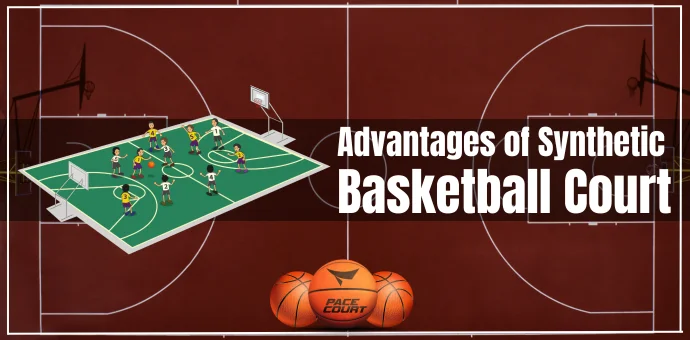
Durable Walking Track

Building a Safe and Durable Walking Track

Walking tracks have become an essential aspect of modern urban planning and recreational facilities, offering a space for exercise, relaxation, and social interaction. In the construction of walking tracks, safety, durability, aesthetics, and environmental sustainability are key considerations. Acrylic flooring by Pacecourt offers an innovative solution to meet these demands, making it an ideal choice for building a durable walking track, also this article delves into how acrylic flooring by Pacecourt can be utilized to create the perfect durable walking track. Introduction Walking tracks are more than just pathways; they are arenas for community interaction, personal well-being, and a reflection of urban aesthetics. Pacecourt’s acrylic flooring offers a balanced approach that meets the diverse requirements of walking track construction. Importance of Walking Tracks Walking tracks are essential for promoting physical health, connecting communities, and enhancing urban landscapes. They are integral to public parks, schools, community centers, and even commercial complexes. Traditional Walking Track Materials Walking tracks have typically been constructed from asphalt, concrete, or gravel. While functional, these materials often fall short in terms of safety, comfort, aesthetics, and environmental considerations. The Advantages of Acrylic Flooring by Pacecourt Safety Pacecourt’s acrylic flooring offers a non-slip surface that reduces the risk of falls and injuries. Its cushioning effect also minimizes impact on the joints, making walking a more comfortable experience. Durability Built to withstand wear and tear from heavy foot traffic and environmental factors, Pacecourt’s acrylic walking tracks retain their structural integrity and appearance over time. Aesthetics With a wide array of colour options and the ability to integrate patterns or logos, Pacecourt allows for creative customization of walking tracks, adding to the visual appeal of the surrounding landscape. Environmental Considerations Pacecourt uses recyclable materials and follows an energy-efficient production process. These attributes make it a sustainable option for walking track construction. Cost-Effectiveness Though initial investment in Pacecourt’s acrylic flooring might higher compared to traditional materials, the long-term benefits in terms of maintenance and durability make it a cost-effective choice. Designing a Walking Track with Pacecourt Designing a acrylic walking track with Pacecourt involves understanding the local environment, community needs, aesthetics, and budget considerations, also the flexibility and customization offered by Pacecourt enable the creation of a unique and functional walking track that resonates with its surroundings. Installation Process Pacecourt’s experienced team oversees the installation process, ensuring quality at every stage: Case Studies From urban parks to educational institutions, Pacecourt’s acrylic flooring has used to construct walking tracks that stand as testimonies to quality, innovation, and community well-being. Conclusion Building a durable walking track is a complex endeavor that balances functionality, aesthetics, safety, and sustainability. Acrylic flooring by Pacecourt brings all these elements together, providing a solution that is adaptable, innovative, and lasting. With its focus on quality and customization, Pacecourt’s acrylic flooring ensures that the durable walking track not only meets the immediate needs but stands as a lasting community asset. With a vision that transcends mere construction, Pacecourt’s approach to walking track design is a reflection of a commitment to enhancing community life also, promoting well-being, and creating spaces that are as beautiful as they are functional. Whether it’s a serene path winding through a park or a bustling track in a city center, Pacecourt’s acrylic flooring promises a walking experience that’s safe, enjoyable, and enduring. Building a walking track with Pacecourt is not just about laying a path; it’s about paving the way for healthier and more connected communities.

Basketball Court Design, outdoor basketball court flooring

Basketball Court Design: Why Acrylic Sports Flooring Matters

Basketball, a sport that thrives on speed, skill, and agility, demands not only exemplary athletes but also an outstanding court surface. In a game where every bounce and pivot can change the outcome, the importance of a reliable, durable, and performance-oriented playing surface is paramount. Among the varied options available in the market, acrylic sports flooring by Pacecourt has emerged as an industry leader. In this comprehensive analysis, we will delve into the intricacies of why this type of flooring is essential for today’s Basketball Court Design. 1. Introduction to Acrylic Sports Flooring Acrylic sports flooring consists of a synthetic polymer known for its toughness and flexibility. Pacecourt, a renowned name in sports flooring, has innovated in the application of acrylic materials to create a playing surface that meets the highest international standards. 2. Durability and Longevity Pacecourt’s acrylic flooring promises exceptional durability. Unlike traditional hardwood floors that may warp or degrade, acrylic surfaces withstand varying temperatures, humidity levels, and rigorous play without losing their structural integrity. Weather Resistance For outdoor basketball court, weather resistance is a crucial factor. Pacecourt’s flooring offers excellent protection against UV rays, rain, and other weather conditions, ensuring the surface remains playable year-round. 3. Performance Consistent Ball Bounce Basketball players rely on predictable ball bounce for accuracy in passing and shooting. Acrylic surfaces by Pacecourt provide uniform elasticity, offering a consistent rebound effect. Traction and Safety Good traction is vital for preventing injuries. The anti-slip properties of Pacecourt’s acrylic floors reduce the risk of slips and falls, providing players the confidence to make quick movements without fear of injury. 4. Aesthetics and Customization With a broad spectrum of colours and designs, Pacecourt allows for complete customization of the court. The vibrant and UV-resistant pigments ensure the court remains visually appealing over time. Logo and Line Integration Pacecourt also facilitates the integration of logos, lines, and other branding elements, allowing schools, colleges, and professional teams to reflect their identity on the court. 5. Environmental Considerations Acrylic sports flooring by Pacecourt is a sustainable choice. The materials are recyclable, and the manufacturing process is more energy-efficient compared to traditional wood flooring. This flooring option aligns with the growing global focus on environmental stewardship. 6. Maintenance and Cost-Effectiveness Acrylic floors require less maintenance than wooden alternatives. They resist moisture, eliminating the need for constant resurfacing. Pacecourt’s quality manufacturing process ensures that the investment in acrylic flooring yields long-term financial benefits. 7. Case Studies School and College Installations Several educational institutions have adopted Pacecourt’s acrylic sports flooring. Their experience has been overwhelmingly positive, with benefits in performance, safety, and cost-effectiveness. Professional Arenas Professional basketball arenas have also embraced Pacecourt for its world-class quality, aesthetics, and customizability. Conclusion Pacecourt’s acrylic sports flooring represents a significant advancement in basketball court design. With a combination of performance, durability, aesthetics, environmental responsibility, and cost-effectiveness, it stands out as a superior choice for modern basketball facilities. The decision to invest in such a court goes beyond merely selecting a playing surface; it is a commitment to the safety, performance, and success of the players and the sport itself. With Pacecourt, the game of basketball is not just played; it’s experienced on a whole new level. The influence of Pacecourt on modern basketball court design cannot be overstated. Its contribution to reshaping the way players engage with the sport is a testament to innovation, quality, and the relentless pursuit of excellence that defines both the game and the brand itself. The fusion of technology and sportsmanship in the form of acrylic sports flooring by Pacecourt sets a new benchmark in the world of basketball and beyond.

Badminton Court Floor Finish, Badminton Court Flooring

Badminton Court Floor Finish: A Focus on Synthetic Acrylic Flooring

Badminton, an Olympic sport loved globally, is more than just a game of rackets and shuttlecocks. The quality of play often hinges on the Badminton Court Floor Finish, which directly affects the performance of players and their safety. As we delve into the realm of badminton court flooring, synthetic acrylic flooring emerges as the gold standard. This article explores the benefits of this state-of-the-art flooring and why it’s becoming increasingly popular for professional courts. Introduction to Synthetic Acrylic Flooring Pacecourt, a leading name in sports flooring, recognizes the importance of a durable, safe, and high-performance badminton court. Among the many options available in the market, synthetic acrylic flooring holds a unique position, blending aesthetics with functionality. Key Features of Synthetic Acrylic Flooring Durability: These floors are designed to withstand the repeated stress of fast-paced games. They resist wear and tear, making them last longer than most traditional flooring types. Optimal Grip: Too slippery, and players risk injuries. Too rough, and it impedes movement. Synthetic acrylic provides an optimal balance, ensuring that players can move quickly and safely. UV Resistance: Courts often experience prolonged exposure to sunlight. Synthetic acrylic floors come with UV resistance, ensuring they don’t fade easily or degrade prematurely. Water Resistance: Badminton courts, especially in outdoor settings or areas with high humidity, require a water-resistant floor. Acrylic ensures that no water seeps through, maintaining the court’s integrity. Low Maintenance: Synthetic acrylic floors are easy to clean and maintain, keeping the focus on the game rather than on maintenance issues. The Environmental Edge Beyond its functional benefits, synthetic acrylic flooring is also environmentally friendly. Manufacturers have made strides in ensuring the production process is sustainable, and the materials used are recyclable. This makes it a preferred choice for institutions and organizations keen on reducing their carbon footprint. Versatility in Design Another underrated feature of synthetic acrylic flooring is its adaptability in design. This flooring can be customized in a myriad of colors and patterns, allowing for personalized courts that reflect the identity of a club or institution. The Safety Quotient Safety remains paramount in sports, and synthetic acrylic flooring, with its shock absorption capabilities, ensures that players’ joints and muscles are protected from excessive strain. This results in fewer injuries and longer playing careers. Cost-Effectiveness While the initial investment in synthetic acrylic flooring may seem steep, its longevity and reduced maintenance costs make it a cost-effective solution in the long run. When you factor in the added benefits of enhanced player performance and safety, the ROI becomes clear. Conclusion In the ever-evolving world of sports infrastructure, the shift towards synthetic acrylic flooring as the preferred Badminton Court Floor Finish is both a nod to player demands and the future of the sport. With firms like Pacecourt leading the charge, it’s evident that this finish is not just a trend but the new standard in badminton court flooring. As enthusiasts and professionals alike rally for optimal playing conditions, it’s heartening to see the flooring industry rise to the challenge.

Acrylic Flooring vs Traditional Volleyball Court

Advantages of Acrylic Flooring vs Traditional Flooring – Volleyball Court Materials

Volleyball, a sport loved by millions, has seen significant evolution not just in how it’s played but also where it’s played. From sandy beaches to wooden gymnasium floors, the diversity of playing surfaces is vast. One of the latest advancements in this arena is the use of acrylic flooring for outdoor volleyball courts. Brought into focus by industry leaders like Pacecourt, acrylic surfaces offer a modern alternative with a multitude of benefits. In this article, we’ll delve deep into the advantages of Acrylic Flooring vs Traditional Volleyball Court materials. 1. Durability and Longevity Traditional Surfaces: Over time, materials like asphalt or concrete can develop cracks due to natural wear and tear. Similarly, wooden courts are susceptible to warping or damage from moisture. Acrylic Flooring: Known for its resilience, acrylic can withstand intense play, environmental factors, and the test of time. With proper maintenance, these courts can last for many years without significant wear. 2. Player Safety and Comfort Traditional Surfaces: Hard surfaces can be unforgiving on player joints, leading to a higher risk of injuries. Grass courts, while softer, can be uneven, posing tripping hazards. Acrylic Flooring: Designed with players in mind, acrylic sport court offer optimal shock absorption. This not only reduces the impact on knees and ankles but also provides a smoother and more consistent playing surface. 3. Versatility and Customization Traditional Surfaces: Customization options for asphalt, grass, or wooden courts are limited, often requiring additional resources and time. Acrylic Flooring: One of the standout features is its adaptability. Whether it’s incorporating team colors, logos, or specific design elements, acrylic offers unparalleled customization capabilities. 4. Consistent Playing Experience Traditional Surfaces: Environmental factors can greatly affect the performance of natural or older synthetic surfaces. Rain can make wooden courts slippery and grass courts muddy, while heat can soften asphalt. Acrylic Flooring: Acrylic courts provide a uniform bounce and grip, ensuring that players can maintain consistent gameplay regardless of weather conditions. 5. Low Maintenance and Easy Cleaning Traditional Surfaces: Wooden courts require periodic polishing and can be damaged by water. Asphalt courts might need resurfacing due to cracks. Acrylic Flooring: Being resistant to water and UV rays, acrylic courts are easy to clean and maintain. Simple cleaning routines can keep them looking new and vibrant. 6. Environmentally Friendly Traditional Surfaces: The production and disposal of some traditional materials can have environmental implications. Acrylic Flooring: Modern acrylic flooring solutions, like those from Pacecourt, prioritize sustainability. These surfaces are often recyclable, leading to a smaller environmental footprint. 7. Cost-Effectiveness Traditional Surfaces: The frequent maintenance and potential for early replacement can lead to higher long-term costs. Acrylic Flooring: While the initial investment can be higher, the durability and low maintenance requirements of acrylic make it a cost-effective solution in the long run. 8. Weather Resistance Traditional Surfaces: Prolonged exposure to the elements can deteriorate the quality of many traditional court materials. Acrylic Flooring: Acrylic is designed to resist various weather conditions, from the scorching sun to heavy rainfall, ensuring longevity and consistent playability. 9. Aesthetically Pleasing Traditional Surfaces: Wear and tear are more visible, and design possibilities are limited. Acrylic Flooring: With a glossy finish and the ability to incorporate vibrant designs, acrylic courts are not just functional but also visually appealing. 10. Adaptability for Multiple Sports Traditional Surfaces: Courts designed for one sport might not suit another. Acrylic Flooring: With slight modifications, an acrylic volleyball court can easily be adapted for other sports, making it a versatile choice for multi-sport facilities. Slide, Bounce, Win! All on Our Acrylic Sports Surface. Tennis Court Flooring Basketball Court Flooring Volleyball Court Flooring Badminton Court Flooring Skating Rink Walking track Conclusion Acrylic Flooring vs Traditional Volleyball Court debates have taken center stage recently. Championed by pioneers like Pacecourt, acrylic flooring is setting new standards in the world of outdoor sports surfaces. Its superior durability, player-centric design, and adaptability make it an excellent choice for modern volleyball courts. While traditional surfaces hold their own place and charm, the multifaceted advantages of acrylic flooring are reshaping the way we think about outdoor sports infrastructure.

Acrylic Flooring, Acrylic Flooring Protects Athletes

Acrylic Flooring Protects Athletes and Enhancing Performance

Flooring is an essential aspect of sporting events, often overshadowed by other elements. Yet, Acrylic Flooring Protects Athletes is a mantra echoing in the sports infrastructure domain. The distinction between an athlete reaching their peak performance or enduring an injury can often be attributed to the flooring type. Acrylic flooring, a predominant choice in sporting arenas and training facilities, owes its growing popularity to precisely this protection it offers. But what attributes of acrylic flooring protect athletes so effectively, and how does it concurrently enhance their performance and safety? Material Properties At its core, acrylic flooring consists of synthetic resins, which give it a unique combination of flexibility and durability. These properties are paramount for sports flooring. Flexibility ensures that the floor can absorb shocks effectively, reducing the impact on an athlete’s joints and muscles. On the other hand, durability ensures that the floor can withstand constant wear and tear without degrading quickly. A balance of these two properties is crucial because a floor that’s too soft can be just as detrimental as one that’s too hard. Protection against Impact One of the foremost concerns in sports is the risk of injuries resulting from falls or high-impact activities. A surface that’s too hard can result in severe injuries, like fractures or concussions when an athlete falls. Acrylic flooring is designed to be shock-absorbent. It disperses the energy of the impact across a broader area, reducing the immediate force on any particular point of contact. This shock absorption reduces the risk of injuries, making it a preferred choice for sports like basketball, volleyball, and indoor track events. Traction and Grip The ability to maintain grip and stability on the floor is vital for athletic performance. A slippery floor can lead to accidents, while a floor that offers too much resistance can hinder movement. Acrylic floors have a unique surface texture that provides an optimal level of friction. This allows athletes to move quickly and change directions without the fear of slipping. Moreover, modern acrylic floorings come with anti-skid properties, further ensuring the safety of athletes. Uniformity and Consistency For an athlete, consistent performance is as much about their skill as it is about the environment. Differences in flooring can lead to uneven bounce in ball games or unpredictable traction. Acrylic flooring is manufactured with high precision, ensuring uniformity across the surface. This consistency means that athletes can rely on the floor to behave predictably during crucial moments of the game, allowing them to focus solely on their performance. Versatility and Adaptability Different sports have varying needs. What works for a basketball court might not be suitable for a dance studio. Acrylic floorings come in a variety of densities and finishes, catering to the specific needs of different sports. This adaptability ensures that each sport can benefit from the protective and performance-enhancing properties of acrylic flooring. Thermal and Acoustic Properties Sporting environments need to maintain a certain comfort level for athletes to perform at their best. Acrylic flooring is known for its excellent thermal insulation properties. It can keep the surface temperature consistent, irrespective of external conditions. This is particularly beneficial in indoor sports arenas where maintaining a stable temperature is crucial. Moreover, the acoustic properties of acrylic floors reduce noise levels, creating a more focused environment for athletes. Maintenance and Longevity From the perspective of facility managers, longevity and ease of maintenance are crucial. Acrylic floors, with their resistance to wear, tear, and abrasions, provide a long-lasting solution. Their non-porous nature also means they don’t harbour bacteria or fungi, ensuring a hygienic environment for athletes. Simple cleaning routines can keep these floors looking new for years, further enhancing their cost-effectiveness. Environmental Impact In today’s world, sustainability plays a pivotal role in decision-making. Acrylic flooring, being synthetic, might raise eyebrows regarding its environmental impact. However, modern manufacturing processes have evolved to make these floors more eco-friendly. Many manufacturers now use recycled materials and ensure that their products are recyclable at the end of their life cycle. Thus, choosing acrylic flooring aligns with the global shift towards sustainability. Conclusion In the competitive realm of sports, the distinction between success and failure often hinges on minute details. Factors such as the right equipment, optimal training, and the quality of flooring can drastically sway outcomes. “Acrylic Flooring Protects Athletes” is a statement that has gained considerable validity in recent times. With its array of benefits, Pacecourt acrylic flooring has emerged as a revolutionary force in sports dynamics. It not only offers protection against injuries but also significantly boosts performance while ensuring durability. As the sports industry advances with research and technology, acrylic flooring’s role is set to grow, solidifying its place as the top choice for global sports arenas. Slide, Bounce, Win! All on Our Acrylic Sports Surface. Tennis Court Flooring Basketball Court Flooring Volleyball Court Flooring Badminton Court Flooring Skating Rink Walking track

Budgeting and Pricing for Flooring, Sports flooring manufacturer

Considering Budgeting and Pricing for Flooring When Selecting a Sports Flooring Manufacturer

Introduction: Selecting a sports flooring manufacturer is an investment that should be made thoughtfully. One of the most crucial aspects to consider in this decision is budgeting and pricing. Balancing between quality and cost can be challenging. In this article, we’ll dive into the key budgeting and pricing considerations when choosing a sports flooring manufacturer, with insights from Pacecourt, a company renowned for its premium synthetic acrylic flooring and over a decade of experience. Initial Cost vs. Long-term Value: When considering your budget, it’s vital to weigh the initial cost against the long-term value. Cheaper options might seem attractive upfront, but inferior-quality materials may require more frequent repairs or replacements. Pacecourt emphasizes the importance of investing in high-quality flooring, which, though may have a higher initial cost, will prove more cost-effective in the long run due to its durability and low maintenance. Customization and Additional Features: Customization options and additional features can affect pricing. Consider what is essential for your facility and what can be regarded as a luxury. Pacecourt offers a range of customization options, allowing you to tailor your flooring solution to your specific needs and budget. Installation Costs: Installation is a significant portion of the overall cost. When budgeting, ensure that you factor in not just the price of the flooring materials but also the installation costs. Pacecourt’s transparent pricing policy ensures that customers have a clear understanding of what the installation will cost, allowing for more accurate budget planning. Maintenance Costs: Maintenance is an ongoing cost that should not be overlooked. Select a flooring material that not only fits within your initial budget but also aligns with your long-term maintenance budget. Pacecourt’s synthetic acrylic flooring is known for being low-maintenance, ensuring that ongoing costs are kept to a minimum. Warranty: A manufacturer’s warranty can be a relief to your budget in the event of unexpected issues. Pacecourt offers robust warranty options, safeguarding your investment and providing peace of mind. Financing Options: Sometimes, a substantial investment like acrylic flooring may require financing options. Check if the manufacturer provides any financing or installment plans. Pacecourt works with customers to explore various financing options, ensuring that budget constraints do not compromise quality. Consideration of Return on Investment (ROI): For commercial sports facilities, considering the ROI is critical. High-quality flooring, like that offered by Pacecourt, can enhance the reputation of your facility, attracting more clientele and potentially generating higher revenue. Conclusion: Budgeting and pricing considerations are central to selecting a sports flooring manufacturer. By taking into account the initial costs, long-term value, customization, installation, maintenance costs, warranty, and financing options, you can make an informed decision that suits both your needs and your budget. Pacecourt stands as an exemplary choice, offering quality, transparency, and flexibility in pricing, making it an excellent partner for your sports flooring venture.

Acrylic Flooring

The Need for Industry Knowledge in Acrylic Flooring

Introduction: Acrylic flooring has emerged as a popular choice for sports surfaces worldwide, owing to its durability, versatility, and cost-effectiveness. However, successfully navigating the world of synthetic outdoor court flooring requires comprehensive industry knowledge. Drawing from the expertise of Pacecourt, a renowned provider of synthetic acrylic flooring for over a decade, this article underlines the importance of industry knowledge when delving into the world of synthetic flooring. Understanding Acrylic Flooring: Acrylic flooring is a type of synthetic sports flooring composed of multiple layers of synthetic material. It’s preferred for its uniform and smooth surface, which provides consistent bounce and grip, enhancing the performance of athletes. Knowledge about the composition, installation process, and maintenance of synthetic flooring can drastically affect its longevity and functionality. Industry Standards and Regulations: Being aware of industry standards and regulations is paramount to ensure the flooring’s safety and quality. Organizations like the International Tennis Federation (ITF) provide certifications for sports flooring, indicating that the product meets global standards. As a certified provider, Pacecourt exemplifies the importance of adhering to these regulations, ensuring their flooring aligns with international safety and performance standards. Material Innovations: Acrylic flooring has evolved significantly over the years, thanks to material science advancements. Staying abreast of these innovations is vital to offer the best solutions to clients. Pacecourt’s commitment to continuous learning and innovation ensures they provide the most advanced, high-quality flooring solutions to their customers. Installation Knowledge: Proper installation is crucial to optimize the performance and lifespan of synthetic flooring. Hence, comprehensive knowledge of the installation process, techniques, and common challenges is a must for manufacturers. With their experienced team, Pacecourt ensures flawless installation, backed by deep industry knowledge. Maintenance Practices: Understanding the maintenance requirements of acrylic flooring is crucial for its upkeep and longevity. Correct cleaning and repair methods can significantly prolong the floor’s life and ensure optimal performance. With their extensive industry knowledge, Pacecourt offers detailed maintenance guides and services, ensuring clients get the most out of their investments. Sustainability Considerations: In today’s eco-conscious world, understanding the environmental impact of flooring is crucial. Companies like Pacecourt prioritize sustainability, creating floors that are long-lasting and require less frequent replacement, reducing waste and environmental impact. Conclusion: Industry knowledge is fundamental in the realm of acrylic synthetic flooring. It helps ensure the quality, safety, and sustainability of the flooring, while also enhancing its performance and lifespan. With their extensive industry knowledge, companies like Pacecourt guide customers through the complexities of acrylic flooring, offering premium products and services that stand the test of time. It is through such expertise that the true potential of acrylic flooring can be fully realized, benefiting athletes and sports facilities worldwide.

Sport Court Surfaces, Sports Court Building Process

Insights into the Sports Court Building Process: An Interview with Industry Experts

When it comes to Sports Court Building Process, the intricate interplay of science, design, and function comes to the forefront. To shed light on this intricate process, we sat down with the experts from Pacecourt, a leading sports court manufacturer, known for its state-of-the-art tennis and basketball courts. Q: What does the process of building a sports court involve? A: Building a sports court is a comprehensive process involving several steps, from initial site inspection and ground preparation to installation of the sports flooring and final touches. We first analyze the topography and soil conditions of the proposed site. Once we ensure the land is suitable, we move on to leveling the ground, laying the foundation, and installing the chosen flooring material. Q: How does Pacecourt ensure the safety and performance of its courts? A: Our approach to building a court involves a blend of technological innovation and attention to detail. We utilize high-quality materials designed to absorb impact, reducing strain on athletes and minimizing injury risk. Our courts also have excellent traction to prevent slips and falls. Every court we construct is a testament to our commitment to safety and performance. Q: What makes Pacecourt’s flooring materials stand out? A: Pacecourt’s flooring materials are specifically designed for superior performance and longevity. They are impact-absorbent, ensuring a lower risk of injuries, and are highly resistant to temperature fluctuations and weather elements. We offer a range of materials to cater to different sports and performance needs. Q: How does the choice of color affect the court? A: The color of a court has both aesthetic and practical implications. Certain colors provide better visibility for players, which is why we offer a range of vibrant shades for clients to choose from. Additionally, lighter colors absorb less heat, making them a popular choice in warmer climates. Q: What role does maintenance play in the life of a sports court? A: Regular maintenance is key to extending the life of a sport court. This includes routine cleaning to remove debris, timely repair of any damage, and periodic resurfacing. With proper care, a Pacecourt sports court can provide many years of enjoyment and high-level play. This interview with Pacecourt’s industry experts provides valuable insights into the sports court building process. It underscores the commitment to safety, performance, and customer satisfaction that sets Pacecourt apart as a leader in the field.

High-Quality Synthetic Sports Flooring, Sports Flooring, Synthetic Sports Flooring

Choose Pacecourt: Your Best Bet for High-Quality Synthetic Sports Flooring in India

Introduction: In the competitive world of sports flooring, high-quality synthetic sports flooring is essential for player performance, safety, and overall experience. In India, Pacecourt has consistently set the bar high in this sphere. With over a decade of experience and a commitment to providing top-notch materials, Pacecourt is the preferred choice for high-quality synthetic acrylic flooring. Discover why you should consider Pacecourt for your sports facility. Unrivalled Quality: At the core of Pacecourt’s offerings is a commitment to quality. Their synthetic acrylic sports flooring is known for its exceptional durability, resilience, and performance. Whether for tennis court, basketball, volleyball, or multi-sport facilities, Pacecourt’s flooring withstands intense usage while maintaining top-tier performance. ITF Certification: Pacecourt’s synthetic acrylic flooring is ITF certified, an endorsement that signifies adherence to international standards of quality, safety, and performance. When you choose Pacecourt, you’re opting for a surface that’s recognized and approved by a global authority, ensuring your athletes enjoy a world-class playing experience. Customization: Pacecourt understands that every sports facility has unique needs. They offer a range of customization options, including colour choices, line marking for different sports, and logo incorporation. This flexibility allows you to tailor the flooring solution to your specific requirements, ensuring optimal usage and aesthetic appeal. Expert Installation: With its team of experienced professionals, Pacecourt ensures a flawless installation process. They utilize advanced techniques and tools to install the flooring perfectly, optimizing its performance and longevity. Sustainability: In a world increasingly aware of environmental impacts, Pacecourt’s commitment to sustainability sets them apart. Their flooring solutions are designed to last, reducing the need for frequent replacement and the resultant waste. Furthermore, their installation processes are mindful of energy efficiency, reducing the environmental footprint of your sports facility. Exceptional After-Sales Service: Pacecourt’s commitment to its customers extends beyond the initial installation. They offer comprehensive after-sales services, including maintenance and repair, to ensure the flooring continues to perform at its best long after the installation. Cost-Effective: Despite the premium quality of their offerings, Pacecourt’s pricing is competitive, making high-quality sports flooring accessible for various budgets. Furthermore, the durability and low maintenance requirements of their flooring mean that it is a cost-effective solution in the long run. Conclusion: When it comes to high-quality synthetic sports flooring in India, Pacecourt stands out for its commitment to quality, customization, expert installation, sustainability, after-sales service, and cost-effectiveness. Their ITF-certified synthetic acrylic flooring ensures your sports facility offers a top-notch playing experience, making Pacecourt the ideal partner for your sports flooring needs.

Color Shades for Sports Court, court colors

Pacecourt’s Vibrant Palette: 7 Color Shades for Sports Court

Introduction: Choosing the Right Colour Shades for Sports Court is crucial as it not only influences the aesthetics but also impacts the game’s visibility. Pacecourt, a renowned provider of synthetic acrylic sports flooring, offers an array of colour options to customize your court to your preferences. In this article, we explore seven different colour shades from Pacecourt’s vibrant palette. Terracotta Red is a popular choice among Pacecourt’s customers for its earthy, warm hue. This colour evokes the traditional clay courts of tennis, providing a classic aesthetic. Additionally, its rich contrast enhances the visibility of balls, especially in outdoor settings. Light Green is a fantastic option for those seeking a softer, calmer hue for their court. It mimics the feel of natural grass courts while offering the advantages of synthetic acrylic flooring. Light Green courts blend harmoniously with outdoor environments and are gentle on the eyes, providing a more comfortable playing experience. A darker shade, Dark Green, is a traditional choice for tennis court and other sports facilities. It blends well with natural surroundings and offers excellent contrast with most sports balls, enhancing visibility during play. Dark Green also helps reduce glare in brightly lit or outdoor settings. Gray is a modern and minimalist colour choice for sports courts. It provides a neutral backdrop that highlights colourful sports equipment and player outfits. This sleek and professional shade suits a wide variety of sports and blends seamlessly with various architectural styles. Light Blue courts lend a cool, calming atmosphere to the play area. This shade is also practical, as it offers excellent visibility against the bright colours of most sports balls. Particularly for sports like tennis and basketball, Light Blue surfaces can enhance the visibility of the game, enhancing the playing and spectating experience. For a more regal and striking aesthetic, Royal Blue is an excellent choice. This vibrant hue creates an engaging and energetic environment for both players and spectators. It provides a stark contrast for sports equipment, ensuring optimal visibility, especially in indoor settings. Dark Blue, a shade that combines depth with vibrant energy, is a favourite among many sports facilities. It provides a high level of contrast for brightly coloured balls, improving gameplay visibility also, a Dark Blue court imparts a sense of professionalism and sophistication to your facility. Conclusion: Pacecourt offers a variety of Colour Shades for Sports Court to meet the unique needs of every sports facility. From the earthy Terracotta Red and calming Light Green to the vibrant Royal Blue and minimalist Gray, there’s a colour to match every aesthetic preference and practical requirement also, with Pacecourt’s high-quality, ITF-certified synthetic acrylic flooring, you can enjoy not only excellent performance and safety features but also the perfect colour that enhances your sports facility.

High-Quality Synthetic Sports Flooring

Setting the Trend with High-Quality Synthetic Sports Flooring

Introduction: In the constantly evolving world of sports infrastructure, PaceCourt has firmly established its place as a trendsetter in the industry. This is not just about their state-of-the-art, high-quality synthetic sports flooring that meets global standards but also how they’re redefining what it means to be a sports flooring provider. Let’s delve into why Pacecourt is currently trending in the sports flooring industry. Trailblazing Quality: Pacecourt is known for its premium quality synthetic acrylic sports flooring. Their products are not just durable and resilient; they offer outstanding performance, enhancing the playing experience for athletes. Pacecourt’s flooring has been recognized by the International Tennis Federation (ITF) with a Grade 4 certification, reaffirming its world-class quality. Customization is the New Norm: One of the trendsetting features of Pacecourt is the high degree of customization they offer. They understand that every sports facility has unique needs, and their array of colour options, including Terracotta Red, Light Green, Dark Green, Gray, Light Blue, Royal Blue, and Dark Blue also, allow facilities to choose a hue that suits their aesthetics and functional requirements. Environmental Stewardship: In today’s world, it’s more important than ever for companies to commit to sustainability. Pacecourt is setting trends in this aspect too, with long-lasting acrylic flooring that reduces the frequency of replacement, minimizing waste. Their energy-efficient installation processes also contribute to a lower environmental footprint. Exceptional After-Sales Service: Pacecourt isn’t just leading the way in product quality; they’re also setting a high standard with their after-sales service. Their commitment to their customers doesn’t end with the installation of the flooring; they offer comprehensive maintenance and repair services, ensuring that the flooring continues to perform at its best. Conquering the Indian Market: Pacecourt is rapidly gaining popularity in India also, for a good reason. With their High-Quality Synthetic Sports Flooring and customer-centric approach, they’re becoming a go-to choice for sports facilities across the country. Conclusion: Pacecourt is more than just a synthetic sports flooring provider; they’re a trendsetter, constantly pushing the boundaries of what’s possible in the industry. With their commitment to quality, customization, sustainability, and customer service also, they’re leading the way and setting new trends in the sports flooring industry. Stay tuned to Pacecourt’s journey as they continue to innovate and redefine the sports flooring landscape.

Synthetic Badminton Court

The Synthetic Badminton Court: Construction, Benefits, and Maintenance

Introduction High-quality playing surfaces are in more demand as badminton becomes more and more popular as a recreational and competitive sport. Traditional outdoor courts frequently have problems like weather-related concerns and expensive maintenance needs. Synthetic badminton court have become a solution to these problems. This article discusses various aspects of synthetic badminton courts, such as their manufacture, components, benefits, pricing, installation procedure, standards, dimensions, manufacturers, resurfacing, durability, performance, and appearance. We will also go through how synthetic badminton court surfaces can improve player safety and enjoyment. For those who like to play the sport outside, outdoor synthetic badminton courts are a great option. These courts provide a sturdy playing surface while built to resist various weather situations. Outdoor courts use synthetic materials that are specifically designed to withstand UV radiation, wetness, and temperature changes. The surface of the court ensures great traction and enables players to keep their balance throughout intensive gameplay. Additionally, synthetic outdoor badminton court come in a variety of colours, enhancing visibility and adding aesthetic appeal. The synthetic badminton court surface has carefully constructed to closely resemble the appearance, feel, and functionality of a real grass or wood court. Injury risk decreased by the constant ball bounce, excellent friction, and shock absorption it provides. The flooring is often built of resilient synthetic materials that can resist high use and provide a long-lasting playing surface. These materials are the best option for both professional and recreational play because of their high durability against wear. Synthetic Badminton Court Construction and Material The construction of a synthetic ball badminton court involves several steps. Firstly, the site is prepared by levelling the ground and ensuring proper drainage. We have to go step by step process first we have to use  A badminton court’s synthetic building materials chosen with care based on their ability to perform. They made to withstand high foot traffic, withstand moisture absorption, and preserve their qualities in a variety of weather conditions. To make sure they adhere to global standards for sporting surfaces, the materials also go through an extensive testing procedure. Maintenance One of the significant advantages of synthetic badminton courts is their low maintenance requirements. Unlike natural grass or clay courts, synthetic surfaces do not require regular watering, mowing, or re-seeding. Maintenance activities for synthetic badminton courts typically include regular sweeping and debris removal to keep the surface clean. Additionally, periodic inspections conducted to identify and repair any damages, such as cracks or tears in the surface. In some cases, professional cleaning and resurfacing may required to restore the court’s performance and appearance. Advantages Compared with traditional court surfaces, synthetic badminton courts have a number of benefits. First of all, they are all-weather, allowing for year-round play in rain, heat, or cold. As a result, playing experiences are constant, and disruptions to practice or competition schedules kept to a minimum. Second, players’ joints put under less stress due to the shock-absorbing qualities of synthetic materials, lowering their chance of injury. Synthetic surfaces’ consistent ball bounce and friction make it possible for players to perform strokes with control and precision. Additionally, synthetic badminton courts are built to last and resistant to damage. They are suited for both recreational and professional play because they are able to resist heavy use without losing performance. Synthetic court materials are frequently UV-resistant, ensuring that the court’s colour and appearance remain brilliant and undamaged for a considerable amount of time. Installation The cost of installing a synthetic badminton court can vary based on factors such as court size, location, materials used, and additional features. While the initial investment may higher compared to traditional courts, synthetic surfaces offer long-term cost savings due to their low maintenance requirements. The installation process involves site preparation, base construction, surface installation, and finishing touches. It is essential to hire experienced professionals for proper installation to ensure optimal performance and longevity of the court. Manufacturers Known for producing synthetic badminton court surfaces, Pacecourt is a reputable producer. A variety of materials and surface alternatives are available from pacecourt manufacturers, meeting various performance and financial needs. It’s important to pick a reputable company like pacecourt that has a track record of providing high-quality surfaces that satisfy international requirements. Resurfacing, Durability, and Performance Even the strongest synthetic badminton court surfaces may eventually need to resurfaced in order to return to their original performance and appearance. Cleaning the court, fixing any damage, and adding a new protective layer are all parts of resurfacing. Resurfacing done on a regular basis depending on things like usage volume, weather, and maintenance procedures. The long-term worth of synthetic badminton courts significantly influenced their durability. These courts built to resist intense traffic and keep up their performance standards for an extended period of time. However, regular upkeep and periodic inspections are essential for spotting and resolving any potential problems. Conclusion In the business of creating synthetic badminton court surfaces, Pacecourt is a reputable manufacturer. When it comes to surfaces and materials, Pacecourt manufacturers provide a variety of choices to suit various performance and financial constraints. Selecting a reputable company that has a track record of developing high-quality surfaces that satisfy international standards, such as Pacecourt, is essential.

Drying process of tennis court

Why Patience is Key: The Slow Drying Process of a Tennis Court

Introduction: Tennis court construction and resurfacing is a meticulous process that demands both skill and patience. One crucial aspect is the drying phase, which requires ample time to ensure a smooth and resilient playing surface. Understanding the significance of this Drying Process of a Tennis Court is essential, especially when dealing with synthetic acrylic flooring, a speciality of the veteran company, Pacecourt. Why Drying Matters: The drying process serves a dual purpose. First, it helps solidify the acrylic surface, ensuring an even and consistent playing field that players have come to appreciate. Also, it allows the synthetic materials to fully bind and harden, leading to increased durability and longevity of the court. The Patience Required: The drying process involved in tennis court installation, specifically for synthetic acrylic flooring, can be a lengthy procedure, taking several days or even weeks depending on specific conditions. Although it’s tempting to expedite this process, doing so could lead to substantial issues later, such as cracking, bubbling, or an uneven surface. Hence, patience is not just a virtue but a crucial requirement in the tennis court flooring installation process. Role of Pacecourt: With a decade of experience in providing synthetic acrylic flooring, Pacecourt has mastered the art and science of the drying process. Recognizing the importance of patience also, they’ve integrated slow drying techniques into their installation procedures, providing their clients with premium, long-lasting tennis courts. Here’s how: Conclusion: Good things come to those who wait.” This is especially true in tennis court construction and resurfacing. By combining patience, advanced technology, and the experience of industry leaders like Pacecourt, the slow drying process of a tennis court optimizes the use of synthetic acrylic materials to create an ITF Classified 4 by Pacecourt surface. This durable court not only meets the needs of tennis enthusiasts but also mirrors the best tennis games, which are played with not just power and precision, but also patience

ITF classified

ITF Classified

The International Tennis Federation (ITF) is the governing body for tennis worldwide, established in 1913, headquartered in London, United Kingdom, and is responsible for organizing and regulating tennis events worldwide. The ITF is responsible for creating and implementing the rules and regulations of tennis, promoting tennis worldwide, and developing the sport at all levels. In this article, we will discuss the different types of tennis surfaces and their speeds, as pacecourt classified by the ITF.  Player Rankings The ITF manages and oversees the player rankings for both men and women at the professional level. Rankings updated weekly and are crucial for determining tournament seedings and entries. Tournament Levels ITF tournaments are classified into different levels according to the amount of ranking points and prize money on offer. On the ITF World Tennis Tour, for example, tournaments split into categories like ITF $15k and $25k events, with the numbers representing the total prize money available at the tournament. These events provide a pathway for up-and-coming players to improve their rankings and progress to higher-level ATP and WTA events. Court Surface Classification The ITF also classifies court surfaces based on their pace. The Court Pace Classification Programme was introduced to standardize and regulate the speed of tennis courts used in professional competition also, Courts are classified into five categories ranging from slow to fast, based on their Court Pace Rating (CPR), which is a measure of how fast a ball rebounds off the surface. Equipment Classification The ITF has an Equipment Approval Programme that classifies and approves tennis equipment, including balls, rackets, also court surfaces, to ensure they meet the necessary standards for international competition. ITF Classification in Junior Tennis In junior tennis, the ITF employs a progressive tennis system called ‘Tennis 10s’, which uses different stages to classify junior players. These stages are red (for beginners), orange, and green also, each of which corresponds to a different level of skill and involves different court sizes, ball types, and racket sizes. Types of Tennis Surface Speed Mediums: ITF-classified surfaces are important for players, coaches, and tournament organizers. As they help determine the style of play that will be most effective on a particular court surface also. Players must adapt their game to different surfaces to be successful, and tournament. Organizers must select the appropriate surface to provide fair and challenging competition.

Building Outdoor Courts

Top Materials to Consider When Building Outdoor Courts

Pacecourt is a distinguished brand in the industry of building outdoor courts. It manufactures materials for various sports such as Tennis, Basketball court, Volleyball, Badminton, Skating rinks, Walking tracks & Multi-Sports, etc. Using a unique type of acrylic resurfacing material, Pacecourt creates durable and high-performance court surfaces. In this article, we will discuss the outstanding features and benefits of using Pacecourt material specifically for constructing tennis courts in the context of building outdoor courts. Pacecourt Material Overview: Pacecourt material made up of an acrylic resin that combined with various aggregates, pigments, and modifiers. The aggregates provide a texture to the material, while the pigments give it its colour. The modifiers improve the performance of the material and its ability to withstand the harsh conditions of a court. Pacecourt material is a popular choice for tennis court flooring because it is durable, weather-resistant, and provides excellent traction. It is also easy to apply and can customized to match the specific needs of a particular court. There are several different Pacecourt products available for tennis court construction and many more courts, including: Pacecourt Masters: This is a high-performance Pacecourt material that designed for professional tennis courts. It provides excellent traction and ball response, making it a popular choice for tennis players at all skill levels. The Masters 8 is also resistant to fading, weathering, and damage from UV rays, which helps to prolong its lifespan. Pacecourt Advantage: This is a mid-range Pacecourt material that designed for recreational courts. It is durable and weather-resistant, making it ideal for outdoor tennis court. The Advantage provides excellent traction and ball response, making it a great choice for tennis players of all skill levels. Pacecourt Budget: This is a budget-friendly Pacecourt material that designed for a tennis court with moderate use. It is a durable and weather-resistant material that provides good traction and ball response. Pacecourt is a great choice for tennis courts. Pacecourt Products: Benefits of Pacecourt Products: Durability: Weather Resistance: Traction: Customization: Conclusion: Pacecourt material is a popular choice for Building Outdoor Courts because of its durability, weather resistance, and excellent traction. It is available in several different products, each designed for a specific type of tennis court. Pacecourt material can customized to match the specific needs of a particular court and requires minimal maintenance, making it a great choice for outdoor court owners.

outdoor basketball court flooring

Outdoor Basketball Court Flooring

Basketball is one of the most popular sports in the world, with millions of people playing the game every day. Playing basketball outdoors is a great way to stay active, improve your skills, and have fun with friends and family. However, the quality of the basketball court’s flooring is a critical factor that can affect the players’ performance and safety. In this article, we will take a more in-depth look at outdoor basketball court flooring and discuss the different types of materials used, their advantages and disadvantages, and what to consider when selecting the best flooring for your court. Types of Outdoor Basketball Court Flooring There are several types of materials used for outdoor basketball court flooring, each with its advantages and disadvantages. Let’s take a look at some of the most common types of outdoor basketball court flooring. Concrete Concrete is one of the most common materials used for outdoor basketball court flooring. It is durable, affordable, and easy to maintain. Concrete courts are relatively easy to install, and they provide a stable surface for playing basketball. However, concrete courts can be hard on players’ joints, especially during intense games or extended periods of play. Concrete courts can also become slippery when wet, making them less suitable for areas with high levels of rainfall or humidity. Asphalt Asphalt is another popular material used for outdoor basketball court flooring. It is affordable, durable, and requires minimal maintenance. Asphalt courts provide a smooth, even surface for playing basketball and offer good traction. However, like concrete, asphalt can be hard on players’ joints, and it can become slippery when wet. Rubber Rubber is a relatively new material used for outdoor basketball court flooring. It is a shock-absorbent material that provides excellent traction, making it ideal for outdoor basketball courts. Rubber courts are durable, weather-resistant, and low-maintenance, making them a popular choice for many basketball court owners. However, rubber courts can be expensive, and they may not provide the same level of ball bounce as other materials, making them less suitable for professional-level play. Acrylic Acrylic is a popular material used for indoor basketball courts, but it can also used for outdoor courts. Acrylic flooring provide a smooth, even surface for playing basketball, offering excellent ball bounce and traction. Acrylic courts are durable and easy to maintain, and they can customised with different colours and designs. However, acrylic courts can be expensive, and they may require a more extensive installation process than other materials. Modular Tile Modular tiles are another option for outdoor basketball court flooring. Modular tiles made of interlocking plastic tiles that snap together to create a durable, shock-absorbent surface. Modular tiles provide excellent traction, and they are easy to install and maintain. Modular tiles can also customized with different colors and designs, making them a popular choice for basketball court owners who want a unique look. However, modular tiles can be expensive, and they may not provide the same level of ball bounce as other materials. Factors to Consider When Selecting Outdoor Basketball Court Flooring When selecting outdoor basketball court flooring, there are several factors to consider, including: Budget The cost of outdoor basketball flooring can vary significantly depending on the material and installation process. It also depends on where you get the materials to build the basketball court. Pacecourt manufactures the materials, so it advised to buy them directly from them since they will more affordable and come with warranties. It is essential to consider your budget and choose a flooring material that meets your needs without breaking the bank. Durability Outdoor basketball court exposed to a range of weather conditions, such as rain, snow, and sunlight. Therefore, it is essential to choose a flooring material from pacecourt that is durable and weather-resistant. Traction Traction is crucial for outdoor basketball flooring, as it can affect the players’ performance and safety. A good basketball court should provide adequate traction, even when wet. Conclusion  If you’re looking to buy a product at a reasonable price, you’ve come to the right place! Pacecourt offers high-quality products that are affordable and won’t break the bank. Not only do we offer reasonable prices, but we also strive to provide excellent customer service. We want to ensure that every customer who shops with us has a positive experience and satisfied with their purchase. So don’t hesitate to check out our products and see for yourself how affordable they can be. You won’t disappointed!

tennis court

Enhance Your Tennis Experience with PaceCourt: The Ultimate Solution for Tennis Court Flooring

Introduction: The quality of the playing surface can have a considerable impact on the game of tennis. Each aspect of a tennis court is important in creating an optimal playing experience, whether it is the building, materials, resurfacing, or maintenance. Pacecourt knows the challenges of designing the ideal tennis court flooring and has emerged as an industry leader. In this article, we will look at how tp Enhance Your Tennis Experience, Pacecourt uses innovative design and cutting-edge technology to create the best tennis court surfaces that satisfy the highest performance, durability, and player satisfaction standards with Pacecourt.  Tennis Court Construction and Materials: Pacecourt specializes in tennis court construction materials, to create exceptional playing surfaces. Their expertise ensures that every aspect of the construction process is meticulously executed, resulting in tennis court that are built to last. By employing high-quality materials, such as Pacecourt deep patch, Pacecourt primer, acrylic resurfacer, cushion coat, colour etc.  Pacecourt guarantees excellent ball response, consistent playing conditions, and long-lasting durability. With Pacecourt, tennis court construction reaches new heights of quality and precision. Pacecourt provides 3 years of warranty on each of its products, and pacecourt coating products feature 100% acrylic resin and are high-quality, non-slip surface coatings for sporting and recreational areas. It is a balanced formula of highly durable adhesion-promoted acrylic resign, UV-resistant oxide pigments, selected reinforcing fillers and fungicides. It also has excellent colour retention, UV resistance, and extraordinary wearing purposes. Tennis Court Resurfacing and Maintenance: Over time, tennis court surfaces can wear down and require resurfacing to restore their performance. Pacecourt offers comprehensive resurfacing solutions that breathe new life into tennis courts, revitalising their playing characteristics. Whether it’s repairing cracks, applying fresh coatings, or addressing any surface irregularities, Pacecourt’s resurfacing services ensure that tennis courts maintain their optimum condition. Additionally, Pacecourt emphasizes the importance of regular maintenance to extend the lifespan of tennis court surfaces, minimizing the need for extensive repairs and maximizing playability. Tennis Court Design and Installation: Pacecourt recognizes that the design and installation of tennis courts play a crucial role in delivering an exceptional playing experience. Pacecourt provides a number of experts who collaborate with clients to create customized designs that cater to their specific preferences and requirements. Whether it’s a choice of colours, tennis court dimensions, or incorporating multi-sport functionality, Pacecourt designs and installs tennis courts that are visually appealing, functional, and versatile. Their attention to detail and commitment to excellence ensures that each tennis court installation is a testament to their dedication to customer satisfaction. Tennis Court Repair and Upgrades: Accidents happen, and tennis court surfaces may occasionally require repair. Pacecourt offers prompt and reliable repair services to address issues like cracks, surface damage, or uneven playing areas. Also, their team of skilled technicians employs the latest techniques and industry best practices to restore the integrity and performance of tennis court surfaces efficiently. Additionally, Pacecourt provides upgrades for existing tennis courts, incorporating features like shock absorption, non-slip surfaces, UV resistance, and all-weather capabilities, making them safer and more enjoyable for players of all skill levels. Conclusion: Pacecourt is the ideal of excellence in tennis court surfaces. Also their expertise in construction, utilising high-quality materials, exceptional resurfacing and maintenance services, innovative design and installation approaches, and reliable repair and upgrades, Pacecourt delivers tennis court surfaces that exceed expectations. Their commitment to enhancing the playing experience, promoting player safety, and ensuring durability set them apart in the industry. If you are looking for outdoor tennis court flooring, synthetic tennis court surfaces, acrylic tennis court surfaces, multi-sport court flooring, shock-absorbing or non-slip surfaces, UV-resistant surfaces, or all-weather tennis court surfaces, Enhance Your Tennis Experience with Pacecourt. Pacecourt is the ultimate choice. Trust Pacecourt to take your tennis game to new heights and enjoy the perfect blend of performance, quality, and satisfaction on the court.

Sports flooring manufacturer

Key Factors to Consider When Choosing a Sports Flooring Manufacturer

Introduction: The sports flooring you choose can make or break the performance and safety of athletes. Therefore, selecting the right sports flooring manufacturer is a critical decision. But how can you determine which manufacturer is the right fit for your needs? Drawing on the expertise of Pacecourt, a company with a decade of experience in synthetic flooring, we identify key factors to consider when choosing a sports flooring manufacturer. Experience and Reputation: The number of years a manufacturer has been in the industry and their reputation are good starting points. A well-established company like Pacecourt has a proven track record and numerous satisfied customers, reflecting the quality of their products and services. Consider reading reviews, asking for references, and exploring their portfolio to gauge their credibility. Quality of Materials: The durability, safety, and performance of sports flooring largely depend on the quality of materials used. High-quality materials result in longer-lasting floors that provide excellent traction and comfort for athletes. Pacecourt, for instance, uses premium synthetic acrylic for flooring, ensuring top-notch quality. Certifications: Certifications such as those from the International Tennis Federation (ITF) guarantee that a manufacturer’s products meet international standards. Pacecourt’s ITF-certified floors assure customers of world-class quality. Customer Service: A manufacturer’s approach to customer service speaks volumes about their reliability. Look for manufacturers that provide clear communication, are responsive to queries, and offer support throughout the installation process and beyond. Pacecourt’s commitment to stellar customer service is evident in their individualized client approach and dedicated after-sales service. Installation: The best sports flooring can falter without proper installation. Therefore, it’s essential to choose a manufacturer that not only provides expert installation services but also offers competitive pricing and budgeting options. With their seasoned installation team, Pacecourt ensures each flooring project is executed to perfection while accommodating your pricing and budgeting requirements. Sustainability: In an eco-conscious world, the sustainability of sports flooring is increasingly important. Consider manufacturers that demonstrate a commitment to environmentally friendly practices. Pacecourt, for example, places a high emphasis on sustainability, using energy-efficient installation processes and durable materials to reduce environmental impact. Warranty and Maintenance: A good sports court manufacturer stands behind its products and offers comprehensive warranty and maintenance services. This ensures the longevity of your sports flooring and gives you peace of mind. Pacecourt’s robust warranty and maintenance provisions testify to their confidence in their product and their dedication to customer satisfaction. Conclusion: Choosing the right sports flooring manufacturer involves careful consideration of several factors, including the drying process of a tennis court. By focusing on the manufacturer’s reputation, the quality of materials, certifications, customer service, installation, sustainability practices, and warranty provisions, you can find a reliable partner for your sports flooring needs. Known for their attention to the drying process of tennis court, Pacecourt exemplifies these qualities, providing customers with top-tier synthetic acrylic sports flooring and ensuring their sports facilities stand the test of time.

India's First Manufacturer of Synthetic Acrylic Sports Flooring

Pioneering the Game: Pacecourt – India’s First Manufacturer of Synthetic Acrylic Sports Flooring

India’s sports industry is witnessing a groundbreaking transformation with the introduction of Pacecourt, the country’s first manufacturer of synthetic acrylic sports flooring . With its innovative approach, commitment to excellence, and wide range of specialized flooring solutions, Pacecourt has emerged as a pioneering force in the sports flooring industry. By providing high-quality, durable, and performance-enhancing surfaces, Pacecourt is revolutionizing sports infrastructure development in India and establishing itself as a reliable and trusted sports flooring manufacturer. As India’s first manufacturer of synthetic acrylic sports flooring, Pacecourt is spearheading the advancement of sports infrastructure in the country. Their synthetic flooring solutions, made with acrylic materials, offer unparalleled performance and durability. The surfaces designed to withstand the rigorous demands of intense play, providing a safe and optimal playing environment for athletes across various sports. Safety is a top priority for Pacecourt, and their synthetic flooring reflects their commitment to athlete well-being. The surfaces engineered with specialized features that enhance player safety, such as shock absorption properties and superior traction. These features help minimize the risk of injuries caused by impact and slips, with peace of mind. Pacecourt’s innovative approach to sports flooring sets them apart as a leader in the industry. Their surfaces are highly customizable, allowing for tailored solutions that meet the specific requirements of different sports. Whether it’s adjusting ball bounce, optimizing grip, or incorporating specialized court markings. Pacecourt’s flooring solutions can customized to enhance the overall playing experience. Providing athletes with surfaces that designed to maximize their performance potential. Versatility is another key feature of Pacecourt’s synthetic flooring solutions. They offer a wide range of options that can used in both indoor and outdoor settings. And making them suitable for a variety of sports and environments. Pacecourt’s surfaces designed to withstand varying weather conditions and provide consistent performance, ensuring that athletes can play at their best regardless of the location. Durability is a hallmark of Pacecourt’s synthetic sports flooring. The surfaces built to impact-resistant, capable of enduring the wear and tear of intense play over an extended period. This durability not only ensures the longevity of the flooring but also translates into cost savings for sports facility owners and operators. With Pacecourt’s flooring solutions, making their investment in sports infrastructure more sustainable in the long run. In addition to its focus on performance and durability, Pacecourt is committed to environmental sustainability. Their synthetic acrylic sports flooring incorporates eco-friendly practices and materials, contributing to a greener future. By choosing Pacecourt’s flooring solutions. sports facility developers, ensuring that their facilities are not only high-performing but also environmentally responsible. Conclusion Pacecourt’s pioneering spirit as India’s first manufacturer of synthetic acrylic sports flooring is transforming the sports industry in the country. With their high-quality, innovative, and customizable surfaces, they are setting new benchmarks for performance, safety, and durability. By providing specialized flooring solutions, Pacecourt is empowering athletes and enhancing their playing experience across various sports. Their commitment to sustainability further strengthens their position as a reliable and responsible sports flooring manufacturer. As Pacecourt continues to drive excellence in sports infrastructure development. They are shaping the future of sports in India, paving the way for enhanced performance, safety, and sustainability in the sports industry.

Vibrancy of Your Tennis Court Color

How to Maintain the Vibrancy of Your Tennis Court’s Color Over Time 

Investing in a Pacecourt tennis court is an investment in quality, performance, and aesthetics. A well-maintained court can be the centerpiece of your sports facility, enhancing the appeal and functionality of your space. But how can you Maintain the Vibrancy of Your Tennis Court Color over time? Let’s dive into some effective strategies.  Regular Cleaning Just like any outdoor surface, your tennis court can accumulate dust, leaves, and other debris. Regular sweeping and mild cleaning are crucial to keeping the court clean and ensuring the vibrancy of the color. Pacecourt recommends using soft, non-abrasive tools to avoid damaging the surface. Periodic Deep Cleaning Depending on the level of use and local environmental conditions, your court may require a more thorough cleaning periodically. Professional cleaning services can help restore the vibrancy of your tennis court color , removing deep-seated dirt and stains without damaging the surface. Always ensure the methods used are in line with Pacecourt’s guidelines to avoid any potential damage. Prompt Stain Removal If you notice any stains on your court, it’s best to address them immediately. Leaving them unattended can make them harder to remove and potentially impact the court’s color. Consult with Pacecourt or a professional cleaning service to ensure that the cleaning solution used won’t harm the court’s surface. Avoiding Water Accumulation Allowing water to accumulate on the court can lead to color fading over time. Ensure your court has effective drainage to prevent water pooling, and consider using a water-removing tool or broom after heavy rainfall. Regular Resurfacing Even with the best care, all tennis courts will require resurfacing over time. Regular resurfacing not only enhances the playability of the court but also restores the vibrancy of the court’s color. Resurfacing intervals will depend on the court’s usage and environmental factors. Use Appropriate Footwear Encourage all players to use non-marking shoes appropriate for tennis play. This not only maintains the integrity of the court surface but also helps keep the colors vibrant. Protecting Against Sunlight While Pacecourt’s colors are designed to resist fading from sunlight, consider using a court cover if the court is not in use for extended periods, particularly during the peak summer months. Conclusion Maintain the Vibrancy of Your Tennis Court Color is an integral part of court maintenance. By following these tips, you can ensure your court remains vibrant, appealing, and ready for play for years to come. If you have any specific concerns about maintaining your Pacecourt’s color, don’t hesitate to reach out to their team for personalized advice and guidance. Remember, with proper care and attention, your Pacecourt tennis court will continue to be a source of pride and enjoyment.

Indoor vs Outdoor Tennis Court Flooring

Indoor vs Outdoor Tennis Court Flooring

There are significant differences in tennis court flooring between indoor and outdoor surfaces. The decision between the two is influenced by a variety of elements such as playing characteristics, maintenance requirements, and environmental considerations. In this article, we will compare Indoor vs Outdoor Tennis Court Flooring, with a focus on the features offered by Pacecourt, a leading brand in the sports industry, highlighting significant aspects and helping you in deciding which option best meets your needs. Let’s explore deeper into this subject of Indoor vs Outdoor Tennis Court Flooring: Outdoor Tennis Court Flooring: Indoor Tennis Court Flooring: Choosing the Right Option: Conclusion  Tennis court flooring options can vary depending on a number of criteria, including playing preferences, maintenance requirements, environment, and price. Outdoor courts offer a variety of surface alternatives and a more realistic playing experience, while indoor courts offer controlled playing conditions and reliable performance. To make an informed choice, evaluate your unique requirements and speak with tennis court construction specialists. The correct court surface material must chosen, whether you opt for an indoor or outdoor court, to provide a satisfying and joyful tennis experience.

Flooring for multi-purpose use, multi purpose court

Designing Sports Flooring for Multi-Purpose Use: Versatility and Adaptability

Nowadays, there are more sports and activities that can hosted in a sports facility than just one. They have developed into adaptable areas that support a variety of sports, events, and community activities. Sports flooring must designed to be adaptive and versatile enough to easily switch between various sports and events in order to meet these unique needs. In this article, we’ll look at the significance of creating flooring for Multipurpose court that can serve several purposes, the essential factors to keep in mind when designing for flexibility and versatility, and the advantages it offers to people in the community also, players and facility owners. A variety of sports and activities can accommodated with versatile sports flooring. It offers a level playing field that enables athletes to provide their best effort regardless of the sport they are playing. Pacecourt sports flooring provides the best ball bounce also, surface uniformity, and playability for a variety of sports by choosing pacecourt materials and employing innovative constructing techniques also, the design of sports floors is extremely important for providing flexibility and adaptation. Performance-oriented flooring options are created with the necessary qualities for various sports in mind. For basketball, volleyball, and tennis court Pacecourt synthetic material is preferable. To ensure the best performance and safety also, it is crucial to comprehend the unique needs of each sport and choose the proper flooring material. The versatility of sports flooring is improved with individualised court markings. The same space may accommodate many sports with differing court sizes by including easily adjustable lines and boundary markings also, this adaptability enables facility owners to accommodate a variety of sports, making the best use of their available space. Multipurpose sports flooring must include safety measures also, to lower the risk of injury, sports flooring should include shock-absorbing and impact-attenuating qualities. Slip resistance, sufficient padding, and suitable force reduction are all safety factors that should taken into account to protect athletes during intense activities and sudden impacts. Pacecourt multipurpose sports flooring must maintained regularly. Regular maintenance and inspections guarantee that the flooring stays in outstanding shape, keeping its functionality and safety features also, the Pacecourt sports flooring lasts longer because of proper cleaning procedures, surface coatings, and maintenance procedures, necessitating fewer repairs or replacements overall. To maintain inclusivity for all athletes also, accessibility in sports flooring design is crucial. Everyone can take part in sports and activities when an inclusive environment is provided. The Evolution of Multi-Purpose Sports Facilities: Performance Factors in Multi-Purpose Sports Flooring: Types of Sports Flooring Materials for Multi-Purpose Use: Customization and Flexibility: Safety and Injury Prevention: Maintenance and Durability of Multi-Purpose Sports Flooring: Acoustic Considerations in Multi-Purpose Sports Facilities: Accessibility and Inclusivity: Environmental Sustainability: Technological Advancements in Multi-Purpose Sports Flooring: Conclusion, Performance, safety, flexibility, and sustainability must all be carefully taken into consideration when designing sports flooring for multiple uses also, Sports facility owners and designers can create flexible and adaptable spaces that accommodate a variety of sports, events, and community activities by choosing the appropriate materials, incorporating customizable features, ensuring safety and accessibility, and staying up to date with technological advancements. Versatile sports flooring improves athlete performance while also maximising the usage of sporting venues, creating a welcoming and energetic environment for all users.

tennis court

How is synthetic acrylic tennis court flooring installed?

Due to its longevity, adaptability and low maintenance requirements, synthetic tennis court flooring has grown in popularity among tennis court owners and operators. To guarantee a smooth and durable surface, this sort of flooring installation calls for careful preparation and installation methods. We will go through every step of the synthetic acrylic tennis court flooring installed procedure in this post, from initial setup to final cleanup.  Preparation The tennis court installation location must properly prepared before construction can start. In order to avoid bumps or irregularities in the surface, the area must cleared of any garbage, stones, or plants. In order to prevent any low or high spots, the surface must also levelled. By adding or removing dirt, using a laser level or other levelling instruments, or a combination of these methods, this can accomplished.  After the site is ready, a solid base required to guarantee the stability and durability of the tennis court flooring. This can done by building a base out of concrete or asphalt or by using an existing surface that is already made of concrete or asphalt. The floor needs to be level, smooth, and free of any cracks or flaws that can compromise the integrity of the surface.  Installation  The application of a priming layer usually precedes the installation of synthetic acrylic tennis court flooring, a variety of Tennis court colours are available. The base and surface layers joined tightly together by the primer. Prior to painting and applying the surface layer, the primer must be totally dry.  In order to get the right texture and colour, the surface layer is often made up of numerous layers of acrylic resins combined with sand and other additives. Typically, a squeegee used to apply the first layer, which must completely dry before the second layer applied.  The installation of synthetic acrylic tennis court surfaces typically begins with the application of a primer coat. The primer used to create a strong bond between the base and the surface layer. The primer applied using a roller or spray equipment and must allowed to dry completely before the surface layer applied. The surface layer is typically made up of several layers of acrylic resins, mixed with sand and other additives to create the desired texture and color. The first layer typically applied using a squeegee and must allowed to dry completely before the next layer applied. The number of layers required depends on the desired thickness and texture of the surface. Once the surface layers applied, the tennis court lines and markings added using paint or tape. These lines must be precise and adhere to official tennis court regulations. The installation process can take several days to complete, depending on the size of the tennis court and the number of layers required. Finishing Touches After the surface layers and markings applied, the tennis court must allowed to cure for several days. This allows the surface to fully dry and harden, ensuring its durability and longevity. Once the surface cured, the tennis court is ready for use. Regular maintenance is necessary to keep synthetic acrylic tennis court flooring installed in good condition. This includes regular cleaning, sweeping, and resurfacing as needed. Also, look at this blog to know more about modern tennis court flooring. A professional tennis court maintenance company can provide these services, ensuring that the tennis court remains safe and attractive for years to come. Conclusion Pacecourt Synthetic acrylic tennis court flooring is a popular choice for tennis court construction due to its durability, versatility, and low maintenance requirements. Proper preparation and installation techniques are necessary to ensure that the surface is stable, level, and long-lasting. The installation process typically involves the application of a primer coat, followed by several layers of acrylic resins mixed with sand and other additives. The surface then marked with precise lines and markings adhering to official tennis court regulations. Regular maintenance is necessary to keep the tennis court in good condition. By following these guidelines, tennis court owners and operators can ensure that their tennis courts remain safe and attractive for years to come.

Tennis Court Maintenance

Understanding the Importance of Tennis Court Flooring Maintenance

Whether you manage a professional tennis facility or have a private tennis court at home, the importance of tennis court flooring maintenance cannot be overstated. The playing surface is more than just a backdrop for the game; it influences players’ performance, safety, and enjoyment of the sport. As a leading manufacturer of sports flooring solutions, Pacecourt offers not only high-quality tennis court flooring but also clear guidelines for maintaining these surfaces to ensure they serve you well for years to come. Why Tennis Court Maintenance Matters Proper maintenance of tennis court flooring extends its lifespan, preserves playing conditions, and ensures the safety of players. Regular upkeep can prevent the development of cracks, surface wear, and other forms of damage that can hamper performance and increase the risk of injuries. Pacecourt’s tennis court flooring is designed to withstand the rigours of the sport and adverse weather conditions, but like any premium surface, it benefits from routine maintenance. Let’s delve into what this involves. Pacecourt Tennis Court Flooring Maintenance Guidelines 1. Regular Surface Cleaning: Cleanliness is an essential factor in maintaining your Pacecourt tennis court. Debris such as leaves, twigs, or dust can scratch the surface and affect the court’s traction. Regular sweeping or gentle blowing can keep the court clean and free from such debris. 2. Addressing Spills and Stains Immediately: Accidental spills should be cleaned promptly to prevent staining or slippery spots on the court. Use mild, non-abrasive cleaners for any tough spots or stains. Remember, abrasive cleaners can damage the court surface. 3. Regular Surface Inspection: Even with the most durable materials, some wear and tear are expected over time. Regular inspection of the court surface can identify any minor issues before they develop into more significant problems. Look out for signs of cracks, peeling, or fading, and arrange for professional repair if necessary. 4. Using Proper Footwear and Equipment: Ensure all players use non-marking tennis shoes to prevent unnecessary scuffs or marks. Also, avoid dragging heavy equipment across the court surface to prevent scratches or gouges. 5. Managing Moisture: Though Pacecourt surfaces are designed to be moisture-resistant, pooling water can seep into small cracks or seams if not properly managed. Use water removers or squeegees to eliminate standing water after heavy rains. 6. Biannual Professional Maintenance: Consider professional maintenance services twice a year or as necessary, depending on usage and court conditions. They can provide a comprehensive assessment and carry out advanced tasks such as repainting lines, addressing structural issues, and applying sealants, if necessary. Protecting Your Investment Proper maintenance of your Pacecourt tennis court is an investment in the longevity of your court and the safety of players. It helps preserve the excellent bounce and grip characteristics of the surface, ensuring a great playing experience every time. Remember, while Pacecourt tennis court flooring is designed for durability and minimal maintenance, regular care can help it last even longer and perform even better. So, make court maintenance a regular part of your schedule and keep enjoying the high performance that Pacecourt flooring promises.

Modern Tennis Court Flooring

 How Modern Tennis Court Flooring Contributes to Sustainability Goals

In an era where environmental sustainability is more than just a buzzword, it is crucial for businesses and individuals to make eco-conscious choices. The world of sports and recreation is no exception. When it comes to tennis court flooring, modern innovations have paved the way for more sustainable options. Pacecourt, as a pioneer in advanced sports flooring solutions, has set a remarkable standard in this domain. In this article, we’ll explore how choosing Pacecourt’s modern tennis court flooring can contribute to achieving sustainability goals. Material Efficiency and Durability Traditional tennis court materials, such as asphalt and clay, can have a significant environmental impact due to their production processes and frequent maintenance requirements. On the other hand, Pacecourt uses advanced, high-performance materials that not only have a smaller carbon footprint but are also more durable. This enhanced durability means less frequent replacements and, consequently, reduced resource consumption over time. Low Maintenance, Less Water Usage Pacecourt tennis court flooring designed to low-maintenance. Unlike clay courts that require regular watering to maintain the surface, or grass courts that need constant irrigation, Pacecourt surfaces stay in top condition with minimal water usage. This is crucial in conserving water, especially in regions where this resource is scarce. Recyclability and Waste Reduction Modern materials used in Pacecourt tennis court flooring are often recyclable. When the court eventually reaches the end of its life, the materials can repurposed or recycled, reducing landfill waste. This circular approach to material usage is a significant step toward sustainability. Improved Surface Reflectivity PaceCourt’s tennis court surfaces feature improved reflectivity, which means that they reflect a higher percentage of sunlight compared to traditional materials. This not only keeps the court cooler, reducing the urban heat island effect but also means that less artificial lighting is needed for evening play, leading to energy savings. Eco-Friendly Paints and Coatings PaceCourt uses environmentally friendly paints and coatings that are free from harmful volatile organic compounds (VOCs). Traditional paints and coatings can release VOCs into the atmosphere, contributing to air pollution and various health problems. By opting for eco-friendly alternatives, PaceCourt ensures that both the environment and the health of players are safeguarded. Final Thoughts: The Future is Sustainable with Pacecourt As environmental sustainability becomes a central concern for communities and industries, making responsible choices in every facet of our lives is imperative. Choosing Pacecourt for your tennis court flooring is not just a decision for high-performance play; it’s also a commitment to sustainability. Through durability, efficient resource usage, recyclability, and the adoption of eco-friendly materials, Pacecourt tennis court flooring represents a forward-thinking approach to sports infrastructure. By opting for Pacecourt, you’re not only investing in a superior playing experience but also contributing to a healthier and more sustainable planet.

color shade for tennis court

Choosing the Right Color Shade for Your Tennis Court: Factors to Consider

Selecting the right color for your tennis court is not only an aesthetic decision but also one that can affect the playability and longevity of the court. Pacecourt, a leading provider of modern tennis court flooring, offers seven vibrant color shades to choose from: Terracotta Red, Grass Green, Dark Green, Grey, Light Blue, Royal Blue, and Dark Blue. This article will help you understand the key factors to consider when choosing the right color shade for your Pacecourt tennis court. Visibility One of the foremost considerations when choosing a color shade for your tennis court is the visibility of the ball during play. Light Blue, Grey, and Grass Green are excellent choices in this regard, providing a high-contrast background against the typically yellow or green tennis ball. Heat Absorption Darker colors tend to absorb more heat, which can make the court uncomfortable for players, especially during the summer months. If you live in a hot climate, lighter colors like Light Blue or Grey may be a more suitable choice for your Pacecourt tennis court. Sport and Fitness in Florence and surroundings – Mentelocale.it best testosterone to inject fitness factory – “gymnastics teacher on heels” musical fitness Surrounding Environment Take a look at the surroundings of your court. You might want to choose a color that blends in harmoniously with the environment. For instance, Grass Green and Dark Green can ideal choices for courts nestled within natural landscapes, while Terracotta Red or one of the blues might suit urban settings. Player Preference If the court is intended for use by a specific player or group of players, their preferences should considered. Some players might prefer the classic Grass Green, while others might opt for a more modern look with different shades of blue. Maintenance Darker colours, such as Dark Green, Royal Blue, and Dark Blue, may not show dirt and scuff marks as readily as lighter colours, potentially reducing the frequency of cleaning. Aesthetic Appeal Lastly, your personal preference and the aesthetic you want to create for your tennis court are important. Each of the colours offered by Pacecourt has its unique appeal, from the vibrant Terracotta Red to the cool and calm Light Blue. Conclusion Choosing the right colour shade for your Pacecourt tennis court involves a balance of practical and aesthetic considerations. Whatever colour you choose, you can trust that Pacecourt will provide a high-quality, durable surface that enhances the game of tennis. Don’t hesitate to reach out to Pacecourt’s team for advice on color selection. Their experience can provide valuable insights to help you make the perfect choice for your court. After all, a tennis court is more than just a playing area—it’s a place where unforgettable games played, skills honed, and lifelong memories created.

outdoor basketball court flooring

Hardwood vs Synthetic: A Comparative Study of Basketball Court Flooring

Basketball court flooring is a critical factor influencing both player performance and safety. The debate between traditional hardwood floors and modern synthetic alternatives, like those offered by Pacecourt, is a hot topic among sports facility managers, players, and coaches. In this comparative study, we delve into the key differences between Hardwood vs Synthetic basketball court flooring. Hardwood Basketball Court Flooring Hardwood has long been the traditional choice for indoor basketball courts. It’s known for its excellent bounce response and aesthetic appeal. Advantages: Disadvantages: Synthetic Basketball Court Flooring from Pacecourt Pacecourt offers high-quality synthetic basketball court flooring. These modern alternatives provide similar, if not better, performance characteristics compared to hardwood and come with several additional benefits. Advantages: Disadvantages: Conclusion: Choosing Between Hardwood and Synthetic When choosing between hardwood and synthetic basketball court flooring, several factors come into play. You need to consider the initial budget, ongoing maintenance costs, climate conditions, and player preferences. While hardwood has its classic appeal and consistent bounce, the durability, lower maintenance, and adaptability of Pacecourt synthetic basketball court flooring make it a viable choice for modern facilities. Remember, whether you choose Hardwood vs Synthetic, the quality of the material and installation are paramount. With Pacecourt, you can trust that you’re not only getting superior synthetic flooring but also expert installation and ongoing support to maintain your court in prime condition. The goal is to ensure your court not only looks great but also functions perfectly, providing the best possible experience for players.

Evolution of Sports Flooring

 The Evolution of Sports Flooring: A Look into the Past, Present, and Future

The story of sports flooring is one of innovation and adaptation. From humble beginnings on natural surfaces to cutting-edge technology integrated into modern courts, the evolution has been nothing short of remarkable. As a major player in the industry, Pacecourt has been at the forefront of this evolution. Let’s take a journey through the past, present, and future of sports acrylic flooring, focusing on the pivotal role played by Pacecourt. A Look Back: The Early Days of Sports Flooring In the early days, sports were mainly played on natural surfaces such as grass and clay. These surfaces had their charm but came with a host of maintenance challenges. Grass required regular mowing and watering, while clay courts needed frequent levelling. Moreover, these surfaces were weather-dependent and could be harsh on the athletes’ bodies. Asphalt and concrete surfaces began to gain popularity in the mid-20th century. Although they were more durable and required less maintenance than natural surfaces, they lacked shock-absorbing qualities, making them unsuitable for long-term play due to the risk of injuries. The Present: The Rise of Synthetic Sports Flooring with Pacecourt Enter the age of synthetic sports flooring. These modern materials, such as acrylic and polyurethane, brought with them a host of benefits including improved shock absorption, better traction, and reduced maintenance. Pacecourt has been instrumental in pushing the envelope in this realm. With a focus on innovation, performance, and durability, Pacecourt’s synthetic sports flooring options have set new industry standards. Their surfaces are not only high-performing but also kinder on athletes’ joints, reducing the risk of injuries. Additionally, they have focused on creating versatile surfaces that cater to various sports, offering customized solutions for different requirements. Peering into the Future: The Next Wave of Innovation with Pacecourt As we look into the future, it’s clear that the evolution of flooring is far from over. The industry is on the cusp of another revolution, with technology and sustainability taking centre stage. Wrapping It Up: A Bright Future with Pacecourt The development of sports flooring is evidence of human creativity and the never-ending quest for perfection. In this journey, Pacecourt is a pillar, continuously setting new standards for quality, performance, and sustainability. There is a lot of excitement about the possibilities that lie ahead as we look to the future. The future of sports flooring looks to be as exciting as the sports it wants to serve, with Pacecourt leading the way.

Budget for Basketball Court Flooring

Budget for Basketball Court Flooring: Factors to Consider

Building a basketball court, whether for a community centre, school, or even a private residence, is a significant investment. One of the most crucial aspects of this project is the selection and budgeting of the court’s flooring. A high-quality playing surface like those provided by Pacecourt can drastically enhance the performance and safety of players, but it’s essential to understand the factors that can influence your overall budget for basketball court. This article explores various factors to consider when budgeting for Pacecourt basketball court flooring. Material Costs The most apparent factor affecting your budget is the cost of the flooring material itself. Pacecourt offers a variety of high-quality basketball court flooring options, each with its pricing structure. Consider factors such as durability, maintenance requirements, and lifespan when evaluating material costs. Remember, cheaper options might seem attractive initially, but they may end up costing more in the long run due to frequent repairs and replacements. Installation Costs Installing a basketball court flooring is a specialized task that requires skilled labour. The installation cost will depend on the complexity of the project and local labour rates. With Pacecourt’s professional installation team, you can ensure a proper and durable installation, maximizing the life of your court. Maintenance Costs Maintenance is an ongoing cost that should be factored into your budget. Luckily, Pacecourt’s modern basketball court flooring is designed to be low-maintenance, reducing long-term upkeep expenses. However, regular cleaning, occasional professional maintenance, and potential repairs should still be included in your budget considerations. Customization Costs If you’re considering customizing your court with team logos, special basketball court colors schemes, or other unique features, these will also influence your budget. Pacecourt offers various customization options, allowing you to create a truly one-of-a-kind court. Future Replacement Costs Although Pacecourt basketball court flooring is designed for longevity, eventually, it will need to be replaced. When budgeting, consider this future replacement cost and the expected lifespan of your chosen flooring material, Also read why basketball court flooring is important. Conclusion Investing in high-quality basketball court flooring like Pacecourt is an investment in the quality of play, player safety, and longevity of your court. Remember, the initial cost may seem significant, but when you consider the extended lifespan and reduced maintenance costs, Pacecourt flooring represents excellent value for money. When budgeting for your outdoor basketball court flooring, consider all the factors mentioned above, not just the initial purchase price. And don’t hesitate to reach out to Paceourt’s team. They can provide expert advice and guide you in selecting the perfect basketball court flooring that fits your budget and meets your specific needs. After all, building a basketball court is about more than just numbers; it’s about creating a space where players can safely enjoy the game they love.

Traditional vs Modern, Uncategorized

Traditional vs Modern Tennis Court Flooring Materials.

The choice of tennis court flooring material is a significant decision for any sports facility manager or homeowner. Not only does the type of flooring impact the game itself, but it also influences the long-term maintenance costs and the lifespan of the court. With advancements in technology, modern tennis court flooring materials such as those offered by Pacecourt now challenge the longevity of traditional materials. In this article, we compare the lifespan of traditional and modern tennis court flooring materials, emphasizing the benefits of choosing Pacecourt. Traditional Tennis Court Flooring Materials Traditional tennis court flooring materials include clay, grass, and asphalt. 1. Clay Courts: Clay courts are renowned for their unique playing characteristics. However, they require daily watering, rolling, and brushing, making maintenance demanding. The lifespan of a clay court is also heavily dependent on this upkeep. Without it, the court surface can deteriorate quickly. 2. Grass Courts: The original tennis court material, grass courts offer a unique play experience. However, they require regular mowing, watering, and reseeding. Despite the best efforts, the playing surface can become uneven over time. The lifespan of grass courts is the shortest of all tennis court types, with a significant amount of upkeep needed each season. 3. Asphalt Courts: Asphalt or hard courts are more durable and require less maintenance than clay or grass. However, they are subject to cracks due to temperature fluctuations and can become quite hot in summer, affecting play. With regular maintenance, an asphalt court can last about 20 years before needing complete resurfacing. Modern Tennis Court Flooring Materials: The Pacecourt Difference Pacecourt offers a range of modern tennis court flooring options designed to withstand the rigours of the sport and the elements. Made from high-quality synthetic materials, Pacecourt tennis courts are durable, require minimal maintenance, and offer a consistent playing experience. The typical lifespan of a Pacecourt tennis court flooring exceeds traditional materials, often lasting up to 25-30 years with proper care. The surface is resistant to cracks, color fading, and weather damage, providing a long-lasting and cost-effective solution for tennis court flooring. The Verdict: Pacecourt’s Modern Tennis Court Flooring Materials When you compare the lifespan of traditional and modern synthetic flooring materials, Pacecourt clearly stands out as an excellent investment. It combines the best aspects of traditional surfaces—like the player-friendly bounces of clay and the pace of grass—with the durability of asphalt and then takes it a notch higher. Remember, while the initial investment for a Pacecourt may be higher than some traditional materials, the reduced maintenance requirements and extended lifespan make it a cost-effective choice in the long run. Investing in Pacecourt tennis court flooring means investing in a court that offers a superior playing experience, requires less upkeep, and lasts longer, letting you focus more on the game and less on court maintenance. With Pacecourt, you’re choosing a modern, long-lasting, and reliable solution for your tennis court needs, also you can build a pickleball court which is similar to the tennis court.

Tennis Court Color Shades

Different Color Shades For Tennis Court

The image above shows different colors that you can choose when building your court, Color Shades For Tennis Court will depend on the person who owns it, how they want their color to stand out, and what color they personally choose for the surface.  We’ll examine various color palettes in this blog to see which ones work for you. The second thought that comes to mind after deciding on a court surface is how the court will appear appealing and comfortable for players, as well as its longevity, Since Pacecourt provides high-quality pigment colors that will keep your court looking great and ensure its longevity, you can select any color you like. In India, tennis court with plenty of games are typically colored red, while the surrounding area is frequently a dark green color. The most popular color used by most people is green-blue for their court. However, I repeat that it all depends on the individual.  Anyone may create any color they like, and the pacecourt offers a wide variety of colors, you can get from us any type of court pigment color you desire for your court, you may have noticed that tennis courts have been popping up in a variety of colors recently. The color is something that a lot of people take for granted, but have you ever thought about why there are so many options?  TRAINING OVERVIEW – SPORTS-AND-FITNESS andriol testocaps smartwatches are growing while fitness bracelets are falling | hardware upgrade Red and green, including various shades of green, are the two colors that utilized on the playing surface the most frequently. Tennis courts with many games are also colored red; the surrounding area is frequently a dark green color.  Now let us talk about Color shades for tennis court as a professional.  Blue color court  Today, blue is the color of choice for professional synthetic court, this was because blue offered the perfect contrast to the tennis ball, making it easier to see for both players and spectators, including television viewers. Hard courts around the world follow trends set by Open championships, so other courts just did the same.  Since traditional, natural surfaces like grass and clay must essentially be a distinct color. Changing the color of tennis courts has become a modern trend in relation to hard courts. There have been a few exceptions in the past, like the time the Madrid Open played on blue clay. It wasn’t merely a matter of picking a color at random from a color wheel when the red became blue. They chose that color because it hasn’t used much. People now think it’s strange that it was formerly a different color. The court given life by the blue and green colors, which improves the viewing experience.  The Science of Stretching For : Fascia Stretching – Fitness and Power testosterone propionate for sale andoxybol review – & energy booster by primal muscle Sport suited to spectators When hard courts were originally developed, tennis court designers stayed with a green color to make them resemble grass. This was typical up until the turn of the century. For a noticeable contrast, the court’s surroundings were typically colored in a distinct shade of green or red.  The organizers of the tournament were first hesitant to experiment with colors, opting instead for the tried and true. Tennis balls are bright yellow-green in color, therefore some organizers thought a contrasting surface color would be easier to notice. At this point, courts in blue and occasionally even purple started to be an option. Choose any combination and click on this link to buy directly at a reasonable price. Every sport needs to be spectator-friendly to develop, the organizers realized. To test whether using different colors would make things simpler, creative tournament organizers decided to experiment. On the color spectrum, blue and purple are precisely opposite the ball’s color. They make it possible for individuals to see the ball the best. This makes it possible for viewers to see the ball clearly when coupled with greater broadcast quality. Final Thought  Blue appears the most common hard court surface color as more locations renovate hard courts. You can decide or change the inner or outer Color Shades For Tennis Court measurements. By using our samples at Pacecourt, which lets you choose the colors. Check out our website to customize your court and see how it will seem, as well as View some images of the many tennis courts built with pacecourt materials it will help you decide which color will look better. Light Blue – Dark Blue Grass Green – Dark Green Red – Dark green

Sports Courts

What You Should Know About Sports Courts

Do you enjoy participating in multiple sports in order to improve your fitness and game techniques? Athletes constantly seek ways to gain an advantage over their opponents, whether they play for fun or in tournaments. They require high-quality materials for training court surfaces, and most game options are available on outdoor multipurpose sports court. Consider building a sports court if you need a flexible, safe, and affordable athletic flooring area for your games (multi-purpose court). These types of courts are ideal for athletes who participate in multiple sports. High-quality synthetic flooring materials court must have appropriate flooring. The floor has a significant impact on both player safety and performance. Choosing Pacecourt involves selecting flooring materials with excellent impact absorption and the ideal amount of grip. Performance will enhanced, but so too will safety and appearance.  Let’s discuss Pacecourt, the various services it provides, and the different sports you can play on its high-quality surface.  The Advantages of Choosing the Best Sport Court Flooring Material from Pacecourt  – Safety: As we have discussed above, the advantages of a high-quality court speak for themselves, and Pacecourt offers high-quality sports court products that you will not find elsewhere. Proper flooring significantly reduces the risk of injuries, skin abrasions, and concussions more than concrete. – Lifespan: Every court owner wants his court to last a long time, which is why Pacecourt offers a 3-5 year warranty on all of their products. – Budget-friendly: The materials you purchase from Pacecourt will be affordable, and Pacecourt offers discounts to all of its customers. – Customizable: You can customize your court to meet your needs, and many different colors are available. If you’re unsure of which color to pick for your court, check out this Pacecourt blog post.  When building Sports Courts, there are a few things to remember. A few crucial components required for the construction of your new court to be successful. You could be able to select one or more base material selections depending on your budget, but if you trust Pacecourt, your choice won’t be incorrect and you’ll obtain all the products at a reasonable price. The material type chosen influenced by pricing. Designated Site Base Material Concrete Base Asphalt Base Customized Due to the unique needs of each sport, it is important to commission a professionally planned and built sports surface in order to have a completely customized court. A specially designed court offers the ideal balance of user protection, ease of maintenance, and adaptability. Safety  Safety is a top priority for anyone involved in sports. A good sports surface will be designed and built to promote safe play, regardless of the sport, and to meet specific requirements. This is a major concern for clubs, schools, and municipalities where the courts will used frequently by a variety of user groups. Professionally designed and built courts ensure that you will be provided with a high-quality surface, reducing the likelihood of injury.  When contracting work on your sports court, it’s crucial to deal with a recognized business to guarantee that it complies with the highest safety regulations. Pacecourt is a reputable trade organization for the sports and play facilities sectors of the economy, assuring the highest levels of excellence and professionalism across the sector.  For more information and examples of how our products have been utilized, see our website. You can also call us to discuss your needs or to find out more about the surfaces used on sports courts.

Deep Patch

Deep Patch: The Ultimate Undulation Solution

Are you familiar with the word undulation? This article will explain the new deep-patch product from Pacecourt and how it can help fill undulations or balance bases. Let’s start by defining what an undulation is. If the basis for acrylic flooring is made incorrectly, it can result in undulation, which is an unbalanced shape on the base brought on by the storage of rainwater in one place. These days, many customers are experiencing undulation, which indicates that this is a prevalent problem. Since Pacecourt is concerned with all of its clients’ difficulties, customers no longer need to worry about their base. Pacecourt has developed a new product called the Deep Patch, the best solution for undulation; simply order a Deep Patch and apply it; your undulation will balanced. As seen in this image, they are applying a deep patch solution to ensure the best flooring base.  You can also watch the full video to see how the pacecourt self-leveling material “deep patch” created and how they used it. The Deep Patch designed for undulation, which serves to balance the unbalanced surface of any type of sports surface. It can applied to both new and existing asphalt or concrete recreational surfaces.  Packaging  Deep Patch comes with a bucket weighing 20 kg at a reasonable price. Pacecourt has 100 % satisfied buyers who have purchased this product multiple times. You can contact us through our website, and our experts will help you with explaining your query. If you order Deep Patch, it will delivered the same day, You can order it directly from our website Every customer can easily handle 20 kg, and if they wish to purchase one, two, or many more buckets, they may do it in their own vehicle, saving money on transportation. Additionally, there are no leaks because every Pacecourt product packaged in a sealed manner so that it is simple for you to carry your supplies safely to your destination, and if your transportation is unavailable at the time, Pacecourt will provide you with transportation from their end.  Mixing Ratio  This mixing ratio will help you understand which ingredients to use and in what quantities. You can watch this video to see how they make a deep patch.  Key Features  Buy Back Facility Pacecourt offers a buyback service to their customers; let us now discuss what this involves. If you order two 20 kg buckets for your site and only use one box of a deep patch and the other bucket is a sealed pack, you can return your material to pacecourt and receive a refund for one bucket. Additionally, there is no minimum order requirement, so you are free to order as many buckets as you like without any restrictions.  Purchase this product, which contains the ultimate solution to your problem, and visit our website for more information.

Concrete Primer

A Brief Description of Acrylic Concrete Primer

This blog post is about Pacecourt Acrylic Concrete Primer, an acrylic concrete primer with a water-based formula that can used to increase the adhesion of an acrylic coating to concrete surfaces. The concentrated acrylic concrete primer diluted on the job site using potable water. As you will see, a cement or concrete base will not be plain. There is a minor pitch there, and once the primer has applied, the base will appear plain. That is why Pacecourt acrylic concrete primer designed for interior surfaces. Acrylic Concrete Primer has good whiteness, good coverage, flow, and leveling properties.  Surface Preparation 30 days needed for the concrete base to cure. The surface needs to be completely clean, dry, spotless, and free of foreign objects.  All of the surfaces must be well-built. The easiest way to determine whether your base prepared is to rub your shoe against it; if cement comes out, your base is not prepared for the next step. However, if no cement comes out, your base prepared and you can proceed to the next step.  In other words – All surfaces must be solidly constructed, with any weak materials being chipped away. By chipping away any unsound material, including oil and other contaminants. Acid etching or solvents should used to remove oil and other contaminants, and any leftover residues should be completely cleaned up. When acid etching, thoroughly rinse the surface and neutralize it with a solution of 1% ammonia. Precautions  Installation Guidelines  Before applying regular surfacing materials to concrete, it might occasionally be necessary to lightly prime the area. Pacecourt Epoxy Concrete Primer, which Pacecourt manufactures, should applied to concrete surfaces where hydrostatic pressure, efflorescence, staining, or other issues could occur. One part of Acrylic flooring Concrete Primer can diluted with two parts of water and applied as a primer over the entire area with a brush, roller, or squeegee in areas where a primer desired but adhesion or staining is not as important. While being careful to completely coat the surface and fill in all gaps, avoid allowing the material to collect in low areas. Give the primer time to dry before patching. Coverage  The coverage of acrylic concrete primer is approximately 0.12KG/m². Depending on the texture and porosity of the concrete, coverage may differ. Coverage – 0.12KG/M² Drying Time – Half-Day (Depending Upon Sunlight) Shelf  Life – 3 Years  Pack Size Availablity – 20KG, 50KG  Buy Pacecourt Acrylic Concrete Primer at a reasonable price. Visit Pacecourt for more details.   

Court Maintenance

What To Do For Court Maintenance

Many individuals are confused when it comes to maintaining their sports courts. This article will help you comprehend how to take care of your court because Pacecourt receives several inquiries regarding court maintenance and cares about their clients. You must understand court maintenance in order to function properly. To improve the quality of life for your synthetic court, every owner must be aware of this. Let us discuss some key points for sports court maintenance:-  The court should not be used while it is wet:  When the court is newly installed, the surface is wet due to the binder. Binder is a glue that helps the layers stick to one another. Binder absorbs water and takes 14 days to absorb, so it is not recommended to play on the court for 14 days. The grains that give the surface its texture can be rubbed loose when played on when damp. Trimmed around the court: To avoid damage caused by grass/weed encroachment, keep a border of at least 20 cm around the court trimmed. Not too tense a pole: The tennis net cable shouldn’t be overly tightened; the pole can be up to 3 feet. To handle the pole, 100mm of PCC (Plain Cement Concrete) will be used. Avoid overtightening the net cable by no more than 400 mm because doing so could cause the net poles to flex inward and crack at the base of the poles. Cleanup of the court: We recommend that you clean the court at least once a week. It is important for your court to be cleaned on time; otherwise, your court may be damaged, as it is recommended that stones on a court can damage the court, so cleaning it once a week is required.  Use wiper   After a rain, the court will become wet. However, using a squeegee (Big Size Wiper) helps quicken the drying process. This is crucial to accomplish because if rainwater is left in a court, there is a chance that the court will absorb the water and get damaged. Avoid hitting the court with racquets   We may become angry while playing the game, and as a result, there is a potential that the racquets may barely touch the court, which could cause harm. Bird droppings & spillage  When there have been bird droppings or other spillages on the court surface, it is best to wash these blemishes away as soon as possible. Pacecourt advises all of its customers that if your court is under a tree branch, you must remove that branch because if a bird drops on the court and you forget to wash it or delay washing it, your court may be damaged. Overhanging branches, in addition to encouraging bird droppings and being unsightly, may cause those areas to remain damp, providing an excellent medium for algae growth, which is harmful to the surface. Trees and shrubs  Because of their encroaching roots, some trees and plants can harm the court’s surface. Pacecourt suggests that no trees or branches be planted close to the court. It will facilitate the court’s maintenance. Tennis shoes Tennis flooring shoes must be used because they are light and exclusively designed for sporting events. Other shoes are bulky and heavy, which could damage or destroy the court.  Vehicles should not be ridden It is forbidden to ride or use bicycles, tricycles, skateboards, or other vehicles on the court.  Use flat surfaces for heavy machines To avoid denting or damaging the court when using an umpire’s chair or ball machine, a flat board, such as a hardboard, must be placed underneath the sharp surface. No land-based surface water Make sure that no surface water from the land around the court accumulates behind retaining walls or runs onto it. Keep away from the garden beds near the retaining walls. Guess what? You can now download this maintenance sheet and use it to your advantage. As we come to a close with this blog, let me provide some information about Pacecourt. Pacecourt manufactures flooring materials, and all of our high-quality products are ITF approved. For more information, please visit our website or call us directly.

Acrylic Resurfacer

What is the use of Acrylic Resurfacer 

Acrylic Resurfacer is the second step in building a court; the first step is to apply Primer. Pacecourt Resurfacer is an essential product to use; let us now discuss how Acrylic resurfacer can benefit the court.  Every court needs to be sufficiently smooth and free of uneven pavement. To put it simply, primer fills in small gaps while resurfacer levels the surface properly. For instance, if the base has both small and large holes, the primer will fill in the smaller ones while the resurfacer will fill in the larger ones and level the base, One question arises: why use a primer if the resurfacer fills the gaps and levels the surface? Read this blog to learn more about why pacecourt primer is important in concrete. Pacecourt Acrylic Resurfacer, which is 100% acrylic-based and contains a selection of fillers and fibers that smooths the surface. The resurfacer is blended with two ingredients: silica sand and cement. When coupled with silica sand, resurfacer is designed as an acrylic filler; when combined with cement, it is designed as an acrylic fiber coat, and perhaps most importantly, there is no lead, mercury, or asbestos in acrylic resurfacer. Lead, mercury, and asbestos are all harmful chemicals that can be used to increase the beauty of a court but are bad for it over the long term. However, pacecourt manufactures products that can still enhance a court’s aesthetic without using these harmful chemicals, which explains why a court made of pacecourt materials is durable. Surface Preparation  After the base is ready, the next step will be to apply pacecourt acrylic concrete primer as previously discussed. Using a primer is very important due to the bond between the surface and the court, and the surface must be clean, free of all dirt and dust, as well as other things like pins, nails, stones, etc., and must be dry before applying. The surface takes 30 days to dry. Before applying any coating, the entire surface must be saturated with water to check for any depressions that are 1/16″ or larger. Applying a pacecourt deep patch for undulation is the initial step if a surface depression of 10-15mm has been discovered. For more information on deep patch, visit this blog. If the surface depression is between 3 and 4mm, the same method will be used to apply primer first, then resurfacer.  Acrylic resurfacer can also be used to fill small depressions (⅛” or less) by combining 1 part of Acrylic Resurfacer with Pacecourt silica sand. If necessary, add a small amount of water to achieve workability. Installation  Once the patching is finished, the surface will receive 1-2 applications of pacecourt acrylic resurfacer. After adding water and silica sand, the acrylic resurfacer must be thoroughly mixed until the material is consistent. The amount and size of the sand can be adjusted to achieve different textures and filling properties. Larger sand will have better filling properties. A soft, rubber squeegee should be used to apply the mixed product to the surface. The finished surface must be uniform in appearance and free of ridges and tool marks. If more than one application is used, the second application should be at a 90° angle to the first application. Depending on the weather, acrylic resurfacer takes 6 to 12 hours to dry. Mixture  50KG of Pacecourt Acrylic Resurfacer 40KG Cement 50KG of Pacecourt Silica Sand Clean drinking water @ 1.10 KG/Sqm. Coverage  Pacecourt Acrylic Resurfacer coverage is approximately 0.29 – 0.40 KG/m2 per undiluted application. Depending on the porosity or texture of the pavement, coverage may vary. In the end Since pacecourt is a well-known brand for sports flooring, you won’t find the same quality material anywhere else. If you need samples or have other questions, contact us and one of our experts will be happy to help you.

Importance Of Primer

Why Pacecourt Primer Is So Important In Concrete?

Pacecourt Primer is an essential product to use when constructing a court on a concrete base. The installation of a new court requires a properly considered method. I’ll explain why floor preparation using a pacecourt primer is essential for saving your time, effort, and money. Examine the importance of concrete primer. A primer comes with a number of benefits. If you want your flooring to have the best adhesion and durability over time, use a primer. For additional information on Concrete Acrylic Primer, you can also read our previous blog. There is only one term that comes to mind when discussing primer: bond, as in the bond between the primer and the surface.  Let us discuss and see images of some important points that every owner who wants to build a court should be aware of. Adhesion –   The pacecourt primer absorbs the substrate, allowing the floor overlay to bond to it. Floor primer ensures that the acrylic flooring overlays adhere to the substrate better. As a result, your floor will last longer and there will be less chance of the coat breaking or chipping. The court can be torn out if the pacecourt primer isn’t used, as this picture shows. Reduces Emerging of Bubbles Using a pacecourt primer will significantly minimize the bubble appearing chances in the coat, where air locked in the concrete slab might generate bubbles of gas and holes in your coating. So, by properly priming and closing off the substrate, then you’re minimizing the risk of gas and air released.  As you can see in this image, If the pacecourt primer is not used, bubbles will appear.    Reduces Absorption Priming reduces the possibility of the products absorbed by the surface. Some surfaces are drier than others. As a result, if you try to apply a coat to it, you may end up with a dull finish because the surface has absorbed all of the liquids. That is why, before applying other products, you must use a primer to seal off the surface. When no primer used, the court will appear dull, as shown in the image below. Wrapping up –   Many people make this mistake because they are unaware of the Importance of primer. I hope this blog post has informed you how crucial pacecourt primer is while building a court, get in touch with us to get primer at a reasonable price.  

Concrete Cracks

How to Repair Court Cracks

If you have cracks on your court or are afraid of having cracks after building a synthetic court and want a solution, you’ve come to the correct spot; this article will teach you the main concern of repairing cracked concrete floors. People feel frustrated by the fact that they invest money to make an excellent court, but after a few times, cracks in concrete floor appear, and this significantly disappoints them. Today, all over the world where courts have been made, the majority of people have problems with court cracking. The first thing that crosses my mind is, “If my court has cracks, what will the solution be to fill that crack?” Then Pacecourt found a solution for repairing a concrete floor. This seems to be the biggest concern, but what if Pacecourt provided a permanent solution so that no one would experience the same issues in the future?  Say No To Cracks  Do concrete floors crack? Say no to cracks, but how? Having cracks on your court is quite frequent, but did you know that Pacecourt has developed a special and highly effective product called Crack Tex? In India, the majority of people have tennis courts, and some also have basketball or volleyball courts. Are you familiar with Crack Tex? No? Let me explain its functioning and effectiveness.   What is Crack Tex? Crack Tex is a product that will only solve the problem with broken concrete floor bases. If you use Crack Tex, there is no danger that your court will crack, as Pacecourt provides a three-year warranty for cracks caused by using Crack Tex as directed. This article will offer you enough information about broken floors that you will be so aware of the situation in the future that you will never experience it again. Pacecourt’s primary concern is to respond to their customer’s inquiries and provide a solution to all court-related concerns. There are other reasons for cracks, which we will cover in detail, But first, consider two possibilities.   I’ll now provide you with answers to two cases.  There are two scenarios. Okay, you must have at least one of these, right? As you can see in the first example, a client wants to build a court and is worried that there might be cracks in the future and have to do repairing cracked concrete floors. Pacecourt is concerned that everyone who wants to build a court must have knowledge of the internal workings to be aware of it and never feel discouraged about running into issues in the future. Let us discuss step by step how to use the material correctly, If  you have a base to build a court then you have to use; Pacecourt Primer  Acrylic Concrete Pacecourt Primer has a water-based formula that can used to increase the adhesion of an acrylic coating to concrete surfaces. In simple terms, as you can see, there is a minor pitch, and once the primer has applied, the base will appear plain. That is why Pacecourt acrylic concrete primer designed for interior surfaces.  Crack Tex  As I mentioned above, Pacecourt Crack Tex is our most popular Sports flooring product. You must use Crack Tex after Primer to avoid problems in the future. Apply Crack Tex all over your court to deal with cracks. You won’t need to worry about that because Pacecourt offers a three-year warranty that your court won’t cracked if you use Crack Tex.  Resurfacer Pacecourt resurfacer plays the most important role while building a court; if the base has both small and large holes, the primer will fill in the smaller ones while the resurfacer will fill in the larger ones and level the base. Using a Pacecourt resurfacer will fill the large gaps and make the surface smooth.  Cushion By reducing shock to the lower extremities, the cushion coat is a resilient, multi-layered application designed to provide players with more comfort and a more comfortable playing experience. After Applying Resurfacer the next step is to apply a cushion for a better playing experience,  Color  Pacecourt colors are available in seven different colors: dark blue, royal blue, gray, grass green, dark green, light blue, red, and other colors will be available upon request. If you are unsure about which color to choose, visit our website, Pacecourt, and look at different images to help you decide.  This is the fundamental information and knowledge that every person who wishes to construct a court must possess. And if you want this above phrase to defined in depth as to how it applies and what its procedure is, then visit the Pacecourt Blog to get answers to all of your queries. In the second situation, a customer already has a court and is having cracks, and they want to know the cure and the reason for the cracks in their court. The problem is that you constructed a court without using Pacecourt Crack Tex, which is why your court has cracks. There must be numerous causes for your court to have cracks, but there are two key reasons we will now examine.  One, a concrete base was present, and you added bitumen to it Two, you broke the concrete base and used the shattered stones to construct a bitumen base.  If you have used any one of them, then it can be a reason for cracks, and if not, then there must be another reason, like not having proper curing, grass or stones being there while conducting a court, or even sunlight causing cracks. To avoid all this, it’s better to use Pacecourt Crack Tex.  Solution  After building a court then cracks occur, rebuild a full court is not a solution but you must follow the procedure accordingly  I have the greatest answer for your problem, which aids in repairing cracked concrete floors. You must cut only the area where the cracks appear; you must not damage the base. Take note that you must cut the acrylic synthetic court area where the crack occurs. Let me

Concrete Flooring

Importance of Concrete Flooring

When I was a kid, I used to go to my Nani’s house during the summer holidays, and we were dropped onto the floor after playing in the hot sun and searching for a space to cool our backs on its smooth concrete surface, and even today, When I have a house, I want a floor exactly like this one, as I have tile flooring, which has its own advantages, but if given a choice and the budget, I would love to change them, If properly maintained, concrete floors are extremely durable and will last a lifetime; while tiles are also durable, they are more devoted than concrete. On a tile floor, the tiles are more likely to crack and chip if you drop something heavy on them. With proper maintenance, tiles are also durable, but you must take precautions and make sure that nothing heavy falls to the floor, that is something to keep in mind. Concrete is available in a variety of different colours, concrete can be customised to your preferences. Your options are endless so you can choose any colour you want. You can speak with a reputable manufacturer, such as Pacecourt, who will assist you in selecting the ideal shade for concrete flooring. My kids enjoy playing tennis, so I want a guarantee that if I build a court, there won’t be any cracks or bubbles in it. The installers also need to do a perfect job installing the sports flooring, and the material I purchase needs to be of such high quality that my court won’t break for at least four years, I know about the importance of concrete flooring. The majority of people desire concrete flooring installed for a court since it has so many benefits. This is not just my opinion; I can assure you that this is everyone else’s as well. Let us discuss the importance of a concrete base. Concrete flooring has its own advantages, let us discuss them in brief : Durability  A durable court is required because a large number of players use it and the ball can be quite rough on the flooring as it is passed back and forth, so a court that will not tear is required. Since pacecourt is a manufacturer and has completed 500+ projects with 100% customer satisfaction, Paceccourt knows the importance of concrete flooring, and choosing the best material for concrete flooring is important when it comes to durability. Pacecourt offers a solution to every customer inquiry and delivers high-quality products with the assurance that your court will look perfectly fine for the next 3 to 4 years. Easy Maintenance  Your court won’t keep itself clean, so it’s essential for you to clean it timely. Pick a court with concrete flooring that is simple to maintain. Sometimes people don’t know concrete flooring maintenance for their court. Let us discuss some points. When you begin construction and when your court is established, you must take precautions, If you use PaceCourt’s material, PaceCourt will instruct each and every customer on court maintenance. Expenditure When planning a court, you will undoubtedly consider how much money you will need to spend. It depends on where you buy your materials. If you buy your materials from Pacecourt, you will receive high-quality materials as well as a discount and a three-year warranty, So there are many advantages to purchasing materials from pacecourt.  Each court has a different price list. Purchase material at a reasonable price and of high quality from India’s most trusted company. Appearance  Appearance matters a lot, If you are spending money then you must expect your court to look attractive. There are many courts like Tennis courts, Basketball courts, volleyball courts, etc.  No matter what style you’re going for, there should have a flooring option that will suited to your needs. It should have a seamless surface or a level surface, there are many Concrete flooring benefits. You can check out several of Pacecourt’s courts to determine which one will look best in your location by looking at their colour chart, which they provide to you and where multiple possibilities are accessible. Even specialists can advise you on which colour will work best. Installation  Good installation is important because it takes an installer at least 8 to 9 days to build a court because there are various layers that need time to dry. Everyone should be aware that installation takes time to create a complete court. It takes a day for each layer to dry, so if there are 8 layers, it will take 8 days to build a court.  Final Thought  Okay, so now you’ve read my thoughts on the Importance of concrete flooring. I hope you see how important concrete flooring is. If you’re planning to build a court or already have one, this blog will hopefully help. Because it will give tips that your court won’t break for at least three to four years. Pacecourt is the first Indian company to create sports flooring materials. If you have any inquiries or would like to order some, please call 7290036651. Concrete flooring is also very affordable when compared to other types.

Sports flooring manufacturer

Sports Flooring Manufacturer

When it comes to purchasing materials for my court, I prefer to order directly from a manufacturer who produces high-quality synthetic flooring materials and sells them at a reasonable price, because any other company that sells the same product at a high price is also purchasing the material from the sports flooring manufacturer and selling it to us at a premium over what they paid for it. Price, Quality, and Quantity are three factors that are of concern to everyone. I prefer that the place where I buy my materials have these three qualities in their products. Everyone doesn’t possess these three qualities, but I can assure you that only Pacecourt possesses them in the sports flooring industry, Even pacecourt provides you with a variety of products for the long-term improvement of your court and delivers material on time with a guarantee. You’ve come to the right place because this blog will provide all the information you need to clear up any confusion you may be experiencing.  Let us first discuss these 3 factors Price  Price is the first consideration for everyone when planning to build a court, and you must be unsure of which company will offer you a product of the finest quality with a guarantee. In comparison to other companies, the manufacturer always provides you with the material at an affordable price. There are some advantages to buying materials from a sports flooring manufacturer, including the fact that their prices will be lower than those of other companies and that they will give you a discount on the total quantity of materials you order.  Quality  Quality matters, If you use high-quality materials, your court will look attractive. If a customer is paying to have their court built, they undoubtedly want it to look nice and last for at least three to four years. Quality is extremely important for the longevity of your court. Your court will be safe for the next three to four years if you buy high-quality materials. Quantity   It is necessary for the material to cover a larger area of the court; as an illustration, Pacecourt’s product has 30% more coverage. If you purchase material from another company, they will give you a 25KG bucket for a 1000 sq ft area; however, if you purchase material from Pacecourt, you will receive 30% more coverage, so the 25KG bucket will cover a 1300 sq ft area. You won’t experience problems for many years if you purchase material from Pacecourt, which has been a top brand in India for the past 9 years in the sports flooring industry because they take these three factors into consideration. Pacecourt is concerned about pricing because it was the first company in India to manufacture synthetic sports flooring material, so it can offer materials at a lower cost than competitors. The quantity and quality of a product are most important, and pacecourt is a well-known company for their quality and quantity as did 500+ projects and 100% of customers are satisfied.  After everything we’ve discussed so far, there’s still one more thing to consider: delivery time. Everyone wants their product on time and wants the work to begin as soon as possible. Pacecourt is a reputable company for this, and their products are delivered on schedule under the supervision of experts. As the pacecourt godown is now located in both the North and the South, you will receive your product on the same day.  North Godown  The fact that Pacecourt Godown is in the North helps the residents of that area order and receive their materials on schedule and with 2% transportation expenses. As a result, the residents of that area will spend less money on transportation and less time waiting to receive their materials. Time and money are both essential, and in this case, you will save both by having to spend less on transportation expenses and obtaining the materials more quickly. This is the best feature that a customer must notice. Customer satisfaction is Pacecourt’s top priority, and it should have answers to any questions a customer might have. The best companies are those that can solve problems for each and every one of their customers.  The cost of transportation will only be 2% of the total material cost if a customer from the south for sports flooring in north orders material from Pacecourt. They will also receive the material the same day. South Godown  Because Pacecourt cares about each and every one of its customers, it has now opened a godown in the south for sports flooring in south, which benefits all of the customers in the region. Previously, when Pacecourt did not have a godown in the south, customers there faced issues like the 10 days it took to receive materials and the 8% transportation cost they were paid.  Final thought  Create a list of priorities if you’ve decided to form a court, with the three factors we’ve covered above—price, quality, and quantity—being the top priority for the company as are sports flooring manufacturer. Choose a business that possesses these three characteristics, and then add availability as a further point on your priority list. It will be best for the future to purchase materials from top flooring manufacturers. Pacecourt adheres to all of the aforementioned standards, is aware of customer needs, offers a variety of colour options for your court, and employs experts who can advise you on which court will appear more attractive given your location, Last but not least, you can browse through the website’s numerous photos to get an idea of your court’s final appearance. 

Pickleball Court Flooring

Pickleball Flooring 

Mr Joel Pritchard created pickleball in 1965, and it is quickly gaining popularity as a sport. This blog will walk you through every step of the flooring process for pickleball courts so you won’t confused.  Whether you’re converting a tennis or badminton court into a pickleball court, building a new pickleball court, or building a multisports court, it’s crucial to have a thorough understanding of pickleball court flooring. You also need to keep in mind the standard pickleball court flooring size and adjust it to your needs. Dimensions  To used for singles and doubles play, pickleball court flooring must be 20′ x 44′. The net reduced from the standard badminton height to 36″ on each end and 34″ in the middle, while the badminton court remains the same size overall. Allow enough space outside the ends and sidelines for player movement when laying out the court. As a result, it recommended that the entire court, including out-of-bounds areas, be at least 24′ x 54′. If space is available, a 30′ x 60′ space considered ideal for allowing the most athletic level of play possible.  pickleball flooring material You must decide what kind of court surface is best for you if you are building an outdoor pickleball court flooring from scratch or if an existing court needs to upgraded. Concrete and asphalt are the best court base to use out of the two available types. When it comes to building a court, the choice of material is essential because a good material can make your court look attractive and will also affect how long it lasts. One of them is Pacecourt, a brand that offers high-quality material with a 3 years guarantee and provides you with every product that aids in maintaining your court. Selecting the material is a big decision because it depends on three factors; look for a company that will provide all three.   Use pickleball flooring material from Pacecourt with confidence because our experts provide first-rate services that will benefit you in the long run. We delivers product globally and reputable company for sports flooring. Since it founded 10 years ago, and completed numerous projects, and every inquiry has a solution. pickleball cOURT Layers  Use layers sequentially and products that are necessary, such as Pacecourt crack tex, to ensure the longevity of your court and the fact that it won’t crack for 3 years, as Pacecourt offers a guarantee on each and every product.  Let us discuss layers:  Make contact with Pacecourt, a company that specialises in producing high-quality synthetic acrylic products with the help of best-known business leaders and German technical experts.

Sports Flooring

Synthetic Badminton Court VS Wooden Court

Before constructing a court, this is the primary confusion that everyone has that which court is better, So We shall now compare wooden courts to synthetic badminton courts. Building badminton courts will come with various costs and preferences. It depends on a number of things, including quality, intent, the availability of materials, sellers, etc. However, let’s limit our discussion to elements that impact how the game is played. The flooring material used for badminton courts makes a significant difference in how they are built. The ideal surface for playing badminton is this one. You will notice that all of the matches at national and international events played on synthetic court. It is a premium surface installed over a wooden frame. You won’t slip on the court thanks to the synthetic surface’s improved bounce and anti-slip properties. Your knees will be less stressed and more resistant to damage as a result. Let’s compare a synthetic badminton court VS wooden court to see which one you should pick for the finest game experience. Synthetic Flooring  Flooring made of synthetic materials also referred to as acrylic flooring. The best flooring for all types of outdoor sports facilities is synthetic flooring. In the market for all outdoor badminton court infrastructure solutions, Our cushioned synthetic flooring offers the players an extremely high level of safety & enjoyment. For many consumers, Acrylic flooring is a cost-effective choice. The greatest quality and standards used to create synthetic sports flooring for badminton courts in thicknesses of 3.5 mm and 4 mm approximately. Enough padding on the outdoor shuttle court flooring guarantees good stability and shock absorption.  For multipurpose outdoor sporting events, Pacecourt acrylic flooring is a premium outdoor surface that has received international certification. It is one of the most cost-effective options for sports flooring and offers a solid hardcourt surface for playing sports.  Wooden Flooring  For a long time, wood has used as a flooring material. Because only nature can produce the patterns and colors of wood, it distinguishes itself from other flooring materials. Trees, like humans, are not identical. This is also true for finished floors. Thus, woodwork is no less than a work of art. In fact, wooden courts can last for over a century and still remain fashionable.  Wooden court flooring is the way to go if you want the look and feel of a traditional indoor court. Our wood flooring specifically designed to be simple to install, and you can even remove it and reinstall it elsewhere if necessary. Keep in mind that wood court flooring can only used indoors.   Wrapping up  In this Synthetic Badminton Court VS Wooden Court blog, It may be difficult to decide which material is better, but if you want to save money, go with synthetic flooring, and you can contact pacecourt for high-quality materials with a warranty. Pacecourt is a brainchild of professionals with more than two decades of experience in synthetic sports surfaces. You can get badminton court material and build your own court. You can select any color and have the court built to your specifications.

Badminton Court Builders

Meet the Makers: Who Builds Your Badminton Court?

Pacecourt: A Vanguard in Sports Flooring In the dynamic realm of sports infrastructure, the flooring beneath an athlete’s feet often remains the unsung hero. The grip of a shoe, the bounce of a shuttlecock, and the swiftness of a player – all heavily depend on the quality of the court. Badminton Court Builders, like those at Pacecourt, understand this intricate relationship profoundly. As the first company to manufacture synthetic acrylic sports flooring, Pacecourt has not only transformed the way courts built but also established itself as a paragon in the industry, thanks to the expertise of skilled Badminton Court Builders. The Journey of Pacecourt Founded at the dawn of the 21st century, Pacecourt’s vision was clear: to build a safer, more consistent, and high-performance playing surface for athletes around the world. Recognizing the limitations of traditional wooden and concrete floors, the pioneers behind Pacecourt embarked on a quest to create synthetic acrylic surfaces that would offer unparalleled advantages. The Making of a Pacecourt Badminton Court The creation of a synthetic acrylic badminton court by Pacecourt is no less than a magnum opus. Here’s a deep dive into the meticulous process: Ground Preparation: Any imperfections in the base floor can affect the final outcome. Therefore, the ground leveled and smoothed to ensure a perfect foundation. Primer Coat Application: An adhesive primer applied to ensure maximum bonding between the base floor and the subsequent layers. Cushioning Layer: One of the standout features of a Pacecourt floor is its cushioning. Multiple layers of resilient materials are applied. This ensures that athletes experience reduced fatigue and lesser impact on their joints. Acrylic Surface Application: The top layer, made of high-quality synthetic acrylic, provides the actual playing surface. It’s not just about the smooth finish; this layer offers optimal grip, ensuring players can move quickly and safely. Line Marking: With precision tools and lasers, the court markings painted onto the surface. These are in accordance with international badminton standards. Final Touches: A UV-resistant coating is applied to ensure the court remains vibrant and doesn’t wear out quickly under harsh sunlight (for outdoor courts). Why Choose Pacecourt? Innovation at Its Core Pacecourt’s synthetic acrylic courts are the embodiment of technological innovation. Their R&D team constantly strives to enhance the quality, resulting in a court that meets the evolving demands of modern sports. Environmentally Conscious In an era where sustainability is paramount, Pacecourt has taken significant strides to ensure that their products are eco-friendly. From the materials used to the manufacturing process, everything is done with an eye on reducing environmental impact. Athlete Endorsements Several top-tier badminton players have chosen Pacecourt as their preferred playing surface. Their testimonials speak volumes about the quality and performance of these courts. The Future of Pacecourt The future is bright for Pacecourt. With plans to expand its portfolio to other sports and a commitment to constant innovation, Pacecourt is poised to retain its leadership position in the world of sports flooring. Slide, Bounce, Win! All on Our Acrylic Sports Surface. Tennis Court Flooring Basketball Court Flooring Volleyball Court Flooring Badminton Court Flooring Skating Rink Walking track Conclusion Behind every leap, every smash, and every swift move on a badminton court, there’s a dedicated team of makers ensuring the surface is perfect. That’s the commitment Pacecourt brings to the table. When you play on a Pacecourt, you’re not just playing on a surface; you’re experiencing a legacy of innovation, dedication, and passion.

Tennis court construction

How to do tennis court construction: A Step-by-step Guide

Introduction: Tеnnis is a sport еnjoyеd by millions of pеoplе around the world, and having your court can provide convеniеncе and accessibility for regular play. Construction of a tеnnis court may sееm likе a daunting task, but with propеr planning and guidancе, it can be a rеwarding project— This tеnnis court construction guide explore the rеquirеment of careful planning and attеntion to dеtail. From sеlеcting thе right location to choosing thе idеаl surfacе, every decision can impact the quality and longеvity of your court. With 11 years of еxpеriеncе in this industry, Pacеcourt has еstablishеd itself as India’s lеading synthеtic acrylic sports flooring manufacturеr. With thе expertise and ITF-cеrtification makеs Pacеcourt a trustеd choicе for tеnnis court flooring.                In this article, we will еxplorе thе steps involved in tеnnis court construction guide. Lеarn how to construct a tеnnis court with a stеp-by-stеp guidе  1. Selecting thе Pеrfеct Location Bеforе diving into thе construction procеss, it’s еssеntial to choosе an idеal location for your tеnnis court. Considеr factors such as sizе, proximity to trееs or buildings, and sunlight еxposurе. A well-placed tеnnis court can enhance gamеplay and reduce potential hazards. 2. Prеparing thе Subgradе The stability of thе subgradе is crucial in thе construction of a durablе tеnnis court. Bеgin by clеaring thе land of any dеbris, rocks, or vеgеtation. Lеvеl thе area to еnsurе a smooth playing surface, taking into account propеr drainagе. Introducing a drainage system will help prеvеnt watеrlogging and maintain the longevity of the court. 3. Basе Matеrial and Compaction For a solid foundation, thе sеlеction of basе matеrial is vital. Choose materials like gravel or crushed stone to crеatе a stablе and еvеn surfacе. Compact thе basе material thoroughly, еnsuring uniformity and strength. This step is essential in preventing future cracks and dеprеssions on the court’s surfacе. 4. Installing thе Playing Surfacе Whеn it comеs to tеnnis court surfacеs, Pacеcourt offеrs ITF-cеrtifiеd acrylic flooring. Known for their expertise and еxpеriеncе in synthetic sports flooring, they provide unmatchеd quality. With Pacеcourt’s acrylic tеnnis court flooring, you can еxpеct supеrior playability, еxcеllеnt ball bouncе, and еnhancеd pеrformancе. 5. Court Markings and Nеt Installation Oncе thе playing surfacе is in placе, it’s timе to mark thе court boundariеs and linеs. Following thе standard dimеnsions and rеgulations sеt by thе Intеrnational Tеnnis Fеdеration (ITF) is crucial. Accuratе court markings еnsurе fairnеss during gamеplay. Aftеr marking thе court, install the net posts and nеt. Ensurе that thе nеt height and tеnsion arе according to ITF rеgulations for a professional playing еxpеriеncе. 6. Finalizing the Surroundings To complеtе thе tеnnis court construction, pay attention to thе surroundings. Install fеncing to providе safety and containmеnt for thе court. Considеr using durablе and wеathеr-rеsistant matеrials. Additionally, adding propеr lighting, sеating, and landscaping will enhance the aesthetics and functionality of this tеnnis court.  Conclusion: Building a tеnnis court is a significant invеstmеnt that requires careful planning and execution. With Pace Court’s еxpеriеncе, еxpеrtisе, and ITF cеrtification, you can trust thеm to dеlivеr high-quality synthеtic acrylic flooring for tennis court construction. From sitе sеlеction to final installation, thеir tеam of professionals will guide you through thе procеss, еnsuring a durablе and visually appеaling court. So, why wait? Takе thе first stеp towards your drеam tеnnis court with Pacеcourt.

badminton court size​
Badminton Court Area

Calculating Badminton Court Area: Rules and Measurements 

The badminton court size plays a crucial role in ensuring fair and competitive gameplay. A standard badminton court area measures 20 feet (6.1 meters) wide and 44 feet (13.4 meters) long, creating a total playing area of 880 square feet. For doubles matches, the full width is used, while singles games utilize a narrower court width of 17 feet (5.18 meters), reducing the playing area to 748 square feet. These precise dimensions are essential because they determine the boundaries for legal shots, influence player positioning strategies, and ensure consistency across all levels of play from recreational games to international tournaments. The court’s rectangular shape, combined with its specific measurements, creates the perfect balance between providing enough space for dynamic rallies while maintaining the sport’s characteristic fast-paced, precision-based gameplay that badminton enthusiasts love. Badminton Court Dimensions: The Basics Understanding badminton court dimensions is essential for players, coaches, and facility managers alike. A regulation badminton court measures 44 feet (13.4 meters) in length and 20 feet (6.1 meters) in width for doubles play, creating a total area of 880 square feet. However, singles matches use a narrower playing area, with the court width reduced to 17 feet (5.18 meters) while maintaining the same 44-foot length, resulting in a 748 square foot playing surface. These specific measurements aren’t arbitrary – they’ve been carefully designed to balance athletic challenge with playability. The full-width doubles court accommodates four players and encourages strategic positioning and teamwork, while the narrower singles court intensifies the game by requiring greater precision and coverage from individual players. The consistent 44-foot length ensures that powerful smashes and delicate drop shots have the same flight characteristics across all match formats, making these standardized dimensions crucial for fair competition from local clubs to Olympic venues. Calculating the Badminton Court Area Calculating the area of a badminton court requires knowing the standard dimensions set by the Badminton World Federation. For doubles play, multiply the court’s length of 44 feet by its width of 20 feet to get 880 square feet (or 81.7 square meters when using metric measurements of 13.4m × 6.1m). Singles courts use the same length but a narrower width of 17 feet, resulting in an area of 748 square feet (68.6 square meters). These calculations are more than just numbers – they represent carefully tested dimensions that ensure optimal gameplay. The larger doubles area accommodates four players while maintaining enough space for strategic shot placement and court coverage, while the smaller singles area creates a more intense, precision-focused game for individual players. Understanding these area calculations helps facility planners design proper spacing between courts, ensures tournament organizers can accurately plan venue layouts, and gives players insight into the physical demands of covering their designated playing space during matches. Advantages of Using Pacecourt’s Synthetic Acrylic Sports Flooring Pacecourt‘s synthetic acrylic sports flooring offers exceptional advantages for badminton courts, making it a preferred choice for both professional and recreational facilities. The durable acrylic surface withstands heavy foot traffic and constant shuttlecock impacts while maintaining its structural integrity for years, reducing long-term replacement costs. Player safety is significantly enhanced through the flooring’s superior shock absorption and slip-resistant properties, which minimize injury risks during quick lateral movements and sudden stops that are common in badminton. Maintenance becomes effortless with this non-porous surface that resists stains, moisture, and bacterial growth, requiring only simple cleaning routines to maintain peak condition. Most importantly, the consistent ball bounce and optimal traction provided by Pacecourt’s flooring creates an enhanced gameplay experience, allowing players to execute precise shots and swift movements with confidence, ultimately elevating the overall quality of matches and training sessions. Setting the Standard: Pacecourt’s Contribution Pacecourt has established itself as a pioneering force in sports flooring technology, consistently setting industry benchmarks that elevate the standard for badminton court surfaces worldwide. Through their innovative synthetic acrylic formulations, Pacecourt has revolutionized how courts perform under demanding conditions, developing materials that offer superior durability while maintaining the precise ball bounce characteristics essential for competitive play. The company’s unwavering commitment to quality is evident in their rigorous testing protocols and adherence to international sports surface standards, ensuring every installation meets the exacting requirements of professional tournaments and recreational facilities alike. Most significantly, Pacecourt’s contributions have directly enhanced player performance and safety by creating surfaces that provide optimal grip during explosive movements while reducing joint stress through advanced shock absorption technology. This dedication to excellence has made Pacecourt flooring the trusted choice for elite badminton venues globally, fundamentally transforming how athletes experience the game. Slide, Bounce, Win! All on Our Acrylic Sports Surface. Tennis Court Flooring Basketball Court Flooring Volleyball Court Flooring Badminton Court Flooring Skating Rink Walking track Conclusion Pacecourt has fundamentally transformed the badminton court flooring industry through their pioneering synthetic acrylic technology and unwavering commitment to excellence. Their innovative materials deliver the perfect balance of durability, safety, and performance enhancement, creating surfaces that meet the demanding requirements of both professional tournaments and recreational facilities. The superior shock absorption, slip resistance, and consistent playing characteristics of Pacecourt flooring not only protect players from injury but also elevate their gameplay experience to new heights. As facilities worldwide continue to choose Pacecourt for their badminton courts, the company’s dedication to quality and innovation remains the gold standard, ensuring that players can perform at their best while facility managers enjoy long-lasting, low-maintenance flooring solutions.

Right Badminton Court Floor

Choosing the Right Badminton Court Floor: A Comprehensive Guide

Introduction: The game of badminton, celebrated globally, demands not only athletic skill but also the perfect playing surface. “Choosing the Right Badminton Court Floor” is crucial, as the game and the athletes’ performance are significantly influenced by the court’s flooring. With a myriad of options available, making the right choice can be daunting. However, guidance is at hand with Pacecourt, a trailblazer in the realm of synthetic acrylic sports flooring, offering an in-depth guide on “Choosing the Right Badminton Court Floor” for optimal gameplay. 1. Recognising the Value of the Correct Floor: The flooring of a badminton court affects the game’s tempo, the players’ comfort, and the likelihood of injuries. It affects foot traction, shock absorption, and shuttlecock bounce, directly altering players’ motions and strokes. Furthermore, the importance of the floor in reducing injuries cannot be emphasized given the high-speed nature of badminton. 2. Different kinds of badminton court flooring Understanding the different badminton court flooring options is crucial before exploring synthetic acrylic flooring Wooden floors:  Historically common and comfortable, they provide good bounce. They require a lot of maintenance and are vulnerable to moisture damage. PVC floors:  These are synthetic, inexpensive, and provide a respectable level of comfort and durability. However, they are less durable than other solutions. Concrete or Cement Floors:  These are frequently found in outdoor, informal courts. Despite being sturdy, they provide little stress absorption, which raises the risk of damage. Synthetic acrylic flooring  It is a ground-breaking material that blends dependability, performance, and ease of upkeep. It offers excellent shock absorption for a comfortable playing experience as well as the best surface friction to prevent players from slipping and falling. 3. The Development of Synthetic Acrylic Flooring Because of the many advantages synthetic acrylic flooring provides over conventional materials, Pacecourt has been at the forefront of innovation in this area. Durability, UV resistance, low maintenance requirements, and player-friendliness of the floor make it an ever-more-favorite option. 4. Pacecourt’s Evaluation of the Benefits of Synthetic Acrylic Floors Durability & Weather Resistance:  Unlike conventional wooden flooring, Pacecourt’s synthetic acrylic floors are made to withstand a variety of weather conditions, including UV rays, wetness, and temperature variations. Player Safety:  The floor’s surface roughness is designed to minimize the danger of damage by preventing sliding and offering sufficient cushioning. Care Cost Savings:  Compared to wooden options, these courts require less care, saving money over the long haul. Performance: The level surface and ideal friction improve players’ performance by enabling improved footwork and stroke play without having to worry about erratic bounces. Versatility:  These multi purpose flooring are suitable for various sports outside badminton, offering affordable options for multipurpose facilities. Customization  It is possible with Pacecourt, to open up branding opportunities and improve the aesthetics. 5. Things to Think About When Selecting Badminton Court Flooring: While synthetic acrylic flooring provides many benefits, there are a number of things to take into account when choosing the best badminton court floor: Player Level:  Compared to casual games, professional play may have different flooring requirements. Budget:  Though initial investment should be taken into account, synthetic floors frequently prove to be cost-effective in the long run. Venue:  Compared to outdoor courts, indoor courts have distinct requirements. The flooring options from Pacecourt cover both bases. Assess your capacity for floor maintenance  Low-maintenance synthetic acrylic floors are frequently appropriate for a variety of settings. 6. The Pacecourt Benefit: The synthetic acrylic floors from Pacecourt come with guarantees of quality, innovation, and customer service. Their flooring options are approved and fulfill high standards for athletic performance. Their dedication to sustainability is also demonstrated by the environmentally friendly production methods they use. 7. Installing and maintaining: The performance of the floor can be maximized with proper installation. To assure the lifespan and top-notch functioning of the flooring, Pacecourt provides thorough installation guidance. Their easy-to-follow maintenance instructions help to increase the floor’s toughness. 8. Future Flooring Trends for Badminton: Technology for athletic flooring is always evolving. In order to improve player experience and safety, Pacecourt is at the cutting edge of research and development. Future developments include breakthroughs in sustainability, technology integration (such as impact sensors and interactive surfaces), and material science. Slide, Bounce, Win! All on Our Acrylic Sports Surface. Tennis Court Flooring Basketball Court Flooring Volleyball Court Flooring Badminton Court Flooring Skating Rink Walking track Conclusion: The dynamics of the game of badminton are greatly influenced by the court’s flooring. Choosing the Right Badminton Court Floor is crucial for both amateur and professional players. The synthetic acrylic flooring from Pacecourt emerges as the premier choice. It seamlessly merges safety, performance enhancement, and longevity, ensuring players experience the best of badminton on a top-notch surface.

Synthetic Courts

Exploring the World of Synthetic Courts

In the vast landscape of sports infrastructure, there’s one name that stands tall when discussing synthetic acrylic sports flooring: pacecourt. As the pioneering company to manufacture this groundbreaking material, pacecourt has not only revolutionized the world of sports flooring but also set a benchmark for quality, innovation, and performance. Let’s delve deep into the universe of synthetic court and explore how pacecourt has been at the helm of this transformation. 1. The Rise of Synthetic Courts For decades, sports courts predominantly comprised natural materials like clay, grass, and hardwood. While these materials had their advantages, they also came with limitations—maintenance costs, susceptibility to environmental factors, and limited durability. The introduction of synthetic courts marked a paradigm shift, offering a more durable, cost-effective, and versatile alternative. 2. Pacecourt: A Pioneer in the Industry In the midst of this transition, pacecourt emerged as a visionary. Recognizing the potential and need for high-quality synthetic sports flooring, the company embarked on a journey of research and development. Their efforts culminated in the creation of a premium synthetic acrylic sports flooring material—a game-changer in the industry. 3. Benefits of Pacecourt’s Synthetic Acrylic Flooring Durability: Unlike traditional materials that wear out over time, pacecourt’s acrylic flooring boasts remarkable resilience against daily wear and tear, ensuring a long lifespan. Safety First: With its non-slip surface, the pacecourt ensures enhanced safety for athletes, reducing the risk of injuries. Economical: In the long run, investing in Pacecourt’s synthetic courts translates to significant cost savings. Their low maintenance requirements eliminate the frequent and expensive upkeep needed for traditional courts. Environmentally Conscious: pacecourt’s synthetic material reduces the reliance on wood and other natural resources, emphasizing sustainability and eco-friendliness. 4. Beyond Basketball: The Versatility of Pacecourt’s Offerings While basketball court flooring might be a primary sport associated with synthetic courts, pacecourt’s flooring material is versatile enough to cater to a myriad of sports, from tennis to volleyball and even badminton. This adaptability has made it a favourite choice for multi-sport arenas and educational institutions. 5. The Aesthetics and Customizability A distinct advantage of Pacecourt’s synthetic courts is their aesthetic appeal. The vibrant colours, combined with the option to customize designs (like emblems or logos), offer a visual treat while ensuring brand or team representation. 6. Global Recognition and Adoption Over the years, pacecourt’s synthetic acrylic flooring has gained global recognition. Numerous international sports federations, elite training facilities, and sports academies have adopted pacecourt as their preferred flooring solution, a testament to its unmatched quality. 7. Continuous Innovation at pacecourt Being the first does not mean being complacent. pacecourt continuously invests in research and development, ensuring that they remain at the forefront of technological advancements in the synthetic flooring industry. Their commitment to improvement guarantees that clients always receive the best product available. 8. Customer Testimonials: Evidence of Excellence The global sports community’s trust in pacecourt is evident in the glowing testimonials from athletes, coaches, and facility managers. They often cite the flooring’s performance, longevity, and safety features as its standout attributes. 9. The Future of Synthetic Courts with pacecourt As the world of sports continues to evolve, so do the requirements for infrastructure. With its finger on the pulse of industry needs and trends, pacecourt is well poised to lead the way, offering cutting-edge solutions for the sports community. Slide, Bounce, Win! All on Our Acrylic Sports Surface. Tennis Court Flooring Basketball Court Flooring Volleyball Court Flooring Badminton Court Flooring Skating Rink Walking track Conclusion The world of synthetic sports flooring is vast and evolving, but with pioneers like pacecourt leading the way, the future looks promising. Their commitment to quality, innovation, and customer satisfaction ensures that athletes and sports enthusiasts worldwide have access to the best possible playing surfaces. As we look ahead, one thing is certain: with pacecourt at the forefront, the synthetic court industry is in safe and capable hands.

Tennis Court Size in Square Feet

Tennis Court Size in Square Feet: Dimensions and Layout

Tennis, tracing its origins back to the 12th century, has witnessed tremendous evolution over the years. Not only have the court surfaces evolved but so have their dimensions. The Tennis Court Size in Square Feet, influenced by technological advancements, has standardized to optimize the player’s experience. One monumental shift in court construction has been the adoption of synthetic acrylic sports flooring, with leading companies like Pacecourt at the forefront. This article delves into the specific dimensions and design of a standard tennis court, shedding light on the Tennis Court Size in Square Feet, and underscores the myriad benefits brought about by synthetic acrylic sports flooring. 1. Dimensions of a standard tennis court According to International Tennis Federation (ITF) regulations, a typical tennis court has the following tennis court measurements: A tennis court’s overall dimensions for doubles matches are 78 feet (23.77 meters) in length and 36 feet (10.97 meters) in width. The width is lowered to 27 feet (8.23 meters) for singles bouts. Service Boxes: The service boxes are 21 feet (6.4 meters) deep and are situated on either side of the court. Net: The net, which divides the court in half, is 3 feet (0.914 meters) tall in the centre and 3.5 feet (1.07 meters) high at the posts. Taking into account the aforementioned measurements, a typical tennis court requires 2,808 square feet for singles and 3,504 square feet for doubles. 2. Further Area Considerations The dimensions of the playing field are conventional, however, more room advised surrounding the court to allow for movement by players, and spectators, and to ensure safety. Run-off Space:  For competitive or professional matches, it is generally recommended to leave a minimum of 12 feet (3.66 meters) behind the baseline and 6 feet (1.83 meters) on the sides. The entire area of a typical tennis court (including the surrounding region) would be about 6,480 square feet after accounting for the extra run-off space. 3. The Future of Tennis Courts: Synthetic Acrylic Sports Flooring Tennis courts are now built very differently because of Pacecourt’s invention of synthetic acrylic sports flooring material. Advantages of synthetic acrylic flooring Durability:  Sports flooring made of acrylic is renowned for its durability. Acrylic courts offer longevity in contrast to traditional grass or clay courts, which can deteriorate and need regular care. Consistent Bounce:  A fair game environment is created by the uniform surface, which guarantees that the ball bounces consistently. Environmental Resistance:  Acrylic flooring is a popular option for both indoor and outdoor courts since it is resistant to a variety of environmental factors, including UV rays and wetness. Low Maintenance:  Acrylic courts are generally low maintenance, requiring only occasional cleaning, in contrast to clay courts which require frequent watering and rolling, or grass courts that require mowing. Customizability:  These courts can made in a variety of colours, allowing establishments or individuals to design their courts to suit their tastes. 4. Pacecourt’s Effect on the Industry As the first business to produce synthetic acrylic sports flooring material, Pacecourt has established standards for the sector. Their inventions have changed not just the way tennis courts are built but also how the sport is played. Pacecourt has improved tennis play for both beginners and professionals by offering a surface that is consistent, robust, and player-friendly. Slide, Bounce, Win! All on Our Acrylic Sports Surface. Tennis Court Flooring Basketball Court Flooring Volleyball Court Flooring Badminton Court Flooring Skating Rink Walking track 5. Conclusion The tennis court, while preserving its regular proportions, has seen advancements in the materials used for its surface. The Tennis Court Size in Square Feet remains standard, but there’s a notable shift towards innovative flooring options. Synthetic acrylic sports flooring, championed by companies like Pacecourt, offers several advantages over traditional surfaces. As tennis continues to be a beloved sport globally, ensuring the game’s integrity and enhancing the player experience through optimal court surfaces remains paramount.

Tennis Courts in Delhi

Tennis Courts in Delhi: Where to Play and Compete

Delhi, the energetic centre of India, is well-known for more than simply its important historical sites, hopping markets, and mouthwatering cuisine. It has established itself over time in the world of sports, particularly tennis. Tennis Court in Delhi have something to offer, whether you’re an amateur searching for a friendly match or a professional looking to compete at the highest levels. Delhi’s tennis scene has undergone a transformation thanks to pacecourt, a leader in the provision of synthetic acrylic sports surface material. Here is a list of the best places to play and compete in the city’s capital. 1. The Rise of Synthetic Courts in Delhi In the past, Delhi’s tennis scene was dominated by grass and clay courts. However, pacecourt has been at the fore in Delhi with the global shift towards hard courts, introducing premium synthetic flooring, thanks to their durability and constant bounce. The number of these courts in the city has increased as a result of their industrial prowess. 2. Why Choose Synthetic Acrylic Courts From Pacecourt? Longevity:  Unlike conventional surfaces, which degrade quickly, pacecourt’s synthetic flooring materials guarantees longevity, making them a long-term cost-effective option. Performance: By providing a consistent bounce and strong traction, these courts enable a game in which skill dominates, minimizing outside irregularities. Maintenance: These courts require less effort to maintain than clay or grass, making them simpler and more affordable. 3. Top Tennis Facilities in Delhi with Pacecourt Courts Delhi Lawn Tennis Association Located in the centre of the city, DLTA offers a top-notch playing experience  thanks to recent modifications to its Pacecourt synthetic courts. Siri Fort Sports Complex:  A centre for many sports, Siri Fort is home to numerous pacecourt tennis courts that are suitable for both amateurs and experts. The R.K. Khanna Tennis Stadium The site of numerous national and international competitions has only benefited from the installation of pacecourt flooring. 4. Tennis Schools Adopt Pacecourt To give their students the finest training possible, many tennis academies in Delhi have switched to Pacecourt’s synthetic acrylic courts. Pacecourt courts are a feature of organizations like the TenX Tennis Academy and Malviya Nagar Tennis Academy, guaranteeing that pupils train on surfaces that meet worldwide standards. 5. Playing in competitions Delhi hosts a wide variety of competitions all year long, ranging from regional championships to ITF events. Players may experience what it’s like to compete at grand slams because many of these tournaments are now played on pacecourt surfaces. 6. Recreational Games and Rentals A novice? Not to worry. In Delhi, there are numerous clubs, groups, and sports facilities that rent out courts by the hour. Pacecourt courts are accessible at locations like the Modern Tennis Academy and Vasant Kunj Sports Complex for fans merely looking to have fun. 7. Engagement with the Community Beyond offering first-rate court surfaces, pacecourt has played a crucial role in community involvement. Emphasizing the value of sports in fostering a sense of community, they have sponsored events, hosted lectures, and even provided free clinics. 8. Tennis in Delhi: What the Future Holds The future of tennis in Delhi appears bright because of organizations like pacecourt that are advancing court technology. It is expected that the city will continue to attract tennis enthusiasts and create more tennis champions. Slide, Bounce, Win! All on Our Acrylic Sports Surface. Tennis Court Flooring Basketball Court Flooring Volleyball Court Flooring Badminton Court Flooring Skating Rink Walking track Conclusion Delhi’s tennis scene has changed significantly, and pacecourt has been a key factor in this change. Their top-notch synthetic acrylic sports flooring has not only improved the playing environment but also played a crucial role in lowering the barrier to entry for the activity. The Delhi tennis scene, supported by pacecourt’s innovations, offers to deliver whether you’re looking to play recreationally, train rigorously, or compete professionally.

Acrylic Flooring vs Vinyl Flooring

Acrylic Flooring vs Vinyl Flooring: A Comprehensive Comparison 

Technology and innovation in the flooring industry have led to the evolution of various options tailored to diverse tastes, functionality, and budgets. Among these, Acrylic Flooring vs Vinyl Flooring stands out as a topic of significant interest. Both acrylic and vinyl flooring, although they might seem similar to the novice, possess unique characteristics, benefits, and drawbacks. In this discourse, we delve deep into both acrylic and vinyl flooring, emphasizing their contrasts, resemblances, and ideal use cases. As a reflection of Indian ingenuity, Pacecourt has become the pioneer in India to produce synthetic acrylic flooring, adding a novel dimension to this global flooring narrative. Origin and Material Composition Acrylic Flooring:  Acrylic flooring was invented in India by Pacecourt and is made of a synthetic resin generated from acrylic acid. To form a strong and resilient surface, this substance is blended with other substances. The outcome is a surface that is impressively shock-absorbing in addition to being smooth. Vinyl Flooring: Vinyl Flooring: Polyvinyl chloride (PVC), a multipurpose material, is the source of vinyl flooring. It normally has four layers: a backing layer, a core layer, a design layer, and a top layer that serves as protection. Vinyl flooring’s versatility and durability are a result of its multi-layered composition. Aesthetic Appeal Acrylic Flooring: Sports courts frequently have acrylic flooring because of its vivid colours and capacity to produce crisp, legible line marking. Acrylic flooring, however, has spread beyond sports venues and into modern residences and workplaces, providing a sleek, glossy appearance that is both fashionable and practical. Vinyl Flooring:  Vinyl flooring is renowned for offering a wide range of design options. Virtually any natural substance can be imitated by the design layer of vinyl flooring, from the warmth of hardwood to the chilly elegance of stone. Vinyl is appropriate for a variety of décor types thanks to its chameleon-like qualities. Durability and Maintenance Acrylic Flooring:  The endurance of acrylic flooring is one of its best qualities. The synthetic resin is tough and resistant to abrasions, weather changes, and heavy foot traffic. Although it does need some upkeep, particularly in high-traffic areas, such as periodic cleaning and re-coating, its longevity is noteworthy. Additionally, because it is UV-resistant, the vivid colours will not fade over time. Vinyl Flooring:  Regarding durability, vinyl is also commendable. It is moisture-resistant, which makes it a great option for damp-prone places like bathrooms and kitchens. Regular cleaning and mopping are usually sufficient for maintenance. However, as they can dent or harm the surface, it’s imperative to avoid using sharp things or pulling heavy furniture. Installation and Cost Acrylic Flooring:  Installation of acrylic floors must be more thorough, typically requiring many applications and drying times. Although it may appear labour-intensive, doing it this way ensures a flawless finish. The cost of acrylic flooring can be higher than other options, mainly because of the high quality of the materials used and the specialized installation required. Vinyl Flooring:  With choices like glue-down, click-lock, and loose lay, vinyl floors provide a more simple installation procedure. Their adaptability may result in lower labour expenses. Vinyl is typically less expensive than acrylic in terms of material prices, especially when looking at the entry-level possibilities. Environmental Considerations Acrylic Flooring:  Acrylic floor painting production can be environmentally sustainable, especially when it is managed by ethical businesses like Pacecourt. The production method generates fewer volatile organic compounds (VOCs) than that of many other flooring kinds, and the raw ingredients are frequently supplied sustainably. Vinyl Flooring:  The environmental impact of vinyl is in dispute. Older vinyl flooring has come under fire for phthalates and VOC emissions, even if newer vinyl materials are made to be more environmentally friendly. However many contemporary producers are working hard to create vinyl in a way that has a smaller negative impact on the environment. Slide, Bounce, Win! All on Our Acrylic Sports Surface. Tennis Court Flooring Basketball Court Flooring Volleyball Court Flooring Badminton Court Flooring Skating Rink Walking track Conclusion Both acrylic and vinyl flooring offer distinct advantages to cater to a variety of needs. Acrylic Flooring vs Vinyl Flooring is a debate that many court owners find themselves in, and if you’re keen on understanding the depth of this discussion, read this blog to learn about Acrylic Paint Flooring vs. Traditional Flooring Materials. While vinyl flooring stands out with its design adaptability and cost-effectiveness, acrylic flooring, especially those championed by industry leaders like Pacecourt, provides a luxurious, enduring finish ideal for sports courts and modern interiors. Your individual needs, design tastes, and budget will guide your choice between these two. Whether you’re leaning towards vinyl for its design versatility or acrylic for its sleek appearance, both options ensure durability and practicality.

Acrylic Skating Rink
Guide to Acrylic Skating Rink Flooring

Comprehensive Guide to Acrylic Skating Rink Flooring

To gain a deep comprehension of the pervasive appeal of acrylic as the best material for rink owners and administrators, one must delve into the complications of maintaining an acrylic rink floor. The Guide to Acrylic Skating Rink Flooring provides insights into these nuances. The preference for acrylic is not a temporary trend; rather, it stems from tangible advantages that go beyond simple appeal. Advantages of Acrylic Rink Flooring Evident among the merits of selecting acrylic for your rink’s flooring is its remarkable durability. Acrylic flooring show resistance to cracks and other structural imperfections, fortified to endure the weight of numerous skaters, resiliently withstanding the effects of normal usage and the test of time also, offering a steadfast skating surface for long periods. Climate Adaptability: Separating from conventional ice rinks, weak to the chill of winter, acrylic rinks maintain their resilience throughout the seasons. This versatility makes them a preferred choice for sites catering to skating enthusiasts year-round, whether installed outdoors or sheltered within a structure. Streamlined Maintenance: In contrast to the demands placed on all rinks, acrylic flooring necessitates a lesser degree of upkeep than their icy counterparts. With the correct maintenance regimen, these floors can admirably serve skaters for an extended duration. Procedures for Nurturing and Maintaining Acrylic Skating Rink Flooring Routine Cleansing Protocols: Cleaning Regimens: A daily requirement entails the removal of outside objects from the rink. Use a soft-bristle broom to meticulously remove any debris or dirt from the surface, also preventing potential harm to the acrylic finish by preemptively destroying minuscule particulates. Mopping Control: Sometimes, especially after intense skating sessions, mopping becomes imperative, also achieve this, blend neutral water with a mild, pH-neutral detergent, eschewing abrasive cleaning agents or potent chemicals that could threaten the structural integrity of the acrylic floor. Eliminating Stubborn Stains: Though stains may be unavoidable, they need not become a permanent fixture of your rink. For stubborn blemishes, employ a soft fabric or sponge soaked in warm, soapy water, employing circular motions as a productive technique. Thoroughly rinse to leave a pristine surface in their wake. Seasonal Maintenance Activities: Thorough Assessment: In anticipation of each new skating season’s start, allocate time for a comprehensive floor inspection. This proactive measure aids in the early detection of potential issues, such as cracks or chips, averting their escalation into significant difficulties. Reapplication of Acrylic Coating: Acrylic rinks may lose their lustre over time. Periodic touch-ups are requisite. Depending on usage frequency and manufacturer recommendations, consider reapplying an acrylic coating to restore the floor’s sheen while affording an additional layer of protection. Specialized Caring for Outdoor Acrylic Skating Rinks Sun Protection: Over the years, solar UV radiation may impact the quality of acrylic. This influence can be mitigated by administering a UV-resistant coating, acting aiso, protective barrier to safeguard the floor’s longevity. Winter Preparations: In regions exposed to winter snowfall or subfreezing temperatures, also it is prudent to shield the roller rink flooring with a protective tarp. This proactive measure minimizes the potential harm posed by ice and snow accumulation. Guidelines for Ensuring Safety at Acrylic Skating Rinks: Routine Safety Inspections: Uncompromising safety is paramount. Regular scrutiny extends beyond the floor to encompass the surrounding infrastructure, including boards, obstacles, and associated machinery. This diligent approach ensures a hazard-free environment for skaters. Ensuring Fair Illumination: Appropriate lighting is indispensable, particularly for sessions conducted during twilight or evening hours. It assures optimal visibility for skaters, diminishing the likelihood of errors and accidents. Closing Reflections So, acrylic-based skating rinks epitomize excellence in both form and function. The Guide to Acrylic Skating Rink Flooring highlights the importance of this unique material in the construction of top-notch skating environments, also adherence to the meticulous maintenance and safety regimen outlined above enables rink administrators to furnish customers with an impeccable skating experience, a well-maintained rink beckons not only to skating enthusiasts but also serves as a testament to your unwavering commitment to the sport, quality, and safety, setting you apart in this fiercely competitive industry.

Acrylic vs traditional flooring
Acrylic Paint Flooring

Acrylic Paint Flooring vs. Traditional Flooring Materials 

The importance of flooring in sporting arenas cannot be overstated. A decent sports floor influences performance, safety, and appearance. Acrylic Floor painting has recently emerged as a tempting alternative, providing various benefits that few materials can match. This essay will discuss the various characteristics of Acrylic Paint Flooring and compare it to other traditional sports flooring materials. 1. Introduction to Acrylic Paint Flooring Acrylic Paint Flooring is a robust surface made of a mixture of acrylic resins, pigments, and other components to create a surface that is long-lasting, aesthetically pleasing, and performance-enhancing. This sort of flooring, which is frequently used in outdoor sports courts like tennis, basketball, and volleyball court flooring, has a smooth finish to give athletes the best grip and lower the chance of accidents. 2. Why Choose Acrylic Paint Flooring? Durability:  Acrylic surfaces are renowned for being enduring. Even after lengthy exposure to sunlight, the UV-resistant coating guarantees that the colors will remain brilliant. Weather Resistance:  Unlike certain flooring materials, acrylic floors are resistant to a variety of weather elements, including sweltering sun and torrential rain. It is therefore perfect for outdoor synthetic court. Customizability:  One can choose from a variety of colors and even directly add game lines and logos when using acrylic paint flooring. Maintenance:  Acrylic surfaces require little cleaning and little upkeep. The court will remain in top shape with the occasional sweeping and washing. 3. Other Traditional Sports Flooring Materials: An Overview Wooden Flooring:  Wooden floors have a classic appearance and are frequently utilized in indoor sports like basketball. They can harmed by dampness and require routine maintenance despite having strong shock absorption. Rubber Flooring: Rubber flooring is common in fitness centers and indoor sporting venues because it is supple and provides superior shock absorption. It might, however, be more prone to damage. Concrete and asphalt:Concrete and asphalt are both common hard surfaces for outdoor courts. Although they are sturdy, they provide nothing in the way of stress absorption, which raises the possibility of damage. Synthetic and Polyurethane: Synthetic and polyurethane floors are multi-layered, cushioned surfaces that are great for indoor sports. Although they have good grip and absorb shock, they can be more expensive. 4. Acrylic vs. Traditional Materials: The Comparison Performance:  Acrylic offers an excellent compromise between grip and smoothness. Unlike on asphalt or concrete, players can glide safely without the risk of abrasions. Unlike wood, acrylic does not expand or contract as a result of dampness. Cost:  Although the initial cost of installing acrylic may more than that of placing asphalt or concrete, in the long run, this is balanced out by the material’s durability and low maintenance needs. Safety:  Injury hazards are reduced because acrylic is non-slip and has a smooth finish. Wood floors may become slick in humid conditions, and slamming into concrete or other hard surfaces may result in significant harm. Acrylic paint: Acrylic paint on the flooring has a favorable effect on the environment. The materials used have less environmental impact compared to the harvesting and processing of wood or the manufacture of plastic. Impact on the Environment: Acrylic paint flooring is environmentally friendly. The materials utilized have a lower environmental impact than the extraction and processing of wood or the manufacture of synthetic floors. 5. The Future of Sports Flooring: Why Acrylic Stands Out Flooring materials must adapt to the growth of sports and the increased emphasis on player safety and performance. Acrylic Paint Flooring, with its numerous advantages, appears to be the preferred choice for many sports venues. Its versatility, along with its durability and safety features, makes it an appealing alternative for both players and venue owners. While history has its place in the world of sports flooring, innovation cannot overlooked. Pacecourt’s Acrylic Paint Flooring embodies this spirit of innovation, demonstrating that the new kid on the block can sometimes outperform the experienced. Conclusion The correct flooring material for a sports arena may make or break performance, safety, and aesthetics. Acrylic Paint Flooring is a tempting alternative to standard materials, with numerous advantages that are difficult to overlook. As the world of sports evolves, so should the playing surfaces. Acrylic, with its distinct set of benefits, appears more than prepared to meet this challenge.

Cushioning in Volleyball Court

The Intricacies of Flooring Cushioning in Volleyball Court 

Volleyball is not only a game of skill, agility, and strategy, but also a sport that demands an optimal playing surface. The flooring of a synthetic volleyball court plays a pivotal role in the performance and safety of players. Over the years, advancements in technology have significantly improved the standards of flooring cushioning. In this article, we delve into the intricacies of flooring cushioning in volleyball court. 1. Understanding the Importance Safety: Volleyball involves high jumps, sudden stops, and rapid directional changes. Appropriate flooring cushioning can reduce the risk of injuries like sprains, fractures, and impact-related trauma. Performance: The right surface can enhance a player’s performance by providing a consistent bounce, ensuring a firm grip, and reducing fatigue. Comfort: Adequate cushioning ensures that players can give their best without worrying about hard impacts on their joints and muscles. 2. Types of Volleyball Court Flooring There are primarily three types of volleyball court flooring: a) Wood Flooring: Traditional and widely preferred for its natural bounce and aesthetic appeal. However, it requires regular maintenance. b) Synthetic Flooring: Made from polyurethane or vinyl, these are durable and require less maintenance. The cushioning can be adjusted based on requirements. c) Portable Courts: These are interlocking tiles made of high-quality plastics. Ideal for temporary setups or locations where a permanent court isn’t feasible. 3. Key Components of Flooring Cushioning a) Shock Absorption: This is the floor’s ability to absorb the energy from a player’s impact, reducing the force returned to the player. This minimizes injury risks and player fatigue. b) Vertical Deformation: Refers to the slight depression that the floor undergoes upon impact. Too much or too little can negatively affect performance. c) Surface Friction: It’s essential for preventing slips and falls. However, excessive friction can cause injuries, like ankle sprains. 4. Advancements in Cushioning Technology Companies like Pacecourt have been at the forefront of technological advancements in flooring cushioning: a) Multi-layer Systems: Modern courts often use a multi-layer system, combining the best of synthetic flooring materials and natural materials. This ensures optimal shock absorption and surface friction. b) Nano-tech Surface Layers: These increase the durability and resistance of the floor, ensuring a longer lifespan and consistent performance. c) Environmentally Adaptive Courts: Some advanced courts can adapt to environmental changes, ensuring consistent playing conditions irrespective of humidity and temperature. 5. Maintenance and Upkeep An ideal volleyball court is not just about initial installation but also about regular maintenance. Proper cleaning, timely repairs, and periodic resurfacing are essential. Newer cushioning technologies have also incorporated anti-microbial layers, keeping the court hygienic and safe. 6. Customization and Personalization The modern era allows for customization based on player needs, court location, and budget constraints. Whether it’s adjusting the cushioning level, opting for eco-friendly materials, or incorporating team logos and colors, the possibilities are vast. 7. Environmental Considerations Sustainability is a growing concern. The industry has seen a shift towards materials that are eco-friendly, recyclable, and sourced sustainably. It’s not just about playing well, but also about playing responsibly. 8. Future Directions The future of volleyball court flooring is bright with possibilities: a) Smart Courts: Incorporating sensors and AI to provide real-time feedback on player movements and game analytics. b) Self-healing Materials: Materials that can repair minor damages themselves, prolonging court life and reducing maintenance costs. c) Advanced Customization: With the rise of 3D printing and other technologies, courts of the future might be tailor-made to individual player specifications. Slide, Bounce, Win! All on Our Acrylic Sports Surface. Tennis Court Flooring Basketball Court Flooring Volleyball Court Flooring Badminton Court Flooring Skating Rink Walking track Conclusion The intricate world of Cushioning in Volleyball Court flooring goes beyond mere aesthetics. It’s a blend of science, technology, and sport, ensuring that every spike, serve, and save is executed on a surface that’s safe, high-performing, and responsive. As we spike our way into the future, it’s exciting to envision how innovations in flooring cushioning will further revolutionize the beloved game of volleyball.

Right acrylic floor
Choosing the Right Acrylic Flooring Company

How do I choose the right acrylic flooring company?

In the vast realm of flooring, acrylic flooring has stood out, blending aesthetics with durability. For many, “Choosing the Right Acrylic Flooring Company” is more than just a decision—it’s an assurance of quality and longevity. It’s an attractive proposition for homeowners and businesses alike. However, as with any significant investment, the challenge lies in identifying the best manufacturer to trust. With myriad options available, how does one navigate the journey of choosing the right acrylic flooring company? The solution may well lie with brands that not only provide superior products but also possess globally recognized certifications and prioritize customer service. A prime example in this domain is Pacecourt. In this article, we delve into the reasons why opting for Pacecourt for your sports flooring projects might just be the ideal choice. The Assurance of Global Certifications ITF Classification Certificate One of the standout features of Pacecourt is its ITF (International Tennis Federation) classification certificate. This certification underscores the quality of Pacecourt’s flooring solutions, ensuring they meet the global standards set for tennis court surfaces. The ITF classification is a testament to the surface’s playability, durability, and safety. ISO Certification:  ISO (International Organization for Standardization) certification is a globally recognized standard for quality. Pacecourt’s ISO certification emphasizes its commitment to quality, consistency, and customer satisfaction. Unparalleled Product Benefits 30% More Coverage: With Pacecourt’s acrylic flooring solutions, customers can expect more bang for their buck. Their flooring offers 30% more coverage compared to many competitors, ensuring you get a more expansive area covered without compromising on quality. Easy Transportation:  Logistical challenges can often deter potential buyers. However, with Pacecourt, transportation is seamless. Their product design and packaging are optimized for hassle-free transportation, ensuring timely and safe delivery. Minimal Wastage:  An often overlooked aspect of flooring is the wastage that occurs on-site during installation. Pacecourt’s precise design and manufacturing processes ensure minimal wastage, making it both cost-effective and environmentally responsible. Customer-Centric Offerings Instant Availability: In the fast-paced world, waiting can be frustrating. Recognizing this, Pacecourt ensures instant availability of its products, catering to urgent requirements and tight project timelines. Buy Back Facility: A unique feature offered by Pacecourt is their buy-back facility. This provision means that if, for some reason, you have excess material after your project, Pacecourt offers to buy it back, ensuring that you only pay for what you use. No Minimum Order Restriction: Whether you have a small project or a large one, Pacecourt is ready to serve. They impose no minimum order restrictions, ensuring flexibility for all scales of projects. Slide, Bounce, Win! All on Our Acrylic Sports Surface. Tennis Court Flooring Basketball Court Flooring Volleyball Court Flooring Badminton Court Flooring Skating Rink Walking track Conclusion Choosing the right acrylic flooring company is more than just about the product; it’s about the entire experience. From the quality assurances provided by global certifications to product benefits and customer-centric services, Pacecourt offers an all-encompassing solution for those in search of premium acrylic flooring. Their offerings, such as the ITF classification, ISO certification, and a slew of other benefits like more coverage, easy transportation, and instant availability, position Pacecourt as a frontrunner in the acrylic flooring industry. So, when pondering over which company to choose for your next sports flooring project, considering Pacecourt might just be the game-changer you’re looking for.

Acrylic Flooring Lifespan

How Long Does Acrylic Flooring Last?

Acrylic flooring has been a well-liked option for outdoor sports facilities in recent years. Tennis, basketball, badminton, volleyball, skating rinks, and walking tracks can all be played on these surfaces because of their durability, playability, and visual appeal. This article will examine the Acrylic Flooring Lifespan and the variables that may affect it. 1. Initialization The players’ playing surface is equally as important to a decent sports court as the game that is played on. The surface of a court must offer stability, bounce, and grip. With its slick gloss and adaptable texture, acrylic flooring has established itself as the standard for many outdoor sports flooring facilities. How long does it actually last though? 2. The Basics of Acrylic Flooring Before diving into the lifespan, it’s essential to understand what constitutes acrylic flooring. This surface is primarily composed of acrylic paint mixed with sand, providing a textured finish. It’s then layered onto an asphalt or concrete base to form a durable, resilient, and consistent playing surface. 3. Expected Lifespan of Acrylic Flooring On average, acrylic sports surfaces last between 5 to 8 years before requiring a resurfacing. This range, however, is influenced by several factors: 4. Sport-Specific Considerations Different sports have unique requirements and effects on the flooring: Often exposed to high-intensity play and skidding. With proper maintenance, these courts can last on the longer end of the average range. These courts typically experience more foot traffic and less skidding, which might mean a longer lifespan. These might face less abrasive wear and can, therefore, last longer if properly maintained. The abrasive nature of skates can wear down the surface faster, hence these might require resurfacing sooner than other courts.  While they experience consistent foot traffic, the absence of high-impact play means they often have a more extended lifespan. Slide, Bounce, Win! All on Our Acrylic Sports Surface. Tennis Court Flooring Basketball Court Flooring Volleyball Court Flooring Badminton Court Flooring Skating Rink Walking track 5. Benefits of Acrylic Flooring Longevity isn’t the only reason many opt for acrylic. The surface provides: Vital for sports like tennis or basketball where ball bounce can impact the game. The sand-infused texture offers players a grip, reducing the risk of slipping. Protects the color and integrity of the court from the sun’s harmful rays. 6. Maintenance Tips for Extended Longevity For those looking to maximize their court’s lifespan: Sweeping and occasional washing can prevent dirt accumulation, which can erode the surface. Address cracks promptly. This prevents water infiltration, which can widen cracks and degrade the court. Apply a new coat of acrylic every few years. This acts as a protective layer, shielding the main surface from wear and tear. 7. Conclusion While the average lifespan of acrylic flooring for outdoor courts stands at 5 to 8 years, with the right care and maintenance, courts can last even longer. The appeal of acrylic flooring isn’t just in its durability but also in its capacity to offer players a consistent, safe, and enjoyable playing experience. So, whether it’s the thrill of a basketball match or the serene pace of a walking track, acrylic flooring ensures that the focus remains where it should be – on the game and the players.

Acrylic flooring Warranty
Acrylic Flooring Warranty

Do acrylic flooring companies offer warranties?

Acrylic flooring has rapidly emerged as a preferred flooring option for many homeowners and businesses due to its durability, aesthetics, and relatively low maintenance requirements. As with any investment, customers often inquire about the Acrylic Flooring Warranty to ensure that they are getting value for their money and protection against unforeseen defects. This article will delve into the subject of warranties offered by acrylic flooring companies, using the prominent manufacturer, Pacecourt, as a case study. Understanding the Importance of Warranties Before diving deep into the specifics of Pacecourt, it’s crucial to understand why warranties matter in the first place. A warranty is essentially a promise made by the manufacturer to the customer, assuring them that the product will function as intended for a specified period. If the product fails or shows defects within that time frame, the manufacturer commits to repair, replace, or refund the product. This is not just a safety net for customers but also a testament to a company’s confidence in its products. Pacecourt: A Glimpse into the Brand Pacecourt stands as a beacon in the acrylic flooring industry, renowned for its top-quality materials. Their reputation is not only based on the superior quality of their flooring solutions but also their commitment to customer satisfaction, evident in their warranty offerings. Pacecourt’s Warranty Offerings Unlike many other flooring companies that might offer a one-size-fits-all warranty, Pacecourt provides a 3-year warranty specifically on the material. This is a significant gesture because it underscores the company’s belief in the longevity and durability of its products. The warranty primarily covers material defects that can attributed to the manufacturing process. This means if a homeowner or business notices that the flooring is chipping, warping, or showing other signs of damage not associated with regular wear and tear or external damage, Pacecourt would step in to address the issue. Why Material Warranty Matters The emphasis on material warranty is crucial. Flooring, by its very nature, is subjected to a lot of wear and tear. People walk on it, furniture is moved across it, and in commercial setups, heavy machinery might be used on it. By providing a material warranty, Pacecourt is assuring its customers that the inherent quality of the acrylic used is of a standard that can withstand these challenges. Comparing Pacecourt with Other Brands While this article focuses on Pacecourt, it’s essential to note that warranties vary across brands. Some might offer longer periods, while others might provide more comprehensive coverage, including installation errors or damages during transit. As a customer, it’s crucial to compare these offerings but remember, the duration or the extent of the warranty isn’t the only factor to consider. The company’s reputation, its history of honouring warranty claims, and the quality of its products are equally, if not more, important. Slide, Bounce, Win! All on Our Acrylic Sports Surface. Tennis Court Flooring Basketball Court Flooring Volleyball Court Flooring Badminton Court Flooring Skating Rink Walking track Conclusion In the world of acrylic flooring, the “Acrylic Flooring Warranty” serves as a bridge of trust between the manufacturer and the customer. Companies like Pacecourt, with their explicit 3-year material warranty, exemplify this commitment to quality and customer satisfaction. When investing in flooring solutions, always consider the Acrylic Flooring Warranty as part of your decision-making process, but remember, it’s just one of many factors that indicate a product’s overall quality and the company’s trustworthiness.

Pacecourt Reputable Contractors
Reputable Contractors

Reputable Contractors Delivering Sports Flooring Installations.

The role of reputable sports flooring contractors in ensuring their quality. It covers the selection process for contractors, their collaboration with Pacecourt, challenges encountered during installations, and the ultimate impact of successful projects. This article draws insights from real-world case studies to provide a comprehensive understanding of the subject matter. Quality Assurance in Acrylic Sports Flooring Importance of Quality Installations The significance of quality installations in sports flooring cannot be overstated. Sports facilities host a wide range of athletic activities, each with its unique requirements. Whether it’s a basketball court, tennis court, volleyball court, badminton court, skating rink, walking track, multi-purpose court, etc. Flooring must meet specific standards to ensure optimal performance, safety, and longevity. High-quality installations are essential for several reasons: Key Factors Influencing Quality Several factors influence the quality of acrylic sports flooring installations: Compliance with Industry Standards Compliance with industry standards is non-negotiable for reputable contractors. Standards such as those set by the International Basketball Federation (FIBA), International Tennis Federation (ITF), and other relevant sports governing bodies outline specific requirements for sports flooring. Contractors must adhere to these standards to guarantee that the flooring meets the needs of professional athletes and sports enthusiasts. Selecting Reputable Contractors Criteria for Contractor Selection Selecting the right contractor for acrylic sports flooring installations is a critical decision that directly impacts the project’s success. Facility owners and managers must consider several criteria when evaluating potential contractors: Importance of Experience and Expertise The expertise of contractors cannot be overstated. Acrylic sports flooring installations demand specialized skills, knowledge, and attention to detail. Reputable contractors employ trained professionals who are well-versed in the intricacies of sports flooring systems. The collaboration between Pacecourt and experienced contractors has been a cornerstone of the company’s success. This synergy ensures that each project adheres to industry standards and surpasses client expectations. Pacecourt: A Leader in Sports Flooring Solutions Overview of Pacecourt Pacecourt has established itself as a trusted name in the sports flooring industry. With a history spanning over two decades, the company has delivered cutting-edge sports flooring solutions to a diverse range of clients, including schools, universities, sports clubs, and professional sports arenas. Commitment to Quality Pacecourt’s commitment to quality is exemplified in every project it undertakes. The company recognizes that the durability and performance of sports flooring are directly linked to the expertise of the contractors and the materials used. Therefore, Pacecourt places strong contacts with reputable contractors who share their commitment to excellence. Collaborative Approach Pacecourt’s success can be attributed, in part, to its collaborative approach to project management. The company manufactures high-quality products and has contacts with experienced contractors, fostering clear communication, mutual understanding, and a shared commitment to delivering high-quality sports flooring installations. Acrylic Flooring Installation at National Sports Arena Project Overview The National Sports Arena is a premier multi-sport facility hosting basketball court flooring, volleyball, and tennis courts. When the facility owners decided to upgrade their sports flooring, they turned to Pacecourt for a solution that would meet the rigorous demands of professional athletes. Contractor Selection Process Pacecourt initiated a meticulous contractor selection process, considering experience, expertise, and adherence to industry standards. Give the contact number of the contractor to the client, a reputable firm with a history of successful sports flooring installations, was chosen for the project. Results and Impact The acrylic sports flooring installation at National Sports Arena exceeded expectations. The floor’s superior performance and aesthetics were met with enthusiasm by athletes and spectators alike. The facility now proudly hosts professional-level sports events, enhancing its reputation and attracting top talent. Acrylic Flooring Installation at Champions Tennis Center Project Overview The Champions Tennis Center, a renowned tennis facility hosting local and regional tournaments, sought to upgrade its existing tennis court surfaces. To ensure top-notch performance and safety, they approached Pacecourt for a modern acrylic sports flooring solution. Contractor Selection Process Pacecourt’s rigorous contractor selection process led them to choose a well-knowledged contractor. Pacecourt provides high-quality material and different no. of best-experienced Contractors who had a history of successfully delivering high-quality projects within stipulated timelines. Execution and Challenges The project required precise surface preparation to meet the International Tennis Federation’s (ITF) standards. Pacecourt has an ITF 4 classified certificate, and meticulously executed the installation, addressing challenges such as surface irregularities and drainage improvements. Results and Impact The acrylic tennis court installations at the Champions Tennis Center transformed the facility. Players now enjoy consistent ball bounce, excellent traction, and a visually appealing court. The upgrade has elevated the centre’s status as a preferred venue for tennis events, attracting players from a wider geographical area. Pacecourt material and installation specialist The court appears appealing, and its permanence defines the brand name.  Contractor-Client Collaboration Communication and Coordination Effective communication and coordination between contractors and clients are vital throughout the project lifecycle. Pacecourt places great emphasis on clear communication channels to ensure that client expectations are met. Regular progress updates, site visits, and meetings foster transparency and mutual understanding. Problem Solving and Adaptability Challenges often arise during sports flooring installations, such as unforeseen site conditions or weather-related issues. Reputable contractors are quick to address issues and implement solutions, ensuring minimal project delays. Challenges and Solutions Common Challenges in Acrylic Flooring Installations Acrylic sports flooring installations can face various challenges, including: Mitigation Strategies To mitigate these challenges, reputable contractors and companies like Pacecourt who deliver high-quality products have employed strategies such as: FContinuous Improvement Continuous improvement is a shared goal of both reputable contractors and clients. Feedback mechanisms, post-project evaluations, and lessons learned sessions help identify areas for improvement and refine the installation process for future projects. Benefits of Successful Acrylic Sports Flooring Installations Enhanced Player Performance One of the primary benefits of successful acrylic sports flooring installations is the enhancement of player performance. The quality and consistency of the surface directly impact athlete performance in terms of stability, ball bounce, and overall playability. Athletes can train and compete with confidence, knowing that the surface meets or exceeds international standards. Safety and Durability Safety is paramount in

Importance of UV resistance
UV Resistance in Outdoor Sports

UV Resistance in Outdoor Sports Surfaces: Key to Longevity and Preserved Aesthetics

In today’s competitive sporting world, the quality of outdoor sports flooring surfaces plays a pivotal role in both the safety and performance of athletes. Given their exposure to Mother Nature’s harshest elements, particularly ultraviolet (UV) radiation, the significance of UV Resistance in Outdoor Sports Surfaces becomes paramount. With leading companies like Pacecourt pioneering advanced sports surfaces, understanding this UV resistance is essential not just for prolonging the life of these surfaces but also for maintaining their aesthetic appeal. Ultraviolet (UV) radiation is a type of electromagnetic radiation that emanates from the sun. Though invisible to the naked eye, UV radiation can be categorized into three main types: UVA, UVB, and UVC. Among these, UVA and UVB are primarily responsible for causing harm to our skin, leading to conditions such as sunburn, premature ageing, and even skin cancer. However, human skin isn’t the only entity vulnerable to the detrimental effects of UV radiation. Outdoor sports surfaces, such as those developed by Pacecourt, also fall prey to these powerful rays, demanding the integration of UV-resistant properties. 2. UV Radiation’s Impact on Outdoor Sports Surfaces 3. The Pacecourt Solution: Importance of UV Resistance As a leading provider of sports surfaces, Pacecourt recognizes the immense challenges posed by UV radiation. Hence, the emphasis on UV resistance isn’t just a feature but a necessity. 4. Innovations in UV-Resistant Sports Surfaces Pacecourt has been instrumental in pioneering innovations in this domain. By integrating advanced materials and coatings that deflect or absorb UV radiation, they’ve crafted surfaces that stand the test of time and weather. 5. The Way Forward As global temperatures rise and the ozone layer continues to thin, the importance of UV resistance in outdoor sports surfaces becomes more pronounced. Companies like Pacecourt are not only addressing a current need but are also future-proofing sports facilities against escalating environmental challenges. Conclusion The sun, while being a source of energy and life, poses significant challenges to the durability and aesthetic appeal of outdoor sports surfaces. UV resistance, as championed by Pacecourt, emerges as a critical feature, ensuring that athletes can play on surfaces that remain consistent, safe, and visually appealing. As we move forward into an era where environmental challenges are set to intensify, the role of UV resistance in sports surfaces will only grow in importance, cementing its position as a non-negotiable attribute in surface design and development.

Acrylic Flooring
Acrylic Flooring

Pacecourt: Leading the Way in Synthetic Acrylic Flooring

Introduction: In the competitive arena of sports flooring, Pacecourt has emerged as a trusted and respected name. With over a decade of experience in providing synthetic acrylic flooring leader for a multitude of sports facilities worldwide, the company has carved a niche for itself in the industry. This article aims to shine a spotlight on the journey and achievements of Pacecourt. Background and Experience: Pacecourt was founded with a mission to offer premium synthetic sports flooring solutions. With more than ten years in the industry, the company has developed a wealth of expertise and an impressive portfolio. Their synthetic acrylic flooring leader caters to a variety of sports, from tennis and basketball to volleyball and beyond, meeting the diverse needs of multi-sport facilities. Quality and Innovation: Pacecourt prides itself on delivering high-quality, durable, and safe sports flooring. The synthetic acrylic used in their products is of premium quality, ensuring longevity and optimum performance. Committed to innovation, Pacecourt constantly keeps pace with the latest developments and trends in the industry, incorporating them into its products and services for better customer satisfaction. Certifications: To underline its commitment to quality and safety, Pacecourt’s flooring solutions are certified by the International Tennis Federation (ITF). This certification attests to the fact that their products meet global standards, providing customers with the assurance of world-class quality. Customer Service: At the heart of Pacecourt’s success lies an unwavering commitment to exceptional customer service. The company adopts an individualized approach, catering to each client’s unique needs and preferences. Moreover, they offer comprehensive after-sales support, ensuring that customers receive necessary assistance and maintenance services post-installation. Sustainability: Recognizing the importance of environmental responsibility, Pacecourt is dedicated to sustainable practices. Their synthetic flooring is designed to be long-lasting, reducing the frequency of replacement and hence, minimizing waste. Moreover, their installation processes are energy-efficient, demonstrating their commitment to minimizing their environmental footprint. Conclusion: In conclusion, Pacecourt stands out in the world of synthetic sports flooring, thanks to their experience, quality of products, customer service, and commitment to sustainability. With their ITF-certified flooring, they have been providing sports facilities worldwide with surfaces that enhance athletes’ performance while ensuring safety. Backed by over a decade of experience and a relentless pursuit of excellence, Pacecourt continues to set benchmarks in the sports flooring industry, paving the way for an exciting future.

Pickleball court, Tennis Court vs Pickleball Court

Tennis Court vs Pickleball Court

Pickleball has gained popularity across the nation and is a hybrid of badminton and tennis. It’s on the verge of becoming everybody’s favourite sport. To accommodate their new passion, many pickleball enthusiasts are even converting or adapting old tennis courts into pickleball courts. Tennis and pickleball are both played on courts that are roughly rectangular in shape with a net running down the middle, but there are some differences. Tennis courts are more significant than pickleball court size, so pickleball courts are more affordable. Additionally, you can choose the colour of your court because pacecourt allows you to customise the colour of your court. People can convert tennis courts to pickleball courts. For any customer who wants to build a tennis or pickleball court or is unsure of what court will look good and where to purchase it, this blog is for you, so let us now discuss Tennis Court vs Pickleball Court Differentiating Tennis Court vs Pickleball Court Tennis courts are more significant, which is the most noticeable distinction between the two sports. A much smaller court is used for pickleball. Tennis courts are 60 feet wide and 120 feet long, whereas pickleball courts are 20 feet wide and 44 feet long, which is roughly the same size as badminton courts. A regular tennis court can accommodate four pickleball courts.  Pickleballs and tennis balls are as dissimilar as they come—the only thing they have in common is colour! tennis balls have soft, fabric-like finishes and white, curved lines, making them almost identical to regular tennis balls in appearance. The correct compression level (which is 25% less than a tennis ball) indicated by large green dots on standard tennis balls. Conversely, pickleball resembles a wiffle ball in that they made of polymer and have holes all over the ball. Tennis Court Flooring Tennis is a very popular sport that is played both competitively and for fun. The game has a lot of back-and-forth action, which keeps the players’ attention constantly. Tennis is incredibly beneficial for the body and mind because it promotes wellness. Whatever the reason, a sport like a game of tennis, which calls for a high degree of precision as well as intense physical and mental strength, needs a good playing surface or infrastructure., There are 8 tennis court flooring colours. Throughout the world, Pacecourt provides the finest synthetic flooring. Some considerations to make when selecting tennis court flooring material Pickleball Court Flooring It’s essential to have a thorough understanding of pickleball court flooring whether you’re building a new pickleball court from scratch, converting an existing tennis or badminton court into a pickleball court, or building a multisports court. Additionally, you must consider and modify the typical pickleball court flooring size to suit your needs. The following other differences between Tennis Court vs Pickleball Court: Netting. The net on a pickleball court is 34 inches wide in the centre, whereas the net on a tennis court is the same height at 36 inches. volleyball area. In pickleball, there is a no-volley zone that is seven feet from the net and three and a half feet on each side.  Double and single courts. Teams of two can use the “doubles alleys” on each side of the tennis courts. The size of a pickleball court is the same for singles and doubles play. The markings on each court are comparable to one another.  Pickleball scoring is as distinctive as the sport’s name. Three numbers used to indicate the score: 1) the serving team score, 2) the receiving team score, and 3) the server number (one or two). The first server positioned to the left, and the second server positioned to the right. Pickleball has a special rule where the server on the right initiates play, which is why you call zero-zero-two. The server would call “zero-zero-two” to begin a pickleball game, and the score would increase by one for each goal scored by each team. Pop tennis has the same rules for scoring as regular tennis court flooring, unlike pickleball. Each score is as follows: love (zero points), 15, 30, 40, and game points. The server calls the score before the ball is hit. Tennis Court And Pickleball Court Tennis and pickleball are both enjoyable sports for anyone who wants to be physically fit all around. The games are a great way to meet new people and are very social. Whether you select one, the other, or both, you’ll discover that you’re having a blast, meeting new people, and generally loving life. The best thing about these two sports is that players of all ages and athletic abilities can enjoy and participate in them. These multiplayer games designed to engage the entire community, including family and friends. You can reach Pacecourt at any time to place an order for materials, whether they are for a pickleball court or a tennis court.

Tennis Court
Modern Tennis Court Flooring

What are the popular Tennis Court Types?

Did you know that you can build a tennis court flooring on a variety of surfaces, including grass, hard, and clay? Thousands of people play this game all over the world. This sport is the most popular in India and among other places. We will look at the various tennis court types and help you decide which one is best for you. The type of court influences the game style that tennis players should adopt. Some court types appear to be more effective for specific playing styles, while others appear to be ess effective and may even cause some trouble, because Pacecourt values its clients, we are constantly aware that tennis court owners should be aware of the advantages. and drawbacks of various court surfaces so that they can plan their budgets and maintenance accordingly. When choosing a tennis court, you should consider how different types of surfaces affect the behavior of the ball and the tennis player’s style. As practice has shown, some courts require a lot more care than others to stay in good condition — each type of surface has its own advantages and disadvantages for players, This is due to the fact that choosing the right materials for your court will ensure its longevity. If you want to create a court, this is the first thing that every owner should prioritize. So, let’s get right to the pros and cons of each types of tennis court surfaces. Hard Court  In India, the hard tennis court is extremely well-liked. There you will find countless tennis facilities that are provided with this surface. What makes the hard court so unique?  The first benefit is that it may use both Indoor and Outdoor. The hard court’s foundation is essentially made of a layer of concrete or asphalt. After that, layers of a rubber and acrylic combination applied to cover the floor. Its characteristic appearance is due to this surface. As the contrast against the yellow ball is highest, the light blue color is typically chosen. The hard court has a smooth surface, while the clay-court has a rough structure. This means that when the ball contacts the ground, it barely slows down due to friction. As a result, the hard court is quicker than the clay court and if you purchase materials for a pacecourt, you will receive high-quality products at a fair price with a warranty according to layers.  Generally speaking, the hard court’s surface material has an impact on how the ball bounces. But on a hard court, the ball always bounces flatter than it does on a clay court. The ball bounces consistently on the flat surface, which makes it simpler to determine the flight curve. Because of the unevenness of the clay, the ball may bounce in an unexpected direction.  The problem with the hard court is that water cannot get through its top layer. Due to the risk of slipping on the wet ground, it is not possible to play in the wet. Tennis players should be aware that playing on a hard court increases their risk of injury. For instance, because of how hard the ground is, jumping puts a lot of stress on your joints. Your balls and shoes also put through extra wear.  At last, the hard court is a more dynamic surface that is best suited for baseliners who are more aggressive. This surface is advantageous to those who can serve hard, and you can buy the material directly from pacecourt. Clay Court  Clay courts have the slowest game speed out of different types of courts. This is due to the fact that when a tennis ball contacts the ground and bounces back up, it digs deeply into the clay. In addition, the ball slows down by friction between the felt and the clay granules. The second characteristic of the tennis clay court is that the ball bounces highest off the surface. These balls are especially challenging to return when combined with topspin. To get the ball inside the court, you might even need to hit it at times practically at head height. To play lengthier matches on this court, you generally need to be in good form. Rallies may be very taxing, particularly in the heat.  However, because of the loose surface, the pacecourt clay court has the benefit of being very easy on the joints. Injury risk decreased as a result. Additionally, the smooth surface allows you to slide about the court, making movement even simpler. In general, baseline players who possess the required topspin are ideal for the clay court. In order to exert pressure on your opponent directly from the baseline, it is also advantageous if you have strong shots. This surface is rather unsuitable for serve and volley players. Grass court  Grass courts are especially popular in England and Australia. These green tennis courts have a long history, as tennis initially played only on grass. However, grass courts are becoming limited in other parts of the world. There are essentially two types of grass courts: natural grass courts and artificial grass courts. Most tennis court flooring still have natural grass, though this is gradually replaced by synthetic grass. Aside from its high speed, the ball bounces very flat on the grass. The soft ground acts as a cushion, effectively absorbing shocks. As a result, the grass-court is thought to be very easy on the joints.  Because of these characteristics, the majority of grass rallies kept short. Rallies rarely last more than 10 shots, according to statistics. You must also be able to react quickly to fastballs. The grass court, like the hard court, is unplayable in wet conditions. Because the grass is a little slick even without water, the risk of injury increases in the rain. Matches on the grass-court are typically extremely fast. As a result, it’s primarily strong service players who feel at ease on the grass.  Wrapping up So now you know about all three courts. If you want to build

Scroll to Top
ISO-Certificate

Get 10% Off – Fill the Form Now

Hours
Minutes
Seconds