Author name: Rahul

Rahul is a sports flooring expert and a key contributor at Pacecourt, a leading brand in acrylic and synthetic sports court solutions. Passionate about creating world-class playing surfaces, Rahul shares insights on tennis courts, basketball courts, and multi-purpose sports flooring. His goal is to help facility owners and sports enthusiasts choose durable, high-performance solutions that enhance the game experience.

Pacecourt Team

Pacecourt Team: Dedication, Teamwork, and Excellence in Acrylic Sports Flooring

In today’s fast-paced world, when it comes to sports infrastructure, both enthusiasts and professionals seek facilities that are durable, reliable, and tailored to their unique needs. Acrylic sports flooring has emerged as a prime choice for many, given its resilience, visual appeal, and ability to withstand the rigors of various sports. At the heart of this industry’s success lies the Pacecourt team, whose dedication, perseverance, and customer-centric approach set them apart. The Dedicated Team Behind Pacecourt Understanding the nuances of acrylic sports flooring isn’t just a job for the Pacecourt team – it’s a passion. Each team member, from designers to customer service representatives, brings an unmatched zeal to the table, ensuring that every sports flooring project isn’t just completed, but perfected. 1. Core Strengths of the Pacecourt Team 2. Overcoming Hurdles: Together The journey from project inception to its completion isn’t always smooth. But Pacecourt’s strength lies in its ability to face, discuss, and overcome these challenges. 3. Addressing Client Queries with Precision For Pacecourt, every query is an opportunity – an opportunity to educate, to refine, and to enhance client satisfaction. In Conclusion Acrylic sports flooring, with its myriad benefits, is undoubtedly a preferred choice for many. However, the real magic happens when this flooring is backed by the expertise, dedication, and unity of teams like Pacecourt. As they weave through the complex web of challenges, their focus remains unwavering: delivering excellence and ensuring every client’s vision for their sports facility is realized to perfection. The Pacecourt team embodies the essence of teamwork and dedication, proving that when passion meets perseverance, excellence is but a natural outcome.

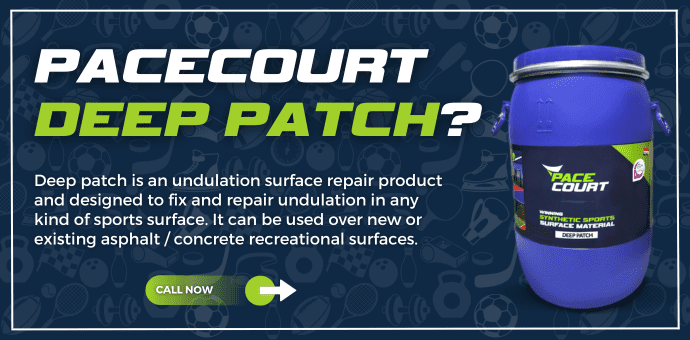
Deep Patch

Pacecourt Deep Patch: A Game-Changer for Sports Courts

The world of sports activities has seen great technological improvements over time. From trendy training gadgets to floor-breaking sports activities analytics, each aspect of sports is continuously evolving. One such innovation that guarantees to elevate the requirements of sports infrastructure is the Pacecourt Deep Patch—an innovative approach to the perennial problem of undulation in sports activities courts. Understanding Undulation and Its Impacts Before diving deep into the solution  It’s critical to understand the hassle to handle. Undulation refers to the choppy surfaces or wavy irregularities that on occasion expand on sports activities courts. These undulations, although they could seem insignificant to an outsider, can significantly impact the great of play. A ball’s leap can be unpredictable on an undulated floor, potentially leading to unfair blessings or negative aspects. For expert players, wherein each millisecond counts, an uneven courtroom can make a large difference in the game’s final results.  Pacecourt Deep Patch  Enter Pacecourt Deep Patch Recognizing the critical nature of this trouble, It was added because the ultimate solution to undulation troubles. Instead of simply overlaying the irregularities or supplying brief fixes, the Deep Patch guarantees that undulations are rectified from their root.  But what makes the Pacecourt Deep Patch stand out? Case Studies  Case Study 1: The Roshan Tennis Academy Client Problem:  The Roshan Tennis Academy, one of the most fulfilling tennis training facilities in the metropolis, changed into facing a recurrent difficulty of waterlogging leading to undulations inside the tennis court. This had brought about more than one fit to be postponed and had led to participant proceedings of unpredictable ball bounces.  Solution with Deep Patch:  Pacecourt was consulted to assess the scenario. Their crew right now diagnosed the issues and is determined to put them into effect in the Deep Patch machine. The undulations have been systematically levelled, and the Deep Patch was hooked up. The new surface not simplest resisted waterlogging but also ensured a steady bounce.  Outcome:  The Academy noticed a boom in pupil enrollment because of more advantageous court quality and acquired tremendous remarks on the progressed situation Case Study 2: The Citywide Basketball Championship  Client Problem:  Organizers of a primary basketball championship in Bangalore faced an assignment with uneven surfaces in three primary courts intended for semifinals and finals. These irregularities risked participant injuries and could have marred the reputation of the occasion.  Solution with Deep Patch:  The Pacecourt team became summoned with a good closing date. They hastily assessed the courts and applied the Deep Patch solution. The resurfacing was completed in record time, ensuring the championship proceeded without hitches.  Outcome:  The championship was hailed as an achievement, with many players praising the courtroom’s surface as satisfactory. The organizers have become lengthy-time period clients of Pacecourt. Case Study 3: The Sharma Badminton Club Client Problem:  The Sharma Badminton Club, an indoor facility, had court docket surfaces tormented by wear and tear due to immoderate use. They faced member dropouts and terrible reviews about the court docket conditions.  Solution with Deep Patch:  Deep Patch’s versatile software made it best for indoor badminton courts. After thorough cleaning and education, the Deep Patch is carried out, ensuring a steady and smooth surface.  Outcome:  Member retention advanced, and the membership noticed a surge in new memberships. Their courts became some of the most sought-after within the area. Case Study 4: The DPS School Volleyball Team Client Problem:  The Delhi Public School’s volleyball court docket had extreme undulations making it unsuitable for inter-college championships. The uneven floor additionally posed dangers for the college youngsters, main to worries from dad and mom.  Solution with Deep Patch:  Pacecourt, upon inspection, suggested an entire overhaul of the usage of the Deep Patch. The restoration becomes strategic, concentrating on the primary undulations and making sure a level playing floor. Outcome:  The college’s volleyball crew noticed improved performance and hosted several matches. Parents expressed pride and gratitude for the improved safety measures. Case Study 5: The Municipal Multi-Sport Complex Client Problem:  A multi-sport complicated owned by the municipality confronted lawsuits from numerous sports groups about its deteriorating court conditions. These courts have been vital for the education of young talent, however, the uneven surfaces have been stymieing growth.  Solution with Deep Patch:  Pacecourt changed into being tasked with renovating more than one court, from tennis to basketball. The project’s scale changed into big, but the Deep Patch’s efficacy ensured quick and durable answers.  Outcome:  The complicated became a hub for budding athletes. The municipality mentioned Pacecourt’s role in transforming the ability right into a pinnacle-tier schooling floor for numerous sports.  Conclusion  The integrity of the sport largely depends on the best of the courtroom. Undulations and choppy surfaces, even though regularly unnoticed, can drastically compromise the play experience. Pacecourt’s Deep Patch emerges as a beacon of wish in this scenario, promising not only an easy court nowadays, but also a steady play experience for future years. For facility managers, coaches, gamers, and sports activities enthusiasts, that is certainly a recreation-changer. The next time you step onto a sports activities court docket, bear in mind that under that even surface might be the terrific innovation this is the Pacecourt Deep Patch, ensuring equity, consistency, and excellence in every game.



Reducing the Risk of Slips and Falls

Modern Acrylic Flooring for Outdoor Courts: Reducing the Risk of Slips and Falls

Acrylic flooring is gradually gaining popularity in the realm of outdoor sports surfaces, especially in spaces like tennis, basketball, and multi-purpose courts. One of the primary reasons for this surge in acceptance is the enhanced safety that acrylic flooring provides. Pacecourt, a leader in this industry, has introduced innovations in acrylic flooring that significantly minimize the risks associated with slips and falls. In this article, we will explore the mechanics, features, and advantages of Pacecourt’s modern acrylic flooring for outdoor courts. The Mechanics of Slip-Resistance Before we delve into the unique attributes of acrylic flooring, it’s essential to understand the mechanics of slip resistance. The frictional force between a person’s shoe and the floor determines the slip resistance. If the frictional force is low, the potential for slips increases. A good outdoor sports court surface should not only offer adequate friction during dry conditions but should also maintain this quality when wet. Acrylic Flooring: A Brief Overview Acrylic floor coatings are composed of a complex polymer matrix that provides both durability and flexibility. The texture and makeup of these coatings are carefully calibrated to give a balance between performance for sports and safety. How Pacecourt’s Acrylic Flooring Enhances Safety: Additional Advantages: Conclusion: Safety on the sports court is paramount. Injuries from slips and falls can sideline players and even have long-term repercussions. By investing in modern acrylic flooring solutions like those offered by Pacecourt, facility managers, schools, and private homeowners can ensure that players have the best and safest experience on the court. The advancements in acrylic flooring technology, especially by leaders like Pacecourt, represent a significant step forward in blending performance with safety. As more outdoor courts transition to this type of flooring, we can anticipate fewer injuries and more enjoyable, risk-free play hours.

ITF Classified Surfaces

ITF Classified Surfaces: Are They Expensive?

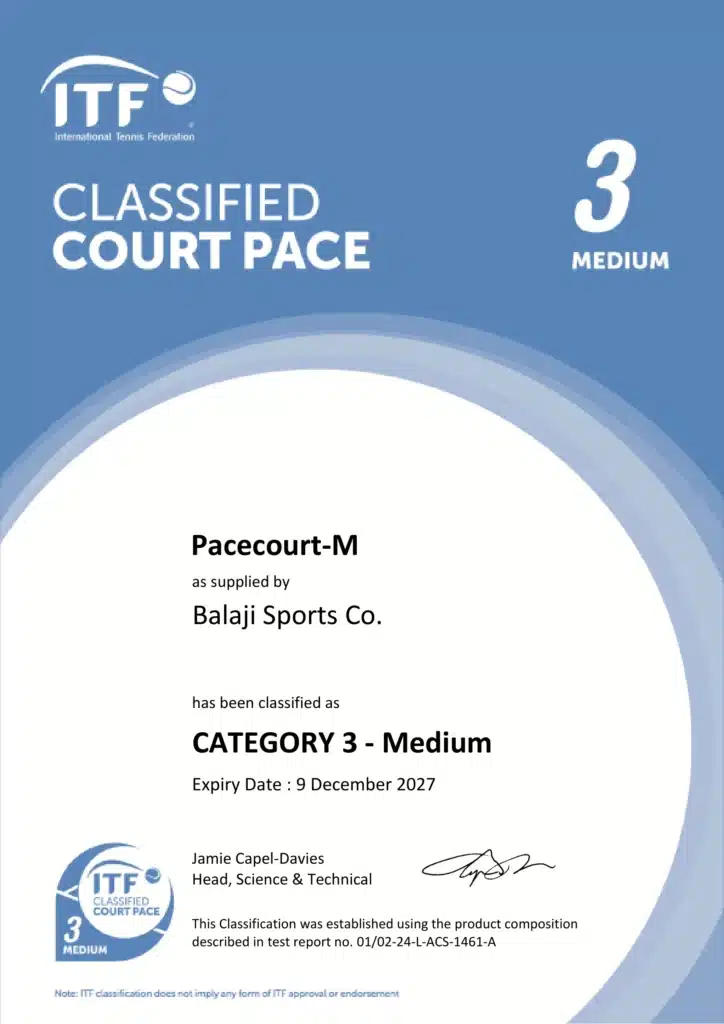
Tennis is a sport marked not only by the skill of its players but also by the surface on which they play. The International Tennis Federation (ITF) has, over the years, classified these surfaces to create a standard for tournaments and ensure fair play. With the increasing adoption of PaceCourt ITF-4 surfaces, many enthusiasts and organizations are eager to understand the costs involved. This article delves into the financial aspects of ITF classified tennis court surfaces, specifically focusing on the PaceCourt ITF-4 category. ITF Surface Classifications: Before we delve into the costs, it’s essential to understand the ITF’s classification system. The ITF classifies court surfaces based on their pace. The five pace ratings include: This classification helps players and coaches prepare strategies and adjust their gameplay based on the court’s pace. Factors That Influence Cost: It’s important to note that the pace of a court does not directly determine its cost. Instead, the cost of any court depends on: A Closer Look: While the above provides an overview, let’s break down the costs further: Grass Courts: Though fast, their maintenance is high, requiring regular mowing, watering, and specialized care. Installation costs are also substantial, given the need for appropriate soil and drainage systems. Clay Courts: These are generally slow to medium-slow and, while cheaper to install than grass courts, need regular maintenance. Hard Courts: Falling in the medium to fast category, their initial costs can be higher, especially for advanced surfaces like the PaceCourt ITF-4. Carpet Courts: These vary in pace and cost depending on the quality and type of carpet used. Acrylic on Asphalt or Concrete: These medium-fast courts are popular due to their durability and low maintenance. However, their installation, especially for premium surfaces like PaceCourt ITF-4, can be relatively high due to material and labor costs. Conclusion: The ITF’s classification by pace offers a framework for players and organizations to understand what to expect from a surface. The Pacecourt ITF-4, as a medium-fast surface, provides a balanced playing experience. While its cost is influenced by various factors, from material to location, it offers a premium experience that many deem worth the investment. As always, when considering a new surface, it’s essential to look at the entire lifecycle, weighing installation and maintenance costs against durability and play experience.

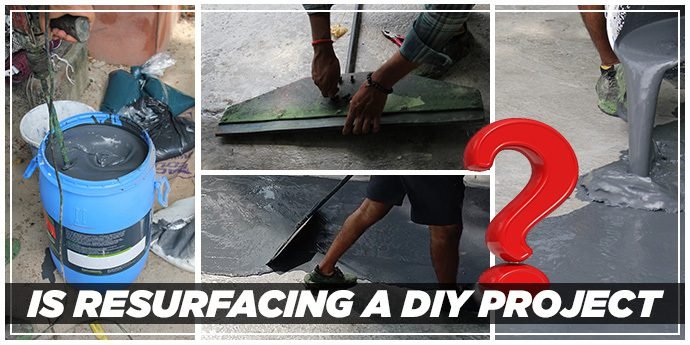
Resurfacing DIY Project

Is Resurfacing a DIY Project?

Playing outdoor sports like tennis, basketball, volleyball, or badminton often requires a well-maintained court surface. With the rising trend of sports enthusiasts watching DIY tutorials, many consider taking on the challenge of sports court resurfacing themselves. But is a Resurfacing DIY Project for a sports court something an enthusiast can ace, or should it be a match played by professionals? Let’s serve up some insights. Understanding Resurfacing At its core, resurfacing involves applying a new surface layer to an existing, often worn-out, surface. This can restore its appearance, extend its lifespan, and in some cases, improve its functionality. Depending on what you’re resurfacing, the materials and tools can vary widely. This is where “Experts matter.” They possess the knowledge to choose the right materials and techniques for each unique project, ensuring the best possible results. The Pros of DIY Resurfacing The Cons of DIY Resurfacing When to Consider DIY for Outdoor Sports Court Resurfacing When to Hire a Professional for Resurfacing an Outdoor Sports Court Conclusion While the prospect of DIY resurfacing can be enticing, it’s essential to weigh the pros and cons. Assess the size and complexity of the project, your skills, and the resources available to you. Sometimes, calling in the professionals will be worth the peace of mind and quality of the result rather than the Resurfacing DIY Project, Hire professional court builders. However, with the right preparation and mindset, some resurfacing projects can indeed be a successful DIY endeavour.

Outdoor Volleyball Court Flooring

Introduction to Outdoor Volleyball Court Flooring: A Modern Approach

Introduction The modern world is in constant evolution, and the domain of sports is no exception. When we think of volleyball, images of sun, sand, and beaches might come to mind. Yet, volleyball has expanded beyond its sandy origin, reaching various terrains from gymnasiums to specialized outdoor courts. One innovation that has been central to this expansion is the development of modern outdoor volleyball court flooring. This article, brought to you by Pacecourt, delves into the evolution and benefits of these modern court surfaces. The Evolution of Volleyball Court Flooring The original game of volleyball, conceived in 1895, played indoors. The game quickly grew in popularity and, with it, came the inception of beach volleyball. The challenge then was to bring the game outdoors without the beach. Early adaptations saw grass and even asphalt courts. But these surfaces had limitations in terms of player safety, performance, and maintenance. Enter the era of specialized volleyball court flooring. Driven by advances in material science and an understanding of athletes’ needs, outdoor volleyball court surfaces underwent rapid innovation. Acrylic, Synthetic, and Beyond Today, acrylic and synthetic surfaces, like those offered by Pacecourt, have become a preferred choice for many institutions and private facilities. They offer a plethora of benefits: Customization and Aesthetics Beyond the functional benefits, modern court surfaces also allow for a high degree of customization. Whether you want a court that reflects your institution’s colors or a bespoke design, companies like Pacecourt make it possible. This flexibility extends beyond aesthetics. Depending on the region’s climate and the players’ proficiency levels, the court’s friction, bounce, and even light reflection can adjusted. Environmental Considerations In today’s eco-conscious world, the sustainability of these court surfaces cannot overlooked. Modern court materials are often recyclable, leading to a reduced carbon footprint. Moreover, the extended lifespan of these surfaces means fewer replacements and lesser waste. Cost Efficiency While the initial investment might seem higher than traditional surfaces, the long-term benefits make modern volleyball court flooring a cost-efficient choice. Consider the reduced maintenance costs, the extended lifespan, and the potential medical savings from decreased injury rates. The Global Perspective Around the world, from local schools to Olympic arenas, the shift toward specialized volleyball court surfaces is evident. Institutions recognize the multifaceted benefits of these courts – benefits that extend to players, spectators, and administrators alike. Conclusion Outdoor volleyball has come a long way from its humble beginnings on the beach. Today, thanks to innovations by companies like Pacecourt, players can enjoy the game on state-of-the-art surfaces tailored for performance, safety, and aesthetics. As the game continues to grow in popularity globally, so too will the demand for the best playing surfaces available. With modern outdoor volleyball court flooring, the future looks brighter, safer, and more competitive than ever.

Flooring Reduces Injury Risk

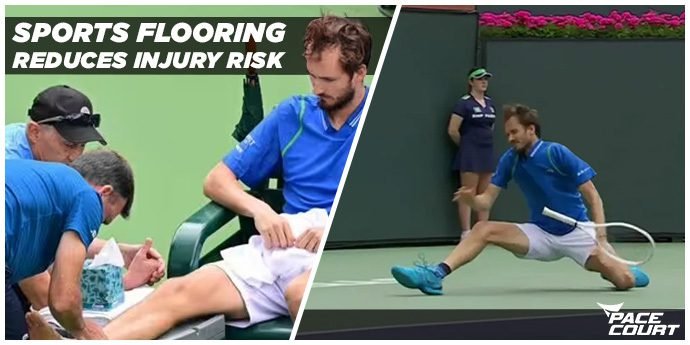
How Pacecourt Sports Flooring Reduces Injury Risk

Sports have always played an integral role in promoting physical health and wellness. As our understanding of sports medicine advances, it has become increasingly clear that the choice of playing surface, or sports flooring, can significantly impact an athlete’s risk of injury. Enter Pacecourt, a leading manufacturer of advanced sports flooring solutions designed to mitigate Flooring Reduces Injury Risk and promote optimal performance. Why Flooring Matters in Sports It established that sports injuries can result from various factors including inadequate warm-ups, poor training practices, and inappropriate gear or equipment. However, one often overlooked aspect is the type of flooring or surface athletes play on. An unsuitable sports flooring can lead to an array of injuries ranging from sprains and strains to severe conditions like ligament tears or concussions. This is where Pacecourt’s specially designed sports flooring comes into play also, providing surfaces that engineered to absorb shocks, offer stability, and ensure appropriate traction. The Pacecourt Advantage Pacecourt synthetic acrylic flooring solutions are the result of years of research and development, focusing on how to create the optimal balance between performance and safety. Here’s how Pacecour Sports Flooring Reduces Injury Risk: 1. Shock Absorption: High-intensity sports activities subject an athlete’s body, particularly the joints, to significant impacts. The shock absorption quality of Pacecourt flooring helps reduce this stress by dispersing the force throughout the surface, also lowering the impact on an athlete’s body and reducing the risk of injuries. 2. Traction and Surface Grip: Traction is essential in preventing slips and falls, especially in fast-paced games that involve quick directional changes. Pacecourt flooring designed with the right level of grip, ensuring athletes have adequate footing without the risk of tripping or falling, which can often lead to sprains or fractures. 3. Stability and Uniformity: The uniformity of the playing surface is crucial in preventing unexpected incidents that could cause an athlete to stumble or fall. Pacecourt flooring is meticulously designed and installed to ensure a consistently flat surface also, eliminating the risk of irregularities that could cause accidents. 4. Enhanced Comfort: Comfort can directly influence an athlete’s performance and the risk of injuries also, by offering a comfortable surface for players to move on, Pacecourt Sports Flooring Reduces Injury Risk and the strain on muscles and joints, preventing overuse injuries and promoting longer, more effective training or playing sessions. The Role of Pacecourt Flooring in Injury Prevention Pacecourt flooring prioritizes injury prevention and enhances performance and player experience also, by integrating innovative design with advanced materials, Pacecourt is revolutionizing sports flooring. Remember, the right flooring is a crucial investment in the safety of athletes. With Pacecourt sports flooring, you’re not only providing a top-notch surface for athletic performance, but you’re also significantly reducing the risk of injuries. Through innovative design and a commitment to safety, Pacecourt is paving the way toward safer, more efficient athletic environments.

Acrylic Flooring, Environmental Effect on Sports Surfaces

How Nature Plays its Part: The Environmental Effect on Sports Surfaces

Acrylic flooring is recognized for its durability, aesthetic appeal, and flexibility. Tailoring it for various settings requires a keen understanding of each environment’s unique demands. This article delves into the nuances of acrylic sports flooring in urban, rural, outdoor, and indoor scenarios, highlighting the environmental effect on sports surfaces in each context. 1. Urban Environments: Difference: Urban settings are often characterized by dense infrastructures, limited space, and high levels of pollution. Challenges: In urban areas, sports facilities might be in close proximity to industrial zones or high-traffic roads, which can expose the acrylic floor to more dirt, dust, and chemicals. There’s also a higher probability of encountering space constraints, leading to smaller-sized courts or fields. Best Practices: Proper sealing of the acrylic sports flooring can help in making it resistant to chemicals and pollutants. Also, since urban settings tend to attract a lot of users due to the dense population, ensuring regular maintenance like sweeping, cleaning, and occasional resurfacing becomes essential. Adequate drainage should be provided to avoid water accumulation during rains or cleaning. 2. Rural Environments: Difference: Rural spaces generally offer more expansive areas, with exposure to natural elements and perhaps less human-made pollution. Challenges: Flooring in rural areas might be more susceptible to damage from natural factors like tree roots growing beneath, small wildlife interference, and exposure to more natural dirt and debris. There might also be less accessibility to professional maintenance services. Best Practices: To tackle natural interferences, it’s wise to ensure the underlying ground is thoroughly prepped before laying down the acrylic surface. Regular visual inspections can help identify and rectify damages early. In rural setups, having a good DIY maintenance kit can be beneficial due to the potential lack of professional services. 3. Outdoor Settings: Difference: Outdoor acrylic sports floors face direct exposure to elements like sun, rain, wind, and temperature fluctuations. Challenges: UV rays can cause the flooring colour to fade over time. Rainwater, if not properly drained, can lead to slippery surfaces or, in worst cases, water damage. Temperature changes can cause the material to expand or contract, possibly leading to cracks. Best Practices: For outdoor settings, UV-resistant coatings are a must to prevent colour fading. Sloping the floor slightly and ensuring good drainage can prevent water accumulation. Expansion joints or specialized acrylic mixes that resist temperature-induced contractions or expansions can be beneficial. 4. Indoor Settings: Difference: Indoors, sports flooring is protected from the whims of nature but can experience challenges like humidity, artificial lighting, and heavy foot traffic. Challenges: Indoor environments, especially without proper ventilation, can become humid, leading to a sweaty, slippery surface. Artificial lighting can sometimes alter the perceived colour of the floor. The concentrated use of certain areas, like near goalposts, can lead to uneven wear. Best Practices: Installing proper ventilation or dehumidifiers can regulate humidity levels. Choose acrylic colours that appear consistent under artificial lighting. Rotate court usage, if possible, or consider slightly thicker applications in high-traffic zones for longer wear. Conclusion While the base product – acrylic sports flooring by Pacecourt – remains consistent in its quality and benefits, the environmental effect on sports surfaces plays a significant role in its durability and appearance. Depending on the environment in which it’s placed, there are specific considerations to bear in mind. A thorough understanding of these environments and their challenges, influenced by the environmental effect on sports surfaces, will ensure that the sports flooring not only looks great but also stands the test of time.

Best Flooring Options

For facilities that host a variety of sports, what are the best flooring options?

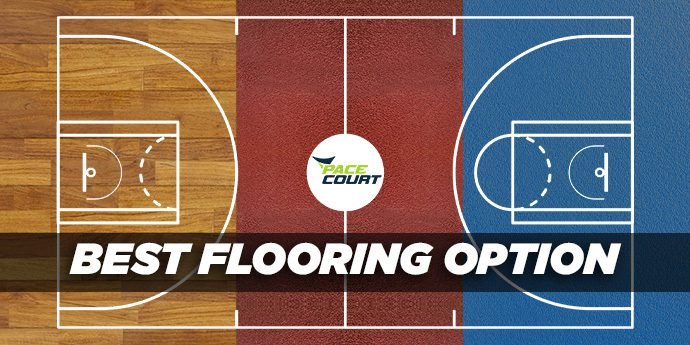
In the ever-evolving realm of sports infrastructure, the demand for multi-purpose facilities has skyrocketed. These centers host a diverse range of activities, from basketball and badminton to aerobic classes and community gatherings. Such varied usage necessitates the best flooring options that are versatile enough to cater to multiple demands while not skimping on performance, safety, or durability. Amid the competing materials vying for attention, acrylic stands out for a plethora of reasons. As we deep-dive into the world of multi-sport facility floorings, it’s imperative to highlight and compare these best sports flooring options. This comprehensive exploration will focus heavily on acrylic, scrutinizing its advantages, and juxtaposing it against other renowned contenders in the market. Acrylic The Multi-Sport Champion Acrylic flooring has gained traction (pun intended) in the sports world due to its exceptional balance between flexibility and durability. Its synthetic resin composition equips it with qualities ideal for diverse sporting activities. Polyurethane The Close Contender Polyurethane floors have grown in popularity due to their multi-layered system, which can be customized based on the sports in question. They offer good shock absorption and can be engineered to specific thicknesses to meet the requirements of different sports. Rubber The Flexible Choice Especially popular for gyms and training areas, rubber flooring offers excellent traction and is resistant to heavy impacts, such as dropped weights. However, its softer nature might not make it ideal for sports requiring a firmer surface, like basketball. Wood  The Classic Option Hardwood is often the choice for sports like basketball and volleyball, prized for its bounce and natural feel. However, it can be expensive to install and maintain. Additionally, it’s not as versatile for a broader range of activities as some synthetic options. Vinyl The Cost-Effective Alternative Vinyl is versatile, easy to clean, and offers decent shock absorption. It’s particularly popular in areas that might see non-sporting events due to its aesthetic appeal. However, it might not offer the same level of performance as acrylic or polyurethane for high-impact sports. Comparative Analysis  While each flooring type has its merits, acrylic stands out for multi-sport facilities. Its combination of performance, safety, aesthetics, and durability makes it hard to beat. Polyurethane comes close, especially if the facility leans towards specific sports. Rubber and vinyl offer flexibility, especially for facilities that might host non-sporting events. Wood, while classic, may not be the best for diverse requirements due to its cost and specific maintenance needs. Conclusion Choosing the best flooring options for a multi-sport facility is a critical decision, influencing athletes’ performance, spectator experience, and the facility’s longevity. Pacecourt’s acrylic solutions, with their myriad benefits, emerge as a front-runner among these top choices. However, facility managers should weigh the specific needs of their space, budgetary constraints, and long-term goals before settling on an option. With advancing technology, the world of sports flooring will continue to evolve, but for now, Pacecourt’s acrylic stands out in the lineup of the best flooring options, offering a harmonious blend of performance and practicality.

Sports Flooring, sports floors safer

Features that make certain sports floors safer

Sports flooring, while often overlooked by the general public, plays a crucial role in making sports floors safer for athlete performance and safety. Given the rising awareness of injury prevention, companies like Pacecourt have plunged deep into research to enhance the safety of sports floors. Their findings shed light on key features that define a safer sports flooring system. Shock Absorption It is paramount. In layman’s terms, this is the floor’s ability to absorb and dissipate impact forces. Every time an athlete jumps, runs, or even walks, force is exerted on the floor. If the floor is too hard, it sends that force right back, increasing injury risks. Pacecourt’s studies, involving force plates and biomechanical analyses, have shown that floors with superior shock absorption significantly reduce stress on athletes’ joints, thus lowering the chances of overuse injuries. Surface Grip A delicate balance is essential here. Too much grip and athletes risk ankle twists or sudden halts that can strain muscles. Too little, and they may slip, leading to falls. Pacecourt’s friction tests, involving both machines and human subjects, indicate that an optimal grip reduces slip-related injuries and allows athletes to make controlled, precise movements without fearing unpredictable floor responses. Uniformity  Across the surface is a non-negotiable feature. Inconsistent spots, either too hard or too soft, can be treacherous. Pacecourt’s advanced surface mapping technologies have revealed that athletes can detect even minor non-uniformities, which can disrupt their performance and up injury risks. Thus, uniformity isn’t just about a consistent playing experience; it’s about safety. Elasticity It is termed vertical deformation, which is about how much the floor deforms under force. While this might sound negative, a slight deformation is beneficial. It means the floor yields a bit under impact, providing a softer landing. Pacecourt’s motion capture analyses have shown that floors with optimal elasticity allow athletes to make repetitive movements, like jumps, with reduced muscle fatigue and lower impact forces on landing. Ball Rebound While more performance-oriented, has safety implications too. Floors that offer consistent ball bounce reduce the unpredictability in games like basketball or volleyball. Pacecourt’s tests with various ball types show that when athletes can predict ball behaviour, they can position themselves better, avoiding sudden, injury-prone movements. Durability and Wear Resistance  It ensures the floor maintains its safety features over time. Pacecourt, the best sports flooring comany having long-term monitoring of sports facilities has evidenced that floors with high wear resistance retain their shock absorption, grip, also other safety characteristics for longer, ensuring a consistent safety profile throughout their lifespan. Environmental Adaptability  The flooring system is crucial, With climate change making weather patterns unpredictable, sports floors, especially outdoor ones, need to withstand varying conditions. Pacecourt’s research, involving accelerated weathering tests, has shown that floors resistant to UV rays, moisture, also temperature fluctuations remain safer for longer, as their structural integrity and safety features remain intact. Conclusion Making sports floors safer is a multi-faceted domain, with multiple features working in tandem to protect athletes. Companies like Pacecourt, through rigorous research and a deep understanding of sports biomechanics, are pioneering the development of sports floors that aren’t just surfaces to play on, but guardians of athlete safety. As sports evolve and athletes push boundaries, ensuring the ground beneath them is as safe as possible becomes an imperative that cannot be ignored.

Scroll to Top
HOMEOWNERS
BUSINESS OWNERS
ARCHITECTS
MUNICIPALITIES

800+ Colors

Get 10% off on sports flooring materials

ITF-certified acrylic flooring for Tennis, Basketball, Badminton, Pickleball & more shipped worldwide.

    ISO-Certificate