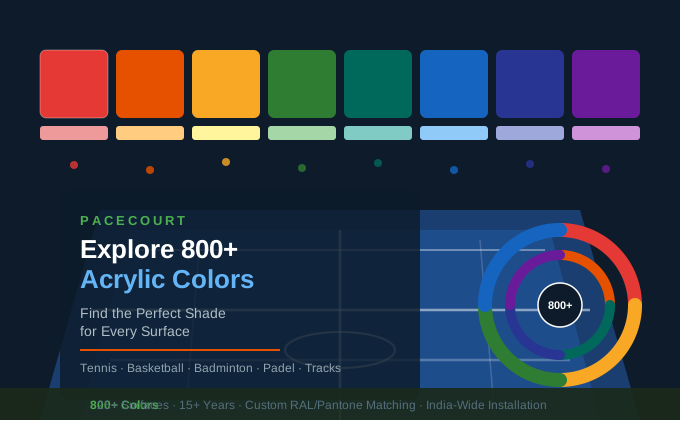
Explore 800+ Acrylic Colors: Find the Perfect Shade for Every Surface
When it comes to sports courts, recreational surfaces, playgrounds, and commercial flooring, color is never just an aesthetic afterthought. At Pacecourt, India’s leading manufacturer and supplier of acrylic sports flooring solutions, we have spent over 15 years understanding a singular truth: the right color transforms a surface from a mere playing area into a high-performance, brand-defining, safety-compliant environment. Our catalog of 800+ acrylic colors is the result of relentless research, client feedback from thousands of installations across India and abroad, international standards compliance, and a deep understanding of how color interacts with surface performance, player psychology, UV degradation, and long-term maintenance. This guide is your comprehensive companion to navigating Pacecourt‘s color universe. Whether you are designing a professional-grade tennis court, a school basketball court, a residential badminton court, or a multi-sport complex, this article will help you find the perfect shade for every surface, every requirement, and every vision. The Science Behind Pacecourt’s 800+ Acrylic Color Range Not all acrylic colors are created equal. Pacecourt’s color range is engineered — not just pigmented. Here is what goes into every shade we offer: 2.1 UV-Stabilized Pigment Technology Indian summers are brutal. Surfaces exposed to direct sunlight for 8-12 hours daily will fade significantly within 2-3 years if inferior pigments are used. Pacecourt’s acrylic formulations use UV-stabilized inorganic and organic pigment blends that retain color integrity for 7-10 years under standard outdoor conditions. 2.2 Titanium Dioxide Binding Matrix Every Pacecourt color is built on a titanium dioxide (TiO2) binding matrix that ensures superior opacity, resistance to chalking, and reflectivity control. This means colors stay true — they do not turn milky, crack, or peel even under thermal expansion stress. 2.3 Thermal Reflectance Engineering Darker colors absorb more heat. Pacecourt engineers have developed Cool-Tone variants of traditionally dark colors — deep navy blues, forest greens, and charcoal grays — that use infrared-reflective pigments to reduce surface temperature by up to 8-12°C compared to standard formulations. This is critical for barefoot sports surfaces and children’s play areas. Pacecourt Color Engineering Principles UV-stabilized pigments for 7-10 year outdoor durabilityTiO2 binding matrix prevents chalking and peelingInfrared-reflective Cool-Tone variants for heat managementAnti-glare matte and semi-gloss finish optionsSlip-resistance coefficient maintained across all colorsREACH & RoHS compliant — zero hazardous pigments 2.4 Slip Resistance Across All Colors A common misconception is that lighter or darker colors may affect the surface friction coefficient. Pacecourt’s manufacturing process ensures that slip resistance (measured as DCOF — Dynamic Coefficient of Friction) remains consistent at 0.6 or above across all 800+ colors, irrespective of the shade chosen. 2.5 Chemical Resistance Courts and surfaces are cleaned regularly with detergents, disinfectants, and sometimes pressure washers. Pacecourt’s color formulations are tested for chemical resistance to ensure colors do not fade, streak, or blister under standard cleaning agents used in Indian institutional and residential settings. Pacecourt’s Color Universe: 10 Primary Families, 800+ Shades Pacecourt organizes its 800+ acrylic colors into 10 primary color families, each with dozens of shades ranging from light pastels to deep saturates. Here is an overview of each family: Color Family No. of Shades Popular Surfaces Best Feature Court Blues 120+ Tennis, Basketball High contrast, anti-glare Athletic Greens 110+ Tennis, Badminton, Hockey Natural feel, low heat Sports Reds 90+ Running tracks, Squash Visibility, energy boost Stadium Grays 85+ Multi-sport, Gym floors Neutral, professional Safety Yellows 70+ Playgrounds, Cycle tracks High visibility, alerting Terracotta & Earths 65+ Clay-look courts, Outdoor Traditional aesthetic Premium Blacks 55+ Padel, Squash, Gym Sleek, premium look Pure Whites 40+ Indoor courts, Multipurpose Brightness, cleanliness Custom RAL/Pantone Unlimited All surfaces Brand-matched precision Multi-Color Combos Bespoke Multi-sport zones Zone differentiation Color Guide by Sport and Surface Type Choosing the right color is not just about preference — it is about performance. Below is Pacecourt’s expert guide on color selection for each major sport and surface category: 4.1 Tennis Courts Tennis has the most internationally standardized color guidelines. The ITF (International Tennis Federation) recommends that court colors provide maximum contrast with the yellow-green tennis ball. Court Zone Recommended Pacecourt Color Why It Works Playing Surface Wimbledon Green, Court Blue, Slate Blue Ball visibility, ITF compliant Service Boxes Lighter shade of base color Zone differentiation Out-of-Court Area Contrast color (e.g., dark green border) Boundary clarity Line Markings Brilliant White Maximum contrast Spectator Path Charcoal Gray or Terracotta Aesthetics, durability Pacecourt’s most popular tennis court color combinations include: Court Blue + Brilliant White lines, Forest Green + Cobalt Blue zones, and Terracotta Red + Deep Green border — a classic clay-look aesthetic popular in residential and club installations. 4.2 Basketball Courts Basketball courts demand colors that are energetic, high-contrast for line visibility, and durable under heavy foot traffic and ball impact. NBA and FIBA guidelines allow significant color flexibility. 4.3 Badminton Courts Badminton requires perhaps the most precise color science of any racket sport. The shuttlecock — white or yellow — must be clearly visible against the court surface throughout its trajectory. Badminton Court Color Recommendations by Pacecourt Primary Surface: BWF-approved green shades — Emerald Court, Malachite Green, Sports Dark GreenAlternative: Deep Blue tones — Royal Court Blue, Sapphire Blue, Navy SportsLines: Brilliant White (mandatory, BWF standard)Avoid: Yellow, Orange, White surfaces — poor shuttlecock visibilityIndoor Preference: Medium to dark tones to reduce ceiling glare reflectionMulti-court halls: Alternate color rows for court separation without physical dividers 4.4 Squash Courts Squash is a fast, enclosed sport where wall and floor color psychology matters enormously. Players must track a small, fast-moving ball against the court walls and floor surface. 4.5 Running Tracks & Athletic Facilities Running tracks are among the highest-visibility surfaces in any sports facility. International standards (IAAF/World Athletics) specify surface requirements but allow significant color choice within compliance parameters. Track Type Pacecourt Color Options Notes Standard Outdoor Brick Red, Rust Orange, Athletic Red Traditional IAAF look Synthetic Indoor Charcoal, Royal Blue, Forest Green Multipurpose indoor use School Track Safety Orange, Sky Blue, Grass Green High visibility, child-safe Residential/Club Terracotta, Earth Brown, Sand Beige Aesthetic, low-heat Lane Lines Brilliant White Mandatory for all tracks 4.6 Padel