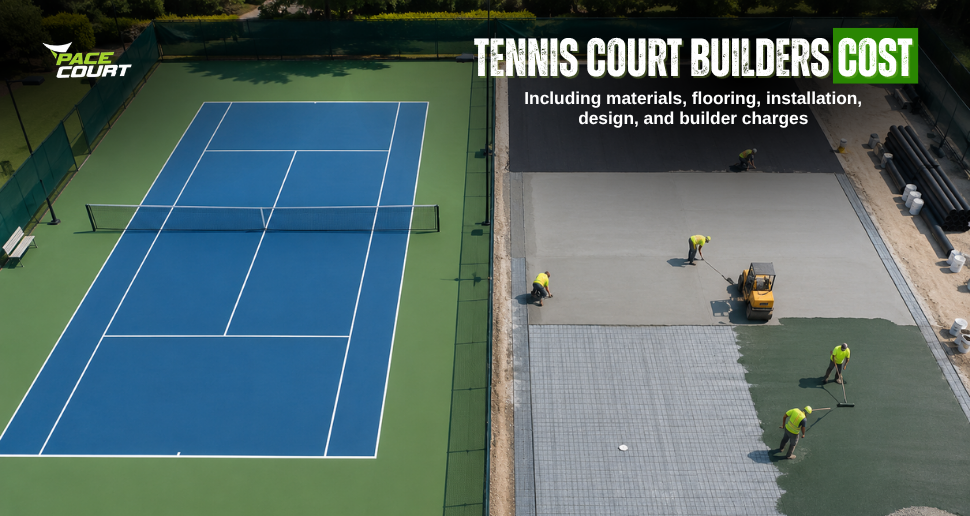
If you’re planning to build a court, the first question on your mind is probably the tennis court builders cost. It’s a fair question, because prices can swing quite a bit depending on the surface, the size, and where you’re building.
In most parts of India, a standard outdoor tennis court with acrylic flooring costs somewhere between ₹6 lakh and ₹20 lakh, all-inclusive. Bigger courts, premium cushioned surfaces, indoor structures, or extra features like seating and floodlighting can push this number well past ₹30 lakh. There’s no single fixed rate, because every court is built to different specifications.
This guide breaks down exactly what goes into tennis court construction cost in India, so you know what you’re paying for and can plan your budget with confidence.
What Affects Tennis Court Builders Cost in India
No two courts cost the same because no two sites are the same. Here’s what actually moves the needle on price:
- Court size – A full-size doubles court needs more material and labour than a compact practice court.
- Surface type – Acrylic, synthetic cushioned, clay, and artificial grass all come at different price points.
- Base condition – Soft or uneven soil needs extra excavation, compaction, and drainage work before you even think about flooring.
- Location – Freight, labour rates, and local material availability vary from city to city and even within the same city.
- Indoor vs outdoor – An indoor court needs a structure, roofing, and often better lighting and ventilation.
- Fencing and lighting – Chain-link fencing, windscreens, and floodlights are usually priced separately from the court surface.
- Accessories – Net posts, umpire chairs, scoreboards, and benches are small costs individually, but they add up.
Because of all these variables, the honest answer to “how much does a tennis court cost” is: it depends on what you choose at each of these stages.
Tennis Court Construction Cost Breakdown
Here’s a rough, itemised look at tennis court installation cost in India. Treat these as planning ranges, not fixed quotes, since actual prices depend on your site and the contractor you choose.
| Cost Component | Approximate Cost Range (₹) |
| Site preparation, excavation & levelling | ₹1.5 – 3 lakh |
| Base (PCC or bituminous) | Usually bundled with site prep, or priced separately by the contractor |
| Acrylic surfacing (per sq ft) | ₹35 – 90 per sq ft |
| Cushioned/synthetic surfacing (per sq ft) | ₹60 – 150 per sq ft |
| Perimeter fencing with windscreen | ₹2 – 4 lakh |
| LED floodlighting | ₹2.5 – 5 lakh |
| Net post system | ₹25,000 – 60,000 |
| Line marking | Usually included in surfacing cost |
| Scoreboard and bench | ₹15,000 – 25,000 |
A basic outdoor acrylic court with minimal fencing and no floodlights sits at the lower end of tennis court price in India. Add lighting, a premium cushioned surface, and better fencing, and you’re looking at the higher end. This is also why getting a written, itemised tennis court construction estimate from your builder matters more than asking for one lump-sum number.
Tennis Court Flooring Cost: Comparing Your Surface Options
Flooring is usually the single biggest decision you’ll make, both for tennis court surface cost and for how the court plays. Here’s how the common options in India compare.
| Surface Type | Typical Cost | Maintenance | Best Suited For |
| Acrylic (hard court) | ₹45 – 90 per sq ft | Low; occasional recoating | Schools, academies, clubs, residential courts |
| Synthetic/cushioned acrylic | ₹90 – 150 per sq ft | Low to moderate | Players who want extra joint comfort |
| Artificial grass | Moderate to high, varies by pile and infill | Low, but needs periodic brushing and infill top-up | Recreational and residential use |
| Clay (natural or synthetic) | Higher due to material and labour | High; regular watering, rolling, and levelling | Academies training for clay-court play |
| Natural grass | Highest ongoing cost | Very high | Rare in India; mostly private estates |
Acrylic tennis court cost
stays on the lower side because the material is affordable, application is quick, and it holds up well in Indian heat and monsoon conditions. It’s UV-resistant, doesn’t skid, and needs very little upkeep, which is why most schools, academies, and residential builders across India go with it.
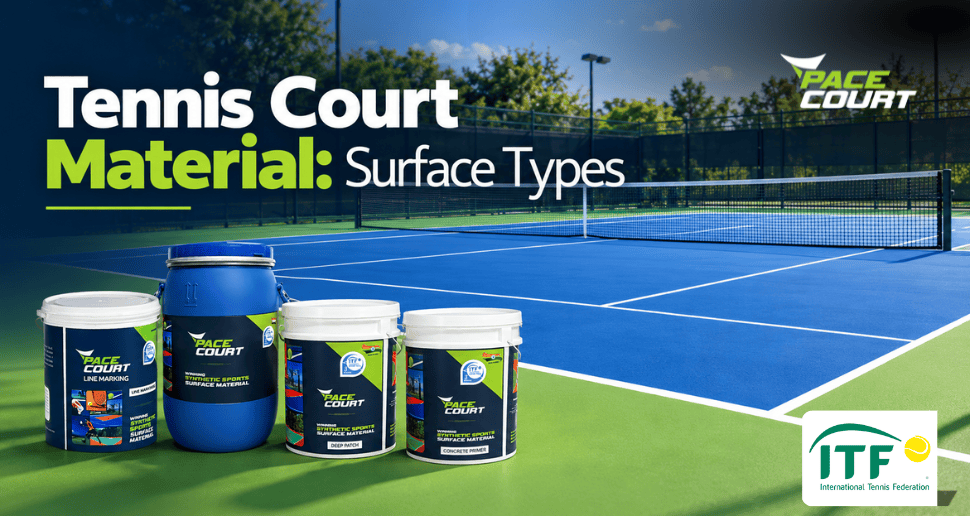
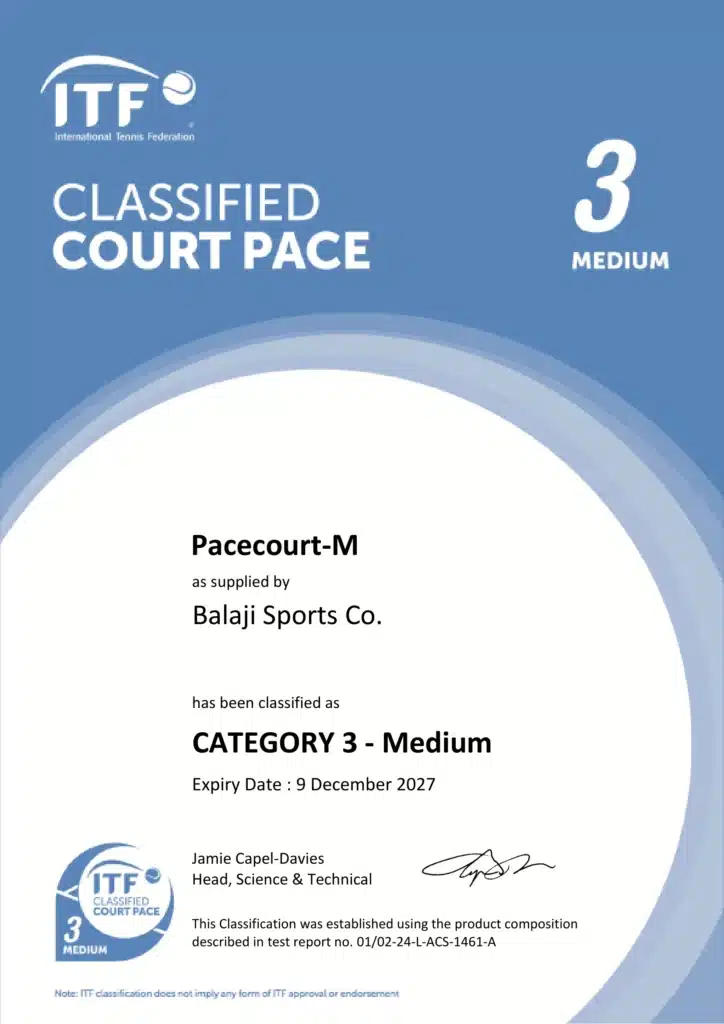
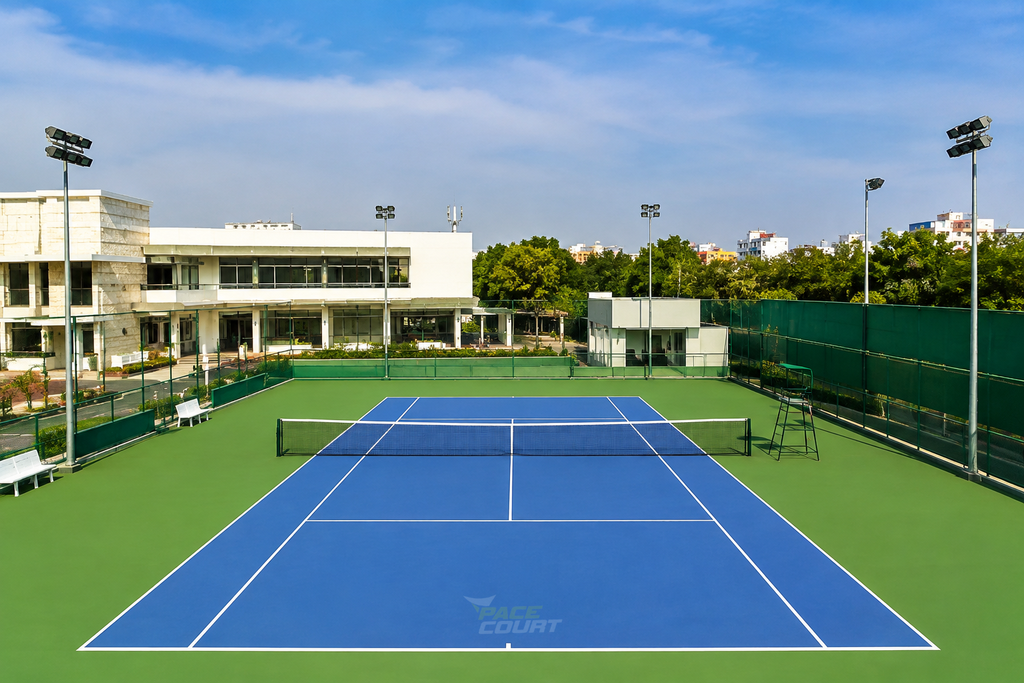
Within acrylic systems, you’ll also come across cushioned variants that add a rubber or PU layer beneath the acrylic coats. These are sometimes sold under specific product names, like Pacecourt – type systems, and they’re designed to soften impact on the knees and ankles during long rallies. They cost a bit more than standard acrylic but are worth considering if the court will see heavy daily use, such as at a coaching academy.
Synthetic tennis court cost
runs a little higher than plain acrylic because of the added cushion layer and the technology behind shock absorption. Many training centres prefer this option since players spend hours on court and joint comfort matters over time.
Artificial grass tennis court cost
depends heavily on the pile height, backing quality, and infill material you choose. It gives a grass-like feel without the watering and mowing that natural grass demands, which is why it’s gaining popularity for home courts.
Tennis Court Dimensions You Need Before Budgeting
Getting your tennis court dimensions right at the planning stage saves you from costly rework later. Here’s what the standard measurements look like:
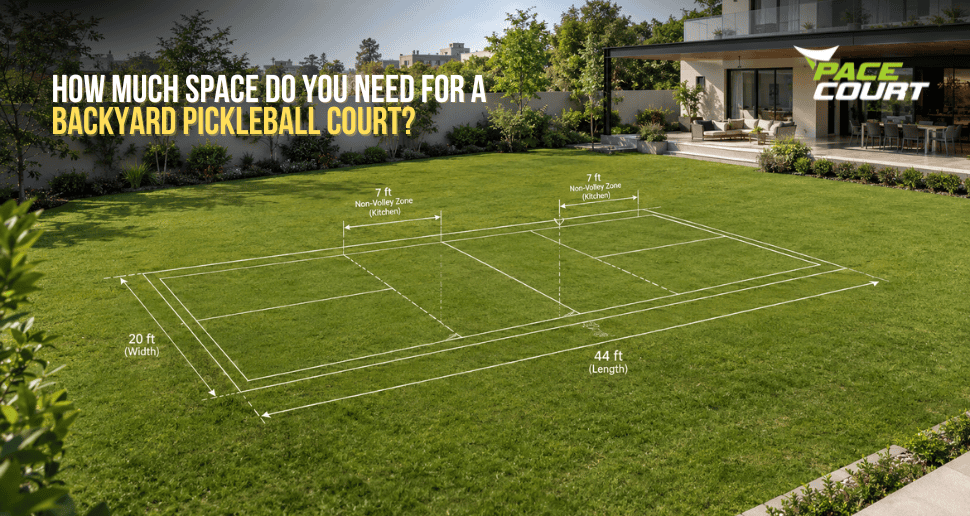
- Singles court: 27 ft × 78 ft
- Doubles court: 36 ft × 78 ft
- Total playing area (doubles): approximately 2,808 sq ft
- Recommended run-off space: at least 12 ft behind each baseline and on each side, for safe movement and spectator clearance
Once you add the recommended run-off, your total build footprint usually comes closer to 6,000-7,200 Sq ft. This full envelope is what most schools, clubs, and residential projects in India build to, since it gives players enough room to move without cramming the court into too small a plot.
If your plot is smaller, you can still build a functional court, but you may need to compromise on run-off space or go for a training-only layout without full clearance.
Outdoor Tennis Court Cost vs Indoor Tennis Court Cost
Outdoor courts are by far the more common choice in India, and outdoor tennis court cost is generally lower because you’re not paying for a structure. You still need solid drainage planning, since Indian monsoons can be tough on a court that isn’t graded properly.
Indoor tennis court costs are considerably higher, and for good reason. You’re not just paying for the court anymore. You’re paying for:
- A steel or concrete structure with adequate ceiling height
- Roofing and wall cladding
- Ventilation or climate control
- Indoor-rated lighting that avoids glare and shadows
Because of these additions, indoor courts typically cost several times more than an equivalent outdoor court. Most homeowners and small academies in India go the outdoor route unless they specifically need year-round, weather-proof play.
Tennis Court Construction Process, Step by Step
Understanding tennis court design and construction helps you know what you’re paying for at each stage, and it makes it easier to spot a builder who’s cutting corners.
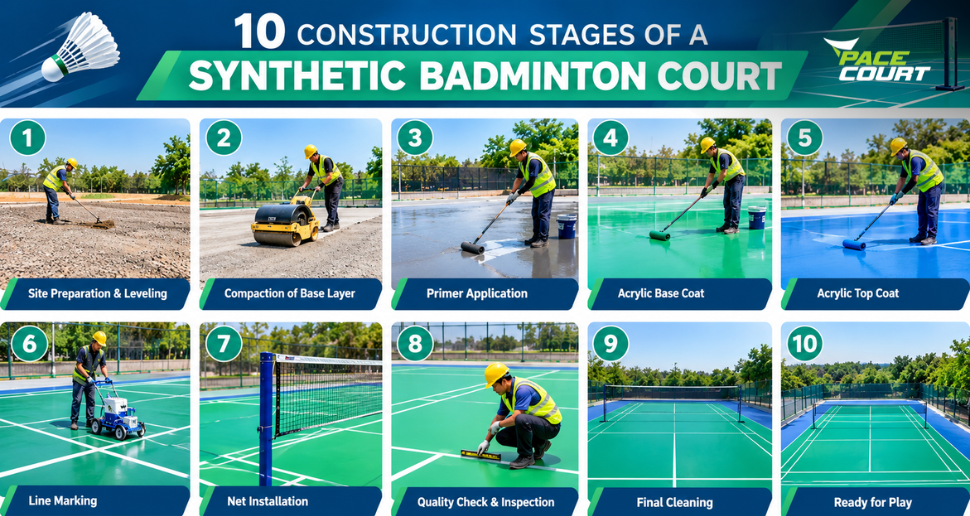
- Site survey and soil testing – The builder checks soil type, slope, and drainage before finalising the design.
- Excavation and grading – The plot is levelled to the precise slope needed for water runoff, usually a very gentle gradient.
- Base construction – A PCC (plain cement concrete) or bituminous base is laid, since this decides how long the court lasts.
- Curing period – The base needs time to cure and stabilise before any surface goes on top.
- Surface application – Acrylic or synthetic coats are applied in multiple layers, each one left to dry before the next goes on.
- Line marking – Court lines are painted using precise measurements as per ITF standards.
- Fencing and lighting installation – Perimeter fencing, windscreens, and floodlights go up once the surface is fully cured.
- Net posts and accessories – The net, posts, scoreboard, and benches are installed last.
A standard outdoor court usually takes four to ten weeks from start to finish, though monsoon season can extend this timeline since acrylic surfacing needs dry conditions to cure properly.
Meeting basic tennis court construction requirements, like correct base thickness, proper slope for drainage, and quality surfacing material, matters more than rushing the timeline. A court built on a weak base will crack and need repairs far sooner than one built right the first time.
Choosing the Right Tennis Court Contractor in India
Not every contractor who lists “tennis court construction” as a service has the experience to do it well. Here’s what to check before you sign anything:
- Ask to see completed projects, ideally ones you can visit in person to check surface quality after a year or two of use.
- Check what base system they use. A proper PCC or bituminous base with correct drainage slope is non-negotiable.
- Confirm the acrylic or synthetic material brand they plan to use, and whether it’s suited for outdoor Indian weather.
- Get a written warranty on both the base and the surface, not just a verbal promise.
- Ask for an itemised quote, not a single number, so you know exactly what’s included.
- Check their GST registration and past client references, especially for larger projects like schools or academies.
Professional tennis court builders will walk you through material choices and won’t rush you into a decision. If a tennis court construction company can’t explain why they’re recommending a particular surface for your climate and usage, that’s worth asking more questions about.
This holds true whether you’re getting quotes from a tennis court installation company for one residential court, or from a bigger tennis court contractor in India handling a multi-court academy project. The fundamentals of a good quote don’t change: clear pricing, named materials, and a warranty in writing.
Tennis Court Maintenance and Resurfacing Cost
Once your court is built, ongoing care keeps tennis court maintenance cost predictable instead of turning into a surprise expense.
Acrylic courts need the least maintenance among common surface types. Regular sweeping, occasional pressure washing, and keeping the drainage clear are usually enough for day-to-day upkeep. Every few years, depending on usage and weather exposure, you’ll need a fresh coat of acrylic to restore grip and colour. This is far less disruptive and less expensive than a full rebuild.
Tennis court resurfacing cost depends on how much of the surface needs redoing. A simple top-coat refresh costs a fraction of what a full resurfacing job does, where the old coating is stripped back and reapplied in layers. Courts with cracks in the base, rather than just a worn top coat, will cost more to fix since the underlying issue needs addressing first.
Clay and grass courts, by comparison, need far more frequent attention, including watering, rolling, and levelling, which adds up in labour cost over the court’s life. This is one more reason acrylic remains the practical choice for most owners in India.
Upgrade Your Sports Court Today
Get premium synthetic acrylic flooring designed for durability, grip, and performance.
Get Free Consultation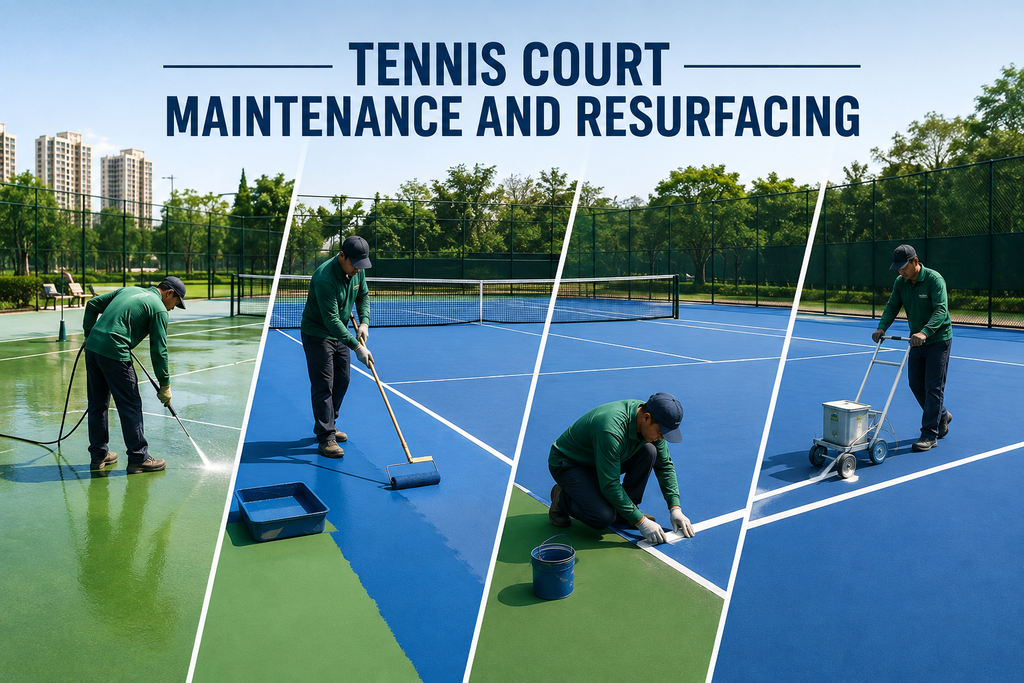
Tips to Manage Your Tennis Court Budget in India
You don’t have to spend at the top of the range to get a solid, playable court. A few practical choices can bring your tennis court development cost down without hurting quality:
- Start with a standard acrylic surface instead of a premium cushioned system, and upgrade later if needed.
- Get your soil tested early so you’re not surprised by extra excavation costs midway through the project.
- Skip floodlights initially if you only plan to play during the day, and add them later.
- Compare at least three itemised quotes before choosing a contractor, so you understand the market rate in your city.
- Don’t cut corners on the base. Saving money here almost always costs more later in repairs.
Final Thoughts
Tennis court builders cost isn’t a single number you can look up and trust blindly. It depends on your court size, surface choice, site condition, and the extras you add along the way. The best approach is to get a detailed, itemised estimate from more than one contractor, understand what each line item covers, and choose materials that suit your budget and how often the court will be used. A well-built acrylic court, done right the first time, will save you far more in the long run than the small amount you might save by cutting corners today.
Frequently Asked Questions
How much does a tennis court cost in India?
A standard outdoor acrylic court typically costs between ₹6 lakh and ₹20 lakh, depending on size, surface tier, fencing, and lighting. Premium builds with cushioned surfaces or indoor structures cost more.
What is the tennis court cost per square foot?
Acrylic surfacing alone usually costs between ₹35 and ₹90 per square foot. A complete court, including base construction, fencing, and lighting, can range from ₹70 to ₹250 or more per square foot.
What are the standard tennis court dimensions?
A singles court measures 27 ft × 78 ft, and a doubles court measures 36 ft × 78 ft. With recommended run-off space included, most builds cover 6,000 to 7,200 sq ft.
Which flooring is best for a tennis court in India?
Acrylic flooring is the most common choice because it’s affordable, low-maintenance, and holds up well in Indian weather. Cushioned synthetic acrylic systems are a good upgrade for academies with heavy daily use.
How much does tennis court resurfacing cost?
A simple acrylic top-coat refresh costs much less than a full resurfacing job. The exact cost depends on how much of the base and surface needs to be redone.
How long does it take to build a tennis court?
Most outdoor courts take four to ten weeks to complete, from site preparation to final line marking, though monsoon weather can extend this timeline.
Stay Updated with Pacecourt
Discover expert insights, practical tips, and the latest industry updates from Pacecourt, covering sports flooring, tennis and multi-sport court construction, resurfacing, maintenance, court performance, and innovative sports infrastructure solutions.
Powered by Google's Preferred Sources feature