Clay vs PP Tiles vs Acrylic Court in India: Full Comparison (2026)
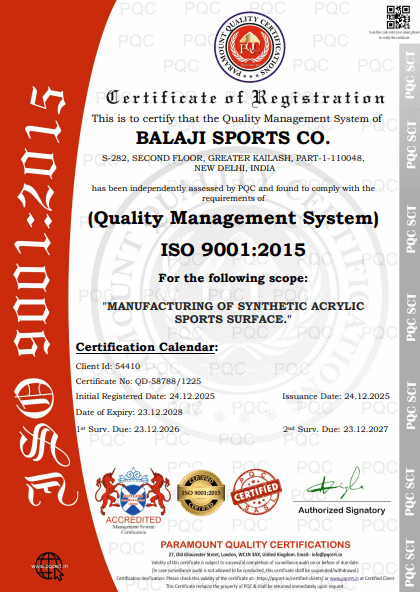
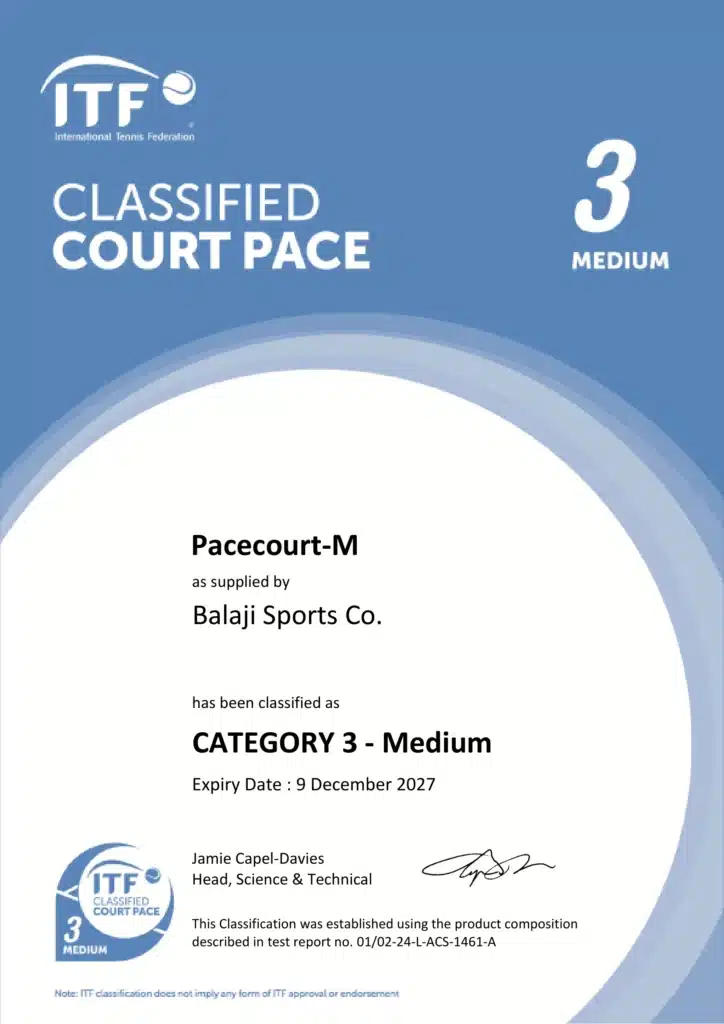
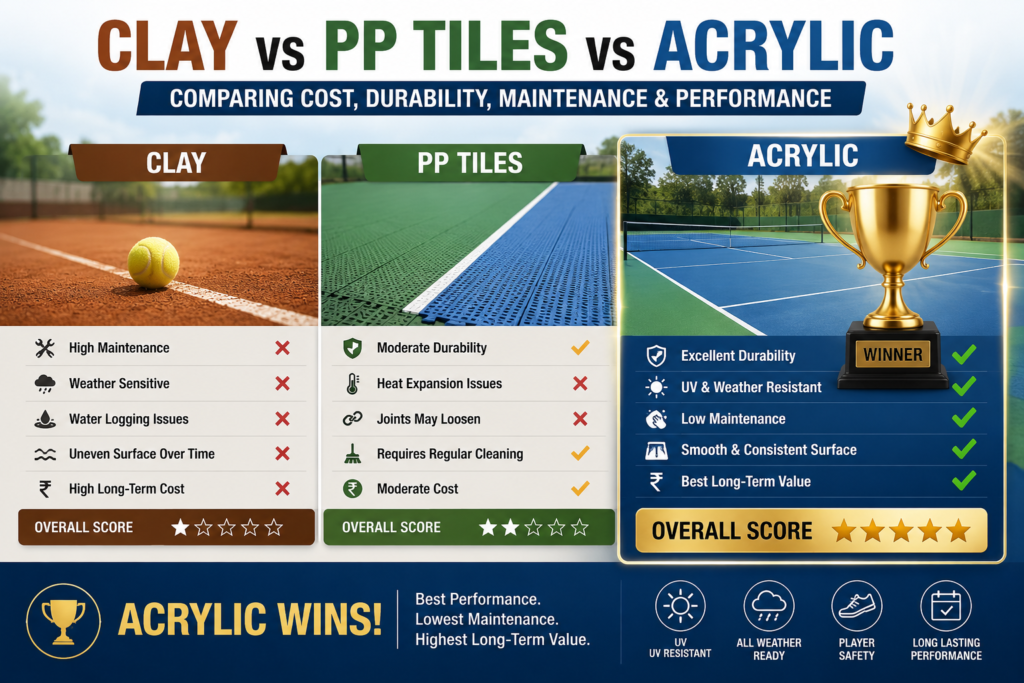
India is building sports courts at an unprecedented rate — driven by the Khelo India programme, growing demand from schools, residential societies, and commercial clubs, and the explosion of sports like pickleball and badminton. But choosing the wrong court surface is one of the most expensive mistakes a facility owner can make. The debate around Clay vs PP Tiles vs Acrylic has become increasingly important for sports facility owners across India. The three surfaces dominating the discussion are clay courts, polypropylene (PP) interlocking tiles, and synthetic acrylic courts. Each behaves very differently under India’s specific climate — scorching 45°C summers in Rajasthan, waterlogging monsoons in Kerala, and high-humidity coastal environments in Mumbai. This comparison gives you a data-backed, honest breakdown of all three — covering cost per square foot, durability, maintenance burden, player safety, and real-world performance across Indian weather. By the end, the winner will be clear. Clay Courts: Traditional But Troubled Clay courts are constructed using crushed brick, shale, or locally available red soil, layered over a compacted base. In India, most clay courts use brick powder (red clay) as the top surface. The construction involves a compacted sub-base, a drainage layer, and multiple layers of crushed stone topped with brick dust. Advantages of clay courts Disadvantages of clay courts in India PP Tiles (Polypropylene Tiles): Flexible But Limited Polypropylene (PP) interlocking tiles are modular, snap-together plastic tiles made from high-impact thermoplastic polymer. They install quickly — often without professional labour — and can be laid over almost any flat base. Their suspended design creates an air gap that provides basic shock absorption and allows water to drain. Advantages of PP tiles Disadvantages of PP tiles in Indian conditions Acrylic Courts: The Professional Standard for India A synthetic acrylic sports court is built by applying multiple layers of 100% acrylic coating over a solid concrete or asphalt base. Each layer is engineered for a specific purpose: base primer for adhesion, resurfacing layers for surface correction, cushion coats for shock absorption, and colour coats for UV-resistant, slip-controlled play. This is the same surface technology used at the US Open, the Australian Open, and thousands of professional academies worldwide. In India, the Sports Authority of India (SAI) specifies synthetic acrylic for most government-commissioned courts. Pacecourt, India’s leading synthetic acrylic flooring manufacturer with ITF certification and 4,000+ courts built, produces a certified 8-layer system engineered specifically for India’s climate. Why acrylic courts are the right choice for India Disadvantages of acrylic courts Cost Comparison: Installation + Maintenance in India Factor Clay Court PP Tiles Acrylic Court Installation Cost (₹/sq ft) ₹80 – ₹150 ₹250 – ₹450 ₹300 – ₹600 Maintenance Level Very High (daily) Low Low–Moderate Resurfacing Frequency Every 1–2 years Tile replacement as needed Every 5–7 years 5-Year Total Cost Highest (maintenance inflates cost) Moderate (replacement risk) Lowest over time Water Requirement Daily watering required None None Skilled Labour for Install Moderate Low High (certified installer) Key insight: The cheapest court to build is not the cheapest court to own. Clay courts require daily water, groundskeeping, and resurfacing every 1–2 years. Over 5 years, their total cost frequently exceeds that of an acrylic installation. Weather Performance Across Indian Regions Region / Climate Clay Court PP Tiles Acrylic Court North India (Delhi, Rajasthan — extreme heat) ❌ Dries out, cracks ⚠️ UV degrades tiles ✅ UV-resistant coatings hold South India (Kerala, Tamil Nadu — heavy monsoon) ❌ Waterlogged, unusable ⚠️ Joints loosen in heavy rain ✅ Drains well, dries fast West India (Mumbai — humid, coastal) ❌ Moss and algae growth ⚠️ Slippery if wet or dusty ✅ Anti-slip, humidity-resistant East India (Kolkata — hot humid summers) ❌ Dusty in summer, waterlogged in rain ⚠️ Acceptable for indoor use ✅ Consistent year-round Hilly Regions (Dehradun, Shimla) ❌ Frost damage possible ⚠️ Cold makes tiles brittle ✅ Temperature-stable performance Across every major Indian climate zone, acrylic courts deliver consistent, reliable performance. Clay fails in almost every outdoor scenario. PP tiles offer partial performance in moderate conditions only. Lifespan Comparison Surface Expected Lifespan Major Risk Factors Clay Court 3–5 years Monsoon damage, maintenance neglect PP Tiles (budget quality) 2–3 years UV yellowing, joint failure PP Tiles (premium quality) 5–8 years UV exposure, joint loosening Acrylic Court (standard) 10–12 years Base cracking if poorly installed Acrylic Court (ITF-certified, cushioned) 12–15+ years Minimal — resurfacing every 5–7 years Which Surface Wins for India? A Clear Answer For schools and government facilities Acrylic courts are the best choice. Schools need multi-sport surfaces that handle daily use by hundreds of students, require minimal maintenance, and remain safe year-round. The SAI already specifies acrylic for most Khelo India court construction. Clay is too maintenance-heavy; PP tiles fail under intensive daily use. For professional academies and clubs Acrylic, without question. Professional play demands consistent bounce, predictable traction, and surfaces that hold up under competitive intensity. Acrylic courts carry ITF certifications that clay and PP tiles do not. For residential societies and housing complexes Acrylic is the best long-term investment. PP tiles may seem attractive for low disruption during installation, but their lifespan in Indian outdoor conditions means replacement cost within 5 years. Acrylic adds lasting property value and serves residents for 10–15 years. The Final Scorecard Criteria Clay PP Tiles Acrylic Installation Cost ✅ Lowest ⚠️ Medium ⚠️ Highest upfront Long-term Cost ❌ Highest ⚠️ Medium ✅ Lowest over time Lifespan ❌ 3–5 years ⚠️ 5–8 years ✅ 10–15 years Weather Resistance (India) ❌ Poor ⚠️ Moderate ✅ Excellent Maintenance Burden ❌ Very High ✅ Low ✅ Low–Moderate Multi-sport Use ❌ No ✅ Yes ✅ Yes Player Safety ✅ Joint-friendly ✅ Good absorption ⚠️ Cushioned version recommended Professional Certification ❌ Not certified ❌ Not certified ✅ ITF Certified Best For Clay tennis (dry regions) Indoor/temporary use All facilities — WINNER ✅ Conclusion When comparing clay vs PP tiles vs acrylic court in India, the evidence is clear: acrylic courts are the best investment for Indian conditions in 2026. They outperform clay and PP tiles on every meaningful metric