Author name: Rahul

Rahul is a sports flooring expert and a key contributor at Pacecourt, a leading brand in acrylic and synthetic sports court solutions. Passionate about creating world-class playing surfaces, Rahul shares insights on tennis courts, basketball courts, and multi-purpose sports flooring. His goal is to help facility owners and sports enthusiasts choose durable, high-performance solutions that enhance the game experience.

Length of Tennis Court

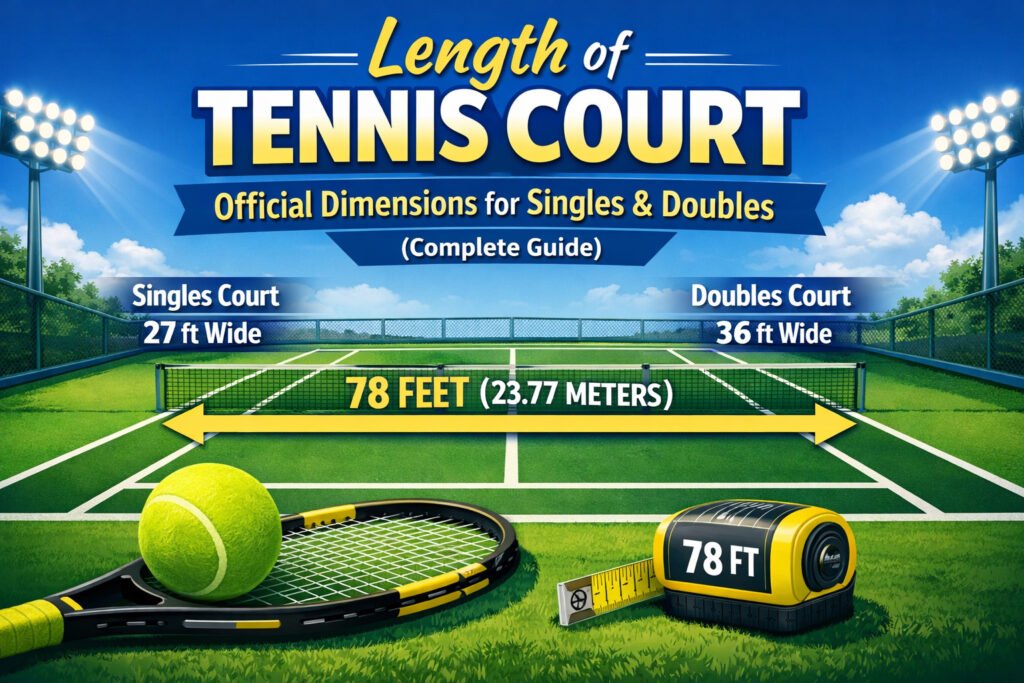
Length of Tennis Court: Official Dimensions for Singles & Doubles (Complete Guide)

Understanding the length of tennis court is essential for players, coaches, architects, sports authorities, and anyone planning to construct a professional or recreational tennis court. Whether you are building a court, learning the rules, or upgrading sports infrastructure, knowing the exact measurements helps ensure compliance with international standards. This guide covers official tennis court length, differences between singles and doubles courts, total playing area, and layout standards approved by the International Tennis Federation (ITF). What Is the Official Length of a Tennis Court? The official length of a tennis court is 78 feet (23.77 meters).This measurement is fixed and universal for all formats of tennis, including: Unlike width, the length of a tennis court remains the same for both singles and doubles. Length of Tennis Court in Different Units Measurement Unit Tennis Court Length Feet 78 feet Meters 23.77 meters Yards 26 yards This length is measured from one baseline to the opposite baseline. Singles vs. Doubles: Key Differences While the court’s length is constant, the width is the primary difference between singles and doubles matches. This distinction has a significant impact on strategy and player positioning. Singles Court Boundaries In a singles match, one player competes against another. The play is contained within the singles sidelines. If a player hits the ball into one of the doubles alleys during a rally, the ball is considered “out,” and they lose the point. The only time the full width of the court is relevant is for the net posts’ placement. Doubles Court Boundaries In a doubles match, two players team up against another pair. The game utilizes the full 36-foot width of the court. The doubles alleys, which are out of bounds in singles, are now in play. This extra space opens up new angles for shots and requires different court coverage strategies. Teamwork and communication become essential to effectively defend the wider area. Interestingly, the service boxes remain the same for both singles and doubles. Serves must still land within the same 21-foot by 13.5-foot area, regardless of how many players are on the court. How Court Dimensions Impact Gameplay The layout of a tennis court isn’t arbitrary. The dimensions directly influence how the game is played, from serving strategy to rally dynamics. Serving Strategy The 21-foot distance from the net to the service line creates a challenging target. Players must hit the ball with enough power to clear the net but with enough topspin or slice to bring it down into the service box. The 3-foot height at the center of the net offers a small but valuable target for flat, powerful serves. Serving out wide in the deuce court (the right side) or down the “T” (the center line) in the ad court (the left side) are common strategies that exploit the box’s geometry. Baseline Rallies The 78-foot length of the court provides ample space for powerful baseline exchanges. Players often stand a few feet behind the baseline to give themselves more time to react to deep, fast shots from their opponent. Hitting deep shots that land near the opponent’s baseline is a key tactic, as it can push them back and force a weaker return. The Importance of Angles In doubles, the addition of the alleys dramatically changes the game. Players can hit sharp-angled cross-court shots that pull their opponents wide, opening up the rest of the court for their partner to attack. The ability to defend these wide shots and counter-attack down the line is a hallmark of strong doubles play. Even in singles, using angles to move an opponent from side to side is a fundamental strategy for creating openings. Net Play and Court Coverage The distance from the baseline to the net is 39 feet. When a player decides to approach the net, they must cover this distance quickly to get into a good volleying position. A slow approach gives the opponent too much time to hit a passing shot or a lob. Understanding these distances helps players make better decisions about when to stay back and when to move forward. Total Area and Run-Off Space While the playing lines define the court’s boundaries, additional space around the court is necessary for player safety and movement. This is often called the “run-off” area. The International Tennis Federation (ITF) recommends the following minimum clearances: This extra room allows players to safely chase down wide shots or deep lobs without risking injury. For professional tournaments, these spaces are often even larger. The total recommended area for a single tennis court, including run-off, is 120 feet (36.57 meters) by 60 feet (18.29 meters). Why Tennis Court Length Is Fixed The tennis court length has remained unchanged for decades to ensure: All international tennis matches follow ITF-approved dimensions, making the game globally uniform. Line Markings Related to Court Length Important markings along the length include: All markings must follow ITF thickness standards (usually 5 cm or 2 inches). Common Mistakes While Measuring Tennis Court Length Measuring beyond run-off area instead of baseline to baseline Confusing total area length with playing length Incorrect net positioning affecting half-court distance Professional court installation avoids these errors using laser or precision tools. Tennis Court Length for Different Surfaces The length remains 78 feet regardless of surface type: Only surface materials and cushioning layers change—not the dimensions. Final Thoughts The length of a tennis court is always 78 feet (23.77 meters), regardless of singles or doubles play. This fixed dimension is a core rule of tennis and is followed worldwide for professional, recreational, and training courts. If you’re planning to build or renovate a tennis court, ensuring accurate length measurement is critical for performance, safety, and official compliance.
Pickleball Court Construction
pickleball court construction

Pickleball Court Construction: Complete Guide to Design, Cost, Dimensions & Installation

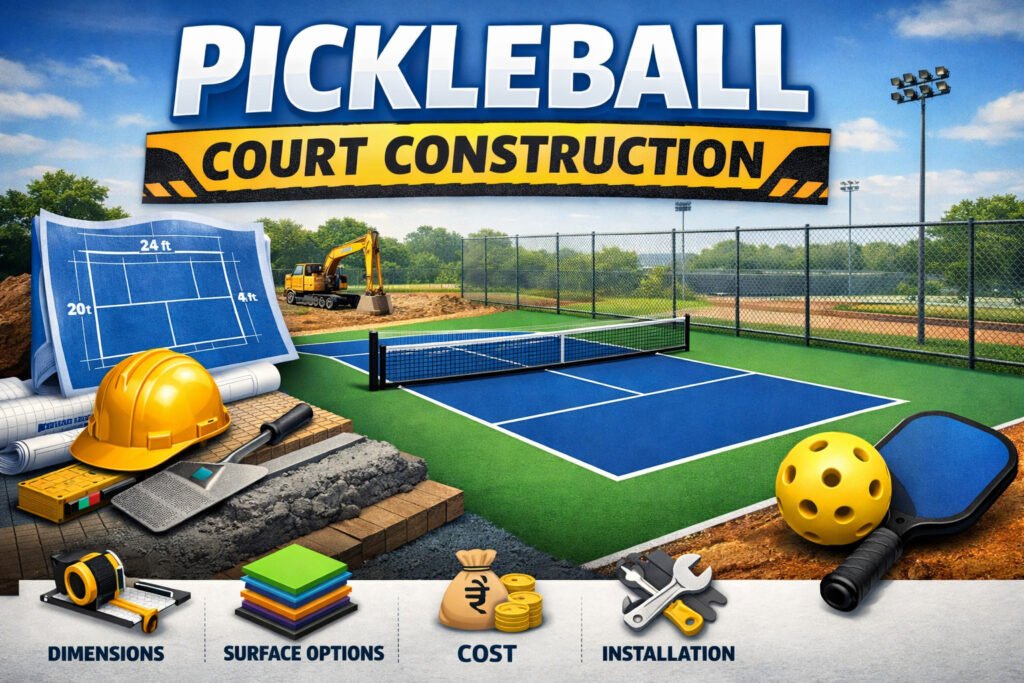
Pickleball is one of the fastest-growing sports worldwide, and its popularity in India is rising rapidly across schools, residential societies, clubs, and sports academies. With this growth, pickleball court construction has become a high-demand service for sports infrastructure developers and flooring contractors. This complete guide covers everything you need to know about pickleball court construction — from court dimensions, surface types, base preparation, fencing, lighting, cost, and maintenance — to help you build a professional, durable, and tournament-ready court. What Is Pickleball? Pickleball is a paddle sport that combines elements of tennis, badminton, and table tennis. It is played on a smaller court, making it ideal for urban spaces, schools, and residential projects. The sport is suitable for all age groups, which makes pickleball courts a long-term investment. Why Everyone Wants a Court in Their Backyard You see them popping up everywhere—in public parks, converted tennis courts, and increasingly, in private backyards. Pickleball isn’t just a fleeting trend; it’s the fastest-growing sport in America for a reason. It combines the strategy of tennis, the speed of ping pong, and the court size of badminton into a game that is accessible to all ages. But as the sport matures, so do the expectations of the players. A chalk line on a driveway doesn’t cut it anymore. Enthusiasts want the real deal. They want the consistent bounce, the traction, and the aesthetic appeal of a professional-grade surface. This guide explores the essentials of pickleball court construction. We will walk you through the critical steps of building a court that not only looks great but also ensures safe, high-level gameplay for years to come. The Foundation of Great Gameplay Why does professional construction matter? You might be tempted to just paint some lines on existing concrete and call it a day. While that works for a casual afternoon, dedicated players notice the difference immediately. Proper pickleball court construction is about safety as much as it is about performance. A professionally built court manages water drainage effectively, preventing dangerous puddles and slippery spots. It provides the right amount of “cushion” to protect players’ joints during long matches. Most importantly, it ensures a true ball bounce, which is critical for a sport that relies heavily on precision and spin. When you invest in quality construction, you aren’t just building a court; you are building an asset that adds value to your property and enhances the playing experience. Step-by-Step: Building Your Pickleball Court Correct dimensions are crucial for professional pickleball court construction. Official Pickleball Court Size Recommended Total Area Net Height Non-Volley Zone (Kitchen) Pickleball Court Surface Options Choosing the right surface is essential for player safety, ball bounce, and court longevity. 1. Acrylic Pickleball Court (Most Popular) Recommended for: Residential societies, clubs, schools, academies 2. Synthetic Modular Tiles Recommended for: Temporary courts, rooftops, indoor spaces 3. Concrete Base with Acrylic Coating Pickleball Court Construction Process (Step-by-Step) Step 1: Site Inspection & Planning Step 2: Ground Preparation Step 3: Base Construction Step 4: Acrylic Surface Installation Step 5: Accessories Installation Pickleball Court Color Combinations Popular color schemes include: Contrasting colors improve visibility and broadcast quality. Pickleball Court Construction Cost in India Approximate Cost Breakdown Component Cost Range (₹/sq. ft.) Base Construction ₹120 – ₹180 Acrylic Surface ₹80 – ₹150 Fencing & Net ₹1.5 – ₹3 lakh Lighting (Optional) ₹2 – ₹5 lakh Total Estimated Cost Indoor vs Outdoor Pickleball Court Construction Outdoor Courts Indoor Courts Lower maintenance Synthetic or wooden flooring Controlled environment Maintenance Tips for Pickleball Courts Regular surface cleaning Avoid water stagnation Inspect cracks annually Recoating every 4–6 years Net and line checks before tournaments Proper maintenance significantly extends court lifespan. Benefits of Professional Pickleball Court Construction International standard compliance Long-term durability Player safety and comfort Higher property value Low maintenance cost Why Pickleball Courts Are a Smart Investment Growing demand in India Requires less space than tennis Multi-age participation Ideal for schools, societies, resorts, and clubs High ROI with low operational cost Choosing the Right Pickleball Court Contractor Before finalizing a contractor, ensure: Conclusion Pickleball court construction is a future-ready investment for modern sports infrastructure. Whether you’re building a court for a school, residential society, club, or academy, following international standards, choosing the right surface, and working with experienced professionals ensures long-lasting performance and player satisfaction. With proper planning, quality materials, and expert execution, a professionally constructed pickleball court can deliver exceptional value for years to come.


Tennis Court Flooring Suppliers in India

Tennis Court Flooring Suppliers in India: Complete Buyer’s Guide by Pacecourt

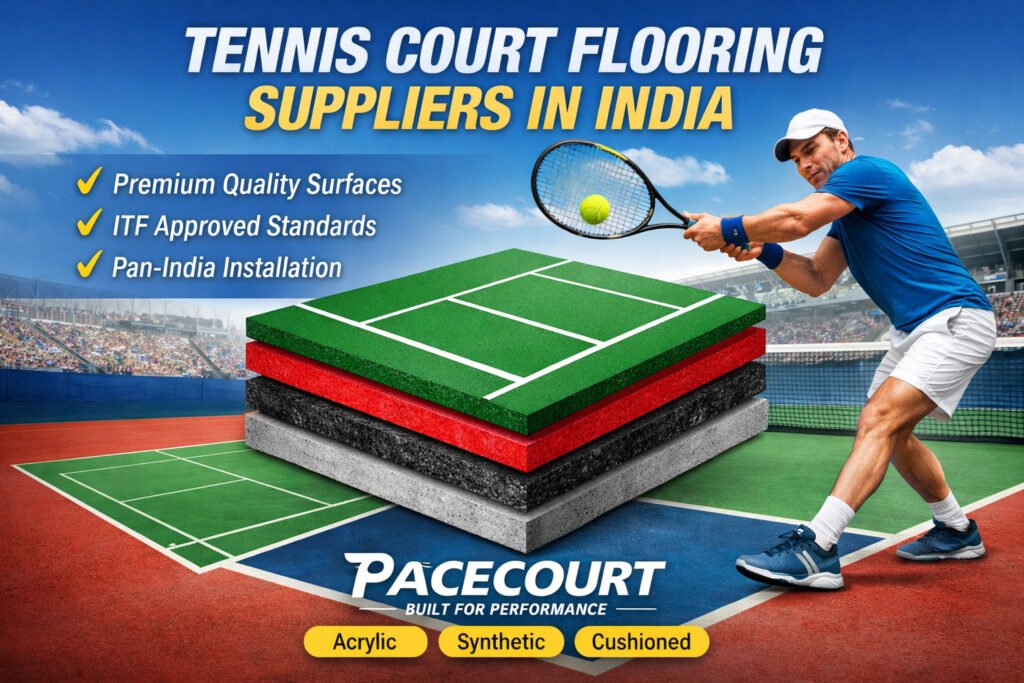
Choosing the right tennis court flooring supplier is critical for performance, safety, durability, and long-term maintenance. Whether you’re planning a professional tennis court, a school sports facility, a sports academy, or a private club, the quality of flooring directly impacts player experience and court lifespan. At Pacecourt, we specialize in premium tennis court flooring solutions designed for Indian climate conditions, international playing standards, and long-term value. This guide explains everything you need to know before selecting a tennis court flooring supplier. Why Choosing the Right Tennis Court Flooring Supplier Matters A reliable tennis court flooring supplier ensures: Poor-quality suppliers often lead to cracking, surface peeling, uneven play, and frequent repairs—costing more in the long run. Types of Tennis Court Flooring Offered by Pacecourt As one of the trusted tennis court flooring suppliers in India, Pacecourt offers multiple surface options to suit different playing styles and budgets. 1. Acrylic Tennis Court Flooring (Most Popular) Best for: Schools, academies, clubs & tournaments Key Benefits: Lifespan: 6–8 years with proper care Pacecourt’s acrylic tennis flooring is ideal for both outdoor and indoor courts. 2. Synthetic Tennis Court Flooring Best for: Multi-sport complexes & training facilities Advantages: 3. Cushioned Tennis Court Flooring Best for: Professional academies & high-usage courts Features: Tennis Court Flooring Specifications (Standard Dimensions) A professional tennis court requires precision installation: Pacecourt ensures accurate line marking, slope correction, and drainage planning for optimal court performance. Why Pacecourt is a Trusted Tennis Court Flooring Supplier Pacecourt stands out among tennis court flooring suppliers due to: ✔ High-Quality Materials We use international-grade acrylic resins, binders, and coatings tested for Indian weather conditions. ✔ End-to-End Project Execution From site inspection to base preparation, surface application, and final line marking—everything is handled by experts. ✔ Pan-India Service We supply and install tennis court flooring across Delhi, Bihar, UP, Rajasthan, Maharashtra, South India, and North East. ✔ Custom Court Speed Options Slow, medium, or fast courts based on your requirement. ✔ After-Sales Support Maintenance guidance and resurfacing solutions to extend court life. Tennis Court Flooring Installation Process by Pacecourt Our professional installation process ensures durability and performance: Each step follows strict quality control standards. Tennis Court Flooring Cost in India The cost depends on multiple factors: Flooring Type Approx Cost (₹/sq.ft) Acrylic Flooring ₹90 – ₹150 Synthetic Flooring ₹120 – ₹180 Cushioned Flooring ₹180 – ₹300 Note: Final pricing depends on base condition, location, court size, and customization. Pacecourt offers transparent pricing with no hidden costs. Ideal Clients for Tennis Court Flooring Suppliers Our tennis court flooring solutions are perfect for: Maintenance Tips for Long-Lasting Tennis Courts To extend the lifespan of your tennis court: Pacecourt also provides annual maintenance contracts (AMC). How to Choose the Best Tennis Court Flooring Supplier Before finalizing a supplier, check: Pacecourt meets all these criteria, making it a preferred choice across India. Why Tennis Academies Prefer Pacecourt Consistent playing quality Faster project turnaround Custom color & branding options Competitive pricing Long-term reliability Our courts are designed to train champions. Conclusion If you are searching for reliable tennis court flooring suppliers in India, Pacecourt offers the perfect balance of quality, performance, durability, and cost-efficiency. From grassroots courts to professional arenas, we deliver world-class tennis court flooring solutions tailored to your needs.



Pickleball Court Flooring Manufacturer in India

Pickleball Court Flooring Manufacturer in India – Complete Buyer’s Guide

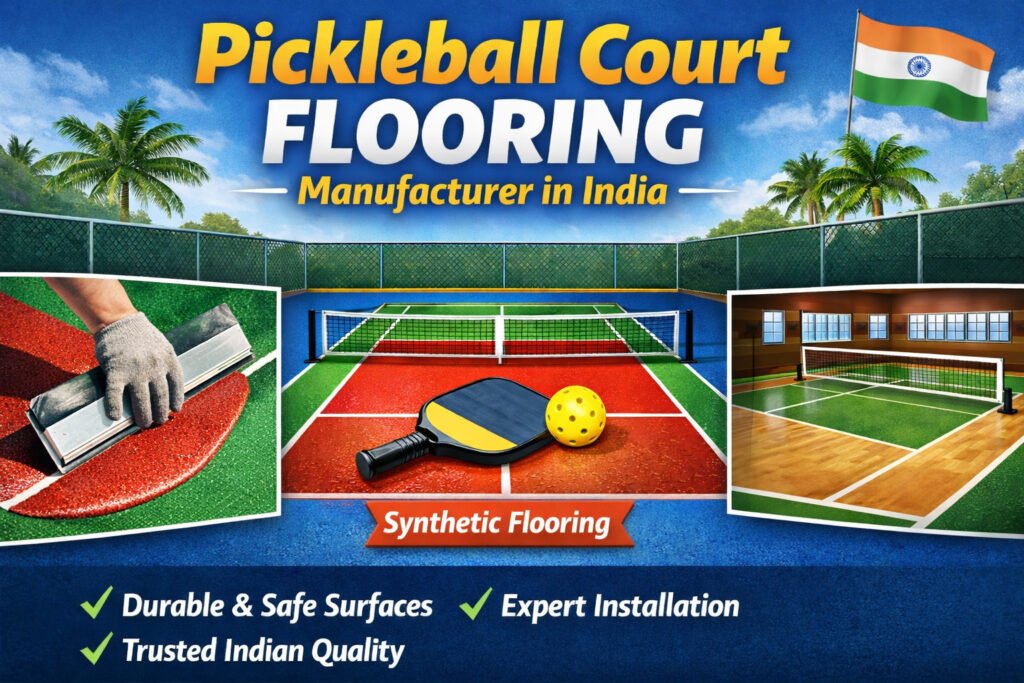
Pickleball court flooring manufacturer in India is in high demand as pickleball rapidly gains popularity across schools, residential societies, clubs, resorts, and sports academies. With rising participation and competitive play, choosing the right flooring manufacturer is essential to ensure player safety, consistent ball bounce, durability, and long-term cost efficiency.Pickleball court flooring manufacturer in India is in high demand as pickleball rapidly gains popularity across schools, residential societies, clubs, resorts, and sports academies. With rising participation and competitive play, choosing the right flooring manufacturer is essential to ensure player safety, consistent ball bounce, durability, and long-term cost efficiency. Pickleball court flooring manufacturer in India focuses on performance and safety Pickleball court flooring manufacturer in India designs surfaces that balance traction, shock absorption, and weather resistance. Poor-quality flooring can lead to injuries, uneven bounce, and faster surface wear. High-quality pickleball flooring improves gameplay, reduces joint stress, and supports professional as well as recreational use. Pickleball court flooring manufacturer in India follows standard court dimensions Pickleball court flooring manufacturer in India builds courts according to official standards to ensure tournament-level play. Proper dimensions combined with certified flooring ensure compliance and optimal playing conditions. Pickleball court flooring manufacturer in India offers multiple flooring options Pickleball court flooring manufacturer in India provides acrylic synthetic flooring Pickleball court flooring manufacturer in India commonly recommends acrylic synthetic surfaces for permanent outdoor and indoor courts. These surfaces are applied in multiple layers over a concrete or asphalt base, offering smooth ball bounce, UV resistance, and long lifespan. Key benefits: Lifespan of 8–10 years with maintenance Consistent ball response Slip-resistant texture Suitable for high-traffic courts Pickleball court flooring manufacturer in India supplies modular interlocking tiles Pickleball court flooring manufacturer in India also manufactures modular interlocking tile systems that are fast to install and ideal for multipurpose spaces. These tiles are especially popular in parks, schools, and temporary event courts. Key benefits: Pickleball court flooring manufacturer in India delivers indoor cushioned flooring Pickleball court flooring manufacturer in India offers cushioned vinyl, rubber, or PU flooring systems for indoor pickleball courts. These systems prioritize shock absorption and player comfort. Key benefits: Pickleball court flooring manufacturer in India helps you choose the right surface Pickleball court flooring manufacturer in India evaluates several factors before recommending a flooring system: Choosing the right manufacturer ensures the surface matches performance expectations and local conditions. Pickleball court flooring manufacturer in India follows a structured installation process Pickleball court flooring manufacturer in India follows a systematic installation approach to ensure durability and playability. Pickleball court flooring manufacturer in India offers transparent cost estimates Pickleball court flooring manufacturer in India typically provides cost estimates based on surface type, site condition, and additional infrastructure. Approximate costs in India: Costs may vary depending on fencing, lighting, drainage, and location. Pickleball court flooring manufacturer in India ensures easy maintenance Pickleball court flooring manufacturer in India designs surfaces for low maintenance and long service life. Proper maintenance can extend court life by several years. Pickleball court flooring manufacturer in India serves multiple sectors Pickleball court flooring manufacturer in India caters to: Custom solutions are available based on space, usage, and budget. Pickleball court flooring manufacturer in India selection checklist Pickleball court flooring manufacturer in India should be selected based on: Conclusion Pickleball court flooring manufacturer in India plays a vital role in the success of any pickleball facility. From acrylic synthetic systems to modular tile solutions and indoor cushioned floors, choosing the right manufacturer ensures long-lasting performance, player safety, and excellent playing experience. Investing in quality pickleball court flooring today supports the fast-growing future of the sport in India.

Volleyball Court Dimensions

Volleyball Court Dimensions: Official Size, Measurements, Net Height & Layout Guide

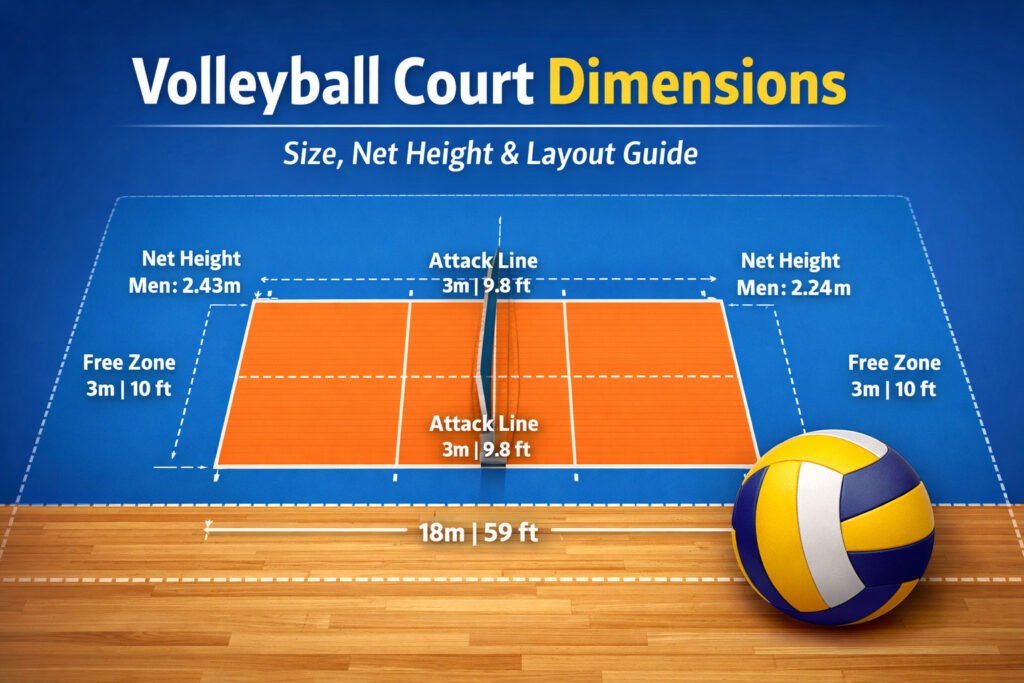
Volleyball is one of the most widely played indoor and outdoor sports worldwide. Whether you’re building a new court for a school, academy, sports complex, or professional tournament, knowing the correct volleyball court dimensions is essential for fair play, safety, and compliance with official rules. This guide explains official volleyball court measurements, net height, free zone requirements, and court layout details as per FIVB (Fédération Internationale de Volleyball) standards. Official Volleyball Court Dimensions (FIVB Standard) The standard volleyball court size is the same worldwide for both men’s and women’s matches. Standard Volleyball Court Size 📌 Total Playing Area:18 m × 9 m = 162 sq. meters The court is divided into two equal halves by the center line and net. Indoor Volleyball Court Dimensions Indoor volleyball is played on a hard surface, usually wood or a synthetic material. The court is designed for six players per side, requiring enough space for complex rotations and high-speed attacks. The Playing Area The standard indoor volleyball court is a rectangle measuring 18 meters (59 feet) in length and 9 meters (29.5 feet) in width. The court is divided into two equal square team courts by a center line, with each side measuring 9 meters by 9 meters (29.5 feet by 29.5 feet). Key Lines and Zones Net Height The height of the net is measured from the center of the playing court. Beach Volleyball Court Dimensions Beach volleyball is typically played with two players per side on sand. Because moving on sand is significantly harder than on a hard court, and there are fewer players to cover the area, the court is slightly smaller. The Playing Area A beach volleyball court is a rectangle measuring 16 meters (52.5 feet) in length and 8 meters (26.2 feet) in width. Like the indoor version, it is divided into two equal squares, but in this case, each side measures 8 meters by 8 meters (26.2 feet by 26.2 feet). Key Lines and Zones Net Height The net heights for beach volleyball are identical to indoor volleyball: Significant Differences and Strategic Impact The seemingly small difference in size between indoor and beach courts has a massive impact on strategy. Common Volleyball Court Dimension Mistakes Avoid these frequent errors: Even small errors can affect match quality and player safety. Tips for Setting Up Your Court If you are setting up a court for a tournament or just for fun, accuracy matters for the integrity of the game. Conclusion Understanding the correct volleyball court dimensions is essential for creating a safe, professional, and competition-ready playing environment. By following official FIVB standards—including the 18 × 9 meter court size, accurate net height, proper attack line placement, and adequate free zone clearance—you ensure fair gameplay, player safety, and long-term usability of the court. Whether you are planning a volleyball court for a school, academy, sports complex, or professional tournament, accurate measurements help improve performance, reduce injuries, and meet international regulations. Investing time in proper planning and layout not only enhances the playing experience but also ensures your court is suitable for both training and competitive matches.

Badminton Court Measurement in India

Badminton Court Measurement in India: Official Dimensions, Lines, Net Height & Space Guide

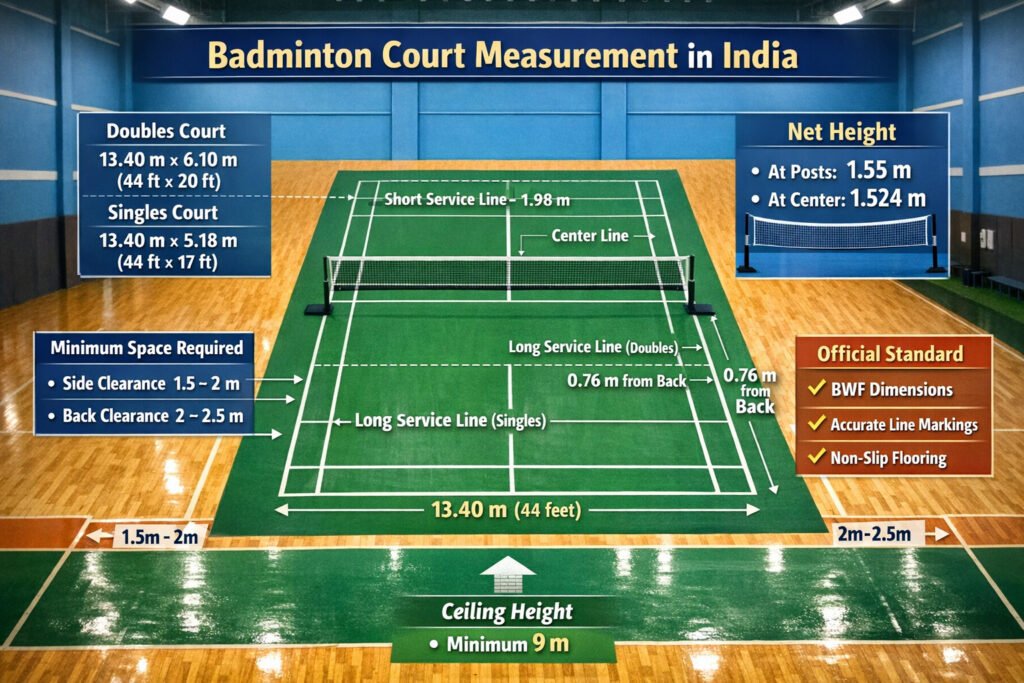
Badminton is one of the most popular indoor sports in India, played at schools, academies, residential societies, and professional tournaments. Whether you are planning to build a new court or simply want to understand official standards, knowing the correct badminton court measurement in India is essential. This guide explains official badminton court dimensions, line markings, net height, ceiling clearance, and minimum space required, as per Badminton World Federation (BWF) guidelines followed across India. Official Badminton Court Measurement in India (As per BWF) Category Length Width Singles Court 13.40 m 5.18 m Doubles Court 13.40 m 6.10 m 🔹 Important Note:The length remains the same for singles and doubles; only the width and service lines differ. Badminton Court Line Markings & Measurements All lines are considered part of the playing area and must be clearly visible. Line Width Key Line Measurements Badminton Net Height & Post Measurement The net setup is equally important for correct gameplay. Net Height Net Width & Length Net Posts Minimum Space Required for a Badminton Court in India Apart from the playing area, additional space is required for safe movement and professional play. Recommended Clearance Ideal Total Area (Including Clearance) This layout is widely used in: Ceiling Height Requirement for Badminton Courts For uninterrupted shuttle movement, ceiling height is critical. Ceiling Height Standards 📌 Low ceilings can affect shuttle trajectory and are not approved for competitive play. Indoor vs Outdoor Badminton Court Measurement Feature Indoor Court Outdoor Court Dimensions Same (BWF) Same (BWF) Flooring Wooden / Synthetic Concrete / Synthetic Wind Impact None High Preferred in India ✅ Yes ❌ Limited 👉 Indoor courts are strongly recommended in India due to wind sensitivity. Badminton Court Measurement for Schools & Academies For schools and training centers in India: This improves: Common Badminton Court Measurement Mistakes Avoid these frequent errors: ⚠️ Even small measurement errors can impact gameplay and player performance. Why Accurate Badminton Court Measurement Matters Correct court measurement ensures: This is especially important for badminton academies and sports infrastructure projects in India. Conclusion Understanding the badminton court measurement in India is essential for players, coaches, architects, and sports facility developers. By following official BWF dimensions, maintaining proper clearance, and ensuring accurate markings, you can create a professional-quality badminton court suitable for training and tournaments.

Badminton Court Dimensions in India

Badminton Court Dimensions in India: Official Size, Lines & Net Height

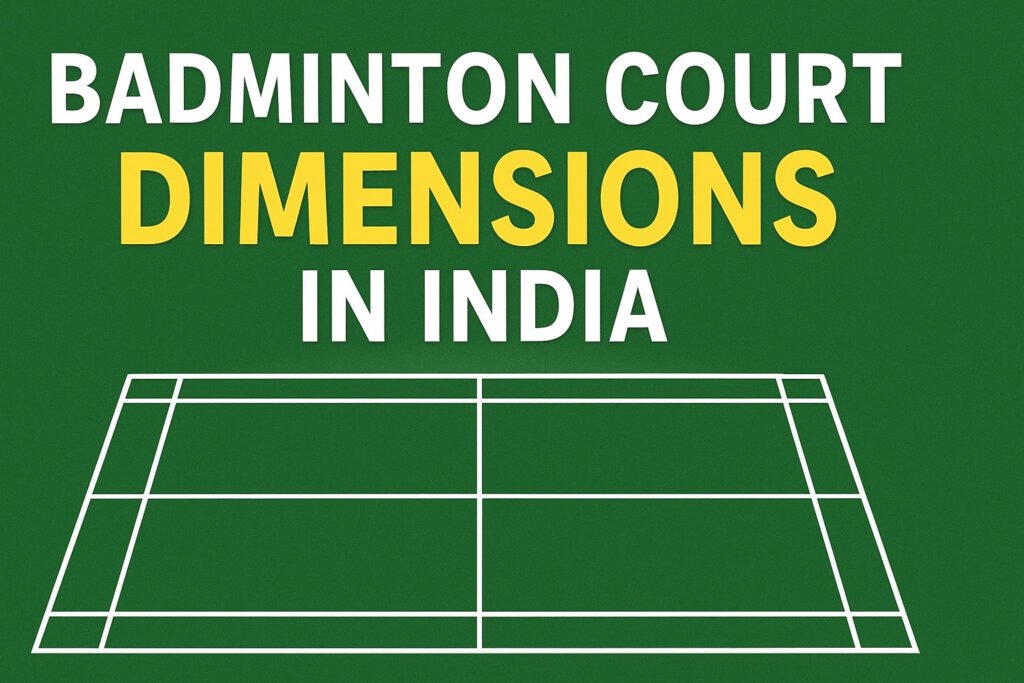
Badminton is one of the most popular indoor sports in India, played at professional, school, and recreational levels. Whether you are planning to build a badminton court, write a sports guide, or simply want accurate measurements, understanding the official badminton court dimensions in India is essential. India follows BWF (Badminton World Federation) standards for all professional and competitive courts. These measurements ensure fair play, consistent performance, and international compatibility. Official Badminton Court Dimensions (BWF Standard) The dimensions of a badminton court are the same worldwide, including India. Standard Badminton Court Size Measurement Meters Feet Court Length 13.40 m 44 ft Court Width (Doubles) 6.10 m 20 ft Court Width (Singles) 5.18 m 17 ft Diagonal Length 14.72 m 48.3 ft Badminton Court Dimensions for Singles Length: 13.40 meters (44 feet) Width: 5.18 meters (17 feet) Side lines used: Inner side lines Back boundary: Outer back line Singles courts are narrower than doubles courts but use the same length. Badminton Court Dimensions for Doubles Length: 13.40 meters (44 feet) Width: 6.10 meters (20 feet) Side lines used: Outer side lines Back boundary: Long service line for doubles Doubles courts are wider but have a shorter service length. Badminton Court Line Markings Explained Badminton court lines are 40 mm wide and usually painted in white or yellow for clear visibility. Key Court Lines All lines are considered part of the playing area. Badminton Court Net Height in India Net height is the same for singles and doubles matches. Location Height At the posts 1.55 meters (5 ft 1 in) At the center 1.524 meters (5 ft) Net Specifications Badminton Court Service Court Dimensions Each side of the court is divided into two service courts. Service Court Measurements Service court dimensions differ between singles and doubles, especially at the back boundary. Minimum Space Required Around a Badminton Court For safe play and tournaments, additional clearance is required: Area Recommended Space Side clearance 1.25–2 meters Back clearance 2–2.5 meters Ceiling height (minimum) 9 meters Ceiling height (international) 12 meters Indoor vs Outdoor Badminton Court Dimensions Indoor courts: Always recommended for professional play Outdoor courts: Same dimensions, but affected by wind and lighting In India, most competitive badminton is played indoors due to weather conditions. Badminton Court Dimensions as per BWF in India India strictly follows BWF standards for: Using non-standard measurements may disqualify courts from hosting official events. Common Mistakes to Avoid While Marking Badminton Courts Confusing singles and doubles sidelines Incorrect service line placement Using faded or narrow lines Improper net height adjustment Insufficient playing clearance Conclusion Understanding the official badminton court dimensions in India is crucial for players, coaches, builders, and sports facility managers. By following BWF standards for court size, line markings, and net height, you ensure fair play, safety, and tournament eligibility. Whether you are constructing a new court or verifying an existing one, accurate measurements and proper layout form the foundation of a professional badminton playing experience.

Pickleball Court Flooring in Delhi
Pickleball Court Flooring

Pickleball Court Flooring in Delhi – Types, Cost, Installation & Maintenance

Pickleball is rapidly gaining popularity in Delhi among schools, residential societies, sports clubs, and recreational centers. As a fast-paced yet low-impact sport, pickleball appeals to players of all age groups. However, the performance, safety, and longevity of a pickleball court depend heavily on choosing the right pickleball court flooring, especially considering Delhi’s extreme summers, winter chill, dust, and pollution levels. Why Flooring Matters in Pickleball Courts Pickleball involves quick lateral movements, frequent direction changes, and repetitive footwork. Poor flooring can lead to injuries, uneven ball bounce, and high maintenance costs. A professionally installed pickleball court surface ensures: Climate Considerations for Pickleball Courts in Delhi Delhi’s climate plays a major role in surface selection: Because of these factors, outdoor pickleball courts in Delhi require high-quality materials and professional installation. Best Pickleball Court Flooring Types in Delhi 3. Acrylic Pickleball Court Flooring (Most Preferred) Overview:Acrylic flooring systems are the most popular choice for pickleball courts in Delhi. They are installed over a concrete or asphalt base and finished with cushioned, textured coatings. Advantages: Best For:Residential societies, schools, academies, public sports complexes. 2. Synthetic Modular Tile Flooring Overview:Interlocking synthetic tiles made from polypropylene or polyethylene, designed for multi-sport use. Advantages: Limitations: Best For:Temporary courts, rooftops, indoor facilities, multipurpose areas. 3. Cushioned Acrylic (Premium Option) Overview:Acrylic system combined with rubber shock pads beneath the surface. Advantages: Best For:High-end clubs, training academies, senior-friendly facilities. Pickleball Court Construction Process in Delhi Step 2: Base Construction Step 3: Surface Application Step 4: Line Marking & Accessories Fencing and lighting (optional) Pickleball-compliant line markings Net system installation Maintenance Tips for Pickleball Courts in Delhi Weekly cleaning: Remove dust using soft brooms or blowers Monthly inspection: Check for cracks, loose tiles, or surface wear Annual servicing: Re-coating or color refresh if needed Avoid harsh chemicals: Use manufacturer-recommended cleaners only With proper care, acrylic pickleball courts can last 8–12 years in Delhi conditions. Cost Factors for Pickleball Court Flooring in Delhi The cost of pickleball court flooring depends on: Tip: Always request a site inspection and detailed BOQ before finalizing a contractor. Choosing the Right Pickleball Court Contractor in Delhi When selecting a contractor, ensure they offer: Conclusion Pickleball court flooring in Delhi requires a balance of performance, durability, and climate suitability. Acrylic and synthetic flooring systems remain the top choices for both indoor and outdoor courts due to their resilience against heat, dust, and heavy usage. By investing in quality materials, professional installation, and regular maintenance, you can build a pickleball court that delivers excellent playability and long-term value. Whether for a school, society, or sports complex, choosing the right pickleball flooring solution ensures a safe, modern, and future-ready sports facility in Delhi.

Tennis Court Flooring in Bihar

Tennis Court Flooring in Bihar: Types, Cost, Construction, and Best Materials

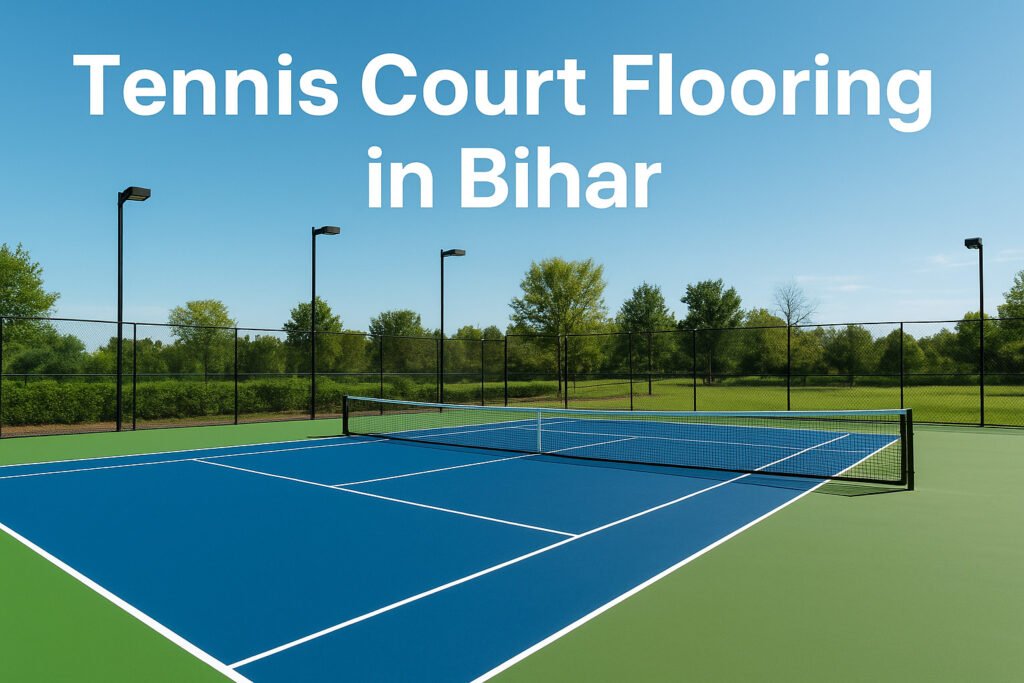
Bihar is witnessing steady growth in sports infrastructure—schools, colleges, academies, real estate developers, and private clubs are increasingly investing in quality sports facilities. Among all sports, tennis has seen a remarkable rise, leading to a higher demand for durable and high-performance tennis court flooring. If you’re planning to build or renovate a tennis court in Bihar, this ultimate guide by Pacecourt will help you understand the best flooring materials, construction process, costs, maintenance, and expert recommendations. Why Tennis Court Flooring Quality Matters A tennis court is more than a playing surface—its quality directly impacts: Choosing the right flooring system ensures players experience comfort, safety, and consistent performance, especially in Bihar’s weather conditions (heat, humidity, and monsoon rains). Why Choose Pacecourt for Tennis Court Flooring in Bihar? Pacecourt is a leading tennis court flooring material manufacturer and installer in India with: Pacecourt flooring is engineered to withstand Bihar’s climatic conditions, ensuring zero slippage, perfect bounce, and long-term durability. Best Tennis Court Flooring Options in Bihar Below are the most recommended and widely used flooring systems for both professional and recreational tennis courts in Bihar. 1. Acrylic Hard Court Flooring (Most Popular in Bihar) Acrylic flooring is widely used due to its durability, affordability, and suitability for all levels of play. Benefits Ideal For Schools, colleges, sports academies, public parks, housing societies. 2. Synthetic Cushion Court Flooring (Premium Option by Pacecourt) This is a multi-layer cushioned system using Pacecourt’s high-quality synthetic materials. Benefits Ideal For Tennis academies, clubs, tournaments, luxury residential projects. 3. Artificial Grass (Turf) Tennis Court Artificial turf mimics the feel of natural grass but with lower maintenance. Benefits Ideal For Clubs, hotels, resorts, and recreational spaces. 4. Clay Tennis Courts Clay courts offer slower gameplay and are used by advanced learners. Benefits Ideal For Sports academies focusing on long rallies and performance training. Tennis Court Construction Process in Bihar (Step-by-Step) Pacecourt follows a certified construction method to ensure long-lasting performance: 1. Site Inspection & Planning 2. Base Preparation 3. Flooring Layers Installation Depending on your flooring type: 4. Accessories Installation 5. Final Quality Check Tennis Court Flooring Cost in Bihar The total cost depends on materials, layers, base preparation, and accessories. Estimated Price Range: Flooring Type Cost per Sq. Ft. Approx Court Cost Acrylic Hard Court ₹85–₹130 ₹3.5–₹5.5 lakh Synthetic Cushion Court ₹150–₹280 ₹6–₹12 lakh Artificial Grass Court ₹160–₹250 ₹7–₹10 lakh Clay Court ₹120–₹200 ₹4–₹9 lakh Factors That Affect Tennis Court Cost in Bihar Quality of flooring material Layer thickness Base construction requirement Court size Drainage design Lighting & fencing Brand (Pacecourt Premium Materials vs. local suppliers) Investing in high-quality material may cost slightly more but ensures a 10–15 year lifespan with minimal maintenance. Why Bihar Needs Weather-Resistant Tennis Court Flooring Bihar experiences diverse climatic conditions: Pacecourt materials are engineered for: ✔ UV resistance✔ Waterproofing✔ Anti-slip performance✔ Crack resistance✔ All-season durability This makes them ideal for long-term use in Bihar. Maintenance Guide for Tennis Courts in Bihar To maximize the lifespan of your court: Routine Maintenance Annual Maintenance Pacecourt offers AMC (Annual Maintenance Contracts) across Bihar for hassle-free upkeep. Top Locations in Bihar Where Tennis Courts Are in Demand Patna Gaya Muzaffarpur Bhagalpur Darbhanga Ara Nalanda Purnia Schools, colleges, academies, and real estate developers in these regions constantly choose Pacecourt due to its durability and service quality. Why Pacecourt Is the Best Choice for Tennis Court Flooring in Bihar Pacecourt provides: Whether it’s a new construction, renovation, or upgrade, Pacecourt ensures world-class tennis courts at the best price in Bihar. Conclusion Building a high-quality tennis court in Bihar requires the right flooring material, proper installation, and long-term durability. Pacecourt’s advanced synthetic and acrylic systems are engineered to withstand Bihar’s climate, offering superior bounce, grip, and longevity. If you’re planning a project for a school, academy, club, or residential township, Pacecourt is the trusted partner for designing and installing premium tennis courts.

Tennis Court Flooring
Tennis court flooring

Tennis Court Flooring: Types, Cost, Installation, Lifespan & Maintenance Guide

Tennis is one of the world’s most popular sports, played by professionals, academies, schools, and recreational players. While training and skill matter, the quality of the tennis court flooring determines performance, player safety, game speed, and comfort. Choosing the right flooring material is not just a construction decision — it is an investment in durability, safety, and playability. Whether you are planning a tennis court for a school, sports club, residential community, stadium, academy, or private property, this detailed guide explains everything you need to know — from types and cost to installation, maintenance, and lifetime value. Why Tennis Court Flooring Matters A tennis court surface plays a crucial role in: A well-constructed tennis court not only enhances player experience but also reduces maintenance and increases lifespan — delivering greater value over time. Types of Tennis Court Flooring (With Pros & Cons) There are several types of tennis court surfaces used globally. Each has unique gameplay characteristics, costs, and maintenance needs. Below is an in-depth comparison: 1️⃣ Acrylic / Synthetic Tennis Court Flooring (Most Popular in India) Acrylic flooring is becoming the standard for modern tennis courts due to its durability, comfort, and affordability. Features Pros✔ Superior player comfort✔ Good shock absorption✔ Weather-resistant✔ Consistent bounce and speed✔ Low maintenance Cons✘ Requires skilled installation Best ForAcademies, schools, clubs, residential societies, and professional courts. 2️⃣ Hard Court (Concrete + Coating) Hard courts are widely used in tournaments like the US Open. Pros✔ Fast gameplay✔ Durable Cons✘ High impact on knees✘ Not suitable for kids or beginners Best ForAdvanced players and professional stadiums. 3️⃣ Clay Court Clay causes a slower playing experience and longer rallies. Pros✔ Ideal for stamina & technique development Cons✘ High maintenance✘ Not suitable for outdoor commercial spaces in humid/rainy areas Best ForEuropean-style academies and training programs. 4️⃣ Grass Court Historically used in Wimbledon. Pros✔ Very fast surface Cons✘ Very high maintenance✘ Expensive✘ Requires frequent trimming, watering, and rolling Best ForPremium private courts — not a practical choice in India. 5️⃣ Turf / Artificial Grass Court Sometimes used for multi-sport spaces. Pros✔ Soft & injury-free✔ Suitable for multi-purpose play Cons✘ Ball bounce is less predictable✘ Not approved for professional tennis performance Best ForRecreational spaces and schools on budget. Best Choice for India (Recommendation) ➡ Acrylic / Synthetic Tennis Court FlooringIt offers the best balance of cost, durability, player comfort, and weather resistance. Tennis Court Flooring Cost in India The cost of building a tennis court depends on material, base preparation, and labour. Item Approx. Cost Synthetic/Acrylic flooring ₹120 – ₹200 per sq. ft. Concrete base preparation ₹230 – ₹350 per sq. ft. Accessories (net posts, lights etc.) Optional & varies Total project estimate ₹9.5 – ₹18 lakhs per court (Depending on selection) What changes the final price If the base ground already exists, the cost reduces significantly. ennis Court Installation Process (Step-by-Step) A professional flooring installation ensures long-lasting performance. Below is the standard sequence: 🔹 1. Ground Assessment Soil testing and slope evaluation to avoid water stagnation. 🔹 2. Base Construction (Concrete/Asphalt) A proper base with: 🔹 3. Surface Grinding & Cleaning Ensures uniformity and prevents cracks. 🔹 4. Cushion Coating Multiple layers for shock absorption and player comfort. 🔹 5. Topcoat Acrylic Surface Coloured layers that define speed and bounce. 🔹 6. Line Marking Standard ITF-approved court lines. 🔹 7. Final Inspection & Handover Bounce test, slip resistance check, and surface uniformity. Tennis Court Flooring Lifespan Flooring Type Lifespan Acrylic / Synthetic 5–10 years Hard court 7–12 years Clay court 3–6 years Grass court 1–3 years Turf court 4–6 years Maintenance Guide for Long-Lasting Tennis Courts To extend lifespan and performance, follow simple maintenance: Daily Monthly Yearly Every 5–6 Years 🚫 Avoid ❌ Using hard-bristle brushes❌ Water stagnation near court❌ Using harsh detergent chemicals With proper care, an acrylic tennis court stays fresh for years with minimal expenses. Tennis Court Colour Options Most popular combinations: Custom branding can also be added for resorts, academies, and schools. Indoor vs Outdoor Tennis Court Flooring Category Indoor Outdoor Flooring Type Acrylic/Turf/Wood Acrylic/Clay/Concrete Weather Influence No High Maintenance Moderate Low–High depending on flooring Cost Higher Lower Most buyers in India prefer outdoor acrylic courts due to durability and low maintenance. Tennis Court Flooring Trends in 2025 These trends are increasing the demand for modern sports infrastructure across India. Why Choose a Professional Tennis Court Flooring Manufacturer? DIY or local contractor flooring often results in: A professional installer ensures:✔ Correct slope✔ ITF-approved materials✔ Long-lasting surface✔ Perfect bounce and gameplay Choosing Pacecourt for Tennis Court Flooring If you want a tennis court that is durable, safe, visually stunning, and built to international standards, Pacecourt is a trusted choice. 🔥 Pacecourt Advantages 🚀 Best suited for Get a free site inspection + free 3D tennis court design before starting your project. Final Thoughts Selecting the right tennis court flooring is a critical decision that determines performance, lifespan, safety, and investment value. Among all materials available in India, acrylic synthetic flooring remains the most reliable, budget-friendly, and long-lasting solution for both beginners and professionals. Whether you’re building a new tennis court or upgrading an old one, choosing a certified flooring manufacturer and trained installer guarantees superior results and long-term satisfaction.

Scroll to Top
HOMEOWNERS
BUSINESS OWNERS
ARCHITECTS
MUNICIPALITIES

Acrylic Flooring

Get 10% off on sports flooring materials

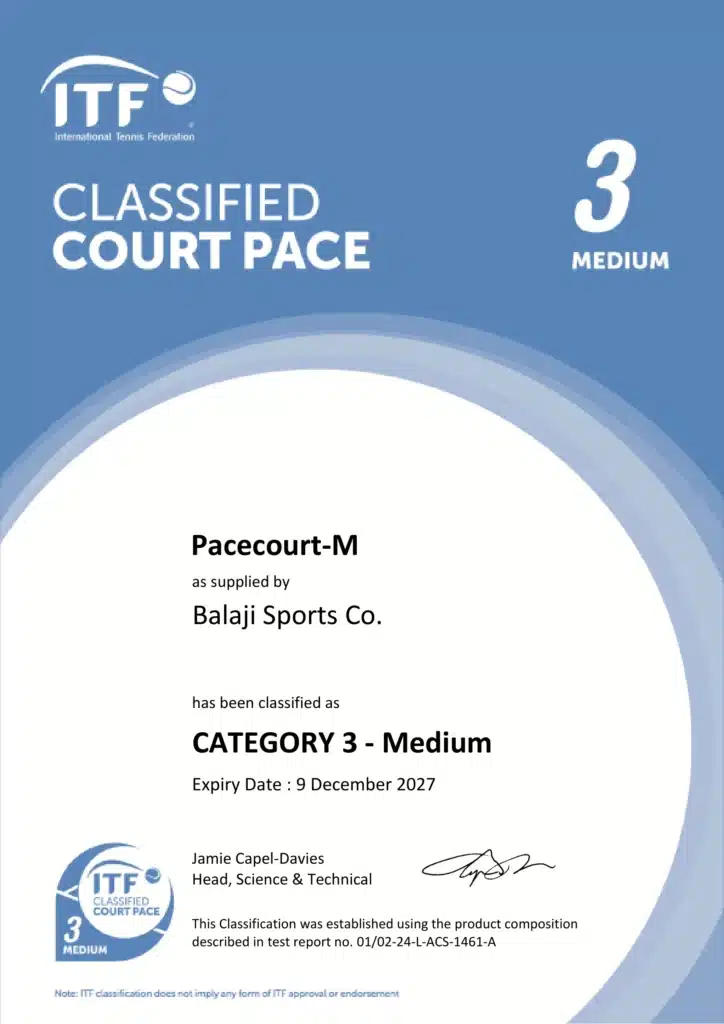
ITF-certified acrylic flooring for Tennis, Basketball, Badminton, Pickleball & more shipped worldwide.

    ISO-Certificate