Badminton is one of the fastest racket sports in the world, and to play it correctly, understanding the badminton standard court size is essential. Whether you are building a new badminton court, upgrading an existing one, or simply learning the game, knowing the official measurements helps ensure accuracy, performance, and compliance with BWF (Badminton World Federation) rules.
In this guide, we break down the standard badminton court size, dimensions for singles and doubles, markings, and flooring considerations—everything you need to get started.
Table of contents
What Is the Standard Badminton Court Size?
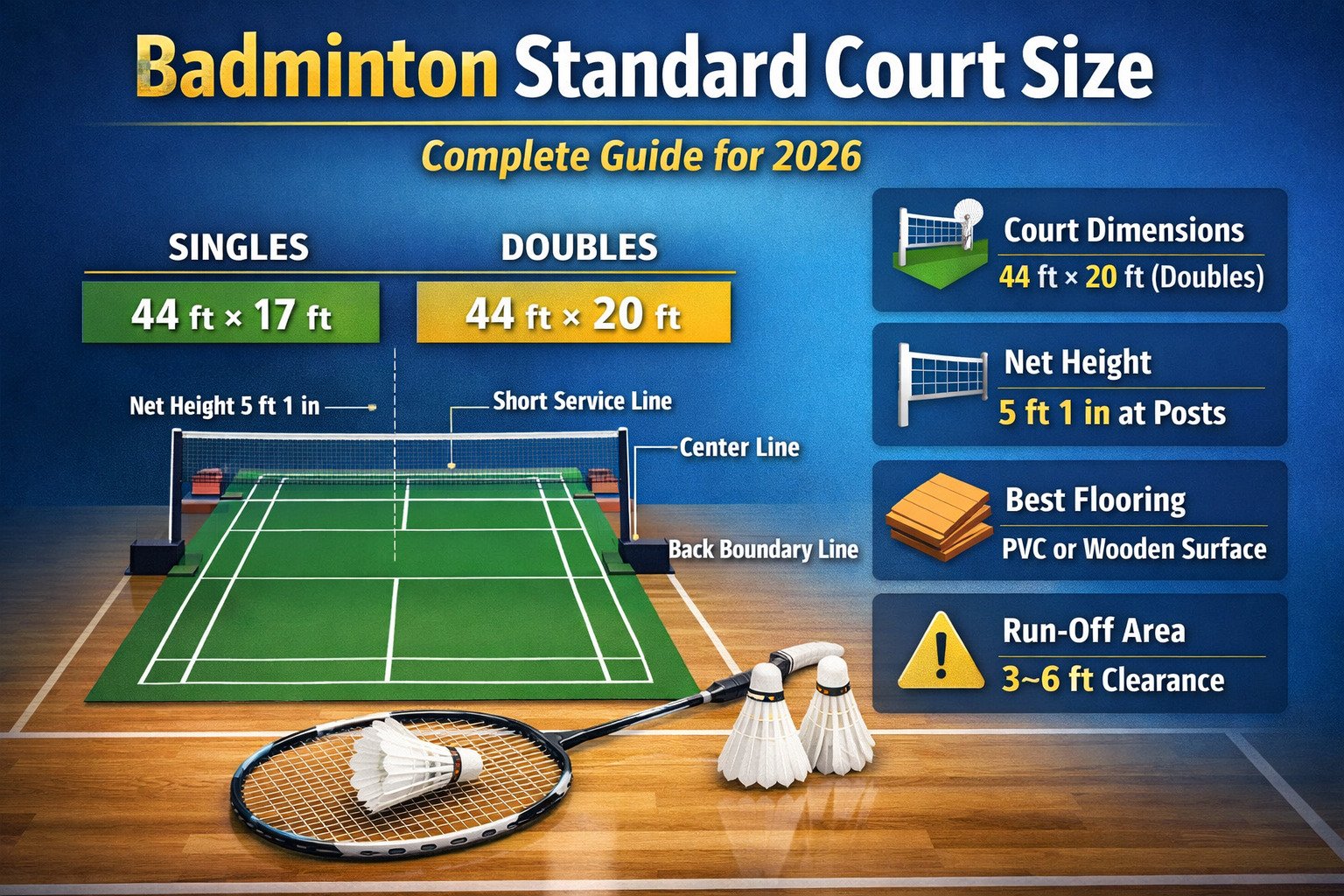
According to BWF guidelines, the standard badminton court size is:
- 44 feet (13.41 meters) long
- 20 feet (6.1 meters) wide for doubles
- 17 feet (5.18 meters) wide for singles
These measurements include the full playing area, excluding run-off zones.
A regulation court is rectangular and divided by a net placed at the center.
Singles vs. Doubles Court Size
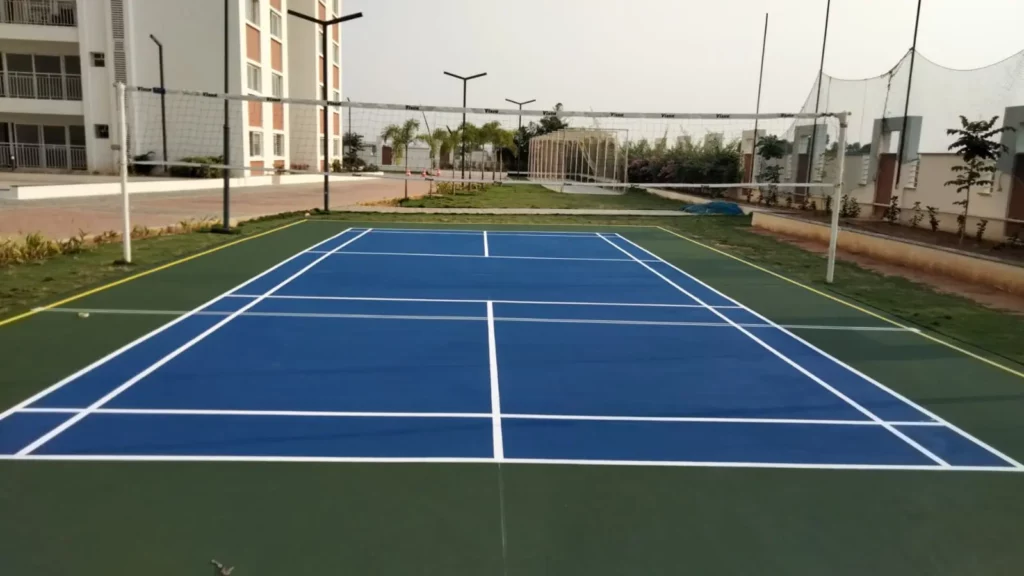
Although the length remains the same for both formats, the width varies.
1. Singles Court Size
- Length: 44 ft
- Width: 17 ft
- Serving Area: Long and narrow
- Side Alleys: Not included
2. Doubles Court Size
- Length: 44 ft
- Width: 20 ft
- Serving Area: Short and wide
- Side Alleys: Used during play
- Back Boundary: Inner back line is used for service only
Badminton Net Height and Width
A standard badminton net must follow BWF dimensions:
- Net Height at Posts: 5 ft 1 inch (1.55 m)
- Net Height at Center: 5 ft (1.524 m)
- Net Width: 20 ft (for doubles court)
- Net Mesh: Fine, uniform mesh not allowing the shuttle to pass through
The net divides the court equally into left and right service courts.
Markings of a Standard Court
A regulation court must include:
- Sidelines for singles & doubles
- Short service line (6 ft 6 in from the net)
- Long service line for doubles
- Center line dividing service boxes
- Back boundary line
All lines should be 40 mm wide and ideally white or yellow.
Space Outside the Court (Run-off Area)
To ensure safety and proper movement, additional clearance is recommended:
- Rear clearance: 4–6 ft
- Side clearance: 3–4 ft
- Ceiling height: Minimum 30 ft recommended for professional play
This extra space prevents player collisions and supports high-level rallies.
Ideal Badminton Court Flooring
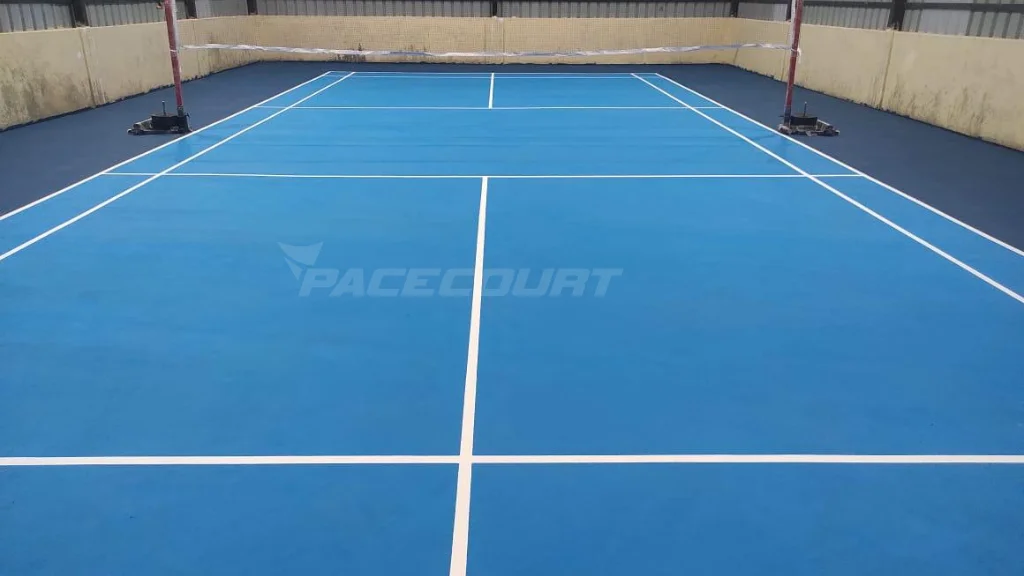
The court surface plays a major role in performance and injury prevention. The most recommended options include:
1. PVC Vinyl Sports Flooring
- Shock-absorbent
- Excellent grip
- Popular for both indoor academies and tournament courts
2. Wooden Flooring With Synthetic Mat
- Enhanced bounce and surface stability
- Used in premium badminton halls
3. Synthetic Acrylic Flooring
- Durable
- Weather-resistant
- Ideal for indoor and semi-indoor courts
Why Standard Court Size Matters
Maintaining proper court measurements ensures:
- Fair and consistent play
- Accurate training conditions
- Tournament compliance
- Improved gameplay and movement
- Reduced risk of injuries
A properly measured court enhances performance for beginners and professionals alike.
Upgrade Your Sports Court Today
Get premium synthetic acrylic flooring designed for durability, grip, and performance.
Get Free ConsultationConclusion
Understanding the standard badminton court size is crucial for building or playing on a regulation-friendly court. Whether it’s for sports academies, schools, residential projects, or tournament facilities, following BWF dimensions ensures consistent quality and professional-level gameplay.
If you need help with badminton court construction, flooring materials, or turnkey installation, feel free to ask—I can create content, layouts, or images to support your project.
Stay Updated with Pacecourt
Discover expert insights, practical tips, and the latest industry updates from Pacecourt, covering sports flooring, tennis and multi-sport court construction, resurfacing, maintenance, court performance, and innovative sports infrastructure solutions.
Powered by Google's Preferred Sources feature