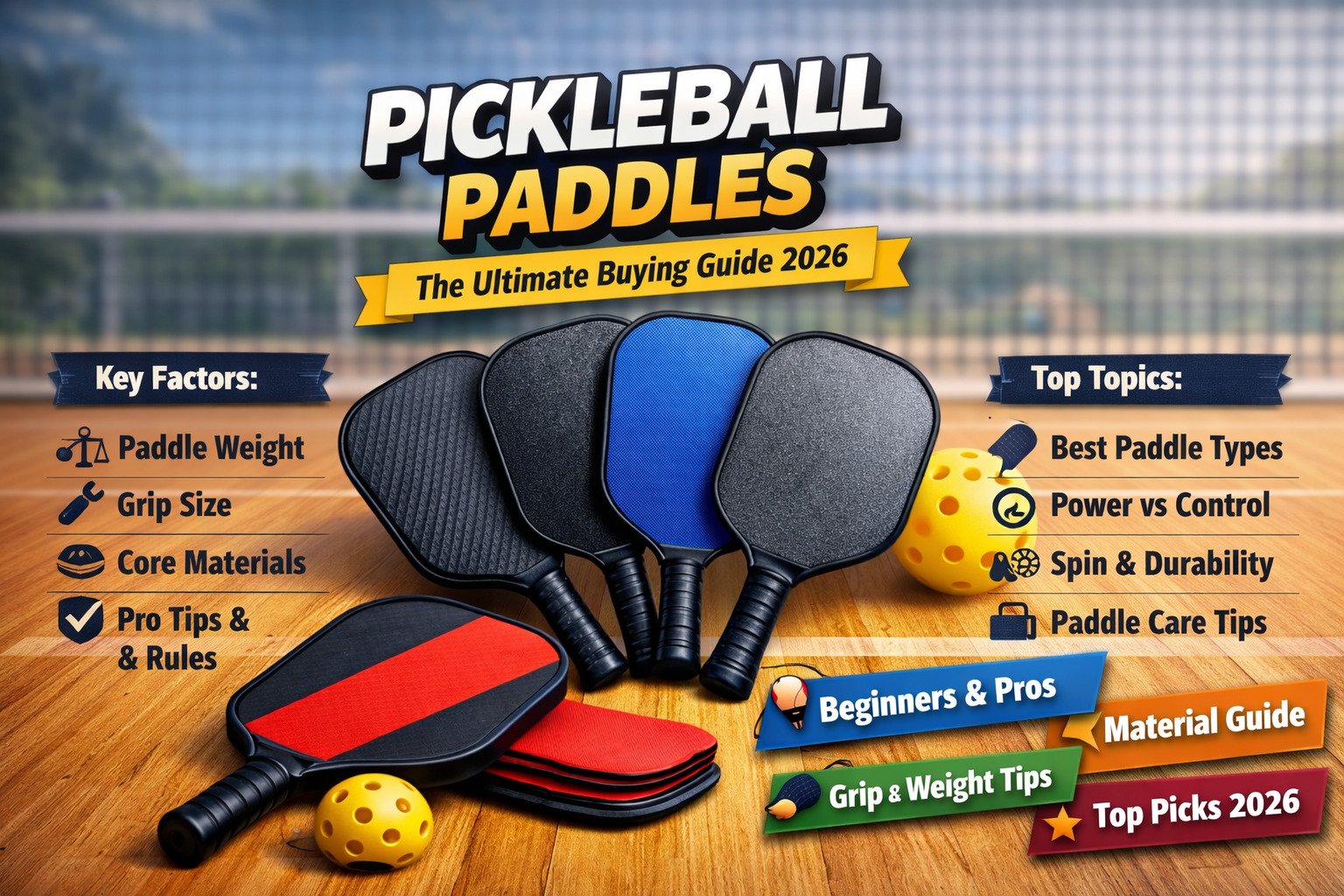
Pickleball is one of the fastest-growing sports worldwide, and choosing the right pickleball paddle can significantly impact your performance, comfort, and control on the court. Whether you’re a beginner, intermediate player, or competitive athlete, understanding paddle materials, weight, grip size, and core technology is essential.
This in-depth guide covers everything you need to know about pickleball paddles, including types, materials, how to choose the best one, and maintenance tips.
Table of contents
- What Is a Pickleball Paddle?
- Standard Pickleball Paddle Dimensions
- Types of Pickleball Paddles
- Pickleball Paddle Materials Explained
- Paddle Core Materials
- Pickleball Paddle Weight Guide
- Grip Size & Handle Length
- How to Choose the Best Pickleball Paddle
- Pickleball Paddle Shape Types
- Best Pickleball Paddles by Player Type
- Pickleball Paddle Price Range
- Pickleball Paddle Maintenance Tips
- Common Mistakes to Avoid When Buying Pickleball Paddles
- Pickleball Paddle vs Tennis Racquet
- Pickleball Paddle Technology Trends (2026)
- Pickleball Paddle Sweet Spot Explained
- Pickleball Paddle Edge Guard vs Edgeless Design
- Indoor vs Outdoor Pickleball Paddles
- Pickleball Paddle Noise Levels
- Paddle Thickness and Control
- How Pickleball Paddle Texture Affects Spin
- Pickleball Paddle Certifications & Rules
- Pickleball Paddle Lifespan & Durability
- How to Test a Pickleball Paddle Before Buying
- Pickleball Paddle Accessories Worth Buying
- Best Pickleball Paddle Setup for Doubles vs Singles
- Environmental Factors Affecting Paddle Performance
- Pickleball Paddle Buying Tips for 2026
- Conclusion: Is Upgrading Your Pickleball Paddle Worth It?
What Is a Pickleball Paddle?
A pickleball paddle is a solid hitting surface used to strike the pickleball. Unlike tennis racquets, pickleball paddles are string-free and made from composite or polymer materials. Modern paddles are engineered to balance power, control, spin, and durability.
Standard Pickleball Paddle Dimensions
According to USA Pickleball regulations:
- Maximum Length + Width: 24 inches (combined)
- Maximum Paddle Length: 17 inches
- Maximum Paddle Width: 7.5 inches
- Maximum Thickness: No limit (varies by model)
Using regulation-approved paddles is mandatory for tournament play.
Types of Pickleball Paddles
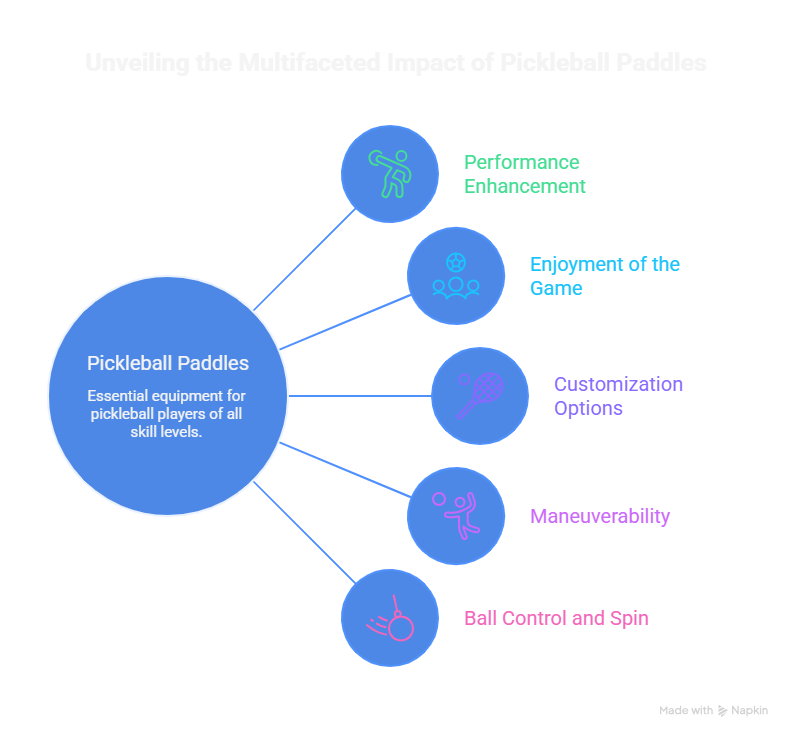
1. Beginner Pickleball Paddles
- Lightweight and forgiving
- Larger sweet spot
- Affordable pricing
Best for: New players learning control and technique
2. Intermediate Pickleball Paddles
- Balanced power and control
- Improved core technology
- Better grip comfort
Best for: Regular players improving shot placement
3. Professional / Advanced Pickleball Paddles
- Precision-engineered surfaces
- High spin generation
- Optimized for competitive play
Best for: Tournament and advanced players
Pickleball Paddle Materials Explained
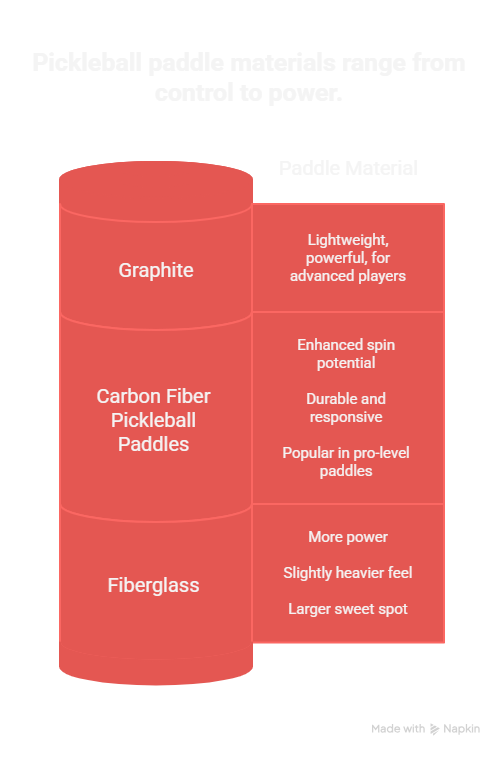
Paddle Face Materials
Graphite Pickleball Paddles
- Lightweight
- Excellent touch and control
- Quick reaction time
Ideal for: Control-focused players
Carbon Fiber Pickleball Paddles
- Enhanced spin potential
- Durable and responsive
- Popular in pro-level paddles
Ideal for: Competitive players
Fiberglass (Composite) Pickleball Paddles
- More power
- Slightly heavier feel
- Larger sweet spot
Ideal for: Power hitters
Paddle Core Materials
| Core Type | Characteristics |
|---|---|
| Polymer Core | Quiet, soft feel, most common |
| Nomex Core | Loud, powerful, very durable |
| Aluminum Core | Lightweight, control-oriented |
Pickleball Paddle Weight Guide
| Weight Category | Paddle Weight |
|---|---|
| Lightweight | 6.5 – 7.5 oz |
| Midweight | 7.6 – 8.4 oz |
| Heavyweight | 8.5+ oz |
- Light paddles: Better control & reduced fatigue
- Heavy paddles: More power but higher arm stress
Grip Size & Handle Length
Grip Size
- Small: 4” – 4.25”
- Medium: 4.25” – 4.5”
- Large: 4.5”+
Tip: Smaller grips allow more wrist action and spin.
Handle Length
Long handles: Two-handed backhands
Upgrade Your Sports Court Today
Get premium synthetic acrylic flooring designed for durability, grip, and performance.
Get Free ConsultationShort handles: Better control
How to Choose the Best Pickleball Paddle
Consider these factors before buying:
- Skill Level
- Playing Style (Power vs Control)
- Weight Comfort
- Grip Size Fit
- Surface Material
- Tournament Approval
Choosing the right paddle improves accuracy, reduces injury risk, and boosts confidence.
Pickleball Paddle Shape Types
Wide-Body Paddles: Larger sweet spot, more forgiveness
Elongated Paddles: Extended reach, more power
Standard Shape: Balanced performance
Best Pickleball Paddles by Player Type
For Beginners
- Polymer core
- Fiberglass face
- Midweight design
For Control Players
- Graphite or carbon fiber face
- Lightweight to midweight
For Power Players
- Fiberglass face
- Mid to heavyweight
Pickleball Paddle Price Range
| Category | Price Range |
|---|---|
| Beginner | $30 – $70 |
| Intermediate | $70 – $120 |
| Professional | $120 – $250+ |
Higher price often reflects better materials and performance consistency.
Pickleball Paddle Maintenance Tips
Clean surface regularly
Avoid extreme heat
Store in paddle cover
Replace grip when worn
Proper care extends paddle lifespan significantly.
Upgrade Your Sports Court Today
Get premium synthetic acrylic flooring designed for durability, grip, and performance.
Get Free ConsultationCommon Mistakes to Avoid When Buying Pickleball Paddles
❌ Choosing wrong grip size
❌ Buying too heavy paddle
❌ Ignoring core material
❌ Not checking tournament approval
Pickleball Paddle vs Tennis Racquet
| Feature | Pickleball Paddle | Tennis Racquet |
|---|---|---|
| Strings | No | Yes |
| Size | Smaller | Larger |
| Court | Pickleball | Tennis |
| Weight | Lighter | Heavier |
Pickleball Paddle Technology Trends (2026)
Raw carbon fiber surfaces
Spin-enhancing textures
Vibration-dampening cores
Edge-less paddle designs
These innovations are shaping modern gameplay.
Pickleball Paddle Sweet Spot Explained
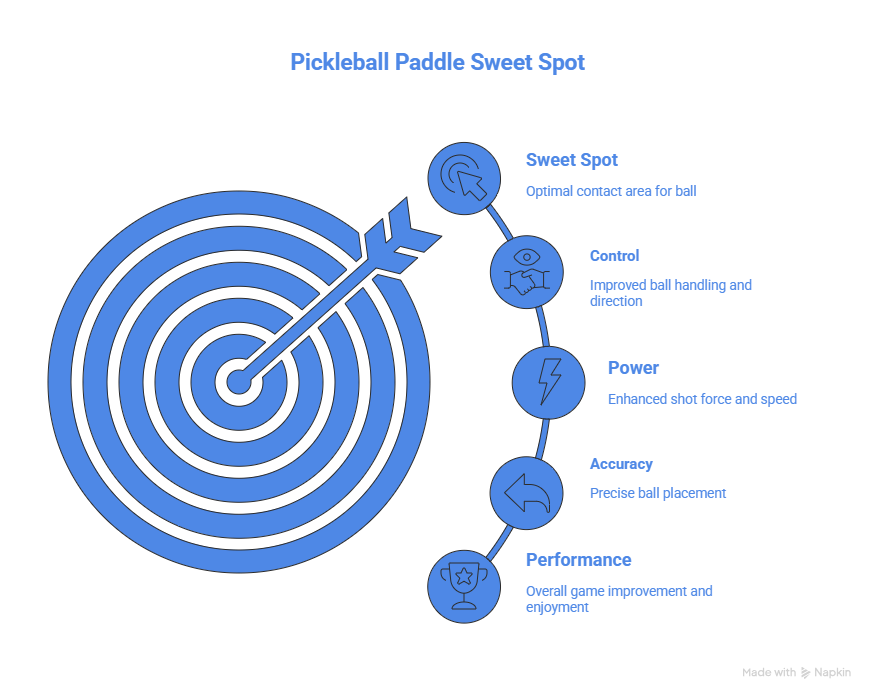
The sweet spot is the area on the paddle face that delivers maximum power with minimal vibration. A larger sweet spot improves forgiveness and consistency, especially on off-center hits.
How Sweet Spot Size Affects Performance
- Larger sweet spot: Better control and fewer mishits
- Smaller sweet spot: Higher precision but less forgiveness
Wide-body paddles typically offer a larger sweet spot, making them ideal for beginners and doubles players.
Pickleball Paddle Edge Guard vs Edgeless Design
Edge Guard Paddles
- Protect paddle from chipping
- Slightly reduce hitting surface
- More durable for outdoor play
Edgeless Paddles
- Larger hitting area
- Better aerodynamics
- Preferred by advanced players
Choosing between the two depends on playing style and durability preference.
Indoor vs Outdoor Pickleball Paddles
While most paddles work for both environments, performance can vary.
Indoor Play
- Softer touch
- Less spin required
- Lighter paddles preferred
Outdoor Play
- Harder balls
- Wind resistance matters
- Durable surfaces recommended
For outdoor play, carbon fiber and fiberglass paddles offer better durability.
Pickleball Paddle Noise Levels
Noise can be an important factor, especially in residential areas and clubs.
Quiet Paddles
- Polymer core
- Thicker construction
- Softer feel
Loud Paddles
- Nomex core
- Thinner face
- More power
Many facilities now prefer quiet-approved paddles.
Paddle Thickness and Control
Paddle thickness typically ranges from 13mm to 20mm.
- Thicker paddles (16–20mm): More control and softer feel
- Thinner paddles (13–15mm): Faster swing and more power
Control-focused players usually prefer thicker paddles.
How Pickleball Paddle Texture Affects Spin
Surface texture plays a major role in spin generation.
- Raw carbon fiber: Maximum spin
- Textured composite: Moderate spin
- Smooth surfaces: Limited spin
Tournament-approved paddles have regulated surface roughness.
Pickleball Paddle Certifications & Rules
Always check certification before tournament play.
- USA Pickleball Approved
- Compliance with size and surface regulations
- Non-reflective, solid face
Using uncertified paddles may result in disqualification.
Pickleball Paddle Lifespan & Durability
Average Paddle Lifespan
- Casual players: 2+ years
- Regular players: 12–18 months
- Competitive players: 6–12 months
Carbon fiber paddles tend to last longer with consistent performance.
How to Test a Pickleball Paddle Before Buying
If possible:
- Try demo paddles
- Check grip comfort
- Test dink shots and drives
- Evaluate vibration and control
A paddle that feels good in hand often performs better.
Pickleball Paddle Accessories Worth Buying
Overgrips for comfort
Paddle covers for protection
Edge guard tape
Cleaning erasers
Accessories help extend paddle life and maintain performance.
Best Pickleball Paddle Setup for Doubles vs Singles
Doubles Play
- Control-oriented paddle
- Larger sweet spot
- Softer feel
Singles Play
- Power-focused paddle
- Elongated shape
- Faster swing speed
Choosing based on play format improves effectiveness.
Environmental Factors Affecting Paddle Performance
Heat: Can soften paddle materials
Cold: Reduces responsiveness
Humidity: Affects grip quality
Storing paddles in temperature-controlled environments is recommended.
Pickleball Paddle Buying Tips for 2026
Choose raw carbon fiber for spin
Avoid overly heavy paddles
Match grip size carefully
Prioritize comfort and control
Always check certification
Conclusion: Is Upgrading Your Pickleball Paddle Worth It?
As technology evolves, modern pickleball paddles offer better control, spin, and durability than older models. Upgrading your paddle can improve consistency, reduce fatigue, and enhance overall enjoyment of the game.
Stay Updated with Pacecourt
Discover expert insights, practical tips, and the latest industry updates from Pacecourt, covering sports flooring, tennis and multi-sport court construction, resurfacing, maintenance, court performance, and innovative sports infrastructure solutions.
Powered by Google's Preferred Sources feature