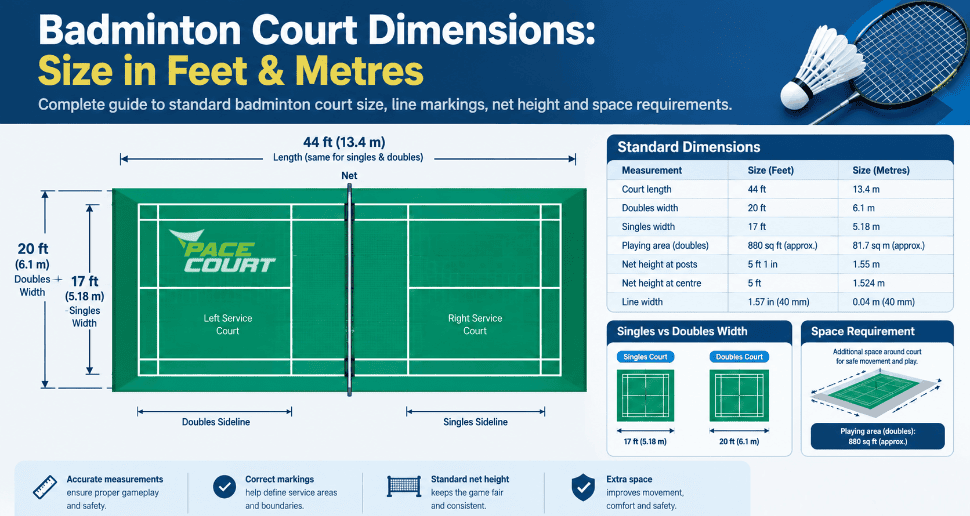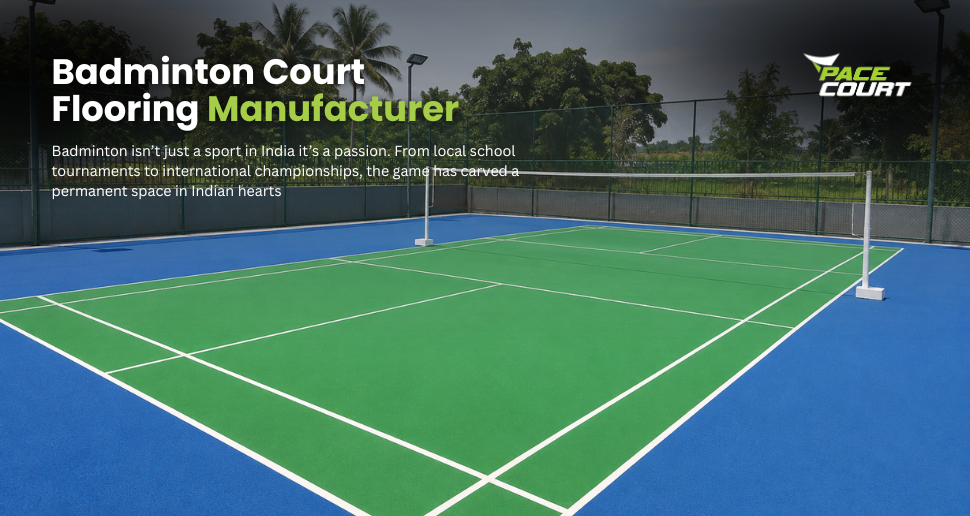
Badminton isn’t just a sport in India it’s a passion. From local school tournaments to international championships, the game has carved a permanent space in Indian hearts. But here’s something many people overlook: the foundation of every great badminton match isn’t just the players it’s the floor beneath their feet. That’s where a trusted badminton court flooring manufacturer India plays a crucial role, ensuring the surface delivers safety, performance, and durability for every level of play.
A professionally designed badminton court flooring system plays a critical role in performance, safety, and durability. Whether it’s a school building its first sports facility or a stadium preparing for national tournaments, selecting the right badminton court flooring manufacturer in India makes all the difference.
Think about it. Players jump, lunge, dive, and sprint across the court. Without proper flooring, injuries become common, movement slows down, and performance suffers. A good badminton floor absorbs shock, offers anti-slip properties, ensures consistent bounce, and supports long playing hours without fatigue.
India has seen a surge in demand for high-quality sports infrastructure over the past decade. With government initiatives promoting sports and private academies mushrooming across cities, reliable badminton court flooring manufacturers are more important than ever.
But what exactly should you look for? Is synthetic flooring better than wooden? How much does it cost? And which manufacturers truly deliver quality? Let’s break it down step by step.
Why Choosing the Right Badminton Court Flooring Manufacturer Matters
Choosing a badminton court flooring manufacturer in India isn’t like buying regular tiles for your home. This is a technical decision that directly affects athlete safety and long-term investment value.
Imagine building a court with low-quality material. Within a year, the surface starts peeling. Players complain about slippery patches. Maintenance costs rise. Eventually, you’re forced to replace the entire floor. Sounds expensive, right? That’s because it is.
A trusted manufacturer ensures:
- Certified raw materials
- Compliance with BWF standards
- Proper shock absorption technology
- Long product lifespan
- Professional installation services
In India, weather conditions also play a big role. Humidity in coastal areas, extreme heat in northern regions, and dust accumulation can impact flooring performance. Experienced Indian manufacturers understand these conditions and design flooring accordingly.
Moreover, established companies offer end-to-end services from base preparation to final line marking. This reduces coordination hassles and ensures consistent quality.
Here’s the truth: the cheapest option is rarely the smartest option. Instead, focus on long-term durability, player comfort, and manufacturer credibility.
After all, a badminton court isn’t just flooring it’s an investment in performance.
Types of Badminton Court Flooring Available in India
Acrylic Flooring
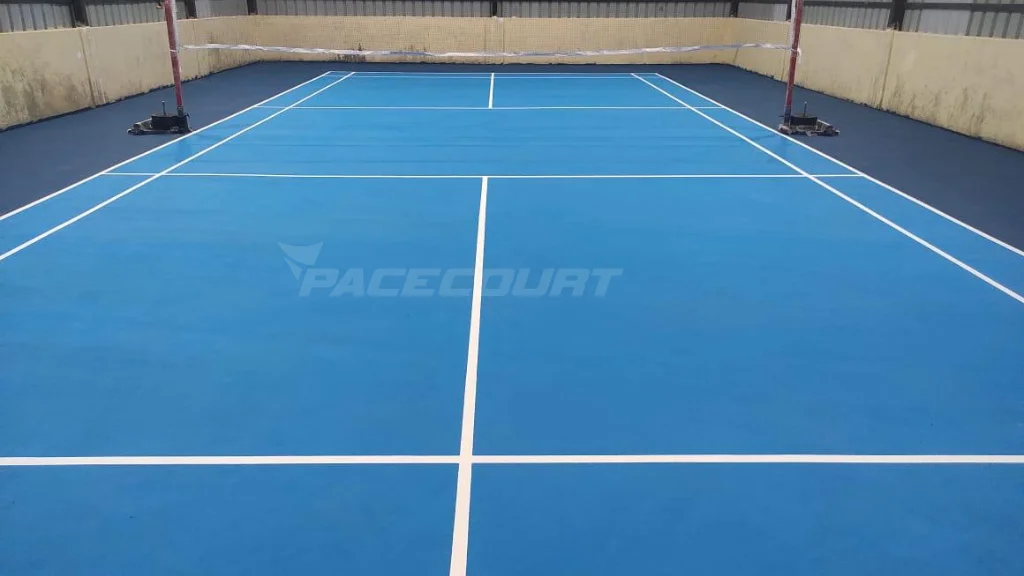
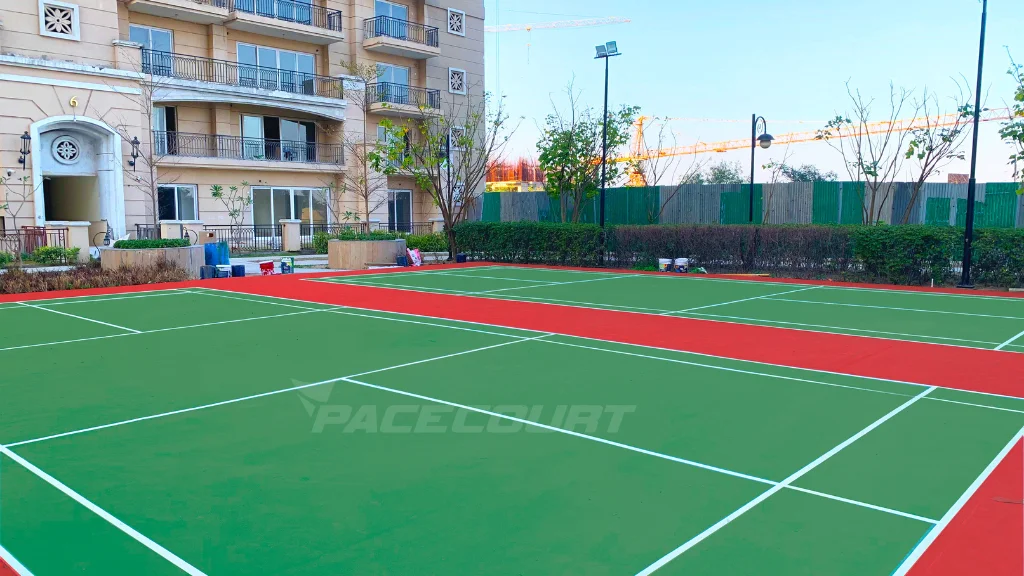
Acrylic flooring is more common in outdoor sports courts but can also be used in certain badminton setups. It’s durable, weather-resistant, and offers decent grip. However, compared to PVC or wood, acrylic surfaces are harder and provide less cushioning. That makes them less ideal for professional indoor badminton courts. Still, for budget-conscious institutions looking to build multi-purpose courts, acrylic can be a practical choice.
Synthetic PVC Flooring
Synthetic PVC flooring is currently the most popular choice among badminton court flooring manufacturers in India. Why? Because it strikes a perfect balance between performance, durability, and cost.
PVC vinyl sports flooring is designed with multiple layers. The top layer provides anti-skid properties, while the foam or cushion layer beneath absorbs shock. This reduces pressure on knees and ankles, which is crucial during long training sessions.
One of the biggest advantages of PVC flooring is consistency. Players experience uniform shuttle bounce and smooth footwork. It’s especially suitable for indoor badminton courts in schools, academies, and stadiums.
Another benefit? Easy maintenance. Unlike wooden floors that require polishing, PVC courts are relatively low-maintenance. Just regular cleaning keeps them in top shape.
Indian manufacturers now produce BWF-approved PVC flooring, making it suitable even for professional tournaments.
If you’re looking for a cost-effective yet high-performance solution, synthetic PVC flooring is often the go-to choice.
Wooden Flooring
There’s something classic about wooden badminton courts. Many international stadiums still prefer hardwood maple flooring because of its natural feel and excellent shock absorption.
Wooden flooring offers superior resilience and player comfort. The slight elasticity reduces fatigue and provides controlled bounce. However, it requires proper sub-floor systems and regular maintenance.
In India, wooden flooring is usually installed in premium sports complexes and multi-purpose indoor stadiums. It’s more expensive than synthetic options but delivers unmatched aesthetics and durability when maintained properly.
However, humidity control is critical. Without proper ventilation and climate control, wood can expand or contract. This is why only experienced badminton court flooring manufacturers in India should handle such projects.
Think of wooden flooring as a luxury sedan—high performance, but requires care.
Polyurethane (PU) Flooring
Polyurethane flooring is known for its seamless finish and high durability. It’s poured on-site, creating a smooth and joint-free surface.
PU flooring offers excellent elasticity and shock absorption. It’s commonly used in multi-sport indoor arenas across India.
Though slightly expensive, it’s long-lasting and requires minimal maintenance.
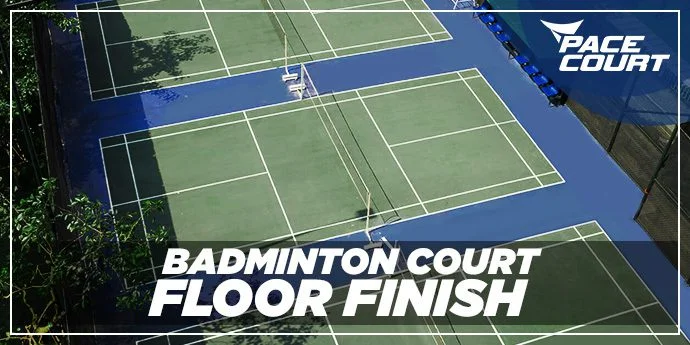
Key Features of High-Quality Badminton Court Flooring
When you walk onto a professional badminton court, you can feel the difference immediately. The grip feels right. Your steps are confident. Your knees don’t scream after an hour of play. That’s not accidental—it’s engineering. A high-quality badminton court flooring system is carefully designed to balance performance, safety, and durability.
Upgrade Your Sports Court Today
Get premium synthetic acrylic flooring designed for durability, grip, and performance.
Get Free ConsultationFirst, let’s talk about shock absorption. This is arguably the most critical feature. Players constantly jump, lunge, and change direction. Without proper cushioning, the impact travels straight to the joints. Over time, this leads to injuries. Premium flooring from leading badminton court flooring manufacturers in India includes layered cushioning systems that reduce stress on knees and ankles.
Next is anti-slip performance. Too slippery? Players lose balance. Too sticky? Movement becomes restricted. The right flooring offers controlled friction—just enough grip to prevent slipping but smooth enough for quick footwork.
Another key feature is consistent shuttle bounce. Uneven surfaces affect gameplay quality. Professional-grade floors ensure uniform bounce across the entire court.
Durability also matters. A good floor should withstand:
- High foot traffic
- Daily training sessions
- Equipment movement
- Humidity and temperature variations
Finally, easy maintenance is a big plus. Quality flooring resists stains, dust buildup, and wear marks. Because let’s be honest—nobody wants to shut down a court every month for repairs.
In short, the best flooring feels invisible. It supports the game without drawing attention to itself.
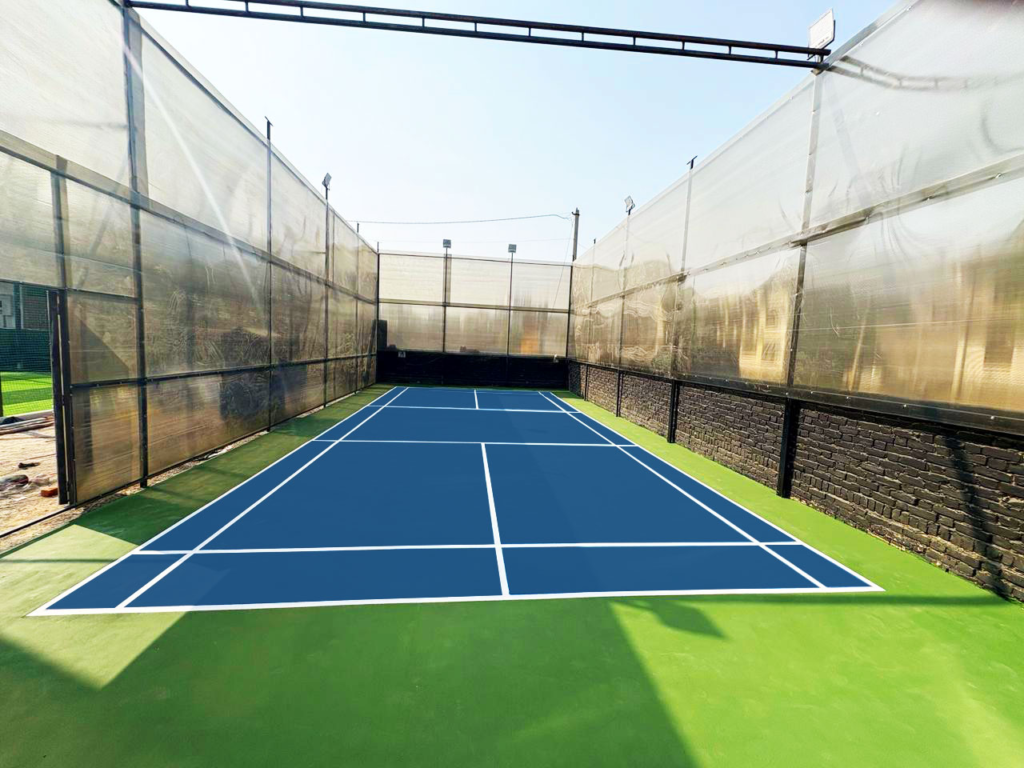
BWF Standards and Certifications for Badminton Courts
If you’re building a serious badminton facility, you cannot ignore BWF (Badminton World Federation) standards. These guidelines define what qualifies as a professional-grade court—especially for tournaments.
Leading badminton court flooring manufacturers in India design products that comply with international benchmarks. But what exactly do these standards cover?
- First, surface friction levels. The court must provide controlled grip—not too slippery, not too sticky.
- Second, shock absorption rating. BWF-approved flooring must reduce impact forces effectively to protect players.
- Third, vertical deformation. This measures how much the floor compresses under pressure. Too soft, and performance suffers. Too hard, and injuries increase.
- Fourth, ball rebound consistency. Even though badminton uses a shuttlecock, bounce uniformity still matters for movement rhythm and court feel.
Certified flooring typically undergoes laboratory testing for:
- Slip resistance
- Force reduction
- Energy restitution
- Durability under load
Why does this matter? Because certification ensures your court isn’t just visually appealing—it’s technically sound. For schools and academies aiming to host district or national-level competitions, working with a BWF-compliant badminton court flooring manufacturer in India is a smart move. It adds credibility and long-term value to the facility.
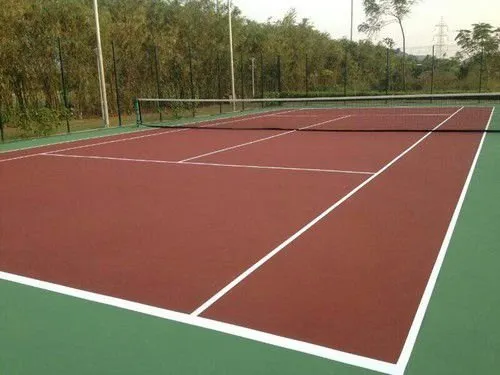
Benefits of Synthetic Badminton Court Flooring
Acrylic Flooring has become the backbone of modern badminton infrastructure in India. And there’s a reason for that it simply works. One of the biggest advantages is player safety. The layered construction absorbs shock efficiently, reducing injury risks. For young athletes who train daily, this cushioning makes a noticeable difference.
Synthetic flooring is also:
- Available in multiple thickness options
- Resistant to moisture
- Easy to install
- Suitable for portable or permanent setups
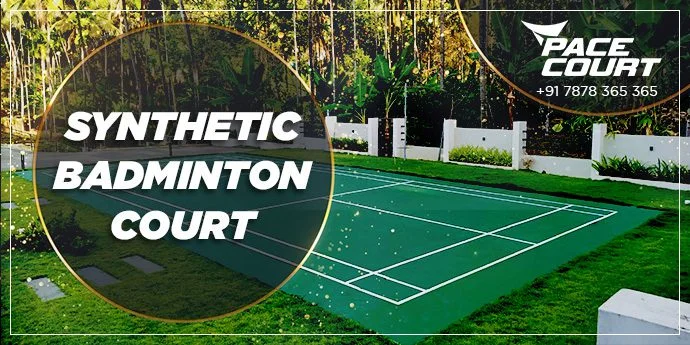
Indian manufacturers now produce export-quality synthetic flooring, ensuring international standards at competitive prices. And let’s not forget customization. Want specific colors? Logo printing? Tournament line markings? All possible. For most indoor facilities across India, synthetic badminton flooring offers the perfect balance between performance and practicality.
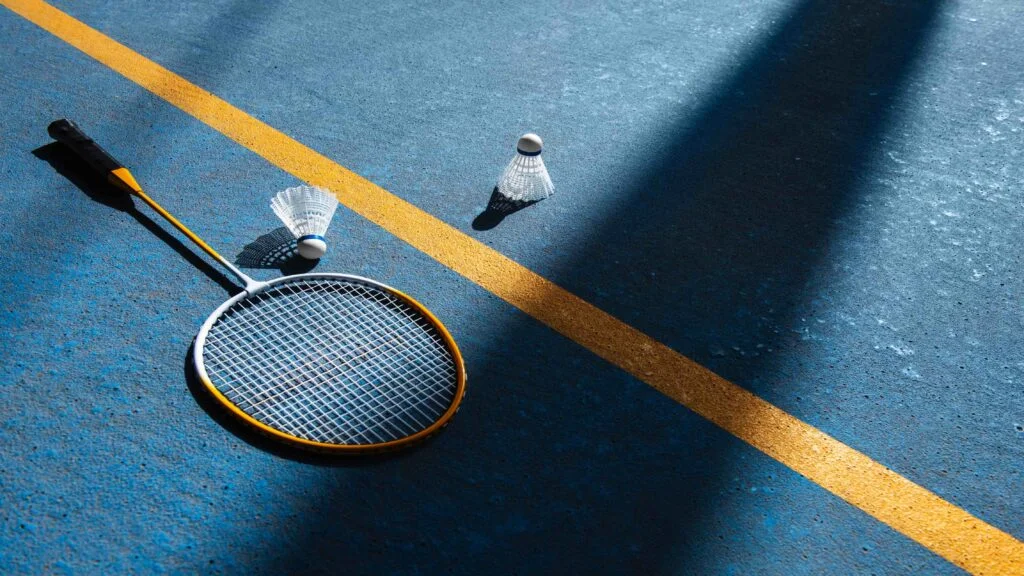
Indoor vs Outdoor Badminton Court Flooring
Badminton is primarily an indoor sport, but that doesn’t mean outdoor courts don’t exist. The choice between indoor and outdoor flooring significantly impacts material selection.
Indoor badminton courts typically use:
- Acrylic Flooring
- Wooden flooring
- PU flooring
These surfaces focus on shock absorption, consistent grip, and smooth shuttle movement.
Outdoor courts, on the other hand, must handle:
- Rain
- UV exposure
- Dust
- Temperature fluctuations
Acrylic flooring is often used for outdoor setups because of its weather resistance. However, it offers less cushioning compared to indoor surfaces.
In India’s diverse climate, indoor courts are preferred for professional training. Coastal humidity and extreme summers can damage inferior materials quickly. That’s why experienced badminton court flooring manufacturers in India recommend indoor installations for serious play.
If you’re building a community sports area with budget constraints, outdoor acrylic may work. But for competitive performance? Indoor synthetic or wooden flooring is the gold standard.
The decision ultimately depends on budget, usage frequency, and performance expectations.
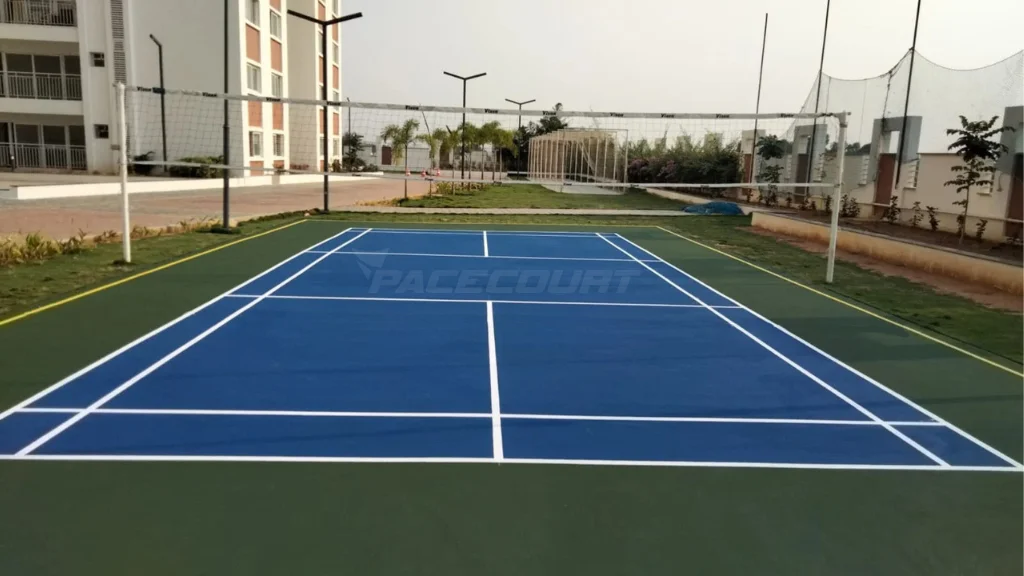
Factors to Consider When Selecting a Badminton Court Flooring Manufacturer in India
Choosing the right manufacturer is like choosing a foundation for your house. Get it wrong, and everything built on top suffers.
Experience and Reputation
Start by checking how long the company has been operating. Established badminton court flooring manufacturers in India often have completed projects in schools, academies, and stadiums. Look for client testimonials and project portfolios.
Experience matters because flooring installation isn’t just about rolling out sheets—it involves subfloor preparation, leveling, moisture testing, and proper finishing.
Material Quality
Not all PVC or wood is created equal. Ask about raw material sourcing, thickness, wear layer quality, and certification standards. Cheap materials might save money upfront but cost more later in repairs.
Installation Expertise
Even the best flooring fails if installed poorly. Professional installation teams ensure:
- Proper leveling
- Correct adhesive application
- Accurate line marking
- Seamless finishing
After-Sales Support
Maintenance guidance and warranty support are crucial. Reliable manufacturers offer warranties ranging from 5 to 10 years depending on material type.
In short, don’t just compare price quotes. Compare value.
Manufacturing Process of Badminton Court Flooring
Have you ever wondered how badminton flooring is actually made? It’s not just a plastic sheet—it’s a carefully engineered product.
For synthetic PVC flooring, the process typically involves:
- Raw Material Mixing – PVC resins, stabilizers, and additives are blended.
- Calendering or Extrusion – The material is formed into sheets.
- Foam Layer Integration – Cushion backing is added for shock absorption.
- Surface Texturing – Anti-skid patterns are embossed.
- UV Coating Application – Adds durability and stain resistance.
- Quality Testing – Slip resistance and shock absorption tests are conducted.
Indian badminton court flooring manufacturers have upgraded machinery to match global production standards. For wooden flooring, hardwood planks are kiln-dried, treated, and precision-cut before installation over a shock-absorbing substructure. Quality control is crucial at every stage. Even small inconsistencies can affect performance. The result? A surface engineered to handle thousands of footsteps daily.
Cost of Badminton Court Flooring in India
Let’s talk numbers. Cost is often the first question people ask.
The price of badminton court flooring in India depends on:
- Material type
- Thickness
- Subfloor preparation
- Installation complexity
- Location
On average:
| Flooring Type | Approximate Cost (Per Sq Ft) |
|---|---|
| Synthetic PVC | ₹180 – ₹350 |
| Wooden Flooring | ₹350 – ₹700 |
| PU Flooring | ₹250 – ₹500 |
| Acrylic (Outdoor) | ₹45 – ₹150 |
Keep in mind, these are general estimates. Premium imported materials or BWF-certified systems may cost more. But remember this flooring is a long-term investment. A high-quality installation can last 8–15 years with proper maintenance. Cutting corners might save money today, but future repairs could double your expenses.
Installation Process: Step-by-Step Guide
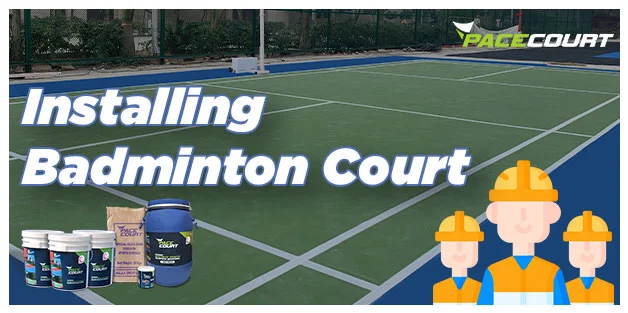
Installing a badminton court floor isn’t like laying tiles in a living room. It’s more like assembling a performance machine. Every layer, every measurement, every adhesive application matters. One small mistake, and the entire playing experience can suffer.
Here’s how professional badminton court flooring manufacturers in India typically handle installation:
1. Site Inspection and Base Preparation
Everything begins with evaluating the subfloor. Is it concrete? Is it level? Is there moisture? Any unevenness is corrected first. Grinding, leveling compounds, and moisture barriers are applied where necessary. Without a perfectly prepared base, even premium flooring won’t perform properly.
2. Surface Cleaning and Drying
Dust, oil, and debris are removed completely. A clean surface ensures strong adhesive bonding. Moisture testing is often conducted to prevent future bubbling or warping.
3. Underlayer Installation (If Required)
For wooden or high-performance PVC systems, a cushioning or shock-absorbing underlayer is installed. This is where much of the comfort and safety comes from.
4. Flooring Roll Placement
PVC sheets are carefully rolled out and aligned. Seams are heat-welded to create a seamless finish. Precision is critical here—any gap can affect durability.
5. Line Marking
Court lines are marked according to BWF specifications. Accuracy is non-negotiable. Even a few millimeters off can make a difference in competitive settings.
6. Final Inspection
The surface is checked for bubbles, loose edges, or uneven sections. Only after a thorough inspection is the court handed over.
The entire process usually takes several days, depending on court size and flooring type. Rushing this stage is a mistake. Proper installation ensures the floor performs flawlessly for years.
Maintenance Tips for Long-Lasting Performance
A badminton court floor is like a car it performs best when maintained regularly. The good news? Modern flooring systems require far less maintenance than older materials.
For Acrylic Flooring, routine care includes:
- Daily dry mopping to remove dust
- Weekly damp cleaning with mild solution
- Avoiding harsh chemicals
- Using non-marking sports shoes only
Dust is a silent enemy. It reduces grip and increases slip risk. Especially in Indian cities where dust accumulation is common, regular cleaning is essential.
For wooden flooring, maintenance is more detailed. It may include periodic polishing, humidity control, and occasional refinishing. Dehumidifiers are often recommended in coastal areas.
Here’s a simple maintenance checklist:
- ✔ Inspect seams every few months
- ✔ Check for surface scratches
- ✔ Ensure no water stagnation
- ✔ Avoid dragging heavy equipment
Reliable badminton court flooring manufacturers in India usually provide maintenance guidelines and sometimes annual inspection services.
Proper care can extend flooring life by several years. Ignore it, and even the best floor will wear out faster than expected.
Top Applications: Schools, Academies, Stadiums, and Residential Courts
Badminton court flooring isn’t limited to massive stadiums. Its demand spans multiple sectors across India.
Schools and Colleges
Educational institutions are increasingly investing in sports infrastructure. A high-quality court encourages student participation and builds competitive spirit. Synthetic flooring is commonly chosen due to its durability and cost-effectiveness.
Sports Academies
Professional academies require BWF-compliant surfaces for advanced training. Player safety and performance consistency are top priorities. Many academies work directly with experienced badminton court flooring manufacturers in India for customized solutions.
Indoor Stadiums
Large stadiums often opt for wooden or premium PVC flooring. These venues may host district, national, or even international tournaments. Quality standards here are extremely high.
Residential and Community Courts
With badminton gaining popularity, many residential societies and sports clubs now install indoor courts. Compact synthetic systems work well in such setups.
No matter the scale, the objective remains the same—create a safe, durable, and performance-oriented playing surface.
Customization Options Offered by Indian Manufacturers
Gone are the days when badminton courts came in just one color and one standard design. Today, customization plays a big role in sports infrastructure.
Leading badminton court flooring manufacturers in India offer:
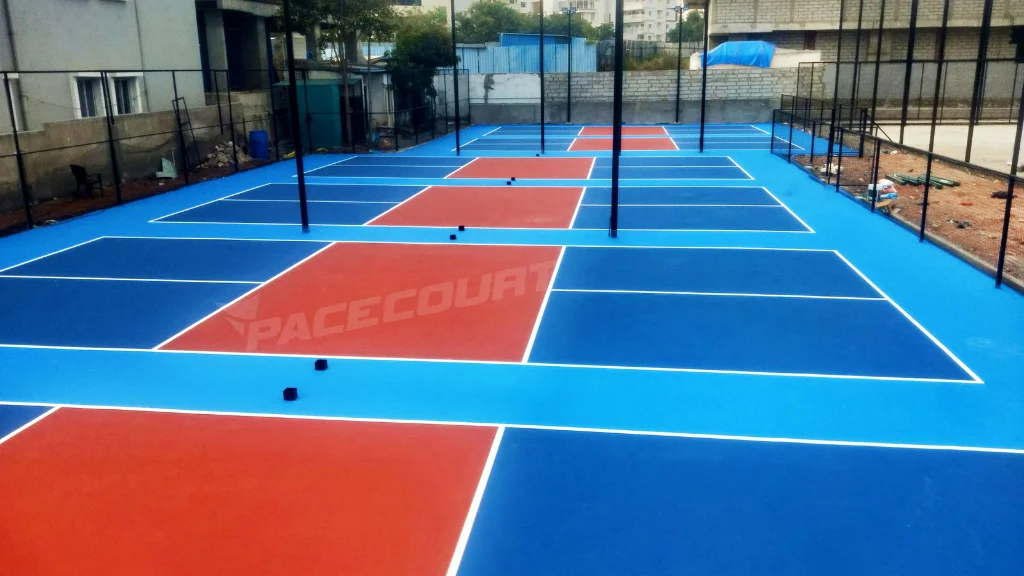
- Multiple color combinations
- Custom thickness options
- Logo printing (academy or sponsor branding)
- Portable flooring solutions
- Multi-sport court markings
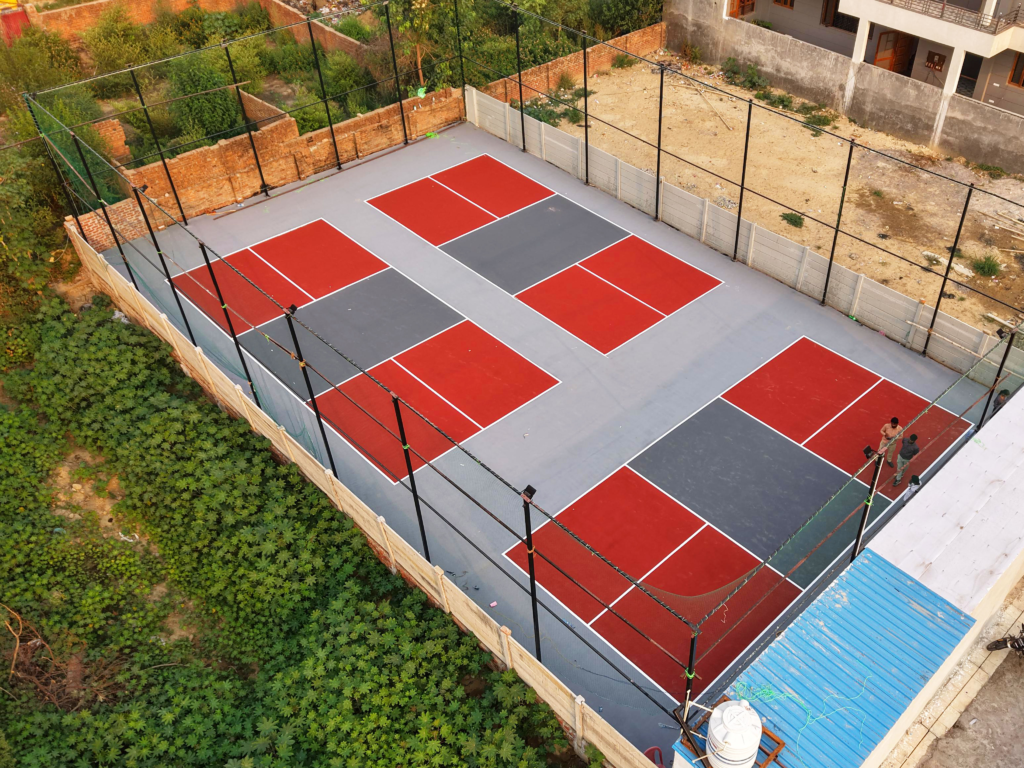
Color choice isn’t just aesthetic—it impacts visibility. Green and blue are commonly used because they provide contrast with the shuttlecock.
Branding is another growing trend. Academies print logos at the center court for a professional look. It enhances identity and creates a tournament-ready atmosphere.
Some manufacturers even offer modular or portable flooring systems. These are ideal for temporary tournament setups or multi-purpose halls.
Customization ensures the court aligns with your vision—whether that’s professional-grade competition or a vibrant school sports facility.
How to Choose the Best Badminton Court Flooring Manufacturer in India
Let’s bring everything together. With so many options available, how do you make the right choice?
Start by asking these questions:
- Does the manufacturer offer BWF-certified flooring?
- What is the warranty period?
- Have they completed similar projects?
- Do they provide installation and after-sales support?
- Are materials manufactured locally or imported?
Request product samples if possible. Feel the surface. Check thickness. Ask about shock absorption ratings.
Transparency is key. Reliable manufacturers clearly explain material specifications, pricing breakdown, and maintenance requirements.
Avoid making decisions based solely on the lowest quote. Instead, compare:
- Product quality
- Installation expertise
- Client reviews
- Long-term durability
A badminton court floor is not something you replace every year. Choose wisely, and it will serve players for a decade or more.
Future Trends in Badminton Court Flooring Industry
The sports infrastructure industry in India is evolving rapidly. With increasing international exposure and rising fitness awareness, the demand for premium facilities continues to grow.
Here are some emerging trends:
Eco-Friendly Materials
Manufacturers are developing recyclable and low-VOC flooring materials. Sustainability is becoming a priority.
Advanced Shock Absorption Technology
New multi-layer systems provide enhanced joint protection while maintaining performance consistency.
Smart Sports Flooring
Some global markets are experimenting with sensor-based flooring to track movement and performance. India may soon adopt similar innovations.
Portable Professional Courts
Lightweight, easy-install modular systems are gaining popularity for temporary tournaments.
The future looks promising. As India continues producing world-class badminton players, infrastructure standards will only rise.
Conclusion
Building a badminton court is more than just marking lines on a floor. It’s about creating a foundation where talent grows, champions are shaped, and passion thrives.
Choosing the right badminton court flooring manufacturer in India ensures safety, durability, and performance excellence. Whether you opt for synthetic PVC, wooden, PU, or acrylic flooring, the key lies in quality material and professional installation.
Think long-term. Focus on player comfort. Prioritize certification and reputation.
A well-built badminton court doesn’t just support a game it supports dreams.
FAQ
The best badminton court flooring should provide excellent shock absorption, non-slip performance, durability, and player comfort. PVC, synthetic, and specialized sports flooring systems are commonly used for professional and recreational courts.
The cost depends on the flooring type, court size, subfloor condition, installation method, and customization requirements. A professional badminton court flooring manufacturer can provide an accurate quotation based on your project.
Professional sports flooring helps reduce impact on players’ knees and joints, improves grip and movement, minimizes slipping, and provides consistent playing performance.
Yes. Specialized badminton flooring is particularly suitable for indoor courts because it offers controlled traction, shock absorption, and a consistent playing surface.
With proper installation and regular maintenance, high-quality badminton court flooring can provide reliable performance for many years. Its lifespan depends on usage, flooring material, maintenance, and environmental conditions.
Yes. Many flooring systems can be customized with different colors, court markings, surface finishes, and branding options to match the requirements of sports academies, schools, clubs, gyms, and professional facilities.
Regular sweeping or vacuuming, prompt cleaning of spills, and using manufacturer-recommended cleaning products can help maintain the flooring. Avoid harsh chemicals and excessive water that may damage the surface.
Choose a manufacturer with experience in sports flooring, quality materials, professional installation, proper technical support, and a proven track record of completing badminton court projects.
Stay Updated with Pacecourt
Discover expert insights, practical tips, and the latest industry updates from Pacecourt, covering sports flooring, tennis and multi-sport court construction, resurfacing, maintenance, court performance, and innovative sports infrastructure solutions.
Powered by Google's Preferred Sources feature