Home > Tennis Court Material > Tennis Court Material: Types, Cost & Best Surface Guide

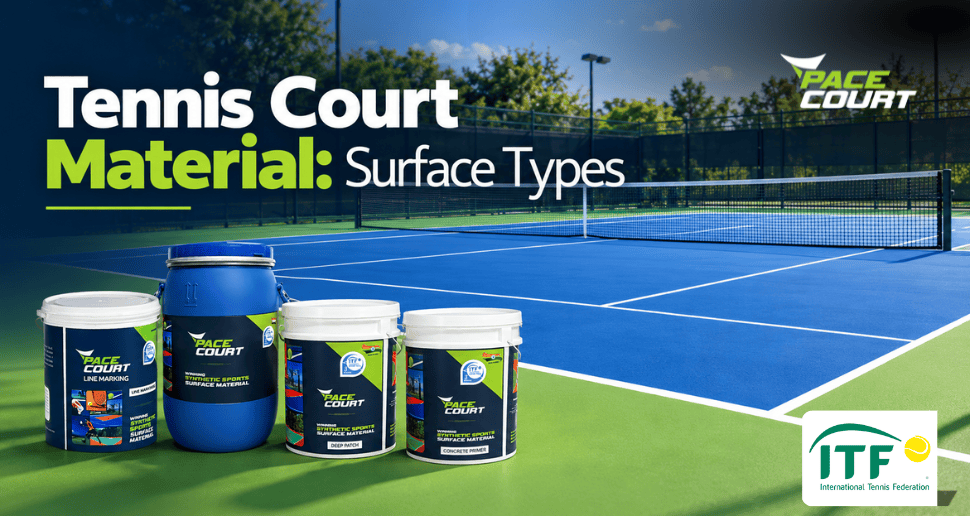
Tennis Court Material: Types, Cost & Best Surface Guide

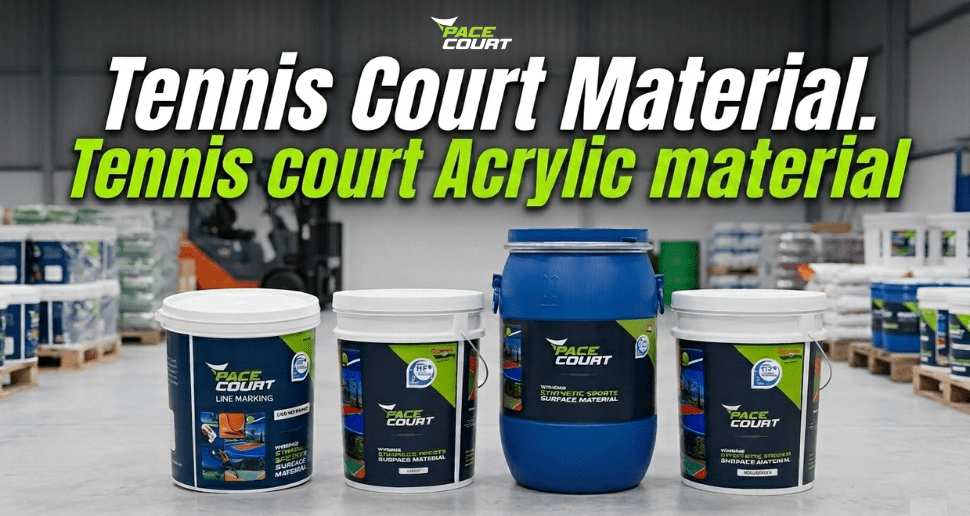
Tennis court material

Every rally you play, every sprint across the baseline, every hard landing after a jump – your court material decides how safe, fast, and durable that experience is.

Choosing the right tennis court material is not just a construction decision – it is a performance, safety, and investment decision. The surface under your feet controls ball bounce speed, player joint stress, drainage efficiency, and long-term maintenance cost. Whether you are building a private court, a school facility, a sports academy, or a club complex in India, understanding tennis court material deeply will save you time, money, and frustration.

Upgrade Your Sports Court Today

Get premium synthetic acrylic flooring designed for durability, grip, and performance.

Get Free Consultation

What Is Tennis Court Material?

Tennis court material refers to the surface layer and base system used to construct a tennis court. It includes the playing surface (acrylic, clay, grass, synthetic turf, polyurethane), the base layer (concrete or asphalt), cushion coats, and line markings. The right material combination determines court speed, player safety, durability, and maintenance needs.

Why Tennis Court Material Matters More Than You Think

Most people focus on the court’s look or fence design. Experienced court builders and facility managers focus on the material system.

The material you choose directly affects four critical outcomes:

  • Ball bounce consistency – Hard acrylic surfaces produce a predictable medium bounce. Clay slows the ball down. Grass creates a fast, low bounce.
  • Player safety – Cushioned acrylic and polyurethane systems absorb shock and reduce knee and ankle injuries during play.
  • Weather resistance – Indian summers exceed 45°C in many regions. Monsoon rains stress court surfaces heavily. Material selection must account for UV degradation and water drainage.
  • Total lifecycle cost – A cheaper material installed poorly can cost more over five years than a premium system installed correctly.

India’s sports infrastructure has grown significantly. According to the Sports Authority of India (SAI), over 68% of registered tennis facilities across India now use hard acrylic or polymeric surfaces as of 2026.

Major Types of Tennis Court Material in India

1. Acrylic Tennis Court Material

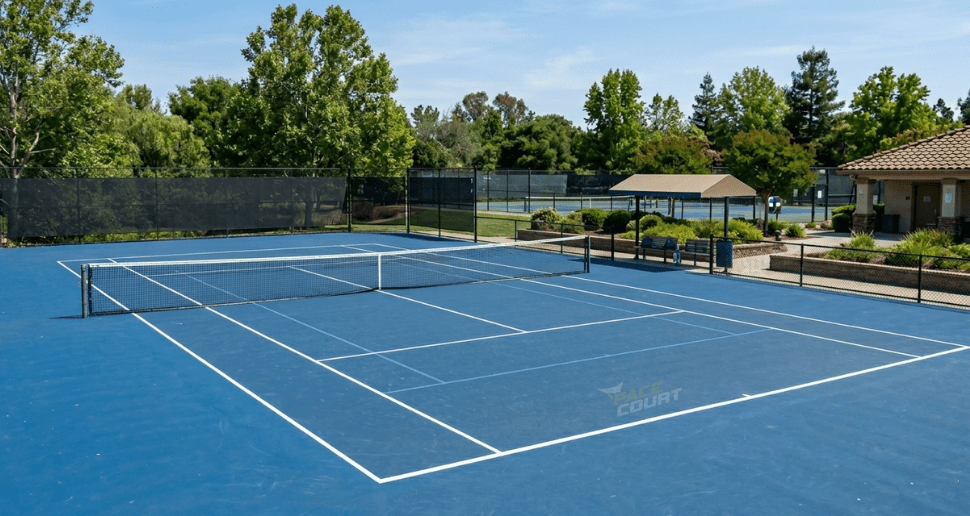
Acrylic hard courts are the most widely installed tennis court surface in India today. They consist of a concrete or asphalt base topped with multiple layers of acrylic coatings.

Acrylic systems offer a medium-pace game with consistent ball bounce. They handle India’s heat, humidity, and monsoon conditions better than any other natural surface. The AITA (All India Tennis Association) revised its court construction standards in 2025 to mandate shock-absorbing underlay beneath all new hard court installations, significantly reducing player injury risk across club and academy facilities.

Three acrylic system grades exist in India:

System GradeCost (₹ per sq. m)Best For
Basic Acrylic₹300 – ₹450Schools, low-traffic courts
Standard Acrylic₹450 – ₹650Clubs, academies, training centers
Premium Cushioned Acrylic₹700 – ₹1,000+Competitive play, high-traffic facilities

Acrylic courts last 8–10 years with proper maintenance. They require UV-resistant top coats in Indian outdoor settings. The surface is available in multiple colors, with blue (playing area) and green/red surrounds being the standard in India as per AITA guidelines.

2. Clay Tennis Court Material

Clay courts deliver a slower game with higher ball bounce. They are the traditional surface associated with the French Open and Roland Garros. However, clay courts remain rare in India in 2026.

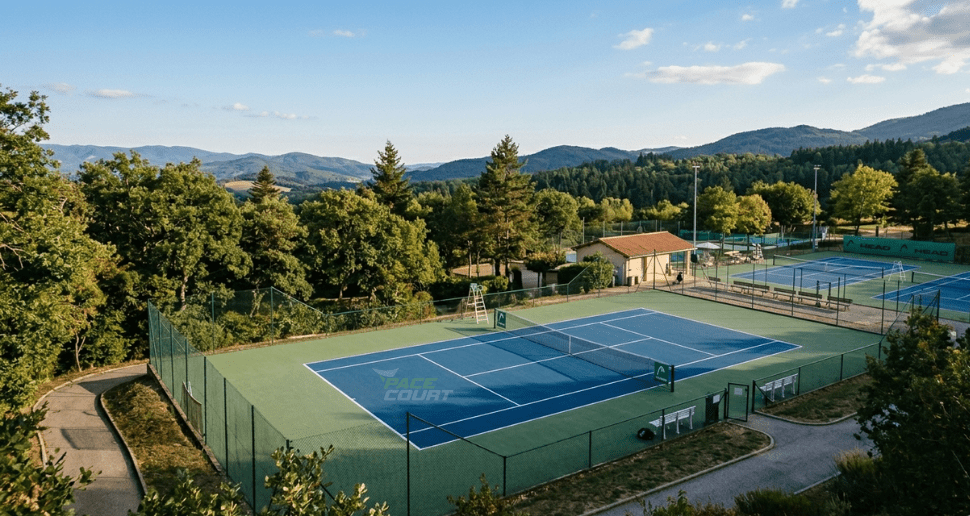
Red clay courts use crushed brick, stone, or shale. Green clay courts (a harder variant) are used in some American tournaments. In India, clay courts demand constant watering, rolling, and resurfacing. Monsoon seasons cause heavy erosion and surface instability.

Clay courts increase both material and maintenance costs significantly. They are generally recommended only for institutions with dedicated groundskeeping staff and a strong reason for offering a clay-specific playing experience.

3. Grass Tennis Court Material

Natural grass remains the most prestigious tennis surface globally. Wimbledon plays on natural grass, which produces the fastest ball speed and lowest bounce of any surface.

Upgrade Your Sports Court Today

Get premium synthetic acrylic flooring designed for durability, grip, and performance.

Get Free Consultation

In India, natural grass courts are practically non-existent at commercial or institutional level. The maintenance requirements are extreme: mowing, watering, pest control, and seasonal recovery periods make grass courts economically unviable in most Indian cities. They are seasonal, weather-sensitive, and unsuitable for high-traffic or humid tropical environments.

4. Synthetic Grass (Artificial Turf) Tennis Court Material

Synthetic grass mimics natural grass but eliminates the maintenance burden. Manufacturers produce synthetic turf with consistent pile height and infill systems that control ball speed and bounce.

In India, synthetic grass sees use mainly in recreational and residential tennis courts where aesthetics matter more than tournament-standard performance. The surface handles rainfall reasonably well, though drainage design remains critical. Synthetic grass courts are not ITF-certified for competitive play but serve recreational and training purposes effectively.

5. Polyurethane (PU) Tennis Court Material

Polyurethane surfaces offer superior shock absorption compared to standard acrylic. PU courts use a rubber-based cushion layer beneath the color coat, which significantly reduces stress on player joints during long rallies and hard landings.

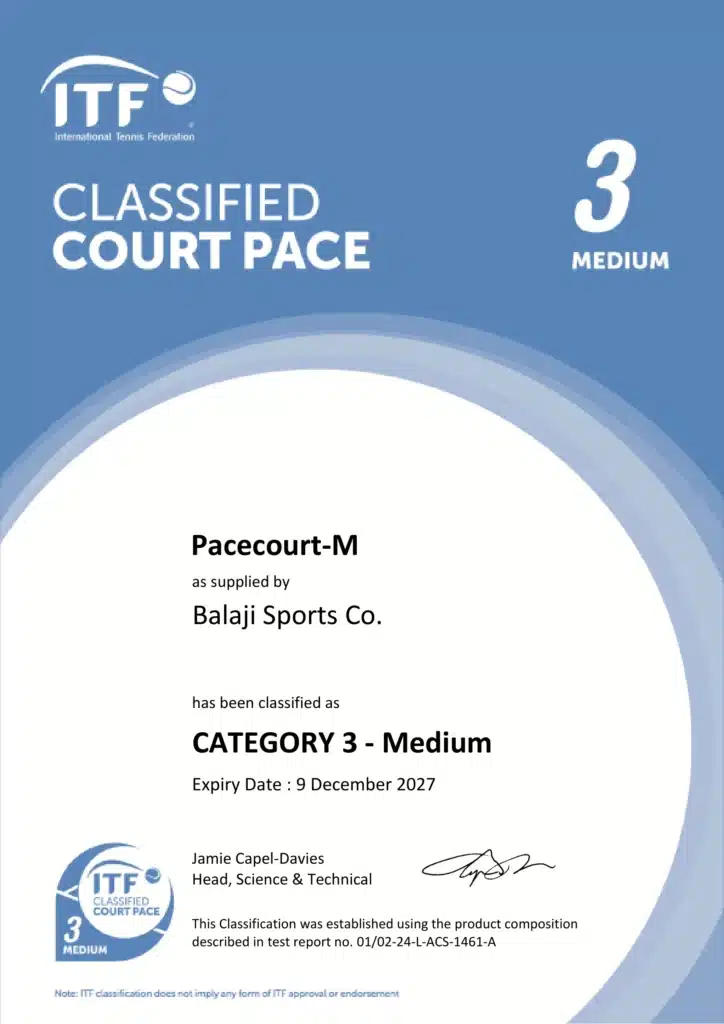
Polyurethane tennis courts are preferred by high-performance academies and professional training centers in India. The material cost is higher than standard acrylic but lower than imported European systems. PU courts are fully ITF-certified and comply with AITA 2026 construction standards.

6. Modular Interlocking Tile Tennis Court Material

Modular tile systems use interlocking hard plastic or rubber tiles laid over a flat base. These systems are popular for temporary courts, indoor facilities, and locations where permanent construction is not viable.

Modular courts are quick to install and dismantle. They offer a firm, consistent bounce and good grip. However, tile joints can create inconsistent bounce points over time, making them unsuitable for serious competitive play. India’s fitness center boom has increased demand for modular tile courts in gyms and residential complexes.

Tennis Court Material: Full Comparison Table

Surface TypeBall SpeedMaintenanceLifespanCost (₹/sq.m)Best Use in IndiaITF Certified
Acrylic (Standard)MediumLow8–10 years₹450–₹650Academies, clubsYes
Acrylic (Cushioned/PU)MediumLow10–12 years₹700–₹1,000+Pro training centersYes
ClaySlowVery High5–7 years (with upkeep)₹800–₹1,500+Specialty clubsYes
Natural GrassFastExtremely HighSeasonal₹2,000+Elite clubs onlyYes
Synthetic GrassMedium-SlowLow-Medium7–10 years₹600–₹900Recreational, residentialNo
Modular TilesMediumVery Low10–15 years₹500–₹800Gyms, indoor, temporaryNo

Tennis Court Base Material: The Hidden Foundation

Most discussions about tennis court material focus only on the playing surface. The base layer is equally important and often ignored.

Concrete Base

Concrete provides a rigid, stable platform for acrylic and PU surfaces. It resists cracking and deformation better than asphalt in high-temperature Indian conditions. Concrete base construction costs approximately ₹150–₹250 per sq. ft. A strong concrete base extends surface life by preventing differential settlement and surface cracking.

Asphalt Base

Asphalt base construction is faster and slightly cheaper than concrete. It handles thermal expansion better in extreme heat. However, asphalt requires a longer curing period and professional compaction to avoid future surface irregularities. Asphalt base costs typically range from ₹100–₹200 per sq. ft.

Key rule: Never use concrete or asphalt as the playing surface directly. Always apply a proper surface material system on top. Bare concrete or asphalt courts create dangerous slip hazards, inconsistent bounce, and rapid player fatigue.
Tennis court material

Tennis Court Material Layer System: How It Works

A high-performance acrylic tennis court in India uses the following layer system (bottom to top):

LayerMaterialPurpose
Sub-baseCompacted soil/gravelLoad distribution, drainage
BaseConcrete or asphaltStructural stability
Primer coatAcrylic primerBonding between base and surface
Resurfacer coatAcrylic resurfacerFills surface irregularities
Cushion coat(s)Rubber/acrylic cushionShock absorption, joint protection
Color coat(s)Acrylic colorPerformance surface, UV protection
Line markingWhite acrylic paintCourt boundaries per ITF standard

Each coat must cure properly before the next is applied. Skipping or rushing any layer creates surface failures within 2–3 years. Reputable Indian manufacturers like Pacecourt and Elitecourt apply a minimum of 6–8 coat layers on premium systems.

Real-World Case Study: Sports Academy in Pune, India

Client: A mid-sized tennis academy in Pune with 3 active courts.

Challenge: The academy had operated three clay courts for seven years. Each monsoon season caused significant surface damage, requiring expensive resurfacing. Players reported inconsistent bounce, ankle injuries from uneven surfaces, and lost training hours due to court unavailability after heavy rain. The annual maintenance cost per court exceeded ₹1.8 lakh.

Solution: The academy replaced all three clay courts with standard cushioned acrylic systems on concrete bases. The project followed AITA 2026 construction standards, including mandatory shock-absorbing underlays.

Results (after 18 months of operation):

MetricBefore (Clay)After (Acrylic)Improvement
Annual maintenance cost/court₹1.8 lakh₹0.35 lakh~80% reduction
Post-rain downtime2–3 days2–4 hours~90% reduction
Player injury complaints14 per season3 per season~78% reduction
Court availability (annual)~280 days~355 days+75 days/year
Surface lifespan (projected)5–6 years10–12 years2x longer

The total investment paid back through saved maintenance within 3.5 years. The academy subsequently converted its fourth development court to a premium PU cushioned system for high-performance player training.

Key takeaway: Selecting the right tennis court material from the start prevents recurring losses and creates a better return on infrastructure investment.

How to Choose the Right Tennis Court Material for Your Facility

Step 1: Define Your Usage Type

Ask three questions before selecting any material:

  • How many hours per day will the court be used?
  • Will competitive or recreational players use it?
  • Is the court indoors or outdoors?

High-traffic outdoor competitive courts demand standard or premium acrylic systems with cushioning. Recreational indoor courts work well with modular tiles. School or community courts on tight budgets perform well with basic acrylic on concrete.

Step 2: Assess Your Climate Zone

India’s climate zones vary dramatically. The Courts in coastal cities like Mumbai and Chennai face high humidity and salt-air corrosion. Courts in Delhi and Rajasthan face extreme summer heat above 45°C. Courts in Bangalore and Pune experience moderate conditions with significant annual rainfall.

Outdoor courts in any Indian city need UV-resistant color coats and adequate perimeter drainage systems. Coastal facilities should specify anti-corrosion fencing and hardware.

Step 3: Set a Realistic Budget Per Square Metre

Do not budget for surface material alone. Include base construction, fencing, net posts, lighting, drainage, and line marking in your total estimate.

A realistic total budget for an outdoor standard acrylic doubles tennis court in India in 2026 falls between ₹12 lakh and ₹25 lakh, depending on location and specification level.

Step 4: Verify ITF and AITA Compliance

If your court will host ranked tournaments or AITA-sanctioned events, material selection must meet ITF surface certification standards. Acrylic and PU systems from certified manufacturers meet these requirements. Modular tiles and synthetic grass do not qualify for competitive ranking events.

Tennis Court Material Maintenance Guide (India 2026)

Surface TypeDaily CareMonthly CareAnnual CareAvg. Annual Cost
Acrylic (standard)Sweep debrisPressure washInspect coats₹20,000–₹40,000
Cushioned Acrylic/PUSweep debrisPressure washInspect + reseal₹30,000–₹55,000
ClayWater + rollResurface zonesFull resurfacing₹1,00,000–₹2,00,000
Synthetic GrassBrush fibersInfill checkDeep clean₹40,000–₹70,000
Modular TilesSweepInspect jointsReplace worn tiles₹15,000–₹30,000

Acrylic and modular tile surfaces deliver the lowest annual maintenance cost in Indian conditions, making them the most economically sustainable choices for schools, academies, and clubs operating on defined budgets.
Tennis court material

Key Industry Statistics: Tennis Court Material in India

StatisticData
% of registered facilities using acrylic/polymeric surfaces68% (SAI, 2026)
Total estimated tennis courts in India15,000+
Average acrylic court lifespan with proper maintenance8–12 years
AITA regulation update year (shock-absorbing underlay mandate)2025
Standard doubles court total area (including runoff zones)~670 sq. m
Minimum land footprint per AITA 2026 standards37 m × 19 m

Conclusion

The right tennis court material depends on your usage intensity, budget, climate, and competition requirements. Here is a quick decision guide:

  • Schools and community courts → Basic acrylic on concrete base.
  • Clubs and private academies → Standard acrylic with cushion coat on concrete.
  • High-performance training centers → Premium cushioned acrylic or polyurethane system.
  • Recreational residential courts → Synthetic grass or modular interlocking tiles.
  • Specialty or heritage clubs → Clay (only with dedicated maintenance staff).

India’s tennis infrastructure is growing rapidly in 2026. Choosing the right surface material from the beginning protects your investment, improves player experience, and reduces long-term operational costs. Always work with AITA-compliant contractors, use ITF-certified surface materials, and plan your full layer system – not just the visible top coat.

A court built right lasts over a decade. A court built wrong costs more every year.

Frequently Asked Questions (FAQs)

Q1. What is the best tennis court material in India in 2026?

Cushioned acrylic on a concrete base is the best tennis court material in India – it offers the optimal balance of performance, durability, player safety, and low maintenance cost.

Q2. How much does tennis court material cost in India?

Tennis court material costs range from ₹300 per sq. m (basic acrylic) to ₹1,000+ per sq. m (premium cushioned systems), with total project costs typically between ₹12 lakh and ₹25 lakh.

Q3. Which tennis court surface is best for Indian weather conditions?

Synthetic acrylic surfaces perform best in Indian weather – they resist UV degradation, handle monsoon moisture, and endure high temperatures without cracking or warping.

Q4. Is clay court material better than acrylic for tennis?

Clay suits a slower playing style and is gentler on joints, but it demands very high maintenance and fails during Indian monsoon seasons – acrylic is far more practical and cost-effective for India.

Q5. How long does tennis court material last?

Standard acrylic courts last 8–10 years, premium cushioned acrylic or PU systems last 10–12 years, and modular tile systems can last 10–15 years with proper maintenance.

Q6. What base material should I use under a tennis court surface?

Concrete is the recommended base material for tennis courts in India – it offers superior structural stability, crack resistance, and long-term support for acrylic surface systems compared to asphalt.

Upgrade Your Sports Court Today

Get premium synthetic acrylic flooring designed for durability, grip, and performance.

Get Free Consultation

Social Networks

Leave a Reply

Your email address will not be published. Required fields are marked *

Social Networks

    Home > Tennis Court Material > Tennis Court Material: Types, Cost & Best Surface Guide

    Tennis Court Material: Types, Cost & Best Surface Guide

    Tennis court material

    Every rally you play, every sprint across the baseline, every hard landing after a jump – your court material decides how safe, fast, and durable that experience is.

    Choosing the right tennis court material is not just a construction decision – it is a performance, safety, and investment decision. The surface under your feet controls ball bounce speed, player joint stress, drainage efficiency, and long-term maintenance cost. Whether you are building a private court, a school facility, a sports academy, or a club complex in India, understanding tennis court material deeply will save you time, money, and frustration.

    Upgrade Your Sports Court Today

    Get premium synthetic acrylic flooring designed for durability, grip, and performance.

    Get Free Consultation

    What Is Tennis Court Material?

    Tennis court material refers to the surface layer and base system used to construct a tennis court. It includes the playing surface (acrylic, clay, grass, synthetic turf, polyurethane), the base layer (concrete or asphalt), cushion coats, and line markings. The right material combination determines court speed, player safety, durability, and maintenance needs.

    Why Tennis Court Material Matters More Than You Think

    Most people focus on the court’s look or fence design. Experienced court builders and facility managers focus on the material system.

    The material you choose directly affects four critical outcomes:

    • Ball bounce consistency – Hard acrylic surfaces produce a predictable medium bounce. Clay slows the ball down. Grass creates a fast, low bounce.
    • Player safety – Cushioned acrylic and polyurethane systems absorb shock and reduce knee and ankle injuries during play.
    • Weather resistance – Indian summers exceed 45°C in many regions. Monsoon rains stress court surfaces heavily. Material selection must account for UV degradation and water drainage.
    • Total lifecycle cost – A cheaper material installed poorly can cost more over five years than a premium system installed correctly.

    India’s sports infrastructure has grown significantly. According to the Sports Authority of India (SAI), over 68% of registered tennis facilities across India now use hard acrylic or polymeric surfaces as of 2026.

    Major Types of Tennis Court Material in India

    1. Acrylic Tennis Court Material

    Acrylic hard courts are the most widely installed tennis court surface in India today. They consist of a concrete or asphalt base topped with multiple layers of acrylic coatings.

    Acrylic systems offer a medium-pace game with consistent ball bounce. They handle India’s heat, humidity, and monsoon conditions better than any other natural surface. The AITA (All India Tennis Association) revised its court construction standards in 2025 to mandate shock-absorbing underlay beneath all new hard court installations, significantly reducing player injury risk across club and academy facilities.

    Three acrylic system grades exist in India:

    System GradeCost (₹ per sq. m)Best For
    Basic Acrylic₹300 – ₹450Schools, low-traffic courts
    Standard Acrylic₹450 – ₹650Clubs, academies, training centers
    Premium Cushioned Acrylic₹700 – ₹1,000+Competitive play, high-traffic facilities

    Acrylic courts last 8–10 years with proper maintenance. They require UV-resistant top coats in Indian outdoor settings. The surface is available in multiple colors, with blue (playing area) and green/red surrounds being the standard in India as per AITA guidelines.

    2. Clay Tennis Court Material

    Clay courts deliver a slower game with higher ball bounce. They are the traditional surface associated with the French Open and Roland Garros. However, clay courts remain rare in India in 2026.

    Red clay courts use crushed brick, stone, or shale. Green clay courts (a harder variant) are used in some American tournaments. In India, clay courts demand constant watering, rolling, and resurfacing. Monsoon seasons cause heavy erosion and surface instability.

    Clay courts increase both material and maintenance costs significantly. They are generally recommended only for institutions with dedicated groundskeeping staff and a strong reason for offering a clay-specific playing experience.

    3. Grass Tennis Court Material

    Natural grass remains the most prestigious tennis surface globally. Wimbledon plays on natural grass, which produces the fastest ball speed and lowest bounce of any surface.

    Upgrade Your Sports Court Today

    Get premium synthetic acrylic flooring designed for durability, grip, and performance.

    Get Free Consultation

    In India, natural grass courts are practically non-existent at commercial or institutional level. The maintenance requirements are extreme: mowing, watering, pest control, and seasonal recovery periods make grass courts economically unviable in most Indian cities. They are seasonal, weather-sensitive, and unsuitable for high-traffic or humid tropical environments.

    4. Synthetic Grass (Artificial Turf) Tennis Court Material

    Synthetic grass mimics natural grass but eliminates the maintenance burden. Manufacturers produce synthetic turf with consistent pile height and infill systems that control ball speed and bounce.

    In India, synthetic grass sees use mainly in recreational and residential tennis courts where aesthetics matter more than tournament-standard performance. The surface handles rainfall reasonably well, though drainage design remains critical. Synthetic grass courts are not ITF-certified for competitive play but serve recreational and training purposes effectively.

    5. Polyurethane (PU) Tennis Court Material

    Polyurethane surfaces offer superior shock absorption compared to standard acrylic. PU courts use a rubber-based cushion layer beneath the color coat, which significantly reduces stress on player joints during long rallies and hard landings.

    Polyurethane tennis courts are preferred by high-performance academies and professional training centers in India. The material cost is higher than standard acrylic but lower than imported European systems. PU courts are fully ITF-certified and comply with AITA 2026 construction standards.

    6. Modular Interlocking Tile Tennis Court Material

    Modular tile systems use interlocking hard plastic or rubber tiles laid over a flat base. These systems are popular for temporary courts, indoor facilities, and locations where permanent construction is not viable.

    Modular courts are quick to install and dismantle. They offer a firm, consistent bounce and good grip. However, tile joints can create inconsistent bounce points over time, making them unsuitable for serious competitive play. India’s fitness center boom has increased demand for modular tile courts in gyms and residential complexes.

    Tennis Court Material: Full Comparison Table

    Surface TypeBall SpeedMaintenanceLifespanCost (₹/sq.m)Best Use in IndiaITF Certified
    Acrylic (Standard)MediumLow8–10 years₹450–₹650Academies, clubsYes
    Acrylic (Cushioned/PU)MediumLow10–12 years₹700–₹1,000+Pro training centersYes
    ClaySlowVery High5–7 years (with upkeep)₹800–₹1,500+Specialty clubsYes
    Natural GrassFastExtremely HighSeasonal₹2,000+Elite clubs onlyYes
    Synthetic GrassMedium-SlowLow-Medium7–10 years₹600–₹900Recreational, residentialNo
    Modular TilesMediumVery Low10–15 years₹500–₹800Gyms, indoor, temporaryNo

    Tennis Court Base Material: The Hidden Foundation

    Most discussions about tennis court material focus only on the playing surface. The base layer is equally important and often ignored.

    Concrete Base

    Concrete provides a rigid, stable platform for acrylic and PU surfaces. It resists cracking and deformation better than asphalt in high-temperature Indian conditions. Concrete base construction costs approximately ₹150–₹250 per sq. ft. A strong concrete base extends surface life by preventing differential settlement and surface cracking.

    Asphalt Base

    Asphalt base construction is faster and slightly cheaper than concrete. It handles thermal expansion better in extreme heat. However, asphalt requires a longer curing period and professional compaction to avoid future surface irregularities. Asphalt base costs typically range from ₹100–₹200 per sq. ft.

    Key rule: Never use concrete or asphalt as the playing surface directly. Always apply a proper surface material system on top. Bare concrete or asphalt courts create dangerous slip hazards, inconsistent bounce, and rapid player fatigue.

    Tennis court material

    Tennis Court Material Layer System: How It Works

    A high-performance acrylic tennis court in India uses the following layer system (bottom to top):

    LayerMaterialPurpose
    Sub-baseCompacted soil/gravelLoad distribution, drainage
    BaseConcrete or asphaltStructural stability
    Primer coatAcrylic primerBonding between base and surface
    Resurfacer coatAcrylic resurfacerFills surface irregularities
    Cushion coat(s)Rubber/acrylic cushionShock absorption, joint protection
    Color coat(s)Acrylic colorPerformance surface, UV protection
    Line markingWhite acrylic paintCourt boundaries per ITF standard

    Each coat must cure properly before the next is applied. Skipping or rushing any layer creates surface failures within 2–3 years. Reputable Indian manufacturers like Pacecourt and Elitecourt apply a minimum of 6–8 coat layers on premium systems.

    Real-World Case Study: Sports Academy in Pune, India

    Client: A mid-sized tennis academy in Pune with 3 active courts.

    Challenge: The academy had operated three clay courts for seven years. Each monsoon season caused significant surface damage, requiring expensive resurfacing. Players reported inconsistent bounce, ankle injuries from uneven surfaces, and lost training hours due to court unavailability after heavy rain. The annual maintenance cost per court exceeded ₹1.8 lakh.

    Solution: The academy replaced all three clay courts with standard cushioned acrylic systems on concrete bases. The project followed AITA 2026 construction standards, including mandatory shock-absorbing underlays.

    Results (after 18 months of operation):

    MetricBefore (Clay)After (Acrylic)Improvement
    Annual maintenance cost/court₹1.8 lakh₹0.35 lakh~80% reduction
    Post-rain downtime2–3 days2–4 hours~90% reduction
    Player injury complaints14 per season3 per season~78% reduction
    Court availability (annual)~280 days~355 days+75 days/year
    Surface lifespan (projected)5–6 years10–12 years2x longer

    The total investment paid back through saved maintenance within 3.5 years. The academy subsequently converted its fourth development court to a premium PU cushioned system for high-performance player training.

    Key takeaway: Selecting the right tennis court material from the start prevents recurring losses and creates a better return on infrastructure investment.

    How to Choose the Right Tennis Court Material for Your Facility

    Step 1: Define Your Usage Type

    Ask three questions before selecting any material:

    • How many hours per day will the court be used?
    • Will competitive or recreational players use it?
    • Is the court indoors or outdoors?

    High-traffic outdoor competitive courts demand standard or premium acrylic systems with cushioning. Recreational indoor courts work well with modular tiles. School or community courts on tight budgets perform well with basic acrylic on concrete.

    Step 2: Assess Your Climate Zone

    India’s climate zones vary dramatically. The Courts in coastal cities like Mumbai and Chennai face high humidity and salt-air corrosion. Courts in Delhi and Rajasthan face extreme summer heat above 45°C. Courts in Bangalore and Pune experience moderate conditions with significant annual rainfall.

    Outdoor courts in any Indian city need UV-resistant color coats and adequate perimeter drainage systems. Coastal facilities should specify anti-corrosion fencing and hardware.

    Step 3: Set a Realistic Budget Per Square Metre

    Do not budget for surface material alone. Include base construction, fencing, net posts, lighting, drainage, and line marking in your total estimate.

    A realistic total budget for an outdoor standard acrylic doubles tennis court in India in 2026 falls between ₹12 lakh and ₹25 lakh, depending on location and specification level.

    Step 4: Verify ITF and AITA Compliance

    If your court will host ranked tournaments or AITA-sanctioned events, material selection must meet ITF surface certification standards. Acrylic and PU systems from certified manufacturers meet these requirements. Modular tiles and synthetic grass do not qualify for competitive ranking events.

    Tennis Court Material Maintenance Guide (India 2026)

    Surface TypeDaily CareMonthly CareAnnual CareAvg. Annual Cost
    Acrylic (standard)Sweep debrisPressure washInspect coats₹20,000–₹40,000
    Cushioned Acrylic/PUSweep debrisPressure washInspect + reseal₹30,000–₹55,000
    ClayWater + rollResurface zonesFull resurfacing₹1,00,000–₹2,00,000
    Synthetic GrassBrush fibersInfill checkDeep clean₹40,000–₹70,000
    Modular TilesSweepInspect jointsReplace worn tiles₹15,000–₹30,000

    Acrylic and modular tile surfaces deliver the lowest annual maintenance cost in Indian conditions, making them the most economically sustainable choices for schools, academies, and clubs operating on defined budgets.

    Tennis court material

    Key Industry Statistics: Tennis Court Material in India

    StatisticData
    % of registered facilities using acrylic/polymeric surfaces68% (SAI, 2026)
    Total estimated tennis courts in India15,000+
    Average acrylic court lifespan with proper maintenance8–12 years
    AITA regulation update year (shock-absorbing underlay mandate)2025
    Standard doubles court total area (including runoff zones)~670 sq. m
    Minimum land footprint per AITA 2026 standards37 m × 19 m

    Conclusion

    The right tennis court material depends on your usage intensity, budget, climate, and competition requirements. Here is a quick decision guide:

    • Schools and community courts → Basic acrylic on concrete base.
    • Clubs and private academies → Standard acrylic with cushion coat on concrete.
    • High-performance training centers → Premium cushioned acrylic or polyurethane system.
    • Recreational residential courts → Synthetic grass or modular interlocking tiles.
    • Specialty or heritage clubs → Clay (only with dedicated maintenance staff).

    India’s tennis infrastructure is growing rapidly in 2026. Choosing the right surface material from the beginning protects your investment, improves player experience, and reduces long-term operational costs. Always work with AITA-compliant contractors, use ITF-certified surface materials, and plan your full layer system – not just the visible top coat.

    A court built right lasts over a decade. A court built wrong costs more every year.

    Frequently Asked Questions (FAQs)

    Q1. What is the best tennis court material in India in 2026?

    Cushioned acrylic on a concrete base is the best tennis court material in India – it offers the optimal balance of performance, durability, player safety, and low maintenance cost.

    Q2. How much does tennis court material cost in India?

    Tennis court material costs range from ₹300 per sq. m (basic acrylic) to ₹1,000+ per sq. m (premium cushioned systems), with total project costs typically between ₹12 lakh and ₹25 lakh.

    Q3. Which tennis court surface is best for Indian weather conditions?

    Synthetic acrylic surfaces perform best in Indian weather – they resist UV degradation, handle monsoon moisture, and endure high temperatures without cracking or warping.

    Q4. Is clay court material better than acrylic for tennis?

    Clay suits a slower playing style and is gentler on joints, but it demands very high maintenance and fails during Indian monsoon seasons – acrylic is far more practical and cost-effective for India.

    Q5. How long does tennis court material last?

    Standard acrylic courts last 8–10 years, premium cushioned acrylic or PU systems last 10–12 years, and modular tile systems can last 10–15 years with proper maintenance.

    Q6. What base material should I use under a tennis court surface?

    Concrete is the recommended base material for tennis courts in India – it offers superior structural stability, crack resistance, and long-term support for acrylic surface systems compared to asphalt.

    Upgrade Your Sports Court Today

    Get premium synthetic acrylic flooring designed for durability, grip, and performance.

    Get Free Consultation

    Leave a Reply

    Your email address will not be published. Required fields are marked *

    Scroll to Top
    HOMEOWNERS
    BUSINESS OWNERS
    ARCHITECTS
    MUNICIPALITIES

    Let's Build
    Great Courts

    ITF-certified acrylic flooring for Tennis, Basketball, Badminton, Pickleball & more shipped worldwide.

    Premium Quality

    world-class material & Construction

    Expert Team

    Experinced Proffectionals at your Service

    End-to-End Support

    From concept to completions

    Get In Touch

    We will respond as soon as possible 

    [pw_popup_form]

      Your information is secure and will never be shared

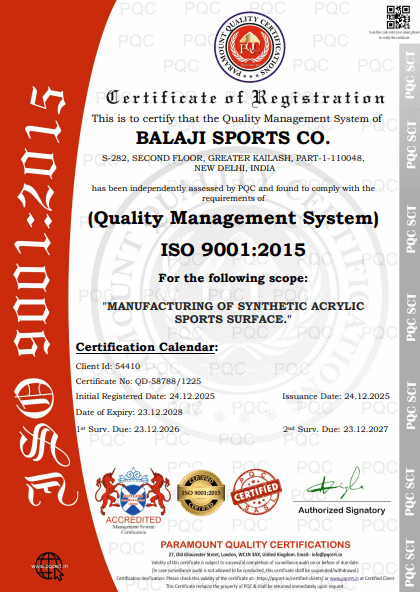
      ISO-Certificate