Author name: Rahul

Rahul is a sports flooring expert and a key contributor at Pacecourt, a leading brand in acrylic and synthetic sports court solutions. Passionate about creating world-class playing surfaces, Rahul shares insights on tennis courts, basketball courts, and multi-purpose sports flooring. His goal is to help facility owners and sports enthusiasts choose durable, high-performance solutions that enhance the game experience.

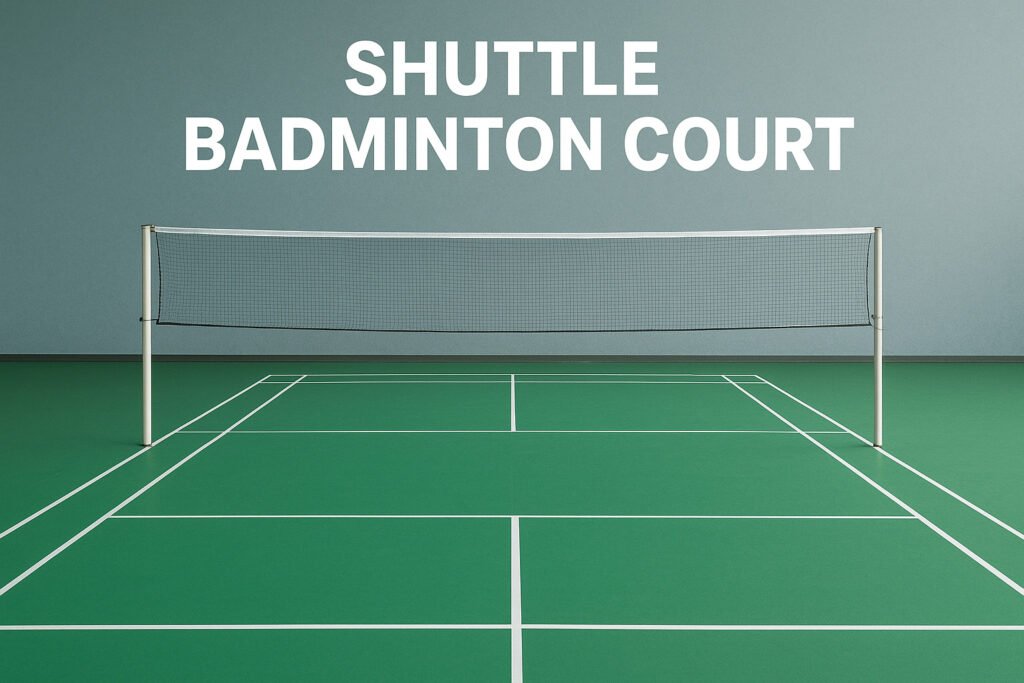
Shuttle Badminton Court

Shuttle Badminton Court: Dimensions, Flooring, Markings, Net Height & Complete Guide

If you’re planning to build a shuttle badminton court—whether for a home, school, academy, club, or commercial sports complex—understanding the court dimensions, flooring options, net height, and marking guidelines is essential. This detailed guide covers everything you need to know about badminton courts based on BWF (Badminton World Federation) standards, along with costs, materials, layouts, and FAQs. What is a Shuttle Badminton Court? A shuttle badminton court is the designated playing area used for singles and doubles badminton matches. It includes: A well-built court improves game performance, reduces injuries, and meets national/international standards. Official Shuttle Badminton Court Dimensions 1. Court Size (BWF Standard) A standard shuttle badminton court measures: Overall Court Dimensions Singles Court Dimensions Doubles Court Dimensions 2. Service Court Dimensions Singles Service Court Doubles Service Court Short Service Line Long Service Line for Doubles 3. Line Marking Width Shuttle Badminton Net Height The official BWF net height is: Net width: 760 mmNet length: 6.1 meters Types of Shuttle Badminton Court Flooring Best for: Academies, professional courts, clubsFeatures: Recommended Wood: 2. Synthetic PVC Vinyl Flooring (Popular & Cost-effective) Best for: Schools, gyms, sports clubsBenefits: PVC mats come in 4.5 mm–8 mm thickness. 3. Acrylic Flooring (Outdoor Shuttle Courts) Best for: Open-area or rooftop courtsFeatures: Installed on concrete base using acrylic cushioning layers. 4. Cement/Concrete Court (Basic Option) Pros: Shuttle Badminton Court Construction Requirements 1. Space Requirement A standard indoor badminton court requires: Outdoor courts should have a minimum 2m clearance on all sides. 2. Flooring Base Construction 3. Lighting Requirements 4. Accessories Shuttle Badminton Court Construction Cost in India (2025) Court Type Cost Range per Court Wooden Flooring (Competition Grade) ₹4,50,000 – ₹7,00,000 Synthetic PVC Flooring ₹2,00,000 – ₹3,50,000 Acrylic Outdoor Court ₹1,50,000 – ₹2,50,000 Cement/Concrete ₹60,000 – ₹1,20,000 (Prices vary by brand, thickness & location) Shuttle Badminton Court Layout (Explained) A complete court layout includes: Correct layout ensures fair gameplay and follows international standards. Maintenance Tips for Shuttle Badminton Courts Clean flooring daily Avoid abrasive cleaning chemicals Keep humidity under control (for wooden courts) Repair damaged lines immediately Regular polishing (wooden) Use non-marking badminton shoes only FAQ’s

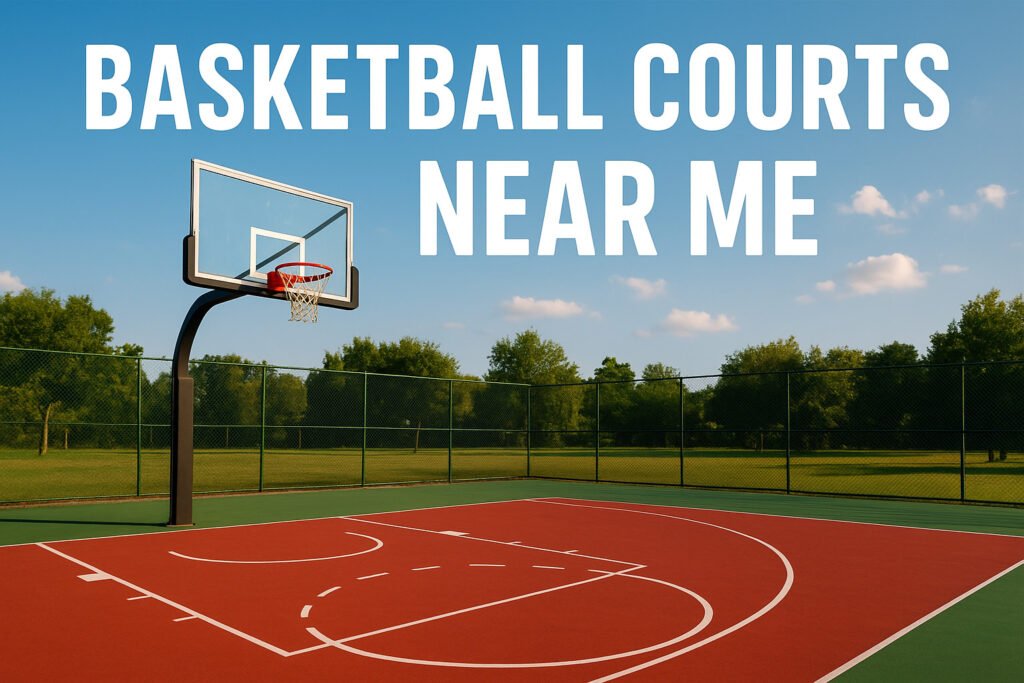
basketball courts near me
Basketball Courts

Basketball Courts Near Me: Find the Best Local Courts for Playing, Training & Tournaments

If you’re searching for “basketball courts near me”, you’re likely looking for a high-quality court where you can play casually, practice regularly, or host matches and tournaments. With the growing popularity of basketball across India and worldwide, the number of indoor and outdoor courts has increased—but choosing the right one can be confusing. This guide will help you find the best basketball courts near your location, compare indoor vs. outdoor courts, understand flooring options, and know exactly what to check before booking a court. Why Finding the Right Basketball Court Matters The quality of a basketball court directly impacts: That’s why it’s important to choose a court with the right flooring, proper markings, safe surroundings, and well-maintained facilities. Types of Basketball Courts Near You Different areas offer different types of courts. Here’s what you may find around your locality: 1. Outdoor Basketball Courts Common in parks, schools, and public grounds. Benefits: 2. Indoor Basketball Courts Found in sports complexes, gyms, academies, and premium clubs. Benefits: 3. Synthetic Basketball Courts Great for communities, housing societies, and academies. Features: How to Choose the Best Basketball Court Near You Before you choose a local court, evaluate these key factors: 1. Court Flooring Type Flooring affects grip, ball bounce, and player safety. Common materials include: 2. Court Dimensions & Markings A proper court should follow standard dimensions: 3. Maintenance & Cleanliness A well-maintained court: 4. Lighting & Safety Especially important for evening or indoor play. Check for: 5. Availability & Booking Many indoor courts offer: Choose based on your convenience. Benefits of Playing Basketball Near You Playing at a good local basketball court provides: Basketball Court Flooring Options (If You Plan to Build or Upgrade a Court) If you’re searching for a court because you’re planning to build, upgrade, or repair, here are the top flooring choices: 1. Acrylic Sports Flooring 2. PP Interlocking Tiles 3. Maple Hardwood Flooring 4. PU/EPDM Flooring How to Find the Best Basketball Courts Near You Use these tools and tips: 1. Google Search Use terms like: 2. Google Maps Check: 3. Local Sports Complexes Many cities have government or private complexes with affordable courts. 4. Housing Societies & Schools Often allow outsiders to book courts during specific hours. 5. Sports Academies Best for training, coaching, and premium courts. Tips for Getting the Best Experience on Local Courts Go early morning to avoid crowds Carry proper basketball shoes to prevent slipping Bring your own ball for consistent practice Stay hydrated Book in advance for weekends Best Time to Visit Basketball Courts Near You Early mornings: Best for practice Evenings: Cooler & more players Weekdays: Less crowded than weekends Conclusion Whether you want to play casually, train seriously, or host a tournament, choosing the right basketball court near you makes all the difference. With the right flooring, proper maintenance, and safe facilities, your playing experience becomes smoother, safer, and more enjoyable. If you ever plan to install, repair, or upgrade a basketball court, understanding flooring types and court standards will help you make the best decision.

Pickleball Court Size
pickleball court size

Pickleball Court Size: Official Dimensions, Layout & Complete Guide

Pickleball has become one of the fastest-growing sports in the world, loved for its simplicity, fast-paced action, and accessibility for all age groups. Whether you want to build a dedicated pickleball court, convert an existing space, or simply understand the official dimensions, knowing the pickleball court size is essential. This complete guide explains the official court dimensions, layout, zones, net measurements, markings, and space requirements for indoor and outdoor courts. You’ll also find diagrams (explained in words), court variations, and multi-court layouts. Official Pickleball Court Size (Singles & Doubles) The official pickleball court size is 20 feet wide and 44 feet long for both singles and doubles.Unlike tennis and badminton, where court sizes differ for singles and doubles, pickleball uses the same court size for all formats. Official Pickleball Court Dimensions Section Measurement Total Court Size 20 ft x 44 ft (6.10 m x 13.41 m) Non-Volley Zone (Kitchen) 7 ft from the net on both sides Service Areas 10 ft each Total Playing Area Minimum 30 ft x 60 ft (recommended 34 ft x 64 ft) The playing surface area (30 ft x 60 ft) ensures players have enough room beyond the boundary lines for safe movement. Court Zones Explained A pickleball court includes several important zones. Understanding them ensures proper layout and rule-friendly construction. a) Non-Volley Zone (The Kitchen) b) Service Areas Each side of the court has two service courts: Service Area Size Right Service Box 10 ft x 15 ft Left Service Box 10 ft x 15 ft These areas are defined by: c) Baselines & Sidelines d) Centerline Minimum Space Requirements The court itself is 20×44 ft, but the recommended playing area is larger to ensure safety and comfort. Minimum Required Space Recommended Tournament Space This additional space includes extra area behind baselines and sidelines. Indoor vs Outdoor Pickleball Court Size The court size remains the same indoors and outdoors.The differences lie in: Indoor Court Considerations Outdoor Court Considerations Pickleball Court Layout A pickleball court has a simple yet highly strategic layout. Although it appears similar to a smaller tennis court, its lines, zones, and measurements are unique. Understanding the layout is essential for proper construction, marking, and competitive gameplay. Below is a complete breakdown of the pickleball court layout, described clearly and visually in words. 1. Overall Court Shape A pickleball court is a rectangular playing surface measuring 20 feet wide and 44 feet long.This includes all play areas used for singles and doubles. 2. The Net Placement The court is divided in half by a net that stretches across the full 20 ft width. Net Height Requirements The slight dip in the center helps improve ball trajectory and gameplay balance. 3. The Non-Volley Zone (Kitchen) One of the most iconic parts of the pickleball layout is the Non-Volley Zone (NVZ), commonly called the kitchen. Kitchen Size Purpose Players cannot volley (hit the ball without it bouncing) inside this zone. 4. The Service Courts The area behind the kitchen is divided into two equal service areas: Left Service Court Right Service Court Service Court Size These two service courts are divided by a centerline, which runs straight from the kitchen line to the baseline. 5. Baselines and Sidelines These are the outer boundary lines of the court. Baselines Sidelines Players must serve from behind the baseline. 6. Line Width and Marking Rules All lines on a pickleball court must follow specific standards. Standard Line Width Line Color Marking Guidelines 7. Total Playing Area Beyond the Court Lines While the official court is 20 × 44 ft, players need additional space to move safely. Minimum Play Area Requirement Recommended Tournament Area This extra space prevents injuries and allows comfortable movement during rallies. 8. Ideal Orientation for Outdoor Layouts For outdoor pickleball courts: Best Sun Orientation Wind Consideration Net Dimensions The pickleball net is lower than a tennis net. Official Pickleball Net Size Specification Measurement Net Width 22 ft Net Height (at center) 34 inches Net Height (at posts) 36 inches Pickleball Court Surface Requirements The playing surface significantly affects performance. Recommended Surface Types Ideal Surface Properties Line Markings & Colors Official Line Width Marking Recommendations Multi-Court Layouts (2, 4, 6 Courts) If you’re creating multiple pickleball courts for clubs, schools, or tournaments, spacing is essential. 2-Court Layout 4-Court Layout 6-Court Layout Courts can be placed side-by-side or lengthwise depending on available space. Converting Existing Sports Courts into Pickleball Courts Many facility owners repurpose existing courts. Convert a Tennis Court Convert a Badminton Court Convert a Volleyball Court Cost of Building a Pickleball Court The cost varies depending on surface choice and location. Estimated Cost Breakdown Total Estimated Cost:₹3,00,000 – ₹8,00,000 per court Common Mistakes When Estimating Court Size Conclusion Understanding the pickleball court size and layout is the first step in building a high-quality, tournament-ready court. Whether you’re setting up an indoor or outdoor facility, the official dimensions ensure uniform gameplay and safety. If you are planning to build a pickleball court, consult professional court builders for accurate measurements, high-quality flooring, and long-lasting construction.

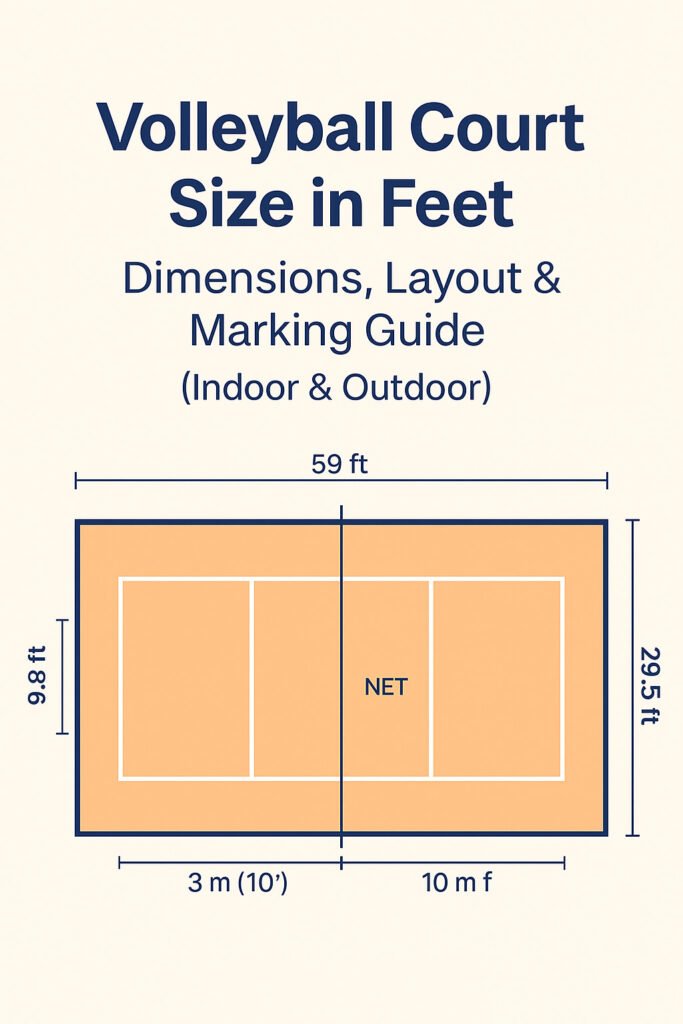
Volleyball Court Size in Feet

Volleyball Court Size in Feet: Dimensions, Layout & Marking Guide (Indoor & Outdoor)

Understanding the volleyball court size in feet and meters is essential whether you’re a player, coach, or facility owner. Correct measurements ensure fair play, safety, and professional-level performance.This complete guide explains standard court dimensions, layout details, marking steps, and different types of volleyball courts (indoor, beach, school, and sitting). You’ll also get marking tips, material recommendations, and a free printable layout guide at the end. Standard Volleyball Court Dimensions According to FIVB (Fédération Internationale de Volleyball) regulations: The court is divided equally by a center line into two halves, each measuring 29.5 × 29.5 ft (9 × 9 m). 🧾 Conversion Table Measurement In Feet In Meters Length 59 ft 18 m Width 29.5 ft 9 m Attack Line Distance 9.8 ft 3 m Service Area (minimum) 9.8 ft 3 m Net Height (Men) 7 ft 11 5/8 in 2.43 m Net Height (Women) 7 ft 4 1/8 in 2.24 m ✅ Tip: Always allow at least 3 feet of free space around all sides for safety. For professional matches, extend this to 10 feet or more. Volleyball Court Layout Overview A volleyball court has the following key areas: Court Line Width: Every boundary line is 2 inches (5 cm) wide and counted as part of the playing area. Beach Volleyball Court Dimensions Beach volleyball uses a smaller court to adjust for the slower movement on sand: The net height remains the same as indoor volleyball: 🏖️ Surface Tip: Use fine, clean sand about 40 cm deep, free from stones or shells. Mini, Youth & Sitting Volleyball Court Sizes School / Mini Volleyball For training or school-level games, smaller courts are often used: Sitting Volleyball This inclusive format is played by athletes with physical disabilities and uses a smaller court for faster gameplay. How to Mark a Volleyball Court (Step-by-Step) Creating an accurate layout ensures proper play and training. Here’s how you can do it: You’ll Need: Step 1: Mark the Outer Rectangle Use measuring tape to draw the full boundary — 59 ft × 29.5 ft (18 m × 9 m). Step 2: Mark the Center Line Divide the court into two halves (each 29.5 × 29.5 ft). Step 3: Draw the Attack Line Measure 9.8 ft (3 m) from the center line on both sides and draw parallel lines. Step 4: Add the Service Zone Extend 9.8 ft (3 m) behind each end line. Step 5: Mark Line Width Use 2-inch (5 cm) wide lines for all boundaries. Recommended Court Surface Types (for India) In India, volleyball courts are built both indoor and outdoor.Here are the common surfaces: Surface Type Ideal For Benefits Synthetic (Acrylic / PU) Indoor & Outdoor Shock absorption, durability Concrete Outdoor Low maintenance, budget-friendly Wooden Flooring Indoor Professional play, smooth surface Sand Beach Volleyball Soft impact, natural look Grass / Turf Recreational Low cost, multi-use area 🧱 Installation Tip: For outdoor courts, ensure proper drainage slope (1:100 ratio) to prevent water pooling. Free Zone, Overhead Clearance & Lighting 💡 Install LED floodlights at equal spacing to reduce glare and shadows. Downloadable Layout & Diagram For easy setup, download our Free Volleyball Court Layout PDF (feet & meters).It includes: 👉 Download Court Layout (PDF)

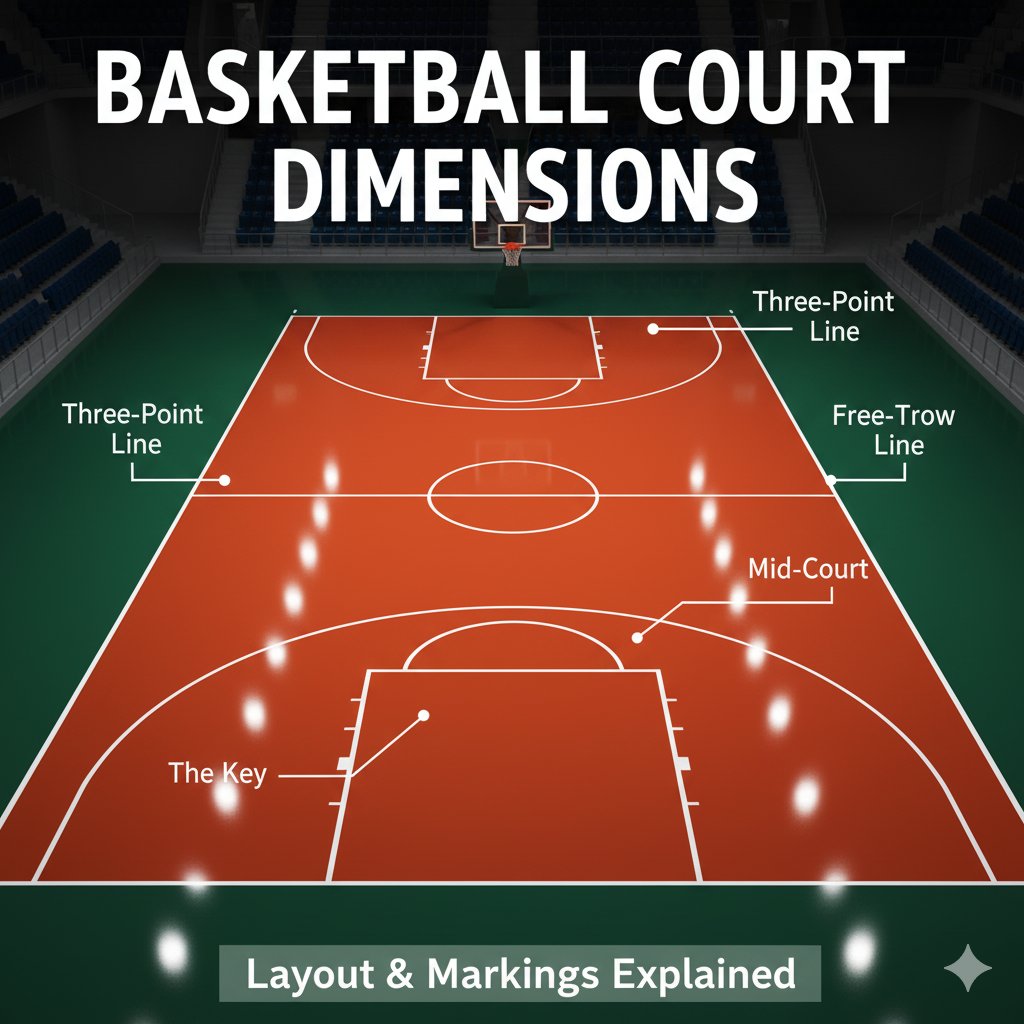
Basketball Court Size

Basketball Court Size: Dimensions, Layout, and Markings Explained

Whether you’re building a professional arena, a school playground, or a backyard court, understanding the basketball court size is essential. Court dimensions directly affect gameplay, movement, and even player safety. This guide explains the official basketball court dimensions, differences across levels (NBA, FIBA, high school), and key markings every builder or player should know. Official Basketball Court Dimensions 1. NBA (National Basketball Association) Court Size The NBA court size provides players with maximum space for fast movements, complex plays, and three-point shots. 2. FIBA (International Basketball Federation) Court Size Most international tournaments and Olympic games use FIBA standards. The slightly smaller size compared to the NBA makes the game more compact and strategic. 3. High School & College Basketball Court Size These courts are designed for training and educational levels, offering easier maneuverability and promoting teamwork over distance shooting. Key Court Markings and Layout A standard basketball court includes the following important markings: These markings maintain uniformity and fairness across all matches. Indoor vs Outdoor Basketball Court Size While the dimensions remain similar, indoor courts usually have hardwood or synthetic surfaces for better bounce and grip.Outdoor courts, however, use materials like acrylic, concrete, or modular tiles, depending on durability and weather resistance. For outdoor construction, ensure: Mini & Half Basketball Court Sizes If you’re building a personal or community court: These compact versions maintain proportions while saving space and cost. Tips for Building a Perfect Basketball Court Use acrylic or synthetic flooring for shock absorption. Maintain 10 feet clearance around the court for player safety. Install anti-glare lighting for night games. Regularly repaint lines for accuracy and appearance. Ensure drainage and slope (1%) to prevent water accumulation outdoors. Basketball Court Size Comparison Table Level Length Width Three-Point Line Free-Throw Line NBA 94 ft 50 ft 23.75 ft 15 ft FIBA 91.9 ft 49.2 ft 22.15 ft 15 ft High School 84 ft 50 ft 19.75 ft 15 ft Conclusion The basketball court size plays a crucial role in how the game unfolds — influencing speed, shot accuracy, and player dynamics. Whether you’re designing for professional athletes or recreational use, following standard measurements ensures a safe and enjoyable playing experience. If you’re planning to build a custom basketball court, consult sports flooring experts to ensure the correct layout, marking, and surface quality.

Acrylic Sports Court Layer Systems
Acrylic Coating

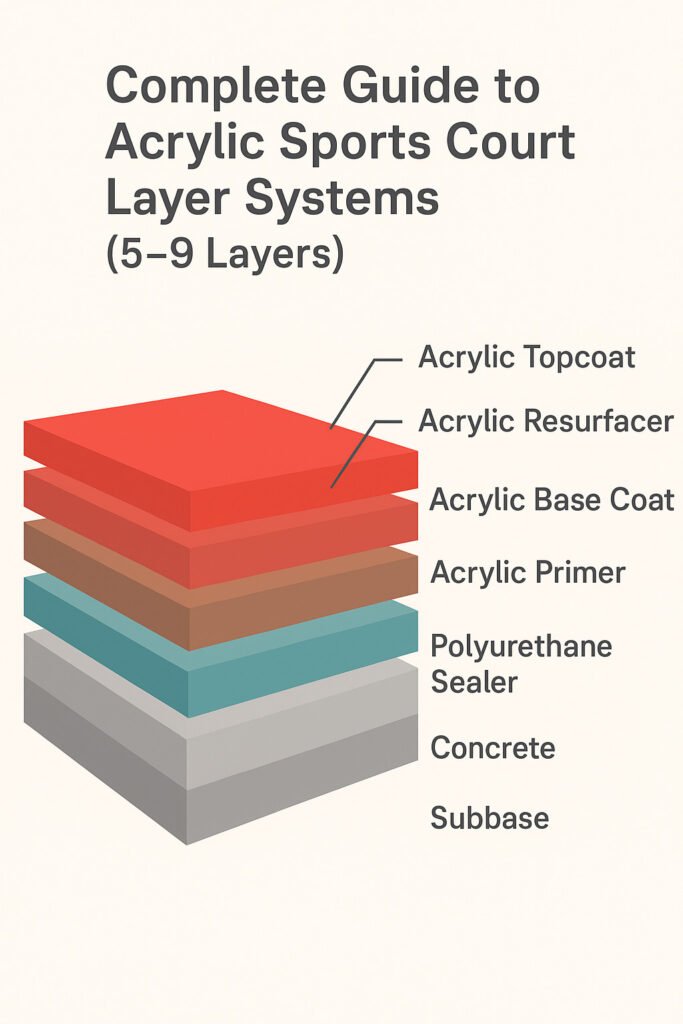
Complete Guide to Acrylic Sports Court Layer Systems (5–9 Layers)

Acrylic sports court surfaces are engineered for performance, safety, and durability. Whether you’re constructing a tennis, basketball, or multi-purpose court, the layer system you choose defines how your surface feels, performs, and lasts. This complete guide explores the 5-layer to 9-layer acrylic sports court systems, their structure, benefits, and how to select the right one for your project — helping you achieve professional-grade results that meet international standards. What Is an Acrylic Sports Court Layer System? An acrylic sports court layer system is a multi-coat application of specialized materials such as acrylic resins, cushion compounds, and surface coatings. Each layer serves a specific purpose — improving comfort, flexibility, traction, and longevity. The system typically includes: 5-Layer Acrylic System Best For: Schools, residential areas, and recreational courts. The 5-layer system offers a cost-effective yet durable surface. It provides adequate comfort, good traction, and low maintenance, making it ideal for light to moderate play. Layer Structure: Key Benefits: 6-Layer Acrylic System Best For: Clubs, academies, and training centers. The 6-layer system adds an extra cushion coat to improve comfort and shock absorption. It balances affordability with enhanced play experience. Layer Structure: Key Benefits: 7-Layer Acrylic System Best For: Competitive-level training and frequent use. The 7-layer acrylic sports flooring system introduces additional cushioning and coating layers for maximum flexibility and consistency. Layer Structure: Key Benefits: 8-Layer Acrylic System Best For: Professional and tournament-level courts. The 8-layer system is engineered for high-performance surfaces that meet ITF and ASTM standards. It offers excellent grip, elasticity, and weather resistance. Layer Structure: Key Benefits: 9-Layer Acrylic System Best For: Elite academies, government projects, and high-budget installations. The 9-layer system is the most advanced acrylic sports flooring, offering professional-grade playability, maximum comfort, and extended life span. Layer Structure: Key Benefits: Comparative Table: 5–9 Layer Systems System Ideal Use Comfort Durability Cost Maintenance 5-Layer School/Residential ⭐⭐ ⭐⭐⭐ 💰 Low 6-Layer Club/Training ⭐⭐⭐ ⭐⭐⭐⭐ 💰💰 Low 7-Layer Competitive Level ⭐⭐⭐⭐ ⭐⭐⭐⭐ 💰💰 Medium 8-Layer Professional ⭐⭐⭐⭐⭐ ⭐⭐⭐⭐⭐ 💰💰💰 Low 9-Layer International ⭐⭐⭐⭐⭐ ⭐⭐⭐⭐⭐ 💰💰💰💰 Low Why the Layer System Matters Each layer contributes to player performance, court life, and overall experience. The right system ensures: Choosing between 5–9 layers depends on your budget, frequency of use, and court purpose. Installation and Maintenance Tips Professional installation by certified flooring experts ensures the system performs as intended. Conclusion he Acrylic Sports Court Layer System (5–9 Layers) plays a critical role in determining surface quality, comfort, and lifespan. Whether you’re building for recreation or professional tournaments, understanding these systems helps you choose the best surface for your needs. For high-quality acrylic sports court materials and professional installation, Pacecourt offers complete turnkey solutions built to ITF and ASTM standards — delivering performance, durability, and aesthetics that last for years. 👉 Visit www.pacecourt.com to learn more or request a consultation.

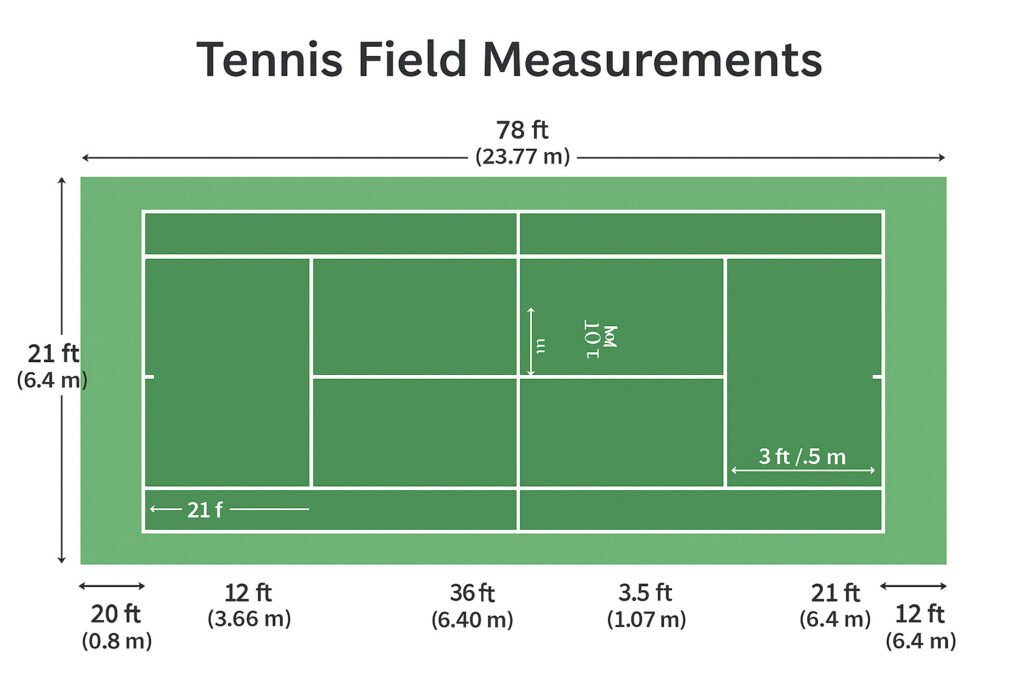
Tennis Field Measurements

Tennis Court Dimensions: Complete Guide to Tennis Field Measurements

A perfectly measured tennis court is the foundation of every great match — from local tournaments to international championships. Understanding tennis field measurements is essential for players, coaches, and court builders who aim to maintain professional standards. According to the International Tennis Federation (ITF), tennis court dimensions must be precise to ensure fairness, safety, and consistent gameplay across all surfaces — whether acrylic, clay, or grass. In this guide, we’ll break down the standard tennis court dimensions in feet and meters, including court length, width, service boxes, net height, and surrounding space. Whether you’re building a new tennis court or just curious about the layout, this article will help you understand every measurement that defines a regulation tennis field. Standard Tennis Court Dimensions A standard tennis court is designed according to precise measurements defined by the International Tennis Federation (ITF) to ensure uniformity across the world. Whether you’re playing a casual match or competing professionally, the court dimensions remain the same — only the width changes between singles and doubles play. Tennis Court Size in Feet and Meters This means that the total playing area is slightly wider for doubles matches to allow more space for team play. Additional Measurement Details The center mark divides the baseline in half and helps players position themselves accurately while serving. Total Area Including Runoff Space While the playing area is fixed, a minimum clear space around the court is essential for safety and free movement: This makes the total area of a standard tennis court approximately 120 feet (36.58 meters) long and 60 feet (18.29 meters) wide, including the run-off zones. ✅ Key Takeaway The standard tennis court dimensions ensure consistency, allowing players to adapt their skills easily on any certified court worldwide. Whether built for clubs, schools, or residential projects, following ITF-approved measurements guarantees a professional-quality playing experience. Service Boxes and Baseline Markings When it comes to tennis court layout, two of the most important components are the service boxes and baseline markings. These lines define the key playing zones where serves must land and where players position themselves during rallies. Understanding their exact measurements is crucial for maintaining an accurate and professional tennis field setup. 🎯 Service Boxes Dimensions A standard tennis court has two equal service boxes on each side of the net, divided by the center service line. These boxes determine where a serve must land to be considered valid. The center service line and center mark help players position their serves accurately, ensuring fair play on both sides. 🟨 Baseline and Center Mark The baseline runs parallel to the net and marks the farthest boundary at the back of the court. 📐 Purpose and Importance The precise alignment of service boxes and baselines ensures that every serve, rally, and point is judged accurately according to ITF tennis court standards. Even a small deviation in these measurements can affect gameplay and fairness, especially in professional matches. Net Height and Placement The tennis net is one of the most critical elements of a court’s design, serving as the central barrier that defines each side of the playing field. Maintaining the correct net height and placement ensures fairness, consistency, and compliance with ITF tennis court standards. 🎾 Standard Net Height Measurements According to the International Tennis Federation (ITF), the official tennis net height varies slightly between the posts and the center: This gentle downward curve is intentional — it ensures proper tension, allowing the ball to pass over the net realistically while maintaining uniform bounce behavior during play. 📏 Net Placement and Length The tennis net runs across the full width of the court, extending slightly beyond the sidelines for stability: Even on singles courts, the net posts remain in the same position, but singles sticks are used to narrow the playing width to 33 feet (10.06 meters), aligning with the singles court boundaries. ⚙️ Net Material and Tension A regulation tennis net is typically made from braided nylon or polyethylene mesh. Proper tensioning is vital — too tight, and the ball rebounds excessively; too loose, and the ball may sag or fall through. The center strap ensures consistent height and stability during matches. ✅ Why Correct Net Height Matters Maintaining the correct net height is essential for: Consistent net height and placement guarantee that the court performs the same way across all levels — from recreational to professional matches. Surrounding Areas (Runoff Space) When constructing a tennis court, it’s not just the playing surface that matters — the surrounding areas, also known as runoff space, play a major role in player safety, comfort, and overall game experience. Adequate runoff space ensures players can move freely and chase shots without the risk of injury or collisions with fences or walls. 🟩 Recommended Runoff Space Measurements According to ITF tennis court standards, a regulation tennis court must include clear space around the playing lines: This means the total area required for a full-sized tennis court, including runoff space, is approximately: These measurements create enough room for safe player movement and proper ball clearance, which are essential during competitive matches. ⚙️ Importance of Runoff Space The runoff area isn’t just for safety — it also affects gameplay quality and spectator experience. 🧱 Additional Considerations for Construction ✅ Why Runoff Space Matters Ignoring runoff space can lead to unsafe court conditions, especially in professional or high-speed play. By following ITF-approved tennis court layout standards, you can guarantee optimal performance, safety, and long-term durability of your facility. Tennis Court Layout for Different Levels While the standard tennis court dimensions remain consistent globally, the layout and size can vary depending on the level of play — from professional tournaments to school or junior matches. Understanding these variations helps builders and players design courts that suit different skill levels and age groups while still maintaining ITF tennis court standards. Professional Tennis Courts (ITF & ATP/WTA Standards) Professional courts follow strict International Tennis Federation (ITF) regulations to ensure uniformity and fairness across all competitions. These courts are

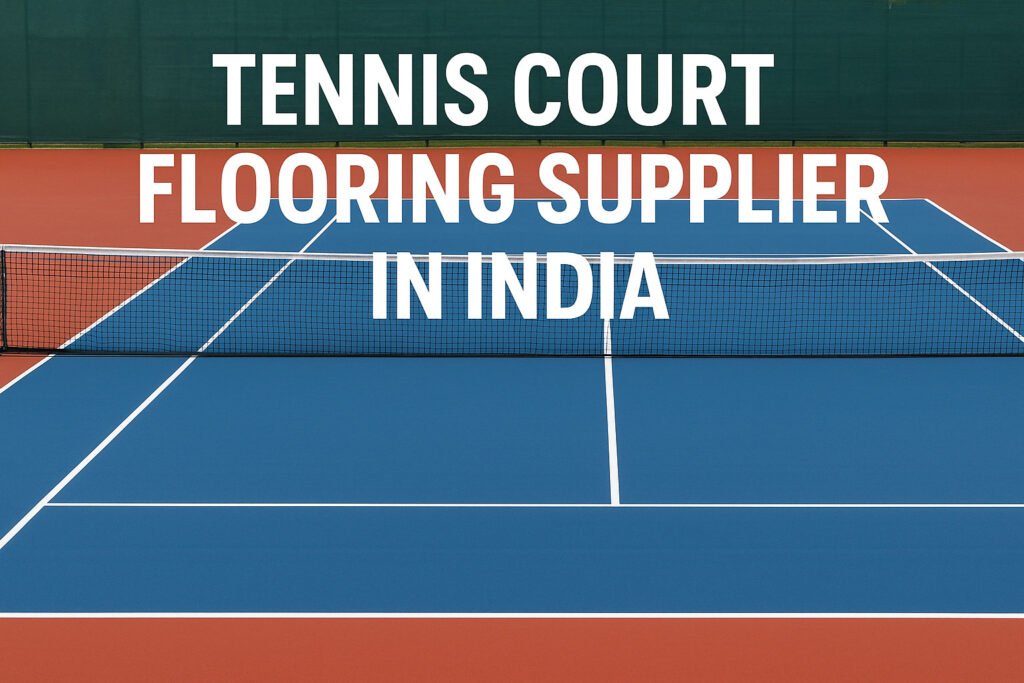
Tennis Court Flooring Supplier in India
Tennis court flooring

Tennis Court Flooring Supplier in India – Premium Synthetic Surfaces by Pacecourt

Introduction If you are searching for the best tennis court flooring supplier in India, you’ve come to the right place. As tennis continues to gain popularity across schools, clubs, and residential communities, the need for durable and high-performance courts has grown tremendously. Pacecourt is a trusted manufacturer and supplier of synthetic tennis court flooring in India, known for providing ITF-approved, weather-resistant, and high-grip surfaces that meet international standards. Whether you are building a new tennis facility or renovating an old one, choosing the right surface determines how your court performs — and how long it lasts. Why Synthetic Tennis Court Flooring is the Best Choice Traditional clay or grass courts require heavy maintenance and are highly weather-dependent. Synthetic acrylic tennis court flooring solves these issues with benefits such as: That’s why most tennis academies, schools, and sports contractors in India prefer synthetic acrylic systems installed by trusted brands like Pacecourt. Tennis Court Flooring Options by Pacecourt Pacecourt manufactures and installs several flooring systems suitable for different levels of play and budgets: 1. Synthetic Acrylic Flooring 2. PU (Polyurethane) Flooring 3. Modular Tile Flooring 4. Cushion Systems Each surface is engineered with durability, playability, and safety in mind, using premium synthetic materials designed for Indian weather conditions. Our Manufacturing Excellence Pacecourt operates as both a manufacturer and supplier — meaning every product is made in-house with strict quality control. This approach guarantees long-lasting surfaces that deliver consistent play performance year after year. Why Choose Pacecourt as Your Tennis Court Flooring Supplier? Feature Advantage 100% Made in India Locally produced materials & quick supply. Expert Installation Team End-to-end support from ground prep to finishing. ITF-Approved Surfaces Global-standard performance & bounce quality. Pan-India Presence Projects completed across Delhi, Mumbai, Bangalore, Hyderabad, and Chennai. Maintenance Support Regular inspection and resurfacing options. With more than a decade of experience, Pacecourt is among the most trusted tennis court flooring manufacturers in India, delivering projects for schools, sports complexes, private villas, and government facilities. Areas We Serve We supply and install tennis court flooring across India, including: Tennis Court Flooring Cost in India (2025) The cost of tennis court flooring depends on surface type, cushioning, and base preparation. Pacecourt offers custom quotes based on your project size, base condition, and design requirements. Tips Before Installing a Tennis Court Flooring Ensure proper base leveling and drainage before surfacing. Choose UV-resistant material for outdoor courts. Opt for professional installation — avoid DIY kits. Clean regularly with soft brushes and neutral detergent. Recoat every 4–6 years to maintain top performance. FAQs on Tennis Court Flooring Supplier in India

difference between tennis and badminton

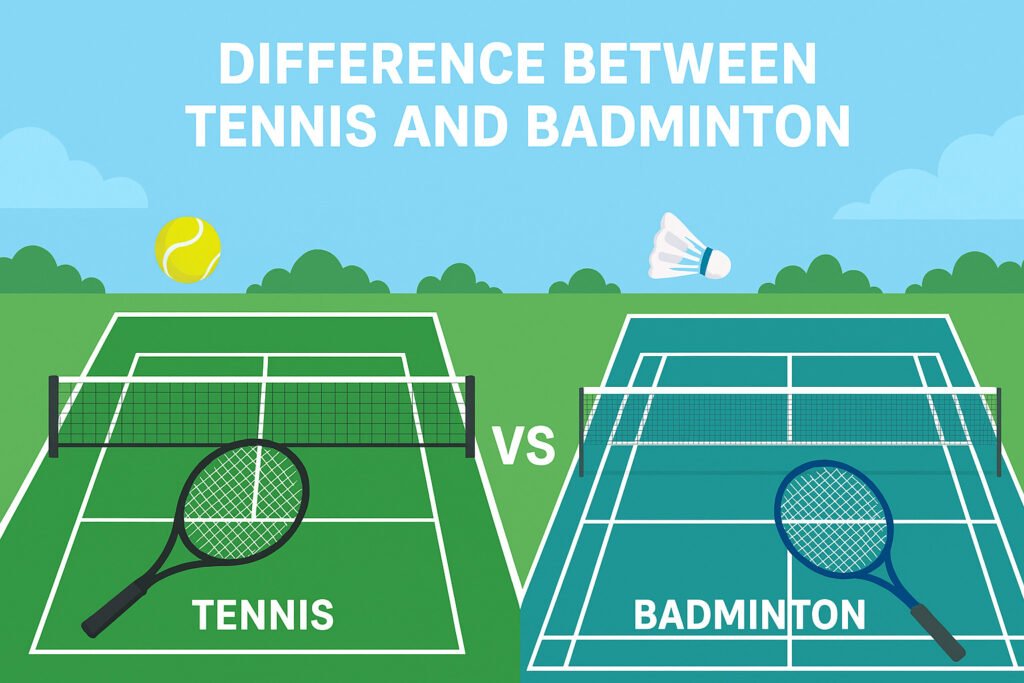
Difference Between Tennis and Badminton: Which One Should You Play?

Tennis and badminton are two of the world’s most popular racket sports, loved by players of all ages for their energy, strategy, and excitement. While both involve rackets, nets, and a court, the similarities end there — each sport has its own unique rules, equipment, and style of play. Understanding the difference between tennis and badminton helps players appreciate how each game challenges the body and mind in distinct ways. Tennis is often seen as a game of endurance, power, and long rallies played on larger outdoor courts, whereas badminton is known for its speed, precision, and agility, usually played indoors. Both sports require skill, coordination, and fitness, but the way they challenge the body and mind differs significantly. In this blog, we’ll explore the key differences between tennis and badminton, including their court designs, equipment, scoring systems, and playing techniques. Whether you’re a beginner trying to decide which sport to learn or simply curious about how they compare, this guide will help you understand what sets these two iconic games apart. What is Tennis? Tennis is a globally recognized sport that combines strength, strategy, and endurance. It can be played individually (singles) or in teams of two (doubles). Players use a stringed racket to hit a felt-covered rubber ball over a net, aiming to land it within the opponent’s court. The game originated in the late 19th century and has evolved into one of the most prestigious sports, featuring iconic tournaments such as Wimbledon, the US Open, and the French Open. Tennis can be played on various surfaces, including clay, grass, and synthetic hard courts, each influencing the speed and bounce of the ball. Physically, tennis demands explosive movements, stamina, and power, while mentally it requires tactical thinking and patience. The sport is not only a test of athleticism but also of consistency and control. What is Badminton Badminton is a fast-paced indoor racket sport that emphasizes agility, quick reflexes, and precision. Instead of a ball, players hit a shuttlecock (or birdie) — a lightweight projectile made of feathers or synthetic materials — across a high net using a light, flexible racket. The game can also be played as singles or doubles, with matches typically being shorter and more intense than tennis. Originating from ancient games played in India and later refined in England, badminton has grown into a major sport in Asia, particularly in India, China, and Indonesia. Badminton courts are smaller than tennis courts, allowing for rapid rallies and frequent directional changes. It requires exceptional hand-eye coordination, speed, and endurance in short bursts. While tennis is often played outdoors, badminton is mostly played indoors to avoid wind interference, ensuring the shuttlecock’s flight remains stable. In short: Both offer unique physical and mental challenges, making them two of the most engaging sports worldwide. Court Differences One of the most noticeable distinctions between tennis and badminton lies in the court size, surface type, and setup. Although both games involve a net and boundaries, the design and dimensions of each court cater to the sport’s unique style of play. Tennis Court A tennis court is much larger and designed for powerful groundstrokes and long rallies. The court surface can vary — clay, grass, or synthetic hard court — each offering a different bounce and playing speed. A larger court area demands greater endurance and lateral movement, as players must cover more ground with every rally. Badminton Court A badminton court, by contrast, is smaller and built for fast-paced exchanges and quick reflexes. The flooring is usually wooden or synthetic acrylic, providing a smooth, non-slip surface ideal for indoor play. Badminton’s smaller court promotes speed, precision, and agility, with players constantly moving in short, explosive bursts. Quick Comparison Table Feature Tennis Court Badminton Court Length 23.77 m 13.4 m Width (Singles/Doubles) 8.23 m / 10.97 m 5.18 m / 6.1 m Net Height 1.07 m 1.55 m Surface Type Clay, Grass, Synthetic Acrylic Wooden, Synthetic Acrylic Environment Mostly Outdoor Mostly Indoor Movement Style Long rallies, powerful strokes Quick rallies, rapid footwork Equipment Differences While tennis and badminton may appear similar at first glance — both requiring rackets and a net — their equipment is designed very differently to suit the pace, technique, and dynamics of each sport. Every piece of gear, from the racket to the footwear, is specialized to enhance performance and comfort on the court. 🎾 Tennis Equipment Tennis is a power-oriented sport that demands strong, durable equipment to handle high-speed ball impacts and longer rallies. 🏸 Badminton Equipment Badminton focuses on speed, precision, and quick reflexes, so its equipment is lighter and more flexible. Equipment Tennis Badminton Racket Weight 250–340 grams 80–100 grams Playing Object Rubber ball Shuttlecock (feather/synthetic) Average Object Weight 56–59 grams 4.75–5.50 grams String Tension 50–65 lbs 18–30 lbs Court Footwear Durable, outdoor grip Lightweight, indoor non-marking Primary Focus Power, control, endurance Speed, agility, precision Gameplay and Scoring Differences Though tennis and badminton are both racket sports, their rules, scoring systems, and playing styles are entirely different. Each sport tests players’ skills, stamina, and reflexes in unique ways — with tennis emphasizing long rallies and power, while badminton focuses on speed and precision. 🎾 Tennis Gameplay and Scoring Tennis matches are built around rallies in which players strike a ball back and forth over the net, aiming to land it inside the opponent’s court. A point is scored when the opponent fails to return the ball correctly. Key Aspects of Gameplay: Scoring System:Tennis uses a unique point structure based on “games” and “sets.” Example:If the score is 6–4, 5–7, 6–3 → the player wins 2 sets to 1. Tennis rallies are generally longer and slower, requiring stamina, strategy, and power over extended play. 🏸 Badminton Gameplay and Scoring Badminton, in contrast, is a fast-paced indoor game where points are won through quick reflexes, smart shot placement, and agility. The goal is to hit the shuttlecock so that it lands in the opponent’s court before they can return it. Key Aspects of Gameplay: Scoring System:Badminton

Outdoor Basketball Court
Basketball Court Construction

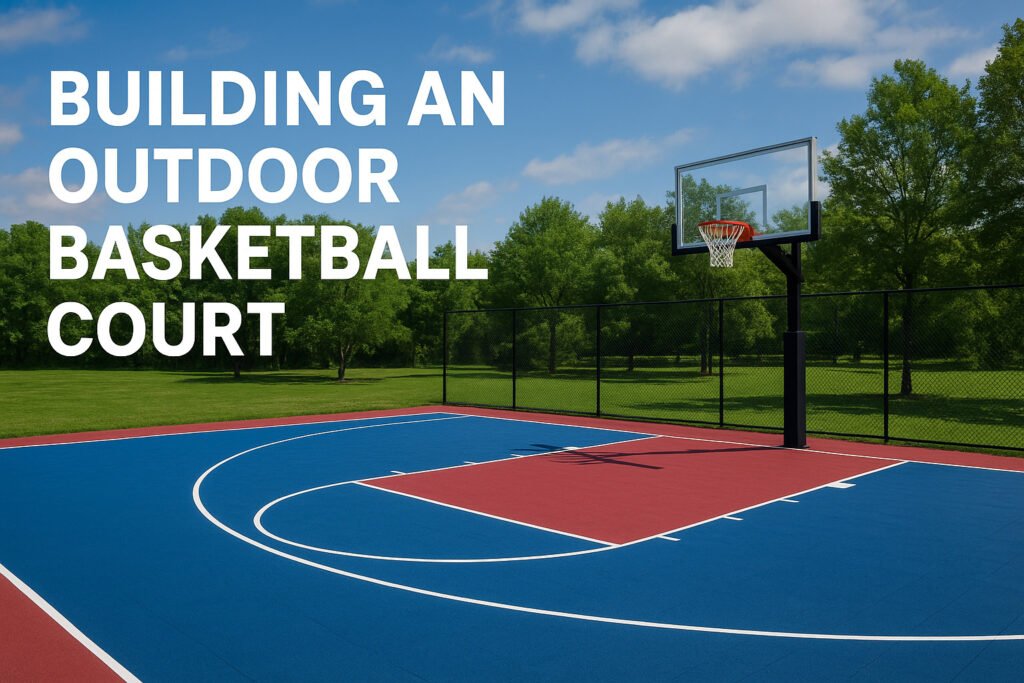
Complete Guide to Building an Outdoor Basketball Court

Basketball is one of the most popular sports worldwide, loved for its fast pace, teamwork, and energy. While indoor arenas are ideal for professional matches, outdoor basketball courts bring the game to schools, housing societies, clubs, and backyards making it accessible to everyone. Building a high-quality outdoor basketball court requires more than just space and a hoop. It involves careful planning, the right flooring materials, proper base construction, and weather-resistant coatings to ensure safety, durability, and consistent performance throughout the year. Factors Affecting the Cost of an Outdoor Basketball Court The total cost of constructing an outdoor basketball court can vary greatly depending on several important factors. Understanding these elements will help you estimate your budget more accurately and make informed decisions during the planning stage. Here are the main factors that influence the price of an outdoor basketball court: 1. Court Size and Layout The size of the court is one of the biggest cost determinants. The larger the court, the higher the cost of flooring, painting, and accessories. 2. Type of Flooring Material The flooring system is the heart of your basketball court and affects both performance and longevity.Common types include: Each surface type has a different price range depending on the quality and brand. 3. Base Preparation and Groundwork Before installing flooring, the base or foundation must be properly prepared. This includes: Poor groundwork can lead to cracks and water damage, so investing in a strong foundation is essential — though it increases upfront costs. 4. Accessories and Equipment Essential accessories add to the overall cost: High-quality, weather-resistant accessories ensure long-term use but can add a significant amount to the total project cost. 5. Location and Site Conditions The location of your project affects costs through transportation, soil conditions, and local labor rates.For example: Urban regions with premium material availability may have slightly higher costs but faster project timelines. Remote areas may have higher logistics and labor expenses. Uneven or waterlogged land requires additional groundwork and drainage solutions. Average Cost Estimates by Type Here are typical cost ranges and breakdowns for different types of outdoor basketball courts, particularly in the Indian context, to help you benchmark your budget. Basic Outdoor Acrylic Court (Concrete or Asphalt Base) Best suited for: Schools, housing societies, and community sports areas looking for a durable yet cost-effective option. Mid-Range Outdoor Modular or Synthetic Tile Court Best suited for: Clubs, residential complexes, and facilities that prioritize easy maintenance and long-term performance. Premium or Customized Outdoor Basketball Court Best suited for: Private clubs, institutions, or competition-level facilities seeking superior performance and aesthetics. Summary Table Court Type Estimated Cost Range* Key Features Basic Acrylic Outdoor Court ₹5–7 lakh (half court) Concrete/asphalt base, acrylic coating, standard accessories Mid-Range Modular Court ₹7–10 lakh+ Modular tiles, better durability, faster installation Premium Customized Court ₹15–25 lakh+ Advanced materials, lighting, fencing, branding options *Approximate costs based on typical Indian market rates. Prices may vary depending on site conditions, size, and customization. Important Notes Comparison Table: Cost vs Lifespan vs Maintenance of Outdoor Basketball Courts Choosing the right type of flooring for your outdoor basketball court isn’t only about the upfront cost — it’s also about how long the surface lasts and how much maintenance it requires over time. The table below provides a clear comparison between the most common types of outdoor basketball court surfaces used in India and similar regions. Court Type Approx. Cost (₹/sq. ft.) Average Lifespan Maintenance Level Key Advantages Key Drawbacks Acrylic on Concrete/Asphalt Base ₹500 – ₹900 5 – 7 years Moderate – needs resurfacing every 3–5 years Affordable, good performance, vibrant colors Can crack if the base settles; needs periodic recoating Modular Interlocking Tiles (PP or Synthetic) ₹180 – ₹250 8 – 12 years Low – easy to clean and replace damaged tiles Weather-resistant, fast installation, minimal maintenance Higher upfront cost; joints may trap dust/debris Polyurethane (PU) Poured System ₹700 – ₹1,200 10 – 15 years Low to Moderate Excellent cushioning and shock absorption Needs professional installation; not ideal for extreme outdoor UV exposure Rubber or EPDM Flooring ₹600 – ₹1,000 7 – 10 years Low Great for shock absorption, slip resistance Ball bounce slightly lower; limited color options Concrete Court (Uncoated) ₹300 – ₹500 10+ years High – frequent cleaning and sealing Very durable and long-lasting base Hard on joints, slippery when wet, less aesthetic Analysis & Recommendations Pro Tip: When calculating cost, always consider the total cost of ownership (TCO) — including resurfacing, repairs, and maintenance — rather than just the installation price. A slightly higher upfront investment in a premium material can save significant money in long-term upkeep. Hidden Costs to Watch Out For When Building an Outdoor Basketball Court While the main construction expenses — such as flooring, base work, and equipment — are easy to plan for, there are several hidden or overlooked costs that can significantly impact your total project budget. Understanding these costs upfront will help you avoid surprises and keep your project within budget. Site Preparation and Land Leveling Before construction begins, the ground must be properly leveled and compacted to create a stable foundation. Tip: Always conduct a soil and drainage assessment before finalizing your budget. Drainage and Water Management Poor drainage is one of the leading causes of surface damage in outdoor courts. Tip: Choose a flooring system with built-in drainage or ensure your contractor includes proper slope design in the base work. Structural Base Repairs or Reinforcements If you’re resurfacing an existing old court, cracks, unevenness, or weak foundations must be repaired first. Tip: Ask your installer to perform a structural inspection before resurfacing. Lighting Installation Adding floodlights or LED systems is essential if you want to play after sunset, but it’s often not included in initial quotes. Tip: Plan lighting during initial design to avoid additional wiring and foundation work later. Labor and Transportation Charges Costs can vary widely depending on your location and accessibility: Tip: Get a detailed quotation that includes delivery, handling, and labor to prevent last-minute cost increases.

Scroll to Top
HOMEOWNERS
BUSINESS OWNERS
ARCHITECTS
MUNICIPALITIES

Acrylic Flooring

Get 10% off on sports flooring materials

ITF-certified acrylic flooring for Tennis, Basketball, Badminton, Pickleball & more shipped worldwide.

    ISO-Certificate