Author name: Rahul

Rahul is a sports flooring expert and a key contributor at Pacecourt, a leading brand in acrylic and synthetic sports court solutions. Passionate about creating world-class playing surfaces, Rahul shares insights on tennis courts, basketball courts, and multi-purpose sports flooring. His goal is to help facility owners and sports enthusiasts choose durable, high-performance solutions that enhance the game experience.

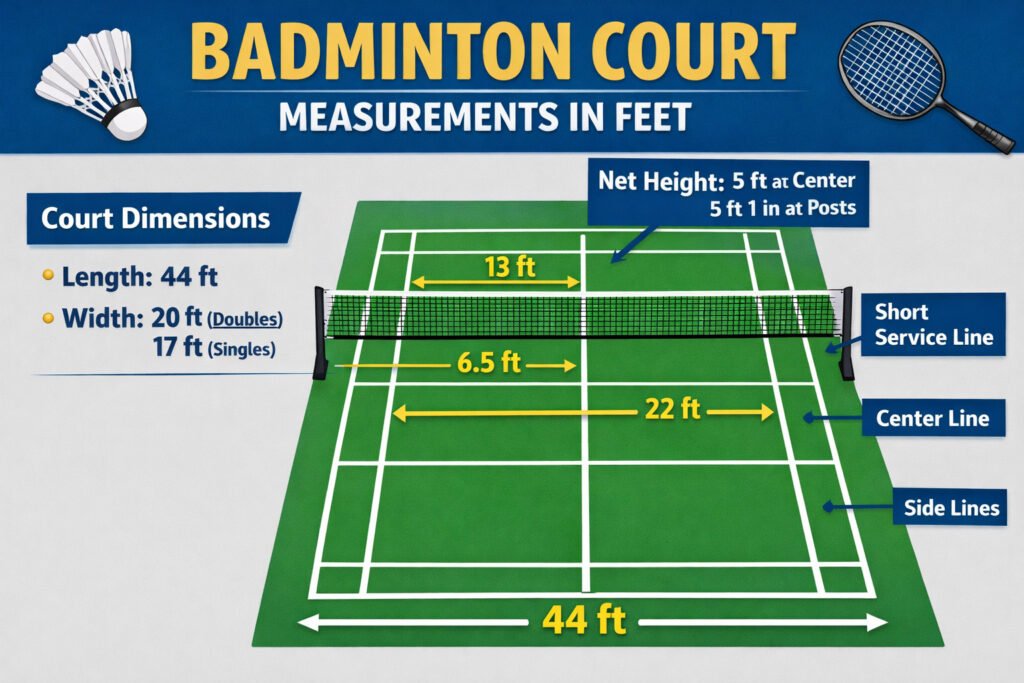
badminton court measurements in feet

Badminton Court Measurement in Feet: Complete Guide for Players & Court Builders

Badminton is one of the fastest and most widely played racket sports in the world. Whether you are a player, a coach, or planning to build a court, understanding the badminton court measurements in feet is essential. The correct dimensions ensure fair play, safety, and compliance with international standards set by the Badminton World Federation (BWF). In this guide, we break down every measurement of a badminton court in feet, along with diagrams, rules, and construction tips. What is Badminton Badminton is a fast-paced indoor sport played with a racket and a shuttlecock. It can be played between two players (singles) or four players (doubles). The goal of the game is to hit the shuttlecock over the net and land it inside the opponent’s court so they cannot return it. Key Features of Badminton Objective of the Game Each rally starts with a serve. Players score a point when the opponent: The first player (or team) to reach 21 points wins a game, and matches are usually best of 3 games. Why People Love Badminton Industry-Leading Synthetic Acrylic Flooring System Pacecourt specializes in premium multi-layer synthetic acrylic systems that offer: This makes Pacecourt courts suitable for professional training, tournaments, and recreational play. Built for Indian Weather Conditions Indian climates can be harsh — extreme heat, monsoons, dust, and UV exposure.Pacecourt’s surfaces are engineered to withstand: The result? A long-lasting, fade-resistant, and weather-proof tennis court floor. Long-Lasting Durability (8–10+ Years) Pacecourt surfaces use high-quality acrylic resins, rubberized cushioning, and UV-stable pigments.These materials help ensure: This durability makes Pacecourt a cost-efficient investment over time. Customisable Speed & Cushioning Every facility has different needs.Pacecourt offers customisation in: This ensures players enjoy an ideal blend of comfort, speed, and control. Professional Installation Team A tennis court is only as good as its installation.Pacecourt provides: You get a perfectly level, tournament-quality surface every time. Used by Leading Academies & Clubs Across India Pacecourt has earned trust nationwide with successful installations at: Their strong portfolio proves the performance and reliability of their flooring systems. Safe, Player-Friendly, and Non-Toxic Materials Pacecourt surfaces are made using eco-friendly, non-toxic, and low-VOC materials, ensuring: This makes Pacecourt a perfect choice for schools and residential communities. Excellent After-Sales Support Pacecourt provides comprehensive support, including: Their support ensures your tennis court stays in top condition for years. Better Value Than Generic Flooring Brands Many generic or low-cost tennis flooring products compromise on: Pacecourt delivers premium performance at affordable pricing, making it a superior long-term investment. Conclusion If you’re building or renovating a tennis court, Pacecourt is one of the best choices for flooring due to its: Whether it’s for competitive sports, coaching, or recreational play, Pacecourt ensures a safe, durable, and high-performance tennis court surface that delivers exceptional value for years.
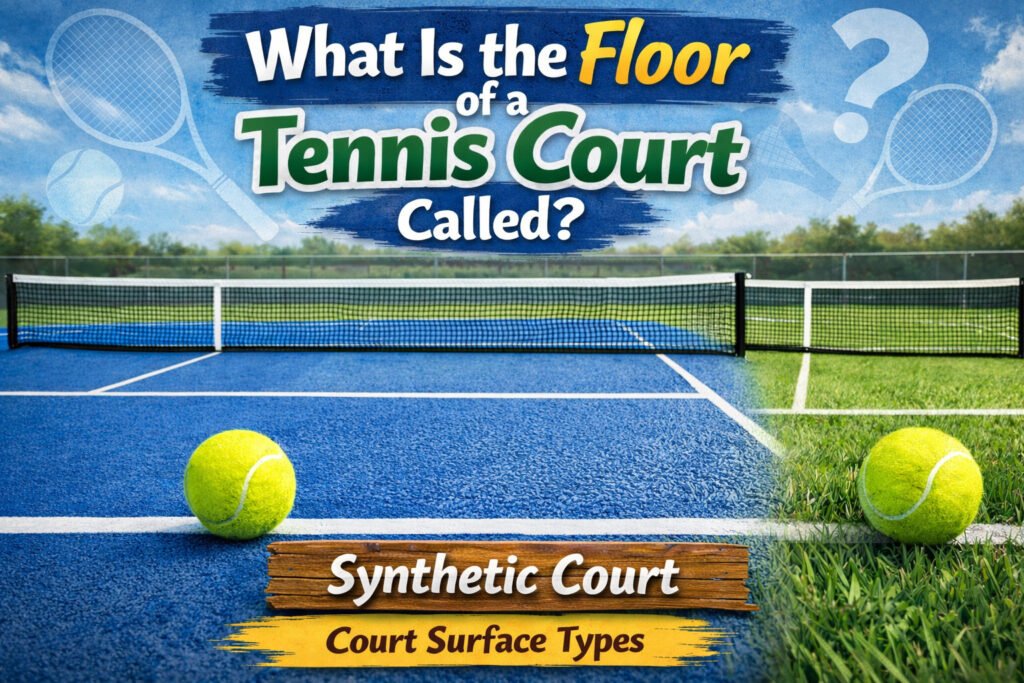
floor of a tennis court
Tennis court flooring

What Is the Floor of a Tennis Court Called?

When people talk about the floor of a tennis court, they are usually referring to the playing surface or the court surface. This surface plays a major role in how the game feels, how fast the ball moves, and how safe the players are. Each surface type has unique characteristics, and knowing the correct terms helps players, coaches, and court builders understand the game better. Types of Tennis Court Flooring Materials Tennis court flooring materials come in various types, each offering unique characteristics that affect the speed of play, maintenance requirements, and player comfort. Here are the most common types of tennis court flooring materials: 1. Hard Courts 2. Clay Courts 3. Grass Courts 4. Carpet Courts 5. Acrylic or Synthetic Courts 6. Artificial Turf Courts 7. Rubberized Courts Each type of tennis court flooring has its pros and cons, and the choice often depends on factors like climate, budget, and the level of play (recreational or professional). Why Synthetic Acrylic Flooring Stands Out Synthetic acrylic flooring is a popular choice for tennis courts, and it stands out for several reasons. Here’s why it’s a preferred option for both recreational and professional use: 1. Versatility 2. Durability 3. Low Maintenance 4. Consistent Playability 5. Player Comfort 6. Aesthetic Appeal 7. Cost-Effectiveness 8. Eco-Friendly Options Where It’s Used In summary, synthetic acrylic flooring stands out because it combines performance, durability, and cost-effectiveness, making it a top choice for tennis courts worldwide. Whether for casual play or professional tournaments, it delivers a consistent and enjoyable playing experience. Tennis Court Floor Surface Matters The tennis court surface influences: ✔ Player performance Some players perform better on clay, others on grass or hard courts. ✔ Ball behaviour Speed, bounce height, and spin reaction vary by surface. ✔ Player safety High-quality flooring reduces injuries and improves support during quick movements. ✔ Maintenance needs Hard courts need less maintenance compared to clay or grass. How Synthetic Acrylic Courts Compare To Other Surfaces Tennis court surfaces significantly impact performance, safety, and maintenance. Among all modern flooring options, synthetic acrylic courts have become one of the most popular choices for clubs, academies, residential spaces, and professional players. But how do they actually compare to other surfaces like clay, grass, turf, and concrete? This guide breaks down the differences clearly so you can understand why synthetic acrylic courts stand out. 1. Synthetic Acrylic vs Clay Courts Acrylic Court Advantages Clay Court Advantages Which Is Better? Synthetic acrylic is better for training efficiency and match consistency, while clay is preferred for long rallies and technical players. 2. Synthetic Acrylic vs Grass Courts Acrylic Court Advantages Grass Court Advantages Which Is Better? Grass is enjoyable but impractical due to high maintenance. Acrylic courts are more economical, durable, and predictable. 3. Synthetic Acrylic vs Concrete Courts Acrylic Court Advantages Concrete Court Advantages Which Is Better? Concrete without acrylic coating is too hard, leading to injuries. Acrylic-coated concrete courts are the modern standard. 4. Synthetic Acrylic vs Artificial Grass/Turf Courts Acrylic Court Advantages Artificial Turf Advantages Which Is Better? Acrylic courts are better for serious tennis training & tournaments, while turf is ideal for recreational multi-sport use. 5. Synthetic Acrylic vs Carpet Courts (Indoor) Acrylic Court Advantages Carpet Court Advantages Which Is Better? Carpet courts are niche; acrylic is far more versatile and widely used. Summary Table: Acrylic vs Other Court Surfaces Surface Type Speed Bounce Maintenance Durability Best For Synthetic Acrylic Medium-Fast Consistent Low High Training, clubs, tournaments Clay Slow High High Medium Baseline play, technique training Grass Fast Low Very High Low-Medium Premium clubs, tournaments Concrete (Uncoated) Fast Hard Very Low Very High Budget courts Artificial Turf Medium Moderate Medium Medium Recreational play Carpet Very Fast Low Low Medium Indoor facilities Why Choose Pacecourt for the Floor of Your Tennis Court? Choosing the right flooring for a tennis court is one of the most important decisions for any academy, sports complex, school, club, or homeowner. The quality of the surface directly affects performance, safety, durability, and long-term maintenance costs. Among all tennis flooring brands in India, Pacecourt stands out as a trusted and highly preferred name. Here’s why Pacecourt is the ideal choice for the floor of your tennis court. Industry-Leading Synthetic Acrylic Flooring System Pacecourt specializes in premium multi-layer synthetic acrylic systems that offer: This makes Pacecourt courts suitable for professional training, tournaments, and recreational play. Built for Indian Weather Conditions Indian climates can be harsh — extreme heat, monsoons, dust, and UV exposure.Pacecourt’s surfaces are engineered to withstand: The result? A long-lasting, fade-resistant, and weather-proof tennis court floor. Long-Lasting Durability (8–10+ Years) Pacecourt surfaces use high-quality acrylic resins, rubberized cushioning, and UV-stable pigments.These materials help ensure: This durability makes Pacecourt a cost-efficient investment over time. Conclusion The “floor” of a tennis court is properly known as the tennis court surface. It can be made of hard acrylic, clay, grass, artificial turf, or carpet, and each type creates a different playing experience.Understanding the court surface helps players, builders, and clubs choose the best option for performance, durability, and safety.

Pickleball Court Flooring in Mumbai

Pickleball Court Flooring in Mumbai

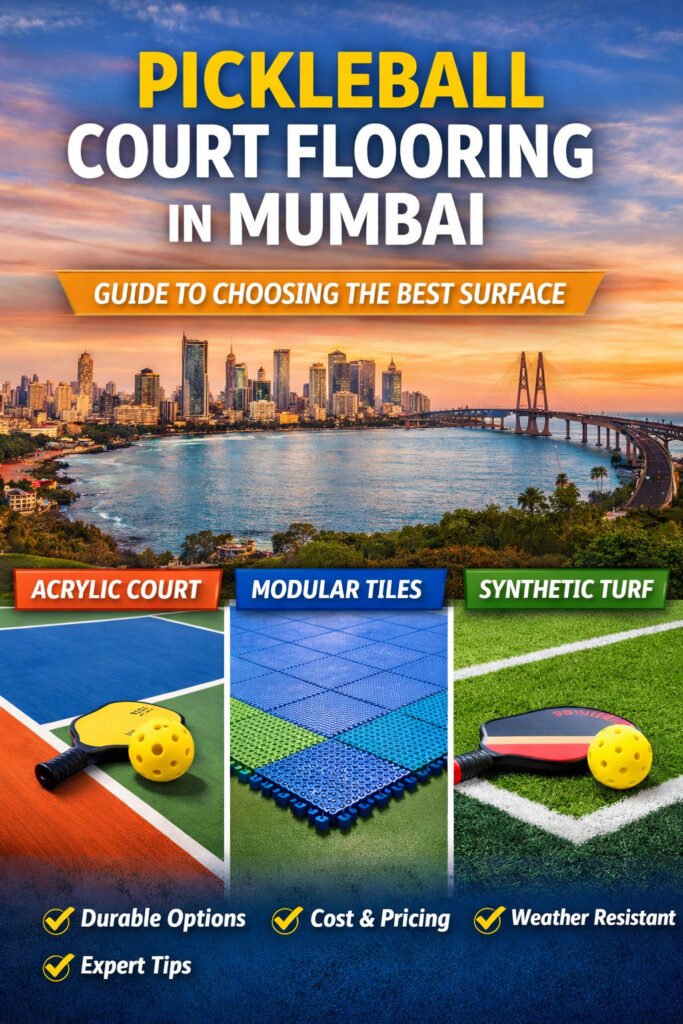
Pickleball is rapidly becoming one of the fastest-growing sports in India, and Mumbai is witnessing a huge rise in community clubs, private courts, and sports complexes investing in professional pickleball courts. Whether you’re building a residential court, a commercial sports academy, or upgrading an existing court, choosing the right pickleball court flooring in Mumbai is crucial for performance, durability, and player safety. This comprehensive guide covers everything you need to know before installing a pickleball court in Mumbai. Why Is Pickleball Court Flooring Important? The flooring plays a key role in: With Mumbai’s climate—high humidity, heavy monsoons, and salt-laden air—flooring material selection becomes even more important. Types of Pickleball Court Flooring in Mumbai Below are the most reliable and commonly used flooring systems ideal for Mumbai’s weather and usage patterns. 1. Acrylic Hard Court Flooring Acrylic surfacing is one of the most popular choices for pickleball courts in Mumbai due to its durability and cost-efficiency. Benefits Best For Housing societies, academies, schools, and recreational clubs. 2. Synthetic Turf Flooring (Padded Turf) Although not used for professional tournaments, synthetic turf works well for multi-purpose recreational courts. Benefits Best For Indoor recreation centers, multipurpose play areas. 3. Interlocking Modular Tiles These tiles are made from high-impact polypropylene and designed for fast installation and strong durability. Benefits Best For Sports complexes, rented spaces, clubs needing quick court setup. 4. PU (Polyurethane) Flooring A seamless, cushioned indoor flooring option that is increasingly popular for premium pickleball courts. Benefits Best For Indoor arenas, sports academies, commercial spaces. Factors to Consider Before Installing Pickleball Court Flooring in Mumbai 1. Climate Durability Mumbai’s weather can be harsh. Choose materials that can handle: 2. Player Footfall High-traffic courts require heavy-duty materials like acrylic or modular tiles. 3. Budget Acrylic courts are budget-friendly, while PU and modular tile courts fall into a premium category. 4. Maintenance Needs If you want low-maintenance, modular tiles or acrylic flooring are the best choices. 5. Indoor vs Outdoor Usage Pickleball Court Dimensions (Standard Guide) You asked before to remove dimensions in some blogs—if you want to include or exclude them, let me know.I have not included them here. Cost of Pickleball Court Flooring in Mumbai (2026 Estimate) Flooring Type Approx. Cost per Sq. Ft. Best Use Acrylic Flooring ₹70 – ₹120 Outdoor standard courts Modular Tiles ₹140 – ₹250 Premium outdoor courts PU Flooring ₹250 – ₹350 Indoor high-level courts Synthetic Turf ₹80 – ₹150 Recreational spaces Costs vary based on brand, cushioning layers, base work, and site conditions. Why Choose Professional Pickleball Court Installers in Mumbai? Professional installation ensures: DIY courts often face issues like bubbles, cracks, uneven bounce, and water logging—especially during Mumbai monsoons. Benefits of Installing a Pickleball Court in Mumbai Perfect for residential societies Low-maintenance sport Suitable for mixed-age groups Fastest-growing sport globally Great for fitness & recreation High ROI for commercial spaces Maintenance Tips for Pickleball Court Flooring To extend the life of your court: Conclusion Installing the right pickleball court flooring in Mumbai ensures better gameplay, reduced injuries, and long-term value. Whether you prefer acrylic surfacing, modular tiles, PU flooring, or synthetic turf, choosing high-quality materials and trained professionals will give you the best results.

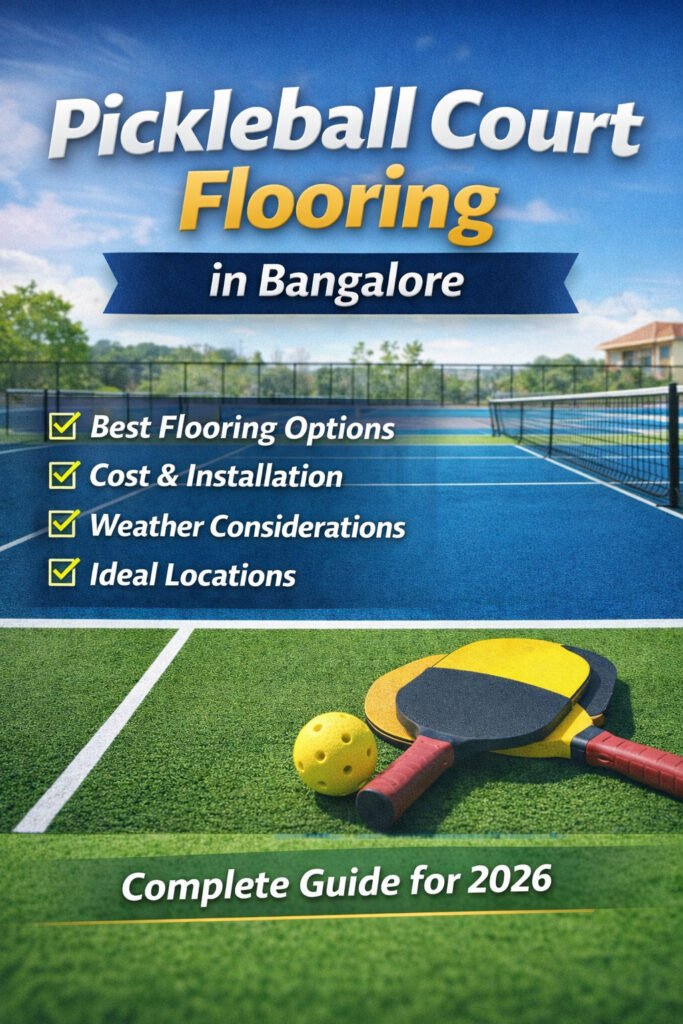
Pickleball Court Flooring in Bangalore
Pickleball Court Flooring In Bangalore

Pickleball Court Flooring in Bangalore

Pickleball is rapidly gaining popularity in India, and Bangalore has become one of the fastest-growing hubs for the sport. From residential communities and fitness clubs to professional academies, the demand for high-quality pickleball court flooring in Bangalore is rising. Choosing the right flooring is essential for performance, player safety, durability, and long-term maintenance. This comprehensive guide explains everything you need to know about building or upgrading a pickleball court in Bangalore — including flooring types, ideal specifications, cost, installation process, and top considerations for the city’s weather and usage patterns. What is Pickleball Court A pickleball court is a specially designed playing area used for the sport of pickleball, which combines elements of tennis, badminton, and table tennis. The court is structured to support fast rallies, controlled shots, and strategic gameplay. It provides a balanced space where both beginners and advanced players can enjoy the game comfortably. The court is divided into different sections for serving, returning, and volleying, ensuring fair play and smooth movement. A central net separates the two sides, encouraging competitive yet accessible gameplay. Compared to traditional sports courts, pickleball courts are smaller, which makes the game easier to learn and more engaging for people of all ages. A key feature of the court is the non-volley zone, often called the “kitchen,” which prevents players from standing too close to the net and creates a fun strategic element. The overall design of the court promotes safety, quick reflexes, and enjoyable rallies. Pickleball courts can be built both indoors and outdoors, using materials like acrylic, synthetic flooring, or concrete with proper coatings. These surfaces are engineered to offer the right amount of traction, ball bounce, and durability. Outdoor courts usually have UV-resistant coatings, while indoor courts focus on noise control and shock absorption. The court layout, clear markings, and high-visibility colors help players navigate the game easily. Whether used for recreational fun or competitive matches, a standard pickleball court provides a structured and enjoyable environment for this increasingly popular sport. Standard Pickleball Court Dimensions A standard pickleball court follows international norms: These dimensions remain the same for indoor and outdoor courts in Bangalore. Best Flooring Options for Pickleball Courts in Bangalore 1. Acrylic Hard Court Flooring (Most Popular) Acrylic coating over concrete is the top choice due to: Suitable for clubs, academies, and multi-sport facilities. 2. Synthetic Cushion Flooring Perfect for player-friendly surfaces: Ideal for training centres and senior players. 3. Polypropylene Modular Tiles Best for portable and quick-fix installations: Great for apartment complexes, rooftop courts, and indoor halls. 4. Artificial Turf Pickleball Courts Used in recreational areas: Best for informal play, resorts, and residential amenities. Factors to Consider for Pickleball Flooring in Bangalore ✔ Weather & Climate Bangalore’s moderate climate supports all flooring types, but outdoor courts should use: ✔ Type of Players ✔ Usage Pattern For heavy daily use (academies/clubs), choose: ✔ Budget Acrylic and synthetic systems offer the best balance between cost and longevity. Cost of Pickleball Court Flooring in Bangalore (2026) Flooring Type Approx. Cost (Per Court) Basic Acrylic Court ₹85,000 – ₹1,40,000 Cushioned Acrylic ₹1,40,000 – ₹2,50,000 Modular PP Tiles ₹1,00,000 – ₹1,80,000 Artificial Turf Court ₹1,20,000 – ₹2,00,000 Note: Costs vary based on sub-base condition, material thickness, brand, and customization. Installation Process for Pickleball Flooring 1. Sub-base Preparation 2. Application of Primer Layer 3. Cushion Layers (Optional) 4. Acrylic/Surface Top Coats 5. Court Accessories Includes: Ideal Locations for Pickleball Courts in Bangalore Bangalore’s active lifestyle culture makes pickleball an ideal sport for both youth and adults. Why Choosing the Right Flooring Matters High-quality flooring ensures: Conclusion Pickleball is booming in Bangalore, and installing the right flooring is the key to building a safe, durable, and high-performing court. Acrylic and cushioned synthetic flooring are the top choices for most facilities, offering the best balance between cost, comfort, and long-term value. Whether you are building a court for a residential community, sports academy, gym, or commercial venue, choosing the right pickleball court flooring in Bangalore ensures excellent playability and long-lasting performance.

tennis court size in feet

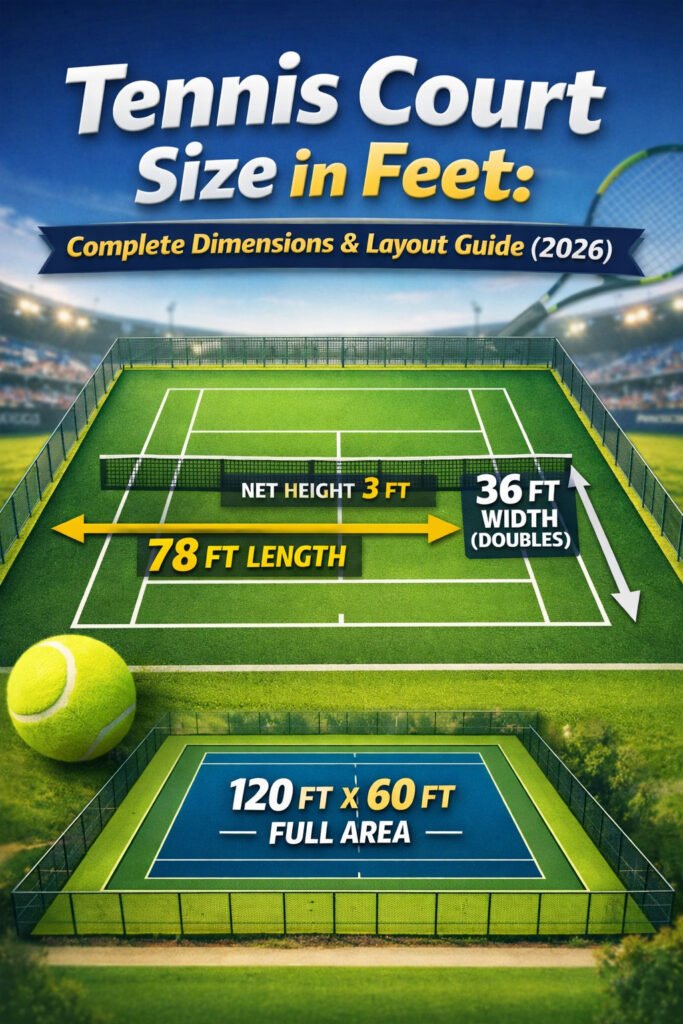
Tennis Court Size in Feet: Complete Dimensions, Markings & Layout Guide (2026)

Understanding the tennis court size in feet is essential whether you’re building a new court, upgrading an old one, or simply learning the game. The official tennis court dimensions are standardized worldwide by the ITF (International Tennis Federation), ensuring consistent play across all levels—from recreational games to professional tournaments. This guide covers tennis court size in feet, layout, marking dimensions, run-off areas, and construction considerations to help you plan with accuracy. Why Standard Dimensions Matter The specific dimensions of a tennis court are fundamental to the game’s strategy and flow. The size dictates the style of play, influencing everything from serve strategy to rally dynamics. A larger court would favour players with immense stamina, while a smaller one might benefit those with quick reflexes. The current dimensions create a perfect balance between power, finesse, and athleticism. They provide enough space for epic rallies and powerful groundstrokes while demanding the precision needed for drop shots and sharp angles. Every inch matters, and now that you know the numbers, you can watch the game with a new perspective on the incredible skill required to master the court. What is Tennis Court A tennis court is a standardized rectangular playing surface used for singles and doubles tennis matches. It is designed with precise dimensions, markings, and structural elements to ensure fair, balanced, and safe play for athletes across all levels—from recreational players to professional competitors. A standard tennis court measures 78 feet in length. For singles play, the width is 27 feet, while doubles matches use the full width of 36 feet, which includes additional side areas known as doubles alleys. The court is divided into two equal halves by a net that stretches across the center. The net stands 3 feet high at the center and 3.5 feet at the posts, with a slight downward dip that affects ball bounce and play strategy. The surface of a tennis court can vary, and each surface type affects speed, bounce, and playing style. Common options include acrylic hard courts, synthetic surfaces, clay courts, grass courts, and artificial turf. Hard courts are the most widely used because they offer consistent bounce and low maintenance, while clay and grass provide distinct gameplay characteristics. A tennis court features several essential markings. These include the baselines at the back of the court, sidelines that define width, service lines, and the center service line, which divides the service boxes. These lines outline the rules for serving, ball placement, and in-play areas. The surface lines are usually 2 to 4 inches thick and painted in white for visibility. Beyond the playing area, additional space is required to allow players to move safely. This is known as the run-off area. For comfortable and safe play, especially in tournaments, a total area of around 120 feet by 60 feet is recommended. This space enables players to chase wide shots, backpedal for deep balls, and avoid injury from obstacles. Most tennis courts are surrounded by fencing ranging from 10 to 12 feet in height to prevent balls from leaving the area. Many modern facilities also install LED lighting systems for nighttime play, ensuring good visibility without glare. Accessories such as benches, umpire chairs, scoreboards, and ball baskets support organized gameplay and training. Overall, a tennis court is a carefully designed structure that combines accurate dimensions, quality surface materials, proper safety zones, and essential equipment. Whether used for recreation, coaching, or professional matches, maintaining standard measurements and surface quality is key to ensuring an optimal tennis experience. Official Tennis Court Size in Feet A standard tennis court used for singles and doubles has the following official size: ✔ Total Playing Area (Singles & Doubles) ✔ Court + Run-off Area (Recommended Full Area) To ensure safe movement around the court: This is the area required for most residential, club, and competitive courts. Detailed Tennis Court Dimensions (in Feet) Below is a breakdown of each zone on a tennis court: ✔ Baseline to Baseline: ✔ Service Line to Net: ✔ Net to Opposite Service Line: ✔ Width of Service Boxes: ✔ Doubles Alleys: ✔ Distance from Baseline to Fence/Boundary: ✔ Distance from Sideline to Fence/Boundary: Tennis Net Dimensions in Feet Net Height at Centre: 3 feet Net Height at Posts: 3.5 feet Net Width: 42 feet (for doubles court) Surface Options for a Standard Tennis Court Size Tennis court size remains the same regardless of surface type. Common surfaces include: 1. Hard Court (Acrylic / Concrete + Cushioning) 2. Clay Court 3. Synthetic Turf 4. Acrylic Coated Concrete Space Needed Based on Application Application Recommended Area (Feet) Residential Court 110 ft × 55 ft Coaching Academy 120 ft × 60 ft Tournament Level 130 ft × 65 ft Why Exact Court Measurements Matter Accurate dimensions ensure: For construction companies, using precise measurements avoids errors during layout, drainage planning, and flooring installation. Space Needed for Multi-Court Tennis Facilities No. of Courts Minimum Space Required (Feet) 1 Court 120 ft × 60 ft 2 Courts (side-by-side) 120 ft × 120 ft 3 Courts 120 ft × 180 ft 4 Courts 120 ft × 240 ft 6 Courts 120 ft × 360 ft Clubs often leave 12–15 feet between courts. Cost Factors for Building a Tennis Court While court size remains constant, cost varies by: Final Thoughts The official tennis court size in feet is 78 ft × 36 ft, with the playing area for singles being 78 ft × 27 ft. When including run-offs, the recommended total space becomes 120 ft × 60 ft, ideal for safe and comfortable play. If you’re planning to build a tennis court, understanding these exact dimensions will help you ensure professional-level accuracy and long-term performance.

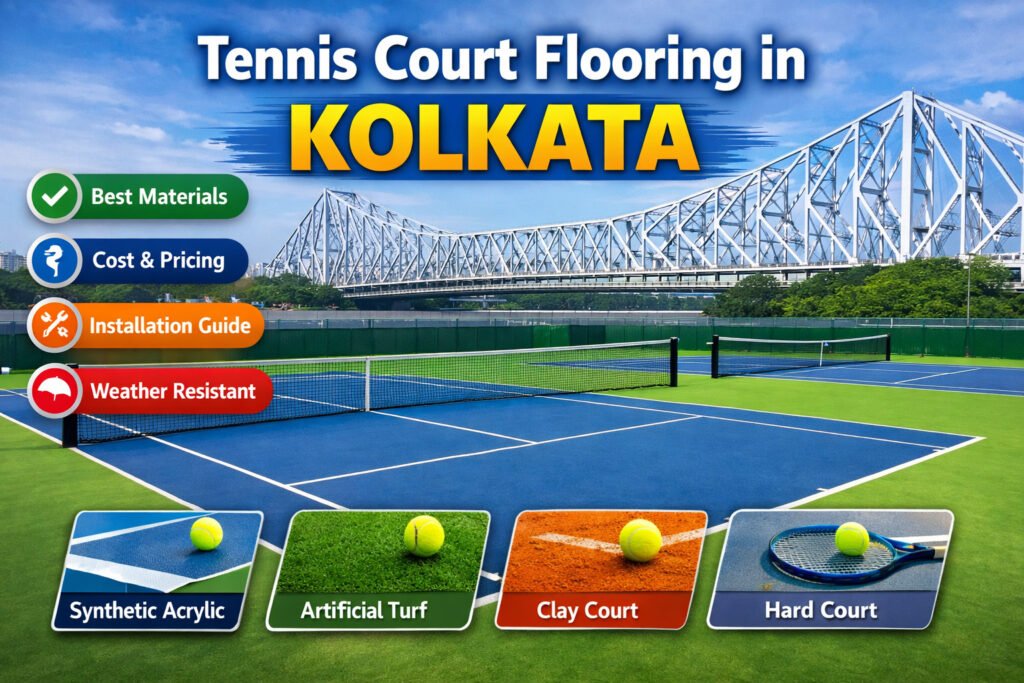
Tennis Court Flooring in Kolkata

Tennis Court Flooring in Kolkata

Tennis is growing rapidly in Kolkata, and with more academies, schools, clubs, and residential complexes investing in professional courts, choosing the right tennis court flooring in Kolkata has become more important than ever. The right flooring improves performance, ensures safety, and increases the long-term durability of the court—especially in Kolkata’s humid and monsoon-heavy climate. In this guide, we cover everything you need to know about tennis court flooring in Kolkata: types of flooring, installation process, cost breakdown, top features, and expert recommendations. What Is Tennis Court Flooring? Tennis flooring refers to the specialized surface used for building tennis courts to ensure proper ball bounce, player safety, and performance. It is designed with specific materials and construction techniques that meet international standards set by the ITF (International Tennis Federation). The right tennis flooring provides: Tennis flooring can be made from different materials such as synthetic acrylic, hard court, artificial turf, clay, or grass, each offering its own playing characteristics. Whether for professional tournaments, training academies, schools, or recreational play, quality tennis flooring ensures a smooth and safe playing experience for all skill levels. Why Quality Tennis Court Flooring Matters A professionally designed tennis court enhances: Kolkata’s weather—high humidity, frequent rains, and heat—makes flooring selection even more critical. Types of Tennis Court Flooring in Kolkata 1. Synthetic Acrylic Flooring (Most Popular in Kolkata) Synthetic acrylic is widely used across: Advantages Ideal For: Outdoor tennis courts in Kolkata. 2. Artificial Turf Tennis Flooring Artificial turf is known for: Pros Cons 3. Clay Tennis Court Flooring Clay courts are less common in Kolkata but preferred by: Pros Cons 4. Hard Court (Concrete + Acrylic Finish) A strong and durable option for long-term use. Benefits Cost of Tennis Court Flooring in Kolkata (2026 Update) Flooring Type Approx Cost (per sq. ft.) Court Size Cost (Avg.) Synthetic Acrylic ₹60 – ₹125 ₹2.5–₹4.5 lakh Artificial Turf ₹150 – ₹300 ₹6–₹12 lakh Clay Court ₹40 – ₹80 ₹2–₹3 lakh Hard Court ₹100 – ₹180 ₹4–₹7 lakh Costs vary depending on base preparation, materials, and location within Kolkata. Installation Process for Tennis Court Flooring in Kolkata Step 1: Ground Preparation Step 2: Base Construction Step 3: Flooring Installation Depending on the selected surface: Step 4: Court Marking & Finishing Net posts installation ITF-approved lines Anti-slip coating Factors to Consider Before Installing Tennis Court Flooring in Kolkata ✔ 1. Weather Compatibility Choose a surface that performs well during Kolkata’s humid monsoon. ✔ 2. Budget Synthetic acrylic is the most cost-effective. ✔ 3. Maintenance Hard courts require minimal upkeep compared to clay courts. ✔ 4. Usage Type ✔ 5. Space & Location Urban spaces (like Salt Lake, New Town, Behala, Tollygunge) benefit from durable options. Best Places to Install Tennis Court Flooring in Kolkata Flooring is in high demand across: Why Choose Pacecourt for Tennis Court Flooring in Kolkata? Pacecourt is one of India’s trusted sports flooring manufacturers, offering: Whether you need a single court or a full sports complex, Pacecourt provides end-to-end solutions. Conclusion Building a tennis court in Kolkata requires choosing a surface that can withstand humidity, rainfall, and frequent play. Synthetic acrylic and hard courts are the most reliable options, offering excellent durability and performance. With professional installation, high-quality materials, and proper base work, you can create a world-class tennis court that lasts for years.

High School Basketball Court Dimensions

High School Basketball Court Dimensions

High School Basketball Court Dimensions play a crucial role when building or understanding a high school basketball court, as knowing the exact measurements is essential for safety, gameplay consistency, and compliance with official rules. While professional courts follow NBA or FIBA standards, high school basketball courts have their own specific dimensions. This guide explains high school basketball court dimensions, including length, width, key areas, markings, and differences from college or NBA courts. What is Basketball Court A basketball court is a rectangular playing surface designed for the sport of basketball, featuring a defined layout, specific markings, and standardized dimensions. It is divided into two main halves where teams compete to score by shooting the ball into the opponent’s basket. A standard basketball court includes essential components such as hoops, backboards, free-throw lanes, three-point lines, and center-court markings. The court’s design and measurements ensure fair gameplay, player safety, and proper rule enforcement across all levels—school, college, and professional. What Are the Official High School Basketball Court Dimensions? According to the National Federation of State High School Associations (NFHS), the official high school basketball court dimension is: This makes the high school court 10 feet shorter than an NBA or NCAA court, which measures 94 feet long. Key Areas & Their Dimensions High school courts follow NFHS specifications for all key areas. Here is a complete breakdown: 1. Free-Throw Lane (The Paint) This area is used for free throws, rebounds, and offensive plays. 2. Three-Point Line Distance High school three-point arc distance: This is shorter than: 3. Basket & Backboard Dimensions These measurements ensure uniformity across all high school gyms. 4. Center Circle Used for tip-offs and ball possession regulation. 5. Restricted Area Arc Unlike NBA courts, high school courts generally do not have a restricted arc, unless schools follow NCAA-style markings. 6. Sidelines & Baselines Proper marking helps referees maintain accurate gameplay calls. Why Correct Dimensions Matter For school administrators and coaches, ensuring a court meets NFHS standards is essential. To ensure compliance, schools should regularly measure and maintain their court markings. Using durable, high-quality paint and consulting NFHS guidelines during any gym renovations or construction is a practical step toward providing the best environment for student-athletes. Ultimately, the lines on a basketball court do more than just define a playing area. They shape the game, challenge the players, and create the framework for every memorable moment on the hardwood. Comparison: High School vs College vs NBA Court Dimensions Level Length Width Three-Point Line High School 84 ft 50 ft 19 ft 9 in NCAA 94 ft 50 ft 22 ft 1¾ in NBA 94 ft 50 ft 23 ft 9 in High school courts are more compact, making them suitable for younger athletes. Why High School Court Dimensions Are Smaller High school athletes: The reduced court length improves player development and gameplay experience. High School Basketball Court Markings Explained Free-Throw Circle Key (Paint) Blocks Three-Point Arc Midcourt Line Flooring Options for High School Basketball Courts Schools may choose flooring based on budget and play frequency: Basketball Court Flooring Price Table (India) Flooring Type Price Range (₹/sq. ft) Best For Acrylic Synthetic Flooring ₹55 – ₹130 Outdoor courts, schools, budget courts Standard Outdoor Acrylic System ₹130 – ₹200 High-quality outdoor courts PP Interlocking Tiles ₹130 – ₹180 Outdoor courts, multi-purpose, quick installation Synthetic Tile Flooring ₹80 – ₹130 Basic outdoor basketball courts PU Sports Flooring ₹250 – ₹400 Indoor courts with heavy usage Vinyl Sports Flooring ₹200 – ₹350 Indoor multi-purpose halls Maple Hardwood Flooring ₹310 – ₹450+ Premium indoor professional courts Rubber Flooring ₹120 – ₹220 Training areas, indoor gyms Court Construction Cost Court Type Estimated Total Cost Outdoor Acrylic Basketball Court ₹3 – ₹8 lakh Outdoor PP Tile Court ₹4 – ₹12 lakh Indoor PU Court ₹8 – ₹18 lakh Indoor Maple Wood Court ₹15 – ₹35+ lakh Final Thoughts: Choosing the Right Court Dimensions High school basketball court dimensions are standardized to ensure fair play, safety, and training consistency. Whether you’re constructing a new court, resurfacing an old one, or simply learning the layout, these measurements help maintain proper gameplay standards.

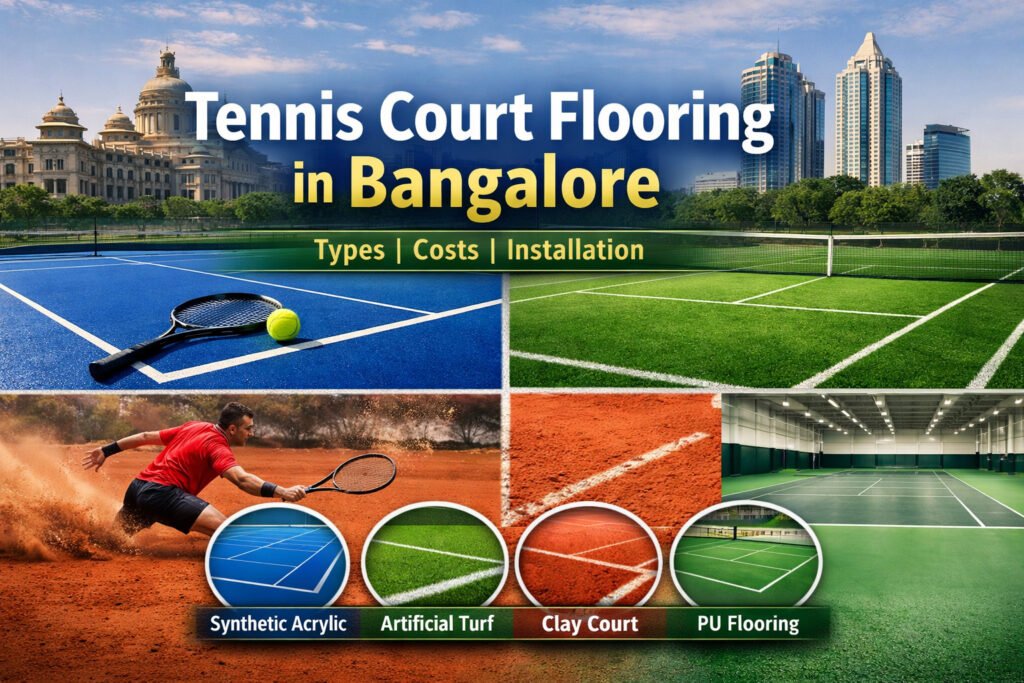
Tennis Court Flooring in Bangalore

Tennis Court Flooring in Bangalore

If you are planning to build or renovate a tennis court flooring in Bangalore, choosing the right flooring is the most important step. The city’s tropical climate, heavy monsoons, and increasing demand for sports infrastructure have made quality tennis court flooring essential for durability, performance, and player safety. This comprehensive guide covers everything you need to know — flooring types, benefits, installation process, maintenance tips, and cost breakdown — to help you make an informed decision. Why Tennis Court Flooring Matters A well-designed tennis court surface provides: In Bangalore, where temperature and moisture levels fluctuate, selecting the right flooring is crucial for courts in schools, clubs, sports academies, residential communities, and private spaces. Best Types of Tennis Court Flooring in Bangalore Below are the most preferred and widely installed flooring types in Bengaluru: 1. Synthetic Acrylic Flooring (Most Popular) Synthetic acrylic is the top choice for professional tennis courts in Bangalore due to its durability and all-weather performance. Key Benefits Ideal For 2. Artificial Turf Tennis Flooring Artificial turf flooring offers a softer playing experience and is preferred for recreational or private courts. Key Benefits Ideal For 3. Clay Court Flooring Clay courts are preferred by advanced players for enhanced spin control and slower gameplay. Key Benefits Ideal For 4. PU (Polyurethane) Sports Flooring PU flooring is a seamless high-performance material suitable for indoor tennis courts or multi-sport facilities. Key Benefits Ideal For Cost of Tennis Court Flooring in Bangalore Below is the approximate cost of different tennis flooring materials: Tennis Flooring Type Approx. Cost per Sq. Ft. (INR) Lifespan Synthetic Acrylic ₹80 – ₹140 5–8 years Artificial Turf ₹150 – ₹300 6–10 years Clay Court ₹100 – ₹160 5–7 years PU Sports Flooring ₹250 – ₹450 8–12 years Note: Prices vary based on surface condition, brand, base preparation, and site location. Tennis Court Installation Process in Bangalore A standard installation involves the following steps: 1. Site Inspection & Base Preparation 2. Cushion Layer Application (For Acrylic & PU Courts) 3. Surface Coating 4. Line Marking 5. Final Finishing & Quality Check Why Bangalore is a Growing Hub for Tennis Court Construction Rising demand for sports academies Increasing adoption of fitness & sports culture Growth in residential gated communities Government initiatives promoting sports infrastructure Higher interest in tennis training among youth Maintenance Tips for Tennis Courts in Bangalore To increase the lifespan of your court: How to Choose the Right Tennis Court Flooring in Bangalore Consider the following: Conclusion Selecting the right tennis court flooring in Bangalore ensures long-lasting performance, safety, and an excellent playing experience. Whether you choose synthetic acrylic, turf, clay, or PU flooring, proper installation and maintenance are key to maximizing durability.

Pickleball Court Flooring
Pickleball court

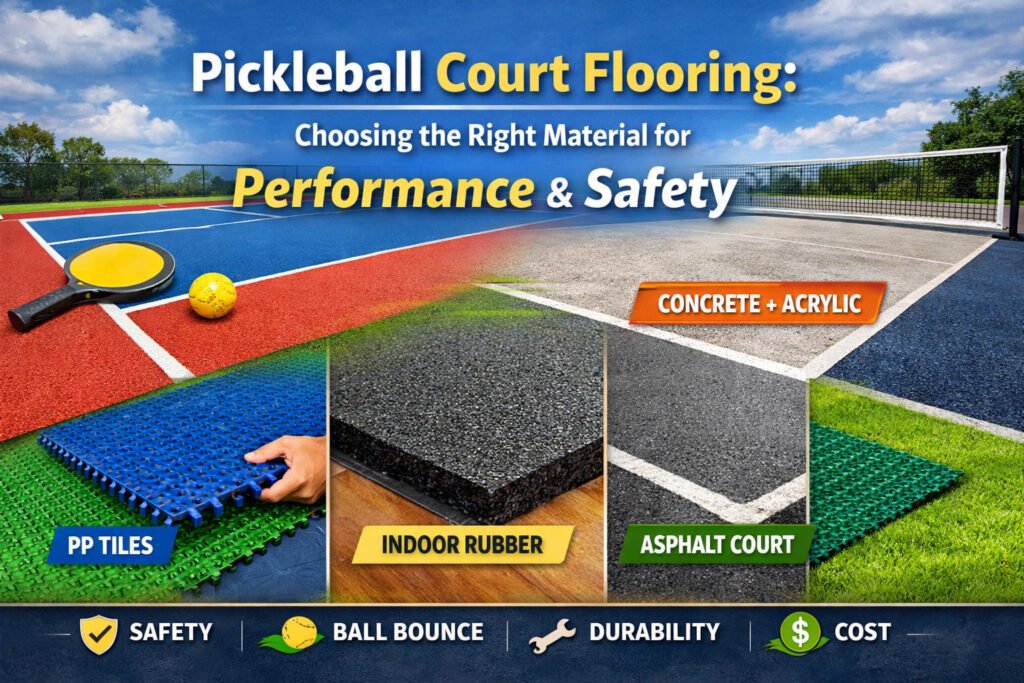
Pickleball Court Flooring: Choosing the Right Material for Performance & Safety

Pickleball is one of the fastest-growing sports worldwide, and with its rising popularity, the demand for safe, durable, and high-performance pickleball court flooring is at an all-time high. Whether you’re building a residential court, a sports complex, or upgrading an existing facility, choosing the right flooring material is crucial. The surface directly impacts ball bounce, player comfort, traction, and long-term maintenance costs. This comprehensive guide covers everything you need to know about pickleball court flooring, including the best materials, key selection factors, installation considerations, and expert tips to ensure a safe and high-performance playing experience. What is Pickleball Pickleball is a fast-growing paddle sport that combines elements of tennis, badminton, and table tennis. It is played on a smaller court with a perforated plastic ball (similar to a wiffle ball) and lightweight paddles. The game can be played in singles or doubles, making it fun and accessible for players of all ages and skill levels. One of the main reasons for its popularity is its simple rules and low physical strain, which make it easier to learn compared to many other racket sports. Yet, the game can still be very competitive and strategic, offering great exercise and entertainment. Pickleball is widely played in communities, schools, sports clubs, and recreation centers across the world. From beginners to professional athletes, everyone enjoys the blend of speed, skill, and social interaction that pickleball provides. Why Your Pickleball Court Flooring Matters The court surface is the foundation of every game. A poor surface can lead to unpredictable ball behavior, increased risk of injury, and frequent, costly repairs. A quality court, on the other hand, provides a consistent and enjoyable experience for years. Here’s why flooring selection is so important: What Makes Pickleball Court Flooring Unique? Pickleball courts may resemble tennis or badminton courts, but the flooring requirements differ due to: Hence, the flooring must provide the perfect balance of shock absorption, traction, durability, and weather resistance. Best Flooring Materials for Pickleball Courts Below are the top-performing and most widely recommended materials for building modern pickleball courts. 1. Acrylic Sports Flooring (Most Popular Choice) Acrylic flooring is the gold standard for outdoor pickleball courts. Why It’s Ideal Best For 2. Polypropylene (PP) Interlocking Tiles These modular tiles are becoming increasingly popular due to their versatility and ease of installation. Benefits Best For Commercial sports facilities Temporary or portable courts Multi-purpose indoor/outdoor sports spaces 3. Rubber Sports Flooring (Indoor Courts) Rubber flooring is preferred for indoor pickleball courts that require optimal comfort and shock absorption. Advantages Best For Senior community centers Indoor sports halls Gyms & recreation centers 4. Concrete Base with Textured Coating This remains one of the most durable options if constructed correctly. Pros Cons Best For Budget-friendly court construction Outdoor dedicated pickleball facilities 5. Asphalt Base with Sports Coating Similar to concrete but softer and more forgiving. Benefits Drawback Can crack over time due to temperature changes Side-by-Side Comparison Chart Feature / Material Acrylic Flooring PP Tiles Rubber Flooring Concrete + Coating Asphalt + Coating Ball Bounce Consistency ⭐⭐⭐⭐ ⭐⭐⭐ ⭐⭐ ⭐⭐ ⭐⭐⭐ Traction ⭐⭐⭐⭐ ⭐⭐⭐⭐ ⭐⭐⭐⭐ ⭐⭐⭐ ⭐⭐⭐ Shock Absorption ⭐⭐⭐ ⭐⭐⭐⭐ ⭐⭐⭐⭐ ⭐⭐ ⭐⭐⭐ Weather Resistance (Outdoor) ⭐⭐⭐⭐ ⭐⭐⭐⭐ ⭐ ⭐⭐⭐ ⭐⭐ Maintenance Level ⭐⭐⭐⭐ ⭐⭐⭐ ⭐⭐⭐ ⭐⭐⭐⭐ ⭐⭐ Installation Ease ⭐⭐ ⭐⭐⭐⭐ ⭐⭐ ⭐⭐ ⭐⭐ Durability ⭐⭐⭐⭐ ⭐⭐⭐ ⭐⭐⭐ ⭐⭐⭐⭐ ⭐⭐⭐ How to Choose the Best Material for You With these options in mind, how do you decide? Consider these three key factors. 1. Climate Your local weather plays a huge role in a court’s lifespan. 2. Usage and Player Profile Think about who will be using the court and how often. 3. Budget Your budget will ultimately guide your decision. How to Maintain Pickleball Court Flooring Maintaining pickleball court flooring is essential to ensure safety, longevity, and optimal playing conditions. Here are some tips to help you keep your pickleball court in great shape: 1. Regular Cleaning 2. Inspect for Damage 3. Resurface When Needed 4. Prevent Water Damage 5. Protect the Surface 6. Seasonal Maintenance 7. Regular Repainting 8. Prevent Mold and Mildew 9. Educate Users 10. Professional Inspections By following these steps, you can ensure your pickleball court flooring remains in excellent condition, providing a safe and enjoyable playing experience for years to come. Cost of Pickleball Court Flooring Flooring Material / System Approx. Cost Range (Per Court) Notes Acrylic Coating over Existing Base ₹3,30,000 – ₹6,60,000 Affordable, low-maintenance outdoor option. Concrete Base + Acrylic Surface ₹8,25,000 – ₹12,40,000 Professional, durable outdoor court system. Modular / Interlocking PP Tiles ₹8,00,000 – ₹12,00,000 Fast installation, multi-sport friendly. Premium Indoor Cushioned Flooring ₹10,00,000 – ₹25,00,000+ Best shock absorption and comfort for indoor courts. Court Resurfacing / Re-coating ₹1,50,000 – ₹4,00,000 Regular resurfacing to maintain traction and color quality. DIY Basic Surface Prep Varies (lowest cost option) Painting or minor leveling over an existing slab. Installation Tips for Pickleball Court Flooring Installing pickleball court flooring requires careful planning and execution to ensure a durable, safe, and high-quality playing surface. Here are some essential tips for a successful installation: 1. Choose the Right Location 2. Prepare the Base 3. Select the Right Flooring Material 4. Ensure Proper Installation 5. Allow for Curing Time 6. Add Accessories 7. Test the Surface 8. Maintain the Court By following these tips, you can ensure a professional-quality pickleball court that provides a safe and enjoyable playing experience for years to come. Conclusion Choosing the right pickleball court flooring is essential for creating a safe, durable, and high-performance playing environment. Whether you’re building a residential court, a club facility, or a professional tournament surface, picking the right material ensures excellent gameplay, long-term savings, and enhanced player experience. Acrylic, PP tiles, rubber, and concrete systems each offer unique benefits — so select the one that best matches your budget, location, and performance needs.




Basketball Court Flooring in Hyderabad

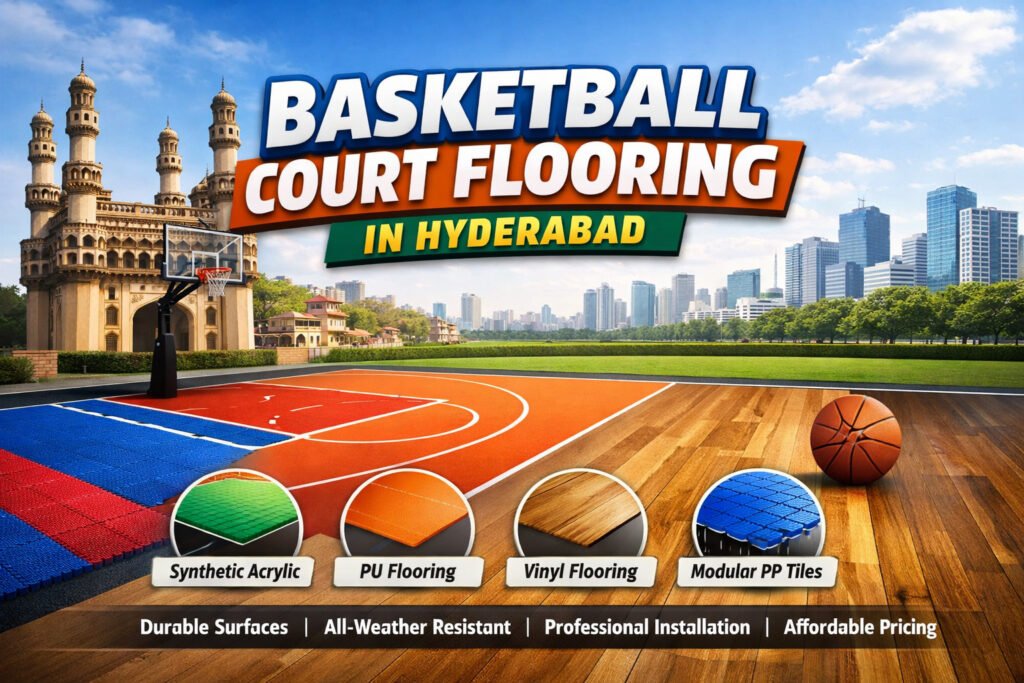
Basketball Court Flooring in Hyderabad

If you are planning to build a basketball court in Hyderabad—whether for a school, sports academy, gated community, corporate facility, or a commercial sports complex—choosing the right flooring is the most important decision. The right basketball court flooring in Hyderabad ensures better performance, high durability, weather resistance, and long-term safety for players. This comprehensive guide covers everything you need to know—flooring types, benefits, pricing, installation process, maintenance, and how to choose the best basketball court flooring in Hyderabad. Why Quality Flooring is a Game-Changer A basketball court is more than just a flat surface. It’s a high-performance arena where players run, jump, pivot, and slide. The flooring must be able to withstand this intense activity while protecting the athletes. Enhancing Player Performance A high-quality court surface provides consistent ball bounce, which is essential for dribbling and gameplay. It also offers the right amount of grip, allowing players to make quick cuts and directional changes without slipping. This reliable traction gives athletes the confidence to play at their full potential. Prioritizing Player Safety Safety is the most important reason to invest in proper basketball court flooring. A good surface has shock-absorbing properties that reduce the impact on players’ joints, particularly their ankles, knees, and hips. This helps to minimize the risk of stress fractures and other long-term injuries. Furthermore, a well-maintained, even surface prevents trips and falls that can cause sprains or more severe harm. Ensuring Durability and Longevity Basketball courts see a lot of action. Quality flooring is engineered to resist wear and tear from constant foot traffic and ball-bouncing. Investing in a durable material from the start saves money on frequent repairs and replacements, ensuring the court remains playable for years to come. Why Hyderabad Needs Specialized Basketball Court Flooring Hyderabad experiences high temperatures, dust, and occasional heavy rains, making ordinary flooring unsuitable for outdoor and indoor courts. Professional basketball flooring in the city must offer: This is why choosing the right surface is crucial. Types of Basketball Court Flooring in Hyderabad 1. Synthetic Acrylic Flooring One of the most preferred options for outdoor basketball courts in Hyderabad. Features Benefits 2. PU (Polyurethane) Flooring A premium indoor sports flooring option. Features Best For 3. Vinyl Flooring Another common indoor basketball flooring option in Hyderabad. Features Applications 4. Modular PP Tiles Flooring A fast-growing choice for outdoor basketball courts. Features Best For Multi-sports courts Housing societies Rental sports turfs Cost of Basketball Court Flooring in Hyderabad (2026 Updated) Flooring Type Approx. Price (per sq. ft.) Best For Synthetic Acrylic ₹70 – ₹120 Outdoor courts PU Flooring ₹250 – ₹350 Indoor pro courts Vinyl Flooring ₹120 – ₹180 Indoor multipurpose Modular PP Tiles ₹180 – ₹250 Outdoor courts Note: Prices vary based on layers, site conditions, labor, and area size. Installation Process for Basketball Court Flooring Step 1: Base Preparation Step 2: Surface Cleaning Step 3: Flooring Application Depending on flooring type: Step 4: Line Marking Step 5: Final Inspection Quality and finish check Bounce test Grip test Benefits of Professional Basketball Court Flooring in Hyderabad ✔ High Performance Ensures better ball bounce, grip, and control. ✔ Injury Prevention Reduces fatigue and prevents knee & ankle injuries. ✔ Weather Resistant Handles Hyderabad’s sun, humidity, and rains with ease. ✔ Long Life Lasts 5–10 years depending on the surface type. ✔ Customizable Choose your preferred color combinations and branding. Finding Flooring Suppliers in Hyderabad Hyderabad has a growing market for sports infrastructure, with several reputable companies specializing in the installation and maintenance of basketball court flooring. When searching for a supplier, look for a team with proven experience, a strong portfolio of completed projects, and positive client testimonials. Reputable local suppliers offer end-to-end solutions, including: These experts can help you navigate the options and ensure your court is built to the highest standards. Many also provide ongoing maintenance services to keep your court in top condition How to Choose the Best Basketball Court Flooring in Hyderabad Consider the following before selecting: 1. Indoor or Outdoor Use? Outdoor = Acrylic / PP TilesIndoor = PU / Vinyl 2. Usage Level Professional → PURecreational → Acrylic / PP Tiles 3. Budget Acrylic and vinyl are economical; PU is premium. 4. Maintenance Requirements PP Tiles require the least maintenance. 5. Weather Conditions Sun-heavy areas prefer UV-resistant acrylic. Maintenance Tips for Long-Lasting Basketball Court Flooring For Outdoor Courts For Indoor Courts Proper maintenance ensures better performance and longer life. Conclusion Choosing the right basketball court flooring in Hyderabad ensures a perfect balance of durability, safety, and performance. Whether you’re building a residential court, sports academy, school ground, or a commercial facility, selecting a professional-grade surface is essential for long-term results. A well-installed basketball flooring not only enhances gameplay but also increases the value of your sports facility.

Scroll to Top
HOMEOWNERS
BUSINESS OWNERS
ARCHITECTS
MUNICIPALITIES

Acrylic Flooring

Get 10% off on sports flooring materials

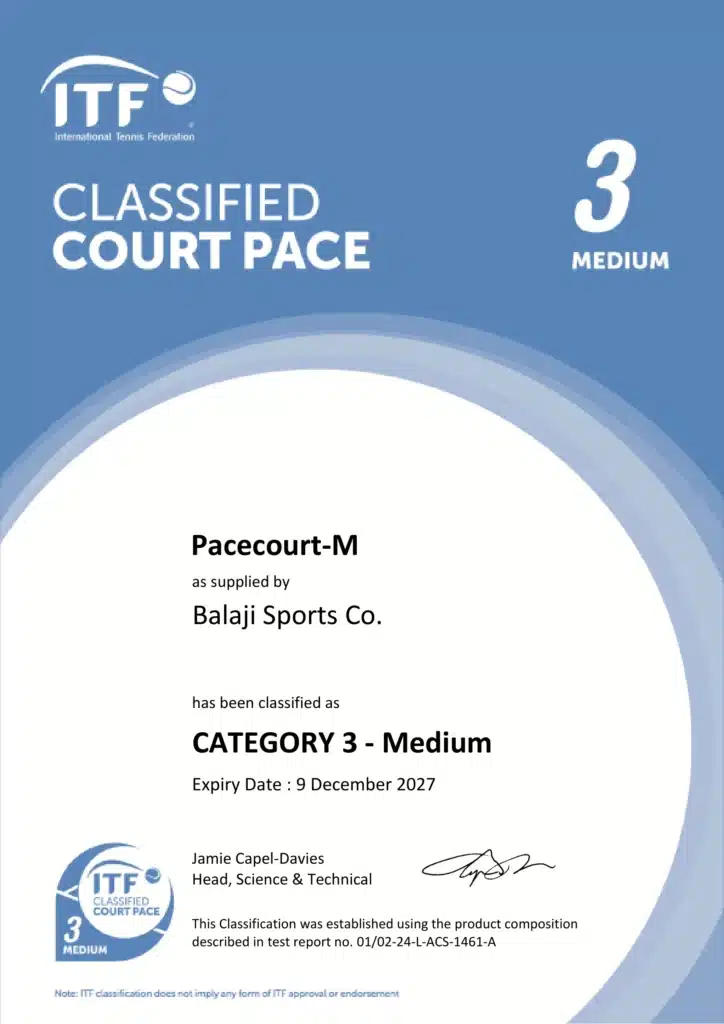
ITF-certified acrylic flooring for Tennis, Basketball, Badminton, Pickleball & more shipped worldwide.

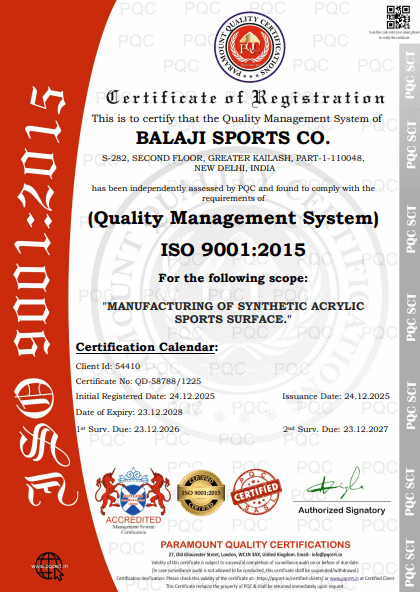
    ISO-Certificate