Tennis is a sport marked not only by the skill of its players but also by the surface on which they play. The International Tennis Federation (ITF) has, over the years, classified these surfaces to create a standard for tournaments and ensure fair play. With the increasing adoption of PaceCourt ITF-4 surfaces, many enthusiasts and organizations are eager to understand the costs involved. This article delves into the financial aspects of ITF classified tennis court surfaces, specifically focusing on the PaceCourt ITF-4 category.
ITF Surface Classifications:
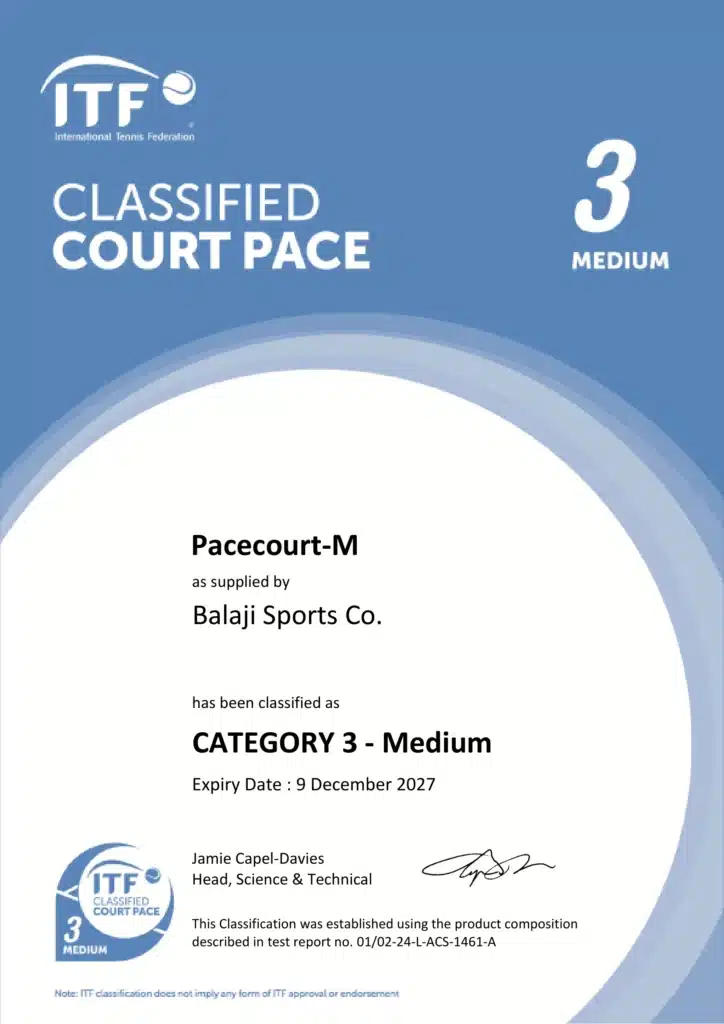
Before we delve into the costs, it’s essential to understand the ITF’s classification system. The ITF classifies court surfaces based on their pace. The five pace ratings include:
- ITF 1: Slow
- ITF 2: Medium-slow
- ITF 3: Medium
- ITF 4: Medium-fast
- ITF 5: Fast
This classification helps players and coaches prepare strategies and adjust their gameplay based on the court’s pace.
Factors That Influence Cost:
It’s important to note that the pace of a court does not directly determine its cost. Instead, the cost of any court depends on:
- Material: For instance, grass courts (which are generally fast-paced) can be more expensive to maintain than clay courts due to the regular mowing, watering, and other upkeep required.
- Installation: Hard courts might have higher initial installation costs due to the required materials and labor.
- Maintenance: Clay courts require regular watering and rolling, while hard courts might need resurfacing over time.
- Location: Prices may vary based on geographic location, labor costs, and the availability of materials.
A Closer Look:
While the above provides an overview, let’s break down the costs further:
Grass Courts: Though fast, their maintenance is high, requiring regular mowing, watering, and specialized care. Installation costs are also substantial, given the need for appropriate soil and drainage systems.
Clay Courts: These are generally slow to medium-slow and, while cheaper to install than grass courts, need regular maintenance.
Hard Courts: Falling in the medium to fast category, their initial costs can be higher, especially for advanced surfaces like the PaceCourt ITF-4.
Carpet Courts: These vary in pace and cost depending on the quality and type of carpet used.
Acrylic on Asphalt or Concrete: These medium-fast courts are popular due to their durability and low maintenance. However, their installation, especially for premium surfaces like PaceCourt ITF-4, can be relatively high due to material and labor costs.
Conclusion:
The ITF’s classification by pace offers a framework for players and organizations to understand what to expect from a surface. The Pacecourt ITF-4, as a medium-fast surface, provides a balanced playing experience. While its cost is influenced by various factors, from material to location, it offers a premium experience that many deem worth the investment. As always, when considering a new surface, it’s essential to look at the entire lifecycle, weighing installation and maintenance costs against durability and play experience.
Stay Updated with Pacecourt
Discover expert insights, practical tips, and the latest industry updates from Pacecourt, covering sports flooring, tennis and multi-sport court construction, resurfacing, maintenance, court performance, and innovative sports infrastructure solutions.
Powered by Google's Preferred Sources feature