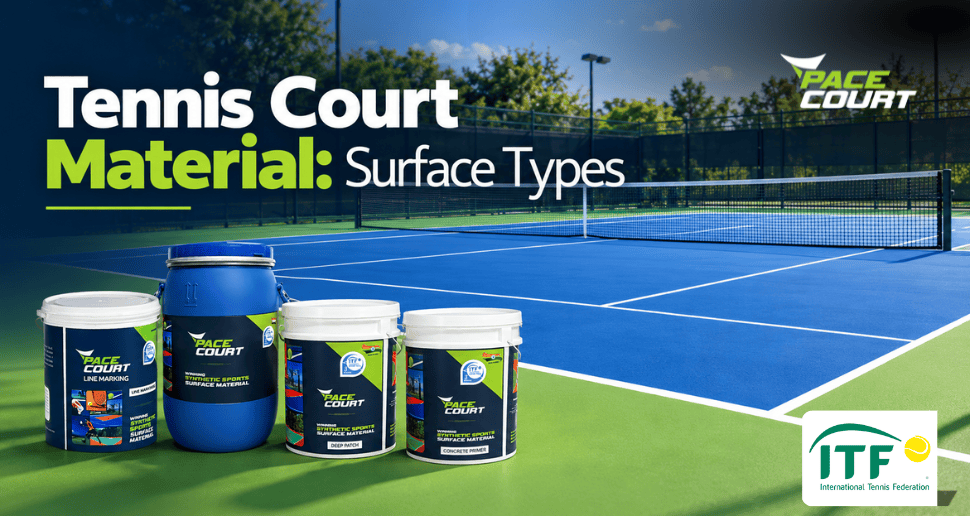
Understanding the correct measurements for a tennis court is essential for building a professional, safe, and tournament-ready playing surface. Whether the court is for schools, sports academies, clubs, or residential use, following official dimensions ensures consistent play and player safety.
This complete guide explains tennis court measurements for singles and doubles, line markings, net height, and total area requirements.
Table of contents
- Official Tennis Court Dimensions
- Tennis Court Measurements for Singles Play
- Tennis Court Measurements for Doubles Play
- The Layout: Lines and Zones Explained
- Net Height and Placement
- Total Area and Run-Off Space
- Court Surfaces and Their Impact on Gameplay
- Importance of Accurate Tennis Court Measurements
- Maintaining Your Tennis Court
Official Tennis Court Dimensions
A regulation tennis court is a rectangle with specific, internationally recognized dimensions. These measurements are set by the International Tennis Federation (ITF) and apply to all levels of play.
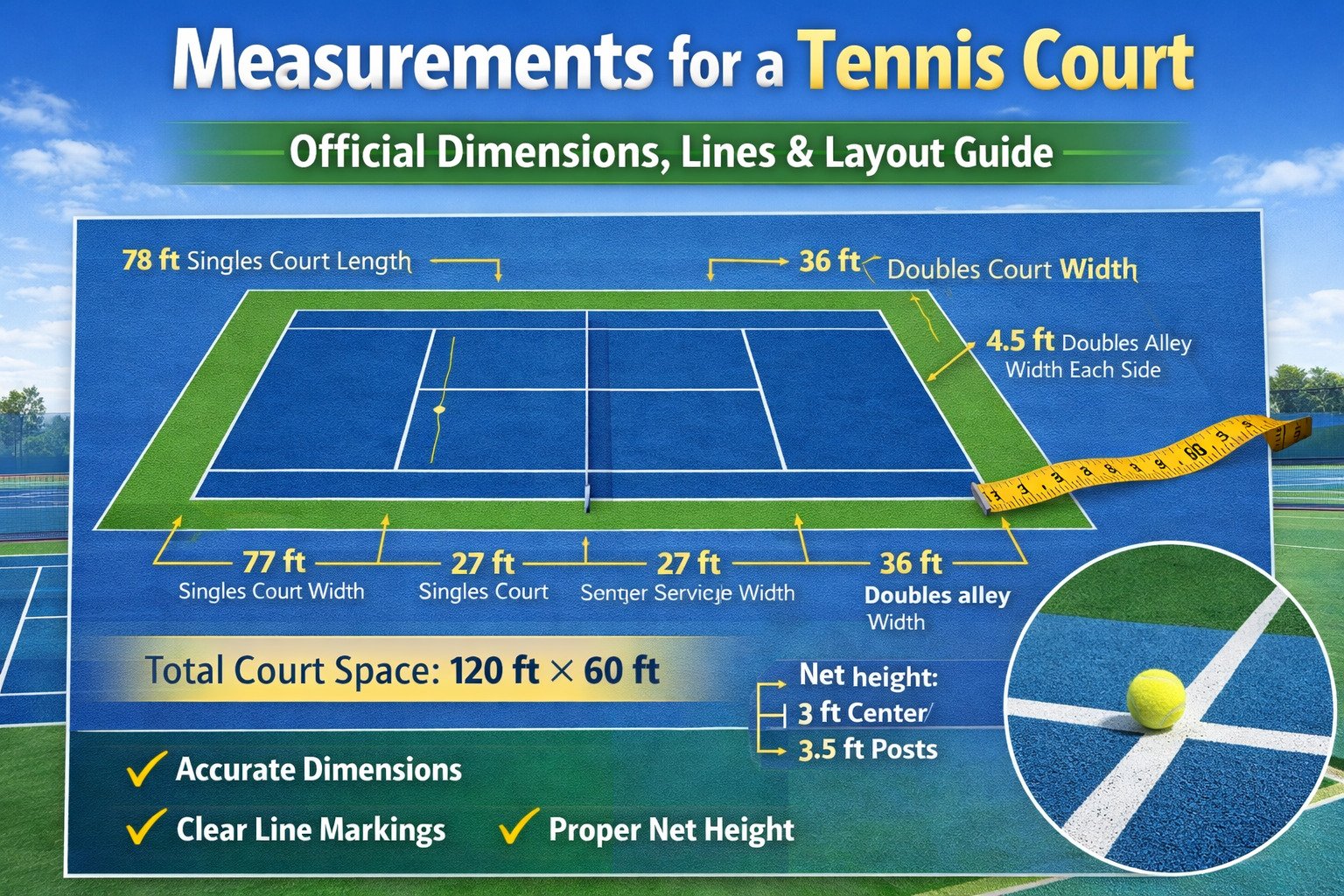
The total length of the court is 78 feet (23.77 meters). This measurement is taken from the outside edge of one baseline to the outside edge of the opposing baseline.
The width of the court varies depending on whether a singles or doubles match is being played.
- Singles Court Width: For a singles match, the court is 27 feet (8.23 meters) wide. This is measured between the inside edges of the singles sidelines.
- Doubles Court Width: For a doubles match, the width extends to 36 feet (10.97 meters). This measurement is taken between the outside edges of the doubles sidelines.
The space between the singles sideline and the doubles sideline on each side is known as the doubles alley. Each alley is 4.5 feet (1.37 meters) wide.
Tennis Court Measurements for Singles Play
| Component | Measurement |
|---|---|
| Court Length | 78 feet (23.77 m) |
| Court Width | 27 feet (8.23 m) |
| Service Box Length | 21 feet |
| Service Box Width | 13.5 feet |
| Net Height at Center | 3 feet (0.914 m) |
Tennis Court Measurements for Doubles Play
| Component | Measurement |
|---|---|
| Court Length | 78 feet (23.77 m) |
| Court Width | 36 feet (10.97 m) |
| Doubles Alley Width | 4.5 feet on each side |
| Service Box Length | 21 feet |
| Net Height at Posts | 3.5 feet (1.07 m) |
The Layout: Lines and Zones Explained
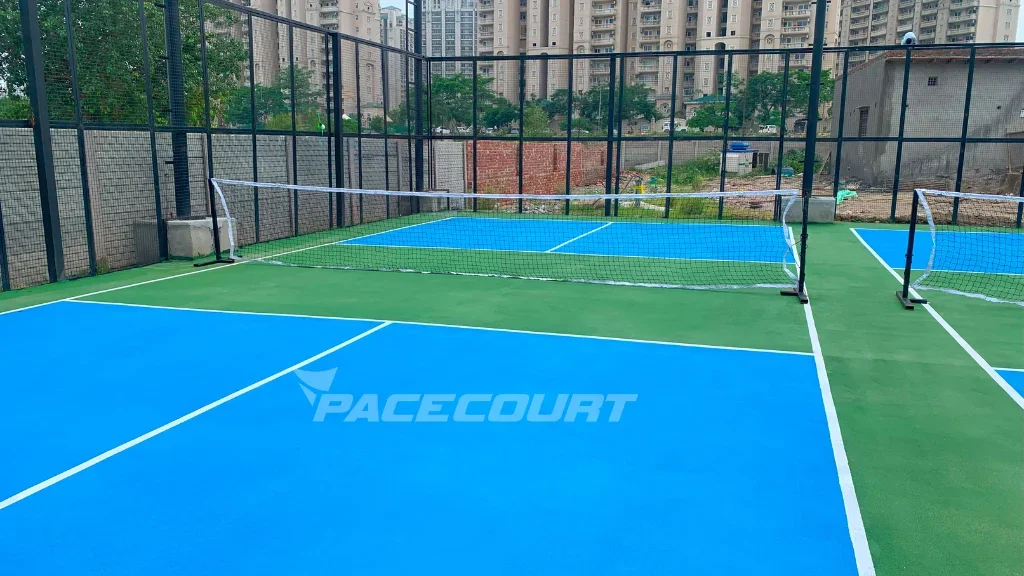
Every line on a tennis court serves a specific purpose, creating distinct zones that dictate the rules of play, particularly during serves. All lines on the court should be the same color, creating a sharp contrast with the playing surface. The width of most lines is between 1 and 2 inches (2.5 to 5 cm), while the baseline can be up to 4 inches (10 cm) wide.
Baseline and Center Mark
The baseline is the rearmost line on each side of the court, running parallel to the net. It marks the boundary for the length of the court. When serving, a player must stand behind the baseline. The center mark is a small line, 4 inches (10 cm) long, that divides the baseline in half. It helps players position themselves correctly for serves.
Service Lines and Service Boxes
The service line runs parallel to the net, located 21 feet (6.4 meters) away from it. This line marks the back of the service boxes.
The center service line runs perpendicular to the net, connecting the midpoints of the two service lines. This line divides the area between the net and the service lines into two equal service boxes on each side of the court: the deuce court (right side) and the ad court (left side). A legal serve must land within the diagonally opposite service box. Each service box measures 21 feet (6.4 meters) by 13.5 feet (4.1 meters).
Sidelines
There are two sets of sidelines that define the width of the playing area.
- Singles Sidelines: These are the inner two lines running the length of the court. For singles play, any ball that lands outside of these lines is considered out.
- Doubles Sidelines: These are the outermost lines. During a doubles match, they extend the width of the court. The doubles alleys are in play after the serve.
Net Height and Placement
The net divides the court into two equal halves. It is stretched across the full width of the court, parallel to the baselines. The net is held up by two net posts located 3 feet (0.914 meters) outside the doubles sidelines.
- Net Post Height: The net posts are 3.5 feet (1.07 meters) high.
- Net Height at the Center: The net is pulled down at its center by a white strap, which is no more than 2 inches (5 cm) wide. The height of the net at the center must be exactly 3 feet (0.914 meters).
This slight drop in height at the center creates a strategic element, as players often aim for the lowest part of the net to increase their margin for error.
Total Area and Run-Off Space
While the playing lines define the court, additional space around the perimeter is crucial for player safety and movement. This “run-off” area allows players to chase down wide shots without risking injury.
- Baseline Run-Off: There should be at least 21 feet (6.4 meters) of clear space behind each baseline.
- Sideline Run-Off: There should be at least 12 feet (3.66 meters) of clear space on each side.
Therefore, the total recommended space for a single tennis court, including run-off areas, is 120 feet (36.57 meters) long by 60 feet (18.29 meters) wide. For multi-court facilities, additional spacing is needed between courts.
Court Surfaces and Their Impact on Gameplay
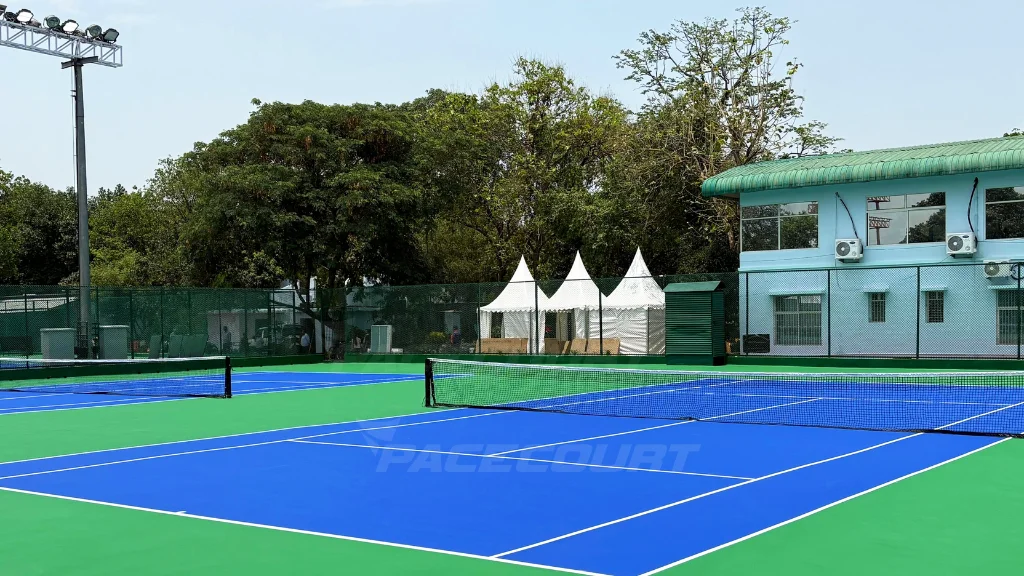
The material used for a tennis court surface has a significant effect on the ball’s speed and bounce, which in turn influences playing styles. There are three primary types of court surfaces.
Hard Courts
Hard courts are made from rigid materials, often acrylic layers over a concrete or asphalt base. This is the most common type of surface.
- Ball Speed: Medium to fast.
- Bounce: High and predictable.
- Gameplay: This surface provides a balanced game, favoring all-around players who can mix powerful groundstrokes with a strong serve. The true bounce rewards consistent shot-making.
Clay Courts
Clay courts are made from crushed brick, shale, or stone. The French Open is famously played on this surface.
- Ball Speed: Slow.
- Bounce: High and less predictable.
- Gameplay: The slow surface leads to longer rallies and rewards players with exceptional stamina and strategy. Topspin is highly effective on clay, as the high bounce can push opponents far behind the baseline.
Grass Courts
Grass courts are the traditional surface of tennis, with Wimbledon being the premier grass-court tournament. They are made from natural grass grown on tightly packed soil.
- Ball Speed: Very fast.
- Bounce: Low and often unpredictable.
- Gameplay: The fast, low bounce favors players with powerful serves and a strong net game (serve-and-volley). Rallies are typically shorter, and points are won quickly.
Importance of Accurate Tennis Court Measurements
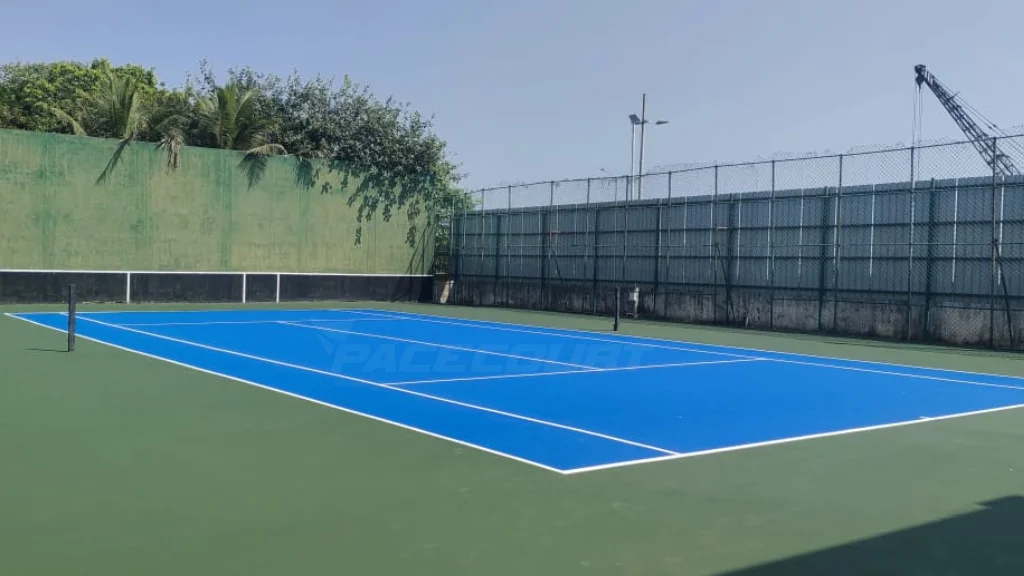
Correct measurements ensure:
- Fair and consistent gameplay
- Compliance with international standards
- Proper ball bounce and movement
- Reduced injury risk
- Tournament eligibility
Incorrect dimensions can affect performance and disqualify the court from official matches.
Maintaining Your Tennis Court
Proper maintenance is essential to ensure a tennis court remains safe, playable, and compliant with official standards. Regular care preserves the surface and protects the investment.
- Keep it Clean: Regularly remove leaves, dirt, and debris from the surface. Use a blower or a soft-bristled broom. Power washing can be done annually on hard courts, but be careful not to damage the surface or lines.
- Check for Damage: Routinely inspect the court for cracks, low spots, or bubbles in the surface. Address these issues promptly to prevent them from worsening and becoming safety hazards.
- Maintain the Net: Check the net height regularly to ensure it is 3 feet at the center strap. Inspect the net, posts, and center strap for wear and tear, and replace them as needed.
- Line Upkeep: Lines can fade or chip over time. Repainting them is important for visibility and ensuring the court meets regulation standards.
- Manage Vegetation: Trim any encroaching grass, weeds, or tree branches that could drop debris onto the court or damage the surface with roots.
By following these guidelines, you can ensure your tennis court provides a high-quality playing experience for years to come.
Stay Updated with Pacecourt
Discover expert insights, practical tips, and the latest industry updates from Pacecourt, covering sports flooring, tennis and multi-sport court construction, resurfacing, maintenance, court performance, and innovative sports infrastructure solutions.
Powered by Google's Preferred Sources feature