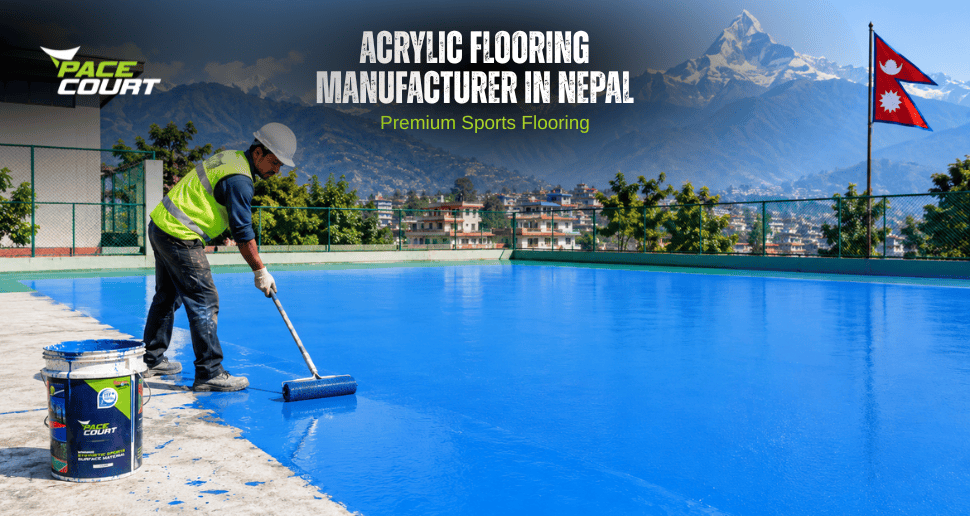
If you’re planning a tennis, badminton, or basketball court in Nepal, choosing the right acrylic flooring manufacturer is one of the most important decisions you’ll make. The surface you choose affects how the court plays, how long it lasts, and how much you’ll spend on repairs later. Acrylic flooring has become the go-to choice for outdoor sports courts across South Asia, and Nepal is no exception. Schools, sports academies, and private clubs in Kathmandu and beyond are moving away from plain cement and tile courts toward acrylic surfaces built to handle heavy monsoon rain, strong UV exposure, and years of daily play. This guide covers what acrylic flooring actually is, why it suits Nepal’s climate so well, and how to pick a supplier you can rely on.
What Is Acrylic Flooring, Exactly?
Acrylic flooring isn’t paint, and it isn’t a single coat you roll on and forget. It’s a layered system built specifically for sports surfaces. A typical acrylic court starts with a primer that bonds tightly to the concrete or asphalt base underneath. On top of that go one or more cushioning or texture coats, which give the surface its grip and shock absorption. A resurfacer coat then smooths everything out, followed by a colour coat and finally the line markings for whichever sport the court is built for.
Each layer does a specific job. The primer stops the acrylic from peeling. The texture coats give players consistent footing. The colour coat protects against UV rays and adds the finished look you see on professional courts. Together, these layers are what people mean by synthetic acrylic sports flooring. They’re why acrylic has largely replaced older materials like plain cement or clay for outdoor courts.
Why Nepal Needs a Dependable Acrylic Flooring Supplier
Nepal’s weather isn’t gentle on outdoor surfaces. The monsoon season brings months of heavy rain, and Kathmandu’s altitude means UV exposure is stronger than it is at sea level. A surface that isn’t built for these conditions cracks, fades, or develops puddles within a couple of seasons. That’s a real problem for a school or academy that’s invested time and money into a court.
At the same time, interest in sports like badminton, futsal, basketball, and tennis keeps growing in Nepal, and more institutions want proper facilities instead of makeshift ones. This is exactly where outdoor sports flooring in Nepal benefits from acrylic systems. A well-built acrylic court:
- Sheds water quickly instead of pooling after rain
- Resists fading from UV exposure over the years
- Keeps a consistent, non-slip surface for safe play
- Needs far less upkeep than cement, clay, or tile courts
Because Nepal borders India and shares strong trade links, most acrylic flooring materials used in Nepal’s courts are manufactured in India and supplied to local contractors and dealers. This makes choosing an established, quality-tested brand even more important, since the materials often need to be sourced and transported before installation begins.
Sports Flooring Solutions for Different Facilities in Nepal
Not every project has the same needs, and a good sports flooring manufacturer in Nepal usually offers a few different solutions depending on who’s asking.
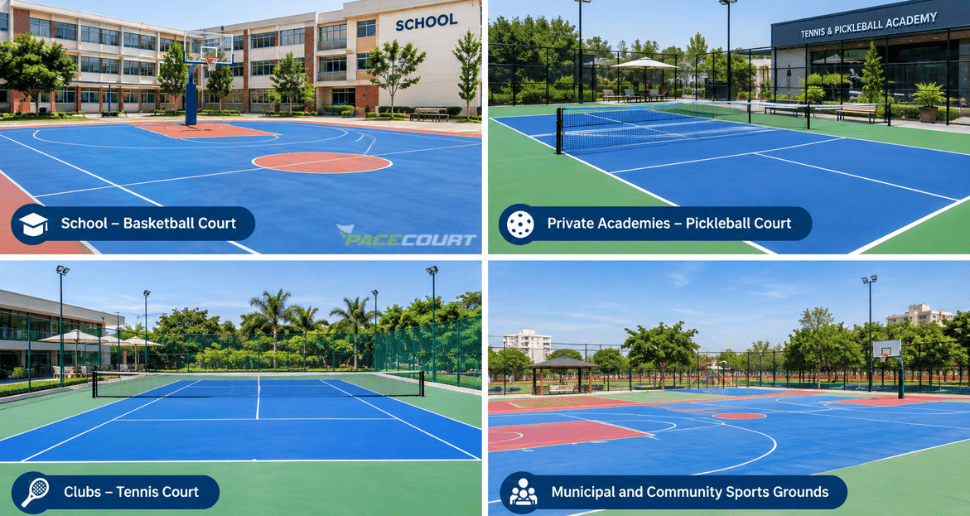
- Schools and colleges often want a durable, low-cost multi-purpose court that can handle badminton, basketball, and general PE classes on the same surface.
- Private academies and clubs usually want a dedicated tennis or badminton court built closer to competition standards, with proper line marking and consistent bounce.
- Municipal and community sports grounds need surfaces tough enough for heavy daily footfall from players of all ages and skill levels.
- Hotels, residential complexes, and corporate campuses tend to prioritise a clean, well-finished look alongside decent playability, since these courts often double as a recreational amenity.
A reliable acrylic flooring company in Nepal should be able to walk you through which combination of primer, base coats, and colour finish suits your specific use case, rather than offering one generic package for every project. That’s the difference between professional sports court flooring and a rushed, one-size-fits-all job.
Pacecourt: A Name Sports Facilities Trust
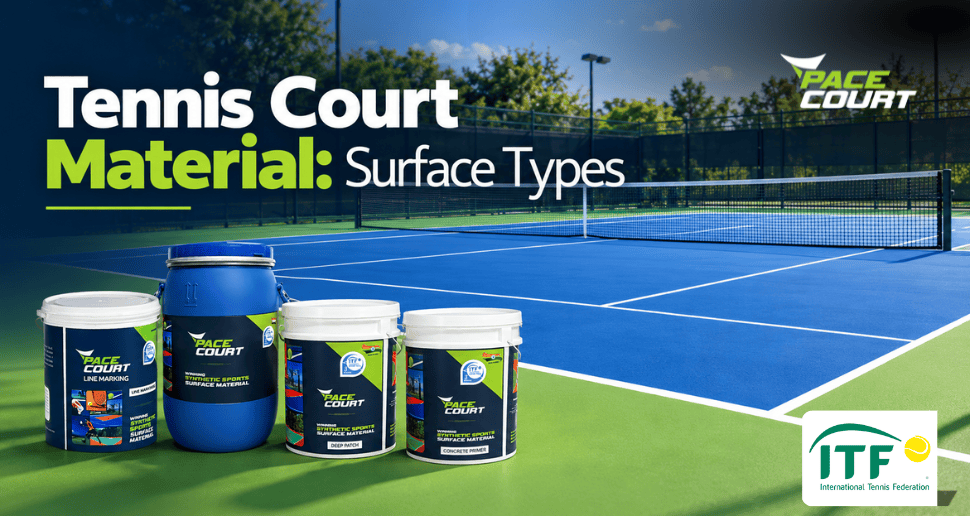
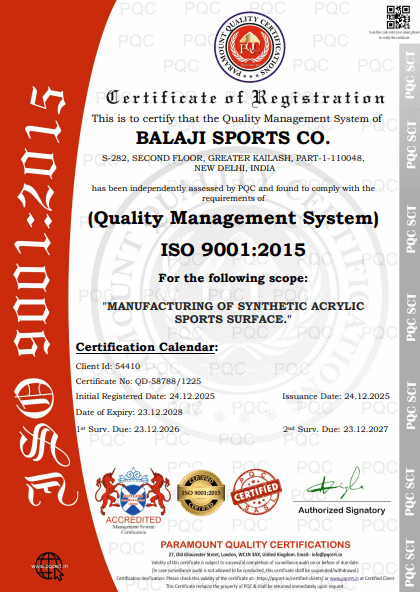
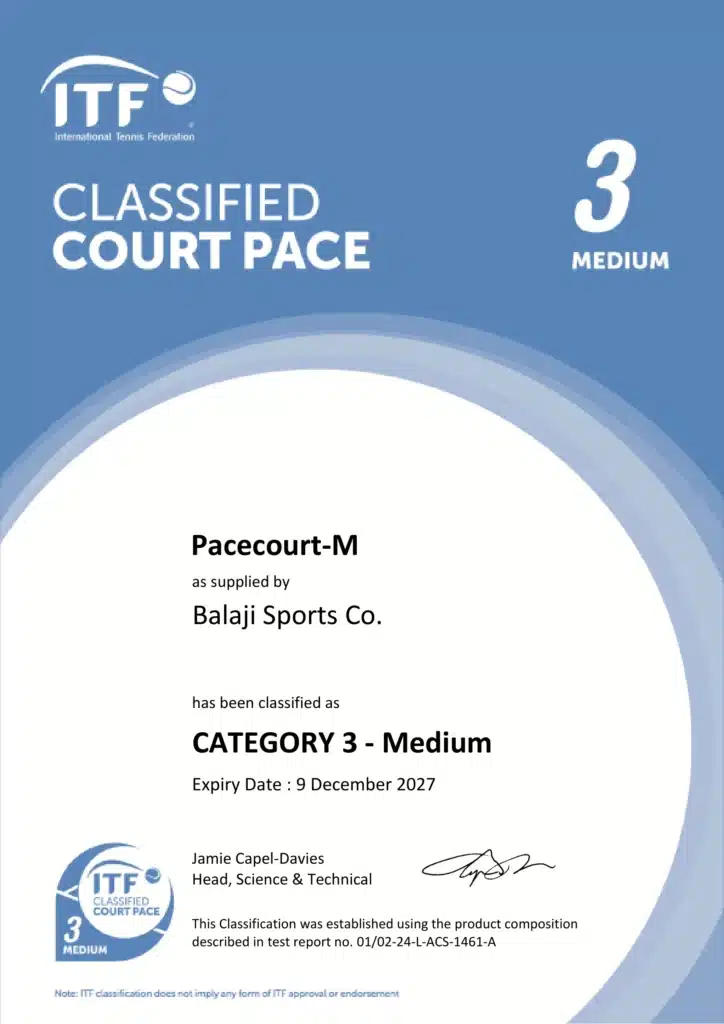
Pacecourt is a synthetic acrylic sports flooring brand from Balaji Sports, based in New Delhi, India. It’s known as one of the early manufacturers of acrylic sports court materials in India, and it supplies ITF- and ISO certified flooring products used on outdoor courts for tennis, badminton, basketball, volleyball, pickleball, skating rinks, walking tracks, and multi-purpose grounds.
For institutions and contractors in Nepal, working with a manufacturer that already meets international certification standards takes a lot of guesswork out of the process. You’re not testing an unknown product on your court. You’re using a system that’s already been used across a wide range of sports surfaces and climates, then applied by local flooring contractors who handle the on-ground installation in Nepal.
What Makes Pacecourt Acrylic Flooring Different
A few things set a proper acrylic sports flooring system apart from a generic paint job:
- 100% acrylic resin base: This is what gives the surface its strength and flexibility, so it doesn’t crack under temperature changes.
- UV-resistant oxide pigments: These keep the color from fading quickly under direct sun, which matters a lot given Nepal’s UV levels.
- Reinforcing fillers: These add durability so the surface can handle years of running, jumping, and pivoting.
- Fungicide additives: Useful in humid, monsoon-prone climates like Nepal’s, where untreated surfaces can develop mould or algae.
On the product side, the range typically includes an acrylic concrete primer, an acrylic resurfacer for smoothing the base, colour and line-marking coats, and a product called Deep Patch, which is used to fix uneven or undulating sections of a court before the acrylic layers are applied. Skipping this step is one of the most common reasons acrylic courts develop bumps or cracks early.
Sports Courts You Can Build With Acrylic Flooring in Nepal
Acrylic Badminton Court Flooring
Badminton is one of the most popular sports in Nepal, played everywhere from school grounds to community clubs. Acrylic badminton court flooring in Nepal gives players a consistent, grippy surface for quick lateral movement, which matters far more in badminton than in most other sports. It also holds line markings clearly, so courts stay properly marked even after heavy use.
Acrylic Tennis Court Flooring
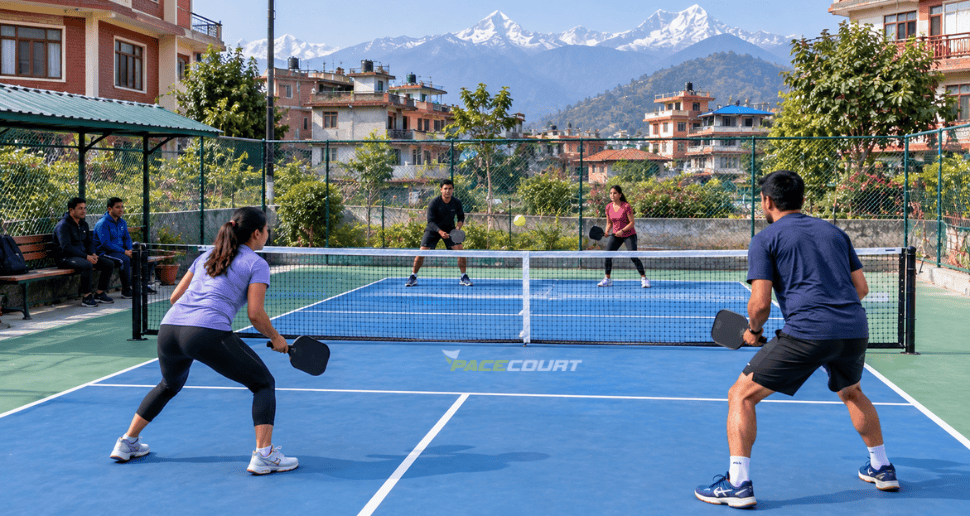
Tennis courts need a surface that controls ball bounce and speed predictably. Acrylic tennis court flooring in Nepal is built and applied to meet international standards, which is why it’s the standard choice for academies and clubs that want their courts to feel consistent for players at every level, from beginners to competitive players.
Acrylic Basketball Court Flooring
Basketball puts a lot of stress on a surface, with constant jumping, pivoting, and sudden stops. Acrylic basketball court flooring in Nepal is designed with enough grip and cushioning to reduce joint strain while still keeping the surface fast enough for competitive play. Schools and sports complexes often choose acrylic here because it holds up well under daily, heavy use.
Other Acrylic Sports Surfaces
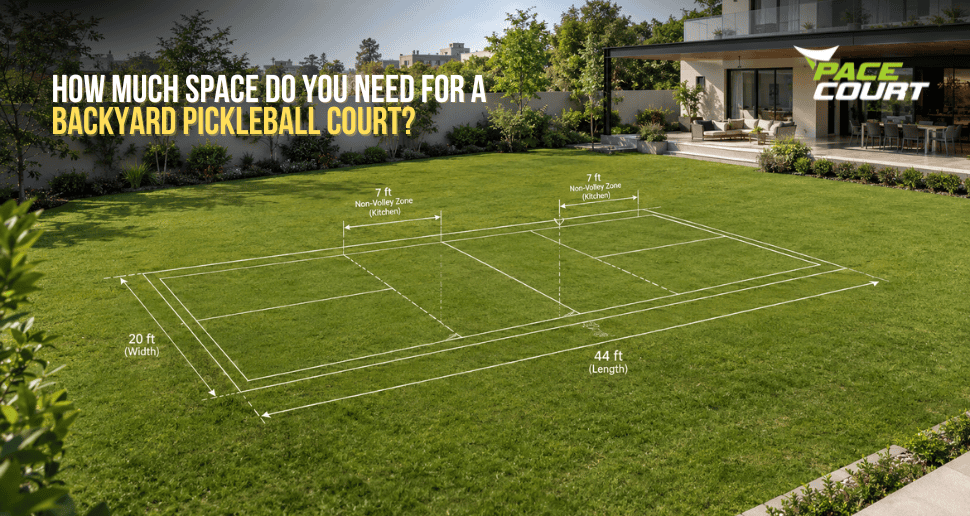
Acrylic systems aren’t limited to just these three sports. The same layered approach works for volleyball courts, pickleball courts, walking and jogging tracks, skating rinks, and multi-purpose courts that need to serve more than one sport with different line markings on the same surface. This flexibility is a big part of why acrylic court surface Nepal projects often choose one system that can be adapted across an entire sports complex.
Acrylic Flooring vs Other Sports Surfaces: A Quick Comparison
| Feature | Acrylic Flooring | PU (Polyurethane) Flooring | Synthetic Turf | Plain Cement/Tile |
| Best suited for | Outdoor hard courts (tennis, badminton, basketball) | Indoor courts, cushioned play | Football, hockey, multi-sport fields | Budget or temporary courts |
| Weather resistance | High, built for sun and rain | Moderate, better indoors | High for turf, but needs drainage | Low, prone to cracking |
| Maintenance | Low, occasional cleaning and recoating | Moderate | Regular brushing and infill top-up | High, frequent repairs |
| Typical lifespan | Several years with proper care | Several years indoors | Several years depending on usage | Shorter, degrades faster outdoors |
| Cost over time | Reasonable given low upkeep | Higher upfront in most cases | Higher upfront, ongoing maintenance | Lower upfront, higher repair cost later |
Acrylic isn’t automatically the right choice for every surface. Indoor courts often lean toward PU flooring for extra cushioning, and football grounds obviously need turf. But for outdoor hard courts, which is most of what Nepal’s schools, academies, and clubs are building, acrylic offers the best mix of durability, cost, and low maintenance.
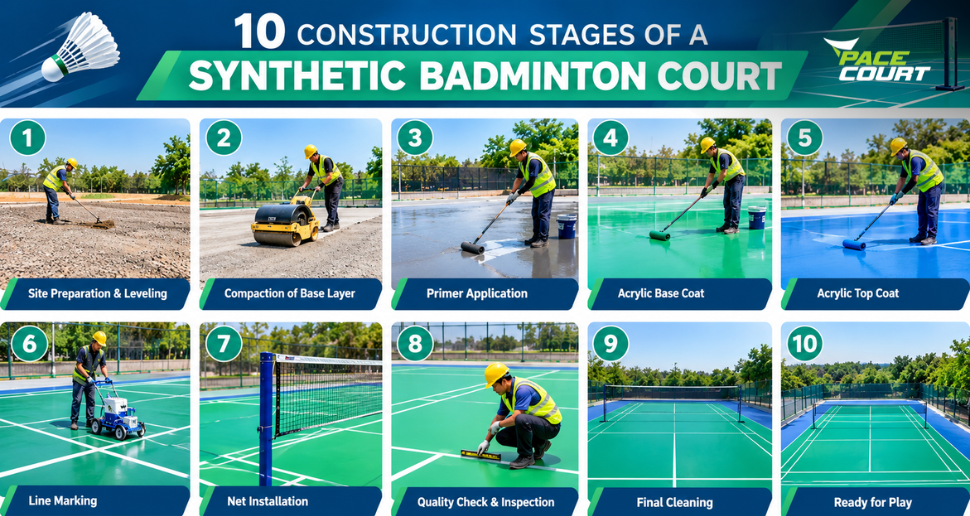
How Acrylic Flooring Gets Installed
Installation isn’t something you can rush, and skipping steps is where most problems come from later. Here’s the general process:
- Site inspection and base preparation: The contractor checks the existing concrete or asphalt base for cracks, drainage issues, and overall condition.
- Fixing undulations: Uneven patches get corrected, often with a product like Deep Patch, so the final surface is level.
- Applying the primer coat: This helps every following layer bond properly to the base.
- Cushion or acrylic base coats: Multiple coats build up the texture and shock absorption of the court.
- Resurfacing: This smooths out the surface for a consistent playing feel.
- Color coating: This adds the final color while protecting against UV damage.
- Line marking: Lines are painted based on the specific sport or sports the court will host.
- Curing time: The court needs time to dry and set fully before it’s ready for regular play.
How to Choose the Right Acrylic Flooring Supplier in Nepal
Not every supplier offering “acrylic flooring” gives you the same quality. Before signing a contract, it’s worth asking a few direct questions:
- Do they provide ITF- or ISO certified materials, and can they show documentation?
- Can they share photos or examples of courts they’ve supplied materials for?
- What exactly is included in the material composition, and does it include UV-resistant pigment and fungicide protection?
- What warranty do they offer on the materials and the finished surface?
- Do they only supply materials, or can they also connect you with contractors who install correctly?
- What ongoing maintenance or recoating support do they offer after installation?
A little due diligence here saves a lot of frustration two or three years down the line, when a poorly made court starts peeling or cracking.
What Affects the Cost of Acrylic Sports Flooring in Nepal
There’s no single price that applies to every project, because costs depend on several factors:
- Court size: Larger courts naturally need more material and labour.
- Base condition: A damaged old surface needs repair work before acrylic can go on, which adds to the cost.
- Number of coats: More layers mean better durability, but also a higher material cost.
- Colour and line-marking complexity: Multi-sport courts with several sets of lines take more time and paint.
- Transport: Since much of the raw material comes from India, logistics play a role in the final price.
- Local labour rates: Installation costs vary depending on the contractor and region within Nepal.
The most reliable way to get an accurate number is a site visit and a written quote, rather than relying on a rough estimate from a phone call.
Keeping Your Acrylic Court in Good Shape
Acrylic flooring is low maintenance, but “low maintenance” doesn’t mean “no maintenance.” A few simple habits go a long way:
- Sweep the court regularly to keep dust, leaves, and grit off the surface.
- Wash occasionally with water and a mild soap, not harsh chemicals.
- Keep sharp objects, heavy equipment, and vehicles off the surface.
- Address small cracks or peeling early, before they spread.
- Plan for a recoat every few years, depending on how much the court is used and how much direct sun it gets.
Outdoor acrylic flooring in Nepal takes a real beating from sun and rain across the year, so a fresh acrylic floor coating every few seasons keeps the surface looking sharp and playing consistently, instead of waiting until cracks or dull patches force a bigger, more expensive repair.
Frequently Asked Questions
Is acrylic flooring good for outdoor courts in Nepal’s climate?
Yes. Acrylic flooring is built to handle strong UV exposure and heavy rainfall, which makes it a practical choice for Nepal’s monsoon season and sunny summers.
How long does acrylic sports flooring last?
With proper installation and basic maintenance, acrylic courts typically last several years before needing a full recoat, though heavy daily use and harsh weather can shorten that timeline.
Can acrylic flooring be installed over an old cement court?
In most cases, yes. The existing base needs to be inspected and repaired first, especially if there are cracks or uneven patches, before the acrylic layers are applied.
What sports courts commonly use acrylic flooring?
Tennis, badminton, basketball, volleyball, and pickleball courts all commonly use acrylic flooring, along with walking tracks and multi-purpose sports grounds.
How is acrylic flooring different from ordinary paint?
Ordinary paint is a single coat with no cushioning or texture. Acrylic flooring is a multi-layer system with primer, cushioning, resurfacing, and colour coats, built specifically to handle sports play and outdoor weather.
Upgrade Your Sports Court Today
Get premium synthetic acrylic flooring designed for durability, grip, and performance.
Get Free ConsultationShould I hire a professional for sports flooring installation in Nepal?
Yes. Getting the base preparation, coat thickness, and curing time right takes experience. A poorly installed court, even with good materials, tends to develop bubbles, cracks, or uneven patches much sooner than one installed by a trained team.
What is an acrylic floor coating, and is it the same as acrylic flooring?
An acrylic floor coating usually refers to the colour and protective top layer of the system, while acrylic flooring describes the full build-up of primer, cushioning, resurfacer, and coating together. In everyday conversation, people often use both terms to mean the same finished court.
If you’re comparing options for your next project, working with an established acrylic flooring manufacturer in Nepal, rather than a one-off local supplier, gives you certified materials, a proven product range, and a court that’s actually built to last through Nepal’s weather. Whether it’s a single badminton court for a school or a full multi-sport complex, getting the base materials right from the start makes everything that follows a lot easier.
Stay Updated with Pacecourt
Discover expert insights, practical tips, and the latest industry updates from Pacecourt, covering sports flooring, tennis and multi-sport court construction, resurfacing, maintenance, court performance, and innovative sports infrastructure solutions.
Powered by Google's Preferred Sources feature