Badminton may look like a simple backyard game at first glance, but once you step into competitive play, you quickly realize that every inch of the court matters. The badminton court size is carefully standardized to ensure fairness, consistent gameplay, and proper movement for players. Whether you are a beginner setting up a court at home, a coach teaching young athletes, or someone curious about the technical side of the sport, understanding the official court dimensions can dramatically improve your appreciation of the game.
Table of contents
Think of the badminton court as the stage where speed, agility, and precision come together. Players cover the court in lightning-fast movements—lunging, jumping, and smashing within seconds. Because of this, the court must be designed with exact measurements and clearly marked boundaries. Even a few centimeters of difference can affect service rules, shot placement, and player positioning.
The official badminton court dimensions are defined by the Badminton World Federation (BWF), the global governing body of the sport. These measurements are used in international tournaments such as the Olympics, World Championships, and professional badminton leagues. According to BWF regulations, the court layout includes multiple boundary lines for singles and doubles matches, service areas, and net placement that divide the court into two equal halves.
Another interesting aspect is that the same court is used for both singles and doubles, but with slightly different boundary rules. For example, doubles matches use the wider sidelines, while singles matches use the inner sidelines. This clever design allows one court to accommodate different game formats without needing separate courts.
In this guide, you’ll explore official badminton court measurements, line markings, net dimensions, and spacing requirements. By the end, you’ll understand not just the numbers, but also the reasoning behind them. If you ever plan to build a court at home, set up one at a school, or simply understand the sport more deeply, knowing these dimensions is the perfect place to start.
Understanding Badminton Court Dimensions
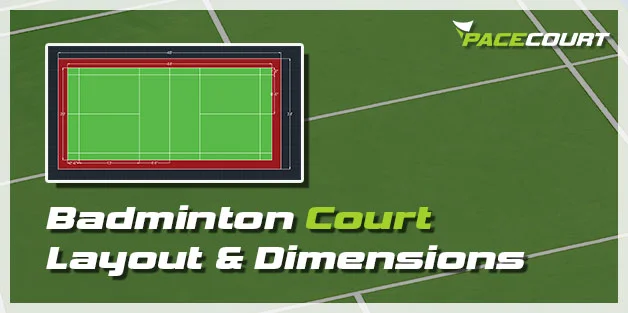
Before diving into exact numbers, it helps to understand why badminton court dimensions are designed the way they are. The sport is built around speed and reaction time. In professional matches, the shuttlecock can travel at speeds of over 400 km/h during a smash, making badminton one of the fastest racket sports in the world. Because of this incredible pace, the court must be large enough to allow dynamic movement but small enough to keep rallies intense and strategic.
The standard badminton court is rectangular and divided by a net into two equal halves. Each half contains specific service areas and boundary lines that determine whether a shot is in or out. At first glance, the number of lines may seem confusing, especially for beginners. You’ll notice inner sidelines, outer sidelines, short service lines, long service lines, and center lines. Each of these plays a specific role depending on whether the game is singles or doubles.
Imagine the court like a chessboard designed for movement rather than pieces. Players constantly adjust their positioning based on the court markings. A singles player typically covers more length than width, while doubles players rely on wider angles and teamwork. That’s why singles and doubles share the same length but differ in width boundaries.
Another important concept is the service court system. When serving, players must hit the shuttle diagonally into the opponent’s service box. The service lines ensure that serves are neither too short nor too long. Without these precise markings, enforcing service rules would be nearly impossible.
The dimensions also consider player safety and movement efficiency. Professional courts usually include extra space around the playing area to allow athletes to chase shots without colliding with walls or spectators. This additional “run-off area” is especially important in high-level tournaments where players often dive or sprint beyond the baseline.
For casual players, understanding these dimensions helps in multiple ways. It improves shot accuracy, positioning, and strategy, and it also makes setting up a practice court much easier. Once you understand how the lines interact with gameplay, the court stops looking like a maze of markings and starts making perfect sense.
In the next section, we’ll break down the official badminton court size according to BWF regulations, including exact measurements for both singles and doubles play.
Official Badminton Court Size (BWF Standards)
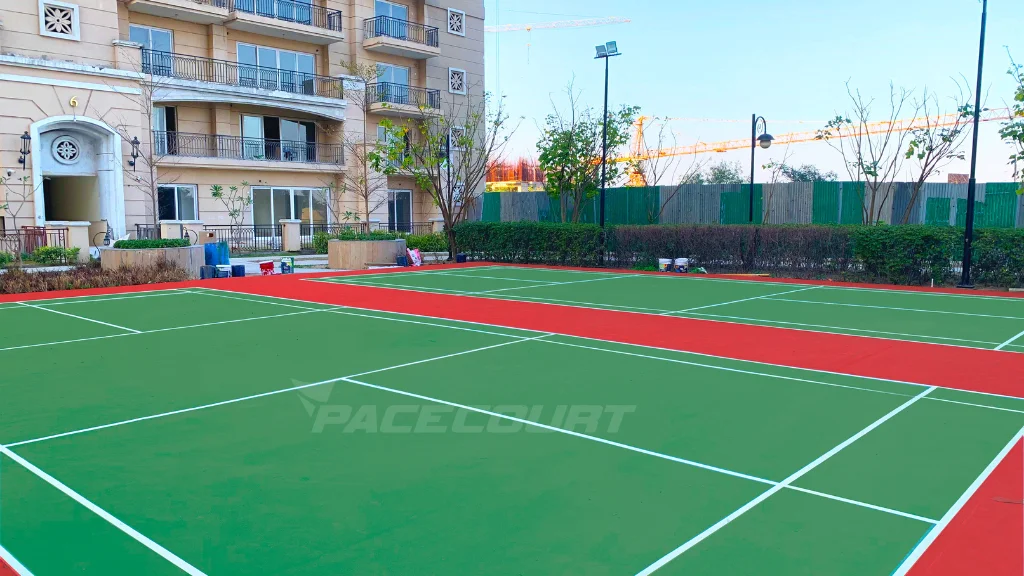
When it comes to competitive badminton, there’s no guesswork involved. The Badminton World Federation (BWF) has established precise court measurements that are used worldwide in tournaments, clubs, schools, and training centers. These standardized dimensions ensure that a player competing in Tokyo, London, or New York experiences the exact same playing environment.
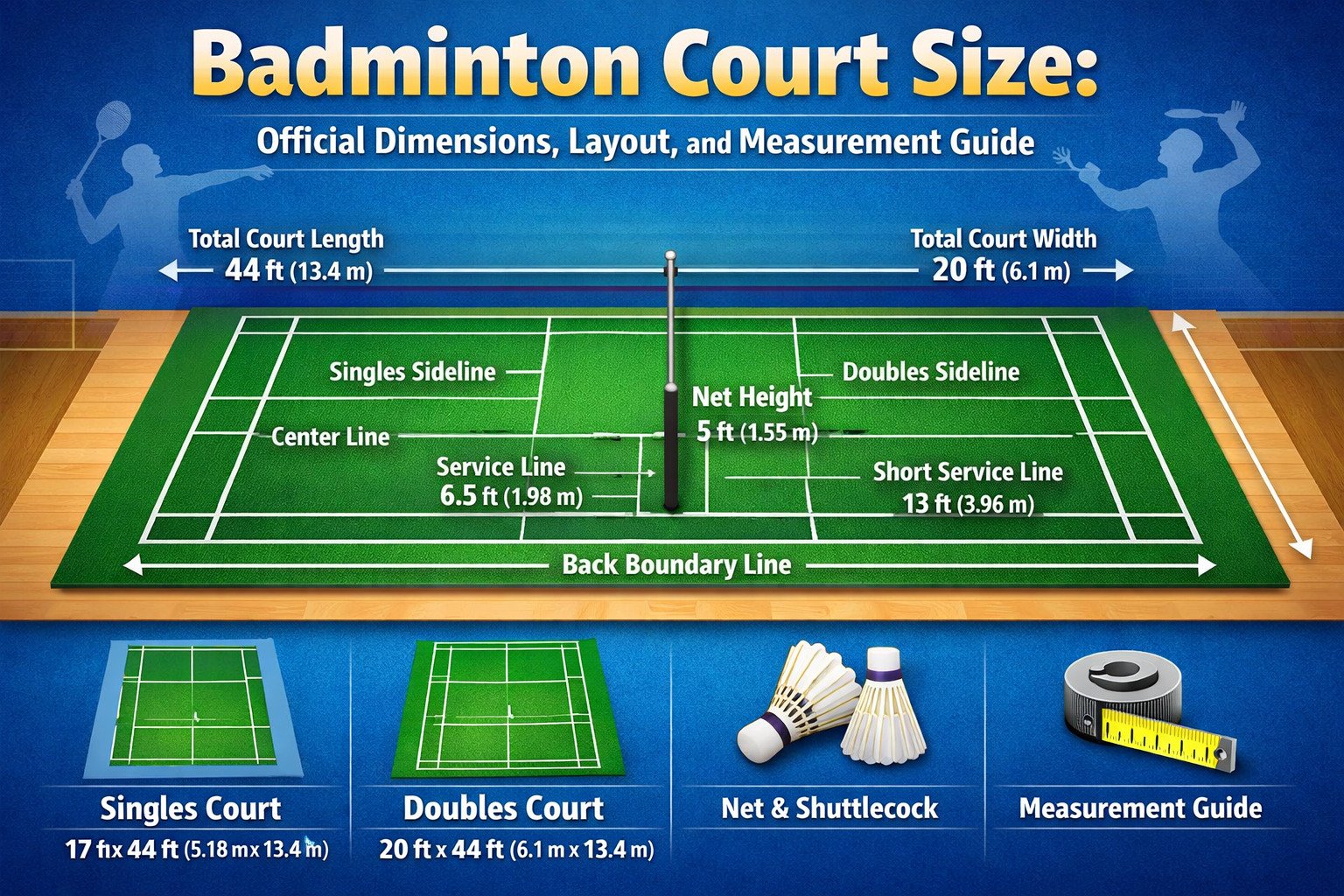
The official badminton court length is 13.4 meters (44 feet) from one baseline to the other. This measurement remains constant for both singles and doubles matches. The difference between the two formats lies primarily in the court width and service boundaries, which slightly change depending on the game type.
For doubles matches, the court is 6.1 meters (20 feet) wide, utilizing the outermost sidelines. Singles matches, however, use the inner sidelines, reducing the playing width to 5.18 meters (17 feet). This design allows a single court to accommodate two types of play without needing separate layouts.
Another defining feature is the placement of service lines. The short service line is positioned 1.98 meters (6.5 feet) from the net, ensuring that serves travel a minimum distance before landing in the opponent’s service box. Doubles matches also include a long service line, which sits slightly inside the baseline to prevent overly deep serves.
These carefully calculated measurements balance the game perfectly. If the court were significantly larger, rallies would become slower and more defensive. If it were smaller, rallies would end too quickly. The current dimensions create the ideal balance between speed, skill, endurance, and strategy.
Professional tournaments strictly enforce these measurements using high-precision tools. Even the line thickness is regulated at 40 millimeters (about 1.57 inches), and every line must be clearly visible against the court surface. Most professional courts use bright white or yellow lines on green or blue flooring to ensure maximum visibility for both players and referees.
Understanding these official dimensions isn’t just useful for professional settings. Coaches, sports facility managers, and even backyard badminton enthusiasts rely on these standards to create courts that feel authentic. When the measurements are correct, players naturally develop better positioning, timing, and shot placement.
Next, we’ll zoom in further and look specifically at the dimensions of a singles badminton court, which differs slightly from doubles play despite sharing the same overall court structure.
Singles Court Dimensions
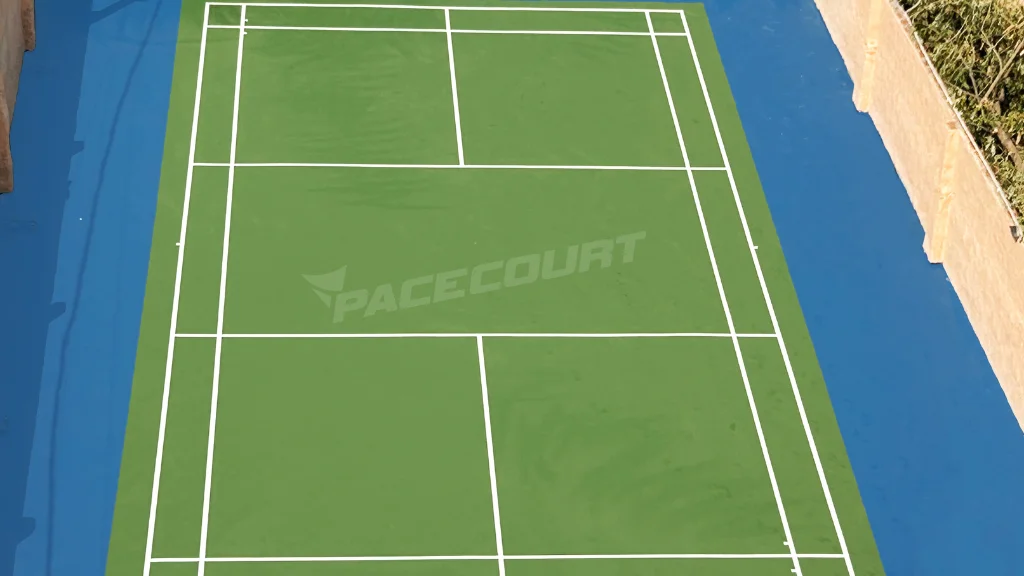
When watching a professional badminton match, you might notice that singles players seem to move more along the length of the court rather than the width. That’s not just a coincidence—it’s a direct result of the singles court dimensions, which intentionally make the playing area narrower than the doubles court. This design forces individual players to rely on endurance, strategic placement, and precise footwork rather than wide-angle teamwork.
The official singles badminton court measures 13.4 meters (44 feet) in length and 5.18 meters (17 feet) in width. The length remains exactly the same as the doubles court, but the sidelines used for singles are the inner sidelines, which reduces the total width by nearly one meter compared to doubles play. This difference might seem small on paper, but during an intense rally it dramatically changes how players cover the court.
Because the court is narrower, singles players often focus on deep clears, drop shots, and deceptive net play rather than wide cross-court drives that are more common in doubles matches. Imagine trying to defend the entire court alone—every movement must be efficient. A player cannot afford to waste energy sprinting unnecessarily, which is why elite singles athletes develop exceptional footwork patterns and recovery speed.
Another key detail is that singles matches use the full baseline at the back of the court. This means serves and returns can land all the way at the rear boundary line, giving players more depth to work with during rallies. Long clears to the backcourt are a common strategy because they push opponents away from the net, opening opportunities for drop shots or smashes.
The service court in singles is also slightly different in practice. When serving, players must hit the shuttle diagonally into the opponent’s service box, ensuring it passes the short service line and lands within the singles sideline boundaries. Since the court is narrower, serves tend to focus more on depth and placement rather than angle.
Professional singles matches highlight just how demanding these dimensions can be. In tournaments such as the Olympics or BWF World Tour, rallies often exceed 30 or 40 shots, with players covering several kilometers of movement throughout a single match. The court size forces athletes to constantly shift between offensive and defensive positions, turning every rally into a strategic battle.
Understanding singles court dimensions helps players improve their court awareness, shot selection, and stamina management. Once you know exactly where the boundaries are and why they exist, the game becomes far more tactical. Instead of simply hitting the shuttle back and forth, you begin to see the court as a grid of opportunities where each shot sets up the next one.
Doubles Court Dimensions

Doubles badminton introduces an entirely different dynamic compared to singles. Instead of one player covering the entire court, two teammates share the space, which allows the court to be wider and encourages faster, more aggressive rallies. The official doubles court dimensions remain 13.4 meters (44 feet) long but expand to 6.1 meters (20 feet) wide, using the outermost sidelines.
Upgrade Your Sports Court Today
Get premium synthetic acrylic flooring designed for durability, grip, and performance.
Get Free ConsultationThat extra width may seem minor, but it dramatically changes gameplay. With two players on each side, teams can defend larger angles and attack more aggressively. Shots that would be risky in singles—like sharp cross-court smashes or fast drives—become powerful tactical tools in doubles matches.
One of the most interesting differences in doubles play involves the long service line for doubles. Unlike singles, where the entire baseline is used during serves, doubles serves must land before a special long service line located 0.76 meters (2.5 feet) inside the baseline. This rule prevents players from launching extremely deep serves that would be difficult to return.
Because of this restriction, doubles serves are typically short and precise, barely clearing the net before landing near the short service line. This creates an immediate tactical battle at the front of the court, where players attempt quick net kills or pushes to gain attacking advantage.
Doubles strategy often revolves around front-and-back formations. One player positions near the net to intercept weak returns, while the partner covers the rear court to unleash powerful smashes. When defending, teams usually shift into a side-by-side formation, allowing them to cover the wider court more effectively.
Another important factor is the speed of doubles rallies. Because two players are constantly attacking and defending, exchanges can become extremely rapid. According to sports performance studies, doubles rallies often involve more flat drives and quick interceptions compared to singles rallies, which rely more on clears and drops.
The wider court also encourages creative shot placement. Players aim for gaps between opponents or exploit angles that force their rivals out of position. Successful doubles teams rely heavily on communication, timing, and coordinated movement, almost like a well-rehearsed dance across the court.
Understanding the doubles court dimensions helps players appreciate why the game feels so different from singles. The additional width, combined with specialized service rules, creates a faster and more explosive version of badminton where teamwork and reflexes are everything.
Complete Court Measurement Table
Sometimes the easiest way to understand court dimensions is to see them organized clearly in one place. While explanations are helpful, a structured reference makes it much easier for coaches, builders, and players to visualize and measure a badminton court accurately. The table below summarizes the most important measurements defined by the Badminton World Federation (BWF).
| Measurement | Metric | Imperial |
|---|---|---|
| Total Court Length | 13.4 meters | 44 feet |
| Doubles Court Width | 6.1 meters | 20 feet |
| Singles Court Width | 5.18 meters | 17 feet |
| Distance from Net to Short Service Line | 1.98 meters | 6.5 feet |
| Distance from Baseline to Doubles Long Service Line | 0.76 meters | 2.5 feet |
| Net Height at Posts | 1.55 meters | 5 feet 1 inch |
| Net Height at Center | 1.524 meters | 5 feet |
| Standard Line Thickness | 40 mm | 1.57 inches |
Looking at these numbers together reveals how carefully balanced badminton court design really is. Every measurement works together to create a playing space that supports speed, precision, and fairness.
For example, the difference between the singles and doubles court width is just 0.92 meters (about 3 feet). That small adjustment ensures singles players aren’t overwhelmed by excessive lateral movement while still keeping rallies competitive. Meanwhile, the doubles long service line prevents serves from becoming too dominant a weapon, preserving the tactical exchange that makes the sport exciting.
Even the net height difference between the center and the posts plays a subtle role. The center of the net is slightly lower, which encourages more attacking shots like smashes and drives while still maintaining a fair challenge.
For anyone planning to mark or build a court, these measurements provide a precise blueprint. Using measuring tape, chalk lines, or court tape, you can recreate a regulation badminton court in a gymnasium, sports hall, or even a backyard space.
The table also highlights how badminton compares to other racket sports. A tennis court, for instance, is significantly larger, while a table tennis setup is obviously much smaller. Badminton sits right in the middle, offering a compact yet dynamic playing area that supports incredibly fast rallies.
In the next section, we’ll explore the different line markings on a badminton court, explaining how each one influences gameplay and helps referees determine whether a shuttle is in or out.
Badminton Court Layout and Line Markings
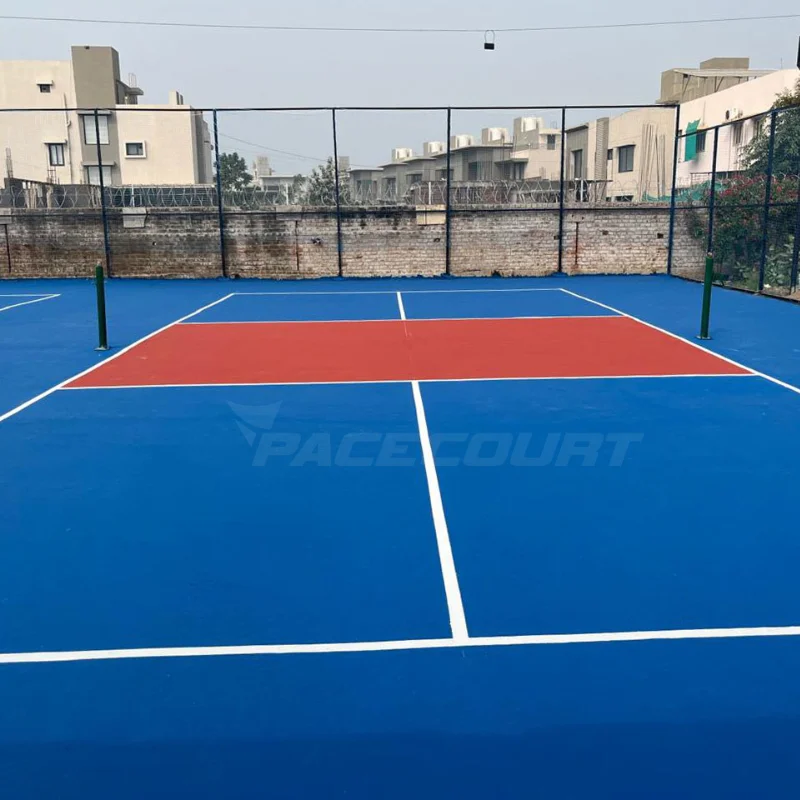
If you’ve ever looked at a badminton court for the first time, you might have wondered why there are so many lines. At a glance, the court can seem like a maze of markings. However, each line has a specific purpose that helps define the rules of the game and ensures fair play. Understanding the badminton court layout and line markings is essential for players, coaches, referees, and even casual enthusiasts who want to truly grasp how the sport works.
The badminton court is essentially a rectangle divided into two equal halves by a net. Each half contains a set of lines that determine service areas, boundaries for singles and doubles play, and zones where the shuttlecock must land during certain situations. The combination of these markings allows the same court to be used for both singles and doubles matches, which is one of the most efficient design features in the sport.
One of the key aspects of badminton court markings is that every line is considered part of the area it defines. This means if the shuttlecock lands on the line—even by the slightest margin—it is still considered “in.” This rule often leads to intense debates in competitive matches, especially when the shuttle lands very close to the boundary.
Another important factor is line visibility. According to BWF regulations, the lines must be clearly visible and usually colored white or yellow depending on the court surface. Indoor professional courts often use green or blue flooring, which contrasts sharply with the lines to help players and referees track the shuttle more accurately.
The lines also divide the court into service boxes, which determine where a player must serve the shuttle. During a match, players alternate serving positions depending on their score, and the center line helps separate the left and right service courts. Without these precise markings, enforcing service rules would become extremely difficult.
From a strategic perspective, these lines also influence shot placement and player movement. Skilled players constantly aim their shots near boundary lines to pressure opponents and force errors. A perfectly placed drop shot near the sideline or baseline can be incredibly difficult to return.
To truly understand how the court functions, it helps to break down each major line individually. The following sections explain the baseline, sidelines, service lines, and center line, revealing how each contributes to the overall design of a badminton court.
Baseline Explained
The baseline is one of the most important boundary lines on a badminton court. Located at the very back of each side, it marks the furthest point where the shuttlecock can land and still be considered in play. The baseline runs parallel to the net and stretches across the entire width of the court.
In both singles and doubles matches, the baseline plays a major role during rallies. Players frequently aim deep clears toward this line to push their opponents to the back of the court. This strategy creates space near the net, making it easier to follow up with a drop shot or deceptive net play.
In singles badminton, the baseline is also used as the back boundary for serves. This means a serve can travel all the way to the baseline and still be valid, provided it lands within the singles sideline boundaries. Skilled servers often take advantage of this by placing deep serves that force opponents into a defensive position immediately.
Doubles matches, however, introduce a slight twist. While the baseline still marks the back boundary during rallies, it is not the serving limit. Instead, doubles serves must land before the long service line for doubles, which sits slightly inside the baseline. This rule keeps serves shorter and encourages fast net exchanges.
From a tactical standpoint, the baseline acts like a pressure point on the court. When players are forced too close to it, they often have limited attacking options. Their shots become more predictable, giving their opponents an opportunity to seize control of the rally.
Professional badminton players train extensively to judge the distance between themselves and the baseline without looking down. Through repetition and experience, they develop a strong sense of spatial awareness, allowing them to move confidently across the court.
Without the baseline, the game would lose much of its depth and strategic complexity. It defines the back boundary, shapes rally patterns, and plays a crucial role in determining whether a shot stays in play.
Sidelines Explained
The sidelines define the left and right boundaries of the badminton court. These lines are crucial because they determine the difference between singles and doubles playing areas. While the court length remains the same for both formats, the width changes depending on which sidelines are in use.
For doubles matches, the outermost sidelines mark the official boundary. This gives doubles teams the full court width of 6.1 meters (20 feet), allowing players to use wider angles and more aggressive cross-court shots. The expanded width encourages fast-paced rallies and strategic teamwork between partners.
In singles matches, however, the outer sidelines are not used. Instead, players rely on the inner sidelines, which narrow the court width to 5.18 meters (17 feet). This change reduces the amount of side-to-side movement required for a single player covering the entire court alone.
This difference might appear subtle, but it dramatically affects gameplay. Singles players often focus on long rallies and precise placement, while doubles players take advantage of the wider court to create sharp angles and rapid attacking opportunities.
Sidelines also play an important psychological role in matches. Players frequently target shots near the sidelines to force opponents into difficult positions. A shuttle that lands just centimeters inside the sideline can be nearly impossible to return, especially if the opponent is caught off balance.
Referees and line judges pay particularly close attention to the sidelines during professional tournaments. In high-stakes matches, even a tiny error in judgment could change the outcome of a rally. That’s why many modern competitions use instant replay systems to confirm whether the shuttle landed inside or outside the line.
Ultimately, the sidelines help shape the rhythm and strategy of badminton. They define the width of the battlefield and influence how players attack, defend, and position themselves throughout a match.
Short Service Line
The short service line is one of the most important markings when it comes to serving rules in badminton. Positioned 1.98 meters (6.5 feet) from the net, this line ensures that every serve travels a minimum distance before landing in the opponent’s court.
When serving, the shuttlecock must pass over the net and land beyond the short service line in the correct diagonal service box. If the shuttle falls short of this line, the serve is considered a fault and the opponent automatically wins the rally.
This rule prevents players from using extremely short serves that barely cross the net, which would make returning the shuttle almost impossible. By enforcing a minimum distance, the short service line keeps the game fair and balanced.
In doubles matches, the short service line plays an even more strategic role. Since doubles serves must also stay within the long service line, players are forced to place their serves within a relatively small service box. This creates a delicate balance between power and precision.
Most doubles players prefer to use low serves that travel just above the net and land close to the short service line. This technique reduces the opponent’s ability to attack aggressively and helps the serving team maintain control of the rally.
Professional players practice serves repeatedly to ensure they can land the shuttle just inches beyond the short service line. The difference between a perfect serve and a fault can be incredibly small, especially during high-pressure moments in a match.
The short service line may seem like a simple marking, but it plays a vital role in maintaining the structure and fairness of badminton serves.
Long Service Line for Doubles
The long service line for doubles is one of the most unique features of a badminton court. Located 0.76 meters (2.5 feet) inside the baseline, this line only applies during doubles serves and acts as the maximum distance a serve can travel.
This rule was introduced to prevent players from serving deep into the backcourt, which would make the return extremely difficult and give the server an unfair advantage. By shortening the allowable serving distance, the game encourages short, tactical serves rather than powerful long ones.
In doubles play, the service area is essentially the space between the short service line and the doubles long service line, bounded by the center line and outer sideline. This creates a rectangular box where the serve must land.
Because this area is relatively small, doubles players must develop excellent control and consistency when serving. A serve that travels slightly too far will cross the long service line and result in a fault.
This limitation has shaped the modern style of doubles badminton. Instead of powerful high serves, players focus on low, spinning serves that barely clear the net. These serves force the receiver to lift the shuttle, giving the serving team an opportunity to attack.
The doubles long service line might look like just another marking, but it fundamentally changes the rhythm of doubles matches. It keeps the game fast, tactical, and exciting from the very first shot of each rally.
Center Line
The center line is a crucial marking that divides each side of the badminton court into two equal service areas—left and right. Running perpendicular from the short service line to the baseline, this line ensures that serves are delivered into the correct diagonal service box. While it might appear to be a simple divider, the center line plays a significant role in maintaining order and fairness during gameplay.
In badminton, every serve must be directed diagonally across the net into the opponent’s corresponding service court. The center line helps define these courts clearly. When a player’s score is even, they serve from the right service court, and when the score is odd, they serve from the left service court. This alternating system ensures both players move around the court strategically rather than serving from the same position repeatedly.
From a tactical standpoint, the center line also influences how players position themselves during rallies. In doubles matches especially, teammates often use the center line as a visual reference when coordinating their movements. One player might cover shots closer to the middle while the other handles wider angles near the sideline.
The center line also plays a psychological role. Skilled servers sometimes aim their serves very close to this line, forcing receivers to react quickly and determine whether the shuttle will land in or out. Even a few centimeters can make the difference between a legal serve and a fault.
Professional badminton matches frequently feature extremely tight calls near the center line, which is why line judges are positioned carefully around the court. In major tournaments such as the Olympics or the BWF World Championships, electronic review systems may also be used to confirm close decisions.
Although it doesn’t directly affect rally boundaries like the baseline or sidelines, the center line helps organize the structure of play. Without it, players would have difficulty determining the correct service areas, leading to confusion and inconsistent gameplay.
In short, the center line acts like the organizational backbone of the court, quietly ensuring that serves and positioning follow the official rules while helping players maintain spatial awareness throughout a match.
Net and Post Dimensions

While the court lines define where players can move and place shots, the net acts as the central obstacle that every rally must cross. The dimensions of the badminton net and its supporting posts are carefully standardized to maintain fairness and consistency in competitive play.
The net stretches across the entire width of the court, dividing it into two equal halves. Its placement and height determine the difficulty of shots like smashes, clears, drops, and net kills. Even a slight variation in height could dramatically affect gameplay, which is why official measurements are strictly enforced.
Badminton nets are designed with a fine mesh pattern that prevents the shuttlecock from passing through while still allowing players and spectators to see clearly across the court. The top edge of the net features a white tape band, usually around 75 millimeters wide, which provides visibility and reinforces the structure of the net.
The posts that hold the net in place are positioned exactly on the doubles sidelines, even when singles matches are being played. This ensures that the net remains perfectly aligned with the full width of the court regardless of the match format.
Professional courts use sturdy metal or reinforced posts that remain stable even during intense gameplay. Because players sometimes collide with the net area while attempting aggressive net shots, the posts must be strong enough to withstand impact without shifting position.
Understanding the net and post dimensions is essential not only for tournament organizers but also for anyone setting up a badminton court at home, in a school gym, or at a local sports club. Proper net placement ensures that players experience the game exactly as it was intended to be played.
The next sections will break down the official net height and width, giving you a complete picture of how this essential component fits into the overall court design.
Official Net Height
The height of the badminton net is one of the most strictly regulated aspects of the sport. According to the Badminton World Federation (BWF), the net must measure 1.55 meters (5 feet 1 inch) at the posts and 1.524 meters (5 feet) at the center. This slight dip in the middle is intentional and ensures that the net remains taut while maintaining consistent tension across its width.
At first glance, the difference between the center and the posts might seem insignificant. However, in a sport where the shuttlecock can travel at incredibly high speeds, even small variations in net height can influence gameplay. The slightly lower center encourages attacking shots such as smashes and drives, while still maintaining a fair challenge for defensive players.
The net height also affects how players approach the front court area. Skilled players often perform delicate net shots that barely clear the tape at the top of the net. These shots require precise control because even a tiny miscalculation can result in the shuttle hitting the net and ending the rally.
For beginners, learning to judge the net height is an essential part of improving their game. Practicing shots that travel just above the net helps develop better touch, accuracy, and confidence.
Professional badminton venues regularly measure the net height before matches to ensure it meets official standards. Even during tournaments, referees may check the net tension and height to guarantee consistent playing conditions.
In essence, the net height acts as the central challenge of the sport. Every rally revolves around sending the shuttle over this barrier while preventing your opponent from doing the same. Its precise measurement keeps the game balanced between offense and defense.
Net Width and Construction
Beyond height, the width and construction of the badminton net also play a vital role in maintaining a professional playing environment. The net spans the entire width of the doubles court, measuring 6.1 meters (20 feet) from one post to the other.
The net itself is typically 760 millimeters (about 2.5 feet) deep, extending downward from the top tape toward the floor. It is made from a strong but lightweight cord material, forming a mesh pattern with small square holes. This design prevents the shuttlecock from passing through while minimizing air resistance.
The top edge of the net features a white tape band that holds a cable or cord running through its length. This cable is attached to the posts and tightened to keep the net stretched evenly across the court. Without proper tension, the net could sag too much, affecting the fairness of play.
Badminton nets are designed to be both durable and flexible. During matches, players frequently hit the shuttle extremely close to the net, and sometimes even brush against it while attempting aggressive shots. A well-constructed net absorbs these minor impacts without losing its shape.
In professional tournaments, nets are replaced regularly to ensure they remain in perfect condition. A damaged or loose net could affect the outcome of a rally, especially if the shuttle gets caught in the mesh.
From a practical perspective, understanding net width and construction is helpful when setting up a court at home or in a sports facility. Choosing a high-quality net ensures that games feel authentic and that players experience the sport the way it’s played at competitive levels.
Together with the court markings and net height, the net’s width and design complete the core structure of a badminton court, allowing the sport’s fast-paced rallies and strategic gameplay to unfold smoothly.
Recommended Ceiling Height for Indoor Courts
When badminton is played indoors—which is the preferred environment for professional and competitive matches—the ceiling height becomes an important factor. Unlike many other racket sports, badminton often involves high clears and lifts that send the shuttlecock soaring toward the roof before descending back into play.
The Badminton World Federation recommends a minimum ceiling height of around 9 meters (approximately 30 feet) for professional courts. This height ensures that players can execute high defensive clears without the shuttle hitting the ceiling or lighting fixtures.
In recreational gyms or school sports halls, the ceiling height may be slightly lower, typically around 7 to 8 meters (23–26 feet). While this is still playable, it can sometimes limit certain types of shots. Players might need to adjust their strategies to avoid hitting the shuttle too high.
Lighting placement also matters in indoor badminton facilities. Lights should be positioned so they do not obstruct the shuttlecock’s flight path or blind players when looking upward. Modern sports arenas often use specialized LED lighting systems designed specifically for indoor badminton.
A high ceiling doesn’t just improve gameplay—it also enhances the overall experience for spectators and athletes. It allows players to perform their full range of shots without restriction, making rallies more dynamic and exciting.
For anyone planning to build or renovate a badminton facility, ensuring adequate ceiling height is just as important as marking the correct court dimensions.
Conclusion
The badminton court size and layout are the result of decades of refinement aimed at creating the perfect balance between speed, skill, and strategy. Every measurement—from the 13.4-meter court length to the precise net height and service lines—has been carefully designed to ensure fair and exciting gameplay.
Understanding these dimensions allows players to appreciate the sport on a deeper level. What may appear to be simple lines on the floor actually form a complex framework that guides movement, tactics, and scoring. The differences between singles and doubles boundaries, the placement of the service lines, and the structure of the net all work together to create the unique rhythm of badminton.
Whether you’re a beginner learning the basics, a coach training young athletes, or someone planning to build a backyard court, knowing the official measurements ensures that the game is played as intended. With the correct court size and layout, players can develop proper techniques, practice accurate shot placement, and enjoy the full excitement of the sport.
Badminton may seem simple at first glance, but once you understand the design of the court, it becomes clear that every line and dimension has a purpose. The court is not just a playing surface—it’s the blueprint that shapes one of the fastest and most thrilling racket sports in the world.
Stay Updated with Pacecourt
Discover expert insights, practical tips, and the latest industry updates from Pacecourt, covering sports flooring, tennis and multi-sport court construction, resurfacing, maintenance, court performance, and innovative sports infrastructure solutions.
Powered by Google's Preferred Sources feature